1
Return to Table of Contents
7. MicroMatrix Overview
7.1. Intercom Basics
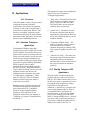
Talking and Listening
The fundamental purpose of an
intercom is to allow users to
communicate. Once an intercom
station is programmed and its keys
are labeled, a user talks to a specific
party (or parties) by pressing the
appropriate intercom key down. A
talk path remains active while the
user holds the key down.
A talk key latches by momentarily
pressing the key down. The talk
path remains active until the user
presses and releases that key.
The red LED above a key indicates
a talk path is active for that key.
Holding a key in the up position
activates the listen path for that key.
Momentarily pressing the key in the
up position causes the key to latch
and the listen path remains active
until the key is pressed up and
released. A green LED above the
key and adjacent to the red LED
indicates that the listen path is active
for that key.
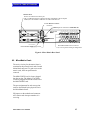
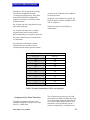
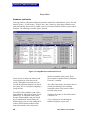
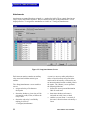
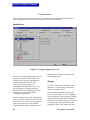
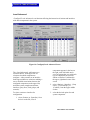
Figure 5: Intercom Station Mic, Speaker
and Listen Level Keys
When a headset is plugged into an
intercom station, that station’s panel
microphone and panel speaker are
automatically turned off while the
headset microphone and headphone
become active. While using the
headset, the user can turn the panel
microphone and the panel speaker
on and off using those same front
panel switches.
Answer Back
Each MicroMatrix intercom station
has a key labeled [Answer Back].
This key allows a user to respond to
calls from stations or interfaces that
are not currently assigned to a
selector key on that station. The
answer-back stack feature allows
several stations to call your station
at the same time without any of
them receiving a busy signal.
Mics and Speakers
All intercom stations have separate
connectors for a headset and a
gooseneck-style microphone. All
headsets have a microphone and a
headphone. When a headset is
plugged in, the speaker and the
microphone are turned off. Only one
talking device (microphone or
headset) can be active at one time.
16
If intercom station #1 tries to call
station #2 while station #2 is talking
to another caller, station #1 will not
get a busy signal. Instead, station #2
will immediately hear station #1’s
incoming communication and
station #1’s label is placed in station
#2’s incoming call list (station #2’s
answer-back stack).
MicroMatrix User Manual