1
280
CHAPTER 22. NOTES ON PROTOCOLS
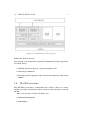
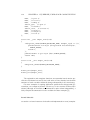
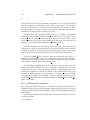
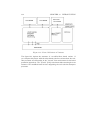
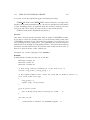
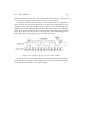
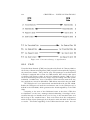
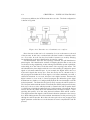
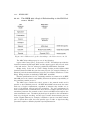
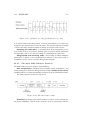
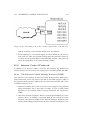
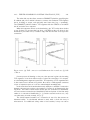
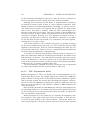
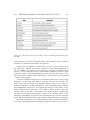
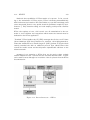
Figure 22.21: The pseudoheader included in the TCP checksum
byte header can then be amortized over more data, but small hosts may not
be able to handle very large segments. During connection setup, each side can
announce its maximum and see its partners. If a host does not use this option,
it defaults to a 536-byte payload. All Internet hosts are required to accept TCP
segments of 536+20=556 bytes. The two directions need not be the same.
For lines with high bandwidth, high delay, or both, the 64 KB window is
often a problem. On a T3 line (44,736 Mbps), it takes only 12 msec to output
a full 64 KB window. If the round trip propagation delay is 50 ms (typical
for a transcontinental fiber), the sender will be idle of the time waiting for
acknowledgements. On a satellite connection, the situation is even worse. A
larger window size would allow the sender to keep pumping data out, but using
the 16-bit Window size field, there is no way to express such a size. In RFC
1323, a Window scale option was proposed, allowing the sender and receiver
to negotiate a window scale factor. This number allows both sides to shift the
Window size field up to 14 bits to the left. Most TCP implementations now
support this option.
Another option proposed by RFC 1106 and now widely implemented is the
use of the selective repeat instead of go back n protocol. If the receiver gets
one bad segment and then a large number of good ones, the normal TCP protocol will eventually time out and retransmit all the unacknowledged segments,
including all those that were received correctly. RFC 1106 introduced NAKs,
to allow the receiver to ask for a specific segment (or segments). After it gets
these, it can acknowledge all the buffered data, thus reducing the amount of
data retransmitted.
22.7.4
TCP Connection Management
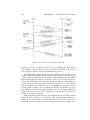
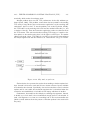
Connections in TCP are established using a three-way handshake. To establish a
connection, one side, say the server, passively waits for an incoming connection
by executing the LISTEN and ACCEPT primitives, either specifying a specific
source or nobody in particular.