1
282
CHAPTER 22. NOTES ON PROTOCOLS
for the maximum packet lifetime (120 sec) to make sure that no packets from
previous connections are still roaming around the Internet somewhere.
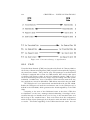
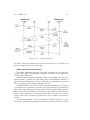
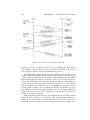
Although TCP connections are full duplex, to understand how connections
are released it is best to think of them as a pair of simplex connections. Each
simplex connection is released independently of its sibling. To release a connection, either party can send a TCP segment with the FIN bit set, which means
that it has no more data to transmit. When the FIN is acknowledged, that
direction is shut down for new data. Data may continue to flow indefinitely in
the other direction, however. When both directions have been shut down, the
connection is released. Normally, four TCP segments are needed to release a
connection, one FIN and one ACK for each direction. However, it is possible
for the first ACK and the second FIN to be contained in the same segment,
reducing the total count to three.
Just as with telephone calls in which both people say goodbye and hang
up the phone simultaneously, both ends of a TCP connection may send FIN
segments at the same time. These are each acknowledged in the usual way, and
the connection shut down. There is, in fact, no essential difference between the
two hosts releasing sequentially or simultaneously.
To avoid the so called two-army problem, timers are used. If a response to a
FIN is not forthcoming within two maximum packet lifetimes, the sender of the
FIN releases the connection. The other side will eventually notice that nobody
seems to be listening to it any more, and time out as well. While this solution
is not perfect, given the fact that a perfect solution is theoretically impossible,
it will have to do. In practice, problems rarely arise.
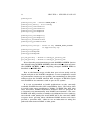
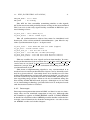
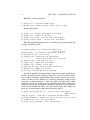
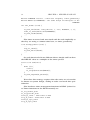
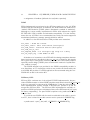
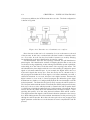
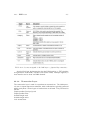
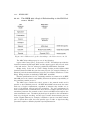
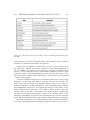
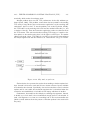
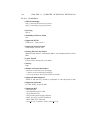
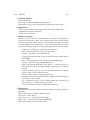
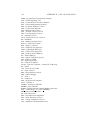
The steps required to establish and release connections can be represented
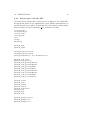
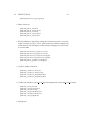
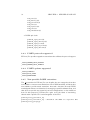
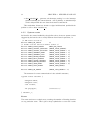
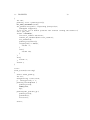
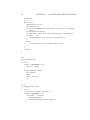
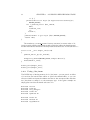
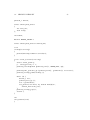
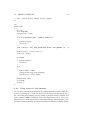
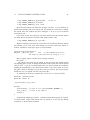
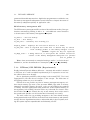
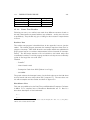
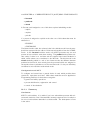
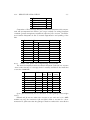
in a finite state machine with the 11 states listed in Table 22.4.
22.7.5
TCP Transmission Policy
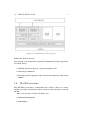
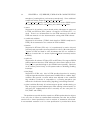
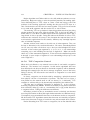
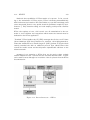
Window management in TCP is not directly tied to acknowledgements as it is
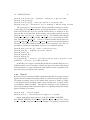
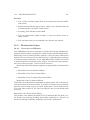
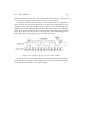
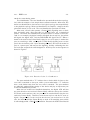
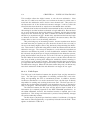
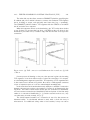
in most data link protocols. For example, suppose the receiver has a 4096-byte
buffer as shown in the Fig.22.23. If the sender transmits a 2048-byte segment
that is correctly received, the receiver will acknowledge the segment. However,
since it now has only 2048 bytes of buffer space (until the application removes
some data from the buffer), it will advertise a window of 2048 starting at the
next byte expected.
Now the sender transmits another 2048 bytes, which are acknowledged, but
the advertised window is 0. The sender must stop until the application process
on the receiving host has removed some data from the buffer, at which time
TCP can advertise a larger window.
When the window is 0, the sender may not normally send segments, with
two exceptions. First, urgent data may be sent, for example, to allow the user
to kill the process running on the remote machine. Second, the sender may
send a 1-byte segment to make the receiver reannounce the next byte expected