1
01
Why SSDs Are Awesome
An SSD Primer
Solid State Drive (SSD) technology has been receiving a lot of attention recently – and for good reason. It represents
the first major advancement in primary storage technology in years. Upgrading to an SSD does not provide minor
performance enhancements. Rather, an SSD will transform your computing experience with its revolutionary random
access speeds, its multi-tasking prowess, and its outstanding durability and reliability. Let’s explore in more detail some of
the things that make an SSD so special – and why it could be the most important computer upgrade you ever make.
Move Over, Mechanical Drives.
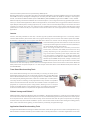
A Hard Disk Drive (HDD) works by way of a mechanical drive head that must physically move to access locations on a
rapidly-spinning magnetic disk. If you’ve ever seen the inside of an HDD, it looks a bit like a high-tech record player. A
Solid State Drive (SSD), on the other hand, has no moving parts and is therefore capable of accessing any location on the
drive with equally fast speed and precision. This distinction is behind each and every benefit that will be discussed below.
Access Time and Latency
One of the reasons SSDs so dramatically outperform their traditional Hard Disk Drive (HDD) counterparts is because of
their incredibly fast data access times (the delay between the request and completion of a read or write operation).
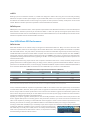
A modern SSD boasts random data access times of 0.1ms or less, whereas mainstream 2.5” consumer HDDs take about
10 ~12ms or more. As you can see in the below comparison table, SSDs are over 100 times faster than HDDs in accessing data,
including data seek time and latency. Moreover, while HDDs are deeply affected by fragmentation, SSDs deliver consistent
performance thanks to their use of integrated circuits instead of physical spinning platters – while rotating disks must wait for
spindles motors, heads, and arms to physically locate data locations, SSDs can access any location with lightning speed.
840 SSD (500GB)
Category
2.5” SATA HDD
(500GB, 7200rpm)
Difference
NAND FLASH
Media
Magnetic Platters
540 / 330
Seq. R/W Speed (MB/s)
60 / 160 (*140 / 70)
x 3 ~ 8 / 2~5
98,000 / 70,000
Ran R/W Speed (IOPS)
450/400
217 / 175
0.1
Data Access Time (ms)
10 ~12
x100 ~ 120
78,700
Benchmark Score (PCMark Vantage)
5,600
x 14
0.127W (active)
Power Consumption (Operation)
1.75W
x 13
0.046W (Idle)
Idle Power
0.8W
x 17
20G (10 ~ 2000Hz)
Vibration
0.5G (22 ~ 350Hz)
x 40
1500G/0.5ms
Shock (Operation)
350G/2.0ms
x4
1.5M hours
Reliability (MTBF*)
700k hours
x2
* HDD performance may vary by brand and model. The above data is for explanatory purposes only.