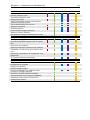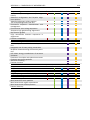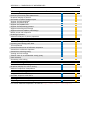
1
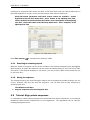
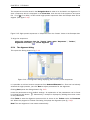
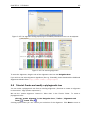
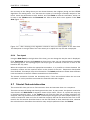
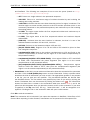
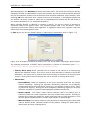
User manual for
CLC Combined Workbench 3.5
Windows, Mac OS X and Linux
December 6, 2007
CLC bio
Gustav Wieds Vej 10
DK-8000 Aarhus C
Denmark
Contents
I
Introduction
10
1 Introduction to CLC Combined Workbench
11
1.1
Contact information . . . . . . . . . . . . . . . . . . . . . . . . . . . . . . . . .
13
1.2
Download and installation . . . . . . . . . . . . . . . . . . . . . . . . . . . . . .
13
1.3
System requirements . . . . . . . . . . . . . . . . . . . . . . . . . . . . . . . .
16
1.4
Licenses . . . . . . . . . . . . . . . . . . . . . . . . . . . . . . . . . . . . . . .
16
1.5
About CLC Workbenches
. . . . . . . . . . . . . . . . . . . . . . . . . . . . . .
24
1.6
When the program is installed: Getting started . . . . . . . . . . . . . . . . . . .
25
1.7
Extending the workbench with plug-ins . . . . . . . . . . . . . . . . . . . . . . .
26
1.8
Network configuration . . . . . . . . . . . . . . . . . . . . . . . . . . . . . . . .
29
1.9
The format of the user manual . . . . . . . . . . . . . . . . . . . . . . . . . . .
30
2 Tutorials
32
2.1
Tutorial: Getting started . . . . . . . . . . . . . . . . . . . . . . . . . . . . . . .
33
2.2
Tutorial: View sequence . . . . . . . . . . . . . . . . . . . . . . . . . . . . . . .
36
2.3
Tutorial: Side Panel Settings . . . . . . . . . . . . . . . . . . . . . . . . . . . .
37
2.4
Tutorial: GenBank search and download . . . . . . . . . . . . . . . . . . . . . .
40
2.5
Tutorial: Align protein sequences . . . . . . . . . . . . . . . . . . . . . . . . . .
41
2.6
Tutorial: Create and modify a phylogenetic tree . . . . . . . . . . . . . . . . . .
43
2.7
Tutorial: Find restriction sites . . . . . . . . . . . . . . . . . . . . . . . . . . . .
44
2.8
Tutorial: BLAST search . . . . . . . . . . . . . . . . . . . . . . . . . . . . . . . .
47
2.9
Tutorial: Tips for specialized BLAST searches . . . . . . . . . . . . . . . . . . .
50
2.10 Tutorial: Proteolytic cleavage detection . . . . . . . . . . . . . . . . . . . . . . .
54
2.11 Tutorial: Primer design . . . . . . . . . . . . . . . . . . . . . . . . . . . . . . . .
56
2.12 Tutorial: Assembly . . . . . . . . . . . . . . . . . . . . . . . . . . . . . . . . . .
59
3
CONTENTS
II
4
2.13 Tutorial: In silico cloning . . . . . . . . . . . . . . . . . . . . . . . . . . . . . . .
64
2.14 Tutorial: Folding RNA molecules . . . . . . . . . . . . . . . . . . . . . . . . . . .
67
Core Functionalities
71
3 User interface
72
3.1
Navigation Area . . . . . . . . . . . . . . . . . . . . . . . . . . . . . . . . . . .
73
3.2
View Area . . . . . . . . . . . . . . . . . . . . . . . . . . . . . . . . . . . . . . .
80
3.3
Zoom and selection in View Area . . . . . . . . . . . . . . . . . . . . . . . . . .
86
3.4
Toolbox and Status Bar . . . . . . . . . . . . . . . . . . . . . . . . . . . . . . .
88
3.5
Workspace . . . . . . . . . . . . . . . . . . . . . . . . . . . . . . . . . . . . . .
89
3.6
List of shortcuts . . . . . . . . . . . . . . . . . . . . . . . . . . . . . . . . . . .
90
4 Searching your data
93
4.1
What kind of information can be searched? . . . . . . . . . . . . . . . . . . . .
93
4.2
Quick search . . . . . . . . . . . . . . . . . . . . . . . . . . . . . . . . . . . . .
94
4.3
Advanced search . . . . . . . . . . . . . . . . . . . . . . . . . . . . . . . . . . .
96
4.4
Search index . . . . . . . . . . . . . . . . . . . . . . . . . . . . . . . . . . . . .
98
5 User preferences and settings
99
5.1
General preferences . . . . . . . . . . . . . . . . . . . . . . . . . . . . . . . . .
5.2
Default View preferences . . . . . . . . . . . . . . . . . . . . . . . . . . . . . . 100
5.3
Advanced preferences . . . . . . . . . . . . . . . . . . . . . . . . . . . . . . . . 102
5.4
Export/import of preferences . . . . . . . . . . . . . . . . . . . . . . . . . . . . 102
5.5
View settings for the Side Panel
6 Printing
99
. . . . . . . . . . . . . . . . . . . . . . . . . . 103
107
6.1
Selecting which part of the view to print . . . . . . . . . . . . . . . . . . . . . . 108
6.2
Page setup . . . . . . . . . . . . . . . . . . . . . . . . . . . . . . . . . . . . . . 109
6.3
Print preview . . . . . . . . . . . . . . . . . . . . . . . . . . . . . . . . . . . . . 110
7 Import/export of data and graphics
112
7.1
Bioinformatic data formats . . . . . . . . . . . . . . . . . . . . . . . . . . . . . 112
7.2
External files . . . . . . . . . . . . . . . . . . . . . . . . . . . . . . . . . . . . . 118
CONTENTS
5
7.3
Export graphics to files . . . . . . . . . . . . . . . . . . . . . . . . . . . . . . . 118
7.4
Copy/paste view output . . . . . . . . . . . . . . . . . . . . . . . . . . . . . . . 123
8 History log
8.1
124
Element history . . . . . . . . . . . . . . . . . . . . . . . . . . . . . . . . . . . 124
9 Handling of results
9.1
III
127
How to handle results of analyses . . . . . . . . . . . . . . . . . . . . . . . . . 127
Bioinformatics
130
10 Viewing and editing sequences
131
10.1 View sequence . . . . . . . . . . . . . . . . . . . . . . . . . . . . . . . . . . . . 131
10.2 Circular DNA . . . . . . . . . . . . . . . . . . . . . . . . . . . . . . . . . . . . . 145
10.3 Working with annotations . . . . . . . . . . . . . . . . . . . . . . . . . . . . . . 147
10.4 Sequence information . . . . . . . . . . . . . . . . . . . . . . . . . . . . . . . . 154
10.5 View as text . . . . . . . . . . . . . . . . . . . . . . . . . . . . . . . . . . . . . 155
10.6 Creating a new sequence . . . . . . . . . . . . . . . . . . . . . . . . . . . . . . 156
10.7 Sequence Lists
. . . . . . . . . . . . . . . . . . . . . . . . . . . . . . . . . . . 157
11 Online database search
160
11.1 GenBank search . . . . . . . . . . . . . . . . . . . . . . . . . . . . . . . . . . . 160
11.2 UniProt (Swiss-Prot/TrEMBL) search . . . . . . . . . . . . . . . . . . . . . . . . 164
11.3 Search for structures at NCBI . . . . . . . . . . . . . . . . . . . . . . . . . . . . 166
11.4 Sequence web info
. . . . . . . . . . . . . . . . . . . . . . . . . . . . . . . . . 170
12 BLAST search
172
12.1 BLAST Against NCBI Database . . . . . . . . . . . . . . . . . . . . . . . . . . . 173
12.2 BLAST Against Local Database . . . . . . . . . . . . . . . . . . . . . . . . . . . 176
12.3 Output from BLAST search
. . . . . . . . . . . . . . . . . . . . . . . . . . . . . 179
12.4 Create Local BLAST Database . . . . . . . . . . . . . . . . . . . . . . . . . . . . 183
12.5 SNP annotation using BLAST . . . . . . . . . . . . . . . . . . . . . . . . . . . . 185
12.6 Bioinformatics explained: BLAST . . . . . . . . . . . . . . . . . . . . . . . . . . 190
13 3D molecule viewing
199
CONTENTS
6
13.1 Importing structure files . . . . . . . . . . . . . . . . . . . . . . . . . . . . . . . 199
13.2 Viewing structure files . . . . . . . . . . . . . . . . . . . . . . . . . . . . . . . . 200
13.3 The structure table . . . . . . . . . . . . . . . . . . . . . . . . . . . . . . . . . . 201
13.4 Options through the preference panel
. . . . . . . . . . . . . . . . . . . . . . . 202
13.5 3D Output . . . . . . . . . . . . . . . . . . . . . . . . . . . . . . . . . . . . . . 204
14 General sequence analyses
206
14.1 Shuffle sequence . . . . . . . . . . . . . . . . . . . . . . . . . . . . . . . . . . 206
14.2 Dot plots . . . . . . . . . . . . . . . . . . . . . . . . . . . . . . . . . . . . . . . 208
14.3 Local complexity plot
. . . . . . . . . . . . . . . . . . . . . . . . . . . . . . . . 218
14.4 Sequence statistics . . . . . . . . . . . . . . . . . . . . . . . . . . . . . . . . . 220
14.5 Join sequences . . . . . . . . . . . . . . . . . . . . . . . . . . . . . . . . . . . 226
14.6 Motif Search . . . . . . . . . . . . . . . . . . . . . . . . . . . . . . . . . . . . . 227
14.7 Pattern Discovery . . . . . . . . . . . . . . . . . . . . . . . . . . . . . . . . . . 230
15 Nucleotide analyses
233
15.1 Convert DNA to RNA . . . . . . . . . . . . . . . . . . . . . . . . . . . . . . . . . 233
15.2 Convert RNA to DNA . . . . . . . . . . . . . . . . . . . . . . . . . . . . . . . . . 234
15.3 Reverse complements of sequences . . . . . . . . . . . . . . . . . . . . . . . . 235
15.4 Translation of DNA or RNA to protein . . . . . . . . . . . . . . . . . . . . . . . . 236
15.5 Find open reading frames . . . . . . . . . . . . . . . . . . . . . . . . . . . . . . 237
16 Protein analyses
241
16.1 Signal peptide prediction . . . . . . . . . . . . . . . . . . . . . . . . . . . . . . 242
16.2 Protein charge . . . . . . . . . . . . . . . . . . . . . . . . . . . . . . . . . . . . 248
16.3 Transmembrane helix prediction . . . . . . . . . . . . . . . . . . . . . . . . . . 251
16.4 Antigenicity . . . . . . . . . . . . . . . . . . . . . . . . . . . . . . . . . . . . . . 252
16.5 Hydrophobicity . . . . . . . . . . . . . . . . . . . . . . . . . . . . . . . . . . . . 254
16.6 Pfam domain search . . . . . . . . . . . . . . . . . . . . . . . . . . . . . . . . . 260
16.7 Secondary structure prediction . . . . . . . . . . . . . . . . . . . . . . . . . . . 262
16.8 Protein report
. . . . . . . . . . . . . . . . . . . . . . . . . . . . . . . . . . . . 263
16.9 Reverse translation from protein into DNA . . . . . . . . . . . . . . . . . . . . . 265
16.10 Proteolytic cleavage detection . . . . . . . . . . . . . . . . . . . . . . . . . . . . 269
CONTENTS
7
17 Primers
275
17.1 Primer design - an introduction . . . . . . . . . . . . . . . . . . . . . . . . . . . 276
17.2 Setting parameters for primers and probes . . . . . . . . . . . . . . . . . . . . . 278
17.3 Graphical display of primer information . . . . . . . . . . . . . . . . . . . . . . . 280
17.4 Output from primer design . . . . . . . . . . . . . . . . . . . . . . . . . . . . . . 282
17.5 Standard PCR . . . . . . . . . . . . . . . . . . . . . . . . . . . . . . . . . . . . 283
17.6 Nested PCR . . . . . . . . . . . . . . . . . . . . . . . . . . . . . . . . . . . . . 287
17.7 TaqMan . . . . . . . . . . . . . . . . . . . . . . . . . . . . . . . . . . . . . . . . 289
17.8 Sequencing primers . . . . . . . . . . . . . . . . . . . . . . . . . . . . . . . . . 291
17.9 Alignment-based primer and probe design . . . . . . . . . . . . . . . . . . . . . 291
17.10 Analyze primer properties . . . . . . . . . . . . . . . . . . . . . . . . . . . . . . 297
17.11 Find binding sites on sequence . . . . . . . . . . . . . . . . . . . . . . . . . . . 298
17.12 Order primers . . . . . . . . . . . . . . . . . . . . . . . . . . . . . . . . . . . . 300
18 Sequencing data analyses and Assembly
301
18.1 Importing and viewing trace data . . . . . . . . . . . . . . . . . . . . . . . . . . 301
18.2 Trim sequences . . . . . . . . . . . . . . . . . . . . . . . . . . . . . . . . . . . 303
18.3 Assemble sequences . . . . . . . . . . . . . . . . . . . . . . . . . . . . . . . . 306
18.4 Assemble to reference sequence . . . . . . . . . . . . . . . . . . . . . . . . . . 307
18.5 Add sequences to an existing contig . . . . . . . . . . . . . . . . . . . . . . . . 310
18.6 View and edit contigs . . . . . . . . . . . . . . . . . . . . . . . . . . . . . . . . 311
18.7 Reassemble contig
. . . . . . . . . . . . . . . . . . . . . . . . . . . . . . . . . 316
18.8 Secondary peak calling . . . . . . . . . . . . . . . . . . . . . . . . . . . . . . . 317
19 Cloning and cutting
319
19.1 Molecular cloning . . . . . . . . . . . . . . . . . . . . . . . . . . . . . . . . . . 319
19.2 Restriction site analysis . . . . . . . . . . . . . . . . . . . . . . . . . . . . . . . 328
19.3 Gel electrophoresis . . . . . . . . . . . . . . . . . . . . . . . . . . . . . . . . . 341
19.4 Restriction enzyme lists . . . . . . . . . . . . . . . . . . . . . . . . . . . . . . . 344
20 Sequence alignment
347
20.1 Create an alignment . . . . . . . . . . . . . . . . . . . . . . . . . . . . . . . . . 348
20.2 View alignments . . . . . . . . . . . . . . . . . . . . . . . . . . . . . . . . . . . 353
CONTENTS
8
20.3 Edit alignments . . . . . . . . . . . . . . . . . . . . . . . . . . . . . . . . . . . 357
20.4 Join alignments . . . . . . . . . . . . . . . . . . . . . . . . . . . . . . . . . . . 359
20.5 Pairwise comparison . . . . . . . . . . . . . . . . . . . . . . . . . . . . . . . . . 361
20.6 Bioinformatics explained: Multiple alignments . . . . . . . . . . . . . . . . . . . 364
21 Phylogenetic trees
366
21.1 Inferring phylogenetic trees . . . . . . . . . . . . . . . . . . . . . . . . . . . . . 366
21.2 Bioinformatics explained: phylogenetics . . . . . . . . . . . . . . . . . . . . . . 369
22 RNA structure
374
22.1 RNA secondary structure prediction . . . . . . . . . . . . . . . . . . . . . . . . . 375
22.2 View and edit secondary structures . . . . . . . . . . . . . . . . . . . . . . . . . 381
22.3 Evaluate structure hypothesis . . . . . . . . . . . . . . . . . . . . . . . . . . . . 388
22.4 Structure Scanning Plot . . . . . . . . . . . . . . . . . . . . . . . . . . . . . . . 390
22.5 Bioinformatics explained: RNA structure prediction by minimum free energy
minimization . . . . . . . . . . . . . . . . . . . . . . . . . . . . . . . . . . . . . 392
IV
Appendix
399
A Comparison of workbenches
400
B BLAST databases
404
B.1
Peptide sequence databases . . . . . . . . . . . . . . . . . . . . . . . . . . . . 404
B.2
Nucleotide sequence databases . . . . . . . . . . . . . . . . . . . . . . . . . . 404
B.3
SNP BLAST databases . . . . . . . . . . . . . . . . . . . . . . . . . . . . . . . . 405
C Proteolytic cleavage enzymes
406
D Formats for import and export
408
D.1
List of bioinformatic data formats . . . . . . . . . . . . . . . . . . . . . . . . . . 408
D.2
List of graphics data formats . . . . . . . . . . . . . . . . . . . . . . . . . . . . 409
E IUPAC codes for amino acids
411
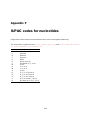
F IUPAC codes for nucleotides
412
CONTENTS
9
Bibliography
413
V
419
Index
Part I
Introduction
10
Chapter 1
Introduction to CLC Combined Workbench
Contents
1.1
Contact information . . . . . . . . . . . . . . . . . . . . . . . . . . . . . . . .
13
1.2
Download and installation . . . . . . . . . . . . . . . . . . . . . . . . . . . .
13
1.2.1
Program download . . . . . . . . . . . . . . . . . . . . . . . . . . . . . .
13
1.2.2
Installation on Microsoft Windows . . . . . . . . . . . . . . . . . . . . .
14
1.2.3
Installation on Mac OS X . . . . . . . . . . . . . . . . . . . . . . . . . .
14
1.2.4
Installation on Linux with an installer . . . . . . . . . . . . . . . . . . . .
15
1.2.5
Installation on Linux with an RPM-package . . . . . . . . . . . . . . . . .
16
1.3
System requirements . . . . . . . . . . . . . . . . . . . . . . . . . . . . . . .
16
1.4
Licenses . . . . . . . . . . . . . . . . . . . . . . . . . . . . . . . . . . . . . .
16
1.5
1.6
1.7
1.4.1
Demo license concept . . . . . . . . . . . . . . . . . . . . . . . . . . . .
17
1.4.2
Getting and activating the demo license . . . . . . . . . . . . . . . . . .
17
1.4.3
Fixed license . . . . . . . . . . . . . . . . . . . . . . . . . . . . . . . . .
19
1.4.4
Floating license . . . . . . . . . . . . . . . . . . . . . . . . . . . . . . .
21
1.4.5
Upgrading or changing licenses . . . . . . . . . . . . . . . . . . . . . . .
23
About CLC Workbenches . . . . . . . . . . . . . . . . . . . . . . . . . . . . .
24
1.5.1
New program feature request . . . . . . . . . . . . . . . . . . . . . . . .
24
1.5.2
Report program errors . . . . . . . . . . . . . . . . . . . . . . . . . . . .
25
1.5.3
Free vs. commercial workbenches . . . . . . . . . . . . . . . . . . . . .
25
When the program is installed: Getting started . . . . . . . . . . . . . . . . .
25
1.6.1
Quick start . . . . . . . . . . . . . . . . . . . . . . . . . . . . . . . . . .
26
1.6.2
Import of example data . . . . . . . . . . . . . . . . . . . . . . . . . . .
26
Extending the workbench with plug-ins . . . . . . . . . . . . . . . . . . . . .
26
1.7.1
Installing plug-ins . . . . . . . . . . . . . . . . . . . . . . . . . . . . . .
27
1.7.2
Uninstalling plug-ins . . . . . . . . . . . . . . . . . . . . . . . . . . . . .
28
1.7.3
1.7.4
Updating plug-ins . . . . . . . . . . . . . . . . . . . . . . . . . . . . . .
Resources . . . . . . . . . . . . . . . . . . . . . . . . . . . . . . . . . .
29
29
1.8
Network configuration
. . . . . . . . . . . . . . . . . . . . . . . . . . . . . .
29
1.9
The format of the user manual . . . . . . . . . . . . . . . . . . . . . . . . . .
30
1.9.1
Text formats . . . . . . . . . . . . . . . . . . . . . . . . . . . . . . . . .
11
31
CHAPTER 1. INTRODUCTION TO CLC COMBINED WORKBENCH
12
Welcome to CLC Combined Workbench --- a software package supporting your daily bioinformatics
work.
We strongly encourage you to read this user manual in order to get the best possible basis for
working with the software package.
CHAPTER 1. INTRODUCTION TO CLC COMBINED WORKBENCH
1.1
13
Contact information
The CLC Combined Workbench is developed by:
CLC bio A/S
Science Park Aarhus
Gustav Wieds Vej 10
8000 Aarhus C
Denmark
http://www.clcbio.com
VAT no.: DK 28 30 50 87
Telephone: +45 70 22 55 09
Fax: +45 70 22 55 19
E-mail: [email protected]
If you have questions or comments regarding the program, you are welcome to contact our
support function:
E-mail: [email protected]
1.2
Download and installation
The CLC Combined Workbench is developed for Windows, Mac OS X and Linux. The software for
either platform can be downloaded from http://www.clcbio.com/download.
Furthermore the program can be sent on a CD-Rom by regular mail. To receive the program by
regular mail, please write an e-mail to [email protected], including your postal address.
1.2.1
Program download
The program is available for download on http://www.clcbio.com/download.
Before you download the program you are asked to fill in the Download dialog.
In the dialog you must choose:
• Which operating system you use
• Whether you want to include Java or not
(this is necessary if you haven't already installed Java)
• Whether you would like to receive information about future releases
Depending on your operating system and your Internet browser, you are taken through some
download options.
When the download of the installer (an application which facilitates the installation of the
program) is complete, follow the platform specific instructions below to complete the installation
procedure. 1
1
You must be connected to the Internet throughout the installation process, unless you have a pre-activated
license - see section 1.4.2.
CHAPTER 1. INTRODUCTION TO CLC COMBINED WORKBENCH
1.2.2
14
Installation on Microsoft Windows
Starting the installation process is done in one of the following ways:
If you have downloaded an installer:
Locate the downloaded installer and double-click the icon.
The default location for downloaded files is your desktop.
If you are installing from a CD:
Insert the CD into your CD-ROM drive.
Choose the "Install CLC Combined Workbench" from the menu displayed.
If you already have Java installed on your computer you can choose "Install CLC Combined
Workbench without Java".
Installing the program is done in the following steps:
• On the welcome screen, click Next.
• Read and accept the License agreement and click Next.
• Choose where you would like to install the application and click Next.
• Choose a name for the Start Menu folder used to launch CLC Combined Workbench and
click Next.
• Choose if CLC Combined Workbench should be used to open CLC files and click Next.
• Choose where you would like to create shortcuts for launching CLC Combined Workbench
and click Next.
• Choose if you would like to associate .clc files to CLC Combined Workbench. If you check this
option, double-clicking a file with a "clc" extension will open the CLC Combined Workbench.
• Wait for the installation process to complete, choose whether you would like to launch CLC
Combined Workbench right away, and click Finish.
When the installation is complete the program can be launched from the Start Menu or from one
of the shortcuts you chose to create.
1.2.3
Installation on Mac OS X
Starting the installation process is done in one of the following ways:
If you have downloaded an installer:
Locate the downloaded installer and double-click the icon.
The default location for downloaded files is your desktop.
If you are installing from a CD:
Insert the CD into your CD-ROM drive and open it by double-clicking on the CD icon on your
desktop.
Launch the installer by double-clicking on the "CLC Combined Workbench" icon.
CHAPTER 1. INTRODUCTION TO CLC COMBINED WORKBENCH
15
Installing the program is done in the following steps:
• On the welcome screen, click Next.
• Read and accept the License agreement and click Next.
• Choose where you would like to install the application and click Next.
• Choose if CLC Combined Workbench should be used to open CLC files and click Next.
• Choose whether you would like to create desktop icon for launching CLC Combined
Workbench and click Next.
• Choose if you would like to associate .clc files to CLC Combined Workbench. If you check this
option, double-clicking a file with a "clc" extension will open the CLC Combined Workbench.
• Wait for the installation process to complete, choose whether you would like to launch CLC
Combined Workbench right away, and click Finish.
When the installation is complete the program can be launched from your Applications folder, or
from the desktop shortcut you chose to create. If you like, you can drag the application icon to
the dock for easy access.
1.2.4
Installation on Linux with an installer
Navigate to the directory containing the installer and execute it. This can be done by running a
command similar to:
# sh CLCCombinedWorkbench_3_JRE.sh
If you are installing from a CD the installers are located in the "linux" directory.
Installing the program is done in the following steps:
• On the welcome screen, click Next.
• Read and accept the License agreement and click Next.
• Choose where you would like to install the application and click Next.
For a system-wide installation you can choose for example /opt or /usr/local. If you do not
have root privileges you can choose to install in your home directory.
• Choose where you would like to create symbolic links to the program
DO NOT create symbolic links in the same location as the application.
Symbolic links should be installed in a location which is included in your environment PATH.
For a system-wide installation you can choose for example /usr/local/bin. If you do not have
root privileges you can create a 'bin' directory in your home directory and install symbolic
links there. You can also choose not to create symbolic links.
• Wait for the installation process to complete and click Finish.
CHAPTER 1. INTRODUCTION TO CLC COMBINED WORKBENCH
16
If you choose to create symbolic links in a location which is included in your PATH, the program
can be executed by running the command:
# clccombinedwb3
Otherwise you start the application by navigating to the location where you choose to install it
and running the command:
# ./clccombinedwb3
1.2.5
Installation on Linux with an RPM-package
Navigate to the directory containing the rpm-package and install it using the rpm-tool by running
a command similar to:
# rpm -ivh CLCCombinedWorkbench_3_JRE.rpm
If you are installing from a CD the rpm-packages are located in the "RPMS" directory.
Installation of RPM-packages usually requires root-privileges.
When the installation process is finished the program can be executed by running the command:
# clccombinedwb3
1.3
System requirements
The system requirements of CLC Combined Workbench are these:
• Windows 2000, Windows XP or Windows Vista
• Mac OS X 10.3 or newer
• Linux: Redhat or SuSE
• 256 MB RAM required
• 512 MB RAM recommended
• 1024 x 768 display recommended
1.4
Licenses
When you have installed CLC Combined Workbench, three license set-ups are available:
• Demo license for evaluating CLC Combined Workbench(section 1.4.1). It is a fully functional
30 days license. Further evaluation time can be requested.
• Fixed license (section 1.4.3). With this license type, you purchase one license per computer
that should run CLC Combined Workbench.
• Floating license CLC Combined Workbench(section 1.4.4). By installing a license server,
all computers on the network can access a set of "floating" licenses.
The three license types are described below:
CHAPTER 1. INTRODUCTION TO CLC COMBINED WORKBENCH
1.4.1
17
Demo license concept
We offer a fully functional demo version of CLC Combined Workbench to all users, free of charge.
If you have already purchased CLC Combined Workbench, you can skip this section and go directly
to section 1.4.3.
Each user is entitled to 30 days demo of CLC Combined Workbench. If you need more time for
evaluating, another two weeks of demo can be requested.
We use the concept of
therefore accompanied
us feedback about the
evaluating the program,
"quid quo pro".
by a short-form
program. If the
you can request
The last two weeks of free demo time given to you is
questionnaire where you have the opportunity to give
30 days plus the two weeks are not enough time for
more demo time.
The 30 days demo is offered for each major release of CLC Combined Workbench. You will
therefore have the opportunity to try the next major version when it is released. (If you purchase
CLC Combined Workbench the first year of updates is included.)
Internet connection is required for a demo license
To prevent unauthorized use of the program, you must be connected to the Internet while starting
up a demo version of CLC Combined Workbench. An additional online check will be conducted 24
hours after the first start of the workbench. After running CLC Combined Workbench for 24 hours,
if you are not connected to the Internet, you will be met with the dialog shown in figure 1.1.
Figure 1.1: This dialog appears when an online license check is conducted by CLC Combined
Workbench, and the computer is offline. Either at start-up or after 24 hours.
You can then connect to the Internet and retry or you can save your work and close the program.
You can run the workbench again later, as long as you are connected to the Internet at start-up.
If being online while evaluating is a problem, please contact [email protected].
1.4.2
Getting and activating the demo license
When you start the program for the first time, you will be presented with the dialog shown in
figure 1.2.
If you connect to the internet via a proxy server, click the proxy settings button. Otherwise, just
click the Request evaluation license button in order to get a license key for a demo of CLC
Combined Workbench.
Now, our server will issue an evaluation license. This process might take a while depending on
your internet connection. If you get an error while requesting a license, please see section 1.4.2.
CHAPTER 1. INTRODUCTION TO CLC COMBINED WORKBENCH
18
Figure 1.2: Selecting "Request evaluation license".
When the license key is received, you will be asked to accept the License agreement shown in
figure 1.3.
Figure 1.3: License Agreement.
Please read the License agreement carefully before clicking I accept. In the next step shown in
figure 1.4, select Activate license. Again, you might have to wait a few seconds while the license
key is being activated on our server. The license is locked to your computer, and therefore it can
be used by anyone using that computer.
Figure 1.4: Activate the license key.
Now the license key is activated on your computer, and CLC Combined Workbench starts.
CHAPTER 1. INTRODUCTION TO CLC COMBINED WORKBENCH
19
In all steps of the license dialog you have an option of resetting the license. This will allow you
to start over, importing another license. However, information about which licenses were used
on the computer is stored to prevent unauthorized use of demo licenses.
Problems with online activation
If you have problems activating the license online, CLC Combined Workbench also offers you an
opportunity to manually activate your license key.
The problem is most likely to occur if CLC Combined Workbench is unable to establish contact
with our server. This may be due to problems with your internet connection or because your
computer has restricted access to the internet. In this case you will see a dialog similar to the
one shown in figure 1.9.
Figure 1.5: If you cannot get a license automatically.
In this case, click Request license through web site to go to a web page where you can make a
request for a license. Please fill out the form on the web site, and we will send you an email with
a pre-activated license as soon as possible.
If you know that you are using a proxy server to connect to the internet, click Cancel and click
Proxy Settings in the license dialog.
1.4.3
Fixed license
Unlike the demo version, the fixed license is fully functional offline. You can purchase licenses
which are valid for a specified period of time, or you can purchase license which will be valid
forever. When you buy a license for CLC Combined Workbench, we will provide you with a license
key which is activated as described here.
Start CLC Combined Workbench, and the dialog shown in figure 1.6 will appear 2 :
Choose the option Import a license key file in order to specify where your license key is located.
Select the license key file provided by CLC bio. If the license key was sent to you by email, you
have to save to e.g. your desktop first. When you have selected this file, the License Agreement
is shown (see figure 1.7).
2
If the program is already activated with another license, go to the Help menu and click Upgrade License. This will
bring up the dialog shown in figure 1.6.
CHAPTER 1. INTRODUCTION TO CLC COMBINED WORKBENCH
20
Figure 1.6: Select "Import a license key file".
Figure 1.7: Read the License Agreement carefully.
Read the License Agreement carefully before clicking the I accept button.
In the next step3 shown in figure 1.8, click the Activate license button.
Figure 1.8: Activate the license key online.
Your computer must be connected to the internet in order to activate the license. Once the
license is activated, you can work offline. It will take a few seconds to activate the license key.
When the license key is activated, CLC Combined Workbench will start.
A license is locked to a specific computer, and therefore it can be used by anyone using that
3
If you have received a pre-activated license key, this step will not be shown.
CHAPTER 1. INTRODUCTION TO CLC COMBINED WORKBENCH
21
computer. If at some time you want to transfer the license to another computer, please contact
[email protected].
Problems with online activation
If you have problems activating the license online, CLC Combined Workbench also offers you an
opportunity to manually activate your license key.
The problem is most likely to occur if CLC Combined Workbench is unable to establish contact
with our server. This may be due to problems with your internet connection or because your
computer has restricted access to the internet. In this case you will see a dialog similar to the
one shown in figure 1.9.
Figure 1.9: If you cannot get a license automatically.
In this case, click Request license through web site to go to a web page where you can make a
request for a license. Please fill out the form on the web site, and we will send you an email with
a pre-activated license as soon as possible.
If you know that you are using a proxy server to connect to the internet, click Cancel and click
Proxy Settings in the license dialog.
1.4.4
Floating license
If you organization has installed a license server, you can use a floating license. The license
server has a set of licenses that can be used on all computers on the network. If the server has
e.g. 10 licenses, it means that maximum 10 computers can use a license simultaneously.
To use a floating license, select Connect to a license server in the dialog shown in figure 1.6.
This will bring up the dialog shown in figure 1.10
This dialog lets you specify how to connect to the license server:
• Connect to a license server. Check this option if you wish to use the license server.
• Automatically detect license server. By checking this option you do not have to enter more
information to connect to the server.
• Manually specify license server. There can be technical limitations which mean that the
CHAPTER 1. INTRODUCTION TO CLC COMBINED WORKBENCH
22
Figure 1.10: Activate the license key.
license server cannot be detected automatically, and in this case you need to specify more
options manually:
Host name. Enter the address for the licenser server.
Port. Specify which port to use.
• Disable license borrowing on this computer. If you do not want users of the computer to
borrow a license (see section 1.4.4), you can check this option.
Borrow a license
A floating license can only be used when you are connected to the license server. If you wish to
use the CLC Combined Workbench when you are not connected to the server, you can borrow a
license. Borrowing a license means that you take one of the floating licenses available on the
server and borrow it for a specified amount of time. During this time period, there will be one
less floating license available on the server.
At the point where you wish to borrow a license, you have to be connected to the license server.
The procedure for borrowing is this:
1. Click Help | License Manager to display the dialog shown in figure 1.13.
2. Use the checkboxes to select the license(s) that you wish to borrow.
3. Select how long time you wish to borrow the license, and click Borrow Licenses.
4. You can now go offline and work with CLC Combined Workbench.
5. When the borrow time period has elapsed, you have to connect to the license server again
to use CLC Combined Workbench.
6. When the borrow time period has elapsed, the license server will make the floating license
available for other users.
Note that the time period is not the period of time that you actually use the Workbench.
Note! When your organization's license server is installed, license borrowing can be turned off.
In that case, you will not be able to borrow licenses.
CHAPTER 1. INTRODUCTION TO CLC COMBINED WORKBENCH
23
Figure 1.11: No more licenses available on the server.
No license available...
If all the licenses on the server are in use, you will see a dialog as shown in figure 1.11 when
you start the Workbench.
In this case, please contact your organization's license server administrator. To purchase
additional licenses, contact [email protected].
If your connection to the license server is lost, you will see a dialog as shown in figure 1.12.
Figure 1.12: Unable to contact license server.
In this case, you need to make sure that you have access to the license server, and that the
server is running.
1.4.5
Upgrading or changing licenses
If you start the Workbench without a valid license, a dialog similar to the one in figure 1.2 will be
shown.
However, there may be situations where you wish to use another license, or see information
about the license you currently use. In this case, open the license manager:
Help | License Manager (
)
The license manager is shown in figure 1.13.
Figure 1.13: The license manager.
CHAPTER 1. INTRODUCTION TO CLC COMBINED WORKBENCH
24
Besides letting you borrow licenses (see section 1.4.4), this dialog can be used to:
• See information about the license (e.g. what kind of license, when it expires)
• Configure how to connect to a license server (Configure License Server the button at the
lower left corner). Clicking this button will display a dialog similar to figure 1.10.
• Upgrade from an evaluation license to a fixed license by clicking the Upgrade license
button. Follow the description in section 1.4.3.
If you wish to switch from using a floating license to a fixed license, click Configure License
Server and choose not to connect to a license server in the dialog. When you restart CLC
Combined Workbench, you will be asked for a license, and you can then provide the license key
file for the fixed license as described in section 1.4.3.
1.5
About CLC Workbenches
In November 2005 CLC bio released two Workbenches: CLC Free Workbench and CLC Protein
Workbench. CLC Protein Workbench is developed from the free version, giving it the well-tested
user friendliness and look & feel. However, the CLC Protein Workbench includes a range of more
advanced analyses.
In March 2006, CLC DNA Workbench (formerly known as CLC Gene Workbench and CLC Combined
Workbench were added to the product portfolio of CLC bio. Like CLC Protein Workbench, CLC
DNA Workbench builds on CLC Free Workbench. It shares some of the advanced product features
of CLC Protein Workbench, and it has additional advanced features. CLC Combined Workbench
holds all basic and advanced features of the CLC Workbenches.
In June 2007, CLC RNA Workbench was released as a sister product of CLC Protein Workbench
and CLC DNA Workbench. CLC Combined Workbench now also includes all the features of CLC
RNA Workbench.
For an overview of which features all the workbenches include, see http://www.clcbio.
com/features.
In December 2006, CLC bio released a Software Developer Kit which makes it possible for
anybody with a knowledge of programming in Java to develop plug-ins for the workbenches. The
plug-ins are fully integrated with the CLC Workbenches and provide an easy way to customize and
extend their functionalities.
All workbenches will be improved continuously. If you have a CLC Free Workbench or a commercial
workbench, and you are interested in receiving news about updates, you should register your
e-mail and contact data on http://www.clcbio.com, if you haven't already registered when
you downloaded the program.
1.5.1
New program feature request
The CLC team is continuously improving the workbench with our users' interests in mind.
Therefore, we welcome all requests and feedback from users, and hope suggest new features or
more general improvements to the program on [email protected].
CHAPTER 1. INTRODUCTION TO CLC COMBINED WORKBENCH
1.5.2
25
Report program errors
CLC bio is doing everything possible to eliminate program errors. Nevertheless, some errors
might have escaped our attention. If you discover an error in the program, you can use the
Report a Program Error function in the Help menu of the program to report it. In the Report a
Program Error dialog you are asked to write your e-mail address (optional). This is because we
would like to be able to contact you for further information about the error or for helping you with
the problem.
Note! No personal information is sent via the error report. Only the information which can be
seen in the Program Error Submission Dialog is submitted.
You can also write an e-mail to [email protected]. Remember to specify how the program error
can be reproduced.
All errors will be treated seriously and with gratitude.
We appreciate your help.
Start in safe mode
If the program becomes unstable on start-up, you can start it in Safe mode. This is done by
pressing and holding down the Shift button while the program starts.
When starting in safe mode, the user settings (e.g. the settings in the Side Panel) are deleted
and cannot be restored. Your data stored in the Navigation Area is not deleted. When the
workbench has been started in safe mode, some of the functionalities are missing, and you will
have to restart the workbench again (without pressing Shift).
1.5.3
Free vs. commercial workbenches
The advanced analyses of the commercial workbenches, CLC Protein Workbench, CLC RNA
Workbench and CLC DNA Workbench are not present in CLC Free Workbench. Likewise, some
advanced analyses are available in CLC DNA Workbench but not in CLC RNA Workbench or CLC
Protein Workbench, and visa versa. All types of basic and advanced analyses are available in CLC
Combined Workbench.
However, the output of the commercial workbenches can be viewed in all other workbenches. This
allows you to share the result of your advanced analyses from e.g. CLC Combined Workbench,
with people working with e.g. CLC Free Workbench. They will be able to view the results of your
analyses, but not redo the analyses.
The CLC Workbenches are developed for Windows, Mac and Linux platforms. Data can be
exported/imported between the different platforms in the same easy way as when exporting/importing between two computers with e.g. Windows.
1.6
When the program is installed: Getting started
CLC Combined Workbench includes an extensive Help function, which can be found in the Help
menu of the program's Menu bar. The Help can also be shown by pressing F1. The help topics
are sorted in a table of contents and the topics can be searched.
CHAPTER 1. INTRODUCTION TO CLC COMBINED WORKBENCH
26
We also recommend our Online presentations where a product specialist from CLC bio demonstrates features of the workbenches. This is a very easy way to get started using the program.
Read more about online presentations here: http://clcbio.com/presentation.
1.6.1
Quick start
When the program opens for the first time, the background of the workspace is visible. In the
background are three quick start shortcuts, which will help you getting started. These can be
seen in figure 1.14.
Figure 1.14: Three available Quick start short cuts, available in the background of the workspace.
The function of the three quick start shortcuts is explained here:
• Import data. Opens the Import dialog, which you let you browse for, and import data from
your file system.
• New sequence. Opens a dialog which allows you to enter your own sequence.
• Read tutorials. Opens the tutorials menu with a number of tutorials. These are also
available from the Help menu in the Menu bar.
1.6.2
Import of example data
It might be easier to understand the logic of the program by trying to do simple operations on
existing data. Therefore CLC Combined Workbench includes an example data set.
When downloading CLC Combined Workbench you are asked if you would like to import the
example data set. If you accept, the data is downloaded automatically and saved in the program.
If you didn't download the data, or for some other reason need to download the data again, you
have two options:
You can click Install Example Data ( ) in the Help menu of the program. This installs the data
automatically. You can also go to http://www.clcbio.com/download and download the
example data from there.
If you download the file from the website, you need to import it into the program. See chapter
7.1 for more about importing data.
1.7
Extending the workbench with plug-ins
When you install CLC Combined Workbench, it has a standard set of features. However, you can
upgrade and customize the program using a variety of plug-ins.
CHAPTER 1. INTRODUCTION TO CLC COMBINED WORKBENCH
27
As the range of plug-ins is continuously updated and expanded, they will not be listed here. Instead
we refer to http://www.clcbio.com/plug-ins for a full list of plug-ins with descriptions of
their functionalities.
1.7.1
Installing plug-ins
Plug-ins are installed using the plug-in manager4 :
Help in the Menu Bar | Install Plug-ins (
or Plug-ins (
)
) in the Toolbar
The plug-in manager has four tabs at the top:
• Manage Plug-ins. This is an overview of plug-ins that are installed.
• Download Plug-ins. This is an overview of available plug-ins on CLC bio's server.
• Manage Resources. This is an overview of resources that are installed.
• Download Resources. This is an overview of available resources on CLC bio's server.
To install a plug-in, click the Download Plug-ins tab. This will display an overview of the plug-ins
that are available for download and installation (see figure 1.15).
Figure 1.15: The plug-ins that are available for download.
Clicking a plug-in will display additional information at the right side of the dialog. This will also
display a button: Download and Install.
4
In order to install plug-ins on Windows Vista, the Workbench must be run in administrator mode: Right-click the
program shortcut and choose "Run as Administrator". Then follow the procedure described below. When you start the
Workbench after installing the plug-in, it should also be run in administrator mode.
CHAPTER 1. INTRODUCTION TO CLC COMBINED WORKBENCH
28
Click the plug-in and press Download and Install. A dialog displaying progress is now shown, and
the plug-in is downloaded and installed.
If the plug-in is not shown on the server, and you have it on your computer (e.g. if you have
downloaded it from our web-site), you can install it by clicking the Install from File button at the
bottom of the dialog. This will open a dialog where you can browse for the plug-in. The plug-in file
should be a file of the type ".cpa".
When you close the dialog, you will be asked whether you wish to restart the workbench. The
plug-in will not be ready for use before the workbench is restarted.
1.7.2
Uninstalling plug-ins
Plug-ins are uninstalled using the plug-in manager:
Help in the Menu Bar | Install Plug-ins (
or Plug-ins (
)
) in the Toolbar
This will open the dialog shown in figure 1.16.
Figure 1.16: The plug-in manager with plug-ins installed.
The installed plug-ins are shown in this dialog. To uninstall:
Click the plug-in | Uninstall
If you do not wish to completely uninstall the plug-in but you don't want it to be used next time
you start the Workbench, click the Disable button.
When you close the dialog, you will be asked whether you wish to restart the workbench. The
plug-in will not be uninstalled before the workbench is restarted.
CHAPTER 1. INTRODUCTION TO CLC COMBINED WORKBENCH
1.7.3
29
Updating plug-ins
If a new version of a plug-in is available, you will get a notification when the Workbench starts as
shown in figure 1.17.
Figure 1.17: Plug-in updates.
In this list, select which plug-ins you wish to update, and click Install Updates. If you press
Cancel you will be able to install the plug-ins later by clicking Check for Updates in the Plug-in
manager (see figure 1.16).
1.7.4
Resources
Resources are downloaded, installed, un-installed and updated the same way as plug-ins. Click
the Download Resources tab at the top of the plug-in manager, and you will see a list of available
resources (see figure 1.18).
Currently, the only resources available are PFAM databases (for use with CLC Protein Workbench
and CLC Combined Workbench).
Because procedures for downloading, installation, uninstallation and updating are the same as
for plug-ins see section 1.7.1 and section 1.7.2 for more information.
1.8
Network configuration
If you use a proxy server to access the Internet you must configure CLC Combined Workbench to
use this. Otherwise you will not be able to perform any online activities (e.g. searching GenBank).
CLC Combined Workbench supports the use of a HTTP-proxy and an anonymous SOCKS-proxy.
CHAPTER 1. INTRODUCTION TO CLC COMBINED WORKBENCH
30
Figure 1.18: Resources available for download.
Figure 1.19: Adjusting proxy preferences.
To configure your proxy settings, open CLC Combined Workbench, and go to the Advanced-tab
of the Preferences dialog (figure 1.19) and enter the appropriate information. The Preferences
dialog is opened from the Edit menu.
You have the choice between a HTTP-proxy and a SOCKS-proxy. CLC Combined Workbench only
supports the use of a SOCKS-proxy that does not require authorization.
If you have any problems with these settings you should contact your systems administrator.
1.9
The format of the user manual
This user manual offers support to Windows, Mac OS X and Linux users. The software is very
similar on these operating systems. In areas where differences exist, these will be described
separately. However, the term "right-click" is used throughout the manual, but some Mac users
may have to use Ctrl+click in order to perform a "right-click" (if they have a single-button mouse).
The most recent version of the user manuals can be downloaded from http://www.clcbio.
CHAPTER 1. INTRODUCTION TO CLC COMBINED WORKBENCH
31
com/usermanuals.
The user manual consists of four parts.
• The first part includes the introduction and some tutorials showing how to apply the most
significant functionalities of CLC Combined Workbench.
• The second part describes in detail how to operate all the program's basic functionalities.
• The third part digs deeper into some of the bioinformatic features of the program. In this
part, you will also find our "Bioinformatics explained" sections. These sections elaborate
on the algorithms and analyses of CLC Combined Workbench and provide more general
knowledge of bioinformatic concepts.
• The fourth part is the Appendix and Index.
Each chapter includes a short table of contents.
1.9.1
Text formats
In order to produce a clearly laid-out content in this manual, different formats are applied:
• A feature in the program is in bold starting with capital letters. ( Example: Navigation Area)
• An explanation of how a particular function is activated, is illustrated by "|" and bold. (E.g.:
select the element | Edit | Rename)
Chapter 2
Tutorials
Contents
2.1
2.2
2.3
2.4
2.5
Tutorial: Getting started . . . . . . . . . . . . . . . . . . . . . . . . . . . . .
2.1.1
Creating a a folder . . . . . . . . . . . . . . . . . . . . . . . . . . . . . .
33
2.1.2
Import data
. . . . . . . . . . . . . . . . . . . . . . . . . . . . . . . . .
34
2.1.3
Supported data formats . . . . . . . . . . . . . . . . . . . . . . . . . . .
34
Tutorial: View sequence . . . . . . . . . . . . . . . . . . . . . . . . . . . . .
Tutorial: Side Panel Settings . . . . . . . . . . . . . . . . . . . . . . . . . . .
36
37
2.3.1
Saving the settings in the Side Panel . . . . . . . . . . . . . . . . . . . .
39
2.3.2
Applying saved settings . . . . . . . . . . . . . . . . . . . . . . . . . . .
40
Tutorial: GenBank search and download . . . . . . . . . . . . . . . . . . . . .
40
2.4.1
Searching for matching objects . . . . . . . . . . . . . . . . . . . . . . .
41
2.4.2
Saving the sequence . . . . . . . . . . . . . . . . . . . . . . . . . . . .
41
Tutorial: Align protein sequences . . . . . . . . . . . . . . . . . . . . . . . .
41
2.5.1
2.6
The alignment dialog . . . . . . . . . . . . . . . . . . . . . . . . . . . .
Tutorial: Create and modify a phylogenetic tree
42
. . . . . . . . . . . . . . . .
43
Tree layout . . . . . . . . . . . . . . . . . . . . . . . . . . . . . . . . . .
44
Tutorial: Find restriction sites . . . . . . . . . . . . . . . . . . . . . . . . . .
44
2.6.1
2.7
33
2.7.1
The Side Panel way of finding restriction sites . . . . . . . . . . . . . . .
2.7.2
The Toolbox way of finding restriction sites
45
. . . . . . . . . . . . . . . .
46
2.8
Tutorial: BLAST search . . . . . . . . . . . . . . . . . . . . . . . . . . . . . .
47
2.9
Tutorial: Tips for specialized BLAST searches . . . . . . . . . . . . . . . . . .
50
2.9.1
Locate a protein sequence on the chromosome . . . . . . . . . . . . . .
50
2.9.2
BLAST for primer binding sites . . . . . . . . . . . . . . . . . . . . . . .
52
2.9.3
Finding remote protein homologues
. . . . . . . . . . . . . . . . . . . .
53
2.9.4
Further reading . . . . . . . . . . . . . . . . . . . . . . . . . . . . . . . .
53
2.10 Tutorial: Proteolytic cleavage detection . . . . . . . . . . . . . . . . . . . . .
54
2.11 Tutorial: Primer design . . . . . . . . . . . . . . . . . . . . . . . . . . . . . .
56
2.11.1
Specifying a region for the forward primer . . . . . . . . . . . . . . . . .
56
2.11.2
Examining the primer suggestions . . . . . . . . . . . . . . . . . . . . .
57
2.11.3
Calculating a primer pair . . . . . . . . . . . . . . . . . . . . . . . . . .
59
2.12 Tutorial: Assembly . . . . . . . . . . . . . . . . . . . . . . . . . . . . . . . . .
59
32
CHAPTER 2. TUTORIALS
2.12.1 Getting an overview of the contig . . . . . . . .
2.12.2 Finding and editing inconsistencies . . . . . . .
2.12.3 Inspecting the traces . . . . . . . . . . . . . .
2.12.4 Getting an overview of the inconsistencies . . .
2.12.5 Documenting your changes . . . . . . . . . . .
2.12.6 Using the result for further analyses . . . . . .
2.13 Tutorial: In silico cloning . . . . . . . . . . . . . . .
2.13.1 The cloning editor . . . . . . . . . . . . . . . .
2.13.2 Cutting the PCR fragment with the SphI enzyme
2.13.3 Inserting the fragment in the vector . . . . . . .
2.14 Tutorial: Folding RNA molecules . . . . . . . . . . .
33
.
.
.
.
.
.
.
.
.
.
.
.
.
.
.
.
.
.
.
.
.
.
.
.
.
.
.
.
.
.
.
.
.
.
.
.
.
.
.
.
.
.
.
.
.
.
.
.
.
.
.
.
.
.
.
.
.
.
.
.
.
.
.
.
.
.
.
.
.
.
.
.
.
.
.
.
.
.
.
.
.
.
.
.
.
.
.
.
.
.
.
.
.
.
.
.
.
.
.
.
.
.
.
.
.
.
.
.
.
.
.
.
.
.
.
.
.
.
.
.
.
.
.
.
.
.
.
.
.
.
.
.
.
.
.
.
.
.
.
.
.
.
.
.
.
.
.
.
.
.
.
.
.
.
61
62
62
63
63
63
64
65
66
66
67
This chapter contains tutorials representing some of the features of CLC Combined Workbench.
The first tutorials are meant as a short introduction to operating the program. The last tutorials
give examples of how to use some of the main features of CLC Combined Workbench.
The tutorials are also available as interactive Flash tutorials on http://www.clcbio.com/
tutorials.
2.1
Tutorial: Getting started
This brief tutorial will take you through the most basic steps of working with CLC Combined
Workbench. The tutorial introduces the user interface, shows how to create a folder, and
demonstrates how to import your own existing data into the program.
When you open CLC Combined Workbench for the first time, the user interface looks like figure
2.1.
At this stage, the important issues are the Navigation Area and the View Area.
The Navigation Area to the left is where you keep all your data for use in the program. Most
analyses of CLC Combined Workbench require that the data is saved in the Navigation Area.
There are several ways to get data into the Navigation Area, and this tutorial describes how to
import existing data.
The View Area is the main area to the right. This is where the data can be 'viewed'. In general,
a View is a display of a piece of data, and the View Area can include several Views. The Views
are represented by tabs, and can be organized e.g. by using 'drag and drop'.
2.1.1
Creating a a folder
When CLC Combined Workbench is started there is one element in the Navigation Area called
CLC_Data1 . This element is a Location. A location points to a folder on your computer where
your data for use with CLC Combined Workbench is stored.
The data in the location can be organized into folders. Create a folder:
File | New | Folder ( )
or Ctrl + Shift + N ( + Shift + N on Mac)
1
If you have downloaded the example data, this will be placed as a folder in CLC_Data
CHAPTER 2. TUTORIALS
34
Figure 2.1: The user interface as it looks when you start the program for the first time. (Windows
version of CLC Combined Workbench. The interface is similar for Mac and Linux.)
Name the folder 'My folder' and press Enter.
2.1.2
Import data
Next, we want to import a sequence called HUMDINUC.fsa (FASTA format) from our own Desktop
into the new 'My folder'. (This file is chosen for demonstration purposes only - you may have
another file on your desktop, which you can use to follow this tutorial. You can import all kinds
of files.)
In order to import the HUMDINUC.fsa file:
Select 'My folder' | Import (
desktop | Select
) in the Toolbar | navigate to HUMDINUC.fsa on the
The sequence is imported into the folder that was selected in the Navigation Area, before you
clicked Import. Double-click the sequence in the Navigation Area to view it. The final result looks
like figure 2.2.
2.1.3
Supported data formats
CLC Combined Workbench can import and export the following formats:
CHAPTER 2. TUTORIALS
35
Figure 2.2: The HUMDINUC file is imported and opened.
File type
ACE files
Phylip Alignment
GCG Alignment
Clustal Alignment
Newick
FASTA
GenBank
GCG sequence
PIR (NBRF)
Staden
DNAstrider
Swiss-Prot
Lasergene sequence
Lasergene sequence
Embl
Nexus
CLC
Text
CSV
ABI
AB1
SCF2
SCF3
Phred
mmCIF
PDB
BLAST Database
Vector NTi Database
VectorNTI achieves
Gene Construction Kit
RNA Structure
Suffix
.ace
.phy
.msf
.aln
.nwk
.fsa/.fasta
.gbk/.gb/.gp
.gcg
.pir
.sdn
.str/.strider
.swp
.pro
.seq
.embl
.nxs/.nexus
.clc
.txt
.csv
.abi
.ab1
.scf
.scf
.phd
.cif
.pdb
.phr/.nhr
.ma4/.pa4/.oa4
.gcc
.ct/.col/.rnaml/.xml
File format used for
contigs
alignments
alignments
alignments
trees
sequences
sequences
sequences (only import)
sequences (only import)
sequences (only import)
sequences
protein sequences
protein sequence (only import)
nucleotide sequence (only import)
nucleotide sequences
sequences, trees, alignments, and sequence lists
sequences, trees, alignments, reports, etc.
all data in a textual format
tables, each cell separated with semicolons (only export)
trace files (only import)
trace files (only import)
trace files (only import)
trace files (only import)
trace files (only import)
structure (only import)
structure (only import)
BLAST database (import)
sequences (import of whole database)
sequences (only import)
sequences (only import)
RNA structures
Preferences
.cpf
CLC workbench preferences
CHAPTER 2. TUTORIALS
36
Note! CLC Combined Workbench can import 'external' files, too. This means that all kinds of files
can be imported and displayed in the Navigation Area, but the above mentioned formats are the
only ones whose contents can be shown in CLC Combined Workbench.
2.2
Tutorial: View sequence
This brief tutorial will take you through some different ways to display a sequence in the program.
The tutorial introduces zooming on a sequence, dragging tabs, and opening selection in new
view.
We will be working with the protein sequence 'NP_058652' located in the 'Protein' folder under
'Sequences'. Double-click the sequence in the Navigation Area to open it. The sequence is
displayed with annotations above it. (See figure 2.3).
Figure 2.3: Protein sequence 'NP_058652' opened in a view.
As default, CLC Combined Workbench displays a sequence with annotations (colored arrows on
the sequence) and zoomed to see the residues.
In this tutorial we want to have an overview of the whole sequence. Hence;
click Zoom Out (
sequence
) in the Toolbar | click the sequence until you can see the whole
In the following we will show how the same sequence can be displayed in two different views:
double-click sequence 'NP_058652' in the Navigation Area
This opens an additional tab. Drag this tab to the bottom of the view. (See figure 2.4).
The result is two views of the same sequence in the View Area, as can be seen in figure 2.5.
If you want to display a part of the sequence, it is possible to select it, and open it in another
view:
CHAPTER 2. TUTORIALS
37
Figure 2.4: Dragging the tab down to the bottom of the view will display a gray area indicating that
the tab can be "dropped" here and split the view.
Figure 2.5: The resulting two views which are split horizontally.
click Selection ( ) in Toolbar | select a part of the sequence | right-click the
selected part of the sequence in the top view | Open Selection in New View ( )
This opens a third display of sequence 'NP_058652'. However, only the part which was selected.
In order to make room for displaying the selection of the sequence (the most recent view), drag
the tab of the view down, next to the tab of the bottom view.
2.3
Tutorial: Side Panel Settings
This brief tutorial will show you how to use the Side Panel to change the way your sequences,
alignments and other data are shown. You will also see how to save the changes that you made
in the Side Panel .
Open the protein alignment located under Protein->More data in the Example data. The initial
view of the alignment has colored the residues according to the Rasmol color scheme, and the
alignment is automatically wrapped to fit the width of the view (shown in figure 2.6).
Now, we are going to modify how this alignment is displayed. For this, we use the settings in
the Side Panel to the right. All the settings are organized into groups, which can be expanded
/ collapsed by clicking the name of the group. The first group is Sequence Layout which is
expanded by default.
First, select No wrap in the Sequence Layout. This means that each sequence in the alignment
CHAPTER 2. TUTORIALS
38
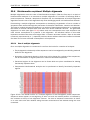
Figure 2.6: The protein alignment as it looks when you open it with background color according to
the Rasmol color scheme and automatically wrapped.
is kept on the same line. To see more of the alignment, you now have to scroll horizontally.
Next, expand the Annotation Layout group and select Show Annotations. Set the Offset to
"More offset" and set the Label to "On annotation".
Expand the Annotation Types group. Here you will see a list of the types annotation that are
carried by the sequences in the alignment (see figure 2.7).
Figure 2.7: The Annotation Layout and the Annotation Types in the Side Panel.
Check the "Region" annotation type, and you will see the regions as red annotations on the
CHAPTER 2. TUTORIALS
39
sequences.
Next, we will change the way the residues are colored. Click the Alignment Info group and under
Conservation, check "Background color". This will use a gradient as background color for the
residues. You can adjust the coloring by dragging the small arrows above the color box.
2.3.1
Saving the settings in the Side Panel
Now the alignment should similar to the one shown in figure 2.8.
Figure 2.8: The alignment when all the above settings have been changed.
At this point, if you just close the view, the changes made to the Side Panel will not be saved.
This means that you would have to perform the changes again next time you open the alignment.
To save the changes to the Side Panel, click the Save/Restore Settings button ( ) at the top
of the Side Panel and click Save Settings (see figure 2.9).
Figure 2.9: Saving the settings of the Side Panel.
This will open the dialog shown in figure 2.10.
In this way you can save the current state of the settings in the Side Panel so that you can apply
them to alignments later on. If you check Always apply these settings, these settings will be
applied every time you open a view of the alignment.
Type "My settings" in the dialog and click Save.
CHAPTER 2. TUTORIALS
40
Figure 2.10: Dialog for saving the settings of the Side Panel.
2.3.2
Applying saved settings
When you click the Save/Restore Settings button ( ) again and select Apply Saved Settings,
you will see "My settings" in the menu together with some pre-defined settings that the workbench
has created for you (see figure 2.11).
Figure 2.11: Menu for applying saved settings.
Whenever you open an alignment, you will be able to apply these settings. Each kind of view has
its own list of settings that can be applied.
At the bottom of the list you will see the "CLC Standard Settings" which are the default settings
for the view.
2.4
Tutorial: GenBank search and download
The CLC Combined Workbench allows you to search the NCBI GenBank database directly from
the program, giving you the opportunity to both open, view, analyze and save the search results
without using any other applications. To conduct a search in NCBI GenBank from CLC Combined
Workbench you must be connected to the Internet.
This tutorial shows how to find a complete human hemoglobin DNA sequence in a situation where
you do not know the accession number of the sequence.
To start the search:
Search | Search for Sequences at NCBI (
)
This opens the search view. We are searching for a DNA sequence, hence:
Nucleotide
Now we are going to adjust parameters for the search. By clicking Add search parameters you
activate an additional set of fields where you can enter search criteria. Each search criterion
CHAPTER 2. TUTORIALS
41
consists of a drop down menu and a text field. In the drop down menu you choose which part of
the NCBI database to search, and in the text field you enter what to search for:
Click Add search parameters until three search criteria are available | choose
Organism in the first drop down menu | write 'human' in the adjoining text field |
choose All Fields in the second drop down menu | write 'hemoglobin' in the adjoining
text field | choose All Fields in the third drop down menu | write 'complete' in the
adjoining text field
Figure 2.12: NCBI search view.
Click Start search (
2.4.1
) to commence the search in NCBI.
Searching for matching objects
When the search is complete, the list of hits is shown. If the desired complete human hemoglobin
DNA sequence is found, the sequence can be viewed by double-clicking it in the list of hits from
the search. If the desired sequence is not shown, you can click the 'More' button below the list
to see more hits.
2.4.2
Saving the sequence
The sequences which are found during the search can be displayed by double-clicking in the list
of hits. However, this does not save the sequence. You can save one or more sequence by
selecting them and:
click Download and Save
or drag the sequences into the Navigation Area
2.5
Tutorial: Align protein sequences
It is possible to create multiple alignments of nucleotide and protein sequences. CLC Combined
Workbench offers several opportunities to view alignments. The alignments can be used for
building phylogenetic trees.
CHAPTER 2. TUTORIALS
42
The sequences must be saved in the Navigation Area in order to be included in an alignment. To
save a sequence which is displayed in the View Area, click the tab of the sequence and press
Ctrl + S (or + S on Mac). In this tutorial eight protein sequences from the Example data will be
aligned. (See figure 2.13).
Figure 2.13: Eight protein sequences in 'Sequences' from the 'Protein' folder of the Example data.
To align the sequences:
select the sequences from the 'Protein' folder under 'Sequences' | Toolbox |
Alignments and Trees ( ) | Create Alignment ( )
2.5.1
The alignment dialog
This opens the dialog shown in fig. 2.14.
Figure 2.14: The alignment dialog displaying the 8 chosen protein sequences.
It is possible to add and remove sequences from Selected Elements list. Since we had already
selected the eight proteins, just click Next to adjust parameters for the alignment.
Clicking Next opens the dialog shown in fig. 2.15.
Leave the parameters at their default settings. An explanation of the parameters can be found
by clicking the help button ( ). Alternatively, a tooltips is displayed by holding the mouse cursor
on the parameters.
Click Finish to start the alignment process which is shown in the Toolbox under the Processes
tab. When the program is finished calculating it displays the alignment (see fig. 2.16):
Note! The new alignment is not saved automatically.
CHAPTER 2. TUTORIALS
43
Figure 2.15: The alignment dialog displaying the available parameters which can be adjusted.
Figure 2.16: The resulting alignment.
To save the alignment, drag the tab of the alignment view into the Navigation Area.
If you wish to use other alignment algorithms (like e.g. ClustalW), please download the Additional
Alignments Module from http://www.clcbio.com/plugins.
2.6
Tutorial: Create and modify a phylogenetic tree
You can make a phylogenetic tree from an existing alignment. (See how to create an alignment
in the tutorial: "Align protein sequences").
We use the 'protein alignment' located in 'More data' in the 'Protein' folder. To create a
phylogonetic tree:
click the 'protein alignment' in the Navigation Area | Toolbox | Alignments and
Trees ( ) | Create Tree ( )
A dialog opens where you can confirm your selection of the alignment. Click Next to move to
CHAPTER 2. TUTORIALS
44
the next step in the dialog where you can choose between the neighbor joining and the UPGMA
algorithms for making trees. You also have the option of including a bootstrap analysis of the
result. Leave the parameters at their default, and click Finish to start the calculation, which can
be seen in the Toolbox under the Processes tab. After a short while a tree appears in the View
Area (figure 2.17).
Figure 2.17: After choosing which algorithm should be used, the tree appears in the View Area.
The Side panel in the right side of the view allows you to adjust the way the tree is displayed.
2.6.1
Tree layout
Using the Side Panel (in the right side of the view), you can change the way the tree is displayed.
Click Tree Layout and open the Layout drop down menu. Here you can choose between standard
and topology layout. The topology layout can help to give an overview of the tree if some of the
branches are very short.
When the sequences include the appropriate annotation, it is possible to choose between the
accession number and the species names at the leaves of the tree. Sequences downloaded
from GenBank, for example, have this information. The Labels preferences allows these different
node annotations as well as different annotation on the branches.
The branch annotation includes the bootstrap value, if this was selected when the tree was
calculated. It is also possible to annotate the branches with their lengths.
2.7
Tutorial: Find restriction sites
This tutorial will show you how to find restriction sites and annotate them on a sequence.
There are two ways of finding and showing restriction sites. In many cases, the dynamic restriction
sites found in the Side Panel of sequence views will be useful, since it is a quick and easy way
of showing restriction sites. In the Toolbox you will find the other way of doing restriction site
analyses. This way provides more control of the analysis and gives you more output options, e.g.
a table of restriction sites and a list of restriction enzymes that can be saved for later use. In this
tutorial, the first section describes how to use the Side Panel to show restriction sites, whereas
the second section describes the restriction map analysis performed from the Toolbox.
CHAPTER 2. TUTORIALS
2.7.1
45
The Side Panel way of finding restriction sites
When you open a sequence, there is a Restriction sites setting in the Side Panel. By default, 20
of the most popular restriction enzymes are shown (see figure 2.18).
Figure 2.18: Showing restriction sites of ten restriction enzymes.
The restriction sites are shown on the sequence with an indication of cut site and recognition
sequence. In the list of enzymes in the Side Panel, the number of cut sites is shown in
parentheses for each enzyme (e.g. EcoRV cuts three times). If you wish to see the recognition
sequence of the enzyme, place your mouse cursor on the enzyme in the list for a short moment,
and a tool tip will appear.
You can add or remove enzymes from the list by clicking the Edit enzymes button. However,
there is a very smart way of adding enzymes:
make a selection on the sequence | right-click the selection | Show Enzymes only
Cutting Selection ( )
This will show a dialog where you can specify criteria for the enzymes to be added to the list in
the Side Panel. When you click OK, the selection will be scanned for restriction sites according
to the settings in the dialog, and the relevant enzymes will be added to the list in the Side Panel.
CHAPTER 2. TUTORIALS
46
Figure 2.19: This will add enzymes that cut this selection to the Side Panel.
2.7.2
The Toolbox way of finding restriction sites
Suppose you are working with sequence PERH3BC from the example data, and you wish to know
which restriction enzymes will cut this sequence exactly once and create a 3' overhang. Do the
following:
select the PERH3BC sequence from the 'Nucleotide' folder under 'Sequences' |
Toolbox in the Menu Bar | Cloning and Restriction Sites ( ) | Restriction Site
Analysis ( )
Click Next to set parameters for the restriction map analysis.
In the next step you write 3' into the filter to the left. Then you click in the list of enzymes to the
left and press Ctrl + A ( + A on Mac). Then click the Add button ( ). The result should be like
in figure 2.20.
Figure 2.20: Selecting enzymes.
Click Next. In this step you specify that you want to show enzymes that cut the sequence only
once. This means that you should de-select the Two restriction sites checkbox.
Click Next and select that you want to Add restriction sites as annotations on sequence and
Create restriction map. (See figure 2.21).
Click Finish to start the restriction map analysis.
CHAPTER 2. TUTORIALS
47
Figure 2.21: Selecting output for restriction map analysis.
View restriction site
The restriction sites are shown in two views: one view is in a tabular format and the other view
displays the sites as annotations on the sequence. To see both views at once:
View in the menu bar | Split Horizontally (
The result is shown in figure 2.22.
)
The restriction map at the bottom can also be shown as a
Figure 2.22: The result of the restriction map analysis is displayed in a table at the bottom and as
annotations on the sequence in the view at the top.
table of fragments produced by cutting the sequence with the enzymes:
Click the Fragments button (
) at the bottom of the view
In a similar way the fragments can be shown on a virtual gel:
Click the Gel button (
2.8
) at the bottom of the view
Tutorial: BLAST search
This tutorial shows you how to perform a BLAST search using CLC Combined Workbench.
CHAPTER 2. TUTORIALS
48
Suppose you are working with the NP_058652 protein which constitutes the beta part of the
hemoglobin molecule that is expressed in the adult house mouse, Mus musculus. To obtain more
information about this molecule you wish to query the Swiss-Prot database to find homologous
proteins in humans Homo sapiens, using the Basic Local Alignment Search Tool (BLAST)
algorithm.
Please note that your computer must be connected to the Internet to complete this tutorial.
Start out by:
select protein NP_058652 from the 'Protein' folder under 'Sequences' | Toolbox |
BLAST Search ( ) | NCBI BLAST ( )
In Step 1 you can choose which sequence to use as query sequence. Since you have already
chosen the sequence it is displayed in the Selected Elements list.
Click Next.
In Step 2 (figure 2.23), choose the default BLAST program: BLASTp: Protein sequence against
Protein database and select the Swiss-Prot database in the Database drop down menu.
Figure 2.23: Choosing BLAST program and database.
Click Next.
In the Limit by Entrez query in Step 3, choose Homo sapiens[ORGN] from the drop down menu
to arrive at the search configuration seen in figure 2.24. Including this term limits the query to
proteins of human origin.
Click Next to set how the output of the BLAST search should be displayed. Leave these options
at their default.
Click Finish to accept the parameter settings and begin the BLAST search.
The computer now contacts NCBI and places your query in the BLAST search queue. After a short
while the result is received and opened in a new view.
The output is shown in figure 2.25 and consists of a list of potential homologs that are sorted by
their BLAST match-score and shown in descending order below the query sequence.
Try placing your mouse cursor over a potential homologous sequence. You will see that a context
CHAPTER 2. TUTORIALS
49
Figure 2.24: The BLAST search is limited to homo sapiens[ORGN]. The remaining parameters are
left as default.
Figure 2.25: Output of a BLAST search. By holding the mouse pointer over the lines you can get
information about the sequence.
box appears containing information about the sequence and the match-scores obtained from the
BLAST algorithm.
The lines in the BLAST view are the actual sequences which are downloaded. This means that
you can zoom in and see the actual alignment:
Zoom in in the Tool Bar ( ) | Click in the BLAST view a number of times until you
see the residues
Now we will focus our attention on sequence P02042 - the BLAST hit that is second from the top
of the list. To open sequence P02042:
right-click the line representing sequence P02042 | Download Full Hit Sequence
from NCBI
This opens the sequence. However, the sequence is not saved yet. Drag and drop the sequence
CHAPTER 2. TUTORIALS
50
into the Navigation Area to save it. This homologous sequence is now stored in the CLC Combined
Workbench and you can use it to gain information about the query sequence by using the various
tools of the workbench, e.g. by studying its textual information, by studying its annotation or by
aligning it to the query sequence.
2.9
Tutorial: Tips for specialized BLAST searches
BLAST is a great and invaluable tool in bioinformatics. BLAST has become a very central tool when
it comes to identification of homologues and similar sequences, and at the same time BLAST
has evolved to become a highly complex tool which can be used for many different purposes.
In this tutorial you will learn how to:
• Use BLAST to find the gene of a protein on a genomic sequence.
• Find primer binding sites on genomic sequences
• Identify remote protein homologues.
This tutorial requires some experience using the Workbench, so if you get stuck at some point,
we recommend going through the more basic tutorials first.
2.9.1
Locate a protein sequence on the chromosome
If you have a protein sequence but want to see the actual location on the chromosome this is
easy to do using BLAST.
In this example we wish to map the protein sequence of the Human beta-globin protein to a
chromosome. We know in advance that the beta-globin is located somewhere on chromosome
11.
Data used in this example can be downloaded from GenBank:
Search | Search for Sequences at NCBI (
)
Human chromosome 11 (NC_000011) consists of 134452384 nucleotides and the beta-globin
(AAA16334) protein has 147 amino acids.
BLAST configuration
Next, conduct a local BLAST search:
Toolbox | BLAST Search (
) | Local BLAST (
)
Select the protein sequence as query sequence and click Next. Since you wish to BLAST a
protein sequence against a nucleotide sequence, use tblastn which will automatically translate
the nucleotide sequence selected as database.
As Target select NC_000011 that you downloaded. If you are used to BLAST, you will know that
you usually have to create a BLAST database before BLASTing, but the Workbench does this "on
the fly" when you just select one or more sequences.
Click Next, leave the parameters at their default, click Next again, and then Finish.
CHAPTER 2. TUTORIALS
51
Inspect BLAST result
When the BLAST result appears make a split view so that both the table and graphical view is
visible (see figure 2.26). This is done by pressing Ctrl ( on Mac) while clicking the table view
( ) at the bottom of the view.
In the table start out by showing two additional columns; "% Positive" and "Query start". These
should simply be checked in the Side Panel.
Now, sort the BLAST table view by clicking the column header "% Positive". Then, press and hold
the Ctrl button ( on Mac) and click the header "Query start". Now you have sorted the table
first on % Positive hits and then the start position of the query sequence. Now you see that you
actually have three regions with a 100% positive hit but at different locations on the chromosome
sequence (see figure 2.26).
Figure 2.26: Placement of translated nucleotide sequence hits on the Human beta-globin.
Why did we find, on the protein level, three identical regions between our query protein sequence
and nucleotide database?
The beta-globin gene is known to have three exons and this is exactly what we find in the BLAST
search. Each translated exon will hit the corresponding sequence on the chromosome.
In the table you can also see the "Hit start" and "Hit end" positions. These are the corresponding
positions on the chromosome sequence. Notice that the hit start position has a lover number
than the hit end position. This is because the gene is located on the complementary strand. If
you place the mouse cursor on the sequence hits in the graphical view, you can see the reading
CHAPTER 2. TUTORIALS
52
frame which is -1, -2 and -3 for the three hits, respectively.
Verify the result
Open NC_000011 in a view, and go to the Hit start position (5,204,729) and zoom to see
the blue gene annotation. You can now see the exon structure of the Human beta-globin gene
showing the three exons on the reverse strand (see figure 2.27).
Figure 2.27: Human beta-globin exon view.
If you wish to verify the result, make a selection covering the gene region and open it in a new
view:
right-click | Open Selection in New View (
) | Save (
)
Save the sequence, and perform a new BLAST search:
• Use the new sequence as query.
• Use BLASTx
• Use the protein sequence, AAA16334, as database
Using the genomic sequence as query, the mapping of the protein sequence to the exons is
visually very clear as shown in figure 2.28.
In theory you could use the chromosome sequence as query, but the performance would be very
bad: it would take a long time, and the computer might run out of memory.
In this example, you have used well-annotated sequences where you could have searched for
the name of the gene instead of using BLAST. However, there are other situations where you
either do not know the name of the gene, or the genomic sequence is poorly annotated. In these
cases, the approach described in this tutorial can be very productive.
2.9.2
BLAST for primer binding sites
You can adjust the BLAST parameters so it becomes possible to match short primer sequences
against a larger sequence. Then it is easy to examine whether already existing lab primers can
be reused for other purposes, or if the primers you designed are specific.
Purpose
Standard BLAST
Primer search
Program
blastn
blastn
Word size
11
7
Low complexity filter
On
Off
Expect value
10
1000
CHAPTER 2. TUTORIALS
53
Figure 2.28: Verification of the result: at the top a view of the whole BLAST result. At the bottom
the same view is zoomed in on exon 3 to show the amino acids.
These settings are shown in figure 2.29.
2.9.3
Finding remote protein homologues
If you look for short identical peptide sequences in a database, the standard BLAST parameters will have to be reconfigured. Using the parameters described below, you are likely
to be able to identify whether antigenic determinants will cross react to other proteins.
Purpose
Program Word size Low complexity filter Expect value Scoring matrix
Standard BLAST
blastp
3
On
10
BLSUM62
Remote homologues blastp
2
Off
20000
PAM30
These settings are shown in figure 2.30.
2.9.4
Further reading
A valuable source of information about BLAST can be found at http://www.ncbi.nlm.nih.
gov/blast/producttable.shtml.
Remember that BLAST is a heuristic method thus you cannot trusted BLAST to be accurate. For
very accurate results you should use Smith-Waterman. You can read "Bioinformatics explained:
CHAPTER 2. TUTORIALS
54
Figure 2.29: Settings for searching for primer binding sites.
Figure 2.30: Settings for searching for remote homologues.
BLAST versus Smith-Waterman" here: http://www.clcbio.com/BE.
2.10
Tutorial: Proteolytic cleavage detection
This tutorial shows you how to find cut sites and see an overview of fragments when cleaving
proteins with proteolytic cleavage enzymes.
Suppose you are working with protein CAA32220 from the example data, and you wish to see
where the enzyme trypsin will cleave the protein. Furthermore, you want to see details for the
resulting fragments which are between 10 and 15 amino acids long.
CHAPTER 2. TUTORIALS
55
click protein CAA32220 from the 'Protein' folder under 'Sequences' | Toolbox |
Protein Analyses ( ) | Proteolytic Cleavage
This opens Step 1 of the Proteolytic Cleavage dialog. In this step you can choose which
sequences to include in the analysis. Since you have already chosen protein CAA32220, click
Next.
In this step you should select Trypsin. This is illustrated in figure 2.31.
Figure 2.31: Selecting trypsin as the cleaving enzyme.
Click Next to go to Step 3 of the dialog.
In Step 3 you can adjust the parameters for which fragments of the cleavage you want to include
in the table output of the analysis.
Type '10' in the Exclude fragments shorter than | Check the box: Exclude fragments
longer than | enter '15' in the corresponding text field
These parameter adjustments are shown in figure 2.32:
Figure 2.32: Adjusting the output from the cleavage to include fragments which are between 10
and 15 amino acids long.
Click Finish to make the analysis. The result of the analysis can be seen in figure 2.33
CHAPTER 2. TUTORIALS
56
Figure 2.33: The output of the proteolytic cleavage shows the cleavage sites as annontations in
the protein sequence. The accompanying table lists all the fragments which are between 10 and
15 amino acids long.
Note! The output of proteolytic cleavage is two related views. The sequence view displays
annotations where the sequence is cleaved. The table view shows information about the
fragments satisfying the parameters set in the dialog. Subsequently, if you have restricted the
fragment parameters, you might have more annotations on the sequence than fragments in the
table.
If you conduct another proteolytic cleavage on the same sequence, the output consists of:
(possibly) new annotations on the original sequence and an additional table view, listing all
fragments.
2.11
Tutorial: Primer design
In this tutorial, you will see how to use CLC Combined Workbench for finding primers for PCR
amplification of a specific region.
We use the PERH3BC sequence from the 'Nucleotide' folder under 'Sequences' of the Example
data. First, open the sequence in the Primer Designer:
Select the PERH3BC sequence | Show (
) | Primer Designer (
)
Now the sequence is opened and we are ready to begin designing primers.
2.11.1
Specifying a region for the forward primer
In this example we know where we want the primers to be located. If you have annotated your
sequence, these annotations are also shown in the primer designer to help you guide where the
primers should be located.
In this tutorial, we want the forward primer to be in a region between positions 20 and 45. Select
CHAPTER 2. TUTORIALS
this region, right-click and choose "Forward primer region here" (
57
) (see figure 2.34).
Figure 2.34: Right-clicking a selection and choosing "Forward primer region here".
This will add an annotation to this region, and five rows of red and green dots are seen below as
shown in figure 2.35:
Figure 2.35: Five lines of dots representing primer suggestions. There is a line for each length.
2.11.2
Examining the primer suggestions
Each line consists of a number of dots, each representing the starting point of a possible primer.
E.g. the first dot on the first line (primers of length 18) represents a primer starting at the dot's
position and with a length of 18 nucleotides (shown as the white area in figure 2.36):
CHAPTER 2. TUTORIALS
58
Figure 2.36: The first dot on line one represents the starting point of a primer that will anneal to
the highlighted region.
Position the mouse cursor upon a dot and you will see an information box providing data about
this primer. Clicking the dot will select the region where the primer will anneal. (See figure 2.37):
Figure 2.37: Clicking the dot will select the corresponding region, and placing the cursor upon the
dot will reveal an information box.
Note that some of the dots are colored red. This indicates that the primer represented by this
dot does not meet the requirements set in the Primer parameters (see figure 2.38):
Figure 2.38: The Primer parameters.
Note that the maximum melting temperature is per default set to 58, and this is the reason why
the primer in figure 2.37 with an melting temperature of 58,4 does not meet the requirements
and is colored red. If you raise the maximum melting temperature to 59, the primer will meet the
requirements and the dot becomes green.
In figure 2.37 there is an asterisk (*) before the melting temperature. This indicates that this
primer does not meet the requirements regarding melting temperature. In this way, you can easily
see why a specific primer (represented by a dot) fails to meet the requirements.
CHAPTER 2. TUTORIALS
59
By adjusting the Primer parameters you can define primers which match your specific needs.
Since the dots are constantly updated, you can immediately see how a change in the primer
parameters affects the number of red and green dots.
2.11.3
Calculating a primer pair
Until now, we have been looking at the forward primer. To mark a region for the reverse primer,
make a selection covering positions 125 to 157 and:
Right-click the selection | Reverse primer region here (
)
The two regions should now be located as shown in figure 2.39:
Figure 2.39: A forward and a reverse primer region enclosing the conflicts.
Now, you can let CLC Combined Workbench calculate all the possible primer pairs based on the
Primer parameters that you have defined:
Click the Calculate button | Modify parameters regarding the combination of the
primers (for now, just leave them unchanged)| Calculate
This will open a table showing the possible combinations of primers. To the right, you can specify
the information you want to display, e.g. showing secondary structure (see figure 2.40):
Clicking a primer pair in the table will make a corresponding selection on the sequence in the
view above. At this point, you can either settle on a specific primer pair or save the table for
later. If you want to use e.g. the first primer pair for your experiment, right-click this primer pair
in the table and save the primers.
You can also mark the position of the primers on the sequence by selecting Mark primer
annotation on sequence in the right-click menu (see figure 2.41):
You have now reached the end of this tutorial which has shown some of the many options
of the primer design functionalities of CLC Combined Workbench. You can read much more
in the program's Help function ( ) or in the users manual on http://www.clcbio.com/
download.
2.12
Tutorial: Assembly
In this tutorial, you will see how to assemble data from automated sequencers into a contig and
how to find and inspect any inconsistencies that may exist between different reads.
First, select the five trace files (the reads) in the "Assembly" folder in the "Nucleotide" folder of
CHAPTER 2. TUTORIALS
60
Figure 2.40: A list of primers. To the right are the Side Panel showing the available choices of
information to display.
Figure 2.41: The options available in the right-click menu. Here, "Mark primer annotation on
sequence" has been chosen, resulting in two annotations on the sequence above (labeled "Oligo").
the Example data. To assemble the files:
Toolbox in the Menu Bar | Sequencing Data Analyses (
( )
) | Assemble Sequences
Click Next to go to the second step of the assembly where you choose to trim the sequences.
Click Next, and you will be able to specify how this trimming should be performed (see figure
2.42).
It is possible to trim based on the quality of the chromatogram traces and you can also trim
CHAPTER 2. TUTORIALS
61
Figure 2.42: Specifying how sequences should be trimmed.
for vector contamination. If you place the mouse cursor on the parameters, you will see a brief
explanation.
For now, we leave these settings at their default. Click Finish.
2.12.1
Getting an overview of the contig
The result of the assembly is a Contig which is an alignment of the five reads. Click Fit width
( ) to see an overview of the contig. To help you determine the coverage, display a coverage
graph (see figure 2.43):
Alignment info in Side Panel | Coverage | Graph
Figure 2.43: An overview of the contig with the coverage graph.
This overview can be an aid in determining whether coverage is satisfactory, and if not, which
regions a new sequencing effort should focus on. Next, we go into the details of the contig.
CHAPTER 2. TUTORIALS
2.12.2
62
Finding and editing inconsistencies
Click Zoom to 100% ( ) to zoom in on the residues at the beginning of the contig. Click the
Find Inconsistency button at the top of the Side Panel or press the Space key to find the first
position where there is disagreement between the reads (see figure 2.44).
Figure 2.44: Using the Find Inconsistency button highlights inconsistencies.
In this example, the first and the third reads have a "T", whereas the second line has a "C"
(marked with a light-pink background color). The gray color of the residues in the fourth line
indicates that this region has been trimmed (based on the criteria in figure 2.42) and that this
information is not included in the creation of the contig. Since the majority of the reads show a
"T" in this position, we settle on this in the consensus. In order to show that there has been a
disagreement in this position, type a lower-case "t" (see figure 2.45).
Figure 2.45: Just press the key to replace the residue.
Clicking the Find Inconsistency button again will find the next inconsistency.
2.12.3
Inspecting the traces
Here it is read1 which is different from read3 and read4. There are two peaks - black and green.
In order to see the details, we zoom in on this position:
Zoom in in the Tool Bar (
) | Click the selected base | Click again three times
Now you have zoomed in on the trace (see figure 2.46).
Figure 2.46: Now you can see all the details of the traces.
Since the other reads have a G, and because there is also a black peak below the green peak,
we conclude that it should have been a G. To change the A to G:
Select the A in read1 | Press "g" on your keyboard
CHAPTER 2. TUTORIALS
2.12.4
63
Getting an overview of the inconsistencies
Browsing the inconsistencies by clicking the Find Inconsistencies button is useful in many cases,
but you might also want to get an overview of all the inconsistencies in the entire contig. This is
easily achieved by showing the contig in a table view:
Press and hold the Ctrl-button ( on Mac) | Click Show Table ( ) at the bottom
of the view
This will open a table showing the inconsistencies. You can right-click the Comment field and
enter you own comment as shown in figure 2.47.
Figure 2.47: he graphical view of a contig is displayed at the top. At the bottom the conflicts are
shown in a table. At the conflict at position 637, the user has entered a comment in the table. This
comment is now also reflected on the tooltip of the conflict annotation in the graphical view above.
When you edit a comment, this is also reflected in the conflict annotation on the consensus
sequence. This means that when you use this sequence later on, you will easily be able to see
the comments you have entered. The comment could be e.g. your interpretation of the conflict.
2.12.5
Documenting your changes
Whenever you make a change like replacing a "T" for a "t", it will be noted in the contig's history.
To open the history:
Right-click the tab of the contig | Show | History (
)
In the history, you can see the details of each change (see figure 2.48).
2.12.6
Using the result for further analyses
When you have finished editing the contig, it can be saved, and you can also extract and save
the consensus sequence:
Right-click the name "Consensus" | Open Copy of Sequence in New View | Save
( )
This will make it possible to use this sequence for further analyses in the CLC Combined
Workbench. All the conflict annotations are preserved, and in the sequence's history, you will
find a reference to the original contig. As long as you also save the contig, you will always be
able to go back to it by clicking the reference in the consensus sequence's history (see figure
CHAPTER 2. TUTORIALS
64
Figure 2.48: The history of the contig showing that a "A" has been substituted with a "g" in "read1"
at position 651.
2.49).
Figure 2.49: The history of the consensus sequence which has been extracted from the contig.
Clicking the blue text will find the saved contig in the Navigation Area.
2.13
Tutorial: In silico cloning
In this tutorial, you will see how to insert a sequence fragment into a cloning vector and create
a circular map of the vector. The sequence is a PCR fragment which has been created using
primers with restriction sites at the ends.
The sequences are located in the Example data in the "Nucleotide" folder under "Cloning":
• PCR fragment with EcoRV restriction sites
• PCR fragment with SphI restriction sites (used in this tutorial)
• The commonly known pBR322 cloning vector (used in this tutorial)
CHAPTER 2. TUTORIALS
65
We choose to insert the fragment into the tetracyclin resistance gene of pBR322, which will
enable us to select for tetracyclic sensitive clones (the tetracyclin resistance gene is marked by
the blue annotation with the label "tet").
2.13.1
The cloning editor
Cloning in CLC Combined Workbench is carried out in the Cloning Editor ( ) which can contain
a number of sequences. To open the two sequences - the pBR322 vector and the PCR fragment
- in the cloning editor (additional sequences can be added later):
select 'pBR322' and 'PCR fragment with SphI sites' | Toolbox | Cloning and
Restriction Sites ( ) | Cloning ( ) | OK
This will show an information dialog which tells that the two sequences have been converted to
a sequence list which can be saved in the Navigation Area. Click OK and the cloning editor will
open as shown in figure 2.50.
Figure 2.50: Two sequences in the cloning editor: The vector and the PCR fragment.
The small colored triangles represent restriction sites. Restriction sites for 10 different enzymes
are shown per default, but for now we are only interested in the SphI sites which are not shown.
To hide the other restriction sites and add the SphI enzyme:
Restriction sites in the Side Panel | Deselect all | Edit enzymes | find and doubleclick SphI in the upper list | Finish
Notice that there are two SphI sites at the ends of the PCR fragment and that there is one
SphI site in the middle of the tetracyclin resistance gene of pBR322. We are going to insert the
fragment at this SphI site. There are two steps in this: First we have to cut the fragment with the
SphI enzyme. This will produce a new fragment with "sticky ends" since the SphI enzyme creates
a 3' overhang. Second, this fragment has to be inserted at vector's SphI site.
CHAPTER 2. TUTORIALS
2.13.2
66
Cutting the PCR fragment with the SphI enzyme
To cut the PCR fragment with the SphI enzyme:
right-click one of the SphI restriction sites | Cut Sequence at All SphI Sites
This will cut the sequence at the two SphI sites and generate three new fragments as seen in
figure 2.51.
Figure 2.51: The PCR fragment cut with SphI enzyme. The single stranded regions are illustrated
with a blue annotations labeled "SS".
We do not need the two small leftovers so these can just be deleted:
right-click each of the small fragments | Delete Sequence
2.13.3
Inserting the fragment in the vector
Find and select the SphI restriction site at position 567 of the donor plasmid, pBR322. To insert
the PCR fragment at this position:
right-click the SphI restriction site in pBR322 | Insert Sequence at This SphI site |
Select the PCR fragment from the drop-down list | Select
This will produce a result shown in figure 2.52.
Figure 2.52: The fragment has been inserted into the cloning vector. Notice that the sequence
inserted is automatically selected and both ends of the inserted fragment are shown in the
sequence details.
CHAPTER 2. TUTORIALS
67
Now the fragment has been inserted, and you can see how it breaks up the tetracyclin resistance
gene. If you had another sequence with an overhang different from the one created by the SphI
enzyme, you would not be able to insert this.
Open the sequence in a circular view and see that the tetracycline gene is disrupted by an insert
of the HBG2 gene:
right-click the name of the pBR322 sequence | Open Sequence in Circular View
This will show a circular view of the plasmid as shown in figure 2.53.
Figure 2.53: A circular view of the result of the cloning tutorial.
This very short walk-through shows some of the cloning capabilities which are included in CLC
Combined Workbench, but there are many other ways to manipulate sequences in the cloning
editor. To see all the possibilities, press F1 and read the help section for the cloning editor.
However, all of the possibilities have one thing in common: they are all accessed by right-clicking
selections, restriction sites or sequence names.
2.14
Tutorial: Folding RNA molecules
In this tutorial, you will learn how to predict the secondary structure of an RNA molecule. You will
also learn how to use the powerful ways of viewing and interacting with graphical displays of the
structure.
The sequence to be folded in this tutorial is a tRNA molecule with the characteristic secondary
structure as shown in figure 2.54.
Figure 2.54: Secondary structure of a tRNA molecule.
The goal for this tutorial is to get a nice-looking graphic result of this structure.
CHAPTER 2. TUTORIALS
68
The sequence we are working with is a mitochondrial tRNA molecule from Drosophilia melanogaster.
The name is AB009835, and it is located in the example data under Nucleotide -> RNA.
Select the sequence AB009835 | Toolbox | RNA Structure (
Structure ( )
) | Predict Secondary
Since the sequence is already selected, click Next. In this dialog, choose to compute a sample
of sub-optimal structure and leave the rest of the settings at their default (see figure 2.55).
Figure 2.55: Selecting to compute 10 suboptimal structures.
Click Finish and you will see a linear view of the sequence with structure information for the ten
structures below the sequence, and the elements of the best structure are shown as annotations
above the sequence (see figure 2.56).
Figure 2.56: The inital, linear view of the secondary structure prediction.
For now, we are not interested in the linear view. Click the Show Secondary Structure 2D View
( ) button at the bottom of the view to show the secondary structure. It looks as shown in
figure 2.57).
Figure 2.57: The inital 2D view of the secondary structure.
CHAPTER 2. TUTORIALS
69
This structure does not look like the one we expected (shown in figure 2.54). We now take a look
at some of the other structures (we chose to compute 10 different structures) to see if we can
find the classic tRNA structure. First, open a split view of the Show Secondary Structure Table
( ):
Press and hold Ctrl (
on Mac) | Show Secondary Structure Table (
)
You will now see a table displaying the ten structures. Selecting a structure in the table will
display this structure in the view above. Select the second structure in the table. The views
should now look like figure 2.58).
Figure 2.58: A split view showing the scondary structure table at the bottom and the Secondary
structure 2D view at the top. (You might need to Zoom out to see the structure).
The secondary structure now looks very similar to figure 2.54. By adjusting the layout, we can
make it look exactly the same: in the Side Panel of the 2D view, under Secondary Structure,
choose the Proportional layout strategy. You will now see that the appearance of structure
changes.
Next, zoom in on the structure to see the residues. This is easiest if you first close (
view at the bottom.
Zoom in (
) the table
) | Click the structure until you see the residues
If you wish to make some manual corrections of the layout of the structure, first select the Pan
( ) mode in the Tool bar. Now place the mouse cursor on the opening of a stem, and a visual
indication of the anchor point for turning the substructure will be shown (see figure 22.14).
Click and drag to rotate the part of the structure represented by the line going from the anchor
point. In order to keep the bases in a relatively sequential arrangement, there is a restriction
on how much the substructure can be rotated. The highlighted part of the circle represents the
angle where rotating is allowed.
In figure 22.15, the structure shown in figure 22.14 has been modified by dragging with the
CHAPTER 2. TUTORIALS
70
Figure 2.59: The blue circle represents the anchor point for rotating the substructure.
mouse.
Figure 2.60: The structure has now been rotated.
The view can of course be printed (
) or exported as graphics (
).
Part II
Core Functionalities
71
Chapter 3
User interface
Contents
3.1
3.2
3.3
3.4
3.5
Navigation Area . . . . . . . . . . . . . . . . . . . . . . . . . . . . . . . . . .
73
3.1.1
Data structure . . . . . . . . . . . . . . . . . . . . . . . . . . . . . . . .
73
3.1.2
Create new folders
. . . . . . . . . . . . . . . . . . . . . . . . . . . . .
76
3.1.3
Sorting folders . . . . . . . . . . . . . . . . . . . . . . . . . . . . . . . .
76
3.1.4
3.1.5
Multiselecting elements . . . . . . . . . . . . . . . . . . . . . . . . . . .
Moving and copying elements . . . . . . . . . . . . . . . . . . . . . . . .
76
76
3.1.6
Change element names . . . . . . . . . . . . . . . . . . . . . . . . . . .
78
3.1.7
Delete elements . . . . . . . . . . . . . . . . . . . . . . . . . . . . . . .
79
3.1.8
Show folder elements in View . . . . . . . . . . . . . . . . . . . . . . . .
79
3.1.9
Sequence properties . . . . . . . . . . . . . . . . . . . . . . . . . . . .
80
View Area . . . . . . . . . . . . . . . . . . . . . . . . . . . . . . . . . . . . .
80
3.2.1
Open view . . . . . . . . . . . . . . . . . . . . . . . . . . . . . . . . . .
80
3.2.2
Show element in another view . . . . . . . . . . . . . . . . . . . . . . .
81
3.2.3
Close views . . . . . . . . . . . . . . . . . . . . . . . . . . . . . . . . .
82
3.2.4
Save changes in a view . . . . . . . . . . . . . . . . . . . . . . . . . . .
82
3.2.5
Undo/Redo
. . . . . . . . . . . . . . . . . . . . . . . . . . . . . . . . .
83
3.2.6
Arrange views in View Area . . . . . . . . . . . . . . . . . . . . . . . . .
83
3.2.7
Side Panel . . . . . . . . . . . . . . . . . . . . . . . . . . . . . . . . . .
86
Zoom and selection in View Area . . . . . . . . . . . . . . . . . . . . . . . .
86
3.3.1
Zoom In . . . . . . . . . . . . . . . . . . . . . . . . . . . . . . . . . . .
86
3.3.2
Zoom Out . . . . . . . . . . . . . . . . . . . . . . . . . . . . . . . . . .
87
3.3.3
Fit Width . . . . . . . . . . . . . . . . . . . . . . . . . . . . . . . . . . .
87
3.3.4
Zoom to 100%
. . . . . . . . . . . . . . . . . . . . . . . . . . . . . . .
87
3.3.5
Move . . . . . . . . . . . . . . . . . . . . . . . . . . . . . . . . . . . . .
87
3.3.6
Selection . . . . . . . . . . . . . . . . . . . . . . . . . . . . . . . . . . .
88
Toolbox and Status Bar . . . . . . . . . . . . . . . . . . . . . . . . . . . . . .
88
3.4.1
Processes . . . . . . . . . . . . . . . . . . . . . . . . . . . . . . . . . .
88
3.4.2
Toolbox . . . . . . . . . . . . . . . . . . . . . . . . . . . . . . . . . . . .
89
3.4.3
Status Bar . . . . . . . . . . . . . . . . . . . . . . . . . . . . . . . . . .
89
Workspace . . . . . . . . . . . . . . . . . . . . . . . . . . . . . . . . . . . . .
89
72
CHAPTER 3. USER INTERFACE
3.6
73
3.5.1
Create Workspace . . . . . . . . . . . . . . . . . . . . . . . . . . . . . .
89
3.5.2
Select Workspace . . . . . . . . . . . . . . . . . . . . . . . . . . . . . .
90
3.5.3
Delete Workspace . . . . . . . . . . . . . . . . . . . . . . . . . . . . . .
90
List of shortcuts . . . . . . . . . . . . . . . . . . . . . . . . . . . . . . . . . .
90
This chapter provides an overview of the different areas in the user interface of CLC Combined
Workbench. As can be seen from figure 3.1 this includes a Navigation Area, View Area, Menu
Bar, Toolbar, Status Bar and Toolbox.
Figure 3.1: The user interface consists of the Menu Bar, Toolbar, Status Bar, Navigation Area,
Toolbox, and View Area.
3.1
Navigation Area
The Navigation Area is located in the left side of the workbench, under the Toolbar (see figure
3.2). It is used for organizing and navigating data. Its behavior is similar to the way files and
folders are usually displayed on your computer.
3.1.1
Data structure
The data in the Navigation Area is organized into a number of Locations. When you start the CLC
Combined Workbench for the first time, there is one location called CLC_Data.
A location represents a folder on your computer: The data shown under a location in the
Navigation Area is stored on your computer in the folder which the location points to.
This is explained visually in figure 3.3.
CHAPTER 3. USER INTERFACE
74
Figure 3.2: The Navigation Area.
Figure 3.3: In this example the location called 'CLC_Data' points to the folder at C:\Documents and
settings\clcuser\CLC_Data.
Adding locations
Per default, there is one location in the Navigation Area called CLC_Data. It points to the
following folder:
• On Windows: C:\Documents and settings\<username>\CLC_Data
• On Mac: /CLC_Data
• On Linux: /homefolder/CLC_Data
You can easily add more locations to the Navigation Area:
File | New | Location (
)
This will bring up a dialog where you can navigate to the folder you wish to use as your new
location (see figure 3.4).
When you click Open, the new location is added to the Navigation Area as shown in figure 3.5.
CHAPTER 3. USER INTERFACE
75
Figure 3.4: Navigating to a folder to use as a new location.
Figure 3.5: The new location has been added.
The name of the new location will be the name of the folder selected for the location. To see
where the folder is located on your computer, you can either place your mouse cursor on the
location icon ( ) for second, or you can right-click the location and choose Properties. This will
show a dialog with the path to the location.
Sharing data is possible of you add a location on a network drive. The procedure is similar to
the one described above. When you add a location on a network drive or a removable drive, the
location will appear inactive when you are not connected. Once you connect to the drive again,
click Update All ( ) and it will become active (note that there will be a few seconds' delay from
you connect).
Opening data
The elements in the Navigation Area are opened by :
Double-click the element
or Click the element | Show ( ) in the Toolbar | Select the desired way to view the
element
This will open a view in the View Area, which is described in section 3.2.
Adding data
Data can be added to the Navigation Area in a number of ways. Files can be imported from
the file system (see chapter 7). Furthermore, an element can be added by dragging it into the
Navigation Area. This could be views that are open, elements on lists, e.g. search hits or
CHAPTER 3. USER INTERFACE
76
sequence lists, and files located on your computer. Finally, you can add data by adding a new
location (see section 3.1.1).
If a file or another element is dropped on a folder, it is placed at the bottom of the folder. If it is
dropped on another element, it will be placed just below that element.
If the element already exists in the Navigation Area, you will be asked whether you wish to create
a copy.
3.1.2
Create new folders
In order to organize your files, they can be placed in folders. Creating a new folder can be done
in two ways:
right-click an element in the Navigation Area | New | Folder (
or File | New | Folder (
)
)
If a folder is selected in the Navigation Area when adding a new folder, the new folder is added
at the bottom of this folder. If an element is selected, the new folder is added right above that
element.
You can move the folder manually by selecting it and dragging it to the desired destination.
3.1.3
Sorting folders
You can sort the elements in a folder alphabetically:
right-click the folder | Sort Folder
On Windows, subfolders will be placed at the top of the folder, and the rest of the elements will
be listed below in alphabetical order. On Mac, both subfolders and other elements are listed
together in alphabetical order.
3.1.4
Multiselecting elements
Multiselecting elements means that you select more than one element at the same time. This
can be done in the following ways:
• Holding down the <Ctrl> key ( on Mac) while clicking on multiple elements selects the
elements that have been clicked.
• Selecting one element, and selecting another element while holding down the <Shift> key
selects all the elements listed between the two locations (the two end locations included).
• Selecting one element, and moving the curser with the arrow-keys while holding down the
<Shift> key, enables you to increase the number of elements selected.
3.1.5
Moving and copying elements
Elements can be moved and copied in several ways:
• Using Copy (
), Cut (
) and Paste (
) from the Edit menu.
CHAPTER 3. USER INTERFACE
• Using Ctrl + C (
• Using Copy (
77
+ C on Mac), Ctrl + X (
), Cut (
) and Paste (
+ X on Mac) and Ctrl + V (
+ V on Mac).
) in the Toolbar.
• Using drag and drop to move elements.
• Using drag and drop while pressing Ctrl / Command to copy elements.
In the following, all of these possibilities for moving and copying elements are described in further
detail.
Copy, cut and paste functions
Copies of elements and folders can be made with the copy/paste function which can be applied
in a number of ways:
select the files to copy | right-click one of the selected files | Copy (
the location to insert files into | Paste ( )
or select the files to copy | Ctrl + C (
+ P ( + P on Mac)
) | right-click
+ C on Mac) | select where to insert files | Ctrl
or select the files to copy | Edit in the Menu Bar | Copy (
files | Edit in the Menu Bar | Paste ( )
) | select where to insert
If there is already an element of that name, the pasted element will be renamed by appending a
number at the end of the name.
Elements can also be moved instead of copied. This is done with the cut/paste function:
select the files to cut | right-click one of the selected files | Cut (
the location to insert files into | Paste ( )
or select the files to cut | Ctrl + X (
+ V ( + V on Mac)
) | right-click
+ X on Mac) | select where to insert files | Ctrl
When you have cut the element, it is "greyed out" until you activate the paste function. If you
change your mind, you can revert the cut command by copying another element.
Move using drag and drop
Using drag and drop in the Navigation Area, as well as in general, is a four-step process:
click the element | click on the element again, and hold left mouse button | drag
the element to the desired location | let go of mouse button
This allows you to:
• Move elements between different folders in the Navigation Area
• Drag from the Navigation Area to the View Area: A new view is opened in an existing View
Area if the element is dragged from the Navigation Area and dropped next to the tab(s) in
that View Area.
• Drag from the View Area to the Navigation Area: The element, e.g. a sequence, alignment,
search report etc. is saved where it is dropped. If the element already exists, you are asked
CHAPTER 3. USER INTERFACE
78
whether you want to save a copy. You drag from the View Area by dragging the tab of the
desired element.
Use of drag and drop is supported throughout the program. Further description of the function is
found in connection with the relevant functions.
Copy using drag and drop
To copy instead of move using drag and drop, hold the Ctrl (
on Mac) key while dragging::
click the element | click on the element again, and hold left mouse button | drag
the element to the desired location | press Ctrl ( on Mac) while you let go of
mouse button release the Ctrl/ button
3.1.6
Change element names
This section describes two ways of changing the names of sequences in the Navigation Area. In
the first part, the sequences themselves are not changed - it's their representation that changes.
The second part describes how to change the name of the element.
Change how sequences are displayed
Sequence elements can be displayed in the Navigation Area with different types of information:
• Name (this is the default information to be shown).
• Accession (sequences downloaded from databases like GenBank have an accession
number).
• Latin name.
• Latin name (accession).
• Common name.
• Common name (accession).
Whether sequences can be displayed with this information depends on their origin. Sequences
that you have created yourself or imported might not include this information, and you will only be
able to see them represented by their name. However, sequences downloaded from databases
like GenBank will include this information. To change how sequences are displayed:
right-click any element or folder in the Navigation Area | Sequence Representation
| select format
This will only affect sequence elements, and the display of other types of elements, e.g.
alignments, trees and external files, will be not be changed. If a sequence does not have this
information, there will be no text next to the sequence icon.
CHAPTER 3. USER INTERFACE
79
Rename element
Renaming a folder or an element can be done in three different ways:
select the element | Edit in the Menu Bar | Rename
or select the element | F2
click the element once | wait one second | click the element again
When you can rename the element, you can see that the text is selected and you can move the
cursor back and forth in the text. When the editing of the name has finished; press Enter or
select another element in the Navigation Area. If you want to discard the changes instead, press
the Esc-key.
3.1.7
Delete elements
Deleting a folder or an element can be done in two ways:
right-click the element | Delete (
)
or select the element | press Delete key
This will cause the element to be moved to the Recycle Bin ( ) where it is kept until the recycle
bin is emptied. This means that you can recover deleted elements later on.
Restore Deleted Elements
The elements in the Recycle Bin ( ) can be restored by dragging the elements with the mouse
into the folder where they used to be.
If you have deleted large amounts of data taking up very much disk space, you can free this disk
space by emptying the Recycle Bin ( ):
Edit in the Menu Bar | Empty Recycle Bin (
)
Note! This cannot be undone, and you will therefore not be able to recover the data present in
the recycle bin when it was emptied.
3.1.8
Show folder elements in View
A location or a folder might contain large amounts of elements. It is possible to view their
elements in the View Area:
select a folder or location | Show (
) in the Toolbar | Contents (
)
When the elements are shown in the view, they can be sorted by clicking the heading of each
of the columns. You can further refine the sorting by pressing Ctrl ( on Mac) while clicking the
heading of another column.
Sorting the elements in a view does not affect the ordering of the elements in the Navigation
Area.
Note! The view only displays one "layer" at a time: the content of subfolders is not visible in this
view.
CHAPTER 3. USER INTERFACE
3.1.9
80
Sequence properties
Sequences downloaded from databases have a number of properties, which can be displayed
using the Sequence Properties function:
Right-click a sequence in the Navigation Area |Properties
This will show a dialog as shown in figure 3.6.
Figure 3.6: Sequence properties for the HUMDINUC sequence.
For a more comprehensive view of sequence information, see section 10.4.
3.2
View Area
The View Area is the right-hand part of the workbench interface, displaying your current work. The
View Area may consist of one or more Views, represented by tabs at the top of the View Area.
This is illustrated in figure 3.7.
The tab concept is central to working with CLC Combined Workbench, because several operations
can be performed by dragging the tab of a view, and extended right-click menus can be activated
from the tabs.
This chapter deals with the handling of views inside a View Area. Furthermore, it deals with
rearranging the views.
Section 3.3 deals with the zooming and selecting functions.
3.2.1
Open view
Opening a view can be done in a number of ways:
double-click an element in the Navigation Area
or select an element in the Navigation Area | File | Show | Select the desired way to
view the element
or select an element in the Navigation Area | Ctrl + O (
+ B on Mac)
Opening a view while another view is already open, will show the new view in front of the other
CHAPTER 3. USER INTERFACE
81
Figure 3.7: A View Area can enclose several views, each view is indicated with a tab (see right view,
which shows protein P68225). Furthermore, several views can be shown at the same time (in this
example, four views are displayed).
view. The view that was already open can be brought to front by clicking its tab.
Note! If you right-click an open tab of any element, click Show, and then choose a different view
of the same element, this new view is automatically opened in a split-view, allowing you to see
both views.
See section 3.1.5 for instructions on how to open a view using drag and drop.
3.2.2
Show element in another view
Each element can be shown in different ways. A sequence, for example, can be shown as linear,
circular, text etc.
In the following example, you want to see a sequence in a circular view. If the sequence is
already open in a view, you can change the view to a circular view:
Click Show As Circular (
) at the lower left part of the view
The buttons used for switching views are shown in figure 3.8).
Figure 3.8: The buttons shown at the bottom of a view of a nucleotide sequence. You can click the
buttons to change the view to e.g. a circular view or a history view.
If the sequence is already open in a linear view (
linear view, you can split the views very easily:
), and you wish to see both a circular and a
Press Ctrl ( on Mac) while you | Click Show As Circular ( ) at the lower left part
of the view
This will open a split view with a linear view at the bottom and a circular view at the top (see
10.14).
CHAPTER 3. USER INTERFACE
82
You can also show a circular view of a sequence without opening the sequence first:
Select the sequence in the Navigation Area | Show (
3.2.3
) | As Circular (
)
Close views
When a view is closed, the View Area remains open as long as there is at least one open view.
A view is closed by:
right-click the tab of the View | Close
or select the view | Ctrl + W
or hold down the Ctrl-button | Click the tab of the view while the button is pressed
By right-clicking a tab, the following close options exist. See figure 3.9
Figure 3.9: By right-clicking a tab, several close options are available.
• Close. See above.
• Close Tab Area. Closes all tabs in the tab area.
• Close All Views. Closes all tabs, in all tab areas. Leaves an empty workspace.
• Close Other Tabs. Closes all other tabs in the particular tab area.
3.2.4
Save changes in a view
When changes are made in a view, the text on the tab appears bold and italic (on Mac it is
indicated by an * before the name of the tab). This indicates that the changes are not saved.
The Save function may be activated in two ways:
Click the tab of the view you want to save | Save (
) in the toolbar.
or Click the tab of the view you want to save | Ctrl + S (
+ S on Mac)
If you close a view containing an element that has been changed since you opened it, you are
asked if you want to save.
CHAPTER 3. USER INTERFACE
83
When saving a new view that has not been opened from the Navigation Area (e.g. when opening
a sequence from a list of search hits), a save dialog appears (figure 3.10).
Figure 3.10: Save dialog.
In the dialog you select the folder in which you want to save the element.
After naming the element, press OK
3.2.5
Undo/Redo
If you make a change in a view, e.g. remove an annotation in a sequence or modify a tree, you
can undo the action. In general, Undo applies to all changes you can make when right-clicking in
a view. Undo is done by:
Click undo (
or Edit | Undo (
) in the Toolbar
)
or Ctrl + Z
If you want to undo several actions, just repeat the steps above. To reverse the undo action:
Click the redo icon in the Toolbar
or Edit | Redo (
)
or Ctrl + Y
Note! Actions in the Navigation Area, e.g. renaming and moving elements, cannot be undone.
However, you can restore deleted elements (see section 3.1.7).
You can set the number of possible undo actions in the Preferences dialog (see section 5).
3.2.6
Arrange views in View Area
Views are arranged in the View Area by their tabs. The order of the views can be changed using
drag and drop. E.g. drag the tab of one view onto the tab of a another. The tab of the first view is
now placed at the right side of the other tab.
If a tab is dragged into a view, an area of the view is made gray (see fig. 3.11) illustrating that
CHAPTER 3. USER INTERFACE
84
the view will be placed in this part of the View Area.
Figure 3.11: When dragging a view, a gray area indicates where the view will be shown.
The results of this action is illustrated in figure 3.12.
Figure 3.12: A horizontal split-screen. The two views split the View Area.
You can also split a View Area horizontally or vertically using the menus.
Splitting horisontally may be done this way:
right-click a tab of the view | View | Split Horizontally (
)
This action opens the chosen view below the existing view. (See figure 3.13). When the split is
made vertically, the new view opens to the right of the existing view.
Splitting the View Area can be undone by dragging e.g. the tab of the bottom view to the tab of
the top view. This is marked by a gray area on the top of the view.
CHAPTER 3. USER INTERFACE
85
Figure 3.13: A vertical split-screen.
Maximize/Restore size of view
The Maximize/Restore View function allows you to see a view in maximized mode, meaning a
mode where no other views nor the Navigation Area is shown.
Figure 3.14: A maximized view. The function hides the Navigation Area and the Toolbox.
Maximizing a view can be done in the following ways:
select view | Ctrl + M
or select view | View | Maximize/restore View (
)
or select view | right-click the tab | View | Maximize/restore View (
or double-click the tab of view
The following restores the size of the view:
)
CHAPTER 3. USER INTERFACE
86
Ctrl + M
or View | Maximize/restore View (
)
or double-click title of view
3.2.7
Side Panel
The Side Panel allows you to change the way the contents of a view are displayed. The options
in the Side Panel depend on the kind of data in the view, and they are described in the relevant
sections about sequences, alignments, trees etc.
Side Panel are activated in this way:
select the view | Ctrl + U (
+ U on Mac)
or right-click the tab of the view | View | Show/Hide Side Panel (
)
Note! Changes made to the Side Panel will not be saved when you save the view. See how to
save the changes in the Side Panel in chapter 5 .
The Side Panel consists of a number of groups of preferences (depending on the kind of data
being viewed), which can be expanded and collapsed by clicking the header of the group. You
can also expand or collapse all the groups by clicking the icons ( )/ ( ) at the top.
3.3
Zoom and selection in View Area
The mode toolbar items in the right side of the Toolbar apply to the function of the mouse pointer.
When e.g. Zoom Out is selected, you zoom out each time you click in a view where zooming
is relevant (texts, tables and lists cannot be zoomed). The chosen mode is active until another
mode toolbar item is selected. (Fit Width and Zoom to 100% do not apply to the mouse pointer.)
Figure 3.15: The mode toolbar items.
3.3.1
Zoom In
There are four ways of Zooming In:
Click Zoom In (
zoom in on
) in the toolbar | click the location in the view that you want to.
or Click Zoom In ( ) in the toolbar | click-and-drag a box around a part of the view |
the view now zooms in on the part you selected
or Press '+' on your keyboard
The last option for zooming in is only available if you have a mouse with a scroll wheel:
or Press and hold Ctrl (
on Mac) | Move the scroll wheel on your mouse forward
CHAPTER 3. USER INTERFACE
87
When you choose the Zoom In mode, the mouse pointer changes to a magnifying glass to reflect
the mouse mode.
Note! You might have to click in the view before you can use the keyboard or the scroll wheel to
zoom.
If you press the Shift button on your keyboard while clicking in a View, the zoom function is
reversed. Hence, clicking on a sequence in this way while the Zoom In mode toolbar item is
selected, zooms out instead of zooming in.
3.3.2
Zoom Out
It is possible to zoom out, step by step, on a sequence:
Click Zoom Out ( ) in the toolbar | click in the view until you reach a satisfying.
zoomlevel
or Press '-' on your keyboard
The last option for zooming out is only available if you have a mouse with a scroll wheel:
or Press and hold Ctrl (
on Mac) | Move the scroll wheel on your mouse backwards
When you choose the Zoom Out mode, the mouse pointer changes to a magnifying glass to
reflect the mouse mode.
Note! You might have to click in the view before you can use the keyboard or the scroll wheel to
zoom.
If you want to get a quick overview of a sequence or a tree, use the Fit Width function instead of
the Zoom Out function.
If you press Shift while clicking in a View, the zoom function is reversed. Hence, clicking on a
sequence in this way while the Zoom Out mode toolbar item is selected, zooms in instead of
zooming out.
3.3.3
Fit Width
The Fit Width ( ) function adjusts the content of the View so that both ends of the sequence,
alignment, or tree is visible in the View in question. (This function does not change the mode of
the mouse pointer.)
3.3.4
Zoom to 100%
The Zoom to 100% ( ) function zooms the content of the View so that it is displayed with the
highest degree of detail. (This function does not change the mode of the mouse pointer.)
3.3.5
Move
The Move mode allows you to drag the content of a View. E.g. if you are studying a sequence,
you can click anywhere in the sequence and hold the mouse button. By moving the mouse you
move the sequence in the View.
CHAPTER 3. USER INTERFACE
3.3.6
88
Selection
The Selection mode ( ) is used for selecting in a View (selecting a part of a sequence, selecting
nodes in a tree etc.). It is also used for moving e.g. branches in a tree or sequences in an
alignment.
When you make a selection on a sequence or in an alignment, the location is shown in the
bottom right corner of your workbench. E.g. '23 24' means that the selection is between two
residues. '23' means that the residue at position 23 is selected, and finally '23..25' means that
23, 24 and 25 are selected. By holding ctrl /
you can make multiple selections.
3.4
Toolbox and Status Bar
The Toolbox is placed in the left side of the user interface of CLC Combined Workbench below
the Navigation Area.
The Toolbox shows a Processes tab and a Toolbox tab.
3.4.1
Processes
By clicking the Processes tab, the Toolbox displays previous and running processes, e.g. an
NCBI search or a calculation of an alignment. The running processes can be stopped, paused,
and resumed.
Active buttons are blue.
If a process is terminated, the stop, pause, and play buttons of the process in question are
made gray.
The terminated processes can be removed by:
View | Remove Terminated Processes (
)
Running and paused processes are not deleted.
Figure 3.16: Two running, and a number of terminated processes in the Toolbox.
If you close the program while there are running processes, a dialog will ask if you are sure that
you want to close the program. Closing the program will stop the process, and it cannot be
CHAPTER 3. USER INTERFACE
89
restarted when you open the program again.
3.4.2
Toolbox
The content of the Toolbox tab in the Toolbox corresponds to Toolbox in the Menu Bar.
The Toolbox can be hidden, so that the Navigation Area is enlarged and thereby displays more
elements:
View | Show/Hide Toolbox
The tools in the toolbox can be accessed by double-clicking or by dragging elements from the
Navigation Area to an item in the Toolbox.
3.4.3
Status Bar
As can be seen from figure 3.1, the Status Bar is located at the bottom of the window. In the
left side of the bar is an indication of whether the computer is making calculations or whether it
is idle. The right side of the Status Bar indicates the range of the selection of a sequence. (See
chapter 3.3.6 for more about the Selection mode button.)
3.5
Workspace
If you are working on a project and have arranged the views for this project, you can save this
arrangement using Workspaces. A Workspace remembers the way you have arranged the views,
and you can switch between different workspaces.
The Navigation Area always contains the same data across Workspaces. It is, however, possible
to open different folders in the different Workspaces. Consequently, the program allows you to
display different clusters of the data in separate Workspaces.
All Workspaces are automatically saved when closing down CLC Combined Workbench. The next
time you run the program, the Workspaces are reopened exactly as you left them.
Note! It is not possible to run more than one version of CLC Combined Workbench at a time. Use
two or more Workspaces instead.
3.5.1
Create Workspace
When working with large amounts of data, it might be a good idea to split the work into two or
more Workspaces. As default the CLC Combined Workbench opens one Workspace, (the largest
window in the right side of the workbench, see figure 3.1). Additional Workspaces are created in
the following way:
Workspace in the Menu Bar) | Create Workspace | enter name of Workspace | OK
When the new Workspace is created, the heading of the program frame displays the name of
the new Workspace. Initially, the selected elements in the Navigation Area is collapsed and the
View Area is empty and ready to work with. (See figure 3.17).
CHAPTER 3. USER INTERFACE
90
Figure 3.17: An empty Workspace.
3.5.2
Select Workspace
When there is more than one Workspace in the workbench, there are two ways to switch between
them:
Workspace (
) in the Toolbar | Select the Workspace to activate
or Workspace in the Menu Bar | Select Workspace (
to activate | OK
) | choose which Workspace
The name of the selected Workspace is shown after "CLC Combined Workbench" at the top left
corner of the main window, in figure 3.17 it says: (default).
3.5.3
Delete Workspace
Deleting a Workspace can be done in the following way:
Workspace in the Menu Bar | Delete Workspace | choose which Workspace to
delete | OK
Note! Be careful to select the right Workspace when deleting. The delete action cannot be
undone. (However, no data is lost, because a workspace is only a representation of data.)
It is not possible to delete the default workspace.
3.6
List of shortcuts
The keyboard shortcuts in CLC Combined Workbench are listed below.
CHAPTER 3. USER INTERFACE
Action
Adjust selection
Change between tabs1
Close
Close all views
Copy
Cut
Delete
Exit
Export
Export graphics
Find Next Inconsistency
Find Previous Inconsistency
Help
Import
Maximize/restore size of View
Move gaps in alignment
Navigate sequence views
New Folder
New Sequence
View
Paste
Print
Redo
Rename
Save
Search local data
Search in an open sequence
Search NCBI
Search UniProt
Select All
Selection Mode
User Preferences
Split Horizontally
Split Vertically
Show/hide Preferences
Undo
Zoom In Mode
Zoom In (without clicking)
Zoom Out Mode
Zoom Out (without clicking)
91
Windows/Linux
Shift + arrow keys
Ctrl + tab
Ctrl + W
Ctrl + Shift + W
Ctrl + C
Ctrl + X
Delete
Alt + F4
Ctrl + E
Ctrl + G
Space or .
,
F1
Ctrl + I
Ctrl + M
Ctrl + arrow keys
left/right arrow keys
Ctrl + Shift + N
Ctrl + N
Ctrl + O
Ctrl + V
Ctrl + P
Ctrl + Y
F2
Ctrl + S
Ctrl + F
Ctrl + Shift + F
Ctrl + B
Ctrl + Shift + U
Ctrl + A
Ctrl + 2
Ctrl + K
Ctrl + T
Ctrl + J
Ctrl + U
Ctrl + Z
Ctrl + + (plus)
+ (plus)
Ctrl + - (minus)
- (minus)
Mac OS X
Shift + arrow keys
Ctrl + Page Up/Down
+W
+ Shift + W
+C
+X
Delete or
+ Backspace
+Q
+E
+G
Space or .
,
F1
+I
+M
+ arrow keys
left/right arrow keys
+ Shift + N
+N
+O
+V
+P
+Y
F2
+S
+F
+ Shift + F
+B
+ Shift + U
+A
+2
+;
+T
+J
+U
+Z
+3
+ (plus)
+4
- (minus)
Combinations of keys and mouse movements are listed below.
1
On Linux changing tabs is accomplished using Ctrl + Page Up/Page Down
CHAPTER 3. USER INTERFACE
Action
Maximize View
Restore View
Reverse zoom function
Select multiple elements
Select multiple elements
92
Windows/Linux
Mac OS X
Shift
Ctrl
Shift
Shift
Shift
Mouse movement
Double-click the tab of the View
Double-click the View title
Click in view
Click elements
Click elements
Chapter 4
Searching your data
Contents
4.1
4.2
What kind of information can be searched?
Quick search . . . . . . . . . . . . . . . . .
4.2.1
Quick search results . . . . . . . . . .
4.2.2
Special search expressions . . . . . .
4.2.3
Quick search history . . . . . . . . . .
4.3
Advanced search . . . . . . . . . . . . . .
4.4
Search index . . . . . . . . . . . . . . . . .
.
.
.
.
.
.
.
.
.
.
.
.
.
.
.
.
.
.
.
.
.
.
.
.
.
.
.
.
.
.
.
.
.
.
.
.
.
.
.
.
.
.
.
.
.
.
.
.
.
.
.
.
.
.
.
.
.
.
.
.
.
.
.
.
.
.
.
.
.
.
.
.
.
.
.
.
.
.
.
.
.
.
.
.
.
.
.
.
.
.
.
.
.
.
.
.
.
.
.
.
.
.
.
.
.
.
.
.
.
.
.
.
.
.
.
.
.
.
.
.
.
.
.
.
.
.
.
.
.
.
.
.
.
93
94
94
95
96
96
98
There are two ways of doing text-based searches of your data, as described in this chapter:
• Quick-search directly from the search field in the Navigation Area.
• Advanced search which makes it easy to make more specific searches.
In most cases, quick-search will find what you need, but if you need to be more specific in your
search criteria, the advanced search is preferable.
4.1
What kind of information can be searched?
Below is a list of the different kinds of information that you can search for (applies to both
quick-search and the advanced search).
• Name. The name of a sequence, an alignment or any other kind of element. The name is
what is displayed in the Navigation Area per default.
• Length. The length of the sequence.
• Organism. Sequences which contain information about organism can be searched. In this
way, you could search for e.g. Homo sapiens sequences.
Only the first item in the list, Name, is available for all kinds of data. The rest is only relevant for
sequences.
93
CHAPTER 4. SEARCHING YOUR DATA
94
If you wish to perform a search for sequence similarity, use Local BLAST (see section 12.2)
instead.
4.2
Quick search
At the bottom of the Navigation Area there is a text field as shown in figure 4.1).
Figure 4.1: Search simply by typing in the text field and press Enter.
To search, simply enter a text to search for and press Enter.
4.2.1
Quick search results
To show the results, the search pane is expanded as shown in figure 4.2).
Figure 4.2: Search results.
If there are many hits, only the 50 first hits are immediately shown. At the bottom of the pane
you can click Next ( ) to see the next 50 hits (see figure 4.3).
If a search gives no hits, you will be asked if you wish to search for matches that start with your
search term. If you accept this, an asterisk (*) will be appended to the search term.
Pressing the Alt key while you click a search result will high-light the search hit in its folder in the
Navigation Area.
In the preferences (see 5), you can specify the number of hits to be shown.
CHAPTER 4. SEARCHING YOUR DATA
95
Figure 4.3: Page two of the search results.
4.2.2
Special search expressions
When you write a search term in the search field, you can get help to write a more advanced
search expression by pressing Shift+F1. This will reveal a list of guides as shown in figure 4.4.
Figure 4.4: Guides to help create advanced search expressions.
You can select any of the guides (using mouse or keyboard arrows), and start typing. If you e.g.
wish to search for sequences named BRCA1, select "Name search (name:)", and type "BRCA1".
Your search expression will now look like this: "name:BRCA1".
The guides available are these:
• Wildcard search (*). Appending an asterisk * to the search term will find matches starting
with the term. E.g. searching for "brca*" will find both brca1 and brca2.
• Search related words ( ). If you don't know the exact spelling of a word, you can append a
question mark to the search term. E.g. "brac1*" will find sequences with a brca1 gene.
• Include both terms (AND). If you write two search terms, you can define if your results
have to match both search terms by combining them with AND. E.g. search for "brca1 AND
human" will find sequences where both terms are present.
CHAPTER 4. SEARCHING YOUR DATA
96
• Include either term (OR). If you write two search terms, you can define that your results
have to match either of the search terms by combining them with OR. E.g. search for "brca1
OR brca2" will find sequences where either of the terms is present.
• Name search (name:). Search only the name of element.
• Organism search (organism:). For sequences, you can specify the organism to search for.
This will look in the "Latin name" field which is seen in the Sequence Info view (see section
10.4).
• Length search (length:[START TO END]). Search for sequences of a specific length. E.g.
search for sequences between 1000 and 2000 residues: "length:1000 TO 2000".
If you do not use this special syntax, you will automatically search for both name, description,
organism, etc., and search terms will be combined as if you had put OR between them.
4.2.3
Quick search history
You can access the 10 most recent searches by clicking the icon (
(see figure 4.5).
) next to the search field
Figure 4.5: Recent searches.
Clicking one of the recent searches will conduct the search again.
4.3
Advanced search
As a supplement to the Quick search described in the previous section you can use the more
advanced search:
Search | Local Search (
or Ctrl + F (
)
+ F on Mac)
This will open the search view as shown in figure 4.6
The first thing you can choose is which location should be searched. All the active locations are
shown in this list. You can also choose to search all locations. Read more about locations in
section 3.1.1.
Furthermore, you can specify what kind of elements should be searched:
• All sequences
• Nucleotide sequences
CHAPTER 4. SEARCHING YOUR DATA
97
Figure 4.6: Advanced search.
• Protein sequences
• All data
When searching for sequences, you will also get alignments, sequence lists etc as result, if they
contain a sequence which match the search criteria.
Below are the search criteria. First, select a relevant search filter in the Add filter: list. For
sequences you can search for
• Name
• Length
• Organism
See section 4.2.2 for more information on individual search terms.
For all other data, you can only search for name. If you use Any field, it will search all of the
above.
For each search line, you can choose if you want the exact term by selecting "is equal to" or if
you only enter the start of the term you wish to find (select "begins with").
An example is shown in figure 4.7.
This example will find nucleotide sequences with a gene starting with brca, it will search for
human sequences (organism is Homo sapiens), and it will only find sequences shorter than
10,000 nucleotides.
Note that a search can be saved ( ) for later use. You do not save the search results - only the
search parameters. This means that you can easily conduct the same search later on when your
data has changed.
CHAPTER 4. SEARCHING YOUR DATA
98
Figure 4.7: Searching for human sequences shorter than 10,000 nucleotides, containing the
BRCA1 or BRCA2 genes.
4.4
Search index
This section has a technical focus and is not relevant if your search works fine.
However, if you experience problems with your search results: if you do not get the hits you
expect, it might be because of an index error.
The CLC Combined Workbench automatically maintains an index of all data in all locations in the
Navigation Area. If this index becomes out of sync with the data, you will experience problems
with strange results. In this case, you can rebuild the index:
Right-click the relevant location | Location | Rebuild Index
This will take a while depending on the size of your data. At any time, the process can be stopped
in the process area, see section 3.4.1.
Chapter 5
User preferences and settings
Contents
5.1
General preferences . . . . . . . . . . . . . . . . . . . . . . . . . . . . . . . .
5.2
Default View preferences . . . . . . . . . . . . . . . . . . . . . . . . . . . . . 100
5.2.1
5.3
5.4
Import and export Side Panel settings . . . . . . . . . . . . . . . . . . . 101
Advanced preferences
. . . . . . . . . . . . . . . . . . . . . . . . . . . . . . 102
5.3.1
Default persistence location . . . . . . . . . . . . . . . . . . . . . . . . 102
5.3.2
URL to use for BLAST . . . . . . . . . . . . . . . . . . . . . . . . . . . . 102
Export/import of preferences
5.4.1
5.5
99
. . . . . . . . . . . . . . . . . . . . . . . . . . 102
The different options for export and importing . . . . . . . . . . . . . . . 103
View settings for the Side Panel . . . . . . . . . . . . . . . . . . . . . . . . . 103
5.5.1
Floating Side Panel . . . . . . . . . . . . . . . . . . . . . . . . . . . . . 105
The first three sections in this chapter deal with the general preferences that can be set for CLC
Combined Workbench using the Preferences dialog. The next section explains how the settings
in the Side Panel can be saved and applied to other views. Finally, you can learn how to import
and export the preferences.
The Preferences dialog offers opportunities for changing the default settings for different features
of the program.
The Preferences dialog is opened in one of the following ways and can be seen in figure 5.1:
Edit | Preferences (
or Ctrl + K (
5.1
)
+ ; on Mac)
General preferences
The General preferences include:
• Undo Limit. As default the undo limit is set to 500. By writing a higher number in this field,
more actions can be undone. Undo applies to all changes made on sequences, alignments
or trees. See section 3.2.5 for more on this topic.
99
CHAPTER 5. USER PREFERENCES AND SETTINGS
100
Figure 5.1: Preferences include General preferences, View preferences, Colors preferences, and
Advanced settings.
• Number of hits. The number of hits shown in CLC Combined Workbench, when e.g. searching
NCBI. (The sequences shown in the program are not downloaded, until they are opened or
dragged/saved into the Navigation Area.
• Locale Setting. Specify which country you are located in. This determines how punctation
is used in numbers all over the program.
• Show Dialogs. A lot of information dialogs have a checkbox: "Never show this dialog
again". When you see a dialog and check this box in the dialog, the dialog will not be shown
again. If you regret and wish to have the dialog displayed again, click the button in the
General Preferences: Show Dialogs. Then all the dialogs will be shown again.
5.2
Default View preferences
There are five groups of default View settings:
1. Toolbar
2. Side Panel Location
3. New View
4. View Format
5. User Defined View Settings.
In general, these are default settings for the user interface.
The Toolbar preferences let you choose the size of the toolbar icons, and you can choose whether
to display names below the icons.
The Side Panel Location setting lets you choose between Dock in views and Float in window.
When docked in view, view preferences will be located in the right side of the view of e.g. an
alignment. When floating in window, the side panel can be placed everywhere in your screen,
also outside the workspace, e.g. on a different screen. See section 5.5 for more about floating
side panels.
CHAPTER 5. USER PREFERENCES AND SETTINGS
101
The New view setting allows you to choose whether the View preferences are to be shown
automatically when opening a new view. If this option is not chosen, you can press (Ctrl + U (
+ U on Mac)) to see the preferences panels of an open view.
The View Format allows you to change the way the elements appear in the Navigation Area. The
following text can be used to describe the element:
• Name (this is the default information to be shown).
• Accession (sequences downloaded from databases like GenBank have an accession
number).
• Latin name.
• Latin name (accession).
• Common name.
• Common name (accession).
The User Defined View Settings gives you an overview of the different Side Panel settings that
are saved for each view. See section 5.5 for more about how to create and save style sheets.
If there are other settings beside CLC Standard Settings, you can use this overview to choose
which of the settings should be used per default when you open a view.
5.2.1
Import and export Side Panel settings
If you have created a special set of settings in the Side Panel that you wish to share with other
users of CLC Workbenches, you can export the settings in a file. The other user can then import
the settings and use it on another computer. When you export and import settings, it applies to
all the settings for the different views.
To export the Side Panel settings, make sure you are at the bottom of the View panel of the
Preferences dialog, and:
Export settings | select a name and location for the settings file | Save
Now the settings are saved in a file with a .vsf extension (View Settings File). This file can now
be imported in a workbench on another computer.
To import a Side Panel settings file, make sure you are at the bottom of the View panel of the
Preferences dialog, and:
Import settings | locate and select the .vsf file | Import
Then you will see the dialog shown in figure 5.2.
The dialog asks if you wish to overwrite existing Side Panel settings in your workbench, or if you
wish to merge the imported settings into the existing ones.
Note! If you choose to overwrite the existing settings, you will loose all the Side Panel settings
that you have previously saved.
To avoid confusion of the different import and export options, here is an overview:
CHAPTER 5. USER PREFERENCES AND SETTINGS
102
Figure 5.2: When you import settings, you are asked if you wish to overwrite existing settings or if
you wish to merge the new settings into the old ones.
• Import and export of bioinformatics data such as sequences, alignments etc. (described
in section 7.1.1).
• Graphics export of the views which creates image files in various formats (described in
section 7.3).
• Import and export of Side Panel Settings as described above.
• Import and export of all the Preferences except the Side Panel settings. This is described
in the previous section.
5.3
Advanced preferences
The Advanced settings include the possibility to set up a proxy server. This is described in
section 1.8.
5.3.1
Default persistence location
If you have more than one location in the Navigation Area, you can choose which location should
be the default location. The default locating is used when you e.g. import a file without selecting
a folder or element in the Navigation Area first. Then the imported element will be placed in the
default location.
Note! The default location cannot be removed. You have to select another location as default
first.
5.3.2
URL to use for BLAST
It is possible to specify an alternate server URL to use for BLAST searches. The standard URL
for the BLAST server at NCBI is: http://www.ncbi.nlm.nih.gov/blast/Blast.cgi.
Note! Be careful to specify a valid URL, otherwise BLAST will not work.
5.4
Export/import of preferences
The user preferences of the CLC Combined Workbench can be exported to other users of the
program, allowing other users to display data with the same preferences as yours. You can also
CHAPTER 5. USER PREFERENCES AND SETTINGS
103
use the export/import preferences function to backup your preferences.
To export preferences, open the Preferences dialog (Ctrl + K (
+ ; on Mac)) and do the following:
Export | Select the relevant preferences | Export | Choose location for the exported
file | Enter name of file | Save
Note! The format of exported preferences is .cpf. This notation must be submitted to the name
of the exported file in order for the exported file to work.
Before exporting, you are asked about which of the different settings you want to include in the
exported file. One of the items in the list is "User Defined View Settings". If you export this, only
the information about which of the settings is the default setting for each view is exported. If you
wish to export the Side Panel Settings themselves, see section 5.2.1.
The process of importing preferences is similar to exporting:
Press Ctrl + K ( + ; on Mac) to open Preferences | Import | Browse to and select
the .cpf file | Import and apply preferences
5.4.1
The different options for export and importing
To avoid confusion of the different import and export options, here is an overview:
• Import and export of bioinformatics data such as sequences, alignments etc. (described
in section 7.1.1).
• Graphics export of the views which creates image files in various formats (described in
section 7.3).
• Import and export of Side Panel Settings as described in the next section.
• Import and export of all the Preferences except the Side Panel settings. This is described
above.
5.5
View settings for the Side Panel
The Side Panel is shown to the right of all views that are opened in CLC Combined Workbench.
By using the settings in the Side Panel you can specify how the layout and contents of the view.
Figure 5.3 is an example of the Side Panel of a sequence view.
By clicking the black triangles or the corresponding headings, the groups can be expanded or
collapsed. An example is shown in figure 5.4 where the Sequence layout is expanded.
The content of the groups is described in the sections where the functionality is explained. E.g.
Sequence Layout for sequences is described in chapter 10.1.1.
When you have adjusted a view of e.g. a sequence, your settings in the Side Panel can be saved.
When you open other sequences, which you want to display in a similar way, the saved settings
can be applied. The options for saving and applying are available in the top of the Side Panel
(see figure 5.5).
To save and apply the saved settings, click (
the following options are available:
) seen in figure 5.5. This opens a menu, where
CHAPTER 5. USER PREFERENCES AND SETTINGS
104
Figure 5.3: The Side Panel of a sequence contains several groups: Sequence layout, Annotation
types, Annotation layout, etc. Several of these groups are present in more views. E.g. Sequence
layout is also in the Side Panel of alignment views.
Figure 5.4: The Sequence layout is expanded.
• Save Settings. This brings up a dialog as shown in figure 5.6 where you can enter a name
for your settings. Furthermore, by clicking the checkbox Always apply these settings, you
can choose to use these settings every time you open a new view of this type. If you wish
to change which settings should be used per default, open the Preferences dialog (see
section 5.2).
• Delete Settings. Opens a dialog to select which of the saved settings to delete.
• Apply Saved Settings. This is a submenu containing the settings that you have previously
CHAPTER 5. USER PREFERENCES AND SETTINGS
105
Figure 5.5: At the top of the Side Panel you can: Expand all groups, Collapse all preferences,
Dock/Undock preferences, Help, and Save/Restore preferences.
saved. By clicking one of the settings, they will be applied to the current view. You will
also see a number of pre-defined view settings in this submenu. They are meant to be
examples of how to use the Side Panel and provide quick ways of adjusting the view to
common usages. At the bottom of the list of settings you will see CLC Standard Settings
which represent the way the program was set up, when you first launched it.
Figure 5.6: The save settings dialog.
Figure 5.7: Applying saved settings.
The settings are specific to the type of view. Hence, when you save settings of a circular view,
they will not be available if you open the sequence in a linear view.
If you wish to export the settings that you have saved, this can be done in the Preferences dialog
under the View tab (see section 5.2.1).
The remaining icons of figure 5.5 are used to; Expand all groups, Collapse all groups, and
Dock/Undock Side Panel. Dock/Undock Side Panel is to make the Side Panel "floating" (see
below).
5.5.1
Floating Side Panel
The Side Panel of the views can be placed in the right side of a view, or it can be floating (see
figure 5.8).
By clicking the Dock icon ( ) the floating Side Panel reappear in the right side of the view. The
size of the floating Side Panel can be adjusted by dragging the hatched area in the bottom right.
CHAPTER 5. USER PREFERENCES AND SETTINGS
106
Figure 5.8: The floating Side Panel can be moved out of the way, e.g. to allow for a wider view of a
table.
Chapter 6
Printing
Contents
6.1
Selecting which part of the view to print . . . . . . . . . . . . . . . . . . . . 108
6.2
Page setup . . . . . . . . . . . . . . . . . . . . . . . . . . . . . . . . . . . . . 109
6.2.1
6.3
Header and footer . . . . . . . . . . . . . . . . . . . . . . . . . . . . . . 110
Print preview . . . . . . . . . . . . . . . . . . . . . . . . . . . . . . . . . . . . 110
CLC Combined Workbench offers different choices of printing the result of your work.
This chapter deals with printing directly from the workbench. Another option for using the graphical
output of your work, is to export graphics (see chapter 7.3) in a graphic format, and then import
it into a document or a presentation.
All the kinds of data that you can view in the View Area can be printed. The CLC Combined
Workbench uses a WYSIWYG principle: What You See Is What You Get. This means that you
should use the options in the Side Panel to change how your data, e.g. a sequence, looks on the
screen. When you print it, it will look exactly the same way on print as on the screen.
For some of the views, the layout will be slightly changed in order to be printer-friendly.
It is not possible to print elements directly from the Navigation Area. They must first be opened
in a view in order to be printed. To print the contents of a view:
select relevant view | Print (
) in the toolbar
This will show a print dialog (see figure 6.1).
In this dialog, you can:
• Select which part of the view you want to print.
• Adjust Page Setup.
• See a print Preview window.
These three options are described in the three following sections.
107
CHAPTER 6. PRINTING
108
Figure 6.1: The Print dialog.
6.1
Selecting which part of the view to print
In the print dialog you can choose to:
• Print visible area, or
• Print whole view
These options are available for all views that can be zoomed in and out. In figure 6.2 is a view of
a circular sequence which is zoomed in so that you can only see a part of it.
Figure 6.2: A circular sequence as it looks on the screen.
When selecting Print visible area, your print will reflect the part of the sequence that is visible in
the view. The result from printing the view from figure 6.2 and choosing Print visible area can be
seen in figure 6.3.
Figure 6.3: A print of the sequence selecting Print visible area.
CHAPTER 6. PRINTING
109
On the other hand, if you select Print whole view, you will get a result that looks like figure
6.4. This means that you also print the part of the sequence which is not visible when you have
zoomed in.
Figure 6.4: A print of the sequence selecting Print whole view. The whole sequence is shown, even
though the view is zoomed in on a part of the sequence.
6.2
Page setup
No matter whether you have chosen to print the visible area or the whole view, you can adjust
page setup of the print. An example of this can be seen in figure 6.5
Figure 6.5: Page Setup.
In this dialog you can adjust both the setup of the pages and specify a header and a footer by
clicking the tab at the top of the dialog.
You can modify the layout of the page using the following options:
• Orientation.
Portrait. Will print with the paper oriented vertically.
Landscape. Will print with the paper oriented horizontally.
• Paper size. Adjust the size to match the paper in your printer.
• Fit to pages. Can be used to control how the graphics should be split across pages (see
figure 6.6 for an example).
Horizontal pages. If you set the value to e.g. 2, the printed content will be broken
up horizontally and split across 2 pages. This is useful for sequences that are not
wrapped
CHAPTER 6. PRINTING
110
Vertical pages. If you set the value to e.g. 2, the printed content will be broken up
vertically and split across 2 pages.
Figure 6.6: An example where Fit to pages horizontally is set to 2, and Fit to pages vertically is set
to 3.
Note! It is a good idea to consider adjusting view settings (e.g. Wrap for sequences), in the
Side Panel before printing. As explained in the beginning of this chapter, the printed material will
look like the view on the screen, and therefore these settings should also be considered when
adjusting Page Setup.
6.2.1
Header and footer
Click the Header/Footer tab to edit the header and footer text. By clicking in the text field
for either Custom header text or Custom footer text you can access the auto formats for
header/footer text in Insert a caret position. Click either Date, View name, or User name to
include the auto format in the header/footer text.
Click OK when you have adjusted the Page Setup. The settings are saved so that you do not
have to adjust them again next time you print. You can also change the Page Setup from the File
menu.
6.3
Print preview
The preview is shown in figure 6.7.
The Print preview window lets you see the layout of the pages that are printed. Use the arrows
in the toolbar to navigate between the pages. Click Print ( ) to show the print dialog, which lets
you choose e.g. which pages to print.
The Print preview window is for preview only - the layout of the pages must be adjusted in the
Page setup.
CHAPTER 6. PRINTING
111
Figure 6.7: Print preview.
Chapter 7
Import/export of data and graphics
Contents
7.1
Bioinformatic data formats . . . . . .
7.1.1
Import of bioinformatic data . . .
7.1.2
Export of bioinformatic data . . .
7.2
External files . . . . . . . . . . . . . .
7.3
Export graphics to files . . . . . . . .
7.3.1
Which part of the view to export
7.3.2
Save location and file formats .
7.3.3
Graphics export parameters . . .
7.3.4
Exporting protein reports . . . .
7.4
Copy/paste view output . . . . . . .
.
.
.
.
.
.
.
.
.
.
.
.
.
.
.
.
.
.
.
.
.
.
.
.
.
.
.
.
.
.
.
.
.
.
.
.
.
.
.
.
.
.
.
.
.
.
.
.
.
.
.
.
.
.
.
.
.
.
.
.
.
.
.
.
.
.
.
.
.
.
.
.
.
.
.
.
.
.
.
.
.
.
.
.
.
.
.
.
.
.
.
.
.
.
.
.
.
.
.
.
.
.
.
.
.
.
.
.
.
.
.
.
.
.
.
.
.
.
.
.
.
.
.
.
.
.
.
.
.
.
.
.
.
.
.
.
.
.
.
.
.
.
.
.
.
.
.
.
.
.
.
.
.
.
.
.
.
.
.
.
.
.
.
.
.
.
.
.
.
.
.
.
.
.
.
.
.
.
.
.
.
.
.
.
.
.
.
.
.
.
.
.
.
.
.
.
.
.
.
.
.
.
.
.
.
.
.
.
.
.
.
.
.
.
.
.
.
.
.
.
112
112
116
118
118
118
120
121
122
123
CLC Combined Workbench handles a large number of different data formats. All data stored in the
Workbench are available in the Navigation Area. The data of the Navigation Area can be divided
into two groups. The data is either one of the different bioinformatic data formats, or it can be
an 'external file'. Bioinformatic data formats are those formats which the program can work
with, e.g. sequences, alignments and phylogenetic trees. External files are files or links which
are stored in CLC Combined Workbench, but are opened by other applications, e.g. pdf-files,
Microsoft Word files, Open Office spreadsheet files, or links to programs and web-pages etc.
This chapter first deals with importing and exporting data in bioinformatic data formats and as
external files. Next comes an explanation of how to export graphics.
7.1
Bioinformatic data formats
The different bioinformatic data formats are imported in the same way, therefore, the following
description of data import is an example which illustrates the general steps to be followed,
regardless of which format you are handling.
7.1.1
Import of bioinformatic data
Here follows a list of the formats which CLC Combined Workbench handles, and a description of
which type of data the different formats support.
112
CHAPTER 7. IMPORT/EXPORT OF DATA AND GRAPHICS
113
File type
ACE files
Phylip Alignment
GCG Alignment
Clustal Alignment
Newick
FASTA
GenBank
GCG sequence
PIR (NBRF)
Staden
DNAstrider
Swiss-Prot
Lasergene sequence
Lasergene sequence
Embl
Nexus
CLC
Text
CSV
ABI
AB1
SCF2
SCF3
Phred
mmCIF
PDB
BLAST Database
Vector NTi Database
VectorNTI achieves
Gene Construction Kit
RNA Structure
Suffix
.ace
.phy
.msf
.aln
.nwk
.fsa/.fasta
.gbk/.gb/.gp
.gcg
.pir
.sdn
.str/.strider
.swp
.pro
.seq
.embl
.nxs/.nexus
.clc
.txt
.csv
.abi
.ab1
.scf
.scf
.phd
.cif
.pdb
.phr/.nhr
.ma4/.pa4/.oa4
.gcc
.ct/.col/.rnaml/.xml
File format used for
contigs
alignments
alignments
alignments
trees
sequences
sequences
sequences (only import)
sequences (only import)
sequences (only import)
sequences
protein sequences
protein sequence (only import)
nucleotide sequence (only import)
nucleotide sequences
sequences, trees, alignments, and sequence lists
sequences, trees, alignments, reports, etc.
all data in a textual format
tables, each cell separated with semicolons (only export)
trace files (only import)
trace files (only import)
trace files (only import)
trace files (only import)
trace files (only import)
structure (only import)
structure (only import)
BLAST database (import)
sequences (import of whole database)
sequences (only import)
sequences (only import)
RNA structures
Preferences
.cpf
CLC workbench preferences
Note! CLC Combined Workbench can import 'external' files, too. This means that all kinds of files
can be imported and displayed in the Navigation Area, but the above mentioned formats are the
only ones whose contents can be shown in CLC Combined Workbench.
The CLC Combined Workbench offers a lot of possibilities to handle bioinformatic data. Read the
next sections to get information on how to import different file formats or to import data from a
Vector NTI database.
Import using the import dialog
Before importing a file, you must decide where you want to import it, i.e. which location or folder.
The imported file ends up in the location or folder you selected in the Navigation Area.
select location or folder | click Import (
) in the Toolbar
CHAPTER 7. IMPORT/EXPORT OF DATA AND GRAPHICS
114
This will show a dialog similar to figure 7.1 (depending on which platform you use). You can
change which kind of file types that should be shown by selecting a file format in the Files of
type box.
Figure 7.1: The import dialog.
Next, select one or more files or folders to import and click Select.
The imported files are placed at the location which was selected when the import was initiated.
E.g. if you right-click on a file in the Navigation Area and choose import, the imported files are
placed immediately below the selected file. If you right-click a folder, the imported files are placed
as the last file in that folder. If you right-click a folder, the imported files are placed as the last
elements in this folder.
If you import one or more folders, the contents of the folder is automatically imported and placed
in that folder in the Navigation Area. If the folder contains subfolders, the whole folder structure
is imported.
In the import dialog (figure 7.1), there are three import options:
Automatic import This will import the file and CLC Combined Workbench will try to determine the
format of the file. The format is determined based on the file extension (e.g. SwissProt
files have .swp at the end of the file name) in combination with a detection of elements in
the file that are specific to the individual file formats. If the file type is not recognized, it
will be imported as an external file. In most cases, automatic import will yield a successful
result, but if the import goes wrong, the next option can be helpful:
Force import as type This option should be used if CLC Combined Workbench cannot successfully
determine the file format. By forcing the import as a specific type, the automatic
determination of the file format is bypassed, and the file is imported as the type specified.
Force import as external file This option should be used if a file is imported as a bioinformatics
file when it should just have been external file. It could be an ordinary text file which is
imported as a sequence.
CHAPTER 7. IMPORT/EXPORT OF DATA AND GRAPHICS
115
Import using drag and drop
It is also possible to drag a file from e.g. the desktop into the Navigation Area of CLC Combined
Workbench. This is equivalent to importing the file using the Automatic import option described
above. If the file type is not recognized, it will be imported as an external file.
Import using copy/paste of text
If you have e.g. a text file or a browser displaying a sequence in one of the formats that can be
imported by CLC Combined Workbench, there is a very easy way to get this sequence into the
Navigation Area:
Copy the text from the text file or browser | Select a folder in the Navigation Area
| Paste ( )
This will create a new sequence based on the text copied. This operation is equivalent to saving
the text in a text file and importing it into the CLC Combined Workbench.
If the sequence is not formatted, i.e. if you just have a text like this: "ATGACGAATAGGAGTTCTAGCTA" you can also paste this into the Navigation Area.
Note! Make sure you copy all the relevant text - otherwise CLC Combined Workbench might not
be able to interpret the text.
Import of Vector NTI data
CLC Combined Workbench can import DNA, RNA, and protein sequences from a Vector NTI
Database. The import can be done for Vector NTI AdvanceTM 10 for Windows machines and Vector
NTI Suite 7.1 for Mac OS X for Panther and former versions. A new folder will be placed in the
Navigation Area and you can find all sequences in subfolders ready to work with. In order to
import all DNA/RNA, protein and oligo sequences:
select File in the Menu Bar | Import VectorNTI Data.. | select a database directory
| Import | confirm the information
Note! The default installation of the VectorNTI program for the database home is
• C:/VNTI Database/
for Windows machines and
• /Library/Application Support/VNTI Database/
for Mac OS X for Panther.
Therefore the CLC Combined Workbench will check if there is a default installation and will ask
whether you want to use the default database directory or another directory.
Note! Make sure that the Vector NTI database directory (default or backup) contains folders like
ProData and MolData. These folders are necessary when we import the data into CLC Combined
Workbench.
In order to import all DNA/RNA, protein and oligo sequences if a default database directory is
installed:
CHAPTER 7. IMPORT/EXPORT OF DATA AND GRAPHICS
116
select File in the Menu Bar | Import VectorNTI Data | select Yes if you want to
import the default database | confirm the information
or select File in the Menu Bar | Import VectorNTI Data | select No to choose a
database | select a database directory | Import | confirm the information
After the import there is a new folder called Vector NTI Data in the Navigation Area. In Vector
NTI Data you can see three folders: DNA/RNA containing the DNA and RNA sequences, Protein
containing all protein sequences and oligo containing all oligo sequences. (See figure 7.2).
The folders and all sequences are automatically saved.
Figure 7.2: The Vector NTI Data folder containing all imported sequences of the Vector NTI
Database.
If for some reason the import fails, an alternative approach would be to export all the files from
Vector NTI and import them as described in the previous sections. You can export a selection
of files as a Vector NTI archieve (ma4/pa4) which can be imported into the CLC Combined
Workbench.
The Vector NTI import is a plug-in which is pre-installed in the Workbench. It can be uninstalled
and updated using the plug-in manager (see section 1.7).
7.1.2
Export of bioinformatic data
CLC Combined Workbench can export bioinformatic data in most of the formats that can be
imported. There are a few exceptions. See section 7.1.1.
To export a file:
select the element to export | Export (
'File of type' | enter name of file | Save
) | choose where to export to | select
Note! The Export dialog decides which types of files you are allowed to export into, depending
on what type of data you want to export. E.g. protein sequences can be exported into GenBank,
Fasta, Swiss-Prot and CLC-formats.
Export of folders and multiple elements
The .zip file type can be used to export all kinds of files and is therefore especially useful in
these situations:
• Export of one or more folders including all underlying elements and folders.
CHAPTER 7. IMPORT/EXPORT OF DATA AND GRAPHICS
117
• If you want to export two or more elements into one file.
Export of folders is similar to export of single files. Exporting multiple files (of different formats)
is done in .zip-format. This is how you export a folder:
select the folder to export | Export ( ) | choose where to export to | enter name |
Save
You can export multiple files of the same type into formats other than ZIP (.zip). E.g. two DNA
sequences can be exported in GenBank format:
select the two sequences by <Ctrl>-click ( -click on Mac) or <Shift>-click | Export
( ) | choose where to export to | choose GenBank (.gbk) format | enter name the
new file | Save
Export of dependent objects
When exporting e.g. an alignment, CLC Combined Workbench can export all dependent objects.
I.e. the sequences which the alignment is calculated from. This way, when sending your
alignment (with the dependent objects), your colleagues can reproduce your findings with
adjusted parameters, if desired.
To export with dependent files:
select the element in Navigation Area | File in Menu Bar | Export with dependent
objects | enter name of of the new file | choose where to export to | Save
The result is a folder containing the exported file with dependent objects, stored automatically in
a folder on the desired location of your desk.
Export history
To export an element's history:
select the element in Navigation Area Export (
choose where to export to | Save
) | select History PDF(.pdf) |
The entire history of the element is then exported in pdf format.
The CLC format
CLC Combined Workbench keeps all bioinformatic data in the CLC format. Compared to other
formats, the CLC format contains more information about the object, like its history and
comments. The CLC format is also able to hold several objects of different types (e.g. an
alignment, a graph and a phylogenetic tree). This means that if you are exporting your data to
another CLC Workbench, you can use the CLC format to export several objects in one file, and all
the objects' information is preserved.
Note! CLC files can be exported from and imported into all the different CLC Workbenches.
Backup
If you wish to secure your data from computer breakdowns, it is advisable to perform regular
backups of your data. Backing up data in the CLC Combined Workbench is done in two ways:
CHAPTER 7. IMPORT/EXPORT OF DATA AND GRAPHICS
118
• Making a backup of each of the folders represented by the locations in the Navigation
Area.
• Selecting all locations in the Navigation Area and export ( ) in .zip format. The resulting
file will contain all the data stored in the Navigation Area and can be imported into CLC
Combined Workbench if you wish to restore from the back-up at some point.
No matter which method is used for backup, you may have to re-define the locations in the
Navigation Area if you restore your data from a computer breakdown.
7.2
External files
In order to help you organize your research projects, CLC Combined Workbench lets you import
all kinds of files. E.g. if you have Word, Excel or pdf-files related to your project, you can import
them into the Navigation Area of CLC Combined Workbench. Importing an external file creates
a copy of the file which is stored at the location you have chosen for import. The file can now
be opened by double-clicking the file in the Navigation Area. The file is opened using the default
application for this file type (e.g. Microsoft Word for .doc-files and Adobe Reader for .pdf).
External files are imported and exported in the same way as bioinformatics files (see section
7.1.1). Bioinformatics files not recognized by CLC Combined Workbench are also treated as
external files.
7.3
Export graphics to files
CLC Combined Workbench supports export of graphics into a number of formats. This way, the
visible output of your work can easily be saved and used in presentations, reports etc. The
Export Graphics function ( ) is found in the Toolbar.
CLC Combined Workbench uses a WYSIWYG principle for graphics export: What You See Is What
You Get. This means that you should use the options in the Side Panel to change how your data,
e.g. a sequence, looks in the program. When you export it, the graphics file will look exactly the
same way.
It is not possible to export graphics of elements directly from the Navigation Area. They must
first be opened in a view in order to be exported. To export graphics of the contents of a view:
select tab of View | Graphics (
) on Toolbar
This will display the dialog shown in figure 7.3.
7.3.1
Which part of the view to export
In this dialog you can choose to:
• Export visible area, or
• Export whole view
These options are available for all views that can be zoomed in and out. In figure 7.4 is a view of
a circular sequence which is zoomed in so that you can only see a part of it.
CHAPTER 7. IMPORT/EXPORT OF DATA AND GRAPHICS
119
Figure 7.3: Selecting to export whole view or to export only the visible area.
Figure 7.4: A circular sequence as it looks on the screen.
When selecting Export visible area, the exported file will only contain the part of the sequence
that is visible in the view. The result from exporting the view from figure 7.4 and choosing Export
visible area can be seen in figure 7.5.
Figure 7.5: The exported graphics file when selecting Export visible area.
On the other hand, if you select Export whole view, you will get a result that looks like figure 7.6.
This means that the graphics file will also include the part of the sequence which is not visible
when you have zoomed in.
For 3D structures, this first step is omitted and you will always export what is shown in the view
(equivalent to selecting Export visible area).
Click Next when you have chosen which part of the view to export.
CHAPTER 7. IMPORT/EXPORT OF DATA AND GRAPHICS
120
Figure 7.6: The exported graphics file when selecting Export whole view. The whole sequence is
shown, even though the view is zoomed in on a part of the sequence.
7.3.2
Save location and file formats
In this step, you can choose name and save location for the graphics file (see figure 7.7).
Figure 7.7: Location and name for the graphics file.
CLC Combined Workbench supports the following file formats for graphics export:
Format
Portable Network Graphics
JPEG
Tagged Image File
PostScript
Encapsulated PostScript
Portable Document Format
Scalable Vector Graphics
Suffix
.png
.jpg
.tif
.ps
.eps
.pdf
.svg
Type
bitmap
bitmap
bitmap
vector graphics
vector graphics
vector graphics
vector graphics
These formats can be divided into bitmap and vector graphics. The difference between these two
categories is described below:
CHAPTER 7. IMPORT/EXPORT OF DATA AND GRAPHICS
121
Bitmap images
In a bitmap image, each dot in the image has a specified color. This implies, that if you zoom in
on the image there will not be enough dots, and if you zoom out there will be too many. In these
cases the image viewer has to interpolate the colors to fit what is actually looked at. A bitmap
image needs to have a high resolution if you want to zoom in. This format is a good choice for
storing images without large shapes (e.g. dot plots). It is also appropriate if you don't have the
need for resizing and editing the image after export.
Vector graphics
Vector graphic is a collection of shapes. Thus what is stored is e.g. information about where a
line starts and ends, and the color of the line and its width. This enables a given viewer to decide
how to draw the line, no matter what the zoom factor is, thereby always giving a correct image.
This format is good for e.g. graphs and reports, but less usable for e.g. dot plots. If the image is
to be resized or edited, vector graphics are by far the best format to store graphics. If you open
a vector graphics file in an application like e.g. Adobe Illustrator, you will be able to manipulate
the image in great detail.
Graphics files can also be imported into the Navigation Area. However, no kinds of graphics files
can be displayed in CLC Combined Workbench. See section 7.2 for more about importing external
files into CLC Combined Workbench.
7.3.3
Graphics export parameters
When you have specified the name and location to save the graphics file, you can either click
Next or Finish. Clicking Next allows you to set further parameters for the graphics export,
whereas clicking Finish will export using the parameters that you have set last time you made a
graphics export in that file format (if it is the first time, it will use default parameters).
Parameters for bitmap formats
For bitmap files, clicking Next will display the dialog shown in figure 7.8.
Figure 7.8: Parameters for bitmap formats: size of the graphics file.
CHAPTER 7. IMPORT/EXPORT OF DATA AND GRAPHICS
122
You can adjust the size (the resolution) of the file to four standard sizes:
• Screen resolution
• Low resolution
• Medium resolution
• High resolution
The actual size in pixels is displayed in parentheses. An estimate of the memory usage for
exporting the file is also shown. If the image is to be used on computer screens only, a low
resolution is sufficient. If the image is going to be used on printed material, a higher resolution
is necessary to produce a good result.
Parameters for vector formats
For pdf format, clicking Next will display the dialog shown in figure 7.9 (this is only the case if
the graphics is using more than one page).
Figure 7.9: Page setup parameters for vector formats.
The settings for the page setup are shown, and clicking the Page Setup button will display a
dialog where these settings can ba adjusted. This dialog is described in section 6.2.
The page setup is only available if you have selected to export the whole view - if you have chosen
to export the visible area only, the graphics file will be on one page with no headers or footers.
7.3.4
Exporting protein reports
It is possible to export a protein report using the normal Export function (
a pdf file with a table of contents:
Click the report in the Navigation Area | Export (
) which will generate
) in the Toolbar | select pdf
You can also choose to export a protein report using the Export graphics function (
this way you will not get the table of contents.
), but in
CHAPTER 7. IMPORT/EXPORT OF DATA AND GRAPHICS
7.4
123
Copy/paste view output
The content of tables, e.g. in reports, folder lists, and sequence lists can be copy/pasted into
different programs, where it can be edited. CLC Combined Workbench pastes the data in tabulator
separated format which is useful if you use programs like Microsoft Word and Excel. There is a
huge number of programs in which the copy/paste can be applied. For simplicity, we include one
example of the copy/paste function from a Folder Content view to Microsoft Excel.
First step is to select the desired elements in the view:
click a line in the Folder Content view | hold Shift-button | press arrow down/up
key
See figure 7.10.
Figure 7.10: Selected elements in a Folder Content view.
When the elements are selected, do the following to copy the selected elements:
right-click one of the selected elements | Edit | Copy (
)
Then:
right-click in the cell A1 | Paste (
)
The outcome might appear unorganized, but with a few operations the structure of the view in CLC
Combined Workbench can be produced. (Except the icons which are replaced by file references
in Excel.)
Chapter 8
History log
Contents
8.1
Element history . . . . . . . . . . . . . . . . . . . . . . . . . . . . . . . . . . 124
8.1.1
Sharing data with history . . . . . . . . . . . . . . . . . . . . . . . . . . 125
CLC Combined Workbench keeps a log of all operations you make in the program. If e.g. you
rename a sequence, align sequences, create a phylogenetic tree or translate a sequence, you
can always go back and check what you have done. In this way, you are able to document and
reproduce previous operations.
This can be useful in several situations: It can be used for documentation purposes, where
you can specify exactly how your data has been created and modified. It can also be useful if
you return to a project after some time and want to refresh your memory on how the data was
created. Also, if you have performed an analysis and you want to reproduce the analysis on
another element, you can check the history of the analysis which will give you all parameters you
set.
This chapter will describe how to use the History functionality of CLC Combined Workbench.
8.1
Element history
You can view the history of all elements in the Navigation Area except files that are opened in
other programs (e.g. Word and pdf-files). The history starts when the element appears for the
first time in CLC Combined Workbench. To view the history of an element:
Select the element in the Navigation Area | Show (
or If the element is already open | History (
) in the Toolbar | History (
)
) at the bottom left part of the view
This opens a view that looks like the one in figure 8.1.
When opening an element's history is opened, the newest change is submitted in the top of the
view. The following information is available:
• Title. The action that the user performed.
• Date and time. Date and time for the operation. The date and time are displayed according
124
CHAPTER 8. HISTORY LOG
125
Figure 8.1: An element's history.
to your locale settings (see section 5.1).
• User. The user who performed the operation. If you import some data created by another
person in a CLC Workbench, that persons name will be shown.
• Parameters. Details about the action performed. This could be the parameters that was
chosen for an analysis.
• Origins from. This information is usually shown at the bottom of an element's history. Here,
you can see which elements the current element origins from. If you have e.g. created an
alignment of three sequences, the three sequences are shown here. Clicking the element
selects it in the Navigation Area, and clicking the 'history' link opens the element's own
history.
• Comments. By clicking Edit you can enter your own comments regarding this entry in the
history. These comments are saved.
8.1.1
Sharing data with history
The history of an element is attached to that element, which means that exporting an element
in CLC format (*.clc) will export the history too. In this way, you can share folders and files with
others while preserving the history. If an element's history includes source elements (i.e. if there
are elements listed in 'Origins from'), they must also be exported in order to see the full history.
Otherwise, the history will have entries named "Element deleted". An easy way to export an
CHAPTER 8. HISTORY LOG
126
element with all its source elements is to use the Export Dependent Objects function described
in section 7.1.2.
The history view can be printed. To do so, click the Print icon (
exported as a pdf file:
Select the element in the Navigation Area | Export (
History PDF | Save
). The history can also be
) | in "File of type" choose
Chapter 9
Handling of results
Contents
9.1
How to handle results of analyses . . . . . . . . . . . . . . . . . . . . . . . . 127
9.1.1
Table outputs . . . . . . . . . . . . . . . . . . . . . . . . . . . . . . . . 128
9.1.2
Batch log . . . . . . . . . . . . . . . . . . . . . . . . . . . . . . . . . . . 128
Most of the analyses in the Toolbox are able to perform the same analysis on several elements
in one batch. This means that analyzing large amounts of data is very easily accomplished. If
you e.g. wish to translate a large number of DNA sequence to protein, you can just select the
DNA sequences and set the parameters for the translation once. Each DNA sequence will then
be treated individually as if you performed the translation on each of them. The process will run
in the background and you will be able to work on other projects at the same time.
9.1
How to handle results of analyses
All the analyses in the Toolbox are performed in a step-by-step procedure. First, you select
elements for analyses, and then there are a number of steps where you can specify parameters
(some of the analyses have no parameters, e.g. when translating DNA to RNA). The final step
concerns the handling of the results of the analysis, and it is almost identical for all the analyses
so we explain it in this section in general.
In this step, shown in figure 9.1, you have two options:
• Open. This will open the result of the analysis in a view. This is the default setting.
• Save. This means that the result will not be opened but saved to a folder in the Navigation
Area. If you select this option, click Next and you will see one more step where you can
specify where to save the results (see figure 9.2). In this step, you also have the option of
creating a new folder or adding a location by clicking the buttons ( )/ ( ) at the top of
the dialog.
127
CHAPTER 9. HANDLING OF RESULTS
128
Figure 9.1: The last step of the analyses exemplified by Translate DNA to RNA.
Figure 9.2: Specify a folder for the results of the analysis.
9.1.1
Table outputs
Some analyses also generate a table with results, and for these analyses the last step looks like
figure 9.3.
In addition to the Open and Save options you can also choose whether the result of the analysis
should be added as annotations on the sequence or shown on a table. If both options are
selected, you will be able to click the results in the table and the corresponding region on the
sequence will be selected.
If you choose to add annotations to the sequence, they can be removed afterwards by clicking
Undo ( ) in the Toolbar.
9.1.2
Batch log
For some analyses, there is an extra option in the final step to create a log of the batch process
(see e.g. figure 9.3). This log will be created in the beginning of the process and continually
updated with information about the results. See an example of a log in figure 9.4. In this
example, the log displays information about how many open reading frames were found.
CHAPTER 9. HANDLING OF RESULTS
129
Figure 9.3: Analyses which also generate tables.
Figure 9.4: An example of a batch log when finding open reading frames.
The log will either be saved with the results of the analysis or opened in a view with the results,
depending on how you chose to handle the results.
Part III
Bioinformatics
130
Chapter 10
Viewing and editing sequences
Contents
10.1 View sequence . . . . . . . . . . . . . . . . . . . . . . . .
10.1.1 Sequence settings in Side Panel . . . . . . . . . . . .
10.1.2 Restriction sites in the Side Panel . . . . . . . . . . .
10.1.3 Selecting parts of the sequence . . . . . . . . . . . .
10.1.4 Editing the sequence . . . . . . . . . . . . . . . . . .
10.1.5 Sequence region types . . . . . . . . . . . . . . . . .
10.2 Circular DNA . . . . . . . . . . . . . . . . . . . . . . . . . .
10.2.1 Using split views to see details of the circular molecule
10.2.2 Mark molecule as circular and specify starting point . .
10.3 Working with annotations . . . . . . . . . . . . . . . . . .
10.3.1 Viewing annotations . . . . . . . . . . . . . . . . . . .
10.3.2 Adding annotations . . . . . . . . . . . . . . . . . . .
10.3.3 Edit annotations . . . . . . . . . . . . . . . . . . . . .
10.3.4 Removing annotations . . . . . . . . . . . . . . . . . .
10.4 Sequence information . . . . . . . . . . . . . . . . . . . . .
10.5 View as text . . . . . . . . . . . . . . . . . . . . . . . . . .
10.6 Creating a new sequence . . . . . . . . . . . . . . . . . . .
10.7 Sequence Lists . . . . . . . . . . . . . . . . . . . . . . . .
10.7.1 Graphical view of sequence lists . . . . . . . . . . . .
10.7.2 Sequence list table . . . . . . . . . . . . . . . . . . .
10.7.3 Extract sequences . . . . . . . . . . . . . . . . . . . .
.
.
.
.
.
.
.
.
.
.
.
.
.
.
.
.
.
.
.
.
.
.
.
.
.
.
.
.
.
.
.
.
.
.
.
.
.
.
.
.
.
.
.
.
.
.
.
.
.
.
.
.
.
.
.
.
.
.
.
.
.
.
.
.
.
.
.
.
.
.
.
.
.
.
.
.
.
.
.
.
.
.
.
.
.
.
.
.
.
.
.
.
.
.
.
.
.
.
.
.
.
.
.
.
.
.
.
.
.
.
.
.
.
.
.
.
.
.
.
.
.
.
.
.
.
.
.
.
.
.
.
.
.
.
.
.
.
.
.
.
.
.
.
.
.
.
.
.
.
.
.
.
.
.
.
.
.
.
.
.
.
.
.
.
.
.
.
.
.
.
.
.
.
.
.
.
.
.
.
.
.
.
.
.
.
.
.
.
.
.
.
.
.
.
.
.
.
.
.
.
.
.
.
.
.
.
.
.
.
.
131
132
137
143
144
145
145
146
147
147
148
152
154
154
154
155
156
157
157
158
159
CLC Combined Workbench offers five different ways of viewing and editing single sequences as
described in the first five sections of this chapter. Furthermore, this chapter also explains how
to create a new sequence and how to assemble several sequences in a sequence list.
10.1
View sequence
When you double-click a sequence in the Navigation Area, the sequence will open automatically,
and you will see the nucleotides or amino acids. The zoom options described in section 3.3 allow
131
CHAPTER 10. VIEWING AND EDITING SEQUENCES
132
you to e.g. zoom out in order to see more of the sequence in one view. There are a number
of options for viewing and editing the sequence which are all described in this section. All the
options described in this section also apply to alignments (further described in section 20.2).
10.1.1
Sequence settings in Side Panel
Each view of a sequence has a Side Panel located at the right side of the view. When you make
changes in the Side Panel the view of the sequence is instantly updated. To show or hide the
Side Panel:
select the View | Ctrl + U
or Click the ( ) at the top right corner of the Side Panel to hide | Click the gray
Side Panel button to the right to show
Below, each group of settings will be explained. Some of the preferences are not the same
for nucleotide and protein sequences, but the differences will be explained for each group of
settings.
Note! When you make changes to the settings in the Side Panel, they are not automatically
saved when you save the sequence. Click Save/restore Settings ( ) to save the settings (see
section 5.5 for more information).
Sequence Layout
These preferences determine the overall layout of the sequence:
• Spacing. Inserts a space at a specified interval:
No spacing. The sequence is shown with no spaces.
Every 10 residues. There is a space every 10 residues, starting from the beginning of
the sequence.
Every 3 residues, frame 1. There is a space every 3 residues, corresponding to the
reading frame starting at the first residue.
Every 3 residues, frame 2. There is a space every 3 residues, corresponding to the
reading frame starting at the second residue.
Every 3 residues, frame 3. There is a space every 3 residues, corresponding to the
reading frame starting at the third residue.
• Wrap sequences. Shows the sequence on more than one line.
No wrap. The sequence is displayed on one line.
Auto wrap. Wraps the sequence to fit the width of the view, not matter if it is zoomed
in our out (displays minimum 10 nucleotides on each line).
Fixed wrap. Makes it possible to specify when the sequence should be wrapped. In
the text field below, you can choose the number of residues to display on each line.
• Double stranded. Shows both strands of a sequence (only applies to DNA sequences).
CHAPTER 10. VIEWING AND EDITING SEQUENCES
133
• Numbers on sequences. Shows residue positions along the sequence. The starting point
can be changed by setting the number in the field below. If you set it to e.g. 101, the first
residue will have the position of -100. This can also be done by right-clicking an annotation
and choosing Set Numbers Relative to This Annotation.
• Numbers on plus strand. Whether to set the numbers relative to the positive or the negative
strand in a nucleotide sequence (only applies to DNA sequences).
• Follow selection. When viewing the same sequence in two separate views, "Follow
selection" will automatically scroll the view in order to follow a selection made in the other
view.
• Lock numbers. When you scroll vertically, the position numbers remain visible. (Only
possible when the sequence is not wrapped.)
• Lock labels. When you scroll horizontally, the label of the sequence remains visible.
• Sequence label. Defines the label to the left of the sequence.
Name (this is the default information to be shown).
Accession (sequences downloaded from databases like GenBank have an accession
number).
Latin name.
Latin name (accession).
Common name.
Common name (accession).
Annotation Layout and Annotation Types
See section 10.3.1.
Restriction sites
See section 10.1.2.
Residue coloring
These preferences make it possible to color both the residue letter and set a background color
for the residue.
• Non-standard residues. For nucleotide sequences this will color the residues that are not
C, G, A, T or U. For amino acids only B, Z, and X are colored as non-standard residues.
Foreground color. Sets the color of the letter. Click the color box to change the color.
Background color. Sets the background color of the residues. Click the color box to
change the color.
• Rasmol colors. Colors the residues according to the Rasmol color scheme.
See http://www.openrasmol.org/doc/rasmol.html
CHAPTER 10. VIEWING AND EDITING SEQUENCES
134
Foreground color. Sets the color of the letter. Click the color box to change the color.
Background color. Sets the background color of the residues. Click the color box to
change the color.
• Polarity colors (only protein). Colors the residues according to the polarity of amino acids.
Foreground color. Sets the color of the letter. Click the color box to change the color.
Background color. Sets the background color of the residues. Click the color box to
change the color.
• Trace colors (only DNA). Colors the residues according to the color conventions of
chromatogram traces: A=green, C=blue, G=black, and T=red.
Foreground color. Sets the color of the letter.
Background color. Sets the background color of the residues.
Nucleotide info
These preferences only apply to nucleotide sequences.
• Translation. Displays a translation into protein just below the nucleotide sequence.
Depending on the zoom level, the amino acids are displayed with three letters or one letter.
Frame. Determines where to start the translation.
∗ +1 to -1. Select one of the six reading frames.
∗ Selection. This option will only take effect when you make a selection on the
sequence. The translation will start from the first nucleotide selected. Making a
new selection will automatically display the corresponding translation. Read more
about selecting in section 10.1.3.
∗ All. Select all reading frames at once. The translations will be displayed on top of
each other.
Table. The translation table to use in the translation. For more about translation
tables, see section 15.4.
Only AUG start codons. For most genetic codes, a number of codons can be start
codons. Selecting this option only colors the AUG codons green.
Single letter codes. Choose to represent the amino acids with a single letter instead
of three letters.
• Trace data. See section 18.1.
• G/C content. Calculates the G/C content of a part of the sequence and shows it as a
gradient of colors or as a graph below the sequence.
Window length. Determines the length of the part of the sequence to calculate. A
window length of 9 will calculate the G/C content for the nucleotide in question plus
the 4 nucleotides to the left and the 4 nucleotides to the right. A narrow window will
focus on small fluctuations in the G/C content level, whereas a wider window will show
fluctuations between larger parts of the sequence.
CHAPTER 10. VIEWING AND EDITING SEQUENCES
135
Foreground color. Colors the letter using a gradient, where the left side color is used
for low levels of G/C content and the right side color is used for high levels of G/C
content. The sliders just above the gradient color box can be dragged to highlight
relevant levels of G/C content. The colors can be changed by clicking the box. This
will show a list of gradients to choose from.
Background color. Sets a background color of the residues using a gradient in the
same way as described above.
Graph. The G/C content level is displayed on a graph.
∗ Height. Specifies the height of the graph.
∗ Type. The graph can be displayed as Line plot, Bar plot or as a Color bar.
∗ Color box. For Line and Bar plots, the color of the plot can be set by clicking
the color box. For Colors, the color box is replaced by a gradient color box as
described under Foreground color.
Protein info
These preferences only apply to proteins. The first nine items are different hydrophobicity scales
and are described in section 16.5.2.
• Kyte-Doolittle. The Kyte-Doolittle scale is widely used for detecting hydrophobic regions
in proteins. Regions with a positive value are hydrophobic. This scale can be used for
identifying both surface-exposed regions as well as transmembrane regions, depending
on the window size used. Short window sizes of 5-7 generally work well for predicting
putative surface-exposed regions. Large window sizes of 19-21 are well suited for finding
transmembrane domains if the values calculated are above 1.6 [Kyte and Doolittle, 1982].
These values should be used as a rule of thumb and deviations from the rule may occur.
• Cornette. Cornette et al. computed an optimal hydrophobicity scale based on 28 published
scales [Cornette et al., 1987]. This optimized scale is also suitable for prediction of
alpha-helices in proteins.
• Engelman. The Engelman hydrophobicity scale, also known as the GES-scale, is another
scale which can be used for prediction of protein hydrophobicity [Engelman et al., 1986].
As the Kyte-Doolittle scale, this scale is useful for predicting transmembrane regions in
proteins.
• Eisenberg. The Eisenberg scale is a normalized consensus hydrophobicity scale which
shares many features with the other hydrophobicity scales [Eisenberg et al., 1984].
• Rose. The hydrophobicity scale by Rose et al. is correlated to the average area of buried
amino acids in globular proteins [Rose et al., 1985]. This results in a scale which is not
showing the helices of a protein, but rather the surface accessibility.
• Janin. This scale also provides information about the accessible and buried amino acid
residues of globular proteins [Janin, 1979].
• Hopp-Woods. Hopp and Woods developed their hydrophobicity scale for identification of
potentially antigenic sites in proteins. This scale is basically a hydrophilic index where
apolar residues have been assigned negative values. Antigenic sites are likely to be
predicted when using a window size of 7 [Hopp and Woods, 1983].
CHAPTER 10. VIEWING AND EDITING SEQUENCES
136
• Welling. [Welling et al., 1985] Welling et al. used information on the relative occurrence of
amino acids in antigenic regions to make a scale which is useful for prediction of antigenic
regions. This method is better than the Hopp-Woods scale of hydrophobicity which is also
used to identify antigenic regions.
• Kolaskar-Tongaonkar. A semi-empirical method for prediction of antigenic regions has been
developed [Kolaskar and Tongaonkar, 1990]. This method also includes information of
surface accessibility and flexibility and at the time of publication the method was able to
predict antigenic determinants with an accuracy of 75%.
• Surface Probability. Display of surface probability based on the algorithm by Emini et al.,
1985. This algorithm has been used to identify antigenic determinants on the surface of
proteins.
• Chain Flexibility. Display of backbone chain flexibility based on the algorithm by Karplus
and Schulz, 1985. It is known that chain flexibility is an indication of a putative antigenic
determinant.
Find
The Find function can also be invoked by pressing Ctrl + Shift + F (
+ Shift + F on Mac).
The Find function can be used for searching the sequence. Clicking the find button will search for
the first occurrence of the search term. Clicking the find button again will find the next occurrence
and so on. If the search string is found, the corresponding part of the sequence will be selected.
• Search term. Enter the text to search for. The search function does not discriminate
between lower and upper case characters.
• Sequence search. Search the nucleotides or amino acids. For amino acids, the single
letter abbreviations should be used for searching. The sequence search also has a set of
advanced search parameters:
Include negative strand. This will search on the negative strand as well.
Treat ambiguous characters as wildcards in search term. If you search for e.g. ATN,
you will find both ATG and ATC. If you wish to find literally exact matches for ATN (i.e.
only find ATN - not ATG), this option should not be selected.
Treat ambiguous characters as wildcards in sequence. If you search for e.g. ATG, you
will find both ATG and ATN. If you have large regions of Ns, this option should not be
selected.
• Annotation search. Searches the annotations on the sequence. The search is performed
both on the labels of the annotations, but also on the text appearing in the tooltip that you
see when you keep the mouse cursor fixed. If the search term is found, the part of the
sequence corresponding to the matching annotation is selected. Below this option you can
choose to search for translations as well. Sequences annotated with coding regions often
have the translation specified which can lead to undesired results.
• Position search. Finds a specific position on the sequence. In order to find an interval, e.g.
from position 500 to 570, enter "500..570" in the search field. This will make a selection
from position 500 to 570 (both included). Notice the two periods (..) between the start an
end number .
CHAPTER 10. VIEWING AND EDITING SEQUENCES
137
• Include negative strand. When searching the sequence for nucleotides or amino acids, you
can search on both strands.
This concludes the description of the View Preferences. Next, the options for selecting and
editing sequences are described.
Text format
These preferences allow you to adjust the format of all the text in the view (both residue letters,
sequence name and translations if they are shown).
• Text size. Five different sizes.
• Font. Shows a list of Fonts available on your computer.
• Bold residues. Makes the residues bold.
10.1.2
Restriction sites in the Side Panel
As shown in figure 19.12 you can display restriction sites as colored triangles and lines on the
sequence. The Restriction sites group in the side panel shows a list of enzymes, represented
by different colors corresponding to the colors of the triangles on the sequence. By selecting or
deselecting the enzymes in the list, you can specify which enzymes' restriction sites should be
displayed.
The color of the restriction enzyme can be changed by clicking the colored box next to the
enzyme's name. The name of the enzyme can also be shown next to the restriction site by
selecting Show name flags above the list of restriction enzymes.
Sort enzymes
Just above the list of enzymes there are three buttons to be used for sorting the list (see figure
19.13):
• Sort enzymes alphabetically (
alphabetically.
).
Clicking this button will sort the list of enzymes
• Sort enzymes by number of restriction sites (
groups:
). This will divide the enzymes into four
Non-cutters.
Single cutters.
Double cutters.
Multiple cutters.
There is a checkbox for each group which can be used to hide / show all the enzymes in a
group.
•
CHAPTER 10. VIEWING AND EDITING SEQUENCES
138
Figure 10.1: Showing restriction sites of ten restriction enzymes.
Figure 10.2: Buttons to sort restriction enzymes.
• Sort enzymes by overhang (
). This will divide the enzymes into three groups:
Blunt. Enzymes cutting both strands at the same position.
3'. Enzymes producing an overhang at the 3' end.
5'. Enzymes producing an overhang at the 5' end.
There is a checkbox for each group which can be used to hide / show all the enzymes in a
group.
Manage enzymes
The list of restriction enzymes contains per default 20 of the most popular enzymes, but you can
easily modify this list and add more enzymes by clicking the fManage enzymes button. This will
display the dialog shown in figure 19.14.
At the top, you can choose to Use existing enzyme list. Clicking this option lets you select an
enzyme list which is stored in the Navigation Area. See section 19.4 for more about creating
and modifying enzyme lists.
Below there are two panels:
CHAPTER 10. VIEWING AND EDITING SEQUENCES
139
Figure 10.3: Adding or removing enzymes from the Side Panel.
• To the left, you see all the enzymes that are in the list select above. If you have not chosen
to use an existing enzyme list, this panel shows all the enzymes available 1 .
• To the right, there is a list of the enzymes that will be used.
Select enzymes in the left side panel and add them to the right panel by double-clicking or clicking
the Add button ( ). If you e.g. wish to use EcoRV and BamHI, select these two enzymes and
add them to the right side panel.
If you wish to use all the enzymes in the list:
Click in the panel to the left | press Ctrl + A (
+ A on Mac) | Add (
)
The enzymes can be sorted by clicking the column headings, i.e. Name, Overhang, Methylation
or Popularity. This is particularly useful if you wish to use enzymes which produce e.g. a 3'
overhang. In this case, you can sort the list by clicking the Overhang column heading, and all the
enzymes producing 3' overhangs will be listed together for easy selection.
When looking for a specific enzyme, it is easier to use the Filter. If you wish to find e.g. HindIII
sites, simply type HindIII into the filter, and the list of enzymes will shrink automatically to only
include the HindIII enzyme. This can also be used to only show enzymes producing e.g. a 3'
overhang as shown in figure 19.33.
If you need more detailed information and filtering of the enzymes, either place your mouse
cursor on an enzyme for one second to display additional information (see figure 19.34), or use
the view of enzyme lists (see 19.4).
At the bottom of the dialog, you can select to save this list of enzymes as a new file. In this way,
you can save the selection of enzymes for later use.
When you click Finish, the enzymes are added to the Side Panel and the cut sites are shown on
the sequence.
If you have specified a set of enzymes which you always use, it will probably be a good idea to
save the settings in the Side Panel (see section 3.2.7) for future use.
1
The CLC Combined Workbench comes with a standard set of enzymes based on http://www.rebase.org
CHAPTER 10. VIEWING AND EDITING SEQUENCES
140
Figure 10.4: Selecting enzymes.
Figure 10.5: Showing additional information about an enzyme like recognition sequence or a list of
commercial vendors.
Show enzymes cutting inside/outside selection
Section 19.2.1 describes how to add more enzymes to the list in the Side Panel based on the
name of the enzyme, overhang, methylation sensitivity etc. However, you will often find yourself
in a situation where you need a more sophisticated and explorative approach.
An illustrative example: you have a selection on a sequence, and you wish to find enzymes
cutting within the selection, but not outside. This problem often arises during design of cloning
experiments. In this case, you do not know the name of the enzyme, so you want the Workbench
to find the enzymes for you:
right-click the selection | Show Enzymes Cutting Inside/Outside Selection (
)
This will display the dialog shown in figure 19.17 where you can specify which enzymes should
initially be considered.
At the top, you can choose to Use existing enzyme list. Clicking this option lets you select an
enzyme list which is stored in the Navigation Area. See section 19.4 for more about creating
and modifying enzyme lists.
Below there are two panels:
• To the left, you see all the enzymes that are in the list select above. If you have not chosen
CHAPTER 10. VIEWING AND EDITING SEQUENCES
141
Figure 10.6: Choosing enzymes to be considered.
to use an existing enzyme list, this panel shows all the enzymes available 2 .
• To the right, there is a list of the enzymes that will be used.
Select enzymes in the left side panel and add them to the right panel by double-clicking or clicking
the Add button ( ). If you e.g. wish to use EcoRV and BamHI, select these two enzymes and
add them to the right side panel.
If you wish to use all the enzymes in the list:
Click in the panel to the left | press Ctrl + A (
+ A on Mac) | Add (
)
The enzymes can be sorted by clicking the column headings, i.e. Name, Overhang, Methylation
or Popularity. This is particularly useful if you wish to use enzymes which produce e.g. a 3'
overhang. In this case, you can sort the list by clicking the Overhang column heading, and all the
enzymes producing 3' overhangs will be listed together for easy selection.
When looking for a specific enzyme, it is easier to use the Filter. If you wish to find e.g. HindIII
sites, simply type HindIII into the filter, and the list of enzymes will shrink automatically to only
include the HindIII enzyme. This can also be used to only show enzymes producing e.g. a 3'
overhang as shown in figure 19.33.
If you need more detailed information and filtering of the enzymes, either place your mouse
cursor on an enzyme for one second to display additional information (see figure 19.34), or use
the view of enzyme lists (see 19.4).
Clicking Next will show the dialog in figure 19.20.
At the top of the dialog, you see the selected region, and below are two panels:
• Inside selection. Specify how many times you wish the enzyme to cut inside the selection.
In the example described above, "One cut site (1)" should be selected to only show
enzymes cutting once in the selection.
• Outside selection. Specify how many times you wish the enzyme to cut outside the
selection (i.e. the rest of the sequence). In the example above, "No cut sites (0)" should
2
The CLC Combined Workbench comes with a standard set of enzymes based on http://www.rebase.org
CHAPTER 10. VIEWING AND EDITING SEQUENCES
142
Figure 10.7: Selecting enzymes.
Figure 10.8: Showing additional information about an enzyme like recognition sequence or a list of
commercial vendors.
Figure 10.9: Deciding number of cut sites inside and outside the selection.
be selected.
These panels offer a lot of flexibility for combining number of cut sites inside and outside
the selection, respectively. To give a hint of how many enzymes will be added based on the
combination of cut sites, the preview panel at the bottom lists the enzymes which will be added
when you click Finish. Note that this list is dynamically updated when you change the number of
cut sites.
CHAPTER 10. VIEWING AND EDITING SEQUENCES
143
If you have selected more than one region on the sequence (using Ctrl or ), they will be treated
as individual regions. This means that the criteria for cut sites apply to each region.
Show enzymes with compatible ends
Besides what is described above, there is a third way of adding enzymes to the Side Panel and
thereby displaying them on the sequence. It is based on the overhang produced by cutting with
an enzyme and will find enzymes producing a compatible overhang:
right-click the restriction site | Show Enzymes with Compatible Ends (
)
This will display the dialog shown in figure 19.21.
Figure 10.10: Enzymes with compatible ends.
At the top you can choose whether the enzymes considered should have an exact match or not.
Since a number of restriction enzymes have ambiguous cut patterns, there will be variations in
the resulting overhangs. Choosing All matches, you cannot be 100% sure that the overhang will
match, and you will need to inspect the sequence further afterwards.
We advice trying Exact match first, and use All matches as an alternative if a satisfactory result
cannot be achieved.
At the bottom of the dialog, the list of enzymes producing compatible overhangs is shown. Use
the arrows to add enzymes which will be displayed on the sequence which you press Finish.
When you have added the relevant enzymes, click Finish, and the enzymes will be added to the
Side Panel and their cut sites displayed on the sequence.
10.1.3
Selecting parts of the sequence
You can select parts of a sequence:
Click Selection ( ) in Toolbar | Press and hold down the mouse button on the
sequence where you want the selection to start | move the mouse to the end of
the selection while holding the button | release the mouse button
Alternatively, you can search for a specific interval using the find function described above.
If you have made a selection and wish to adjust it:
CHAPTER 10. VIEWING AND EDITING SEQUENCES
144
drag the edge of the selection (you can see the mouse cursor change to a horizontal
arrow
or press and hold the Shift key while using the right and left arrow keys to adjust the
right side of the selection.
If you wish to select the entire sequence:
double-click the sequence name to the left
Selecting several parts at the same time (multiselect)
You can select several parts of sequence by holding down the Ctrl button while making selections.
Holding down the Shift button lets you extend or reduce an existing selection to the position you
clicked.
To select a part of a sequence covered by an annotation:
right-click the annotation | Select annotation
or double-click the annotation
To select a fragment between two restriction sites that are shown on the sequence:
double-click the sequence between the two restriction sites
(Read more about restriction sites in section 10.1.2.)
Open a selection in a new view
A selection can be opened in a new view and saved as a new sequence:
right-click the selection | Open selection in New View (
)
This opens the annotated part of the sequence in a new view. The new sequence can be saved
by dragging the tab of the sequence view into the Navigation Area.
The process described above is also the way to manually translate coding parts of sequences
(CDS) into protein. You simply translate the new sequence into protein. This is done by:
right-click the tab of the new sequence | Toolbox | Nucleotide Analyses (
Translate to Protein ( )
) |
A selection can also be copied to the clipboard and pasted into another program:
make a selection | Ctrl + C (
+ C on Mac)
Note! The annotations covering the selection will not be copied.
A selection of a sequence can be edited as described in the following section.
10.1.4
Editing the sequence
When you make a selection, it can be edited by:
right-click the selection | Edit Selection (
)
A dialog appears displaying the sequence. You can add, remove or change the text and click
CHAPTER 10. VIEWING AND EDITING SEQUENCES
145
OK. The original selected part of the sequence is now replaced by the sequence entered in the
dialog. This dialog also allows you to paste text into the sequence using Ctrl + V ( + V on Mac).
If you delete the text in the dialog and press OK, the selected text on the sequence will also be
deleted. Another way to delete a part of the sequence is to:
right-click the selection | Delete Selection (
)
If you wish to only correct only one residue, this is possible by simply making the selection
only cover one residue and then type the new residue. Another way to edit the sequence is by
inserting a restriction site. See section 19.1.6.
10.1.5
Sequence region types
The various annotations on sequences cover parts of the sequence. Some cover an interval,
some cover intervals with unknown endpoints, some cover more than one interval etc. In the
following, all of these will be referred to as regions. Regions are generally illustrated by markings
(often arrows) on the sequences. An arrow pointing to the right indicates that the corresponding
region is located on the positive strand of the sequence. Figure 10.11 is an example of three
regions with separate colors.
Figure 10.11: Three regions on a human beta globin DNA sequence (HUMHBB).
Figure 10.12 shows an artificial sequence with all the different kinds of regions.
10.2
Circular DNA
A sequence can be shown as a circular molecule:
select a sequence in the Navigation Area | Show in the Toolbar | As Circular (
)
or If the sequence is already open | Click Show As Circular ( ) at the lower left part
of the view
This will open a view of the molecule similar to the one in figure 10.13.
This view of the sequence shares some of the properties of the linear view of sequences as
described in section 10.1, but there are some differences. The similarities and differences are
listed below:
• Similarities:
The editing options.
Options for adding, editing and removing annotations.
Restriction Sites, Annotation Types, Find and Text Format preferences groups.
• Differences:
In the Sequence Layout preferences, only the following options are available in the
circular view: Numbers on plus strand, Numbers on sequence and Sequence label.
CHAPTER 10. VIEWING AND EDITING SEQUENCES
146
Figure 10.12: Region #1: A single residue, Region #2: A range of residues including both endpoints,
Region #3: A range of residues starting somewhere before 30 and continuing up to and including
40, Region #4: A single residue somewhere between 50 and 60 inclusive, Region #5: A range of
residues beginning somewhere between 70 and 80 inclusive and ending at 90 inclusive, Region #6:
A range of residues beginning somewhere between 100 and 110 inclusive and ending somewhere
between 120 and 130 inclusive, Region #7: A site between residues 140 and 141, Region #8:
A site between two residues somewhere between 150 and 160 inclusive, Region #9: A region
that covers ranges from 170 to 180 inclusive and 190 to 200 inclusive, Region #10: A region on
negative strand that covers ranges from 210 to 220 inclusive, Region #11: A region on negative
strand that covers ranges from 230 to 240 inclusive and 250 to 260 inclusive.
Figure 10.13: A molecule shown in a circular view.
You cannot zoom in to see the residues in the circular molecule. If you wish to see
these details, split the view with a linear view of the sequence
In the Annotation Layout, you also have the option of showing the labels as Stacked.
This means that there are no overlapping labels and that all labels of both annotations
and restriction sites are adjusted along the left and right edges of the view.
10.2.1
Using split views to see details of the circular molecule
In order to see the nucleotides of a circular molecule you can open a new view displaying a
circular view of the molecule:
CHAPTER 10. VIEWING AND EDITING SEQUENCES
147
Press and hold the Ctrl button (
on Mac) | click Show Sequence ( ) at the
bottom of the view
This will open a linear view of the sequence below the circular view. When you zoom in on the
linear view you can see the residues as shown in figure 10.14.
Figure 10.14: Two views showing the same sequence. The bottom view is zoomed in.
Note! If you make a selection in one of the views, the other view will also make the corresponding
selection, providing an easy way for you to focus on the same region in both views.
10.2.2
Mark molecule as circular and specify starting point
You can mark a DNA molecule as circular by right-clicking its name in either the sequence view or
the circular view. In the right-click menu you can also make a circular molecule linear. A circular
molecule displayed in the normal sequence view, will have the sequence ends marked with a .
The starting point of a circular sequence can be changed by:
make a selection starting at the position that you want to be the new starting
point | right-click the selection | Move Starting Point to Selection Start
Note! This can only be done for sequence that have been marked as circular.
10.3
Working with annotations
Annotations provide information about specific regions of a sequence. A typical example is the
annotation of a gene on a genomic DNA sequence.
Annotations derive from different sources:
• Sequences downloaded from databases like GenBank are annotated.
• In some of the data formats that can be imported into CLC Combined Workbench, sequences
can have annotations (GenBank, EMBL and Swiss-Prot format).
• The result of a number of analyses in CLC Combined Workbench are annotations on the
sequence (e.g. finding open reading frames and restriction map analysis).
CHAPTER 10. VIEWING AND EDITING SEQUENCES
148
• You can manually add annotations to a sequence (described in the section 10.3.2).
Note! Annotations are included if you export the sequence in GenBank, Swiss-Prot, EMBL or CLC
format. When exporting in other formats, annotations are not preserved in the exported file.
10.3.1
Viewing annotations
Annotations can be viewed in a number of different ways:
• As arrows or boxes in the sequence views:
Linear and circular view of sequences (
Alignments (
)/ (
).
).
Graphical view of sequence lists (
).
BLAST views (only the query sequence at the top can have annotations) (
).
Cloning editor (
Primer designer (both for single sequences and alignments) (
Contig view (
).
)/ (
).
).
• In the table of annotations (
).
• In the text view of sequences (
)
In the following sections, these view options will be described in more detail.
In all the views except the text view (
is described in the following sections.
), annotations can be added, modified and deleted. This
View Annotations in sequence views
Figure 10.15 shows an annotation displayed on a sequence.
Figure 10.15: An annotation showing a coding region on a genomic dna sequence.
The various sequence views listed in section 10.3.1 have different default settings for showing
annotations. However, they all have two groups in the Side Panel in common:
• Annotation Layout
• Annotation Types
CHAPTER 10. VIEWING AND EDITING SEQUENCES
149
Figure 10.16: Changing the layout of annotations in the Side Panel.
The two groups are shown in figure 10.16.
In the Annotation layout group, you can specify how the annotations should be displayed (notice
that there are some minor differences between the different sequence views):
• Show annotations. Determines whether the annotations are shown.
• Position.
On sequence. The annotations are placed on the sequence. The residues are visible
through the annotations (if you have zoomed in to 100%).
Next to sequence. The annotations are placed above the sequence.
• Offset. If several annotations cover the same part of a sequence, they can be spread out.
Piled. The annotations are piled on top of each other. Only the one at front is visible.
Little offset. The annotations are piled on top of each other, but they have been offset
a little.
More offset. Same as above, but with more spreading.
Most offset. The annotations are placed above each other with a little space between.
This can take up a lot of space on the screen.
CHAPTER 10. VIEWING AND EDITING SEQUENCES
150
• Label. The name of the annotation can shown as a label. Additional information about the
sequence is shown if you place the mouse cursor on the annotation and keep it still.
No labels. No labels are displayed.
On annotation. The labels are displayed in the annotation's box.
Over annotation. The labels are displayed above the annotations.
Before annotation. The labels are placed just to the left of the annotation.
Flag. The labels are displayed as flags at the beginning of the annotation.
Stacked. The labels are offset so that the text of all labels is visible. This means that
there is varying distance between each sequence line to make room for the labels.
• Show arrows. Displays the end of the annotation as an arrow. This can be useful to see
the orientation of the annotation (for DNA sequences). Annotations on the negative strand
will have an arrow pointing to the left.
• Use gradients. Fills the boxes with gradient color.
In the Annotation Types group, you can choose which kinds of annotations that should be
displayed. This group lists all the types of annotations that are attached to the sequence(s) in the
view. For sequences with many annotations, it can be easier to get an overview if you deselect
the annotation types that are not relevant.
Unchecking the checkboxes in the Annotation Layout will not remove this type of annotations
them from the sequence - it will just hide them from the view.
Besides selecting which types of annotations that should be displayed, the Annotation Types
group is also used to change the color of the annotations on the sequence. Click the colored
square next to the relevant annotation type to change the color.
This will display a dialog with three tabs: Swatches, HSB, and RGB. They represent three different
ways of specifying colors. Apply your settings and click OK. When you click OK, the color settings
cannot be reset. The Reset function only works for changes made before pressing OK.
Furthermore, the Annotation Types can be used to easily browse the annotations by clicking the
small button ( ) next to the type. This will display a list of the annotations of that type (see
figure 10.17).
Figure 10.17: Browsing the gene annotations on a sequence.
Clicking an annotation in the list will select this region on the sequence. In this way, you can
quickly find a specific annotation on a long sequence.
CHAPTER 10. VIEWING AND EDITING SEQUENCES
151
View Annotations in a table
Annotations can also be viewed in a table:
select the sequence in the Navigation Area | Show (
) | Annotation Table (
or If the sequence is already open | Click Show Annotation Table (
left part of the view
)
) at the lower
This will open a view similar to the one in figure 10.18).
Figure 10.18: A table showing annotations on the sequence.
Each row in the table is an annotation which is represented with the following information:
• Name.
• Type.
• Region.
• Qualifiers.
The Name, Type and Region for each annotation can be edited simply by double-clicking, typing
the change directly, and pressing Enter.
In the Side Panel you can show or hide individual annotation types in the table. E.g. if you
only wish to see "gene" annotations, de-select the other annotation types so that only "gene" is
selected.
This information corresponds to the information in the dialog when you edit and add annotations
(see section 10.3.2).
You can benefit from this table in several ways:
• It provides an intelligible overview of all the annotations on the sequence.
• You can use the filter at the top to search the annotations. Type e.g. "UCP" into the filter
and you will find all annotations which have "UCP" in either the name, the type, the region
or the qualifiers. Combined with showing or hiding the annotation types in the Side Panel,
this makes it easy to find annotations or a subset of annotations.
• You can copy and paste annotations, e.g. from one sequence to another.
CHAPTER 10. VIEWING AND EDITING SEQUENCES
152
• If you wish to edit many annotations consecutively, the double-click editing makes this very
fast (see section 10.3.2).
10.3.2
Adding annotations
Adding annotations to a sequence can be done in two ways:
open the sequence in a sequence view (double-click in the Navigation Area | make
a selection covering the part of the sequence you want to annotate3 | right-click
the selection | Add Annotation ( )
or select the sequence in the Navigation Area | Show (
Annotation ( )
) | Annotations (
) | Add
This will display a dialog like the one in figure 10.19.
Figure 10.19: The Add Annotation dialog.
The left-hand part of the dialog lists a number of Annotation types. When you have selected an
annotation type, it appears in Type to the right. You can also select an annotation directly in this
list. Choosing an annotation type is mandatory. If you wish to use an annotation type which is
not present in the list, simply enter this type into the Type field 4 .
The right-hand part of the dialog contains the following text fields:
• Name. The name of the annotation which can be shown on the label in the sequence views.
(Whether the name is actually shown depends on the Annotation Layout preferences, see
section 10.3.1).
• Type. Reflects the left-hand part of the dialog as described above. You can also choose
directly in this list or type your own annotation type.
• Region. If you have already made a selection, this field will show the positions of
the selection. You can modify the region further using the conventions of DDBJ, EMBL
4
Note that your own annotation types will be converted to "unsure" when exporting in GenBank format. As long as
you use the sequence in CLC format, you own annotation type will be preserved
CHAPTER 10. VIEWING AND EDITING SEQUENCES
153
and GenBank. The following are examples of how to use the syntax (based on http:
//www.ncbi.nlm.nih.gov/collab/FT/):
467. Points to a single residue in the presented sequence.
340..565. Points to a continuous range of residues bounded by and including the
starting and ending residues.
<345..500. Indicates that the exact lower boundary point of a region is unknown. The
location begins at some residue previous to the first residue specified (which is not
necessarily contained in the presented sequence) and continues up to and including
the ending residue.
<1..888. The region starts before the first sequenced residue and continues up to
and including residue 888.
1..>888. The region starts at the first sequenced residue and continues beyond
residue 888.
(102.110). Indicates that the exact location is unknown, but that it is one of the
residues between residues 102 and 110, inclusive.
123 124. Points to a site between residues 123 and 124.
join(12..78,134..202). Regions 12 to 78 and 134 to 202 should be joined to form
one contiguous sequence.
complement(34..126) Start at the residue complementary to 126 and finish at the
residue complementary to residue 34 (the region is on the strand complementary to
the presented strand).
complement(join(2691..4571,4918..5163)). Joins regions 2691 to 4571 and 4918
to 5163, then complements the joined segments (the region is on the strand
complementary to the presented strand).
join(complement(4918..5163),complement(2691..4571)). Complements regions
4918 to 5163 and 2691 to 4571, then joins the complemented segments (the
region is on the strand complementary to the presented strand).
• Annotations. In this field, you can add more information about the annotation like comments
and links. Click the Add qualifier/key button to enter information. Select a qualifier which
describes the kind of information you wish to add. If an appropriate qualifier is not present
in the list, you can type your own qualifier. The pre-defined qualifiers are derived from
the GenBank format. You can add as many qualifier/key lines as you wish by clicking the
button. Redundant lines can be removed by clicking the delete icon ( ). The information
entered on these lines is shown in the annotation table (see section 10.3.1) and in the
yellow box which appears when you place the mouse cursor on the annotation. If you write
a hyperlink in the Key text field, like e.g. "www.clcbio.com", it will be recognized as a
hyperlink. Clicking the link in the annotation table will open a web browser.
Click OK to add the annotation.
Note! The annotation will be included if you export the sequence in GenBank, Swiss-Prot or CLC
format. When exporting in other formats, annotations are not preserved in the exported file.
CHAPTER 10. VIEWING AND EDITING SEQUENCES
10.3.3
154
Edit annotations
To edit an existing annotation from within a sequence view:
right-click the annotation | Edit Annotation (
)
This will show the same dialog as in figure 10.19, with the exception that some of the fields are
filled out depending on how much information the annotation contains.
There is another way of quickly editing annotations which is particularly useful when you wish to
edit several annotations.
To edit the information, simply double-click and you will be able to edit e.g. the name or the
annotation type. If you wish to edit the qualifiers and double-click in this column, you will see the
dialog for editing annotations.
10.3.4
Removing annotations
Annotations can be hidden using the Annotation Types preferences in the Side Panel to the right
of the view (see section 10.3.1). In order to completely remove the annotation:
right-click the annotation | Delete Annotation (
)
If you want to remove all annotations of one type:
right-click an annotation of the type you want to remove | Delete Annotations of
This Type
If you want to remove all annotations from a sequence:
right-click an annotation | Delete All Annotations
The removal of annotations can be undone using Ctrl + Z or Undo (
10.4
) in the Toolbar.
Sequence information
The normal view of a sequence (by double-clicking) shows the annotations as boxes along the
sequence, but often there is more information available about sequences. This information is
available through the Sequence info view.
To view the sequence information:
select a sequence in the Navigation Area | Show (
info ( )
) in the Toolbar | Sequence
This will display a view similar to fig 10.20.
All the lines in the view are headings, and the corresponding text can be shown by clicking the
text.
• Name. The name of the sequence which is also shown in sequence views and in the
Navigation Area.
• Description. A description of the sequence.
• Comments. The author's comments about the sequence.
CHAPTER 10. VIEWING AND EDITING SEQUENCES
155
Figure 10.20: The initial display of sequence info for the HUMHBB DNA sequence from the Example
data.
• Keywords. Keywords describing the sequence.
• Db source. Accession numbers in other databases concerning the same sequence.
• Gb Division. Abbreviation of GenBank divisions. See section 3.3 in the GenBank release
notes for a full list of GenBank divisions.
• Length. The length of the sequence.
• Modification date. Modification date from the database. This means that this date does
not reflect your own changes to the sequence. See the history (section 8) for information
about the latest changes to the sequence after it was downloaded from the database.
• Organism. Scientific name of the organism (first line) and taxonomic classification levels
(second and subsequent lines).
The information available depends on the origin of the sequence. Sequences downloaded from
database like NCBI and UniProt (see section 11) have this information. On the other hand, some
sequence formats like fasta format do not contain this information.
Some of the information can be edited by clicking the blue Edit text. This means that you can
add your own information to sequences that do not derive from databases.
10.5
View as text
A sequence can be viewed as text without any layout and text formatting. This displays all the
information about the sequence in the GenBank file format. To view a sequence as text:
select a sequence in the Navigation Area | Show in the Toolbar | As text
This way it is possible to see background information about e.g. the authors and the origin of
DNA and protein sequences. Selections or the entire text of the Sequence Text Viewer can be
copied and pasted into other programs:
Much of the information is also displayed in the Sequence info, where it is easier to get an
overview (see section 10.4.)
In the Side Panel, you find a search field for searching the text in the view.
CHAPTER 10. VIEWING AND EDITING SEQUENCES
10.6
156
Creating a new sequence
A sequence can either be imported, downloaded from an online database or created in the CLC
Combined Workbench. This section explains how to create a new sequence:
New (
) in the toolbar
Figure 10.21: Creating a sequence.
The Create Sequence dialog (figure 10.21) reflects the information needed in the GenBank
format, but you are free to enter anything into the fields. The following description is a guideline
for entering information about a sequence:
• Name. The name of the sequence. This is used for saving the sequence.
• Common name. A common name for the species.
• Latin name. The Latin name for the species.
• Type. Select between DNA, RNA and protein.
• Circular. Specifies whether the sequence is circular. This will open the sequence in a
circular view as default. (applies only to nucleotide sequences).
• Description. A description of the sequence.
• Keywords. A set of keywords separated by semicolons (;).
• Comments. Your own comments to the sequence.
• Sequence. Depending on the type chosen, this field accepts nucleotides or amino acids.
Spaces and numbers can be entered, but they are ignored when the sequence is created.
+ V on Mac) in a sequence directly
This allows you to paste (Ctrl + V on Windows and
from a different source, even if the residue numbers are included. Characters that are not
part of the IUPAC codes cannot be entered. At the top right corner of the field, the number
of residues are counted. The counter does not count spaces or numbers.
Clicking Finish opens the sequence. It can be saved by clicking Save (
of the sequence view into the Navigation Area.
) or by dragging the tab
CHAPTER 10. VIEWING AND EDITING SEQUENCES
10.7
157
Sequence Lists
The Sequence List shows a number of sequences in a tabular format or it can show the
sequences together in a normal sequence view.
Having sequences in a sequence list can help organizing sequence data. The sequence list
may originate from an NCBI search (chapter 11.1). Moreover, if a multiple sequence fasta file
is imported, it is possible to store the data in a sequences list. A Sequence List can also be
generated using a dialog, which is described here:
select two or more sequences | right-click the elements | New | Sequence List (
)
This action opens a Sequence List dialog:
Figure 10.22: A Sequence List dialog.
The dialog allows you to select more sequences to include in the list, or to remove already
chosen sequences from the list.
Clicking Finish opens the sequence list. It can be saved by clicking Save (
tab of the view into the Navigation Area.
) or by dragging the
Opening a Sequence list is done by:
right-click the sequence list in the Navigation Area | Show (
List ( ) OR Table ( )
) | Graphical Sequence
The two different views of the same sequence list are shown in split screen in figure 10.23.
10.7.1
Graphical view of sequence lists
The graphical view of sequence lists is almost identical to the view of single sequences (see
section 10.1). The main difference is that you now can see more than one sequence in the same
view.
However, you also have a few extra options for sorting, deleting and adding sequences:
• To add extra sequences to the list, right-click an empty (white) space in the view, and select
Add Sequences.
CHAPTER 10. VIEWING AND EDITING SEQUENCES
158
Figure 10.23: A sequence list of two sequences can be viewed in either a table or in a graphical
sequence list.
• To delete a sequence from the list, right-click the sequence's name and select Delete
Sequence.
• To sort the sequences in the list, right-click the name of one of the sequences and select
Sort Sequence List by Name or Sort Sequence List by Length.
• To rename a sequence, right-click the name of the sequence and select Rename Sequence.
10.7.2
Sequence list table
Each sequence in the table sequence list is displayed with:
• Name.
• Accession.
• Description.
• Modification date.
• Length.
In the View preferences for the table view of the sequence list, columns can be excluded, and
the view preferences can be saved in a style sheet. See section 5.5.
The sequences can be sorted by clicking the column headings. You can further refine the sorting
by pressing Ctrl while clicking the heading of another column.
CHAPTER 10. VIEWING AND EDITING SEQUENCES
10.7.3
159
Extract sequences
It is possible to extract individual sequences from a sequence list in two ways. If the sequence list
is opened in the tabular view, it is possible to drag (with the mouse) one or more sequences into
the Navigation Area. This allows you to extract specific sequences from the entire list. Another
option is to extract all sequences found in the list to a preferred location in the Navigation Area:
select a sequence list in the Navigation Area | File | Extract Sequences
Select a location for the sequences and click OK. Copies of all the sequences in the list are now
placed in the location you selected.
Chapter 11
Online database search
Contents
11.1 GenBank search . . . . . . . . . . . . . . . . .
11.1.1 GenBank search options . . . . . . . . .
11.1.2 Handling of GenBank search results . . .
11.1.3 Save GenBank search parameters . . . .
11.2 UniProt (Swiss-Prot/TrEMBL) search . . . . .
11.2.1 UniProt search options . . . . . . . . . .
11.2.2 Handling of UniProt search results . . . .
11.2.3 Save UniProt search parameters . . . . .
11.3 Search for structures at NCBI . . . . . . . . .
11.3.1 Structure search options . . . . . . . . .
11.3.2 Handling of NCBI structure search results
11.3.3 Save structure search parameters . . . .
11.4 Sequence web info . . . . . . . . . . . . . . .
11.4.1 Google sequence . . . . . . . . . . . . .
11.4.2 NCBI . . . . . . . . . . . . . . . . . . . .
11.4.3 PubMed References . . . . . . . . . . . .
11.4.4 UniProt . . . . . . . . . . . . . . . . . . .
11.4.5 Additional annotation information . . . . .
.
.
.
.
.
.
.
.
.
.
.
.
.
.
.
.
.
.
.
.
.
.
.
.
.
.
.
.
.
.
.
.
.
.
.
.
.
.
.
.
.
.
.
.
.
.
.
.
.
.
.
.
.
.
.
.
.
.
.
.
.
.
.
.
.
.
.
.
.
.
.
.
.
.
.
.
.
.
.
.
.
.
.
.
.
.
.
.
.
.
.
.
.
.
.
.
.
.
.
.
.
.
.
.
.
.
.
.
.
.
.
.
.
.
.
.
.
.
.
.
.
.
.
.
.
.
.
.
.
.
.
.
.
.
.
.
.
.
.
.
.
.
.
.
.
.
.
.
.
.
.
.
.
.
.
.
.
.
.
.
.
.
.
.
.
.
.
.
.
.
.
.
.
.
.
.
.
.
.
.
.
.
.
.
.
.
.
.
.
.
.
.
.
.
.
.
.
.
.
.
.
.
.
.
.
.
.
.
.
.
.
.
.
.
.
.
.
.
.
.
.
.
.
.
.
.
.
.
.
.
.
.
.
.
.
.
.
.
.
.
.
.
.
.
.
.
.
.
.
.
.
.
.
.
.
.
.
.
.
.
.
.
.
.
.
.
.
.
.
.
.
.
.
.
.
.
.
.
.
.
.
.
.
.
.
.
.
.
.
.
.
.
.
.
.
.
.
.
.
.
.
.
.
.
.
.
160
161
162
163
164
164
165
166
166
167
168
169
170
170
170
171
171
171
CLC Combined Workbench offers different ways of searching data on the Internet. You must be
online when initiating and performing the following searches:
11.1
GenBank search
This section describes searches for sequences in GenBank - the NCBI Entrez database.
NCBI search view is opened in this way (figure 11.1):
Search | Search for Sequences at NCBI (
or Ctrl + B (
+ B on Mac)
This opens the following view:
160
)
The
CHAPTER 11. ONLINE DATABASE SEARCH
161
Figure 11.1: The GenBank search view.
11.1.1
GenBank search options
Conducting a search in the NCBI Database from CLC Combined Workbench corresponds to
conducting the search on NCBI's website. When conducting the search from CLC Combined
Workbench, the results are available and ready to work with straight away.
You can choose whether you want to search for nucleotide sequences or protein sequences.
As default, CLC Combined Workbench offers one text field where the search parameters can be
entered. Click Add search parameters to add more parameters to your search.
Note! The search is a "and" search, meaning that when adding search parameters to your
search, you search for both (or all) text strings rather than "any" of the text strings.
You can append a wildcard character by checking the checkbox at the bottom. This means that
you only have to enter the first part of the search text, e.g. searching for "genom" will find both
"genomic" and "genome".
The following parameters can be added to the search:
• All fields. Text, searches in all parameters in the NCBI database at the same time.
• Organism. Text.
• Description. Text.
• Modified Since. Between 30 days and 10 years.
• Gene Location. Genomic DNA/RNA, Mitochondrion, or Chloroplast.
• Molecule. Genomic DNA/RNA, mRNA or rRNA.
• Sequence Length. Number for maximum or minimum length of the sequence.
CHAPTER 11. ONLINE DATABASE SEARCH
162
• Gene Name. Text.
The search parameters are the most recently used. The All fields allows searches in all
parameters in the NCBI database at the same time. All fields also provide an opportunity to
restrict a search to parameters which are not listed in the dialog. E.g. writing 'gene[Feature key]
AND mouse' in All fields generates hits in the GenBank database which contains one or more
genes and where 'mouse' appears somewhere in GenBank file. NB: the 'Feature Key' option is
only available in GenBank when searching for nucleotide sequences. For more information about
how to use this syntax, see http://www.ncbi.nlm.nih.gov/entrez/query/static/
help/helpdoc.html#Writing_Advanced_Search_Statements
When you are satisfied with the parameters you have entered, click Start search.
Note! When conducting a search, no files are downloaded. Instead, the program produces a list
of links to the files in the NCBI database. This ensures a much faster search.
11.1.2
Handling of GenBank search results
The search result is presented as a list of links to the files in the NCBI database. The View
displays 50 hits at a time. This can be changed in the Preferences (see chapter 5). More hits
can be displayed by clicking the More... button at the bottom right of the View.
Each sequence hit is represented by text in three columns:
• Accession.
• Description.
• Modification date.
It is possible to exclude one or more of these columns by adjust the View preferences for the
database search view. Furthermore, your changes in the View preferences can be saved. See
section 5.5.
Several sequences can be selected, and by clicking the buttons in the bottom of the search view,
you can do the following:
• Download and open, doesn't save the sequence.
• Download and save, lets you choose location for saving sequence.
• Open at NCBI, searches the sequence at NCBI's web page.
Double-clicking a hit will download and open the sequence. The hits can also be copied into the
View Area or the Navigation Area from the search results by drag and drop, copy/paste or by
using the right-click menu as described below.
Drag and drop from GenBank search results
The sequences from the search results can be opened by dragging them into a position in the
View Area.
CHAPTER 11. ONLINE DATABASE SEARCH
163
Note! A sequence is not saved until the View displaying the sequence is closed. When that
happens, a dialog opens: Save changes of sequence x? (Yes or No).
The sequence can also be saved by dragging it into the Navigation Area. It is possible to select
more sequences and drag all of them into the Navigation Area at the same time.
Download GenBank search results using right-click menu
You may also select one or more sequences from the list and download using the right-click menu
(see figure 11.2). Choosing Download and Save lets you select a folder where the sequences
are saved when they are downloaded. Choosing Download and Open opens a new view for each
of the selected sequences.
Figure 11.2: By right-clicking a search result, it is possible to choose how to handle the relevant
sequence.
Copy/paste from GenBank search results
When using copy/paste to bring the search results into the Navigation Area, the actual files are
downloaded from GenBank.
To copy/paste files into the Navigation Area:
select one or more of the search results | Ctrl + C (
in the Navigation Area | Ctrl + V
+ C on Mac) | select a folder
Note! Search results are downloaded before they are saved. Downloading and saving several
files may take some time. However, since the process runs in the background (displayed in the
Status bar) it is possible to continue other tasks in the program. Like the search process, the
download process can be stopped. This is done in the Toolbox in the Processes tab.
11.1.3
Save GenBank search parameters
The search view can be saved either using dragging the search tab and and dropping it in the
Navigation Area or by clicking Save ( ). When saving the search, only the parameters are saved
- not the results of the search. This is useful if you have a special search that you perform from
time to time.
Even if you don't save the search, the next time you open the search view, it will remember the
parameters from the last time you did a search.
CHAPTER 11. ONLINE DATABASE SEARCH
11.2
164
UniProt (Swiss-Prot/TrEMBL) search
This section describes searches in UniProt and the handling of search results. UniProt is a global
database of protein sequences.
The UniProt search view (figure 11.3) is opened in this way:
Search | Search UniProt (
)
Figure 11.3: The UniProt search view.
11.2.1
UniProt search options
Conducting a search in UniProt from CLC Combined Workbench corresponds to conducting the
search on UniProt's website. When conducting the search from CLC Combined Workbench, the
results are available and ready to work with straight away.
Above the search fields, you can choose which database to search:
• Swiss-Prot This is believed to be the most accurate and best quality protein database
available. All entries in the database has been currated manually and data are entered
according to the original research paper.
• TrEMBL This database contain computer annotated protein sequences, thus the quality of
the annotations is not as good as the Swiss-Prot database.
As default, CLC Combined Workbench offers one text field where the search parameters can be
entered. Click Add search parameters to add more parameters to your search.
Note! The search is a "and" search, meaning that when adding search parameters to your
search, you search for both (or all) text strings rather than "any" of the text strings.
You can append a wildcard character by checking the checkbox at the bottom. This means that
you only have to enter the first part of the search text, e.g. searching for "genom" will find both
"genomic" and "genome".
The following parameters can be added to the search:
• All fields. Text, searches in all parameters in the UniProt database at the same time.
CHAPTER 11. ONLINE DATABASE SEARCH
165
• Organism. Text.
• Description. Text.
• Created Since. Between 30 days and 10 years.
• Feature. Text.
The search parameters listed in the dialog are the most recently used. The All fields allows
searches in all parameters in the UniProt database at the same time.
When you are satisfied with the parameters you have entered, click Start search.
Note! When conducting a search, no files are downloaded. Instead, the program produces a list
of links to the files in the UniProt database. This ensures a much faster search.
11.2.2
Handling of UniProt search results
The search result is presented as a list of links to the files in the UniProt database. The View
displays 50 hits at a time (can be changed in the Preferences (see chapter 5). More hits can
be displayed by clicking the More... button at the bottom right of the View. More hits can be
displayed by clicking the More... button at the bottom left of the View.
Each sequence hit is represented by text in three columns:
• Accession
• Name
• Description
• Organism
It is possible to exclude one or more of these columns by adjust the View preferences for the
database search view. Furthermore, your changes in the View preferences can be saved. See
section 5.5.
Several sequences can be selected, and by clicking the buttons in the bottom of the search view,
you can do the following:
• Download and open, does not save the sequence.
• Download and save, lets you choose location for saving sequence.
• Open at UniProt, searches the sequence at UniProt's web page.
Double-clicking a hit will download and open the sequence. The hits can also be copied into the
View Area or the Navigation Area from the search results by drag and drop, copy/paste or by
using the right-click menu as described below.
CHAPTER 11. ONLINE DATABASE SEARCH
166
Drag and drop from UniProt search results
The sequences from the search results can be opened by dragging them into a position in the
View Area.
Note! A sequence is not saved until the View displaying the sequence is closed. When that
happens, a dialog opens: Save changes of sequence x? (Yes or No).
The sequence can also be saved by dragging it into the Navigation Area. It is possible to select
more sequences and drag all of them into the Navigation Area at the same time.
Download UniProt search results using right-click menu
You may also select one or more sequences from the list and download using the right-click
menu (see figure 11.2). Choosing Download and Save lets you select a folder or location where
the sequences are saved when they are downloaded. Choosing Download and Open opens a
new view for each of the selected sequences.
Copy/paste from UniProt search results
When using copy/paste to bring the search results into the Navigation Area, the actual files are
downloaded from UniProt.
To copy/paste files into the Navigation Area:
select one or more of the search results | Ctrl + C (
or folder in the Navigation Area | Ctrl + V
+ C on Mac) | select location
Note! Search results are downloaded before they are saved. Downloading and saving several
files may take some time. However, since the process runs in the background (displayed in the
Toolbox under the Processes tab) it is possible to continue other tasks in the program. Like the
search process, the download process can be stopped, paused, and resumed.
11.2.3
Save UniProt search parameters
The search view can be saved either using dragging the search tab and and dropping it in the
Navigation Area or by clicking Save ( ). When saving the search, only the parameters are saved
- not the results of the search. This is useful if you have a special search that you perform from
time to time.
Even if you don't save the search, the next time you open the search view, it will remember the
parameters from the last time you did a search.
11.3
Search for structures at NCBI
This section describes searches for three dimensional structures from the NCBI structure
database http://www.ncbi.nlm.nih.gov/Structure/MMDB/mmdb.shtml. For manipulating and visualization of the downloaded structures see section 13.
The NCBI search view is opened in this way:
Search | Search for structures at NCBI (
)
CHAPTER 11. ONLINE DATABASE SEARCH
or Ctrl + B (
167
+ B on Mac)
This opens the view shown in figure 11.4:
Figure 11.4: The structure search view.
11.3.1
Structure search options
Conducting a search in the NCBI Database from CLC Combined Workbench corresponds to
conducting search for structures on the NCBI's Entrez website. When conducting the search from
CLC Combined Workbench, the results are available and ready to work with straight away.
As default, CLC Combined Workbench offers one text field where the search parameters can be
entered. Click Add search parameters to add more parameters to your search.
Note! The search is a "AND" search, meaning that when adding search parameters to your
search, you search for both (or all) text strings rather than "any" of the text strings.
You can append a wildcard character by clicking the checkbox at the bottom. This means that
you only have to enter the first part of the search text, e.g. searching for "prot" will find both
"protein" and "protease".
The following parameters can be added to the search:
• All fields. Text, searches in all parameters in the NCBI structure database at the same
time.
• Organism. Text.
• Author. Text.
• PdbAcc. The accession number of the structure in the PDB database.
CHAPTER 11. ONLINE DATABASE SEARCH
The search parameters are the most recently used.
parameters in the database at the same time.
168
The All fields allows searches in all
All fields also provide an opportunity to restrict a search to parameters which are not
listed in the dialog. E.g. writing 'gene[Feature key] AND mouse' in All fields generates
hits in the GenBank database which contains one or more genes and where 'mouse' appears somewhere in GenBank file. NB: the 'Feature Key' option is only available in GenBank when searching for nucleotide structures. For more information about how to use this
syntax, see http://www.ncbi.nlm.nih.gov/entrez/query/static/help/Summary_
Matrices.html#Search_Fields_and_Qualifiers
When you are satisfied with the parameters you have entered click Start search.
Note! When conducting a search, no files are downloaded. Instead, the program produces a list
of links to the files in the NCBI database. This ensures a much faster search.
11.3.2
Handling of NCBI structure search results
The search result is presented as a list of links to the files in the NCBI database. The View
displays 50 hits at a time (can be changed in the Preferences (see chapter 5). More hits can be
displayed by clicking the More... button at the bottom right of the View.
Each structure hit is represented by text in three columns:
• Accession.
• Description.
• Resolution.
• Method.
• Protein chains
• Release date.
It is possible to exclude one or more of these columns by adjust the View preferences for the
database search view. Furthermore, your changes in the View preferences can be saved. See
section 5.5.
Several structures can be selected, and by clicking the buttons in the bottom of the search view,
you can do the following:
• Download and open. Download and open immediately.
• Download and save. Download and save lets you choose location for saving structure.
• Open at NCBI. Open additional information on the selected structure at NCBI's web page.
Double-clicking a hit will download and open the structure. The hits can also be copied into the
View Area or the Navigation Area from the search results by drag and drop, copy/paste or by
using the right-click menu as described below.
CHAPTER 11. ONLINE DATABASE SEARCH
169
Drag and drop from structure search results
The structures from the search results can be opened by dragging them into a position in the
View Area.
Note! A structure is not saved until the View displaying the structure is closed. When that
happens, a dialog opens: Save changes of structure x? (Yes or No).
The structure can also be saved by dragging it into the Navigation Area. It is possible to select
more structures and drag all of them into the Navigation Area at the same time.
Download structure search results using right-click menu
You may also select one or more structures from the list and download using the right-click menu
(see figure 11.5). Choosing Download and Save lets you select a folder or location where the
structures are saved when they are downloaded. Choosing Download and Open opens a new
view for each of the selected structures.
Figure 11.5: By right-clicking a search result, it is possible to choose how to handle the relevant
structure.
The selected structures are not downloaded from the NCBI website but is downloaded from the
RCSB Protein Data Bank http://www.rcsb.org/pdb/home/home.do in mmCIF format.
Copy/paste from structure search results
When using copy/paste to bring the search results into the Navigation Area, the actual files are
downloaded.
To copy/paste files into the Navigation Area:
select one or more of the search results | Ctrl + C (
or folder in the Navigation Area | Ctrl + V
+ C on Mac) | select location
Note! Search results are downloaded before they are saved. Downloading and saving several
files may take some time. However, since the process runs in the background (displayed in the
Status bar) it is possible to continue other tasks in the program. Like the search process, the
download process can be stopped. This is done in the Toolbox in the Processes tab.
11.3.3
Save structure search parameters
The search view can be saved either using dragging the search tab and and dropping it in the
Navigation Area or by clicking Save ( ). When saving the search, only the parameters are saved
CHAPTER 11. ONLINE DATABASE SEARCH
170
- not the results of the search. This is useful if you have a special search that you perform from
time to time.
Even if you don't save the search, the next time you open the search view, it will remember the
parameters from the last time you did a search.
11.4
Sequence web info
CLC Combined Workbench provides direct access to web-based search in various databases
and on the Internet using your computer's default browser. You can look up a sequence in
the databases of NCBI and UniProt, search for a sequence on the Internet using Google and
search for Pubmed references at NCBI. This is useful for quickly obtaining updated and additional
information about a sequence.
The functionality of these search functions depends on the information that the sequence
contains. You can see this information by viewing the sequence as text (see section 10.5). In
the following sections, we will explain this in further detail.
The procedure for searching is identical for all four search options (see also figure 11.6):
Open a sequence or a sequence list | Right-click the name of the sequence | Web
Info ( ) | select the desired search function
Figure 11.6: Open webpages with information about this sequence.
This will open your computer's default browser searching for the sequence that you selected.
11.4.1
Google sequence
The Google search function uses the accession number of the sequence which is used as
search term on http://www.google.com. The resulting web page is equivalent to typing the
accession number of the sequence into the search field on http://www.google.com.
11.4.2
NCBI
The NCBI search function searches in GenBank at NCBI (http://www.ncbi.nlm.nih.gov)
using an identification number (when you view the sequence as text it is the "GI" number).
Therefor, the sequence file must contain this number in order to look it up in NCBI. All sequences
downloaded from NCBI have this number.
CHAPTER 11. ONLINE DATABASE SEARCH
11.4.3
171
PubMed References
The PubMed references search option lets you look up Pubmed articles based on references
contained in the sequence file (when you view the sequence as text it contains a number of
"PUBMED" lines). Not all sequence have these PubMed references, but in this case you will se
a dialog and the browser will not open.
11.4.4
UniProt
The UniProt search function searches in the UniProt database (http://www.ebi.uniprot.
org) using the accession number. Furthermore, it checks whether the sequence was indeed
downloaded from UniProt.
11.4.5
Additional annotation information
When sequences are downloaded from GenBank they often link to additional information on
taxonomy, conserved domains etc. If such information is available for a sequence it is possible
to access additional accurate online information. If the db_xref identifier line is found as part
of the annotation information in the downloaded GenBank file, it is possible to easily look up
additional information on the NCBI web-site.
To access this feature, simply right click an annotation and see which databases are available.
Chapter 12
BLAST search
Contents
12.1 BLAST Against NCBI Database . . . . . . . . . . . . . . . . . . . . . . . . . . 173
12.1.1
BLAST a selection against NCBI . . . . . . . . . . . . . . . . . . . . . . 176
12.2 BLAST Against Local Database . . . . . . . . . . . . . . . . . . . . . . . . . . 176
12.2.1
BLAST a selection against a local database . . . . . . . . . . . . . . . . 179
12.3 Output from BLAST search . . . . . . . . . . . . . . . . . . . . . . . . . . . . 179
12.3.1 Overview BLAST table . . . . . . . . . . . . . . . . . . . . . . . . . . . . 179
12.3.2
BLAST graphics . . . . . . . . . . . . . . . . . . . . . . . . . . . . . . . 180
12.3.3
BLAST table . . . . . . . . . . . . . . . . . . . . . . . . . . . . . . . . . 182
12.4 Create Local BLAST Database . . . . . . . . . . . . . . . . . . . . . . . . . . 183
12.4.1
Import of BLAST databases . . . . . . . . . . . . . . . . . . . . . . . . . 184
12.5 SNP annotation using BLAST . . . . . . . . . . . . . . . . . . . . . . . . . . . 185
12.5.1
SNP annotation search parameters . . . . . . . . . . . . . . . . . . . . . 185
12.5.2
Result of SNP annotation . . . . . . . . . . . . . . . . . . . . . . . . . . 187
12.5.3
Bioinformatics explained: Single-Nucleotide Polymorphisms (SNPs)
. . . 188
12.6 Bioinformatics explained: BLAST . . . . . . . . . . . . . . . . . . . . . . . . . 190
12.6.1
Examples of BLAST usage . . . . . . . . . . . . . . . . . . . . . . . . . . 190
12.6.2
Searching for homology . . . . . . . . . . . . . . . . . . . . . . . . . . . 191
12.6.3
How does BLAST work? . . . . . . . . . . . . . . . . . . . . . . . . . . . 191
12.6.4
Which BLAST program should I use? . . . . . . . . . . . . . . . . . . . . 193
12.6.5
Which BLAST options should I change?
12.6.6
Explanation of the BLAST output . . . . . . . . . . . . . . . . . . . . . . 195
12.6.7
I want to BLAST against my own sequence database, is this possible? . 196
12.6.8
What you cannot get out of BLAST . . . . . . . . . . . . . . . . . . . . . 198
12.6.9
Other useful resources . . . . . . . . . . . . . . . . . . . . . . . . . . . 198
. . . . . . . . . . . . . . . . . . 194
CLC Combined Workbench offers to conduct BLAST searches on protein and DNA sequences. In
short, a BLAST search identifies homologous sequences by searching one or more databases
hosted by NCBI (http://www.ncbi.nlm.nih.gov/), on your query sequence [McGinnis and
Madden, 2004]. BLAST (Basic Local Alignment Search Tool), identifies homologous sequences
using a heuristic method which finds short matches between two sequences. After initial match
172
CHAPTER 12. BLAST SEARCH
173
Figure 12.1: Display of the output of a BLAST search. At the top is there a graphical representation
of BLAST hits with tool-tips showing additional information on individual hits. Below is a tabular
form of the BLAST results.
BLAST attempts to start local alignments from these initial matches. You can also specify that
another database should be used for BLAST searches (see section 5.3).
From CLC Combined Workbench it is also possible to conduct BLAST searches on a database
stored locally on your computer. Local BLAST and the creation of a database for local BLAST
search is described later in this chapter.
If you are interested in the bioinformatics behind BLAST, there is an easy-to-read explanation of
this in the last section of the chapter.
12.1
BLAST Against NCBI Database
To conduct a BLAST search:
click an element in the Navigation Area | Toolbox | BLAST Search (
BLAST ( )
Alternatively, use the keyboard shortcut: Ctrl+Shift+B for Windows and
This opens the BLAST dialog.
) | NCBI
+Shift+B on Mac OS.
This opens the dialog seen in figure 12.2
Click Next.
In Step 2, you can choose which type of BLAST search you want to conduct, and you can limit your
search to a particular database (see section B in the appendix for a list of available databases).
Step 2 can be seen in figure 12.3:
BLAST search for DNA sequences:
• BLASTn: DNA sequence against DNA database. This BLAST method is used to identify
homologous DNA sequences to your query sequence.
CHAPTER 12. BLAST SEARCH
174
Figure 12.2: Choose one or more sequences to conduct a BLAST search.
Figure 12.3: Choose a BLAST Program and a database for the search.
• BLASTx: Translated DNA sequence against Protein database. If you want to search in
protein databases, this BLAST method allows for automated translation of the DNA input
sequence and searching in various protein databases.
• tBLASTx: Translated DNA sequence against Translated DNA database. Here is both the
input DNA sequence and the searched DNA database automatically translated.
BLAST search for protein sequences:
• BLASTp: Protein sequence against Protein database. This the most common BLAST
method used when searching for homologous protein sequences having a protein sequence
as search input.
• tBLASTn: Protein sequence against Translated DNA database. Here is the protein
sequence searched against an automatically translated DNA database.
Depending on whether you choose a protein or a DNA sequence, a number of different databases
can be searched. A complete list of these databases can be found in Appendix B.
CHAPTER 12. BLAST SEARCH
175
When nr appears in the Database parameter drop down menu, the search will include all relevant
databases at NCBI. The nr database is the most complete, but also the most redundant database
that can be searched. Searches can be limited to less complete databases. As an example, when
choosing pdb only sequences with a known structure are searched. If homologous sequences
are found to the query sequence, these can be downloaded and opened with the 3D viewer of
CLC Protein Workbench or CLC Combined Workbench.
When choosing BLASTx or tBLASTx to conduct a search, you get the option of selecting a
translation table for the genetic code. The standard genetic code is set as default. This is
particularly useful when working with organisms or organelles which have a genetic code that
differs from the standard genetic code.
In Step 3 you can limit the BLAST search by adjusting the parameters seen in figure 12.4
Figure 12.4: Examples of different limitations which can be set before submitting a BLAST search.
The following description of BLAST search parameters is based on information from http:
//www.ncbi.nlm.nih.gov/BLAST/blastcgihelp.shtml.
• Limit by Entrez query BLAST searches can be limited to the results of an Entrez query
against the database chosen. This can be used to limit searches to subsets of the BLAST
databases. Any terms can be entered that would normally be allowed in an Entrez search
session. Some queries are pre-entered and can be chosen in the drop down menu.
• Choose filter
Low-complexity. Mask off segments of the query sequence that have low compositional complexity. Filtering can eliminate statistically significant, but biologically
uninteresting reports from the BLAST output (e.g. hits against common acidic-, basicor proline-rich regions), leaving the more biologically interesting regions of the query
sequence available for specific matching against database sequences.
Human repeats. This option masks Human repeats (LINE's and SINE's) and is
especially useful for human sequences that may contain these repeats. Filtering for
repeats can increase the speed of a search especially with very long sequences (>100
kb) and against databases which contain large number of repeats (htgs).
Mask for lookup. This option masks only for purposes of constructing the lookup table
used by BLAST. BLAST searches consist of two phases, finding hits based upon a
lookup table and then extending them.
CHAPTER 12. BLAST SEARCH
176
Mask lower case. With this option selected you can cut and paste a FASTA sequence
in upper case characters and denote areas you would like filtered with lower case.
This allows you to customize what is filtered from the sequence during the comparison
to the BLAST databases
• Expect. The statistical significance threshold for reporting matches against database
sequences: the default value is 10, meaning that 10 matches are expected to be found
merely by chance, according to the stochastic model of Karlin and Altschul (1990). If the
statistical significance ascribed to a match is greater than the EXPECT threshold, the match
will not be reported. Lower EXPECT thresholds are more stringent, leading to fewer chance
matches being reported. Increasing the threshold shows less stringent matches. Fractional
values are acceptable.
• Word Size. BLAST is a heuristic that works by finding word-matches between the query
and database sequences. You may think of this process as finding "hot-spots" that BLAST
can then use to initiate extensions that might lead to full-blown alignments. For nucleotidenucleotide searches (i.e. "BLASTn") an exact match of the entire word is required before
an extension is initiated, so that you normally regulate the sensitivity and speed of the
search by increasing or decreasing the wordsize. For other BLAST searches non-exact word
matches are taken into account based upon the similarity between words. The amount of
similarity can be varied so that you normally uses just the wordsizes 2 and 3 for these
searches.
• Matrix. A key element in evaluating the quality of a pairwise sequence alignment is the
"substitution matrix", which assigns a score for aligning any possible pair of residues. The
matrix used in a BLAST search can be changed depending on the type of sequences you
are searching with (see the BLAST Frequently Asked Questions). Only applicable for protein
sequences or translated DNA sequences.
• Gap Cost. The pull down menu shows the Gap Costs (Penalty to open Gap and penalty to
extend Gap). Increasing the Gap Costs and Lambda ratio will result in alignments which
decrease the number of Gaps introduced.
The more limitations are submitted to the search parameters, the faster the search will be
conducted. If no limitations are submitted, the BLAST search may take several minutes.
12.1.1
BLAST a selection against NCBI
If you only wish to BLAST a part of a sequence, this is possible directly from the sequence view:
select the region that you wish to BLAST | right-click the selection | BLAST
Selection Against NCBI ( )
This will go directly to the dialog shown in figure 12.3 and the rest of the options are the same
as when performing a BLAST search with a full sequence.
12.2
BLAST Against Local Database
CLC Combined Workbench will let you conduct a BLAST search in a local database. See section
12.4 for more about how to create a database.
CHAPTER 12. BLAST SEARCH
177
The advantage of conducting a local BLAST search is the speed and that it is possible to BLAST
very long sequences.
To conduct a Local BLAST search:
right-click the tab of an open sequence | Toolbox | BLAST Search (
BLAST ( )
) | Local
or click an element in the Navigation Area | Toolbox | BLAST Search (
BLAST ( )
) | Local
This opens the dialog seen in figure 12.5:
Figure 12.5: Choose one or more sequences to conduct a Local BLAST search.
Click Next.
This opens the dialog seen in figure 12.6:
Figure 12.6: Choose a BLAST program and a local database to conduct BLAST search.
In Step 2,you can choose between different BLAST methods. See section 12.1 for information
about these methods. In this step you can also choose which of your local BLAST databases you
want to conduct the search in. Clicking Select Database opens the dialog shown in figure 12.7:
CHAPTER 12. BLAST SEARCH
178
Figure 12.7: Select a BLAST database or a set of sequences.
In this dialog you can either choose a database (see section 12.4), or you can select a set of
sequences which will be used as the database to BLAST against. If you select sequence instead
of an existing database, it may take a little bit longer to perform the BLAST search, since a
temporary database is created "on the fly" before the actual BLAST begins. If you often BLAST
against the same set of sequences, it will be faster to create the database first (see section
12.4).
When a database or a set of sequences has been selected, click Next.
This opens the dialog seen in figure 12.8:
Figure 12.8: Examples of different limitations which can be set before submitting a BLAST search.
See section 12.1 for information about these limitations.
Additional settings in the Local BLAST wizard.
• Number of processors. It is possible to specify the number of processors which should be
used if the Workbench is installed on a multi-processor system.
CHAPTER 12. BLAST SEARCH
179
• Number of output alignments. Limit the number of output alignments based on the E-value.
The local BLAST is in CLC Combined Workbench is NCBI BLAST version 2.2.17 (http://www.
ncbi.nlm.nih.gov/BLAST/).
12.2.1
BLAST a selection against a local database
If you only wish to BLAST a part of a sequence, this is possible directly from the sequence view:
select the region that you wish to BLAST | right-click the selection | BLAST
Selection Against Local Database ( )
This will go directly to the dialog shown in figure 12.6 and the rest of the options are the same
as when performing a BLAST search with a full sequence.
12.3
Output from BLAST search
In the last step of the BLAST searches, you can specify the output options as shown in figure
12.9:
Figure 12.9: Output options for BLAST.
At the top, you can choose two different ways of getting the results of the BLAST search:
• Create overview BLAST table. This will create one table containing and summarizing all
the BLAST results. See section 12.3.1.
• Create one BLAST result per query. This will create a BLAST result for each query sequence
which can be opened in a table (see section 12.3.3) or in the graphical alignment view (see
section 12.3.2).
12.3.1
Overview BLAST table
In the overview BLAST table shown in figure 12.10, there is one row for each query sequence.
Each row represents the BLAST result for this query sequence.
CHAPTER 12. BLAST SEARCH
180
Figure 12.10: An overview BLAST table summarizing the results for a number of query sequences.
Double-clicking a row will open the BLAST result for this query sequence, allowing more detailed
investigation of the result. You can also select one or more rows and click the Open BLAST
Output button at the bottom of the view. In the overview table, the following information is shown:
• Query: Since this table displays information about several query sequences, the first column
is the name of the query sequence.
• Number of hits: The number of hits for this query sequence.
• Top hit E-value: The E-value of the top hit is shown here. The top hit is defined as the hit
with the lowest E-value.
• Top hit: The description of the top hit. If there is no description, it will just be the name of
the top hit.
If you wish to save some of the BLAST results as individual elements in the Navigation Area,
open them and click Save As in the File menu.
12.3.2
BLAST graphics
The BLAST editor shows the sequences hits which were found in the BLAST search. The hit
sequences are represented by colored horizontal lines, and when hovering the mouse pointer
over a BLAST hit sequence, a tooltip appears, listing the characteristics of the sequence. As
default, the query sequence is fitted to the window width, but it is possible to zoom in the
windows and see the actual sequence alignments returned from the BLAST server.
There are several settings available in the BLAST Graphics view.
• BLAST Layout. You can choose to Gather sequences at top. Enabling this option affects
the view that is shown when scrolling horizontally along a BLAST result. If selected, the
sequence hits which did not contribute to the visible part of the BLAST graphics will be
omitted whereas the found BLAST hits will automatically be placed right below the query
sequence.
• BLAST hit coloring. You can choose whether to color hit sequences and you can adjust the
coloring.
CHAPTER 12. BLAST SEARCH
181
• Compactness: In the Sequence Layout in the Side Panel, you can control the level of
sequence detail to be displayed:
Not compact. Full detail and spaces between the sequences.
Low. The normal settings where the residues are visible (when zoomed in) but with no
extra spaces between.
Medium. The sequences are represented as lines and the residues are not visible.
There is some space between the sequences.
Compact. Even less space between the sequences.
• Coverage: In the Alignment info in the Side Panel, you can visualize the number of hit
sequences at a given position on the query sequence. The level of coverage is relative to
the overall number of hits included in the result.
Foreground color. Colors the letters using a gradient, where the left side color is used
for low coverage and the right side is used for maximum coverage.
Background color. Colors the background of the letters using a gradient, where the left
side color is used for low coverage and the right side is used for maximum coverage
Graph. The coverage is displayed as a graph beneath the contig.
∗ Height. Specifies the height of the graph.
∗ Type. The graph can be displayed as Line plot, Bar plot or as a Color bar.
∗ Color box. For Line and Bar plots, the color of the plot can be set by clicking the
color box. If a Color bar is chosen, the color box is replaced by a gradient color
box as described under Foreground color.
The remaining View preferences for BLAST Graphics are the same as those of alignments. See
section 20.2.
Some of the information available in the tooltips is:
• Name of sequence. Here is shown some additional information of the sequence which
was found. This line corresponds to the description line in GenBank (if the search was
conducted on the nr database).
• Score. This shows the bit score of the local alignment generated through the BLAST search.
• Expect. Also known as the E-value. A low value indicates a homologous sequence. Higher
E-values indicate that BLAST found a less homologous sequence.
• Identities. This number shows the number of identical residues or nucleotides in the
obtained alignment.
• Gaps. This number shows whether the alignment has gaps or not.
• Strand. This is only valid for nucleotide sequences and show the direction of the aligned
strands. Minus indicate a complementary strand.
• Query. This is the sequence (or part of the sequence) which you have used for the BLAST
search.
• Sbjct (subject). This is the sequence found in the database.
CHAPTER 12. BLAST SEARCH
182
The numbers of the query and subject sequences refer to the sequence positions in the submitted
and found sequences. If the subject sequence has number 59 in front of the sequence, this
means that 58 residues are found upstream of this position, but these are not included in the
alignment.
By right clicking the sequence name in the Graphical BLAST output it is possible to download the
full hits sequence from NCBI with accompanying annotations and information. It is also possible
to just open the actual hit sequence in a new view.
12.3.3
BLAST table
In addition to the graphical display of a BLAST result, it is possible to view the BLAST results in
a tabular view. In the tabular view, one can get a quick and fast overview of the results. Here
you can also select multiple sequences and download or open all of these in one single step.
Moreover, there is a link from each sequence to the sequence at NCBI. These possibilities are
either available through a right-click with the mouse or by using the buttons below the table.
If the BLAST table view was not selected in Step 4 of the BLAST search, the table can be shown
in the following way:
Click the Show BLAST Table button (
) at the bottom of the view
Figure 12.11 is an example of a BLAST Table.
Figure 12.11: Display of the output of a BLAST search in the tabular view. The hits can be sorted
by the different columns, simply by clicking the column heading.
The BLAST Table includes the following information:
• Query sequence. The sequence which was used for the search.
• Hit. The Name of the sequences found in the BLAST search.
• Description. Text from NCBI describing the sequence.
• E-value. Measure of quality of the match. Higher E-values indicate that BLAST found a less
homologous sequence.
• Score. This shows the score of the local alignment generated through the BLAST search.
• Bit score. This shows the bit score of the local alignment generated through the BLAST
search. Bit scores are normalized, which means that the bit scores from different alignments
can be compared, even if different scoring matrices have been used.
CHAPTER 12. BLAST SEARCH
183
• Hit start. Shows the start position in the hit sequence
• Hit end. Shows the end position in the hit sequence.
• Hit length. The length of the hit.
• Query start. Shows the start position in the query sequence.
• Query end. Shows the end position in the query sequence.
• Identity. Shows the number of identical residues in the query and hit sequence.
• %Identity. Shows the percentage of identical residues in the query and hit sequence.
• Positive. Shows the number of similar but not necessarily identical residues in the query
and hit sequence.
In the BLAST table view you can handle the hit sequences. Select one or more sequences from
the table, and apply one of the following functions.
• NCBI. Opens the corresponding sequence(s) at GenBank at NCBI. Here is stored additional
information regarding the selected sequence(s). The default Internet browser is used for
this purpose.
• Open sequence. Opens the selected sequence(s) in one or more sequence views.
• Save sequence. Downloads and saves the sequence without opening it.
• Open structure. If the hit sequence contain structure information, the sequence is opened
in a text view or a 3D view (3D view in CLC Protein Workbench and CLC Combined
Workbench).
You can do a text-based search in the information in the BLAST table by using the filter at the
upper right part of the view. In this way you can search for e.g. species or other information which
is typically included in the "Description" field.
The table is integrated with the graphical view described in section 12.3.2 so that selecting a hit
in the table will make a selection on the corresponding sequence in the graphical view.
12.4
Create Local BLAST Database
In CLC Combined Workbench you can create a local database which you can use for local BLAST.
Both DNA, RNA, and protein sequences can be used.
It is not necessary to import the sequences into CLC Combined Workbench before creating the
database. The local database can be created from sequences which are stored in the Navigation
Area or the sequences can be browsed from the computer's file system. In the latter case, the
files must be in fasta (.fsa/.fa/.fasta) format.
To create a local BLAST data base from the file system or from the Navigation Area:
BLAST search in Toolbox (
) | Create Local BLAST Database (
This opens the dialog seen in figure 12.12
)
CHAPTER 12. BLAST SEARCH
184
Figure 12.12: Setting parameters for the local BLAST database.
• Select Input Source. Lets you choose whether to include sequences from the Navigation
Area or from the computer's file system (External FASTA file).
• Sequence type. If you choose to import sequences from an external FASTA file into the
database, you must choose whether the sequences are nucleotide or protein sequences.
• Input Sequences. Depending on the choice of Select Input Source above, clicking the
button will let you browse the Navigation Area or the external file system for the sequences
which you want to include in the database.
• Save BLAST database. Lets you browse your external file system for a suitable place to
save the database.
The location of the local database can be defined by the user but as default all databases are
stored in the following locations:
• Windows: My Documents/CLCdatabases/<databasename.db>
• Mac: /users/username/<dabasename.db>
• Linux: /users/username/<dabasename.db>
Where <dabasename.db> is the name entered in the dialog in figure 12.13.
When a database is deleted from the navigation area in the workbench it is not deleted on the
native file system. The location of the database can be seen in the history of the blast database.
Note! On some file systems there is a 2GB file size limit.
After having adjusted all these settings, click Next, which opens the dialog seen in figure 12.13
Click Next to complete the creation of the database.
12.4.1
Import of BLAST databases
Already existing databases can be imported to the workbench. Select to import .phr or the .nhr
files which is a database for proteins and nucleotides, respectively. When a database is imported
CHAPTER 12. BLAST SEARCH
185
Figure 12.13: Choose where the access point to your local BLAST database is saved in the
Navigation Area.
the blast database is not moved to the above mentioned locations. Thus it is possible to store a
blast database on a shared network drive and access the same database through a number of
workbenches.
12.5
SNP annotation using BLAST
CLC Combined Workbench can perform a BLAST search against the databases in the dbSNP
database at NCBI (http://www.ncbi.nlm.nih.gov/SNP). The dbSNP database is a central
repository for both single base nucleotide substitutions (SNP's) and other types of small scale
variations including e.g. short deletion- and insertion polymorphisms (DIP's) and short tandem
repeats (STR's) - also termed micro-satellites. A BLAST search against dbSNP produces output
similar to a regular nucleotide BLAST search against NCBI. However, when searching against
dbSNP, CLC Combined Workbench also offers the user the possibility to transfer the found BLAST
hits to the query sequence as variation annotation. This information can then be used to interpret
experimental data or to design further experiments using either the primer designer functionality
or the cloning editor of the program.
To annotate with SNP's:
select one or more nucleotide sequences | Toolbox in the Menu Bar | BLAST Search
( ) | SNP Annotation Using BLAST ( )
If a sequence was selected before choosing the Toolbox action, the sequence is now listed in
the Selected Elements window of the dialog. Use the arrows to add or remove sequences or
sequence lists from the selected elements. When you have selected the desired sequences,
click Next.
12.5.1
SNP annotation search parameters
In this step you can choose species and genome specific database for use in the BLAST search
as shown in figure 12.14. The list of databases is available at http://www.ncbi.nlm.nih.
gov/staff/tao/URLAPI/remote_accessible_blastdblist.html#8.
CHAPTER 12. BLAST SEARCH
186
Figure 12.14: Choosing species and database.
• Species. The species from which the query database is constructed
• Database. Depending on the species, specific databases are available for subsets of the
genome.
Click Next to go to the next step where you can set BLAST and annotation parameters as shown
in figure 12.15.
Figure 12.15: Setting parameters for SNP BLAST.
The top part of the parameters shown in 12.15 pertains to the BLAST algorithm and is described
in section 12.1.
Click Next to go to the next step where you can choose how the output of the SNP Annotation
Using BLAST should be displayed. There are three options as shown in figure 12.16.
• Create overview BLAST table. This will create one table containing and summarizing all
the BLAST results. See section 12.3.1.
• Create one BLAST result per query. This will create a BLAST result for each query sequence
which can be opened in a table (see section 12.3.3) or in the graphical alignment view (see
section 12.3.2).
CHAPTER 12. BLAST SEARCH
187
Figure 12.16: Output options for.
• Add annotations to input sequences. This will add the variation annotations found in the
BLAST search to the sequence that was chosen in the first step. If multiple sequences
where selected, a BLAST search is conducted for each of the sequences.
The first two options represent two different ways of showing the BLAST result, and if neither is
selected, you will not be able to see and save the BLAST result. The result of the BLAST search
is described more elaborately below.
12.5.2
Result of SNP annotation
The SNP BLAST hits
The graphical BLAST output of a SNP BLAST search is shown in figure 12.17:
Figure 12.17: The graphical and tabular view of the SNP BLAST.
CHAPTER 12. BLAST SEARCH
188
If the option of annotating with variation annotation was chosen, the query sequence in the
BLAST search object is also annotated with the dbSNP hits which passed the set criteria. In the
graphical editor auxiliary information about the hits are shown in a tooltip when the mouse is
hovered on a hit sequence. In addition to the BLAST statistics, this includes the length of the
original dbSNP sequence, the variation position, the database build and the type of the variation.
This information is also available from the tabular view of the BLAST search.
The variation annotations on the sequence
When sequences are annotated with variation information as shown in figure 12.18 and 12.17
the type of variation is displayed in the name of the annotation. Furthermore, if genotype
information is available this can be accessed in the tooltip shown when hovering the mouse on
the annotation. If you show the sequence in the Annotation Table (see section 10.3.1), there is
also a hyperlink to the NCBI web page describing the SNP annotation.
Figure 12.18: A sequence annotated with SNP's.
12.5.3
Bioinformatics explained: Single-Nucleotide Polymorphisms (SNPs)
Single-nucleotide polymorphisms can be defined as any single base substitution, e.g. the alteration from AAGGCT to ATGGCT. A single-nucleotide polymorphism is denoted SNP (pronounced
"SNiP"), and represents a nucleotide variation in either coding or non-coding regions. SNPs can
be further classified according to location and function - see figure 12.19.
SNPs are the most abundant type of genetic variation in the human genome, accounting
for more that 90% of all differences between individuals [Collins et al., 1998], and singlenucleotide polymorphisms occur very frequently, once every 100-1000 bp in humans. Often
higher frequencies of SNPs are observed in intronic and intergenic regions than in coding regions,
and there are variations as great as 100-fold in SNP frequency in different regions of the genome.
Single-nucleotide polymorphisms can be disease-causing factors. It has for example been
found that genetic variation in the gene encoding calpain-10 (CAPN10) is associated with noninsulin-dependent diabetes mellitus, the most common form of diabetes worldwide affecting
approximately 4% of the adult population [Horikawa et al., 2000].
SNPs can also be useful as genetic markers for e.g. association studies where relations between
specific genetic variation and phenotypic appearance are mapped. The polymorphism must
appear at a certain frequency to be useful as a genetic marker and for a single-nucleotide
polymorphism to be considered a SNP, the less frequent allele must occur in population at a
frequency rate of at least 1 percent [Brookes, 1999].
Association studies are expected to speed the discovery of disease related genes as it is much
easier to get access to DNA samples from a random set of individuals in a population than it is
to do traditional pedigree analysis. The research and results within genetic diseases are thereby
expanding significantly along with the identification and characterization of SNPs and research
CHAPTER 12. BLAST SEARCH
189
Figure 12.19: According to their location in the genome, SNPs are classified as either iSNPs located
in intronic regions, cSNPs in coding regions (exons), rSNPs in regulatory regions, and gSNPs located
in intergenomic regions. cSNPs can either be represented as synonymous (s) or non-synonymous
(ns) SNPs dependent on their influence. sSNPs represent triplets encoding the same amino acid
before and after the polymorphism arise while nsSNPs on the other hand alters the encoded amino
acid and may signal chain termination.
within the identification and description of single-nucleotide polymorphisms is a growing area of
research.
SNPs can be identified through e.g. direct DNA sequencing of PCR products followed by assembly
and contig analysis, by array analysis, or by RT-PCR. After identification of SNPs, non-synonymous
mutations (nsSNPs) and their possible impacts can be described according to different criteria
such as translation from nucleotide to protein sequence and secondary structure prediction.
Other useful resources
SNP fact sheet:
http://www.ornl.gov/sci/techresources/Human_Genome/faq/snps.shtml
The Single-Nucleotide Polymorphism database, dbSNP:
http://www.ncbi.nlm.nih.gov/projects/SNP/
Creative Commons License
All CLC bio's scientific articles are licensed under a Creative Commons Attribution-NonCommercialNoDerivs 2.5 License. You are free to copy, distribute, display, and use the work for educational
purposes, under the following conditions: You must attribute the work in its original form and
"CLC bio" has to be clearly labeled as author and provider of the work. You may not use this
work for commercial purposes. You may not alter, transform, nor build upon this work.
CHAPTER 12. BLAST SEARCH
190
Figure 12.20: Identification of single-nucleotide polymorphisms. In this illustration a C-T SNP is
seen in position 986 of the sequence contig.
See http://creativecommons.org/licenses/by-nc-nd/2.5/ for more information on
how to use the contents.
12.6
Bioinformatics explained: BLAST
BLAST (Basic Local Alignment Search Tool) has become the defacto standard in search and
alignment tools [Altschul et al., 1990]. The BLAST algorithm is still actively being developed
and is one of the most cited papers ever written in this field of biology. Many researchers
use BLAST as an initial screening of their sequence data from the laboratory and to get an
idea of what they are working on. BLAST is far from being basic as the name indicates; it
is a highly advanced algorithm which has become very popular due to availability, speed, and
accuracy. In short, a BLAST search identifies homologous sequences by searching one or
more databases usually hosted by NCBI (http://www.ncbi.nlm.nih.gov/), on the query
sequence of interest [McGinnis and Madden, 2004].
BLAST is an open source program and anyone can download and change the program code. This
has also given rise to a number of BLAST derivatives; WU-BLAST is probably the most commonly
used [Altschul and Gish, 1996].
BLAST is highly scalable and comes in a number of different computer platform configurations
which makes usage on both small desktop computers and large computer clusters possible.
12.6.1
Examples of BLAST usage
BLAST can be used for a lot of different purposes. A few of them are mentioned below.
CHAPTER 12. BLAST SEARCH
191
• Looking for species. If you are sequencing DNA from unknown species, BLAST may help
identify the correct species or homologous species.
• Looking for domains. If you BLAST a protein sequence (or a translated nucleotide sequence)
BLAST will look for known domains in the query sequence.
• Looking at phylogeny. You can use the BLAST web pages to generate a phylogenetic tree
of the BLAST result.
• Mapping DNA to a known chromosome. If you are sequencing a gene from a known
species but have no idea of the chromosome location, BLAST can help you. BLAST will
show you the position of the query sequence in relation to the hit sequences.
• Annotations. BLAST can also be used to map annotations from one organism to another
or look for common genes in two related species.
12.6.2
Searching for homology
Most research projects involving sequencing of either DNA or protein have a requirement for
obtaining biological information of the newly sequenced and maybe unknown sequence. If
the researchers have no prior information of the sequence and biological content, valuable
information can often be obtained using BLAST. The BLAST algorithm will search for homologous
sequences in predefined and annotated databases of the users choice.
In an easy and fast way the researcher can gain knowledge of gene or protein function and find
evolutionary relations between the newly sequenced DNA and well established data.
After the BLAST search the user will receive a report specifying found homologous sequences
and their local alignments to the query sequence.
12.6.3
How does BLAST work?
BLAST identifies homologous sequences using a heuristic method which initially finds short
matches between two sequences; thus, the method does not take the entire sequence space
into account. After initial match, BLAST attempts to start local alignments from these initial
matches. This also means that BLAST does not guarantee the optimal alignment, thus some
sequence hits may be missed. In order to find optimal alignments, the Smith-Waterman algorithm
should be used (see below). In the following, the BLAST algorithm is described in more detail.
Seeding
When finding a match between a query sequence and a hit sequence, the starting point is the
words that the two sequences have in common. A word is simply defined as a number of letters.
For blastp the default word size is 3 W=3. If a query sequence has a QWRTG, the searched words
are QWR, WRT, RTG. See figure 12.21 for an illustration of words in a protein sequence.
During the initial BLAST seeding, the algorithm finds all common words between the query
sequence and the hit sequence(s). Only regions with a word hit will be used to build on an
alignment.
CHAPTER 12. BLAST SEARCH
192
Figure 12.21: Generation of exact BLAST words with a word size of W=3.
BLAST will start out by making words for the entire query sequence (see figure 12.21). For each
word in the query sequence, a compilation of neighborhood words, which exceed the threshold
of T, is also generated.
A neighborhood word is a word obtaining a score of at least T when comparing, using a selected
scoring matrix (see figure 12.22). The default scoring matrix for blastp is BLOSUM62 (for
explanation of scoring matrices, see www.clcbio.com/be). The compilation of exact words
and neighborhood words is then used to match against the database sequences.
Figure 12.22: Neighborhood BLAST words based on the BLOSUM62 matrix. Only words where the
threshold T exceeds 13 are included in the initial seeding.
After initial finding of words (seeding), the BLAST algorithm will extend the (only 3 residues
long) alignment in both directions (see figure 12.23). Each time the alignment is extended, an
alignment score is increases/decreased. When the alignment score drops below a predefined
threshold, the extension of the alignment stops. This ensures that the alignment is not extended
to regions where only very poor alignment between the query and hit sequence is possible. If
the obtained alignment receives a score above a certain threshold, it will be included in the final
BLAST result.
Figure 12.23: Blast aligning in both directions. The initial word match is marked green.
By tweaking the word size W and the neighborhood word threshold T, it is possible to limit the
search space. E.g. by increasing T, the number of neighboring words will drop and thus limit the
search space as shown in figure 12.24.
This will increase the speed of BLAST significantly but may result in loss of sensitivity. Increasing
CHAPTER 12. BLAST SEARCH
193
Figure 12.24: Each dot represents a word match. Increasing the threshold of T limits the search
space significantly.
the word size W will also increase the speed but again with a loss of sensitivity.
12.6.4
Which BLAST program should I use?
Depending on the nature of the sequence it is possible to use different BLAST programs for the
database search. There are five versions of the BLAST program, blastn, blastp, blastx, tblastn,
tblastx:
Option
blastn
blastp
tblastn
Query Type
Nucleotide
Protein
Protein
DB Type
Nucleotide
Protein
Nucleotide
Comparison
Nucleotide-Nucleotide
Protein-Protein
Protein-Protein
blastx
Nucleotide
Protein
Protein-Protein
Nucleotide
Protein-Protein
tblastx Nucleotide
Note
The database is translated
into protein
The queries are translated
into protein
The queries and database are
translated into protein
The most commonly used method is to BLAST a nucleotide sequence against a nucleotide
database (blastn) or a protein sequence against a protein database (blastp). But often another
BLAST program will produce more interesting hits. E.g. if a nucleotide sequence is translated
before the search, it is more likely to find better and more accurate hits than just a blastn search.
One of the reasons for this is that protein sequences are evolutionarily more conserved than
nucleotide sequences. Another good reason for translating the query sequence before the search
CHAPTER 12. BLAST SEARCH
194
is that you get protein hits which are likely to be annotated. Thus you can directly see the protein
function of the sequenced gene.
12.6.5
Which BLAST options should I change?
The NCBI BLAST web pages and the BLAST command line tool offer a number of different options
which can be changed in order to obtain the best possible result. Changing these parameters
can have a great impact on the search result. It is not the scope of this document to comment
on all of the options available but merely the options which can be changed with a direct impact
on the search result.
The E-value
The expect value(E-value) can be changed in order to limit the number of hits to the most
significant ones. The lower the E-value, the better the hit. The E-value is dependent on the length
of the query sequence and the size of the database. For example, an alignment obtaining an
E-value of 0.05 means that there is a 5 in 100 chance of occurring by chance alone.
E-values are very dependent on the query sequence length and the database size. Short identical
sequence may have a high E-value and may be regarded as "false positive" hits. This is often
seen if one searches for short primer regions, small domain regions etc. The default threshold
for the E-value on the BLAST web page is 10. Increasing this value will most likely generate more
hits. Below are some rules of thumb which can be used as a guide but should be considered
with common sense.
• E-value < 10e-100 Identical sequences. You will get long alignments across the entire
query and hit sequence.
• 10e-50 < E-value < 10e-100 Almost identical sequences. A long stretch of the query protein
is matched to the database.
• 10e-10 < E-value < 10e-50 Closely related sequences, could be a domain match or similar.
• 1 < E-value < 10e-6 Could be a true homologue but it is a gray area.
• E-value > 1 Proteins are most likely not related
• E-value > 10 Hits are most likely junk unless the query sequence is very short.
Gap costs
For blastp it is possible to specify gap cost for the chosen substitution matrix. There is only a
limited number of options for these parameters. The open gap cost is the price of introducing
gaps in the alignment, and extension gap cost is the price of every extension past the initial
opening gap. Increasing the gap costs will result in alignments with fewer gaps.
Filters
It is possible to set different filter options before running the BLAST search. Low-complexity
regions have a very simple composition compared to the rest of the sequence and may result in
CHAPTER 12. BLAST SEARCH
195
problems during the BLAST search [Wootton and Federhen, 1993]. A low complexity region of a
protein can for example look like this 'fftfflllsss', which in this case is a region as part of a signal
peptide. In the output of the BLAST search, low-complexity regions will be marked in lowercase
gray characters (default setting). The low complexity region cannot be thought of as a significant
match; thus, disabling the low complexity filter is likely to generate more hits to sequences which
are not truly related.
Word size
Change of the word size has a great impact on the seeded sequence space as described above.
But one can change the word size to find sequence matches which would otherwise not be found
using the default parameters. For instance the word size can be decreased when searching for
primers or short nucleotides. For blastn a suitable setting would be to decrease the default word
size of 11 to 7, increase the E-value significantly (1000) and turn off the complexity filtering.
For blastp a similar approach can be used. Decrease the word size to 2, increase the E-value
and use a more stringent substitution matrix, e.g. a PAM30 matrix.
Fortunately, the optimal search options for finding short, nearly exact matches can already be
found on the BLAST web pages http://www.ncbi.nlm.nih.gov/BLAST/.
Substitution matrix
For protein BLAST searches, a default substitution matrix is provided. If you are looking
at distantly related proteins, you should either choose a high-numbered PAM matrix or a
low-numbered BLOSUM matrix. See Bioinformatics Explained on scoring matrices on http:
//www.clcbio.com/be/. The default scoring matrix for blastp is BLOSUM62.
12.6.6
Explanation of the BLAST output
The BLAST output comes in different flavors. On the NCBI web page the default output is html,
and the following description will use the html output as example. Ordinary text and xml output
for easy computational parsing is also available.
The default layout of the NCBI BLAST result is a graphical representation of the hits found, a
table of sequence identifiers of the hits together with scoring information, and alignments of the
query sequence and the hits.
The graphical output (shown in figure 12.25) gives a quick overview of the query sequence and
the resulting hit sequences. The hits are colored according to the obtained alignment scores.
The table view (shown in figure 12.26) provides more detailed information on each hit and
furthermore acts as a hyperlink to the corresponding sequence in GenBank.
In the alignment view one can manually inspect the individual alignments generated by the BLAST
algorithm. This is particularly useful for detailed inspection of the sequence hit found(sbjct) and
the corresponding alignment. In the alignment view, all scores are described for each alignment,
and the start and stop positions for the query and hit sequence are listed. The strand and
orientation for query sequence and hits are also found here.
In most cases, the table view of the results will be easier to interpret than tens of sequence
alignments.
CHAPTER 12. BLAST SEARCH
196
Figure 12.25: BLAST graphical view. A simple graphical overview of the hits found aligned to the
query sequence. The alignments are color coded ranging from black to red as indicated in the color
label at the top.
Figure 12.26: BLAST table view. A table view with one row per hit, showing the accession number
and description field from the sequence file together with BLAST output scores.
12.6.7
I want to BLAST against my own sequence database, is this possible?
It is possible to download the entire BLAST program package and use it on your own computer,
institution computer cluster or similar. This is preferred if you want to search in proprietary
sequences or sequences unavailable in the public databases stored at NCBI. The downloadable
BLAST package can either be installed as a web-based tool or as a command line tool. It is
available for a wide range of different operating systems.
The BLAST package can be downloaded free of charge from the following location http:
//www.ncbi.nlm.nih.gov/BLAST/download.shtml
CHAPTER 12. BLAST SEARCH
197
Figure 12.27: Alignment view of BLAST results. Individual alignments are represented together
with BLAST scores and more.
Pre-formatted databases are available from a dedicated BLAST ftp site ftp://ftp.ncbi.nlm.
nih.gov/blast/db/. Moreover, it is possible to download programs/scripts from the same
site enabling automatic download of changed BLAST databases. Thus it is possible to schedule
a nightly update of changed databases and have the updated BLAST database stored locally or
on a shared network drive at all times. Most BLAST databases on the NCBI site are updated on
a daily basis to include all recent sequence submissions to GenBank.
A few commercial software packages are available for searching your own data. The advantage
of using a commercial program is obvious when BLAST is integrated with the existing tools of
these programs. Furthermore, they let you perform BLAST searches and retain annotations on
the query sequence (see figure 12.28). It is also much easier to batch download a selection of
hit sequences for further inspection.
Figure 12.28: Snippet of alignment view of BLAST results from CLC Combined Workbench. Individual
alignments are represented directly in a graphical view. The top sequence is the query sequence
and is shown with a selection of annotations.
CHAPTER 12. BLAST SEARCH
12.6.8
198
What you cannot get out of BLAST
Don't expect BLAST to produce the best available alignment. BLAST is a heuristic method which
does not guarantee the best results, and therefor you cannot rely on BLAST if you wish to find all
the hits in the database.
Instead, use the Smith-Waterman algorithm for obtaining the best possible local alignments [Smith
and Waterman, 1981].
BLAST only makes local alignments. This means that a great but short hit in another sequence
may not at all be related to the query sequence even though the sequences align well in a small
region. It may be a domain or similar.
It is always a good idea to be cautious of the material in the database. For instance, the
sequences may be wrongly annotated; hypothetical proteins are often simple translations of a
found ORF on a sequenced nucleotide sequence and may not represent a true protein.
Don't expect to see the best result using the default settings. As described above, the settings
should be adjusted according to the what kind of query sequence is used, and what kind of
results you want. It is a good idea to perform the same BLAST search with different settings to
get an idea of how they work. There is not a final answer on how to adjust the settings for your
particular sequence.
12.6.9
Other useful resources
The BLAST web page hosted at NCBI
http://www.ncbi.nlm.nih.gov/BLAST
Download pages for the BLAST programs
http://www.ncbi.nlm.nih.gov/BLAST/download.shtml
Download pages for pre-formatted BLAST databases
ftp://ftp.ncbi.nlm.nih.gov/blast/db/
O'Reilly book on BLAST
http://www.oreilly.com/catalog/blast/
Explanation of scoring/substitution matrices and more
http://www.clcbio.com/be/
Creative Commons License
All CLC bio's scientific articles are licensed under a Creative Commons Attribution-NonCommercialNoDerivs 2.5 License. You are free to copy, distribute, display, and use the work for educational
purposes, under the following conditions: You must attribute the work in its original form and
"CLC bio" has to be clearly labeled as author and provider of the work. You may not use this
work for commercial purposes. You may not alter, transform, nor build upon this work.
See http://creativecommons.org/licenses/by-nc-nd/2.5/ for more information on
how to use the contents.
Chapter 13
3D molecule viewing
Contents
13.1 Importing structure files . . . . . . .
13.2 Viewing structure files . . . . . . . .
13.2.1 Moving and rotating . . . . . . .
13.3 The structure table . . . . . . . . . .
13.3.1 Identification . . . . . . . . . . .
13.3.2 Opening sequence information .
13.3.3 Display and coloring options . .
13.4 Options through the preference panel
13.4.1 Atoms & Bonds . . . . . . . . .
13.4.2 Backbone . . . . . . . . . . . .
13.4.3 Coloring . . . . . . . . . . . . .
13.4.4 Selection scheme . . . . . . . .
13.4.5 General settings . . . . . . . . .
13.4.6 Performance settings . . . . . .
13.5 3D Output . . . . . . . . . . . . . . .
.
.
.
.
.
.
.
.
.
.
.
.
.
.
.
.
.
.
.
.
.
.
.
.
.
.
.
.
.
.
.
.
.
.
.
.
.
.
.
.
.
.
.
.
.
.
.
.
.
.
.
.
.
.
.
.
.
.
.
.
.
.
.
.
.
.
.
.
.
.
.
.
.
.
.
.
.
.
.
.
.
.
.
.
.
.
.
.
.
.
.
.
.
.
.
.
.
.
.
.
.
.
.
.
.
.
.
.
.
.
.
.
.
.
.
.
.
.
.
.
.
.
.
.
.
.
.
.
.
.
.
.
.
.
.
.
.
.
.
.
.
.
.
.
.
.
.
.
.
.
.
.
.
.
.
.
.
.
.
.
.
.
.
.
.
.
.
.
.
.
.
.
.
.
.
.
.
.
.
.
.
.
.
.
.
.
.
.
.
.
.
.
.
.
.
.
.
.
.
.
.
.
.
.
.
.
.
.
.
.
.
.
.
.
.
.
.
.
.
.
.
.
.
.
.
.
.
.
.
.
.
.
.
.
.
.
.
.
.
.
.
.
.
.
.
.
.
.
.
.
.
.
.
.
.
.
.
.
.
.
.
.
.
.
.
.
.
.
.
.
.
.
.
.
.
.
.
.
.
.
.
.
.
.
.
.
.
.
.
.
.
.
.
.
.
.
.
.
.
.
.
.
.
.
.
.
.
.
.
.
.
.
.
.
.
.
.
.
.
.
.
.
.
.
.
.
.
.
.
.
199
200
200
201
201
202
202
202
202
203
203
204
204
204
204
In order to understand protein function it is often valuable to see the actual three dimensional
structure of the protein. This is of course only possible if the structure of the protein has been
resolved and published. CLC Combined Workbench has an integrated viewer of structure files.
Structure files are usually deposited at the Protein DataBank (PDB) www.rcsb.org, where
protein structure files can be searched and downloaded.
13.1
Importing structure files
In order to view the three dimensional structure files there are different ways to import these.
The supported file formats are PDB and mmCIF which both can be downloaded from the Protein
DataBank (http://www.rcsb.org) and imported through the import menu (see section 7.1.1).
Another way to import structure files is if a structure file is found through a direct search
at the GenBank structure database ( http://www.ncbi.nlm.nih.gov/entrez/query.
fcgi?db=Structure). Read more about search for structures in section 11.3.
199
CHAPTER 13. 3D MOLECULE VIEWING
200
It is also possible to make a BLAST search against the PDB database. In the latter case,
structure files can be directly downloaded to the navigation area by clicking the Open structure
button below all the BLAST hits. Downloading structure files from a conducted BLAST search is
only possible if the results are shown in a BLAST table. (See figure 13.1). How to conduct a
BLAST search can be seen in section 12.1.
Figure 13.1: It is possible to open a structure file directly from the output of a conducted BLAST
search by clicking the Open Structure button.
13.2
Viewing structure files
The usual view area is used to display the actual structure (See figure 13.2 for an example of
the structure view). At the bottom of the view area you will find a table displaying the polymer
subunits of the structure along with additional compounds and in some cases water molecules.
It is possible to copy polymer sequence information to the navigator area for further sequence
analysis by the integrated workbench tools. To view the contents of a polymer subunit, right-click
on the relevant table row and select Open Sequence. The newly opened view can be dragged
onto the navigation area for further analysis.
Structures can be rotated and moved using the mouse and keyboard. Pan mode ( ) must be
enabled in order to rotate and move the sequence. When changing to the 3D view a dialog box
with the option of shifting to pan mode is displayed if Selection mode is enabled.
Note! It is only possible to view one structure file at a time, in order to limit the amount of
memory used.
13.2.1
Moving and rotating
Structure files are simply rotated by holding down the left mouse button while moving the mouse.
This will rotate the structure in the direction the mouse is moved. The structures can be freely
rotated in all directions.
Holding down the Ctrl on Windows or
on Mac key on the keyboard while dragging the mouse
moves the structure in the direction the mouse is moved. This is particularly useful if the view is
zoomed to cover only a small region of the protein structure.
Zoom in ( ) and zoom out ( ) on the structure is done by selecting the appropriate zoom tool
in the toolbar and clicking with the mouse on the view area. Alternatively, click and hold the left
mouse button while using either zoom tool and move the mouse up or down to zoom out or in
CHAPTER 13. 3D MOLECULE VIEWING
201
respectively. The view can be restored to display the entire structure by clicking the Fit width
( ) button on the toolbar (read more about zooming in section 3.3).
• Rotate mode
The structure is rotated when the "Pan mode" ( ) is selected in the toolbar. If the "pan
mode" is not enabled on the first view of a structure a warning is shown.
• Zoom mode
Use the zoom buttons on the toolbar to enable zoom mode. A single click with the mouse
will zoom slightly on the structure. Moreover, it is possible to zoom in and out on the
structure by keeping the left mouse button pressed while moving the mouse up and down.
• Move mode
It is possible to move the structure from side to side if the Ctrl key on Windows and
on Mac is pressed while dragging with the mouse.
key
Figure 13.2: 3D view. Structure files can be opened, viewed and edited in several ways.
13.3
The structure table
Below the structure view you will find a table presenting information on the protein or nucleic acid
subunits along with any compounds complexed with the protein in the resolved structure.
13.3.1
Identification
ID specifies an identifier for the subunit or compound as specified by the PDF or mmCIF record,
while Type specifies the nature of the compound in question. Protein chains and RNA/DNA
chains are specified as Polymers, while all other molecules, including water, are specified as
Non-Polymers. The Name of the compound is also displayed as specified by the PDB or mmCIF
record. The ID is appended to the structure identifier when opening sequence information (see
below).
CHAPTER 13. 3D MOLECULE VIEWING
13.3.2
202
Opening sequence information
Only Polymer sequences can be opened in a sequence view. This is done by right-clicking the
appropriate table element and selecting Open Sequence. Editing a sequence directly is not
allowed in order to preserve consistency between the displayed 3D structure and the sequence.
A number of analyses can be performed on the sequence when it is opened in a new view. Eg.
finding Pfam domains or motifs which can be added to the sequences as any other annotation.
If amino acids in the sequence view are colored in gray, they are not present in the structure
view. A structure file imported into the Workbench often carries linear sequence data which is
not present in the structure data, and this is indicated by the gray color.
The sequence is named according to the structure, with the ID of the subunit appended. For
example, the A chain of the structure with the ID 1A00 will be named 1A00-A. Brackets around
the name indicate the child-parent relationship.
Selection on the sequence
If you select a part of the sequence in the sequence view, it will be mirrored in the 3D structure
using one of two selection schemes. Most structure files allow a well-defined mapping between
sequence and structure, but in some cases an unambiguous mapping is not possible. In these
cases, a dialog is presented to the user when the structure is opened stating the problem.
Sequence selection may be disabled in some cases.
13.3.3
Display and coloring options
Individual subunits, polymer as well as non-polymer, may be switched on and off in the 3D view
using the View in 3D checkbox. Also, when using the Entity coloring mode (see below), the colors
of individual subunits may be specified by the user using the Select Entity Color color choosers.
13.4
Options through the preference panel
The view of the structure can be changed in several ways. All graphical changes are carried out
through the Side Panel. All options in the Side Panel are described below.
13.4.1
Atoms & Bonds
• Non Polymer Atoms. Show the individual atoms of non-polymer molecules as ball shaped
structures. Atom size and transparency can be varied by using the sliders (see figure 13.2)
The size represents the % of van der Waals radii.
• Polymer Atoms. Show the individual atoms of the protein chain as ball shaped structures.
Atom sizes and transparency can be varied by using the sliders (see figure 13.2).
• Non Polymer Bonds. Show bonds between atoms in non-polymer compounds. The width of
the bond can be selected from the drop-down box.
• Polymer Bonds. Show bonds between polymer atoms. The width of the bond can be
selected from the drop-down box.
CHAPTER 13. 3D MOLECULE VIEWING
13.4.2
203
Backbone
• None. The structure is displayed without any special indication of the backbone.
• Cartoon. Show the backbone on proteins as cartoon drawings. When using this view it is
possible to see alpha helices-and beta-sheets.
• Backbone. The alpha-carbon atoms are connected by thick bonds.
13.4.3
Coloring
Atoms, bonds and cartoon elements are colored individually according to the list below. For the
Atom Type scheme, the coloring scheme (CPK) is adapted from the visualization tool Rasmol.
• Atom type
Color the atoms individually.
Carbon: Light grey
Oxygen: Red
Hydrogen: White
Nitrogen: Light blue
Sulphur: Yellow
Chlorine, Boron: Green
Phosphorus, Iron, Barium: Orange
Sodium: Blue
Magnesium: Forest green
Zn, Cu, Ni, Br: Brown
Ca, Mn, Al, Ti, Cr, Ag: Dark grey
F, Si, Au: Goldenrod
Iodine: Purple
Lithium: firebrick
Helium: Pink
Other: Deep pink
• Entities. This will color protein subunits and additional structures individually. Using the
view table, the user may select which colors are used to color subunits.
• Rainbow. This color mode will color the structure with rainbow colors along the sequence.
• Secondary structure. The structure is colored according to secondary structures. Alpha
helices are colored light blue, while beta sheets are colored light green. All other atoms are
colored grey.
CHAPTER 13. 3D MOLECULE VIEWING
13.4.4
204
Selection scheme
When a polymer sequence from a structure is opened, selections made on the sequence will be
mirrored by the 3D elements of the structure. The selection scheme specifies how atoms are
highlighted.
• Inverse Transparency. Non-selected elements are rendered transparent while highlighted
atoms will retain their original appearance. This scheme is useful for large, complex
molecules, or for selections deep within the molecule. Note that the transparency slider is
not functional when this scheme is set.
• Uniform Color. All selected elements are colored yellow.
13.4.5
General settings
• Show table. The table containing sequence information etc. may be turned off using this
checkbox.
• Background color. The background color may be changed using this color chooser. Default
color is black.
13.4.6
Performance settings
• Cartoon as wireframe. If the selected drawing method is cartoon selecting this checkbox
will render the drawing in a wireframe mode .
• Anti-aliasing on wireframe. Enable anti-aliasing.
• Rendering quality. You may specify the image quality by using the dropdown list. Lower
quality images render faster, but may not display well under high zoom factors.
13.5
3D Output
The output of the 3D viewer is rendered on the screen in real time and changes to the preferences
are visible immediately. From CLC Combined Workbench you can export the visible part of the 3D
view to different graphic formats, by pressing the Graphics button ( ) on the Menu bar. This
will allow you to export in the following formats:
Format
Portable Network Graphics
JPEG
Tagged Image File
PostScript
Encapsulated PostScript
Portable Document Format
Scalable Vector Graphics
Suffix
.png
.jpg
.tif
.ps
.eps
.pdf
.svg
Type
bitmap
bitmap
bitmap
vector graphics
vector graphics
vector graphics
vector graphics
Printing is not fully implemented with the 3D editor. Should you wish to print a 3D view, this can
be done by either exporting to a graphics format and printing that or use the scheme below.
Windows:
CHAPTER 13. 3D MOLECULE VIEWING
205
• Adjust your 3D view in CLC Combined Workbench
• Press Print Screen on your keyboard (or Alt + Print Screen)
• Paste the result into an 'image editor' e.g. Paint or GIMP http://www.gimp.org/
• Crop (edit the screenshot)
• Save in your preferred file format and/or print
Mac:
• Set up your 3D view
• Press
+ shift + 3 (or
+ shift + 4) (to take screen shot)
• Open the saved file (.pdf or .png) in a 'image editor' e.g. GIMP http://www.gimp.org/
• Crop (edit the screenshot)
• Save in your preferred file format and/or print
Linux:
• Set up your 3D view
• e.g. use GIMP to take the screen shot http://www.gimp.org/
• Crop (edit the screenshot)
• Save in your preferred file format and/or print
Chapter 14
General sequence analyses
Contents
14.1 Shuffle sequence . . . . . . . . . . . . . . . . . . . . . . . . . . . . . . . . . 206
14.2 Dot plots . . . . . . . . . . . . . . . . . . . . . . . . . . . . . . . . . . . . . . 208
14.2.1
Create dot plots . . . . . . . . . . . . . . . . . . . . . . . . . . . . . . . 208
14.2.2
View dot plots . . . . . . . . . . . . . . . . . . . . . . . . . . . . . . . . 210
14.2.3
Bioinformatics explained: Dot plots . . . . . . . . . . . . . . . . . . . . . 210
14.2.4
Bioinformatics explained: Scoring matrices
. . . . . . . . . . . . . . . . 214
14.3 Local complexity plot . . . . . . . . . . . . . . . . . . . . . . . . . . . . . . . 218
14.3.1
Local complexity view preferences . . . . . . . . . . . . . . . . . . . . . 219
14.4 Sequence statistics . . . . . . . . . . . . . . . . . . . . . . . . . . . . . . . . 220
14.4.1
Bioinformatics explained: Protein statistics . . . . . . . . . . . . . . . . 222
14.5 Join sequences . . . . . . . . . . . . . . . . . . . . . . . . . . . . . . . . . . 226
14.6 Motif Search . . . . . . . . . . . . . . . . . . . . . . . . . . . . . . . . . . . . 227
14.6.1
14.6.2
Motif search parameter settings . . . . . . . . . . . . . . . . . . . . . . 229
Motif search output . . . . . . . . . . . . . . . . . . . . . . . . . . . . . 230
14.7 Pattern Discovery . . . . . . . . . . . . . . . . . . . . . . . . . . . . . . . . . 230
14.7.1
Pattern discovery search parameters . . . . . . . . . . . . . . . . . . . . 231
14.7.2
Pattern search output . . . . . . . . . . . . . . . . . . . . . . . . . . . . 232
CLC Combined Workbench offers different kinds of sequence analyses, which apply to both protein
and DNA. The analyses are described in this chapter.
14.1
Shuffle sequence
In some cases, it is beneficial to shuffle a sequence. This is an option in the Toolbox menu under
General Sequence Analyses. It is normally used for statistical analyses, e.g. when comparing an
alignment score with the distribution of scores of shuffled sequences.
Shuffling a sequence removes all annotations that relate to the residues.
select sequence | Toolbox in the Menu Bar | General Sequence Analyses (
Shuffle Sequence ( )
206
) |
CHAPTER 14. GENERAL SEQUENCE ANALYSES
or right-click a sequence | Toolbox | General Sequence Analyses (
Sequence ( )
207
) | Shuffle
This opens the dialog displayed in figure 14.1:
Figure 14.1: Choosing sequence for shuffling.
If a sequence was selected before choosing the Toolbox action, this sequence is now listed in
the Selected Elements window of the dialog. Use the arrows to add or remove sequences or
sequence lists from the selected elements.
Click Next to determine how the shuffling should be performed.
In this step, shown in figure 14.2:
For nucleotides, the following parameters can be set:
Figure 14.2: Parameters for shuffling.
• Mononucleotide shuffling. Shuffle method generating a sequence of the exact same
mononucleotide frequency
• Dinucleotide shuffling. Shuffle method generating a sequence of the exact same dinucleotide frequency
• Mononucleotide sampling from zero order Markov chain. Resampling method generating
a sequence of the same expected mononucleotide frequency.
CHAPTER 14. GENERAL SEQUENCE ANALYSES
208
• Dinucleotide sampling from first order Markov chain. Resampling method generating a
sequence of the same expected dinucleotide frequency.
For proteins, the following parameters can be set:
• Single amino acid shuffling. Shuffle method generating a sequence of the exact same
amino acid frequency.
• Single amino acid sampling from zero order Markov chain. Resampling method generating
a sequence of the same expected single amino acid frequency.
• Dipeptide shuffling. Shuffle method generating a sequence of the exact same dipeptide
frequency.
• Dipeptide sampling from first order Markov chain. Resampling method generating a
sequence of the same expected dipeptide frequency.
For further details of these algorithms, see [Clote et al., 2005]. In addition to the shuffle method,
you can specify the number of randomized sequences to output.
Click Next if you wish to adjust how to handle the results (see section 9.1). If not, click Finish.
This will open a new view in the View Area displaying the shuffled sequence. The new sequence
is not saved automatically. To save the sequence, drag it into the Navigation Area or press ctrl
+ S ( + S on Mac) to activate a save dialog.
14.2
Dot plots
Dot plots provide a powerful visual comparison of two sequences. Dot plots can also be used to
compare regions of similarity within a sequence. This chapter first describes how to create and
second how to adjust the view of the plot.
14.2.1
Create dot plots
A dot plot is a simple, yet intuitive way of comparing two sequences, either DNA or protein, and is
probably the oldest way of comparing two sequences [Maizel and Lenk, 1981]. A dot plot is a 2
dimensional matrix where each axis of the plot represents one sequence. By sliding a fixed size
window over the sequences and making a sequence match by a dot in the matrix, a diagonal line
will emerge if two identical (or very homologous) sequences are plotted against each other. Dot
plots can also be used to visually inspect sequences for direct or inverted repeats or regions with
low sequence complexity. Various smoothing algorithms can be applied to the dot plot calculation
to avoid noisy background of the plot. Moreover, can various substitution matrices be applied in
order to take the evolutionary distance of the two sequences into account.
To create a dot plot:
Toolbox | General Sequence Analyses (
) | Create Dot Plot (
)
or Select one or two sequences in the Navigation Area | Toolbox in the Menu Bar |
General Sequence Analyses ( ) | Create Dot Plot ( )
CHAPTER 14. GENERAL SEQUENCE ANALYSES
209
or Select one or two sequences in the Navigation Area | right-click in the Navigation
Area | Toolbox | General Sequence Analyses ( ) | Create Dot Plot ( )
This opens the dialog shown in figure 14.3.
Figure 14.3: Selecting sequences for the dot plot.
If a sequence was selected before choosing the Toolbox action, this sequence is now listed in
the Selected Elements window of the dialog. Use the arrows to add or remove elements from
the selected elements. Click Next to adjust dot plot parameters. Clicking Next opens the dialog
shown in figure 14.4.
Notice! Calculating dot plots take up a considerable amount of memory in the computer.
Therefore, you see a warning if the sum of the number of nucleotides/amino acids in the
sequences is higher than 8000. If you insist on calculating a dot plot with more residues the
Workbench may shut down, allowing you to save your work first. However, this depends on your
computer's memory configuration.
Adjust dot plot parameters
There are two parameters for calculating the dot plot:
• Distance correction (only valid for protein sequences) In order to treat evolutionary
transitions of amino acids, a distance correction measure can be used when calculating
the dot plot. These distance correction matrices (substitution matrices) take into account
the likeliness of one amino acid changing to another.
• Window size A residue by residue comparison (window size = 1) would undoubtedly result in
a very noisy background due to a lot of similarities between the two sequences of interest.
For DNA sequences the background noise will be even more dominant as a match between
only four nucleotide is very likely to happen. Moreover, a residue by residue comparison
(window size = 1) can be very time consuming and computationally demanding. Increasing
the window size will make the dot plot more 'smooth'.
Click Next if you wish to adjust how to handle the results (see section 9.1). If not, click Finish.
CHAPTER 14. GENERAL SEQUENCE ANALYSES
210
Figure 14.4: Setting the dot plot parameters.
14.2.2
View dot plots
A view of a dot plot can be seen in figure 14.5. You can select Zoom in (
click the dot plot to zoom in to see the details of particular areas.
) in the Toolbar and
Figure 14.5: A view is opened showing the dot plot.
The Side Panel to the right let you specify the dot plot preferences. The gradient color box can
be adjusted to get the appropriate result by dragging the small pointers at the top of the box.
Moving the slider from the right to the left lowers the thresholds which can be directly seen in
the dot plot, where more diagonal lines will emerge. You can also choose another color gradient
by clicking on the gradient box and choose from the list.
Adjusting the sliders above the gradient box is also practical, when producing an output for
printing. (Too much background color might not be desirable). By crossing one slider over the
other (the two sliders change side) the colors are inverted, allowing for a white background. (If
you choose a color gradient, which includes white). Se figure 14.5.
14.2.3
Bioinformatics explained: Dot plots
Realization of dot plots
Dot plots are two-dimensional plots where the x-axis and y-axis each represents a sequence
and the plot itself shows a comparison of these two sequences by a calculated score for each
CHAPTER 14. GENERAL SEQUENCE ANALYSES
211
Figure 14.6: Dot plot with inverted colors, practical for printing.
position of the sequence. If a window of fixed size on one sequence (one axis) match to the other
sequence a dot is drawn at the plot. Dot plots are one of the oldest methods for comparing two
sequences [Maizel and Lenk, 1981].
The scores that are drawn on the plot are affected by several issues.
• Scoring matrix for distance correction.
Scoring matrices (BLOSUM and PAM) contain substitution scores for every combination of
two amino acids. Thus, these matrices can only be used for dot plots of protein sequences.
• Window size
The single residue comparison (bit by bit comparison(window size = 1)) in dot plots will
undoubtedly result in a noisy background of the plot. You can imagine that there are many
successes in the comparison if you only have four possible residues like in nucleotide
sequences. Therefore you can set a window size which is smoothing the dot plot. Instead
of comparing single residues it compares subsequences of length set as window size. The
score is now calculated with respect to aligning the subsequences.
• Threshold
The dot plot shows the calculated scores with colored threshold. Hence you can better
recognize the most important similarities.
Examples and interpretations of dot plots
Contrary to simple sequence alignments dot plots can be a very useful tool for spotting various
evolutionary events which may have happened to the sequences of interest.
Below is shown some examples of dot plots where sequence insertions, low complexity regions,
inverted repeats etc. can be identified visually.
Similar sequences
CHAPTER 14. GENERAL SEQUENCE ANALYSES
212
The most simple example of a dot plot is obtained by plotting two homologous sequences of
interest. If very similar or identical sequences are plotted against each other a diagonal line will
occur.
The dot plot in figure 14.7 shows two related sequences of the Influenza A virus nucleoproteins
infecting ducks and chickens. Accession numbers from the two sequences are: DQ232610
and DQ023146. Both sequences can be retrieved directly from http://www.ncbi.nlm.nih.
gov/gquery/gquery.fcgi.
Figure 14.7: Dot plot of DQ232610 vs. DQ023146 (Influenza A virus nucleoproteins) showing and
overall similarity
Repeated regions
Sequence repeats can also be identified using dot plots. A repeat region will typically show up as
lines parallel to the diagonal line.
Figure 14.8: Direct and inverted repeats shown on an amino acid sequence generated for
demonstration purposes.
If the dot plot shows more than one diagonal in the same region of a sequence, the regions
depending to the other sequence are repeated. In figure 14.9 you can see a sequence with
repeats.
Frame shifts
CHAPTER 14. GENERAL SEQUENCE ANALYSES
213
Figure 14.9: The dot plot of a sequence showing repeated elements. See also figure 14.8.
Frame shifts in a nucleotide sequence can occur due to insertions, deletions or mutations. Such
frame shifts can be visualized in a dot plot as seen in figure 14.10. In this figure, three frame
shifts for the sequence on the y-axis are found.
1. Deletion of nucleotides
2. Insertion of nucleotides
3. Mutation (out of frame)
Sequence inversions
In dot plots you can see an inversion of sequence as contrary diagonal to the diagonal showing
similarity. In figure 14.11 you can see a dot plot (window length is 3) with an inversion.
Low-complexity regions
Low-complexity regions in sequences can be found as regions around the diagonal all obtaining
a high score. Low complexity regions are calculated from the redundancy of amino acids within a
limited region [Wootton and Federhen, 1993]. These are most often seen as short regions of only
a few different amino acids. In the middle of figure 14.12 is a square shows the low-complexity
region of this sequence.
Creative Commons License
All CLC bio's scientific articles are licensed under a Creative Commons Attribution-NonCommercialNoDerivs 2.5 License. You are free to copy, distribute, display, and use the work for educational
CHAPTER 14. GENERAL SEQUENCE ANALYSES
214
Figure 14.10: This dot plot show various frame shifts in the sequence. See text for details.
purposes, under the following conditions: You must attribute the work in its original form and
"CLC bio" has to be clearly labeled as author and provider of the work. You may not use this
work for commercial purposes. You may not alter, transform, nor build upon this work.
See http://creativecommons.org/licenses/by-nc-nd/2.5/ for more information on
how to use the contents.
14.2.4
Bioinformatics explained: Scoring matrices
Biological sequences have evolved throughout time and evolution has shown that not all changes
to a biological sequence is equally likely to happen. Certain amino acid substitutions (change of
one amino acid to another) happen often, whereas other substitutions are very rare. For instance,
tryptophan (W) which is a relatively rare amino acid, will only --- on very rare occasions --- mutate
into a leucine (L).
Based on evolution of proteins it became apparent that these changes or substitutions of amino
acids can be modeled by a scoring matrix also refereed to as a substitution matrix. See an
example of a scoring matrix in table 14.1. This matrix lists the substitution scores of every
single amino acid. A score for an aligned amino acid pair is found at the intersection of the
corresponding column and row. For example, the substitution score from an arginine (R) to
a lysine (K) is 2. The diagonal show scores for amino acids which have not changed. Most
substitutions changes have a negative score. Only rounded numbers are found in this matrix.
CHAPTER 14. GENERAL SEQUENCE ANALYSES
215
Figure 14.11: The dot plot showing a inversion in a sequence. See also figure 14.8.
The two most used matrices are the BLOSUM [Henikoff and Henikoff, 1992] and PAM [Dayhoff
and Schwartz, 1978].
Different scoring matrices
PAM
The first PAM matrix (Point Accepted Mutation) was published in 1978 by Dayhoff et al. The PAM
matrix was build through a global alignment of related sequences all having sequence similarity
above 85% [Dayhoff and Schwartz, 1978]. A PAM matrix shows the probability that any given
amino acid will mutate into another in a given time interval. As an example, PAM1 gives that one
amino acid out of a 100 will mutate in a given time interval. In the other end of the scale, a
PAM256 matrix, gives the probability of 256 mutations in a 100 amino acids (see figure 14.13).
There are some limitation to the PAM matrices which makes the BLOSUM matrices somewhat
more attractive. The dataset on which the initial PAM matrices were build is very old by now, and
the PAM matrices assume that all amino acids mutate at the same rate - this is not a correct
assumption.
BLOSUM
In 1992, 14 years after the PAM matrices were published, the BLOSUM matrices (BLOcks
SUbstitution Matrix) were developed and published [Henikoff and Henikoff, 1992].
Henikoff et al. wanted to model more divergent proteins, thus they used locally aligned
sequences where none of the aligned sequences share less than 62% identity. This resulted
in a scoring matrix called BLOSUM62. In contrast to the PAM matrices the BLOSUM matrices
are calculated from alignments without gaps emerging from the BLOCKS database http:
CHAPTER 14. GENERAL SEQUENCE ANALYSES
216
Figure 14.12: The dot plot showing a low-complexity region in the sequence. The sequence is
artificial and low complexity regions does not always show as a square.
//blocks.fhcrc.org/.
Sean Eddy recently wrote a paper reviewing the BLOSUM62 substitution matrix and how to
calculate the scores [Eddy, 2004].
Use of scoring matrices
Deciding which scoring matrix you should use in order of obtain the best alignment results is a
difficult task. If you have no prior knowledge on the sequence the BLOSUM62 is probably the
best choice. This matrix has become the de facto standard for scoring matrices and is also used
as the default matrix in BLAST searches. The selection of a "wrong" scoring matrix will most
probable strongly influence on the outcome of the analysis. In general a few rules apply to the
selection of scoring matrices.
• For closely related sequences choose BLOSUM matrices created for highly similar alignments, like BLOSUM80. You can also select low PAM matrices such as PAM1.
• For distant related sequences, select low BLOSUM matrices (for example BLOSUM45) or
high PAM matrices such as PAM250.
The BLOSUM matrices with low numbers correspond to PAM matrices with high numbers. (See
figure 14.13) for correlations between the PAM and BLOSUM matrices. To summarize, if you
want to find distant related proteins to a sequence of interest using BLAST, you could benefit of
using BLOSUM45 or similar matrices.
CHAPTER 14. GENERAL SEQUENCE ANALYSES
A
R
N
D
C
Q
E
G
H
I
L
K
M
F
P
S
T
W
Y
V
A
4
-1
-2
-2
0
-1
-1
0
-2
-1
-1
-1
-1
-2
-1
1
0
-3
-2
0
R
-1
5
0
-2
-3
1
0
-2
0
-3
-2
2
-1
-3
-2
-1
-1
-3
-2
-3
N
-2
0
6
1
-3
0
0
0
1
-3
-3
0
-2
-3
-2
1
0
-4
-2
-3
D
-2
-2
1
6
-3
0
2
-1
-1
-3
-4
-1
-3
-3
-1
0
-1
-4
-3
-3
C
0
-3
-3
-3
9
-3
-4
-3
-3
-1
-1
-3
-1
-2
-3
-1
-1
-2
-2
-1
Q
-1
1
0
0
-3
5
2
-2
0
-3
-2
1
0
-3
-1
0
-1
-2
-1
-2
E
-1
0
0
2
-4
2
5
-2
0
-3
-3
1
-2
-3
-1
0
-1
-3
-2
-2
G
0
-2
0
-1
-3
-2
-2
6
-2
-4
-4
-2
-3
-3
-2
0
-2
-2
-3
-3
H
-2
0
1
-1
-3
0
0
-2
8
-3
-3
-1
-2
-1
-2
-1
-2
-2
2
-3
I
-1
-3
-3
-3
-1
-3
-3
-4
-3
4
2
-3
1
0
-3
-2
-1
-3
-1
3
217
L
-1
-2
-3
-4
-1
-2
-3
-4
-3
2
4
-2
2
0
-3
-2
-1
-2
-1
1
K
-1
2
0
-1
-3
1
1
-2
-1
-3
-2
5
-1
-3
-1
0
-1
-3
-2
-2
M
-1
-1
-2
-3
-1
0
-2
-3
-2
1
2
-1
5
0
-2
-1
-1
-1
-1
1
F
-2
-3
-3
-3
-2
-3
-3
-3
-1
0
0
-3
0
6
-4
-2
-2
1
3
-1
P
-1
-2
-2
-1
-3
-1
-1
-2
-2
-3
-3
-1
-2
-4
7
-1
-1
-4
-3
-2
S
1
-1
1
0
-1
0
0
0
-1
-2
-2
0
-1
-2
-1
4
1
-3
-2
-2
T
0
-1
0
-1
-1
-1
-1
-2
-2
-1
-1
-1
-1
-2
-1
1
5
-2
-2
0
W
-3
-3
-4
-4
-2
-2
-3
-2
-2
-3
-2
-3
-1
1
-4
-3
-2
11
2
-3
Y
-2
-2
-2
-3
-2
-1
-2
-3
2
-1
-1
-2
-1
3
-3
-2
-2
2
7
-1
V
0
-3
-3
-3
-1
-2
-2
-3
-3
3
1
-2
1
-1
-2
-2
0
-3
-1
4
Table 14.1: The BLOSUM62 matrix. A tabular view of the BLOSUM62 matrix containing all
possible substitution scores [Henikoff and Henikoff, 1992].
Figure 14.13: Relationship between scoring matrices. The BLOSUM62 has become a de facto
standard scoring matrix for a wide range of alignment programs. It is the default matrix in BLAST.
Other useful resources
Calculate your own PAM matrix
http://www.bioinformatics.nl/tools/pam.html
BLOKS database
http://blocks.fhcrc.org/
NCBI help site
http://www.ncbi.nlm.nih.gov/Education/BLASTinfo/Scoring2.html
Creative Commons License
All CLC bio's scientific articles are licensed under a Creative Commons Attribution-NonCommercialNoDerivs 2.5 License. You are free to copy, distribute, display, and use the work for educational
purposes, under the following conditions: You must attribute the work in its original form and
"CLC bio" has to be clearly labeled as author and provider of the work. You may not use this
work for commercial purposes. You may not alter, transform, nor build upon this work.
CHAPTER 14. GENERAL SEQUENCE ANALYSES
218
See http://creativecommons.org/licenses/by-nc-nd/2.5/ for more information on
how to use the contents.
14.3
Local complexity plot
In CLC Combined Workbench it is possible to calculate local complexity for both DNA and protein
sequences. The local complexity is a measure of the diversity in the composition of amino acids
within a given range (window) of the sequence. The K2 algorithm is used for calculating local
complexity [Wootton and Federhen, 1993]. To conduct a complexity calculation do the following:
Select sequences in Navigation Area | Toolbox in Menu Bar | General Sequence
Analyses ( ) | Create Complexity Plot ( )
This opens a dialog. In Step 1 you can change, remove and add DNA and protein sequences.
When the relevant sequences are selected, clicking Next takes you to Step 2. This step allows
you to adjust the window size from which the complexity plot is calculated. Default is set to 11
amino acids and the number should always be odd. The higher the number, the less volatile the
graph.
Figure 14.14 shows an example of a local complexity plot.
Figure 14.14: An example of a local complexity plot.
Click Next if you wish to adjust how to handle the results (see section 9.1). If not, click Finish.
The values of the complexity plot approaches 1.0 as the distribution of amino acids become
more complex.
CHAPTER 14. GENERAL SEQUENCE ANALYSES
14.3.1
219
Local complexity view preferences
There are two groups of preferences for the local complexity view: Graph preferences and Local
complexity preferences:
The Graph preferences apply to the whole graph:
• Lock axis.
This will always show the axis even though the plot is zoomed to a detailed level.
• Frame.
Toggles the frame of the graph.
• X-axis at zero.
Toggles the x-axis at zero.
• Y-axis at zero.
Toggles the y-axis at zero.
• Tick type
outside
inside
• Tick lines at.
Shows a grid behind the graph.
none
major ticks
• Show as histogram
For some data-series it is possible to see it as a histogram rather than a line plot.
The Local complexity preferences include:
• Dot type
none
cross
plus
square
diamond
circle
triangle
reverse triangle
dot
• Dot color. Allows you to choose between many different colors.
• Line width
CHAPTER 14. GENERAL SEQUENCE ANALYSES
220
thin
medium
wide
• Line type
none
line
long dash
short dash
• Line color. Allows you to choose between many different colors.
14.4
Sequence statistics
CLC Combined Workbench can produce an output with many relevant statistics for protein
sequences. Some of the statistics are also relevant to produce for DNA sequences. Therefore,
this section deals with both types of statistics. The required steps for producing the statistics
are the same.
To create a statistic for the sequence, do the following:
select sequence(s) | Toolbox in the Menu Bar | General Sequence Analyses (
Create Sequence Statistics ( )
)|
This opens a dialog where you can alter your choice of sequences which you want to create
statistics for. You can also add sequence lists.
Note! You cannot create statistics for DNA and protein sequences at the same time.
When the sequences are selected, click Next.
This opens the dialog displayed in figure 14.15.
Figure 14.15: Setting parameters for the sequence statistics.
The dialog offers to adjust the following parameters:
CHAPTER 14. GENERAL SEQUENCE ANALYSES
221
• Individual statistics layout. If more sequences were selected in Step 1, this function
generates separate statistics for each sequence.
• Comparative statistics layout. If more sequences were selected in Step 1, this function
generates statistics with comparisons between the sequences.
You can also choose to include Background distribution of amino acids. If this box is ticked, an
extra column with amino acid distribution of the chosen species, is included in the table output.
(The distributions are calculated from UniProt www.uniprot.org version 6.0, dated September
13 2005.)
Click Next if you wish to adjust how to handle the results (see section 9.1). If not, click Finish.
An example of protein sequence statistics is shown in figure 14.16.
Figure 14.16: Comparative sequence statistics.
Nucleotide sequence statistics are generated using the same dialog as used for protein sequence
statistics. However, the output of Nucleotide sequence statistics is less extensive than that of
the protein sequence statistics.
Note! The headings of the tables change depending on whether you calculate 'individual' or
'comparative' sequence statistics.
The output of comparative protein sequence statistics include:
• Sequence information:
Sequence type
Length
Organism
Name
Description
Modification Date
Weight
Isoelectric point
Aliphatic index
• Half-life
CHAPTER 14. GENERAL SEQUENCE ANALYSES
222
• Extinction coefficient
• Counts of Atoms
• Frequency of Atoms
• Count of hydrophobic and hydrophilic residues
• Frequencies of hydrophobic and hydrophilic residues
• Count of charged residues
• Frequencies of charged residues
• Amino acid distribution
• Histogram of amino acid distribution
• Annotation table
• Counts of di-peptides
• Frequency of di-peptides
The output of nucleotide sequence statistics include:
• General statistics:
Sequence type
Length
Organism
Name
Description
Modification Date
Weight
• Atomic composition
• Nucleotide distribution table
• Nucleotide distribution histogram
• Annotation table
• Counts of di-nucleotides
• Frequency of di-nucleotides
A short description of the different areas of the statistical output is given in section 14.4.1.
14.4.1
Bioinformatics explained: Protein statistics
Every protein holds specific and individual features which are unique to that particular protein.
Features such as isoelectric point or amino acid composition can reveal important information of
a novel protein. Many of the features described below are calculated in a simple way.
CHAPTER 14. GENERAL SEQUENCE ANALYSES
223
Molecular weight
The molecular weight is the mass of a protein or molecule. The molecular weight is simply
calculated as the sum of the atomic mass of all the atoms in the molecule.
The weight of a protein is usually represented in Daltons (Da).
A calculation of the molecular weight of a protein does not usually include additional posttranslational modifications. For native and unknown proteins it tends to be difficult to assess whether
posttranslational modifications such as glycosylations are present on the protein, making a
calculation based solely on the amino acid sequence inaccurate. The molecular weight can be
determined very accurately by mass-spectrometry in a laboratory.
Isoelectric point
The isoelectric point (pI) of a protein is the pH where the proteins has no net charge. The pI is
calculated from the pKa values for 20 different amino acids. At a pH below the pI, the protein
carries a positive charge, whereas if the pH is above pI the proteins carry a negative charge. In
other words, pI is high for basic proteins and low for acidic proteins. This information can be
used in the laboratory when running electrophoretic gels. Here the proteins can be separated,
based on their isoelectric point.
Aliphatic index
The aliphatic index of a protein is a measure of the relative volume occupied by aliphatic side
chain of the following amino acids: alanine, valine, leucine and isoleucine. An increase in the
aliphatic index increases the thermostability of globular proteins. The index is calculated by the
following formula.
Aliphaticindex = X(Ala) + a ∗ X(V al) + b ∗ X(Leu) + b ∗ (X)Ile
X(Ala), X(Val), X(Ile) and X(Leu) are the amino acid compositional fractions. The constants a and
b are the relative volume of valine (a=2.9) and leucine/isoleucine (b=3.9) side chains compared
to the side chain of alanine [Ikai, 1980].
Estimated half-life
The half life of a protein is the time it takes for the protein pool of that particular protein to be
reduced to the half. The half life of proteins is highly dependent on the presence of the N-terminal
amino acid, thus overall protein stability [Bachmair et al., 1986, Gonda et al., 1989, Tobias
et al., 1991]. The importance of the N-terminal residues is generally known as the 'N-end rule'.
The N-end rule and consequently the N-terminal amino acid, simply determines the half-life of
proteins. The estimated half-life of proteins have been investigated in mammals, yeast and E. coli
(see Table 14.2). If leucine is found N-terminally in mammalian proteins the estimated half-life is
5.5 hours.
Extinction coefficient
This measure indicates how much light is absorbed by a protein at a particular wavelength. The
extinction coefficient is measured by UV spectrophotometry, but can also be calculated. The
CHAPTER 14. GENERAL SEQUENCE ANALYSES
Amino acid
Ala (A)
Cys (C)
Asp (D)
Glu (E)
Phe (F)
Gly (G)
His (H)
Ile (I)
Lys (K)
Leu (L)
Met (M)
Asn (N)
Pro (P)
Gln (Q)
Arg (R)
Ser (S)
Thr (T)
Val (V)
Trp (W)
Tyr (Y)
Mammalian
4.4 hour
1.2 hours
1.1 hours
1 hour
1.1 hours
30 hours
3.5 hours
20 hours
1.3 hours
5.5 hours
30 hours
1.4 hours
>20 hours
0.8 hour
1 hour
1.9 hours
7.2 hours
100 hours
2.8 hours
2.8 hours
224
Yeast
>20 hours
>20 hours
3 min
30 min
3 min
>20 hours
10 min
30 min
3 min
3 min
>20 hours
3 min
>20 hours
10 min
2 min
>20 hours
>20 hours
>20 hours
3 min
10 min
E. coli
>10 hours
>10 hours
>10 hours
>10 hours
2 min
>10 hours
>10 hours
>10 hours
2 min
2 min
>10 hours
>10 hours
?
>10 hours
2 min
>10 hours
>10 hours
>10 hours
2 min
2 min
Table 14.2: Estimated half life. Half life of proteins where the N-terminal residue is listed in the
first column and the half-life in the subsequent columns for mammals, yeast and E. coli.
amino acid composition is important when calculating the extinction coefficient. The extinction
coefficient is calculated from the absorbance of cysteine, tyrosine and tryptophan using the
following equation:
Ext(P rotein) = count(Cystine)∗Ext(Cystine)+count(T yr)∗Ext(T yr)+count(T rp)∗Ext(T rp)
where Ext is the extinction coefficient of amino acid in question. At 280nm the extinction
coefficients are: Cys=120, Tyr=1280 and Trp=5690.
This equation is only valid under the following conditions:
• pH 6.5
• 6.0 M guanidium hydrochloride
• 0.02 M phosphate buffer
The extinction coefficient values of the three important amino acids at different wavelengths are
found in [Gill and von Hippel, 1989].
Knowing the extinction coefficient, the absorbance (optical density) can be calculated using the
following formula:
Absorbance(P rotein) =
Ext(P rotein)
M olecular weight
Two values are reported. The first value is computed assuming that all cysteine residues appear
CHAPTER 14. GENERAL SEQUENCE ANALYSES
225
as half cystines, meaning they form di-sulfide bridges to other cysteines. The second number
assumes that no di-sulfide bonds are formed.
Atomic composition
Amino acids are indeed very simple compounds. All 20 amino acids consist of combinations of
only five different atoms. The atoms which can be found in these simple structures are: Carbon,
Nitrogen, Hydrogen, Sulfur, Oxygen. The atomic composition of a protein can for example be
used to calculate the precise molecular weight of the entire protein.
Total number of negatively charged residues (Asp+Glu)
At neutral pH, the fraction of negatively charged residues provides information about the location
of the protein. Intracellular proteins tend to have a higher fraction of negatively charged residues
than extracellular proteins.
Total number of positively charged residues (Arg+Lys)
At neutral pH, nuclear proteins have a high relative percentage of positively charged amino acids.
Nuclear proteins often bind to the negatively charged DNA, which may regulate gene expression or
help to fold the DNA. Nuclear proteins often have a low percentage of aromatic residues [Andrade
et al., 1998].
Amino acid distribution
Amino acids are the basic components of proteins. The amino acid distribution in a protein
is simply the percentage of the different amino acids represented in a particular protein of
interest. Amino acid composition is generally conserved through family-classes in different
organisms which can be useful when studying a particular protein or enzymes across species
borders. Another interesting observation is that amino acid composition variate slightly between
proteins from different subcellular localizations. This fact has been used in several computational
methods, used for prediction of subcellular localization.
Annotation table
This table provides an overview of all the different annotations associated with the sequence and
their incidence.
Dipeptide distribution
This measure is simply a count, or frequency, of all the observed adjacent pairs of amino acids
(dipeptides) found in the protein. It is only possible to report neighboring amino acids. Knowledge
on dipeptide composition have previously been used for prediction of subcellular localization.
Creative Commons License
All CLC bio's scientific articles are licensed under a Creative Commons Attribution-NonCommercialNoDerivs 2.5 License. You are free to copy, distribute, display, and use the work for educational
CHAPTER 14. GENERAL SEQUENCE ANALYSES
226
purposes, under the following conditions: You must attribute the work in its original form and
"CLC bio" has to be clearly labeled as author and provider of the work. You may not use this
work for commercial purposes. You may not alter, transform, nor build upon this work.
See http://creativecommons.org/licenses/by-nc-nd/2.5/ for more information on
how to use the contents.
14.5
Join sequences
CLC Combined Workbench can join several nucleotide or protein sequences into one sequence.
This feature can for example be used to construct "supergenes" for phylogenetic inference
by joining several disjoint genes into one. Note, that when sequences are joined, all their
annotations are carried over to the new spliced sequence.
Two (or more) sequences can be joined by:
select sequences to join | Toolbox in the Menu Bar | General Sequence Analyses |
Join sequences ( )
or select sequences to join | right-click any selected sequence | Toolbox | General
Sequence Analyses | Join sequences ( )
This opens the dialog shown in figure 14.17.
Figure 14.17: Selecting two sequences to be joined.
If you have selected some sequences before choosing the Toolbox action, they are now listed in
the Selected Elements window of the dialog. Use the arrows to add or remove sequences from
the selected elements. Click Next opens the dialog shown in figure 14.18.
In step 2 you can change the order in which the sequences will be joined. Select a sequence and
use the arrows to move the selected sequence up or down.
Click Next if you wish to adjust how to handle the results (see section 9.1). If not, click Finish.
The result is shown in figure 14.19.
CHAPTER 14. GENERAL SEQUENCE ANALYSES
227
Figure 14.18: Setting the order in which sequences are joined.
Figure 14.19: The result of joining sequences is a new sequence containing the annotations of the
joined sequences (they each had a HBB annotation).
14.6
Motif Search
CLC Combined Workbench offers advanced and versatile options to search for unknown sequence
patterns or known motifs represented either by a literal string or a regular expression. These
advanced search capabilities are available for use in both DNA and protein sequences.
Difference between Motif Search and Pattern Discovery
In motif search, the user has some predefined knowledge about the pattern/motif of interest.
This motif is defined by the user and the algorithm runs through the entire sequence and looks for
identical or degenerate patterns. Motif search handles ambiguous characters in the way that two
residues are different if they do not have any residues in common. For example: For nucleotides,
N matches any character and R matches A, G. For proteins, X matches any character and Z
matches E, Q.
Our pattern discovery algorithm (see section 14.7) is based on proprietary hidden Markov models
(HMM) and scans the entire sequence (one or more) for patterns which may be unknown to the
user.
Motifs
If you have a known motif represented by a literal string or a sequence pattern of interest, you
can search for them using the CLC Combined Workbench. Patterns and motifs can be searched
with different levels of degeneracy in both DNA and protein sequences.
You can also search for matches with known motifs represented by a regular expression:
A regular expressions is a string that describes or matches a set of strings, according to
certain syntax rules. They are usually used to give a concise description of a set, without
CHAPTER 14. GENERAL SEQUENCE ANALYSES
228
having to list all elements. The simplest form of a regular expression is a literal string. The
syntax used for the regular expressions is the Java regular expression syntax (see http:
//java.sun.com/docs/books/tutorial/essential/regex/index.html). Below is
listed some of the most important syntax rules which are also shown in the help pop-up when
you press Shift + F1:
[A − Z] will match the characters A through Z (Range). You can also put single characters
between the brackets: The expression [AGT ] matches the characters A, G or T .
[A − D[M − P ]] will match the characters A through D and M through P (Union). You can
also put single characters between the brackets: The expression [AG[M − P ]] matches the
characters A, G and M through P .
[A − M &&[H − P ]] will match the characters between A and M lying between H and P
(Intersection). You can also put single characters between the brackets. The expression
[A − M &&[HGT DA]] matches the characters A through M which is H, G, T, D or A.
[ˆA − M ] will match any character except those between A and M (Excluding). You can also
put single characters between the brackets: The expression [ˆAG] matches any character
except A and G.
[A − Z&&[ˆM − P ]] will match any character A through Z except those between M and
P (Subtraction). You can also put single characters between the brackets: The expression
[A − P &&[ˆCG]] matches any character between A and P except C and G.
The symbol . matches any character.
X{n} will match a repetition of an element indicated by following that element with a
numerical value or a numerical range between the curly brackets. For example, ACG{2}
matches the string ACGACG.
X{n, m} will match a certain number of repetitions of an element indicated by following that
element with two numerical values between the curly brackets. The first number is a lower
limit on the number of repetitions and the second number is an upper limit on the number
of repetitions. For example, ACT {1, 3} matches ACT, ACT ACT and ACT ACT ACT .
X{n, } represents a repetition of an element at least n times. For example, AC{2, }
matches all strings ACAC, ACACAC, ACACACAC,...
The symbol ˆ restricts the search to the beginning of your sequence. For example, if you
search through a sequence with the regular expressionˆAC, the algorithm will find a match
if AC occurs in the beginning of the sequence.
The symbol $ restricts the search to the end of your sequence. For example, if you search
through a sequence with the regular expression GT $, the algorithm will find a match if GT
occurs in the end of the sequence.
Examples
The expression [ACG][ˆAC]G{2} matches all strings of length 4, where the first character is
A, C or G and the second is any character except A, C and the third and fourth character is G.
The expression G.[ˆA]$ matches all strings of length 3 in the end of your sequence, where the
first character is C, the second any character and the third any character except A.
CHAPTER 14. GENERAL SEQUENCE ANALYSES
229
For proteins, you can enter different protein patterns from the PROSITE database (protein
patterns using regular expressions and describing specific amino acid sequences). The PROSITE
database contains a great number of patterns and have been used to identify related proteins
(see http://www.expasy.org/cgi-bin/prosite-list.pl).
In order to search for a known motif:
Select DNA or protein sequence(s) | Toolbox in the Menu Bar | General Sequence
Analyses ( ) | Motif Search ( )
or Right-click DNA or protein sequence(s) | Toolbox | General Sequence Analyses
( ) | Motif Search ( )
Figure 14.20: Setting parameters for the motif search. See text for details.
If a sequence was selected before choosing the Toolbox action, the sequence is now listed in
the Selected Elements window of the dialog. Use the arrows to add or remove sequences or
sequence lists from the selected elements.
You can perform the analysis on several DNA or several protein sequences at a time. If the
analysis is performed on several sequences at a time the method will search for patterns in the
sequences and open a new view for each of the sequences.
Click Next to adjust parameters (see figure 14.20).
14.6.1
Motif search parameter settings
Various parameters can be set prior to the motif search. The parameters are listed below and a
screen shot of the parameter settings can be seen in figure 14.20.
• Motif types. You can choose literal string (simple motif) or a Java regular expression as
your motif type. For proteins, you can choose to search with a Prosite regular expression.
• Motif. If you choose to search with a simple motif, you should enter a literal string as your
motif. Ambiguous amino acids and nucleotides are allowed. Example; ATGATGNNATG. If
your motif type is Java regular expression, you should enter a regular expression according
to the syntax rules described in section 14.6. Press Shift + F1 key for options. For proteins,
you can search with a Prosite regular expression and you should enter a protein pattern
from the PROSITE database.
CHAPTER 14. GENERAL SEQUENCE ANALYSES
230
• Accuracy. If you search with a simple motif, you can adjust the accuracy of the search
string to the match on the sequence.
• Search for reverse motif. This enables searching on the negative strand on nucleotide
sequences.
• Exclude unknown regions. Genome sequence often have large regions with unknown
sequence. These regions are very often padded with N's. Ticking this checkbox will not
display hits found in N-regions.
Click Next if you wish to adjust how to handle the results (see section 9.1). If not, click
Finish. This will open a view showing the motifs or patterns found as annotations on the original
sequence (see figure 14.21). If you have selected several sequences, a corresponding number
of views will be opened.
Figure 14.21: Sequence view displaying the pattern found. The search string was 'QRQXRXXXXQQ'.
14.6.2
Motif search output
If the analysis is performed on several sequences at a time the method will search for patterns
in the sequences and open a new view for each of the sequences. If wanted, annotations on
patterns found can be added to all the sequences. Each pattern found will be represented as
an annotation of the type Region. More information on each motif or pattern found is available
through the tooltip, including detailed information on the position of the pattern and how similar
it was to the search string.
It is also possible to get a tabular view of all motifs or patterns found in either one combined
table or in individual tables if multiple sequences were selected. Then each pattern found will be
represented with its position in the sequence and the obtained accuracy score.
14.7
Pattern Discovery
With CLC Combined Workbench you can perform pattern discovery on both DNA and protein
sequences. Advanced hidden Markov models can help to identify unknown sequence patterns
across single or even multiple sequences.
In order to search for unknown patterns:
Select DNA or protein sequence(s) | Toolbox in the Menu Bar | General Sequence
Analyses ( ) | Pattern Discovery ( )
or right-click DNA or protein sequence(s) | Toolbox | General Sequence Analyses (
| Pattern Discovery ( )
)
If a sequence was selected before choosing the Toolbox action, the sequence is now listed in
the Selected Elements window of the dialog. Use the arrows to add or remove sequences or
sequence lists from the selected elements.
CHAPTER 14. GENERAL SEQUENCE ANALYSES
231
You can perform the analysis on several DNA or several protein sequences at a time. If the
analysis is performed on several sequences at a time the method will search for patterns which
is common between all the sequences. Annotations will be added to all the sequences and a
view is opened for each sequence.
Click Next to adjust parameters (see figure 14.22).
Figure 14.22: Setting parameters for the pattern discovery. See text for details.
In order to search unknown sequences with an already existing model:
Select to use an already existing model which is seen in figure 14.22. Models are represented
with the following icon in the navigation area ( ).
14.7.1
Pattern discovery search parameters
Various parameters can be set prior to the pattern discovery. The parameters are listed below
and a screen shot of the parameter settings can be seen in figure 14.22.
• Create and search with new model. This will create a new HMM model based on the
selected sequences. The found model will be opened after the run and presented in a table
view. It can be saved and used later if desired.
• Use existing model. It is possible to use already created models to search for the same
pattern in new sequences.
• Minimum pattern length. Here, the minimum length of patterns to search for, can be
specified.
• Maximum pattern length. Here, the maximum length of patterns to search for, can be
specified.
• Noise (%). Specify noise-level of the model. This parameter has influence on the level
of degeneracy of patterns in the sequence(s). The noise parameter can be 1,2,5 or 10
percent.
• Number of different kinds of patterns to predict. Number of iterations the algorithm goes
through. After the first iteration, we force predicted pattern-positions in the first run to be
CHAPTER 14. GENERAL SEQUENCE ANALYSES
232
member of the background: In that way, the algorithm finds new patterns in the second
iteration. Patterns marked 'Pattern1' have the highest confidence. The maximal iterations
to go through is 3.
• Include background distribution. For protein sequences it is possible to include information
on the background distribution of amino acids from a range of organisms.
Click Next if you wish to adjust how to handle the results (see section 9.1). If not, click Finish.
This will open a view showing the patterns found as annotations on the original sequence (see
figure 14.23). If you have selected several sequences, a corresponding number of views will be
opened.
Figure 14.23: Sequence view displaying two discovered patterns.
14.7.2
Pattern search output
If the analysis is performed on several sequences at a time the method will search for patterns
in the sequences and open a new view for each of the sequences, in which a pattern was
discovered. Each novel pattern will be represented as an annotation of the type Region. More
information on each found pattern is available through the tool-tip, including detailed information
on the position of the pattern and quality scores.
It is also possible to get a tabular view of all found patterns in one combined table. Then each
found pattern will be represented with various information on obtained scores, quality of the
pattern and position in the sequence.
A table view of emission values of the actual used HMM model is presented in a table view. This
model can be saved and used to search for a similar pattern in new or unknown sequences.
Chapter 15
Nucleotide analyses
Contents
15.1 Convert DNA to RNA . . . . . . . . . . . . . . . . . . . . . . . . . . . . . . . 233
15.2 Convert RNA to DNA . . . . . . . . . . . . . . . . . . . . . . . . . . . . . . . 234
15.3 Reverse complements of sequences . . . . . . . . . . . . . . . . . . . . . . . 235
15.4 Translation of DNA or RNA to protein . . . . . . . . . . . . . . . . . . . . . . 236
15.4.1
Translate part of a nucleotide sequence . . . . . . . . . . . . . . . . . . 237
15.5 Find open reading frames . . . . . . . . . . . . . . . . . . . . . . . . . . . . . 237
15.5.1
Open reading frame parameters . . . . . . . . . . . . . . . . . . . . . . 238
CLC Combined Workbench offers different kinds of sequence analyses, which only apply to DNA
and RNA.
15.1
Convert DNA to RNA
CLC Combined Workbench lets you convert a DNA sequence into RNA, substituting the T residues
(Thymine) for U residues (Urasil):
select a DNA sequence in the Navigation Area | Toolbox in the Menu Bar | Nucleotide
Analyses ( ) | Convert DNA to RNA ( )
or right-click a sequence in Navigation Area | Toolbox | Nucleotide Analyses (
Convert DNA to RNA ( )
)|
This opens the dialog displayed in figure 15.1:
If a sequence was selected before choosing the Toolbox action, this sequence is now listed in
the Selected Elements window of the dialog. Use the arrows to add or remove sequences or
sequence lists from the selected elements.
Click Next if you wish to adjust how to handle the results (see section 9.1). If not, click Finish.
Note! You can select multiple DNA sequences and sequence lists at a time. If the sequence list
contains RNA sequences as well, they will not be converted.
233
CHAPTER 15. NUCLEOTIDE ANALYSES
234
Figure 15.1: Translating DNA to RNA.
15.2
Convert RNA to DNA
CLC Combined Workbench lets you convert an RNA sequence into DNA, substituting the U residues
(Urasil) for T residues (Thymine):
select an RNA sequence in the Navigation Area | Toolbox in the Menu Bar |
Nucleotide Analyses ( ) | Convert RNA to DNA ( )
or right-click a sequence in Navigation Area | Toolbox | Nucleotide Analyses (
Convert RNA to DNA ( )
)|
This opens the dialog displayed in figure 15.2:
Figure 15.2: Translating RNA to DNA.
If a sequence was selected before choosing the Toolbox action, this sequence is now listed in
the Selected Elements window of the dialog. Use the arrows to add or remove sequences or
sequence lists from the selected elements.
Click Next if you wish to adjust how to handle the results (see section 9.1). If not, click Finish.
This will open a new view in the View Area displaying the new DNA sequence. The new sequence
is not saved automatically. To save the sequence, drag it into the Navigation Area or press Ctrl
CHAPTER 15. NUCLEOTIDE ANALYSES
+S(
235
+ S on Mac) to activate a save dialog.
Note! You can select multiple RNA sequences and sequence lists at a time. If the sequence list
contains DNA sequences as well, they will not be converted.
15.3
Reverse complements of sequences
CLC Combined Workbench is able to create the reverse complement of a nucleotide sequence.
By doing that, a new sequence is created which also has all the annotations reversed since they
now occupy the opposite strand of their previous location.
To quickly obtain the reverse complement of a sequence or part of a sequence, you may select
a region on the negative strand and open it in a new view:
right-click a selection on the negative strand | Open selection in New View (
)
By doing that, the sequence will be reversed. This is only possible when the double stranded
view option is enabled. It is possible to copy the selection and paste it in a word processing
program or an e-mail. To obtain a reverse complement of an entire sequence:
select a sequence in the Navigation Area | Toolbox in the Menu Bar | Nucleotide
Analyses ( ) | Create Reverse Complement ( )
or right-click a sequence in Navigation Area | Toolbox | Nucleotide Analyses (
Create Reverse Complement ( )
)|
This opens the dialog displayed in figure 15.3:
Figure 15.3: Creating a reverse complement sequence.
If a sequence was selected before choosing the Toolbox action, the sequence is now listed in
the Selected Elements window of the dialog. Use the arrows to add or remove sequences or
sequence lists from the selected elements.
Click Next if you wish to adjust how to handle the results (see section 9.1). If not, click Finish.
This will open a new view in the View Area displaying the reverse complement of the selected
sequence. The new sequence is not saved automatically. To save the sequence, drag it into the
Navigation Area or press Ctrl + S ( + S on Mac) to activate a save dialog.
CHAPTER 15. NUCLEOTIDE ANALYSES
15.4
236
Translation of DNA or RNA to protein
In CLC Combined Workbench you can translate a nucleotide sequence into a protein sequence
using the Toolbox tools. Usually, you use the +1 reading frame which means that the translation
starts from the first nucleotide. Stop codons result in an asterisk being inserted in the protein
sequence at the corresponding position. It is possible to translate in any combination of the six
reading frames in one analysis. To translate:
select a nucleotide sequence | Toolbox in the Menu Bar | Nucleotide Analyses (
| Translate to Protein ( )
or right-click a nucleotide sequence | Toolbox | Nucleotide Analyses (
to Protein ( )
)
) | Translate
This opens the dialog displayed in figure 15.4:
Figure 15.4: Choosing sequences for translation.
If a sequence was selected before choosing the Toolbox action, the sequence is now listed in
the Selected Elements window of the dialog. Use the arrows to add or remove sequences or
sequence lists from the selected elements.
Clicking Next generates the dialog seen in figure 15.5:
Here you have the following options:
Reading frames If you wish to translate the whole sequence, you must specify the reading frame
for the translation. If you select e.g. two reading frames, two protein sequences are
generated.
Translate coding regions You can choose to translate regions marked by and CDS or ORF
annotation. This will generate a protein sequence for each CDS or ORF annotation on the
sequence.
Genetic code translation table Lets you specify the genetic code for the translation.
The
translation tables are occasionally updated from NCBI. The tables are not available in this
printable version of the user manual. Instead, the tables are included in the Help-menu in
the Menu Bar (in the appendix).
CHAPTER 15. NUCLEOTIDE ANALYSES
237
Figure 15.5: Choosing +1 and +3 reading frames, and the standard translation table.
Click Next if you wish to adjust how to handle the results (see section 9.1). If not, click Finish.
The newly created protein is shown, but is not saved automatically.
To save a protein sequence, drag it into the Navigation Area or press Ctrl + S (
activate a save dialog.
15.4.1
+ S on Mac) to
Translate part of a nucleotide sequence
If you want to make separate translations of all the coding regions of a nucleotide sequence, you
can check the option: "Translate CDS and ORF" in the translation dialog (see figure 15.5).
If you want to translate a specific coding region, which is annotated on the sequence, use the
following procedure:
Open the nucleotide sequence | right-click the ORF or CDS annotation | Translate
CDS/ORF ( ) | choose a translation table | OK
If the annotation contains information about the translation, this information will be used, and
you do not have to specify a translation table.
The CDS and ORF annotations are colored yellow as default.
15.5
Find open reading frames
CLC Combined Workbench has a basic functionality for gene finding in the form of open reading
frame (ORF) determination. The ORFs will be shown as annotations on the sequence. You have
the option of choosing translation table, start codons, minimum length and other parameters for
finding the ORFs. These parameters will be explained in this section.
To find open reading frames:
select a nucleotide sequence | Toolbox in the Menu Bar | Nucleotide Analyses (
| Find Open Reading Frames ( )
or right-click a nucleotide sequence | Toolbox | Nucleotide Analyses (
Reading Frames ( )
)
) | Find Open
CHAPTER 15. NUCLEOTIDE ANALYSES
238
This opens the dialog displayed in figure 15.6:
Figure 15.6: Create Reading Frame dialog.
If a sequence was selected before choosing the Toolbox action, the sequence is now listed in
the Selected Elements window of the dialog. Use the arrows to add or remove sequences or
sequence lists from the selected elements.
If you want to adjust the parameters for finding open reading frames click Next.
15.5.1
Open reading frame parameters
This opens the dialog displayed in figure 15.7:
Figure 15.7: Create Reading Frame dialog.
The adjustable parameters for the search are:
• Start Codon:
AUG. Most commonly used start codon.
Any.
CHAPTER 15. NUCLEOTIDE ANALYSES
239
All start codons in genetic code.
Other. Here you can specify a number of start codons separated by commas.
• Both Strands. Finds reading frames on both strands.
• Open Ended Sequence. Allows the ORF to start or end outside the sequence. If the
sequence studied is a part of a larger sequence, it may be advantageous to allow the ORF
to start or end outside the sequence.
• Genetic code translation table.
• Include stop codon in result The ORFs will be shown as annotations which can include the
stop codon if this option is checked. The translation tables are occasionally updated from
NCBI. The tables are not available in this printable version of the user manual. Instead, the
tables are included in the Help-menu in the Menu Bar (in the appendix).
• Minimum Length. Specifies the minimum length for the ORFs to be found. The length is
specified as number of codons.
Using open reading frames for gene finding is a fairly simple approach which is likely to predict
genes which are not real. Setting a relatively high minimum length of the ORFs will reduce the
number of false positive predictions, but at the same time short genes may be missed (see
figure 15.8).
Figure 15.8: The first 12,000 positions of the E. coli sequence NC_000913 downloaded from
GenBank. The blue (dark) annotations are the genes while the yellow (brighter) annotations are the
ORFs with a length of at least 100 amino acids. On the positive strand around position 11,000,
a gene starts before the ORF. This is due to the use of the standard genetic code rather than the
bacterial code. This particular gene starts with CTG, which is a start codon in bacteria. Two short
genes are entirely missing, while a handful of open reading frames do not correspond to any of the
annotated genes.
Click Next if you wish to adjust how to handle the results (see section 9.1). If not, click Finish.
CHAPTER 15. NUCLEOTIDE ANALYSES
240
Finding open reading frames is often a good first step in annotating sequences such as cloning
vectors or bacterial genomes. For eukaryotic genes, ORF determination may not always be very
helpful since the intron/exon structure is not part of the algorithm.
Chapter 16
Protein analyses
Contents
16.1 Signal peptide prediction . . . . . . . . . . . . . . . . . . . . . . . . . . . . . 242
16.1.1
Signal peptide prediction parameter settings
. . . . . . . . . . . . . . . 242
16.1.2
Signal peptide prediction output . . . . . . . . . . . . . . . . . . . . . . 243
16.1.3
Bioinformatics explained: Prediction of signal peptides . . . . . . . . . . 243
16.2 Protein charge . . . . . . . . . . . . . . . . . . . . . . . . . . . . . . . . . . . 248
16.2.1
Modifying the layout . . . . . . . . . . . . . . . . . . . . . . . . . . . . . 249
16.3 Transmembrane helix prediction . . . . . . . . . . . . . . . . . . . . . . . . . 251
16.4 Antigenicity . . . . . . . . . . . . . . . . . . . . . . . . . . . . . . . . . . . . 252
16.4.1
Plot of antigenicity . . . . . . . . . . . . . . . . . . . . . . . . . . . . . . 252
16.4.2
Antigenicity graphs along sequence
. . . . . . . . . . . . . . . . . . . . 254
16.5 Hydrophobicity . . . . . . . . . . . . . . . . . . . . . . . . . . . . . . . . . . . 254
16.5.1
Hydrophobicity plot . . . . . . . . . . . . . . . . . . . . . . . . . . . . . 254
16.5.2
16.5.3
Hydrophobicity graphs along sequence . . . . . . . . . . . . . . . . . . . 256
Bioinformatics explained: Protein hydrophobicity . . . . . . . . . . . . . . 257
16.6 Pfam domain search
. . . . . . . . . . . . . . . . . . . . . . . . . . . . . . . 260
16.6.1
Pfam search parameters . . . . . . . . . . . . . . . . . . . . . . . . . . 261
16.6.2
Download and installation of additional Pfam databases . . . . . . . . . 262
16.7 Secondary structure prediction . . . . . . . . . . . . . . . . . . . . . . . . . . 262
16.8 Protein report . . . . . . . . . . . . . . . . . . . . . . . . . . . . . . . . . . . 263
16.8.1
Protein report output
. . . . . . . . . . . . . . . . . . . . . . . . . . . . 265
16.9 Reverse translation from protein into DNA
. . . . . . . . . . . . . . . . . . . 265
16.9.1
Reverse translation parameters . . . . . . . . . . . . . . . . . . . . . . . 266
16.9.2
Bioinformatics explained: Reverse translation . . . . . . . . . . . . . . . 267
16.10 Proteolytic cleavage detection . . . . . . . . . . . . . . . . . . . . . . . . . . 269
16.10.1 Proteolytic cleavage parameters . . . . . . . . . . . . . . . . . . . . . . 269
16.10.2 Bioinformatics explained: Proteolytic cleavage . . . . . . . . . . . . . . . 271
CLC Combined Workbench offers a number of analyses of proteins as described in this chapter.
241
CHAPTER 16. PROTEIN ANALYSES
16.1
242
Signal peptide prediction
Signal peptides target proteins to the extracellular environment either through direct plasmamembrane translocation in prokaryotes or is routed through the Endoplasmatic Reticulum in
eukaryotic cells. The signal peptide is removed from the resulting mature protein during translocation across the membrane. For prediction of signal peptides, we query SignalP [Nielsen et al.,
1997, Bendtsen et al., 2004b] located at http://www.cbs.dtu.dk/services/SignalP/.
Thus an active internet connection is required to run the signal peptide prediction. Additional
information on SignalP and Center for Biological Sequence analysis (CBS) can be found at
http://www.cbs.dtu.dk and in the original research papers [Nielsen et al., 1997, Bendtsen
et al., 2004b].
In order to predict potential signal peptides of proteins, the D-score from the SignalP output is
used for discrimination of signal peptide versus non-signal peptide (see section 16.1.3). This
score has been shown to be the most accurate [Klee and Ellis, 2005] in an evaluation study of
signal peptide predictors.
In order to use SignalP, you need to download the SignalP plug-in using the plug-in manager, see
section 1.7.1.
When the plug-in is downloaded and installed, you can use it to predict signal peptides:
Select a protein sequence | Toolbox in the Menu Bar | Protein Analyses (
Signal Peptide Prediction ( )
or right-click a protein sequence | Toolbox | Protein Analyses (
Prediction ( )
) |
) | Signal Peptide
If a sequence was selected before choosing the Toolbox action, this sequence is now listed in
the Selected Elements window of the dialog. Use the arrows to add or remove sequences or
sequence lists from the selected elements.
Click Next to set parameters for the SignalP analysis.
16.1.1
Signal peptide prediction parameter settings
It is possible to set different options prior to running the analysis (see figure 16.1). An organism
type should be selected. The default is eukaryote.
• Eukaryote (default)
• Gram-negative bacteria
• Gram-positive bacteria
You can perform the analysis on several protein sequences at a time. This will add annotations
to all the sequences and open a view for each sequence if a signal peptide is found. If no signal
peptide is found in the sequence a dialog box will be shown.
The predictions obtained can either be shown as annotations on the sequence, listed in a table
or be shown as the detailed and full text output from the SignalP method. This can be used to
interpret borderline predictions:
• Add annotations to sequence
CHAPTER 16. PROTEIN ANALYSES
243
Figure 16.1: Setting the parameters for signal peptide prediction.
• Create table
• Text
Click Next if you wish to adjust how to handle the results (see section 9.1). If not, click Finish.
16.1.2
Signal peptide prediction output
After running the prediction as described above, the protein sequence will show predicted signal
peptide as annotations on the original sequence (see figure 16.2).
Figure 16.2: N-terminal signal peptide shown as annotation on the sequence.
Each annotation will carry a tooltip note saying that the corresponding annotation is predicted with
SignalP version 3.0. Additional notes can be added through the Edit annotation ( ) right-click
mouse menu. See section 10.3.2.
Undesired annotations can be removed through the Delete Annotation (
menu. See section 10.3.4.
16.1.3
) right-click mouse
Bioinformatics explained: Prediction of signal peptides
Why the interest in signal peptides?
The importance of signal peptides was shown in 1999 when Günter Blobel received the Nobel
Prize in physiology or medicine for his discovery that "proteins have intrinsic signals that govern
their transport and localization in the cell" [Blobel, 2000]. He pointed out the importance of
defined peptide motifs for targeting proteins to their site of function.
CHAPTER 16. PROTEIN ANALYSES
244
Performing a query to PubMed1 reveals that thousands of papers have been published, regarding
signal peptides, secretion and subcellular localization, including knowledge of using signal
peptides as vehicles for chimeric proteins for biomedical and pharmaceutical industry. Many
papers describe statistical or machine learning methods for prediction of signal peptides and
prediction of subcellular localization in general. After the first published method for signal peptide
prediction [von Heijne, 1986], more and more methods have surfaced, although not all methods
have been made available publicly.
Different types of signal peptides
Soon after Günter Blobel's initial discovery of signal peptides, more targeting signals were found.
Most cell types and organisms employ several ways of targeting proteins to the extracellular
environment or subcellular locations. Most of the proteins targeted for the extracellular space or
subcellular locations carry specific sequence motifs (signal peptides) characterizing the type of
secretion/targeting it undergoes.
Several new different signal peptides or targeting signals have been found during the later years,
and papers often describe a small amino acid motif required for secretion of that particular
protein. In most of the latter cases, the identified sequence motif is only found in this particular
protein and as such cannot be described as a new group of signal peptides.
Describing the various types of signal peptides is beyond the scope of this text but several review
papers on this topic can be found on PubMed. Targeting motifs can either be removed from, or
retained in the mature protein after the protein has reached the correct and final destination.
Some of the best characterized signal peptides are depicted in figure 16.3.
Numerous methods for prediction of protein targeting and signal peptides have been developed;
some of them are mentioned and cited in the introduction of the SignalP research paper [Bendtsen
et al., 2004b]. However, no prediction method will be able to cover all the different types of signal
peptides. Most methods predicts classical signal peptides targeting to the general secretory
pathway in bacteria or classical secretory pathway in eukaryotes. Furthermore, a few methods for
prediction of non-classically secreted proteins have emerged [Bendtsen et al., 2004a, Bendtsen
et al., 2005].
Prediction of signal peptides and subcellular localization
In the search for accurate prediction of signal peptides, many approaches have been investigated.
Almost 20 years ago, the first method for prediction of classical signal peptides was published [von
Heijne, 1986]. Nowadays, more sophisticated machine learning methods, such as neural
networks, support vector machines, and hidden Markov models have arrived along with the
increasing computational power and they all perform superior to the old weight matrix based
methods [Menne et al., 2000]. Also, many other "classical" statistical approaches have been
carried out, often in conjunction with machine learning methods. In the following sections, a wide
range of different signal peptide and subcellular prediction methods will be described.
Most signal peptide prediction methods require the presence of the correct N-terminal end of
the preprotein for correct classification. As large scale genome sequencing projects sometimes
assign the 5'-end of genes incorrectly, many proteins are annotated without the correct Nterminal [Reinhardt and Hubbard, 1998] leading to incorrect prediction of subcellular localization.
1
http://www.ncbi.nlm.nih.gov/entrez/
CHAPTER 16. PROTEIN ANALYSES
245
Figure 16.3: Schematic representation of various signal peptides. Red color indicates n-region, gray
color indicates h-region, cyan indicates c-region. All white circles are part of the mature protein. +1
indicates the first position of the mature protein. The length of the signal peptides is not drawn to
scale.
These erroneous predictions can be ascribed directly to poor gene finding. Other methods for
prediction of subcellular localization use information within the mature protein and therefore they
are more robust to N-terminal truncation and gene finding errors.
The SignalP method
One of the most cited and best methods for prediction of classical signal peptides is the SignalP
method [Nielsen et al., 1997, Bendtsen et al., 2004b]. In contrast to other methods, SignalP
also predicts the actual cleavage site; thus the peptide which is cleaved off during translocation
over the membrane. Recently, an independent research paper has rated SignalP version 3.0
CHAPTER 16. PROTEIN ANALYSES
246
Figure 16.4: Sequence logo of eukaryotic signal peptides, showing conservation of amino acids
in bits [Schneider and Stephens, 1990]. Polar and hydrophobic residues are shown in green and
black, respectively, while blue indicates positively charged residues and red negatively charged
residues. The logo is based on an ungapped sequence alignment fixed at the -1 position of the
signal peptides.
to be the best standalone tool for signal peptide prediction. It was shown that the D-score
which is reported by the SignalP method is the best measure for discriminating secretory from
non-secretory proteins [Klee and Ellis, 2005].
SignalP is located at http://www.cbs.dtu.dk/services/SignalP/
What do the SignalP scores mean?
Many bioinformatics approaches or prediction tools do not give a yes/no answer. Often the user
is facing an interpretation of the output, which can be either numerical or graphical. Why is that?
In clear-cut examples there are no doubt; yes: this is a signal peptide! But, in borderline cases it
is often convenient to have more information than just a yes/no answer. Here a graphical output
can aid to interpret the correct answer. An example is shown in figure 16.5.
Figure 16.5: Graphical output from the SignalP method of Swiss-Prot entry SFMA_ECOLI. Initially
this seemed like a borderline prediction, but closer inspection of the sequence revealed an internal
methionine at position 12, which could indicate a erroneously annotated start of the protein. Later
this protein was re-annotated by Swiss-Prot to start at the M in position 12. See the text for
description of the scores.
CHAPTER 16. PROTEIN ANALYSES
247
The graphical output from SignalP (neural network) comprises three different scores, C, S and
Y. Two additional scores are reported in the SignalP3-NN output, namely the S-mean and the
D-score, but these are only reported as numerical values.
For each organism class in SignalP; Eukaryote, Gram-negative and Gram-positive, two different
neural networks are used, one for predicting the actual signal peptide and one for predicting
the position of the signal peptidase I (SPase I) cleavage site. The S-score for the signal peptide
prediction is reported for every single amino acid position in the submitted sequence, with high
scores indicating that the corresponding amino acid is part of a signal peptide, and low scores
indicating that the amino acid is part of a mature protein.
The C-score is the "cleavage site" score. For each position in the submitted sequence, a C-score
is reported, which should only be significantly high at the cleavage site. Confusion is often seen
with the position numbering of the cleavage site. When a cleavage site position is referred to by
a single number, the number indicates the first residue in the mature protein. This means that a
reported cleavage site between amino acid 26-27 corresponds to the mature protein starting at
(and include) position 27.
Y-max is a derivative of the C-score combined with the S-score resulting in a better cleavage site
prediction than the raw C-score alone. This is due to the fact that multiple high-peaking C-scores
can be found in one sequence, where only one is the true cleavage site. The cleavage site is
assigned from the Y-score where the slope of the S-score is steep and a significant C-score is
found.
The S-mean is the average of the S-score, ranging from the N-terminal amino acid to the amino
acid assigned with the highest Y-max score, thus the S-mean score is calculated for the length of
the predicted signal peptide. The S-mean score was in SignalP version 2.0 used as the criteria
for discrimination of secretory and non-secretory proteins.
The D-score is introduced in SignalP version 3.0 and is a simple average of the S-mean and Y-max
score. The score shows superior discrimination performance of secretory and non-secretory
proteins to that of the S-mean score which was used in SignalP version 1 and 2.
For non-secretory proteins all the scores represented in the SignalP3-NN output should ideally be
very low.
The hidden Markov model calculates the probability of whether the submitted sequence contains
a signal peptide or not. The eukaryotic HMM model also reports the probability of a signal
anchor, previously named uncleaved signal peptides. Furthermore, the cleavage site is assigned
by a probability score together with scores for the n-region, h-region, and c-region of the signal
peptide, if it is found.
Other useful resources
http://www.cbs.dtu.dk/services/SignalP
Pubmed entries for some of the original papers.
http://www.ncbi.nlm.nih.gov/entrez/query.fcgi?db=pubmed&cmd=Retrieve&dopt=
AbstractPlus&list_uids=9051728&query_hl=1&itool=pubmed_docsum
http://www.ncbi.nlm.nih.gov/entrez/query.fcgi?cmd=Retrieve&db=PubMed&list_
uids=15223320&dopt=Citation
CHAPTER 16. PROTEIN ANALYSES
248
Creative Commons License
All CLC bio's scientific articles are licensed under a Creative Commons Attribution-NonCommercialNoDerivs 2.5 License. You are free to copy, distribute, display, and use the work for educational
purposes, under the following conditions: You must attribute the work in its original form and
"CLC bio" has to be clearly labeled as author and provider of the work. You may not use this
work for commercial purposes. You may not alter, transform, nor build upon this work.
See http://creativecommons.org/licenses/by-nc-nd/2.5/ for more information on
how to use the contents.
16.2
Protein charge
In CLC Combined Workbench you can create a graph in the electric charge of a protein as a
function of pH. This is particularly useful for finding the net charge of the protein at a given pH.
This knowledge can be used e.g. in relation to isoelectric focusing on the first dimension of
2D-gel electrophoresis. The isoelectric point (pI) is found where the net charge of the protein
is zero. The calculation of the protein charge does not include knowledge about any potential
post-translational modifications the protein may have.
The pKa values reported in the literature may differ slightly, thus resulting in different looking
graphs of the protein charge plot compared to other programs.
In order to calculate the protein charge:
Select a protein sequence | Toolbox in the Menu Bar | Protein Analyses (
Create Protein Charge Plot ( )
or right-click a protein sequence | Toolbox | Protein Analyses (
Charge Plot ( )
) |
) | Create Protein
This opens the dialog displayed in figure 16.6:
Figure 16.6: Choosing protein sequences to calculate protein charge.
If a sequence was selected before choosing the Toolbox action, the sequence is now listed in
CHAPTER 16. PROTEIN ANALYSES
249
the Selected Elements window of the dialog. Use the arrows to add or remove sequences or
sequence lists from the selected elements.
You can perform the analysis on several protein sequences at a time. This will result in one
output graph showing protein charge graphs for the individual proteins.
Click Next if you wish to adjust how to handle the results (see section 9.1). If not, click Finish.
16.2.1
Modifying the layout
Figure 16.7 shows the electrical charges for three proteins. In the Side Panel to the right, you
can modify the layout of the graph.
Figure 16.7: View of the protein charge.
Graph preferences
The Graph preferences apply to the whole graph:
• Lock axis.
This will always show the axis even though the plot is zoomed to a detailed level.
• Frame.
Toggles the frame of the graph.
• X-axis at zero.
Toggles the x-axis at zero.
• Y-axis at zero.
Toggles the y-axis at zero.
• Tick type
outside
inside
CHAPTER 16. PROTEIN ANALYSES
250
• Tick lines at.
Shows a grid behind the graph.
none
major ticks
• Show as histogram
For some data-series it is possible to see it as a histogram rather than a line plot.
Preferences for each protein
Underneath the Graph preferences you will find is a set of preferences for each protein in the
graph. These preferences only apply to the curve for the specific protein.
• Dot type
none
cross
plus
square
diamond
circle
triangle
reverse triangle
dot
• Dot color. Allows you to choose between many different colors.
• Line width
thin
medium
wide
• Line type
none
line
long dash
short dash
• Line color. Allows you to choose between many different colors.
These settings will apply to both the curve and the legend.
Modifying labels and legends
Click the title of the graph, the axis-titles or the legend to edit the text.
CHAPTER 16. PROTEIN ANALYSES
16.3
251
Transmembrane helix prediction
Many proteins are integral membrane proteins. Most membrane proteins have hydrophobic
regions which span the hydrophobic core of the membrane bi-layer and hydrophilic regions
located on the outside or the inside of the membrane. Many receptor proteins have several
transmembrane helices spanning the cellular membrane.
For prediction of transmembrane helices, CLC Combined Workbench uses TMHMM version
2.0 [Krogh et al., 2001] located at http://www.cbs.dtu.dk/services/TMHMM/, thus an
active internet connection is required to run the transmembrane helix prediction. Additional
information on THMHH and Center for Biological Sequence analysis (CBS) can be found at
http://www.cbs.dtu.dk and in the original research paper [Krogh et al., 2001].
In order to use the transmembrane helix prediction, you need to download the plug-in using the
plug-in manager (see section 1.7.1).
When the plug-in is downloaded and installed, you can use it to predict transmembrane helices:
Select a protein sequence | Toolbox in the Menu Bar | Protein Analyses (
Transmembrane Helix Prediction ( )
or right-click a protein sequence | Toolbox | Protein Analyses (
Helix Prediction ( )
) |
) | Transmembrane
If a sequence was selected before choosing the Toolbox action, this sequence is now listed in
the Selected Elements window of the dialog. Use the arrows to add or remove sequences or
sequence lists from the selected elements.
The predictions obtained can either be shown as annotations on the sequence, in a table or as
the detailed and text output from the TMHMM method.
• Add annotations to sequence
• Create table
• Text
Click Next if you wish to adjust how to handle the results (see section 9.1). If not, click Finish.
You can perform the analysis on several protein sequences at a time. This will add annotations
to all the sequences and open a view for each sequence if a transmembrane helix is found. If a
transmembrane helix is not found a dialog box will be presented.
After running the prediction as described above, the protein sequence will show predicted
transmembrane helices as annotations on the original sequence (see figure 16.8). Moreover,
annotations showing the topology will be shown. That is, which part the proteins is located on
the inside or on the outside.
Figure 16.8: Transmembrane segments shown as annotation on the sequence and the topology.
Each annotation will carry a tooltip note saying that the corresponding annotation is predicted with
CHAPTER 16. PROTEIN ANALYSES
252
TMHMM version 2.0. Additional notes can be added through the Edit annotation (
mouse menu. See section 10.3.2.
Undesired annotations can be removed through the Delete Annotation (
menu. See section 10.3.4.
16.4
) right-click
) right-click mouse
Antigenicity
CLC Combined Workbench can help to identify antigenic regions in protein sequences in different
ways, using different algorithms. The algorithms provided in the Workbench, merely plot an index
of antigenicity over the sequence.
Two different methods are available.
[Welling et al., 1985] Welling et al. used information on the relative occurrence of amino acids in
antigenic regions to make a scale which is useful for prediction of antigenic regions. This method
is better than the Hopp-Woods scale of hydrophobicity which is also used to identify antigenic
regions.
A semi-empirical method for prediction of antigenic regions has been developed [Kolaskar and
Tongaonkar, 1990]. This method also includes information of surface accessibility and flexibility
and at the time of publication the method was able to predict antigenic determinants with an
accuracy of 75%.
Note! Similar results from the two method can not always be expected as the two methods are
based on different training sets.
16.4.1
Plot of antigenicity
Displaying the antigenicity for a protein sequence in a plot is done in the following way:
select a protein sequence in Navigation Area | Toolbox in the Menu Bar | Protein
Analyses ( ) | Create Antigenicity Plot ( )
This opens a dialog. The first step allows you to add or remove sequences. Clicking Next takes
you through to Step 2, which is displayed in figure 16.9.
The Window size is the width of the window where, the antigenicity is calculated. The wider the
window, the less volatile the graph. You can chose from a number of antigenicity scales. Click
Next if you wish to adjust how to handle the results (see section 9.1). If not, click Finish. The
result can be seen in figure 16.10.
CLC Combined Workbench offers some View Preferences for the view of the antigenicity plot. The
drop down menus are opened by clicking the black triangular arrows.
There are two kinds of view preferences. The graph preferences and preferences for the kind of
hydrophobicity scale used to calculate the graph, e.g. Welling.
The Graph preferences include:
• Lock axis.
This will always show the axis even though the plot is zoomed to a detailed level.
CHAPTER 16. PROTEIN ANALYSES
253
Figure 16.9: Step two in the Antigenicity Plot allows you to choose different antigenicity scales and
the window size.
Figure 16.10: The result of the antigenicity plot calculation and the associated Side Panel.
• Frame.
Toggles the frame of the graph.
• X-axis at zero.
Toggles the x-axis at zero.
• Y-axis at zero.
Toggles the y-axis at zero.
• Tick type
outside
inside
• Tick lines at.
Shows a grid behind the graph.
CHAPTER 16. PROTEIN ANALYSES
254
none
major ticks
• Show as histogram
For some data-series it is possible to see it as a histogram rather than a line plot.
The preferences for the different scales are identical and include the following:
• Dot type. Lets you choose the marking of dots in the graph.
• Dot color. Lets you choose the color of the dots.
• Line width. Setting the width of the line connecting the dots.
• Line type. Setting the type of the line connecting the dots.
• Line color. Lets you choose the color of the line connecting the dots.
The level of antigenicity is calculated on the basis of the different scales. The different scales
add different values to each type of amino acid. The antigenicity score is then calculated as the
sum of the values in a 'window', which is a particular range of the sequence. The window length
can be set from 5 to 25 residues. The wider the window, the less fluctuations in the antigenicity
scores.
16.4.2
Antigenicity graphs along sequence
Antigenicity graphs along the sequence can be displayed using the Side Panel. The functionality
is similar to hydrophobicity (see section 16.5.2).
16.5
Hydrophobicity
CLC Combined Workbench can calculate the hydrophobicity of protein sequences in different
ways, using different algorithms. (See section 16.5.3). Furthermore, hydrophobicity of sequences
can be displayed as hydrophobicity plots and as graphs along sequences. In addition, CLC
Combined Workbench can calculate hydrophobicity for several sequences at the same time, and
for alignments.
16.5.1
Hydrophobicity plot
To display the hydrophobicity for a protein sequence in a plot is done in the following way:
select a protein sequence in Navigation Area | Toolbox in the Menu Bar | Protein
Analyses ( ) | Create Hydrophobicity Plot ( )
This opens a dialog. The first step allows you to add or remove sequences. Clicking Next takes
you through to Step 2, which is displayed in figure 16.11.
The Window size is the width of the window where the hydrophobicity is calculated. The wider
the window, the less volatile the graph. You can chose from a number of hydrophobicity scales
CHAPTER 16. PROTEIN ANALYSES
255
Figure 16.11: Step two in the Hydrophobicity Plot allows you to choose hydrophobicity scale and
the window size.
Figure 16.12: The result of the hydrophobicity plot calculation and the associated Side Panel.
which are further explained in section 16.5.3 Click Next if you wish to adjust how to handle the
results (see section 9.1). If not, click Finish. The result can be seen in figure 16.12.
In CLC Combined Workbench it is possible to change the layout of the hydrophobicity plot through
the Side Panel. The drop down menus are opened by clicking the black triangular arrows.
There are two kinds of view preferences. The graph preferences and preferences for the kind of
hydrophobicity scale used to calculate the graph, e.g. Kyte-Doolittle.
The Graph preferences include:
• Lock axis.
This will always show the axis even though the plot is zoomed to a detailed level.
• Frame.
Toggles the frame of the graph.
CHAPTER 16. PROTEIN ANALYSES
256
• X-axis at zero.
Toggles the x-axis at zero.
• Y-axis at zero.
Toggles the y-axis at zero.
• Tick type
outside
inside
• Tick lines at.
Shows a grid behind the graph.
none
major ticks
• Show as histogram
For some data-series it is possible to see it as a histogram rather than a line plot.
The preferences for the different scales are identical and include the following:
• Dot type. Lets you choose the marking of dots in the graph.
• Dot color. Lets you choose the color of the dots.
• Line width. Setting the width of the line connecting the dots.
• Line type. Setting the type of the line connecting the dots.
• Line color. Lets you choose the color of the line connecting the dots.
16.5.2
Hydrophobicity graphs along sequence
Hydrophobicity graphs along sequence can be displayed easily by activating the calculations from
the Side Panel for a sequence.
right-click protein sequence in Navigation Area | Show | Sequence | open Protein
info in Side Panel
or double-click protein sequence in Navigation Area | Show | Sequence | open Protein
info in Side Panel
These actions result in the view displayed in figure 16.13.
The level of hydrophobicity is calculated on the basis of the different scales. The different scales
add different values to each type of amino acid. The hydrophobicity score is then calculated as
the sum of the values in a 'window', which is a particular range of the sequence. The window
length can be set from 5 to 25 residues. The wider the window, the less fluctuations in the
hydrophobicity scores. (For more about the theory behind hydrophobicity, see 16.5.3 ).
In the following we will focus on the different ways that CLC Combined Workbench offers to display
the hydrophobicity scores. We use Kyte-Doolittle to explain the display of the scores, but the
different options are the same for all the scales. Initially there are three options for displaying
CHAPTER 16. PROTEIN ANALYSES
257
Figure 16.13: The different available scales in Protein info in CLC Combined Workbench.
Figure 16.14: The different ways of displaying the hydrophobicity scores, using the Kyte-Doolittle
scale.
the hydrophobicity scores. You can choose one, two or all three options by selecting the boxes.
(See figure 16.14).
Coloring the letters and their background. When choosing coloring of letters or coloring of
their background, the color red is used to indicate high scores of hydrophobicity. A 'color-slider'
allows you to amplify the scores, thereby emphasizing areas with high (or low, blue) levels of
hydrophobicity. The color settings mentioned are default settings. By clicking the color bar just
below the color slider you get the option of changing color settings.
Graphs along sequences. When selecting graphs, you choose to display the hydrophobicity
scores underneath the sequence. This can be done either by a line-plot or bar-plot, or by coloring.
The latter option offers you the same possibilities of amplifying the scores as applies for coloring
of letters. The different ways to display the scores when choosing 'graphs' are displayed in figure
16.14. Notice that you can choose the height of the graphs underneath the sequence.
16.5.3
Bioinformatics explained: Protein hydrophobicity
Calculation of hydrophobicity is important to the identification of various protein features. This
can be membrane spanning regions, antigenic sites, exposed loops or buried residues. Usually,
these calculations are shown as a plot along the protein sequence, making it easy to identify the
location of potential protein features.
The hydrophobicity is calculated by sliding a fixed size window (of an odd number) over the protein
sequence. At the central position of the window, the average hydrophobicity of the entire window
is plotted (see figure 16.15).
CHAPTER 16. PROTEIN ANALYSES
258
Figure 16.15: Plot of hydrophobicity along the amino acid sequence. Hydrophobic regions on
the sequence have higher numbers according to the graph below the sequence, furthermore
hydrophobic regions are colored on the sequence. Red indicates regions with high hydrophobicity
and blue indicates regions with low hydrophobicity.
Hydrophobicity scales
Several hydrophobicity scales have been published for various uses. Many of the commonly used
hydrophobicity scales are described below.
Kyte-Doolittle scale. The Kyte-Doolittle scale is widely used for detecting hydrophobic regions in
proteins. Regions with a positive value are hydrophobic. This scale can be used for identifying
both surface-exposed regions as well as transmembrane regions, depending on the window size
used. Short window sizes of 5-7 generally work well for predicting putative surface-exposed
regions. Large window sizes of 19-21 are well suited for finding transmembrane domains if the
values calculated are above 1.6 [Kyte and Doolittle, 1982]. These values should be used as a
rule of thumb and deviations from the rule may occur.
Engelman scale. The Engelman hydrophobicity scale, also known as the GES-scale, is another
scale which can be used for prediction of protein hydrophobicity [Engelman et al., 1986]. As the
Kyte-Doolittle scale, this scale is useful for predicting transmembrane regions in proteins.
Eisenberg scale. The Eisenberg scale is a normalized consensus hydrophobicity scale which
shares many features with the other hydrophobicity scales [Eisenberg et al., 1984].
Hopp-Woods scale. Hopp and Woods developed their hydrophobicity scale for identification of
potentially antigenic sites in proteins. This scale is basically a hydrophilic index where apolar
residues have been assigned negative values. Antigenic sites are likely to be predicted when
using a window size of 7 [Hopp and Woods, 1983].
Cornette scale. Cornette et al. computed an optimal hydrophobicity scale based on 28 published
scales [Cornette et al., 1987]. This optimized scale is also suitable for prediction of alpha-helices
in proteins.
Rose scale. The hydrophobicity scale by Rose et al. is correlated to the average area of buried
amino acids in globular proteins [Rose et al., 1985]. This results in a scale which is not showing
the helices of a protein, but rather the surface accessibility.
Janin scale. This scale also provides information about the accessible and buried amino acid
residues of globular proteins [Janin, 1979].
Welling scale. Welling et al. used information on the relative occurrence of amino acids in
antigenic regions to make a scale which is useful for prediction of antigenic regions. This method
is better than the Hopp-Woods scale of hydrophobicity which is also used to identify antigenic
regions.
Kolaskar-Tongaonkar. A semi-empirical method for prediction of antigenic regions has been
developed [Kolaskar and Tongaonkar, 1990]. This method also includes information of surface
CHAPTER 16. PROTEIN ANALYSES
aa
aa
A
C
D
E
F
G
H
I
K
L
M
N
P
Q
R
S
T
V
W
Y
Alanine
Cysteine
Aspartic acid
Glutamic acid
Phenylalanine
Glycine
Histidine
Isoleucine
Lysine
Leucine
Methionine
Asparagine
Proline
Glutamine
Arginine
Serine
Threonine
Valine
Tryptophan
Tyrosine
KyteDoolittle
1.80
2.50
-3.50
-3.50
2.80
-0.40
-3.20
4.50
-3.90
3.80
1.90
-3.50
-1.60
-3.50
-4.50
-0.80
-0.70
4.20
-0.90
-1.30
HoppWoods
-0.50
-1.00
3.00
3.00
-2.50
0.00
-0.50
-1.80
3.00
-1.80
-1.30
0.20
0.00
0.20
3.00
0.30
-0.40
-1.50
-3.40
-2.30
259
Cornette
Eisenberg
Rose
Janin
0.20
4.10
-3.10
-1.80
4.40
0.00
0.50
4.80
-3.10
5.70
4.20
-0.50
-2.20
-2.80
1.40
-0.50
-1.90
4.70
1.00
3.20
0.62
0.29
-0.90
-0.74
1.19
0.48
-0.40
1.38
-1.50
1.06
0.64
-0.78
0.12
-0.85
-2.53
-0.18
-0.05
1.08
0.81
0.26
0.74
0.91
0.62
0.62
0.88
0.72
0.78
0.88
0.52
0.85
0.85
0.63
0.64
0.62
0.64
0.66
0.70
0.86
0.85
0.76
0.30
0.90
-0.60
-0.70
0.50
0.30
-0.10
0.70
-1.80
0.50
0.40
-0.50
-0.30
-0.70
-1.40
-0.10
-0.20
0.60
0.30
-0.40
Engelman
(GES)
1.60
2.00
-9.20
-8.20
3.70
1.00
-3.00
3.10
-8.80
2.80
3.40
-4.80
-0.20
-4.10
-12.3
0.60
1.20
2.60
1.90
-0.70
Table 16.1: Hydrophobicity scales. This table shows seven different hydrophobicity scales which
are generally used for prediction of e.g. transmembrane regions and antigenicity.
accessibility and flexibility and at the time of publication the method was able to predict antigenic
determinants with an accuracy of 75%.
Surface Probability. Display of surface probability based on the algorithm by Emini et al., 1985.
This algorithm has been used to identify antigenic determinants on the surface of proteins.
Chain Flexibility. isplay of backbone chain flexibility based on the algorithm by Karplus and
Schulz, 1985. It is known that chain flexibility is an indication of a putative antigenic determinant.
Many more scales have been published throughout the last three decades. Even though more
advanced methods have been developed for prediction of membrane spanning regions, the
simple and very fast calculations are still highly used.
Other useful resources
AAindex: Amino acid index database
http://www.genome.ad.jp/dbget/aaindex.html
Creative Commons License
All CLC bio's scientific articles are licensed under a Creative Commons Attribution-NonCommercialNoDerivs 2.5 License. You are free to copy, distribute, display, and use the work for educational
purposes, under the following conditions: You must attribute the work in its original form and
"CLC bio" has to be clearly labeled as author and provider of the work. You may not use this
work for commercial purposes. You may not alter, transform, nor build upon this work.
CHAPTER 16. PROTEIN ANALYSES
260
See http://creativecommons.org/licenses/by-nc-nd/2.5/ for more information on
how to use the contents.
16.6
Pfam domain search
With CLC Combined Workbench you can perform a search for Pfam domains on protein sequences. The Pfam database at http://pfam.sanger.ac.uk/ is a large collection of
multiple sequence alignments that covers approximately 9318 protein domains and protein
families [Bateman et al., 2004]. Based on the individual domain alignments, profile HMMs have
been developed. These profile HMMs can be used to search for domains in unknown sequences.
Many proteins have a unique combination of domains which can be responsible, for instance,
for the catalytic activities of enzymes. Pfam was initially developed to aid the annotation of the
C. elegans genome. Annotating unknown sequences based on pairwise alignment methods by
simply transferring annotation from a known protein to the unknown partner does not take domain
organization into account [Galperin and Koonin, 1998]. An unknown protein may be annotated
wrongly, for instance, as an enzyme if the pairwise alignment only finds a regulatory domain.
Using the Pfam search option in CLC Combined Workbench, you can search for domains in
sequence data which otherwise do not carry any annotation information. The Pfam search option
adds all found domains onto the protein sequence which was used for the search. If domains
of no relevance are found they can easily be removed as described in section 10.3.4. Setting a
lower cutoff value will result in fewer domains.
In CLC Combined Workbench we have implemented our own HMM algorithm for prediction of the
Pfam domains. Thus, we do not use the original HMM implementation,
HMMER http://hmmer.wustl.edu/ for domain prediction. We find the most probable state
path/alignment through each profile HMM by the Viterbi algorithm and based on that we derive a
new null model by averaging over the emission distributions of all M and I states that appear in
the state path (M is a match state and I is an insert state). From that model we now arrive at an
additive correction to the original bit-score, like it is done in the original HMMER algorithm.
In order to conduct the Pfam search:
Select a protein sequence | Toolbox in the Menu Bar | Protein Analyses (
Domain Search ( )
or right-click a protein sequence | Toolbox | Protein Analyses (
Search ( )
) | Pfam
) | Pfam Domain
If a sequence was selected before choosing the Toolbox action, this sequence is now listed in
the Selected Elements window of the dialog. Use the arrows to add or remove sequences or
sequence lists from the selected elements.
You can perform the analysis on several protein sequences at a time. This will add annotations
to all the sequences and open a view for each sequence. Click Next to adjust parameters (see
figure 16.16).
CHAPTER 16. PROTEIN ANALYSES
261
Figure 16.16: Setting parameters for Pfam domain search.
16.6.1
Pfam search parameters
• Choose database and search type
When searching for Pfam domains it is possible to choose different databases and specify
the search for full domains or fragments of domains. Only the 100 most frequent
domains are included as default in CLC Combined Workbench. Additional databases can be
downloaded directly from CLC bio's web-site at http://www.clcbio.com/resources.
Search full domains and fragments. This option allows you to search both for full
domain but also for partial domains. This could be the case if a domain extends
beyond the ends of a sequence
Search full domains only. Selecting this option only allows searches for full domains.
Search fragments only. Only partial domains will be found.
Database. Only the 100 most frequent domains are included as default in CLC
Combined Workbench, but additional databases can be downloaded and installed as
described in section 16.6.2.
• Set significance cutoff. The E-value (expectation value) is the number of hits that would be
expected to have a score equal to or better than this value, by chance alone. This means
that a good E-value which gives a confident prediction is much less than 1. E-values around
1 is what is expected by chance. Thus, the lower the E-value, the more specific the search
for domains will be. Only positive numbers are allowed.
Click Next if you wish to adjust how to handle the results (see section 9.1). If not, click Finish.
This will open a view showing the found domains as annotations on the original sequence (see
figure 16.17). If you have selected several sequences, a corresponding number of views will be
opened.
Each found domain will be represented as an annotation of the type Region. More information on
each found domain is available through the tooltip, including detailed information on the identity
score which is the basis for the prediction.
For a more detailed description of the provided scores through the tooltip look at http:
//www.sanger.ac.uk/Software/Pfam/help/scores.shtml.
CHAPTER 16. PROTEIN ANALYSES
262
Figure 16.17: Domains annotations based on Pfam.
16.6.2
Download and installation of additional Pfam databases
Additional databases can be downloaded as a resource using the Plug-in manager (
section 1.7.4).
) (see
If you are not able to download directly from the Plug-in manager,
16.7
Secondary structure prediction
An important issue when trying to understand protein function is to know the actual structure
of the protein. Many questions that are raised by molecular biologists are directly targeted at
protein structure. The alpha-helix forms a coiled rodlike structure whereas a beta-sheet show
an extended sheet-like structure. Some proteins are almost devoid of alpha-helices such as
chymotrypsin (PDB_ID: 1AB9) whereas others like myoglobin (PDB_ID: 101M) have a very high
content of alpha-helices.
With CLC Combined Workbench one can predict the secondary structure of proteins very fast.
Predicted elements are alpha-helix, beta-sheet (same as beta-strand) and other regions.
Based on extracted protein sequences from the protein databank (http://www.rcsb.org/
pdb/) a hidden Makov model (HMM) was trained and evaluated for performance. Machine
learning methods have shown superior when it comes to prediction of secondary structure of
proteins [Rost, 2001]. By far the most common structures are Alpha-helices and beta-sheets
which can be predicted, and predicted structures are automatically added to the query as
annotation which later can be edited.
In order to predict the secondary structure of proteins:
Select a protein sequence | Toolbox in the Menu Bar | Protein Analyses (
Predict secondary structure ( )
or right-click a protein sequence | Toolbox | Protein Analyses (
structure ( )
) |
) | Predict secondary
This opens the dialog displayed in figure 16.18:
If a sequence was selected before choosing the Toolbox action, this sequence is now listed in
the Selected Elements window of the dialog. Use the arrows to add or remove sequences or
sequence lists from the selected elements.
You can perform the analysis on several protein sequences at a time. This will add annotations
to all the sequences and open a view for each sequence.
Click Next if you wish to adjust how to handle the results (see section 9.1). If not, click Finish.
CHAPTER 16. PROTEIN ANALYSES
263
Figure 16.18: Choosing one or more protein sequences for secondary structure prediction.
After running the prediction as described above, the protein sequence will show predicted
alpha-helices and beta-sheets as annotations on the original sequence (see figure 16.19).
Figure 16.19: Alpha-helices and beta-strands shown as annotations on the sequence.
Each annotation will carry a tooltip note saying that the corresponding annotation is predicted
with CLC Combined Workbench. Additional notes can be added through the Edit Annotation ( )
right-click mouse menu. See section 10.3.2.
Undesired alpha-helices or beta-sheets can be removed through the Delete Annotation (
right-click mouse menu. See section 10.3.4.
16.8
)
Protein report
CLC Combined Workbench is able to produce protein reports, that allow you to easily generate
different kinds of information regarding a protein.
Actually a protein report is a collection of some of the protein analyses which are described
elsewhere in this manual.
To create a protein report do the following:
Right-click protein in Navigation Area | Toolbox | Protein Analyses (
Protein Report ( )
) | Create
This opens dialog Step 1, where you can choose which proteins to create a report for. When the
correct one is chosen, click Next.
In dialog Step 2 you can choose which analyses you want to include in the report. The following
list shows which analyses are available and explains where to find more details.
CHAPTER 16. PROTEIN ANALYSES
264
• Sequence statistics. See section 14.4 for more about this topic.
• Plot of charge as function of pH. See section 16.2 for more about this topic.
• Plot of hydrophobicity. See section 16.5 for more about this topic.
• Plot of local complexity. See section 14.3 for more about this topic.
• Dot plot against self. See section 14.2 for more about this topic.
• Secondary structure prediction. See section 16.7 for more about this topic.
• Pfam domain search. See section 16.6 for more about this topic.
• Local BLAST. See section 12.2 for more about this topic.
• NCBI BLAST. See section 12.1 for more about this topic.
When you have selected the relevant analyses, click Next. Step 3 to Step 7 (if you select all the
analyses in Step 2) are adjustments of parameters for the different analyses. The parameters
are mentioned briefly in relation to the following steps, and you can turn to the relevant chapters
or sections (mentioned above) to learn more about the significance of the parameters.
In Step 3 you can adjust parameters for sequence statistics:
• Individual Statistics Layout. Comparative is disabled because reports are generated for
one protein at a time.
• Include Background Distribution of Amino Acids. Includes distributions from different
organisms. Background distributions are calculated from UniProt www.uniprot.org
version 6.0, dated September 13 2005.
In Step 4 you can adjust parameters for hydrophobicity plots:
• Window size. Width of window on sequence (odd number).
• Hydrophobicity scales. Lets you choose between different scales.
In Step 5 you can adjust a parameter for complexity plots:
• Window size. Width of window on sequence (must be odd).
In Step 6 you can adjust parameters for dot plots:
• Score model. Different scoring matrices.
• Window size. Width of window on sequence.
In Step 7 you can adjust parameters for BLAST search:
• Program. Lets you choose between different BLAST programs.
• Database. Lets you limit your search to a particular database.
CHAPTER 16. PROTEIN ANALYSES
16.8.1
265
Protein report output
An example of Protein report can be seen in figure 16.20.
Figure 16.20: A protein report. There is a Table of Contents in the Side Panel that makes it easy to
browse the report.
By double clicking a graph in the output, this graph is shown in a different view (CLC Combined
Workbench generates another tab). The report output and the new graph views can be saved by
dragging the tab into the Navigation Area.
The content of the tables in the report can be copy/pasted out of the program and e.g. into
Microsoft Excel. To do so:
Select content of table | Right-click the selection | Copy
16.9
Reverse translation from protein into DNA
A protein sequence can be back-translated into DNA using CLC Combined Workbench. Due to
degeneracy of the genetic code every amino acid could translate into several different codons
(only 20 amino acids but 64 different codons). Thus, the program offers a number of choices for
determining which codons should be used. These choices are explained in this section.
In order to make a reverse translation:
Select a protein sequence | Toolbox in the Menu Bar | Protein Analyses (
Reverse Translate ( )
or right-click a protein sequence | Toolbox | Protein Analyses (
( )
) |
) | Reverse translate
This opens the dialog displayed in figure 16.21:
If a sequence was selected before choosing the Toolbox action, the sequence is now listed in
the Selected Elements window of the dialog. Use the arrows to add or remove sequences or
sequence lists from the selected elements. You can translate several protein sequences at a
CHAPTER 16. PROTEIN ANALYSES
266
Figure 16.21: Choosing a protein sequence for reverse translation.
time.
Click Next to adjust the parameters for the translation.
16.9.1
Reverse translation parameters
Figure 16.22 shows the choices for making the translation.
Figure 16.22: Choosing parameters for the reverse translation.
• Use random codon. This will randomly back-translate an amino acid to a codon without
using the translation tables. Every time you perform the analysis you will get a different
result.
• Use only the most frequent codon. On the basis of the selected translation table, this
parameter/option will assign the codon that occurs most often. When choosing this option,
the results of performing several reverse translations will always be the same, contrary to
the other two options.
• Use codon based on frequency distribution. This option is a mix of the other two options.
The selected translation table is used to attach weights to each codon based on its
CHAPTER 16. PROTEIN ANALYSES
267
frequency. The codons are assigned randomly with a probability given by the weights. A
more frequent codon has a higher probability of being selected. Every time you perform
the analysis, you will get a different result. This option yields a result that is closer to the
translation behavior of the organism (assuming you choose an appropriate codon frequency
table).
• Map annotations to reverse translated sequence. If this checkbox is checked, then all
annotations on the protein sequence will be mapped to the resulting DNA sequence. In the
tooltip on the transferred annotations, there is a note saying that the annotation derives
from the original sequence.
The Codon Frequency Table is used to determine the frequencies of the codons. Select a
frequency table from the list that fits the organism you are working with. A translation table of
an organism is created on the basis of counting all the codons in the coding sequences. Every
codon in a Codon Frequency Table has its own count, frequency (per thousand) and fraction
which are calculated in accordance with the occurrences of the codon in the organism.
Click Next if you wish to adjust how to handle the results (see section 9.1). If not, click Finish.
The newly created nucleotide sequence is shown, and if the analysis was performed on several
protein sequences, there will be a corresponding number of views of nucleotide sequences. The
new sequence is not saved automatically. To save the sequence, drag it into the Navigation
Area or press Ctrl + S ( + S on Mac) to show the save dialog.
16.9.2
Bioinformatics explained: Reverse translation
In all living cells containing hereditary material such as DNA, a transcription to mRNA and
subsequent a translation to proteins occur. This is of course simplified but is in general what is
happening in order to have a steady production of proteins needed for the survival of the cell. In
bioinformatics analysis of proteins it is sometimes useful to know the ancestral DNA sequence
in order to find the genomic localization of the gene. Thus, the translation of proteins back to
DNA/RNA is of particular interest, and is called reverse translation or back-translation.
The Genetic Code
In 1968 the Nobel Prize in Medicine was awarded to Robert W. Holley, Har Gobind Khorana and
Marshall W. Nirenberg for their interpretation of the Genetic Code (http://nobelprize.org/
medicine/laureates/1968/). The Genetic Code represents translations of all 64 different
codons into 20 different amino acids. Therefore it is no problem to translate a DNA/RNA
sequence into a specific protein. But due to the degeneracy of the genetic code, several codons
may code for only one specific amino acid. This can be seen in figure 16.23. After the discovery
of the genetic code it has been concluded that different organism (and organelles) have genetic
codes which are different from the "standard genetic code". Moreover, the amino acid alphabet
is no longer limited to 20 amino acids. The 21'st amino acid, selenocysteine, is encoded by an
'UGA' codon which is normally a stop codon. The discrimination of a selenocysteine over a stop
codon is carried out by the translation machinery. Selenocysteines are very rare amino acids.
The figure 16.23 and 16.24 represents the Standard Code which is the default translation table.
CHAPTER 16. PROTEIN ANALYSES
268
Figure 16.23: The Standard Code for translation.
Figure 16.24: The standard genetic code showing amino acids for all 64 possible codons.
Challenge of reverse translation
A particular protein follows from the translation of a DNA sequence whereas the reverse translation
need not have a specific solution according to the Genetic Code. The Genetic Code is degenerate
which means that a particular amino acid can be translated into more than one codon. Hence
there are ambiguities of the reverse translation.
Solving the ambiguities of reverse translation
In order to solve these ambiguities of reverse translation you can define how to prioritize the
codon selection, e.g:
• Choose a codon randomly.
• Select the most frequent codon in a given organism.
• Randomize a codon, but with respect to its frequency in the organism.
As an example we want to translate an alanine to the corresponding codon. Four different codons
can be used for this reverse translation; GCU, GCC, GCA or GCG. By picking either one by random
choice we will get an alanine.
CHAPTER 16. PROTEIN ANALYSES
269
The most frequent codon, coding for an alanine in E. coli is GCG, encoding 33.7% of all alanines.
Then comes GCC (25.5%), GCA (20.3%) and finally GCU (15.3%). The data are retrieved from the
Codon usage database, see below. Always picking the most frequent codon does not necessarily
give the best answer.
By selecting codons from a distribution of calculated codon frequencies, the DNA sequence
obtained after the reverse translation, holds the correct (or nearly correct) codon distribution. It
should be kept in mind that the obtained DNA sequence is not necessarily identical to the original
one encoding the protein in the first place, due to the degeneracy of the genetic code.
In order to obtain the best possible result of the reverse translation, one should use the codon
frequency table from the correct organism or a closely related species. The codon usage of the
mitochondrial chromosome are often different from the native chromosome(s), thus mitochondrial
codon frequency tables should only be used when working specifically with mitochondria.
Other useful resources
The Genetic Code at NCBI:
http://www.ncbi.nlm.nih.gov/Taxonomy/Utils/wprintgc.cgi?mode=c
Codon usage database:
http://www.kazusa.or.jp/codon/
Wikipedia on the genetic code
http://en.wikipedia.org/wiki/Genetic_code
Creative Commons License
All CLC bio's scientific articles are licensed under a Creative Commons Attribution-NonCommercialNoDerivs 2.5 License. You are free to copy, distribute, display, and use the work for educational
purposes, under the following conditions: You must attribute the work in its original form and
"CLC bio" has to be clearly labeled as author and provider of the work. You may not use this
work for commercial purposes. You may not alter, transform, nor build upon this work.
See http://creativecommons.org/licenses/by-nc-nd/2.5/ for more information on
how to use the contents.
16.10
Proteolytic cleavage detection
CLC Combined Workbench offers to analyze protein sequences with respect to cleavage by a
selection of proteolytic enzymes. This section explains how to adjust the detection parameters
and offers basic information on proteolytic cleavage in general.
16.10.1
Proteolytic cleavage parameters
Given a protein sequence, CLC Combined Workbench detects proteolytic cleavage sites in
accordance with detection parameters and shows the detected sites as annotations on the
sequence and in textual format in a table below the sequence view.
CHAPTER 16. PROTEIN ANALYSES
270
Detection of proteolytic cleavage sites is initiated by:
right-click a protein sequence in Navigation Area | Toolbox | Protein Analyses (
| Proteolytic Cleavage, ( )
)
This opens the dialog shown in figure 16.25:
Figure 16.25: Choosing sequence CAA32220 for proteolytic cleavage.
CLC Combined Workbench allows you to detect proteolytic cleavages for several sequences at a
time. Correct the list of sequences by selecting a sequence and clicking the arrows pointing left
and right. Then click Next to go to Step 2.
In Step 2 you can select proteolytic cleavage enzymes. The list of available enzymes will be
expanded continuously. Presently, the list contains the enzymes shown in figure 16.26. The full
list of enzymes and their cleavage patterns can be seen in Appendix, section C.
Figure 16.26: Setting parameters for proteolytic cleavage detection.
Select the enzymes you want to use for detection. When the relevant enzymes are chosen, click
Next.
In Step 3 you can set parameters for the detection. This limits the number of detected cleavages.
Figure 16.27 shows an example of how parameters can be set.
CHAPTER 16. PROTEIN ANALYSES
271
Figure 16.27: Setting parameters for proteolytic cleavage detection.
• Min. and max. number of cleavage sites. Certain proteolytic enzymes cleave at many
positions in the amino acid sequence. For instance proteinase K cleaves at nine different
amino acids, regardless of the surrounding residues. Thus, it can be very useful to limit the
number of actual cleavage sites before running the analysis.
• Min. and max. fragment length Likewise, it is possible to limit the output to only display
sequence fragments between a chosen length. Both a lower and upper limit can be chosen.
• Min. and max. fragment mass The molecular weight is not necessarily directly correlated
to the fragment length as amino acids have different molecular masses. For that reason it
is also possible to limit the search for proteolytic cleavage sites to mass-range.
Example!: If you have one protein sequence but you only want to show which enzymes cut
between two and four times. Then you should select "The enzymes has more cleavage sites than
2" and select "The enzyme has less cleavage sites than 4". In the next step you should simply
select all enzymes. This will result in a view where only enzymes which cut 2,3 or 4 times are
presented.
Click Next if you wish to adjust how to handle the results (see section 9.1). If not, click Finish.
The result of the detection is displayed in figure 16.28.
Depending on the settings in the program, the output of the proteolytic cleavage site detection
will display two views on the screen. The top view shows the actual protein sequence with the
predicted cleavage sites indicated by small arrows. If no labels are found on the arrows they can
be enabled by setting the labels in the "annotation layout" in the preference panel. The bottom
view shows a text output of the detection, listing the individual fragments and information on
these.
16.10.2
Bioinformatics explained: Proteolytic cleavage
Proteolytic cleavage is basically the process of breaking the peptide bonds between amino acids
in proteins. This process is carried out by enzymes called peptidases, proteases or proteolytic
cleavage enzymes.
CHAPTER 16. PROTEIN ANALYSES
272
Figure 16.28: The result of the proteolytic cleavage detection.
Proteins often undergo proteolytic processing by specific proteolytic enzymes (proteases/peptidases)
before final maturation of the protein. Proteins can also be cleaved as a result of intracellular
processing of, for example, misfolded proteins. Another example of proteolytic processing of
proteins is secretory proteins or proteins targeted to organelles, which have their signal peptide
removed by specific signal peptidases before release to the extracellular environment or specific
organelle.
Below a few processes are listed where proteolytic enzymes act on a protein substrate.
• N-terminal methionine residues are often removed after translation.
• Signal peptides or targeting sequences are removed during translocation through a membrane.
• Viral proteins that were translated from a monocistronic mRNA are cleaved.
• Proteins or peptides can be cleaved and used as nutrients.
• Precursor proteins are often processed to yield the mature protein.
Proteolytic cleavage of proteins has shown its importance in laboratory experiments where it is
often useful to work with specific peptide fragments instead of entire proteins.
Proteases also have commercial applications. As an example proteases can be used as
detergents for cleavage of proteinaceous stains in clothing.
The general nomenclature of cleavage site positions of the substrate were formulated by
Schechter and Berger, 1967-68 [Schechter and Berger, 1967], [Schechter and Berger, 1968].
They designate the cleavage site between P1-P1', incrementing the numbering in the N-terminal
direction of the cleaved peptide bond (P2, P3, P4, etc..). On the carboxyl side of the cleavage
site the numbering is incremented in the same way (P1', P2', P3' etc. ). This is visualized in
figure 16.29.
CHAPTER 16. PROTEIN ANALYSES
273
Figure 16.29: Nomenclature of the peptide substrate. The substrate is cleaved between position
P1-P1'.
Proteases often have a specific recognition site where the peptide bond is cleaved. As an
example trypsin only cleaves at lysine or arginine residues, but it does not matter (with a few
exceptions) which amino acid is located at position P1'(carboxyterminal of the cleavage site).
Another example is trombin which cleaves if an arginine is found in position P1, but not if a D or
E is found in position P1' at the same time. (See figure 16.30).
Figure 16.30: Hydrolysis of the peptide bond between two amino acids. Trypsin cleaves unspecifically at lysine or arginine residues whereas trombin cleaves at arginines if asparate or glutamate
is absent.
Bioinformatics approaches are used to identify potential peptidase cleavage sites. Fragments
can be found by scanning the amino acid sequence for patterns which match the corresponding
cleavage site for the protease. When identifying cleaved fragments it is relatively important to
know the calculated molecular weight and the isoelectric point.
Other useful resources
The Peptidase Database: http://merops.sanger.ac.uk/
Creative Commons License
All CLC bio's scientific articles are licensed under a Creative Commons Attribution-NonCommercialNoDerivs 2.5 License. You are free to copy, distribute, display, and use the work for educational
purposes, under the following conditions: You must attribute the work in its original form and
CHAPTER 16. PROTEIN ANALYSES
274
"CLC bio" has to be clearly labeled as author and provider of the work. You may not use this
work for commercial purposes. You may not alter, transform, nor build upon this work.
See http://creativecommons.org/licenses/by-nc-nd/2.5/ for more information on
how to use the contents.
Chapter 17
Primers
Contents
17.1 Primer design - an introduction . . . . . . . . . . . . . . . . . . . . . . . . . . 276
17.1.1
General concept . . . . . . . . . . . . . . . . . . . . . . . . . . . . . . . 276
17.1.2
Scoring primers . . . . . . . . . . . . . . . . . . . . . . . . . . . . . . . 278
17.2 Setting parameters for primers and probes . . . . . . . . . . . . . . . . . . . 278
17.2.1 Primer Parameters . . . . . . . . . . . . . . . . . . . . . . . . . . . . . . 279
17.3 Graphical display of primer information . . . . . . . . . . . . . . . . . . . . . 280
17.3.1
Compact information mode . . . . . . . . . . . . . . . . . . . . . . . . . 281
17.3.2
Detailed information mode . . . . . . . . . . . . . . . . . . . . . . . . . 281
17.4 Output from primer design . . . . . . . . . . . . . . . . . . . . . . . . . . . . 282
17.4.1
Saving primers . . . . . . . . . . . . . . . . . . . . . . . . . . . . . . . . 283
17.4.2
Saving PCR fragments . . . . . . . . . . . . . . . . . . . . . . . . . . . . 283
17.4.3
Adding primer binding annotation . . . . . . . . . . . . . . . . . . . . . . 283
17.5 Standard PCR . . . . . . . . . . . . . . . . . . . . . . . . . . . . . . . . . . . 283
17.5.1
User input . . . . . . . . . . . . . . . . . . . . . . . . . . . . . . . . . . 284
17.5.2
Standard PCR output table . . . . . . . . . . . . . . . . . . . . . . . . . 286
17.6 Nested PCR . . . . . . . . . . . . . . . . . . . . . . . . . . . . . . . . . . . . 287
17.6.1
Nested PCR output table . . . . . . . . . . . . . . . . . . . . . . . . . . 289
17.7 TaqMan . . . . . . . . . . . . . . . . . . . . . . . . . . . . . . . . . . . . . . 289
17.7.1
TaqMan output table . . . . . . . . . . . . . . . . . . . . . . . . . . . . 291
17.8 Sequencing primers . . . . . . . . . . . . . . . . . . . . . . . . . . . . . . . . 291
17.8.1
Sequencing primers output table . . . . . . . . . . . . . . . . . . . . . . 291
17.9 Alignment-based primer and probe design . . . . . . . . . . . . . . . . . . . . 291
17.9.1
Specific options for alignment-based primer and probe design . . . . . . 292
17.9.2
Alignment based design of PCR primers . . . . . . . . . . . . . . . . . . 293
17.9.3
Alignment-based TaqMan probe design . . . . . . . . . . . . . . . . . . . 295
17.10 Analyze primer properties . . . . . . . . . . . . . . . . . . . . . . . . . . . . . 297
17.11 Find binding sites on sequence . . . . . . . . . . . . . . . . . . . . . . . . . . 298
17.11.1 Search for primer binding sites parameters . . . . . . . . . . . . . . . . 299
17.12 Order primers . . . . . . . . . . . . . . . . . . . . . . . . . . . . . . . . . . . 300
275
CHAPTER 17. PRIMERS
276
CLC Combined Workbench offers graphically and algorithmically advanced design of primers and
probes for various purposes. This chapter begins with a brief introduction to the general concepts
of the primer designing process. Then follows instructions on how to adjust parameters for
primers, how to inspect and interpret primer properties graphically and how to interpret, save
and analyze the output of the primer design analysis. After a description of the different reaction
types for which primers can be designed, the chapter closes with sections on how to match
primers with other sequences and how to create a primer order.
17.1
Primer design - an introduction
Primer design can be accessed in two ways:
select sequence | Toolbox in the Menu Bar | Primers and Probes (
Primers ( ) | OK
or right-click sequence | Show | Primer (
) | Design
)
In the primer view (see figure 17.1), the basic options for viewing the template sequence are
the same as for the standard sequence viewer. See section 10.1 for an explanation of these
options.
Note! This means that annotations such as e.g. known SNP's or exons can be displayed on the
template sequence to guide the choice of primer regions. Also, traces in sequencing reads can
be shown along with the structure to guide e.g. the re-sequencing of poorly resolved regions.
Figure 17.1: The initial view of the sequence used for primer design.
17.1.1
General concept
The concept of the primer view is that the user first chooses the desired reaction type for the
session in the Primer Parameters preference group, e.g. Standard PCR. Reflecting the choice of
reaction type, it is now possibly to select one or more regions on the sequence and to use the
right-click mouse menu to designate these as primer or probe regions (see figure 17.2).
CHAPTER 17. PRIMERS
277
Figure 17.2: Right-click menu allowing you to specify regions for the primer design
When a region is chosen, graphical information about the properties of all possible primers in
this region will appear in lines beneath it. By default, information is showed using a compact
mode but the user can change to a more detailed mode in the Primer information preference
group.
The number of information lines reflects the chosen length interval for primers and probes. In the
compact information mode one line is shown for every possible primer-length and each of these
lines contain information regarding all possible primers of the given length. At each potential
primer starting position, a circular information point is shown which indicates whether the primer
fulfills the requirements set in the primer parameters preference group. A green circle indicates
a primer which fulfils all criteria and a red circle indicates a primer which fails to meet one or
more of the set criteria. For more detailed information, place the mouse cursor over the circle
representing the primer of interest. A tool-tip will then appear on screen, displaying detailed
information about the primer in relation to the set criteria. To locate the primer on the sequence,
simply left-click the circle using the mouse.
The various primer parameters can now be varied to explore their effect and the view area will
dynamically update to reflect this allowing for a high degree of interactivity in the primer design
process.
After having explored the potential primers the user may have found a satisfactory primer and
choose to export this directly from the view area using a mouse right-click on the primers
information point. This does not allow for any design information to enter concerning the
properties of primer/probe pairs or sets e.g. primer pair annealing and Tm difference between
primers. If the latter is desired the user can use the Calculate button at the bottom of the Primer
parameter preference group. This will activate a dialog, the contents of which depends on the
chosen mode. Here, the user can set primer-pair specific setting such as allowed or desired Tm
CHAPTER 17. PRIMERS
278
difference and view the single-primer parameters which were chosen in the Primer parameters
preference group.
Upon pressing finish, an algorithm will generate all possible primer sets and rank these based
on their characteristics and the chosen parameters. A list will appear displaying the 100 most
high scoring sets and information pertaining to these. The search result can be saved to the
navigator. From the result table, suggested primers or primer/probe sets can be explored since
clicking an entry in the table will highlight the associated primers and probes on the sequence.
It is also possible to save individual primers or sets from the table through the mouse right-click
menu. For a given primer pair, the amplified PCR fragment can also be opened or saved using
the mouse right-click menu.
17.1.2
Scoring primers
CLC Combined Workbench employs a proprietary algorithm to rank primer and probe solutions. The
algorithm considers both the parameters pertaining to single oligos, such as e.g. the secondary
structure score and parameters pertaining to oligo-pairs such as e.g. the oligo pair-annealing
score. The ideal score for a solution is 100 and solutions are thus ranked in descending
order. Each parameter is assigned an ideal value and a tolerance. Consider for example oligo
self-annealing, here the ideal value of the annealing score is 0 and the tolerance corresponds to
the maximum value specified in the side panel. The contribution to the final score is determined
by how much the parameter deviates from the ideal value and is scaled by the specified tolerance.
Hence, a large deviation from the ideal and a small tolerance will give a large deduction in the
final score and a small deviation from the ideal and a high tolerance will give a small deduction
in the final score.
17.2
Setting parameters for primers and probes
The primer-specific view options and settings are found in the Primer parameters preference
group in the Side Panel to the right of the view (see figure 17.3).
Figure 17.3: The two groups of primer parameters (in the program, the Primer information group is
listed below the other group).
CHAPTER 17. PRIMERS
17.2.1
279
Primer Parameters
In this preference group a number of criteria can be set, which the selected primers must meet.
All the criteria concern single primers, as primer pairs are not generated until the Calculate
button is pressed. Parameters regarding primer and probe sets are described in detail for each
reaction mode (see below).
• Length. Determines the length interval within which primers can be designed by setting a
maximum and a minimum length. The upper and lower lengths allowed by the program are
100 and 10 nucleotides respectively.
• Melting temperature. Determines the temperature interval within which primers must lie.
When the Nested PCR or TaqMan reaction type is chosen, the first pair of melting temperature interval settings relate to the outer primer pair i.e. not the probe. Melting temperatures
are calculated by a nearest-neighbor model which considers stacking interactions between
neighboring bases in the primer-template complex. The model uses state-of-the-art thermodynamic parameters [SantaLucia, 1998] and considers the important contribution from the
dangling ends that are present when a short primer anneals to a template sequence [Bommarito et al., 2000]. A number of parameters can be adjusted concerning the reaction
mixture and which influence melting temperatures (see below). Melting temperatures are
corrected for the presence of monovalent cations using the model of [SantaLucia, 1998]
and temperatures are further corrected for the presence of magnesium, deoxynucleotide
triphosphates (dNTP) and dimethyl sulfoxide (DMSO) using the model of [von Ahsen et al.,
2001].
• Inner melting temperature. This option is only activated when the Nested PCR or TaqMan
mode is selected. In Nested PCR mode, it determines the allowed melting temperature
interval for the inner/nested pair of primers, and in TaqMan mode it determines the allowed
temperature interval for the TaqMan probe.
• Advanced parameters. A number of less commonly used options
Buffer properties. A number of parameters concerning the reaction mixture which
influence melting temperatures.
∗ Primer concentration. Specifies the concentration of primers and probes in units
of nanomoles (nM )
∗ Salt concentration. Specifies the concentration of monovalent cations ([N A+ ],
[K + ] and equivalents) in units of millimoles (mM )
∗ Magnesium concentration. Specifies the concentration of magnesium cations
([M g ++ ]) in units of millimoles (mM )
∗ dNTP concentration. Specifies the concentration of deoxynucleotide triphosphates in units of millimoles (mM )
∗ DMSO concentration. Specifies the concentration of dimethyl sulfoxide in units
of volume percent (vol.%)
GC content. Determines the interval of CG content (% C and G nucleotides in the
primer) within which primers must lie by setting a maximum and a minimum GC
content.
Self annealing. Determines the maximum self annealing value of all primers and
probes. This determines the amount of base-pairing allowed between two copies of
CHAPTER 17. PRIMERS
280
the same molecule. The self annealing score is measured in number of hydrogen
bonds between two copies of primer molecules, with A-T base pairs contributing 2
hydrogen bonds and G-C base pairs contributing 3 hydrogen bonds.
Self end annealing. Determines the maximum self end annealing value of all primers
and probes. This determines the amount of consecutive base pairs allowed between
the ends of two copies of the same molecule. This score is also calculated in units of
hydrogen bonds between two primer copies of identical primer molecules.
Secondary structure. Determines the maximum score of the optimal secondary DNA
structure found for a primer or probe. Secondary structures are scored by the number
of hydrogen bonds in the structure, and 2 extra hydrogen bonds are added for each
stacking base-pair in the structure.
• 3' end G/C restrictions. When this checkbox is selected it is possible to specify restrictions
concerning the number of G and C molecules in the 3' end of primers and probes. A low
G/C content of the primer/probe 3' end increases the specificity of the reaction. A high
G/C content facilitates a tight binding of the oligo to the template but also increases the
possibility of mispriming. Unfolding the preference groups yields the following options:
End length. The number of consecutive terminal nucleotides for which to consider the
C/G content
Max no. of G/C. The maximum number of G and C nucleotides allowed within the
specified length interval
Min no. of G/C. The minimum number of G and C nucleotides required within the
specified length interval
• 5' end G/C restrictions. When this checkbox is selected it is possible to specify restrictions
concerning the number of G and C molecules in the 5' end of primers and probes. A high
G/C content facilitates a tight binding of the oligo to the template but also increases the
possibility of mis-priming. Unfolding the preference groups yields the same options as
described above for the 3' end.
• Mode. Specifies the reaction type for which primers are designed:
Standard PCR. Used when the objective is to design primers, or primer pairs, for PCR
amplification of a single DNA fragment.
Nested PCR. Used when the objective is to design two primer pairs for nested PCR
amplification of a single DNA fragment.
Sequencing. Used when the objective is to design primers for DNA sequencing.
TaqMan. Used when the objective is to design a primer pair and a probe for TaqMan
quantitative PCR.
Each mode is described further below.
• Calculate. Pushing this button will activate the algorithm for designing primers
17.3
Graphical display of primer information
The primer information settings are found in the Primer information preference group in the Side
Panel to the right of the view (see figure 17.3).
CHAPTER 17. PRIMERS
281
There are two different ways to display the information relating to a single primer, the detailed
and the compact view. Both are shown below the primer regions selected on the sequence.
17.3.1
Compact information mode
This mode offers a condensed overview of all the primers that are available in the selected region.
When a region is chosen primer information will appear in lines beneath it (see figure 17.4).
Figure 17.4: Compact information mode
The number of information lines reflects the chosen length interval for primers and probes. One
line is shown for every possible primer-length, if the length interval is widened more lines will
appear. At each potential primer starting position a circle is shown which indicates whether the
primer fulfills the requirements set in the primer parameters preference group. A green primer
indicates a primer which fulfils all criteria and a red primer indicates a primer which fails to meet
one or more of the set criteria. For more detailed information, place the mouse cursor over the
circle representing the primer of interest. A tool-tip will then appear on screen displaying detailed
information about the primer in relation to the set criteria. To locate the primer on the sequence,
simply left-click the circle using the mouse.
The various primer parameters can now be varied to explore their effect and the view area will
dynamically update to reflect this. If e.g. the allowed melting temperature interval is widened
more green circles will appear indicating that more primers now fulfill the set requirements and
if e.g. a requirement for 3' G/C content is selected, rec circles will appear at the starting points
of the primers which fail to meet this requirement.
17.3.2
Detailed information mode
In this mode a very detailed account is given of the properties of all the available primers. When
a region is chosen primer information will appear in groups of lines beneath it (see figure 17.5).
The number of information-line-groups reflects the chosen length interval for primers and probes.
One group is shown for every possible primer length. Within each group, a line is shown for every
primer property that is selected from the checkboxes in the primer information preference group.
Primer properties are shown at each potential primer starting position and are of two types:
CHAPTER 17. PRIMERS
282
Figure 17.5: Detailed information mode
Properties with numerical values are represented by bar plots. A green bar represents the starting
point of a primer that meets the set requirement and a red bar represents the starting point of a
primer that fails to meet the set requirement:
• G/C content
• Melting temperature
• Self annealing score
• Self end annealing score
• Secondary structure score
Properties with Yes - No values. If a primer meets the set requirement a green circle will be
shown at its starting position and if it fails to meet the requirement a red dot is shown at its
starting position:
• C/G at 3' end
• C/G at 5' end
Common to both sorts of properties is that mouse clicking an information point (filled circle or
bar) will cause the region covered by the associated primer to be selected on the sequence.
17.4
Output from primer design
The output generated by the primer design algorithm is a table of proposed primers or primer
pairs with the accompanying information (see figure 17.6).
In the preference panel of the table, it is possible to customize which columns are shown in the
table. See the sections below on the different reaction types for a description of the available
information.
CHAPTER 17. PRIMERS
283
Figure 17.6: Proposed primers
The columns in the output table can be sorted by the present information. For example the user
can choose to sort the available primers by their score (default) or by their self annealing score,
simply by right-clicking the column header.
The output table interacts with the accompanying primer editor such that when a proposed
combination of primers and probes is selected in the table the primers and probes in this
solution are highlighted on the sequence.
17.4.1
Saving primers
Primer solutions in a table row can be saved by selecting the row and using the right-click mouse
menu. This opens a dialog that allows the user to save the primers to the desired location.
Primers and probes are saved as DNA sequences in the program. This means that all available
DNA analyzes can be performed on the saved primers, including BLAST. Furthermore, the primers
can be edited using the standard sequence viewer to introduce e.g. mutations and restriction
sites.
17.4.2
Saving PCR fragments
The PCR fragment generated from the primer pair in a given table row can also be saved by
selecting the row and using the right-click mouse menu. This opens a dialog that allows the user
to save the fragment to the desired location. The fragment is saved as a DNA sequence and the
position of the primers is added as annotation on the sequence. The fragment can then be used
for further analysis and included in e.g. an in-silico cloning experiment using the cloning editor.
17.4.3
Adding primer binding annotation
You can add an annotation to the template sequence specifying the binding site of the primer:
Right-click the primer in the table and select Mark primer annotation on sequence.
17.5
Standard PCR
This mode is used to design primers for a PCR amplification of a single DNA fragment.
CHAPTER 17. PRIMERS
17.5.1
284
User input
In this mode the user must define either a Forward primer region, a Reverse primer region, or
both. These are defined by making a selection on the sequence and right-clicking the selection.
It is also possible to define a Region to amplify in which case a forward- and a reverse primer
region are automatically placed so as to ensure that the designated region will be included in the
PCR fragment. If areas are known where primers must not bind (e.g. repeat rich areas), one or
more No primers here regions can be defined.
If two regions are defined, it is required that part of the Forward primer region, is located upstream
of the Reverse primer region.
After exploring the available primers (see section 17.3) and setting the desired parameter values
in the Primer Parameters preference group, the Calculate button will activate the primer design
algorithm.
When a single primer region is defined
If only a single region is defined, only single primers will be suggested by the algorithm.
After pressing the Calculate button a dialog will appear (see figure 17.7).
Figure 17.7: Calculation dialog for PCR primers when only a single primer region has been defined.
The top part of this dialog shows the parameter settings chosen in the Primer parameters
preference group which will be used by the design algorithm.
The lower part contains a menu where the user can choose to include mispriming as a criteria
in the design process. If this option is selected the algorithm will search for competing binding
sites of the primer within the sequence.
CHAPTER 17. PRIMERS
285
The adjustable parameters for the search are:
• Exact match. Choose only to consider exact matches of the primer, i.e. all positions must
base pair with the template for mispriming to occur.
• Minimum number of base pairs required for a match. How many nucleotides of the primer
that must base pair to the sequence in order to cause mispriming.
• Number of consecutive base pairs required in 3' end. How many consecutive 3' end base
pairs in the primer that MUST be present for mispriming to occur. This option is included
since 3' terminal base pairs are known to be essential for priming to occur.
Note! Including a search for potential mispriming sites will prolong the search time substantially
if long sequences are used as template and if the minimum number of base pairs required for
a match is low. If the region to be amplified is part of a very long molecule and mispriming is a
concern, consider extracting part of the sequence prior to designing primers.
When both forward and reverse regions are defined
If both a forward and a reverse region are defined, primer pairs will be suggested by the algorithm.
After pressing the Calculate button a dialog will appear (see figure 17.8).
Figure 17.8: Calculation dialog for PCR primers when two primer regions have been defined.
Again, the top part of this dialog shows the parameter settings chosen in the Primer parameters
preference group which will be used by the design algorithm. The lower part again contains a
CHAPTER 17. PRIMERS
286
menu where the user can choose to include mispriming of both primers as a criteria in the design
process (see above). The central part of the dialog contains parameters pertaining to primer
pairs. Here three parameters can be set:
• Maximum percentage point difference in G/C content - if this is set at e.g. 5 points a pair
of primers with 45% and 49% G/C nucleotides, respectively, will be allowed, whereas a pair
of primers with 45% and 51% G/C nucleotides, respectively will not be included.
• Maximal difference in melting temperature of primers in a pair - the number of degrees
Celsius that primers in a pair are all allowed to differ.
• Max hydrogen bonds between pairs - the maximum number of hydrogen bonds allowed
between the forward and the reverse primer in a primer pair.
• Max hydrogen bonds between pair ends - the maximum number of hydrogen bonds allowed
in the consecutive ends of the forward and the reverse primer in a primer pair.
• Maximum length of amplicon - determines the maximum length of the PCR fragment.
17.5.2
Standard PCR output table
If only a single region is selected the following columns of information are available:
• Sequence - the primer's sequence.
• Score - measures how much the properties of the primer (or primer pair) deviates from the
optimal solution in terms of the chosen parameters and tolerances. The higher the score,
the better the solution.
• Region - the interval of the template sequence covered by the primer
• Self annealing - the maximum self annealing score of the primer in units of hydrogen bonds
• Self annealing alignment - a visualization of the highest maximum scoring self annealing
alignment
• Self end annealing - the maximum score of consecutive end base-pairings allowed between
the ends of two copies of the same molecule in units of hydrogen bonds
• GC content - the fraction of G and C nucleotides in the primer
• Melting temperature of the primer-template complex
• Secondary structure score - the score of the optimal secondary DNA structure found for
the primer. Secondary structures are scored by adding the number of hydrogen bonds in
the structure, and 2 extra hydrogen bonds are added for each stacking base-pair in the
structure
• Secondary structure - a visualization of the optimal DNA structure found for the primer
If both a forward and a reverse region are selected a table of primer pairs is shown, where
the above columns (excluding the score) are represented twice, once for the forward primer
(designated by the letter F) and once for the reverse primer (designated by the letter R).
CHAPTER 17. PRIMERS
287
Before these, and following the score of the primer pair, are the following columns pertaining to
primer pair-information available:
• Pair annealing - the number of hydrogen bonds found in the optimal alignment of the forward
and the reverse primer in a primer pair
• Pair annealing alignment - a visualization of the optimal alignment of the forward and the
reverse primer in a primer pair.
• Pair end annealing - the maximum score of consecutive end base-pairings found between
the ends of the two primers in the primer pair, in units of hydrogen bonds
• Fragment length - the length (number of nucleotides) of the PCR fragment generated by the
primer pair
17.6
Nested PCR
Nested PCR is a modification of Standard PCR, aimed at reducing product contamination due
to the amplification of unintended primer binding sites (mispriming). If the intended fragment
can not be amplified without interference from competing binding sites, the idea is to seek out
a larger outer fragment which can be unambiguously amplified and which contains the smaller
intended fragment. Having amplified the outer fragment to large numbers, the PCR amplification
of the inner fragment can proceed and will yield amplification of this with minimal contamination.
Primer design for nested PCR thus involves designing two primer pairs, one for the outer fragment
and one for the inner fragment.
In Nested PCR mode the user must thus define four regions a Forward primer region (the outer
forward primer), a Reverse primer region (the outer reverse primer), a Forward inner primer region,
and a Reverse inner primer region. These are defined by making a selection on the sequence
and right-clicking the selection. If areas are known where primers must not bind (e.g. repeat rich
areas), one or more No primers here regions can be defined.
It is required that the Forward primer region, is located upstream of the Forward inner primer
region, that the Forward inner primer region, is located upstream of the Reverse inner primer
region, and that the Reverse inner primer region, is located upstream of the Reverse primer
region.
In Nested PCR mode the Inner melting temperature menu in the Primer parameters panel is
activated, allowing the user to set a separate melting temperature interval for the inner and outer
primer pairs.
After exploring the available primers (see section 17.3) and setting the desired parameter values
in the Primer parameters preference group, the Calculate button will activate the primer design
algorithm.
After pressing the Calculate button a dialog will appear (see figure 17.9).
The top and bottom parts of this dialog are identical to the Standard PCR dialog for designing
primer pairs described above.
The central part of the dialog contains parameters pertaining to primer pairs and the comparison
between the outer and the inner pair. Here five options can be set:
CHAPTER 17. PRIMERS
288
Figure 17.9: Calculation dialog
• Maximum percentage point difference in G/C content (described above under Standard
PCR) - this criteria is applied to both primer pairs independently.
• Maximal difference in melting temperature of primers in a pair - the number of degrees
Celsius that primers in a pair are all allowed to differ. This criteria is applied to both primer
pairs independently.
• Maximum pair annealing score - the maximum number of hydrogen bonds allowed between
the forward and the reverse primer in a primer pair. This criteria is applied to all possible
combinations of primers.
• Minimum difference in the melting temperature of primers in the inner and outer primer
pair - all comparisons between the melting temperature of primers from the two pairs must
be at least this different, otherwise the primer set is excluded. This option is applied
to ensure that the inner and outer PCR reactions can be initiated at different annealing
temperatures. Please note that to ensure flexibility there is no directionality indicated when
setting parameters for melting temperature differences between inner and outer primer
pair, i.e. it is not specified whether the inner pair should have a lower or higher Tm . Instead
this is determined by the allowed temperature intervals for inner and outer primers that are
set in the primer parameters preference group in the side panel. If a higher Tm of inner
primers is desired, choose a Tm interval for inner primers which has higher values than the
interval for outer primers.
CHAPTER 17. PRIMERS
289
• Two radio buttons allowing the user to choose between a fast and an accurate algorithm
for primer prediction.
17.6.1
Nested PCR output table
In nested PCR there are four primers in a solution, forward outer primer (FO), forward inner primer
(FI), reverse inner primer (RI) and a reverse outer primer (RO).
The output table can show primer-pair combination parameters for all four combinations of
primers and single primer parameters for all four primers in a solution (see section on Standard
PCR for an explanation of the available primer-pair and single primer information).
The fragment length in this mode refers to the length of the PCR fragment generated by the inner
primer pair, and this is also the PCR fragment which can be exported.
17.7
TaqMan
CLC Combined Workbench allows the user to design primers and probes for TaqMan PCR
applications.
TaqMan probes are oligonucleotides that contain a fluorescent reporter dye at the 5' end and a
quenching dye at the 3' end. Fluorescent molecules become excited when they are irradiated and
usually emit light. However, in a TaqMan probe the energy from the fluorescent dye is transferred
to the quencher dye by fluorescence resonance energy transfer as long as the quencher and the
dye are located in close proximity i.e. when the probe is intact. TaqMan probes are designed
to anneal within a PCR product amplified by a standard PCR primer pair. If a TaqMan probe is
bound to a product template, the replication of this will cause the Taq polymerase to encounter
the probe. Upon doing so, the 5'exonuclease activity of the polymerase will cleave the probe.
This cleavage separates the quencher and the dye, and as a result the reporter dye starts to
emit fluorescence.
The TaqMan technology is used in Real-Time quantitative PCR. Since the accumulation of
fluorescence mirrors the accumulation of PCR products it can can be monitored in real-time and
used to quantify the amount of template initially present in the buffer.
The technology is also used to detect genetic variation such as SNP's. By designing a TaqMan
probe which will specifically bind to one of two or more genetic variants it is possible to detect
genetic variants by the presence or absence of fluorescence in the reaction.
Note! In CLC Combined Workbench it is possible to annotate sequences with SNP information
from dbSNP and use this information to guide TaqMan allele-specific probe design.
A specific requirement of TaqMan probes is that a G nucleotide can not be present at the 5' end
since this will quench the fluorescence of the reporter dye. It is recommended that the melting
temperature of the TaqMan probe is about 10 degrees celsius higher than that of the primer pair.
Primer design for TaqMan technology involves designing a primer pair and a TaqMan probe.
In TaqMan the user must thus define three regions: a Forward primer region, a Reverse primer
region, and a TaqMan probe region. The easiest way to do this is to designate a TaqMan
primer/probe region spanning the sequence region where TaqMan amplification is desired. This
will automatically add all three regions to the sequence. If more control is desired about the
CHAPTER 17. PRIMERS
290
placing of primers and probes the Forward primer region, Reverse primer region and TaqMan
probe region can all be defined manually. If areas are known where primers or probes must not
bind (e.g. repeat rich areas), one or more No primers here regions can be defined. The regions
are defined by making a selection on the sequence and right-clicking the selection.
It is required that part of the Forward primer region, is located upstream of the TaqMan Probe
region, and that the TaqMan Probe region, is located upstream of a part of the Reverse primer
region.
In TaqMan mode the Inner melting temperature menu in the primer parameters panel is activated
allowing the user to set a separate melting temperature interval for the TaqMan probe.
After exploring the available primers (see section 17.3) and setting the desired parameter values
in the Primer Parameters preference group, the Calculate button will activate the primer design
algorithm.
After pressing the Calculate button a dialog will appear (see figure 17.10) which is similar to the
Nested PCR dialog described above (see section 17.6).
Figure 17.10: Calculation dialog
In this dialog the options to set a minimum and a desired melting temperature difference between
outer and inner refers to primer pair and probe respectively.
Furthermore, the central part of the dialog contains an additional parameter
• Maximum length of amplicon - determines the maximum length of the PCR fragment
CHAPTER 17. PRIMERS
291
generated in the TaqMan analysis.
17.7.1
TaqMan output table
In TaqMan mode there are two primers and a probe in a given solution, forward primer (F), reverse
primer (R) and a TaqMan probe (TP).
The output table can show primer/probe-pair combination parameters for all three combinations
of primers and single primer parameters for both primers and the TaqMan probe (see section on
Standard PCR for an explanation of the available primer-pair and single primer information).
The fragment length in this mode refers to the length of the PCR fragment generated by the
primer pair, and this is also the PCR fragment which can be exported.
17.8
Sequencing primers
This mode is used to design primers for DNA sequencing.
In this mode the user can define a number of Forward primer regions and Reverse primer regions
where a sequencing primer can start. These are defined by making a selection on the sequence
and right-clicking the selection. If areas are known where primers must not bind (e.g. repeat rich
areas), one or more No primers here regions can be defined.
No requirements are instated on the relative position of the regions defined.
After exploring the available primers (see section 17.3) and setting the desired parameter values
in the Primer Parameters preference group, the Calculate button will activate the primer design
algorithm.
After pressing the Calculate button a dialog will appear (see figure 17.11).
Since design of sequencing primers does not require the consideration of interactions between
primer pairs, this dialog is identical to the dialog shown in Standard PCR mode when only a single
primer region is chosen. See the section 17.5 for a description.
17.8.1
Sequencing primers output table
In this mode primers are predicted independently for each region, but the optimal solutions are
all presented in one table. The solutions are numbered consecutively according to their position
on the sequence such that the forward primer region closest to the 5' end of the molecule is
designated F1, the next one F2 etc.
For each solution, the single primer information described under Standard PCR is available in the
table.
17.9
Alignment-based primer and probe design
CLC Combined Workbench allows the user to design PCR primers and TaqMan probes based on
an alignment of multiple sequences.
The primer designer for alignments can be accessed in two ways:
CHAPTER 17. PRIMERS
292
Figure 17.11: Calculation dialog for sequencing primers
select alignment | Toolbox | Primers and Probes (
) | Design Primers (
) | OK
or If the alignment is already open: | Click Primer Designer ( ) at the lower left part
of the view
In the alignment primer view (see figure 17.12), the basic options for viewing the template
alignment are the same as for the standard view of alignments. See section 20 for an
explanation of these options.
Note! This means that annotations such as e.g. known SNP's or exons can be displayed on
the template sequence to guide the choice of primer regions. Since the definition of groups of
sequences is essential to the primer design the selection boxes of the standard view are shown
as default in the alignment primer view.
17.9.1
Specific options for alignment-based primer and probe design
Compared to the primer view of a single sequence the most notable difference is that the
alignment primer view has no available graphical information. Furthermore, the selection boxes
found to the right of the names in the alignment play an important role in specifying the oligo
design process. This is elaborated below. The Primer Parameters group in the Side Panel has
the same options for specifying primer requirements, but differs by the following (see figure
17.12):
• In the Mode submenu which specifies the reaction types the following options are found:
Standard PCR. Used when the objective is to design primers, or primer pairs, for PCR
amplification of a single DNA fragment.
CHAPTER 17. PRIMERS
293
Figure 17.12: The initial view of an alignment used for primer design.
TaqMan. Used when the objective is to design a primer pair and a probe set for
TaqMan quantitative PCR.
• The Primer solution submenu is used to specify requirements for the match of a PCR primer
against the template sequences. These options are described further below. It contains
the following options:
Perfect match.
Allow degeneracy.
Allow mismatches.
The work flow when designing alignment based primers and probes is as follows:
• Use selection boxes to specify groups of included and excluded sequences. To select all
the sequences in the alignment, right-click one of the selection boxes and choose Mark
All.
• Mark either a single forward primer region, a single reverse primer region or both on the
sequence (and perhaps also a TaqMan region). Selections must cover all sequences in
the included group. You can also specify that there should be no primers in a region (No
Primers Here) or that a whole region should be amplified (Region to Amplify).
• Adjust parameters regarding single primers in the preference panel.
• Click the Calculate button.
17.9.2
Alignment based design of PCR primers
In this mode, a single or a pair of PCR primers are designed. CLC Combined Workbench allows
the user to design primers which will specifically amplify a group of included sequences but not
amplify the remainder of the sequences, the excluded sequences. The selection boxes are used
to indicate the status of a sequence, if the box is checked the sequence belongs to the included
sequences, if not, it belongs to the excluded sequences. To design primers that are general for
CHAPTER 17. PRIMERS
294
all primers in an alignment, simply add them all to the set of included sequences by checking all
selection boxes. Specificity of priming is determined by criteria set by the user in the dialog box
which is shown when the Calculate button is pressed (see below).
Different options can be chosen concerning the match of the primer to the template sequences
in the included group:
• Perfect match. Specifies that the designed primers must have a perfect match to all
relevant sequences in the alignment. When selected, primers will thus only be located
in regions that are completely conserved within the sequences belonging to the included
group.
• Allow degeneracy. Designs primers that may include ambiguity characters where heterogeneities occur in the included template sequences. The allowed fold of degeneracy is
user defined and corresponds to the number of possible primer combinations formed by
a degenerate primer. Thus, if a primer covers two 4-fold degenerate site and one 2-fold
degenerate site the total fold of degeneracy is 4 ∗ 4 ∗ 2 = 32 and the primer will, when
supplied from the manufacturer, consist of a mixture of 32 different oligonucleotides. When
scoring the available primers, degenerate primers are given a score which decreases with
the fold of degeneracy.
• Allow mismatches. Designs primers which are allowed a specified number of mismatches
to the included template sequences. The melting temperature algorithm employed includes
the latest thermodynamic parameters for calculating Tm when single-base mismatches
occur.
When in Standard PCR mode, clicking the Calculate button will prompt the dialog shown in figure
17.13.
The top part of this dialog shows the single-primer parameter settings chosen in the Primer
parameters preference group which will be used by the design algorithm.
The central part of the dialog contains parameters pertaining to primer specificity (this is omitted
if all sequences belong to the included group). Here, three parameters can be set:
• Minimum number of mismatches - the minimum number of mismatches that a primer must
have against all sequences in the excluded group to ensure that it does not prime these.
• Minimum number of mismatches in 3' end - the minimum number of mismatches that a
primer must have in its 3' end against all sequences in the excluded group to ensure that
it does not prime these.
• Length of 3' end - the number of consecutive nucleotides to consider for mismatches in the
3' end of the primer.
The lower part of the dialog contains parameters pertaining to primer pairs (this is omitted when
only designing a single primer). Here, three parameters can be set:
• Maximum percentage point difference in G/C content - if this is set at e.g. 5 points a pair
of primers with 45% and 49% G/C nucleotides, respectively, will be allowed, whereas a pair
of primers with 45% and 51% G/C nucleotides, respectively will not be included.
CHAPTER 17. PRIMERS
295
• Maximal difference in melting temperature of primers in a pair - the number of degrees
Celsius that primers in a pair are all allowed to differ.
• Max hydrogen bonds between pairs - the maximum number of hydrogen bonds allowed
between the forward and the reverse primer in a primer pair.
• Maximum length of amplicon - determines the maximum length of the PCR fragment.
The output of the design process is a table of single primers or primer pairs as described for
primer design based on single sequences. These primers are specific to the included sequences
in the alignment according to the criteria defined for specificity. The only novelty in the table, is
that melting temperatures are displayed with both a maximum, a minimum and an average value
to reflect that degenerate primers or primers with mismatches may have heterogeneous behavior
on the different templates in the group of included sequences.
Figure 17.13: Calculation dialog shown when designing alignment based PCR primers.
17.9.3
Alignment-based TaqMan probe design
CLC Combined Workbench allows the user to design solutions for TaqMan quantitative PCR which
consist of four oligos: a general primer pair which will amplify all sequences in the alignment,
a specific TaqMan probe which will match the group of included sequences but not match
the excluded sequences and a specific TaqMan probe which will match the group of excluded
sequences but not match the included sequences. As above, the selection boxes are used to
indicate the status of a sequence, if the box is checked the sequence belongs to the included
sequences, if not, it belongs to the excluded sequences. We use the terms included and excluded
here to be consistent with the section above although a probe solution is presented for both
groups. In TaqMan mode, primers are not allowed degeneracy or mismatches to any template
sequence in the alignment, variation is only allowed/required in the TaqMan probes.
CHAPTER 17. PRIMERS
296
Pushing the Calculate button will cause the dialog shown in figure 17.14 to appear.
The top part of this dialog is identical to the Standard PCR dialog for designing primer pairs
described above.
The central part of the dialog contains parameters to define the specificity of TaqMan probes.
Two parameters can be set:
• Minimum number of mismatches - the minimum total number of mismatches that must
exist between a specific TaqMan probe and all sequences which belong to the group not
recognized by the probe.
• Minimum number of mismatches in central part - the minimum number of mismatches
in the central part of the oligo that must exist between a specific TaqMan probe and all
sequences which belong to the group not recognized by the probe.
The lower part of the dialog contains parameters pertaining to primer pairs and the comparison
between the outer oligos(primers) and the inner oligos (TaqMan probes). Here, five options can
be set:
• Maximum percentage point difference in G/C content (described above under Standard
PCR).
• Maximal difference in melting temperature of primers in a pair - the number of degrees
Celsius that primers in the primer pair are all allowed to differ.
• Maximum pair annealing score - the maximum number of hydrogen bonds allowed between
the forward and the reverse primer in an oligo pair. This criteria is applied to all possible
combinations of primers and probes.
• Minimum difference in the melting temperature of primer (outer) and TaqMan probe (inner)
oligos - all comparisons between the melting temperature of primers and probes must be
at least this different, otherwise the solution set is excluded.
• Desired temperature difference in melting temperature between outer (primers) and inner
(TaqMan) oligos - the scoring function discounts solution sets which deviate greatly from
this value. Regarding this, and the minimum difference option mentioned above, please
note that to ensure flexibility there is no directionality indicated when setting parameters
for melting temperature differences between probes and primers, i.e. it is not specified
whether the probes should have a lower or higher Tm . Instead this is determined by
the allowed temperature intervals for inner and outer oligos that are set in the primer
parameters preference group in the side panel. If a higher Tm of probes is required, choose
a Tm interval for probes which has higher values than the interval for outer primers.
The output of the design process is a table of solution sets. Each solution set contains the
following: a set of primers which are general to all sequences in the alignment, a TaqMan
probe which is specific to the set of included sequences (sequences where selection boxes are
checked) and a TaqMan probe which is specific to the set of excluded sequences (marked by
*). Otherwise, the table is similar to that described above for TaqMan probe prediction on single
sequences.
CHAPTER 17. PRIMERS
297
Figure 17.14: Calculation dialog shown when designing alignment based TaqMan probes.
17.10
Analyze primer properties
CLC Combined Workbench can calculate and display the properties of predefined primers and
probes:
select a primer sequence (primers are represented as DNA sequences in the
Navigation Area) | Toolbox in the Menu Bar | Primers and Probes ( ) | Analyze
Primer Properties ( )
If a sequence was selected before choosing the Toolbox action, this sequence is now listed in
the Selected Elements window of the dialog. Use the arrows to add or remove a sequence from
the selected elements.
Clicking Next generates the dialog seen in figure 17.15:
Figure 17.15: The parameters for analyzing primer properties.
In the Concentrations panel a number of parameters can be specified concerning the reaction
CHAPTER 17. PRIMERS
298
mixture and which influence melting temperatures
• Primer concentration. Specifies the concentration of primers and probes in units of
nanomoles (nM )
• Salt concentration. Specifies the concentration of monovalent cations ([N A+ ], [K + ] and
equivalents) in units of millimoles (mM )
In the Template panel the sequences of the chosen primer and the template sequence are shown.
The template sequence is as default set to the reverse complement of the primer sequence i.e.
as perfectly base-pairing. However, it is possible to edit the template to introduce mismatches
which may affect the melting temperature. At each side of the template sequence a text field is
shown. Here, the dangling ends of the template sequence can be specified. These may have an
important affect on the melting temperature [Bommarito et al., 2000]
Click Next if you wish to adjust how to handle the results (see section 9.1). If not, click Finish.
The result is shown in figure 17.16:
Figure 17.16: Properties of a primer from the Example Data.
In the Side Panel you can specify the information to display about the primer. The information
parameters of the primer properties table are explained in section 17.5.2.
17.11
Find binding sites on sequence
In CLC Combined Workbench you have the possibility of matching a known primer against one or
more DNA sequences or a list of DNA sequences. This can be applied to test whether a primer
used in a previous experiment is applicable to amplify e.g. a homologous region in another
species, or to test for potential mispriming.
When applied, the algorithm will search for competing binding sites of the primer within the
sequence.
You have the option of choosing the minimum number of matching nucleotides and a minimum
number of nucleotides that must bind in the end of the primer. These parameters will be
explained in this section.
To search for primer binding sites:
select a nucleotide sequence | Toolbox in the Menu Bar | Primers and Probes (
| Find Binding Sites on Sequence ( )
)
CHAPTER 17. PRIMERS
or right-click a nucleotide sequence | Toolbox | Primers and Probes (
Sites on Sequence ( )
299
) | Find Binding
If a sequence was selected before choosing the Toolbox action, this sequence is now listed in
the Selected Elements window of the dialog. Use the arrows to add or remove sequences or
sequence lists from the selected elements.
If you want to adjust the parameters for primer matching, click Next.
17.11.1
Search for primer binding sites parameters
This opens the dialog displayed in figure 17.17:
Figure 17.17: Search parameters for finding primer binding sites.
The adjustable parameters for the search are:
• Exact match. Choose only to consider exact matches of the primer, i.e. all positions must
base pair with the template.
• Minimum number of base pairs required for a match. How many nucleotides of the primer
that must base pair to the sequence in order to cause priming/mispriming.
• Number of consecutive base pairs required in 3' end. How many consecutive 3' end base
pairs in the primer that MUST be present for priming/mispriming to occur. This option is
included since 3' terminal base pairs are known to be essential for priming to occur.
• Select primer to search for. A primer is a normal DNA sequence, but can only have a
maximum length of 100 nucleotides.
Click Next if you wish to adjust how to handle the results (see section 9.1). If not, click Finish.
After clicking finish the sequences where the primer binds to a subsequence will be annotated
with a Primer Binding Site containing information about the primer binding to this subsequence.
An example of the result is shown in figure 17.18:
CHAPTER 17. PRIMERS
300
Figure 17.18: Annotation showing a primer match.
17.12
Order primers
To facilitate the ordering of primers and probes, CLC Combined Workbench offers an easy way of
displaying, and saving, a textual representation of one or more primers:
select primers in Navigation Area | Toolbox in the Menu Bar | Primers and Probes
( ) | Order Primers ( )
This opens a dialog where you can choose additional primers. Clicking OK opens a textual
representation of the primers (see figure 17.19). The first line states the number of primers
being ordered and after this follows the names and nucleotide sequences of the primers in 5'-3'
orientation. From the editor, the primer information can be copied and pasted to web forms or
e-mails. The created object can also be saved and exported as a text file.
See figure 17.19
Figure 17.19: A primer order for 4 primers.
Chapter 18
Sequencing data analyses and Assembly
Contents
18.1 Importing and viewing trace data . . . . . . . . . . . . . . . . . . . . . . . . 301
18.1.1
Scaling traces . . . . . . . . . . . . . . . . . . . . . . . . . . . . . . . . 302
18.1.2
Trace settings in the Side Panel . . . . . . . . . . . . . . . . . . . . . . 302
18.2 Trim sequences . . . . . . . . . . . . . . . . . . . . . . . . . . . . . . . . . . 303
18.2.1
Manual trimming . . . . . . . . . . . . . . . . . . . . . . . . . . . . . . . 304
18.2.2
Automatic trimming . . . . . . . . . . . . . . . . . . . . . . . . . . . . . 304
18.3 Assemble sequences . . . . . . . . . . . . . . . . . . . . . . . . . . . . . . . 306
18.4 Assemble to reference sequence . . . . . . . . . . . . . . . . . . . . . . . . . 307
18.5 Add sequences to an existing contig . . . . . . . . . . . . . . . . . . . . . . 310
18.6 View and edit contigs . . . . . . . . . . . . . . . . . . . . . . . . . . . . . . . 311
18.6.1
Contig view settings in the Side Panel . . . . . . . . . . . . . . . . . . . 312
18.6.2
Editing the contig . . . . . . . . . . . . . . . . . . . . . . . . . . . . . . 313
18.6.3
18.6.4
Sorting reads . . . . . . . . . . . . . . . . . . . . . . . . . . . . . . . . 314
Assembly conflicts . . . . . . . . . . . . . . . . . . . . . . . . . . . . . . 314
18.6.5
Output from the contig
18.6.6
Assembly variance table . . . . . . . . . . . . . . . . . . . . . . . . . . . 315
. . . . . . . . . . . . . . . . . . . . . . . . . . . 314
18.7 Reassemble contig . . . . . . . . . . . . . . . . . . . . . . . . . . . . . . . . 316
18.8 Secondary peak calling . . . . . . . . . . . . . . . . . . . . . . . . . . . . . . 317
CLC Combined Workbench lets you import, trim and assemble DNA sequence reads from
automated sequencing machines. A number of different formats are supported (see section
7.1.1). This chapter first explains how to trim sequence reads. Next follows a description of how
to assemble reads into contigs both with and without a reference sequence. In the final section,
the options for viewing and editing contigs are explained.
18.1
Importing and viewing trace data
A number of different binary trace data formats can be imported into the program, including
Standard Chromatogram Format (.SCF), ABI sequencer data files (.ABI and .AB1), PHRED output
files (.PHD) and PHRAP output files (.ACE) (see section 7.1.1).
301
CHAPTER 18. SEQUENCING DATA ANALYSES AND ASSEMBLY
302
After import, the sequence reads and their trace data are saved as DNA sequences. This means
that all analyzes which apply to DNA sequences can be performed on the sequence reads,
including e.g. BLAST and open reading frame prediction.
You can see additional information about the quality of the traces by holding the mouse cursor
on the imported sequence. This will display a tool tip as shown in figure 18.1.
Figure 18.1: A tooltip displaying information about the quality of the chromatogram.
If the trace file does not contain information about quality, only the sequence length will be
shown.
To view the trace data, open the sequence read in a standard sequence view (
18.1.1
).
Scaling traces
The traces can be scaled by dragging the trace vertically as shown in figure figure 18.2. The
Workbench automatically adjust the height of the traces to be readable, but if the trace height
varies a lot, this manual scaling is very useful.
The height of the area available for showing traces can be adjusted in the Side Panel as described
insection 18.1.2.
Figure 18.2: Grab the traces to scale.
18.1.2
Trace settings in the Side Panel
In the Nucleotide info preference group the display of trace data can be selected and unselected.
When selected, the trace data information is shown as a plot beneath the sequence. The
appearance of the plot can be adjusted using the following options (see figure 18.3):
• Nucleotide trace. For each of the four nucleotides the trace data can be selected and
unselected.
• Show confidence. If confidence information was provided by the base-calling algorithm this
can be displayed as a bar plot behind the trace plots. The confidence data is displayed as
the log-transformed value of the probability of a given nucleotide position being correctly
assigned
CHAPTER 18. SEQUENCING DATA ANALYSES AND ASSEMBLY
303
• Show as probabilities. Displays confidence data as probabilities on a 0-1 scale, i.e. not
log-transformed.
• Scale traces. A slider which allows the user to scale the height of the trace area. Scaling
the traces individually is described in section 18.1.1.
Figure 18.3: A sequence with trace data. The preferences for viewing the trace are shown in the
Side Panel.
18.2
Trim sequences
CLC Combined Workbench offers a number of ways to trim your sequence reads prior to assembly.
Trimming can be done either as a separate task before assembling, or it can be performed as an
integrated part of the assembly process (see section 18.3).
Trimming as a separate task can be done either manually or automatically.
In both instances, trimming of a sequence does not cause data to be deleted, instead both
the manual and automatic trimming will put a "Trim" annotation on the trimmed parts as an
indication to the assembly algorithm that this part of the data is to be ignored (see figure 18.4).
This means that the effect of different trimming schemes can easily be explored without the loss
of data. To remove existing trimming from a sequence, simply remove its trim annotation (see
section 10.3.2).
Figure 18.4: Trimming creates annotations on the regions that will be ignored in the assembly
process.
CHAPTER 18. SEQUENCING DATA ANALYSES AND ASSEMBLY
18.2.1
304
Manual trimming
Sequence reads can be trimmed manually while inspecting their trace and quality data. Trimming
sequences manually corresponds to adding annotation (see also section 10.3.2) but is special
in the sense that trimming can only be applied to the ends of a sequence:
double-click the sequence to trim in the Navigation Area | select the region you
want to trim | right-click the selection | Trim sequence left/right to determine the
direction of the trimming
This will add trimming annotation to the end of the sequence in the selected direction.
18.2.2
Automatic trimming
Sequence reads can be trimmed automatically based on a number of different criteria. Automatic
trimming is particularly useful in the following situations:
• If you have many sequence reads to be trimmed.
• If you wish to trim vector contamination from sequence reads.
• If you wish to ensure that the trimming is done according to the same criteria for all the
sequence reads.
To trim sequences automatically:
select sequence(s) or sequence lists to trim | Toolbox in the Menu Bar | Sequencing
Data Analyses ( ) | Trim Sequences ( )
This opens a dialog where you can alter your choice of sequences.
When the sequences are selected, click Next.
This opens the dialog displayed in figure 18.5.
Figure 18.5: Setting parameters for trimming.
The following parameters can be adjusted in the dialog:
CHAPTER 18. SEQUENCING DATA ANALYSES AND ASSEMBLY
305
• Ignore existing trim information. If you have previously trimmed the sequences, you can
check this to remove existing trimming annotation prior to analysis.
• Trim using quality scores. If the sequence files contain quality scores from a base-caller
algorithm this information can be used for trimming sequence ends. The program uses the
modified-Mott trimming algorithm for this purpose (Richard Mott personal communication)
• Trim using ambiguous nucleotides. This option trims the sequence ends based on the
presence of ambiguous nucleotides (typically N). Note that the automated sequencer
generating the data must be set to output ambiguous nucleotides in order for this option to
apply. The algorithm takes as input the maximal number of ambiguous nucleotides allowed
in the sequence after trimming. If this maximum is set to e.g. 3, the algorithm finds the
maximum length region containing 3 or fewer ambiguities and then trims away the ends not
included in this region.
• Trim contamination from vectors in UniVec database. If selected, the program will match
the sequence reads against all vectors in the UniVec database and remove sequence ends
with significant matches (the database is included when you install the CLC Combined
Workbench). A list of all the vectors in the UniVec database can be found at http:
//www.ncbi.nlm.nih.gov/VecScreen/replist.html.
• Trim contamination from saved sequences. This option lets you select a specific vector
sequence that you know might be the cause of contamination. If you select this option, you
will be able to select one or more sequences when you click Next.
• Hit limit. Specifies how strictly vector contamination is trimmed. Since vector contamination
usually occurs at the beginning or end of a sequence, different criteria are applied for
terminal and internal matches. A match is considered terminal if it is located within the
first 25 bases at either sequence end. Three match categories are defined according to
the expected frequency of an alignment with the same score occurring between random
sequences, as calculated by NCBI/VecScreen:
Weak. Expect 1 random match in 40 queries of length 350 kb
∗ Terminal match with Score 16 to 18.
∗ Internal match with Score 23 to 24.
Moderate. Expect 1 random match in 1,000 queries of length 350 kb
∗ Terminal match with Score 19 to 23.
∗ Internal match with Score 25 to 29.
Strong. Expect 1 random match in 1,000,000 queries of length 350 kb
∗ Terminal match with Score ≥ 24.
∗ Internal match with Score ≥ 30.
Click Next if you wish to adjust how to handle the results (see section 9.1). If not, click Finish.
This will start the trimming process. Views of each trimmed sequence will be shown, and you can
inspect the result by looking at the "Trim" annotations (they are colored red as default). If there
are no trim annotations, the sequence has not been trimmed.
CHAPTER 18. SEQUENCING DATA ANALYSES AND ASSEMBLY
18.3
306
Assemble sequences
This section describes how to assemble a number of sequence reads into a contig without the
use of a reference sequence (a known sequence that can be used for comparison with the other
sequences, see section 18.4). To perform the assembly:
select sequences to assemble | Toolbox in the Menu Bar | Sequencing Data
Analyses ( ) | Assemble Sequences ( )
This opens a dialog where you can alter your choice of sequences which you want to assemble.
You can also add sequence lists.
When the sequences are selected, click Next. This will show the dialog in figure 18.6
Figure 18.6: Setting assembly parameters.
This dialog gives you the following options for assembling:
• Trim sequence ends before assembly. If you have not previously trimmed the sequences,
this can be done by checking this box. If selected, the next step in the dialog will allow you
to specify settings for trimming (see section 18.2.2).
• Minimum aligned read length. The minimum number of nucleotides in a read which must
be successfully aligned to the contig. If this criteria is not met by a read, the read is
excluded from the assembly.
• Alignment stringency. Specifies the stringency of the scoring function used by the alignment
step in the contig assembly algorithm. A higher stringency level will tend to produce contigs
with less ambiguities but will also tend to omit more sequencing reads and to generate
more and shorter contigs. Three stringency levels can be set:
Low.
Medium.
High.
• Conflicts. If there is a conflict, i.e. a position where there is disagreement about the
residue (A, C, T or G), you can specify how the contig sequence should reflect the conflict:
CHAPTER 18. SEQUENCING DATA ANALYSES AND ASSEMBLY
307
Vote (A, C, G, T). The conflict will be solved by counting instances of each nucleotide
and then letting the majority decide the nucleotide in the contig.
Unknown nucleotide (N). The contig will be assigned an 'N' character in all positions
with conflicts.
Ambiguity nucleotides (R, Y, etc.). The contig will display an ambiguity nucleotide
reflecting the different nucleotides found in the reads. For an overview of ambiguity
codes, see Appendix F.
Note, that conflicts will always be highlighted no matter which of the options you choose.
Furthermore, each conflict will be marked as annotation on the contig sequence and will be
present if the contig sequence is extracted for further analysis. As a result, the details of any
experimental heterogeneity can be maintained and used when the result of single-sequence
analyzes is interpreted. Read more about conflicts in section 18.6.4.
• Create full contigs, including trace data. This will create a contig where all the aligned
reads are displayed below the contig sequence. (You can always extract the contig
sequence without the reads later on.) For more information on how to use the contigs that
are created, see section 18.6.
• Show tabular view of contigs. A contig can be shown both in a graphical as well as a
tabular view. If you select this option, a tabular view of the contig will also be opened (Even
if you do not select this option, you can show the tabular view of the contig later on by
clicking Table ( ) at the bottom of the view.) For more information about the tabular view
of contigs, see section 18.6.6.
• Create only consensus sequences. This will not display a contig but will only output the
assembled contig sequences as single nucleotide sequences. If you choose this option it
is not possible to validate the assembly process and edit the contig based on the traces.
If you have chosen to "Trim sequences", click Next and you will be able to set trim parameters
(see section 18.2.2).
Click Next if you wish to adjust how to handle the results (see section 9.1). If not, click Finish.
When the assembly process has ended, a number of views will be shown, each containing a
contig of two or more sequences that have been matched. If the number of contigs seem too
high or low, try again with another Alignment stringency setting. Depending on your choices of
output options above, the views will include trace files or only contig sequences. However, the
calculation of the contig is carried out the same way, no matter how the contig is displayed.
See section 18.6 on how to use the resulting contigs.
18.4
Assemble to reference sequence
This section describes how to assemble a number of sequence reads into a contig using a
reference sequence. A reference sequence can be particularly helpful when the objective is
to characterize SNP variation in the data. Note, that CLC Combined Workbench allows you to
annotate a reference sequence with known SNP information from the dbSNP database (see
section 12.5).
To start the assembly:
CHAPTER 18. SEQUENCING DATA ANALYSES AND ASSEMBLY
308
select sequences to assemble | Toolbox in the Menu Bar | Sequencing Data
Analyses ( ) | Assemble Sequences to Reference ( )
This opens a dialog where you can alter your choice of sequences which you want to assemble.
You can also add sequence lists.
When the sequences are selected, click Next, and you will see the dialog shown in figure 18.7
Figure 18.7: Setting assembly parameters when assembling to a reference sequence.
This dialog gives you the following options for assembling:
• Reference sequence. Click the Browse and select element icon (
sequence to use as reference.
) in order to select a
• Include reference sequence in contig(s). This will display a contig data-object with the
reference sequence at the top and the reads aligned below. This option is useful when
comparing sequence reads to a closely related reference sequence e.g. when sequencing
for SNP characterization.
Only include part of the reference sequence in the contig. If the aligned sequence
reads only cover a small part of the reference sequence, it may not be desirable to
include the whole reference sequence in the contig data-object. When selected, this
option lets you specify how many residues from the reference sequence that should be
kept on each side of the region spanned by sequencing reads by entering the number
in the Extra residues field.
• Do not include reference sequence in contig(s). This will produce a contig data-object
without the reference sequence. The contig is created in the same way as when you make
an ordinary assembly (see section 18.3), but the reference sequence is omitted in the
resulting contig. In the assembly process the reference sequence is only used as a scaffold
for alignment. This option is useful when performing assembly with a reference sequence
that is not closely related to the sequencing reads.
Conflicts resolved with. If there is a conflict, i.e. a position where there is
disagreement about the residue (A, C, T or G), you can specify how the contig
sequence should reflect this conflict:
CHAPTER 18. SEQUENCING DATA ANALYSES AND ASSEMBLY
309
∗ Unknown nucleotide (N). The contig will be assigned an 'N' character in all
positions with conflicts.
∗ Ambiguity nucleotides (R, Y, etc.). The contig will display an ambiguity nucleotide
reflecting the different nucleotides found in the reads. For an overview of ambiguity
codes, see Appendix F.
∗ Vote (A, C, G, T). The conflict will be solved by counting instances of each
nucleotide and then letting the majority decide the nucleotide in the contig.
Note, that conflicts will always be highlighted no matter which of the options you
choose. Furthermore, each conflict will be marked as annotation on the contig
sequence and will be present if the contig sequence is extracted for further analysis.
As a result, the details of any experimental heterogeneity can be maintained and used
when the result of single-sequence analyzes is interpreted.
When the parameters have been adjusted, click Next, to see the dialog shown in figure 18.8
Figure 18.8: Different options for the output of the assembly.
In this dialog, you can specify more options:
• Minimum aligned read length. The minimum number of nucleotides in a read which must
be successfully aligned to the contig. If this criteria is not met by a read, this is excluded
from the assembly.
• Alignment stringency. Specifies the stringency of the scoring function used by the alignment
step in the contig assembly algorithm. A higher stringency level will tend to produce contigs
with less ambiguities but will also tend to omit more sequencing reads and to generate
more and shorter contigs. Three stringency levels can be set:
Low.
Medium.
High.
• Use existing trim information. When using a reference sequence, trimming is generally
not necessary, but if you wish to use trimming you can check this box. It requires that the
sequence reads have been trimmed beforehand (see section 18.2 for more information
about trimming).
CHAPTER 18. SEQUENCING DATA ANALYSES AND ASSEMBLY
310
• Show tabular view of contigs. A contig can be shown both in a graphical as well as a
tabular view. If you select this option, a tabular view of the contig will also be opened (Even
if you do not select this option, you can show the tabular view of the contig later on by
clicking Show ( ) and selecting Table ( ).) For more information about the tabular view
of contigs, see section 18.6.6.
Click Next if you wish to adjust how to handle the results (see section 9.1). If not, click Finish.
This will start the assembly process. See section 18.6 on how to use the resulting contigs.
18.5
Add sequences to an existing contig
This section describes how to assemble sequences to an existing contig. This feature can be
used for example to provide a steady work-flow when a number of exons from the same gene are
sequenced one at a time and assembled to a reference sequence.
To start the assembly:
select one contig and a number of sequences | Toolbox in the Menu Bar |
Sequencing Data Analyses ( ) | Add Sequences to Contig ( )
or right-click the empty white area of the contig | Add Sequences to Contig (
)
This opens a dialog where you can alter your choice of sequences which you want to assemble.
You can also add sequence lists.
When the elements are selected, click Next, and you will see the dialog shown in figure 18.9
Figure 18.9: Setting assembly parameters when assembling to an existing contig.
The options in this dialog are similar to the options that are available when assembling to a
reference sequence (see section 18.4).
Click Next if you wish to adjust how to handle the results (see section 9.1). If not, click Finish.
This will start the assembly process. See section 18.6 on how to use the resulting contig.
CHAPTER 18. SEQUENCING DATA ANALYSES AND ASSEMBLY
18.6
311
View and edit contigs
The result of the assembly process is one or more contigs where the sequence reads have been
aligned (see figure 18.10).
Figure 18.10: The view of a contig. Notice that you can zoom to a very detailed level in contigs.
You can see that color of the residues and trace at the end of one of the reads has been faded.
This indicates, that this region has not contributed to the contig. This may be due to trimming
before or during the assembly or due to misalignment to the other reads.
You can easily adjust the trimmed area to include more of the read in the contig: simply drag the
edge of the faded area as shown in figure 18.11.
Figure 18.11: Dragging the edge of the faded area.
If reads have been reversed, this is indicated by red. Otherwise, the residues are colored green.
The colors can be changed in the Side Panel as described in section 18.6.1
If you find out that the reversed reads should have been the forward reads and vice versa, you
can reverse the whole contig:
right-click the empty white area of the contig | Reverse Contig
CHAPTER 18. SEQUENCING DATA ANALYSES AND ASSEMBLY
18.6.1
312
Contig view settings in the Side Panel
Apart from this the view resembles that of alignments (see section 20.2) but has some extra
preferences in the Side Panel:
• Assembly Layout. A new preference group located at the top of the Side Panel:
Gather sequences at top. Enabling this option affects the view that is shown when
scrolling horizontally along a contig. If selected, the sequence reads which did not
contribute to the visible part of the contig will be omitted whereas the contributing
sequence reads will automatically be placed right below the contig.
Show sequence ends. Regions that have been trimmed are shown with faded traces
and residues. This illustrates that these regions have been ignored during the
assembly.
Find Inconsistency. Clicking this button selects the next position where there is an
conflict between the sequence reads. Residues that are different from the contig
are colored (as default), providing an overview of the inconsistencies. Since the next
inconsistency in the contig is automatically selected it is easy to make changes. You
can also use the Space key to find the next inconsistency.
• Sequence layout. There is one additional parameter regarding the sequence layout:
Compactness: In the Sequence Layout view preferences, you can control the level of
sequence detail to be displayed:
∗ Not compact. The normal setting with full detail.
∗ Low. Hides the trace data and puts the reads' annotations on the sequence.
∗ Medium. The labels of the reads and their annotations are hidden, and the
residues of the reads can not be seen.
∗ Compact. Even less space between the reads.
Furthermore, it is not possible to wrap contigs as you can do with alignments.
• Alignment info. There is one additional parameter:
Coverage: Shows how many sequence reads that are contributing information to a
given position in the contig. The level of coverage is relative to the overall number of
sequence reads that are included in the contig.
∗ Foreground color. Colors the letters using a gradient, where the left side color is
used for low coverage and the right side is used for maximum coverage.
∗ Background color. Colors the background of the letters using a gradient, where
the left side color is used for low coverage and the right side is used for maximum
coverage
∗ Graph. The coverage is displayed as a graph beneath the contig.
· Height. Specifies the height of the graph.
· Type. The graph can be displayed as Line plot, Bar plot or as a Color bar.
· Color box. For Line and Bar plots, the color of the plot can be set by clicking
the color box. If a Color bar is chosen, the color box is replaced by a gradient
color box as described under Foreground color.
• Residue coloring. There is one additional parameter:
CHAPTER 18. SEQUENCING DATA ANALYSES AND ASSEMBLY
313
Assembly Colors. This option lets you use different colors for the residues of the contig
and the forward and reverse reads. It is particularly useful for getting an overview of
forward and reverse reads in the contig:
∗ Contig color. Colors the residues of the contig sequence with the specified color
(can be changed by clicking the colored box).
∗ Forward color. Colors the residues of forward reads with the specified color (can
be changed by clicking the colored box).
∗ Reverse color. Colors the residues of reverse reads with the specified color (can
be changed by clicking the colored box).
Beside from these preferences, all the functionalities of the alignment view are available. This
means that you can e.g. add annotations (such as SNP annotations) to regions of interest in the
contig.
However, some of the parameters from alignment views are set at a different default value in the
view of contigs. Trace data of the sequencing reads are shown if present (can be enabled and
disabled under the Nucleotide info preference group), and the Color different residues option is
also enabled in order to provide a better overview of conflicts (can be changed in the Alignment
info preference group).
18.6.2
Editing the contig
When editing contigs, you are typically interested in confirming or changing single bases, and
this can be done simply by:
selecting the base | typing the right base
Some users prefer to use lower-case letters in order to be able to see which bases were altered
when they use the contig later on. In CLC Combined Workbench all changes to the contig are
recorded in its history log (see section 8) allowing the user to quickly reconstruct the actions
performed in the editing session.
There are three shortcut keys for easily finding the positions where there are inconsistencies:
• Space bar: Finds the next inconsistency.
• "." (punctuation mark key): Finds the next inconsistency.
• "," (comma key): Finds the previous inconsistency.
In the contig view, you can use Zoom in ( ) to zoom to a greater level of detail than in other
views (see figure 18.10). This is useful for discerning the trace curves.
If you want to replace a residue with a gap, use the Delete key.
If you wish to edit a selection of more than one residue:
right-click the selection | Edit Selection (
)
This will show a warning dialog, but you can choose never to see this dialog again by clicking the
checkbox at the bottom of the dialog.
CHAPTER 18. SEQUENCING DATA ANALYSES AND ASSEMBLY
18.6.3
314
Sorting reads
If you wish to change the order of the sequence reads, simply drag the label of the sequence up
and down. You can also sort the reads by right-clicking a sequence label and choose from the
following options:
• Sort Reads by Alignment Start Position. This will list the first read in the contig at the top
etc.
• Sort Reads by Name. Sort the reads alphabetically.
• Sort Reads by Length. The shortest reads will be listed at the top.
18.6.4
Assembly conflicts
When the contig is created, conflicts between the reads are annotated on the consensus
sequence. The definition of a conflict is a position where at least one of the reads have a different
residue.
A conflict can be in two states:
• Conflict. Both the annotation and the corresponding row in the Contig table (
colored red.
) are
• Resolved. Both the annotation and the corresponding row in the Contig table (
colored green.
) are
The conflict can be resolved by correcting the deviating residues in the reads as described above.
A fast way of making all the reads reflect the consensus sequence is to select the position in
the consensus, right-click the selection, and choose Transfer Selection to All Reads.
The opposite is also possible: make a selection on one of the reads, right click, and Transfer
Selection to Contig Sequence.
18.6.5
Output from the contig
Due to the integrated nature of CLC Combined Workbench it is easy to use the created contigsequence as input for additional analyzes. If you wish to use the contig-sequence for other
analyses:
right-click the name of the contig (to the left) | Open Copy of Sequence in New
View | Save ( ) the new sequence
This will generate a new nucleotide sequence which can be used for e.g. BLAST analysis or
cloning construction.
In order to preserve the history of the changes you have made to the contig, the contig itself
should be saved from the contig view, using either the save button ( ) or by dragging it to the
Navigation Area.
CHAPTER 18. SEQUENCING DATA ANALYSES AND ASSEMBLY
18.6.6
315
Assembly variance table
In addition to the standard graphical display of a contig as described above, you can also see a
tabular overview of the conflicts in the contig:
right-click the tab of the contig | Show | Table (
)
This will display a new view of the conflicts as shown in figure 18.12.
Figure 18.12: The graphical view of a contig is displayed at the top. At the bottom the conflicts are
shown in a table. At the conflict at position 637, the user has entered a comment in the table. This
comment is now also reflected on the tooltip of the conflict annotation in the graphical view above.
The table has the following columns:
• Position. The position of the conflict measured from the starting point of the contig
sequence.
• Consensus residue. The contig's residue at this position. The residue can be edited in the
graphical view of the contig, as described above.
• Other residues. Lists the residues of the reads. Inside the brackets, you can see the
number of reads having this residue at this position. In the example in figure 18.12, you
can see that at position 637 there is a 'C' in the top read in the graphical view. The other
two reads have a 'T'. Therefore, the table displays the following text: 'C (1), T (2)'.
CHAPTER 18. SEQUENCING DATA ANALYSES AND ASSEMBLY
316
• IUPAC. The ambiguity code for this position. The ambiguity code reflects the residues in
the reads - not in the consensus sequence. (The IUPAC codes can be found in section F.)
• Status. The status can either be conflict or resolved:
Conflict. Initially, all the rows in the table have this status. This means that there is
one or more differences between the sequences at this position.
Resolved. If you edit the sequences in the contig, e.g. if there was an error in one of
the sequences, and they now all have the same residue at this position, the status is
set to Resolved.
• Note. Can be used for your own comments on this conflict. Right-click in this cell of the
table to add or edit the comments. The comments in the table are associated with the
conflict annotation on the contig. Therefore, the comments you enter in the table will also
be attached to the annotation on the contig sequence (the comments can be displayed
by placing the mouse cursor on the annotation for one second - see figure 18.12). The
comments are saved when you save the contig.
By clicking a row in the table, the corresponding position is highlighted in the graphical view of
the contig. Clicking the rows of the table is another way of navigating the contig, apart from using
the Find Inconsistencies button or using the Space bar. You can use the up and down arrow
keys to navigate the rows of the table.
18.7
Reassemble contig
If you have edited a contig, changed trimmed regions, or added or removed reads, you may wish
to reassemble the contig. This can be done in two ways:
Toolbox in the Menu Bar | Sequencing Data Analyses (
( ) | select the contig and click Next
) | Reassemble Contig
or right-click the empty white area of the contig | Reassemble contig (
This opens a dialog as shown in figure 18.13
Figure 18.13: Re-assembling a contig.
In this dialog, you can choose:
)
CHAPTER 18. SEQUENCING DATA ANALYSES AND ASSEMBLY
317
• De novo assembly. This will perform a normal assembly in the same way as if you had
selected the reads as individual sequences. When you click Next, you will follow the same
steps as described in section 18.3. The consensus sequence of the contig will be ignored.
• Reference assembly. This will use the consensus sequence of the contig as reference.
When you click Next, you will follow the same steps as described in section 18.4.
When you click Finish, a new contig is created, so you do not lose the information in the old
contig.
18.8
Secondary peak calling
CLC Combined Workbench is able to detect secondary peaks - a peak within a peak - to help
discover heterozygous mutations. Looking at the height of the peak below the top peak, the CLC
Combined Workbench considers all positions in a sequence, and if a peak is higher than the
threshold set by the user, it will be "called".
The peak is called by changing the residue to an ambiguity character and by adding an annotation
at this position.
To call secondary peaks:
select sequence(s) | Toolbox in the Menu Bar | Sequencing Data Analyses (
Call Secondary Peaks ( )
)|
This opens a dialog where you can alter your choice of sequences.
When the sequences are selected, click Next.
This opens the dialog displayed in figure 18.14.
Figure 18.14: Setting parameters secondary peak calling.
The following parameters can be adjusted in the dialog:
• Percent of max peak height for calling. Adjust this value to specify how high the secondary
peak must be to be called.
CHAPTER 18. SEQUENCING DATA ANALYSES AND ASSEMBLY
318
• Use IUPAC code / N for ambiguous nucleotides. When a secondary peak is called, the
residue at this position can either be replaced by an N or by a ambiguity character based
on the IUPAC codes (see section F).
• Add annotations. In addition to changing the actual sequence, annotations can be added
for each base which has been called.
Click Next if you wish to adjust how to handle the results (see section 9.1). If not, click Finish.
This will start the secondary peak calling. A detailed history entry will be added to the history
specifying all the changes made to the sequence.
Chapter 19
Cloning and cutting
Contents
19.1 Molecular cloning . . . . . . . . . . . . . . . . . . . . . . . . . . . . . . . . . 319
19.1.1
Introduction to the cloning view . . . . . . . . . . . . . . . . . . . . . . . 320
19.1.2
Sequence details . . . . . . . . . . . . . . . . . . . . . . . . . . . . . . 321
19.1.3
How to navigate the cloning view . . . . . . . . . . . . . . . . . . . . . . 321
19.1.4
Manipulate sequences . . . . . . . . . . . . . . . . . . . . . . . . . . . 321
19.1.5
Insert one sequence into another . . . . . . . . . . . . . . . . . . . . . . 326
19.1.6
Insert restriction site . . . . . . . . . . . . . . . . . . . . . . . . . . . . 327
19.1.7
Show in a circular view . . . . . . . . . . . . . . . . . . . . . . . . . . . 328
19.2 Restriction site analysis . . . . . . . . . . . . . . . . . . . . . . . . . . . . . 328
19.2.1
Dynamic restriction sites . . . . . . . . . . . . . . . . . . . . . . . . . . 329
19.2.2
Restriction site analysis from the Toolbox . . . . . . . . . . . . . . . . . 335
19.3 Gel electrophoresis . . . . . . . . . . . . . . . . . . . . . . . . . . . . . . . . 341
19.3.1
19.3.2
Separate fragments of sequences on gel . . . . . . . . . . . . . . . . . 342
Separate sequences on gel . . . . . . . . . . . . . . . . . . . . . . . . . 342
19.3.3
Gel view . . . . . . . . . . . . . . . . . . . . . . . . . . . . . . . . . . . 342
19.4 Restriction enzyme lists . . . . . . . . . . . . . . . . . . . . . . . . . . . . . 344
19.4.1
Create enzyme list . . . . . . . . . . . . . . . . . . . . . . . . . . . . . . 344
19.4.2
View and modify enzyme list . . . . . . . . . . . . . . . . . . . . . . . . 346
CLC Combined Workbench offers graphically advanced in silico cloning and design of vectors for
various purposes together with restriction enzyme analysis and functionalities for managing lists
of restriction enzymes.
First, after a brief introduction, the cloning and vector design is explained. Next, the restriction
site analyses are described.
19.1
Molecular cloning
Molecular cloning is a very important tool in the quest to understand gene function and regulation.
Through molecular cloning it is possible to study individual genes in a controlled environment.
319
CHAPTER 19. CLONING AND CUTTING
320
Using molecular cloning it is possible to build complete libraries of fragments of DNA inserted
into appropriate cloning vectors.
We offer a significantly different approach for visual in silico cloning than other software tools. In
CLC Combined Workbench the user is in total control of the cloning process.
The in silico cloning process in CLC Combined Workbench begins with the selection of sequences
to be used (typically a vector sequence and an insert):
select the sequences in the Navigation Area | Toolbox in the Menu Bar | Cloning
and Restriction Sites ( ) | Cloning ( )
This will open a view of the selected sequences similar to figure 19.1.
Figure 19.1: Two sequences in the cloning view.
If you later in the process need additional sequences, you can easily add more sequences to the
view. Just:
right-click anywhere on the empty white area | Add Sequences
19.1.1
Introduction to the cloning view
The cloning view operates with a linear representation of the sequences even though they might
be circular. Circular sequence are represented with a small << and >> at the ends of each
sequence. When you have finished designing your cloning sequence, you can open it in a circular
view (see section 19.1.7).
When you save the content of a cloning view, it is saved as a Sequence list. See section 10.7
for more information about sequence lists.
CHAPTER 19. CLONING AND CUTTING
321
In the cloning view, most of the basic options for viewing, selecting and zooming the sequences
are the same as for the standard sequence viewer. See section 10.1 for an explanation of these
options. This means that features such as e.g. known SNP's, exons and other annotations can
be displayed on the sequences to guide the choice of regions to clone.
However, the cloning view has many additional interaction possibilities compared to the normal
sequence view, and there are several extra visual aids to help you manipulate the sequences. All
of this is described in the following.
19.1.2
Sequence details
When you make a selection on the sequence, you will see details of the residues and restriction
sites as illustrated in figure 19.2.
Figure 19.2: Sequence details of a selection. At the top, the sequence is zoomed out and
represented as a black line with annotations, and below the residues are shown (double stranded)
with detailed visualization of restriction sites.
The Sequence details are particularly useful when the sequences have overhangs, as shown at
the right-side end of the sequence in figure 19.2 which has a "CTAG" overhang.
If you have not made a selection, the details of the ends of the sequences will automatically be
shown.
The sequence details can turned on and off by clicking Show in the Sequence details group at
the top of the Side Panel.
19.1.3
How to navigate the cloning view
The zoom function in the cloning view works on the individual sequence and not the entire view. In
that way you can show a long plasmid and short sequence fragments in the same view. However,
Fit Width ( ) and Zoom to 100% ( ) apply to all the sequences in the view, and can thus be
used to reset different zoom levels of the individual sequences.
Using the keyboard to zoom (+ and - keys) will also zoom on all sequences.
19.1.4
Manipulate sequences
All manipulations of sequences are done manually, giving you full control over how the sequence
is constructed. Manipulations are performed through right-click menus which have three different
appearances depending on where you click, as visualized in figure 19.3.
• Right-click the sequence name (to the left) to manipulate the whole sequence.
• Right-click a selection to manipulate the selection.
CHAPTER 19. CLONING AND CUTTING
322
Figure 19.3: The red circles mark the three places you can use for manipulating the sequences.
• Right-click a restriction site to use this specific restriction site or this restriction enzyme
for manipulation.
The three menus are described in the following:
Manipulate the whole sequence
Right-clicking the sequence name at the left side of the view reveals several options on sorting,
opening and editing the sequences in the view (see figure 19.4).
Figure 19.4: Right click on the sequence in the cloning view.
• Open sequence in circular view ( )
Opens the sequence in a new circular view. If the sequence is not circular, you will be asked
if you wish to make it circular or not. (This will not forge ends with matching overhangs
together - use "Make Sequence Circular" ( ) instead.)
• Duplicate sequence
Adds a duplicate of the selected sequence. The new sequence will be added to the list of
sequences shown on the screen.
• Insert sequence after this sequence ( )
Insert another sequence after this sequence. The sequence to be inserted can be selected
from a list which contains the sequences present in the cloning editor. The inserted
CHAPTER 19. CLONING AND CUTTING
323
sequence remains on the list of sequences. If the two sequences do not have blunt ends,
the ends' overhangs have to match each other. Otherwise a warning is displayed.
• Insert sequence before this sequence ( )
Insert another sequence before this sequence. The sequence to be inserted can be
selected from a list which contains the sequences present in the cloning editor. The
inserted sequence remains on the list of sequences. If the two sequences do not have
blunt ends, the ends' overhangs have to match each other. Otherwise a warning is
displayed.
• Reverse complement sequence ( )
Creates the reverse complement of a sequence and replaces the original sequence in the
list. This is useful if the vector and the insert sequences are not oriented the same way.
• Digest Sequence with Selected Enzymes and Run on Gel (
See section 19.3.1
)
• Rename sequence
Renames the sequence.
• Select sequence
This will select the entire sequence.
• Delete sequence ( )
This deletes the given sequence from the cloning editor.
• Open copy of sequence in new view ( )
This will open a copy of the selected sequence in a normal sequence view.
• Open this sequence in new view ( )
This will open the selected sequence in a normal sequence view.
• Make sequence circular ( )
This will convert a sequence from a linear to a circular form. If the sequence have matching
overhangs at the ends, they will be merged together. If the sequence have incompatible
overhangs, a dialog is displayed, and the sequence cannot be made circular. The circular
form is represented by >> and << at the ends of the sequence.
• Make sequence linear ( )
This will convert a sequence from a circular to a linear form, removing the << and >> at
the ends.
• Sort sequence list by name
This will sort all the sequences in the cloning editor alphabetically by name.
• Sort sequences by length
This will sort all the sequences in the cloning editor by length.
Manipulate parts of the sequence
Right-clicking a selection reveals several options on manipulating the selection (see figure 19.5).
CHAPTER 19. CLONING AND CUTTING
324
Figure 19.5: Right click on a sequence selection in the cloning view.
• Replace Selection with sequence. This will replace the selected region with a sequence.
The sequence to be inserted can be selected from a list containing all sequences in the
cloning editor.
• Insert Sequence before Selection ( ). Insert a sequence before the selected region. The
sequence to be inserted can be selected from a list containing all sequences in the cloning
editor.
• Insert Sequence after Selection ( ). Insert a sequence after the selected region. The
sequence to be inserted can be selected from a list containing all sequences in the cloning
editor.
• Cut Sequence before Selection ( ). This will cleave the sequence before the selection
and will result in two smaller fragments.
• Cut Sequence after Selection ( ). This will cleave the sequence after the selection and
will result in two smaller fragments.
• Make Positive Strand Single Stranded (
selected region single stranded.
). This will make the positive strand of the
• Make Negative Strand Single Stranded (
selected region single stranded.
). This will make the negative strand of the
• Make Double Stranded (
). This will make the selected region double stranded.
• Copy Selection ( ). This will copy the selected region to the clipboard, which will enable
it for use in other programs.
• Duplicate Selection. If a selection on the sequence is duplicated, the selected region will
be added as a new sequence to the cloning editor with a new sequence name representing
the length of the fragment.
CHAPTER 19. CLONING AND CUTTING
325
• Open Selection in New View (
sequence view.
). This will open the selected region in the normal
• Edit Selection (
residues.
• Delete Selection (
• Add Annotation (
). This will open a dialog box, in which is it possible to edit the selected
). This will delete the selected region of the sequence.
). This will open the Add annotation dialog box.
• Show Enzymes Only Cutting Selection (
the Side Panel.
). This will add enzymes cutting this selection to
• Insert Restriction Sites before/after Selection. This will show a dialog where you can
choose from a list restriction enzymes (see section 19.1.6).
Manipulate using restriction sites
Right-click on a restriction site gives you the following options (see figure 19.6):
'Restriction site' in the list below indicates a name on a selection restriction site. This could for
example be EcoRV.
• Cut this sequence at this EcoRV site (
site and only this site.
). This will cut the sequence at this particular
• Cut this sequence at all EcoRV sites. This will cut the sequence at all identical restriction
sites, but at no other sites.
• Cut all sequences at all EcoRV sites. This will cut all sequences in the cloning editor
with this particular restriction enzyme. This can potentially generate a lot of sequence
fragments.
• Insert sequence at this EcoRV site. This will insert a sequence from a list of the other
sequences into this particular site.
• Add as Annotation. This will add an annotation to the sequence indicating the recognition
site and cut site of the enzyme. By doing this, the cut information will be retained on the
sequence in other contexts.
• Show Enzymes with Compatible Ends (
). See section 19.2.1.
When a restriction site is double-clicked the recognition site is marked on the sequence and the
cut this is marked by arrows.
When a sequence region between two restriction sites
are double-clicked the entire region will automatically be selected. This makes it very easy to
make a new sequence from a fragment created by cutting with two restriction sites (right-click
the selection and choose Duplicate selection).
CHAPTER 19. CLONING AND CUTTING
326
Figure 19.6: Right-click on a restriction enzyme annotation in the cloning view.
Figure 19.7: Select a sequence for insertion.
19.1.5
Insert one sequence into another
Sequences can be inserted into each other in several ways as described in the lists above. When
you chose to insert one sequence into another you will be presented with a dialog where all
sequences in the view are present (see figure 19.7).
The sequence that you have chosen to insert into will be marked with bold and the text [vector]
is appended to the sequence name.
The list furthermore includes the length of the fragment, an indication of the overhangs, and a
list of enzymes that are compatible with this overhang (for the left and right ends, respectively).
If not all the enzymes can be shown, place your mouse cursor on the enzymes, and a full list will
be shown in the tool tip.
Select the sequence you wish to insert and click Next.
This will show the dialog in figure 19.8).
At the top is a button to reverse complement the inserted sequence.
Below is a visualization of the insertion details. The inserted sequence is at the middle shown in
red, and the vector has been split at the insertion point and the ends are shown at each side of
the inserted sequence.
If the overhangs of the sequence and the vector do not match, you can blunt end or fill in the
overhangs using the drag handles ( ).
Whenever you drag the handles, the status of the insertion point is indicated below:
CHAPTER 19. CLONING AND CUTTING
327
Figure 19.8: Drag the handles to adjust overhangs.
• The overhangs match (
).
• The overhangs do not match ( ). In this case, you will not be able to click Finish. Drag
the handles to make the overhangs match.
At the bottom of the dialog is a summary field which records all the changes made to the
overhangs. This contents of the summary will also be written in the history ( ) when you click
Finish.
When you click Finish and the sequence is inserted, it will be marked with a selection.
Figure 19.9: One sequence is now inserted into the cloning vector. The sequence inserted is
automatically selected.
19.1.6
Insert restriction site
If you make a selection on the sequence, right-click, you find this option for inserting the
recognition sequence of a restriction enzyme before or after the region you selected. This will
display a dialog as shown in figure 19.10
At the top, you can select an existing enzyme list or you can use the full list of enzymes (default).
Select an enzyme, and you will see its recognition sequence in the text field below the list
(GTCTAC). If you wish to insert additional residues such as tags etc., this can be typed into the
text fields adjacent to the recognition sequence. .
Click OK will insert the sequence before or after the selection. If the enzyme selected was not
already present in the list in the Side Panel, the it will now be added and selected. Furthermore,
an restriction site annotation is added.
CHAPTER 19. CLONING AND CUTTING
328
Figure 19.10: Inserting the SalI recognition sequence.
19.1.7
Show in a circular view
The sequences stored in the cloning view can be saved to a sequence list and later be opened
again for further editing. A sequence list is represented by the following icon in the Navigation
Area ( ).
After finishing the in silico cloning in a linear mode the newly formed cloning vector or plasmid
can easily be visualized in circular mode. Simply verify that the molecule is circular (right-click the
sequence name) and right-click the sequence name and press "open sequence in circular view".
Then you have a circular view as displayed in figure 19.11.
Figure 19.11: Final circular view of the plasmid.
19.2
Restriction site analysis
There are two ways of finding and showing restriction sites:
• In many cases, the dynamic restriction sites found in the Side Panel of sequence views will
be useful, since it is a quick and easy way of showing restriction sites.
• In the Toolbox you will find the other way of doing restriction site analyses. This way
provides more control of the analysis and gives you more output options, e.g. a table
CHAPTER 19. CLONING AND CUTTING
329
of restriction sites and you can perform the same restriction map analysis on several
sequences in one step.
This chapter first describes the dynamic restriction sites, followed by "the toolbox way". This
section also includes an explanation of how to simulate a gel with the selected enzymes. The
final section in this chapter focuses on enzyme lists which represent an easy way of managing
restriction enzymes.
19.2.1
Dynamic restriction sites
If you open a sequence, a sequence list etc, you will find the Restriction Sites group in the Side
Panel.
As shown in figure 19.12 you can display restriction sites as colored triangles and lines on the
sequence. The Restriction sites group in the side panel shows a list of enzymes, represented
by different colors corresponding to the colors of the triangles on the sequence. By selecting or
deselecting the enzymes in the list, you can specify which enzymes' restriction sites should be
displayed.
Figure 19.12: Showing restriction sites of ten restriction enzymes.
The color of the restriction enzyme can be changed by clicking the colored box next to the
enzyme's name. The name of the enzyme can also be shown next to the restriction site by
selecting Show name flags above the list of restriction enzymes.
CHAPTER 19. CLONING AND CUTTING
330
Sort enzymes
Just above the list of enzymes there are three buttons to be used for sorting the list (see figure
19.13):
Figure 19.13: Buttons to sort restriction enzymes.
• Sort enzymes alphabetically (
alphabetically.
).
Clicking this button will sort the list of enzymes
• Sort enzymes by number of restriction sites (
groups:
). This will divide the enzymes into four
Non-cutters.
Single cutters.
Double cutters.
Multiple cutters.
There is a checkbox for each group which can be used to hide / show all the enzymes in a
group.
•
• Sort enzymes by overhang (
). This will divide the enzymes into three groups:
Blunt. Enzymes cutting both strands at the same position.
3'. Enzymes producing an overhang at the 3' end.
5'. Enzymes producing an overhang at the 5' end.
There is a checkbox for each group which can be used to hide / show all the enzymes in a
group.
Manage enzymes
The list of restriction enzymes contains per default 20 of the most popular enzymes, but you can
easily modify this list and add more enzymes by clicking the fManage enzymes button. This will
display the dialog shown in figure 19.14.
At the top, you can choose to Use existing enzyme list. Clicking this option lets you select an
enzyme list which is stored in the Navigation Area. See section 19.4 for more about creating
and modifying enzyme lists.
Below there are two panels:
• To the left, you see all the enzymes that are in the list select above. If you have not chosen
to use an existing enzyme list, this panel shows all the enzymes available 1 .
• To the right, there is a list of the enzymes that will be used.
1
The CLC Combined Workbench comes with a standard set of enzymes based on http://www.rebase.org
CHAPTER 19. CLONING AND CUTTING
331
Figure 19.14: Adding or removing enzymes from the Side Panel.
Select enzymes in the left side panel and add them to the right panel by double-clicking or clicking
the Add button ( ). If you e.g. wish to use EcoRV and BamHI, select these two enzymes and
add them to the right side panel.
If you wish to use all the enzymes in the list:
Click in the panel to the left | press Ctrl + A (
+ A on Mac) | Add (
)
The enzymes can be sorted by clicking the column headings, i.e. Name, Overhang, Methylation
or Popularity. This is particularly useful if you wish to use enzymes which produce e.g. a 3'
overhang. In this case, you can sort the list by clicking the Overhang column heading, and all the
enzymes producing 3' overhangs will be listed together for easy selection.
When looking for a specific enzyme, it is easier to use the Filter. If you wish to find e.g. HindIII
sites, simply type HindIII into the filter, and the list of enzymes will shrink automatically to only
include the HindIII enzyme. This can also be used to only show enzymes producing e.g. a 3'
overhang as shown in figure 19.33.
Figure 19.15: Selecting enzymes.
If you need more detailed information and filtering of the enzymes, either place your mouse
cursor on an enzyme for one second to display additional information (see figure 19.34), or use
the view of enzyme lists (see 19.4).
CHAPTER 19. CLONING AND CUTTING
332
Figure 19.16: Showing additional information about an enzyme like recognition sequence or a list
of commercial vendors.
At the bottom of the dialog, you can select to save this list of enzymes as a new file. In this way,
you can save the selection of enzymes for later use.
When you click Finish, the enzymes are added to the Side Panel and the cut sites are shown on
the sequence.
If you have specified a set of enzymes which you always use, it will probably be a good idea to
save the settings in the Side Panel (see section 3.2.7) for future use.
Show enzymes cutting inside/outside selection
Section 19.2.1 describes how to add more enzymes to the list in the Side Panel based on the
name of the enzyme, overhang, methylation sensitivity etc. However, you will often find yourself
in a situation where you need a more sophisticated and explorative approach.
An illustrative example: you have a selection on a sequence, and you wish to find enzymes
cutting within the selection, but not outside. This problem often arises during design of cloning
experiments. In this case, you do not know the name of the enzyme, so you want the Workbench
to find the enzymes for you:
right-click the selection | Show Enzymes Cutting Inside/Outside Selection (
)
This will display the dialog shown in figure 19.17 where you can specify which enzymes should
initially be considered.
At the top, you can choose to Use existing enzyme list. Clicking this option lets you select an
enzyme list which is stored in the Navigation Area. See section 19.4 for more about creating
and modifying enzyme lists.
Below there are two panels:
• To the left, you see all the enzymes that are in the list select above. If you have not chosen
to use an existing enzyme list, this panel shows all the enzymes available 2 .
• To the right, there is a list of the enzymes that will be used.
Select enzymes in the left side panel and add them to the right panel by double-clicking or clicking
2
The CLC Combined Workbench comes with a standard set of enzymes based on http://www.rebase.org
CHAPTER 19. CLONING AND CUTTING
333
Figure 19.17: Choosing enzymes to be considered.
the Add button ( ). If you e.g. wish to use EcoRV and BamHI, select these two enzymes and
add them to the right side panel.
If you wish to use all the enzymes in the list:
Click in the panel to the left | press Ctrl + A (
+ A on Mac) | Add (
)
The enzymes can be sorted by clicking the column headings, i.e. Name, Overhang, Methylation
or Popularity. This is particularly useful if you wish to use enzymes which produce e.g. a 3'
overhang. In this case, you can sort the list by clicking the Overhang column heading, and all the
enzymes producing 3' overhangs will be listed together for easy selection.
When looking for a specific enzyme, it is easier to use the Filter. If you wish to find e.g. HindIII
sites, simply type HindIII into the filter, and the list of enzymes will shrink automatically to only
include the HindIII enzyme. This can also be used to only show enzymes producing e.g. a 3'
overhang as shown in figure 19.33.
Figure 19.18: Selecting enzymes.
If you need more detailed information and filtering of the enzymes, either place your mouse
cursor on an enzyme for one second to display additional information (see figure 19.34), or use
the view of enzyme lists (see 19.4).
CHAPTER 19. CLONING AND CUTTING
334
Figure 19.19: Showing additional information about an enzyme like recognition sequence or a list
of commercial vendors.
Clicking Next will show the dialog in figure 19.20.
Figure 19.20: Deciding number of cut sites inside and outside the selection.
At the top of the dialog, you see the selected region, and below are two panels:
• Inside selection. Specify how many times you wish the enzyme to cut inside the selection.
In the example described above, "One cut site (1)" should be selected to only show
enzymes cutting once in the selection.
• Outside selection. Specify how many times you wish the enzyme to cut outside the
selection (i.e. the rest of the sequence). In the example above, "No cut sites (0)" should
be selected.
These panels offer a lot of flexibility for combining number of cut sites inside and outside
the selection, respectively. To give a hint of how many enzymes will be added based on the
combination of cut sites, the preview panel at the bottom lists the enzymes which will be added
when you click Finish. Note that this list is dynamically updated when you change the number of
cut sites.
If you have selected more than one region on the sequence (using Ctrl or ), they will be treated
as individual regions. This means that the criteria for cut sites apply to each region.
CHAPTER 19. CLONING AND CUTTING
335
Show enzymes with compatible ends
Besides what is described above, there is a third way of adding enzymes to the Side Panel and
thereby displaying them on the sequence. It is based on the overhang produced by cutting with
an enzyme and will find enzymes producing a compatible overhang:
right-click the restriction site | Show Enzymes with Compatible Ends (
)
This will display the dialog shown in figure 19.21.
Figure 19.21: Enzymes with compatible ends.
At the top you can choose whether the enzymes considered should have an exact match or not.
Since a number of restriction enzymes have ambiguous cut patterns, there will be variations in
the resulting overhangs. Choosing All matches, you cannot be 100% sure that the overhang will
match, and you will need to inspect the sequence further afterwards.
We advice trying Exact match first, and use All matches as an alternative if a satisfactory result
cannot be achieved.
At the bottom of the dialog, the list of enzymes producing compatible overhangs is shown. Use
the arrows to add enzymes which will be displayed on the sequence which you press Finish.
When you have added the relevant enzymes, click Finish, and the enzymes will be added to the
Side Panel and their cut sites displayed on the sequence.
19.2.2
Restriction site analysis from the Toolbox
Besides the dynamic restriction sites, you can do a more elaborate restriction map analysis with
more output format using the Toolbox:
Toolbox | Cloning and Restriction Sites (
) | Restriction Site Analysis (
)
This will display the dialog shown in figure 19.22.
If a sequence was selected before choosing the Toolbox action, this sequence is now listed in
the Selected Elements window of the dialog. Use the arrows to add or remove sequences or
sequence lists from the selected elements.
CHAPTER 19. CLONING AND CUTTING
336
Figure 19.22: Choosing sequence PERH3BC for restriction map analysis.
Selecting, sorting and filtering enzymes
Clicking Next lets you define which enzymes to use as basis for finding restriction sites on the
sequence. At the top, you can choose to Use existing enzyme list. Clicking this option lets you
select an enzyme list which is stored in the Navigation Area. See section 19.4 for more about
creating and modifying enzyme lists.
Below there are two panels:
• To the left, you see all the enzymes that are in the list select above. If you have not chosen
to use an existing enzyme list, this panel shows all the enzymes available 3 .
• To the right, there is a list of the enzymes that will be used.
Select enzymes in the left side panel and add them to the right panel by double-clicking or clicking
the Add button ( ). If you e.g. wish to use EcoRV and BamHI, select these two enzymes and
add them to the right side panel.
If you wish to use all the enzymes in the list:
Click in the panel to the left | press Ctrl + A (
+ A on Mac) | Add (
)
The enzymes can be sorted by clicking the column headings, i.e. Name, Overhang, Methylation
or Popularity. This is particularly useful if you wish to use enzymes which produce e.g. a 3'
overhang. In this case, you can sort the list by clicking the Overhang column heading, and all the
enzymes producing 3' overhangs will be listed together for easy selection.
When looking for a specific enzyme, it is easier to use the Filter. If you wish to find e.g. HindIII
sites, simply type HindIII into the filter, and the list of enzymes will shrink automatically to only
include the HindIII enzyme. This can also be used to only show enzymes producing e.g. a 3'
overhang as shown in figure 19.33.
If you need more detailed information and filtering of the enzymes, either place your mouse
cursor on an enzyme for one second to display additional information (see figure 19.34), or use
the view of enzyme lists (see 19.4).
3
The CLC Combined Workbench comes with a standard set of enzymes based on http://www.rebase.org
CHAPTER 19. CLONING AND CUTTING
337
Figure 19.23: Selecting enzymes.
Figure 19.24: Showing additional information about an enzyme like recognition sequence or a list
of commercial vendors.
Number of cut sites
Clicking Next confirms the list of enzymes which will be included in the analysis, and takes you
to the dialog shown in figure 19.25.
Figure 19.25: Selecting number of cut sites.
If you wish the output of the restriction map analysis only to include restriction enzymes which
cut the sequence a specific number of times, use the checkboxes in this dialog:
CHAPTER 19. CLONING AND CUTTING
338
• No restriction site (0)
• One restriction site (1)
• Two restriction sites (2)
• Three restriction site (3)
• N restriction sites
Minimum
Maximum
• Any number of restriction sites > 0
The default setting is to include the enzymes which cut the sequence one or two times.
You can use the checkboxes to perform very specific searches for restriction sites: e.g. if you
wish to find enzymes which do not cut the sequence, or enzymes cutting exactly twice.
Output of restriction map analysis
Clicking next shows the dialog in figure 19.26.
Figure 19.26: Choosing to add restriction sites as annotations or creating a restriction map.
This dialog lets you specify how the result of the restriction map analysis should be presented:
• Add restriction sites as annotations to sequence(s). This option makes it possible to see
the restriction sites on the sequence (see figure 19.27) and save the annotations for later
use.
• Create restriction map. When a restriction map is created, it can be shown in three
different ways:
As a table of restriction sites as shown in figure 19.28. If more than one sequence
were selected, the table will include the restriction sites of all the sequences. This
makes it easy to compare the result of the restriction map analysis for two sequences.
CHAPTER 19. CLONING AND CUTTING
339
As a table of fragments which shows the sequence fragments that would be the result
of cutting the sequence with the selected enzymes (see figure19.29).
As a virtual gel simulation which shows the fragments as bands on a gel (see figure
19.31).
For more information about gel electrophoresis, see section 19.3.
The following sections will describe these output formats in more detail.
In order to complete the analysis click Finish (see section 9.1 for information about the Save and
Open options).
Restriction sites as annotation on the sequence
If you chose to add the restriction sites as annotation to the sequence, the result will be similar
to the sequence shown in figure 19.27.
See section 10.3 for more information about viewing
Figure 19.27: The result of the restriction analysis shown as annotations.
annotations.
Table of restriction sites
The restriction map can be shown as a table of restriction sites (see figure 19.28).
Figure 19.28: The result of the restriction analysis shown as annotations.
Each row in the table represents a restriction enzyme. The following information is available for
each enzyme:
CHAPTER 19. CLONING AND CUTTING
340
• Sequence. The name of the sequence which is relevant if you have performed restriction
map analysis on more than one sequence.
• Name. The name of the enzyme.
• Pattern. The recognition sequence of the enzyme.
• Overhang. The overhang produced by cutting with the enzyme (3', 5' or Blunt).
• Number of cut sites.
• Cut position(s). The position of each cut.
, If the enzyme cuts more than once, the positions are separated by commas.
[] If the enzyme's recognition sequence is on the negative strand, the cut position is
put in brackets (as the enzyme TsoI in figure 19.28 whose cut position is [134]).
() Some enzymes cut the sequence twice for each recognition site, and in this case
the two cut positions are surrounded by parentheses.
Table of restriction fragments
The restriction map can be shown as a table of fragments produced by cutting the sequence with
the enzymes:
Click the Fragments button (
) at the bottom of the view
The table is shown in see figure 19.29.
Figure 19.29: The result of the restriction analysis shown as annotations.
Each row in the table represents a fragment. If more than one enzyme cuts in the same region,
or if an enzyme's recognition site is cut by another enzyme, there will be a fragment for each of
the possible cut combinations 4 . The following information is available for each fragment.
4
Furthermore, if this is the case, you will see the names of the other enzymes in the Conflicting Enzymes column
CHAPTER 19. CLONING AND CUTTING
341
• Sequence. The name of the sequence which is relevant if you have performed restriction
map analysis on more than one sequence.
• Length. The length of the fragment. If there are overhangs of the fragment, these are
included in the length (both 3' and 5' overhangs).
• Region. The fragment's region on the original sequence.
• Overhangs. If there is an overhang, this is displayed with an abbreviated version of the
fragment and its overhangs. The two rows of dots (.) represent the two strands of the
fragment and the overhang is visualized on each side of the dots with the residue(s) that
make up the overhang. If there are only the two rows of dots, it means that there is no
overhang.
• Left end. The enzyme that cuts the fragment to the left (5' end).
• Right end. The enzyme that cuts the fragment to the right (3' end).
• Conflicting enzymes. If more than one enzyme cuts at the same position, or if an enzyme's
recognition site is cut by another enzyme, a fragment is displayed for each possible
combination of cuts. At the same time, this column will display the enzymes that are in
conflict. If there are conflicting enzymes, they will be colored red to alert the user. If
the same experiment were performed in the lab, conflicting enzymes could lead to wrong
results. For this reason, this functionality is useful to simulate digestions with complex
combinations of restriction enzymes.
If views of both the fragment table and the sequence are open, clicking in the fragment table will
select the corresponding region on the sequence.
Gel
The restriction map can also be shown as a gel. This is described in section 19.3.1.
19.3
Gel electrophoresis
CLC Combined Workbench enables the user to simulate the separation of nucleotide sequences on
a gel. This feature is useful when e.g. designing an experiment which will allow the differentiation
of a successful and an unsuccessful cloning experiment on the basis of a restriction map.
There are two main ways to simulate gel separation of nucleotide sequences:
• One or more sequences can be digested with restriction enzymes and the resulting
fragments can be separated on a gel.
• A number of existing sequences can be separated on a gel.
There are several ways to apply these functionalities as described below.
CHAPTER 19. CLONING AND CUTTING
19.3.1
342
Separate fragments of sequences on gel
This section explains how to simulate a gel electrophoresis of one or more sequences which are
digested with restriction enzymes. There are two ways to do this:
• When performing the Restriction Site Analysis from the Toolbox, you can choose to create
a restriction map which can be shown as a gel. This is explained in section 19.2.2.
• From all the graphical views of sequences, you can right-click the name of the sequence
and choose: Digest Sequence with Selected Enzymes and Run on Gel ( ). The views
where this option is available are listed below:
Circular view (see section 10.2).
Ordinary sequence view (see section 10.1).
Graphical view of sequence lists (see section 10.7).
Cloning editor (see section 19.1).
Primer designer (see section 17.3).
Furthermore, you can also right-click an empty part of the view of the graphical view of
sequence lists and the cloning editor and choose Digest All Sequences with Selected
Enzymes and Run on Gel.
Note! When using the right-click options, the sequence will be digested with the enzymes
that are selected in the Side Panel. This is explained in section 10.1.2.
The view of the gel is explained in section 19.3.3
19.3.2
Separate sequences on gel
To separate sequences without restriction enzyme digestion, first create a sequence list of the
sequences in question (see section 10.7). Then click the Gel button ( ) at the bottom of the
view of the sequence list.
For more information about the view of the gel, see the next section.
19.3.3
Gel view
In figure 19.31 you can see a simulation of a gel with its Side Panel to the right. This view will
be explained in this section.
Information on bands / fragments
You can get information about the individual bands by hovering the mouse cursor on the band of
interest. This will display a tool tip with the following information:
• Fragment length
• Fragment region on the original sequence
• Enzymes cutting at the left and right ends, respectively
CHAPTER 19. CLONING AND CUTTING
343
Figure 19.30: A sequence list shown as a gel.
Figure 19.31: Five lanes showing fragments of five sequences cut with restriction enzymes.
For gels comparing whole sequences, you will see the sequence name and the length of the
sequence.
Note! You have to be in Selection (
) or Pan (
) mode in order to get this information.
It can be useful to add markers to the gel which enables you to compare the sizes of the bands.
This is done by clicking Show marker ladder in the Side Panel.
Markers can be entered into the text field, separated by commas.
Modifying the layout
The background of the lane and the colors of the bands can be changed in the Side Panel. Click
the colored box to display a dialog for picking a color. The slider Scale band spread can be used
CHAPTER 19. CLONING AND CUTTING
344
to adjust the effective time of separation on the gel, i.e. how much the bands will be spread over
the lane. In a real electrophoresis experiment this property will be determined by several factors
including time of separation, voltage and gel density.
You can also choose how many lanes should be displayed:
• Sequences in separate lanes. This simulates that a gel is run for each sequence.
• All sequences in one lane. This simulates that one gel is run for all sequences.
You can also modify the layout of the view by zooming in or out. Click Zoom in (
( ) in the Toolbar and click the view.
) or Zoom out
Finally, you can modify the format of the text heading each lane in the Text format preferences
in the Side Panel.
19.4
Restriction enzyme lists
CLC Combined Workbench includes all the restriction enzymes available in the REBASE database.
However, when performing restriction site analyses, it is often an advantage to use a customized
list of enzymes. In this case, the user can create special lists containing e.g. all enzymes
available in the laboratory freezer, all enzymes used to create a given restriction map or all
enzymes that are available form the preferred vendor.
In the example data (see section 1.6.2) under Nucleotide->Restriction analysis, there are two
enzyme lists: one with the 50 most popular enzymes, and another with all enzymes that are
included in the CLC Combined Workbench.
This section describes how you can create an enzyme list, and how you can modify it.
19.4.1
Create enzyme list
CLC Combined Workbench uses enzymes from the REBASE restriction enzyme database at
http://rebase.neb.com.
To create an enzyme list of a subset of these enzymes:
right-click in the Navigation Area | New | Enzyme list (
)
This opens the dialog shown in figure 19.32
At the top, you can choose to Use existing enzyme list. Clicking this option lets you select an
enzyme list which is stored in the Navigation Area. See section 19.4 for more about creating
and modifying enzyme lists.
Below there are two panels:
• To the left, you see all the enzymes that are in the list select above. If you have not chosen
to use an existing enzyme list, this panel shows all the enzymes available 5 .
• To the right, there is a list of the enzymes that will be used.
5
The CLC Combined Workbench comes with a standard set of enzymes based on http://www.rebase.org
CHAPTER 19. CLONING AND CUTTING
345
Figure 19.32: Choosing enzymes for the new enzyme list.
Select enzymes in the left side panel and add them to the right panel by double-clicking or clicking
the Add button ( ). If you e.g. wish to use EcoRV and BamHI, select these two enzymes and
add them to the right side panel.
If you wish to use all the enzymes in the list:
Click in the panel to the left | press Ctrl + A (
+ A on Mac) | Add (
)
The enzymes can be sorted by clicking the column headings, i.e. Name, Overhang, Methylation
or Popularity. This is particularly useful if you wish to use enzymes which produce e.g. a 3'
overhang. In this case, you can sort the list by clicking the Overhang column heading, and all the
enzymes producing 3' overhangs will be listed together for easy selection.
When looking for a specific enzyme, it is easier to use the Filter. If you wish to find e.g. HindIII
sites, simply type HindIII into the filter, and the list of enzymes will shrink automatically to only
include the HindIII enzyme. This can also be used to only show enzymes producing e.g. a 3'
overhang as shown in figure 19.33.
Figure 19.33: Selecting enzymes.
If you need more detailed information and filtering of the enzymes, either place your mouse
cursor on an enzyme for one second to display additional information (see figure 19.34), or use
the view of enzyme lists (see 19.4).
Click Finish to open the enzyme list.
CHAPTER 19. CLONING AND CUTTING
346
Figure 19.34: Showing additional information about an enzyme like recognition sequence or a list
of commercial vendors.
19.4.2
View and modify enzyme list
An enzyme list is shown in figure 19.35.
The list can be sorted by clicking the columns,
Figure 19.35: An enzyme list.
and you can use the filter at the top right corner to search for specific enzymes, recognition
sequences etc.
If you wish to remove or add enzymes, click the Add/Remove Enzymes button at the bottom of
the view. This will present the same dialog as shown in figure 19.32 with the enzyme list shown
to the right.
If you wish to extract a subset of an enzyme list:
open the list | select the relevant enzymes | right-click | Create New Enzyme List
from Selection ( )
If you combined this method with the filter located at the top of the view, you can extract a
very specific set of enzymes. E.g. if you wish to create a list of enzymes sold by a particular
distributor, type the name of the distributor into the filter, and select and create a new enzyme
list from the selection.
Chapter 20
Sequence alignment
Contents
20.1 Create an alignment
. . . . . . . . . . . . . . . . . . . . . . . . . . . . . . . 348
20.1.1
Gap costs . . . . . . . . . . . . . . . . . . . . . . . . . . . . . . . . . . 349
20.1.2
Fast or accurate alignment algorithm . . . . . . . . . . . . . . . . . . . . 349
20.1.3
Aligning alignments . . . . . . . . . . . . . . . . . . . . . . . . . . . . . 350
20.1.4
Fixpoints . . . . . . . . . . . . . . . . . . . . . . . . . . . . . . . . . . . 351
20.2 View alignments . . . . . . . . . . . . . . . . . . . . . . . . . . . . . . . . . . 353
20.2.1
Bioinformatics explained: Sequence logo . . . . . . . . . . . . . . . . . . 355
20.3 Edit alignments . . . . . . . . . . . . . . . . . . . . . . . . . . . . . . . . . . 357
20.3.1
Move residues and gaps . . . . . . . . . . . . . . . . . . . . . . . . . . 357
20.3.2
Insert gaps . . . . . . . . . . . . . . . . . . . . . . . . . . . . . . . . . . 357
20.3.3
Delete residues and gaps . . . . . . . . . . . . . . . . . . . . . . . . . . 357
20.3.4
Copy annotations to other sequences . . . . . . . . . . . . . . . . . . . 358
20.3.5
20.3.6
Move sequences up and down . . . . . . . . . . . . . . . . . . . . . . . 358
Delete, rename and add sequences . . . . . . . . . . . . . . . . . . . . 358
20.3.7
Realign selection . . . . . . . . . . . . . . . . . . . . . . . . . . . . . . 359
20.4 Join alignments . . . . . . . . . . . . . . . . . . . . . . . . . . . . . . . . . . 359
20.4.1
How alignments are joined . . . . . . . . . . . . . . . . . . . . . . . . . 361
20.5 Pairwise comparison . . . . . . . . . . . . . . . . . . . . . . . . . . . . . . . 361
20.5.1
Pairwise comparison on alignment selection . . . . . . . . . . . . . . . . 362
20.5.2
Pairwise comparison parameters . . . . . . . . . . . . . . . . . . . . . . 362
20.5.3
The pairwise comparison table . . . . . . . . . . . . . . . . . . . . . . . 362
20.6 Bioinformatics explained: Multiple alignments . . . . . . . . . . . . . . . . . 364
20.6.1
Use of multiple alignments . . . . . . . . . . . . . . . . . . . . . . . . . 364
20.6.2
Constructing multiple alignments . . . . . . . . . . . . . . . . . . . . . . 365
CLC Combined Workbench can align nucleotides and proteins using a progressive alignment
algorithm (see section 20.6 or read the White paper on alignments in the Science section of
http://www.clcbio.com).
This chapter describes how to use the program to align sequences. The chapter also describes
alignment algorithms in more general terms.
347
CHAPTER 20. SEQUENCE ALIGNMENT
20.1
348
Create an alignment
Alignments can be created from sequences, sequence lists (see section 10.7), existing alignments and from any combination of the three.
To create an alignment in CLC Combined Workbench:
select elements to align | Toolbox in the Menu Bar | Alignments and Trees (
Create Alignment ( )
)|
or select elements to align | right-click any selected sequence | Toolbox | Alignments
and Trees ( ) | Create Alignment ( )
This opens the dialog shown in figure 20.1.
Figure 20.1: Creating an alignment.
If you have selected some elements before choosing the Toolbox action, they are now listed
in the Selected Elements window of the dialog. Use the arrows to add or remove sequences,
sequence lists or alignments from the selected elements. Click Next to adjust alignment
algorithm parameters. Clicking Next opens the dialog shown in figure 20.2.
Figure 20.2: Adjusting alignment algorithm parameters.
CHAPTER 20. SEQUENCE ALIGNMENT
20.1.1
349
Gap costs
The alignment algorithm has three parameters concerning gap costs: Gap open cost, Gap
extension cost and End gap cost. The precision of these parameters is to one place of decimal.
• Gap open cost. The price for introducing gaps in an alignment.
• Gap extension cost. The price for every extension past the initial gap.
If you expect a lot of small gaps in your alignment, the Gap open cost should equal the Gap
extension cost. On the other hand, if you expect few but large gaps, the Gap open cost should
be set significantly higher than the Gap extension cost.
However, for most alignments it is a good idea to make the Gap open cost quite a bit higher
than the Gap extension cost. The default values are 10.0 and 1.0 for the two parameters,
respectively.
• End gap cost. The price of gaps at the beginning or the end of the alignment. One of the
advantages of the CLC Combined Workbench alignment method is that it provides flexibility
in the treatment of gaps at the ends of the sequences. There are three possibilities:
Free end gaps. Any number of gaps can be inserted in the ends of the sequences
without any cost.
Cheap end gaps. All end gaps are treated as gap extensions and any gaps past 10
are free.
End gaps as any other. Gaps at the ends of sequences are treated like gaps in any
other place in the sequences.
When aligning a long sequence with a short partial sequence, it is ideal to use free end gaps,
since this will be the best approximation to the situation. The many gaps inserted at the ends
are not due to evolutionary events, but rather to partial data.
Many homologous proteins have quite different ends, often with large insertions or deletions. This
confuses alignment algorithms, but using the Cheap end gaps option, large gaps will generally
be tolerated at the sequence ends, improving the overall alignment. This is the default setting of
the algorithm.
Finally, treating end gaps like any other gaps is the best option when you know that there are no
biologically distinct effects at the ends of the sequences.
Figures 20.3 and 20.4 illustrate the differences between the different gap scores at the sequence
ends.
20.1.2
Fast or accurate alignment algorithm
CLC Combined Workbench has two algorithms for calculating alignments:
• Fast (less accurate). This allows for use of an optimized alignment algorithm which is very
fast. The fast option is particularly useful for datasets with very long sequences.
• Slow (very accurate). This is the recommended choice unless you find the processing time
too long.
CHAPTER 20. SEQUENCE ALIGNMENT
350
Figure 20.3: The first 50 positions of two different alignments of seven calpastatin sequences. The
top alignment is made with cheap end gaps, while the bottom alignment is made with end gaps
having the same price as any other gaps. In this case it seems that the latter scoring scheme gives
the best result.
Figure 20.4: The alignment of the coding sequence of bovine myoglobin with the full mRNA of
human gamma globin. The top alignment is made with free end gaps, while the bottom alignment
is made with end gaps treated as any other. The yellow annotation is the coding sequence in both
sequences. It is evident that free end gaps are ideal in this situation as the start codons are aligned
correctly in the top alignment. Treating end gaps as any other gaps in the case of aligning distant
homologs where one sequence is partial leads to a spreading out of the short sequence as in the
bottom alignment.
For a comprehensive explanation of the alignment algorithms see section 20.6.
20.1.3
Aligning alignments
If you have selected an existing alignment in the first step (20.1), you have to decide how this
alignment should be treated.
• Redo alignment. The original alignment will be realigned if this checkbox is checked.
Otherwise, the original alignment is kept in its original form except for possible extra equally
sized gaps in all sequences of the original alignment. This is visualized in figure 20.5.
CHAPTER 20. SEQUENCE ALIGNMENT
351
Figure 20.5: The top figures shows the original alignment. In the bottom panel a single sequence
with four inserted X's are aligned to the original alignment. This introduces gaps in all sequences
of the original alignment. All other positions in the original alignment are fixed.
This feature is useful if you wish to add extra sequences to an existing alignment, in which case
you just select the alignment and the extra sequences and choose not to redo the alignment.
It is also useful if you have created an alignment where the gaps are not placed correctly. In this
case, you can realign the alignment with different gap cost parameters.
20.1.4
Fixpoints
With fixpoints, you can get full control over the alignment algorithm. The fixpoints are points on
the sequences that are forced to align to each other.
Fixpoints are added to sequences or alignments before clicking "Create alignment". To add a
fixpoint, open the sequence or alignment and:
Select the region you want to use as a fixpoint | right-click the selection | Set
alignment fixpoint here
This will add an annotation labeled "Fixpoint" to the sequence (see figure 20.6). Use this
procedure to add fixpoints to the other sequence(s) that should be forced to align to each other.
When you click "Create alignment" and go to Step 2, check Use fixpoints in order to force the
alignment algorithm to align the fixpoints in the selected sequences to each other.
In figure 20.7 the result of an alignment using fixpoints is illustrated.
You can add multiple fixpoints, e.g. adding two fixpoints to the sequences that are aligned will
force their first fixpoints to be aligned to each other, and their second fixpoints will also be
aligned to each other.
Advanced use of fixpoints
Fixpoints with the same names will be aligned to each other, which gives the opportunity for great
control over the alignment process. It is only necessary to change any fixpoint names in very
special cases.
CHAPTER 20. SEQUENCE ALIGNMENT
352
Figure 20.6: Adding a fixpoint to a sequence in an existing alignment. At the top you can see a
fixpoint that has already been added.
Figure 20.7: Realigning using fixpoints. In the top view, fixpoints have been added to two of the
sequences. In the view below, the alignment has been realigned using the fixpoints. The three top
sequences are very similar, and therefore they follow the one sequence (number two from the top)
that has a fixpoint.
One example would be three sequences A, B and C where sequences A and B has one copy of a
domain while sequence C has two copies of the domain. You can now force sequence A to align
to the first copy and sequence B to align to the second copy of the domains in sequence C. This
is done by inserting fixpoints in sequence C for each domain, and naming them 'fp1' and 'fp2'
(for example). Now, you can insert a fixpoint in each of sequences A and B, naming them 'fp1'
and 'fp2', respectively. Now, when aligning the three sequences using fixpoints, sequence A will
align to the first copy of the domain in sequence C, while sequence B would align to the second
copy of the domain in sequence C.
You can name fixpoints by:
CHAPTER 20. SEQUENCE ALIGNMENT
right-click the Fixpoint annotation | Edit Annotation (
'Name' field
20.2
353
) | type the name in the
View alignments
Since an alignment is a display of several sequences arranged in rows, the basic options for
viewing alignments are the same as for viewing sequences. Therefore we refer to section 10.1
for an explanation of these basic options.
However, there are a number of alignment-specific view options in the Alignment info and the
Nucleotide info in the Side Panel to the right of the view. Below is more information on these
view options.
Under Translation in the Nucleotide info, there is an extra checkbox: Relative to top sequence.
Checking this box will make the reading frames for the translation align with the top sequence so
that you can compare the effect of nucleotide differences on the protein level.
The options in the Alignment info relate to each column in the alignment:
• Consensus. Shows a consensus sequence at the bottom of the alignment. The consensus
sequence is based on every single position in the alignment and reflects an artificial
sequence which resembles the sequence information of the alignment, but only as one
single sequence. If all sequences of the alignment is 100% identical the consensus
sequence will be identical to all sequences found in the alignment. If the sequences of the
alignment differ the consensus sequence will reflect the most common sequences in the
alignment. Parameters for adjusting the consensus sequences are described below.
Limit. This option determines how conserved the sequences must be in order to agree
on a consensus. Here you can also choose IUPAC which will display the ambiguity
code when there are differences between the sequences. E.g. an alignment with A
and a G at the same position will display an R in the consensus line if the IUPAC
option is selected. (The IUPAC codes can be found in section F and E.)
No gaps. Checking this option will not show gaps in the consensus.
Ambiguous symbol. Select how ambiguities should be displayed in the consensus
line (as N, ?, *, . or -). This option has now effect if IUPAC is selected in the Limit list
above.
The Consensus Sequence can be opened in a new view, simply by right-clicking the
Consensus Sequence and click Open Consensus in New View.
• Conservation. Displays the level of conservation at each position in the alignment. The
conservation shows the conservation of all sequence positions. The height of the bar, or
the gradient of the color reflect how conserved that particular position is in the alignment.
If one position is 100% conserved the bar will be shown in full height, and it is colored in
the color specified at the right side of the gradient slider.
Foreground color. Colors the letters using a gradient, where the right side color is
used for highly conserved positions and the left side color is used for positions that
are less conserved.
Background color. Sets a background color of the residues using a gradient in the
same way as described above.
CHAPTER 20. SEQUENCE ALIGNMENT
354
Graph. Displays the conservation level as a graph at the bottom of the alignment.
The bar (default view) show the conservation of all sequence positions. The height of
the graph reflects how conserved that particular position is in the alignment. If one
position is 100% conserved the graph will be shown in full height.
∗ Height. Specifies the height of the graph.
∗ Type. The type of the graph.
· Line plot. Displays the graph as a line plot.
· Bar plot. Displays the graph as a bar plot.
· Colors. Displays the graph as a color bar using a gradient like the foreground
and background colors.
∗ Color box. Specifies the color of the graph for line and bar plots, and specifies a
gradient for colors.
• Gap fraction. Which fraction of the sequences in the alignment that have gaps. The gap
fraction is only relevant if there are gaps in the alignment.
Foreground color. Colors the letter using a gradient, where the left side color is used
if there are relatively few gaps, and the right side color is used if there are relatively
many gaps.
Background color. Sets a background color of the residues using a gradient in the
same way as described above.
Graph. Displays the gap fraction as a graph at the bottom of the alignment.
∗ Height. Specifies the height of the graph.
∗ Type. The type of the graph.
· Line plot. Displays the graph as a line plot.
· Bar plot. Displays the graph as a line plot.
· Colors. Displays the graph as a color bar using a gradient like the foreground
and background colors.
∗ Color box. Specifies the color of the graph for line and bar plots, and specifies a
gradient for colors.
• Color different residues. Indicates differences in aligned residues.
Foreground color. Colors the letter.
Background color. Sets a background color of the residues.
• Sequence logo. A sequence logo displays the frequencies of residues at each position
in an alignment. This is presented as the relative heights of letters, along with the degree
of sequence conservation as the total height of a stack of letters, measured in bits of
information. The vertical scale is in bits, with a maximum of 2 bits for nucleotides and
approximately 4.32 bits for amino acid residues. See section 20.2.1 for more details.
Foreground color. Color the residues using a gradient according to the information
content of the alignment column. Low values indicate columns with high variability
whereas high values indicate columns with similar residues.
Background color. Sets a background color of the residues using a gradient in the
same way as described above.
CHAPTER 20. SEQUENCE ALIGNMENT
355
Logo. Displays sequence logo at the bottom of the alignment.
∗ Height. Specifies the height of the sequence logo graph.
∗ Color. The sequence logo can be displayed in black or Rasmol colors. For protein
alignments, a polarity color scheme is also available, where hydrophobic residues
are shown in black color, hydrophilic residues as green, acidic residues as red
and basic residues as blue.
20.2.1
Bioinformatics explained: Sequence logo
In the search for homologous sequences, researchers are often interested in conserved
sites/residues or positions in a sequence which tend to differ a lot. Most researches use
alignments (see Bioinformatics explained: multiple alignments) for visualization of homology on a
given set of either DNA or protein sequences. In proteins, active sites in a given protein family
are often highly conserved. Thus, in an alignment these positions (which are not necessarily
located in proximity) are fully or nearly fully conserved. On the other hand, antigen binding sites in
the Fab unit of immunoglobulins tend to differ quite a lot, whereas the rest of the protein remains
relatively unchanged.
In DNA, promoter sites or other DNA binding sites are highly conserved (see figure 20.8). This is
also the case for repressor sites as seen for the Cro repressor of bacteriophage λ.
When aligning such sequences, regardless of whether they are highly variable or highly conserved
at specific sites, it is very difficult to generate a consensus sequence which covers the actual
variability of a given position. In order to better understand the information content or significance
of certain positions, a sequence logo can be used. The sequence logo displays the information
content of all positions in an alignment as residues or nucleotides stacked on top of each other
(see figure 20.8). The sequence logo provides a far more detailed view of the entire alignment
than a simple consensus sequence. Sequence logos can aid to identify protein binding sites on
DNA sequences and can also aid to identify conserved residues in aligned domains of protein
sequences and a wide range of other applications.
Each position of the alignment and consequently the sequence logo shows the sequence
information in a computed score based on Shannon entropy [Schneider and Stephens, 1990].
The height of the individual letters represent the sequence information content in that particular
position of the alignment.
A sequence logo is a much better visualization tool than a simple consensus sequence. An
example hereof is an alignment where in one position a particular residue is found in 70% of the
sequences. If a consensus sequence is used, it typically only displays the single residue with
70% coverage. In figure 20.8 an un-gapped alignment of 11 E. coli start codons including flanking
regions are shown. In this example, a consensus sequence would only display ATG as the start
codon in position 1, but when looking at the sequence logo it is seen that a GTG is also allowed
as a start codon.
Calculation of sequence logos
A comprehensive walk-through of the calculation of the information content in sequence logos
is beyond the scope of this document but can be found in the original paper by Schneider and
Stephens, 1990. Nevertheless, the conservation of every position is defined as Rseq which is
the difference between the maximal entropy (Smax ) and the observed entropy for the residue
CHAPTER 20. SEQUENCE ALIGNMENT
356
Figure 20.8: Ungapped sequence alignment of eleven E. coli sequences defining a start codon.
The start codons start at position 1. Below the alignment is shown the corresponding sequence
logo. As seen, a GTG start codon and the usual ATG start codons are present in the alignment. This
can also be visualized in the logo at position 1.
distribution (Sobs ),
Rseq = Smax − Sobs = log2 N −
−
N
X
pn log2 pn
n=1
pn is the observed frequency of a amino acid residue or nucleotide of symbol n at a particular
position and N is the number of distinct symbols for the sequence alphabet, either 20 for
proteins or four for DNA/RNA. This means that the maximal sequence information content per
position is log2 4 = 2 bits for DNA/RNA and log2 20 ≈ 4.32 bits for proteins.
The original implementation by Schneider does not handle sequence gaps.
We have slightly modified the algorithm so an estimated logo is presented in areas with sequence
gaps.
If amino acid residues or nucleotides of one sequence are found in an area containing gaps, we
have chosen to show the particular residue as the fraction of the sequences. Example; if one
position in the alignment contain 9 gaps and only one alanine (A) the A represented in the logo
has a hight of 0.1.
Other useful resources
The website of Tom Schneider
http://www-lmmb.ncifcrf.gov/~toms/
WebLogo
http://weblogo.berkeley.edu/
[Crooks et al., 2004]
CHAPTER 20. SEQUENCE ALIGNMENT
20.3
Edit alignments
20.3.1
Move residues and gaps
357
The placement of gaps in the alignment can be changed by modifying the parameters when
creating the alignment (see section 20.1). However, gaps and residues can also be moved after
the alignment is created:
select one or more gaps or residues in the alignment | drag the selection to move
This can be done both for single sequences, but also for multiple sequences by making a
selection covering more than one sequence. When you have made the selection, the mouse
pointer turns into a horizontal arrow indicating that the selection can be moved (see figure 20.9).
Note! Residues can only be moved when they are next to a gap.
Figure 20.9: Moving a part of an alignment. Notice the change of mouse pointer to a horizontal
arrow.
20.3.2
Insert gaps
The placement of gaps in the alignment can be changed by modifying the parameters when
creating the alignment. However, gaps can also be added manually after the alignment is
created.
To insert extra gaps:
select a part of the alignment | right-click the selection | Add gaps before/after
If you have made a selection covering e.g. five residues, a gap of five will be inserted. In this way
you can easily control the number of gaps to insert. Gaps will be inserted in the sequences that
you selected. If you make a selection in two sequences in an alignment, gaps will be inserted
into these two sequences. This means that these two sequences will be displaced compared to
the other sequences in the alignment.
20.3.3
Delete residues and gaps
Residues or gaps can be deleted for individual sequences or for the whole alignment. For
individual sequences:
select the part of the sequence you want to delete | right-click the selection | Edit
Selection ( ) | Delete the text in the dialog | Replace
The selection shown in the dialog will be replaced by the text you enter. If you delete the text,
the selection will be replaced by an empty text, i.e. deleted.
CHAPTER 20. SEQUENCE ALIGNMENT
358
To delete entire columns:
select the part of the alignment you want to delete | right-click the selection |
Delete columns
The selection may cover one or more sequences, but the Delete columns function will always
apply to the entire alignment.
20.3.4
Copy annotations to other sequences
Annotations on one sequence can be transferred to other sequences in the alignment:
right-click the annotation | Copy Annotation to other Sequences
This will display a dialog listing all the sequences in the alignment. Next to each sequence is a
checkbox which is used for selecting which sequences, the annotation should be copied to. Click
Copy to copy the annotation.
20.3.5
Move sequences up and down
Sequences can be moved up and down in the alignment:
drag the name of the sequence up or down
When you move the mouse pointer over the label, the pointer will turn into a vertical arrow
indicating that the sequence can be moved.
The sequences can also be sorted automatically to let you save time moving the sequences
around. To sort the sequences alphabetically:
Right-click the name of a sequence | Sort Sequences Alphabetically
If you change the Sequence name (in the Sequence Layout view preferences), you will have to
ask the program to sort the sequences again.
The sequences can also be sorted by similarity, grouping similar sequences together:
Right-click the name of a sequence | Sort Sequences by Similarity
20.3.6
Delete, rename and add sequences
Sequences can be removed from the alignment by right-clicking the label of a sequence:
right-click label | Delete Sequence
This can be undone by clicking Undo (
) in the Toolbar.
A sequence can also be renamed:
right-click label | Rename Sequence
This will show a dialog, letting you rename the sequence. This will not affect the sequence that
the alignment is based on.
Extra sequences can be added to the alignment by creating a new alignment where you select
the current alignment and the extra sequences (see section 20.1).
CHAPTER 20. SEQUENCE ALIGNMENT
359
The same procedure can be used for joining two alignments.
20.3.7
Realign selection
If you have created an alignment, it is possible to realign a part of it, leaving the rest of the
alignment unchanged:
select a part of the alignment to realign | right-click the selection | Realign selection
This will open Step 2 in the "Create alignment" dialog, allowing you to set the parameters for the
realignment (see section 20.1).
It is possible for an alignment to become shorter or longer as a result of the realignment of a
region. This is because gaps may have to be inserted in, or deleted from, the sequences not
selected for realignment. This will only occur for entire columns of gaps in these sequences,
ensuring that their relative alignment is unchanged.
Realigning a selection is a very powerful tool for editing alignments in several situations:
• Removing changes. If you change the alignment in a specific region by hand, you may
end up being unhappy with the result. In this case you may of course undo your edits, but
another option is to select the region and realign it.
• Adjusting the number of gaps. If you have a region in an alignment which has too many
gaps in your opinion, you can select the region and realign it. By choosing a relatively high
gap cost you will be able to reduce the number of gaps.
• Combine with fixpoints. If you have an alignment where two residues are not aligned, but
you know that they should have been. You can now set an alignment fixpoint on each of
the two residues, select the region and realign it using the fixpoints. Now, the two residues
are aligned with each other and everything in the selected region around them is adjusted
to accommodate this change.
20.4
Join alignments
CLC Combined Workbench can join several alignments into one. This feature can for example
be used to construct "supergenes" for phylogenetic inference by joining alignments of several
disjoint genes into one spliced alignment. Note, that when alignments are joined, all their
annotations are carried over to the new spliced alignment.
Alignments can be joined by:
select alignments to join | Toolbox in the Menu Bar | Alignments and Trees (
Join Alignments ( )
)|
or select alignments to join | right-click either selected alignment | Toolbox | Alignments and Trees ( ) | Join Alignments ( )
This opens the dialog shown in figure 20.10.
If you have selected some alignments before choosing the Toolbox action, they are now listed in
the Selected Elements window of the dialog. Use the arrows to add or remove alignments from
the selected elements. Click Next opens the dialog shown in figure 20.11.
CHAPTER 20. SEQUENCE ALIGNMENT
360
Figure 20.10: Selecting two alignments to be joined.
Figure 20.11: Selecting order of concatenation.
To adjust the order of concatenation, click the name of one of the alignments, and move it up or
down using the arrow buttons.
Click Next if you wish to adjust how to handle the results (see section 9.1). If not, click Finish.
The result is seen in figure 20.12.
Figure 20.12: The joining of the alignments result in one alignment containing rows of sequences
corresponding to the number of uniquely named sequences in the joined alignments.
CHAPTER 20. SEQUENCE ALIGNMENT
20.4.1
361
How alignments are joined
Alignments are joined by considering the sequence names in the individual alignments. If two
sequences from different alignments have identical names, they are considered to have the
same origin and are thus joined. Consider the joining of alignments A and B. If a sequence
named "in-A-and-B" is found in both A and B, the spliced alignment will contain a sequence
named "in-A-and-B" which represents the characters from A and B joined in direct extension of
each other. If a sequence with the name "in-A-not-B" is found in A but not in B, the spliced
alignment will contain a sequence named "in-A-not-B". The first part of this sequence will contain
the characters from A, but since no sequence information is available from B, a number of gap
characters will be added to the end of the sequence corresponding to the number of residues
in B. Note, that the function does not require that the individual alignments contain an equal
number of sequences.
20.5
Pairwise comparison
For a given set of aligned sequences (see chapter 20) it is possible make a pairwise comparison
in which each pair of sequences are compared to each other. This provides an overview of the
diversity among the sequences in the alignment.
In CLC Combined Workbench this is done by creating a comparison table:
Toolbox in the Menu Bar | Alignments and Trees (
) | Pairwise Comparison (
or right-click alignment in Navigation Area | Toolbox | Alignments and Trees (
Pairwise Comparison ( )
)
) |
This opens the dialog displayed in figure 20.13:
Figure 20.13: Creating a pairwise comparison table.
If an alignment was selected before choosing the Toolbox action, this alignment is now listed in
the Selected Elements window of the dialog. Use the arrows to add or remove elements from
the Navigation Area. Click Next to adjust parameters.
CHAPTER 20. SEQUENCE ALIGNMENT
20.5.1
362
Pairwise comparison on alignment selection
A pairwise comparison can also be performed for a selected part of an alignment:
right-click on an alignment selection | Pairwise Comparison (
)
This leads directly to the dialog described in the next section.
20.5.2
Pairwise comparison parameters
There are four kinds of comparison that can be made between the sequences in the alignment,
as shown in figure 20.14.
Figure 20.14: Adjusting parameters for pairwise comparison.
• Gaps Calculates the number of alignment positions where one sequence has a gap and the
other does not.
• Identities Calculates the percentage of identical alignment positions to overlapping alignment positions between the two sequences.
• Differences Calculates the number of alignment positions where one sequence is different
from the other. This includes gap differences as in the Gaps comparison.
• Distance Calculates the Jukes-Cantor distance between the two sequences. This number
is given as the Jukes-Cantor correction of the proportion between identical and overlapping
alignment positions between the two sequences.
• Similarity Calculates the percentage of similar residues in alignment positions to overlapping alignment positions between the two sequences.
Click Next if you wish to adjust how to handle the results (see section 9.1). If not, click Finish.
20.5.3
The pairwise comparison table
The table shows the results of selected comparisons (see an example in figure 20.15). Since
comparisons are often symmetric, the table can show the results of two comparisons at the
same time, one in the upper-right and one in the lower-left triangle.
CHAPTER 20. SEQUENCE ALIGNMENT
363
Figure 20.15: A pairwise comparison table.
The following settings are present in the side panel:
• Contents
Upper comparison. Selects the comparison to show in the upper triangle of the table
Upper comparison gradient. Selects the color gradient to use for the upper triangle.
Lower comparison Selects the comparison to show in the lower triangle. Choose the
same comparison as in the upper triangle to show all the results of an asymmetric
comparison.
Lower comparison gradient. Selects the color gradient to use for the lower triangle.
Diagonal from upper. Use this setting to show the diagonal results from the upper
comparison.
Diagonal from lower. Use this setting to show the diagonal results from the lower
comparison.
No Diagonal. Leaves the diagonal table entries blank.
• Layout
Lock headers. Locks the sequence labels and table headers when scrolling the table.
Sequence label. Changes the sequence labels.
• Text format
Text size. Changes the size of the table and the text within it.
Font. Changes the font in the table.
Bold. Toggles the use of boldface in the table.
CHAPTER 20. SEQUENCE ALIGNMENT
20.6
364
Bioinformatics explained: Multiple alignments
Multiple alignments are at the core of bioinformatical analysis. Often the first step in a chain of
bioinformatical analyses is to construct a multiple alignment of a number of homologs DNA or
protein sequences. However, despite their frequent use, the development of multiple alignment
algorithms remains one of the algorithmically most challenging areas in bioinformatical research.
Constructing a multiple alignment corresponds to developing a hypothesis of how a number of
sequences have evolved through the processes of character substitution, insertion and deletion.
The input to multiple alignment algorithms is a number of homologous sequences i.e. sequences
that share a common ancestor and most often also share molecular function. The generated
alignment is a table (see figure 20.16) where each row corresponds to an input sequence and
each column corresponds to a position in the alignment. An individual column in this table
represents residues that have all diverged from a common ancestral residue. Gaps in the table
(commonly represented by a '-') represent positions where residues have been inserted or deleted
and thus do not have ancestral counterparts in all sequences.
20.6.1
Use of multiple alignments
Once a multiple alignment is constructed it can form the basis for a number of analyses:
• The phylogenetic relationship of the sequences can be investigated by tree-building methods
based on the alignment.
• Annotation of functional domains, which may only be known for a subset of the sequences,
can be transferred to aligned positions in other un-annotated sequences.
• Conserved regions in the alignment can be found which are prime candidates for holding
functionally important sites.
• Comparative bioinformatical analysis can be performed to identify functionally important
regions.
Figure 20.16: The tabular format of a multiple alignment of 24 Hemoglobin protein sequences.
Sequence names appear at the beginning of each row and the residue position is indicated by
the numbers at the top of the alignment columns. The level of sequence conservation is shown
on a color scale with blue residues being the least conserved and red residues being the most
conserved.
CHAPTER 20. SEQUENCE ALIGNMENT
20.6.2
365
Constructing multiple alignments
Whereas the optimal solution to the pairwise alignment problem can be found in reasonable
time, the problem of constructing a multiple alignment is much harder.
The first major challenge in the multiple alignment procedure is how to rank different alignments
i.e. which scoring function to use. Since the sequences have a shared history they are correlated
through their phylogeny and the scoring function should ideally take this into account. Doing so
is, however, not straightforward as it increases the number of model parameters considerably.
It is therefore commonplace to either ignore this complication and assume sequences to be
unrelated, or to use heuristic corrections for shared ancestry.
The second challenge is to find the optimal alignment given a scoring function. For pairs of
sequences this can be done by dynamic programming algorithms, but for more than three
sequences this approach demands too much computer time and memory to be feasible.
A commonly used approach is therefore to do progressive alignment [Feng and Doolittle, 1987]
where multiple alignments are built through the successive construction of pairwise alignments.
These algorithms provide a good compromise between time spent and the quality of the resulting
alignment
Presently, the most exciting development in multiple alignment methodology is the construction
of statistical alignment algorithms [Hein, 2001], [Hein et al., 2000]. These algorithms employ a
scoring function which incorporates the underlying phylogeny and use an explicit stochastic model
of molecular evolution which makes it possible to compare different solutions in a statistically
rigorous way. The optimization step, however, still relies on dynamic programming and practical
use of these algorithms thus awaits further developments.
Creative Commons License
All CLC bio's scientific articles are licensed under a Creative Commons Attribution-NonCommercialNoDerivs 2.5 License. You are free to copy, distribute, display, and use the work for educational
purposes, under the following conditions: You must attribute the work in its original form and
"CLC bio" has to be clearly labeled as author and provider of the work. You may not use this
work for commercial purposes. You may not alter, transform, nor build upon this work.
See http://creativecommons.org/licenses/by-nc-nd/2.5/ for more information on
how to use the contents.
Chapter 21
Phylogenetic trees
Contents
21.1 Inferring phylogenetic trees . . . . . . . . . . . . . .
21.1.1 Phylogenetic tree parameters . . . . . . . . . . .
21.1.2 Tree View Preferences . . . . . . . . . . . . . . .
21.2 Bioinformatics explained: phylogenetics . . . . . . .
21.2.1 The phylogenetic tree . . . . . . . . . . . . . . .
21.2.2 Modern usage of phylogenies . . . . . . . . . . .
21.2.3 Reconstructing phylogenies from molecular data
21.2.4 Interpreting phylogenies . . . . . . . . . . . . . .
.
.
.
.
.
.
.
.
.
.
.
.
.
.
.
.
.
.
.
.
.
.
.
.
.
.
.
.
.
.
.
.
.
.
.
.
.
.
.
.
.
.
.
.
.
.
.
.
.
.
.
.
.
.
.
.
.
.
.
.
.
.
.
.
.
.
.
.
.
.
.
.
.
.
.
.
.
.
.
.
.
.
.
.
.
.
.
.
.
.
.
.
.
.
.
.
.
.
.
.
.
.
.
.
366
366
368
369
370
370
371
372
CLC Combined Workbench offers different ways of inferring phylogenetic trees. The first part of
this chapter will briefly explain the different ways of inferring trees in CLC Combined Workbench.
The second part, "Bioinformatics explained", will give a more general introduction to the concept
of phylogeny and the associated bioinformatics methods.
21.1
Inferring phylogenetic trees
For a given set of aligned sequences (see chapter 20) it is possible to infer their evolutionary
relationships. In CLC Combined Workbench this is done by creating a phylogenetic tree:
Toolbox in the Menu Bar | Alignments and Trees (
) | Create Tree (
)
or right-click alignment in Navigation Area | Toolbox | Alignments and Trees (
Create Tree ( )
) |
This opens the dialog displayed in figure 21.1:
If an alignment was selected before choosing the Toolbox action, this alignment is now listed in
the Selected Elements window of the dialog. Use the arrows to add or remove elements from
the Navigation Area. Click Next to adjust parameters.
21.1.1
Phylogenetic tree parameters
Figure 21.2 shows the parameters that can be set:
366
CHAPTER 21. PHYLOGENETIC TREES
367
Figure 21.1: Creating a Tree.
Figure 21.2: Adjusting parameters.
• Algorithms
The UPGMA method assumes that evolution has occured at a constant rate in the
different lineages. This means that a root of the tree is also estimated.
The neighbor joining method builds a tree where the evolutionary rates are free to
differ in different lineages. CLC Combined Workbench always draws trees with roots
for practical reasons, but with the neighbor joining method, no particular biological
hypothesis is postulated by the placement of the root. Figure 21.3 shows the difference
between the two methods.
• To evaluate the reliability of the inferred trees, CLC Combined Workbench allows the option
of doing a bootstrap analysis. A bootstrap value will be attached to each branch, and
this value is a measure of the confidence in this branch. The number of replicates in the
bootstrap analysis can be adjusted in the wizard. The default value is 100.
For a more detailed explanation, see "Bioinformatics explained" in section 21.2.
CHAPTER 21. PHYLOGENETIC TREES
368
Figure 21.3: Method choices for phylogenetic inference. The top shows a tree found by neighbor
joining, while the bottom shows a tree found by UPGMA. The latter method assumes that the
evolution occurs at a constant rate in different lineages.
21.1.2
Tree View Preferences
The Tree View preferences are these:
• Text format. Changes the text format for all of the nodes the tree contains.
Text size. The size of the text representing the nodes can be modified in tiny, small,
medium, large or huge.
Font. Sets the font of the text of all nodes
Bold. Sets the text bold if enabled.
• Tree Layout. Different layouts for the tree.
Node symbol. Changes the symbol of nodes into box, dot, circle or none if you don`t
want a node symbol.
Layout. Displays the tree layout as standard or topology.
Show internal node labels. This allows you to see labels for the internal nodes.
Initially, there are no labels, but right-clicking a node allows you to type a label.
Label color. Changes the color of the labels on the tree nodes.
Branch label color. Modifies the color of the labels on the branches.
Node color. Sets the color of all nodes.
Line color. Alters the color of all lines in the tree.
• Labels. Specifies the text to be displayed in the tree.
CHAPTER 21. PHYLOGENETIC TREES
369
Nodes. Sets the annotation of all nodes either to name or to species.
Branches. Changes the annotation of the branches to bootstrap, length or none if you
don`t want annotation on branches.
Note! Dragging in a tree will change it. You are therefore asked if you want to save this tree when
the Tree Viewer is closed.
You may select part of a Tree by clicking on the nodes that you want to select.
Right-click a selected node opens a menu with the following options:
• Set root above node (defines the root of the tree to be just above the selected node).
• Set root at this node (defines the root of the tree to be at the selected node).
• Toggle collapse (collapses or expands the branches below the node).
• Change label (allows you to label or to change the existing label of a node).
• Change branch label (allows you to change the existing label of a branch).
You can also relocate leaves and branches in a tree or change the length. It is possible to modify
the text on the unit measurement at the bottom of the tree view by right-clicking the text. In this
way you can specify a unit, e.g. "years".
Note! To drag branches of a tree, you must first click the node one time, and then click the node
again, and this time hold the mouse button.
In order to change the representation:
• Rearrange leaves and branches by
Select a leaf or branch | Move it up and down (Hint: The mouse turns into an arrow
pointing up and down)
• Change the length of a branch by
Select a leaf or branch | Press Ctrl | Move left and right (Hint: The mouse turns
into an arrow pointing left and right)
Alter the preferences in Side Panel for changing the presentation of the tree.
21.2
Bioinformatics explained: phylogenetics
Phylogenetics describes the taxonomical classification of organisms based on their evolutionary
history i.e. their phylogeny. Phylogenetics is therefore an integral part of the science of systematics
that aims to establish the phylogeny of organisms based on their characteristics. Furthermore,
phylogenetics is central to evolutionary biology as a whole as it is the condensation of the overall
paradigm of how life arose and developed on earth.
CHAPTER 21. PHYLOGENETIC TREES
21.2.1
370
The phylogenetic tree
The evolutionary hypothesis of a phylogeny can be graphically represented by a phylogenetic tree.
Figure 21.4 shows a proposed phylogeny for the great apes, Hominidae, taken in part from
Purvis [Purvis, 1995]. The tree consists of a number of nodes (also termed vertices) and
branches (also termed edges). These nodes can represent either an individual, a species, or
a higher grouping and are thus broadly termed taxonomical units. In this case, the terminal
nodes (also called leaves or tips of the tree) represent extant species of Hominidae and are the
operational taxonomical units (OTUs). The internal nodes, which here represent extinct common
ancestors of the great apes, are termed hypothetical taxonomical units since they are not directly
observable.
Figure 21.4: A proposed phylogeny of the great apes (Hominidae). Different components of the
tree are marked, see text for description.
The ordering of the nodes determine the tree topology and describes how lineages have diverged
over the course of evolution. The branches of the tree represent the amount of evolutionary
divergence between two nodes in the tree and can be based on different measurements. A tree
is completely specified by its topology and the set of all edge lengths.
The phylogenetic tree in figure 21.4 is rooted at the most recent common ancestor of all
Hominidae species, and therefore represents a hypothesis of the direction of evolution e.g. that
the common ancestor of gorilla, chimpanzee and man existed before the common ancestor of
chimpanzee and man. If this information is absent trees can be drawn as unrooted.
21.2.2
Modern usage of phylogenies
Besides evolutionary biology and systematics the inference of phylogenies is central to other
areas of research.
As more and more genetic diversity is being revealed through the completion of multiple
genomes, an active area of research within bioinformatics is the development of comparative
machine learning algorithms that can simultaneously process data from multiple species [Siepel
and Haussler, 2004]. Through the comparative approach, valuable evolutionary information can
be obtained about which amino acid substitutions are functionally tolerant to the organism and
which are not. This information can be used to identify substitutions that affect protein function
and stability, and is of major importance to the study of proteins [Knudsen and Miyamoto,
2001]. Knowledge of the underlying phylogeny is, however, paramount to comparative methods
of inference as the phylogeny describes the underlying correlation from shared history that exists
between data from different species.
CHAPTER 21. PHYLOGENETIC TREES
371
In molecular epidemiology of infectious diseases, phylogenetic inference is also an important
tool. The very fast substitution rate of microorganisms, especially the RNA viruses, means that
these show substantial genetic divergence over the time-scale of months and years. Therefore,
the phylogenetic relationship between the pathogens from individuals in an epidemic can be
resolved and contribute valuable epidemiological information about transmission chains and
epidemiologically significant events [Leitner and Albert, 1999], [Forsberg et al., 2001].
21.2.3
Reconstructing phylogenies from molecular data
Traditionally, phylogenies have been constructed from morphological data, but following the
growth of genetic information it has become common practice to construct phylogenies based on
molecular data, known as molecular phylogeny. The data is most commonly represented in the
form of DNA or protein sequences, but can also be in the form of e.g. restriction fragment length
polymorphism (RFLP).
Methods for constructing molecular phylogenies can be distance based or character based.
Distance based methods
Two common algorithms, both based on pairwise distances, are the UPGMA and the Neighbor
Joining algorithms. Thus, the first step in these analyses is to compute a matrix of pairwise
distances between OTUs from their sequence differences. To correct for multiple substitutions it
is common to use distances corrected by a model of molecular evolution such as the Jukes-Cantor
model [Jukes and Cantor, 1969].
UPGMA. A simple but popular clustering algorithm for distance data is Unweighted Pair Group
Method using Arithmetic averages (UPGMA) ( [Michener and Sokal, 1957], [Sneath and Sokal,
1973]). This method works by initially having all sequences in separate clusters and continuously
joining these. The tree is constructed by considering all initial clusters as leaf nodes in the tree,
and each time two clusters are joined, a node is added to the tree as the parent of the two
chosen nodes. The clusters to be joined are chosen as those with minimal pairwise distance.
The branch lengths are set corresponding to the distance between clusters, which is calculated
as the average distance between pairs of sequences in each cluster.
The algorithm assumes that the distance data has the so-called molecular clock property i.e. the
divergence of sequences occur at the same constant rate at all parts of the tree. This means
that the leaves of UPGMA trees all line up at the extant sequences and that a root is estimated
as part of the procedure.
Neighbor Joining. The neighbor joining algorithm, [Saitou and Nei, 1987], on the other hand,
builds a tree where the evolutionary rates are free to differ in different lineages, i.e., the tree does
not have a particular root. Some programs always draw trees with roots for practical reasons,
but for neighbor joining trees, no particular biological hypothesis is postulated by the placement
of the root. The method works very much like UPGMA. The main difference is that instead of
using pairwise distance, this method subtracts the distance to all other nodes from the pairwise
distance. This is done to take care of situations where the two closest nodes are not neighbors
in the "real" tree. The neighbor join algorithm is generally considered to be fairly good and is
widely used. Algorithms that improves its cubic time performance exist. The improvement is only
significant for quite large datasets.
Character based methods. Whereas the distance based methods compress all sequence
information into a single number, the character based methods attempt to infer the phylogeny
CHAPTER 21. PHYLOGENETIC TREES
372
Figure 21.5: Algorithm choices for phylogenetic inference. The top shows a tree found by the
neighbor joining algorithm, while the bottom shows a tree found by the UPGMA algorithm. The
latter algorithm assumes that the evolution occurs at a constant rate in different lineages.
based on all the individual characters (nucleotides or amino acids).
Parsimony. In parsimony based methods a number of sites are defined which are informative
about the topology of the tree. Based on these, the best topology is found by minimizing the
number of substitutions needed to explain the informative sites. Parsimony methods are not
based on explicit evolutionary models.
Maximum Likelihood. Maximum likelihood and Bayesian methods (see below) are probabilistic
methods of inference. Both have the pleasing properties of using explicit models of molecular
evolution and allowing for rigorous statistical inference. However, both approaches are very
computer intensive.
A stochastic model of molecular evolution is used to assign a probability (likelihood) to each
phylogeny, given the sequence data of the OTUs. Maximum likelihood inference [Felsenstein,
1981] then consists of finding the tree which assign the highest probability to the data.
Bayesian inference. The objective of Bayesian phylogenetic inference is not to infer a single
"correct" phylogeny, but rather to obtain the full posterior probability distribution of all possible
phylogenies. This is obtained by combining the likelihood and the prior probability distribution of
evolutionary parameters. The vast number of possible trees means that bayesian phylogenetics
must be performed by approximative Monte Carlo based methods. [Larget and Simon, 1999],
[Yang and Rannala, 1997].
21.2.4
Interpreting phylogenies
Bootstrap values
A popular way of evaluating the reliability of an inferred phylogenetic tree is bootstrap analysis.
The first step in a bootstrap analysis is to re-sample the alignment columns with replacement.
CHAPTER 21. PHYLOGENETIC TREES
373
I.e., in the re-sampled alignment, a given column in the original alignment may occur two or more
times, while some columns may not be represented in the new alignment at all. The re-sampled
alignment represents an estimate of how a different set of sequences from the same genes and
the same species may have evolved on the same tree.
If a new tree reconstruction on the re-sampled alignment results in a tree similar to the original
one, this increases the confidence in the original tree. If, on the other hand, the new tree looks
very different, it means that the inferred tree is unreliable. By re-sampling a number of times
it is possibly to put reliability weights on each internal branch of the inferred tree. If the data
was bootstrapped a 100 times, a bootstrap score of 100 means that the corresponding branch
occurs in all 100 trees made from re-sampled alignments. Thus, a high bootstrap score is a sign
of greater reliability.
Other useful resources
The Tree of Life web-project
http://tolweb.org
Joseph Felsensteins list of phylogeny software
http://evolution.genetics.washington.edu/phylip/software.html
Creative Commons License
All CLC bio's scientific articles are licensed under a Creative Commons Attribution-NonCommercialNoDerivs 2.5 License. You are free to copy, distribute, display, and use the work for educational
purposes, under the following conditions: You must attribute the work in its original form and
"CLC bio" has to be clearly labeled as author and provider of the work. You may not use this
work for commercial purposes. You may not alter, transform, nor build upon this work.
See http://creativecommons.org/licenses/by-nc-nd/2.5/ for more information on
how to use the contents.
Chapter 22
RNA structure
Contents
22.1 RNA secondary structure prediction . . . . . . . . . . . . . . . . . . . . . . . 375
22.1.1
Selecting sequences for prediction . . . . . . . . . . . . . . . . . . . . . 375
22.1.2
Structure output . . . . . . . . . . . . . . . . . . . . . . . . . . . . . . . 376
22.1.3
Partition function
22.1.4
22.1.5
Advanced options . . . . . . . . . . . . . . . . . . . . . . . . . . . . . . 377
Structure as annotation . . . . . . . . . . . . . . . . . . . . . . . . . . . 380
. . . . . . . . . . . . . . . . . . . . . . . . . . . . . . 377
22.2 View and edit secondary structures . . . . . . . . . . . . . . . . . . . . . . . 381
22.2.1
Graphical view and editing of secondary structure . . . . . . . . . . . . . 381
22.2.2
Tabular view of structures and energy contributions . . . . . . . . . . . . 384
22.2.3
Symbolic representation in sequence view . . . . . . . . . . . . . . . . . 387
22.2.4
Probability-based coloring . . . . . . . . . . . . . . . . . . . . . . . . . . 388
22.3 Evaluate structure hypothesis . . . . . . . . . . . . . . . . . . . . . . . . . . 388
22.3.1
Selecting sequences for evaluation . . . . . . . . . . . . . . . . . . . . . 389
22.3.2
Probabilities . . . . . . . . . . . . . . . . . . . . . . . . . . . . . . . . . 390
22.4 Structure Scanning Plot
. . . . . . . . . . . . . . . . . . . . . . . . . . . . . 390
22.4.1
Selecting sequences for scanning . . . . . . . . . . . . . . . . . . . . . 391
22.4.2
The structure scanning result . . . . . . . . . . . . . . . . . . . . . . . . 392
22.5 Bioinformatics explained: RNA structure prediction by minimum free energy
minimization . . . . . . . . . . . . . . . . . . . . . . . . . . . . . . . . . . . . 392
22.5.1
The algorithm . . . . . . . . . . . . . . . . . . . . . . . . . . . . . . . . 393
22.5.2
Structure elements and their energy contribution . . . . . . . . . . . . . 396
Ribonucleic acid (RNA) is a nucleic acid polymer that plays several important roles in the cell.
As for proteins, the three dimensional shape of an RNA molecule is important for its molecular
function. A number of tertiary RNA structures are know from crystallography but de novo prediction
of tertiary structures is not possible with current methods. However, as for proteins RNA tertiary
structures can be characterized by secondary structural elements which are hydrogen bonds
within the molecule that form several recognizable "domains" of secondary structure like stems,
hairpin loops, bulges and internal loops. A large part of the functional information is thus
374
CHAPTER 22. RNA STRUCTURE
375
contained in the secondary structure of the RNA molecule, as shown by the high degree of
base-pair conservation observed in the evolution of RNA molecules.
Computational prediction of RNA secondary structure is a well defined problem and a large body
of work has been done to refine prediction algorithms and to experimentally estimate the relevant
biological parameters.
In CLC Combined Workbench we offer the user a number of tools for analyzing and displaying RNA
structures. These include:
• Secondary structure prediction using state-of-the-art algorithms and parameters
• Calculation of full partition function to assign probabilities to structural elements and
hypotheses
• Scanning of large sequences to find local structure signal
• Inclusion of experimental constraints to the folding process
• Advanced viewing and editing of secondary structures and structure information
22.1
RNA secondary structure prediction
CLC Combined Workbench uses a minimum free energy (MFE) approach to predict RNA secondary
structure. Here, the stability of a given secondary structure is defined by the amount of free
energy used (or released) by its formation. The more negative free energy a structure has, the
more likely is its formation since more stored energy is released by the event. Free energy
contributions are considered additive, so the total free energy of a secondary structure can be
calculated by adding the free energies of the individual structural elements. Hence, the task of
the prediction algorithm is to find the secondary structure with the minimum free energy. As input
to the algorithm empirical energy parameters are used. These parameters summarize the free
energy contribution associated with a large number of structural elements. A detailed structure
overview can be found in 22.5.
In CLC Combined Workbench, structures are predicted by a modified version of Professor Michael
Zukers well known algorithm [Zuker, 1989b] which is the algorithm behind a number of RNA-folding
packages including MFOLD. Our algorithm is a dynamic programming algorithm for free energy
minimization which includes free energy increments for coaxial stacking of stems when they are
either adjacent or separated by a single mismatch. The thermodynamic energy parameters used
are from the latest Mfold version 3, see http://www.bioinfo.rpi.edu/~zukerm/rna/
energy/.
22.1.1
Selecting sequences for prediction
Secondary structure prediction can be accessed in the Toolbox:
Toolbox | RNA Structure (
) | Predict Secondary Structure (
)
This opens the dialog shown in figure 22.1.
If you have selected sequences before choosing the Toolbox action, they are now listed in
the Selected Elements window of the dialog. Use the arrows to add or remove sequences or
CHAPTER 22. RNA STRUCTURE
376
Figure 22.1: Selecting RNA or DNA sequences for structure prediction (DNA is folded as if it were
RNA).
sequence lists from the selected elements. You can use both DNA and RNA sequences - DNA
will be folded as if it were RNA. Click Next to adjust secondary structure prediction parameters.
Clicking Next opens the dialog shown in figure 22.2.
Figure 22.2: Adjusting parameters for secondary structure prediction.
22.1.2
Structure output
The predict secondary structure algorithm always calculates the minimum free energy structure
of the input sequence. In addition to this, it is also possible to compute a sample of
suboptimal structures by ticking the checkbox labeled Compute sample of suboptimal structures.
Subsequently, you can specify how many structures to include in the output. The algorithm then
CHAPTER 22. RNA STRUCTURE
377
iterates over all permissible canonical base pairs and computes the minimum free energy and
associated secondary structure constrained to contain a specified base pair. These structures
are then sorted by their minimum free energy and the most optimal are reported given the
specified number of structures. Note, that two different sub-optimal structures can have the
same minimum free energy. Further information about suboptimal folding can be found in [Zuker,
1989a].
22.1.3
Partition function
The predicted minimum free energy structure gives a point-estimate of the structural conformation
of an RNA molecule. However, this procedure implicitly assumes that the secondary structure
is at equilibrium, that there is only a single accessible structure conformation, and that the
parameters and model of the energy calculation are free of errors.
Obvious deviations from these assumptions make it clear that the predicted MFE structure may
deviate somewhat from the actual structure assumed by the molecule. This means that rather
than looking at the MFE structure it may be informative to inspect statistical properties of the
structural landscape to look for general structural properties which seem to be robust to minor
variations in the total free energy of the structure (see [Mathews et al., 2004]).
To this end CLC Combined Workbench allows the user to calculate the complete secondary
structure partition function using the algorithm described in [Mathews et al., 2004] which is an
extension of the seminal work by [McCaskill, 1990].
There are two options regarding the partition function calculation:
• Calculate base pair probabilities. This option invokes the partition function calculation
and calculates the marginal probabilities of all possible base pairs and the the marginal
probability that any single base is unpaired.
• Create plot of marginal base pairing probabilities. This creates a plot of the marginal base
pair probability of all possible base pairs as shown in figure 22.3.
The marginal probabilities of base pairs and of bases being unpaired are distinguished by colors
which can be displayed in the normal sequence view using the Side Panel - see section 22.2.3
and also in the secondary structure view. An example is shown in figure 22.4. Furthermore, the
marginal probabilities are accessible from tooltips when hovering over the relevant parts of the
structure.
22.1.4
Advanced options
The free energy minimization algorithm includes a number of advanced options:
• Avoid isolated base pairs. The algorithm filters out isolated base pairs (i.e. stems of length
1).
• Apply different energy rules for Grossly Asymmetric Interior Loops (GAIL). Compute the
minimum free energy applying different rules for Grossly Asymmetry Interior Loops (GAIL).
A Grossly Asymmetry Interior Loop (GAIL) is an interior loop that is 1 × n or n × 1 where
n > 2 (see http://www.bioinfo.rpi.edu/~zukerm/lectures/RNAfold-html/
rnafold-print.pdf).
CHAPTER 22. RNA STRUCTURE
378
Figure 22.3: The marginal base pair probability of all possible base pairs.
• Include coaxial stacking energy rules. Include free energy increments of coaxial stacking
for adjacent helices [Mathews et al., 2004].
• Apply base pairing constraints. With base pairing constraints, you can easily add
experimental constraints to your folding algorithm. When you are computing suboptimal
structures, it is not possible to apply base pair constraints. The possible base pairing
constraints are:
Force two equal length intervals to form a stem.
Prohibit two equal length intervals to form a stem.
Prohibit all nucleotides in a selected region to be a part of a base pair.
Base pairing constraints have to be added to the sequence before you can use this option
- see below.
• Maximum distance between paired bases. Forces the algorithms to only consider RNA
structures of a given upper length by setting a maximum distance between the base pair
that opens a structure.
Specifying structure constraints
Structure constraints can serve two purposes in CLC Combined Workbench: they can act as
experimental constraints imposed on the MFE structure prediction algorithm or they can form a
structure hypothesis to be evaluated using the partition function (see section 22.1.3).
To force two regions to form a stem, open a normal sequence view and:
Select the two regions you want to force by pressing Ctrl while selecting - (use
on Mac) | right-click the selection | Add Structure Prediction Constraints| Force
Stem Here
This will add an annotation labeled "Forced Stem" to the sequence (see figure 22.5).
CHAPTER 22. RNA STRUCTURE
379
Figure 22.4: Marginal probability of base pairs shown in linear view (top) and marginal probability
of being unpaired shown in the secondary structure 2D view (bottom).
Figure 22.5: Force a stem of the selected bases.
Using this procedure to add base pairing constraints will force the algorithm to compute minimum
free energy and structure with a stem in the selected region. The two regions must be of equal
length.
To prohibit two regions to form a stem, open the sequence and:
Select the two regions you want to prohibit by pressing Ctrl while selecting - (use
on Mac) | right-click the selection | Add Structure Prediction Constraints | Prohibit
Stem Here
This will add an annotation labeled "Prohibited Stem" to the sequence (see figure 22.6).
.
Figure 22.6: Prohibit the selected bases from forming a stem.
CHAPTER 22. RNA STRUCTURE
380
Using this procedure to add base pairing constraints will force the algorithm to compute minimum
free energy and structure without a stem in the selected region. Again, the two selected regions
must be of equal length.
To prohibit a region to be part of any base pair, open the sequence and:
Select the bases you don't want to base pair | right-click the selection | Add
Structure Prediction Constraints | Prohibit From Forming Base Pairs
This will add an annotation labeled "No base pairs" to the sequence, see 22.7.
.
Figure 22.7: Prohibiting any of the selected base from pairing with other bases.
Using this procedure to add base pairing constraints will force the algorithm to compute minimum
free energy and structure without a base pair containing any residues in the selected region.
When you click Predict secondary structure ( ) and click Next, check Apply base pairing
constraints in order to force or prohibit stem regions or prohibit regions from forming base pairs.
You can add multiple base pairing constraints, e.g. simultaneously adding forced stem regions
and prohibited stem regions and prohibit regions from forming base pairs.
22.1.5
Structure as annotation
You can choose to add the elements of the best structure as annotations (see figure 22.8).
.
Figure 22.8: Annotations added for each structure element.
This makes it possible to use the structure information in other analysis in the CLC Combined
Workbench. You can e.g. align different sequences and compare their structure predictions.
Note that possibly existing structure annotation will be removed when a new structure is calculated
and added as annotations.
If you generate multiple structures, only the best structure will be added as annotations. If you
wish to add one of the sub-optimal structures as annotations, this can be done from the Show
Secondary Structure Table ( ) described in section 22.2.2.
CHAPTER 22. RNA STRUCTURE
22.2
381
View and edit secondary structures
When you predict RNA secondary structure (see section 22.1), the resulting predictions are
attached to the sequence and can be shown as:
• Annotations in the ordinary sequence views (Linear sequence view ( ), Annotation table
( ) etc. This is only possible if this has been chosen in the dialog in figure 22.2. See an
example in figure 22.8.
• Symbolic representation below the sequence (see section 22.2.3).
• A graphical view of the secondary structure (see section 22.2.1).
• A tabular view of the energy contributions of the elements in the structure. If more than
one structure have been predicted, the table is also used to switch between the structures
shown in the graphical view. The table is described in section 22.2.2.
22.2.1
Graphical view and editing of secondary structure
To show the secondary view of an already open sequence, click the Show Secondary Structure
2D View ( ) button at the bottom of the sequence view.
If the sequence is not open, click Show (
) and select Secondary Structure 2D View (
).
This will open a view similar to the one shown in figure 22.9.
Figure 22.9: The secondary structure view of an RNA sequence zoomed in.
Like the normal sequence view, you can use Zoom in ( ) and Zoom out ( ). Zooming in will
reveal the residues of the structure as shown in figure 22.9. For large structures, zooming out
will give you an overview of the whole structure.
Side Panel settings
The settings in the Side Panel are a subset of the settings in the normal sequence view described
in section 10.1.1. However, there are two additional groups of settings unique to the secondary
structure 2D view: Secondary structure.
CHAPTER 22. RNA STRUCTURE
382
• Follow structure selection. This setting pertains to the connection between the structures
in the secondary structure table ( ) . If this option is checked, the structure displayed in
the secondary structure 2D view will follow the structure selections made in this table. See
section 22.2.2 for more information.
• Layout strategy. Specify the strategy used for the layout of the structure. In addition to
these strategies, you can also modify the layout manually as explained in the next section.
Auto. The layout is adjusted to minimize overlapping structure elements [Han et al.,
1999]. This is the default setting (see figure 22.10).
Proportional. Arc lengths are proportional to the number of residues (see figure
22.11). Nothing is done to prevent overlap.
Even spread. Stems are spread evenly around loops as shown in figure 22.12.
• Reset layout. If you have manually modified the layout of the structure, clicking this button
will reset the structure to the way it was laid out when it was created.
Figure 22.10: Auto layout. Overlaps are minimized.
Figure 22.11: Proportional layout. Length of the arc is proportional to the number of residues in
the arc.
Figure 22.12: Even spread. Stems are spread evenly around loops.
Selecting and editing
When you are in Selection mode (
sequence view:
), you can select parts of the structure like in a normal
CHAPTER 22. RNA STRUCTURE
383
Press down the mouse button where the selection should start | move the mouse
cursor to where the selection should end | release the mouse button
One of the advantages of the secondary structure 2D view is that it is integrated with other views
of the same sequence. This means that any selection made in this view will be reflected in other
views (see figure 22.13).
Figure 22.13: A split view of the secondary structure view and a linear sequence view.
If you make a selection in another sequence view, this will will also be reflected in the secondary
structure view.
The CLC Combined Workbench seeks to produce a layout of the structure where none of the
elements overlap. However, it may be desirable to manually edit the layout of a structure for
ease of understanding or for the purpose of publication.
To edit a structure, first select the Pan ( ) mode in the Tool bar. Now place the mouse cursor
on the opening of a stem, and a visual indication of the anchor point for turning the substructure
will be shown (see figure 22.14).
Figure 22.14: The blue circle represents the anchor point for rotating the substructure.
Click and drag to rotate the part of the structure represented by the line going from the anchor
point. In order to keep the bases in a relatively sequential arrangement, there is a restriction
CHAPTER 22. RNA STRUCTURE
384
on how much the substructure can be rotated. The highlighted part of the circle represents the
angle where rotating is allowed.
In figure 22.15, the structure shown in figure 22.14 has been modified by dragging with the
mouse.
Figure 22.15: The structure has now been rotated.
Press Reset layout in the Side Panel to reset the layout to the way it looked when the structure
was predicted.
22.2.2
Tabular view of structures and energy contributions
There are three main reasons to use the Secondary structure table:
• If more than one structure is predicted (see section 22.1), the table provides an overview
of all the structures which have been predicted.
• With multiple structures you can use the table to determine which structure should be
displayed in the Secondary structure 2D view (see section 22.2.1).
• The table contains a hierarchical display of the elements in the structure with detailed
information about each element's energy contribution.
To show the secondary structure table of an already open sequence, click the Show Secondary
Structure Table ( ) button at the bottom of the sequence view.
If the sequence is not open, click Show (
) and select Secondary Structure Table (
).
This will open a view similar to the one shown in figure 22.16.
On the left side, all computed structures are listed with the information about structure name,
when the structure was created, the free energy of the structure and the probability of the structure
if the partition function was calculated. Selecting a row (equivalent: a structure) will display a
tree of the contained substructures with their contributions to the total structure free energy.
Each substructure contains a union of nested structure elements and other substructures (see
a detailed description of the different structure elements in section 22.5.2). Each substructure
CHAPTER 22. RNA STRUCTURE
385
Figure 22.16: The secondary structure table with the list of structures to the left, and to the right
the substructures of the selected structure.
contributes a free energy given by the sum of its nested substructure energies and energies of
its nested structure elements.
The substructure elements to the right are ordered after their occurrence in the sequence; they
are described by a region (the sequence positions covered by this substructure) and an energy
contribution. Three examples of mixed substructure elements are "Stem base pairs", "Stem with
bifurcation" and "Stem with hairpin".
The "Stem base pairs"-substructure is simply a union of stacking elements. It is given by a
joined set of base pair positions and an energy contribution displaying the sum of all stacking
element-energies.
The "Stem with bifurcation"-substructure defines a substructure enclosed by a specified base
pair with and with energy contribution ∆G. The substructure contains a "Stem base pairs"substructure and a nested bifurcated substructure (multi loop). Also bulge and interior loops can
occur separating stem regions.
The "Stem with hairpin"-substructure defines a substructure starting at a specified base pair
with an enclosed substructure-energy given by ∆G. The substructure contains a "Stem base
pairs"-substructure and a hairpin loop. Also bulge and interior loops can occur, separating stem
regions.
In order to describe the tree ordering of different substructures, we use an example as a starting
point (see figure 22.17).
The structure is a (disjoint) nested union of a "Stem with bifurcation"-substructure and a dangling
nucleotide. The nested substructure energies add up to the total energy. The "Stem with
bifurcation"-substructure is again a (disjoint) union of a "Stem base pairs"-substructure joining
position 1-7 with 64-70 and a multi loop structure element opened at base pair(7,64). To see
these structure elements, simply expand the "Stem with bifurcation" node (see figure 22.18).
The multi loop structure element is a union of three "Stem with hairpin"-substructures and
contributions to the multi loop opening considering multi loop base pairs and multi loop arcs.
Selecting an element in the table to the right will make a corresponding selection in the Show
Secondary Structure 2D View ( ) if this is also open and if the "Follow structure selection" has
been set in the editors side panel. In figure 22.18 the "Stem with bifurcation" is selected in the
table, and this part of the structure is high-lighted in the Secondary Structure 2D view.
CHAPTER 22. RNA STRUCTURE
386
Figure 22.17: A split view showing a structure table to the right and the secondary structure 2D
view to the left.
Figure 22.18: Now the "Stem with bifurcation" node has been selected in the table and a
corresponding selection has been made in the view of the secondary structure to the left.
The correspondence between the table and the structure editor makes it easy to inspect the
thermodynamic details of the structure while keeping a visual overview as shown in the above
figures.
Handling multiple structures
The table to the left offers a number of tools for working with structures. Select a structure,
right-click, and the following menu items will be available:
• Open Secondary Structure in 2D Viewer (
Secondary structure 2D view.
). This will open the selected structure in the
• Annotate Sequence with Secondary Structure. This will add the structure elements as
annotations to the sequence. Note that existing structure annotations will be removed.
• Rename Secondary Structure. This will allow you to specify a name for the structure to be
displayed in the table.
CHAPTER 22. RNA STRUCTURE
387
• Delete Secondary Structure. This will delete the selected structure.
• Delete All Secondary Structures. This will delete all the selected structures. Note that
once you save and close the view, this operation is irreversible. As long as the view is
open, you can Undo ( ) the operation.
22.2.3
Symbolic representation in sequence view
In the Side Panel of normal sequence views ( ), you will find an extra group under Nucleotide
info called Secondary Structure. This is used to display a symbolic representation of the
secondary structure along the sequence (see figure 22.19).
Figure 22.19: The secondary structure visualized below the sequence and with annotations shown
above.
The following options can be set:
• Show all structures. If more than one structure is predicted, this option can be used if all
the structures should be displayed.
• Show first. If not all structures are shown, this can be used to determine the number of
structures to be shown.
• Sort by. When you select to display e.g. four out of eight structures, this option determines
which the "first four" should be.
Sort by ∆G.
Sort by name.
Sort by time of creation.
If these three options do not provide enough control, you can rename the structures in a
meaningful alphabetical way so that you can use the "name" to display the desired ones.
• Match symbols. How a base pair should be represented.
• No match symbol. How bases which are not part of a base pair should be represented.
• Height. When you zoom out, this option determines the height of the symbols as shown in
figure 22.20 (when zoomed in, there is no need for specifying the height).
CHAPTER 22. RNA STRUCTURE
388
• Base pair probability. See section 22.2.4 below).
When you zoom in and out, the appearance of the symbols change. In figure 22.19, the view
is zoomed in. In figure 22.20 you see the same sequence zoomed out to fit the width of the
sequence.
Figure 22.20: The secondary structure visualized below the sequence and with annotations shown
above. The view is zoomed out to fit the width of the sequence.
22.2.4
Probability-based coloring
In the Side Panel of both linear and secondary structure 2D views, you can choose to color
structure symbols and sequence residues according to the probability of base pairing / not base
pairing, as shown in figure 22.4.
In the linear sequence view ( ), this is found in Nucleotide info under Secondary structure,
and in the secondary structure 2D view ( ), it is found under Residue coloring.
For both paired and unpaired bases, you can set the foreground color and the background color
to a gradient with the color at the left side indicating a probability of 0, and the color at the right
side indicating a probability of 1.
22.3
Evaluate structure hypothesis
Hypotheses about an RNA structure can be tested using CLC Combined Workbench. A structure
hypothesis H is formulated using the structural constraint annotations described in section
22.1.4. By adding several annotations complex structural hypotheses can be formulated (see
22.21).
Given the set S of all possible structures, only a subset of these SH will comply with the
formulated hypotheses. We can now find the probability of H as:
X
P (H) =
P (sH )
sH ∈SH
X
P (s)
=
P FH
,
P Ffull
s∈S
where P FH is the partition function calculated for all structures permissible by H (SH ) and P Ffull
CHAPTER 22. RNA STRUCTURE
389
is the full partition function. Calculating the probability can thus be done with two passes of the
partition function calculation, one with structural constraints, and one without. 22.21.
Figure 22.21: Two constraints defining a structural hypothesis.
22.3.1
Selecting sequences for evaluation
The evaluation is started from the Toolbox:
Toolbox | RNA Structure (
) | Evaluate Structure Hypothesis (
)
This opens the dialog shown in figure 22.22.
Figure 22.22: Selecting RNA or DNA sequences for evaluating structure hypothesis.
If you have selected sequences before choosing the Toolbox action, they are now listed in
the Selected Elements window of the dialog. Use the arrows to add or remove sequences or
sequence lists from the selected elements. Note, that the selected sequences must contain a
structure hypothesis in the form of manually added constraint annotations.
Click Next to adjust evaluation parameters (see figure 22.23).
The partition function algorithm includes a number of advanced options:
• Avoid isolated base pairs. The algorithm filters out isolated base pairs (i.e. stems of length
1).
• Apply different energy rules for Grossly Asymmetric Interior Loops (GAIL). Compute the
minimum free energy applying different rules for Grossly Asymmetry Interior Loops (GAIL).
CHAPTER 22. RNA STRUCTURE
390
A Grossly Asymmetry Interior Loop (GAIL) is an interior loop that is 1 × n or n × 1 where
n > 2 (see http://www.bioinfo.rpi.edu/~zukerm/lectures/RNAfold-html/
rnafold-print.pdf).
• Include coaxial stacking energy rules. Include free energy increments of coaxial stacking
for adjacent helices [Mathews et al., 2004].
Figure 22.23: Adjusting parameters for hypothesis evaluation.
22.3.2
Probabilities
After evaluation of the structure hypothesis an annotation is added to the input sequence.
This annotation covers the same region as the annotations that constituted the hypothesis and
contains information about the probability of the evaluated hypothesis (see figure 22.24).
Figure 22.24: This hypothesis has a probability of 0.338 as shown in the annotation.
22.4
Structure Scanning Plot
In CLC Combined Workbench it is possible to scan larger sequences for the existence of local
conserved RNA structures. The structure scanning approach is similar in spirit to the works
of [Workman and Krogh, 1999] and [Clote et al., 2005]. The idea is that if natural selection is
operating to maintain a stable local structure in a given region, then the minimum free energy of
CHAPTER 22. RNA STRUCTURE
391
the region will be markedly lower than the minimum free energy found when the nucleotides of
the subsequence are distributed in random order.
The algorithm works by sliding a window along the sequence. Within the window, the minimum
free energy of the subsequence is calculated. To evaluate the significance of the local structure
signal its minimum free energy is compared to a background distribution of minimum free
energies obtained from shuffled sequences, using Z-scores [Rivas and Eddy, 2000]. The Z-score
statistics corresponds to the number of standard deviations by which the minimum free energy
of the original sequence deviates from the average energy of the shuffled sequences. For a given
Z-score, the statistical significance is evaluated as the probability of observing a more extreme
Z-score under the assumption that Z-scores are normally distributed [Rivas and Eddy, 2000].
22.4.1
Selecting sequences for scanning
The scanning is started from the Toolbox:
Toolbox | RNA Structure (
) | Evaluate Structure Hypothesis (
)
This opens the dialog shown in figure 22.25.
Figure 22.25: Selecting RNA or DNA sequences for structure scanning.
If you have selected sequences before choosing the Toolbox action, they are now listed in
the Selected Elements window of the dialog. Use the arrows to add or remove sequences or
sequence lists from the selected elements.
Click Next to adjust scanning parameters (see figure 22.26).
The first group of parameters pertain to the methods of sequence resampling. There are four
ways of resampling, all described in detail in [Clote et al., 2005]:
• Mononucleotide shuffling. Shuffle method generating a sequence of the exact same
mononucleotide frequency
• Dinucleotide shuffling. Shuffle method generating a sequence of the exact same dinucleotide frequency
• Mononucleotide sampling from zero order Markov chain. Resampling method generating
a sequence of the same expected mononucleotide frequency.
CHAPTER 22. RNA STRUCTURE
392
• Dinucleotide sampling from first order Markov chain. Resampling method generating a
sequence of the same expected dinucleotide frequency.
The second group of parameters pertain to the scanning settings and include:
• Window size. The width of the sliding window.
• Number of samples. The number of times the sequence is resampled to produce the
background distribution.
• Step increment. Step increment when plotting sequence positions against scoring values.
The third parameter group contains the output options:
• Z-scores. Create a plot of Z-scores as a function of sequence position.
• P-values. Create a plot of the statistical significance of the structure signal as a function
of sequence position.
Figure 22.26: Adjusting parameters for structure scanning.
22.4.2
The structure scanning result
The output of the analysis are plots of Z-scores and probabilities as a function of sequence
position. A strong propensity for local structure can be seen as spikes in the graphs (see figure
22.27).
22.5
Bioinformatics explained: RNA structure prediction by minimum
free energy minimization
RNA molecules are hugely important in the biology of the cell. Besides their rather simple role
as an intermediate messenger between DNA and protein, RNA molecules can have a plethora of
biologic functions. Well known examples of this are the infrastructural RNAs such as tRNAs,rRNAs
and snRNAs, but the existence and functionality of several other groups of non-coding RNAs
CHAPTER 22. RNA STRUCTURE
393
Figure 22.27: A plot of the Z-scores produced by sliding a window along a sequence.
are currently being discovered. These include micro- (miRNA), small interfering- (siRNA), Piwi
interacting- (piRNA) and small modulatory RNAs (smRNA) [Costa, 2007].
A common feature of many of these non-coding RNAs is that the molecular structure is important
for the biological function of the molecule.
Ideally, biological function is best interpreted against a 3D structure of an RNA molecule.
However, 3D structure determination of RNA molecules is time-consuming, expensive, and
difficult [Shapiro et al., 2007] and there is therefore a great disparity between the number of
known RNA sequences and the number of known RNA 3D structures.
However, as it is the case for proteins, RNA tertiary structures can be characterized by secondary
structural elements. These are defined by hydrogen bonds within the molecule that form several
recognizable "domains" of secondary structure like stems, hairpin loops, bulges and internal
loops (see below). Furthermore, the high degree of base-pair conservation observed in the
evolution of RNA molecules shows that a large part of the functional information is actually
contained in the secondary structure of the RNA molecule.
Fortunately, RNA secondary structure can be computationally predicted from sequence data
allowing researchers to map sequence information to functional information. The subject of this
paper is to describe a very popular way of doing this, namely free energy minimization. For an
in-depth review of algorithmic details, we refer the reader to [Mathews and Turner, 2006].
22.5.1
The algorithm
Consider an RNA molecule and one of its possible structures S1 . In a stable solution there
will be an equilibrium between unstructured RNA strands and RNA strands folded into S1 . The
CHAPTER 22. RNA STRUCTURE
394
propensity of a strand to leave a structure such as S1 (the stability of S1 ), is determined by the
free energy change involved in its formation. The structure with the lowest free energy (Smin ) is
the most stable and will also be the most represented structure at equilibrium. The objective of
minimum free energy (MFE) folding is therefore to identify Smin amongst all possible structures.
In the following, we only consider structures without pseudoknots, i.e. structures that do not
contain any non-nested base pairs.
Under this assumption, a sequence can be folded into a single coherent structure or several
sequential structures that are joined by unstructured regions. Each of these structures is a union
of well described structure elements (see below for a description of these). The free energy
for a given structure is calculated by an additive nearest neighbor model. Additive, means that
the total free energy of a secondary structure is the sum of the free energies of its individual
structural elements. Nearest neighbor, means that the free energy of each structure element
depends only on the residues it contains and on the most adjacent Watson-Crick base pairs.
The simplest method to identify Smin would be to explicitly generate all possible structures, but
it can be shown that the number of possible structures for a sequence grows exponentially with
the sequence length [Zuker and Sankoff, 1984] leaving this approach unfeasible. Fortunately,
a two step algorithm can be constructed which implicitly surveys all possible structures without
explicitly generating the structures [Zuker and Stiegler, 1981]: The first step determines the free
energy for each possible sequence fragment starting with the shortest fragments. Here, the
lowest free energy for longer fragments can be expediently calculated from the free energies of
the smaller sub-sequences they contain. When this process reaches the longest fragment, i.e.,
the complete sequence, the MFE of the entire molecule is known. The second step is called
traceback, and uses all the free energies computed in the first step to determine Smin - the exact
structure associated with the MFE. Acceptable calculation speed is achieved by using dynamic
programming where sub-sequence results are saved to avoid recalculation. However, this comes
at the price of a higher requirement for computer memory.
The structure element energies that are used in the recursions of these two steps, are derived
from empirical calorimetric experiments performed on small molecules see e.g. [Mathews et al.,
1999].
Suboptimal structures determination
A number of known factors violate the assumptions that are implicit in MFE structure prediction.
[Schroeder et al., 1999] and [Chen et al., 2004] have shown experimental indications that
the thermodynamic parameters are sequence dependent. Moreover, [Longfellow et al., 1990]
and [Kierzek et al., 1999], have demonstrated that some structural elements show non-nearest
neighbor effects. Finally, single stranded nucleotides in multi loops are known to influence
stability [Mathews and Turner, 2002].
These phenomena can be expected to limit the accuracy of RNA secondary structure prediction
by free energy minimization and it should be clear that the predicted MFE structure may deviate
somewhat from the actual preferred structure of the molecule. This means that it may be
informative to inspect the landscape of suboptimal structures which surround the MFE structure
to look for general structural properties which seem to be robust to minor variations in the total
free energy of the structure.
An effective procedure for generating a sample of suboptimal structures is given in [Zuker,
CHAPTER 22. RNA STRUCTURE
395
1989a]. This algorithm works by going through all possible Watson-Crick base pair in the
molecule. For each of these base pairs, the algorithm computes the most optimal structure
among all the structures that contain this pair, see figure 22.28.
Figure 22.28: A number of suboptimal structures have been predicted using CLC Combined
Workbench and are listed at the top left. At the right hand side, the structural components of the
selected structure are listed in a hierarchical structure and on the left hand side the structure is
displayed.
CHAPTER 22. RNA STRUCTURE
22.5.2
396
Structure elements and their energy contribution
In this section, we classify the structure elements defining a secondary structure and describe
their energy contribution.
Figure 22.29: The different structure elements of RNA secondary structures predicted with the free
energy minimization algorithm in CLC Combined Workbench. See text for a detailed description.
Nested structure elements
The structure elements involving nested base pairs can be classified by a given base pair and the
other base pairs that are nested and accessible from this pair. For a more elaborate description
we refer the reader to [Sankoff et al., 1983] and [Zuker and Sankoff, 1984].
If the nucleotides with position number (i, j) form a base pair and i < k, l < j, then we say that
the base pair (k, l) is accessible from (i, j) if there is no intermediate base pair (i0 , j 0 ) such that
i < i0 < k, l < j 0 < j. This means that (k, l) is nested within the pair i, j and there is no other
base pair in between.
CHAPTER 22. RNA STRUCTURE
397
Using the number of accessible pase pairs, we can define the following distinct structure
elements:
1. Hairpin loop ( ). A base pair with 0 other accessible base pairs forms a hairpin loop. The
energy contribution of a hairpin is determined by the length of the unpaired (loop) region
and the two bases adjacent to the closing base pair which is termed a terminal mismatch
(see figure 22.29A).
2. A base pair with 1 accessible base pair can give rise to three distinct structure elements:
• Stacking of base pairs ( ). A stacking of two consecutive pairs occur if i0 − i = 1 =
j − j 0 . Only canonical base pairs (A − U or G − C or G − U ) are allowed (see figure
22.29B). The energy contribution is determined by the type and order of the two base
pairs.
• Bulge ( ). A bulge loop occurs if i0 − i > 1 or j − j 0 > 1, but not both. This means that
the two base pairs enclose an unpaired region of length 0 on one side and an unpaired
region of length ≥ 1 on the other side (see figure 22.29C). The energy contribution of
a bulge is determined by the length of the unpaired (loop) region and the two closing
base pairs.
• Interior loop ( ).An interior loop occurs if both i0 − i > 1 and i − j 0 > 1 This means
that the two base pairs enclose an unpaired region of length ≥ 1 on both sides (see
figure 22.29D). The energy contribution of an interior loop is determined by the length
of the unpaired (loop) region and the four unpaired bases adjacent to the opening- and
the closing base pair.
3. Multi loop opened ( ). A base pair with more than two accessible base pairs gives rise
to a multi loop, a loop from which three or more stems are opened (see figure 22.29E). The
energy contribution of a multi loop depends on the number of Stems opened in multi-loop
( ) that protrude from the loop.
Other structure elements
• A collection of single stranded bases not accessible from any base pair is called an exterior
(or external) loop (see figure 22.29F). These regions do not contribute to the total free
energy.
• Dangling nucleotide ( ). A dangling nucleotide is a single stranded nucleotide that
forms a stacking interaction with an adjacent base pair. A dangling nucleotide can be a
30 or 50 -dangling nucleotide depending on the orientation (see figure 22.29G). The energy
contribution is determined by the single stranded nucleotide, its orientation and on the
adjacent base pair.
• Non-GC terminating stem ( ). If a base pair other than a G-C pair is found at the end of
a stem, an energy penalty is assigned (see figure 22.29H).
• Coaxial interaction ( ). Coaxial stacking is a favorable interaction of two stems where
the base pairs at the ends can form a stacking interaction. This can occur between stems in
a multi loop and between the stems of two different sequential structures. Coaxial stacking
can occur between stems with no intervening nucleotides (adjacent stems) and between
stems with one intervening nucleotide from each strand (see figure 22.29I). The energy
contribution is determined by the adjacent base pairs and the intervening nucleotides.
CHAPTER 22. RNA STRUCTURE
398
Experimental constraints
A number of techniques are available for probing RNA structures. These techniques can determine
individual components of an existing structure such as the existence of a given base pair. It is
possible to add such experimental constraints to the secondary structure prediction based on
free energy minimization (see figure 22.30) and it has been shown that this can dramatically
increase the fidelity of the secondary structure prediction [Mathews and Turner, 2006].
Figure 22.30: Known structural features can be added as constraints to the secondary structure
prediction algorithm in CLC Combined Workbench.
Creative Commons License
All CLC bio's scientific articles are licensed under a Creative Commons Attribution-NonCommercialNoDerivs 2.5 License. You are free to copy, distribute, display, and use the work for educational
purposes, under the following conditions: You must attribute the work in its original form and
"CLC bio" has to be clearly labeled as author and provider of the work. You may not use this
work for commercial purposes. You may not alter, transform, nor build upon this work.
See http://creativecommons.org/licenses/by-nc-nd/2.5/ for more information on
how to use the contents.
Part IV
Appendix
399
Appendix A
Comparison of workbenches
Below we list a number of functionalities that differ between CLC Workbenches:
• CLC Free Workbench ( )
• CLC Protein Workbench ( )
• CLC DNA Workbench ( )
• CLC RNA Workbench ( )
• CLC Combined Workbench ( )
Data handling
Add multiple locations to Navigation Area
Share data on network drive
Search all your data
Free
Protein
DNA
RNA
Combined
Database searches
GenBank Entrez searches
UniProt searches (Swiss-Prot/TrEMBL)
Web-based sequence search using BLAST
BLAST on local database
Creation of local BLAST database
PubMed lookup
Web-based lookup of sequence data
Search for structures (at NCBI)
Free
Protein
DNA
RNA
Combined
400
APPENDIX A. COMPARISON OF WORKBENCHES
401
General sequence analyses
Linear sequence view
Circular sequence view
Text based sequence view
Editing sequences
Adding and editing sequence annotations
Advanced annotation table
Join multiple sequences into one
Sequence statistics
Shuffle sequence
Local complexity region analyses
Advanced protein statistics
Comprehensive protein characteristics report
Free
Protein
DNA
RNA
Combined
Nucleotide analyses
Basic gene finding
Reverse complement without loss of annotation
Restriction site analysis
Advanced interactive restriction site analysis
Translation of sequences from DNA to proteins
Interactive translations of sequences and
alignments
G/C content analyses and graphs
Free
Protein
DNA
RNA
Combined
Protein analyses
3D molecule view
Hydrophobicity analyses
Antigenicity analysis
Protein charge analysis
Reverse translation from protein to DNA
Proteolytic cleavage detection
Prediction of signal peptides (SignalP)
Transmembrane helix prediction (TMHMM)
Secondary protein structure prediction
PFAM domain search
Free
Protein
DNA
RNA
Combined
APPENDIX A. COMPARISON OF WORKBENCHES
402
Sequence alignment
Multiple sequence alignments (Two algorithms)
Advanced re-alignment and fix-point alignment options
Advanced alignment editing options
Join multiple alignments into one
Consensus sequence determination and
management
Conservation score along sequences
Sequence logo graphs along alignments
Gap fraction graphs
Copy annotations between sequences in
alignments
Pairwise comparison
Free
Protein
DNA
RNA
Combined
RNA secondary structure
Advanced prediction of RNA secondary structure
Integrated use of base pairing constraints
Graphical view and editing of secondary structure
Info about energy contributions of structure
elements
Prediction of multiple sub-optimal structures
Evaluate structure hypothesis
Structure scanning
Partition function
Free
Protein
DNA
RNA
Combined
Dot plots
Dot plot based analyses
Free
Protein
DNA
RNA
Combined
Phylogenetic trees
Neighbor-joining and UPGMA phylogenies
Free
Protein
DNA
RNA
Combined
Pattern discovery
Search for sequence match
Motif search for basic patterns
Motif search with regular expressions
Motif search with ProSite patterns
Pattern discovery
Free
Protein
DNA
RNA
Combined
APPENDIX A. COMPARISON OF WORKBENCHES
403
Primer design
Advanced primer design tools
Detailed primer and probe parameters
Graphical display of primers
Generation of primer design output
Support for Standard PCR
Support for Nested PCR
Support for TaqMan PCR
Support for Sequencing primers
Alignment based primer design
Alignment based TaqMan probedesign
Match primer with sequence
Ordering of primers
Advanced analysis of primer properties
Free
Protein
DNA
RNA
Combined
Assembly of sequencing data
Advanced contig assembly
Importing and viewing trace data
Trim sequences
Assemble without use of reference sequence
Assemble to reference sequence
Assemble to existing contig
Viewing and edit contigs
Tabular view of an assembled contig (easy
data overview)
Secondary peak calling
Free
Protein
DNA
RNA
Combined
Molecular cloning
Advanced molecular cloning
Graphical display of in silico cloning
Advanced sequence manipulation
Free
Protein
DNA
RNA
Combined
SNP annotation using BLAST
Integrated BLAST at SNP database
Annotate sequence with SNP's
Free
Protein
DNA
RNA
Combined
Virtual gel viewer
Fully integrated virtual 1D DNA gel simulator
Free
Protein
DNA
RNA
Combined
For a more detailed comparison, we refer to http://www.clcbio.com/compare.
Appendix B
BLAST databases
Several databases are available at NCBI, which can be selected to narrow down the possible
BLAST hits.
B.1
Peptide sequence databases
• nr. Non-redundant GenBank CDS translations + PDB + SwissProt + PIR + PRF, excluding
those in env_nr.
• refseq. Protein sequences from NCBI Reference Sequence project http://www.ncbi.
nlm.nih.gov/RefSeq/.
• swissprot. Last major release of the SWISS-PROT protein sequence database (no incremental updates).
• pat. Proteins from the Patent division of GenBank.
• pdb. Sequences derived from the 3-dimensional structure records from the Protein Data
Bank http://www.rcsb.org/pdb/.
• env_nr. Non-redundant CDS translations from env_nt entries.
• month. All new or revised GenBank CDS translations + PDB + SwissProt + PIR + PRF
released in the last 30 days..
B.2
Nucleotide sequence databases
• nr. All GenBank + EMBL + DDBJ + PDB sequences (but no EST, STS, GSS, or phase 0, 1
or 2 HTGS sequences). No longer "non-redundant" due to computational cost.
• refseq_rna. mRNA sequences from NCBI Reference Sequence Project.
• refseq_genomic. Genomic sequences from NCBI Reference Sequence Project.
• est. Database of GenBank + EMBL + DDBJ sequences from EST division.
• est_human. Human subset of est.
404
APPENDIX B. BLAST DATABASES
405
• est_mouse. Mouse subset of est.
• est_others. Subset of est other than human or mouse.
• gss. Genome Survey Sequence, includes single-pass genomic data, exon-trapped sequences, and Alu PCR sequences.
• htgs. Unfinished High Throughput Genomic Sequences: phases 0, 1 and 2. Finished,
phase 3 HTG sequences are in nr.
• pat. Nucleotides from the Patent division of GenBank.
• pdb. Sequences derived from the 3-dimensional structure records from Protein Data Bank.
They are NOT the coding sequences for the corresponding proteins found in the same PDB
record.
• month. All new or revised GenBank+EMBL+DDBJ+PDB sequences released in the last 30
days.
• alu. Select Alu repeats from REPBASE, suitable for masking Alu repeats from query
sequences. See "Alu alert" by Claverie and Makalowski, Nature 371: 752 (1994).
• dbsts. Database of Sequence Tag Site entries from the STS division of GenBank + EMBL +
DDBJ.
• chromosome. Complete genomes and complete chromosomes from the NCBI Reference
Sequence project. It overlaps with refseq_genomic.
• wgs. Assemblies of Whole Genome Shotgun sequences.
• env_nt. Sequences from environmental samples, such as uncultured bacterial samples
isolated from soil or marine samples. The largest single source is Sagarsso Sea project.
This does overlap with nucleotide nr.
B.3
SNP BLAST databases
The list of databases for SNP Annotation Using BLAST ( ) is available at http://www.ncbi.
nlm.nih.gov/staff/tao/URLAPI/remote_accessible_blastdblist.html#8.
Appendix C
Proteolytic cleavage enzymes
Most proteolytic enzymes cleave at distinct patterns. Below is a compiled list of proteolytic
enzymes used in CLC Combined Workbench.
406
APPENDIX C. PROTEOLYTIC CLEAVAGE ENZYMES
407
Name
Cyanogen bromide (CNBr)
Asp-N endopeptidase
Arg-C
Lys-C
Trypsin
Trypsin
Trypsin
Trypsin*
Trypsin*
Trypsin*
Trypsin*
Chymotrypsin-high spec.
Chymotrypsin-high spec.
Chymotrypsin-low spec.
Chymotrypsin-low spec.
Chymotrypsin-low spec.
Chymotrypsin-low spec.
P4
-
P3
-
P2
W
M
C, D
C
C
R
-
P1
M
R
K
K, R
K
R
K
K
R
R
F, Y
W
F, L, Y
W
M
H
o-Iodosobenzoate
Thermolysin
-
-
-
W
not D, E
Post-Pro
Glu-C
Asp-N
Proteinase K
-
-
H, K, R
-
Factor Xa
A, F, G, I,
L, T, V, M
I
A, F, G, I,
L, T, V, M
D,E
G
P
E
A, E, F,
I, L, T, V,
W, Y
R
E
A, F, G,
I, L, T, V,
W, A
Y
P
G
P
-
Granzyme B
Thrombin
Thrombin
TEV (Tobacco Etch Virus)
-
P1'
D
not P
P
P
D
H, Y
K
H,R
not P
not M, P
not P
not M, P
not P, Y
not D, M,
P, W
A, F, I, L,
M or V
not P
D
-
P2'
-
-
-
D
R
R
G
not D, E
not D, E
Q
G, S
-
-
Appendix D
Formats for import and export
D.1
List of bioinformatic data formats
Below is a list of bioinformatic data formats, i.e. formats for importing and exporting sequences,
alignments and trees.
408
APPENDIX D. FORMATS FOR IMPORT AND EXPORT
409
File type
ACE files
Phylip Alignment
GCG Alignment
Clustal Alignment
Newick
FASTA
GenBank
GCG sequence
PIR (NBRF)
Staden
DNAstrider
Swiss-Prot
Lasergene sequence
Lasergene sequence
Embl
Nexus
CLC
Text
CSV
ABI
AB1
SCF2
SCF3
Phred
mmCIF
PDB
BLAST Database
Vector NTi Database
VectorNTI achieves
Gene Construction Kit
RNA Structure
Suffix
.ace
.phy
.msf
.aln
.nwk
.fsa/.fasta
.gbk/.gb/.gp
.gcg
.pir
.sdn
.str/.strider
.swp
.pro
.seq
.embl
.nxs/.nexus
.clc
.txt
.csv
.abi
.ab1
.scf
.scf
.phd
.cif
.pdb
.phr/.nhr
.ma4/.pa4/.oa4
.gcc
.ct/.col/.rnaml/.xml
File format used for
contigs
alignments
alignments
alignments
trees
sequences
sequences
sequences (only import)
sequences (only import)
sequences (only import)
sequences
protein sequences
protein sequence (only import)
nucleotide sequence (only import)
nucleotide sequences
sequences, trees, alignments, and sequence lists
sequences, trees, alignments, reports, etc.
all data in a textual format
tables, each cell separated with semicolons (only export)
trace files (only import)
trace files (only import)
trace files (only import)
trace files (only import)
trace files (only import)
structure (only import)
structure (only import)
BLAST database (import)
sequences (import of whole database)
sequences (only import)
sequences (only import)
RNA structures
Preferences
.cpf
CLC workbench preferences
Note! CLC Combined Workbench can import 'external' files, too. This means that all kinds of files
can be imported and displayed in the Navigation Area, but the above mentioned formats are the
only ones whose contents can be shown in CLC Combined Workbench.
D.2
List of graphics data formats
Below is a list of formats for exporting graphics. All data displayed in a graphical format can be
exported using these formats. Data represented in lists and tables can only be exported in .pdf
format (see section 7.3 for further details).
APPENDIX D. FORMATS FOR IMPORT AND EXPORT
Format
Portable Network Graphics
JPEG
Tagged Image File
PostScript
Encapsulated PostScript
Portable Document Format
Scalable Vector Graphics
Suffix
.png
.jpg
.tif
.ps
.eps
.pdf
.svg
Type
bitmap
bitmap
bitmap
vector graphics
vector graphics
vector graphics
vector graphics
410
Appendix E
IUPAC codes for amino acids
(Single-letter codes based on International Union of Pure and Applied Chemistry)
The information is gathered from:
http://www.dna.affrc.go.jp/misc/MPsrch/InfoIUPAC.html
One-letter
abbreviation
A
R
N
D
C
Q
E
G
H
I
L
K
M
F
P
U
S
T
W
Y
V
B
Z
X
Three-letter
abbreviation
Ala
Arg
Asn
Asp
Cys
Gln
Glu
Gly
His
Ile
Leu
Lys
Met
Phe
Pro
Sec
Ser
Thr
Trp
Tyr
Val
Asx
Glx
Xaa
Description
Alanine
Arginine
Asparagine
Aspartic acid
Cysteine
Glutamine
Glutamic acid
Glycine
Histidine
Isoleucine
Leucine
Lysine
Methionine
Phenylalanine
Proline
Selenocysteine
Serine
Threonine
Tryptophan
Tyrosine
Valine
Aspartic acid or Asparagine
Glutamine or Glutamic acid
Any amino acid
411
Appendix F
IUPAC codes for nucleotides
(Single-letter codes based on International Union of Pure and Applied Chemistry)
The information is gathered from: http://www.iupac.org and http://www.dna.affrc.
go.jp/misc/MPsrch/InfoIUPAC.html
Code
A
C
G
T
U
R
Y
M
K
W
S
B
D
H
V
N
Description
Adenine
Cytosine
Guanine
Thymine
Uracil
Purine (A or G)
Pyrimidine (C, T, or U)
C or A
T, U, or G
T, U, or A
C or G
C, T, U, or G (not A)
A, T, U, or G (not C)
A, T, U, or C (not G)
A, C, or G (not T, not U)
Any base (A, C, G, T, or U)
412
Bibliography
[Altschul and Gish, 1996] Altschul, S. F. and Gish, W. (1996). Local alignment statistics.
Methods Enzymol, 266:460--480.
[Altschul et al., 1990] Altschul, S. F., Gish, W., Miller, W., Myers, E. W., and Lipman, D. J.
(1990). Basic local alignment search tool. J Mol Biol, 215(3):403--410.
[Andrade et al., 1998] Andrade, M. A., O'Donoghue, S. I., and Rost, B. (1998). Adaptation of
protein surfaces to subcellular location. J Mol Biol, 276(2):517--525.
[Bachmair et al., 1986] Bachmair, A., Finley, D., and Varshavsky, A. (1986). In vivo half-life of a
protein is a function of its amino-terminal residue. Science, 234(4773):179--186.
[Bateman et al., 2004] Bateman, A., Coin, L., Durbin, R., Finn, R. D., Hollich, V., Griffiths-Jones,
S., Khanna, A., Marshall, M., Moxon, S., Sonnhammer, E. L. L., Studholme, D. J., Yeats, C.,
and Eddy, S. R. (2004). The Pfam protein families database. Nucleic Acids Res, 32(Database
issue):D138--D141.
[Bendtsen et al., 2004a] Bendtsen, J. D., Jensen, L. J., Blom, N., Heijne, G. V., and Brunak, S.
(2004a). Feature-based prediction of non-classical and leaderless protein secretion. Protein
Eng Des Sel, 17(4):349--356.
[Bendtsen et al., 2005] Bendtsen, J. D., Kiemer, L., Fausbøll, A., and Brunak, S. (2005).
Non-classical protein secretion in bacteria. BMC Microbiol, 5:58.
[Bendtsen et al., 2004b] Bendtsen, J. D., Nielsen, H., von Heijne, G., and Brunak, S. (2004b).
Improved prediction of signal peptides: SignalP 3.0. J Mol Biol, 340(4):783--795.
[Blobel, 2000] Blobel, G. (2000). Protein targeting (Nobel lecture). Chembiochem., 1:86--102.
[Bommarito et al., 2000] Bommarito, S., Peyret, N., and SantaLucia, J. (2000). Thermodynamic
parameters for DNA sequences with dangling ends. Nucleic Acids Res, 28(9):1929--1934.
[Brookes, 1999] Brookes, A. J. (1999). The essence of SNPs. Gene, 234(2):177--186.
[Chen et al., 2004] Chen, G., Znosko, B. M., Jiao, X., and Turner, D. H. (2004). Factors affecting
thermodynamic stabilities of RNA 3 x 3 internal loops. Biochemistry, 43(40):12865--12876.
[Clote et al., 2005] Clote, P., Ferré, F., Kranakis, E., and Krizanc, D. (2005). Structural RNA has
lower folding energy than random RNA of the same dinucleotide frequency. RNA, 11(5):578-591.
413
BIBLIOGRAPHY
414
[Collins et al., 1998] Collins, F. S., Brooks, L. D., and Chakravarti, A. (1998). A DNA polymorphism discovery resource for research on human genetic variation. Genome Res, 8(12):1229-1231.
[Cornette et al., 1987] Cornette, J. L., Cease, K. B., Margalit, H., Spouge, J. L., Berzofsky, J. A.,
and DeLisi, C. (1987). Hydrophobicity scales and computational techniques for detecting
amphipathic structures in proteins. J Mol Biol, 195(3):659--685.
[Costa, 2007] Costa, F. F. (2007). Non-coding RNAs: lost in translation? Gene, 386(1-2):1--10.
[Crooks et al., 2004] Crooks, G. E., Hon, G., Chandonia, J.-M., and Brenner, S. E. (2004).
WebLogo: a sequence logo generator. Genome Res, 14(6):1188--1190.
[Dayhoff and Schwartz, 1978] Dayhoff, M. O. and Schwartz, R. M. (1978). Atlas of Protein
Sequence and Structure, volume 3 of 5 suppl., chapter Atlas of Protein Sequence and
Structure, pages 353--358. Nat. Biomed. Res. Found., Washington D.C.
[Eddy, 2004] Eddy, S. R. (2004). Where did the BLOSUM62 alignment score matrix come from?
Nat Biotechnol, 22(8):1035--1036.
[Eisenberg et al., 1984] Eisenberg, D., Schwarz, E., Komaromy, M., and Wall, R. (1984). Analysis
of membrane and surface protein sequences with the hydrophobic moment plot. J Mol Biol,
179(1):125--142.
[Emini et al., 1985] Emini, E. A., Hughes, J. V., Perlow, D. S., and Boger, J. (1985). Induction of
hepatitis a virus-neutralizing antibody by a virus-specific synthetic peptide. J Virol, 55(3):836-839.
[Engelman et al., 1986] Engelman, D. M., Steitz, T. A., and Goldman, A. (1986). Identifying
nonpolar transbilayer helices in amino acid sequences of membrane proteins. Annu Rev
Biophys Biophys Chem, 15:321--353.
[Felsenstein, 1981] Felsenstein, J. (1981). Evolutionary trees from DNA sequences: a maximum
likelihood approach. J Mol Evol, 17(6):368--376.
[Feng and Doolittle, 1987] Feng, D. F. and Doolittle, R. F. (1987). Progressive sequence alignment as a prerequisite to correct phylogenetic trees. J Mol Evol, 25(4):351--360.
[Forsberg et al., 2001] Forsberg, R., Oleksiewicz, M. B., Petersen, A. M., Hein, J., Bøtner, A., and
Storgaard, T. (2001). A molecular clock dates the common ancestor of European-type porcine
reproductive and respiratory syndrome virus at more than 10 years before the emergence of
disease. Virology, 289(2):174--179.
[Galperin and Koonin, 1998] Galperin, M. Y. and Koonin, E. V. (1998). Sources of systematic
error in functional annotation of genomes: domain rearrangement, non-orthologous gene
displacement and operon disruption. In Silico Biol, 1(1):55--67.
[Gill and von Hippel, 1989] Gill, S. C. and von Hippel, P. H. (1989). Calculation of protein
extinction coefficients from amino acid sequence data. Anal Biochem, 182(2):319--326.
[Gonda et al., 1989] Gonda, D. K., Bachmair, A., Wünning, I., Tobias, J. W., Lane, W. S.,
and Varshavsky, A. (1989). Universality and structure of the N-end rule. J Biol Chem,
264(28):16700--16712.
BIBLIOGRAPHY
415
[Han et al., 1999] Han, K., Kim, D., and Kim, H. (1999). A vector-based method for drawing RNA
secondary structure. Bioinformatics, 15(4):286--297.
[Hein, 2001] Hein, J. (2001). An algorithm for statistical alignment of sequences related by a
binary tree. In Pacific Symposium on Biocomputing, page 179.
[Hein et al., 2000] Hein, J., Wiuf, C., Knudsen, B., Møller, M. B., and Wibling, G. (2000).
Statistical alignment: computational properties, homology testing and goodness-of-fit. J Mol
Biol, 302(1):265--279.
[Henikoff and Henikoff, 1992] Henikoff, S. and Henikoff, J. G. (1992). Amino acid substitution
matrices from protein blocks. Proc Natl Acad Sci U S A, 89(22):10915--10919.
[Hopp and Woods, 1983] Hopp, T. P. and Woods, K. R. (1983). A computer program for predicting
protein antigenic determinants. Mol Immunol, 20(4):483--489.
[Horikawa et al., 2000] Horikawa, Y., Oda, N., Cox, N. J., Li, X., Orho-Melander, M., Hara, M.,
Hinokio, Y., Lindner, T. H., Mashima, H., Schwarz, P. E., del Bosque-Plata, L., Horikawa, Y.,
Oda, Y., Yoshiuchi, I., Colilla, S., Polonsky, K. S., Wei, S., Concannon, P., Iwasaki, N., Schulze,
J., Baier, L. J., Bogardus, C., Groop, L., Boerwinkle, E., Hanis, C. L., and Bell, G. I. (2000).
Genetic variation in the gene encoding calpain-10 is associated with type 2 diabetes mellitus.
Nat Genet, 26(2):163--175.
[Ikai, 1980] Ikai, A. (1980). Thermostability and aliphatic index of globular proteins. J Biochem
(Tokyo), 88(6):1895--1898.
[Janin, 1979] Janin, J. (1979). Surface and inside volumes in globular proteins. Nature,
277(5696):491--492.
[Jukes and Cantor, 1969] Jukes, T. and Cantor, C. (1969). Mammalian Protein Metabolism (ed.
HN Munro), chapter Evolution of protein molecules, pages 21--32. New York: Academic Press.
[Karplus and Schulz, 1985] Karplus, P. A. and Schulz, G. E. (1985). Prediction of chain flexibility
in proteins. Naturwissenschaften, 72:212--213.
[Kierzek et al., 1999] Kierzek, R., Burkard, M. E., and Turner, D. H. (1999). Thermodynamics of
single mismatches in RNA duplexes. Biochemistry, 38(43):14214--14223.
[Klee and Ellis, 2005] Klee, E. W. and Ellis, L. B. M. (2005). Evaluating eukaryotic secreted
protein prediction. BMC Bioinformatics, 6:256.
[Knudsen and Miyamoto, 2001] Knudsen, B. and Miyamoto, M. M. (2001). A likelihood ratio
test for evolutionary rate shifts and functional divergence among proteins. Proc Natl Acad Sci
U S A, 98(25):14512--14517.
[Kolaskar and Tongaonkar, 1990] Kolaskar, A. S. and Tongaonkar, P. C. (1990). A semi-empirical
method for prediction of antigenic determinants on protein antigens. FEBS Lett, 276(1-2):172-174.
[Krogh et al., 2001] Krogh, A., Larsson, B., von Heijne, G., and Sonnhammer, E. L. (2001).
Predicting transmembrane protein topology with a hidden Markov model: application to
complete genomes. J Mol Biol, 305(3):567--580.
BIBLIOGRAPHY
416
[Kyte and Doolittle, 1982] Kyte, J. and Doolittle, R. F. (1982). A simple method for displaying
the hydropathic character of a protein. J Mol Biol, 157(1):105--132.
[Larget and Simon, 1999] Larget, B. and Simon, D. (1999). Markov chain monte carlo algorithms
for the bayesian analysis of phylogenetic trees. Mol Biol Evol, 16:750--759.
[Leitner and Albert, 1999] Leitner, T. and Albert, J. (1999). The molecular clock of HIV-1 unveiled
through analysis of a known transmission history. Proc Natl Acad Sci U S A, 96(19):10752-10757.
[Longfellow et al., 1990] Longfellow, C. E., Kierzek, R., and Turner, D. H. (1990). Thermodynamic
and spectroscopic study of bulge loops in oligoribonucleotides. Biochemistry, 29(1):278--285.
[Maizel and Lenk, 1981] Maizel, J. V. and Lenk, R. P. (1981). Enhanced graphic matrix analysis
of nucleic acid and protein sequences. Proc Natl Acad Sci U S A, 78(12):7665--7669.
[Mathews et al., 2004] Mathews, D. H., Disney, M. D., Childs, J. L., Schroeder, S. J., Zuker,
M., and Turner, D. H. (2004). Incorporating chemical modification constraints into a dynamic
programming algorithm for prediction of rna secondary structure. Proc Natl Acad Sci U S A,
101(19):7287--7292.
[Mathews et al., 1999] Mathews, D. H., Sabina, J., Zuker, M., and Turner, D. H. (1999).
Expanded sequence dependence of thermodynamic parameters improves prediction of rna
secondary structure. J Mol Biol, 288(5):911--940.
[Mathews and Turner, 2002] Mathews, D. H. and Turner, D. H. (2002). Experimentally derived
nearest-neighbor parameters for the stability of RNA three- and four-way multibranch loops.
Biochemistry, 41(3):869--880.
[Mathews and Turner, 2006] Mathews, D. H. and Turner, D. H. (2006). Prediction of RNA
secondary structure by free energy minimization. Curr Opin Struct Biol, 16(3):270--278.
[McCaskill, 1990] McCaskill, J. S. (1990). The equilibrium partition function and base pair
binding probabilities for RNA secondary structure. Biopolymers, 29(6-7):1105--1119.
[McGinnis and Madden, 2004] McGinnis, S. and Madden, T. L. (2004). BLAST: at the core of
a powerful and diverse set of sequence analysis tools. Nucleic Acids Res, 32(Web Server
issue):W20--W25.
[Menne et al., 2000] Menne, K. M., Hermjakob, H., and Apweiler, R. (2000). A comparison
of signal sequence prediction methods using a test set of signal peptides. Bioinformatics,
16(8):741--742.
[Michener and Sokal, 1957] Michener, C. and Sokal, R. (1957). A quantitative approach to a
problem in classification. Evolution, 11:130--162.
[Nielsen et al., 1997] Nielsen, H., Engelbrecht, J., Brunak, S., and von Heijne, G. (1997).
Identification of prokaryotic and eukaryotic signal peptides and prediction of their cleavage
sites. Protein Eng, 10(1):1--6.
[Purvis, 1995] Purvis, A. (1995). A composite estimate of primate phylogeny. Philos Trans R Soc
Lond B Biol Sci, 348(1326):405--421.
BIBLIOGRAPHY
417
[Reinhardt and Hubbard, 1998] Reinhardt, A. and Hubbard, T. (1998). Using neural networks for
prediction of the subcellular location of proteins. Nucleic Acids Res, 26(9):2230--2236.
[Rivas and Eddy, 2000] Rivas, E. and Eddy, S. R. (2000). Secondary structure alone is generally
not statistically significant for the detection of noncoding RNAs. Bioinformatics, 16(7):583--605.
[Rose et al., 1985] Rose, G. D., Geselowitz, A. R., Lesser, G. J., Lee, R. H., and Zehfus, M. H.
(1985). Hydrophobicity of amino acid residues in globular proteins. Science, 229(4716):834-838.
[Rost, 2001] Rost, B. (2001). Review: protein secondary structure prediction continues to rise.
J Struct Biol, 134(2-3):204--218.
[Saitou and Nei, 1987] Saitou, N. and Nei, M. (1987). The neighbor-joining method: a new
method for reconstructing phylogenetic trees. Mol Biol Evol, 4(4):406--425.
[Sankoff et al., 1983] Sankoff, D., Kruskal, J., Mainville, S., and Cedergren, R. (1983). Time
Warps, String Edits, and Macromolecules: the Theory and Practice of Sequence Comparison,
chapter Fast algorithms to determine RNA secondary structures containing multiple loops,
pages 93--120. Addison-Wesley, Reading, Ma.
[SantaLucia, 1998] SantaLucia, J. (1998). A unified view of polymer, dumbbell, and oligonucleotide DNA nearest-neighbor thermodynamics. Proc Natl Acad Sci U S A, 95(4):1460--1465.
[Schechter and Berger, 1967] Schechter, I. and Berger, A. (1967). On the size of the active site
in proteases. I. Papain. Biochem Biophys Res Commun, 27(2):157--162.
[Schechter and Berger, 1968] Schechter, I. and Berger, A. (1968). On the active site of proteases. 3. Mapping the active site of papain; specific peptide inhibitors of papain. Biochem
Biophys Res Commun, 32(5):898--902.
[Schneider and Stephens, 1990] Schneider, T. D. and Stephens, R. M. (1990). Sequence logos:
a new way to display consensus sequences. Nucleic Acids Res, 18(20):6097--6100.
[Schroeder et al., 1999] Schroeder, S. J., Burkard, M. E., and Turner, D. H. (1999). The
energetics of small internal loops in RNA. Biopolymers, 52(4):157--167.
[Shapiro et al., 2007] Shapiro, B. A., Yingling, Y. G., Kasprzak, W., and Bindewald, E. (2007).
Bridging the gap in RNA structure prediction. Curr Opin Struct Biol, 17(2):157--165.
[Siepel and Haussler, 2004] Siepel, A. and Haussler, D. (2004). Combining phylogenetic and
hidden Markov models in biosequence analysis. J Comput Biol, 11(2-3):413--428.
[Smith and Waterman, 1981] Smith, T. F. and Waterman, M. S. (1981). Identification of common
molecular subsequences. J Mol Biol, 147(1):195--197.
[Sneath and Sokal, 1973] Sneath, P. and Sokal, R. (1973). Numerical Taxonomy. Freeman, San
Francisco.
[Tobias et al., 1991] Tobias, J. W., Shrader, T. E., Rocap, G., and Varshavsky, A. (1991). The
N-end rule in bacteria. Science, 254(5036):1374--1377.
BIBLIOGRAPHY
418
[von Ahsen et al., 2001] von Ahsen, N., Wittwer, C. T., and Schütz, E. (2001). Oligonucleotide
melting temperatures under PCR conditions: nearest-neighbor corrections for Mg(2+), deoxynucleotide triphosphate, and dimethyl sulfoxide concentrations with comparison to alternative
empirical formulas. Clin Chem, 47(11):1956--1961.
[von Heijne, 1986] von Heijne, G. (1986). A new method for predicting signal sequence cleavage
sites. Nucl. Acids Res., 14:4683--4690.
[Welling et al., 1985] Welling, G. W., Weijer, W. J., van der Zee, R., and Welling-Wester, S.
(1985). Prediction of sequential antigenic regions in proteins. FEBS Lett, 188(2):215--218.
[Wootton and Federhen, 1993] Wootton, J. C. and Federhen, S. (1993). Statistics of local
complexity in amino acid sequences and sequence databases. Computers in Chemistry,
17:149--163.
[Workman and Krogh, 1999] Workman, C. and Krogh, A. (1999). No evidence that mRNAs have
lower folding free energies than random sequences with the same dinucleotide distribution.
Nucleic Acids Res, 27(24):4816--4822.
[Yang and Rannala, 1997] Yang, Z. and Rannala, B. (1997). Bayesian phylogenetic inference
using DNA sequences: a Markov Chain Monte Carlo Method. Mol Biol Evol, 14(7):717--724.
[Zuker, 1989a] Zuker, M. (1989a). On finding all suboptimal foldings of an rna molecule.
Science, 244(4900):48--52.
[Zuker, 1989b] Zuker, M. (1989b). The use of dynamic programming algorithms in rna secondary
structure prediction. Mathematical Methods for DNA Sequences, pages 159--184.
[Zuker and Sankoff, 1984] Zuker, M. and Sankoff, D. (1984). Rna secondary structures and
their prediction. Bulletin of Mathemetical Biology, 46:591--621.
[Zuker and Stiegler, 1981] Zuker, M. and Stiegler, P. (1981). Optimal computer folding of
large RNA sequences using thermodynamics and auxiliary information. Nucleic Acids Res,
9(1):133--148.
Part V
Index
419
Index
3D molecule view, 199
export graphics, 204
navigate, 200
output, 204
rotate, 200
zoom, 200
AB1, file format, 35, 113, 409
Abbreviations
amino acids, 411
ABI, file format, 35, 113, 409
About CLC Workbenches, 24
Accession number, display, 78
.ace, file format, 112
ACE, file format, 35, 113, 409
Activate license
commercial, 20
demo, 18
Add
annotations, 152, 400
sequences to alignment, 358
sequences to contig, 310
Structure Prediction Constraints, 377
Adjust selection, 143
Adjust trim, 311
Advanced preferences, 102
Advanced RNA options
Apply base pairing constraints, 377
Avoid isolated base pairs, 377, 389
Coaxial stacking, 377, 389
GAIL rule, 377, 389
Advanced search, 96
Algorithm
alignment, 347
neighbor joining, 371
UPGMA, 371
Align
alignments, 350
protein sequences, tutorial, 41
sequences, 401
Alignment, see Alignments
Alignment Primers
Degenerate primers, 293, 294
PCR primers, 292
Primers with mismatches, 293, 294
Primers with perfect match, 293, 294
TaqMan Probes, 293
Alignment-based primer design, 291
Alignments, 347, 401
add sequences to, 358
compare, 361
create, 348
design primers for, 291
edit, 357
fast algorithm, 349
join, 359
multiple, Bioinformatics explained, 364
remove sequences from, 358
view, 353
view annotations on, 148
Aliphatic index, 223
.aln, file format, 112
Alphabetical sorting of folders, 76
Ambiguities, reverse translation, 268
Amino acid composition, 225
Amino acids
abbreviations, 411
UIPAC codes, 411
Analyze primer properties, 297
Annotate
with SNP's using BLAST, 185
Annotate with SNP's, 403
Annotation
select, 144
Annotation Layout, in Side Panel, 148
Annotation types
define your own, 152
Annotation Types, in Side Panel, 148
Annotations
add, 152
copy to other sequences, 358
edit, 152, 154
420
INDEX
in alignments, 358
introduction to, 147
links, 171
overview of, 151
show/hide, 148
table of, 151
trim, 304
types of, 148
view on sequence, 148
viewing, 148
Annotations, add links to, 153
Antigenicity, 252, 401
Append wildcard, search, 161, 164, 167
Arrange
layout of sequence, 36
views in View Area, 83
Assemble
sequences, 306
to existing contig, 310
to reference sequence, 307
Assembly, 403
tutorial, 59
variance table, 315
Atomic composition, 225
421
SNP, 185
specify server URL, 102
table output, 182
tips for specialized searches, 50
tutorial, 47, 50
URL, 102
BLAST DNA sequence
BLASTn, 173
BLASTx, 173
tBLASTx, 173
BLAST Protein sequence
BLASTp, 174
tBLASTn, 174
BLAST result
search in, 183
BLAST search
Bioinformatics explained, 190
BLOSUM, scoring matrices, 214
Bootstrap values, 372
Borrow floating license, 22
Browser,import sequence from, 115
Bug reporting, 25
C/G content, 134
CDS, translate to protein, 144
Chain flexibility, 135
Backup, 117
Cheap end gaps, 349
Base pairs
Chromatogram traces
required for a match, 299
scale, 302
required for mispriming, 285
.cif, file format, 112, 199
Batch processing, 127
Circular molecules, 328
log of, 128
Circular view of sequence, 145, 400
Bibliography, 418
.clc, file format, 112, 117
Binding site for primer, 298
CLC Standard Settings, 105
Bioinformatic data
CLC Workbenches, 24
export, 116
CLC, file format, 35, 113, 409
formats, 112, 408
associating with CLC Combined Workbench,
bl2seq, see Local BLAST
14
BLAST, 400
Cleavage, 269
for SNP's, 403
the Peptidase Database, 273
against local Database, 176
Cloning, 319, 403
against NCBI, 173
circular view, 328
create database from file system, 183
insert fragment, 326
create database from Navigation Area, 183
navigation, 321
create local database, 183
restriction enzymes, 325
database file format, 35, 113, 409
Close view, 82
graphics output, 180
Clustal, file format, 35, 113, 409
list of databases, 404
Coding sequence, translate to protein, 144
parameters, 175
Codon
search, 173
INDEX
frequency tables, reverse translation, 267
usage, 268
.col, file format, 112
Color residues, 354
Comments, 154
Compare workbenches, 400
Compatible ends, 143, 335
Complexity plot, 218
Configure network, 29
Conflicting enzymes, 340
Conflicts, overview in assembly, 315
Consensus sequence, 353, 401
open, 353
Conservation, 353
graphs, 401
Contact information, 13
Contig, 403
ambiguities, 315
create, 306
reverse, 311
view and edit, 311
Copy, 123
annotations in alignments, 358
elements in Navigation Area, 76
into sequence, 145
search results, GenBank, 163
search results, structure search, 169
search results, UniProt, 166
sequence, 155, 156
sequence selection, 235
text selection, 155
.cpf, file format, 102
Create
alignment, 348
dot plots, 208
enzyme list, 344
local BLAST database, 183
new folder, 76
workspace, 89
.csv, file format, 112
CSV, file format, 35, 113, 409
.ct, file format, 112
Custom annotation types, 152
Data
storage location, 75
Data formats
bioinformatic, 408
graphics, 409
422
Data sharing, 75
Data structure, 73
Database
GenBank, 160
local, 73
nucleotide, 404
peptide, 404
shared BLAST database, 184
SNP BLAST, 405
structure, 166
UniProt, 164
Db source, 154
db_xref references, 171
Delete
element, 79
residues and gaps in alignment, 357
workspace, 90
Demo license, 17
Description, 154
Dipeptide distribution, 225
Distance, pairwise comparison of sequences in
alignments, 362
DNA translation, 236
DNAstrider, file format, 35, 113, 409
Dot plots, 402
Bioinformatics explained, 210
create, 208
print, 210
Double cutters, 137, 330
Double stranded DNA, 132
Download and open
search results, GenBank, 163, 169
search results, UniProt, 166
Download and save
search results, GenBank, 163, 169
search results, UniProt, 166
Download of CLC Combined Workbench, 13
Drag and drop
Navigation Area, 76
search results, GenBank, 162, 169
search results, UniProt, 166
Edit
alignments, 357, 401
annotations, 152, 154, 400
enzymes, 138, 330
sequence, 144
sequences, 400
single bases, 145
INDEX
Element
delete, 79
rename, 79
.embl, file format, 112
Embl, file format, 35, 113, 409
Encapsulated PostScript, export, 120
End gap cost, 349
End gap costs
cheap end caps, 349
free end gaps, 349
Enzyme list, 344
create, 344
edit, 346
view, 346
.eps-format, export, 120
Error reports, 25
Evolutionary relationship, 366
Example data, import, 26
Expand selection, 143
Expect, BLAST search, 181
Export
bioinformatic data, 116
dependent objects, 117
folder, 116
graphics, 118
history, 117
list of formats, 408
multiple files, 116
preferences, 102
Side Panel Settings, 101
tables, 35, 113, 409
Export visible area, 118
Export whole view, 118
Extensions, 26
External files, import and export, 118
Extinction coefficient, 223
Extract sequences, 159
423
Fit to pages, print, 109
Fit Width, 87
Fixpoints, for alignments, 351
Floating license, 21
Floating license: use offline, 22
Floating Side Panel, 105
Folder, create new, tutorial, 33
Follow selection, 132
Footer, 110
Format, of the manual, 31
FormatDB, 183
Fragment table, 340
Fragment, select, 144
Fragments, separate on gel, 342
Free end gaps, 349
.fsa, file format, 112
G/C content, 134, 401
G/C restrictions
3' end of primer, 280
5' end of primer, 280
End length, 280
Max G/C, 280
Gap
compare number of, 362
delete, 357
extension cost, 349
fraction, 354, 401
insert, 357
open cost, 349
Gb Division, 154
.gbk, file format, 112
GC content, 279
.gcc, file format, 112
GCG Alignment, file format, 35, 113, 409
GCG Sequence, file format, 35, 113, 409
GCK, Gene Construction Kit file format, 35,
113, 409
Gel
FASTA, file format, 35, 113, 409
separate sequences without restriction enFeature request, 24
zyme digestion, 342
Feature table, 225
tabular view of fragments, 340
Features, see Annotations
Gel electrophoresis, 341, 403
File system, local BLAST database, 183
marker, 343
Filtering restriction enzymes, 139, 141, 331,
view, 342
333, 336, 345
view preferences, 342
Find
when finding restriction sites, 339
in GenBank file, 155
GenBank
in sequence, 136
view sequence in, 155
Find open reading frames, 237
INDEX
from a web page, 115
file format, 35, 113, 409
list of formats, 408
search, 160, 400
preferences, 102
search sequence in, 170
raw sequence, 115
tutorial, 40
Side Panel Settings, 101
Gene Construction Kit, file format, 35, 113,
using copy paste, 115
409
Vector NTI data, 115
Gene finding, 237
Index for searching, 98
General preferences, 99
Infer Phylogenetic Tree, 366
General Sequence Analyses, 206
Information point, primer design, 277
Genetic code, reverse translation, 267
Insert
Getting started tutorial, 33
gaps, 357
Google sequence, 170
Insert restriction site, 327
Graphics
Installation, 13
data formats, 409
Isoelectric point, 223
export, 118
Isoschizomers, 143, 335
Half-life, 223
IUPAC codes
Handling of results, 127
nucleotides, 412
Header, 110
Join
Help, 25
alignments, 359
Heterozygotes, discover via secondary peaks,
sequences, 226
317
.jpg-format, export, 120
Hide/show Toolbox, 89
History, 124
Keywords, 154
export, 117
preserve when exporting, 125
Label
source elements, 125
of sequence, 132
Homology, pairwise comparison of sequences
Landscape, Print orientation, 109
in alignments, 362
Lasergene sequence
Hydrophobicity, 254, 401
protein file format, 35, 113, 409
Bioinformatics explained, 257
sequence file format, 35, 113, 409
Chain Flexibility, 259
Length, 154
Cornette, 135, 258
License, 16
Eisenberg, 135, 258
License server, 21
Emini, 135
License server: access offline, 22
Engelman (GES), 135, 258
Links, from annotations, 153
Hopp-Woods, 135, 258
Linux
Janin, 135, 258
installation, 15
Karplus and Schulz, 135
installation with RPM-package, 16
Kolaskar-Tongaonkar, 135, 258
List of restriction enzymes, 344
Kyte-Doolittle, 135, 258
List of sequences, 157
Rose, 258
Load enzyme list, 138, 330
Surface Probability, 259
Local BLAST, 176
Welling, 135, 258
Local BLAST Database, 183
Local complexity plot, 218, 400
Import
Local Database, BLAST, 176
bioinformatic data, 113, 115
Locale setting, 100
existing data, 34
Location
FASTA-data, 34
424
INDEX
search in, 96
of selection on sequence, 88
path to, 75
Side Panel, 100
Locations
multiple, 400
Log of batch processing, 128
Logo, sequence, 354, 401
.ma4, file format, 112
Mac OS X installation, 14
Manipulate sequences, 403
Manual format, 30
Marker, in gel view, 343
Maximize size of view, 85
Melting temperature
DMSO concentration, 279
dNTP concentration, 279
Magnesium concentration, 279
Melting temperature, 279
Cation concentration, 279, 298
Inner, 279
Primer concentration, 279, 298
Menu Bar, illustration, 73
MFold, 402
mmCIF, file format, 35, 113, 409
Mode toolbar, 86
Modification date, 154
Modify enzyme list, 346
Modules, 26
Molecular weight, 223
Motif search, 227, 402
Mouse modes, 86
Move
content of a view, 87
elements in Navigation Area, 76
sequences in alignment, 358
.msf, file format, 112
Multiple alignments, 364, 401
Multiselecting, 76
Name, 154
Navigate, 3D structure, 200
Navigation Area, 73
create local BLAST database, 183
illustration, 73
NCBI, 160
search for structures, 166
search sequence in, 170
425
search, tutorial, 40
Negatively charged residues, 225
Neighbor Joining algorithm, 371
Neighbor-joining, 402
Nested PCR primers, 402
Network configuration, 29
Network drive, shared BLAST database, 184
Never show this dialog again, 100
New
feature request, 24
folder, 76
folder, tutorial, 33
sequence, 156
New sequence
create from a selection, 144
Newick, file format, 35, 113, 409
.nexus, file format, 112
Nexus, file format, 35, 113, 409
.nhr, file format, 112
NHR, file format, 35, 113, 409
Non-standard residues, 133
nr, BLAST databases, 175
Nucleotide
info, 134
sequence databases, 404
Nucleotides
UIPAC codes, 412
Numbers on sequence, 132
.nwk, file format, 112
.nxs, file format, 112
.oa4, file format, 112
Online check of demo license, 17
Open
consensus sequence, 353
from clipboard, 115
Open reading frame determination, 237
Open-ended sequence, 238
Order primers, 300, 402
ORF, 237
Organism, 154
Origins from, 125
Overhang
of fragments from restriction digest, 340
Overhang, find restriction enzymes based on,
139, 141, 331, 333, 336, 345
Overhang, visualization of, 321
.pa4, file format, 112
INDEX
Page heading, 110
Page number, 110
Page setup, 109
Pairwise comparison, 361
PAM, scoring matrices, 214
Parameters
search, 161, 164, 167
Partition function, 377, 402
Paste
text to create a new sequence, 115
Paste/copy, 123
Pattern Discovery, 230
Pattern discovery, 402
Pattern Search, 227
PCR primers, 402
.pdb, file format, 112, 199
.seq, file format, 112
PDB, file format, 35, 113, 409
.pdf-format, export, 120
Peak, call secondary, 317
Peptidase, 269
Peptide sequence databases, 404
Personal information, 25
Pfam domain search, 260, 401
.phr, file format, 112
PHR, file format, 35, 113, 409
Phred, file format, 35, 113, 409
.phy, file format, 112
Phylip, file format, 35, 113, 409
Phylogenetic tree, 366, 402
tutorial, 43
Phylogenetics, Bioinformatics explained, 369
.pir, file format, 112
PIR (NBRF), file format, 35, 113, 409
Plot
dot plot, 208
local complexity, 218
Plug-ins, 26
.png-format, export, 120
Polarity colors, 134
Portrait, Print orientation, 109
Positively charged residues, 225
PostScript, export, 120
Preference group, 103
Preferences, 99
advanced, 102
export, 102
General, 99
426
import, 102
style sheet, 103
toolbar, 100
View, 100
view, 86
Primer, 298
analyze, 297
based on alignments, 291
Buffer properties, 279
design, 402
design from alignments, 402
display graphically, 280
length, 279
mode, 280
nested PCR, 280
order, 300
sequencing, 280
standard, 280
TaqMan, 280
tutorial, 56
Print, 107
3D molecule view, 204
dot plots, 210
preview, 110
visible area, 108
whole view, 108
.pro, file format, 112
Problems when starting up, 25
Processes, 88
Protease, cleavage, 269
Protein
charge, 248, 401
cleavage, 269
hydrophobicity, 257
Isoelectric point, 223
report, 263, 400
report, output, 265
signal peptide, 242
statistics, 222
structure prediction, 262
translation, 265
Proteolytic cleavage, 269, 401
Bioinformatics explained, 271
tutorial, 54
Proteolytic enzymes cleavage patterns, 406
Proxy server, 29
Proxy settings
license activation, 17
INDEX
.ps-format, export, 120
PubMed references, search, 171
PubMed references,search, 400
Quality of chromatogram trace, 302
Quality of trace, 304
Quality score of trace, 304
Quick start, 26
Rasmol colors, 133
Reading frame, 237
Realign alignment, 401
Reassemble contig, 316
Rebase, restriction enzyme database, 344
Rebuild index, 98
Recognition sequence
insert, 327
Recycle Bin, 79
Redo alignment, 350
Redo/Undo, 83
Reference sequence, 403
References, 418
Region
types, 145
Remove
annotations, 154
sequences from alignment, 358
terminated processes, 88
Rename element, 79
Report program errors, 25
Report, protein, 400
Request new feature, 24
Reset license, 18
Residue coloring, 133
Restore
deleted elements, 79
size of view, 85
Restriction enzmyes
filter, 139, 141, 331, 333, 336, 345
from certain suppliers, 139, 141, 331,
333, 336, 345
Restriction enzyme list, 344
Restriction enzyme, star activity, 344
Restriction enzymes, 328
compatible ends, 143, 335
cutting selection, 140, 332
isoschizomers, 143, 335
methylation, 139, 141, 331, 333, 336,
345
427
number of cut sites, 137, 330
overhang, 139, 141, 331, 333, 336, 345
separate on gel, 342
sorting, 137, 330
Restriction sites, 328, 401
enzyme database Rebase, 344
select fragment, 144
number of, 337
on sequence, 133, 329
parameters, 335
tutorial, 44
Results handling, 127
Reverse complement, 235, 401
Reverse contig, 311
Reverse translation, 265, 401
Bioinformatics explained, 267
Right-click on Mac, 30
RNA secondary structure, 402
RNA structure
partition function, 377
RNA structure prediction by minimum free energy minimization
Bioinformatics explained, 392
RNA structure, file format, 35, 113, 409
RNA translation, 236
.rnaml, file format, 112
Rotate, 3D structure, 200
Safe mode, 25
Save
changes in a view, 82
sequence, 41
style sheet, 103
view preferences, 103
workspace, 89
Save enzyme list, 138, 330
Scale traces, 302
SCF2, file format, 35, 113, 409
SCF3, file format, 35, 113, 409
Score, BLAST search, 181
Scoring matrices
Bioinformatics explained, 214
BLOSUM, 214
PAM, 214
Scroll wheel
to zoom in, 86
to zoom out, 87
Search, 96
in one location, 96
INDEX
BLAST, 173
for structures at NCBI, 166
GenBank, 160
GenBank file, 155
handle results from GenBank, 162
handle results from NCBI structure DB, 168
handle results from UniProt, 165
hits, number of, 100
in a sequence, 136
in annotations, 136
in Navigation Area, 94
Local BLAST, 176
local data, 400
options, GenBank, 161
options, GenBank structure search, 167
options, UniProt, 164
parameters, 161, 164, 167
patterns, 227, 230
Pfam domains, 260
PubMed references, 171
sequence in UniProt, 171
sequence on Google, 170
sequence on NCBI, 170
sequence on web, 170
TrEMBL, 164
troubleshooting, 98
UniProt, 164
Secondary peak calling, 317
Secondary structure
predict RNA, 402
Secondary structure prediction, 262, 401
Secondary structure, for primers, 280
Select
exact positions, 136
in sequence, 143
parts of a sequence, 143
workspace, 90
Select annotation, 144
Selection mode in the toolbar, 88
Selection, adjust, 143
Selection, expand, 143
Selection, location on sequence, 88
Self annealing, 279
Self end annealing, 280
Separate sequences on gel, 342
using restriction enzymes, 342
Sequence
alignment, 347
428
analysis, 206
display different information, 78
extract from sequence list, 159
find, 136
information, 154
join, 226
layout, 132
lists, 157
logo, 401
logo Bioinformatics explained, 355
new, 156
region types, 145
search, 136
select, 143
shuffle, 206
statistics, 220
view, 131
view as text, 155
view circular, 145
view format, 78
web info, 170
Sequence details, 321
Sequence logo, 354
Sequencing data, 403
Sequencing primers, 402
Share data, 75, 400
Share Side Panel Settings, 101
Shared BLAST database, 184
Shortcuts, 90
Show
enzymes cutting selection, 140, 332
Show dialogs, 100
Show enzymes with compatible ends, 143, 335
Show/hide Toolbox, 89
Shuffle sequence, 206, 400
Side Panel
tutorial, 37
Side Panel Settings
export, 101
import, 101
share with others, 101
Side Panel, location of, 100
Signal peptide, 242, 243, 401
SignalP, 242
Bioinformatics explained, 243
Similarity, pairwise comparison of sequences in
alignments, 362
Single base editing
INDEX
in contigs, 313
in sequences, 145
Single cutters, 137, 330
Single stranded, view, 321
SNP, 185
annotation, 185, 403
BLAST, 185
search for, 403
SNP annotation
parameters, 185
results, 187
SNP annotation using BLAST, 185
SNP BLAST, 403
databases, 405
Sort
sequences, 158
sequences alphabetically, 358
sequences by similarity, 358
Sort, folders, 76
Source element, 125
Species, display name, 78
Staden, file format, 35, 113, 409
Standard layout, trees, 369
Standard Settings, CLC, 105
Star activity, 344
Start Codon, 238
Start-up problems, 25
Statistics
about sequence, 400
protein, 222
sequence, 220
Status Bar, 88, 89
illustration, 73
.str, file format, 112
Structure scanning, 402
Structure, prediction, 262
Style sheet, preferences, 103
Support mail, 13
Surface probability, 135
.svg-format, export, 120
Swiss-Prot, 164
search, see UniProt
Swiss-Prot, file format, 35, 113, 409
Swiss-Prot/TrEMBL, 400
.swp, file format, 112
System requirements, 16
Table of fragments, 340
Tabs, use of, 80
429
Tags, insert into sequence, 327
TaqMan primers, 402
tBLASTn, 174
tBLASTx, 173
Terminated processes, 88
Text format, 137
user manual, 31
view sequence, 155
Text, file format, 35, 113, 409
.tif-format, export, 120
Tips for BLAST searches, 50
TMHMM, 251
Toolbar
illustration, 73
preferences, 100
Toolbox, 88, 89
illustration, 73
show/hide, 89
Topology layout, trees, 369
Trace colors, 134
Trace data, 301, 403
quality, 304
Traces
scale, 302
Translate
a selection, 134
along DNA sequence, 134
annotation to protein, 144
CDS, 237
coding regions, 237
DNA to RNA, 233
nucleotide sequence, 236
ORF, 237
protein, 265
RNA to DNA, 234
to DNA, 401
to protein, 236, 401
Translation
of a selection, 134
show together with DNA sequence, 134
Transmembrane helix prediction, 251, 401
TrEMBL, search, 164
Trim, 303, 403
Trimmed regions
adjust manually, 311
Tutorial
Getting started, 33
.txt, file format, 112
INDEX
UIPAC codes
amino acids, 411
Undo limit, 99
Undo/Redo, 83
UniProt, 164
search, 164, 400
search sequence in, 171
UniVec, trimming, 304
UPGMA algorithm, 371, 402
Upgrade license, 23
Urls, Navigation Area, 118
User defined view settings, 101
User interface, 73
Variance table, assembly, 315
Vector
see cloning, 319
Vector contamination, find automatically, 304
Vector design, 319
Vector graphics, export, 120
VectorNTI
file format, 35, 113, 409
import data from, 115
View, 80
alignment, 353
dot plots, 210
GenBank format, 155
preferences, 86
save changes, 82
sequence, 131
sequence as text, 155
View Area, 80
illustration, 73
View preferences, 100
show automatically, 101
style sheet, 103
View settings
user defined, 101
Virtual gel, 403
.vsf, file format for settings, 101
Web page, import sequence from, 115
Wildcard, append to search, 161, 164, 167
Windows installation, 14
Workspace, 89
create, 89
delete, 90
save, 89
select, 90
430
Wrap sequences, 132
.xml, file format, 112
Zoom, 86
tutorial, 36
Zoom In, 86
Zoom Out, 87
Zoom to 100% , 87
Zoom, 3D structure, 200