1
"
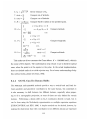
The description of the physical data hierarchy is described in a solitary XML
file as well, so restructuring of the physical data hierarchy only necessitates
modifications to one document in order to update the web interface.
* The DataLink server allows the web architect to describe multiple logical hierarchies of the data, any of which may be navigated by the user to arrive at the
same data.
" Content Managers make it possible to create a modular customized fagade for
the front end of the interface.
" The DataLink Server handles updates in real time.
In addition to these advantages, the DataLink Server also improves the efficiency
of the web interface by employing a caching strategy for large blocks of commonly
accessed data (such as the locations of the nodes to be plotted by the Map Viewer)
and performs user auditing to help the City group keep tabs on the site's usage. The
complete details about the caching strategy and user auditing, as well as the inner
workings of the DataLink Server itself and the XML-based modeling language are
discussed in Chapters 2-4.
1.2.2
The Geospatial Coordinate Transformation Library
The City Scanning Project dataset uses a local tangent plane (LTP) coordinate system
for all of its position and orientation data. This coordinate system is defined by a
right handed set of axes with the x axis pointing east, the y axis pointing north
and the z axis pointing up (normal to the Earth) with units in meters. 8 The origin is
located at the position of the GPS base station antenna (on the roof of building NE43
in Tech Square) that the City group uses to obtain differential GPS measurements of
the nodes' placement. This coordinate system is used to provide the highest degree of
precision to position estimates acquired using differential GPS. The disadvantage of
8
This type of coordinate system is also sometimes referred to as an East North Up (ENU) or
East North Height (ENH) coordinate system [Hofman-Wellenhof et al., 1997].
25