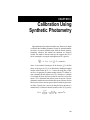
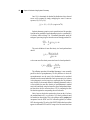
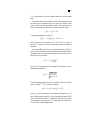
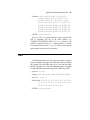
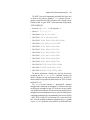
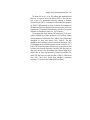
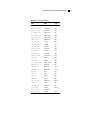
1
December 1998 Synphot User’s Guide SPACE TELESCOPE SCIENCE INSTITUTE Science Software Group Science Support Division 3700 San Martin Drive Baltimore, Maryland 21218 Operated by the Association of Universities for Research in Astronomy, 1 Inc., for the National Aeronautics and Space Administration STSDAS Group Rick White Lead, Science Software Group Perry Greenfield Programming Supervisor Ellyne Kinney System Administration and Distribution Howard Bushouse NICMOS Calibration and Pipeline, Synthetic Photometry Ivo Busko Isophote, Fitting, Graphics Michele de le Peña GHRS, FOS, CVOS, HSTIO Warren Hack ACS Calibration and Pipeline, FOC, igi, Graphics, Paper Products Phil Hodge Table System, FOC and STIS Calibration and Analysis, Fourier analysis J.C. Hsu HSP, FGS, WF/PC, WF/PC2 Calibration and Analysis, Paper products, Convfile, Ctools, Timeseries Dick Shaw Exposure Time Calculators, Nebular, Imgtools Bernie Simon Calibration Database, Synthetic Photometry, Table Editor, FITSIO, IRAF System Support Eric Wyckoff User Support, Regression Testing Revision History Cover Date Editor November 1990 David Bazell September 1993 Howard Bushouse March 1995 Howard Bushouse December 1998 Howard Bushouse, Bernie Simon Send comments or corrections to: Science Software Group, SSD Space Telescope Science Institute 3700 San Martin Drive Baltimore, Maryland 21218 E-mail: [email protected] Copyright © 1998 by the Association of Universities for Research in Astronomy, Inc., All rights reserved. Contents iii Table of Contents Preface .....................................................................................xi Chapter 1: About Synphot... ................................. 1 Background ............................................................................. 2 How Synphot Works ............................................................. 3 The Synphot Data Base....................................................... 4 Can Synphot be Used for Other Telescopes? ............... 5 Chapter 2: Using Synphot ...................................... 7 Synphot Tasks ....................................................................... 7 Command and Argument Syntax ...................................... 9 Syntax Examples .................................................................. 9 Observation Mode .............................................................. 10 Spectrum ............................................................................ 13 Form ................................................................................... 15 Wavelength Table............................................................... 18 Reference Data................................................................... 20 Chapter 3: Cookbook ................................................ 21 Bandpasses .......................................................................... 21 Spectra ................................................................................... 24 Photometry ............................................................................ 27 Images ................................................................................... 31 Two-Dimensional Spectra ................................................. 38 Chapter 4: Task Descriptions ............................ 43 Bandpar ................................................................................. 44 Examples ............................................................................ 46 iv Contents Calcband ............................................................................... 46 Examples ............................................................................ 48 Calcspec ................................................................................ 48 Examples ............................................................................ 50 Calcphot................................................................................. 52 Examples ............................................................................ 55 Countrate ............................................................................... 56 Examples ............................................................................ 58 Fitband ................................................................................... 61 Example.............................................................................. 64 Fitspec.................................................................................... 65 Example.............................................................................. 68 Fitgrid ..................................................................................... 70 Examples ............................................................................ 72 Genwave ............................................................................... 74 Examples ............................................................................ 74 Grafcheck .............................................................................. 75 Example.............................................................................. 75 Graflist .................................................................................... 76 Examples ............................................................................ 76 Grafplot .................................................................................. 76 Example.............................................................................. 78 Imspec.................................................................................... 79 Examples ............................................................................ 80 Obsmode ............................................................................... 81 Examples ............................................................................ 82 Plband .................................................................................... 82 Examples ............................................................................ 83 Plspec..................................................................................... 85 Examples ............................................................................ 89 Plratio ..................................................................................... 94 Examples ............................................................................ 96 Pltrans .................................................................................... 97 Examples ............................................................................ 99 Contents v Refdata ................................................................................ 100 Showfiles ............................................................................. 101 Example............................................................................ 102 Simulators ........................................................................... 103 Shared Task Parameters.................................................. 103 Data File Formats ............................................................. 106 Simimg.............................................................................. 109 Simspec ............................................................................ 109 Simnoise ........................................................................... 110 Examples .......................................................................... 110 Chapter 5: Inner Workings ................................. 113 Syncalc ................................................................................ 113 Graph and Component Tables ....................................... 115 Chapter 6: Calibration Using Synthetic Photometry ............................................. 121 Appendix A: HST Instrument Keyword Lists ................................................................ 125 FGS....................................................................................... 126 FOC ...................................................................................... 126 FOS....................................................................................... 128 HRS ...................................................................................... 129 HSP....................................................................................... 130 NICMOS .............................................................................. 130 STIS ...................................................................................... 131 WF/PC-1 .............................................................................. 132 WFPC2 ................................................................................ 134 Non-HST Filter Systems .................................................. 136 vi Contents Appendix B: On-Line Catalogs and Spectral Atlases ............................................... 139 HST Calibration Target Spectra..................................... 140 Kurucz Model Atmospheres............................................ 140 Bruzual Spectrum Synthesis Atlas ................................ 143 Gunn-Stryker Spectrophotometry Atlas ....................... 143 Bruzual-Persson-Gunn-Stryker Spectrophotometry Atlas ................................................. 143 Jacoby-Hunter-Christian Spectophotometry Atlas................................................... 144 Bruzual-Charlot Atlas........................................................ 152 Kinney-Calzetti Atlas ........................................................ 152 AGN Atlas............................................................................ 153 Galactic Atlas ..................................................................... 154 Index ................................................................................. 155 Figures vii List of Figures Figure 2.1: Vega Photon Spectra ................................................................................ 17 Figure 3.1: plband Plot of Johnson V and WFPC2 Bandpasses .................................. 22 Figure 3.2: List of NICMOS Filters............................................................................... 23 Figure 3.3: bandpar Results for a List of NICMOS Filters ............................................ 23 Figure 3.4: Plotting Spectra with plspec ...................................................................... 25 Figure 3.5: countrate Parameters for STIS CCD Observation .................................... 26 Figure 3.6: Predicted STIS CCD Spectrum Produced by countrate............................ 27 Figure 3.7: calcphot Results for a WFPC2 F439W Observation .................................. 28 Figure 3.8: calcphot Results for a NICMOS F160W Observation ................................ 29 Figure 3.9: Commands for Plotting Redshifted Spectra and UB Bands ...................... 29 Figure 3.10: Plots of Redshifted Spectra and UB Bandpasses ................................... 30 Figure 3.11: Using calcphot to Compute U-B Colors of Redshifted Spectra ............... 31 Figure 3.12: simimg Parameters for the Target1 Simulation ........................................ 33 Figure 3.13: simimg Result target1.fits ........................................................................ 34 Figure 3.14: simimg Result for WFPC2 Field of 400 Stars.......................................... 35 Figure 3.16: NICMOS Camera 3 PSFs ....................................................................... 36 Figure 3.17: simimg Parameters for NICMOS Image of a Cluster of Galaxies ........... 37 Figure 3.18: simimg NICMOS Camera 3 Image ......................................................... 38 Figure 3.19: simspec Parameters for a STIS Long-Slit Simulation ............................. 40 Figure 3.20: STIS Long-Slit Simulation Using simspec ............................................... 40 Figure 3.21: Plot of STIS Long-Slit Image .................................................................. 41 Figure 3.22: simspec Parameters for a STIS Echelle Simulation................................ 41 Figure 3.23: STIS Echelle Mode Simulated Image...................................................... 42 Figure 4.1: bandpar Parameters................................................................................... 45 Figure 4.2: calcband Parameters ................................................................................. 46 Figure 4.3: calcspec Parameters.................................................................................. 49 Figure 4.4: FOS Count Rate Spectrum of G191-B2B.................................................. 51 Figure 4.5: WFPC2 Blackbody Spectra....................................................................... 52 Figure 4.6: calcphot Parameters .................................................................................. 53 Figure 4.7: Sample calcphot Run ................................................................................ 55 Figure 4.8: Second Sample calcphot Run ................................................................... 55 viii Figures Figure 4.9: countrate Task Parameters ........................................................................ 56 Figure 4.10: Example countrate Parameter Settings................................................... 59 Figure 4.11: Plot of countrate Example Spectrum....................................................... 60 Figure 4.12: Second countrate Example Parameter Settings ..................................... 61 Figure 4.13: fitband Parameters ................................................................................... 62 Figure 4.14: Results from Example fitband Run.......................................................... 65 Figure 4.15: fitspec Parameters ................................................................................... 66 Figure 4.16: Example fitspec Parameter Settings ....................................................... 69 Figure 4.17: Results from fitspec................................................................................. 70 Figure 4.18: fitgrid Parameters ..................................................................................... 71 Figure 4.19: fitgrid Results............................................................................................ 73 Figure 4.20: genwave Parameters ............................................................................... 74 Figure 4.21: grafplot Parameters.................................................................................. 77 Figure 4.22: Output From Sample grafplot Run .......................................................... 78 Figure 4.23: imspec Parameters .................................................................................. 79 Figure 4.24: plband Parameters ................................................................................... 82 Figure 4.25: Results of First Sample plband Run........................................................ 84 Figure 4.26: Results of Second Sample plband Run................................................... 85 Figure 4.27: plspec Parameters ................................................................................... 86 Figure 4.28: plspec Results .......................................................................................... 89 Figure 4.29: Results from Second Sample plspec Run ............................................... 90 Figure 4.30: plspec Comparison of FOS Red and Blue Side Sensitivities ................... 91 Figure 4.31: Plotting calcphot Results ......................................................................... 92 Figure 4.32: Distribution of Detected Counts............................................................... 93 Figure 4.33: plratio Parameters .................................................................................... 94 Figure 4.34: Sample plratio Output.............................................................................. 97 Figure 4.35: pltrans Parameters ................................................................................... 98 Figure 4.36: Results from Sample pltrans Run.......................................................... 100 Figure 5.1: Structure of Instrument Graph Table....................................................... 117 Figure 5.2: Structure of Component Lookup Table ................................................... 118 Tables ix List of Tables Table 2.1: Primary Passband and Spectral Computation and Plotting Tasks ......................................................................... 8 Table 2.2: Passband and Spectral Fitting Tasks ....................................... 8 Table 2.3: Two-dimensional Simulation Tasks .......................................... 8 Table 2.4: Utility Tasks .............................................................................. 9 Table 2.5: Passband Functions ............................................................... 12 Table 2.6: Spectrum Functions................................................................ 14 Table 2.7: Reddening Laws Used by ebmvx ........................................... 15 Table 2.8: Forms...................................................................................... 16 Table 2.9: Wavelength Units.................................................................... 19 Table 2.10: Parameters in refdata Pset ................................................... 20 Table 4.1: bandpar Photometric Parameters........................................... 44 Table 4.2: calcband Output Keywords..................................................... 47 Table 4.3: vzero Examples ...................................................................... 49 Table 4.4: Functions Supported by calcphot ........................................... 53 Table 4.5: calcphot Output Table Columns ............................................. 54 Table 4.6: Error Type Codes for plspec................................................... 87 Table 4.7: Simulator Shape Functions................................................... 107 Table 4.8: Noise Expression Operators................................................. 107 Table 5.1: Syncalc Functions................................................................. 115 Table A.1: FOC Detector Format Keywords.......................................... 128 Table B.1: Kurucz K1200 Library........................................................... 141 Table B.2: BK Atlas ............................................................................... 142 Table B.3: HST Calibration Spectra ...................................................... 145 Table B.4: Bruzual Synthetic Spectral Atlas .......................................... 146 Table B.5: Bruzual-Persson-Gunn-Stryker Spectral Atlas ................... 147 Table B.6: Jacoby-Hunter-Christian Spectral Atlas ............................. 150 x Tables xi CHAPTER 1: Preface This Guide describes the Space Telescope Science Data Analysis System (STSDAS) synthetic photometry (synphot) software package. STSDAS is developed and maintained by the Science Software Group at STScI and is an external package layered on the Image Reduction and Analysis Facility (IRAF), which is developed and maintained by NOAO. Synphot is therefore portable to any host architecture supported by IRAF. If you don’t already have IRAF, you may obtain it by sending E-mail to [email protected] or by calling (520) 318-8160. The STSDAS package may be obtained from STScI through the STSDAS web page at http://ra.stsci.edu/STSDAS.html. Synphot requires the external TABLES package which is also available from STScI. This manual assumes that you already have some familiarity with the IRAF command language (cl). If you need help getting started with IRAF or STSDAS, read the STSDAS User’s Guide, which is available from the STSDAS group at STScI. If you have questions or problems using IRAF, STSDAS, or synphot, contact the STScI Help Desk by calling (410) 338-1082 or by sending E-mail to [email protected]. xi xii Preface CHAPTER 1: About Synphot... In This Chapter... Background / 2 How Synphot Works / 3 The Synphot Data Base / 4 Can Synphot be Used for Other Telescopes? / 5 The Space Telescope Science Data Analysis System (STSDAS) synphot package simulates photometric data and spectra as they are observed with the Hubble Space Telescope (HST). Synphot tasks will: • Plot HST sensitivity curves and calibration target spectra. • Predict count rates for observations in any available HST instrument mode. • Compute the photometric calibration for any HST instrument mode. • Examine photometric transformation relationships among the various HST observing modes as well as conventional photometric systems, such as Johnson UBV. Synphot can help HST Guest Observers (GOs) prepare Phase I and Phase II observing proposals. Synphot’s cross-instrument simulation ability is useful for planning and optimizing HST observing programs. Synphot provides an easy way to examine the transmission curve of the HST Optical Telescope Assembly (OTA), sensitivity curves for all modes of observing with the science instruments, and flux distributions of HST calibration targets. Passbands for standard photometric systems are available, and users can incorporate their own filters, spectra, and data. A powerful spectrum calculator can create complicated composite spectra from various 1 2 Chapter 1: About Synphot... parameterized spectrum models, grids of model atmosphere spectra, and atlases of stellar spectrophotometry. The rest of this chapter contains introductory information regarding the synphot package. Chapter 2 discusses the basic features that are common to most synphot tasks and some simple examples of how they are used by the tasks. Detailed explanations of each task and examples of their use are given in Chapter 3. Chapter 4 contains a more in-depth look at internal operations, and Chapter 5 provides a mathematical description of some basic synthetic photometry concepts and its role in calibrating the HST instruments. Many of the examples contained in Chapter 2 and Chapter 3 make use of spectral data from the on-line catalogs of spectral atlases maintained at STScI. These atlases are also available to off-site synphot users. Chapter B contains detailed information on the origin and contents of these atlases, as well as installation information for off-site users. Background The synphot package is modeled on Keith Horne’s XCAL software—a suite of Fortran subroutines designed to be used as a dynamic throughput generator using files stored in the HST Calibration Data Base System (CDBS). Because the HST has a vast number of interrelated observing modes, it is impractical and inefficient to derive and maintain an independent calibration for every possible instrument configuration. Rather than restrict calibrations to a smaller number of core modes, the alternative is to provide a software tool that can generate the throughput function for any HST observing mode; this is how XCAL and synphot are implemented. Throughput functions and calibration data files for specific observing modes are dynamically generated as needed. This approach reduces the number of calibration data files that must be created and maintained to a manageable level, and ultimately saves considerable observing time since information from calibration observations in one mode can be easily transferred to other closely related modes. Additional information and discussion of the synthetic photometry approach to HST calibration can be found in Koornneef et al. (1986) and Horne (1988). How Synphot Works 3 How Synphot Works The basic concepts, data structures, and software needed for dynamic throughput generation are discussed in detail by Horne, Burrows, and Koornneef (1986). Briefly, the throughput calibration of the HST observatory is represented in a framework consisting of: • Component throughput functions for every optical component (e.g., mirror, filter, polarizer, disperser, and detector). • A configuration graph describing the allowed combinations of the components. A particular observing mode is specified by a list of keywords, which might be familiar names of filters, detectors, and gratings. The keywords are used to trace a path through the observatory configuration graph, thereby translating the keyword list into a list of pointers to data files that contain the individual component throughput functions. The grand throughput function of the requested observing mode is formed by multiplying together the individual component throughputs at each wavelength. (See Chapter 5 for more details on the functioning of the observing mode expression evaluator and the internal structure and functioning of the configuration graph and component throughput tables.) To retrieve a particular HST passband, you furnish the passband generator with a couple of keywords, for example “WFPC2,F336W”. The passband generator uses the keywords to trace a path through the graph, multiplies together the component passbands it encounters along the way, and returns the passband evaluated on a particular wavelength grid. Passbands can then be convolved with spectral data to simulate HST observations of particular targets. Spectra may come from existing files containing lists of fluxes as a function of wavelength, or may be dynamically generated (individually or in combination) as simple blackbody, power-law, or Hydrogen continuum emission spectra of chosen temperatures and slopes. Most synphot task data I/O is done via STSDAS binary table files. The HST instrument graph, component lookup, and component throughput tables are all in this format. All output files created by the synphot tasks are also in STSDAS table format. Input data files, such as passband throughput and spectral data files, may be in either STSDAS table format or plain ASCII text tables. 4 Chapter 1: About Synphot... The Synphot Data Base As you may have already realized from the preceding discussion, the synphot package is entirely data driven. That is, no information pertaining to the physical description of instruments or their throughput characteristics is contained within the software, but is instead contained within an external “database.” This data must be available in order to run any synphot tasks. The data set contains the HST instrument graph, component lookup, and component throughput tables, which are maintained and stored within the HST Calibration Data Base System (CDBS) at STScI. New versions of these tables are created whenever new or updated calibration information becomes available for the HST instruments. Users at STScI have automatic access to the synphot data set on all science computing clusters. New versions of any of the tables become available within about 24 hours after they are installed in the CDBS. Because the data set is not currently distributed along with the STSDAS software, off-site users must retrieve and install it separately before they will be able to use synphot. This can be done in one of two ways: • Tar Files: Every time a new version of the STSDAS software is released, a “snapshot” of the current synphot data set is copied into a few tar files, which can then be retrieved, unpacked, and installed on your system. The STSDAS Site Manager’s Installation Guide contains instructions for doing this. This method offers the convenience of having to transfer only a few files and automatically creates the necessary directory tree for the data. On the other hand, this “snapshot” is made only once or twice a year and therefore may not contain the latest data for the HST instruments. • Individual CDBS Files: An alternative method is to transfer the individual tables from the /cdbs/cdbs2/ directory at ftp.stsci.edu (see below), which is updated on a daily basis. The best method is perhaps a combination of the two: first-time installers may wish to use the “snapshot” tar files to initially create and populate the directory structure, and then periodically check the CDBS area at STScI for updates to individual tables. The latest versions of individual tables can be obtained via anonymous ftp in the /cdbs/cdbs2/ directory and its associated subdirectories on node ftp.stsci.edu. The instrument graph and component lookup tables are contained in the mtab subdirectory and are named *.tmg and *.tmc. The component throughput tables are logically grouped into Can Synphot be Used for Other Telescopes? 5 subdirectories of /cdbs/cdbs2/comp/ corresponding to each of the HST instruments (fgs, foc, fos, hrs, hsp, nicmos, nonhst, ota, stis, wfpc, and wfpc2). Component throughput table names contain a three digit suffix indicating their version number. You can determine which tables are new by comparing either their names or creation dates with the corresponding set of tables installed at your site. Can Synphot be Used for Other Telescopes? Because the tasks in the synphot package are data driven, instrument observing modes can be changed and new instruments added without changing the software. To use synphot with non-HST instruments or components you would need to modify (or rebuild) only the instrument graph and component lookup tables. Synphot requires: • One instrument graph table. • One component lookup table. • One throughput table for each telescope and instrument component that appears in the graph and component lookup tables. The names of the instrument graph and component lookup tables to be used by the synphot tasks are set by the parameters grtbl and cmptbl, in the refdata parameter set. The names of the individual component throughput tables are contained in the component lookup table and are located automatically when you run a task. See Chapter 5 for details on the structure of these tables. To build your own instrument graph and component lookup tables it is perhaps easiest to either start with a copy of the existing HST tables and modify or add to them, or at least use the HST tables as a model for your own tables. To make use of your own custom graph and component lookup tables in synphot, just change the values of the grtbl and cmptbl parameters (and the telescope area parameter, if appropriate) in the refdata pset. 6 Chapter 1: About Synphot... CHAPTER 2: Using Synphot In This Chapter... Synphot Tasks / 7 Command and Argument Syntax / 9 This chapter describes the basic structure of the synphot package, and how the tasks are used. Most of the chapter is devoted to a discussion of common parameters and command syntax. The use of each individual task is described in detail in Chapter 4. Synphot Tasks There are four categories of tasks in the synphot package. • Tasks that create, manipulate, and plot passbands and spectra (Table 2.1). This is the main group of tasks. • Tasks that fit model passbands and spectra to spectrophotometric and photometric data (Table 2.2). These tasks are intended to be used for passband reconstruction. • Tasks that create and manipulate synthetic two-dimensional images and spectra (Table 2.3). These tasks are located in the new simulators subpackage within Synphot. • General utility tasks that convert data and check or maintain the instrument graph and component tables (Table 2.4). 7 8 Chapter 2: Using Synphot Table 2.1: Primary Passband and Spectral Computation and Plotting Tasks Task Function calcband Calculate a model passband plband Plot passband data calcspec Calculate a model spectrum plspec Plot spectral and photometric data countrate Calculate the response of HST instruments to model spectra and passbands calcphot Calculate synthetic photometry for model spectra and passbands bandpar Calculate photometric parameters of a passband plratio Plot the ratio of observed and synthetic spectral data pltrans Plot photometric transformation (color-color, color-mag) diagrams Table 2.2: Passband and Spectral Fitting Tasks Task Function fitband Fit a model passband to known throughput data fitspec Fit a model spectrum to known spectral data fitgrid Fit a spectrum by interpolating within a grid of model or observed spectra, such as a spectral atlas Table 2.3: Two-dimensional Simulation Tasks Task Function simimg Create a simulated two-dimensional direct image simspec Create a simulated two-dimensional spectral image simbackgd Add background signal to a two-dimensional simulated image simnoise Add noise to a two-dimensional simulated image Command and Argument Syntax 9 Table 2.4: Utility Tasks Task Function imspec Convert IRAF/STSDAS images to and from STSDAS tables genwave Generate a wavelength set grafcheck Check an instrument graph table for bad rows graflist List components downstream from a given component in an instrument graph table grafplot Plot components downstream from a given component in an instrument graph table obsmode List the valid observation mode keywords for an instrument showfiles Print filenames used in a synphot expression Command and Argument Syntax There are five parameters that are common to many of the primary synphot tasks: • Observation mode (obsmode) - Passband to be calculated (page 10). • Spectrum (spectrum) - Spectrum to be calculated (page 13). • Form (form) - Units of the output data; for example, counts or magnitudes (page 15). • Wavelength table (wavetab) - Wavelength grid on which passband and spectrum will be calculated (page 18). • Reference data parameters (refdata) - Pointer to reference data for instrument graph and component lookup tables (page 20). Each of these parameters is discussed in detail in the following sections, but before getting into details, the next section provides some examples of general command syntax to show how some of these parameters are typically used. Syntax Examples In the command: sy> plband hrs,lsa,g270m the string “hrs,lsa,g270m” is the observation mode, or obsmode, and specifies that a passband be calculated by taking the product of the individual throughputs of the High Resolution Spectrograph (HRS) large science 10 Chapter 2: Using Synphot aperture (“lsa”), the g270m grating, the detector sensitivity, the HST Optical Telescope Assembly (OTA), and the Corrective Optics Space Telescope Axial Replacement (COSTAR). The OTA throughput is included automatically whenever an HST instrument mode is specified and the COSTAR throughput is also included automatically whenever an obsmode involving the Faint Object Camera (FOC), Faint Object Spectrograph (FOS), or HRS is specified. In this example, where the settings of the wavetab and refdata task parameters were not specified, the HST default values will be used. The command: sy> calcband hrs,lsa,g270m hrs_g270.tab will calculate that same passband and write the resulting data to the table hrs_g270.tab, which will contain columns of wavelength and throughput values. The next example simply plots the spectrum of the star HZ 44: sy> plspec "" crcalspec$hz44_005 flam Here the obsmode is set to a null string ("") so that the spectrum is plotted without being multiplied by a passband. The spectral data for HZ 44 come from a library of HST calibration spectra in the directory referenced by the IRAF environment variable crcalspec$, so the spectrum parameter is simply the name (including the directory path) of the table. The form parameter is set to “flam”, which specifies that the spectrum is to be plotted in units of fλ (ergs/s/cm2/Å). The last example will calculate the expected countrate for observing the star HZ 44 using the Wide Field Planetary Camera 2 (WFPC2) CCD number 1 and F439W filter: sy> calcphot wfpc2,1,f439w,a2d7 crcalspec$hz44_005 counts Here the obsmode is the WFPC2 chip 1 with the F439W filter and the A-to-D gain setting of 7. The form parameter is “counts”. This will multiply the combined HST+WFPC2+F439W throughput with the spectrum of HZ 44 and compute the resulting count rate (6385 DNs per second!). Observation Mode The observation mode (obsmode) parameter defines the passband, i.e., the wavelength-dependent sensitivity curve of the photometer or spectrophotometer. The obsmode parameter can also be used to specify a color index, or a series of passbands or color indexes, as described further below. The obsmode is usually given as a string of keyword arguments to the band function, for example “band(wfpc2,4,f555w)”. The list of keywords specifies a light path through the telescope and an instrument. Command and Argument Syntax 11 Appendix A contains a current list of all the valid keyword names for the HST instruments. The keywords may appear in any order and are not case sensitive. As a convenience to users, if the obsmode expression consists of a single call to the band function, only the arguments to the function need be given. For example, the obsmode “band(wfpc2,4,f555w)” can also be given as just “wfpc2,4,f555w”. Passbands can also be read directly from files. Passband files may be in the form of either ASCII text or STSDAS binary tables and must contain, at minimum, columns of wavelength and throughput values. The synphot expression calculator determines whether a file contains a passband or a spectrum by looking for the throughput column. If the file contains a throughput column it is read as a passband; if not, it is read as a spectrum. If the file is an STSDAS table, synphot will look for columns named “WAVELENGTH” and “THROUGHPUT”. Since ASCII text files do not contain column names, synphot assumes that the wavelengths are in the first column and you must supply the column number of the throughput data in brackets at the end of the file name. For example, if the throughput data are in column 2 of the text file my_filter.dat, then the obsmode is specified as “my_filter.dat[2]”. See Chapter 5, “Inner Workings”, for more details on the allowed formats of input tables and how the synphot expression evaluator handles them. A series of passbands may be processed in a single task execution by setting the obsmode parameter to “@filename”, where filename is the name of an ASCII text file containing a list of desired passbands, one per line. The passbands designated on each line may be composed of either calls to the band function or specific file names containing throughput data. Color indexes are defined by setting the obsmode parameter to MODE1–MODE2, where MODE1 and MODE2 are specifications for the two passbands. For example, “band(wfpc2,f439w)-band(wfpc2,f555w)” gives you the WFPC2 color index that approximates B-V. The observation mode can also be a part of a larger expression used to calculate either a passband or spectrum. The syntax of these larger expressions is explained below. The HST OTA transmissivity is included by default in the calculation of all HST-related observation modes. It can be included explicitly by adding the keyword ota or excluded by adding the keyword noota; for example “fos,blue,1.0,g130h,noota”. The HST instrument graph allows the inclusion of the effects of COSTAR on the wavelength-dependent sensitivity for observations with the FOC, FOS, and GHRS. This includes the product of the reflectivity curves for each pair of COSTAR mirrors for each of these instruments, as 12 Chapter 2: Using Synphot well as the effects on instrument throughput and sensitivity due to the improved point-spread function that is achieved with COSTAR. Like the OTA, the COSTAR effects on passbands and count rates are included by default for these instruments when using versions of the HST graph table dated 950224 (24 February 1995) and later. In earlier versions of the graph table, nocostar is the default. To explicitly include COSTAR, use the keyword costar anywhere within your obsmode string, e.g., “fos,red,4.3,g270h,costar”. To exclude it, use the nocostar keyword. In addition to the HST instruments, filters, and gratings, the synphot graph table also contains entries for various standard passbands that are not specific to HST. The ANS, WF/PC-1 Baum, Cousins RI, Johnson UBVRIJK, Landolt UBVRI, Stromgren uvby, Walraven VBLUW, and the Bessell, Kitt Peak, and Steward Observatory JHK bands are included. Appendix A contains a complete list of available non-HST passbands. Note that the Landolt (1983) UBVRI system is made up of the Johnson UBV and the Cousins RI passbands. Non-HST filters are specified using the name of the filter system, followed by the desired band name, e.g., “stromgren,u” or “cousins,i”. If the name of the filter system is omitted for any of the common UBVRIJHK filters, the defaults are Johnson UBV, Cousins RI, and Bessell JHK. The synphot tasks will also accept function expressions in the obsmode parameter. The available passband function expressions are shown in Table 2.5. Table 2.5: Passband Functions OBSMODE Passband filename Name of an ASCII text file or STSDAS table containing columns of wavelength and throughput values. @filename Name of an ASCII text file containing one string of passband commands per line. thru(filename) Used when the filename might be interpreted as a number or contain arithmetic operators or be interpreted as a spectrum. Otherwise just use the filename. box(mu,width) Rectangular window centered on wavelength mu with width width; both arguments in Angstroms. gauss(mu,fwhm) Gaussian with mean wavelength mu and full width half maximum fwhm; both arguments in Angstroms. lgauss(mu,fwhm) Gaussian in log wavelength space. poly(mu,fwhm,a1,a2,...) A passband that is a function of Legendre polynomials. The value of this function is (1+P) if P is positive and exp(P) if P is negative. P is the sum of up to ten Legendre polynomials with the specified coefficients. The independent variable in the polynomial is (wave - mu) / fwhm, where wave is the wavelength. tilt(band,a1,a2,...) The same as poly (above), but values of mu and fwhm are calculated from the passband band and the passband is implicitly multiplied by the tilt function. Command and Argument Syntax 13 More than one function expression can be included in an obsmode. For example, the following command will calculate a Gaussian, multiply it by a third-order polynomial, and write the results to a table called out.tab. sy> calcband "tilt(gauss(5000,1000),0,1,3)" out.tab Spectrum The spectrum parameter defines the spectrum to be created or operated upon for tasks such as calcphot, countrate, calcspec, plspec, and plratio. Spectra can be read in from disk files or calculated from analytic models. A powerful spectrum calculator allows you to construct complicated composite spectra, apply or remove extinction, renormalize to a desired magnitude or flux, add and subtract spectra, and multiply spectra by passbands or constants. To process a series of spectra in sequence, set the spectrum parameter to “@filename”, where filename is the name of an ASCII file containing the list of desired spectra, each one specified on a separate line of the file. When reading a spectrum from a file, you have a choice of using ASCII text files or STSDAS tables. When using STSDAS tables, synphot looks for the column names “WAVELENGTH” and “FLUX”. If column units are not specified, units of Angstroms for wavelengths and units of “photlam” (see “Form” on page 15) for fluxes are assumed. When using a text table, the wavelength and flux values must be in the first and second columns, respectively. Since text tables do not have column units definitions, wavelengths must be in units of Angstroms and fluxes in units of “photlam”. Table 2.6 lists the functional forms that can be used to generate synthetic spectra and to manipulate spectra read from a file. Blank spaces in a spectrum expression are not significant, except for the division operator, which must be surrounded by blanks so that it is not mistaken for part of a directory path name. Note that the pl function produces a power law spectrum in the units specified by the third argument. The exponent of the power law may change when converted to flam space, which is the native form for all synphot calculations. The ebmv operator applies or removes extinction effects using the interstellar extinction curve from Seaton (1979), which is based on an adopted value of R = AV / E(B–V) = 3.20. For wavelengths between 1000 and 3704 Å, the analytic fits given in Seaton’s Table 2 are used to compute the extinction, while for wavelengths between 3704 and 10000 Å, the extinction is computed by linear interpolation (in 1/λ vs. magnitudes) within the tabulated values given in Seaton’s Table 3. For wavelengths 14 Chapter 2: Using Synphot Table 2.6: Spectrum Functions SPECTRUM Function filename Name of an ASCII text file or STSDAS table containing columns of wavelength and flux values. @filename Name of an ASCII file containing one string of spectrum commands per line. spec(filename) Used when the filename might be interpreted as a number. unit(val,form) Creates a constant spectrum of value val in units of form (fnu, flam, counts, etc.) bb(temperature) Blackbody spectrum with specified temperature, in Kelvin. The flux of the spectrum is normalized to a star of solar radius at a distance of 1 kpc. pl(refval,expon,form) Power-law spectrum of the form f ∝ ( λ ⁄ refval ) , where refval is in Angstroms. The spectrum is normalized to a flux of 1 in form units at refval. hi(temp,colden) Continuum emission spectrum of an LTE slab of hydrogen at temperature temp (Kelvin) and column density colden (baryons/cm-2),. Values of colden less than 80 are assumed to be log10(colden). The spectrum is normalized the same as the blackbody. cat(catalog,key1,...) Read a spectrum selected from catalog, according to the search criteria key1, ..., keyn. icat(catalog,key1,...) Interpolate a spectrum from catalog, selected by the search criteria key1, ..., keyn. grid(filename,seq) Interpolate between two spectra in a list of spectra. The list is named by filename and the interpolation position within the list is specified by seq. For example, “3.5” means interpolate midway between the third and fourth spectra. rn(spec,obsmode,value,form) Renormalize the spectrum spec to value with units form over the obsmode passband. The evaluator computes the integral of the spectrum over the specified passband and rescales the spectrum by the appropriate factor, forcing this integral to have the requested renormalized value. z(spectrum,z) Redshift a spectrum by the amount z. ebmv(val) Applies an extinction of val E(B – V) to a spectrum using the galactic ISM reddening law of Seaton (1979). embvx(val,law) Applies an extinction to the spectrum using one of a number of available reddening laws. + - Add, subtract spectra with automatic unit conversion, if needed. * / Multiply, divide by a passband (obsmode), constant, or ebmv, ebmvl functions. expon greater than 10000 Å, the extinction is computed via a linear extrapolation of the tabulated optical values. The extended reddening function, ebmvx, supports a number of different reddening laws. The second argument selects the type of reddening law used to compute the extinction. The task supports three galactic reddening laws (gal1 to gal3) and one law each for the Small Magellanic Cloud (smc), Large Magellanic Cloud (lmc), and extra-galactic objects (xgal). The reddening law used in the ebmv Command and Argument Syntax 15 function is the same as gal1. The laws are derived from the papers cited in Table 2.7. Table 2.7: Reddening Laws Used by ebmvx Reddening Law Citation gal1 Seaton (1979) MNRAS, vol. 187, p. 75 gal2 Savage & Mathis (1979) ARA&A, vol. 17, pp. 73-111 gal3 Cardelli, Clayton & Mathis (1989) ApJ vol. 345, pp.245-256 smc Prevot, et al. (1984) A&A vol. 132, pp. 389-392 lmc Howarth (1983) MNRAS, vol. 203, p. 301 xgal Calzetti, Kinney & Storchi- Bergmann (1994) ApJ, vol. 429, p. 582 Note that dividing a spectrum by ebmv(val) is equivalent to multiplying the spectrum by ebmv(-val) and has the effect of de-reddening the spectrum. Here are two examples that illustrate several of the spectrum expression features. The first command will calculate a blackbody spectrum of 5000 K and renormalize it to 100 counts in the WFPC2 F555W passband. The output is written to the table rnbb.tab: sy> calcspec \ >>> "rn(bb(5000),band(wfpc2,f555w),100,counts)" rnbb The next command creates a power-law spectrum with a slope of ν-2, normalized to 10–14 ergs/s/cm2/Å (fλ units) in the Johnson V passband, and applies Galactic extinction of E(B–V) = 0.1. The output spectrum is written to the table pl.tab in units of fν (fnu): sy> calcspec \ >>> "rn(pl(5500,-2,fnu),band(v),1.e-14,flam)*ebmv(0.1)" \ >>> pl.tab form=fnu Form The form parameter specifies the units of the output spectrum or plot. The synphot package supports the forms listed in Table 2.8. Input and output spectra may be in any of these forms. The output form can differ from that of the input data; conversion is automatic. If you specify an inappropriate form, synphot will display a list of valid forms to choose from. The following comments should clarify the meanings of the vegamag, abmag, stmag, and counts options; the others are self-evident. 16 Chapter 2: Using Synphot Table 2.8: Forms FORM Output Units fnu ergs / s / cm2 / Hz flam ergs / s / cm2 / Å photnu photons / s / cm2 / Hz photlam photons / s / cm2 / Å counts detected counts / s abmag –2.5 log (FNU) – 48.60 stmag –2.5 log (FLAM) – 21.10 obmag –2.5 log (COUNTS) vegamag –2.5 log (f / f(VEGA)) jy 10–23 ergs / s / cm2 / Hz mjy 10–26 ergs / s / cm2 / Hz The vegamag option offers a good approximation to many of the conventional photometric systems that use the spectrum of Vega to define magnitude zero in any passband. In broadband photometry, the relevant passband integral is calculated first for the source spectrum and then again for the spectrum of Vega, and the ratio of the two results is converted to a magnitude. vegamag would not be a scientifically meaningful option to use for spectrophotometry. The adopted Vega spectrum can be found in the ASCII file stsdas$lib/synphot/vega.dat, and is defined over a wavelength range of 506 Å to 160 µm. Oke’s ABν magnitudes (abmag) are based on a constant flux per unit frequency (see Oke 1974), and the analogous magnitude based on a constant flux density per unit wavelength is the stmag (Space Telescope magnitude) system. The abmag and stmag options are appropriate for either spectrophotometry or photometry. The zeropoint values of 48.60 and 21.10 are chosen for convenience so that Vega has ABν and STλ magnitudes close to 0 in the Johnson V passband (see Figure 2.1). Because the abmag and stmag systems are defined such that they result in constant magnitudes for spectra having constant flux per unit frequency and wavelength, respectively, they will not provide magnitudes on a conventional system, such as UBVRI, without first deriving an appropriate transformation onto the desired standard system. Command and Argument Syntax 17 Because the adopted throughput functions for standard filter systems such as UBVRI are approximations to the complete instrumental passbands that were used to define these photometric systems, synphot results using the UBVRI passbands will only be accurate to a level of about 5% relative to the standard system, even when using form=vegamag. Results are particularly unreliable for the U filter, where the earth’s atmosphere determines the blue edge of the passband in the standard ground-based system. Figure 2.1: Standard photometric systems generally use the spectrum of Vega to define magnitude zero. The spectrophotometric magnitudes ABν and STλ refer instead to spectra of constant fν and fλ respectively. Magnitude zero in both systems is defined to be the mean flux density of Vega in the Johnson V passband. Thus all three of the spectra shown here produce the same count rate in the Johnson V passband. The pivot wavelength of Johnson V is defined to be the crossing point of the ABν = 0 and STλ = 0 spectra. 18 Chapter 2: Using Synphot The counts option is used to predict detected count rates. When this form option is selected, tasks such as countrate, calcspec and plspec will calculate the predicted number of detected counts per second per wavelength interval within the passband, and countrate will also report the total number of detected counts integrated over the passband. There are two important things to remember concerning spectra produced in units of counts. First, the number of counts per channel will depend directly on the width (in wavelength space) of the channels in the wavelength grid that is used (see below). All spectra are operated on internally in units of photlam. When output units of counts are requested, the photlam values are multiplied by the collecting area of the telescope and by the width (in Angstroms) of each channel in the wavelength grid. Therefore, in order to accurately predict the number of counts per channel for a spectroscopic instrument, it is necessary to use a wavelength grid that provides a good match to the dispersion properties of the particular instrument mode. The genwave task can be used to produce custom wavelength grids for this purpose, or one of the existing wavelength tables in the STSDAS directory synphot$data can be used (see below). The countrate task automatically uses these tables for FOS, HRS and NICMOS grism simulations. Second, the form counts refers to actual detector counts for the FOC, FOS, HRS, and HSP instruments, while for the WF/PC-1, WFPC2, NICMOS, and STIS instruments, counts refers to electrons. In order to obtain counts in units of data numbers (DNs) for these instruments, include the keyword “dn” in the obsmode string for WF/PC-1 and NICMOS simulations, either of the keywords “a2d7” or “a2d15” for the WFPC2, and any of the keywords “a2d1”, “a2d2”, “a2d4”, or “a2d8” for STIS (see Appendix A for complete lists HST instrument keywords and their function). These keywords invoke the appropriate electron-to-DN conversion based on the A-to-D gain settings of the instruments. Wavelength Table Another parameter used by many synphot tasks is the wavelength table parameter (usually referenced as parameter wavetab). This parameter is used to specify the name of a file containing a list of wavelength values that determine the wavelength grid to be used in the calculations and plotting. The genwave task can be used to generate simple wavelength tables. If the chosen file is an STSDAS table, it should contain a column named “WAVELENGTH”. The wavelength values may be in any of the units listed in Table 2.7 as long as the type of units is specified in the column units table keyword. If the units are not specified in a keyword, Angstroms is assumed. If it is an ASCII text file, the wavelength values must be in the Command and Argument Syntax 19 first column and must be in units of Angstroms. In both cases the wavelength values must be in a monotonically increasing or decreasing order. Table 2.9: Wavelength Units FORM Units FORM angstroms 10-10 m hertz nanometers 10-9 m microns Units FORM Units 1 Hz ev 1 eV kilohertz 103 Hz kev 103 eV 10-6 m megahertz 106 Hz mev 106 eV millimeters 10-3 m gigahertz 109 Hz centimeters 10-2 m meters 1 m There is a set of ASCII wavelength tables available for use with the HST spectroscopic instruments (HRS and FOS) in the STSDAS synphot$data directory area. This directory contains separate wavelength tables for each of the HRS and FOS grating modes and echelle orders. The wavelength grid contained in each table covers the range and resolution that is appropriate for each instrument grating as used in a standard observational mode for that instrument. You may set the wavetab parameter to “none” or leave it blank, in which case the task will use a default wavelength grid. The default grid consists of 2000 points covering the wavelength range where the calculated passband or spectrum is non-zero. The wavelengths are spaced logarithmically over this range, such that: log 10 ( λ i ) = log 10 ( λ min ) + ( i – 1 ) × ∆ where: • λi is the ith wavelength value • ∆ = (log10 (λmax) – log10 (λmin)) / (N – 1) • λmin = wavelength of first non-zero throughput or flux • λmax = wavelength of last non-zero throughput or flux • N = 2000 If more than one passband or spectrum is specified via the “@filename” syntax for the obsmode or spectrum parameters, the range of the default wavelength grid is computed from the first passband or spectrum in the list. Therefore if the wavelength ranges of the passbands or spectra 20 Chapter 2: Using Synphot differ significantly, it is best to specify a suitable wavelength table that covers the complete range of all items in the list. Reference Data Several common parameters are grouped in the refdata parameter set (pset). This pset contains the three parameters shown in Table 2.10 Table 2.10: Parameters in refdata Pset Parameter Default Value Description area 45238.93416 Telescope area in cm2 grtbl “mtab$*.tmg” Instrument graph table cmptbl “mtab$*.tmc” Instrument component table The default value for area is the total collecting area of the HST and was computed from the 120 centimeter nominal radius of the HST entrance aperture (the obscuration factor 0.86 due to the secondary mirror is taken into account in the OTA throughput). This value should not be changed unless another telescope is being used. The telescope area is used to convert from counts per square centimeter to total counts. The graph table and component table names specify which tables are to be used by the synphot tasks. The table names may contain the wildcard character “*”, in which case the most recent table that matches the name template will be used. The default values for these parameters select the most current graph and component lookup tables installed in the CDBS. The graph table describes all the possible light paths through the telescope and instruments. The component lookup table associates each segment of the light paths listed in the graph table with the specific files containing the throughput data for each individual segment. You may use your own versions of the graph and component tables, if you wish. To do this, you would typically copy the default files to your own directory, edit them, and change the names in the refdata parameter set. CHAPTER 3: Cookbook In This Chapter... Bandpasses / 21 Spectra / 24 Photometry / 27 Images / 31 Two-Dimensional Spectra / 38 This chapter gives step by step examples of how some of the Synphot package tasks are commonly used to answer questions related to HST observing and instrument efficiencies and performance. Detailed descriptions of the tasks used in these examples can be found in Chapter 4. Bandpasses One of the simplest uses of the synphot tasks is to examine the characteristics of instrumental bandpasses. The three main tasks that work specifically with bandpasses are bandpar, calcband, and plband. The bandpar task computes and displays numerical parameters of a bandpass, while calcband and plband calculate and plot, respectively, functions of throughput vs. wavelength for a bandpass. All three tasks are useful for examining individual bandpasses, as well as making comparisons of several bandpasses. The only required user input to both bandpar and plband is the specification of the desired bandpass(es), which is done using the obsmode task parameter (see “Observation Mode” on page 10). The calcband task requires the obsmode, as well as the name of an output table in which the results will be stored. For example, let’s say you’re interested in seeing which of the WFPC2 filters F555W and F569W is the closest match to the Johnson V bandpass. You can make a plot showing the relative throughput vs. wavelength for these three bandpasses using plband as follows: 21 Chapter 3: Cookbook sy> plband johnson,v sy> plband wfpc2,3,f555w norm+ app+ ltype=dashed sy> plband wfpc2,3,f569w norm+ app+ ltype=dotted The resulting plot is shown in Figure 3.1. In this example we are plotting the response of the WFPC2 filters when used with CCD chip 3 of the camera. We have used the plband parameter normalize to set the peak transmission of all 3 bandpasses to a value of 1, the parameter append to overplot the WFPC2 bandpasses onto the first plot of the Johnson V bandpass, and the ltype parameter to change the line type for the WFPC2 bandpass plots. Figure 3.1: Plband Plot of Johnson V and WFPC2 Bandpasses SYNPHOT.PLBAND 1.25 OBSMODE = johnson,v OBSMODE = wfpc2,3,f555w OBSMODE = wfpc2,3,f569w 1 PASSBAND 22 .75 .5 .25 0 4500 5000 5500 6000 6500 7000 WAVELENGTH (A) As you can see, the F569W bandpass is a closer match to Johnson V, especially on the blue edge. However, since the F569W bandpass is narrower than the F555W, it will have a lower overall throughput than the F555W. But how much lower? You can use the bandpar task to find out. Bandpasses 23 sy> bandpar wfpc2,3,f555w sy> bandpar wfpc2,3,f569w Comparing the values of QTLAM, the dimensionless efficiency, for the two bandpasses we see that the F569W has about 78% of the throughput of the F555W. Now let’s do a similar experiment in which we wish to find out the relative efficiencies of several of the NICMOS filter bandpasses. First, for convenience, we create a text file called nic_filters.lis, which contains the list of bandpasses (obsmodes) we’re interested in (see Figure 3.2). Figure 3.2: List of NICMOS Filters in File “nic_filters.lis” nicmos,1,f110w nicmos,1,f110m nicmos,1,f160w nicmos,1,f165m nicmos,2,f110w nicmos,2,f160w nicmos,2,f165m nicmos,2,f222m nicmos,3,f110w nicmos,3,f160w nicmos,3,f222m We then run bandpar, using the @filename notation to specify the name of the file containing our list of obsmodes, and ask for only the QTLAM photometric parameter to be calculated and printed. sy> bandpar @nic_filters.lis phot=qtlam Figure 3.3 shows the resulting output from bandpar. Figure 3.3: Bandpar Results for a List of NICMOS Filters # OBSMODE nicmos,1,f110w nicmos,1,f110m nicmos,1,f160w nicmos,1,f165m nicmos,2,f110w nicmos,2,f160w nicmos,2,f165m nicmos,2,f222m nicmos,3,f110w nicmos,3,f160w nicmos,3,f222m QTLAM 0.029151 0.011217 0.028107 0.01425 0.0331 0.031277 0.015849 0.01555 0.033111 0.031896 0.01648 24 Chapter 3: Cookbook Spectra The simplest thing to do with spectra is to just plot them using the plspec task. This is handy, for example, when you’re interested in exploring the contents of the available STScI spectral libraries, which are located in the STSDAS crgrid$ directory areas (see Appendix B). Let’s say you’re interested in making some HST observations of spiral galaxies and you want to see what sort of template galaxy spectra are available for making synphot predictions of observed count rates. A good place to look would be in either the crgridbc95$ (Bruzual-Charlot atlas) or crgridkc96$ (Kinney-Calzetti atlas) directories. To plot one of the spectra, use the plspec task with no obsmode specified (so that the spectrum won’t get multiplied by a bandpass), the spectrum parameter set to the name of the table containing the spectral data (see “Spectrum” on page 13), and the output form set to the units of your choice (see “Form” on page 15). The following example plots the spectrum of a type Sb galaxy from the Kinney-Calzetti atlas, in units of flam (ergs/s/cm2/Å). sy> plspec "" crgridkc96$sb_template flam How does this compare to the spectrum of a typical elliptical galaxy? You can find out by overplotting: sy> plspec "" crgridkc96$elliptical_template flam \ >>> app+ ltype=dotted This uses the append parameter to overplot the spectra and the ltype parameter to change the line type of the second spectrum. The result is shown in Figure 3.4. Spectra 25 Figure 3.4: Plotting Spectra with plspec SYNPHOT.PLSPEC 5.00E-14 REFSPEC = crgridkc96$sb_template REFSPEC = crgridkc96$elliptical_template FLAM (ergs cm-2 s-1 A-1) 4.00E-14 3.00E-14 2.00E-14 1.00E-14 0 2000 4000 6000 8000 WAVELENGTH (A) Well, that’s interesting, but what we’d really like to know is what will the spectrum of one of these targets look like when observed with an HST spectroscopic instrument? To create a predicted observed spectrum we could simply rerun plspec (or calcspec), this time giving it an obsmode corresponding to one of the HST instrumental modes. However, because the detected count rate per channel in a spectroscopic mode depends directly on the width of each channel in wavelength space, we would have to be careful to first construct a wavelength set that matches the dispersion characteristics of the instrumental mode(s) we’re interested in. It is much easier, however, to just use the countrate task, which automatically uses a library of existing wavelength sets appropriate for each HST spectroscopic mode. The parameters for the countrate task are a little bit different than those of other synphot tasks, in that there is no obsmode parameter. Instead, the instrument mode is specified via a set of individual parameters for the instrument, detector, filter or grating, and aperture or slit. Let’s say we want to simulate a STIS observation of the Sb-type galaxy we looked at earlier 26 Chapter 3: Cookbook with plspec, using the STIS CCD detector, its low-resolution G430L grating, and the 50" x 0.5" entrance slit. We’ll also assume that the galaxy we want to observe has a V magnitude (within the slit area) of 18 and we’ll try an exposure time of 500 seconds. Figure 3.5 shows how to set the countrate task parameters for this simulation. Figure 3.5: countrate Parameters for STIS CCD Observation spectrum magnitude instrument detector spec_elem aperture cenwave exptime reddening redlaw output form magform wavecat refwave verbose flux_tot flux_ref refdata = = = = = = = = = = = = = = = = = = = "crgridkc96$sb_template" "18 v" "stis" "ccd" "g430l" "52x0.5" INDEF 500. 0. "gal1" "sb_stis_g430l.tab" "counts" "vegamag" "synphot$data/wavecat.dat" INDEF yes INDEF INDEF "" You can then use plspec, or any STSDAS plotting task that can read tables, to plot the observed spectrum stored in the file “sb_stis_g430l.tab”. Figure 3.6 shows the spectrum as plotted using the STSDAS sgraph task. sy> sgraph "sb_stis_g430l wavelength flux" Photometry 27 Figure 3.6: Predicted STIS CCD Spectrum Produced by countrate NOAO/IRAF V2.11EXPORT [email protected] Wed 15:05:17 28-Jan-98 marvin.stsci.edu!/home/bushouse/iraf/sb_stis_g430l flux [counts] 300 200 100 0 3000 3500 4000 4500 5000 5500 wavelength [angstroms] Photometry The calcphot task is very useful for making quick estimates of the total number of counts that will be detected in an HST imaging observation of a particular source. For example, let’s again use that spectrum of an Sb galaxy to calculate the total counts that would be detected when observed with the WFPC2, in chip 3, using filter F439W (the WFPC2 analog to Johnson B). sy> calcphot wfpc2,3,f439w \ >>> "rn(crgridkc96$sb_template,band(v),18,vegamag)" \ >>> counts Here we’ve used the rn (renormalize) function in the spectrum parameter to renormalize the Sb galaxy spectrum to a V-band magnitude of 18. We’ve also asked for the answer to be computed in units of counts, which for the WFPC2 is equivalent to electrons. It’s also possible to get the 28 Chapter 3: Cookbook answer in units of DNs (data numbers). To do this for the WFPC2, we would need to include the additional keyword “a2d7” in the obsmode string (i.e., “wfpc2,3,f439w,a2d7”), which applies the appropriate electron-to-DN conversion ratio for the WFPC2 gain setting of 7. The calcphot results are shown in Figure 3.7. Figure 3.7: Calcphot Results for a WFPC2 F439W Observation Mode = band(wfpc2,3,f439w) Pivot Equiv Gaussian Wavelength FWHM 4311.671 476.1714 band(wfpc2,3,f439w) Spectrum: rn(crgridkc96$sb_template,band(v),18,vegamag) VZERO (COUNTS s^-1 hstarea^-1) 0. 42.39358 So this galaxy produces a total countrate of 42.4 e–/sec, which means we’ll need an exposure time of at least 235 seconds in order to approach an accuracy of 1% in measuring its total light. Another question an HST observer might ask is “How faint can I go in an exposure time of t seconds if I want x percent photometry?” To answer this, you could either run calcphot over and over again the way we just did in the last example, picking different renormalization magnitudes for your source until you get the countrate that corresponds to your desired S/N, or you could run the equivalent simulation “backwards”. For example, if you’re interested in observing red stars with the NICMOS, you can pick a suitable stellar spectrum from the crgridbpgs$ area (Bruzual-Persson-Gunn-Stryker atlas), and then run calcphot as follows. sy> calcphot h \ >>>"rn(crgridbpgs$bpgs_147,band(nicmos,2,f160w),10,counts)"\ >>> vegamag Here we’ve picked star number 147 from the BPGS atlas, which is a K5 giant. We want to observe with NICMOS camera 2 and the F160W filter and want to see how faint we can go in 100 seconds and get 3% photometry. To obtain this measurement accuracy we need a total of 1000 electrons detected from the source, so for an exposure time of 100 seconds we need a countrate of 10 e–/sec. We’ve again used the rn function to renormalize the spectrum, but this time we’ve renormalized it to our desired countrate of 10 in the “nicmos,2,f160w” band. Once it’s been renormalized, calcphot then computes the H magnitude of the spectrum (in units of vegamag, since the JHK filter system uses Vega as its zeropoint). Photometry 29 The results from calcphot are shown in Figure 3.8, where we see that we can reach an H magnitude of 20.8. Figure 3.8: Calcphot Results for a NICMOS F160W Observation Mode = band(h) Pivot Equiv Gaussian Wavelength FWHM 16448.03 2040.669 band(h) Spectrum: rn(crgridbpgs$bpgs_147,band(nicmos,2,f160w),10,c ounts) VZERO VEGAMAG 0. 20.79155 The calcphot task is also useful for making photometric measurements of existing spectra, either in HST instrumental bands or standard ground-based filter systems. For example, let’s say you’d like to demonstrate for some students the importance of the 4000 Å break on the U−B colors of redshifted galaxy spectra. First, you might want to produce a plot showing the U and B bandpasses relative to some redshifted spectra. The plspec and plband commands shown in Figure 3.9 will produce the plot shown in Figure 3.10. Note that the bandpass plots are multiplied by a scale factor to place them in the same range of data values as the spectra. Figure 3.9: Commands for Plotting Redshifted Spectra and UB Bands plspec plspec plspec plspec plspec plband plband "" "z(crgridkc96$elliptical_template,0.0)" "" "z(crgridkc96$elliptical_template,0.2)" "" "z(crgridkc96$elliptical_template,0.4)" "" "z(crgridkc96$elliptical_template,0.6)" "" "z(crgridkc96$elliptical_template,0.8)" "band(u)*3.e-14" app+ ltype=dashed "band(b)*3.e-14" app+ ltype=dashed flam flam flam flam flam app+ app+ app+ app+ Chapter 3: Cookbook Figure 3.10: Plots of Redshifted Spectra and UB Bandpasses SYNPHOT.PLSPEC 6.00E-14 REFSPEC = z(crgridkc96$elliptical_template,0.0) REFSPEC = z(crgridkc96$elliptical_template,0.2) REFSPEC = z(crgridkc96$elliptical_template,0.4) REFSPEC = z(crgridkc96$elliptical_template,0.6) REFSPEC = z(crgridkc96$elliptical_template,0.8) OBSMODE = band(u)*3.e-14 OBSMODE = band(b)*3.e-14 5.00E-14 FLAM (ergs cm-2 s-1 A-1) 30 4.00E-14 3.00E-14 2.00E-14 1.00E-14 0 3000 3500 4000 4500 5000 5500 6000 6500 WAVELENGTH (A) Now we run calcphot, having it compute the U−B colors of these spectra. We’ll use the synphot expression variable $0 for the redshift value in the z function, and then specify the range of redshifts that we want in the task parameter vzero. This tells calcphot to automatically run the calculation several times, each time substituting a different value for the redshift. The complete calcphot command and results are shown in Figure 3.11. Images 31 Figure 3.11: Using calcphot to Compute U-B Colors of Redshifted Spectra sy> calcphot "band(u)-band(b)" \ >>> "z(crgridkc96$elliptical_template,$0)" vegamag \ >>> vzero="0-0.8x0.2" Mode = band(u) - band(b) Pivot Equiv Gaussian Wavelength FWHM 3646.235 484.6031 band(u) 4433.492 831.0928 band(b) Spectrum: z(crgridkc96$elliptical_template,$0) VZERO VEGAMAG(band(u)) - VEGAMAG(band(b)) 0. 0.678421 0.2 0.936471 0.4 1.055619 0.6 -0.06724 0.8 -0.52084 Images While a task like calcphot is very useful for quickly estimating the total number of counts that will be detected from a source in an imaging observation, for making more precise exposure plans and estimates it is often necessary to actually produce a simulated two-dimensional image so that you can see the distribution of counts per pixel on the detector. The simimg task in the synphot subpackage simulators will do just this. Furthermore, in addition to producing a two-dimensional representation of observed sources, simimg has the capability to add estimated sky background signals, as well as noise to the simulated images. This allows you to do a full examination of the signal-to-noise characteristics of simulated observations. In order to do all of this in a realistic fashion, simimg is, by necessity, relatively complex and can require quite a bit of input information. In this section we show some relatively simple examples to introduce the basic functions of simimg. A detailed explanation of the task can be found in Chapter 4. Before run can run any simulations with simimg you must have one or more point spread function (PSF) images for the instrument you want to simulate. There are observed PSF images for the WFPC2 and STIS available from the instrument pages on the STScI web site. You can also use the STScI program “TinyTim” to generate synthetic PSFs for all of the HST instruments. As of March 1998, there are catalogs of TinyTim-generated PSFs for the WFPC2 and NICMOS included in the 32 Chapter 3: Cookbook scidata$ area of STSDAS. You can use either a single PSF image for a given instrument, or you can use a catalog of PSF images, where the different images represent the PSF at different wavelengths. If you use a catalog, simimg will construct a composite PSF for each source in the simulation by combining the various PSF’s with relative weightings based on the source flux level as a function of wavelength. Let’s start with a couple of simple WFPC2 examples. We’ll make use of the PSF catalog wfpc2_psf.cat in the scidata$ directory. These were generated using TinyTim, and are a set of 5 monochromatic PSF images, one for each of the central wavelengths of the popular F170W, F336W, F439W, F569W, and F814W filters for each camera. The PSF catalog file wfpc2_psf.cat is a simple text file containing columns of instrument name, wavelength (in Angstroms), and PSF image names. The portion of the catalog for the WFPC2 chip 3 looks like this: wfpc2,3 wfpc2,3 wfpc2,3 wfpc2,3 wfpc2,3 1838 3360 4312 5642 8012 scidata$wfpc2_3_1838.fits scidata$wfpc2_3_3360.fits scidata$wfpc2_3_4312.fits scidata$wfpc2_3_5642.fits scidata$wfpc2_3_8012.fits We also need to create an object description table, which can be a simple text file. It contains information about each object or source that we want to appear in the simulated image. The object description table can contain up to 5 columns of information, where each row contains the right ascension, declination, magnitude, spectrum, and shape for one object. The right ascension and declination can be given either in units of decimal hours and degrees, sexegesimal hours and degrees, or, if the simimg task parameter skycoord is set to “no”, the right ascension and declination are given as arcseconds from the detector center. The value in the magnitude column specifies the magnitude for each object, in the bandpass and form specified by the simmodp parameter set magband and magform parameters, which have default values of Johnson V and vegamag, respectively. The spectrum value can be any legal synphot spectrum specification, such as the name of a table containing a spectrum or a synphot function, such as bb, which will generate a synthetic spectrum. The shape value is used to specify a shape function for extended sources. There are many shape functions built into simimg, such as gauss, exp, and devauc, or you can specify either a table or image name which contain a one-dimensional or two-dimensional representation of any desired shape. If the shape value is not given for any object, it will be constructed as a point-source (i.e., a star). Images 33 Here’s an example of a very simple object table called target1.dat, which contains only one object, at coordinates of 0 x 0, with a V magnitude of 18, and a spectrum of a 5000 K blackbody: 0.0 0.0 18.0 bb(5000) Now we need to set the simimg task parameters. Most of them can be left at their default values. The ones we’ll change are shown in Figure 3.12. Figure 3.12: Simimg Parameters for the Target1 Simulation obsmode = wfpc2,3,f569w input = target1.dat output = target1.fits exptime = 50 noise = x + 25 simcatp.psfcat = scidata$wfpc2_psf.cat The obsmode is set to the WFPC2 chip 3 with the F569W filter, input is the name of our object table, output is the name of the image that will be created, the exposure time is set to 50 seconds, and psfcat is the name of the WFPC2 PSF catalog file. The noise parameter contains an expression that simimg will use to compute a Poissonian noise distribution to be added to the data values in the simulated image. The expression we’ve used here will give us noise that is a combination of the Poisson noise in the detected signal (or pixel flux), x, and the square of the WFPC2 readnoise, which is 5 e–. This will result in a noise distribution with a 1-sigma width of σ = x + 25 e - . The output image contains a single point-source at the center of the detector field of view. A blow-up of the central region of this image is shown in Figure 3.13. 34 Chapter 3: Cookbook Figure 3.13: simimg Result target1.fits Now let’s make a larger object table, containing a lot of point sources. Using the task starlist in the IRAF artdata package, it’s relatively easy to make a big list of artificial stars, computing their positions and magnitudes according to user-selectable cluster density and luminosity function parameters. The file targets2.dat contains a list of 400 stars, spread over the 80 arcsecond field of view of the WFPC2 wide-field chips and ranging in V magnitude from 16 to 23. We still leave the simimg parameters det_ra and det_dec set to zero so that our imaginary telescope is pointed at an RA and Dec of 0. Meanwhile the RA values for the stars in targets2.dat cover a range of ±8e−4 hours (±43"), and the Dec values cover ±0.012 degrees (±43"), both centered on zero. For simplicity, a spectral function of bb(5000) is assigned to all of the stars. Using an exposure time of 100 seconds and resetting the simmodp.dynrange parameter up to a value of 100,000 (so that we can see well down into the wings of the PSF for the brightest stars), we get the image shown in Figure 3.14. Images 35 Figure 3.14: simimg Result for WFPC2 Field of 400 Stars Let’s do one more imaging simulation with simimg, this time putting some extended sources into our image. We’ll do a simulated NICMOS camera 3 image of a small cluster of elliptical galaxies. To construct the object table we’ll take a list of coordinates (RA and Dec) and K-band magnitudes right from a listing in a catalog or journal article and put it into a text file called galaxies.dat. Then we’ll add columns of spectrum and shape data to that file. For the spectra, we’ll just use the spectrum of a K8-type star from the BPGS atlas in the crgrid$ spectral atlas area (BPGS star 59). For the shape specifications, we’ll give all the galaxies a de Vaucouleurs (r−1/4 law) profile, using the devauc function. The devauc function takes three arguments; the half-light radius, in arcseconds, the axial ratio, and the position angle of the major axis, in degrees east from north. We’ll also throw in a few point-sources at the end of the object table just so we can see how much differently the stars look compared with the galaxies. The final contents of galaxies.dat is shown in Figure 3.15. 36 Chapter 3: Cookbook Figure 3.15: Contents of Object Table “galaxies.dat” 10:23:40.0 10:23:38.2 10:23:39.9 10:23:41.8 10:23:39.2 10:23:40.9 10:23:41.4 10:23:40.2 10:23:38.5 10:23:38.9 10:23:39.7 10:23:38.9 10:23:39.0 10:23:41.8 10:23:42.0 10:23:39.7 10:23:41.9 10:23:41.3 10:23:41.1 10:23:38.8 10:23:40.9 10:23:39.4 10:23:40.2 10:23:41.0 10:23:38.5 10:23:40.5 10:23:39.5 32:15:30 32:15:55 32:15:24 32:15:53 32:15:29 32:15:42 32:15:59 32:15:39 32:15:51 32:15:32 32:15:21 32:15:01 32:15:17 32:15:15 32:15:22 32:15:18 32:15:09 32:15:13 32:15:26 32:15:28 32:15:17 32:15:38 32:15:21 32:15:40 32:15:25 32:15:15 32:15:45 16.1 16.9 17.0 17.1 17.3 17.4 17.4 17.6 17.6 17.7 17.7 17.9 18.0 18.0 18.1 18.1 18.2 18.4 18.4 18.4 18.5 18.6 18.7 18.0 17.0 18.5 17.6 crgridbpgs$bpgs_59 crgridbpgs$bpgs_59 crgridbpgs$bpgs_59 crgridbpgs$bpgs_59 crgridbpgs$bpgs_59 crgridbpgs$bpgs_59 crgridbpgs$bpgs_59 crgridbpgs$bpgs_59 crgridbpgs$bpgs_59 crgridbpgs$bpgs_59 crgridbpgs$bpgs_59 crgridbpgs$bpgs_59 crgridbpgs$bpgs_59 crgridbpgs$bpgs_59 crgridbpgs$bpgs_59 crgridbpgs$bpgs_59 crgridbpgs$bpgs_59 crgridbpgs$bpgs_59 crgridbpgs$bpgs_59 crgridbpgs$bpgs_59 crgridbpgs$bpgs_59 crgridbpgs$bpgs_59 crgridbpgs$bpgs_59 crgridbpgs$bpgs_31 crgridbpgs$bpgs_33 crgridbpgs$bpgs_44 crgridbpgs$bpgs_55 devauc(0.45,1.0,00.0) devauc(0.45,0.7,15.0) devauc(0.45,0.8,30.0) devauc(0.45,0.5,45.0) devauc(0.45,0.8,60.0) devauc(0.45,0.6,75.0) devauc(0.45,0.9,90.0) devauc(0.45,0.5,75.0) devauc(0.45,0.4,60.0) devauc(0.45,0.7,45.0) devauc(0.45,0.8,30.0) devauc(0.45,0.9,15.0) devauc(0.45,0.4,00.0) devauc(0.45,0.7,10.0) devauc(0.45,0.6,20.0) devauc(0.45,0.5,30.0) devauc(0.45,0.3,40.0) devauc(0.45,0.7,50.0) devauc(0.45,0.8,60.0) devauc(0.45,0.6,70.0) devauc(0.45,0.7,80.0) devauc(0.45,0.4,90.0) devauc(0.45,0.9,00.0) We’ll use the NICMOS PSF catalog that’s available in the scidata$ directory. This is a set of monochromatic PSF’s, covering the wavelength range 0.8 to 2.4µm, at intervals of 0.2µm. The NICMOS PSF catalog file scidata$nicmos_psf.cat contains a listing of the PSF images (see Figure 3.16). Figure 3.16: NICMOS Camera 3 PSFs in Catalog “scidata$nicmos_psf.cat” nicmos,3 nicmos,3 nicmos,3 nicmos,3 nicmos,3 nicmos,3 nicmos,3 nicmos,3 nicmos,3 8000 10000 12000 14000 16000 18000 20000 22000 24000 scidata$nic3_psf_08.fits scidata$nic3_psf_10.fits scidata$nic3_psf_12.fits scidata$nic3_psf_14.fits scidata$nic3_psf_16.fits scidata$nic3_psf_18.fits scidata$nic3_psf_20.fits scidata$nic3_psf_22.fits scidata$nic3_psf_24.fits Now all we have to do is setup the simimg task parameters. We’ll call the output image galaxies.fits, set the exposure time to 800 seconds, set the detector RA and Dec to the center of our cluster at 10:23:40.0 and +32:15:30 (note that the IRAF cl automatically converts these sexegesimal input values to decimal hours and degrees in the task parameters det_ra and det_dec, respectively), set the noise parameter to “x + 900” Images 37 because the NICMOS detectors have a readnoise of 30 e−, and set the dynamic range of the calculation to 100,000 so that we can see all the faint “fuzz” around our extended sources. Convolving the PSF with extended sources can take a fair amount of CPU time, so we’ll also turn on the verbose parameter so that we can see the progress of the task as it runs. The full list of pertinent simimg parameters is shown in Figure 3.17. Figure 3.17: simimg Parameters for NICMOS Image of a Cluster of Galaxies obsmode = "nicmos,3,f160w" input = "galaxies.dat" output = "galaxies.fits" exptime = 800. nread = 1 det_ra = 10.394444444444 det_dec = 32.258333333333 det_ang = 0. skycoord = yes calcback = yes calcnoise = yes quant = no verbose = yes noise = "x+900" backfile = "none" noisefile = "none" wavetab = "none" simmodp.magband = "k" simmodp.dynrange= 1.e5 simbackp = "" simcatp.psfcat = "scidata$nicmos_psf.cat" refdata = "" The image produced by this simulation is shown in Figure 3.18. Can you tell which ones are the stars? 38 Chapter 3: Cookbook Figure 3.18: simimg NICMOS Camera 3 Image “galaxies.fits” Two-Dimensional Spectra The simspec task is the spectral counterpart to simimg and is used to simulate two-dimensional spectral observations. It is capable of simulating either simple long-slit observations or cross-dispersed echelle modes. In this section we’ll show one example for each of these modes. First, we’ll simulate a STIS long-slit observation. Let’s say we want to observe a 14th V magnitude early-type star, in the Lyman-α region. We’ll use the STIS g140m grating (1400 Å band, medium resolution), which uses the STIS far-UV MAMA detector, and the 0.2" x 0.5" entrance aperture. Before we can proceed with this simulation, we’ll again need a PSF image (or images) for this wavelength region. Because the wavelength Two-Dimensional Spectra 39 range that our observation will cover is so narrow, a single PSF image appropriate for the center of the observed passband will be sufficient. Fortunately there are some observed STIS PSF images available from the STScI STIS instrument Web pages, so we’ll just grab the one for the far-UV MAMA and call it stis_fuv_psf.fits. If we really wanted to get fancy, simspec also allows us to give it line-spread functions, but for these examples we’ll skip those. The simspec task (and simimg, for that matter) also allows us to specify a background image to be added to the simulation, if we desire. We’ll take advantage of this capability to add detector dark current to the simulated image. Again, we can grab a far-UV MAMA dark current image from the reference file area on the STScI STIS Web pages. These images contain data that are in units of countrates, so before we run simspec we’ll multiply the dark current image by the exposure time of the simulation. Now we’re ready to set the simspec parameters and run the task. Figure 3.19 shows the list of simspec (and associated psets) parameter settings that we’ll use for this example. Any that are not shown in the list are at their default values. Most parameters are identical to those of simimg. The input object table is a one-line text file specifying a target at RA and Dec coordinates of zero, a magnitude of 14.0, and the spectrum of a B2V star from the BPGS spectral atlas crgridbpgs$bpgs_6.tab. We’ve set the exposure time to 1000 seconds, the central wavelength of the observation to 1228 Å, and the noise expression to just “x”, which will give us Poisson noise based only on the counts in each pixel (the STIS MAMAs have no readnoise). The dark current image that we multiplied by 1000 seconds is stis_fuv_drk_1000s.fits. A blow-up of the central region of the image produced by this simulation, stis_g140m.fits, is shown in Figure 3.20. Here you can see the spectrum running from top to bottom in the image (the dispersion direction is vertical), and the spatial dimension of the spectrum is spread horizontally. A plot of the average counts across columns 510 to 514 in this image is shown in Figure 3.21. You can easily see the broad Lyman-α absorption feature centered around pixel 365 in the plot. 40 Chapter 3: Cookbook Figure 3.19: simspec Parameters for a STIS Long-Slit Simulation obsmode = "stis,g140m,s02x05" input = "b2v_star.dat" output = "stis_g140m.fits" exptime = 1000. nread = 1 cenwave = 1228. cenorder = INDEF lsf_flag = no dsf_flag = no calcback = yes calcnoise = yes quant = no verbose = yes det_ra = 0. det_dec = 0. det_ang = 0. noise = "x" backfile = "stis_fuv_drk_1000s.fits" noisefile = "none" wavetab = "none" simmodp.magband = "v" simmodp.magform = "vegamag" simmodp.dynrange= 1.e5 simmodp.nsub = 5 simbackp = "" simcatp.psfcat = "stis_fuv_psf.fits" refdata = "" Figure 3.20: STIS Long-Slit Simulation Using simspec Two-Dimensional Spectra 41 Figure 3.21: Plot of STIS Long-Slit Image “stis_g140m.fits” NOAO/IRAF V2.11EXPORT [email protected] Mon 10:25:15 09-Feb-98 Average of columns 510 to 514 of stis_g140m.fits[*,-*] 1000 80 750 60 500 40 250 20 250 500 750 1000 Line (pixels) Now, we’ll run a very similar simspec example, but this time using the STIS medium-resolution echelle mode e140m, which is also centered around the 1400 Å region. We’ll use a slightly smaller 0.2" x 0.2" aperture, and reset the central wavelength to use the default value for this spectroscopic mode. Everything else in our simulation will be the same, except that we’ll increase the exposure time to 3000 seconds, and use a different dark current image, stis_fuv_drk_3000s.fits, which is scaled to an exposure time of 3000 seconds. The only simspec parameters that we’ll change are shown in Figure 3.22. Figure 3.22: simspec Parameters for a STIS Echelle Simulation obsmode output exptime cenwave backfile = = = = = "stis,e140m,s02x02" "stis_e140m.fits" 3000. INDEF "stis_fuv_drk_3000s.fits" 42 Chapter 3: Cookbook The resulting image, stis_e140m.fits, is shown in Figure 3.23. Here you can again see the Lyman-α absorption feature running through the order that is 7th from the left in the image (the 5th full order). Wavelengths increase from top to bottom, and left to right in the image. Figure 3.23: STIS Echelle Mode Simulated Image CHAPTER 4: Task Descriptions In This Chapter... Bandpar / 44 Calcband / 46 Calcspec / 48 Calcphot / 52 Countrate / 56 Fitband / 61 Fitspec / 65 Fitgrid / 70 Genwave / 74 Grafcheck / 75 Graflist / 76 Grafplot / 76 Imspec / 79 Obsmode / 81 Plband / 82 Plspec / 85 Plratio / 94 Pltrans / 97 Refdata / 100 Showfiles / 101 Simulators / 103 This chapter describes in detail how each task in the synphot package operates and what parameters each task uses. 43 44 Chapter 4: Task Descriptions Bandpar The bandpar task computes various photometric parameters, as shown in Table 4.1, for a selected passband. The computed photometric parameters can be saved to an STSDAS table. Table 4.1: Bandpar Photometric Parameters Parameter Description Formula uresp Unit response; flux (in flam) that produces 1 count/second in the passband pivwv Pivot wavelength of passband bandw RMS band width fwhm Full width half maximum of an equivalent gaussian tpeak Peak throughput of passband max ( P λ ) avglam Passband average wavelength P λ λ dλ ∫-------------------∫ Pλ dλ qtlam Dimensionless efficiency equvw Equivalent width of passband rectw Rectangular width of passband emflx Equivalent monochromatic flux tpeak uresp ⋅ rectw ⋅ --------------------- tlambda tlambda Throughput at reference wavelength P ( refwave ) refwave Reference wavelength for tlambda ∫ ( Pλ λ dλ ) ⁄ ∫ ( Pλ dλ ) ( hc ) ⁄ ( area ∫ P λ λ dλ ) ∫ ( Pλ λ dλ ) ⁄ ∫ ( Pλ dλ ⁄ λ ) 2 ∫ Pλ ln ( λ ⁄ λ ) dλ ⁄ λλ -------------------------------------------------∫ Pλ dλ ⁄ λ 8ln2 × bandw ∫ ( Pλ dλ ) ⁄ λ ∫ Pλ dλ ∫ ( Pλ dλ ) ⁄ max ( Pλ ) In the table above, Pλ is the (dimensionless) passband throughput as a function of wavelength, area is the telescope collecting area, h and c are the usual physical constants, and λ is the mean wavelength of the passband defined in Schneider, Gunn, and Hoessel (1983) as: P λ ln ( λ ) dλ ⁄ λ λ = exp ∫------------------------------------∫ Pλ dλ ⁄ λ This rather unusual definition has the property that the correspondingly defined mean frequency is just c ⁄ λ . Unless specified by the user, the refer- Bandpar 45 ence wavelength (refwave) used in the computation of tlambda and emflx is set to the average wavelength of the passband (avgwav). The bandpar task parameters are shown in Figure 4.1, below. Figure 4.1: Bandpar Parameters obsmode (output (photlist (refwave (wavetab (refdata = = = = = = "none") "all") INDEF) "") "") Instrument observation mode Output table name Photometric parameters to calculate Wavelength used in computing emflx Wavelength table name Reference data The obsmode parameter may be any valid string of HST instrument mode keywords, passband functions—such as gauss, box, or poly—or the name of a table (text or STSDAS binary) containing wavelength and throughput data. A series of obsmode strings may be processed by putting them in a text file, one per line, and setting obsmode=@filename. See “Observation Mode” on page 10 for more details about all of the available specifications for obsmode. If the output parameter is null or set to “none”, no output table will be created. However, output will always be sent to STDOUT (terminal). The output table will contain columns for each of the photometric quantities specified in the photlist parameter (see below). The output table will also contain the table header keywords GRFTABLE, CMPTABLE, and APERAREA as a record of the settings used in the computations. If more than one obsmode is specified using an input list file, then the output table will have separate rows containing the parameters computed for each passband. The photlist parameter contains a comma separated list of the names of the photometric parameters to be printed. The value “all” prints all of them. Placing a “~” in front of the list causes all of the parameters except those in the list to be printed. The two auxiliary parameters refwave and tlambda are printed by default if emflx is printed, and not printed by default if emflx is not printed. The refwave parameter specifies the reference wavelength to be used in the computation of emflx. If this parameter is set to INDEF, the average wavelength (avgwav) will be calculated as shown in Table 4.1 and used as the reference wavelength. The units of a user-specified reference wavelength must be Angstroms. Null values for the wavetab and refdata parameters will cause the task to use a default wavelength grid (see “Wavelength Table” on page 18) 46 Chapter 4: Task Descriptions and the default reference data for the HST observatory (see “Reference Data” on page 20). Examples The following command computes all available photometric parameters for the passband of the post-COSTAR FOC f/96 camera with filter F165W. The output is not saved in a table. sy> bandpar foc,f/96,costar,f165w The next example calculates only the pivot wavelength and the rms bandwidth for each of the Johnson UBV passbands, and saves the results in the table ubv.tab. The input file ubv.lis contains the lines: band(u) band(b) band(v) sy> bandpar @ubv.lis output=ubv.tab phot=pivwv,bandw The last example calculates the photometric parameters for the WFPC2 detector 2 and F439W filter, setting the reference wavelength to 4300 Å. The reference wavelength is not printed. sy> bandpar wfpc2,2,f439w refwave=4300 phot=~refwave Calcband The calcband task will calculate a passband by combining existing passbands, certain functional forms such as a Gaussian or a rectangular window, or throughput data read in from a file. These data can optionally be multiplied by a Legendre polynomial to modify the passband shape. The task takes any valid obsmode command string as input and produces an STSDAS table with two columns of data, called WAVELENGTH and THROUGHPUT, as its output. The task parameters are shown in Figure 4.2, below. Figure 4.2: Calcband Parameters obsmode output (wavetab (refdata = = = "") = "") Instrument observation mode Output table name Wavelength table name Reference data The obsmode parameter may be any valid string of HST instrument modes, passband functions—such as gauss, box, or poly—or the name Calcband 47 of a file (STSDAS table or plain ASCII text) containing columns of throughput data. A series of obsmode strings may be processed by storing them in a text file, one per line, and setting obsmode=@filename. See “Observation Mode” on page 10 for more details about all of the available specifications for obsmode. If more than one passband is specified via a list file, then a separate “THROUGHPUTn” column is created in the output table for each of the n passbands listed in the file. The output table also contains the following header keywords, many of which are the same photometric quantities computed by the bandpar task: Table 4.2: Calcband Output Keywords Keyword Description Formula grftable Name of the instrument graph table cmptable Name of the component lookup table aperarea Telescope collecting area, in cm2, used to compute uresp zeropt Photometric zeropoint of the STMAG system expr Value of the obsmode parameter uresp Unit response; flux (in flam) that produces 1 count/second in the passband pivwv Pivot wavelength of passband bandw RMS band width ∫ Pλ ln ( λ ⁄ λ ) dλ ⁄ λλ -------------------------------------------------∫ Pλ dλ ⁄ λ tpeak Peak throughput of passband max ( P λ ) equvw Equivalent width of passband rectw Rectangular width of passband ∫ Pλ dλ ∫ ( Pλ dλ ) ⁄ max ( Pλ ) emflx Equivalent monochromatic flux ( hc ) ⁄ ( aperarea ∫ P λ λ dλ ) ∫ ( Pλ λ dλ ) ⁄ ∫ ( Pλ dλ ⁄ λ ) 2 tpeak uresp ⋅ rectw ⋅ --------------------- tlambda If more than one passband is specified via a list file, the last eight header keywords are repeated, once for each passband, with the names EXPRn, URESPn, PIVWVn, BANDWn, TPEAKn, EQUVWn, RECTWn, and EMFLXn for the nth passband. Null values for the wavetab and refdata parameters will cause the task to use a default wavelength grid (see “Wavelength Table” on page 18) and the default reference data for the HST observatory (see “Reference 48 Chapter 4: Task Descriptions Data” on page 20). The default wavelength grid covers the wavelength range where the passband throughput is non-zero. Wavelengths are spaced logarithmically over this range. If there is more than one passband specified, the range of the default grid is computed based on the first passband. Therefore, if the wavelength ranges of the passbands differ significantly, a suitable wavelength table that covers the range of all the passbands should be constructed using the genwave task, and supplied as input via the wavetab parameter. Examples The following command shows how to calculate a Gaussian centered at 4800 Å, multiply it by a first-order Legendre polynomial (which, by the way, produces a close match to the Johnson V passband), and write the results to a table called gauss_tilt.tab. sy> calcband "tilt(gauss(4800,1300),10)" gauss_tilt The next example shows how to evaluate the total telescope plus instrumental throughput for an HST observation using the FOS blue detector, the 4.3 arcsecond entrance aperture, and the G130H grating. The resulting throughput data are stored in the table fos_thpt.tab. sy> calcband fos,blue,4.3,g130h,costar fos_thpt Calcspec The calcspec task will create a synthetic spectrum by combining existing models, such as a blackbody or power-law, as well as spectra read from a file. The spectral data can be manipulated in various ways, including multiplying by a passband, scaling by constants, adding or removing extinction, and normalizing to an arbitrary value in a specified passband. Unit conversion is performed automatically when adding or subtracting spectra that have different forms (units). Spectra cannot be multiplied together, but they can be multiplied by arbitrary (unitless) constants and passbands. The resulting spectral data are written to an STSDAS table containing columns of wavelength, flux, and statistical error values. The wavelength data will be in units of Angstroms and the flux and error data will be in the unit system specified by the task parameter form. If the output form is chosen to be either counts or obmag, then the flux data written to the output table are scaled by the telescope area. The columns in the output table are labeled WAVELENGTH and FLUX. Calcspec 49 The task parameters are shown in Figure 4.3 below. Figure 4.3: Calcspec Parameters spectrum output (form (vzero (wavetab (refdata = = = = = = photlam) "") "") "") Spectrum to calculate Output table name Desired form of output spectrum List of values for variable zero Wavelength table name Reference data The spectrum parameter can be a string of any valid commands and arguments that specify the spectrum to be synthesized. Multiple spectrum commands may be placed in a text file, one per line, and specified as spectrum=@filename. See “Spectrum” on page 13 for a detailed list and description of all the available spectrum commands. If more than one spectrum expression is specified via a text file, then a separate “FLUXn” column is created in the output table for each spectrum. The output table contains the header keywords GRFTABLE, CMPTABLE, and EXPR, which are the names of the instrument graph table, the component lookup table, and the spectrum parameter string. If more than one spectrum is specified via a file, each one will be listed as a separate header keyword, with the name EXPRn. The vzero parameter is a list of values that are substituted for variable zero ($0) wherever it appears in the spectrum expression. Each value in the list is substituted in turn. The values must be real numbers. Using vzero is equivalent to placing the input spectrum expression several times in a file, with each expression containing one of the values in the list. The list may contain single values or ranges. The endpoints of a range are separated by a dash. An optional step size may follow the range, preceded by the letter “x”. If the step size is not given, it defaults to 1 or –1, depending on the order of the endpoints. Table 4.3 gives several examples of valid vzero lists. Table 4.3: vzero Examples vzero Resulting list of values Description ".1,.2,.3,.4" 0.1, 0.2, 0.3, 0.4 A list of values ".1-.4x.1" 0.1, 0.2, 0.3, 0.4 The same list expressed as a range "-1 - -4" –1, –2, –3, –4 A range with an implicit step size of –1 "1-9,10-20x2" 1, 2, 3, 4, 5, 6, 7, 8, 9, 10, 12, 14, 16, 18, 20 A list with more than one range 50 Chapter 4: Task Descriptions Null values for the wavetab and refdata parameters will cause the task to use a default wavelength grid (see “Wavelength Table” on page 18) and the default reference data for the HST observatory (see “Reference Data” on page 20). The default wavelength grid covers the wavelength range where the spectrum is non-zero. Wavelengths are spaced logarithmically over this range. If there is more than one spectrum specified, the range of the default wavelength grid is computed based on the first spectrum. Therefore, if the wavelength ranges of the spectra differ significantly, a suitable wavelength table that covers the desired range of all the spectra should be created using the genwave task and supplied as input via the wavetab parameter. Examples The following example synthesizes a 5000 K blackbody spectrum and renormalizes it so that it produces an integrated flux of 100 counts (DN) per second in the WFPC2 F555W passband. The spectral data, in units of flam, are written to the table rnbb.tab. sy> calcspec \ >>> "rn(bb(5000),band(wfpc2,f555w,a2d7),100,counts)" \ >>> rnbb.tab form=flam The next example simulates an observation of the flux calibration standard star G191-B2B using the FOS blue-side detector with the 1.0" aperture and the G190H grating. The spectral data for G191-B2B are in the table g191b2b.tab, in units of flam. First, in order to simulate the true count rate per diode as accurately as possible, we must either create a wavelength table, using the genwave task, that approximates the dispersion relation for the G190H grating, or use an existing wavelength table for this grating that is available in the STSDAS synphot$data directory called fos_blue_g190h.dat. To make our own table we use genwave as follows: sy> genwave g190h.tab minw=1573.0 maxw=2330.0 dwave=1.47 where the dispersion parameters have been obtained from the FOS Instrument Handbook. Now we run calcspec, multiplying the spectrum of G191-B2B by the desired FOS observation mode. The simulated spectrum, in counts per second per diode, is written to the table g191_fos.tab. sy> calcspec "g191b2b.tab*band(fos,blue,1.0,g190h)" \ >>> g191_fos form=counts wavetab=g190h.tab The resulting count rate spectrum is shown in Figure 4.4. If we wanted to use the wavelength table from the data directory, we would specify Calcspec “wavetab=synphot$data/fos_blue_g190h.dat” command line. on 51 the Figure 4.4: FOS Count Rate Spectrum of G191-B2B For a final example, let’s suppose a star observed with the WFPC2 and filter F439W produces 1200 counts (DNs) per second. What would its spectrum be for various blackbody temperatures ranging from 5000 to 20000 K, in steps of 1000 K? sy> calcspec \ >>> "rn(bb($0),band(wfpc2,f439w,a2d7),1200,counts)" \ >>> bbody.tab form=flam vzero="5e3-20e3x1e3" The resulting spectra, in units of flam, are stored in the output table bbody.tab. Some of the spectra are shown in Figure 4.5. 52 Chapter 4: Task Descriptions Figure 4.5: WFPC2 Blackbody Spectra Calcphot The calcphot task is useful for calculating the integrated counts or flux in a given passband for a particular spectrum. Passband information, such as pivot wavelength, FWHM, and rms bandwidth, can also be calculated. The output may be saved to an STSDAS table, if desired. Task parameters include the observation mode and spectrum parameters that were discussed for the calcband and calcspec tasks, and discussed in detail in “Observation Mode” on page 10 and “Spectrum” on page 13. The full list of task parameters is shown in Figure 4.6. Calcphot 53 Figure 4.6: Calcphot Parameters obsmode spectrum form (func (vzero (output (append (wavetab (refdata = = = = = = = = = "photlam" "effstim") " ") "none") no) " ") "") Instrument observation mode Synthetic spectrum to calculate Form for output data Function of output data List of values for variable zero Output table name Append to existing table? Wavelength table name Reference data The form parameter may be any of the accepted types (fnu, flam, photnu, photlam, abmag, stmag, counts, obmag, vegamag, jy, or mjy). By default, the task calculates and reports the values of the pivot wavelength and FWHM in addition to the quantity chosen by form. The func parameter determines what output function is computed. The default value (effstim) calculates the predicted count rate or flux. This is the function most users will use. The other functions compute various functions of the product of the passband throughput and the spectrum. The spectrum is first converted into the units specified by the form parameter before computing the function, so results will depend on whether the form has frequency or wavelength units. The sole exception is efflam, which is always equivalent to avglam computed in count units. The efflam form is included for compatibility with previous version of calcphot. Table 4.4: Functions Supported by Calcphot Form Description Formula avglam Average wavelength f λ P λ λ dλ ∫----------------------------∫ f λ Pλ dλ barlam Mean log (“bar”) wavelength ∫ f λ Pλ ln ( λ ) dλ ⁄ λλ = exp --------------------------------------------∫ f λ Pλ /λ efflam Effective wavelength f λ P λ λ dλ ∫------------------------------∫ f λ P λ λ dλ effstim Effective stimulus [flam] hc ∫ f λ P λ λ dλ ------------------------------------∫ P λ λ dλ fwhmlam FWHM bandwidth rmslam RMS bandwidth 2 8ln2 × rmslam 2 ∫ f λ Pλ ln ( λ ⁄ λ ) dλ ⁄ λ λ -----------------------------------------------------------∫ f λ Pλ dλ ⁄ λ 54 Chapter 4: Task Descriptions In the table above, Pλ is the (dimensionless) passband throughput, fλ is the source flux distribution, and λ is the mean wavelength of the passband as defined in Schneider, Gunn, and Hoessel (1983). If desired, the spectrum expression may contain variable zero ($0), so that the photometric calculations are repeated over the series of values specified by the vzero parameter. See the examples section below for details on how this can be used. The result parameter is an output parameter and contains the result of the requested photometric calculation. This can be the observed flux of the synthetic spectrum in the selected observation mode, or it can be a passband parameter as specified by the form parameter. This parameter contains the result of the last calculation performed, so if several spectra or modes are given via a list file, or the calculation is repeated over a series of vzero values, then only the result of the last calculation is saved. The results of calculations may be saved in an STSDAS table, if desired, via the output parameter. This table contains the columns of information described in Table 4.5. Table 4.5: Calcphot Output Table Columns Column Contents COUNTRATE Result of photometric calculation in units of form or FUNC FORM Units of COUNTRATE OBSMODE Instrument observing mode TARGETID Synthetic spectrum specification There is one table row for each calculation performed. This table can be used as input to the plspec task and other tasks using the pfile (photometry file) parameter. If form is set to counts or obmag, then the value of COUNTRATE as stored in this table is normalized to the telescope area. If calculating one of the passband parameters listed in Table 4.1, the name of the first column of the output table is the name of that parameter. Null values for the wavetab and refdata parameters will cause the task to use a default wavelength grid (see “Observation Mode” on page 10) and the default reference data for the HST observatory (see “Reference Data” on page 20). The default wavelength set covers the range where the obsmode and spectrum are non-zero. If there is more than one obsmode and spectrum, the range is computed based on the first pair. If the wavelength ranges of the obsmodes and spectra differ significantly, a suitable wavelength table should be specified explicitly. Calcphot 55 Examples The first example (Figure 4.7) uses calcphot to calculate the integrated flux (in DNs per second) of a 5000 K blackbody in the passband defined by the WFC detector 2 and F555W filter. The blackbody spectrum is renormalized to have a V magnitude of 18.6. Specifying the generic instrument name “wfpc” in the obsmode string results in the use of the default WFC detector number 2. By default, the pivot wavelength and FWHM of the specified passband are also calculated. Figure 4.7: Sample Calcphot Run sy> calcphot wfpc,f555w,dn \ >>> "rn(bb(5000),band(v),18.6,vegamag)" counts Mode = band(wfpc,f555w,dn) Pivot Equiv Gaussian Wavelength FWHM 5467.652 1200.943 band(wfpc,f555w,dn) Spectrum: rn(bb(5000),band(v),18.6,vegamag) VZERO (COUNTS s^-1 hstarea^-1) 0. 55.80261 The next example (Figure 4.8) computes the flux of the same blackbody spectrum through the WFPC2 and its F439W and F555W filters (similar to Johnson B and V), and finds the color difference (in instrumental magnitudes) between the two. The calculation is repeated for values of E(B–V) of 0.0, 0.25, and 0.5 applied to the blackbody spectrum. The results are written to the table bbcolor.tab. Figure 4.8: Second Sample Calcphot Run sy> calcphot "band(wfpc2,f439w)-band(wfpc2,f555w)" \ >>> "bb(5000)*ebmv($0)" obmag vzero="0,0.25,0.5" Mode = band(wfpc2,f439w) - band(wfpc2,f555w) Pivot Equiv Gaussian Wavelength FWHM 4313.585 477.4963 band(wfpc2,f439w) 5449.512 1239.025 band(wfpc2,f555w) Spectrum: bb(5000)*ebmv($0) VZERO OBMAG(band(wfpc2,f439w))-OBMAG(band(wfpc2,f555w)) 0. 2.52663 0.25 2.77123 0.5 3.022645 As we might have expected, the change in the F439W-F555W color of the spectrum is about 0.25 mag for every 0.25 mag change in E(B–V)! 56 Chapter 4: Task Descriptions Countrate The countrate task is similar to the calcspec and calcphot tasks in that, for a given input spectrum and HST observing mode, it will compute a countrate spectrum, as well as the total counts integrated over the passband defined by the observing mode. There are, however, two unique features to this task. First, the input parameters are structured to mimic what is contained in the exposure logsheets found in HST observing proposals. Secondly, for the spectroscopic instruments, it will automatically search for and use a wavelength table from the STSDAS synphot$data directory that is appropriate for the selected instrumental dispersion mode. It is therefore ideally suited to predicting exposure times when writing HST proposals. Figure 4.9 is a list of the task parameters. Figure 4.9: Countrate Task Parameters spectrum = Spectrum to calculate magnitude = Magnitude and passband of spectrum instrument = Science instrument (detector = " ") Detector used (spec_elem = " ") Spectral elements used (aperture = " ") Aperture / field of view (cenwave = INDEF) Central wavelength (HRS and STIS only) (exptime = 1.) Exposure time in seconds (reddening = 0.) Interstellar reddening E(B-V) (redlaw = "gal1") Reddening law used (gal1|gal2|gal3|smc|lmc|xgal (output = "none") Output table name (form = "counts") Form for output data (magform = "vegamag") Form for magnitude (wavecat = "synphot$data/wavecat.dat") Catalog of wavelength tables (refwave = INDEF) Reference wavelength (verbose = yes) Print results to STDOUT ? (flux_tot = INDEF) Estimated total flux (output) (flux_ref = INDEF) Estimated flux at reference wavelength (output) (refdata = "") Reference data Unlike other synphot tasks in which the observing mode is specified via the single parameter obsmode, the countrate task uses separate instrument, detector, spec_elem, and aperture parameters to specify the observing mode. The instrument parameter specifies one of the HST instruments: fgs, foc, fos, hrs, hsp, nicmos, stis, wfpc, or wfpc2. If you set the instrument parameter to hrs or stis, you should also specify a value for cenwave, the central wavelength of the spectrum (see below). The detector parameter specifies the name of the desired detector, if there is more than one available for the chosen instrument. The spec_elem parameter specifies the name of spectral elements, such as filters or gratings. Finally, the aperture parameter specifies the name of the instrument aperture, if there is more than one Countrate 57 available for the chosen instrument. The instrument parameter must always be specified, but one or more of the detector, spec_elem, and aperture parameters may be left blank, depending on their applicability to a given instrument. A standard obsmode string is constructed internally by the task by concatenating the instrument, detector, spec_elem, and aperture parameter strings. Therefore, if you want to include an extra mode keyword, such as costar, in the desired instrument mode, you can do so by including the keyword along with any others that are given for the four parameters mentioned above. For example, if you want to include COSTAR in an HRS simulation using the small science aperture (ssa), you could specify “aperture=ssa,costar”. The cenwave parameter specifies the central wavelength for the simulated observation, in Angstroms; the output spectrum will be centered at this wavelength. If set to INDEF, the output spectrum will contain the entire wavelength range covered by the chosen observation mode. This parameter only affects HRS and STIS instrument modes, because they are the only instrument where the detector cannot cover the entire wavelength range of an observation. This parameter is ignored for all other instrument modes. The target spectrum is specified as any valid synphot spectrum expression given in the spectrum parameter, to be renormalized to the magnitude given in the magnitude parameter using the form of the magform parameter. The crcalspec$ and crgrid$ directories contain tables of HST flux calibration star spectra and various spectral atlases (both models and observational data) that can be used as source spectra (see Appendix B), or you can use a synthetic spectrum function to generate a spectrum at run-time. The spectrum parameter recognizes all of the valid functional forms that can be specified via to the spectrum parameter in other synphot tasks. The magnitude parameter is used in conjunction with spectrum to renormalize the spectrum to a chosen magnitude. This is done by specifying the desired integrated broadband magnitude, in units of magform, for the spectrum in one of the standard UBVRI passbands. The syntax used to specify magnitude is a two-word string consisting of the desired magnitude value, followed by the name of the desired passband, e.g., “magnitude=15.6 V.” The reddening parameter may be used to add or remove the effects of interstellar reddening on the input spectrum and is specified in units of E(B–V). It provides the same functionality as the ebmvx function in the spectrum interpreter of other synphot tasks. The redlaw parameter gives 58 Chapter 4: Task Descriptions the reddening law to use in the ebmvx function. The default value, gal1, is Seaton’s law and the same as by the ebmv function. The exptime parameter is used to specify the desired exposure time, in seconds, to be applied in the calculation of the integrated counts and the countrate spectrum. Therefore, if exptime=1, the result will be a true count rate (counts per second), whereas if exptime > 1, the result will be the total counts accumulated in that time. The output table produced by countrate is an STSDAS table containing columns of WAVELENGTH and FLUX, in units of Angstroms and form, respectively. This table will also contain the header keywords GRFTABLE, CMPTABLE, OBSMODE, SPECTRUM, and EXPTIME, corresponding to the values of the related task parameters. The output parameter may be set to either “none” or a null string (i.e., “ ”), in which case no output table will be created, but the integrated counts within the passband will still be printed to STDOUT (terminal). In addition to computing the total counts integrated over the chosen instrument passband, it is possible to compute the number of counts at a particular reference wavelength through the use of the refwave parameter. If the chosen instrument is a spectrograph (FOS or HRS), the task will compute the counts in the pixel containing the reference wavelength. If the chosen instrument is not a spectrograph, the task will compute the counts per Angstrom at the chosen reference wavelength. If the verbose parameter is set to “yes”, then the results of the total counts and counts at the reference wavelength calculations will be written to STDOUT (terminal). In addition, these two quantities are also written to the output parameters flux_tot and flux_ref. Examples This example computes the result of a 1800 second observation of Feige 110, using the HRS with the large science aperture (lsa) and the g160m grating. We’ll also have it compute the number of counts in one pixel at 1504 Å. The spectral data for Feige 110 are read from the table feige110_003.tab in the directory crcalspec$. The calculated spectrum, in units of counts per pixel, is written to the table hrsobs.tab. We use epar countrate to set the task parameters as follows: Countrate 59 Figure 4.10: Example Countrate Parameter Settings spectrum = "crcalspec$feige110_003" Spectrum to calculate magnitude = " " Magnitude and passband of spectrum instrument = "hrs" Science instrument (detector = " ") Detector used (spec_elem = "g160m") Spectral elements used (aperture = "lsa") Aperture / field of view (cenwave = 1495.) Central wavelength (HRS and STIS only) (exptime = 1800.) Exposure time in seconds (reddening = 0.) Interstellar reddening E(B-V) (redlaw = "gal1") Reddening law used (gal1|gal2|gal3|smc|lmc|xgal (output = "hrsobs") Output table name (form = "counts") Form for output data (magform = "vegamag") Form for magnitude (wavecat = "synphot$data/wavecat.dat") Catalog of wavelength tables (refwave = 1504.) Reference wavelength (verbose = yes) Print results to STDOUT ? (flux_tot = INDEF) Estimated total flux (output) (flux_ref = INDEF) Estimated flux at reference wavelength (output) (refdata = "") Reference data The output on your screen will be the following: Mode = band(hrs,g160m,lsa) Spectrum: crcalspec$feige110_003*1800. Pivot Equiv Gaussian Total Flux Wavelength FWHM COUNTS 1494.657 23.71361 1840778. Flux at 1504 A COUNTS 3041.152 These results indicate an integrated flux of about 1.5 million counts over the whole spectrum, with approximately 3041 total counts in the pixel at 1504 Å. Figure 4.11 shows the resulting spectrum as plotted using the STSDAS task plspec (e.g., plspec none hrsobs counts wave=hrsobs). Chapter 4: Task Descriptions Figure 4.11: Plot of Countrate Example Spectrum SYNPHOT.PLSPEC 5000 REFSPEC = hrsobs.tab AREA (cm^2) = 45238.93 4500 DETECTED COUNTS (Area-1 s-1) 60 4000 3500 3000 2500 1480 1485 1490 1495 1500 1505 1510 WAVELENGTH (A) For a second example, let’s calculate the total number of counts expected in a 600 second integration of a star with a spectrum similar to that of HZ 2 having a V magnitude of 17.5, using the WFPC2 PC chip (chip 1) and F785LP filter. We’ll also redden the spectrum by E(B-V)=0.05. Here are the parameter settings and the resulting total counts, in units of DNs, recorded in the flux_tot parameter: Fitband 61 Figure 4.12: Second Countrate Example Parameter Settings spectrum = "crcalspec$hz2_003" Spectrum to calculate magnitude = "17.5 v" Magnitude and passband of spectrum instrument = "wfpc2" Science instrument (detector = "1,a2d7") Detector used (spec_elem = "f785lp") Spectral elements used (aperture = " ") Aperture / field of view (cenwave = INDEF) Central wavelength (HRS and STIS only) (exptime = 600.) Exposure time in seconds (reddening = 0.05) Interstellar reddening E(B-V) (redlaw = "gal1") Reddening law used (gal1|gal2|gal3|smc|lmc|xgal (output = "none") Output table name (form = "counts") Form for output data (magform = "vegamag") Form for magnitude (wavecat = "synphot$data/wavecat.dat") Catalog of wavelength tables (refwave = INDEF) Reference wavelength (verbose = yes) Print results to STDOUT ? (flux_tot = INDEF) Estimated total flux (output) (flux_ref = INDEF) Estimated flux at reference wavelength (output) (refdata = "") Reference data The output to the screen will be: Mode = band(wfpc2,1,a2d7,f785lp) Spectrum: rn(crcalspec$hz2_003,band(v),17.5,vegamag)*600. Pivot Equiv Gaussian Total Flux Wavelength FWHM COUNTS 8686.327 1361.616 9156.435 Fitband The fitband task fits a model passband to a known passband function stored in a throughput table. The user specifies a model expression containing up to nine free variables and initial values for the variables. The task then searches for values that minimize the residuals between the model and known passband. When the task finds the optimal solution, it writes the final values of the variables back to the parameter file. Fitting is done by one of two available methods: the Levenberg-Marquardt method or the downhill simplex method, sometimes referred to as the “amoeba” method. The downhill simplex method is slower than the Levenberg-Marquardt method because it requires more iterations to converge to a solution. In compensation, however, it converges to the solution over a larger range of initial values than the Levenberg-Marquardt method. In either case, the initial values for the free variables should be as accurate as possible, as neither method will converge to a solution from arbitrarily chosen initial values. If the initial values are outside the range of convergence, the task may either compute a false solution, or wander outside the range where the model expression is 62 Chapter 4: Task Descriptions defined and terminate with an error. The Levenberg-Marquardt code is from the minpack library at Argonne National Laboratory. The downhill simplex method was adapted from Numerical Recipes by Press et al. (1992). The task has a relatively long list of parameters (Figure 4.13). Figure 4.13: Fitband Parameters input obsmode (output (ftol (maxiter (nprint (slow (equal (vone (vtwo (vthree (vfour (vfive (vsix (vseven (veight (vnine (refdata = = = = = = = = = = = = = = = = = = "none") 1.0E-5) 500) 0) no) no) INDEF) INDEF) INDEF) INDEF) INDEF) INDEF) INDEF) INDEF) INDEF) "") Observed passband Model passband expression Ouput passband table Convergence condition Maximum number of iterations Number of iterations between prints Use slow method (simplex)? Use equal weighting of data points? Value of variable one Value of variable two Value of variable three Value of variable four Value of variable five Value of variable six) Value of variable seven Value of variable eight Value of variable nine Reference data The input parameter specifies the name of a table containing a known throughput function. This table must contain, at minimum, columns of wavelength and throughput values, and may contain an optional error column. If the table is in STSDAS format, the column names must be WAVELENGTH, THROUGHPUT, and ERROR. If it is a text file, the wavelength, throughput, and error values must be in the first, second, and third columns, respectively. If present, the ERROR column data are used for weighting the data points during the fit (see below). The obsmode parameter specifies the model passband expression to be fitted to the input throughput table data. The obsmode may contain any valid synphot passband functions, with up to nine variables substituted for the arguments of those functions. The variables in the expression are indicated by a dollar sign followed by a digit from 1 to 9 (e.g., “$3”). The initial values of the variables are given in the task parameters vone through vnine (see below). All variables not used should be set to INDEF. Variables in the expression should be consecutive; for example if the model contains three variables, they should be $1, $2, and $3, not $1, $3, $7. Fitband 63 The obsmode expression may be placed in a file, if desired, in which case the name of the file is specified as obsmode=@filename. Placing the obsmode expression in a file is necessary if the expression is too long to fit in the task parameter (63 characters max). If the expression is placed in a file, it may be split over more than one line wherever a blank is a legal character in the expression. The output parameter specifies the name of the output table that will contain the final fitted passband function. If output is set to “none” or left blank, then no output table will be produced. The output table contains the model passband (obsmode) expression evaluated with the fitted values of the free variables. The header of the table also contains the names of the graph and component lookup tables and the model expression. The ftol parameter sets the fractional tolerance convergence criterion. Iteration of the least squares fit ceases when the scaled distance between two successive estimates of the free variables is less than this value. Each component of the scaled distance is scaled by dividing the difference between the two estimates by half their sum. Note that the fit solution may not converge to an arbitrarily small value; instead it may cycle between several values. Setting ftol to too small a value may therefore result in failure to converge. The maxiter parameter sets the maximum number of iterations to be performed. If convergence is not achieved in this number of iterations, then the task stops with a warning message to that effect. The nprint parameter specifies the number of iterations to perform between successive printings of diagnostic information to STDERR (usually your terminal). If nprint=0, there will be no diagnostic information printed. The diagnostic prints contain the iteration number, the chi-squared value, and the model passband with the current values of the variables. The slow parameter selects which fitting method to use. If slow=no (the default), the Levenberg-Marquardt method is used. If slow=yes, the downhill simplex method is used. The equal parameter indicates whether or not to weight the data points when computing the fit. If equal=no and the input table contains a column of error values, then the data points will be weighted by the errors. Points with indefinite, negative, or zero-valued errors are not used in the fit. If equal=yes or no valid error values are specified in the input table, then the data points will receive equal weights. The vone through vnine parameters are used to specify the initial values of the variables used in the model passband (obsmode) expression. Initial (non-INDEF) values must be set for variables in use before running 64 Chapter 4: Task Descriptions the task. At the conclusion of the fitting process, these parameters will be updated with the final variable values. Any variables that are not used in the model should be set to INDEF. Example This example demonstrates how to determine values for the central wavelength, FWHM, and scale factor of a gaussian passband that best fits the shape of the F555W filter from the WFPC2. The equal parameter is set to “yes” because the error values in the throughput table for the F555W filter are all zero. We start with initial guesses of 5500 and 500 Å for the central wavelength and FWHM, respectively, and 1.0 for the scale factor. Diagnostic information is printed after each iteration and the final fitted passband data is saved in the table fit555w.tab. sy> fitband crwfpc2comp$wfpc2_f555w_001 "gauss($1,$2)*$3" \ >>> out=fit555w nprint=1 vone=5500 vtwo=500 vthree=1 equal+ While the task is running, the following information will appear: irep=1 chisq=0.07018 exp=gauss(5500.,500.)*1.01 irep=2 chisq=0.03899 exp=gauss(5446.85,1049.77)*0.657212 irep=3 chisq=0.01281 exp=gauss(5203.74,1899.69)*0.856438 irep=4 chisq=0.00816 exp=gauss(5317.00,1231.66)*1.021223 irep=5 chisq=0.00579 exp=gauss(5250.33,1477.76)*0.999724 irep=6 chisq=0.00556 exp=gauss(5265.96,1366.36)*1.053696 irep=7 chisq=0.00552 exp=gauss(5256.39,1402.27)*1.04326 irep=8 chisq=0.00552 exp=gauss(5259.12,1389.02)*1.04894 irep=9 chisq=0.00552 exp=gauss(5258.05,1393.43)*1.04723 irep=14 chisq=0.00552 exp=gauss(5258.11,1393.24)*1.04726 irep=15 chisq=0.00551 exp=gauss(5258.13,1393.16)*1.03691 Final solution: gauss(5258.11,1393.24)*1.03689 You can plot the fitted gaussian and overplot the F555W passband for comparison using the plband task: sy> plband fit555w left=2500 right=8000 sy> plband crwfpc2comp$wfpc2_f555w_001 append+ ltype=dashed The resulting plot is shown in Figure 4.14. Fitspec 65 Figure 4.14: Results from Example Fitband Run SYNPHOT.PLBAND 1.25 OBSMODE = fit555w OBSMODE = crwfpc2comp$wfpc2_f555w_001 1 PASSBAND .75 .5 .25 0 3000 4000 5000 6000 7000 8000 WAVELENGTH (A) Fitspec The fitspec task allows you to fit a spectrum model to spectral data stored in a table. You specify a model spectrum using any valid synphot spectrum expression, including up to nine free variables and their initial values. The task then searches for values for those variables that minimize the residuals between the model spectrum and the known spectrum stored in the table. When the task finds the optimal solution, it writes the fitted values of the variables back to the parameter file and prints the expression with the final variable values. Using the final parameter values you could restart the task to perform more iterations. Fitting is done by one of two available methods: the Levenberg-Marquardt method or the downhill simplex method, sometimes referred to as the “amoeba” method. The downhill simplex method is slower than the Levenberg-Marquardt method because it requires more iterations to converge to a solution. In compensation, however, it converges to the solution over a larger range of initial values than the Levenberg-Marquardt method. In either case, the initial values for the free 66 Chapter 4: Task Descriptions variables should be as accurate as possible, as neither method will converge to a solution from arbitrarily chosen initial values. If the initial values are outside the range of convergence, the task may either compute a false solution, or wander outside the range where the model expression is defined and terminate with an error. The Levenberg-Marquardt code is from the minpack library at Argonne National Laboratory. The downhill simplex method was adapted from Numerical Recipes by Press et al. (1992). The fitspec task parameter list (Figure 4.15) is nearly identical to that of the fitband task. Figure 4.15: Fitspec Parameters input spectrum (output (ftol (maxiter (nprint (slow (equal (vone (vtwo (vthree (vfour (vfive (vsix (vseven (veight (vnine (refdata = = = = = = = = = = = = = = = = = = "none") 1.0E-5) 500) 0) no) no) INDEF) INDEF) INDEF) INDEF) INDEF) INDEF) INDEF) INDEF) INDEF) "") Observed spectrum Model spectrum expression Output spectrum table Convergence condition Maximum number of iterations Number of iterations between prints Use slow method (simplex)? Use equal weighting of data points? Value of variable one Value of variable two Value of variable three Value of variable four Value of variable five Value of variable six Value of variable seven Value of variable eight Value of variable nine Reference data The input parameter specifies the name of a table containing a known spectrum. This table must contain, at minimum, columns of wavelength and flux values, and may contain optional error and spectral resolution column. If the table is in STSDAS format, the column names must be WAVELENGTH, FLUX, STATERROR, and FWHM. If it is a text file, the wavelength, flux, error, and FWHM values must be in the first, second, third, and fourth columns, respectively. If present, the contents of the STATERROR column are used for weighting the data points during the fit (see below). The FWHM column data are not used by this task. The spectrum parameter specifies the model spectrum expression to be fitted to the input spectrum table data. The spectrum may contain any valid synphot spectrum functions, with up to nine variables substituted for the arguments of those functions. The variables in the expression are Fitspec 67 indicated by a dollar sign followed by a digit from 1 to 9 (e.g. “$3”). The initial values of the variables are given in the task parameters vone through vnine (see below). All variables not used should be set to INDEF. The model expression should not skip variables; for example if the model contains three variables, they should be $1, $2, and $3, not $1, $3, and $7. The spectrum expression may be placed in a file, if desired, in which case the name of the file is specified as spectrum=@filename. Placing the spectrum expression in a file is necessary if the expression is too long to fit in the task parameter (63 characters max). If the expression is placed in a file, it may be split over more than one line wherever a blank is a legal character in the expression. The output parameter specifies the name of the output table that will contain the final fitted spectrum. If output is set to “none” or left blank, then no output table will be produced. The output table contains the model spectrum expression evaluated with the fitted values of the free variables. The flux units for the data in the output table are the same as that of the input spectrum. The header of the output table also contains the names of the graph and component lookup tables and the model expression. The ftol parameter sets the fractional tolerance convergence criterion. Iteration of the least squares fit ceases when the scaled distance between two successive estimates of the free variables is less than this value. Each component of the scaled distance is scaled by dividing the difference between the two estimates by half their sum. Note that the fit solution may not converge to an arbitrarily small value; instead it may cycle between several values. Setting ftol to too small a value may therefore result in failure to converge. The maxiter parameter sets the maximum number of iterations to be performed. If convergence is not achieved in this number of iterations, then the task stops with a warning message to that effect. The nprint parameter specifies the number of iterations to perform between successive printings of diagnostic information to STDERR (usually your terminal). If nprint=0, there will be no diagnostic information printed. The diagnostic prints contain the iteration number, the chi-squared value, and the model spectrum with the current values of the variables. The slow parameter selects which fitting method to use. If slow=no (the default), the Levenberg-Marquardt method is used. If slow=yes, the downhill simplex method is used. The equal parameter indicates whether or not to weight the data points when computing the fit. If equal=no and the input table contains a 68 Chapter 4: Task Descriptions column of error values, then the data points will be weighted by the errors. Points with indefinite, negative, or zero-valued errors are not used in the fit. If equal=yes or no valid error values are specified in the input table, then the data points will receive equal weights. The vone through vnine parameters are used to specify the initial values of the variables used in the model spectrum (spectrum) expression. Initial (non-INDEF) values must be set for variables in use before running the task. At the conclusion of the fitting process, these parameters will be updated with the final variable values. Any variables that are not used in the model should be set to INDEF. Example Let’s say you have an observed spectrum of an A-type star that’s reddened by some unknown amount. We’ll use fitspec to compute the amount of extinction in the observed spectrum by comparing it to an unreddened spectrum of the prototypical A0 V star Vega that is in the HST standards crcalspec$ directory. For the purposes of this demonstration we’ll create a spectrum of our hypothetical reddened star using calcspec as follows: sy> calcspec "crgridjac$jc_19*embv(0.073)" Astar_ebv073 \ >>> form=flam This uses the observed spectrum of an A-type star from the Jacoby-Hunter-Christian spectral library (see Appendix B), and applies reddening equivalent to E(B–V)=0.073. The reddened spectrum is written to the table Astar_ebv073 in units of flam. Now we run fitspec using the Astar_ebv073 table as our observed spectrum (input) and ask fitspec to compute a model based on the unreddened Vega spectrum, solving for the amount of extinction that best fits the observed spectrum. Since our observed star is much fainter than Vega, we’ll also need to solve for a renormalization value. Using calcphot we determine that the observed star has a V magnitude of about 9; we’ll use that as the initial value for the renormalization variable. We use epar to set the fitspec parameters as follows: Fitspec 69 Figure 4.16: Example Fitspec Parameter Settings input spectrum (output (ftol (maxiter (nprint (slow (equal (vone (vtwo (vthree ... (vnine (refdata = = = = = = = = = = = Astar_ebv073 rn(alpha_lyr_001,band(v),$1,vegamag)*ebmv($2) Astar_fit) 1.0E-5) 500) 1) no) yes) 9.) 0.) INDEF) = INDEF) = ) Here is what the results should look like: 1 2 3 4 5 chisq=0.003964 chisq=2.307E-4 chisq=1.797E-4 chisq=1.799E-4 chisq=1.796E-4 exp=rn(alpha...,9.,vegamag)*ebmv(0.01) exp=rn(alpha...,9.0587,...)*ebmv(0.0624) exp=rn(alpha...,9.0333,...)*ebmv(0.0795) exp=rn(alpha...,9.0336,...)*ebmv(0.0799) exp=rn(alpha...,9.0336,...)*ebmv(0.0791) Final solution: rn(alpha_lyr_001,band(v),9.0336,vegamag)*ebmv(0.07914) We can plot the results, comparing the observed spectrum with the fitted spectrum, using plspec: sy> plspec "" Astar_ebv073 flam sy> plspec "" Astar_fit flam append+ ltype=dotted This plot is shown in Figure 4.17. 70 Chapter 4: Task Descriptions Figure 4.17: Results from Fitspec SYNPHOT.PLSPEC 1.75E-12 REFSPEC = Astar_ebv073 REFSPEC = Astar_fit FLAM (ergs cm-2 s-1 A-1) 1.50E-12 1.25E-12 1.00E-12 7.50E-13 5.00E-13 2.50E-13 4000 5000 6000 7000 WAVELENGTH (A) Fitgrid The fitgrid task is useful for finding the best match to a given input spectrum from a list (or grid) of other spectra. The task scales every spectrum in the list to the same flux as the input spectrum, and keeps track of the best fits. The task determines a final fit by interpolating between the two best fits in the input list. This is useful for getting a quick scale factor to fit a spectrum to data, for example, for use as a starting point of a more refined spectrum fit to be done with the fitspec task. The resulting fit can optionally be saved to an output spectrum table. The fitgrid task uses the same fitting methods as the fitband and fitspec tasks, namely the Levenberg-Marquardt and downhill simplex (“amoeba”) methods. For more details about these methods please see the description of the fitband or fitspec task. The parameter list for fitgrid (Figure 4.18) is similar to those of the fitband and fitspec tasks. Fitgrid 71 Figure 4.18: Fitgrid Parameters input spectrum (output (vzero (ftol (maxiter (nprint (slow (equal (refdata = = = = = = = = = = "none") " ") 1.0E-5) 500) 0) no) no) "") Observed spectrum List of spectra Output spectrum table List of values for variable zero Convergence condition Maximum number of iterations Number of iterations between prints Use slow method (simplex)? Use equal weighting of data points? Reference data The input parameter specifies the name of a table containing a known spectrum. This table must contain, at minimum, columns of wavelength and flux values, and may contain optional error and spectral resolution column. If the table is in STSDAS format, the column names must be WAVELENGTH, FLUX, STATERROR, and FWHM. If it is a text file, the wavelength, flux, error, and FWHM values must be in the first, second, third, and fourth columns, respectively. If present, the contents of the STATERROR column are used for weighting the data points during the fit (see below). The FWHM column data are not used by this task. The spectrum parameter specifies the list of spectra to be compared to the input spectrum data. The spectrum string may contain any valid synphot spectrum expressions, with the option of using the variable vzero ($0) as an argument within the string. During execution, the values of vzero will be substituted for $0, automatically creating a list of spectra. Alternatively, several individual spectrum expressions may be stored in a file, one per line, in which case the name of the file is specified as spectrum=@filename. The output parameter specifies the name of the output table that will contain the final fitted spectrum. If output is set to “none” or left blank, then no output table will be produced. The output table contains the best fit from the list of spectra. The flux units for the output data are the same as that of the input spectrum. The header of the output table also contains the names of the graph and component lookup tables and the model expression. The vzero parameter contains a list of values that are substituted for variable zero ($0) wherever it appears in the spectrum expression. Each value in the list is substituted in turn. The values must be real numbers. Using vzero is equivalent to placing the spectrum expression several times in a file, with each expression containing one of the values in the list. The list may contain single values or ranges. The end points of a range are separated by a dash. An optional step size may follow the range, preceded 72 Chapter 4: Task Descriptions by the letter “x”. If the step size is not given, it defaults to 1 or –1, depending on the order of the end points. See Table 4.3 for examples of valid vzero strings. The ftol parameter sets the fractional tolerance convergence criterion. Iteration of the least squares fit ceases when the scaled distance between two successive estimates of the free variables is less than this value. Each component of the scaled distance is scaled by dividing the difference between the two estimates by half their sum. Note that the fit solution may not converge to an arbitrarily small value; instead it may cycle between several values. Setting ftol to too small a value may therefore result in failure to converge. The maxiter parameter sets the maximum number of iterations to be performed. If convergence is not achieved in this number of iterations, then the task stops with a warning message to that effect. The nprint parameter specifies the number of iterations to perform between successive printings of diagnostic information to STDERR (usually your terminal). If nprint=0, there will be no diagnostic information printed. The diagnostic prints contain the iteration number, the chi-squared value, and the model spectrum with the current values of the variables. The slow parameter selects which fitting method to use. If slow=no (the default), the Levenberg-Marquardt method is used. If slow=yes, the downhill simplex method is used. The equal parameter indicates whether or not to weight the data points when computing the fit. If equal=no and the input table contains a column of error values, then the data points will be weighted by the errors. Points with indefinite, negative, or zero-valued errors are not used in the fit. If equal=yes or no valid error values are specified in the input table, then the data points will receive equal weights. Examples Let’s fit a series of spectra from the Bruzual-Persson-Gunn-Stryker spectral library (see Appendix B) to the spectrum of Eta Ursa Majoris, which is again taken from the HST standards directory crcalspec. The list of library spectra are specified in the file grid.lis as follows: crgridbpgs$bpgs_4 crgridbpgs$bpgs_9 crgridbpgs$bpgs_13 crgridbpgs$bpgs_20 The fit results are saved in the table etauma_fit.tab. fitgrid is run as follows: Fitgrid 73 sy> fitgrid crcalspec$eta_uma_002 @grid.lis out=etauma_fit The final solution is: 0.60996 * 0.13247 * (crgridbpgs$bpgs_9) + (1. - 0.60996) * 0.49853 * (crgridbpgs$bpgs_13) For a second example we’ll make use of variable zero (vzero) to automatically generate a list of blackbody spectra of varying temperatures to be fit to the spectrum of Eta Ursa Majoris: sy> fitgrid crcalspec$eta_uma_002 "bb($0)" out=bb_fit \ >>> vzero=10e3-30e3x1e3 equal=yes The vzero string gives us a list of blackbody spectra having temperatures from 10000 to 30000 K, in steps of 1000 K. The resulting spectrum is stored in the table bb_fit. The final solution is: 0.733667 * 2665.36 * (bb(23000.)) + (1. - 0.733667) * 2354.4 * (bb(24000.)) We can then compare the model with the Eta Uma spectrum using plspec as follows (see Figure 4.19): sy> plspec "" crcalspec$eta_uma_002 flam sy> plspec "" bb_fit flam append+ Figure 4.19: Fitgrid Results SYNPHOT.PLSPEC 1.00E-8 REFSPEC = crcalspec$eta_uma_002 REFSPEC = bb_fit FLAM (ergs cm-2 s-1 A-1) 8.00E-9 6.00E-9 4.00E-9 2.00E-9 2000 3000 4000 5000 WAVELENGTH (A) 6000 7000 74 Chapter 4: Task Descriptions Genwave The genwave task creates a wavelength set based on user-specified values for the minimum and maximum wavelengths and the sampling interval. The sampling interval may be expressed in terms of Angstroms per pixel or in terms of kilometers per second per pixel. The resulting wavelength set is stored in an STSDAS table. The task parameters are listed in Figure 4.20. Figure 4.20: Genwave Parameters output minwave maxwave dwave (dvelocity (wavecol = = = = INDEF = INDEF) = "WAVELENGTH") Wavelength set table name Minimum wavelength (Ang.) Maximum wavelength (Ang.) Wavelength interval (Ang.) Velocity interval (km/s) Wavelength table column name The output wave set is a single column table with the column label specified by parameter wavecol. The default setting of wavecol = WAVELENGTH is the column name expected by other synphot tasks that use a user-specified wavelength set. The wavelength values written to the table are in units of Angstroms. The wavelength interval between sample points, in Angstroms per pixel, is normally set by the value of the dwave parameter. If dwave=INDEF, then the value of the dvelocity parameter is used instead. In this case, the sample interval is expressed by the user in units of km per second per pixel, and the equivalent sampling in Angstroms per pixel is computed by the task. Note that the output wave set is always expressed in units of Angstroms, regardless of which sampling specification method was used. There is a set of ASCII wavelength tables in the STSDAS synphot$data directory which can be used with any of the synphot tasks, so it is not always necessary to create custom wave sets. This directory contains tables for each grating and echelle order for the HRS and FOS instruments. The wavelength grids in these tables cover the range and are sampled at the (sometimes non-linear) resolution appropriate for each grating as used in a standard observing mode for each instrument. Examples The first example shows how to generate a wavelength set having a range of 3000 to 8000 Å, with a sampling interval of 2 Å per pixel. The Grafcheck 75 wavelength set will be written to the table wave2.tab in a column labeled WAVELENGTH. sy> genwave wave2 3000 8000 2 Next, we'll generate a wavelength set having the same range as the one above, but have the sampling interval be equivalent to 100 km/s/pixel. sy> genwave wave_kms 3000 8000 INDEF dv=100 Grafcheck The grafcheck task reads an instrument graph table and checks it for four types of errors: • Undefined component name, keyword, input node number, or output node number. • Output node number less than input node number. • Identical keywords in two or more nodes with the same input node. (Leading blanks and case are ignored in determining uniqueness of keyword names; names that differ only in case are considered identical.) • A row cannot be reached from the graph’s starting node. When errors are detected, a row will be printed for each type of error detected, along with the offending row. When a row is in error, the component name is displayed, followed by the keyword, the input node, and the output node numbers. Component names and keywords are converted to lower case in the output and are enclosed in quotation marks. No output is produced if no errors are detected. All output from the task is directed to STDOUT. The only task parameter is grftable, which has the value “mtab$.*.tmg” by default, and is used to specify the name of the graph table to be checked. Example Check the graph table hstgraph.tab for errors: sy> grafcheck hstgraph 76 Chapter 4: Task Descriptions Graflist The graflist task prints the names of all components in an instrument graph table downstream from a specified starting component. The specified starting component is referred to as the root. A component is considered to be downstream from the root if a path passes through both the root and the component and the root appears first in the path. A root is always considered to be downstream from itself, so at least one component name will always be printed when the task is executed. The list of component names is printed in the order that they occur along the path. When component names are printed, each component name is indented to show the distance between it and the root. There are two task parameters: grftable="mtab$*.tmg" compname="mtab$*.tmc" Instrument graph table Component name of starting node The grftable parameter specifies the name of the instrument graph table to be searched. The compname parameter specifies the name of the root component. The component name is not case sensitive and leading and trailing blanks will not affect the match. If more than one component in the graph table matches compname, the component with the smallest value in the INNODE column will be used. The component name can be made unique by optionally specifying an INNODE number as part of compname. To do this, the INNODE number must follow the component name, separated by a white space. If no value is passed to compname, the entire graph will be listed. Examples List all components that are downstream from “hrs_echa”: sy> graflist mtab$*.tmg hrs_echa List all components that are downstream from the component “clear” that has an INNODE value of 1000: sy> graflist mtab$*.tmg "clear 1000" Grafplot This task adds plotting capabilities to the graflist task. It will create a block diagram showing all the instrument component names in a graph Grafplot 77 table that are downstream from a specified root component. As with graflist, a component is considered to be downstream from the root if a path passes through both it and the root component, and the root component appears first in the path. The root component is considered to be downstream from itself, so at least one component is always plotted. Because any given graphics device has a limited resolution, there is an upper limit to the number of components that can be usefully plotted. This limit varies according to the size of the portion of the instrument graph being plotted. If the device limit is exceeded, the task will terminate with an error message and nothing will be plotted. graflist can be used to view that portion of the instrument graph and select a new root component further downstream. The task parameters are shown in Figure 4.21. Figure 4.21: Grafplot Parameters grftable = "mtab$*.tmg" compname = "" (title = "") (txsize = 0.5) (device = "stdgraph") (cur = "") instrument graph table component name of starting node plot title text size as factor of normal size graphics device Image cursor The grftable parameter specifies the name of the instrument graph table to be searched for the list of component names to be plotted. If more than one table matches the file name template, the contents of all the tables will be merged. The compname parameter specifies the name of the desired root component at which to start plotting. The component name is not case sensitive and leading and trailing blanks do not affect the match. If more than one component matches compname, the component having the smallest value in the INNODE column will be used. In such a case, the match can be made unique by specifying an INNODE number as part of the compname string. To do this, the INNODE number must follow the component name, separated by a white space. If compname is null, the entire graph will be plotted. The title and device parameters may be used to specify a plot title and the name of the desired graphics output device, respectively. The txsize parameter sets the text size (and also the box size which contains the text) to a factor of the normal size for that device. 78 Chapter 4: Task Descriptions Example Plot all components downstream from the FOC f320w filter (which is on the second of four f/96 filter wheels). Figure 4.22 shows the results. sy> grafplot mtab$*.tmg foc_96_f320w Figure 4.22: Output From Sample Grafplot Run foc_96_ f231m foc_96_ f550m foc_96_ f210m foc_96_ f502m foc_96_ f1nd foc_96_ f470m foc_96_ f195w foc_96_ f437m foc_96_ f190m foc_96_ f410m foc_96_ f170m foc_96_ f372m foc_96_ f165w foc_96_ f346m foc_96_ f152m foc_96_ f307m foc_96_ f140m foc_96_ f278m foc_96_ f130m foc_96_ f253m foc_96_ f120m foc_96_ f130lp clear clear foc_96_ f320w foc_96_ zlrg foc_96_ z512 foc_96_ nlrg foc_96_ rflfocus foc_96_ n512 foc_96_ n256 foc_96_ n128 foc_96_ dqe Imspec 79 Imspec The imspec task can be used to convert one-dimensional images into STSDAS tables and to convert synphot-style tables into images. The type of conversion to perform (image to table, or table to image) is determined automatically from the type of the input file. More than one file may be converted at a time by using a list of input and output files. Wavelength information may also be copied along with flux values (see below). The task parameters are listed in Figure 4.23. Figure 4.23: Imspec Parameters input output (wave (inform (outform (olength (badpix (refdata = = = = = = = = " ") "counts") "counts") INDEF) 0.) "") List of input files List of output files Optional wavelength images Form of input spectrum Form of output spectrum Length of output file Output value for INDEF pixels Reference data The input and output file types may be either images or tables. The task will determine the type of the specified input file and create an output file of the opposite type. If the input file is a multigroup (GEIS) image, only one data group can be copied at a time. If the group number is not specified in the input file name, the first group will be copied. If the input file is a table, it must contain two columns labeled WAVELENGTH and FLUX (or FLUX1). All other columns in an input table will be ignored. The values in the wavelength column must be in monotonic order. If wavelength and flux units are specified in the table header, they must be units supported by the synphot package. If the input file is an image, then the output file will be an STSDAS table containing columns of WAVELENGTH and FLUX. The wavelength values will be in units of Angstroms. The units of the flux values may be selected using the outform parameter (see below). If the input file is a table, the output file will be a one-dimensional image. The number of output files must match the number of input files. If a wavelength file name is specified, the number of wavelength files must match the number of input and output files. If the input file is an image and no wavelength file is specified, the World Coordinate System (WCS) information in the input image header will be used to generate a wavelength set to be written to the output table. If a wavelength image is 80 Chapter 4: Task Descriptions supplied along with an input image, the WCS in the input image header is ignored and the wavelengths are copied from the supplied wavelength image, which are assumed to be in a one-to-one correspondence with the flux values in the input image. If the input file is a table and a wavelength image is specified, the flux column in the input table is copied to the output image, and the wavelength column in the input table is copied to the specified wavelength image. If the output file is an image and no wavelength image is specified, WCS information will be computed from the input wavelength array and written to WCS header keywords in the output image. The inform parameter is used to specify the flux units when the input file is an image. If the input file is a table, the flux units are read from the flux column units in the table header and this parameter is ignored (unless the column units are blank). The outform parameter is used to specify the desired output flux units. Units conversion, if necessary, is performed by the task. The olength parameter may be used to specify the desired length of the output file. If set to INDEF (the default), the length of the output file will be the same as the length of the input file. If the output file is an image, olength specifies the number of image pixels. If the output is a table, olength specified the number of table rows. The value of the badpix parameter is used to replace INDEF flux values from an input table when they are copied to an output image. As with all other synphot tasks, the parameter refdata specifies the name of the parameter set (pset) containing certain necessary reference data. The only parameter from this pset used by the imspec task is area, the telescope collecting area. Examples Copy the synphot-format table for the standard star Eta Uma, contained in table eta_uma_002.tab in the crcalspec$ directory, to the image eta_uma.hhh. Since no wavelength image name is specified, the wavelength data in the input table will be used to compute WCS header keyword values for the output image. sy> imspec crcalspec$eta_uma_002 eta_uma.hhh outform=flam Copy an FOS spectral image into a table with the same rootname as the input image, but an extension of .tab. Use the corresponding FOS wavelength image (image with a .c0h extension) to specify the wavelength array to be written to the output table. Because the input file is an image, we must tell the task what the input flux units (inform) are. Obsmode 81 sy> imspec y15v0403t.c1h y15v0403t.tab wave=y15v0403t.c0h \ >>> inform=flam outform=flam Obsmode The obsmode task displays a list of the observation mode keywords contained in the instrument graph table, usually for a single instrument. For example, “obsmode foc” displays the list of valid observation mode keywords for the FOC. The task is very helpful when you are having trouble remembering the names of all the available keywords for a given instrument. The output is structured so that keywords representing a group of alternative elements at a given point within the instrument’s optical path are placed on the same line. An observation mode (obsmode) string could contain no more than one of these keywords at a time. Long lists of keywords are wrapped, however, so that they are able to display on the terminal screen. It should be obvious from the keyword names when a long list has been wrapped. Individual keywords from the graph table are used within the obsmode string of other synphot tasks to specify a unique light path through the telescope and instrument. The throughputs of the individual components in the light path are combined to determine a total throughput for a given observing mode. The keywords contained in the path string are dependent on the structure of the graph table. Default keywords are often allowed in the path string, but it is safest to explicitly include all desired components. In particular, in the current HST graph table, Johnson is the default filter system for UBV, Cousins is the default for RI, and costar is the default value of the COSTAR elements. The obsmode task has the following two parameters: path = (refdata = "") Partial observation mode path Reference data The path parameter is used to specify a (partial) observation mode which selects the starting node for the output information. The keywords displayed by the task will be the descendants of the last node matched by any of the keywords in the path string. Usually, the value of this parameter is a single keyword specifying the name of an instrument. For example, “foc” specifies that all the keywords that are descendants of the foc node in the graph table are to be displayed. If this parameter is left blank or set to “none”, all the keywords in the graph table will be displayed. 82 Chapter 4: Task Descriptions The refdata parameter specifies the name of the parameter set containing the necessary reference data for the task. In the case of the obsmode task, the only important reference data is the name of the instrument graph table (grtbl) to be searched. Examples Display the observation mode keywords for the HSP: sy> obsmode hsp Display the list of echelle orders for the HRS echelle A: sy> obsmode hrs,ssa,echa Display all the keywords in the graph table: sy> obsmode "" Plband The plband task is similar to calcband, except that it produces a plot as its output rather than a table, and is used to plot a set of synthetic or instrumental passbands. The user has control over certain plot attributes, such as the displayed plot limits and line styles, and can append new plots to a previous one that was generated by plband. The task parameters are listed in Figure 4.24. Figure 4.24: Plband Parameters obsmode (left (right (bottom (top (normalize (ylog (append (ltype (device (wavetab (refdata = = = = = = = = = = = = INDEF) INDEF) INDEF) INDEF) no) no) no) "solid") "stdgraph") "") "") Observation mode or @list Left plot limit Right plot limit Bottom plot limit Top plot limit Normalize all curves to 1? Plot log of y values? Append to existing plot? Line type Graphics device Wavelength table name Reference data Plband 83 The obsmode parameter specifies the passband(s) to be plotted. Individual passbands can be added, subtracted, multiplied or divided by one another using the +, -, *, and / operators, respectively. See “Observation Mode” on page 10 for more details concerning all of the supported mode functions. Lists of obsmode strings may be placed in a text file, one per line, and specified as obsmode=@filename. The left, right, bottom, and top parameters specify the minimum and maximum wavelength and throughput limits for the plot. If set to INDEF, the task will set them based on the limits of wavelength set and passband values. The normalize parameter can be used to normalize all passbands to a maximum value of 1. If normalize=no, each band is plotted at its intrinsic level. The ylog parameter can be used to create a plot with the y-axis in logarithmic units. If append=yes, the results will be overplotted on an existing plot. The ltype parameter is used to specify the line type to be used for plotting the passband. The available line types are: solid, dashed, dotted, and dotdash. If a list file is used to specify the bands to be plotted, then one line type is used for all the passbands in the list. Null values for the wavetab and refdata parameters will cause the task to use a default wavelength grid (see “Wavelength Table” on page 18) and the default reference data for the HST observatory (see “Reference Data” on page 20). The default wavelength grid covers the wavelength range where the passband throughput is non-zero. Wavelengths are spaced logarithmically over this range. If there is more than one passband specified, the range of the default wave set is computed based on the first passband. Therefore, if the wavelength ranges of the passbands differ significantly, a suitable wavelength table that covers the range of all the passbands should be constructed using the genwave task, and supplied as input via the wavetab parameter. Examples Plot the WFPC2 F569W passband and compare it to the standard Johnson V passband (overplotted as a dashed line). Normalize both curves to a maximum of 1 and limit the wavelength range of the plot to 4000–7500 Å. Results are shown in Figure 4.25. sy> plband wfpc2,f569w left=4000 right=7500 norm+ sy> plband v norm+ app+ ltype=dashed Chapter 4: Task Descriptions Figure 4.25: Results of First Sample Plband Run SYNPHOT.PLBAND 1.25 OBSMODE = wfpc2,f569w OBSMODE = v 1 .75 PASSBAND 84 .5 .25 0 4500 5000 5500 6000 6500 7000 7500 WAVELENGTH (A) For the next example, plot the Johnson UBVRI passbands and overplot the Cousins RI passbands (using a dashed line) for comparison. The Johnson bands are listed in the file johnson_ubvri.lis as: johnson,u johnson,b johnson,v johnson,r johnson,i Similarly, the Cousins RI passband names are contained in the file cousins_ri.lis as: cousins,r cousins,i Because the individual passbands have very different wavelength limits, it’s necessary to generate a wave set (using genwave) that runs from 3000 to 12000 Å. This wave set is in table johnson_wv.tab. Results are shown in Figure 4.26. Plspec 85 sy> plband @johnson_ubvri.lis wav=johnson_wv sy> plband @cousins_ri.lis wav=johnson_wv app+ lt=dashed Figure 4.26: Results of Second Sample Plband Run SYNPHOT.PLBAND 1.25 OBSMODE = @johnson_ubvri.lis OBSMODE = @cousins_ri.lis PASSBAND 1 .75 .5 .25 0 4000 6000 8000 10000 12000 WAVELENGTH (A) Plspec The plspec task is similar to the calcspec task, except that it plots its output instead of writing it to a table. It also has additional capabilities, such as being able to plot error bars if the input table contains error information and plotting photometric results from calcphot. In normal operation plspec plots synthetic spectra generated from observation mode and spectrum expressions. More than one spectrum can be plotted at a time by creating text files with one observation mode or passband on each line. The parameter vzero can also be used to substitute a set of values for variable zero ($0) in the spectra. All combinations of the observation modes, spectra, and values of vzero will be plotted. The task parameters are shown in Figure 4.27. 86 Chapter 4: Task Descriptions Figure 4.27: Plspec Parameters obsmode spectrum form (vzero (spfile (pfile (errtyp (left (right (bottom (top (append (ltype (device (wavetab (refdata = = = = = = = = = = = = = = = = " ") "none") "none") "n") INDEF) INDEF) INDEF) INDEF) no) "solid") "stdgraph") "") "") Observation mode or @list Synthetic spectrum or @list Form for output graph Variable zero values Spectrophotometry data Photometry data Type of error bars to plot Left plot limit Right plot limit Bottom plot limit Top plot limit Append to existing plot? Line type Graphics device Wavelength table name Reference data The obsmode parameter is used to specify the desired passband to be applied to the spectral data (see “Observation Mode” on page 10). Several obsmode strings may be processed by inserting them one per line in a text file and setting obsmode=@filename. If this parameter is left blank or set to “none”, a default passband, equal to unity at all wavelengths, will be used. The spectrum parameter is used to specify a synthetic spectrum to be generated (see “Spectrum” on page 13). This parameter also accepts input from list files by setting spectrum=@filename. If this parameter is left blank or set to “none”, no synthetic spectra will be plotted. The form parameter specifies the desired units for the plots and photometric calculations and can be any one of the standard synphot forms: fnu, flam, photnu, photlam, counts, abmag, stmag, obmag, vegamag, jy, or mjy (see “Form” on page 15). If form is set to either counts or obmag, all quantities are multiplied by the telescope area before plotting. The vzero parameter contains a list of values that are substituted for variable zero ($0) wherever it appears in the spectrum expression. Each value in the list is substituted in turn. The values must be real numbers. Using vzero is equivalent to placing the spectrum expression several times in a file, with each expression containing one of the values in the list. The list may contain single values or ranges. The end points of a range are separated by a dash. An optional step size may follow the range, preceded by the letter “x”. If the step size is not given, it defaults to 1 or –1, depending on the order of the end points. See Table 4.3 for examples of valid vzero strings. Plspec 87 The spfile parameter specifies the name of a table containing spectrophotometry data, i.e., an observed spectrum. A list of one or more files can be specified using the spfile=@filename syntax. Tables are expected to have three columns labeled WAVELENGTH, FLUX, and STATERROR. The STATERROR column can be all INDEF values. If the STATERROR column is not found, an array of INDEF error values will be generated by the task. The table may also contain a FWHM column, specifying the effective instrumental resolution for each data point. If a FWHM column is not found, an array of INDEF values will be generated. The STATERROR and FWHM data may be incorporated into the plot using the errtyp parameter (see below). If an ASCII text file is used for spfile, the first through fourth columns must contain the wavelength, flux, staterror, and FWHM data. The third and fourth columns are optional. Because ASCII files cannot contain column units specifications, the wavelengths are assumed to be in Angstroms and the fluxes in units of photlam. The pfile parameter is used to specify the name of a table containing photometric data in the same format as that produced by the calcphot task. A list of files can be passed as pfile=@filename. A table file must have the column names COUNTRATE (or DATUM or FLUX for compatibility with previous versions), FORM, OBSMODE, and TARGETID. An ASCII text file must have four columns in the following order: photometric data value, form, observation mode, and target ID string. The TARGETID column is not used by this task. The data are plotted as horizontal bars, with the midpoints marked by circles. The midpoint is located at the pivot wavelength of the passband. The length of the horizontal bar is equal to the FWHM of the equivalent gaussian of the passband. The errtyp parameter may be used to specify how the statistical errors (if they exist) for the spectrophotometry (spfile) data should be plotted. The codes are described in Table 4.6. Table 4.6: Error Type Codes for Plspec Code Plots Error As... n None (default) p Plot data as points b Plot data as bins (histogram) c Plot +/- vertical error as continuous lines v Plot vertical error bars h Plot horizontal error bars 88 Chapter 4: Task Descriptions Options “v” and “h” must be used in conjunction with one of the “p”, “c”, or “b” options. If only “p” is selected, then the flux data will be plotted as individual points. If “v” or “h” are included along with “p”, e.g., errtyp = pv, or ph, or pvh, then vertical or horizontal error bars, or both, will be plotted with each flux data point. If the “c” option is selected, two continuous lines will be plotted at values corresponding to flux + error and flux – error. The “ch” option will plot horizontal error bars at the location of the flux values (between the continuous lines). The “b” option will plot the flux data in bins (histogram mode). The “bv” option will overplot vertical error bars on the histogram bins. In all cases, the vertical error corresponds to the statistical error values and the horizontal error corresponds to the FWHM values read from the spfile. Individual error values that are INDEF will not be plotted. The left, right, bottom, and top parameters may be used to specify exact values for the wavelength and flux ranges to be plotted. If set to INDEF, the axes will be auto-scaled based on the combined ranges of the synthetic and observed spectral data and the photometric data. If append=yes, the results will be overplotted on an existing plot. The ltype parameter specifies the line type to be used for plotting the data. The allowed values are solid, dashed, dotted, and dotdash. The device parameter specifies the plotting device on which to produce the plot, e.g., stdgraph for on-screen display, or stdplot for hardcopies. The plot that is produced will contain the following: • First, the spectral data specified by spectrum are plotted. These data are multiplied by the passband(s) specified by obsmode. If form is set to counts or obmag, the spectral data are plotted as a histogram. Data for all other form types are plotted as a continuous line. If variable zero ($0) is used within the spectrum parameter, the spectral data are plotted multiple times, with each curve corresponding to a different value in the vzero list. • Next, the spectrophotometry data (if any) specified via spfile will be plotted after any necessary form conversion. Error bars corresponding to the setting of errtyp will also be plotted. • Finally, photometric data read from pfile, if any, are plotted after any necessary form conversion. The passband(s) corresponding to the obsmode of the pfile data will also be plotted at the bottom of the graph. The photometry data points will be plotted as horizontal bars at a vertical location corresponding to the photometric value of the data point. The bar will be centered horizontally at the pivot wavelength and will have a width equal to the FWHM of the obsmode Plspec 89 corresponding to that data value. Note that photometric data that are the result of a two-mode calculation, such as a color index or flux ratio of two passbands, can not be plotted because they are the result of calculations involving two passbands. Examples The first example simply plots the spectrum, in units of flam, of the flux calibration standard star HD 60753 from our directory of HST calibration spectra. Note that we leave the obsmode parameter null (“ ”) so that the spectrum is not multiplied by a passband. The resulting plot is shown in Figure 4.28. sy> plspec "" crcalspec$hd60753_001 flam Figure 4.28: Plspec Results SYNPHOT.PLSPEC 1.00E-10 REFSPEC = crcalspec$hd60753_001 FLAM (ergs cm-2 s-1 A-1) 8.00E-11 6.00E-11 4.00E-11 2.00E-11 0 2000 4000 6000 8000 10000 12000 WAVELENGTH (A) The second example plots a portion of the spectrum for the same star, but this time we specify the spectrum table name using the spfile parameter (leaving the spectrum parameter blank) so that we can also plot the error data from the table. We use the errtyp parameter to plot the Chapter 4: Task Descriptions data as individual points with vertical and horizontal bars indicating the flux uncertainties and the effective wavelength resolution for each point. Figure 4.29 shows the results. sy> plspec "" "" flam spfile=crcalspec$hd60753_001 \ >>> err=pvh left=2000 right=3000 Figure 4.29: Results from Second Sample Plspec Run SYNPHOT.PLSPEC 4.50E-11 SPHOT = crcalspec$hd60753_001 4.00E-11 FLAM (ergs cm-2 s-1 A-1) 90 3.50E-11 3.00E-11 2.50E-11 2.00E-11 2000 2200 2400 2600 2800 3000 WAVELENGTH (A) The next example performs a comparison of the FOS red-side and blue-side sensitivities by overplotting the countrate spectra for a B9 star as observed with the FOS g270h grating and 1.0 arcsecond aperture (post-COSTAR) with the red and blue detectors. We’ll use the spectrum of HD 189689, star number 13 in the Bruzual-Persson-Gunn-Stryker (BPGS) atlas, and renormalize it so that it has a flux of 2.5e–15 flam at 3000 Å. We’ll also make use of the wavelength tables for the g270h grating that are in the synphot$data directory, so that we get a realistic count rate per channel. Here are the (rather lengthy) commands to perform this: Plspec 91 sy> plspec fos,red,g270h,1.0,costar \ >>> "rn(crgridbpgs$bpgs_13,box(3000,1),2.5e-15,flam)" \ >>> counts wave=synphot$data/fos_red_g270h.dat sy> >>> >>> >>> plspec fos,blue,g270h,1.0,costar \ "rn(crgridbpgs$bpgs_13,box(3000,1),2.5e-15,flam)" \ counts wave=synphot$data/fos_blue_g270h.dat \ app+ ltype=dashed The results are shown in Figure 4.30. Figure 4.30: Plspec Comparison of FOS Red and Blue Side Sensitivities SYNPHOT.PLSPEC DETECTED COUNTS (Area-1 s-1) 2 OBSMODE = fos,red,g270h,1.0,costar REFSPEC = rn(crgridbpgs$bpgs_13,box(3000,1),2.5e-15,flam) AREA (cm^2) = 45238.93 OBSMODE = fos,blue,g270h,1.0,costar REFSPEC = rn(crgridbpgs$bpgs_13,box(3000,1),2.5e-15,flam) AREA (cm^2) = 45238.93 1.5 1 .5 0 2400 2600 2800 3000 3200 WAVELENGTH (A) The final example plots the results of some calculations made with calcphot. The integrated counts in the four WFPC2 filters F336W, F439W, F555W, and F814W were calculated for star number 23 in the BPGS atlas, renormalized to a V magnitude of 17.4. Because these filters cover disjoint wavelength ranges, genwave was used to create a wavelength table that covers the range 2800 to 11000 Å, in 10 Å steps. This table is called Chapter 4: Task Descriptions wf_wave.tab. The text file wf_filters.lis is also created, and contains the four obsmodes: wfpc2,2,f336w,a2d7 wfpc2,2,f439w,a2d7 wfpc2,2,f555w,a2d7 wfpc2,2,f814w,a2d7 The calcphot command is as follows: sy> calcphot @wf_filters.lis \ >>> "rn(crgridbpgs$bpgs_23,band(v),17.4,vegamag)" \ >>> counts out=wf_bpgs23 wave=wf_wave Now plspec is executed to plot the results: sy> plspec "" "" counts pfile=wf_bpgs23 wave=wf_wave The resulting plot, shown in Figure 4.31, shows that the integrated count rates range from about 5 DNs per second in the F336W filter, to a maximum of about 115 DNs per second in the F555W filter. Note that the passbands plotted at the bottom have been normalized to a common maximum value. Figure 4.31: Plotting calcphot Results SYNPHOT.PLSPEC 120 100 DETECTED COUNTS (Area-1 s-1) 92 PHOT = wf_bpgs23 AREA (cm^2) = 45238.93 80 60 40 20 0 4000 6000 8000 WAVELENGTH (A) 10000 Plspec 93 Attempting to combine these two operations (calcphot and plspec) into one execution of plspec would not produce the same type of results. For example, if we execute: sy> plspec @wf_filters.lis \ >>> "rn(crgridbpgs$bpgs_23,band(v),17.4,vegamag)" counts \ >>> wave=wf_wave we obtain plots of the distribution of detected counts over the range of each passband, as opposed to the total integrated counts within each passband, which is what we get from calcphot (Figure 4.32). Figure 4.32: Distribution of Detected Counts SYNPHOT.PLSPEC 1 DETECTED COUNTS (Area-1 s-1) .8 OBSMODE = @wf_filters.lis REFSPEC = rn(crgridbpgs$bpgs_23,band(v),17.4,vegamag) AREA (cm^2) = 45238.93 .6 .4 .2 0 4000 6000 8000 WAVELENGTH (A) 10000 94 Chapter 4: Task Descriptions Plratio The plratio task will calculate and plot the ratio of observed spectrophotometric data to a synthetic spectrum. It can also plot the ratios of previously calculated photometric data to the same photometric data calculated from the synthetic spectrum. This task produces plots similar to those of plspec, except that it always plots the ratios of observed data (the spectrophotometric and photometric table data) to synthetic data (the combination of obsmode and spectrum). The task also computes and plots the chi-squared error of the fit, and the bias and rms errors in magnitudes. The task parameters are shown in Figure 4.33. Figure 4.33: Plratio Parameters obsmode spectrum form spfile (pfile (vzero (left (right (bottom (top (append (ltype (device (wavetab (refdata = = = = = = = = = = = = = = = "none") " ") INDEF) INDEF) INDEF) INDEF) no) "solid") "stdgraph") "") "") Observation mode or @list Synthetic spectrum or @list Form for output plot Spectrophotometry data Photometry data Variable zero values Left plot limit Right plot limit Bottom plot limit Top plot limit Append to existing plot? Line type Graphics device Wavelength table Reference data Spectrophotometric ratios are plotted as histograms if form is set to counts or obmag, and as continuous lines otherwise. Photometric ratios are plotted as horizontal lines whose midpoints are marked by a circle. The x-location of the midpoint is equal to the pivot wavelength of the passband associated with the photometric value, and the length of the horizontal line is equal to the FWHM of the equivalent gaussian of the passband. The shapes of the passbands are overplotted at the base of the plot. The type of plots produced by the task is governed by the settings of the spfile and pfile parameters. If spectrophotometric ratios are not desired, spfile should be set to “none” or left blank. If photometric ratios are not desired, pfile should be set to “none” or left blank. Spectrophotometric ratios are computed for every combination of synthetic spectra and spectrophotometric files. Synthetic spectra are matched to rows in the photometric (pfile) table by matching the obsmode and Plratio 95 spectrum parameter strings to the strings in the OBSMODE and TARGETID columns in the photometric table (see below). The strings must be exactly the same to make a match. The obsmode parameter is used to specify the desired passband to be applied to the spectral data (see “Observation Mode” on page 10). Several obsmode strings may be processed by inserting them one per line in a text file and setting obsmode=@filename. If this parameter is left blank or set to “none”, a default passband, equal to unity at all wavelengths, will be used. Note that if photometric errors are being computed and obsmode is blank, the form parameter must be set to counts or obmag, otherwise the task cannot compute the effective stimulus of the synthetic spectrum. The spectrum parameter is used to specify a synthetic spectrum to be generated (see “Spectrum” on page 13). This parameter also accepts input from list files by setting spectrum=@filename. If this parameter is left blank or set to “none”, no synthetic spectra will be plotted. The form parameter specifies the desired units for the plots and photometric calculations and can be any one of the standard synphot forms: fnu, flam, photnu, photlam, counts, abmag, stmag, obmag, vegamag, jy, or mjy (see “Form” on page 15). If form is set to either counts or obmag, all computed quantities are multiplied by the HST collecting area before plotting. The vzero parameter contains a list of values that are substituted for variable zero ($0) wherever it appears in the spectrum expression. Each value in the list is substituted in turn. The values must be real numbers. Using vzero is equivalent to placing the spectrum expression several times in a file, with each expression containing one of the values in the list. The list may contain single values or ranges. The end points of a range are separated by a dash. An optional step size may follow the range, preceded by the letter “x”. If the step size is not given, it defaults to 1 or –1, depending on the order of the end points. See Table 4.3 for examples of valid vzero strings. The spfile parameter specifies the name of a table containing spectrophotometry data, i.e., an observed spectrum. A list of one or more files can be specified using the spfile=@filename syntax. If the value of this parameter is set to “none” or left blank, the ratio of the spectrophotometric data to the synthetic spectra will not be plotted. In this case, the pfile parameter should have a value other than “none”. Spectrophotometric tables are expected to have three columns labeled WAVELENGTH, FLUX, and STATERROR. The STATERROR column can be all INDEF values. If the STATERROR column is not found, an array of INDEF error values will be generated by the task. The table may also contain a FWHM column, specifying the effective instrumental resolution 96 Chapter 4: Task Descriptions for each data point. If a FWHM column is not found, an array of INDEF values will be generated. If an ASCII text file is used for spfile, the first through fourth columns must contain the wavelength, flux, staterror, and FWHM data. The third and fourth columns are optional. Because ASCII files cannot contain column units specifications, the wavelengths are assumed to be in Angstroms and the fluxes in units of photlam. The pfile parameter is used to specify the name of a table containing photometric data in the same format as that produced by the calcphot task. A list of files can be passed as pfile=@filename. If the value of this parameter is “none” or left blank, the ratio of photometric data to the synthetic spectral data will not be plotted. A pfile table must have the column names COUNTRATE (or DATUM or FLUX for compatibility with previous versions), FORM, OBSMODE, and TARGETID. An ASCII text file must have four columns in the following order: photometric data value, form, observation mode, and spectrum (target ID) string. The task matches the photometric data to the data generated from the obsmode and spectrum parameters by the strings in the OBSMODE and TARGETID columns. The left, right, bottom, top, append, ltype, device, wavetab, and refdata parameters are used in the same way as described previously for the plband and plspec tasks. Examples Plot the ratio of a 15000 K blackbody spectrum to that of Vega. Since the default normalization for synthesized blackbody spectra is to set it equal to the flux of a solar radius star at a distance of 1 kpc, we first renormalize it to have the same integrated V magnitude as Vega. We also use the wavelengths listed in the alpha_lyr_001 table as the wavelength grid for the calculations. The resulting ratio is plotted in units of flam. sy> plratio "" "rn(bb(15000),band(v),0,vegamag)" flam \ >>> crcalspec$alpha_lyr_001 wave=crcalspec$alpha_lyr_001 Pltrans 97 Figure 4.34: Sample Plratio Output SYNPHOT.PLRATIO 1.5 Observed/Predicted 1.25 REFSPEC = rn(bb(15000),band(v),0,vegamag) SPHOT = crcalspec$alpha_lyr_001 RMS = 1.649343 BIAS = 1.639675 CHISQ = 40471.19 NUM PTS = 1254 1 .75 .5 .25 0 2000 4000 6000 8000 10000 12000 WAVELENGTH (A) Pltrans The pltrans task will create photometric transformation plots such as color-color and color-magnitude diagrams. The user specifies a set of spectra, and an observing mode and form for each axis. Usually the input “spectrum” will be a file containing a list of synphot spectrum expressions or filenames. Alternatively, variable zero ($0) can be used within a single spectrum expression to automatically generate a list of spectra. Pre-calculated photometric data can be read in from a file specified by the input parameter. Results can be saved in a table specified by the output parameter. The task parameters are shown in Figure 4.35. 98 Chapter 4: Task Descriptions Figure 4.35: Pltrans Parameters spectrum xmode ymode xform yform (vzero (input (output (left (right (bottom (top (append (mktype (device (wavetab (refdata = = = = = = = = = = = = = = = = = " ") "none") "none") INDEF) INDEF) INDEF) INDEF) no) "plus") "stdgraph") "") "") Synthetic spectrum or @list X-axis mode Y-axis mode X-axis form Y-axis form Variable zero values Input table Output table Left plot limit Right plot limit Bottom plot limit Top plot limit Append to existing plot? Marker type Graphics device Wavelength table name Reference data The spectrum parameter is used to specify a set of synthetic spectra to be generated (see “Spectrum” on page 13). The commands can be placed in a file, one per line, with spectrum=@filename. Alternatively, variable zero ($0) may be used within a single spectrum expression so that a set of spectra is generated automatically using the list of values from the vzero parameter (see below). If this parameter is left blank or set to “none”, the only points plotted will be those read from the table specified by the input parameter. The xmode and ymode parameters contain obsmode strings that specify either a single passband or a color (difference of two passbands) to be calculated and plotted on the x- and y-axes of the plot. Single passbands are specified using the syntax “band(mode)”, or simply “mode”. Colors are specified using the syntax “band(mode1)-band(mode2)” (see “Observation Mode” on page 9). If these parameters are set to “none” or left blank, a default observation mode that is unity at all wavelengths will be used. The xform and yform parameters specify the form or units for the xand y-axis data. They can be any one of the standard synphot forms: fnu, flam, photnu, photlam, counts, abmag, stmag, obmag, vegamag, jy, or mjy (see “Form” on page 15). If form is set to either counts or obmag, all computed quantities are multiplied by the HST collecting area before plotting. The vzero parameter contains a list of values that are substituted for variable zero ($0) wherever it appears in the spectrum expression. Each value in the list is substituted in turn. The values must be real numbers. Using vzero is equivalent to placing the spectrum expression several times in a file, with each expression containing one of the values in the list. Pltrans 99 The list may contain single values or ranges. The end points of a range are separated by a dash. An optional step size may follow the range, preceded by the letter “x”. If the step size is not given, it defaults to 1 or –1, depending on the order of the end points. See Table 4.3 for examples of valid vzero strings. The input table contains calculated x-y pairs of data values for plotting. If the file is an STSDAS table, the x and y values are read from columns labeled FLUX1 and FLUX2, and the values of xmode, ymode, xform, and yform are read from table header keywords of the same name. The mode and form values read from the header keywords will supersede any values passed via the task parameter file. If the input file is an ASCII table, the x and y values are read from the first two columns of the table. If this parameter is set to “none” or left blank, no file will be read. The output table, if created, will have the same format as that described above for the input table. Because it has the same format as the input table, output generated by this task can be replotted later without recalculating it. If append is set to “yes” and a table of the same name already exists, the data will be appended to the existing table. If append is set to “no” and a table of the same name exists, it will be overwritten. If the value of this parameter is “none” or left blank, no file will be written. The mktype parameter specifies the marker type to be used for plotting the results. Lines, point markers, or text strings may be plotted. The recognized line types are solid, dashed, dotted, and dotdash. If a line style is chosen, a line will be plotted through the data points. The recognized point marker types are: point, fill, box, plus, cross, diamond, hline, vline, hebar, vebar, and circle. If a point style is chosen, individual markers will be plotted at each data point. Literal text strings may be plotted at each data point by setting mktype=!string (the exclamation point will not be printed with the text string). The left, right, bottom, top, append, device, wavetab, and refdata parameters function in their usual ways as described for other plotting tasks such as plband and plspec. Examples Use pltrans to create a color-color diagram of a selection of main sequence stars contained in the BPGS spectral atlas (see Appendix B, page 143). We’ll calculate and overplot two sets of colors: first the Johnson U-B and B-V colors; then the WFPC2 equivalents, F336W-F439W and F439W-F555W. The names of the tables containing the spectral data for the stars are stored in the text file bpgs_ms.lis. The Johnson colors will be plotted as plus signs, while the WFPC2 colors will be plotted as boxes. Figure 4.36 shows the results. 100 Chapter 4: Task Descriptions sy> pltrans @bpgs_ms.lis "band(b)-band(v)" >>> "band(u)-band(b)" vegamag vegamag sy> >>> >>> >>> pltrans @bpgs_ms.lis \ "band(wfpc2,f439w)-band(wfpc2,f555w)" \ "band(wfpc2,f336w)-band(wfpc2,f439w)" \ vegamag vegamag mktype=box append+ Figure 4.36: Results from Sample Pltrans Run SYNPHOT.PLTRANS -1.5 band(u)-band(b) (vegamag) -1 -.5 0 .5 1 1.5 -.5 0 .5 1 1.5 2 band(b)-band(v) (vegamag) Refdata Refdata is a parameter set (pset) and not an executable task. It defines a set of parameters that are common to most of the synphot tasks. It contains the following three parameters: (area = 45238.93416) (grtbl = "mtab$*.tmg") (cmptbl = "mtab$*.tmc") Telescope area in cm^2 Instrument graph table Instrument component table Showfiles 101 The first, area, is the telescope collecting area, in square centimeters. The default value corresponds to the nominal 120 centimeter radius of the HST aperture. The obscuration factor of 0.86 due to the secondary is taken into account in the throughput data for the optical telescope assembly. The parameter grtbl specifies the name of the instrument graph table to be searched when interpreting obsmode strings. Similarly, the cmptbl parameter specifies the name of the component lookup table that is used to associate component keywords in the graph table with actual throughput data table names. For these last two parameters, the default string, containing the “*” wildcard character, will cause the latest available versions of the tables to be used. Invoking the refdata pset by name, i.e., typing refdata at the IRAF system prompt, will run the eparam editor on the parameter set, allowing you to modify the parameters. Alternatively, the parameters may be modified on the command line by specifying the pset name and parameter name. For example, you can type refdata.area=7853.98 to set the area to that of a 1-meter telescope. Parameters within refdata can also be modified by using eparam on any of the other synphot tasks that call for the refdata pset, e.g., by typing epar calcphot. In this case, refdata will appear as one of the calcphot task parameters. The refdata parameter set may then be edited by positioning the cursor on the line containing the refdata name and typing “:e” to edit that pset. After editing the refdata parameters, type “:q” to indicate that you are done editing and to return to the main task parameter menu. Showfiles The showfiles task produces a list of filenames used in evaluating a synphot expression. The purpose of this task is to allow the user to better understand the results that synphot produces by listing the files that go into computing this result. There are several functions in synphot expressions which use files. The principal functions are the band and cat functions. The band function evaluates the combined throughput for an observation mode by multiplying the individual throughputs of the components in the optical path together. These component throughputs are stored in STSDAS tables. This task shows you the component tables that synphot uses for a specified observation mode. The cat and icat functions select a spectrum from a catalog of spectra. This task prints the name of the spectrum or spectra. This task will also print he names of files used by other functions, such as 102 Chapter 4: Task Descriptions the grid, spec, and thru functions, as well as filenames embedded in the synphot expression. The obsmode task has the following two parameters: expr = "" (refdata = "" Synphot expression Reference data The expr parameter is an expression used by the synphot expression evaluator to compute a synthetic spectrum or passband. If the expression consists of a single call to the band function, only the arguments to the function need be given. For example, the expression “band(wfpc,f555w)” can also be given as “wfpc,f555w”. The refdata parameter specifies the name of the parameter set (pset) containing the names of the instrument graph (grtbl) and component lookup (cmptbl) tables to be used by the task. This task and all other tasks in the synphot package determine the components in the optical path for a specified observing mode from the graph table. The tasks then find the corresponding STSDAS tables that contain the throughput data for these components by searching the component lookup table. The default values for grtbl and cmptbl in the refdata pset are set so that the most recently installed versions of each of these tables will be used. Example Write a list of component table names for the observing mode “fos,blue,4.3,g400h”. The command and its output are shown below. sy> showfiles fos,blue,4.3,g400h #Throughput table names: crotacomp$hst_ota_005.tab crfoscomp$fos_blue_m1m2_001.tab crfoscomp$fos_sqr4p3_co_001.tab crfoscomp$fos_rflgrzb_001.tab crfoscomp$fos_wg305_001.tab crfoscomp$fos_g400h_001.tab crfoscomp$fos_g400h_b_co_001.tab crfoscomp$fos_rflcolb_002.tab crfoscomp$fos_dqeb_003.tab This list includes tables containing throughput (or sensitivity) data for the HST Optical Telescope Assembly (OTA), the COSTAR FOS blue-side m1 and m2 mirrors, the 4.3" entrance aperture, the deflection mirror, the wg305 blocking filter used with the g400h grating, the blue-side collimator, and the detector quantum efficiency (DQE) of the blue Digicon. Simulators 103 Simulators The simulators subpackage contains several tasks that add two-dimensional capabilities to the one-dimensional simulation capabilities of synphot. The two main tasks in the simulators subpackage are simimg and simspec, which simulate two-dimensional imaging instruments and two-dimensional spectral instruments, respectively. Because the tasks in the simulators package share most of their task parameters, as well as a great deal of common code, they are discussed together. Shared Task Parameters The obsmode parameter is the telescope observation mode. The observation mode is a comma- or space-separated list of keywords that specifies a valid light path through the telescope. The observation mode is used to compute the instrument throughput, and select the point spread function and detector dimensions. The passband functions described in Chapter 2 cannot be used, as they do not allow the instrument to be selected, The input parameter contains the name of the object description table. The table contains one row for each object to be simulated. It has up to five columns, containing the right ascension, declination, magnitude, spectrum, and shape. If the table is a text table, the columns must be in this order; the right ascension must be in hours and the declination must be in degrees. If the table is a binary table, column names are specified by the task parameter colnames and the units of right ascension and declination are specified by the column units. The output parameter contains the output image name. The result of running this task is a single group image whose dimensions are set according to the detector that is to be simulated. The det_ra, det_dec, and det_ang parameters contain the detector coordinates: right ascension in hours, declination in degrees and position angle in degrees. Position angle is measured counter-clockwise from north. If the task parameter skycoord is “yes”, object positions are given in right ascension and declination and the detector coordinates are used to determine object placement in the output image. If skycoord is “no”, object positions are in arcseconds from the detector center and detector coordinates are not used to determine object placement. However, detector coordinates are still used to compute the Zodiacal light background. 104 Chapter 4: Task Descriptions Since the simulators tasks can take a long time to run, there is a verbose task parameter, which if set to “yes”, prints diagnostic messages indicating the progress of the task. The wavetab parameter contains the name of the wavelength table. All flux calculations are done on the wavelength set provided by this table. If the wavetab parameter is set to “none” or left blank, a default wavelength set is computed, according to the algorithm described in Chapter 2. The exptime and nread parameters contain the exposure time in seconds and number of detector reads, respectively. Most HST instruments can take more than one exposure on a target in order to reduce the detector read noise or to detect cosmic rays. The nread parameter will be used in conjunction with the expression for detector noise to determine the final noise level for the output image. The addition of noise to the output image is controlled by five parameters. Calcback and calcnoise are boolean parameters that control whether calculated background and detector noise are added to the output image. Quant is another boolean parameter that determines if counts in each pixel are rounded to the nearest whole number. This allows simulation of the quantization error of the instruments. Backfile and noisefile are task parameters containing the filenames of background and detector noise images. Both files must have the same dimensions as the output files produced by the simulators. If these task parameters are set to “none”, the image will not be added to the output image. The distinction between the background and noise image is that the background image is added before flat fielding and the noise image is added after flat fielding. The dynrange and nsub task parameters control the accuracy of the simulation. Dynrange sets the dynamic range of the object fluxes distribution. Extended objects and PSFs are truncated when the flux falls to 1 / dynrange of its central value. Nsub sets the number of pixel subdivisions. Simulator results are calculated on a finer grid than the detector’s pixel spacing. The number of subpixels along each linear dimension of the pixel is nsub, so the total number of subpixels is nsub ** 2. The calculated background has contributions due to zodiacal light, Earth light, and thermal background. Zodiacal light is a function of the relative position of the telescope and Sun. The telescope position is set by task parameters det_ra and det_dec, the Sun position is set by task parameter time, which controls the date of the observation. The Earth light background is calculated from task parameter earthtab, which specifies the maximum Earth light spectrum, and task parameter eshine, which specifies a fraction of the maximum Earth light. The thermal Simulators 105 background is calculated from thermtab, which specifies the spectrum of the thermal background. The task parameter psfcat contains the name of a point spread function or of a catalog of point spread functions. If the file is an image, the task will use it as the sole point spread function. If the file is not an image, the task will treat the file as a catalog of point spread functions. Because there is no default value for this parameter, unlike the other catalogs used by the simulator, a value must be provided or the task exits with an error. Beginning in March 1998, simple catalogs of PSF images for the WFPC2 and NICMOS have been included in the STSDAS scidata$ directory. The catalog file names are wfpc2_psf.cat and nicmos_psf.cat. The PSF images are in FITS format and were generated using the TinyTim program at STScI. Each catalog contains a set of monochromatic PSF images, covering the wavelength range of each instrument. The task parameter lsfcat contains a line spread function or catalog of line spread functions. If the file is an image, the task will use it as the sole line spread function. If it is not, then the task treats the file as a catalog of line spread functions. The line spread function represents the diffraction effects of the aperture. The task parameter dsfcat contains the detector point spread function or catalog of point spread functions. If the file is an image, it will use it as the sole detector point spread function. If it is not, then the task treats the file as a catalog of detector point spread functions. The detector point spread function quantifies how charge leaks from a point source on the detector. The task parameter detcat contains a catalog of detector dimensions. The table is indexed by observation mode string and contains the number of pixels in the X and Y dimensions as well as the pixel scale. The task parameter flatcat contains the name of the inverse flat field. The table is indexed by observation mode string and contains the name of the inverse flat field images. The dimensions of these images must match the detector dimensions for the same mode. Information used to calculate the background is read from tables named by task parameter zodtab, which is the table of zodiacal light flux, task parameter earthtab, which contains the Earth light spectrum at its maximum value, and task parameter thermtab, which contains the thermal background spectrum. 106 Chapter 4: Task Descriptions Data File Formats The input table describes the objects to be viewed, and contains one row for each object. There are five fields for each object. The fields specify the right ascension, declination, magnitude, spectrum, and shape. The right ascension and declination determine the position of the object on the image. Objects are rotated into the coordinate frame of the detector, which is specified by the three task parameters: det_ra, det_dec, and det_ang. Any object whose center does not lie within the detector is excluded from the output. If no objects lie within the detector, the task exits with an error message. The magnitude is used to scale the integrated flux of the object. The magnitude passband and form are specified by the hidden task parameters magband and magform. The spectrum is an expression evaluated by the synphot expression evaluator. The syntax for a synphot expression is described in Chapter 2. The spectrum is used to compute the object flux as a function of wavelength. The flux is renormalized to the object magnitude over the magnitude passband. The object shape specifies the shape and extent of non-point source objects. The spectrum and shape columns are optional in the input table: in a binary table they would be left blank, but in a text table they can be either omitted or set to a pair of adjacent quote marks. If the spectrum field for any object is omitted, the spectrum specified by the task parameter spectrum is used in its place. If the shape field is omitted the object is assumed to be a point source, i.e., a star. If the input table is a text table, any extended objects (i.e., objects with a shape field) must be placed first in the table, so that the table library knows the maximum number of columns in the table. Units for the right ascension and declination are read from the column units if the input table is an STSDAS table. If it is a text table, the units for right ascension are assumed to be hours, and that for declination are assumed to be degrees. Brightness units are read from the parameter magform. The shape specification is very much like a function call: the type of the shape is followed by a parenthesized list of function arguments. Most shapes take three arguments. The first is the radius, which is the radius of a circle (or the semi-major axis of an ellipse) containing half the flux of the object. The radius is measured in arcseconds. The second argument is the axial ratio, the ratio between the semi-major and semi-minor axes of the ellipse. (Recall that the axial ratio is one for circular objects.) The third argument is the position angle: the angle between the positive (detector) x-axis and the semi-major axis. The following table lists the supported shape functions. The variables in this table are r, the radius in seconds, ar, Simulators 107 the axial ratio, pa, the position angle., beta, the distribution exponent, tab, the table name, and im, the image name Table 4.7: Simulator Shape Functions Distribution Syntax Gaussian gauss(r,ar,pa) Moffat moffat(r,ar,pa,beta) Exponential exp(r,ar,pa) de Vaucouleur devauc(r,ar,pa) Tabulated profile prof(tab,r,ar,pa) Image template img(im,r) The instrument noise is calculated from the noise parameter stored in the throughput table headers. The noise parameter contains an expression which is used to compute the mean of a Poisson random process. The distribution is sampled and the random noise minus its mean is added to each pixel. If more than one throughput table contains a noise parameter, the strings will be concatenated with the & operator. The noise expression can contain constants and the three variables t, n, and x. These represent the exposure time, the number of reads, and the pixel flux. If the noise expression is a function of x, the mean of the noise will vary from pixel to pixel. Otherwise, the mean will be constant over the image. The noise expression may contain the operators and functions listed in Table 4.8. Table 4.8: Noise Expression Operators Operator Definition + Addition - Subtraction * Multiplication / Division ** Exponentiation & Magnitude (e.g., 3 & 4 = sqrt(3**2 + 4**2) = 5) log() Natural logarithm Operator precedence and associativity are the same as in Fortran, though these can be changed by grouping with parentheses. The magnitude operator has lower precedence than any of the other operators. 108 Chapter 4: Task Descriptions The aperture descriptions are stored in the aperture catalog. The catalog has two columns. The first column contains the observation mode associated with that aperture. The second column contains a string describing the aperture shape. The string is written as a function call, that is, the name of the aperture type followed by a parenthesized list of numeric arguments. Four types of aperture shapes are supported: rectangles, barred rectangles, planetary, and multislit. The corresponding function calls are: Rectangular aperture rect(w,l) w aperture width l aperture length The aperture is a simple aperture. The width is the rectangle length in the x dimension and the length is the length in the y dimension. Barred aperture barred(w,l1,g1,...) w aperture width l1 length of first part of aperture g1 gap between first and second parts of aperture The lengths and gaps may alternate an arbitrary number of times, but must end with a length. The length represents an open area in the aperture and the gap an obscured area. The dimensions of the aperture parts are listed from left to right. Planetary aperture planet(w1,l1,w2,l2,w3,l3,ang) w1 width of first part of aperture l1 length of first part of aperture w2 width of second part of aperture l2 length of second part of aperture w3 width of third part of aperture l3 length of third part of aperture ang rotation angle of aperture The planetary apertures are dumbbell-shaped—narrower at the middle than at the ends. They are also rotated with respect to the dispersion axis. The dimensions of the three rectangles making up the dumbbell shape are specified from the left-most (unrotated) end, followed by the rotation angle. Simulators 109 The rotation angle is specified in degrees. Counterclockwise rotations from the x axis are positive. Multiple aperture multi (w,1,y1,x1,...) w width of all apertures l length of all apertures y1 y offset to midpoint of first aperture x1 x distance between first and second apertures Multiple apertures are collections of several simple rectangular apertures, each which has the same width and length. The location of each subaperture is specified by the offset to the midpoint of the aperture and distance between successive apertures. Simimg The simimg task computes a simulated image for HST instruments with two-dimensional formats (FOC, WF/PC-1, WFPC2, and NICMOS), given an observing configuration and a table describing the objects to be simulated. Simimg will compute the distribution of light on the detector, convolve it with the point-spread function (PSF), and normalize it to the computed throughput for each object. It will also optionally model and add the celestial or instrument background, and introduce noise that is appropriate for the specified instrument and detector combination. The most important task parameters are obsmode, which identifies the instrument being simulated and its observation mode, input, the table of objects to be simulated, output, the name of the output image, skycoord, which sets whether the object positions are in celestial coordinates or whether they are in arcseconds and relative to the detector center, and psfcat, which sets the PSF used for the objects. Simspec The simspec task computes a simulated image for spectral instruments with two-dimensional formats on the HST. Currently, the only such instrument for the HST is the STIS. This task computes a spectral image for long slit and echelle modes, given the observing configuration and the object description table. For each spectral order, the object shapes are convolved with the PSF, masked by the spatial extent of the slit, and optionally masked in the dispersion direction by the appropriate line spread function. Each order is then mapped onto the detector pixels. The task also optionally models and add the celestial or instrument background, and 110 Chapter 4: Task Descriptions introduces noise that is appropriate for the specified instrument and detector combination. The most important task parameters are obsmode, which identifies the instrument simulated and its observation mode, input, the table of objects to be simulated, output, the name of the output image, skycoord, which sets whether the object positions are in celestial coordinates or whether they are in arcseconds and relative to the detector center, psfcat, which sets the point spread function used for the objects, and lsfcat, which set the line spread function. Simspec has several task parameters describing the grating that are not shared with the other tasks.Task parameter cenwave changes the grating tilt so that this wavelength falls in the center of the detector. Task parameter cenorder works with cenwave to specify the echelle order containing the central wavelength, if the observation mode is an echelle mode. If either parameter is set to INDEF, it is not used. Task parameters lsf_flag and dsf_flag are boolean flags that control whether the spectrum is convolved with a line spread function and a detector point spread function. Simnoise The simnoise task computes a simulated noise image for HST instruments with two-dimensional formats (FOC, WF/PC-1, WFPC2, NICMOS, and STIS) for a given observing mode. The output image has the same dimensions as the detector specified by the mode. The instrument noise is calculated using the expression given by the task parameter noise, or if this is set to none, the noise parameter stored in the throughput table headers. The noise parameter contains an expression which is used to compute the mean of a Poisson random process. The distribution is sampled and the random noise minus its mean is added to each pixel. If more than one throughput table contains a noise parameter, the strings will be concatenated with the & operator, explained previously. The most significant task parameters of this task are obsmode, which identifies the instrument simulated and its observation, output, the name of the output image, and noise, which contains the noise expression Examples Simulate an observation of a star on the edge of an elliptical galaxy with detector 2 the WFPC-2 camera, using the F555W filter. First, create an input file named object.dat containing the two lines: 00:00:00 00:00:00 15.0 bb(4000) devauc(1.0,.5,0) 00:00:00 00:00:01 14.0 bb(10000) Simulators 111 Then run simimg with the command: sy> simimg wfpc2,f555w,2 object.dat output.hhh Simulate an observation of a star by the STIS using the g140m grating and the s01x0025 aperture. The object file contains the line: 0.0 0.0 15.0 bb(5e4) Then run simspec with the command: sy> simspec stis,g140m,s01x0025,all \ >>> object.dat output.hhh 112 Chapter 4: Task Descriptions CHAPTER 5: Inner Workings In This Chapter... Syncalc / 113 Graph and Component Tables / 115 This chapter describes in detail the operation of the synphot expression evaluator, syncalc, as well as the structure and use of the instrument graph and component lookup tables. Syncalc Every obsmode and spectrum parameter string used in the synphot tasks is parsed and evaluated by the spectrum expression evaluator syncalc. This expression evaluator is written to work like Fortran, so that the format of expressions will be easy to understand and use. Syncalc supports the four basic arithmetic operations and negation, as well as several functions. Expressions can be parenthesized in order to change the default order of evaluation. Spaces are not significant, except that the division operator must be surrounded by blanks so that it is not mistaken for part of a file name. Syncalc evaluates expressions containing file names, constants, and variables. When syncalc sees a file name, it determines if the file is a passband or a spectrum, and then reads it interpolated onto the given wavelength grid. Constants are either numbers or strings. String constants are not surrounded by quotation marks. Numeric constants are interpreted as real numbers and all mathematical operations between file names and constants are legal. Variables are represented as dollar signs followed by a positive integer; for example, $3. Variables may occur in an expression 113 114 Chapter 5: Inner Workings wherever a numeric constant is legal. The variable $0 is used by several tasks for looping over an expression, substituting in turn the values from the list given in the vzero parameter. The variables $1 through $9 are used by the fitting tasks. Syncalc prevents physically meaningless expressions from being computed by keeping track of the “degree” of the expression during computation. Constants, variables, and passbands have a degree of zero. Spectra have a degree of one. Each function also has an associated degree of either zero or one, depending on the result of the function. Multiplying two subexpressions yields a result whose degree is the sum of the degrees of the subexpressions. Dividing two subexpressions yields a result whose degree is the difference between the degrees of the subexpressions. Adding or subtracting two subexpressions yields a result whose degree is the same as the degrees of the subexpressions. Adding or subtracting two subexpressions that have different degrees is forbidden and causes an error exit. Negation gives a result whose degree is equal to that of the subexpression. The degree of the entire expression must be either zero or one. An expression with a degree of zero is considered to be a passband and an expression with a degree of one is a spectrum. Syncalc determines whether a file contains a passband or a spectrum by looking for a column of throughput values. If the file contains a throughput column, syncalc reads it as a passband; if not, it reads it as a spectrum. If the file is in STSDAS table format, the throughput column is identified by one of two methods: 1) the user supplies the name of the throughput column by appending it within square brackets to the end of the file name, e.g., “my_detector[dqe]”; or 2) if no column name is supplied by the user, syncalc looks for a column labeled “THROUGHPUT”. Since ASCII files do not contain column names, the column number of the throughput data must be appended in square brackets to the file name, e.g., “my_detector[2]”. If a column number is not supplied with an ASCII file, then the data are assumed to be a spectrum. The heart of syncalc is the set of functions that it supports. The following table lists these functions and their degree (see “Observation Mode” on page 10 and “Spectrum” on page 13 for more details on the use and performance of these functions). Graph and Component Tables 115 Table 5.1: Syncalc Functions Function Degree Description band 0 Telescope passband bb 1 Blackbody spectrum box 0 Rectangular passband cat 1 Spectrum in catalog ebmv 0 Galactic extinction curve ebmvx 0 Extended extinction curve gauss 0 Gaussian passband grid 1 Interpolated spectrum in grid hi 1 HI continuum emission spectrum icat 1 Interpolated spectrum in catalog lgauss 0 Log gaussian passband pl 1 Power-law spectrum poly 0 Legendre polynomial rn 1 Renormalized spectrum spec 1 Spectrum file thru 0 Throughput file tilt 0 Legendre polynomial product unit 1 Constant spectrum z 1 Redshifted spectrum Graph and Component Tables Tasks in the synphot package go through the following steps when computing the combined throughput for an instrument mode: 1. The instrument mode is broken into individual keywords. Any parameters which may be in the instrument mode are extracted. 2. The instrument graph is searched starting at the row with the lowest innode value. All rows with this innode are examined. The row whose keyword matches one of the keywords in the instrument mode is selected. If no such row is found, the row with the keyword 116 Chapter 5: Inner Workings “default” is selected. If there is no such row, and there is only one row with the current innode, it is selected. Otherwise the task exits with an error. 3. Once the row is selected, the component name is saved in an array, unless the component name is “clear”. Clear components are discarded because their throughput will not modify the combined throughput. 4. The outnode of the selected row becomes the new innode and the process of searching the graph continues until the outnode is not found in the instrument graph. 5. Once all of the component names are found in the instrument graph table, the component lookup table is searched for the actual names of the throughput tables. The throughput values are read from the component throughput tables, resampled onto the specified wavelength set if necessary, and multiplied together to form the combined throughput. The instrument graph table has five columns: • Component name (COMPNAME) • Instrument keyword (KEYWORD) • Input node (INNODE) • Output node (OUTNODE) • Comment (COMMENT) The format of the instrument graph table is shown in Figure 5.1 below. The comment column is not used by synphot. It is there simply for documentation. The input and output node columns specify the light path through the HST and are used in the process of searching the graph, as explained above. Node numbers should increase as one goes down the light path in the instrument. The instrument keyword column is used to match the keywords in the instrument mode string. Sometimes a component is known by several names. It can be represented in the graph table by several rows that are identical except for the instrument keyword column, which should contain the different names that the component is known by. The component name column contains the name of the instrument component. Each component should have a unique name. The name of the component is used to link the instrument graph table to the component lookup table. Graph and Component Tables 117 Figure 5.1: Structure of Instrument Graph Table Instrument Graph Table COMPNAME CH*20 KEYWORD CH*12 INNODE I OUTNODE I COMMENT CH*68 The component lookup table has four columns: • Time (TIME) • Component name (COMPNAME) • Throughput file name and column (FILENAME) • Comment (COMMENT) The format of this table is shown in Figure 5.2 below. The insertion time and comment columns are not used by the synphot tasks. The time column contains the time the component file was created. It is included for documentation and to simplify the job of delivery of new synphot tables to the Calibration Data Base System (CDBS). The time is in CDBS date-time format (yyyymmdd:hhmmss). The comment field is used solely for documentation. The component name column is used to link the instrument graph with the component name table. The throughput file and column names could have been stored directly in the graph table. However, the component throughputs are usually updated more frequently than the structure of the instrument itself (at least for HST!), so to keep from having to update the instrument graph more than is necessary, the throughput file and column names are placed in a separate table and the component name is placed in the instrument graph table. The component name column provides the link between the two tables. The file name column provides the name of the table, and optionally the column, of the component throughput table. The filename is the name of the STSDAS table containing the throughput. The file name should include the directory path name. The throughput column name is placed in brackets after the file name. If there is no column name in brackets, the default column name of THROUGHPUT is used. Allowing the column name to appear in the file name column is a recent enhancement to the synphot package. This modification was made in order to allow more than one throughput to be stored in a single STSDAS table. 118 Chapter 5: Inner Workings Figure 5.2: Structure of Component Lookup Table Component Lookup Table TIME CH*17 COMPNAME CH*17 FILENAME CH*40 COMMENT CH*68 The throughput table contains the component throughput as a function of wavelength. It may also contain an optional column of estimated errors or uncertainties associated with the throughput values. If the default throughput column name of THROUGHPUT is used, the error column should be named ERROR. If another throughput column name is used, the error column has the same name as the throughput column plus the suffix “_ERR”. For example, if the throughput column name is DN1, the error column would be named DN1_ERR. The wavelength information is kept in a column called WAVELENGTH. The throughput table is sorted on the wavelength column in either ascending or descending order. INDEF is a legal value for the throughput or error columns and indicates that the throughput is not known at that wavelength. The wavelength column, however, should never have a value of INDEF. All columns in the throughput table should contain 32-bit floating-point numbers. The units must be specified for the wavelength column. The synphot tasks use Angstroms internally, however, the wavelength units may be Angstroms, nanometers, microns, millimeters, centimeters, meters, hertz, kilohertz, megahertz, gigahertz, eV, KeV, or MeV. Any unique abbreviation of the preceding units is also allowed. The throughput and error column units may be blank, however the following units are allowed for documentation: transmission, qe, or dn/photon. As with the wavelength units, any unique abbreviation is allowed. A component throughput may also be parameterized, meaning that the throughput is a function of some other variable besides wavelength. An example of parameterized components are the WFPC2 ramp filters. The throughput of these filters varies as a function of position on the filter. The throughput table for a parameterized component contains several throughput and error columns, evaluated at different values of the parameter. The synphot package interpolates between these columns when computing the throughput for a given value of the parameter. The column name is a root name followed by one or more parameter values. Each parameter is preceded by a hash mark (#). The parameter values are those at which the column is evaluated. For example, suppose a ramp filter is parameterized on its peak wavelength, which varies between 3500 and Graph and Component Tables 119 4000 Å. If the throughput is evaluated at intervals of 100 Å, the throughput column names would be WFPC2_RAMP#3500, WFPC2_RAMP#3600, ... WFPC2_RAMP#4000. The error column associated with each of these throughputs has the suffix “_ERR” added to the root name. The name of the error columns for the ramp filters in the previous example would be WFPC2_RAMP_ERR#3500 ... WFPC2_RAMP_ERR#4000. Entries in the graph and component tables indicate that the component is parameterized by containing one or more hash marks. The number of hash marks indicates how many parameters the component takes. To continue with the previous example, the keyword column in the graph table might contain the value RAMP# and the filename column in the component lookup table might contain the name “wfpc2_ramp[ramp#]”. Parameterized components can be placed in the same throughput table as other components. 120 Chapter 5: Inner Workings CHAPTER 6: Calibration Using Synthetic Photometry Spectrophotometric data taken with modern array detectors are simpler to calibrate than broadband photometry because the spectrophotometric pixels have very narrow passbands across which the detector sensitivity, atmospheric extinction, and standard star continuum are effectively constant. The number of detected counts per unit exposure time ∆t in a pixel at wavelength λ covering the wavelength interval ∆λ is given by: λ C(λ) ------------ = A ⋅ P ( λ ) ⋅ f λ ( λ ) ⋅ ------ ⋅ ∆λ (counts/sec) hc ∆t where A is the nominal collecting area of the telescope, fλ(λ) is the flux density of the target star, P(λ) is the dimensionless bandpass throughput function, and the division by hν = hc / λ converts the energy flux to a photon flux as is appropriate for photon-counting detectors. To calibrate, we want to determine the unit response curve U(λ), which gives as a function of wavelength the factor that converts observed count rate to source flux density. U(λ) is determined from observed count rate spectra of spectrophotometric standard stars whose absolute flux spectra are known, and can then be used to convert count rate spectra observed on other targets to absolute fluxes. Typically, this is done by dividing the known spectrum of a standard star by it’s observed count rate spectrum, so that U(λ) is given by: f λ(λ) hc / A U λ ( λ ) = --------------------- = ------------------------------P ( λ ) ⋅ λ ⋅ ∆λ C ( λ ) ⁄ ∆t 2 (ergs/cm /Å) 121 122 Chapter 6: Calibration Using Synthetic Photometry Once U(λ) is determined, the absolute flux distribution of any observed source can be computed by simply multiplying the source’s count rate spectrum, C(λ)/∆ t, by U(λ): 2 f λ ( λ ) = U ( λ ) ⋅ C ( λ )/ ∆t (ergs/sec/cm /Å) Synthetic photometry permits a precise generalization of this procedure from the narrow passbands of spectrophotometric pixels to a passband P(λ) of arbitrary width and shape. For a broadband photometric mode the analogous expression giving the detected count rate through passband P is: A C(P) ------------- = ------ ∫ P ( λ ) f λ ( λ )λ dλ hc ∆t The precise definition of mean flux density in a broad passband must then be: P ( λ ) f λ ( λ )λ dλ f λ ( P ) = ∫-----------------------------------------∫ P ( λ )λ dλ so the count rate to flux density conversion factor for a broad passband is: f λ(P) hc / A U λ ( P ) = ---------------------= --------------------------C ( P ) ⁄ ∆t ∫ P ( λ )λ dλ The calibration procedure for broadband photometry is now essentially parallel to that for spectrophotometry. The only difference is that in the spectrophotometric case the source’s flux distribution can be considered constant across the narrow bandwidth of each spectroscopic pixel, whereas in the photometric case the integral over wavelength must be performed more carefully. So the normal method of calibrating photometric modes is to first calculate the mean flux densities of spectrophotometric standard stars in the broad bands, using the known flux spectra and passband shapes, and then derive the flux conversion factors U(P) by comparing the mean flux densities against the corresponding observed count rates. Notice, however, that the last equation above shows us that, if we know the passband function P(λ), we can derive U(P) directly, without the need for standard star observations. This is the technique used by synphot (and incorporated into the WFPC and FOC calibration pipelines) to calibrate HST observing modes. The value of the PHOTFLAM header keyword that appears in calibrated WFPC and FOC images is the flux conversion factor 123 U(P), computed directly from the passband function of the observation mode. Once known, the flux conversion factor can be used to express the count rate observed on an unknown target to the precise flux density of that target, so that for an observed number of counts C in an exposure time of ∆t, the corresponding mean flux density within the passband is simply: f λ ( P ) = U λ ( P ) ⋅ C ⁄ ∆t Corresponding magnitudes are given by: m λ ( P ) = – 2.5 log ( U λ ( P ) ⋅ C ⁄ ∆t ) + K where K is chosen for convenience to be –21.10 (for Uλ in units of ergs cm-2 Å-1) so that mλ (5500 Å) is approximately equal to the Johnson V magnitude. A potential difficulty arises in the conversion between fλ(P) and fν(P), since it is not at first obvious from their definitions that their relationship is independent of the source spectrum. Fortunately, such conversions can be made precisely by the relation c f λ ( P ) = f ν ( P ) ----------------2λP ( P ) where λP (P) is the passband’s pivot wavelength. This parameter is sourceindependent and defined as λP ( P ) = ∫ P ( λ )λ dλ-----------------------------∫ P ( λ ) dλ ⁄ λ The HST magnitude system, based on fλ, can then be converted to an analogous fν (ergs cm-2 s-1 Hz-1) system by calculating m ν ( P ) = m λ ( P ) – 5 log λ P ( P ) + 18.70 where λP is the pivot wavelength of the passband in Angstroms; mν will then be approximately equal to ABν from the ground-based optical AB79 system of Oke and Gunn (1983). It is important to use the pivot wavelength when making this conversion, since a 1% wavelength error would cause a 5% error in the converted broadband flux. 124 Chapter 6: Calibration Using Synthetic Photometry For any non-zero passband width, the pivot wavelength differs somewhat from the more traditional average wavelength, λ P ( λ ) dλ λ 0 = ∫----------------------------∫ P ( λ ) dλ which is also source-independent. As a measure of the width of a passband we can use the rms width ( λ – λ 0 ) P ( λ ) dλ ∫---------------------------------------------∫ P ( λ )dλ 2 λ rms = All of these source-independent characteristics can be computed for a given passband using the bandpar task in the synphot package. The pivot wavelength, average wavelength, and rms width are known as “pivwv”, “avglam”, and “bandw”, respectively. It is also useful to define a source-dependent passband parameter that can be used to estimate shifts of the effective wavelength with source characteristics (e.g., temperature, reddening, redshift, etc.). We define the effective wavelength as the mean wavelength of the detected photons, λ f λ ( λ )P ( λ )λ dλ λ eff = ∫-----------------------------------------------∫ f λ ( λ )P ( λ )λ dλ Since this is a source-dependent parameter, it is calculated by calcphot (because bandpar and calcband, by definition, only support passband data and not spectral data), where it is referred to as “efflam”. Appendix A: HST Instrument Keyword Lists 125 APPENDIX A: HST Instrument Keyword Lists In This Appendix... FGS / 126 FOC / 126 FOS / 128 HRS / 129 HSP / 130 NICMOS / 130 STIS / 131 WF/PC-1 / 132 WFPC2 / 134 Non-HST Filter Systems / 136 This appendix contains current lists of all available component names for each of the HST science instruments, as well as some non-HST filter systems. These lists represent all of the valid component names that can be included as input to any of the synphot tasks via the obsmode parameter in order to define a passband. First, the list of allowed component names that represent the telescope, COSTAR, and science instruments are: • Telescope: ota noota • COSTAR: costar nocostar • Instruments: fgs foc fos hrs hsp nicmos pc stis wf wfc wfpc wfpc2 As of September 1993, the default modes for the Telescope and COSTAR components are “ota” and “nocostar”, respectively. Soon after COSTAR is installed in the telescope, the default mode will be changed to “costar”. Note that for the WF/PC-1 instrument the names “wf”, “wfc”, and 125 126 Appendix A: HST Instrument Keyword Lists “wfpc” are all equivalent and correspond to the WFC mode of the WF/PC-1 instrument. FGS The FGS instrument keywords consist of a list of filters plus a dispersion axis. Some of the filter names are aliases for other filters. “astroclear” is an alias for “F605W”, “clear” is an alias for “F583W”, “red” is an alias for “F650W”, and “yellow” is an alias for “F550W”. One example of an FGS observation mode string would be “FGS,F583W,Y”. • Filter: f550w (yellow) f583w (clear) f605w (astroclear) f650w (red) nd5 pupil • Axis: x y FOC The FOC keywords consist of a list of detectors, filters, and miscellaneous keywords. The f/48 has two filter wheels and the f/96 detector has four filter wheels. Some of the filters have aliases. “fuvop” is an alias for PRISM1, “nuvop” is an alias for PRISM2, “fopcd” is an alias for PRISM3, “g450m” is an alias for F305LP, “g225m” is an alias for F220W, and “g150m” is an alias for F140W. The miscellaneous keywords include the COSTAR and the occulting fingers. An example of an FOC observation mode string would be “FOC,COSTAR,F/96,F410M” • Detector: f/48 f/96 f/288 spec • f/48 Wheel 1: f140w (g130m) f150w (g150m) f175w f195w f220w (g225m) f305lp (g450m) prism3 (fopcd) (grat-prism) • f/48 Wheel 2: f130lp f180lp f275w f342w f430w prism1 (fuvop) prism2 (nuvop) • f/96 Wheel 1: f600m f630m f2nd f4nd f6nd f8nd pol0 pol0_par pol0_per pol0_unp pol60 pol60_par pol60_per pol60_unp pol120 pol120_par pol120_per pol120_unp prism1 (fuvop) prism2 (nuvop) Appendix A: HST Instrument Keyword Lists 127 • f/96 Wheel 2: f140w f175w f220w f275w f320w f342w f370lp f430w f480lp f486n f501n • f/96 Wheel 3: f120m f130m f140m f152m f165w f170m f190m f195w f210m f231m f1nd • f/96 Wheel 4: f130lp f253m f278m f307m f346m f372m f410m f437m f470m f502m f550m • f/48 Image Formats: x48n256 x48n256d x48n512 x48nlrg x48zlrg x48zrec • f/96 Image Formats: x96n128 x96n256 x96n512 x96nlrg x96z512 x96zlrg • Spectral Order: order1 order2 order3 order4 • Occulting Fingers: occ0p23 occ0p4 occ0p8 • Detector Formats: x48n256 x48n256d x48n512 x48nlrg x48zlrg x48zrec x96n128 x96n256 x96n512 x96z512 x96nlrg x96zlrg Note that the spectroscopic capabilities, and hence the related keywords spec, order1, order2, order3, and order4, are only available for the f/48 camera. Furthermore, the occ0p23 keyword is only available with the f/48 camera, and the occ0p4 and occ0p8 keywords are only available with the f/96 camera. The x48* and x96* keywords are used to account for the known dependency of DQE on the detector format (see the FOC Instrument Handbook for more details). These keywords invoke throughput tables that contain the (wavelength-independent) relative sensitivities for each format, where the 512x512 format (x48n512 and x96n512) is set to 1.0. The following table lists the associations between formats and synphot keywords. 128 Appendix A: HST Instrument Keyword Lists Table A.1: FOC Detector Format Keywords Camera Format Keyword f/96 128 x 128 x96n128 256 x 256 x96n256 512 x 512 x96n512 512z x 512 x96z512 512z x 1024 x96zlrg 256 x 256 x48n256 512 x 512 x48n512 256z x 1024 x48zrec 512 x 1024 x48nlrg 512z x 1024 x48zlrg f/48 FOS The FOS keywords consist of a list of detectors, apertures, gratings, and polarimeter waveplates and waveplate position angles. The waveplate keywords indicate whether waveplate A or B is being used and the angle of the waveplate. An example of an FOS observation mode string would be “FOS,BLUE,G160L”. • Detectors: blue red • Apertures: 0.3 0.5 1.0 4.3 0.1-pair 0.25-pair 0.5-pair 1.0-pair upper lower 0.25x2.0 0.7x2.0-bar 2.0-bar blank failsafe • Gratings: g130h g190h g270h g400h g570h g780h g160l g650l mirror prism order0 Appendix A: HST Instrument Keyword Lists 129 • Waveplates: pol0-a pol0-b pol22.5-a pol22.5-b pol45-a pol45-b pol67.5-a pol67.5-b pol90-a pol90-b pol112.5-a pol112.5-b pol135-a pol135-b pol157.5-a pol157.5-b pol180-a pol180-b pol202.5-a pol202.5-b pol235-a pol235-b pol257.5-a pol257.5-b pol270-a pol270-b pol292.5-a pol292.5-b pol315-a pol315-b pol337.5-a pol337.5-b • COSTAR: costar nocostar The upper and lower aperture keywords are only recognized when used in conjunction with one of the paired apertures, e.g., “FOS,BLUE,G130H,UPPER,1.0-PAIR”. The order0 keyword is only available in conjunction with the g160l grating and the blue detector. The waveplate keyword syntax is POLpa-wp, where pa is the position angle in degrees, and wp is the A or B waveplate. HRS The HRS keywords consist of a list of detectors, apertures, gratings or mirrors, and Echelle mode orders. The Echelle mode orders are used with the keywords ECHA and ECHB. Orders 18 to 33 are valid with Echelle mode B, while orders 33 to 53 are valid with Echelle mode A. An example of a typical HRS obervation mode string would be “HRS,LSA,G160M”. • Apertures: lsa ssa • Gratings: echa echb g140l g140m g160m g200m g270m • Mirrors: a1 a2 n1 n2 • Echelle Orders: 18 19 20 21 22 23 24 25 26 27 28 29 30 31 32 33 34 35 36 37 38 39 40 41 42 43 44 45 46 47 48 49 50 51 52 53 all • COSTAR: costar nocostar 130 Appendix A: HST Instrument Keyword Lists HSP The HSP keywords consist of a list of detectors, filters, apertures, and beams. The beams refer to the two beams that come out of the beam splitter. Not all apertures can be used with all detectors. Refer to the HSP Instrument Handbook for further information. The polarization detector also has angle and type keywords. An example of an HSP observation mode string would be “HSP,UV1,F220W,C”. • Detectors: pmt pol uv1 uv2 vis • POL Filters: f160lp f216m f237m f277m f327m • UV1 Filters: f122m f135w f140lp f145m f152m f184w f218m f220w f240w f248m f278n prism • UV2 Filters: f122m f140lp f145m f152m f160lp f179m f184w f218m f248m f262m f278n f284m prism • VIS Filters: f160lp f184w f240w f262m f355m f400lp f419n f450w f551w f620w prism • Relay mirror: norelay relay • Apertures: a b c d e f h j s t • Beams: blue red • Polarization Angles: 0 45 90 135 • Polarization Types: ext ord par per NICMOS The NICMOS keywords consist of a list of filter names, grating or polarizer, and detectors. Both the filter name and camera number are required in the observation mode. The detector keyword tacq is equivalent to detector 2. The dn keyword is used to divide throughputs by the analog-to-digital converter (ADC) gain ratio, which transforms results from units of electrons to data numbers (DNs). • Detectors: 1 2 3 tacq Appendix A: HST Instrument Keyword Lists 131 • Filters for Camera 1: blank f090m f095n f097n f108n f110m f110w f113n f140w f145m f160w f164n f165m f166n f170m f187n f190n pol0s pol120s pol240s • Filters for Camera 2: blank f100w f160w f165m f171m f180m f187n f187w f190n f204m f205w f207m f212n f215n f216n f222m f237m pol0l pol120l pol240l • Filters for Camera 3: blank f108n f110w f113n f150w f160w f164n f166n f175w f187n f190n f196n f200n f212n f215n f222m f240m g096 g141 g206 • ADC gain: dn STIS The STIS keywords consist of a list of filters, apertures, gratings, central wavelengths, and ADC gains. The aperture and grating are required in any observation mode string. The others are optional. The grating selection automatically determines the appropriate detector channel. The ADC gain keywords only apply to the STIS CCD modes and are used to convert results from units of electrons to DNs. • Filters: 25mama 50ccd 50coron f25ciii f25cn182 f25cn270 f25lya f25mgii f25nd3 f25nd5 f25ndq1 f25ndq2 f25ndq3 f25ndq4 f25qtz f25srf2 f28x50lp f28x50oii f28x50oiii • Apertures: s005x29 s005x31nda s005x31ndb s009x29 s01x003 s01x006 s01x009 s01x02 s02x005nd s02x006 s02x006fpa s02x006fpb s02x006fpc s02x006fpd s02x006fpe s02x009 s02x02 s02x02fpa s02x02fpb s02x02fpc s02x02fpd s02x02fpe s02x05 s02x29 s03x005nd s03x006 s03x009 s03x02 s05x05 s10x006 s10x02 s2x2 s31x005nda s31x005ndb s31x005ndc s36x005n45 s36x005p45 132 Appendix A: HST Instrument Keyword Lists s36x06n45 s36x06p45 s52x005 s52x01 s52x02 s52x05 s52x2 s6x006 s6x02 s6x05 s6x6 • Gratings: e140h g140l g230m prism e140hb e140m e140mb e230h e230m g140lb g140m g140mb g230l g230lb g230mb g430l g430m g750l g750m x140 x140m x230 x230h • Mirrors: acq ccd fuvmama nuvmama • Central wavelengths: all c1687 c1769 c1851 c1933 c2014 c2095 c2176 c2257 c2338 c2419 c2499 c2579 c2659 c2739 c2818 c2898 c2977 c3055 c3134 i1884 i2600 i2800 i2828 c1713 c1854 c1995 c2135 c2276 c2416 c2557 c2697 c2836 c2976 c3115 i2794 c1978 c2707 i2124 i2269 i2415 i2561 c1763 c2013 c2263 c2513 c2762 c3012 i1813 i1863 i1913 i1963 i2063 i2113 i2163 i2213 i2313 i2363 i2413 i2463 i2563 i2613 i2663 i2713 i2812 i2862 i2912 i2962 c3165 c3423 c3680 c3936 c4194 c4451 c4706 c4961 c5216 c5471 i3305 i3843 i4781 i5093 c1173 c1222 c1272 c1321 c1371 c1420 c1470 c1518 c1567 c1616 c1665 c1714 i1218 i1387 i1400 i1540 i1550 i1640 c1425 c1234 c1416 c1598 i1271 i1307 i1343 i1380 i1453 i1489 i1526 i1562 c7751 c8975 c10363 c10871 c5734 c6252 c6768 c7283 c7795 c8311 c8825 c9336 c9851 i6094 i6581 i8561 i9286 i9806 • ADC Gains: a2d1 a2d2 a2d3 a2d4 WF/PC-1 The WF/PC-1 keywords consist of a list of filters, detectors, and miscellaneous keywords. The miscellaneous keywords include baum, which accounts for the Baum spot, dn, which converts units from electrons to data numbers (DNs), cal, which accounts for the flat-field correction, and cont#, which accounts for changes in sensitivity between decontamination events (see below). Appendix A: HST Instrument Keyword Lists 133 The WF/PC-1 has twelve independently positionable filter wheels, each of which has five positions, including a clear position. Detectors 1 through 4 correspond to the Wide Field camera, while 5 through 8 are the Planetary camera. A typical WF/PC-1 observation mode string would be “WFPC,F550W,4,DN”. • Instrument: wfpc, wfc, wf (all equivalent), pc • Detectors: 1 2 3 4 5 6 7 8 • Miscellaneous: baum dn cal cont# • Filter Wheel 1: f673n f8nd g450 g800 • Filter Wheel 2: f122m f336w f439w g200 g200m2 • Filter Wheel 3: pol0 pol60 pol120 f1083n • Filter Wheel 4: f157w f194w f230w f284w • Filter Wheel 5: f569w f658n f675w f791w • Filter Wheel 6: f631n f656n f664n f702w • Filter Wheel 7: f375n f437n f502n f588n • Filter Wheel 8: f368m f413m f492m f622w • Filter Wheel 9: f547m f555w f648m f718m • Filter Wheel 10: f785lp f814w f875m f1042m • Filter Wheel 11: f128lp f469n f487n f517n • Filter Wheel 12: f606w f725lp f850lp f889n The detector specifications 1 through 4 are valid only when used in conjunction with the wf, wfc, or wfpc instrument keywords, and detectors 5 through 8 are only valid when used with the pc keyword. If a detector number is not specified, the default detector for WF is #2, and the default for PC is #6. The cont# keyword references a “parameterized” component throughput table, meaning that the throughput is a function of some other variable besides wavelength (see page 118). In this case, the extra variable is the Modified Julian Date and is used to account for the gradual decline in throughput between decontamination events, as well as the sudden increase in throughput immediately after a decontamination. Data exists for 48384.0 < MJD < 49329.0 (8 May 1991 to 8 December 1993), in intervals of 20-30 days. To use this capability in simulations, include the string cont#ddddd in your obsmode specification, where ddddd is the desired MJD value 134 Appendix A: HST Instrument Keyword Lists (which can be given as either an integer or real value). For example, to get the throughput for the F336W filter on MJD 48753, use obsmode="wfpc,f336w,cont#48753". The synphot expression evaluator interpolates between the dates for which data exists in the table to arrive at an estimate of the throughput on the requested date. WFPC2 The WFPC2 keywords consist of a list of detectors, filters, and miscellaneous keywords. The miscellaneous keywords include the ADC gain keywords a2d7 and a2d15, which convert results from units of electrons to data numbers (DNs), cal, which accounts for the flat-field response, lrf#, which is used for the linear ramp filters, and cont#, which accounts for changes in throughput between decontamination events (see below). The WFPC2 has twelve filter wheels, each of which has five positions, including a clear position. Detector 1 is the PC chip; detectors 2 through 4 are the Wide Field chips. If a detector is not specified, the default is #4. A typical WFPC2 observation mode string would be “WFPC2,F450W,2”. • Detectors: 1 2 3 4 • Miscellaneous: a2d7 a2d15 cal cont# • Filter Wheel 1: f122m f157w f160bw f953n • Filter Wheel 2: f130lp f165lp f785lp f850lp • Filter Wheel 3: f336w f410m f467m f547m • Filter Wheel 4: f439w f569w f675w f791w • Filter Wheel 5: f343n f375n f390n f437n • Filter Wheel 6: f469n f487n f502n f588n • Filter Wheel 7: f631n f656n f658n f673n • Filter Wheel 8: f170w f185w f218w f255w • Filter Wheel 9: f300w f380w f555w f622w • Filter Wheel 10: f450w f606w f702w f814w Appendix A: HST Instrument Keyword Lists 135 • Filter Wheel 11: f1042m fqunv fqunv33 fqch4n fqch4n33 fqch4n15 fqch4p15 polq polq_par polq_perp polqn33 polqn18 polqp15 • Filter Wheel 12: lrf# The cont# keyword references a “parameterized” component throughput table, meaning that the throughput is a function of some other variable besides wavelength (see page 118). In this case, the extra variable is the Modified Julian Date and is used to account for the gradual decline in throughput between decontamination events, as well as the sudden increase in throughput immediately after a decontamination. Data currently exists from MJD 49347.0 onwards (26 December 1993), in intervals of approximately 30 days. To use this capability in simulations, include the string cont#ddddd in your obsmode specification, where ddddd is the desired MJD value (which can be given as either an integer or real value). For example, to get the throughput for the F336W filter on MJD 49486, use obsmode="wfpc2,f336w,cont#49486". The synphot expression evaluator interpolates between the dates for which data exists in the table to arrive at an estimate of the throughput on the requested date. Filter wheel 11 contains 3 specialized quadrant (quad) filters in which each quadrant corresponds to a facet of the pyramid, and therefore to a distinct camera relay. One quad filter, fquvn, contains four narrowband, redshifted [O II] filters. The second, fqch4n, contains four methane (CH4) band filters, and the third, polq, contains four polarizing elements. The instrument graph table is constructed so that distinct throughput values are automatically selected for a given quadrant of the fquvn and fqch4n filters based on the selected detector. Note that all three of the quad filters were designed to map onto a four-faceted WFC configuration. However, in the final design of the instrument, with WF quadrant 1 replaced by the PC, it is necessary to rotate the quad filters by –33˚ in order to bring filter quadrant 1 into the WF 2 and 3 relays. In addition, partial rotations of –15˚ and +15˚ have been implemented for the methane (CH4) filter in order to bring two of its quadrants into the PC relay, and partial rotations of –18˚ and +15˚ have been implemented for the polarizer (pol) filter in order to allow observations with different polarization angles (see the WFPC2 Instrument Handbook for more details). Unique component keywords have been implemented in the instrument graph for the nominal and rotated positions of each of these filters. The nominal positions are designated as fquvn, fqch4n, and polq. The rotated positions are designated as fquvn33 136 Appendix A: HST Instrument Keyword Lists (-33˚), fqch4n33 (-33˚), fqch4n15 (-15˚), fqch4p15 (+15˚), polqn33 (-33˚), polqn18 (-18˚), and polqp15 (+15˚). Filter wheel 12 contains four linearly variable narrowband ramp filters, which together cover a total wavelength range of 3700 to 9800 Å. The FWHM of the throughput at a given wavelength is typically about 1% of the central wavelength. The ramp filters have been implemented as a parameterized component in synphot. To use the ramp filters in simulations, use the keyword syntax lrf#wwww, where wwww is the central wavelength, in Angstroms, that you desire, e.g., obsmode="wfpc2,3,lrf#4861". Non-HST Filter Systems In addition to the HST instrument components, the graph table also supports various standard filter system passbands. The passband keyword string consists of the name of the system plus the passband name. An example of a passband observation mode string would be “COUSINS,I”. If no system name is given for any of the UBVRIJHK bands, the defaults are Johnson UBV, Cousins RI, and Bessell JHK. For example, “v - r” will result in Johnson V minus Cousins R. • System: ans baum bessell cousins johnson kpno landolt steward stromgren walraven • ANS Bands: 1550 1550n 1800 2200 2500 3300 • Baum Bands: f336w f439w f547m f555w f569w f606w f622w f675w f702w f725lp f785lp f791w f814w f850lp f1042m • Bessell Bands: J H K • Cousins Bands: R I • Johnson Bands: U B V R I J K • KPNO Bands: J H K • Landolt Bands: U B V R I (= Johnson UBV + Cousins RI) • Steward Bands: J H K • Stromgren Bands: u v b y • Walraven Bands: V B L U W Appendix A: HST Instrument Keyword Lists 137 The Baum filter set is a set of 15 broadband and intermediate-band filters that are copies of some of the onboard WF/PC-1 filters and were used as part of a ground-based observing campaign to determine calibrations for the WF/PC-1 instrument. In order to match the response of the WF/PC-1 flight passbands as closely as possible, the throughputs for the Baum filters have been multiplied by the spectral response curve of the ground-based CCD (measured in the laboratory) and twice by the spectral reflectance of aluminum (see Harris et al., 1991, for details). The throughput data for the Johnson UBV bands are the U3, B2, and V synthetic passband data of Buser and Kurucz (1978), while the Johnson RIJK throughputs are from Johnson (1965), Table A1. The Cousins R and I throughputs are taken from Bessell (1983), Table AII. The filter throughputs for the Stromgren system are taken from Matsushima (1969). The throughput data for the Walraven bands are from Lub and Pel (1977), Table 6. The Steward Observatory JHK filter curves are from data provided by Marcia Rieke (Steward Observatory). The KPNO JHK filter curves are taken from tracings of the Simultaneous Quad Infrared Image Device (SQIID) filter set, which were provided by Richard Joyce (KPNO). The Bessell JHK filter curves are taken from data in Table IV of Bessell and Brett (1988). These curves include mean atmospheric transmission equivalent to 1.2 air masses of a standard KPNO atmosphere. 138 Appendix A: HST Instrument Keyword Lists APPENDIX B: On-Line Catalogs and Spectral Atlases In This Appendix... HST Calibration Target Spectra / 140 Kurucz Model Atmospheres / 140 Bruzual Spectrum Synthesis Atlas / 143 Gunn-Stryker Spectrophotometry Atlas / 143 Bruzual-Persson-Gunn-Stryker Spectrophotometry Atlas / 143 Jacoby-Hunter-Christian Spectophotometry Atlas / 144 Bruzual-Charlot Atlas / 152 Kinney-Calzetti Atlas / 153 AGN Atlas / 153 Galactic Atlas / 154 There are several spectral atlases consisting of both observed and model data that are available in STSDAS table format for use with synphot. These are available at STScI on all science computing clusters in the crrefer directory areas. Off-site users can obtain these data via anonymous ftp on the node ftp.stsci.edu where they are located in several subdirectories under the /cdbs directory. The subdirectories /cdbs/cbds2/calspec and /cdbs/cdbs2/grid contain the data tables for all of the atlases described here. For easy access from the synphot tasks, the on-line directories containing the various atlases are defined via environment variables within STSDAS. All subdirectories are defined relative to the crrefer$ directory environment variable, which is set in the IRAF file hlib$extern.pkg. Off-site users should define crrefer in this file to point to the local directory area that conatains the atlas tables. The environment variables crcalspec$, crgridbk$, crgridbpgs$, crgridbz77$, crgridgs$, and crgridjac$ are subsequently defined in the STSDAS file stsdaslib$zzsetenv.def 139 140 Appendix B: On-Line Catalogs and Spectral Atlases to point to subdirectories beneath crrefer$ which contain the spectral data tables for each of the individual atlases. HST Calibration Target Spectra The directory crcalcspec$ contains spectra of HST flux calibration targets. These represent the combination of all the available optical and UV photometry and spectrophotometry archived in the HST CDBS. The spectral tables have names like starname_001.tab. These spectra can be used with synphot tasks by setting either the spectrum or spfile task parameters to the name of the desired file, e.g., crcalspec$alpha_lyr_001.tab. A list of the spectra in this directory is shown in Table . Kurucz Model Atmospheres Roland Buser has provided an extensive collection of Kurucz model atmosphere spectra covering a wide range in metallicity, effective temperature, and gravity. They are organized into several atlases, A, B, C, D, M, and S, located in the directory crgridbk$. The BK atlas is a library of stellar flux spectra calculated by Kurucz and Buser from theoretical model atmospheres. The spectra were computed for a wide range of physical parameters, covering essentially the whole HR diagram observed for galactic stars. For all the spectra, fluxes are given mostly with a resolution of 25 Å on a uniform grid of wavelengths from the UV to the infrared. The BK atlas is thus especially suited for synthetic photometry applications (cf. Buser 1986, and references below), which also plays a major role in the calibration and the interpretation of HST observations (Koornneef et al. 1986). Therefore, the BK atlas has been implemented in the Calibration Data Base System (CDBS) at STScI. The BK atlas consists of 1434 files, each of which represents a metal-line blanketed flux spectrum for a theoretical stellar model atmosphere. There files were prepared from two original data libraries, K1200 and BKLATE. The K1200 library was computed by Kurucz (1979a,b) from his “ATLAS” model atmospheres for early-type (O to G) stars. The 1200 models were computed from three different versions of the “ATLAS” code, Kurucz Model Atmospheres 141 allowing for changes or improvements in the underlying physics, as follows: Table B.1: Kurucz K1200 Library Models Code/Description Reference K1200 1- 284 A Kurucz 1979a K1200 285- 609 APR/ATLAS6 purely radiative Kurucz 1979b K1200 610-1200 AIC/ATLAS6 improved convective Kurucz 1979b /ATLAS6 original K1200 models 1–284, including their flux spectra, have been fully published by Kurucz (1979a), while models 285–1200 were described by Kurucz (1979b), and have been widely distributed but not published. The BKLATE library was computed by Buser and Kurucz (1985, 1988, 1992) for late-type (F to K) stars from published as well as unpublished “GBEN” model atmospheres calculated by Gustafsson et al. (1975) and by Eriksson et al. (1979), respectively. Line-blanketed flux spectra were computed following the same procedure and employing the same opacity source input as in Kurucz (1979a). In particular, all the spectra were calculated using the extensive “KP” atomic line lists compiled by Kurucz and Peytremann (1975), and assuming a fixed turbulent velocity, vturb=2.00 km/s, and a fixed helium abundance, N(He)=0.10 (i.e., a number fraction of 10%). The BKLATE library data have not been published yet. For convenient use, the BK atlas flux spectra have been subdivided into separate blocks (or sub-atlases) corresponding to the physical distinctions of their underlying model atmospheres, as described above. The following table summarizes the structure of the atlas. 142 Appendix B: On-Line Catalogs and Spectral Atlases Table B.2: BK Atlas Source of Spectra # of Spectra Models + Opacity Teff Log G [M/H] A K1200 279 A 5500–50000 0.00–5.00 0/–1/–2 B K1200 323 APR +KP 8000–20000 1.00–4.50 1/.5/–.5/–1 C K1200 590 AIC +KP 5500– 8500 0.00–4.50 1 to –9.99 D BKLATE 233 GBEN +KP 3750– 6000 0.75–5.25 .5 to –3 S K1200 3 A/AIC+KP 5770,9400 4.44,3.95 0 BKLATE 1 GBEN +KP 5780 4.44 0 K1200 5 A/APR+KP 9400–10000 3.90–4.30 0/.5/1 Block M +KP Notice that within each of blocks A through D, models are available for ranges of usually uniformly spaced parameter values. Models are not available, however, for all possible combinations of parameter values. Block S contains models for two of the most prominent standard stars: three models of the Sun, and one model of Vega. Block M contains five miscellaneous models with special parameter combinations. The file names in the crgridbk$ directory are of the form bk_mnnnn.tab, where m is the block code (a, b, c, d, s, or m), and nnnn is a running sequence number within the block. Within each block, the individual models are ordered starting with the lowest metallicity, [M/H], temperature, Teff, and surface gravity, log G, and with log G increasing fastest and [M/H] increasing most slowly. A complete listing of all the BK atlas model spectra can be found in the README file in the crgridbk$ directory. For all 1434 models in the BK atlas, flux spectra are given for the same set of 342 wavelengths as was used with the published Kurucz (1979a) models. Most of these wavelength points cover the range between 229 Å in the UV and about 2 microns in the IR, with spacings between 25 and 100 Å. Fluxes in the BK atlas tables, tabulated in units of fnu, are surface fluxes. Therefore, calculations of absolute luminosities for the BK atlas models require additional assumptions about the radii of the stars represented by the models. Bruzual Spectrum Synthesis Atlas 143 A number of synthetic photometry applications have already been made using the BK atlas, mainly for the hotter Kurucz models from the K1200 library. A few pertinent references for theoretical calibrations of photometric systems are Lub and Pel (1977) for the Walraven VBLUW system, Buser and Kurucz (1978) for the Johnson UBV system, Relyea and Kurucz (1978) and Lester et al. (1986) for the Stromgren uvby system, and Buser and Kurucz (1988, 1992) for the Johnson-Cousins UBVRI system. Bruzual Spectrum Synthesis Atlas Gustavo Bruzual has provided 77 stellar spectra frequently used in synthesis of galaxy spectra. They are available in directory crgridbz77$ and are stored in 77 individual STSDAS tables called bz_nn.tab, where nn runs from 1 to 77. A list of the file names and spectral types is shown in Table . Gunn-Stryker Spectrophotometry Atlas This is an optical spectrophotometric catalog of 175 stars covering a complete range of spectral types and luminosity classes from the observations of Gunn and Stryker (1983). The spectra cover the wavelength range 3130 to 10800 Å and are located in the directory crgridgs$. The list of stars contained in this atlas is identical to the BPGS atlas, and are shown in Table . Note that when refering to Table B.x for the names of files in the Gunn-Stryker atlas, the names are of the form gs_nnn.tab, instead of bpgs_nnn.tab. Bruzual-Persson-Gunn-Stryker Spectrophotometry Atlas This is an extension of the Gunn-Stryker optical atlas where the spectral data have been extended into both the UV and the infrared. They are available as 175 STSDAS tables in the directory crgridbpgs$. The IR data are from Strecker et al. (1979) and other unpublished sources. The IR and optical data were tied together by the V–K colors. Note that the spectral data for all of the stars in this atlas have been arbitrarily renormalized to a V magnitude of zero. Therefore in order to use 144 Appendix B: On-Line Catalogs and Spectral Atlases these data for calculations of absolute photometry they must be renormalized to their appropriate absolute levels. The magnitudes and colors stored in header keywords in each of the tables in this atlas are not on the standard UBVRI system. They are “scanner” magnitudes and colors that were synthesized by the authors from the observed spectra (see Gunn and Stryker 1983). The file names, star names, and spectral types for the BPGS atlas are listed in Table . Jacoby-Hunter-Christian Spectophotometry Atlas This is an optical spectrophotometric atlas of 161 stars having spectral classes O through M and luminosity classes V, III, and I and are from the observations of Jacoby, Hunter, and Christian (1984). The spectra cover the wavelength range 3510 to 7427 Å at a resolution of approximately 4.5 Å. The spectra are available in STSDAS tables in the directory crgridjac$. The file names, star names, and spectral types for the JHC atlas are listed in Table . Jacoby-Hunter-Christian Spectophotometry Atlas Table B.3: HST Calibration Spectra File Star Type 10_lac_001 agk_81d266_003 alpha_lyr_001 bd_28d4211_003 bd_33d2642_002 bd_75d325_003 bpm16274_001 eta_aur_001 eta_uma_002 feige34_003 feige110_003 g93_48_002 g191b2b_003 gamma_uma_001 gd50_002 gd108_003 grw_70d5824_003 hd49798_002 hd60753_002 hd93521_003 hz2_003 hz4_002 hz21_003 hz44_003 lam_lep_001 lb227_002 lds749b_003 mu_col_002 ngc7293_003 zeta_cas_002 10 Lac AGK +81 266 alpha Lyra BD +28 4211 BD +33 2642 BD +75 0325 BPM 16274 eta Aur eta UMa Feige 34 Feige 110 G93-48 G191-B2B gamma UMa GD50 GD108 GRW +70 5824 HD 49798 HD 60753 HD 93521 HZ 2 HZ 4 HZ 21 HZ 44 lambda Lep LB 227 LDS 749B mu Col NGC 7293 zeta Cas O9 V sdO A0 V Op B2 IV O5p DA2 B3 V B3 V DO D0p DA3 DA0 A0 V DA2 sdB? DA3 O6 B3 IV O9 Vp DA3 DA4 DO2 sdO B0.5 IV DA4 DB4 O9.5 IV B2 IV 145 146 Appendix B: On-Line Catalogs and Spectral Atlases Table B.4: Bruzual Synthetic Spectral Atlas File Type File Type File Type bz_1 bz_2 bz_3 bz_4 bz_5 bz_6 bz_7 bz_8 bz_9 bz_10 bz_11 bz_12 bz_13 bz_14 bz_15 bz_16 bz_17 bz_18 bz_19 bz_20 bz_21 bz_22 bz_23 bz_24 bz_25 bz_26 bz_27 bz_28 bz_29 bz_30 O5 V O7 V O8 V O9 V B0 V B1 V B2 V B3 V B5 V B7 V B8 V B9 V A0 V A1 V A2 V A3 V A5 V A7 V F2 V F5 V F6 V F7 V F8 V G0 V G1 V G2 V G5 V K0 V K3 V K5 V bz_31 bz_32 bz_33 bz_34 bz_35 bz_36 bz_37 bz_38 bz_39 bz_40 bz_41 bz_42 bz_43 bz_44 bz_45 bz_46 bz_47 bz_48 bz_49 bz_50 bz_51 bz_52 bz_53 bz_54 bz_55 bz_56 bz_57 bz_58 bz_59 bz_60 K9 V M0 V M1 V M2 V M6 V O8 III O9 III B0.5 III B1 III B2 III B5 III B7 III B8 III B9.5 III A0 III A2 III A3 III A5 III A7 III F0 III G0 III G8 III G9 III K0 III K2 III K5 III K6 III M0 III M1 III M3 III bz_61 bz_62 bz_63 bz_64 bz_65 bz_66 bz_67 bz_68 bz_69 bz_70 bz_71 bz_72 bz_73 bz_74 bz_75 bz_76 bz_77 M4 III M5 III M6 III O7 I O9.5 I B0 I B0.5 I B5 I B8 I A2 I F0 I F2 I F8 I G0 I G2 I G8 I M1M2 I Jacoby-Hunter-Christian Spectophotometry Atlas 147 Table B.5: Bruzual-Persson-Gunn-Stryker Spectral Atlas File Star Type File Star Type bpgs_1 bpgs_2 bpgs_3 bpgs_4 bpgs_5 bpgs_6 bpgs_7 bpgs_8 bpgs_9 bpgs_10 bpgs_11 bpgs_12 bpgs_13 bpgs_14 bpgs_15 bpgs_16 bpgs_17 bpgs_18 bpgs_19 bpgs_20 bpgs_21 bpgs_22 bpgs_23 bpgs_24 bpgs_25 bpgs_26 bpgs_27 bpgs_28 bpgs_29 bpgs_30 bpgs_31 bpgs_32 bpgs_33 bpgs_34 9 SGR 9 SGE HR 8023 BD -01 0935 60 CYG 102 HER ETA HYA IOTA HER HR 7899 38 OPH HR 7174 9 VUL HD 189689 THETA VIR NU CAP HR 6169 HD 190849A 69 HER HD 190849B 58 AQL 78 HER HR 6570 HD 187754 THETA1 SER PRAESEPE 276 PRAESEPE 114 PRAESEPE 154 HD 190192 PRAESEPE 226 PRAESEPE 37 HD 191177 PRAESEPE 332 BD +29 3891 PRAESEPE 222 O5 O8 F O6 B1 V B1 V B2 V B3 V B3 V B4 V A1 V B6 V B7 V B9 V A0 V B9 V A2 V A1 V A2 V A3 V A0 V B9 V A7 V A2 V A5 V bpgs_35 bpgs_36 bpgs_37 bpgs_38 bpgs_39 bpgs_40 bpgs_41 bpgs_42 bpgs_43 bpgs_44 bpgs_45 bpgs_46 bpgs_47 bpgs_48 bpgs_49 bpgs_50 bpgs_51 bpgs_52 bpgs_53 bpgs_54 bpgs_55 bpgs_56 bpgs_57 bpgs_58 bpgs_59 bpgs_60 bpgs_61 bpgs_62 bpgs_63 bpgs_64 bpgs_65 bpgs_66 bpgs_67 bpgs_68 HD 35296 BD +26 3780 HD 148816 HD 155675 PRAESEPE 418 HYAD 1 HD 122693 HD 154417 HYAD 2 HD 227547 HD 154760 HD 190605 HYAD 15 HD 139777A HD 136274 HYAD 26 HD 150205 HYAD 21 BD +02 3001 HD 190571 HYAD 183 HD 190470 HD 154712 HYAD 185 BD +38 2457 HYAD 173 GL 40 HYAD 189 HD 151288 HD 157881 HD 132683 GL 15A GL 49 GL 109 F8 V G0 V F9 V F8 V A5 V F4 V F6 V F8 V F8 V G5 V G2 V G2 V K0 V G8 V G5 V G8 V G8 V K3 V K4 V K8 V M0 V K7 V K7 V M0 V M0 V M2 V M4 V 148 Appendix B: On-Line Catalogs and Spectral Atlases Table B.5: Bruzual-Persson-Gunn-Stryker Spectral Atlas (Continued) File Star Type File Star Type bpgs_69 bpgs_70 bpgs_71 bpgs_72 bpgs_73 bpgs_74 bpgs_75 bpgs_76 bpgs_77 bpgs_78 bpgs_79 bpgs_80 bpgs_81 bpgs_82 bpgs_83 bpgs_84 bpgs_85 bpgs_86 bpgs_87 bpgs_88 bpgs_89 bpgs_90 bpgs_91 bpgs_92 bpgs_93 bpgs_94 bpgs_95 bpgs_96 bpgs_97 bpgs_98 bpgs_99 bpgs_100 bpgs_101 bpgs_102 bpgs_103 GL 15B GL 83.1 GL 65 HR 7567 HR 7591 20 AQL HR 7467 IOTA LYR HR 7346 59 HER HR 6642 11 SGE 60 HER HD 192285 ALPHA OPH HD 165475B HD 165475 XI SER HD 5132 HD 508 HD 210875 RHO CAP HD 7331 BD +63 0013 HD 13391 HD 154962 HD 192344 HR 6516 HR 7670 HD 128428 31 AQL BD -02 4018 M67 F143? HD 11004 HD 173399A M6 V M8 V M5 V B1 IV B2 III B3 IV B3 III B7 IV B7 III A3 III A0 IV B9 IV A3 IV A4 IV A5 III A5 IV A5 IV F0 IV F0 IV A9 IV F0 IV F2 IV F7 IV F5 IV G2 IV G8 IV G4 IV G6 IV G6 IV G3 IV G8 IV G5 IV bpgs_104 bpgs_105 bpgs_106 bpgs_107 bpgs_108 bpgs_109 bpgs_110 bpgs_111 bpgs_112 bpgs_113 bpgs_114 bpgs_115 bpgs_116 bpgs_117 bpgs_118 bpgs_119 bpgs_120 bpgs_121 bpgs_122 bpgs_123 bpgs_124 bpgs_125 bpgs_126 bpgs_127 bpgs_128 bpgs_129 bpgs_130 bpgs_131 bpgs_132 bpgs_133 bpgs_134 bpgs_135 bpgs_136 bpgs_137 bpgs_138 HD 56176 HD 227693 HD 199580 HD 152306 PRAESEPE 212 THETA1 TAU HD 170527 HD 136366 HD 191615 HD 124679 HD 131111 HD 113493 HD 4744 HD 7010 46 LMI 91 AQR M67 F141 HR 8924A HD 140301 HD 95272 HD 72184 HD 119425 HD 106760 PSI UMA PHI SER HD 136514 MU AQL HR 5227 HD 154759 20 CYG ALPH SER MU LEO BD +01 3131 M67 F170 18 LIB A G7 IV G5 IV K2 IV G8 III G5 IV G5 IV G8 III G5 IV K0 III G8 IV K0 III K0 III K0 III G8 IV K0 IV K0 III K0 III K3 III K0 IV K0 III K2 III K2 III K1 III K1 III K1 III K3 III K3 III K2 IIIp K3 III K3 III K2 III K2 III K0 III K2 IIIp Jacoby-Hunter-Christian Spectophotometry Atlas 149 Table B.5: Bruzual-Persson-Gunn-Stryker Spectral Atlas (Continued) File Star Type File Star Type bpgs_139 bpgs_140 bpgs_141 bpgs_142 bpgs_143 bpgs_144 bpgs_145 bpgs_146 bpgs_147 bpgs_148 bpgs_149 bpgs_150 bpgs_151 bpgs_152 bpgs_153 bpgs_154 bpgs_155 bpgs_156 bpgs_157 bpgs_158 bpgs_159 bpgs_160 BD +28 2165 NGC 188 1-69 BD +30 2344 HD 83618 HD 158885 HD 166780 HD 148513 M67 T626 HD 127227 M67 IV-202 HD 50778 HD 62721 HD 116870 HD 60522 BD -01 3113 BD +02 2884 BD -02 3873 HD 104216 HD 142804 HD 30959 HD 151658 BD -02 4025 K1 IV bpgs_161 bpgs_162 bpgs_163 bpgs_164 bpgs_165 bpgs_166 bpgs_167 bpgs_168 bpgs_169 bpgs_170 bpgs_171 bpgs_172 bpgs_173 bpgs_174 bpgs_175 BD -01 3097 TX DRA Z CYG BD +01 3133 BD -02 3886 W HER TY DRA SW VIR RZ HER R LEO AW CYG WZ CAS 69 CYG HR 7699 HR 8020 M2 III K3 III K3 III K3 III K5 III K4 III K5 III K4 III K5 III M0 III M0 III K5 III K5 III M0 III M2 III M1 III M3 III M2 III M2 III M8 III M5 III M5 III M6 III M8 M7 III M6 III N N B0 Ib B5 Ib B8 Ia 150 Appendix B: On-Line Catalogs and Spectral Atlases Table B.6: Jacoby-Hunter-Christian Spectral Atlas File Star Type File Star Type jc_1 jc_2 jc_3 jc_4 jc_5 jc_6 jc_7 jc_8 jc_9 jc_10 jc_11 jc_12 jc_13 jc_14 jc_15 jc_16 jc_17 jc_18 jc_19 jc_20 jc_21 jc_22 jc_23 jc_24 jc_25 jc_26 jc_27 jc_28 jc_29 jc_30 jc_31 jc_32 jc_33 jc_34 HD 242908 HD 215835 HD 12993 HD 35619 HD 44811 HD 242935 HD 236894 HD 17520 HD 12323 BD +62 0249 HD 158659 HD 237007 HD 35215 HD 37767 FEIGE 40 HD 240344 HD 30584 O 1015 HD 116608 FEIGE 41 HD 124320 FEIGE 28 HD 190785 HD 221741 HD 9547 HD 21619 HD 23863 HD 111525 HD 9972 HD 23733 HD 10032 Hz 948 HD 23511 Hz 227 O5 V O5.5 V O6.5 V O7 V O7.5 V O8 V O8 V O9 V O9 V O9.5 V B0 V B0 V B1.5 V B3 V B4 V B4 V B6 V B8 V A1 V A1 V A2 V A2 V A2 V A3 V A5 V A6 V A7 V A7 V A8 V A9 V F0 V F3 V F4 V F5 V jc_35 jc_36 jc_37 jc_38 jc_39 jc_40 jc_41 jc_42 jc_43 jc_44 jc_45 jc_46 jc_47 jc_48 jc_49 jc_50 jc_51 jc_52 jc_53 jc_54 jc_55 jc_56 jc_57 jc_58 jc_59 jc_60 jc_61 jc_62 jc_63 jc_64 jc_65 jc_66 jc_67 jc_68 SAO 57199 HD 24189 HD 5702 HD 107132 HD 107214 HD 6111 HD 31084 HD 107399 HD 28099 HD 17647 HD 66171 BD +58 1199 Tr A14 HD 22193 HD 27685 HD 33278 HD 29050 HD 23524 HD 5351 SAO 76803 HD 260655 BD +63 0137 YALE 1755 HD 13505 HD 83140 HD 78277 HD 70178 HD 227018 SAO 11810 HD 191978 HD 16429 HD 13494 HD 12727 O 2311 F6 V F6 V F7 V F7 V F7 V F8 V F9 V F9 V G0 V G1 V G2 V G3 V G4 V G6 V G7 V G9 V G9 V K0 V K4 V K5 V M0 V M1 V M5 V F0 IV F3 IV G2 IV G5 IV O6.5 III O7.5 III O8.5 III O9.5 III B1 III B2 III B2 III Jacoby-Hunter-Christian Spectophotometry Atlas Table B.6: Jacoby-Hunter-Christian Spectral Atlas (Continued) File Star Type File Star Type jc_69 jc_70 jc_71 jc_72 jc_73 jc_74 jc_75 jc_76 jc_77 jc_78 jc_79 jc_80 jc_81 jc_82 jc_83 jc_84 jc_85 jc_86 jc_87 jc_88 jc_89 jc_90 jc_91 jc_92 jc_93 jc_94 jc_95 jc_96 jc_97 jc_98 jc_99 jc_100 jc_101 jc_102 jc_103 SAO 11885 HD 166125 HD 39136 HD 56183 HD 256413 BD +61 0339 HD 28696 HD 20023 HD 12027 HD 240296 HD 12161 HD 64191 HD 5211 BD +61 0367 HD 56030 SAO 20603 HD 9979 HD 15866 BD +30 2347 HD 25894 HD 2506 BD +28 1885 HD 112872 HD 26514 HD 29883 HD 249240 HD 245389 SAO 55155 SAO 55164 HD 33506 SAO 77849 HD 26946 HD 21110 SAO 21753 SAO 63349 B2.5 III B3 III B4 III B4 III B5 III B7 III B8 III B9 III A3 III A6 III A8 III F0 III F4 III F5 III F6 III F7 III F8 III G0 III G0 III G2 III G4 III G5 III G6 III G6 III G6 III G7 III G8 III G9 III K0 III K2 III K2 III K3 III K4 III K7 III M3 III jc_104 jc_105 jc_106 jc_107 jc_108 jc_109 jc_110 jc_111 jc_112 jc_113 jc_114 jc_115 jc_116 jc_117 jc_118 jc_119 jc_120 jc_121 jc_122 jc_123 jc_124 jc_125 jc_126 jc_127 jc_128 jc_129 jc_130 jc_131 jc_132 jc_133 jc_134 jc_135 jc_136 jc_137 jc_138 HD 110964 SAO 62808 HD 14357 BD -14 4956 BD -00 3227 HD 249384 HD 250368 HD 249826 BD +19 1947 BD +36 1963 BD -11 4586 HD 225160 HD 16808 HD 167451 BD -14 5030 HD 209678 SAO 20899 HD 192832 BD +61 0220 HD 17145 LSI V P24 HD 209900 SAO 11344 SAO 12149 42 LSI SAO 87716 SAO 12096 HD 9167 HD 842 SAO 37370 BD +58 0204 HD 12842 SAO 21536 HD 9973 HD 8992 M4 III M5 III B2 II B2 II F5 II G8 II G9 II K6 II M3 II M7 II O8 I O8 I B0.5 Ib B0.5 Ib B1.5 Ia B2 Ib B3 I B5 Ia B7 I B8 Ia B9 Ib A0 Ib A0 Ib A1 I A2 I A3 Ia A4 I A7 I A9 I F0 Ib F2 I F3 I F4 I F5 Iab F6 Ib 151 152 Appendix B: On-Line Catalogs and Spectral Atlases Table B.6: Jacoby-Hunter-Christian Spectral Atlas (Continued) File Star Type File Star Type jc_139 jc_140 jc_141 jc_142 jc_143 jc_144 jc_145 jc_146 jc_147 jc_148 jc_149 jc_150 HD 17971 HD 187428 HD 25361 SAO 21446 BD +56 0084 HD 191010 HD 187299 HD 186293 SAO 37325 HD 1069 HD 1400 HD 14330 F7 F8 G0 G1 G2 G3 G5 K0 K1 K2 K5 M1 jc_151 jc_152 jc_153 jc_154 jc_155 jc_156 jc_157 jc_158 jc_159 jc_160 jc_161 SAO 23888 HD 13136 HD 94028 SAO 102986 SAO 81292 HD 16691 HD 108 BD +40 4220 HD 13256 HD 50064 BD +51 0710 M1 I M2 Ib F4 V F7 V M4.5 Ve O5 If O6 If O7 If B1 Ia B1 Ia B5 Ib I Ib Ia I I Ib I I Ib I I Iab Bruzual-Charlot Atlas This is a library of galaxy spectra computed by Bruzual and Charlot using their Isochrone Synthesis Spectral Evolutionary Code. The December 1995 version of the Bruzual-Charlot atlas consists of 21 instantaneous bursts characterized by different IMF slope functions, and mass limits. Each instantaneous burst contains 221 spectral energy distributions (SEDs) corresponding to 221 time steps from 0 to 20 Gyr. The spectra represent bursts characterized by a Salpeter initial mass function (IMF) with different ranges in lower and upper mass limits, and at several ages (10E5, 25E5, 50E5, 76E5, 10E6, 25E6, 50E6, 10E7, 50E7, 10E8, 50E8, 10E9 years) after the burst. spectra for instantaneous and composite bursts are available. Each spectrum has 1187 wavelength points covering the 100 Angstroms to 100 microns wavelength range, and the fluxes are given in units of solar luminosity per Angstrom. The nebular contribution to the spectral energy distribution, i.e., emission lines and nebular continuum, is not include in the spectra. The spectra have names of the form bc95_a_XXXX through bc95_g_XXXX and are located in the crgrid$bc95/ directory. Kinney-Calzetti Atlas 153 Kinney-Calzetti Atlas This atlas consists of an homogeneous set of 12 spectral templates of galaxies covering the ultraviolet, optical and near-infrared wavelength range up to about 1 micron. Templates include various morphological types and starburst galaxies. The ultraviolet range of the spectral templates has been obtained with the large aperture (10" by 20") and low resolution spectrographs of the IUE satellite. The optical spectra were obtained through a long slit with a 10" width, where a window of 20" long was extracted to mach the IUE aperture. The spectral templates cover various galaxy morphological types from elliptical to late type spiral. Starburst templates for low (E(B-V) < 0.10) to high (0.61 < E(B-V) < 0.70) internal extinction are also available. Several of the starburst galaxies used in the construction of the starburst templates are classified as irregulars. Thus, although irregular galaxies are no explicitly covered, the starburst templates can be used to cover this morphological type. The flux of the spectral templates has been normalized to a visual magnitude of 12.5 (STMAG system). Details about each individual template can also be found in the header of the STSDAS binary file. The spectra are located in the crgrid$kc96/ directory. AGN Atlas This atlas consists of a few spectral templates of AGNs ranging from LINER to Seyfert and bright QSO. The LINER and Seyfert 2 templates have been obtained with the large aperture (10" by 20") and low resolution spectrographs of the IUE satellite. The optical spectra were obtained through a long slit with a 10" width, where a window of 20" long was extracted to mach the IUE aperture (Calzetti 1995, private comm.). The flux of the LINER and Seyfert2 templates is normalized to a Johnson visual magnitude of 12.5 (STMAG). The Seyfert1 template consists of an UV spectrum obtained with the IUE low resolution spectrographs and of a ground-based optical spectrum. The bright QSO template is a composite spectrum from the Large Bright Quasar Survey of Francie and collaborators (1991). The Seyfert1 and QSO spectral templates are normalized to a Johnson blue magnitude of 12.5 (STMAG). The NGC 1068 template is a composite spectrum. The continuum contains the nebular, stellar, and power-law contributions. The observed 154 Appendix B: On-Line Catalogs and Spectral Atlases fluxes and FWHM of the UV, optical and near-IR emission lines are also incorporated into the template (J.R. Walsh, private comm; read also the header of the STSDAS binary for further details). The spectra are located in the crgrid$agn/ directory. Galactic Atlas This atlas consists of model spectra of the Orion Nebula and of the NGC 7009 planetary Nebula. The continuum of the Orion’s template contains the nebular contribution plus a combination of Kurucz model atmospheres to simulated the stellar contribution. The fluxes of the UV, optical and near-IR emission lines from different sources are also incorporated into the template (J.R. Walsh, private comm.). The continuum of the planetery nebula has a nebular component and a hot stellar component simulated by an 80000K black body. The fluxes of the UV, optical and near-IR emission lines, from different sources, are also incorporated into the template (J.R. Walsh, private comm.). The spectra are located in the crgrid$galactic/ directory. 155 APPENDIX G: Bibliography Bessell, M.S., 1983, PASP, 95, 480. Bessell and Brett (1988) PASP, 100, 134 Buser, R., 1986, in Highlights of Astronomy, Vol. 7, J.P. Swings, ed., Reidel, Dordrecht, p. 799. Buser, R. and Kurucz, R.L., 1978, A&A, 70, 555. Buser, R. and Kurucz, R.L., 1985, in Calibration of Fundamental Stellar Quantities, IAU Symp. No. 111, D.S. Hayes, L.E. Pasinetti, A.G. Davis-Philip, eds., Reidel, Dordrecht, p. 513. Buser, R. and Kurucz, R.L., 1988, in The Impact of Very High S/N Spectroscopy on Stellar Physics, IAU Symp. No. 132, G. Cayrel de Strobel, M. Spite, eds., Reidel, Dordrecht, p. 531. Buser, R. and Kurucz, R.L., 1992, A&A, 264, 557. Eriksson, K., Bell, R.A., Gustafsson, B., Nordlund, A., 1979, Trans. IAU, Vol. 17A, Part 2, Reidel, Dordrecht, p. 200 Francis et al. 1991, ApJ 373, 465 . Gunn, J.E. and Stryker, L.L., 1983, ApJS, 52, 121. Gustafsson, B., Bell, R.A., Eriksson, K., Nordlund, A., 1975, A&A, 42, 407. Harris, H., Baum, W., Hunter, D. and Kreidl, T., 1991, AJ, 101, 677. Horne, K., 1988, in New Directions in Spectrophotometry, A.G.D. Philip, D.S. Hayes, and S.J. Adelman, eds., L. Davis Press, Schenectady NY, p. 145. Horne, K., Burrows, C. and Koornneef, J., 1986, “Dynamic Generation of Throughput Functions: A Unified Approach,” STScI Memo. 155 156 Bibliography Howarth, I.D., 1983, MNRAS, 203, 301. Jacoby, G.H., Hunter, D.A. and Christian, C.A., 1984, ApJS, 56, 257. Johnson, H.L., 1965, ApJ, 141, 923. Koornneef, J., Bohlin, R., Buser, R., Horne, K. and Turnshek, D., 1986, in Highlights of Astronomy, Vol. 7, J.-P. Swinds, ed., Reidel, Dordrecht, p. 833. Kurucz, R.L., 1979a, ApJS, 40, 1. Kurucz, R.L., 1979b, in Problems of Calibration of Multicolor Photometric Systems, Dudley Obs. Rep. No. 14, A.G. Davis Philip, ed., p. 363. Kurucz, R.L. and Peytremann, E., 1975, Smithsonian Astrophys. Obs. Rep. No. 362. Landolt, A.U., 1983, AJ, 88, 439. Lester, J.B., Gray, R.O. and Kurucz, R.L., 1986, ApJS, 61, 509. Lub, J. and Pel, J.W., 1977, A&A, 54, 137. Matsushima, S., 1969, ApJ, 158, 1137. Oke, J.B., 1974, ApJS, 27, 21. Oke, J.B., and Gunn, J.E., 1983, ApJ, 266, 713. Press, W.H., Teukolsky, S.A., Vetterling, W.T. and Flannery, B.P., 1992, Numerical Recipes in FORTRAN: The Art of Scientific Computing, Cambridge University Press, Cambridge. Relyea, L.L. and Kurucz, R.L., 1978, ApJS, 37, 45. Schneider, D.P., Gunn, J.E., and Hoessel, J.G., 1983, ApJ, 264, 337. Seaton, M.J., 1979, MNRAS, 187, 73p. Strecker, D.W., Erickson, E.F., and Whitteborn, F.C., 1979, ApJS, 41, 501. Index 157 Index A ABMAG form parameter 16 AGN atlas 153 ANS bands keywords 136 aperture descriptions simulator package 108 artdata package 34 B bandpar task 21 bandpass comparing 21 examining 21 Baum bands keywords 136 Bruzual spectrum synthesis atlas 143 Bruzual-Charlot atlas 152 Bruzual-Persson-Gunn-Stryker spectrophotometry atlas 143 C calcband task 21, 24, 46 calcphot task 27, 52 calcspec task 48 calculating tasks to perform 8 combined throughput calculating 115 componenet table computation 115 component lookup table 5 component name 125 component table default 20 component throughput table 5 COSTAR component name 125 countrate task 25, 27, 56 counts estimating total 27 Cousins bands keywords 136 D data base synphot 4 data formats simulator package 106 directories location of catalogs and data 140 E echelle simulating 41 examples cookbook 21 general syntax 9 photometry 27 spectra 24 expression evaluator syncalc 113 F FGS instrument keywords 126 fitband task 61 fitgrid task 70 fitspec task 65 fitting tasks to perform 8 158 Index FOC instrument keywords 126 form parameter 9, 15 FOS instrument keywords 128 G galactic atlas 154 genwave task 74 grafcheck task 75 graflist task 76 grafplot task 76 graph table components in 76 computation 115 default 20 Gunn-Stryker spectrophotometry atlas 143 H help user support xi HRS instrument keywords 129 HSP instrument keywords 130 I image simulating 31 imspec task 79 instrument graph table 5 error check 75 instrument keywords FGS 126 FOC 126 FOS 128 HRS 129 HSP 130 NICMOS 130 STIS 131 WF/PC-1 132 WFPC2 134 instruments component name 125 keyword list 125 J Jacoby-Hunter-Christian spectrophotometry atlas 144 Johnson bands keywords 136 K keywords FGS 126 FOC 126 FOS 128 general discussion 3 HRS 129 HSP 130 WF/PC-1 132 WFPC2 134 Kinney-Calzetti atlas 152 Kuruzc model atmospheres spectra using in synphot 140 L Landolt bands keywords 136 N NICMOS filter bandpass efficiency 23 image, simulating 35 instrument keywords 130 PSFs 31 O observation mode 9 observing mode specifying 3 obsmode parameter 9, 10 Index 159 P S parameter form 9, 15 refdata 9, 100 shared, simulators 103 spectrum 9, 13 wavetable 9 passband creating 46 obsmode parameter 9 reconstruction, tasks to use 8 retrieving 3 standard system keywords 136 photometric transformation plot creating 97 photometry examples 27 plband task 21, 82 plot spectra 24 tasks to perform 8 plratio task 31, 94 plspec task 24, 85 pltrans task 38, 97 point source table, constructing 34 point spread function see "PSFs" proposal utility of synphot 1 PSFs 31 shape functions simulator 107 showfiles task 101 simimg shared parameters 103 simimg task 31, 109 simnoise task 110 simspec shared parameters 103 simspec task 38, 109 simulator package aperture descriptions 108 shape functions 107 simimg task 109 simnoise task 110 simspec task 109 simulators package 103 data formats 106 examples 31 software obtaining xi spectra examples 24 photometric measurements 29 plotting 24 redshift 29 two-dimensional 38 spectral atlases available in synphot 139 spectrum creating 48 spectrum parameter 9, 13 star artificial list 34 starlist task 34 STIS CCD observation 25 echelle mode 41 instrument keywords 131 long-slit observation 38 PSFs 31 Stromgren bands keywords 136 R ratio observed to synthetic spectra 94 reddening ebmvx 14 redshift spectra, plotting 29 refdata parameter 9, 20 refdata pset 100 reference data default values 20 refdata parameter 9 refdata pset 20 160 Index syncalc expression evaluator 113 synphot capabilities 1 tasks in package 43 syntax commands and parameters 9 T tasks described 7, 43 passband reconstruction 8 utility 9 telescope component name 125 HST area 20 non-HST, using synphot with 5, 136 throughput calculating combined 115 TinyTim PSFs 31 two-dimensional spectra 38 U units specifying 15 specifying in form parameter 9 user support xi V VEGAMAG form parameter 16 W Walraven bands keywords 136 wavelength set creating 74 wavelength table wavetab parameter 18 wavtable parameter 9 wavetab parameter 18 wavetable parameter 9 WF/PC-1 instrument keywords 132 WFPC2 calcphot results 27 filter response 22 image, simulating 32 instrument keywords 134 PSFs 31 X XCAL relation to synphot 2