1
MET EK
Mic r o Rain Radar MRR- 2
13
5 Hardware Installation
5.1 General Provisions
•
•
•
Before you start the system, all cable connections must be set up.
Only the antenna unit including RCPD, Transceiver and cable (7) are
designed for outdoor operation. All other components, e.g. the junction
box and PC, must be installed in a weather protected environment with
temperatures within 5 - 50 °C.
The electronic cases may be opened only in dry environment. Especially in outdoor area you risk damage by moisture.
•
If cables are laid on free field, a cable conduit is recommended.
•
All cable connections should be protected by strain-reliefs.
•
Use only the original connectors. Guarantee is void, if other connectors
are installed.
5.2 Site Conditions
Before actual installation the site must be checked for its suitability for rain
measurements.
There must be free view of at least 10° zenith angl e over the radar.
Nearby transmitters (base stations of mobile phones, broadcast towers, radars) can cause interference although they operate nominally at different frequency bands. If such neighborhood is necessary, a simple metallic screen or
larger object (container) obscuring the direct line of sight to the interfering
source can help.
The vicinity of electric machines (e.g. drive of elevators) should be avoided,
since they can create interfering signals which are difficult to screen.
If measurements at very low heights are planned, (with appropriate settings
the MRR-2 allows measurements from a minimum height of 20 m above
ground) take care that the wind field in this level is not disturbed by nearby
buildings, trees, masts etc., because strong turbulence could falsify the data.
In contrast with in-situ rain sensors the exposure of the antenna to the free
wind field is not detrimental but favorable.
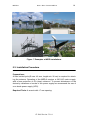
Figure 7 shows various examples of MRR installations: On ground, on top of
containers and on top of buildings.
07.2009 Version 5.2.0.1