1
SPM 32 User’s Manual
Menu Functions
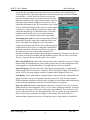
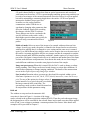
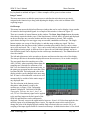
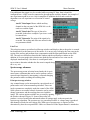
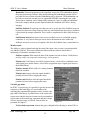
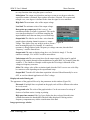
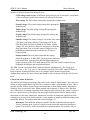
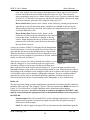
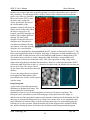
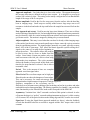
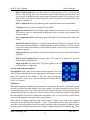
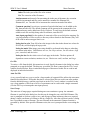
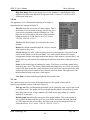
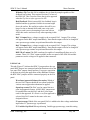
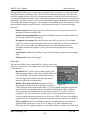
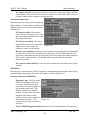
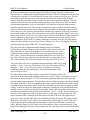
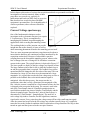
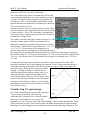
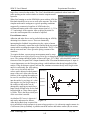
Handshake condition Valid settings are above threshold or below threshold. If the
threshold (see previous entry) is +3.0 V and
above threshold is selected, then CITS data
will not be recorded until the handshake
channel voltage is greater than +3.0 volts.
Handshake timeout Sets the maximum
time the SPM32 program will wait before it
stops data acquisition and issues an error
message. This will prevent data acquisition
from stopping if there are problems with
external equipment. You may want to
choose a timeout value that will not leave
the feedback loop open for too long an
interval in case of problems. If a long
amount of time is placed in here and the
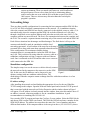
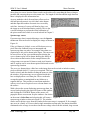
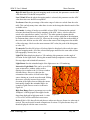
Figure 34
acquisition needs to be interrupted, use the
ESC key.
Noise Power
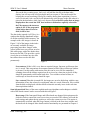
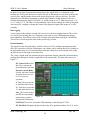
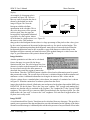
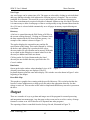
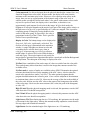
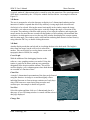
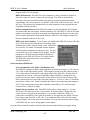
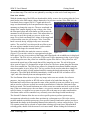
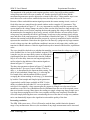
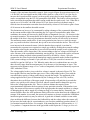
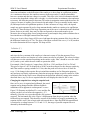
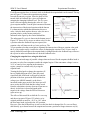
Used for diagnostic purposes. A Fast Fourier Transform (FFT) of the input signal is calculated to
look for large peaks at specific resonances. If peaks are present at 60 Hz or harmonics of this
frequency ( in the United States), this usually indicates problems related to electrical pickup or
ground loops. Peaks at other values (particularly low frequencies) are typical when the
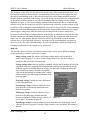
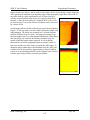
microscope is coupled to external vibrations. An example with a large amount of 60 Hz noise is
shown in Figure 1. To extract the precise frequency of a peak, the Cursor mode should be used to
slide over the plot and have the exact position displayed. More details are provided in the
Analysis section.
Spectrum
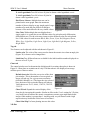
A single sweep spectrum is acquired at the current location of the tip. The voltage sweep and
resulting data will be dependent upon the parameters in the point spectroscopy control window
discussed above.
Autocorrelate
An autocorrelation analysis of one of the input channels can be calculated using this selection.
The data displayed is actually the square root of the autocorrelation, normalized for the number
of data points collected. This analysis is controlled by the same set of parameters as the power
spectrum, but usually does not require as large of a number of data points for a useful spectra.
Often 1 or 2 thousand is enough. Too many data points (> 16,000) may cause the results to
exceed the floating point data range of the PC, producing a flat output.
Lithography 1 and Lithography 2
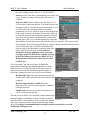
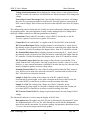
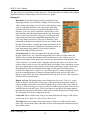
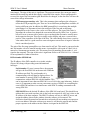
Features can be produced on the surface by the application of voltage pulses to the bias output.
These are induced by the large electric field present between the tip and sample. This technique
can also prove useful for improving the performance of a STM tip by inducing field emission
RHK Technology, Inc.
Troy, MI
48