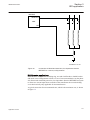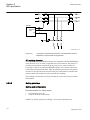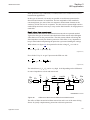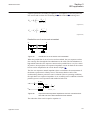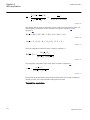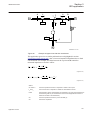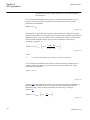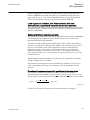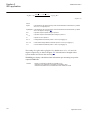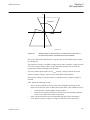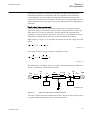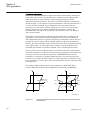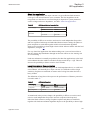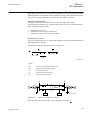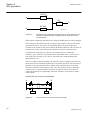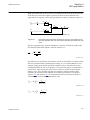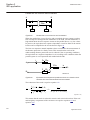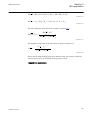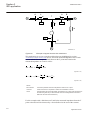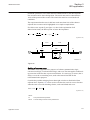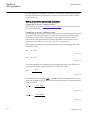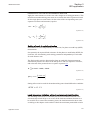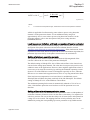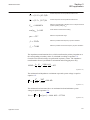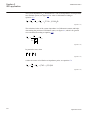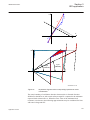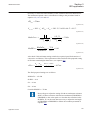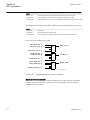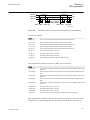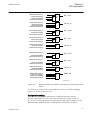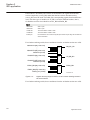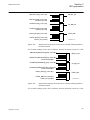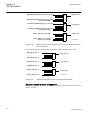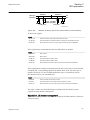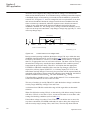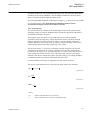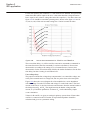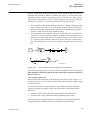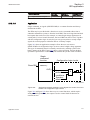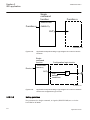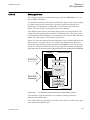
1
Relion® 670 series Transformer protection RET670 Application manual Document ID: 1MRK504089-UEN Issued: June 2010 Revision: C Product version: 1.1 © Copyright 2010 ABB. All rights reserved Copyright This document and parts thereof must not be reproduced or copied without written permission from ABB, and the contents thereof must not be imparted to a third party, nor used for any unauthorized purpose. The software or hardware described in this document is furnished under a license and may be used or disclosed only in accordance with the terms of such license. Trademarks ABB and Relion are registered trademarks of ABB Group. All other brand or product names mentioned in this document may be trademarks or registered trademarks of their respective holders. Warranty Please inquire about the terms of warranty from your nearest ABB representative. ABB AB Substation Automation Products SE-721 59 Västerås Sweden Telephone: +46 (0) 21 32 50 00 Facsimile: +46 (0) 21 14 69 18 http://www.abb.com/substationautomation Disclaimer The data, examples and diagrams in this manual are included solely for the concept or product description and are not to be deemed as a statement of guaranteed properties. All persons responsible for applying the equipment addressed in this manual must satisfy themselves that each intended application is suitable and acceptable, including that any applicable safety or other operational requirements are complied with. In particular, any risks in applications where a system failure and/ or product failure would create a risk for harm to property or persons (including but not limited to personal injuries or death) shall be the sole responsibility of the person or entity applying the equipment, and those so responsible are hereby requested to ensure that all measures are taken to exclude or mitigate such risks. This document has been carefully checked by ABB but deviations cannot be completely ruled out. In case any errors are detected, the reader is kindly requested to notify the manufacturer. Other than under explicit contractual commitments, in no event shall ABB be responsible or liable for any loss or damage resulting from the use of this manual or the application of the equipment. Conformity This product complies with the directive of the Council of the European Communities on the approximation of the laws of the Member States relating to electromagnetic compatibility (EMC Directive 2004/108/EC) and concerning electrical equipment for use within specified voltage limits (Low-voltage directive 2006/95/EC). This conformity is proved by tests conducted by ABB AB in accordance with the generic standard EN 50263 for the EMC directive, and with the standards EN 60255-5 and/or EN 50178 for the low voltage directive. This product is designed and produced for industrial use. Table of contents Table of contents Section 1 Introduction.....................................................................13 Introduction to the application manual..............................................13 About the complete set of manuals for an IED............................13 About the application manual......................................................14 Intended audience.......................................................................14 Related documents......................................................................15 Revision notes.............................................................................16 Section 2 Requirements.................................................................17 Current transformer requirements....................................................17 Current transformer classification................................................17 Conditions....................................................................................18 Fault current................................................................................19 Secondary wire resistance and additional load...........................19 General current transformer requirements..................................20 Rated equivalent secondary e.m.f. requirements........................20 Transformer differential protection.........................................20 Distance protection.................................................................21 Restricted earth fault protection (low impedance differential)...................................................................................22 Neutral CTs and phase CTs for solidly earthed transformers...........................................................................22 Neutral CTs and phase CTs for impedance earthed transformers...........................................................................23 Current transformer requirements for CTs according to other standards............................................................................25 Current transformers according to IEC 60044-1, class P, PR.............................................................................25 Current transformers according to IEC 60044-1, class PX, IEC 60044-6, class TPS (and old British Standard, class X).........................................25 Current transformers according to ANSI/IEEE.......................26 Voltage transformer requirements....................................................26 SNTP server requirements...............................................................27 Section 3 IED application...............................................................29 General IED application....................................................................29 Analog inputs....................................................................................30 Introduction..................................................................................30 Setting guidelines........................................................................31 Setting of the phase reference channel..................................31 1 Application manual Table of contents Setting parameters......................................................................55 Local human-machine interface.......................................................60 Human machine interface ...........................................................60 Local HMI related functions.........................................................62 Introduction.............................................................................62 General setting parameters....................................................62 Indication LEDs...........................................................................62 Introduction.............................................................................62 Setting parameters.................................................................63 Basic IED functions..........................................................................65 Self supervision with internal event list........................................65 Application..............................................................................65 Setting parameters.................................................................65 Time synchronization...................................................................66 Application..............................................................................66 Setting guidelines...................................................................66 Setting parameters.................................................................68 Parameter setting groups............................................................70 Application..............................................................................70 Setting guidelines...................................................................71 Setting parameters.................................................................71 Test mode functionality TEST.....................................................71 Application..............................................................................71 Setting guidelines...................................................................71 Setting parameters.................................................................72 Change lock CHNGLCK..............................................................72 Application..............................................................................72 Setting parameters.................................................................73 IED identifiers..............................................................................73 Application..............................................................................73 Setting parameters.................................................................73 Product information.....................................................................74 Application..............................................................................74 Setting parameters.................................................................74 Rated system frequency PRIMVAL.............................................75 Application..............................................................................75 Setting guidelines...................................................................75 Setting parameters.................................................................75 Signal matrix for binary inputs SMBI...........................................75 Application..............................................................................75 Setting guidelines...................................................................75 Setting parameters.................................................................75 Signal matrix for binary outputs SMBO ......................................76 2 Application manual Table of contents Application..............................................................................76 Setting guidelines...................................................................76 Setting parameters.................................................................76 Signal matrix for mA inputs SMMI...............................................76 Application..............................................................................76 Setting guidelines...................................................................76 Setting parameters.................................................................76 Signal matrix for analog inputs SMAI..........................................76 Application..............................................................................77 Frequency values...................................................................77 Setting guidelines...................................................................78 Setting parameters.................................................................83 Summation block 3 phase 3PHSUM...........................................84 Application..............................................................................84 Setting guidelines...................................................................84 Setting parameters.................................................................85 Authority status ATHSTAT..........................................................85 Application..............................................................................85 Setting parameters.................................................................85 Differential protection........................................................................86 Transformer differential protection T2WPDIF and T3WPDIF ....................................................................................86 Application..............................................................................86 Setting guidelines...................................................................87 Setting example......................................................................94 Setting parameters...............................................................106 Restricted earth fault protection, low impedance REFPDIF .....111 Application............................................................................111 Setting guidelines.................................................................116 Setting parameters...............................................................118 1Ph High impedance differential protection HZPDIF ................119 Application............................................................................119 Connection examples...........................................................125 Setting guidelines.................................................................128 Setting parameters...............................................................141 Impedance protection ....................................................................141 Distance measuring zones, quadrilateral characteristic ZMQPDIS, ZMQAPDIS, ZDRDIR..............................................141 Application............................................................................141 Setting guidelines.................................................................157 Setting parameters...............................................................166 Phase selection, quadrilateral characteristic with fixed angle FDPSPDIS.......................................................................168 Application............................................................................168 3 Application manual Table of contents Setting guidelines.................................................................168 Setting parameters...............................................................175 Full-scheme distance measuring, Mho characteristic ZMHPDIS .................................................................................176 Application............................................................................176 Setting guidelines.................................................................189 Setting parameters...............................................................196 Full-scheme distance protection, quadrilateral for earth faults ZMMPDIS, ZMMAPDIS...................................................197 Application............................................................................197 Setting guidelines.................................................................211 Setting parameters...............................................................218 Additional distance protection directional function for earth faults ZDARDIR.........................................................................219 Application............................................................................219 Setting guidelines.................................................................219 Setting parameters...............................................................221 Mho impedance supervision logic ZSMGAPC...........................222 Application............................................................................222 Setting guidelines.................................................................222 Setting parameters...............................................................223 Faulty phase identification with load encroachment FMPSPDIS................................................................................224 Application............................................................................224 Setting guidelines.................................................................225 Setting parameters...............................................................227 Power swing detection ZMRPSB ..............................................228 Application............................................................................228 Setting guidelines.................................................................229 Setting parameters...............................................................237 Power swing logic ZMRPSL .....................................................238 Application............................................................................238 Setting guidelines.................................................................239 Setting parameters...............................................................245 Phase preference logic PPLPHIZ..............................................245 Application............................................................................245 Setting guidelines.................................................................249 Setting parameters...............................................................250 Current protection...........................................................................250 Instantaneous phase overcurrent protection PHPIOC .............250 Application............................................................................251 Setting guidelines.................................................................251 Setting parameters...............................................................256 Four step phase overcurrent protection OC4PTOC .................256 4 Application manual Table of contents Application............................................................................256 Setting guidelines.................................................................257 Setting parameters...............................................................267 Instantaneous residual overcurrent protection EFPIOC ...........272 Application............................................................................272 Setting guidelines.................................................................272 Setting parameters...............................................................275 Four step residual overcurrent protection EF4PTOC ...............275 Application............................................................................275 Setting guidelines.................................................................277 Setting parameters...............................................................281 Sensitive directional residual overcurrent and power protection SDEPSDE ................................................................286 Application............................................................................287 Setting guidelines.................................................................288 Setting parameters...............................................................296 Thermal overload protection, two time constants TRPTTR ......298 Application............................................................................298 Setting guideline...................................................................299 Setting parameters...............................................................301 Breaker failure protection CCRBRF .........................................302 Application............................................................................302 Setting guidelines.................................................................303 Setting parameters...............................................................306 Pole discordance protection CCRPLD .....................................306 Application............................................................................307 Setting guidelines.................................................................307 Setting parameters...............................................................308 Directional underpower protection GUPPDUP..........................308 Application............................................................................309 Setting guidelines.................................................................311 Setting parameters...............................................................315 Directional overpower protection GOPPDOP ...........................316 Application............................................................................316 Setting guidelines.................................................................318 Setting parameters...............................................................322 Broken conductor check BRCPTOC ........................................323 Application............................................................................323 Setting guidelines.................................................................323 Setting parameters...............................................................324 Voltage protection...........................................................................324 Two step undervoltage protection UV2PTUV ...........................324 Application............................................................................325 5 Application manual Table of contents Setting guidelines.................................................................325 Setting parameters...............................................................329 Two step overvoltage protection OV2PTOV .............................331 Application............................................................................331 Setting guidelines.................................................................332 Setting parameters...............................................................335 Two step residual overvoltage protection ROV2PTOV ............337 Application............................................................................337 Setting guidelines.................................................................337 Setting parameters...............................................................342 Overexcitation protection OEXPVPH .......................................343 Application............................................................................344 Setting guidelines.................................................................346 Setting parameters...............................................................349 Voltage differential protection VDCPTOV .................................350 Application............................................................................350 Setting guidelines.................................................................352 Setting parameters...............................................................354 Loss of voltage check LOVPTUV .............................................354 Application............................................................................354 Setting guidelines.................................................................355 Setting parameters...............................................................355 Frequency protection......................................................................355 Underfrequency protection SAPTUF ........................................355 Application............................................................................356 Setting guidelines.................................................................356 Setting parameters...............................................................358 Overfrequency protection SAPTOF ..........................................358 Application............................................................................358 Setting guidelines.................................................................359 Setting parameters...............................................................360 Rate-of-change frequency protection SAPFRC ........................360 Application............................................................................360 Setting guidelines.................................................................361 Setting parameters...............................................................362 Multipurpose protection..................................................................362 General current and voltage protection CVGAPC.....................362 Application............................................................................362 Setting parameters...............................................................368 Secondary system supervision.......................................................375 Current circuit supervision CCSRDIF .......................................375 Application............................................................................375 Setting guidelines.................................................................376 6 Application manual Table of contents Setting parameters...............................................................376 Fuse failure supervision SDDRFUF..........................................376 Application............................................................................376 Setting guidelines.................................................................377 Setting parameters...............................................................380 Control............................................................................................381 Synchrocheck, energizing check, and synchronizing SESRSYN.................................................................................381 Application............................................................................382 Application examples...........................................................386 Setting guidelines.................................................................393 Setting parameters...............................................................398 Apparatus control APC..............................................................400 Application............................................................................400 Interaction between modules...............................................406 Setting guidelines.................................................................408 Setting parameters...............................................................409 Interlocking ...............................................................................411 Configuration guidelines.......................................................413 Interlocking for line bay ABC_LINE .....................................413 Interlocking for bus-coupler bay ABC_BC ...........................418 Interlocking for transformer bay AB_TRAFO .......................424 Interlocking for bus-section breaker A1A2_BS.....................425 Interlocking for bus-section disconnector A1A2_DC ...........428 Interlocking for busbar earthing switch BB_ES ...................436 Interlocking for double CB bay DB ......................................442 Interlocking for 1 1/2 CB BH ................................................444 Horizontal communication via GOOSE for interlocking GOOSEINTLKRCV..............................................................445 Voltage control...........................................................................445 Application............................................................................446 Setting guidelines.................................................................479 Setting parameters...............................................................490 Logic rotating switch for function selection and LHMI presentation SLGGIO................................................................497 Application............................................................................497 Setting guidelines.................................................................498 Setting parameters...............................................................499 Selector mini switch VSGGIO....................................................499 Application............................................................................499 Setting guidelines.................................................................500 Setting parameters...............................................................500 Generic double point function block DPGGIO...........................500 Application............................................................................501 7 Application manual Table of contents Setting guidelines.................................................................501 Single point generic control 8 signals SPC8GGIO....................501 Application............................................................................501 Setting guidelines.................................................................501 Setting parameters...............................................................502 AutomationBits, command function for DNP3.0 AUTOBITS.....502 Application............................................................................502 Setting guidelines.................................................................503 Setting parameters...............................................................503 Single command, 16 signals SINGLECMD...............................516 Application............................................................................517 Setting guidelines.................................................................518 Setting parameters...............................................................519 Scheme communication.................................................................519 Scheme communication logic for residual overcurrent protection ECPSCH ..................................................................519 Application............................................................................519 Setting guidelines.................................................................520 Setting parameters...............................................................521 Current reversal and weak-end infeed logic for residual overcurrent protection ECRWPSCH .........................................521 Application............................................................................521 Setting guidelines.................................................................523 Setting parameters...............................................................524 Logic...............................................................................................525 Tripping logic SMPPTRC ..........................................................525 Application............................................................................525 Setting guidelines.................................................................529 Setting parameters...............................................................530 Trip matrix logic TMAGGIO.......................................................530 Application............................................................................530 Setting guidelines.................................................................530 Setting parameters...............................................................531 Configurable logic blocks...........................................................531 Application............................................................................531 Setting parameters...............................................................532 Fixed signal function block FXDSIGN.......................................533 Application............................................................................533 Setting parameters...............................................................534 Boolean 16 to Integer conversion B16I.....................................534 Application............................................................................534 Setting parameters...............................................................534 Boolean 16 to Integer conversion with logic node representation B16IGGIO..........................................................535 8 Application manual Table of contents Application............................................................................535 Setting parameters...............................................................535 Integer to Boolean 16 conversion IB16.....................................535 Application............................................................................535 Setting parameters...............................................................535 Integer to Boolean 16 conversion with logic node representation IB16GGIO..........................................................535 Application............................................................................536 Setting parameters...............................................................536 Monitoring.......................................................................................536 Measurement.............................................................................536 Application............................................................................537 Zero clamping.......................................................................538 Setting guidelines.................................................................539 Setting parameters...............................................................549 Event counter CNTGGIO...........................................................562 Application............................................................................563 Setting parameters...............................................................563 Event function EVENT...............................................................563 Introduction...........................................................................563 Setting guidelines.................................................................563 Setting parameters...............................................................564 Logical signal status report BINSTATREP................................566 Application............................................................................566 Setting guidelines.................................................................567 Setting parameters...............................................................567 Measured value expander block RANGE_XP...........................567 Application............................................................................567 Setting guidelines.................................................................567 Disturbance report DRPRDRE..................................................567 Application............................................................................568 Setting guidelines.................................................................569 Setting parameters...............................................................574 Event list....................................................................................583 Application............................................................................583 Setting guidelines.................................................................583 Indications.................................................................................584 Application............................................................................584 Setting guidelines.................................................................584 Event recorder ..........................................................................585 Application............................................................................585 Setting guidelines.................................................................585 Trip value recorder....................................................................585 9 Application manual Table of contents Application............................................................................585 Setting guidelines.................................................................586 Disturbance recorder.................................................................586 Application............................................................................586 Setting guidelines.................................................................587 Metering..........................................................................................587 Pulse-counter logic PCGGIO.....................................................587 Application............................................................................587 Setting guidelines.................................................................588 Setting parameters...............................................................588 Function for energy calculation and demand handling ETPMMTR.................................................................................589 Application............................................................................589 Setting guidelines.................................................................590 Setting parameters...............................................................591 Section 4 Station communication.................................................593 Overview.........................................................................................593 IEC 61850-8-1 communication protocol.........................................593 Application IEC 61850-8-1.........................................................593 Setting guidelines......................................................................595 Setting parameters....................................................................595 IEC 61850 generic communication I/O functions SPGGIO, SP16GGIO................................................................................595 Application............................................................................595 Setting guidelines.................................................................595 Setting parameters...............................................................596 IEC 61850 generic communication I/O functions MVGGIO.......596 Application............................................................................596 Setting guidelines.................................................................596 Setting parameters...............................................................596 LON communication protocol.........................................................597 Application.................................................................................597 Setting parameters....................................................................599 SPA communication protocol.........................................................599 Application.................................................................................599 Setting guidelines......................................................................601 Setting parameters....................................................................602 IEC 60870-5-103 communication protocol.....................................602 Application.................................................................................602 Setting parameters....................................................................607 Multiple command and transmit MULTICMDRCV, MULTICMDSND.............................................................................610 Application.................................................................................610 10 Application manual Table of contents Setting guidelines......................................................................611 Settings................................................................................611 Setting parameters....................................................................611 Section 5 Remote communication................................................613 Binary signal transfer......................................................................613 Application.................................................................................613 Communication hardware solutions.....................................613 Setting guidelines......................................................................614 Setting parameters....................................................................616 Section 6 Configuration................................................................619 Introduction.....................................................................................619 Description of configuration RET670..............................................620 Introduction................................................................................620 Description of configuration A30..........................................620 Description of configuration A40..........................................623 Description of configuration B40..........................................625 Description of configuration A10..........................................627 Description of configuration A25..........................................629 Section 7 Glossary.......................................................................633 11 Application manual 12 Section 1 Introduction 1MRK504089-UEN C Section 1 Introduction About this chapter This chapter introduces the user to the manual as such. 1.1 Introduction to the application manual 1.1.1 About the complete set of manuals for an IED Decommissioning deinstalling & disposal Maintenance Operation Commissioning Installing Engineering Planning & purchase The user’s manual (UM) is a complete set of five different manuals: Engineeringmanual Installation and Commissioning manual Operator’s manual Application manual Technical reference manual IEC09000744-1-en.vsd IEC09000744 V1 EN The Application Manual (AM) contains application descriptions, setting guidelines and setting parameters sorted per function. The application manual should be used to find out when and for what purpose a typical protection function could be used. The manual should also be used when calculating settings. The Technical Reference Manual (TRM) contains application and functionality descriptions and it lists function blocks, logic diagrams, input and output signals, setting parameters and technical data sorted per function. The technical reference 13 Application manual Section 1 Introduction 1MRK504089-UEN C manual should be used as a technical reference during the engineering phase, installation and commissioning phase, and during normal service. The Installation and Commissioning Manual (ICM) contains instructions on how to install and commission the protection IED. The manual can also be used as a reference during periodic testing. The manual covers procedures for mechanical and electrical installation, energizing and checking of external circuitry, setting and configuration as well as verifying settings and performing directional tests. The chapters are organized in the chronological order (indicated by chapter/section numbers) in which the protection IED should be installed and commissioned. The Operator’s Manual (OM) contains instructions on how to operate the protection IED during normal service once it has been commissioned. The operator’s manual can be used to find out how to handle disturbances or how to view calculated and measured network data in order to determine the cause of a fault. The Engineering Manual (EM) contains instructions on how to engineer the IEDs using the different tools in PCM600. The manual provides instructions on how to set up a PCM600 project and insert IEDs to the project structure. The manual also recommends a sequence for engineering of protection and control functions, LHMI functions as well as communication engineering for IEC 61850 and DNP3. 1.1.2 About the application manual The application manual contains the following chapters: • • • • • • 1.1.3 The chapter “Requirements” describes current and voltage transformer requirements. The chapter “IED application” describes the use of the included software functions in the IED. The chapter discusses application possibilities and gives guidelines for calculating settings for a particular application. The chapter “Station communication“ describes the communication possibilities in a SA-system. The chapter “Remote communication“ describes the remote end data communication possibilities through binary signal transferring. The chapter “Configuration” describes the preconfiguration of the IED and its complements. The chapter “Glossary” is a list of terms, acronyms and abbreviations used in ABB technical documentation. Intended audience General The application manual is addressing the system engineer/technical responsible that is responsible for specifying the application of the IED. 14 Application manual Section 1 Introduction 1MRK504089-UEN C Requirements The system engineer/technical responsible must have a good knowledge about protection systems, protection equipment, protection functions and the configured functional logics in the protection. 1.1.4 Related documents Documents related to RET670 Identity number Operator’s manual 1MRK 504 087-UEN Installation and commissioning manual 1MRK 504 088-UEN Technical reference manual 1MRK 504 086-UEN Application manual 1MRK 504 089-UEN Buyer’s guide 1MRK 504 091-BEN Sample specification SA2005-001283 Connection diagram, Two winding transf. Single breaker arrangements 1MRK 002 801-LA Connection diagram, Two winding transf. Multi breaker arrangements 1MRK 002 801-HA Connection diagram, Three winding transf. Single breaker arrangements 1MRK 002 801-KA Connection diagram, Three winding transf. Multi breaker arrangements 1MRK 002 801-GA Configuration diagram A, Two winding transf. with single or double busbar but with a single breaker arr. on both sides (A30) 1MRK 004 500-93 Configuration diagram B, Two winding transf. in multi breaker arr. on one or both sides (A40) 1MRK 004 500-94 Configuration diagram C, Three winding transf. with single or double busbar but with a single breaker arr. on both sides (B30) 1MRK 004 500-95 Configuration diagram D, Three winding transf. in multi breaker arr. on one or both sides (B40) 1MRK 004 500-96 Configuration diagram E, Two or three winding transf., back-up protection package (A10) 1MRK 004 500-135 Configuration diagram F. Tap changer control package for two parallel transformers. (A25) 1MRK 004 500-140 Configuration diagram F. Tap changer control package for four parallel transformers. (A25) 1MRK 004 500-140 Setting example 1, 400/230 kV 500 MVA Transformer, YNyn connected 1MRK 504 083-WEN Setting example 2, 132/230 kV 40 MVA Transformer, YNd1 connected 1MRK 504 084-WEN Connection and Installation components 1MRK 513 003-BEN Test system, COMBITEST 1MRK 512 001-BEN Accessories for IED 670 1MRK 514 012-BEN Getting started guide IED 670 1MRK 500 080-UEN SPA and LON signal list for IED 670, ver. 1.1 1MRK 500 083-WEN IEC 61850 Data objects list for IED 670, ver. 1.1 1MRK 500 084-WEN Generic IEC 61850 IED Connectivity package 1KHA001027-UEN Protection and Control IED Manager PCM 600 Installation sheet 1MRS755552 Engineering guide IED 670 products 1MRK 511 179-UEN More information can be found on www.abb.com/substationautomation. 15 Application manual Section 1 Introduction 1.1.5 1MRK504089-UEN C Revision notes Revision C Description No functionality added. Changes made in content due to problem reports. 16 Application manual Section 2 Requirements 1MRK504089-UEN C Section 2 Requirements About this chapter This chapter describes current and voltage transformer requirements. 2.1 Current transformer requirements The performance of a protection function will depend on the quality of the measured current signal. Saturation of the current transformer (CT) will cause distortion of the current signal and can result in a failure to operate or cause unwanted operations of some functions. Consequently CT saturation can have an influence on both the dependability and the security of the protection. This protection IED has been designed to permit heavy CT saturation with maintained correct operation. 2.1.1 Current transformer classification To guarantee correct operation, the current transformers (CTs) must be able to correctly reproduce the current for a minimum time before the CT will begin to saturate. To fulfill the requirement on a specified time to saturation the CTs must fulfill the requirements of a minimum secondary e.m.f. that is specified below. There are several different ways to specify CTs. Conventional magnetic core CTs are usually specified and manufactured according to some international or national standards, which specify different protection classes as well. There are many different standards and a lot of classes but fundamentally there are three different types of CTs: • • • High remanence type CT Low remanence type CT Non remanence type CT The high remanence type has no limit for the remanent flux. This CT has a magnetic core without any airgap and a remanent flux might remain almost infinite time. In this type of transformers the remanence can be up to around 80% of the saturation flux. Typical examples of high remanence type CT are class P, PX, TPS, TPX according to IEC, class P, X according to BS (old British Standard) and non gapped class C, K according to ANSI/IEEE. The low remanence type has a specified limit for the remanent flux. This CT is made with a small air gap to reduce the remanence to a level that does not exceed 10% of the saturation flux. The small air gap has only very limited influences on 17 Application manual Section 2 Requirements 1MRK504089-UEN C the other properties of the CT. Class PR, TPY according to IEC are low remanence type CTs. The non remanence type CT has practically negligible level of remanent flux. This type of CT has relatively big air gaps in order to reduce the remanence to practically zero level. In the same time, these air gaps reduce the influence of the DCcomponent from the primary fault current. The air gaps will also decrease the measuring accuracy in the non-saturated region of operation. Class TPZ according to IEC is a non remanence type CT. Different standards and classes specify the saturation e.m.f. in different ways but it is possible to approximately compare values from different classes. The rated equivalent limiting secondary e.m.f. Eal according to the IEC 60044 – 6 standard is used to specify the CT requirements for the IED. The requirements are also specified according to other standards. 2.1.2 Conditions The requirements are a result of investigations performed in our network simulator. The current transformer models are representative for current transformers of high remanence and low remanence type. The results may not always be valid for non remanence type CTs (TPZ). The performances of the protection functions have been checked in the range from symmetrical to fully asymmetrical fault currents. Primary time constants of at least 120 ms have been considered at the tests. The current requirements below are thus applicable both for symmetrical and asymmetrical fault currents. Depending on the protection function phase-to-earth, phase-to-phase and threephase faults have been tested for different relevant fault positions for example, close in forward and reverse faults, zone 1 reach faults, internal and external faults. The dependability and security of the protection was verified by checking for example, time delays, unwanted operations, directionality, overreach and stability. The remanence in the current transformer core can cause unwanted operations or minor additional time delays for some protection functions. As unwanted operations are not acceptable at all maximum remanence has been considered for fault cases critical for the security, for example, faults in reverse direction and external faults. Because of the almost negligible risk of additional time delays and the non-existent risk of failure to operate the remanence have not been considered for the dependability cases. The requirements below are therefore fully valid for all normal applications. It is difficult to give general recommendations for additional margins for remanence to avoid the minor risk of an additional time delay. They depend on the performance and economy requirements. When current transformers of low remanence type (for example, TPY, PR) are used, normally no additional margin is needed. For current transformers of high remanence type (for example, P, PX, TPS, TPX) the small probability of fully asymmetrical faults, together with high 18 Application manual Section 2 Requirements 1MRK504089-UEN C remanence in the same direction as the flux generated by the fault, has to be kept in mind at the decision of an additional margin. Fully asymmetrical fault current will be achieved when the fault occurs at approximately zero voltage (0°). Investigations have shown that 95% of the faults in the network will occur when the voltage is between 40° and 90°. In addition fully asymmetrical fault current will not exist in all phases at the same time. 2.1.3 Fault current The current transformer requirements are based on the maximum fault current for faults in different positions. Maximum fault current will occur for three-phase faults or single phase-to-earth faults. The current for a single phase-to-earth fault will exceed the current for a three-phase fault when the zero sequence impedance in the total fault loop is less than the positive sequence impedance. When calculating the current transformer requirements, maximum fault current for the relevant fault position should be used and therefore both fault types have to be considered. 2.1.4 Secondary wire resistance and additional load The voltage at the current transformer secondary terminals directly affects the current transformer saturation. This voltage is developed in a loop containing the secondary wires and the burden of all relays in the circuit. For earth faults the loop includes the phase and neutral wire, normally twice the resistance of the single secondary wire. For three-phase faults the neutral current is zero and it is just necessary to consider the resistance up to the point where the phase wires are connected to the common neutral wire. The most common practice is to use four wires secondary cables so it normally is sufficient to consider just a single secondary wire for the three-phase case. The conclusion is that the loop resistance, twice the resistance of the single secondary wire, must be used in the calculation for phase-to-earth faults and the phase resistance, the resistance of a single secondary wire, may normally be used in the calculation for three-phase faults. As the burden can be considerable different for three-phase faults and phase-toearth faults it is important to consider both cases. Even in a case where the phase-toearth fault current is smaller than the three-phase fault current the phase-to-earth fault can be dimensioning for the CT depending on the higher burden. In isolated or high impedance earthed systems the phase-to-earth fault is not the dimensioning case and therefore the resistance of the single secondary wire always can be used in the calculation, for this case. 19 Application manual Section 2 Requirements 2.1.5 1MRK504089-UEN C General current transformer requirements The current transformer ratio is mainly selected based on power system data for example, maximum load. However, it should be verified that the current to the protection is higher than the minimum operating value for all faults that are to be detected with the selected CT ratio. The minimum operating current is different for different functions and normally settable so each function should be checked. The current error of the current transformer can limit the possibility to use a very sensitive setting of a sensitive residual overcurrent protection. If a very sensitive setting of this function will be used it is recommended that the current transformer should have an accuracy class which have an current error at rated primary current that is less than ±1% (for example, 5P). If current transformers with less accuracy are used it is advisable to check the actual unwanted residual current during the commissioning. 2.1.6 Rated equivalent secondary e.m.f. requirements With regard to saturation of the current transformer all current transformers of high remanence and low remanence type that fulfill the requirements on the rated equivalent secondary e.m.f. Eal below can be used. The characteristic of the non remanence type CT (TPZ) is not well defined as far as the phase angle error is concerned. If no explicit recommendation is given for a specific function we therefore recommend contacting ABB to confirm that the non remanence type can be used. The CT requirements for the different functions below are specified as a rated equivalent limiting secondary e.m.f. Eal according to the IEC 60044-6 standard. Requirements for CTs specified in different ways are given at the end of this section. 2.1.6.1 Transformer differential protection The current transformers must have a rated equivalent secondary e.m.f. Eal that is larger than the maximum of the required secondary e.m.f. Ealreq below: E al ³ E alreq = 30 × I nt × Isn I pn æ S ö × ç R CT + R L + R2 ÷ Ir ø è (Equation 1) EQUATION1412 V1 EN E al ³ E alreq = 2 × I tf × EQUATION1413 V1 EN Isn æ S ö × ç R CT + R L + 2R ÷ I pn è Ir ø (Equation 2) 20 Application manual Section 2 Requirements 1MRK504089-UEN C where: Int The rated primary current of the power transformer (A) Itf Maximum primary fundamental frequency current that passes two main CTs and the power transformer (A) Ipn The rated primary CT current (A) Isn The rated secondary CT current (A) Ir The rated current of the protection IED (A) RCT The secondary resistance of the CT (W) RL The resistance of the secondary wire and additional load (W). The loop resistance containing the phase and neutral wires must be used for faults in solidly earthed systems. The resistance of a single secondary wire should be used for faults in high impedance earthed systems. SR The burden of an IED current input channel (VA). SR=0.020 VA/channel for Ir=1 A and Sr=0.150 VA/channel for Ir=5 A In substations with breaker-and-a-half or double-busbar double-breaker arrangement, the fault current may pass two main CTs for the transformer differential protection without passing the power transformer. In such cases and if both main CTs have equal ratios and magnetization characteristics the CTs must satisfy equation 1 and equation 3. E al ³ E alreq = If × Isn æ S ö × ç R CT + R L + R2 ÷ I pn è Ir ø (Equation 3) EQUATION1414 V1 EN where: If 2.1.6.2 Maximum primary fundamental frequency current that passes two main CTs without passing the power transformer (A) Distance protection The current transformers must have a rated equivalent secondary e.m.f. Eal that is larger than the maximum of the required secondary e.m.f. Ealreq below: E al ³ E alreq = æ I k max ×Isn S ö × a × ç R CT + R L + R2 ÷ I pn Ir ø è (Equation 4) EQUATION1080 V1 EN E al ³ E alreq = EQUATION1081 V1 EN æ I kzone1× Isn S ö × k × ç R CT + R L + 2R ÷ I pn Ir ø è (Equation 5) 21 Application manual Section 2 Requirements 1MRK504089-UEN C where: 2.1.7 Ikmax Maximum primary fundamental frequency current for close-in forward and reverse faults (A) Ikzone1 Maximum primary fundamental frequency current for faults at the end of zone 1 reach (A) Ipn The rated primary CT current (A) Isn The rated secondary CT current (A) Ir The rated current of the protection IED (A) RCT The secondary resistance of the CT (W) RL The resistance of the secondary wire and additional load (W). In solidly earthed systems the loop resistance containing the phase and neutral wires should be used for phase-to-earth faults and the resistance of the phase wire should be used for three-phase faults. In isolated or high impedance earthed systems the resistance of the single secondary wire always can be used. SR The burden of an IED current input channel (VA). SR=0.020 VA/channel for Ir=1 A and Sr=0.150 VA/channel for Ir=5 A a This factor is a function of the primary time constant for the dc component in the fault current. a= 2 for the primary time constant Tp£ 50 ms a = 3 for the primary time constant Tp> 50 ms k A factor of the primary time constant for the dc component in the fault current for a three-phase fault at the set reach of zone 1. k = 4 for the primary time constant Tp£ 30 ms k = 6 for the primary time constant Tp> 30 ms Restricted earth fault protection (low impedance differential) The requirements are specified separately for solidly earthed and impedance earthed transformers. For impedance earthed transformers the requirements for the phase CTs are depending whether it is three individual CTs connected in parallel or it is a cable CT enclosing all three phases. 2.1.7.1 Neutral CTs and phase CTs for solidly earthed transformers The neutral CT and the phase CTs must have a rated equivalent secondary e.m.f. Eal that is larger than or equal to the maximum of the required secondary e.m.f. Ealreq below: Eal ³ Ealreq = 30 × I nt × I sn æ S ö × ç RCT + RL + R2 ÷ I pn è Ir ø (Equation 6) EQUATION2237 V1 EN Eal ³ Ealreq = 2 × I etf × EQUATION2238 V1 EN I sn æ S ö × ç RCT + RL + R2 ÷ I pn è Ir ø (Equation 6) 22 Application manual Section 2 Requirements 1MRK504089-UEN C Where: Int The rated primary current of the power transformer (A) Ietf Maximum primary fundamental frequency phase-to-earth fault current that passes the CTs and the power transformer neutral (A) Ipn The rated primary CT current (A) Isn The rated secondary CT current (A) Ir The rated current of the protection IED (A) RCT The secondary resistance of the CT () RL The resistance of the secondary wire and additional load (Ω). The loop resistance containing the phase and neutral wires shall be used. SR The burden of a REx670 current input channel (VA). SR=0,020 VA / channel for IR = 1 A and SR = 0,150 VA / channel for IR = 5 A In substations with breaker-and-a-half or double-busbar double-breaker arrangement, the fault current may pass two main phase CTs for the restricted earth fault protection without passing the power transformer. In such cases and if both main CTs have equal ratios and magnetization characteristics the CTs must satisfy Requirement (12) and the Requirement (14) below: Eal ³ Ealreq = I ef × I sn I pn æ × ç RCT + RL + è ö ÷ Ir ø SR 2 (Equation 7) EQUATION2239 V1 EN Where: Ief 2.1.7.2 Maximum primary fundamental frequency phase-to-earth fault current that passes two main CTs without passing the power transformer neutral (A) Neutral CTs and phase CTs for impedance earthed transformers The neutral CT and phase CTs must have a rated equivalent secondary e.m.f. Eal that is larger than or equal to the required secondary e.m.f. Ealreq below: Eal ³ Ealreq = 3 × I etf × I sn I pn æ × ç RCT + RL + è ö ÷ Ir ø SR 2 (Equation 8) EQUATION2240 V1 EN Where: Ietf Maximum primary fundamental frequency phase-to-earth fault current that passes the CTs and the power transformer neutral (A) Ipn The rated primary CT current (A) Isn The rated secondary CT current (A) Table continues on next page 23 Application manual Section 2 Requirements 1MRK504089-UEN C Ir The rated current of the protection IED (A) RCT The secondary resistance of the CT (Ω) RL The resistance of the secondary wire and additional load (Ω). The loop resistance containing the phase and neutral wires shall be used. SR The burden of a REx670 current input channel (VA). SR = 0,020 VA / channel for Ir = 1 A and SR = 0,150 VA / channel for Ir = 5 A In case of three individual CTs connected in parallel (Holmgren connection) on the phase side the following additional requirements must also be fulfilled. The three individual phase CTs must have a rated equivalent secondary e.m.f. Eal that is larger than or equal to the maximum of the required secondary e.m.f. Ealreq below: Eal ³ Ealreq = 2 × I tf × I sn æ S ö × ç RCT + RL + R2 ÷ I pn è Ir ø (Equation 9) EQUATION2241 V1 EN Where: Itf Maximum primary fundamental frequency three-phase fault current that passes the CTs and the power transformer (A). RLsw The resistance of the single secondary wire and additional load (Ω). In impedance earthed systems the phase-to-earth fault currents often are relatively small and the requirements might result in small CTs. However, in applications where the zero sequence current from the phase side of the transformer is a summation of currents from more than one CT (cable CTs or groups of individual CTs in Holmgren connection) for example, in substations with breaker-and-a-half or double-busbar double-breaker arrangement or if the transformer has a Tconnection to different busbars, there is a risk that the CTs can be exposed for higher fault currents than the considered phase-to-earth fault currents above. Examples of such cases can be cross-country faults or phase-to-phase faults with high fault currents and unsymmetrical distribution of the phase currents between the CTs. The zero sequence fault current level can differ much and is often difficult to calculate or estimate for different cases. To cover these cases, with summation of zero sequence currents from more than one CT, the phase side CTs must fulfill the Requirement (17) below: Eal ³ Ealreq = I f × EQUATION2242 V1 EN I sn I pn æ × ç RCT + RL + è ö ÷ Ir ø SR 2 (Equation 10) 24 Application manual Section 2 Requirements 1MRK504089-UEN C Where: 2.1.8 If Maximum primary fundamental frequency three-phase fault current that passes the CTs (A) RL The resistance of the secondary wire and additional load (Ω). The loop resistance containing the phase and neutral wires shall be used. Current transformer requirements for CTs according to other standards All kinds of conventional magnetic core CTs are possible to use with the IEDs if they fulfill the requirements corresponding to the above specified expressed as the rated equivalent secondary e.m.f. Eal according to the IEC 60044-6 standard. From different standards and available data for relaying applications it is possible to approximately calculate a secondary e.m.f. of the CT comparable with Eal. By comparing this with the required secondary e.m.f. Ealreq it is possible to judge if the CT fulfills the requirements. The requirements according to some other standards are specified below. 2.1.8.1 Current transformers according to IEC 60044-1, class P, PR A CT according to IEC 60044-1 is specified by the secondary limiting e.m.f. E2max. The value of the E2max is approximately equal to the corresponding Eal according to IEC 60044-6. Therefore, the CTs according to class P and PR must have a secondary limiting e.m.f. E2max that fulfills the following: E 2 max > max imum of E alreq EQUATION1383 V1 EN 2.1.8.2 (Equation 11) Current transformers according to IEC 60044-1, class PX, IEC 60044-6, class TPS (and old British Standard, class X) CTs according to these classes are specified approximately in the same way by a rated knee-point e.m.f. Eknee (Ek for class PX, EkneeBS for class X and the limiting secondary voltage Ual for TPS). The value of the Eknee is lower than the corresponding Eal according to IEC 60044-6. It is not possible to give a general relation between the Eknee and the Eal but normally the Eknee is approximately 80 % of the Eal. Therefore, the CTs according to class PX, X and TPS must have a rated knee-point e.m.f. Eknee that fulfills the following: Eknee » Ek » EkneeBS » Ual > 0.8 · (maximum of Ealreq) EQUATION2100 V1 EN (Equation 12) 25 Application manual Section 2 Requirements 2.1.8.3 1MRK504089-UEN C Current transformers according to ANSI/IEEE Current transformers according to ANSI/IEEE are partly specified in different ways. A rated secondary terminal voltage UANSI is specified for a CT of class C. UANSI is the secondary terminal voltage the CT will deliver to a standard burden at 20 times rated secondary current without exceeding 10 % ratio correction. There are a number of standardized UANSI values for example, UANSI is 400 V for a C400 CT. A corresponding rated equivalent limiting secondary e.m.f. EalANSI can be estimated as follows: E a lANSI = 20 × I s n × R C T + U A NSI = 20 × I s n × R C T + 20 × Is n × Z b ANSI EQUATION971 V1 EN (Equation 13) where: ZbANSI The impedance (that is, complex quantity) of the standard ANSI burden for the specific C class (W) UANSI The secondary terminal voltage for the specific C class (V) The CTs according to class C must have a calculated rated equivalent limiting secondary e.m.f. EalANSI that fulfills the following: E alANSI > max imum of E alreq EQUATION1384 V1 EN (Equation 14) A CT according to ANSI/IEEE is also specified by the knee-point voltage UkneeANSI that is graphically defined from an excitation curve. The knee-point voltage UkneeANSI normally has a lower value than the knee-point e.m.f. according to IEC and BS. UkneeANSI can approximately be estimated to 75 % of the corresponding Eal according to IEC 60044 6. Therefore, the CTs according to ANSI/ IEEE must have a knee-point voltage UkneeANSI that fulfills the following: EkneeANSI > 0.75 · (maximum of Ealreq) EQUATION2101 V1 EN 2.2 (Equation 15) Voltage transformer requirements The performance of a protection function will depend on the quality of the measured input signal. Transients caused by capacitive voltage transformers (CVTs) can affect some protection functions. Magnetic or capacitive voltage transformers can be used. 26 Application manual Section 2 Requirements 1MRK504089-UEN C The capacitive voltage transformers (CVTs) should fulfill the requirements according to the IEC 60044–5 standard regarding ferro-resonance and transients. The ferro-resonance requirements of the CVTs are specified in chapter 7.4 of the standard. The transient responses for three different standard transient response classes, T1, T2 and T3 are specified in chapter 15.5 of the standard. CVTs according to all classes can be used. The protection IED has effective filters for these transients, which gives secure and correct operation with CVTs. 2.3 SNTP server requirements The SNTP server to be used is connected to the local network, that is not more than 4-5 switches or routers away from the IED. The SNTP server is dedicated for its task, or at least equipped with a real-time operating system, that is not a PC with SNTP server software. The SNTP server should be stable, that is, either synchronized from a stable source like GPS, or local without synchronization. Using a local SNTP server without synchronization as primary or secondary server in a redundant configuration is not recommended. 27 Application manual 28 Section 3 IED application 1MRK504089-UEN C Section 3 IED application About this chapter This chapter describes the use of the included software functions in the IED. The chapter discusses application possibilities and gives guidelines for calculating settings for a particular application. 3.1 General IED application RET670 provides fast and selective protection, monitoring and control for two- and three-winding transformers, autotransformers, generator-transformer units, phase shifting transformers, special railway transformers and shunt reactors. The transformer IED is designed to operate correctly over a wide frequency range in order to accommodate power system frequency variations during disturbances and generator start-up and shut-down. A very fast differential protection function, with automatic CT ratio matching and vector group compensation, makes this IED the ideal solution even for the most demanding applications. RET670 has very low requirements on the main CTs, no interposing CTs are required. It is suitable for differential applications with multibreaker arrangements with up to six restraint CT inputs. The differential protection function is provided with 2nd harmonic and wave-block restraint features to avoid tripping for magnetizing inrush, and 5th harmonic restraint to avoid tripping for overexcitation. The differential function offers a high sensitivity for low-level internal faults. RET670 unique and innovative sensitive differential protection feature, based on well-known theory of symmetrical components provide best possible coverage for winding internal turn-to-turn faults. Low impedance restricted earth-fault protection functions are available as complimentary sensitive and fast main protection against winding earth faults. This function includes a directional zero-sequence current criterion for additional security. Additionally a high impedance differential function is available. It can be used as restricted earth fault or, as three functions are included, also as differential protection on autotransformers, as differential protection for a tertiary connected reactor, as T-differential protection for the transformer feeder in a mesh-corner or ring arrangement, as tertiary bus protection and so on. Tripping from Pressure relief / Buchholz and temperature devices can be done through the transformer IED where pulsing, lock-out contact output and so on, is 29 Application manual Section 3 IED application 1MRK504089-UEN C performed. The binary inputs are heavily stabilized against disturbance to prevent incorrect operations at for example, dc system capacitive discharges or dc earth faults. Distance protection functionality for phase-to-phase and/or phase-to-earth faults is available as back-up protection for faults within the transformer and in the connected power system. Versatile phase, earth, positive, negative and zero sequence overcurrent functions, which can optionally be made directional and/or voltage controlled, provide further alternative backup protection. Thermal overload with two time-constants, volts per hertz, over/under voltage and over/under frequency protection functions are also available. Built-in disturbance and event recorder provides valuable data to the user about status and operation for post-fault disturbance analysis. Breaker failure protection for each transformer breaker allows high speed back-up tripping of surrounding breakers. The transformer IED can also be provided with a full control and interlocking functionality including Synchrocheck function to allow integration of the main and/ or a local back-up control. The advanced logic capability, where user logic is prepared with a graphical tool, allows special applications such as automatic opening of disconnectors in multibreaker arrangements, closing of breaker rings, load transfer logic and so on. The graphical configuration tool ensures simple and fast testing and commissioning. Serial data communication is via optical connections to ensure immunity against disturbances. The wide application flexibility makes this product an excellent choice for both new installations and the refurbishment of existing installations. 3.2 Analog inputs 3.2.1 Introduction Analog input channels must be configured and set properly to get correct measurement results and correct protection operations. For power measuring and all directional and differential functions the directions of the input currents must be defined properly. Measuring and protection algorithms in the IED use primary system quantities. Set values are done in primary quantities as well and it is important to set the data about the connected current and voltage transformers properly. A reference PhaseAngleRef can be defined to facilitate service values reading. This analog channels phase angle will always be fixed to zero degree and all other angle information will be shown in relation to this analog input. During testing and 30 Application manual Section 3 IED application 1MRK504089-UEN C commissioning of the IED the reference channel can be changed to facilitate testing and service values reading. The availability of VT inputs depends on the ordered transformer input module (TRM) type. 3.2.2 Setting guidelines The available setting parameters related to analog inputs are depending on the actual hardware (TM) and the logic configuration made in PCM600. 3.2.2.1 Setting of the phase reference channel All phase angles are calculated in relation to a defined reference. An appropriate analog input channel is selected and used as phase reference. The parameter PhaseAngleRef defines the analog channel that is used as phase angle reference. Example The setting PhaseAngleRef=10 shall be used if a phase-to-earth voltage (usually the L1 phase-to-earth voltage connected to VT channel number 10 of the analog card) is selected to be the phase reference. Setting of current channels The direction of a current to the IED is depending on the connection of the CT. Unless indicated otherwise, the main CTs are supposed to be star connected and can be connected with the earthing point to the object or from the object. This information must be set to the IED. The convention of the directionality is defined as follows: A positive value of current, power, and so on means that the quantity has the direction into the object and a negative value means direction out from the object. For directional functions the direction into the object is defined as Forward and the direction out from the object is defined as Reverse. See figure 1 31 Application manual Section 3 IED application 1MRK504089-UEN C Definition of direction for directional functions Reverse Definition of direction for directional functions Forward Forward Reverse Protected Object Line, transformer, etc e.g. P, Q, I Measured quantity is positive when flowing towards the object e.g. P, Q, I Measured quantity is positive when flowing towards the object Set parameter CTStarPoint Correct Setting is "ToObject" Set parameter CTStarPoint Correct Setting is "FromObject" en05000456.vsd IEC05000456 V1 EN Figure 1: Internal convention of the directionality in the IED With correct setting of the primary CT direction, CTStarPoint set to FromObject or ToObject, a positive quantities always flowing towards the object and a direction defined as Forward always is looking towards the object. The following examples show the principle. Example 1 Two IEDs used for protection of two objects. Line Ip Transformer Ip Ip Line Reverse Is Transformer protection Setting of current input: Set parameter CTStarPoint with Transformer as reference object. Correct setting is "ToObject" Forward Definition of direction for directional functions Is Setting of current input: Set parameter CTStarPoint with Transformer as reference object. Correct setting is "ToObject" Line protection Setting of current input: Set parameter CTStarPoint with Line as reference object. Correct setting is "FromObject" en05000753.vsd IEC05000753 V1 EN Figure 2: Example how to set CTStarPoint parameters in the IED 32 Application manual Section 3 IED application 1MRK504089-UEN C The figure 2 shows the most normal case where the objects have their own CTs. The settings for CT direction shall be done according to the figure. To protect the line the direction of the directional functions of the line protection shall be set to Forward. This means that the protection is looking towards the line. Example 2 Two IEDs used for protection of two objects and sharing a CT. Transformer Line Reverse Transformer protection Setting of current input: Set parameter CTStarPoint with Transformer as reference object. Correct setting is "ToObject" Setting of current input: Set parameter CTStarPoint with Transformer as reference object. Correct setting is "ToObject" Forward Definition of direction for directional functions Line protection Setting of current input: Set parameter CTStarPoint with Line as reference object. Correct setting is "FromObject" en05000460.vsd IEC05000460 V1 EN Figure 3: Example how to set CTStarPoint parameters in the IED This example is similar to example 1 but the transformer is feeding just one line and the line protection uses the same CT as the transformer protection does. The CT direction is set with different reference objects for the two IEDs though it is the same current from the same CT that is feeding two IEDs. With these settings the directional functions of the line protection shall be set to Forward to look towards the line. Example 3 One IED used to protect two objects. 33 Application manual Section 3 IED application 1MRK504089-UEN C Transformer Line Forward Definition of direction for directional line functions Transformer and Line protection Setting of current input: Set parameter CTStarPoint with Transformer as reference object. Correct setting is "ToObject" Reverse Setting of current input: Set parameter CTStarPoint with Transformer as reference object. Correct setting is "ToObject" en05000461.vsd IEC05000461 V1 EN Figure 4: Example how to set CTStarPoint parameters in the IED In this example one IED includes both transformer and line protection and the line protection uses the same CT as the transformer protection does. For both current input channels the CT direction is set with the transformer as reference object. This means that the direction Forward for the line protection is towards the transformer. To look towards the line the direction of the directional functions of the line protection must be set to Reverse. The direction Forward/Reverse is related to the reference object that is the transformer in this case. When a function is set to Reverse and shall protect an object in reverse direction it shall be noted that some directional functions are not symmetrical regarding the reach in forward and reverse direction. It is in first hand the reach of the directional criteria that can differ. Normally it is not any limitation but it is advisable to have it in mind and check if it is acceptable for the application in question. If the IED has a sufficient number of analog current inputs an alternative solution is shown in figure 5. The same currents are fed to two separate groups of inputs and the line and transformer protection functions are configured to the different inputs. The CT direction for the current channels to the line protection is set with the line as reference object and the directional functions of the line protection shall be set to Forward to protect the line. 34 Application manual Section 3 IED application 1MRK504089-UEN C Transformer Line Reverse Transformer and Line protection Setting of current input for transformer functions: Set parameter CTStarPoint with Transformer as reference object. Correct setting is "ToObject" Setting of current input for transformer functions: Set parameter CTStarPoint with Transformer as reference object. Correct setting is "ToObject" Forward Definition of direction for directional line functions Setting of current input for line functions: Set parameter CTStarPoint with Line as reference object. Correct setting is "FromObject" en05000462.vsd IEC05000462 V1 EN Figure 5: Example how to set CTStarPoint parameters in the IED 35 Application manual Section 3 IED application 1MRK504089-UEN C Busbar 2 Busbar Protection 1 2 1 en06000196.vsd IEC06000196 V1 EN Figure 6: Example how to set CTStarPoint parameters in the IED For busbar protection it is possible to set the CTStarPoint parameters in two ways. The first solution will be to use busbar as a reference object. In that case for all CT inputs marked with 1 in figure 6, set CTStarPoint = ToObject, and for all CT inputs marked with 2 in figure 6, set CTStarPoint = FromObject. The second solution will be to use all connected bays as reference objects. In that case for all CT inputs marked with 1 in figure 6, set CTStarPoint = FromObject, and for all CT inputs marked with 2 in figure 6, set CTStarPoint = ToObject. Regardless which one of the above two options is selected busbar differential protection will behave correctly. 36 Application manual Section 3 IED application 1MRK504089-UEN C The main CT ratios must also be set. This is done by setting the two parameters CTsec and CTprim for each current channel. For a 1000/1 A CT the following setting shall be used: • • CTprim = 1000 (value in A) CTsec =1 (value in A). Examples how to connect, configure and set CT inputs for most commonly used CT connections IPri Figure 7 defines the marking of current transformers terminals commonly used around the world: P2 (H2) P1 (H1) ISec S2 (X2) S1 (X1) S2 (X2) x P1 (H1) P2 (H2) a) S1 (X1) x b) c) en06000641.vsd IEC06000641 V1 EN Figure 7: Commonly used markings of CT terminals Where: a) is symbol and terminal marking used in this document. Terminals marked with a dot indicates the primary and secondary winding terminals with the same (that is, positive) polarity b) and c) are equivalent symbols and terminal marking used by IEC (ANSI) standard for CTs. Note that for this two cases the CT polarity marking is correct! It shall be noted that depending on national standard and utility practices rated secondary current of a CT has typically one of the following values: • • 1A 5A However in some cases the following rated secondary currents are as well used: • • 2A 10A The IED fully supports all of these rated secondary values. 37 Application manual Section 3 IED application 1MRK504089-UEN C It is recommended to: • • use 1A rated CT input into the IED in order to connect CTs with 1A and 2A secondary rating use 5A rated CT input into the IED in order to connect CTs with 5A and 10A secondary rating Example how to connect star connected three-phase CT set to the IED Figure 8 gives an example how to connect the star connected three-phase CT set to the IED. It as well gives overview of required actions by the user in order to make this measurement available to the built-in protection and control functions within the IED. IL2 IL1 L3 IED IL3 L2 L1 1 IL1 CT 600/5 Star Connected 6 3 4 SMAI2 1 IL2 IL3 IR 2 BLOCK 2 AI 01 (I) ^GRP2L1 3 4 AI 02 (I) ^GRP2L2 ^GRP2L3 5 6 AI 03 (I) ^GRP2N TYPE 7 8 AI 04 (I) 9 10 AI 05 (I) 11 12 AI 06 (I) AI3P AI1 AI2 AI3 AI4 AIN 5 Protected Object IEC06000642-2-en.vsd IEC06000642 V2 EN Figure 8: Star connected three-phase CT set with star point towards the protected object Where: 1) shows how to connect three individual phase currents from star connected three-phase CT set to three CT inputs in the IED. 2) shows how to connect residual/neutral current from the three-phase CT set to the fourth inputs in the IED. It shall be noted that if this connection is not made, the IED will still calculate this current internally by vectorial summation of the three individual phase currents. Table continues on next page 38 Application manual Section 3 IED application 1MRK504089-UEN C 3) is TRM module where these current inputs are located. It shall be noted that for all these current inputs the following setting values shall be entered. • • • CTprim=600A CTsec=5A CTStarPoint=ToObject Inside the IED only the ratio of the first two parameters is used. The third parameter as set in this example will have no influence on the measured currents (that is, currents are already measured towards the protected object). 4) are three connections made in the Signal Matrix tool (SMT), which connects these three current inputs to the first three input channels of the preprocessing function block 6). Depending on the type of functions, which need this current information, more than one preprocessing block might be connected in parallel to these three CT inputs. 5) is a connection made in the Signal Matrix tool (SMT), which connects the residual/neutral current input to the fourth input channel of the preprocessing function block 6). Note that this connection in SMT shall not be done if the residual/neutral current is not connected to the IED. In that case the pre-processing block will calculate it by vectorial summation of the three individual phase currents. 6) Preprocessing block has a task to digitally filter the connected analog inputs and calculate: • • • fundamental frequency phasors for all four input channels harmonic content for all four input channels positive, negative and zero sequence quantities by using the fundamental frequency phasors for the first three input channels (channel one taken as reference for sequence quantities) These calculated values are then available for all built-in protection and control functions within the IED, which are connected to this preprocessing function block in the configuration tool. For this application most of the preprocessing settings can be left to the default values. If frequency tracking and compensation is required (this feature is typically required only for IEDs installed in the generating stations) then the setting parameters DFTReference shall be set accordingly. Another alternative is to have the star point of the three-phase CT set as shown in figure 9: 39 Application manual Section 3 IED application 1MRK504089-UEN C L3 IED IL3 L2 IL2 IL1 L1 4 1 IR IL3 IL2 CT 800/1 Star Connected 6 3 IL1 2 1 2 3 4 5 6 7 8 9 10 11 12 SMAI2 BLOCK AI 01 (I) AI 02 (I) AI 03 (I) AI 04 (I) AI3P ^GRP2L1 AI1 ^GRP2L2 AI2 ^GRP2L3 ^GRP2N TYPE AI3 AI4 AIN 5 AI 05 (I) AI 06 (I) Protected Object IEC06000644-2-en.vsd IEC06000644 V2 EN Figure 9: Star connected three-phase CT set with star point from the protected object Please note that in this case everything is done in a similar way as in the above described example, except that for all used current inputs on the TRM the following setting parameters shall be entered: • • • CTprim=800A CTsec=1A CTStarPoint=FromObject Inside the IED only the ratio of the first two parameters is used. The third parameter as set in this example will invert the measured currents (that is, turn the currents by 180°) in order to ensure that the currents within the IED are measured towards the protected object. Example how to connect delta connected three-phase CT set to the IED Figure 10 gives an example how to connect the delta connected three-phase CT set to the IED. It as well gives overview of required actions by the user in order to make this measurement available to the built-in protection and control functions within the IED. 40 Application manual Section 3 IED application 1MRK504089-UEN C IL2 IL1 L3 IED IL3 L2 L1 5 2 3 1 CT 600/5 in Delta DAB Connected IL1-IL2 IL2-IL3 IL3-IL1 SMAI2 1 2 BLOCK AI 01(I) 3 4 AI 02(I) 5 6 AI 03(I) # Not used AI3P ^GRP2L1 AI1 ^GRP2L2 AI2 ^GRP2L3 AI3 ^GRP2N AI4 TYPE AIN 7 8 AI 04(I) 4 9 10 AI 05(I) 11 12 AI 06(I) Protected Object . IEC06000645-2-en.vsd IEC06000645 V2 EN Figure 10: Delta DAB connected three-phase CT set Where: 1) shows how to connect three individual phase currents from delta connected three-phase CT set to three CT inputs in the IED. 2) is TRM module where these current inputs are located. It shall be noted that for all these current inputs the following setting values shall be entered. • • • CTprim=600/1.732=346A CTsec=5A CTStarPoint=ToObject Inside the IED only the ratio of the first two parameters is used. The third parameter as set in this example will have no influence on the measured currents (that is, currents are already measured towards the protected object). Table continues on next page 41 Application manual Section 3 IED application 1MRK504089-UEN C 3) are three connections made in Signal Matrix Tool (SMT) which connect these three current inputs to first three input channels of the preprocessing function block 6). Depending on type of functions which need this current information, more then one preprocessing block might be connected in parallel to these three CT inputs. 4) shows that the fourth input channel of the preprocessing function block shall not be connected in SMT. 5) Preprocessing block has a task to digitally filter the connected analog inputs and calculate: • • • fundamental frequency phasors for all four input channels harmonic content for all four input channels positive, negative and zero sequence quantities by using the fundamental frequency phasors for the first three input channels (channel one taken as reference for sequence quantities) These calculated values are then available for all built-in protection and control functions within the IED, which are connected to this preprocessing function block in the configuration tool. For this application most of the preprocessing settings can be left to the default values. If frequency tracking and compensation is required (this feature is typically required only for IEDs installed in the generating stations) then the setting parameters DFTReference shall be set accordingly. Another alternative is to have the delta connected CT set as shown in figure 11: L3 IED IL3 L2 IL2 IL1 L1 5 2 3 CT 800/1 in delta DCA Connected IL1-IL3 IL2-IL1 IL3-IL2 SMAI2 1 2 BLOCK AI 01 (I) 3 4 5 6 AI 02 (I) AI 03 (I) #Not used AI3P ^GRP2L1 AI1 ^GRP2L2 AI2 ^GRP2L3 AI3 ^GRP2N AI4 TYPE AIN 7 8 AI 04 (I) 4 9 10 AI 05 (I) 11 12 AI 06 (I) Protected Object IEC06000646-2-en.vsd IEC06000646 V2 EN Figure 11: Delta DAC connected three-phase CT set 42 Application manual Section 3 IED application 1MRK504089-UEN C Please note that in this case everything is done in a similar way as in the above described example, except that for all used current inputs on the TRM the following setting parameters shall be entered: • • • CTprim=800/1.732=462A CTsec=1A CTStarPoint=ToObject Inside the IED only the ratio of the first two parameters is used. The third parameter as set in this example will have no influence on the measured currents (that is, currents are already measured towards the protected object). Example how to connect single-phase CT to the IED Figure 12 gives an example how to connect the single-phase CT to the IED. It as well gives overview of required actions by the user in order to make this measurement available to the built-in protection and control functions within the IED. IED Protected Object 2 1 2 L1 L2 L3 AI 01(I) 3 4 5 6 b) CT 1000/1 a) 1 8 AI 04(I) 9 10 SMAI2 AI 03(I) 3 7 INP 5 AI 02(I) BLOCK ^GRP2L1 AI1 # Not used ^GRP2L2 AI2 # Not used ^GRP2L3 AI3 AI 05(I) 11 12 AI 06(I) ^GRP2N AI4 TYPE AIN 4 INP INP AI3P # Not used IEC06000647-2-en.vsd IEC06000647 V2 EN Figure 12: Connections for single-phase CT input 43 Application manual Section 3 IED application 1MRK504089-UEN C Where: 1) shows how to connect single-phase CT input in the IED. 2) is TRM module where these current inputs are located. It shall be noted that for all these current inputs the following setting values shall be entered. • For connection a) shown in figure 12: • • • CTprim=1000A CTsec=1A CTStarPoint=ToObject Inside the IED only the ratio of the first two parameters is used. The third parameter as set in this example will have no influence on the measured currents (that is, currents are already measured towards the protected object). • For connection b) shown in figure 12: • • • CTprim=1000A CTsec=1A CTStarPoint=FromObject Inside the IED only the ratio of the first two parameters is used. The third parameter as set in this example will invert the measured currents (that is, turn the currents by 180°) in order to ensure that the currents within the IED are measured towards the protected object. 3) shows that in this example the first three input channel of the preprocessing block is not connected in Signal Matrix Tool (SMT). 4) shows the connection made in SMT tool which connect this CT input to the fourth input channel of the preprocessing function block 5). 5) Preprocessing block has a task to digitally filter the connected analog inputs and calculate: • • • fundamental frequency phasors for all four input channels harmonic content for all four input channels positive, negative and zero sequence quantities by using the fundamental frequency phasors for the first three input channels (channel one taken as reference for sequence quantities) These calculated values are then available for all built-in protection and control functions within the IED, which are connected to this preprocessing function block in the configuration tool. For this application most of the preprocessing settings can be left to the default values. If frequency tracking and compensation is required (this feature is typically required only for IEDs installed in the generating stations) then the setting parameters DFTReference shall be set accordingly. Setting of voltage channels As the IED uses primary system quantities the main VT ratios must be known. This is done by setting the two parameters VTsec and VTprim for each voltage channel. The phase-to-phase value can be used even if each channel is connected to a phaseto-earth voltage from the VT. Example Consider a VT with the following data: 44 Application manual Section 3 IED application 1MRK504089-UEN C 132kV 110V 3 3 (Equation 16) EQUATION2016 V1 EN The following setting should be used: VTprim=132 (value in kV) VTsec=110 (value in V) Examples how to connect, configure and set VT inputs for most commonly used VT connections Figure 13 defines the marking of voltage transformers terminals commonly used around the world. + + USec UPri a) A (H1) a (X1) A (H1) da (X1) A (H1) a (X1) N (H2) n (X2) N (H2) dn (X2) B (H2) b (X2) b) c) d) en06000591.vsd IEC06000591 V1 EN Figure 13: Commonly used markings of VT terminals Where: a) is symbol and terminal marking used in this document. Terminals marked with a dot indicates the primary and secondary winding terminals with the same (that is, positive) polarity b) is equivalent symbol and terminal marking used by IEC (ANSI) standard for phase-to-earth connected VT c) is equivalent symbol and terminal marking used by IEC (ANSI) standard for open delta connected VT d) is equivalent symbol and terminal marking used by IEC (ANSI) standard for phase-tophase connected VT It shall be noted that depending on national standard and utility practices rated secondary voltage of a VT has typically one of the following values: • • • • 100 V 110 V 115 V 120 V The IED fully supports all of these values and most of them will be shown in the following examples. 45 Application manual Section 3 IED application 1MRK504089-UEN C Examples how to connect three phase-to-earth connected VTs to the IED Figure 14 gives an example how to connect the three phase-to-earth connected VTs to the IED. It as well gives overview of required actions by the user in order to make this measurement available to the built-in protection and control functions within the IED. L1 IED L2 L3 66 kV 3 66kV 3 2 1 110V 3 13 14 AI 07 (I) SMAI2 15 BLOCK 16 17 AI 08 (U) 18 AI 09 (U) 19 20 110V 3 #Not used AI 10 (U) AI3P ^GRP2L1 AI1 ^GRP2L2 AI2 ^GRP2L3 AI3 ^GRP2N AI4 TYPE AIN 21 22 AI 11 (U) 23 24 66kV 3 5 3 4 AI 12 (U) 110V 3 . IEC06000599-2-en.vsd IEC06000599 V2 EN Figure 14: Three phase-to-earth connected VTs Where: 1) shows how to connect three secondary phase-to-earth voltages to three VT inputs in the IED 2) is TRM module where these three voltage inputs are located. It shall be noted that for these three voltage inputs the following setting values shall be entered: VTprim=66 kV VTsec= 110 V Inside the IED, only the ratio of these two parameters is used. It shall be noted that the ratio of the entered values exactly corresponds to ratio of one individual VT. 66 110 66 = 3 110 3 EQUATION1903 V1 EN (Equation 17) Table continues on next page 46 Application manual Section 3 IED application 1MRK504089-UEN C 3) are three connections made in Signal Matrix Tool (SMT) which connect these three voltage inputs to first three input channels of the preprocessing function block 5). Depending on type of functions which need this voltage information, more then one preprocessing block might be connected in parallel to these three VT inputs 4) shows that in this example the fourth (that is, residual) input channel of the preprocessing block is not connected in SMT tool. Thus the preprocessing block will automatically calculate 3Uo inside by vectorial sum from the three phase to earth voltages connected to the first three input channels of the same preprocessing block. Alternatively, the fourth input channel can be connected to open delta VT input, as shown in figure 16. 5) Preprocessing block has a task to digitally filter the connected analog inputs and calculate: • • • fundamental frequency phasors for all four input channels harmonic content for all four input channels positive, negative and zero sequence quantities by using the fundamental frequency phasors for the first three input channels (channel one taken as reference for sequence quantities) These calculated values are then available for all built-in protection and control functions within the IED, which are connected to this preprocessing function block in the configuration tool. For this application most of the preprocessing settings can be left to the default values. However the following settings shall be set as shown here: UBase=66 kV (that is, rated Ph-Ph voltage) If frequency tracking and compensation is required (this feature is typically required only for IEDs installed in the generating stations) then the setting parameters DFTReference shall be set accordingly. Example how to connect two phase-to-phase connected VTs to the IED Figure 15 gives an example how to connect the two phase-to-phase connected VTs to the IED. It as well gives overview of required actions by the user in order to make this measurement available to the built-in protection and control functions within the IED. It shall be noted that this VT connection is only used on lower voltage levels (that is, rated primary voltage below 40 kV). 47 Application manual Section 3 IED application 1MRK504089-UEN C L1 L2 L3 13.8kV 120V 13.8kV IED 120V 2 5 3 1 13 14 AI 07(I) SMAI2 15 16 BLOCK AI 08(U) 17 18 AI 09(U) #Not Used 19 20 AI 10(U) 21 22 AI 11(U) AI3P ^GRP2L1 AI1 ^GRP2L2 AI2 ^GRP2L3 AI3 ^GRP2N AI4 TYPE AIN 4 23 24 AI 12(U) . IEC06000600-2-en.vsd IEC06000600 V2 EN Figure 15: Two phase-to-phase connected VTs Where: 1) shows how to connect secondary side of two phase-to-phase VTs to three VT inputs in the IED 2) is the TRM module where these three voltage inputs are located. It shall be noted that for these three voltage inputs the following setting values shall be entered: VTprim=13.8 kV VTsec=120 V Please note that inside the IED only ratio of these two parameters is used. Table continues on next page 48 Application manual Section 3 IED application 1MRK504089-UEN C 3) are three connections made in the Signal Matrix tool (SMT), which connects these three voltage inputs to first three input channels of the preprocessing function block 5). Depending on the type of functions, which need this voltage information, more than one preprocessing block might be connected in parallel to these three VT inputs 4) shows that in this example the fourth (that is, residual) input channel of the preprocessing block is not connected in SMT. 5) Preprocessing block has a task to digitally filter the connected analog inputs and calculate: • • • fundamental frequency phasors for all four input channels harmonic content for all four input channels positive, negative and zero sequence quantities by using the fundamental frequency phasors for the first three input channels (channel one taken as reference for sequence quantities) These calculated values are then available for all built-in protection and control functions within the IED, which are connected to this preprocessing function block in the configuration tool. For this application most of the preprocessing settings can be left to the default values. However the following settings shall be set as shown here: ConnectionType=Ph-Ph UBase=13.8 kV If frequency tracking and compensation is required (this feature is typically required only for IEDs installed in the generating stations) then the setting parameters DFTReference shall be set accordingly. Example how to connect the open delta VT to the IED for high impedance earthed or unearthed Figure 16 gives an example how to connect the open delta VT to the IED for high impedance earthed or unearthed power systems. It shall be noted that this type of VT connection presents secondary voltage proportional to 3Uo to the IED. In case of a solid earth fault close to the VT location the primary value of 3Uo will be equal to: 3Uo = 3 × U Ph - Ph = 3 × U Ph - E EQUATION1921 V1 EN (Equation 18) The primary rated voltage of such VT is always equal to UPh-E. Therefore, three series connected VT secondary windings will give the secondary voltage equal to three times the individual VT secondary winding rating. Thus the secondary windings of such open delta VTs quite often has a secondary rated voltage equal to one third of the rated phase-to-phase VT secondary voltage (that is, 110/3V in this particular example). Figure 16 as well gives overview of required actions by the user in order to make this measurement available to the built-in protection and control functions within the IED. 49 Application manual Section 3 IED application 1MRK504089-UEN C L1 IED L2 L3 6.6kV 3 2 13 14 110V 3 AI 07 (I) 5 15 16 AI 08 (U) 17 6.6kV 3 1 110V 3 18 AI 09 (U) 19 3 20 AI 10 (U) 21 +3Uo 22 AI 11 (U) SMAI2 BLOCK ^GRP2L1 AI1 # Not Used ^GRP2L2 AI2 # Not Used ^GRP2L3 AI3 23 24 AI3P # Not Used AI 12 (U) ^GRP2N AI4 TYPE AIN 4 6.6kV 3 110V 3 IEC06000601-2-en.vsd IEC06000601 V2 EN Figure 16: Open delta connected VT in high impedance earthed power system 50 Application manual Section 3 IED application 1MRK504089-UEN C Where: 1) shows how to connect the secondary side of open delta VT to one VT input in the IED. +3Uo shall be connected to the IED 2) is TRM module where this voltage input is located. It shall be noted that for this voltage input the following setting values shall be entered: VTprim = 3 × 6.6 = 11.43kV (Equation 19) EQUATION1923 V1 EN VT sec = 3 × 110 3 = 110V (Equation 20) EQUATION1924 V1 EN Inside the IED, only the ratio of these two parameters is used. It shall be noted that the ratio of the entered values exactly corresponds to ratio of one individual open delta VT. 3 × 6.6 110 6.6 = EQUATION1925 V1 EN 3 110 3 (Equation 21) 3) shows that in this example the first three input channel of the preprocessing block is not connected in SMT tool. 4) shows the connection made in Signal Matrix Tool (that is, SMT) which connect this voltage input to the fourth input channel of the preprocessing function block 5). 5) Preprocessing block has a task to digitally filter the connected analog inputs and calculate: • • • fundamental frequency phasors for all four input channels harmonic content for all four input channels positive, negative and zero sequence quantities by using the fundamental frequency phasors for the first three input channels (channel one taken as reference for sequence quantities) These calculated values are then available for all built-in protection and control functions within the IED, which are connected to this preprocessing function block in the configuration tool. For this application most of the preprocessing settings can be left to the default values. If frequency tracking and compensation is required (this feature is typically required only for IEDs installed in the generating stations) then the setting parameters DFTReference shall be set accordingly. Example how to connect the open delta VT to the IED for low impedance earthed or solidly earthed power systems Figure 17 gives an example how to connect the open delta VT to the IED for low impedance earthed or solidly earthed power systems. It shall be noted that this type of VT connection presents secondary voltage proportional to 3Uo to the IED. 51 Application manual Section 3 IED application 1MRK504089-UEN C In case of a solid earth fault close to the VT location the primary value of 3Uo will be equal to: 3Uo = U Ph - Ph 3 = U Ph - E (Equation 22) EQUATION1926 V1 EN The primary rated voltage of such VT is always equal to UPh-E Therefore, three series connected VT secondary windings will give the secondary voltage equal only to one individual VT secondary winding rating. Thus the secondary windings of such open delta VTs quite often has a secondary rated voltage close to rated phaseto-phase VT secondary voltage, that is, 115V or 115/√3V as in this particular example. Figure 17 as well gives overview of required actions by the user in order to make this measurement available to the built-in protection and control functions within the IED. L1 IED L2 L3 138kV 3 2 14 115V 3 16 1 115V 3 AI07 (I) 15 17 18 138kV 3 5 13 19 20 AI08 (U) AI09 (U) 3 AI10 (U) 21 +3Uo 22 SMAI2 BLOCK ^GRP2L1 AI1 # Not Used ^GRP2L2 AI2 # Not Used ^GRP2L3 AI3 ^GRP2N AI4 TYPE AIN AI11 (U) 23 24 138kV 3 AI3P # Not Used AI12 (U) 4 115V 3 IEC06000602-2-en.vsd IEC06000602 V2 EN Figure 17: Open delta connected VT in low impedance earthed power system 52 Application manual Section 3 IED application 1MRK504089-UEN C Where: 1) shows how to connect the secondary side of open delta VT to one VT input in the IED. +3Uo shall be connected to the IED. 2) is TRM module where this voltage input is located. It shall be noted that for this voltage input the following setting values shall be entered: VTprim = 3× 138 3 = 138kV (Equation 23) EQUATION1928 V1 EN VT sec = 3× 115 3 = 115V (Equation 24) EQUATION1929 V1 EN Inside the IED, only the ratio of these two parameters is used. It shall be noted that the ratio of the entered values exactly corresponds to ratio of one individual open delta VT. 138 115 138 = 3 115 3 EQUATION1930 V1 EN (Equation 25) 3) shows that in this example the first three input channel of the preprocessing block is not connected in SMT tool. 4) shows the connection made in Signal Matrix Tool (SMT) which connect this voltage input to the fourth input channel of the preprocessing function block 5). 5) preprocessing block has a task to digitally filter the connected analog inputs and calculate: • • • fundamental frequency phasors for all four input channels harmonic content for all four input channels positive, negative and zero sequence quantities by using the fundamental frequency phasors for the first three input channels (channel one taken as reference for sequence quantities) These calculated values are then available for all built-in protection and control functions within the IED, which are connected to this preprocessing function block in the configuration tool. For this application most of the preprocessing settings can be left to the default values. If frequency tracking and compensation is required (this feature is typically required only for IEDs installed in the generating stations) then the setting parameters DFTReference shall be set accordingly. 53 Application manual Section 3 IED application 1MRK504089-UEN C Example how to connect the neutral point VT to the IED Figure 18 gives an example how to connect the neutral point VT to the IED. It shall be noted that this type of VT connection presents secondary voltage proportional to Uo to the IED. In case of a solid earth fault in high impedance earthed or unearthed systems the primary value of Uo voltage will be equal to: Uo = U Ph - Ph 3 = U Ph - E (Equation 26) EQUATION1931 V1 EN Figure 18 as well gives overview of required actions by the user in order to make this measurement available to the built-in protection and control functions within the IED. IED Protected Object 2 5 13 14 L1 L2 L3 AI07 (I) 15 16 AI08 (I) SMAI2 17 18 1 BLOCK AI09 (I) 19 3 20 AI10 (U) ^GRP2L1 AI1 # Not Used ^GRP2L2 AI2 # Not Used ^GRP2L3 AI3 21 22 AI11 (U) 23 R Uo 24 AI3P # Not Used ^GRP2N AI4 TYPE AIN AI12 (U) 4 6.6kV 3 100V IEC06000603-2-en.vsd IEC06000603 V2 EN Figure 18: Neutral point connected VT 54 Application manual Section 3 IED application 1MRK504089-UEN C Where : 1) shows how to connect the secondary side of neutral point VT to one VT input in the IED. +Uo shall be connected to the IED. 2) is TRM module where this voltage input is located. It shall be noted that for this voltage input the following setting values shall be entered: VTprim = 6.6 3 = 3.81kV EQUATION1933 V1 EN (Equation 27) VT sec = 100V EQUATION1934 V1 EN (Equation 28) Inside the IED, only the ratio of these two parameters is used. It shall be noted that the ratio of the entered values exactly corresponds to ratio of the neutral point VT. 3) shows that in this example the first three input channel of the preprocessing block is not connected in SMT tool. 4) shows the connection made in Signal Matrix Tool (SMT) which connect this voltage input to the fourth input channel of the preprocessing function block 5). 5) preprocessing block has a task to digitally filter the connected analog inputs and calculate: • • • fundamental frequency phasors for all four input channels harmonic content for all four input channels positive, negative and zero sequence quantities by using the fundamental frequency phasors for the first three input channels (channel one taken as reference for sequence quantities) These calculated values are then available for all built-in protection and control functions within the IED, which are connected to this preprocessing function block in the configuration tool. For this application most of the preprocessing settings can be left to the default values. If frequency tracking and compensation is required (this feature is typically required only for IEDs installed in the generating stations) then the setting parameters DFTReference shall be set accordingly. 3.2.3 Setting parameters The available setting parameters related to analog inputs are depending on the actual hardware (TRM) and the logic configuration made in PCM600. 55 Application manual Section 3 IED application Table 1: Name PhaseAngleRef Table 2: Name 1MRK504089-UEN C AISVBAS Non group settings (basic) Values (Range) TRM40-Ch1 TRM40-Ch2 TRM40-Ch3 TRM40-Ch4 TRM40-Ch5 TRM40-Ch6 TRM40-Ch7 TRM40-Ch8 TRM40-Ch9 TRM40-Ch10 TRM40-Ch11 TRM40-Ch12 TRM41-Ch1 TRM41-Ch2 TRM41-Ch3 TRM41-Ch4 TRM41-Ch5 TRM41-Ch6 TRM41-Ch7 TRM41-Ch8 TRM41-Ch9 TRM41-Ch10 TRM41-Ch11 TRM41-Ch12 Unit - Step - Default TRM40-Ch1 Description Reference channel for phase angle presentation TRM_12I Non group settings (basic) Values (Range) Unit Step Default Description CTStarPoint1 FromObject ToObject - - ToObject ToObject= towards protected object, FromObject= the opposite CTsec1 1 - 10 A 1 1 Rated CT secondary current CTprim1 1 - 99999 A 1 3000 Rated CT primary current CTStarPoint2 FromObject ToObject - - ToObject ToObject= towards protected object, FromObject= the opposite CTsec2 1 - 10 A 1 1 Rated CT secondary current CTprim2 1 - 99999 A 1 3000 Rated CT primary current CTStarPoint3 FromObject ToObject - - ToObject ToObject= towards protected object, FromObject= the opposite CTsec3 1 - 10 A 1 1 Rated CT secondary current CTprim3 1 - 99999 A 1 3000 Rated CT primary current CTStarPoint4 FromObject ToObject - - ToObject ToObject= towards protected object, FromObject= the opposite CTsec4 1 - 10 A 1 1 Rated CT secondary current CTprim4 1 - 99999 A 1 3000 Rated CT primary current CTStarPoint5 FromObject ToObject - - ToObject ToObject= towards protected object, FromObject= the opposite CTsec5 1 - 10 A 1 1 Rated CT secondary current CTprim5 1 - 99999 A 1 3000 Rated CT primary current CTStarPoint6 FromObject ToObject - - ToObject ToObject= towards protected object, FromObject= the opposite Table continues on next page 56 Application manual Section 3 IED application 1MRK504089-UEN C Name Values (Range) Unit Step Default Description CTsec6 1 - 10 A 1 1 Rated CT secondary current CTprim6 1 - 99999 A 1 3000 Rated CT primary current CTStarPoint7 FromObject ToObject - - ToObject ToObject= towards protected object, FromObject= the opposite CTsec7 1 - 10 A 1 1 Rated CT secondary current CTprim7 1 - 99999 A 1 3000 Rated CT primary current CTStarPoint8 FromObject ToObject - - ToObject ToObject= towards protected object, FromObject= the opposite CTsec8 1 - 10 A 1 1 Rated CT secondary current CTprim8 1 - 99999 A 1 3000 Rated CT primary current CTStarPoint9 FromObject ToObject - - ToObject ToObject= towards protected object, FromObject= the opposite CTsec9 1 - 10 A 1 1 Rated CT secondary current CTprim9 1 - 99999 A 1 3000 Rated CT primary current CTStarPoint10 FromObject ToObject - - ToObject ToObject= towards protected object, FromObject= the opposite CTsec10 1 - 10 A 1 1 Rated CT secondary current CTprim10 1 - 99999 A 1 3000 Rated CT primary current CTStarPoint11 FromObject ToObject - - ToObject ToObject= towards protected object, FromObject= the opposite CTsec11 1 - 10 A 1 1 Rated CT secondary current CTprim11 1 - 99999 A 1 3000 Rated CT primary current CTStarPoint12 FromObject ToObject - - ToObject ToObject= towards protected object, FromObject= the opposite CTsec12 1 - 10 A 1 1 Rated CT secondary current CTprim12 1 - 99999 A 1 3000 Rated CT primary current Table 3: Name TRM_9I_3U Non group settings (basic) Values (Range) Unit Step Default Description CTStarPoint1 FromObject ToObject - - ToObject ToObject= towards protected object, FromObject= the opposite CTsec1 1 - 10 A 1 1 Rated CT secondary current CTprim1 1 - 99999 A 1 3000 Rated CT primary current CTStarPoint2 FromObject ToObject - - ToObject ToObject= towards protected object, FromObject= the opposite CTsec2 1 - 10 A 1 1 Rated CT secondary current CTprim2 1 - 99999 A 1 3000 Rated CT primary current CTStarPoint3 FromObject ToObject - - ToObject ToObject= towards protected object, FromObject= the opposite CTsec3 1 - 10 A 1 1 Rated CT secondary current CTprim3 1 - 99999 A 1 3000 Rated CT primary current CTStarPoint4 FromObject ToObject - - ToObject ToObject= towards protected object, FromObject= the opposite Table continues on next page 57 Application manual Section 3 IED application Name 1MRK504089-UEN C Values (Range) Unit Step Default Description CTsec4 1 - 10 A 1 1 Rated CT secondary current CTprim4 1 - 99999 A 1 3000 Rated CT primary current CTStarPoint5 FromObject ToObject - - ToObject ToObject= towards protected object, FromObject= the opposite CTsec5 1 - 10 A 1 1 Rated CT secondary current CTprim5 1 - 99999 A 1 3000 Rated CT primary current CTStarPoint6 FromObject ToObject - - ToObject ToObject= towards protected object, FromObject= the opposite CTsec6 1 - 10 A 1 1 Rated CT secondary current CTprim6 1 - 99999 A 1 3000 Rated CT primary current CTStarPoint7 FromObject ToObject - - ToObject ToObject= towards protected object, FromObject= the opposite CTsec7 1 - 10 A 1 1 Rated CT secondary current CTprim7 1 - 99999 A 1 3000 Rated CT primary current CTStarPoint8 FromObject ToObject - - ToObject ToObject= towards protected object, FromObject= the opposite CTsec8 1 - 10 A 1 1 Rated CT secondary current CTprim8 1 - 99999 A 1 3000 Rated CT primary current CTStarPoint9 FromObject ToObject - - ToObject ToObject= towards protected object, FromObject= the opposite CTsec9 1 - 10 A 1 1 Rated CT secondary current CTprim9 1 - 99999 A 1 3000 Rated CT primary current VTsec10 0.001 - 999.999 V 0.001 110.000 Rated VT secondary voltage VTprim10 0.05 - 2000.00 kV 0.05 400.00 Rated VT primary voltage VTsec11 0.001 - 999.999 V 0.001 110.000 Rated VT secondary voltage VTprim11 0.05 - 2000.00 kV 0.05 400.00 Rated VT primary voltage VTsec12 0.001 - 999.999 V 0.001 110.000 Rated VT secondary voltage VTprim12 0.05 - 2000.00 kV 0.05 400.00 Rated VT primary voltage Step Default Table 4: Name TRM_6I_6U Non group settings (basic) Values (Range) Unit Description CTStarPoint1 FromObject ToObject - - ToObject ToObject= towards protected object, FromObject= the opposite CTsec1 1 - 10 A 1 1 Rated CT secondary current CTprim1 1 - 99999 A 1 3000 Rated CT primary current CTStarPoint2 FromObject ToObject - - ToObject ToObject= towards protected object, FromObject= the opposite CTsec2 1 - 10 A 1 1 Rated CT secondary current CTprim2 1 - 99999 A 1 3000 Rated CT primary current CTStarPoint3 FromObject ToObject - - ToObject ToObject= towards protected object, FromObject= the opposite CTsec3 1 - 10 A 1 1 Rated CT secondary current Table continues on next page 58 Application manual Section 3 IED application 1MRK504089-UEN C Name Values (Range) Unit Step Default Description CTprim3 1 - 99999 A 1 3000 Rated CT primary current CTStarPoint4 FromObject ToObject - - ToObject ToObject= towards protected object, FromObject= the opposite CTsec4 1 - 10 A 1 1 Rated CT secondary current CTprim4 1 - 99999 A 1 3000 Rated CT primary current CTStarPoint5 FromObject ToObject - - ToObject ToObject= towards protected object, FromObject= the opposite CTsec5 1 - 10 A 1 1 Rated CT secondary current CTprim5 1 - 99999 A 1 3000 Rated CT primary current CTStarPoint6 FromObject ToObject - - ToObject ToObject= towards protected object, FromObject= the opposite CTsec6 1 - 10 A 1 1 Rated CT secondary current CTprim6 1 - 99999 A 1 3000 Rated CT primary current VTsec7 0.001 - 999.999 V 0.001 110.000 Rated VT secondary voltage VTprim7 0.05 - 2000.00 kV 0.05 400.00 Rated VT primary voltage VTsec8 0.001 - 999.999 V 0.001 110.000 Rated VT secondary voltage VTprim8 0.05 - 2000.00 kV 0.05 400.00 Rated VT primary voltage VTsec9 0.001 - 999.999 V 0.001 110.000 Rated VT secondary voltage VTprim9 0.05 - 2000.00 kV 0.05 400.00 Rated VT primary voltage VTsec10 0.001 - 999.999 V 0.001 110.000 Rated VT secondary voltage VTprim10 0.05 - 2000.00 kV 0.05 400.00 Rated VT primary voltage VTsec11 0.001 - 999.999 V 0.001 110.000 Rated VT secondary voltage VTprim11 0.05 - 2000.00 kV 0.05 400.00 Rated VT primary voltage VTsec12 0.001 - 999.999 V 0.001 110.000 Rated VT secondary voltage VTprim12 0.05 - 2000.00 kV 0.05 400.00 Rated VT primary voltage Step Default Table 5: TRM_6I Non group settings (basic) Name Values (Range) Unit Description CTStarPoint1 FromObject ToObject - - ToObject ToObject= towards protected object, FromObject= the opposite CTsec1 1 - 10 A 1 1 Rated CT secondary current CTprim1 1 - 99999 A 1 3000 Rated CT primary current CTStarPoint2 FromObject ToObject - - ToObject ToObject= towards protected object, FromObject= the opposite CTsec2 1 - 10 A 1 1 Rated CT secondary current CTprim2 1 - 99999 A 1 3000 Rated CT primary current CTStarPoint3 FromObject ToObject - - ToObject ToObject= towards protected object, FromObject= the opposite CTsec3 1 - 10 A 1 1 Rated CT secondary current CTprim3 1 - 99999 A 1 3000 Rated CT primary current CTStarPoint4 FromObject ToObject - - ToObject ToObject= towards protected object, FromObject= the opposite Table continues on next page 59 Application manual Section 3 IED application Name 1MRK504089-UEN C Values (Range) Unit Step Default Description CTsec4 1 - 10 A 1 1 Rated CT secondary current CTprim4 1 - 99999 A 1 3000 Rated CT primary current CTStarPoint5 FromObject ToObject - - ToObject ToObject= towards protected object, FromObject= the opposite CTsec5 1 - 10 A 1 1 Rated CT secondary current CTprim5 1 - 99999 A 1 3000 Rated CT primary current CTStarPoint6 FromObject ToObject - - ToObject ToObject= towards protected object, FromObject= the opposite CTsec6 1 - 10 A 1 1 Rated CT secondary current CTprim6 1 - 99999 A 1 3000 Rated CT primary current 3.3 Local human-machine interface 3.3.1 Human machine interface The local human machine interface is available in a small and a medium sized model. The difference between the two models is the size of the LCD. The small size LCD can display seven lines of text and the medium size LCD can display the single line diagram with up to 15 objects on each page. Up to 12 single line diagram pages can be defined, depending on the product capability. The local HMI is divided into zones with different functionality. • • • • • Status indication LEDs. Alarm indication LEDs, which consist of 15 LEDs (6 red and 9 yellow) with user printable label. All LEDs are configurable from PCM600. Liquid crystal display (LCD). Keypad with push buttons for control and navigation purposes, switch for selection between local and remote control and reset. Isolated RJ45 communication port. 60 Application manual Section 3 IED application 1MRK504089-UEN C IEC05000055-LITEN V1 EN Figure 19: Small, alpha numeric HMI IEC05000056-LITEN V1 EN Figure 20: Medium graphic HMI, 15 controllable objects 61 Application manual Section 3 IED application 1MRK504089-UEN C 3.3.2 Local HMI related functions 3.3.2.1 Introduction The local HMI can be adapted to the application configuration and to user preferences. • • • 3.3.2.2 Table 6: Name Function block LocalHMI Function block LEDGEN Setting parameters General setting parameters SCREEN Non group settings (basic) Values (Range) Unit Step Default Description Language English OptionalLanguage - - English Local HMI language DisplayTimeout 10 - 120 Min 10 60 Local HMI display timeout AutoRepeat Off On - - On Activation of auto-repeat (On) or not (Off) ContrastLevel -10 - 20 % 1 0 Contrast level for display DefaultScreen 0-0 - 1 0 Default screen EvListSrtOrder Latest on top Oldest on top - - Latest on top Sort order of event list SymbolFont IEC ANSI - - IEC Symbol font for Single Line Diagram 3.3.3 Indication LEDs 3.3.3.1 Introduction The function block LEDGEN controls and supplies information about the status of the indication LEDs. The input and output signals of LEDGEN are configured with PCM600. The input signal for each LED is selected individually with the Signal Matrix Tool in PCM600. • • LEDs (number 1–6) for trip indications are red. LEDs (number 7–15) for start indications are yellow. Each indication LED on the local HMI can be set individually to operate in six different sequences • • Two sequences operate as follow type. Four sequences operate as latch type. 62 Application manual Section 3 IED application 1MRK504089-UEN C • • Two of the latching sequence types are intended to be used as a protection indication system, either in collecting or restarting mode, with reset functionality. Two of the latching sequence types are intended to be used as signaling system in collecting (coll) mode with an acknowledgment functionality. The light from the LEDs can be steady (-S) or flashing (-F). See the technical reference manual for more information. 3.3.3.2 Table 7: Name Setting parameters LEDGEN Non group settings (basic) Values (Range) Unit Step Default Description Operation Off On - - Off Operation mode for the LED function tRestart 0.0 - 100.0 s 0.1 0.0 Defines the disturbance length tMax 0.0 - 100.0 s 0.1 0.0 Maximum time for the definition of a disturbance SeqTypeLED1 Follow-S Follow-F LatchedAck-F-S LatchedAck-S-F LatchedColl-S LatchedReset-S - - Follow-S Sequence type for LED 1 SeqTypeLED2 Follow-S Follow-F LatchedAck-F-S LatchedAck-S-F LatchedColl-S LatchedReset-S - - Follow-S Sequence type for LED 2 SeqTypeLED3 Follow-S Follow-F LatchedAck-F-S LatchedAck-S-F LatchedColl-S LatchedReset-S - - Follow-S Sequence type for LED 3 SeqTypeLED4 Follow-S Follow-F LatchedAck-F-S LatchedAck-S-F LatchedColl-S LatchedReset-S - - Follow-S Sequence type for LED 4 SeqTypeLED5 Follow-S Follow-F LatchedAck-F-S LatchedAck-S-F LatchedColl-S LatchedReset-S - - Follow-S Sequence type for LED 5 SeqTypeLED6 Follow-S Follow-F LatchedAck-F-S LatchedAck-S-F LatchedColl-S LatchedReset-S - - Follow-S Sequence type for LED 6 Table continues on next page 63 Application manual Section 3 IED application Name 1MRK504089-UEN C Values (Range) Unit Step Default Description SeqTypeLED7 Follow-S Follow-F LatchedAck-F-S LatchedAck-S-F LatchedColl-S LatchedReset-S - - Follow-S Sequence type for LED 7 SeqTypeLED8 Follow-S Follow-F LatchedAck-F-S LatchedAck-S-F LatchedColl-S LatchedReset-S - - Follow-S sequence type for LED 8 SeqTypeLED9 Follow-S Follow-F LatchedAck-F-S LatchedAck-S-F LatchedColl-S LatchedReset-S - - Follow-S Sequence type for LED 9 SeqTypeLED10 Follow-S Follow-F LatchedAck-F-S LatchedAck-S-F LatchedColl-S LatchedReset-S - - Follow-S Sequence type for LED 10 SeqTypeLED11 Follow-S Follow-F LatchedAck-F-S LatchedAck-S-F LatchedColl-S LatchedReset-S - - Follow-S Sequence type for LED 11 SeqTypeLED12 Follow-S Follow-F LatchedAck-F-S LatchedAck-S-F LatchedColl-S LatchedReset-S - - Follow-S Sequence type for LED 12 SeqTypeLED13 Follow-S Follow-F LatchedAck-F-S LatchedAck-S-F LatchedColl-S LatchedReset-S - - Follow-S Sequence type for LED 13 SeqTypeLED14 Follow-S Follow-F LatchedAck-F-S LatchedAck-S-F LatchedColl-S LatchedReset-S - - Follow-S Sequence type for LED 14 SeqTypeLED15 Follow-S Follow-F LatchedAck-F-S LatchedAck-S-F LatchedColl-S LatchedReset-S - - Follow-S Sequence type for LED 15 64 Application manual Section 3 IED application 1MRK504089-UEN C 3.4 Basic IED functions 3.4.1 Self supervision with internal event list 3.4.1.1 Application The protection and control IEDs have many included functions. The included selfsupervision with internal event list function block provides good supervision of the IED. The fault signals make it easier to analyze and locate a fault. Both hardware and software supervision is included and it is also possible to indicate possible faults through a hardware contact on the power supply module and/ or through the software communication. Internal events are generated by the built-in supervisory functions. The supervisory functions supervise the status of the various modules in the IED and, in case of failure, a corresponding event is generated. Similarly, when the failure is corrected, a corresponding event is generated. Apart from the built-in supervision of the various modules, events are also generated when the status changes for the: • • built-in real time clock (in operation/out of order). external time synchronization (in operation/out of order). Events are also generated: • whenever any setting in the IED is changed. The internal events are time tagged with a resolution of 1 ms and stored in a list. The list can store up to 40 events. The list is based on the FIFO principle, that is, when it is full, the oldest event is overwritten. The list cannot be cleared and its content cannot be modified. The list of internal events provides valuable information, which can be used during commissioning and fault tracing. The information can only be retrieved with the aid of a Station Monitoring System (SMS). The PC can either be connected to the front port, or to the port at the back of the IED. 3.4.1.2 Setting parameters The function does not have any parameters available in the local HMI or PCM600. 65 Application manual Section 3 IED application 1MRK504089-UEN C 3.4.2 Time synchronization 3.4.2.1 Application Use time synchronization to achieve a common time base for the IEDs in a protection and control system. This makes comparison of events and disturbance data between all IEDs in the system possible. Time-tagging of internal events and disturbances are an excellent help when evaluating faults. Without time synchronization, only the events within the IED can be compared to one another. With time synchronization, events and disturbances within the entire station, and even between line ends, can be compared at evaluation. In the IED, the internal time can be synchronized from a number of sources: • • • • • • • BIN (Binary Minute Pulse) GPS SNTP IRIG-B SPA LON PPS For time synchronization of line differential protection RED670 with diff communication in GPS-mode, a GPS-based time synchronization is needed. This can be optical IRIG-B with 1344 from an external GPS-clock or an internal GPSreceiver. Out of these, LON and SPA contains two types of synchronization messages: • • Coarse time messages are sent every minute and contain complete date and time, that is year, month, day, hour, minute, second and millisecond. Fine time messages are sent every second and comprise only seconds and milliseconds. The setting tells the IED which of these that shall be used to synchronize the IED. It is possible to set several time-sources, that is for instance both SNTP and GPS, and in that case the IED will automatically choose the time-source that will provide the best accuracy. At a given point in time, only one time-source will be used. 3.4.2.2 Setting guidelines System time The time is set with years, month, day, hour, minute, second and millisecond. 66 Application manual Section 3 IED application 1MRK504089-UEN C Synchronization The setting parameters for the real-time clock with external time synchronization (TIME) are set via local HMI or PCM600. TimeSynch When the source of the time synchronization is selected on the local HMI, the parameter is called TimeSynch. The time synchronization source can also be set from PCM600. The setting alternatives are: FineSyncSource which can have the following values: • • • • • • • • • • • • • Off SPA LON BIN (Binary Minute Pulse) GPS GPS+SPA GPS+LON GPS+BIN SNTP GPS+SNTP GPS+IRIG-B IRIG-B PPS CoarseSyncSrc which can have the following values: • • • • • Off SPA LON SNTP DNP The function input to be used for minute-pulse synchronization is called TIMEMINSYNC. The system time can be set manually, either via the local HMI or via any of the communication ports. The time synchronization fine tunes the clock (seconds and milliseconds). Set the course time synchronizing source (CoarseSyncSrc) to Off when GPS time synchronization of line differential function is used. Set the fine time synchronization source (FineSyncSource) to GPS. The GPS will thus provide the complete time synchronization. GPS alone shall synchronize the analogue values in such systems. No other external time synchronizing source is allowed including minute pulse, not even as back-up in version 1.1 rev 9 and earlier. This limitation is eliminated in version 1.1 rev 10 and later. 67 Application manual Section 3 IED application 1MRK504089-UEN C 3.4.2.3 Setting parameters Path in the local HMI is located under Main menu/Setting/Time Path in PCM600 is located under Main menu/Settings/Time/Synchronization Table 8: Name TIMESYNCHGEN Non group settings (basic) Values (Range) Unit Step Default Description CoarseSyncSrc Off SPA LON SNTP DNP - - Off Coarse time synchronization source FineSyncSource Off SPA LON BIN GPS GPS+SPA GPS+LON GPS+BIN SNTP GPS+SNTP IRIG-B GPS+IRIG-B PPS - - Off Fine time synchronization source SyncMaster Off SNTP-Server - - Off Activate IEDas synchronization master TimeAdjustRate Slow Fast - - Fast Adjust rate for time synchronization Table 9: Name SYNCHBIN Non group settings (basic) Values (Range) Unit Step Default Description ModulePosition 3 - 16 - 1 3 Hardware position of IO module for time synchronization BinaryInput 1 - 16 - 1 1 Binary input number for time synchronization BinDetection PositiveEdge NegativeEdge - - PositiveEdge Positive or negative edge detection Table 10: Name SYNCHSNTP Non group settings (basic) Values (Range) Unit Step Default Description ServerIP-Add 0 - 18 IP Address 1 0.0.0.0 Server IP-address RedServIP-Add 0 - 18 IP Address 1 0.0.0.0 Redundant server IP-address 68 Application manual Section 3 IED application 1MRK504089-UEN C Table 11: Name DSTBEGIN Non group settings (basic) Values (Range) Unit Step Default Description MonthInYear January February March April May June July August September October November December - - March Month in year when daylight time starts DayInWeek Sunday Monday Tuesday Wednesday Thursday Friday Saturday - - Sunday Day in week when daylight time starts WeekInMonth Last First Second Third Fourth - - Last Week in month when daylight time starts UTCTimeOfDay 0 - 86400 s 1 3600 UTC Time of day in seconds when daylight time starts Table 12: Name DSTEND Non group settings (basic) Values (Range) Unit Step Default Description MonthInYear January February March April May June July August September October November December - - October Month in year when daylight time ends DayInWeek Sunday Monday Tuesday Wednesday Thursday Friday Saturday - - Sunday Day in week when daylight time ends WeekInMonth Last First Second Third Fourth - - Last Week in month when daylight time ends UTCTimeOfDay 0 - 86400 s 1 3600 UTC Time of day in seconds when daylight time ends 69 Application manual Section 3 IED application Table 13: Name NoHalfHourUTC Table 14: Name 1MRK504089-UEN C TIMEZONE Non group settings (basic) Values (Range) -24 - 24 Unit - Step 1 Default 0 Description Number of half-hours from UTC SYNCHIRIG-B Non group settings (basic) Values (Range) Unit Step Default Description SynchType BNC Opto - - Opto Type of synchronization TimeDomain LocalTime UTC - - LocalTime Time domain Encoding IRIG-B 1344 1344TZ - - IRIG-B Type of encoding TimeZoneAs1344 MinusTZ PlusTZ - - PlusTZ Time zone as in 1344 standard 3.4.3 Parameter setting groups 3.4.3.1 Application Six sets of settings are available to optimize IED operation for different system conditions. By creating and switching between fine tuned setting sets, either from the local HMI or configurable binary inputs, results in a highly adaptable IED that can cope with a variety of system scenarios. Different conditions in networks with different voltage levels require highly adaptable protection and control units to best provide for dependability, security and selectivity requirements. Protection units operate with a higher degree of availability, especially, if the setting values of their parameters are continuously optimized according to the conditions in the power system. Operational departments can plan for different operating conditions in the primary equipment. The protection engineer can prepare the necessary optimized and pretested settings in advance for different protection functions. Six different groups of setting parameters are available in the IED. Any of them can be activated through the different programmable binary inputs by means of external or internal control signals. A function block, SETGRPS, defines how many setting groups are used. Setting is done with parameter MAXSETGR and shall be set to the required value for each application. Only the number of setting groups set will be available in the Parameter Setting tool for activation with the ActiveGroup function block. 70 Application manual Section 3 IED application 1MRK504089-UEN C 3.4.3.2 Setting guidelines The setting ActiveSetGrp, is used to select which parameter group to be active. The active group can also be selected with configured input to the function block SETGRPS. The length of the pulse, sent out by the output signal SETCHGD when an active group has changed, is set with the parameter t. The parameter MAXSETGR defines the maximum number of setting groups in use to switch between. Only the selected number of setting groups will be available in the Parameter Setting tool (PST) for activation with the ActiveGroup function block. 3.4.3.3 Table 15: Name t Table 16: Name Setting parameters ActiveGroup Non group settings (basic) Values (Range) 0.0 - 10.0 Unit Step s 0.1 Default 1.0 Description Pulse length of pulse when setting changed SETGRPS Non group settings (basic) Values (Range) Unit Step Default Description ActiveSetGrp SettingGroup1 SettingGroup2 SettingGroup3 SettingGroup4 SettingGroup5 SettingGroup6 - - SettingGroup1 ActiveSettingGroup MAXSETGR 1-6 No 1 1 Max number of setting groups 1-6 3.4.4 Test mode functionality TEST 3.4.4.1 Application The protection and control IEDs have a complex configuration with many included functions. To make the testing procedure easier, the IEDs include the feature, which allows to individually blocking a single, several or all functions. This means that it is possible to see when a function is activated or trips. It also enables the user to follow the operation of several related functions to check correct functionality and to check parts of the configuration, and so on. 3.4.4.2 Setting guidelines Remember always that there are two possible ways to place the IED in the “Test mode: On” state. If, the IED is set to normal operation (TestMode = Off), but the 71 Application manual Section 3 IED application 1MRK504089-UEN C functions are still shown being in the test mode, the input signal INPUT on the TESTMODE function block might be activated in the configuration. Setting parameters 3.4.4.3 Table 17: Name TESTMODE Non group settings (basic) Values (Range) Unit Step Default Description TestMode Off On - - Off Test mode in operation (On) or not (Off) EventDisable Off On - - Off Event disable during testmode CmdTestBit Off On - - Off Command bit for test required or not during testmode 3.4.5 Change lock CHNGLCK 3.4.5.1 Application Change lock function CHNGLCK is used to block further changes to the IED configuration once the commissioning is complete. The purpose is to make it impossible to perform inadvertent IED configuration changes beyond a certain point in time. However, when activated, CHNGLCK will still allow the following changes of the IED state that does not involve reconfiguring of the IED: • • • • • • • • • • • Monitoring Reading events Resetting events Reading disturbance data Clear disturbances Reset LEDs Reset counters and other runtime component states Control operations Set system time Enter and exit from test mode Change of active setting group The binary input controlling the function is defined in ACT or SMT. The CHNGLCK function is configured using ACT. LOCK Binary input signal that will activate/deactivate the function, defined in ACT or SMT. 72 Application manual Section 3 IED application 1MRK504089-UEN C When CHNGLCK has a logical one on its input, then all attempts to modify the IED configuration will be denied and the message "Error: Changes blocked" will be displayed on the local HMI; in PCM600 the message will be "Operation denied by active ChangeLock". The CHNGLCK function should be configured so that it is controlled by a signal from a binary input card. This guarantees that by setting that signal to a logical zero, CHNGLCK is deactivated. If any logic is included in the signal path to the CHNGLCK input, that logic must be designed so that it cannot permanently issue a logical one on the CHNGLCK input. If such a situation would occur in spite of these precautions, then please contact the local ABB representative for remedial action. Setting parameters 3.4.5.2 Table 18: Name Operation CHNGLCK Non group settings (basic) Values (Range) LockHMI and Com LockHMI, EnableCom EnableHMI, LockCom Unit - Step - 3.4.6 IED identifiers 3.4.6.1 Application Default LockHMI and Com Description Operation mode of change lock IED identifiers (TERMINALID) function allows the user to identify the individual IED in the system, not only in the substation, but in a whole region or a country. Use only characters A-Z, a-z and 0-9 in station, object and unit names. 3.4.6.2 Table 19: Name Setting parameters TERMINALID Non group settings (basic) Values (Range) Unit Step Default Description StationName 0 - 18 - 1 Station name Station name StationNumber 0 - 99999 - 1 0 Station number ObjectName 0 - 18 - 1 Object name Object name ObjectNumber 0 - 99999 - 1 0 Object number UnitName 0 - 18 - 1 Unit name Unit name UnitNumber 0 - 99999 - 1 0 Unit number 73 Application manual Section 3 IED application 1MRK504089-UEN C 3.4.7 Product information 3.4.7.1 Application The Product identifiers function identifies the IED. The function has seven pre-set, settings that are unchangeable but nevertheless very important: • • • • • • IEDProdType ProductDef FirmwareVer SerialNo OrderingNo ProductionDate The settings are visible on the local HMI , under Main menu/Diagnostics/IED status/Product identifiers They are very helpful in case of support process (such as repair or maintenance). 3.4.7.2 Setting parameters The function does not have any parameters available in the local HMI or PCM600. Factory defined settings The factory defined settings are very useful for identifying a specific version and very helpful in the case of maintenance, repair, interchanging IEDs between different Substation Automation Systems and upgrading. The factory made settings can not be changed by the customer. They can only be viewed. The settings are found in the local HMI under Main menu/Diagnostics/IED status/Product identifiers The following identifiers are available: • IEDProdType • • ProductDef • • Describes the release number, from the production. Example: 1.1.r01 FirmwareVer • • • Describes the type of the IED (like REL, REC or RET). Example: REL670 Describes the firmware version. Example: 1.4.51 Firmware versions numbers are “running” independently from the release production numbers. For every release numbers (like 1.4.51) there can be one or more firmware versions, depending on the small issues corrected in between releases. IEDMainFunType • Main function type code according to IEC 60870-5-103. Example: 128 (meaning line protection). 74 Application manual Section 3 IED application 1MRK504089-UEN C • • • SerialNo OrderingNo ProductionDate 3.4.8 Rated system frequency PRIMVAL 3.4.8.1 Application The rated system frequency is set under Main menu/General settings/ Power system/ Primary Values in the local HMI and PCM600 parameter setting tree. 3.4.8.2 Setting guidelines Set the system rated frequency. Refer to section "Signal matrix for analog inputs SMAI" for description on frequency tracking. 3.4.8.3 Table 20: Name Frequency Setting parameters PRIMVAL Non group settings (basic) Values (Range) 50.0 - 60.0 Unit Step Default Hz 10.0 50.0 Description Rated system frequency 3.4.9 Signal matrix for binary inputs SMBI 3.4.9.1 Application The Signal matrix for binary inputs function SMBI is used within the Application Configuration tool in direct relation with the Signal Matrix tool. SMBI represents the way binary inputs are brought in for one IED configuration. 3.4.9.2 Setting guidelines There are no setting parameters for the Signal matrix for binary inputs SMBI available to the user in Parameter Setting tool. However, the user must give a name to SMBI instance and the SMBI inputs, directly in the Application Configuration tool. These names will define SMBI function in the Signal Matrix tool. The user defined name for the input or output signal will also appear on the respective output or input signal. 3.4.9.3 Setting parameters The function does not have any parameters available in local HMI or PCM600. 75 Application manual Section 3 IED application 1MRK504089-UEN C 3.4.10 Signal matrix for binary outputs SMBO 3.4.10.1 Application The Signal matrix for binary outputs function SMBO is used within the Application Configuration tool in direct relation with the Signal Matrix tool. SMBO represents the way binary outputs are sent from one IED configuration. 3.4.10.2 Setting guidelines There are no setting parameters for the Signal matrix for binary outputs SMBO available to the user in Parameter Setting tool. However, the user must give a name to SMBO instance and SMBO outputs, directly in the Application Configuration tool. These names will define SMBO function in the Signal Matrix tool. 3.4.10.3 Setting parameters The function does not have any parameters available in local HMI or PCM600. 3.4.11 Signal matrix for mA inputs SMMI 3.4.11.1 Application The Signal matrix for mA inputs function SMMI is used within the Application Configuration tool in direct relation with the Signal Matrix tool. SMMI represents the way milliamp (mA) inputs are brought in for one IED configuration. 3.4.11.2 Setting guidelines There are no setting parameters for the Signal matrix for mA inputs SMMI available to the user in the Parameter Setting tool. However, the user must give a name to SMMI instance and SMMI inputs, directly in the Application Configuration tool. 3.4.11.3 Setting parameters The function does not have any parameters available in the local HMI or PCM600. 3.4.12 Signal matrix for analog inputs SMAI 76 Application manual Section 3 IED application 1MRK504089-UEN C 3.4.12.1 Application Signal matrix for analog inputs function SMAI (or the pre-processing function) is used within PCM600 in direct relation with the Signal Matrix tool or the Application Configuration tool. Signal Matrix tool represents the way analog inputs are brought in for one IED configuration. 3.4.12.2 Frequency values The frequency functions includes a functionality based on level of positive sequence voltage, IntBlockLevel, to validate if the frequency measurement is valid or not. If positive sequence voltage is lower than IntBlockLevel the function is blocked. IntBlockLevel, is set in % of UBase/√3 If SMAI setting ConnectionType is Ph-Ph at least two of the inputs GRPxL1, GRPxL2 and GRPxL3 must be connected in order to calculate positive sequence voltage. If SMAI setting ConnectionType is Ph-N, all three inputs GRPxL1, GRPxL2 and GRPxL3 must be connected in order to calculate positive sequence voltage. If only one phase-phase voltage is available and SMAI setting ConnectionType is Ph-Ph the user is advised to connect two (not three) of the inputs GRPxL1, GRPxL2 and GRPxL3 to the same voltage input as shown in figure 21 to make SMAI calculating a positive sequence voltage (that is input voltage/√3). IEC10000060-1-en.vsd IEC10000060 V1 EN Figure 21: Connection example The above described scenario does not work if SMAI setting ConnectionType is Ph-N. If only one phase-earth voltage is available, the same type of connection can be used but the SMAI ConnectionType setting must still be Ph-Ph and this has to be accounted for when setting IntBlockLevel. If SMAI setting ConnectionType is Ph-N and the same voltage is connected to all three SMAI inputs, the positive sequence voltage will be zero and the frequency functions will not work properly. The outputs from the above configured SMAI block shall only be used for Overfrequency protection (SAPTOF), Underfrequency 77 Application manual Section 3 IED application 1MRK504089-UEN C protection (SAPTUF) and Rate-of-change frequency protection (SAPFRC) due to that all other information except frequency and positive sequence voltage might be wrongly calculated. 3.4.12.3 Setting guidelines The parameters for the signal matrix for analog inputs (SMAI) functions are set via the local HMI or PCM600. Every SMAI function block can receive four analog signals (three phases and one neutral value), either voltage or current. SMAI outputs give information about every aspect of the 3ph analog signals acquired (phase angle, RMS value, frequency and frequency derivates, and so on – 244 values in total). Besides the block “group name”, the analog inputs type (voltage or current) and the analog input names that can be set directly in ACT. Instantaneous protection function with a 3 ms cycle time, needs to be connected to the processing SMAI function block, which is also running at 3 ms task cycle. In addition, logic function blocks used with these fast cycle protection functions need to have 3 ms task cycle. Same procedure needs to be followed for each cycle time. DFTRefExtOut: Parameter valid for function block SMAI1 only. Reference block for external output (SPFCOUT function output). DFTReference: Reference DFT for the block. These DFT reference block settings decide DFT reference for DFT calculations (Internal DFTRef will use fixed DFT reference based on set system frequency. AdDFTRefChn will use DFT reference from the selected group block, when own group selected adaptive DFT reference will be used based on calculated signal frequency from own group.ExternalDFTRef will use reference based on input DFTSPFC. ConnectionType: Connection type for that specific instance (n) of the SMAI (if it is Ph-N or Ph-Ph). Depending on connection type setting the not connected Ph-N or Ph-Ph outputs will be calculated. Negation: If the user wants to negate the 3ph signal, it is possible to choose to negate only the phase signals Negate3Ph, only the neutral signal NegateN or both Negate3Ph+N; negation means rotation with 180° of the vectors. UBase: Base voltage setting (for each instance x). MinValFreqMeas: The minimum value of the voltage for which the frequency is calculated, expressed as percent of UBase (for each instance n). Settings DFTRefExtOut and DFTReference shall be set to default value InternalDFTRef if no VT inputs are available. 78 Application manual Section 3 IED application 1MRK504089-UEN C Examples of adaptive frequency tracking 79 Application manual Section 3 IED application 1MRK504089-UEN C Task time group 1 SMAI instance 3 phase group SMAI1:1 1 SMAI2:2 2 SMAI3:3 3 SMAI4:4 4 SMAI5:5 5 SMAI6:6 6 SMAI7:7 7 SMAI8:8 8 SMAI9:9 9 SMAI10:10 10 SMAI11:11 11 SMAI12:12 12 Task time group 2 SMAI instance 3 phase group SMAI1:13 1 SMAI2:14 2 SMAI3:15 3 SMAI4:16 4 SMAI5:17 5 SMAI6:18 6 SMAI7:19 7 SMAI8:20 8 SMAI9:21 9 SMAI10:22 10 SMAI11:23 11 SMAI12:24 12 AdDFTRefCh7 AdDFTRefCh4 Task time group 3 SMAI instance 3 phase group SMAI1:25 1 SMAI2:26 2 SMAI3:27 3 SMAI4:28 4 SMAI5:29 5 SMAI6:30 6 SMAI7:31 7 SMAI8:32 8 SMAI9:33 9 SMAI10:34 10 SMAI11:35 11 SMAI12:36 12 IEC07000197.vsd IEC07000197 V2 EN Figure 22: SMAI instances as organized in different task time groups and the corresponding parameter numbers 80 Application manual Section 3 IED application 1MRK504089-UEN C The examples shows a situation with adaptive frequency tracking with one reference selected for all instances. In practice each instance can be adapted to the needs of the actual application. Example 1 SMAI1:13 SMAI1:1 BLOCK DFTSPFC ^GRP1L1 ^GRP1L2 ^GRP1L3 ^GRP1N TYPE SPFCOUT AI3P AI1 AI2 AI3 AI4 AIN BLOCK DFTSPFC ^GRP1L1 ^GRP1L2 ^GRP1L3 ^GRP1N TYPE SPFCOUT AI3P AI1 AI2 AI3 AI4 AIN SMAI1:25 BLOCK DFTSPFC ^GRP1L1 ^GRP1L2 ^GRP1L3 ^GRP1N TYPE SPFCOUT AI3P AI1 AI2 AI3 AI4 AIN IEC07000198.vsd IEC07000198 V2 EN Figure 23: Configuration for using an instance in task time group 1 as DFT reference Assume instance SMAI7:7 in task time group 1 has been selected in the configuration to control the frequency tracking . Observe that the selected reference instance must be a voltage type. For task time group 1 this gives the following settings (see Figure 22 for numbering): SMAI1:1: DFTRefExtOut = AdDFTRefCh7 to route SMAI7:7 reference to the SPFCOUT output, DFTReference = AdDFTRefCh7 for SMAI1:1 to use SMAI7:7 as reference (see Figure 23) SMAI2:2 – SMAI12:12: DFTReference = AdDFTRefCh7 for SMAI2:2 – SMAI12:12 to use SMAI7:7 as reference. For task time group 2 this gives the following settings: SMAI1:13 – SMAI12:24: DFTReference = ExternalDFTRef to use DFTSPFC input as reference (SMAI7:7) For task time group 3 this gives the following settings: SMAI1:25 – SMAI12:36: DFTReference = ExternalDFTRef to use DFTSPFC input as reference (SMAI7:7) Example 2 81 Application manual Section 3 IED application 1MRK504089-UEN C SMAI1:1 SMAI1:13 BLOCK DFTSPFC ^GRP1L1 ^GRP1L2 ^GRP1L3 ^GRP1N TYPE SPFCOUT AI3P AI1 AI2 AI3 AI4 AIN BLOCK DFTSPFC ^GRP1L1 ^GRP1L2 ^GRP1L3 ^GRP1N TYPE SPFCOUT AI3P AI1 AI2 AI3 AI4 AIN SMAI1:25 BLOCK DFTSPFC ^GRP1L1 ^GRP1L2 ^GRP1L3 ^GRP1N TYPE SPFCOUT AI3P AI1 AI2 AI3 AI4 AIN IEC07000199.vsd IEC07000199 V2 EN Figure 24: Configuration for using an instance in task time group 2 as DFT reference. Assume instance SMAI4:16 in task time group 2 has been selected in the configuration to control the frequency tracking for all instances. Observe that the selected reference instance must be a voltage type For task time group 1 this gives the following settings (see Figure 22 for numbering): SMAI1:1 – SMAI12:12: DFTReference = ExternalDFTRef to use DFTSPFC input as reference (SMAI4:16) For task time group 2 this gives the following settings: SMAI1:13: DFTRefExtOut = AdDFTRefCh4 to route SMAI4:16 reference to the SPFCOUT output, DFTReference = AdDFTRefCh4 for SMAI1:13 to use SMAI4:16 as reference (see Figure 24) SMAI2:14 – SMAI12:24: DFTReference = AdDFTRefCh4 to use SMAI4:16 as reference. For task time group 3 this gives the following settings: SMAI1:25 – SMAI12:36: DFTReference = ExternalDFTRef to use DFTSPFC input as reference (SMAI4:16) 82 Application manual Section 3 IED application 1MRK504089-UEN C 3.4.12.4 Setting parameters Table 21: SMAI1 Non group settings (basic) Name Values (Range) Unit Step Default Description DFTRefExtOut InternalDFTRef AdDFTRefCh1 AdDFTRefCh2 AdDFTRefCh3 AdDFTRefCh4 AdDFTRefCh5 AdDFTRefCh6 AdDFTRefCh7 AdDFTRefCh8 AdDFTRefCh9 AdDFTRefCh10 AdDFTRefCh11 AdDFTRefCh12 External DFT ref - - InternalDFTRef DFT reference for external output DFTReference InternalDFTRef AdDFTRefCh1 AdDFTRefCh2 AdDFTRefCh3 AdDFTRefCh4 AdDFTRefCh5 AdDFTRefCh6 AdDFTRefCh7 AdDFTRefCh8 AdDFTRefCh9 AdDFTRefCh10 AdDFTRefCh11 AdDFTRefCh12 External DFT ref - - InternalDFTRef DFT reference ConnectionType Ph-N Ph-Ph - - Ph-N Input connection type TYPE 1-2 Ch 1 1 1=Voltage, 2=Current Table 22: Name SMAI1 Non group settings (advanced) Values (Range) Unit Step Default Description Negation Off NegateN Negate3Ph Negate3Ph+N - - Off Negation MinValFreqMeas 5 - 200 % 1 10 Limit for frequency calculation in % of UBase UBase 0.05 - 2000.00 kV 0.05 400.00 Base voltage 83 Application manual Section 3 IED application 1MRK504089-UEN C Table 23: SMAI2 Non group settings (basic) Name Values (Range) Unit Step Default Description DFTReference InternalDFTRef AdDFTRefCh1 AdDFTRefCh2 AdDFTRefCh3 AdDFTRefCh4 AdDFTRefCh5 AdDFTRefCh6 AdDFTRefCh7 AdDFTRefCh8 AdDFTRefCh9 AdDFTRefCh10 AdDFTRefCh11 AdDFTRefCh12 External DFT ref - - InternalDFTRef DFT reference ConnectionType Ph-N Ph-Ph - - Ph-N Input connection type TYPE 1-2 Ch 1 1 1=Voltage, 2=Current Table 24: Name SMAI2 Non group settings (advanced) Values (Range) Unit Step Default Description Negation Off NegateN Negate3Ph Negate3Ph+N - - Off Negation MinValFreqMeas 5 - 200 % 1 10 Limit for frequency calculation in % of UBase UBase 0.05 - 2000.00 kV 0.05 400.00 Base voltage 3.4.13 Summation block 3 phase 3PHSUM 3.4.13.1 Application The analog summation block 3PHSUM function block is used in order to get the sum of two sets of 3 phase analog signals (of the same type) for those IED functions that might need it. 3.4.13.2 Setting guidelines The summation block receives the three-phase signals from SMAI blocks. The summation block has several settings. SummationType: Summation type (Group 1 + Group 2, Group 1 - Group 2, Group 2 - Group 1 or –(Group 1 + Group 2)). DFTReference: The reference DFT block (InternalDFT Ref,AdDFTRefCh1 or External DFT ref) . 84 Application manual Section 3 IED application 1MRK504089-UEN C FreqMeasMinVal: The minimum value of the voltage for which the frequency is calculated, expressed as percent of UBasebase voltage setting (for each instance x). UBase: Base voltage setting. 3.4.13.3 Table 25: Name Setting parameters 3PHSUM Non group settings (basic) Values (Range) Unit Step Default Description SummationType Group1+Group2 Group1-Group2 Group2-Group1 -(Group1+Group2) - - Group1+Group2 Summation type DFTReference InternalDFTRef AdDFTRefCh1 External DFT ref - - InternalDFTRef DFT reference Table 26: Name 3PHSUM Non group settings (advanced) Values (Range) Unit Step Default Description FreqMeasMinVal 5 - 200 % 1 10 Amplitude limit for frequency calculation in % of Ubase UBase 0.05 - 2000.00 kV 0.05 400.00 Base voltage 3.4.14 Authority status ATHSTAT 3.4.14.1 Application Authority status (ATHSTAT) function is an indication function block, which informs about two events related to the IED and the user authorization: • • the fact that at least one user has tried to log on wrongly into the IED and it was blocked (the output USRBLKED) the fact that at least one user is logged on (the output LOGGEDON) The two outputs of ATHSTAT function can be used in the configuration for different indication and alarming reasons, or can be sent to the station control for the same purpose. 3.4.14.2 Setting parameters The function does not have any parameters available in the local HMI or PCM600. 85 Application manual Section 3 IED application 1MRK504089-UEN C 3.5 Differential protection 3.5.1 Transformer differential protection T2WPDIF and T3WPDIF Function description Transformer differential protection, twowinding IEC 61850 identification IEC 60617 identification T2WPDIF ANSI/IEEE C37.2 device number 87T 3Id/I SYMBOL-BB V1 EN Transformer differential protection, three-winding 87T T3WPDIF 3Id/I SYMBOL-BB V1 EN 3.5.1.1 Application The transformer differential protection is a unit protection. It serves as the main protection of transformers in case of winding failure. The protective zone of a differential protection includes the transformer itself, the bus-work or cables between the current transformers and the power transformer. When bushing current transformers are used for the differential IED, the protective zone does not include the bus-work or cables between the circuit breaker and the power transformer. In some substations there is a current differential protection for the busbar. Such a busbar protection will include the bus-work or cables between the circuit breaker and the power transformer. Internal electrical faults are very serious and will cause immediate damage. Short circuits and earth faults in windings and terminals will normally be detected by the differential protection. Interturn faults, which are flashovers between conductors within the same physical winding, is also possible to detect if a large enough number of turns are short-circuited. Interturn faults are the most difficult transformer winding faults to detect with electrical protections. A small interturn fault including just a few turns will result in an undetectable amount of current until it develops into an earth fault. For this reason it is important that the differential protection has a high level of sensitivity and that it is possible to use a sensitive setting without causing unwanted operations for external faults. It is important that the faulty transformer be disconnected as fast as possible. As the differential protection is a unit protection it can be designed for fast tripping, thus providing selective disconnection of the faulty transformer. The differential protection should never operate on faults outside the protective zone. A transformer differential protection compares the current flowing into the transformer with the current leaving the transformer. A correct analysis of fault conditions by the differential protection must take into consideration changes due to voltages, currents and phase angle changes caused by protected transformer. 86 Application manual Section 3 IED application 1MRK504089-UEN C Traditional transformer differential protection functions required auxiliary transformers for correction of the phase shift and ratio. The numerical microprocessor based differential algorithm as implemented in the IED compensate for both the turns-ratio and the phase shift internally in the software. No auxiliary current transformers are necessary. The differential current should theoretically be zero during normal load or external faults if the turn-ratio and the phase shift are correctly compensated. However, there are several different phenomena other than internal faults that will cause unwanted and false differential currents. The main reasons for unwanted differential currents are: • • • • • • 3.5.1.2 mismatch due to varying tap changer positions different characteristics, loads and operating conditions of the current transformers zero sequence currents that only flow on one side of the power transformer normal magnetizing currents magnetizing inrush currents overexcitation magnetizing currents Setting guidelines The parameters for the Transformer differential protection function are set via the local HMI or PCM600. Inrush restraint methods With a combination of the second harmonic restraint and the waveform restraint methods it is possibly to get a protection with high security and stability against inrush effects and at the same time maintain high performance in case of heavy internal faults even if the current transformers are saturated. Both these restraint methods are used by the IED. The second harmonic restraint function has a settable level. If the ratio of the second harmonic to fundamental harmonic in the differential current is above the settable limit, the operation of the differential protection is restrained. It is recommended to set parameter I2/I1Ratio = 15% as default value in case no special reasons exist to choose other value. Overexcitation restraint method Overexcitation current contains odd harmonics, because the waveform is symmetrical about the time axis. As the third harmonic currents cannot flow into a delta winding, the fifth harmonic is the lowest harmonic which can serve as a criterion for overexcitation. The overexcitation on the delta side will produce exciting currents that contain a large fundamental frequency component with little odd harmonics. In this application the fifth harmonic limit must be set to a relatively low value. Differential protection function is provided with a fifth harmonic restraint to prevent the protection from operation during an overexcitation condition of a power transformer. If the ratio of the fifth harmonic to fundamental harmonic in the differential current is above a settable limit the operation is restrained. It is recommended to use I5/I1Ratio = 25% as default value 87 Application manual Section 3 IED application 1MRK504089-UEN C in case no special reasons exist to choose another setting. Transformers likely to be exposed to overvoltage or underfrequency conditions (that is, generator step-up transformers in power stations) should be provided with an overexcitation protection based on V/Hz to achieve trip before the core thermal limit is reached. Cross-blocking between phases Basic definition of the cross-blocking is that one of the three phases can block operation (that is, tripping) of the other two phases due to the harmonic pollution of the differential current in that phase (waveform, 2nd or 5th harmonic content). In the algorithm the user can control the cross-blocking between the phases via the setting parameter CrossBlockEn. When parameter CrossBlockEn is set to On, cross blocking between phases will be introduced. There are no time related settings involved, but the phase with the operating point above the set bias characteristic will be able to cross-block other two phases if it is self-blocked by any of the previously explained restrained criteria. As soon as the operating point for this phase is below the set bias characteristic cross blocking from that phase will be inhibited. In this way cross-blocking of the temporary nature is achieved. In should be noted that this is the default (recommended) setting value for this parameter. When parameter CrossBlockEn is set to Off, any cross blocking between phases will be disabled. Restrained and unrestrained differential protection To make a differential IED as sensitive and stable as possible, restrained differential protections have been developed and are now adopted as the general practice in the protection of power transformers. The protection should be provided with a proportional bias, which makes the protection operate for a certain percentage differential current related to the current through the transformer. This stabilizes the protection under through fault conditions while still permitting the system to have good basic sensitivity. The bias current can be defined in many different ways. One classical way of defining the bias current has been Ibias = (I1 + I2) / 2, where I1 is the magnitude of the power transformer primary current, and I2 the magnitude of the power transformer secondary current. However, it has been found that if the bias current is defined as the highest power transformer current this will reflect the difficulties met by the current transformers much better. The differential protection function uses the highest current of all restrain inputs as bias current. For applications where the power transformer rated current and the CT primary rated current can differ considerably, (applications with T-connections), measured currents in the T connections are converted to pu value using the rated primary current of the CT, but one additional "measuring" point is introduced as sum of this two T currents. This summed current is converted to pu value using the power transformer winding rated currents. After that the highest pu value is taken as bias current in pu. In this way best possible combination between sensitivity and security for differential protection function with T connection is obtained. The main philosophy behind the principle with the operate bias characteristic is to decrease the operate sensitivity when the current transformers have difficult operating conditions. This bias quantity gives the best stability against an unwanted operation of the overall differential protection. 88 Application manual Section 3 IED application 1MRK504089-UEN C The usual practice for transformer protection is to set the bias characteristic to a value of at least twice the value of the expected spill current under through faults conditions. These criteria can vary considerably from application to application and are often a matter of judgment. The second slope is increased to ensure stability under heavy through fault conditions which could lead to increased differential current due to saturation of current transformers. Default settings for the operating characteristic with IdMin = 0.3pu of the power transformer rated current can be recommended as a default setting in normal applications. If the conditions are known more in detail, higher or lower sensitivity can be chosen. The selection of suitable characteristic should in such cases be based on the knowledge of the class of the current transformers, availability of information on the load tap changer position, short circuit power of the systems, and so on. Transformers can be connected to buses in such ways that the current transformers used for the differential protection will be either in series with the power transformer windings or the current transformers will be in breakers that are part of the bus, such as a breaker-and-a-half or a ring bus scheme. For current transformers with primaries in series with the power transformer winding, the current transformer primary current for external faults will be limited by the transformer impedance. When the current transformers are part of the bus scheme, as in the breaker-and-a-half or the ring bus scheme, the current transformer primary current is not limited by the power transformer impedance. High primary currents may be expected. In either case, any deficiency of current output caused by saturation of one current transformer that is not matched by a similar deficiency of another current transformer will cause a false differential current to appear. Differential protection can overcome this problem if the bias is obtained separately from each set of current transformer circuits. It is therefore important to avoid paralleling of two or more current transformers for connection to a single restraint input. Each current connected to the IED is available for biasing the differential protection function. Unrestrained operation level has default value of IdUnre = 10pu, which is typically acceptable for most of the standard power transformer applications. However in the following cases these setting need to be changed accordingly: • • When CT from "T-connection" are connected to IED, as in the breaker-and-ahalf or the ring bus scheme, special care shall be taken in order to prevent unwanted operation of transformer differential IED for through-faults due to different CT saturation of "T-connected" CTs. Thus if such uneven saturation is a possibility it is typically required to increase unrestrained operational level to IdUnre = 20-25pu For differential applications on HV shunt reactors, due to a fact that there is no heavy through-fault conditions, the unrestrained differential operation level can be set to IdUnre = 1.75pu Overall operating characteristic of transformer differential protection is shown in figure 25. 89 Application manual Section 3 IED application 1MRK504089-UEN C operate current [ times IBase ] Operate 5 unconditionally UnrestrainedLimit 4 Operate 3 conditionally 2 Section 1 Section 2 Section 3 SlopeSection3 1 IdMin SlopeSection2 Restrain 0 0 1 2 3 EndSection1 EndSection2 4 5 restrain current [ times IBase ] en05000187-2.vsd IEC05000187 V2 EN Figure 25: Description of the restrained-, and the unrestrained operate characteristics slope = D Ioperate × 100% D Irestrain EQUATION1246 V1 EN (Equation 29) and where the restrained characteristic is defined by the settings: 1. IdMin 2. EndSection1 3. EndSection2 4. SlopeSection2 5. SlopeSection3 Elimination of zero sequence currents A differential protection may operate unwanted due to external earth-faults in cases where the zero sequence current can flow only on one side of the power transformer but not on the other side. This is the situation when the zero sequence current cannot be properly transformed to the other side of the power transformer. Power transformer connection groups of Yd or Dy type cannot transform the zero 90 Application manual Section 3 IED application 1MRK504089-UEN C sequence current. If a delta winding of a power transformer is earthed via an earthing transformer inside the zone protected by the differential protection there will be an unwanted differential current in case of an external earth-fault. To make the overall differential protection insensitive to external earth-faults in these situations the zero sequence currents must be eliminated from the power transformer IED currents, so that they do not appear as the differential currents. This had once been achieved by means of interposing auxiliary current transformers. The elimination of zero sequence current is done numerically and no auxiliary transformers or zero sequence traps are necessary. Instead it is necessary to eliminate the zero sequence current from every individual winding by proper setting of setting parameters ZSCurrSubtrWx=Off or On. External/Internal fault discriminator The internal/external fault discriminator operation is based on the relative position of the two phasors (in case of two-winding transformer) representing W1 and W2 negative sequence current contributions, defined by matrix expression see the technical reference manual. It practically performs directional comparison between these two phasors. In order to perform directional comparison of the two phasors their magnitudes must be high enough so that one can be sure that they are due to a fault. On the other hand, in order to guarantee a good sensitivity of the internal/external fault discriminator, the value of this minimum limit must not be too high. Therefore this limit value, called IMinNegSeq, is settable in the range from 1% to 20% of the differential protections IBase current, which is in our case the power transformer HV side rated current. The default value is 4%. Only if magnitudes of both negative sequence current contributions are above the set limit, the relative position between these two phasors is checked. If either of the negative sequence current contributions, which should be compared, is too small (less than the set value for IMinNegSeq), no directional comparison is made in order to avoid the possibility to produce a wrong decision. This magnitude check, as well guarantee stability of the algorithm, when power transformer is energized. The setting NegSeqROA represents the so-called Relay Operate Angle, which determines the boundary between the internal and external fault regions. It can be selected in the range from 30 degrees to 90 degrees, with a step of 1 degree. The default value is 60 degrees. The default setting 60 degrees somewhat favors security in comparison to dependability. If the user has no well-justified reason for another value, 60 degrees shall be applied. If the above condition concerning magnitudes is fulfilled, the internal/external fault discriminator compares the relative phase angle between the negative sequence current contributions from the HV side and LV side of the power transformer using the following two rules: 91 Application manual Section 3 IED application 1MRK504089-UEN C • • If the negative sequence currents contributions from HV and LV sides are in phase or at least in the internal fault region, the fault is internal. If the negative sequence currents contributions from HV and LV sides are 180 degrees out of phase or at least both in the external fault region, the fault is external. Under external fault condition and with no current transformer saturation, the relative angle is theoretically equal to 180 degrees. During internal fault and with no current transformer saturation, the angle shall ideally be 0 degrees, but due to possible different negative sequence source impedance angles on HV and LV side of power transformer, it may differ somewhat from the ideal zero value. As the internal/external fault discriminator has proved to be very reliable, it has been given a great power. If, for example, a fault has been detected, that is, PICKUP signals set by ordinary differential protection, and at the same time the internal/external fault discriminator characterized this fault as internal, then any eventual block signals produced by either the harmonic or the waveform restraints, are ignored. This assures the response times of the new and advanced differential protection below one power system cycle (below 20 ms for 50 Hz system) for all more sever internal faults. Even for heavy internal faults with severely saturated current transformers this new differential protection operates well below one cycle because the harmonic distortions in the differential currents do not slow down the differential protection operation. Practically, an unrestrained operation is achieved for all internal faults. External faults happen ten to hundred times more often than internal ones as far as the power transformers are concerned. If a disturbance has been detected and the internal/external fault discriminator characterized this fault as external fault, the additional criteria are posed on the differential algorithm before its trip is allowed. This assures high algorithm stability during external faults. However, in the same time the differential function is still capable to trip for evolving faults. The principle of the internal/external fault discriminator can be extended to power transformers and autotransformers with three windings. If all three windings are connected to their respective networks, then three directional comparisons can be done, but only two comparisons are necessary in order to positively determine the position of the fault with respect to the protected zone. The directional comparisons, which are possible, are: W1 - W2, W1 - W3, and W2 - W3. The rule applied by the internal/external fault discriminator in case of three-winding power transformers is: • • If all comparisons indicate an internal fault, then it is an internal fault. If any comparison indicates an external fault, then it is an external fault If one of the windings is not connected, the algorithm automatically reduces to the two-winding version. Nevertheless, the whole power transformer is protected, inclusive the non-connected winding. 92 Application manual Section 3 IED application 1MRK504089-UEN C On-line compensation for load tap changer movement The Transformer differential (TW2PDIF for two winding and TW3PDIF for three winding) function in the IED has a built-in facility to on-line compensate for load tap changer operation. The following parameters which are set under general settings are related to this compensation feature: • • • • • • Parameter LocationOLTC1 defines the winding where first OLTC (OLTC1) is physically located. The following options are available: Not Used / Winding 1 / Winding 2 / Winding 3. When value Not Used is selected the differential function will assume that OLTC1 does not exist and it will disregard all other parameters related to first OLTC Parameter LowTapPosOLTC1 defines the minimum end tap position for OLTC1 (typically position 1) Parameter RatedTapOLTC1 defines the rated (for example, mid) position for OLTC1 (for example, 11 for OLTC with 21 positions) This tap position shall correspond to the values for rated current and voltage set for that winding Parameter HighTapPsOLTC1 defines the maximum end tap position for OLTC1 (for example, 21 for OLTC with 21 positions) Parameter TapHighVoltTC1 defines the end position for OLTC1 where highest no-load voltage for that winding is obtained (for example, position with maximum number of turns) Parameter StepSizeOLTC1 defines the voltage change per OLTC1 step (for example, 1.5%) The above parameters are defined for OLTC1. Similar parameters shall be set for second load tap changer designeated with OLTC2 in the parameter names, for three– winding differential protection. Differential current alarm Differential protection continuously monitors the level of the fundamental frequency differential currents and gives an alarm if the pre-set value is simultaneously exceeded in all three phases. This feature can be used to monitor the integrity of load tap changer compensation within the differential function. The threshold for the alarm pickup level is defined by setting parameter IdiffAlarm. This threshold should be typically set in such way to obtain operation when load tap changer measured value within differential function differs for more than two steps from the actual load tap changer position. To obtain such operation set parameter IdiffAlarm equal to two times the load tap changer step size (For example, typical setting value is 5% to 10% of base current). Set the time delayed defined by parameter tAlarmDelay two times longer than the load tap changer mechanical operating time (For example, typical setting value 10s). Open CT detection The Transformer differential function has a built-in, advanced open CT detection feature. This feature can block the unexpected operation created by the transformer differential protection function in case of open CT secondary circuit under normal load condition. An alarm signal can also be issued to substation operational personal to make remedy action once the open CT condition is detected. 93 Application manual Section 3 IED application 1MRK504089-UEN C The following settings parameters are related to this feature: • • • • Setting parameter OpenCTEnable enables/disables this feature Setting parameter tOCTAlarmDelay defines the time delay after which the alarm signal will be given Setting parameter tOCTReset defines the time delay after which the open CT condition will reset once the defective CT circuits have been rectified Once the open CT condition has been detected, then all the differential protection functions are blocked except the unrestraint (instantaneous) differential protection The outputs of open CT condition related parameters are listed below: • • • • OpenCT: Open CT detected OpenCTAlarm: Alarm issued after the setting delay OpenCTIN: Open CT in CT group inputs (1 for input 1 and 2 for input 2) OpenCTPH: Open CT with phase information (1 for phase L1, 2 for phase L2, 3 for phase L3) Switch onto fault feature Transformer differential (TW2PDIF for two winding and TW3PDIF for three winding) function in the IED has a built-in, advanced switch onto fault feature. This feature can be enabled or disabled by a setting parameter SOTFMode. When SOTFMode = On this feature is enabled. However it shall be noted that when this feature is enabled it is not possible to test 2nd harmonic blocking feature by simply injecting one current with superimposed second harmonic. In that case the switch on to fault feature will operate and differential protection will trip. However for real inrush case the differential protection function will properly restrain from operation. For more information about operating principles of the switch onto fault feature please read the technical reference manual. 3.5.1.3 Setting example Introduction Differential protection for power transformers has been used for decades. In order to correctly apply transformer differential protection proper compensation for: • power transformer phase shift (vector group compensation) • CT secondary currents magnitude difference on different sides of the protected transformer (ratio compensation) zero sequence current elimination (zero sequence current reduction) shall be done. In the past this was performed with help of interposing CTs or special connection of main CTs (delta connected CTs). With numerical technology all these compensations are done in IED software. • 94 Application manual 1MRK504089-UEN C Section 3 IED application The Differential transformer protection is capable to provide differential protection for all standard three-phase power transformers without any interposing CTs. It has been designed with assumption that all main CTs will be star connected. For such applications it is then only necessary to enter directly CT rated data and power transformer data as they are given on the power transformer nameplate and differential protection will automatically balance itself. However the IED can as well be used in applications where some of main CTs are connected in delta. In such cases the ratio for main CT connected in delta shall be intentionally set for √(3)=1.732 times smaller than actual ratio of individual phase CTs (for example, instead of 800/5 set 462/5) In case the ratio is 800/2.88A, often designed for such typical delta connections, set the ratio as 800/5 in the IED. At the same time the power transformer vector group shall be set as Yy0 because the IED shall not internally provide any phase angle shift compensation. The necessary phase angle shift compensation will be provided externally by delta connected main CT. All other settings should have the same values irrespective of main CT connections. It shall be noted that irrespective of the main CT connections (star or delta) on-line reading and automatic compensation for actual load tap changer position can be used in the IED. These are internal compensation within the differential function. The protected power transformer data are always entered as they are given on the nameplate. Differential function will by itself correlate nameplate data and select proper reference windings. Typical main CT connections for transformer differential protection Three most typical main CT connections used for transformer differential protection are shown in figure 26. It is assumed that the primary phase sequence is L1-L2-L3. 95 Application manual Section 3 IED application 1MRK504089-UEN C IL1 L1 Protected Transformer Winding IL2 L2 CT Star Connected CT in Delta DAC Connected L3 IL1-IL2 IL2-IL3 IL3-IL1 IL1-IL3 IL2-IL1 IL3-IL2 IL1 IL2 IL3 IL3 CT in Delta DAB Connected en06000549.vsd IEC06000549 V1 EN Figure 26: Commonly used main CT connections for Transformer differential protection. For star connected main CTs, secondary currents fed to the IED: • • • are directly proportional to the measured primary currents are in phase with the measured primary currents contain all sequence components including zero sequence current component For star connected main CTs, the main CT ratio shall be set as it is in actual application. The “StarPoint” parameter, for the particular star connection shown in figure 26, shall be set ToObject. If star connected main CTs have their star point away from the protected transformer this parameter should be set FromObject. For delta DAC connected main CTs, secondary currents fed to the IED: • • • are increased √3 times (1.732 times) in comparison with star connected CTs lag by 30° the primary winding currents (this CT connection rotates currents by 30° in clockwise direction) do not contain zero sequence current component For DAC delta connected main CT ratio shall be set for √3 times smaller than the actual ratio of individual phase CTs. The “StarPoint” parameter, for this particular connection shall be set ToObject. It shall be noted that delta DAC connected main CTs must be connected exactly as shown in figure 26. For delta DAB connected main CTs, secondary currents fed to the IED: 96 Application manual Section 3 IED application 1MRK504089-UEN C • • • are increased √3 times (1.732 times) in comparison with star connected CTs lead by 30° the primary winding currents (this CT connection rotates currents by 30° in anti-clockwise direction) do not contain zero sequence current component For DAB delta connected main CT ratio shall be set for √3 times smaller in RET 670 then the actual ratio of individual phase CTs. The “StarPoint” parameter, for this particular connection shall be set ToObject. It shall be noted that delta DAB connected main CTs must be connected exactly as shown in figure 26. For more detailed info regarding CT data settings please refer to the three application examples presented in section "Application Examples". Application Examples Three application examples will be given here. For each example two differential protection solutions will be presented: • • First solution will be with all main CTs star connected. Second solution will be with delta connected main CT on Y (that is, star) connected sides of the protected power transformer. For each differential protection solution the following settings will be given: 1. 2. Input CT channels on the transformer input modules. General settings for the transformer differential protection where specific data about protected power transformer shall be entered. Finally the setting for the differential protection characteristic will be given for all presented applications. Example 1: Star-delta connected power transformer without load tap changer Single line diagrams for two possible solutions for such type of power transformer with all relevant application data are given in figure 27. 97 Application manual Section 3 IED application 1MRK504089-UEN C CT 300/5 Star 20.9 MVA 69/12.5 kV YNd1 (YDAC) CT 800/5 Star CT 300/5 in Delta (DAC) 20.9 MVA 69/12.5 kV YNd1 (YDAC) CT 800/5 Star en06000554.vsd IEC06000554 V1 EN Figure 27: Two differential protection solutions for star-delta connected power transformer For this particular power transformer the 69 kV side phase-to-earth no-load voltages lead by 30 degrees the 12.5 kV side phase-to- earth no-load voltages. Thus when external phase angle shift compensation is done by connecting main HV CTs in delta, as shown in the right-hand side in figure 27, it must be ensured that the HV currents are rotated by 30° in clockwise direction. Thus the DAC delta CT connection must be used for 69 kv CTs in order to put 69 kV & 12.5 kV currents in phase. To ensure proper application of the IED for this power transformer it is necessary to do the following: 1. Check that HV & LV CTs are connected to 5 A CT inputs in the IED. 2. For second solution make sure that HV delta connected CTs are DAC connected. 3. For star connected CTs make sure how they are stared (that is, earthed) to/from protected transformer. 4. Enter the following settings for all three CT input channels used for the LV side CTs see table 27. 98 Application manual Section 3 IED application 1MRK504089-UEN C Table 27: Setting parameter CT input channels used for the LV side CTs Selected value for both solutions CTprim 800 CTsec 5 CTStarPoint ToObject 5. Enter the following settings for all three CT input channels used for the HV side CTs, see table 28. Table 28: Setting parameter CTprim CT input channels used for the HV side CTs Selected value for both solution 1 (star connected CT) 300 Selected value for both solution 2 (delta connected CT) 300 3 = 173 EQUATION1888 V1 EN CTsec 5 5 CTStarPoint From Object ToObject (Equation 30) To compensate for delta connected CTs, see equation 30. 6. Enter the following values for the general settings of the Transformer differential protection function, see table 29. Table 29: Setting parameter General settings of the differential protection function Select value for both solution 1 (star connected CT) Selected value for both solution 2 (delta connected CT) RatedVoltageW1 69 kV 69 kV RatedVoltageW2 12.5 kV 12.5 kV RatedCurrentW1 175 A 175 A RatedCurrentW2 965 A 965 A ConnectTypeW1 STAR (Y) STAR (Y) ConnectTypeW2 delta=d star=y 1) ClockNumberW2 1 [30 deg lag] 0 [0 deg] 1) ZSCurrSubtrW1 On Off 2) ZSCurrSubtrW2 Off Off TconfigForW1 No No TconfigForW2 No No LocationOLTC1 Not used Not used Other Parameters Not relevant for this application. Use default value. Not relevant for this application. Use default value. 1) 2) To compensate for delta connected CTs Zero-sequence current is already removed by connecting main CTs in delta 99 Application manual Section 3 IED application 1MRK504089-UEN C Delta-star connected power transformer without tap charger Single line diagrams for two possible solutions for such type of power transformer with all relevant application data are given in figure 28. CT 400/5 Star 60 MVA 115/24.9 kV Dyn1 (DABY) CT 1500/5 Star CT 400/5 Star 60 MVA 115/24.9 kV Dyn1 (DABY) CT 1500/5 in Delta (DAB) en06000555.vsd IEC06000555 V1 EN Figure 28: Two differential protection solutions for delta-star connected power transformer For this particular power transformer the 115 kV side phase-to-earth no-load voltages lead for 30° the 24.9 kV side phase-to-earth no-load voltages. Thus when external phase angle shift compensation is done by connecting main 24.9 kV CTs in delta, as shown in the right-hand side in figure 28, it must be ensured that the 24.9 kV currents are rotated by 30° in anti-clockwise direction. Thus, the DAB CT delta connection (see figure 28) must be used for 24.9 kV CTs in order to put 115 kV & 24.9 kV currents in phase. To ensure proper application of the IED for this power transformer it is necessary to do the following: 1. Check that HV & LV CTs are connected to 5 A CT inputs in the IED. 2. For second solution make sure that LV delta connected CTs are DAB connected. 3. For star connected CTs make sure how they are 'star'red (that is, earthed) to/from protected transformer. 100 Application manual Section 3 IED application 1MRK504089-UEN C 4. Enter the following settings for all three CT input channels used for the HV side CTs, see table 30. Table 30: Setting parameter CT input channels used for the HV side CTs Selected value for both solutions CTprim 400 CTsec 5 CTStarPoint ToObject 5. Enter the following settings for all three CT input channels used for the LV side CTs, see table "CT input channels used for the LV side CTs". CT input channels used for the LV side CTs Setting parameter Selected value for both Solution 1 Selected value for both (star connected CT) Solution 2 (delta connected CT) CTprim 1500 1500 3 = 866 EQUATION1889 V1 EN CTsec 5 5 CTStarPoint ToObject ToObject (Equation 31) To compensate for delta connected CTs, see equation 31. 6. Enter the following values for the general settings of the differential protection function, see table31. Table 31: General settings of the differential protection Setting parameter selected value for both Solution 1 (star conected CT) Selected value for both Solution 2 (delta connected CT) RatedVoltageW1 115 kV 115 kV Rated VoltageW2 24.9 kV 24.9 kV RatedCurrentW1 301 A 301 A RatedCurrentW2 1391 A 1391 A ConnectTypeW1 Delta (D) STAR (Y) 1) ConnectTypeW2 star=y star=y ClockNumberW2 1 [30 deg lag] 0 [0 deg] 1) ZSCurrSubtrW1 Off Off ZSCurrSubtrW2 On On 2) TconfigForW1 No No TconfigForW2 No No Table continues on next page 101 Application manual Section 3 IED application 1MRK504089-UEN C Setting parameter selected value for both Solution 1 (star conected CT) Selected value for both Solution 2 (delta connected CT) LocationOLTC1 Not Used Not Used Other parameters Not relevant for this application. Use default value. Not relevant for this application. Use default value. 1) 2) To compensate for delta connected CTs. Zero-sequence current is already removed by connecting main CTs in delta. Star-star connected power transformer with load tap changer and tertiary not loaded delta winding Single line diagrams for two possible solutions for such type of power transformer with all relevant application data are given in figure 29. It shall be noted that this example is applicable for protection of autotransformer with not loaded tertiary delta winding as well. CT 200/1 in Delta (DAB) CT 200/1 Star 31.5/31.5/(10.5) MVA 110±11×1.5% /36.75/(10.5) kV YNyn0(d5) 31.5/31.5/(10.5) MVA 110±11×1.5% /36.75/(10.5) kV YNyn0(d5) CT 500/5 Star CT 500/5 in Delta (DAB) en06000558.vsd IEC06000558 V1 EN Figure 29: Two differential protection solutions for star-star connected transformer. For this particular power transformer the 110 kV side phase-to-earth no-load voltages are exactly in phase with the 36.75 kV side phase-to-earth no-load voltages. Thus, when external phase angle shift compensation is done by connecting main CTs in delta, both set of CTs must be identically connected (that is, either both DAC or both DAB as shown in the right-hand side in figure 29) in order to put 110 kV & 36.75 kV currents in phase. To ensure proper application of the IED for this power transformer it is necessary to do the following: 102 Application manual Section 3 IED application 1MRK504089-UEN C 1. Check that HV CTs are connected to 1 A CT inputs in the IED. 2. Check that LV CTs are connected to 5 A CT inputs in the IED. 3. When delta connected CTs are used make sure that both CT sets are identically connected (that is, either both DAC or both DAB). 4. For star connected CTs make sure how they are 'star'red (that is, earthed) towards or away from the protected transformer. 5. Enter the following settings for all three CT input channels used for the HV side CTs, see table 32. Table 32: Setting parameter CTprim CT input channels used for the HV side CTs Selected value for both solution 1 (star connected CTs) 200 Selected value for both Solution 2 (delta connected CTs) 200 3 = 115 EQUATION1891 V1 EN CTsec 1 1 CTStarPoint FromObject ToObject (Equation 32) To compensate for delta connected CTs, see equation 32. 6. Enter the following settings for all three CT input channels used for the LV side CTs Table 33: Setting parameter CTprim CT input channels used for the LV side CTs Selected value for both Solution 1 Selected value for both Solution 2 (star connected) (delta connected) 500 500 3 = 289 EQUATION1892 V1 EN CTsec 5 5 CTStarPoint ToObject ToObject (Equation 33) To compensate for delta connected CTs, see equation 33. 7. Enter the following values for the general settings of the differential protection function, see table 34 103 Application manual Section 3 IED application 1MRK504089-UEN C Table 34: General settings of the differential protection function Setting parameter Selected value for both Solution 1 Selected value for both Solution 2 (star connected) (delta connected) RatedVoltageW1 110 kV 110 kV RatedVoltageW2 36.75 kV 36.75 kV RatedCurrentW1 165 A 165 A RatedCurrentW2 495 A 495 A ConnectTypeW1 STAR (Y) STAR (Y) ConnectTypeW2 star=y star=y ClockNumberW2 0 [0 deg] 0 [0 deg] ZSCurrSubtrW1 On Off 1) ZSCurrSubtrW2 On Off 1) TconfigForW1 No No TconfigForW2 No No LocationOLT1 Winding 1 (W1) Winding 1 (W1) LowTapPosOLTC1 1 1 RatedTapOLTC1 12 12 HighTapPsOLTC1 23 23 TapHighVoltTC1 23 23 StepSizeOLTC1 1.5% 1.5% Other parameters Not relevant for this application. Use default value. Not relevant for this application. Use default value. 1) Zero-sequence current is already removed by connecting main CTs in delta. Summary and conclusions The IED can be used for differential protection of three-phase power transformers with main CTs either star or delta connected. However the IED has been designed with assumption that all main CTS are star connected. The IED can be used in applications where main CTs are delta connected. For such applications the following shall be kept in mind: 1. 2. 3. Ratio for delta connected CTs shall be set √(3)=1.732 times smaller then actual individual phase CT ratio. Power transformer vector group shall be typically set as Yy0 because the compensation for power transformer actual phase shift is provided by external delta CT connection. Zero sequence current is eliminated by main CT delta connection. Thus on sides where CTs are connected in delta the zero sequence current elimination shall be set to Off in the IED. The following table summarizes the most commonly used star-delta vector group around the world and provides information about required type of main CT delta connection on the star sides of the protected transformer. 104 Application manual Section 3 IED application 1MRK504089-UEN C IEC vector group YNd1 Positive sequence no-load voltage phasor diagram Required delta CT connection type on star side of the protected power transformer and internal vector group setting in the IED DAC/Yy0 Y IEC06000559 V1 EN Dyn1 DAB/Yy0 Y IEC06000560 V1 EN YNd11 DAB/Yy0 Y IEC06000561 V1 EN DAC/Yy0 Dyn11 Y IEC06000562 V1 EN YNd5 DAB/Yy6 Y IEC06000563 V1 EN Dyn5 DAC/Yy6 Y IEC06000564 V1 EN 105 Application manual Section 3 IED application 1MRK504089-UEN C 3.5.1.4 Table 35: Name Setting parameters T2WPDIF Group settings (basic) Values (Range) Unit Step Default Description Operation Off On - - Off Operation Off / On SOTFMode Off On - - On Operation mode for switch onto fault tAlarmDelay 0.000 - 60.000 s 0.001 10.000 Time delay for diff currents alarm level IDiffAlarm 0.05 - 1.00 IB 0.01 0.20 Dif. cur. alarm, multiple of base curr, usually W1 curr. IdMin 0.05 - 0.60 IB 0.01 0.30 Section1 sensitivity, multi. of base curr, usually W1 curr. EndSection1 0.20 - 1.50 IB 0.01 1.25 End of section 1, multiple of Winding 1 rated current EndSection2 1.00 - 10.00 IB 0.01 3.00 End of section 2, multiple of Winding 1 rated current SlopeSection2 10.0 - 50.0 % 0.1 40.0 Slope in section 2 of operate-restrain characteristic, in % SlopeSection3 30.0 - 100.0 % 0.1 80.0 Slope in section 3 of operate-restrain characteristic, in % IdUnre 1.00 - 50.00 IB 0.01 10.00 Unrestr. prot. limit, multiple of Winding 1 rated current I2/I1Ratio 5.0 - 100.0 % 1.0 15.0 Max. ratio of 2nd harm. to fundamental harm dif. curr. in % I5/I1Ratio 5.0 - 100.0 % 1.0 25.0 Max. ratio of 5th harm. to fundamental harm dif. curr. in % CrossBlockEn Off On - - On Operation Off/On for cross-block logic between phases NegSeqDiffEn Off On - - On Operation Off/On for neg. seq. differential protections IMinNegSeq 0.02 - 0.20 IB 0.01 0.04 Neg. seq. curr. must be higher than this level to be used NegSeqROA 30.0 - 120.0 Deg 0.1 60.0 Operate Angle for int. / ext. neg. seq. fault discriminator OpenCTEnable Off On - - On Open CT detection feature. Open CTEnable Off/On tOCTAlarmDelay 0.100 - 10.000 s 0.001 3.000 Open CT: time in s to alarm after an open CT is detected tOCTResetDelay 0.100 - 10.000 s 0.001 0.250 Reset delay in s. After delay, diff. function is activated tOCTUnrstDelay 0.10 - 6000.00 s 0.01 10.00 Unrestrained diff. protection blocked after this delay, in s 106 Application manual Section 3 IED application 1MRK504089-UEN C Table 36: T2WPDIF Non group settings (basic) Name Values (Range) Unit Step Default Description RatedVoltageW1 0.05 - 2000.00 kV 0.05 400.00 Rated voltage of transformer winding 1 (HV winding) in kV RatedVoltageW2 0.05 - 2000.00 kV 0.05 231.00 Rated voltage of transformer winding 2 in kV RatedCurrentW1 1 - 99999 A 1 577 Rated current of transformer winding 1 (HV winding) in A RatedCurrentW2 1 - 99999 A 1 1000 Rated current of transformer winding 2 in A ConnectTypeW1 WYE (Y) Delta (D) - - WYE (Y) Connection type of winding 1: Y-wye or Ddelta ConnectTypeW2 WYE (Y) Delta (D) - - WYE (Y) Connection type of winding 2: Y-wye or Ddelta ClockNumberW2 0 [0 deg] 1 [30 deg lag] 2 [60 deg lag] 3 [90 deg lag] 4 [120 deg lag] 5 [150 deg lag] 6 [180 deg] 7 [150 deg lead] 8 [120 deg lead] 9 [90 deg lead] 10 [60 deg lead] 11 [30 deg lead] - - 0 [0 deg] Phase displacement between W2 & W1=HV winding, hour notation ZSCurrSubtrW1 Off On - - On Enable zer. seq. current subtraction for W1 side, On / Off ZSCurrSubtrW2 Off On - - On Enable zer. seq. current subtraction for W2 side, On / Off TconfigForW1 No Yes - - No Two CT inputs (T-config.) for winding 1, YES / NO CT1RatingW1 1 - 99999 A 1 3000 CT primary rating in A, T-branch 1, on transf. W1 side CT2RatingW1 1 - 99999 A 1 3000 CT primary in A, T-branch 2, on transf. W1 side TconfigForW2 No Yes - - No Two CT inputs (T-config.) for winding 2, YES / NO CT1RatingW2 1 - 99999 A 1 3000 CT primary rating in A, T-branch 1, on transf. W2 side CT2RatingW2 1 - 99999 A 1 3000 CT primary rating in A, T-branch 2, on transf. W2 side LocationOLTC1 Not Used Winding 1 (W1) Winding 2 (W2) - - Not Used Transformer winding where OLTC1 is located LowTapPosOLTC1 0 - 10 - 1 1 OLTC1 lowest tap position designation (e.g. 1) RatedTapOLTC1 1 - 100 - 1 6 OLTC1 rated tap/mid-tap position designation (e.g. 6) Table continues on next page 107 Application manual Section 3 IED application Name 1MRK504089-UEN C Values (Range) Unit Step Default Description HighTapPsOLTC1 1 - 100 - 1 11 OLTC1 highest tap position designation (e.g. 11) TapHighVoltTC1 1 - 100 - 1 1 OLTC1 end-tap position with winding highest no-load voltage StepSizeOLTC1 0.01 - 30.00 % 0.01 1.00 Voltage change per OLTC1 step in percent of rated voltage Step Default Table 37: Name T3WPDIF Group settings (basic) Values (Range) Unit Description Operation Off On - - Off Operation Off / On SOTFMode Off On - - On Operation mode for switch onto fault feature tAlarmDelay 0.000 - 60.000 s 0.001 10.000 Time delay for diff currents alarm level IDiffAlarm 0.05 - 1.00 IB 0.01 0.20 Dif. cur. alarm, multiple of base curr, usually W1 curr. IdMin 0.05 - 0.60 IB 0.01 0.30 Section1 sensitivity, multi. of base curr, usually W1 curr. IdUnre 1.00 - 50.00 IB 0.01 10.00 Unrestr. prot. limit, multi. of base curr. usually W1 curr. CrossBlockEn Off On - - On Operation Off/On for cross-block logic between phases NegSeqDiffEn Off On - - On Operation Off/On for neg. seq. differential protections IMinNegSeq 0.02 - 0.20 IB 0.01 0.04 Neg. seq. curr. limit, mult. of base curr, usually W1 curr. NegSeqROA 30.0 - 120.0 Deg 0.1 60.0 Operate Angle for int. / ext. neg. seq. fault discriminator Table 38: Name T3WPDIF Group settings (advanced) Unit Step Default EndSection1 Values (Range) 0.20 - 1.50 IB 0.01 1.25 Description End of section 1, multi. of base current, usually W1 curr. EndSection2 1.00 - 10.00 IB 0.01 3.00 End of section 2, multi. of base current, usually W1 curr. SlopeSection2 10.0 - 50.0 % 0.1 40.0 Slope in section 2 of operate-restrain characteristic, in % SlopeSection3 30.0 - 100.0 % 0.1 80.0 Slope in section 3 of operate-restrain characteristic, in % I2/I1Ratio 5.0 - 100.0 % 1.0 15.0 Max. ratio of 2nd harm. to fundamental harm dif. curr. in % I5/I1Ratio 5.0 - 100.0 % 1.0 25.0 Max. ratio of 5th harm. to fundamental harm dif. curr. in % OpenCTEnable Off On - - On Open CT detection feature. Open CTEnable Off/On Table continues on next page 108 Application manual Section 3 IED application 1MRK504089-UEN C Name Values (Range) Unit tOCTAlarmDelay 0.100 - 10.000 s 0.001 3.000 Open CT: time in s to alarm after an open CT is detected tOCTResetDelay 0.100 - 10.000 s 0.001 0.250 Reset delay in s. After delay, diff. function is activated tOCTUnrstDelay 0.10 - 6000.00 s 0.01 10.00 Unrestrained diff. protection blocked after this delay, in s Table 39: Name Step Default Description T3WPDIF Non group settings (basic) Values (Range) Unit Step Default RatedVoltageW1 0.05 - 2000.00 kV 0.05 400.00 Description Rated voltage of transformer winding 1 (HV winding) in kV RatedVoltageW2 0.05 - 2000.00 kV 0.05 231.00 Rated voltage of transformer winding 2 in kV RatedVoltageW3 0.05 - 2000.00 kV 0.05 10.50 Rated voltage of transformer winding 3 in kV RatedCurrentW1 1 - 99999 A 1 577 Rated current of transformer winding 1 (HV winding) in A RatedCurrentW2 1 - 99999 A 1 1000 Rated current of transformer winding 2 in A RatedCurrentW3 1 - 99999 A 1 7173 Rated current of transformer winding 3 in A ConnectTypeW1 WYE (Y) Delta (D) - - WYE (Y) Connection type of winding 1: Y-wye or Ddelta ConnectTypeW2 WYE (Y) Delta (D) - - WYE (Y) Connection type of winding 2: Y-wye or Ddelta ConnectTypeW3 WYE (Y) Delta (D) - - Delta (D) Connection type of winding 3: Y-wye or Ddelta ClockNumberW2 0 [0 deg] 1 [30 deg lag] 2 [60 deg lag] 3 [90 deg lag] 4 [120 deg lag] 5 [150 deg lag] 6 [180 deg] 7 [150 deg lead] 8 [120 deg lead] 9 [90 deg lead] 10 [60 deg lead] 11 [30 deg lead] - - 0 [0 deg] Phase displacement between W2 & W1=HV winding, hour notation ClockNumberW3 0 [0 deg] 1 [30 deg lag] 2 [60 deg lag] 3 [90 deg lag] 4 [120 deg lag] 5 [150 deg lag] 6 [180 deg] 7 [150 deg lead] 8 [120 deg lead] 9 [90 deg lead] 10 [60 deg lead] 11 [30 deg lead] - - 5 [150 deg lag] Phase displacement between W3 & W1=HV winding, hour notation ZSCurrSubtrW1 Off On - - On Enable zer. seq. current subtraction for W1 side, On / Off Table continues on next page 109 Application manual Section 3 IED application Name 1MRK504089-UEN C Values (Range) Unit Step Default Description ZSCurrSubtrW2 Off On - - On Enable zer. seq. current subtraction for W2 side, On / Off ZSCurrSubtrW3 Off On - - On Enable zer. seq. current subtraction for W3 side, On / Off TconfigForW1 No Yes - - No Two CT inputs (T-config.) for winding 1, YES / NO CT1RatingW1 1 - 99999 A 1 3000 CT primary rating in A, T-branch 1, on transf. W1 side CT2RatingW1 1 - 99999 A 1 3000 CT primary in A, T-branch 2, on transf. W1 side TconfigForW2 No Yes - - No Two CT inputs (T-config.) for winding 2, YES / NO CT1RatingW2 1 - 99999 A 1 3000 CT primary rating in A, T-branch 1, on transf. W2 side CT2RatingW2 1 - 99999 A 1 3000 CT primary rating in A, T-branch 2, on transf. W2 side TconfigForW3 No Yes - - No Two CT inputs (T-config.) for winding 3, YES / NO CT1RatingW3 1 - 99999 A 1 3000 CT primary rating in A, T-branch 1, on transf. W3 side CT2RatingW3 1 - 99999 A 1 3000 CT primary rating in A, T-branch 2, on transf. W3 side LocationOLTC1 Not Used Winding 1 (W1) Winding 2 (W2) Winding 3 (W3) - - Not Used Transformer winding where OLTC1 is located LowTapPosOLTC1 0 - 10 - 1 1 OLTC1 lowest tap position designation (e.g. 1) RatedTapOLTC1 1 - 100 - 1 6 OLTC1 rated tap/mid-tap position designation (e.g. 6) HighTapPsOLTC1 1 - 100 - 1 11 OLTC1 highest tap position designation (e.g. 11) TapHighVoltTC1 1 - 100 - 1 1 OLTC1 end-tap position with winding highest no-load voltage StepSizeOLTC1 0.01 - 30.00 % 0.01 1.00 Voltage change per OLTC1 step in percent of rated voltage LocationOLTC2 Not Used Winding 1 (W1) Winding 2 (W2) Winding 3 (W3) - - Not Used Transformer winding where OLTC2 is located LowTapPosOLTC2 0 - 10 - 1 1 OLTC2 lowest tap position designation (e.g. 1) RatedTapOLTC2 1 - 100 - 1 6 OLTC2 rated tap/mid-tap position designation (e.g. 6) HighTapPsOLTC2 1 - 100 - 1 11 OLTC2 highest tap position designation (e.g. 11) TapHighVoltTC2 1 - 100 - 1 1 OLTC2 end-tap position with winding highest no-load voltage StepSizeOLTC2 0.01 - 30.00 % 0.01 1.00 Voltage change per OLTC2 step in percent of rated voltage 110 Application manual Section 3 IED application 1MRK504089-UEN C 3.5.2 Restricted earth fault protection, low impedance REFPDIF Function description Restricted earth fault protection, low impedance IEC 61850 identification IEC 60617 identification ANSI/IEEE C37.2 device number 87N REFPDIF IdN/I SYMBOL-AA V1 EN 3.5.2.1 Application Breakdown of the insulation between a phase conductor and earth in an effectively or low impedance earthed power system results in a large fault current. A breakdown of the insulation between a transformer winding and the core or the tank may result in a large fault current which causes severe damage to the windings and the transformer core. A high gas pressure may develop, damaging the transformer tank. Fast and sensitive detection of earth faults in a power transformer winding can be obtained in solidly earthed or low impedance earthed networks by the restricted earth fault protection. The only requirement is that the power transformer winding is connected to earth in the star point (in case of star-connected windings) or via separate earthing transformer (in case of delta-connected windings). Restricted earth fault protection, low impedance function REFPDIF is used as a unit protection function. It protects the power transformer winding against the faults involving earth. Please note that single phase-to-earth faults are the most common fault-types in transformers. A sensitive earth-fault protection is therefore desirable. Restricted earth fault protection is the fastest and the most sensitive protection a power transformer winding can have and will detect faults such as: • • • earth faults in the transformer winding when the network is earthed through an impedance earth faults in the transformer winding in solidly earthed network when the point of the fault is close to the winding star point. interturn faults The restricted earth fault protection is not affected, as differential protection, with the following power transformer related phenomena: • • • • • magnetizing inrush currents overexcitation magnetizing currents load tap changer external and internal phase faults which do not involve earth symmetrical overload conditions 111 Application manual Section 3 IED application 1MRK504089-UEN C Due to its properties, REFPDIF is often used as a main protection of the transformer winding for all faults involving earth. Transformer winding, solidly earthed The most common application is on a solidly earthed transformer winding. The connection is shown in figure 30. REFPDIF I3PW1CT1 IdN/I I3P IEC09000109-1-en.vsd IEC09000109 V1 EN Figure 30: Connection of Restricted earth fault, low impedance function REFPDIF for a fully insulated, directly (solidly) earthed transformer Transformer winding, earthed through Z-0 earthing transformer A common application is for low reactance earthed transformer where the earthing is through separate Z-0 earthing transformers. The fault current is then limited to typical 800 to 2000A for each transformer. The connection of Restricted earth fault protection, low impedance REFPDIF for this application is shown in figure 31. 112 Application manual Section 3 IED application 1MRK504089-UEN C REFPDIF I3PW1CT1 IdN/I I3P REFPDIF I3P IdN/I I3PW1CT1 IEC09000110-1-en.vsd IEC09000110 V1 EN Figure 31: Connection of Restricted earth fault, low impedance function REFPDIF for a fully insulated transformer, earthed with a Z-0 earthing transformer 113 Application manual Section 3 IED application 1MRK504089-UEN C Autotransformer winding, solidly earthed Autotransformers can be protected with Restricted earth fault protection, low impedance function REFPDIF. The complete transformer will then be connected including HV side, neutral connection and the LV side. The connection of a REFPDIF for this application is shown in figure 32. REFPDIF I3PW1CT1 IdN/I I3PW2CT1 I3P IEC09000111-1-en.vsd IEC09000111 V1 EN Figure 32: Connection of Restricted earth fault, low impedance function REFPDIF for an autotransformer, solidly earthed Reactor winding, solidly earthed Reactors can be protected with Restricted earth fault protection, low impedance function REFPDIF. The connection of REFPDIF for this application is shown in figure 33. 114 Application manual Section 3 IED application 1MRK504089-UEN C REFPDIF I3PW1CT1 IdN/I I3P IEC09000112-1-en.vsd IEC09000112 V1 EN Figure 33: Connection of Restricted earth fault, low impedance function REFPDIF for a reactor, solidly earthed Multi-breaker applications Multi-breaker arrangements including ring, one and a half breaker, double breaker and mesh corner arrangements will have 2 sets of current transformers on the phase side. Restricted earth fault protection, low impedance function REFPDIF has inputs to allow two current inputs from each side of the transformer the second winding set is then basically only applicable for autotransformers. A typical connection for an autotransformer, which is the maximum case, is shown in figure 34. 115 Application manual Section 3 IED application 1MRK504089-UEN C REFPDIF I3PW1CT1 I3PW1CT2 IdN/I I3P IEC09000113-1-en.vsd IEC09000113 V1 EN Figure 34: Connection of Restricted earth fault, low impedance function REFPDIF in multi-breaker arrangements CT earthing direction To make Restricted earth fault protection, low impedance function REFPDIF to work, the main CT's are always supposed to be star connected. The main CT's neutral (star) formation can be done in any way (that is, either ToObject or FromObject). However internally REFPDIF always uses reference directions towards the protected transformer. Thus the IED always measures the primary currents on all sides and in the neutral of the power transformer with the same reference direction towards the power transformer windings. The earthing can, therefore, be freely selected for each of the involved current transformers. 3.5.2.2 Setting guidelines Setting and configuration Recommendation for analog inputs • • I3P (should be NI or SI) Connect the neutral current here I3PW1CT1: Phase currents for winding 1 first current transformer set. 116 Application manual Section 3 IED application 1MRK504089-UEN C I3PW1CT2: Phase currents for winding1 second current transformer set for multibreaker arrangements. When not required configure input to "GRP-OFF" I3PW2CT1: Phase currents for winding 2 first current transformer set. Used at Autotransformers. I3PW2CT2: Phase currents for winding 2 second current transformer set for multibreaker arrangements. Used in Autotransformers. When not required configure input to"GRP-OFF" Recommendation for input signals Refer to the default factory configuration for examples of configuration. BLOCK: The input will block the operation of the function. Can be used for example, to for a limited time block the operation during special service conditions. Recommendation for output signals Refer to the default factory configuration for examples of configuration. START: The start output indicates that Idiff is in the operate region of the Idiff/ Ibias characteristic. It can be used to initiate disturbance recorder. TRIP: The trip output is activated when all operating criteria are fulfilled. DIROK: The output is activated when the directional criteria has been fulfilled. Output can be used for information purpose normally during testing. It can, for example, be checked from the debug tool or connected as an event to the event log. BLK2H: The output is activated when the function is blocked due to too high level of second harmonic. Output can be used for information purpose normally during testing. It can, for example, be checked from the debug tool or connected as an event to the event log. Setting parameters The parameters for Restricted earth fault protection, low impedance function REFPDIF are set via the local HMI or PCM600. Operation: The operation of REFPDIF can be switched On/Off. IBase: The IBase setting is the setting of the base (per unit) current on which all percentage settings are based. Normally the protected power transformer winding rated current is used but alternatively the current transformer rated current can be set. IdMin: The setting gives the minimum operation value. The setting is in percent of the IBase value. The neutral current must always be bigger than or equal to half of this value. A normal setting is 30% of power transformer rated current for the winding for the solidly earthed winding. CTFactorPri1: A factor to allow a sensitive function also at multi-breaker arrangement where the rating in the bay is much higher than the rated current of the transformer winding. The stabilizing can then be high so an unnecessary high fault 117 Application manual Section 3 IED application 1MRK504089-UEN C level can be required. The setting is normally 1.0 and but in multi-breaker arrangement the setting shall be ICRated/IBase (IBase is normally transformer rated current). CTFactorPri2: A factor to allow a sensitive function also at multi-breaker arrangement where the rating in the bay is much higher than the rated current of the transformer winding. The stabilizing can then be high so an unnecessary high fault level can be required. The setting is normally 1.0 and but in multi-breaker arrangement the setting shall be ICRated/IBase (IBase is normally transformer rated current). CTFactorSec1: A factor to allow a sensitive function also at multi-breaker arrangement where the rating in the bay is much higher than the rated current of the transformer winding. The stabilizing can then be high so an unnecessary high fault level can be required. The setting is normally 1.0 and but in multi-breaker arrangement the setting shall be ICTRated/IBase (where ICTRated is the rated primary current of the CT1 on the MV (secondary) side of the power transformer and IBase is normally power transformer secondary winding rated current). CTFactorSec2: A factor to allow a sensitive function also at multi-breaker arrangement where the rating in the bay is much higher than the rated current of the transformer winding. The stabilizing can then be high so an unnecessary high fault level can be required. The setting is normally 1.0 and but in multi-breaker arrangement the setting shall be ICTRated/IBase (where ICTRated is the rated primary current of the CT1 on the MV (secondary) side of the power transformer and IBase is normally power transformer secondary winding rated current). Setting parameters 3.5.2.3 Table 40: Name REFPDIF Group settings (basic) Values (Range) Unit Step Default Description Operation Off On - - Off Operation Off / On IBase 1 - 99999 A 1 3000 Base current IdMin 4.0 - 100.0 %IB 0.1 10.0 Maximum sensitivity in % of Ibase CTFactorPri1 1.0 - 10.0 - 0.1 1.0 CT factor for HV side CT1 (CT1rated/ HVrated current) CTFactorPri2 1.0 - 10.0 - 0.1 1.0 CT factor for HV side CT2 (CT2rated/ HVrated current) CTFactorSec1 1.0 - 10.0 - 0.1 1.0 CT factor for MV side CT1 (CT1rated/ MVrated current) CTFactorSec2 1.0 - 10.0 - 0.1 1.0 CT factor for MV side CT2 (CT2rated/ MVrated current) Table 41: Name ROA REFPDIF Group settings (advanced) Values (Range) 60 - 90 Unit Deg Step 1 Default 60 Description Relay operate angle for zero sequence directional feature 118 Application manual Section 3 IED application 1MRK504089-UEN C 3.5.3 1Ph High impedance differential protection HZPDIF Function description 1Ph High impedance differential protection IEC 61850 identification IEC 60617 identification Id HZPDIF ANSI/IEEE C37.2 device number 87 SYMBOL-CC V2 EN 3.5.3.1 Application The 1Ph High impedance differential protection function HZPDIFcan be used as: • • • • • • Autotransformer differential protection Restricted earth fault protection T-feeder protection Tertiary (or secondary busbar) protection Tertiary connected reactor protection Generator differential protection at block connected generators. The application will be dependent on the primary system arrangements and location of breakers, available independent cores on CTs and so on. 3·Id Z< 3·Id Z< IEC05000738-2-en.vsd IEC05000738 V2 EN Figure 35: Different applications of a 1Ph High impedance differential protection HZPDIF function The basics of the high impedance principle The high impedance differential protection principle has been used for many years and is well documented. The operating characteristic provides very good sensitivity and high speed operation. One main benefit offered by the principle is an absolute 119 Application manual Section 3 IED application 1MRK504089-UEN C stability (that is, non-operation) for external faults even in the presence of heavy CT saturation. The principle is based on the CT secondary current circulating between involved current transformers and not through the IED due to its high impedance, normally in the range of hundreds of ohms and sometimes above kohm. When a fault occurs the current cannot circulate and is forced through the differential circuit causing operation. Id IEC05000164-1-en.vsd IEC05000164 V2 EN Figure 36: The high impedance principle for one phase with four current transformer inputs For a through fault one current transformer might saturate when the other CTs still will feed current. For such a case a voltage will be developed across the IED. The calculations are made with the worst situations in mind and a minimum operating voltage UR is calculated according to equation 34 UR > IF max × ( Rct + Rl ) EQUATION1531 V1 EN (Equation 34) 120 Application manual Section 3 IED application 1MRK504089-UEN C where: IFmax is the maximum through fault current at the secondary side, Rct is the current transformer secondary resistance and RI is the maximum loop resistance of the circuit at any CT. The maximum operating voltage has to be calculated (all loops) and the IED is set higher than the highest achieved value (setting U>Trip). As the loop resistance is the value to the connection point from each CT it is advisable to do all the CT core summations in the switchgear to have shortest possible loops. This will give lower setting values and also a better balanced scheme. The connection in to the control room can then be from the most central bay. For an internal fault circulation is not possible and due to the high impedance the current transformers will immediately saturate and rms voltage, depending on the size of current transformer saturation voltage, will be developed across the IED. Due to the fast saturation very high peak voltages can be achieved. To prevent the risk of flashover in the circuit, a voltage limiter must be included. The voltage limiter is a voltage dependent resistor (Metrosil). Based on the above calculated operating voltage the IED stabilizing resistor must be selected. The external unit with stabilizing resistor has a value of either 6800 ohms or 2200 ohms (depending on ordered alternative) with a shorting link to allow adjustment to the required value. Select a suitable value of the resistor based on the UR voltage calculated. A higher resistance value will give a higher sensitivity and a lower value a lower sensitivity. The function has an operating current range 20 mA to 1.0A for 1 A inputs and 100 mA to 5A for 5A inputs. This, together with the selected and set value, is used to calculate the required value of current at the set U>Trip and SeriesResitor values. The CT inputs used for 1Ph High impedance differential protection HZPDIF function, shall be set to have ratio 1:1 The table below shows the operating voltages for different resistances and the related operating current. Adjust as required based on this table or to values in between as required for the application. Minimum ohms can be difficult to adjust due to the small value compared to the total value. Normally the voltage can be increased to higher values than the calculated minimum U>Trip with a minor change of total operating values as long as this is done by adjusting the resistor to a higher value. Check the sensitivity calculation below for reference. 121 Application manual Section 3 IED application 1MRK504089-UEN C Table 42: Operating voltage Operating voltages for 1A Stabilizing resistor R ohms Operating current level 1A Stabilizing resistor R ohms Operating current level 1A Stabilizing resistor R ohms Operating current level 1A 20 V 1000 0.020 A -- -- -- -- 40 V 2000 0.020 A 1000 0.040 A -- -- 60 V 3000 0.020 A 1500 0.040 A 600 0.100 A 80 V 4000 0.020 A 2000 0.040 A 800 0.100 A 100 V 5000 0.020 A 2500 0.040 A 1000 0.100 A 150 V 6000 0.020 A 3750 0.040 A 1500 0.100 A 200 V 6800 0.029 A 5000 0.040 A 2000 0.100 A Table 43: Operating voltage 5 A input with minimum operating down to 100 mA Stabilizing resistor R1 ohms Operating current level 5A Stabilizing resistor R1 ohms Operating current level 5A Stabilizing resistor R1 ohms Operating current level 5A 20 V 200 0.100 A 100 0.200 A -- -- 40 V 400 0.100 A 200 0.200 A 100 0.400 60 V 600 0.100 A 300 0.200 A 150 0.400 A 80 V 800 0.100 A 400 0.200 A 800 0.100 A 100 V 1000 0.100 A 500 0.200 A 1000 0.100 A 150 V 1500 0.100 A 750 0.200 A 1500 0.100 A 200 V 2000 0.100 A 1000 0.200 A 2000 0.100 A The current transformer saturating voltage must be at least 2 · U>Trip to have sufficient operating margin. This must be checked after calculation of U>Trip. When the R value has been selected and the U>Trip value has been set, the sensitivity of the scheme IP can be calculated. The IED sensitivity is decided by the total current in the circuit according to equation 35. IP = n × ( IR + Ires + å lmag ) (Equation 35) EQUATION1747 V1 EN where: n is the CT ratio IP is the current through the IED, Ires is the current through the voltage limiter and ΣImag is the sum of the magnetizing currents from all CTs in the circuit (for example, 4 for restricted earth fault protection, 2 for reactor differential protection, 3-4 for autotransformer differential protection). 122 Application manual 1MRK504089-UEN C Section 3 IED application It should be remembered that the vectorial sum of the currents must be used (IEDs, Metrosil and resistor currents are resistive). The current measurement shall be insensitive to DC component in fault current to allow a use of only the AC components of the fault current in the above calculations. The voltage dependent resistor (Metrosil) characteristic is shown in figure 45. Series resistor thermal capacity The series resistor is dimensioned for 200 W. Preferable the U>Trip2/ SeriesResistor should always be lower than 200 W to allow continuous activation on during testing. If this value is exceeded, testing should be done with transient faults. 123 Application manual Section 3 IED application 1MRK504089-UEN C Rl Rl UR Rct Rct R Rres I> Protected Object UR a) Through load situation UR b) Through fault situation UR c) Internal faults IEC05000427-2-en.vsd IEC05000427 V2 EN 124 Application manual Section 3 IED application 1MRK504089-UEN C Figure 37: 3.5.3.2 The high impedance principle for one phase with two current transformer inputs Connection examples WARNING! USE EXTREME CAUTION! Dangerously high voltages might be present on this equipment, especially on the plate with resistors. Do any maintenance ONLY if the primary object protected with this equipment is de-energized. If required by national law or standard, enclose the plate with resistors with a protective cover or in a separate box. Connections for three-phase high impedance differential protection Generator, reactor or busbar differential protection is a typical application for threephase high impedance differential protection. Typical CT connections for threephase high impedance differential protection scheme are shown in figure 38. L1 (A) L2 (B) L3 (C) 8 7 SMAI2 1 CT 1200/1 Star/Wye Connected AI01 (I) 2 3 AI02 (I) 4 5 AI03 (I) 6 7 9 1 0 1 1 1 2 AI3P ^GRP2L1 AI1 ^GRP2L2 AI2 ^GRP2L3 AI3 ^GRP2N AI4 TYPE AIN 9 AI04 (I) 8 1 BLOCK 10 AI05 (I) AI06 (I) IED Protected Object N L3 (C) L2 (B) L1 (A) 4 N L3 (C) L2 (B) CT 1200/1 Star/Wye Connected 5 L1 (A) 2 X1 11 12 13 1 14 2 3 4 5 6 7 L2 (B) L3 (C) 1 3 4 R3 3 4 X 2 X 2 R2 1 1 3 R1 4 2 2 U 1 1 R6 2 U R5 R4 L1 (A) 2 U 1 3 6 3-Ph Plate with Metrosils and Resistors IEC07000193_2_en.vsd IEC07000193 V2 EN Figure 38: CT connections for high impedance differential protection 125 Application manual Section 3 IED application 1MRK504089-UEN C Pos Description 1 Scheme earthing point Note that it is of outmost importance to insure that only one earthing point exist in such scheme. 2 Three-phase plate with setting resistors and metrosils. 3 Necessary connection for three-phase metrosil set. Shown connections are applicable for both types of three-phase plate. 4 Position of optional test switch for secondary injection into the high impedance differential IED. 5 Necessary connection for setting resistors. Shown connections are applicable for both types of three-phase plate. 6 The factory made star point on a three-phase setting resistor set. Shall be removed for installations with 650 and 670 series IEDs. This star point is required for RADHA schemes only. 7 How to connect three individual phase currents for high impedance scheme to three CT inputs in the IED. 8 Transformer input module, where the current inputs are located. Note that the CT ratio for high impedance differential protection application must be set as one. • • • For main CTs with 1A secondary rating the following setting values shall be entered: CTprim = 1A and CTsec = 1A For main CTs with 5A secondary rating the following setting values shall be entered: CTprim = 5A and CTsec = 5A The parameter CTStarPoint shall be always left to the default value ToObject. 9 Three connections made in the Signal Matrix, which connect these three current inputs to the first three input channels of the preprocessing function block (10). For high impedance differential protection preprocessing function block in 3ms task shall be used. 10 Preprocessing block, to digitally filter the connected analogue inputs. Preprocessing block outputs AI1, AI2 and AI3 shall be connected to three instances of 1Ph high impedance differential protection HZPDIF function blocks, for example instance 1, 2 and 3 of HZPDIF in the configuration tool. Connections for 1Ph High impedance differential protection HZPDIF Restricted earth fault protection REFPDIFis a typical application for 1Ph High impedance differential protection HZPDIF. Typical CT connections for high impedance based REFPDIF protection scheme are shown in figure 39. 126 Application manual Section 3 IED application 1MRK504089-UEN C L1 (A) L2 (B) L3 (C) 7 9 1 CT 1500/5 Star/Wye Connected AI01 (I) 2 3 SMAI2 AI02 (I) 4 BLOCK 5 6 AI03 (I) 6 7 AI04 (I) 8 9 AI05 (I) 10 11 Protected Object L1 (A) L2 (B) AI1 ^GRP2L2 AI2 ^GRP2L3 AI3 ^GRP2N AI4 TYPE AIN 8 AI06 (I) 12 L3 (C) AI3P ^GRP2L1 IED N 4 1 CT 1500/5 N 2 X1 4 1 5 2 3 3 1 3 2 4 R2 1 2 U R1 5 1-Ph Plate with Metrosil and Resistor IEC07000194_2_en.vsd IEC07000194 V2 EN Figure 39: CT connections for restricted earth fault protection Pos Description 1 Scheme earthing point Note that it is of outmost importance to insure that only one earthing point exist in such scheme. 2 One-phase plate with setting resistor and metrosil. 3 Necessary connection for the metrosil. Shown connections are applicable for both types of onephase plate. 4 Position of optional test switch for secondary injection into the high impedance differential IED. 5 Necessary connection for setting resistor. Shown connections are applicable for both types of one-phase plate. 6 How to connect REFPDIF high impedance scheme to one CT input in IED. 7 Transformer input module where this current input is located. Note that the CT ratio for high impedance differential protection application must be set as one. • • • For main CTs with 1A secondary rating the following setting values shall be entered: CTprim = 1A and CTsec = 1A For main CTs with 5A secondary rating the following setting values shall be entered: CTprim = 5A and CTsec = 5A The parameter CTStarPoint shall always be left to the default value ToObject 127 Application manual Section 3 IED application 3.5.3.3 1MRK504089-UEN C 8 Connection made in the Signal Matrix, which connects this current input to first input channel of the preprocessing function block (10). For high impedance differential protection preprocessing function block in 3ms task shall be used. 9 Preprocessing block, which has a task to digitally filter the connected analogue inputs. Preprocessing block output AI1 shall be connected to one instances of 1Ph high impedance differential protection function HZPDIF (for example, instance 1 of HZPDIF in the configuration tool). Setting guidelines The setting calculations are individual for each application. Refer to the different application descriptions below. Configuration The configuration is done in the Application Configuration tool. Signals from for example, check if criteria are connected to the inputs as required for the application. BLOCK input is used to block the function for example, from external check criteria. BLKTR input is used to block the function tripping for example, from external check criteria. The alarm level will be operative. Settings of protection function Operation: The operation of the high impedance differential function can be switched On or Off. U>Alarm: Set the alarm level. The sensitivity can roughly be calculated as a divider from the calculated sensitivity of the differential level. A typical setting is 10% of U>Trip tAlarm: Set the time for the alarm. Mostly this output is also used to short-circuit the differential circuit at the alarm. A typical setting is 2-3 seconds. U>Trip: Set the trip level according to the calculations in the examples for each application example. The level is selected with margin to the calculated required voltage to achieve stability. Values can be 20-200 V dependent on the application. SeriesResistor: Set the value of the stabilizing series resistor. Calculate the value according to the examples for each application. Adjust the resistor as close as possible to the calculated example. Measure the value achieved and set this value here. Note! The value shall always be high impedance. This means for example, for 1A circuits say bigger than 400 ohms (400 VA) and for 5 A circuits say bigger than 100 ohms (2500 VA). This ensures that the current will circulate and not go through the differential circuit at through faults. 128 Application manual Section 3 IED application 1MRK504089-UEN C T-feeder protection In many busbar arrangements such as one-and a half breaker, ring breaker, mesh corner, there will be a T-feeder from the current transformer at the breakers up to the current transformers in the transformer bushings. It is often required to separate the zones so the zone up to the bushing is covered from one differential function and the transformer from another. The 1Ph high impedance differential HZPDIF function in the IED allows this to be done efficiently, see figure 40. 3·Id IEC05000739-2-en.vsd IEC05000739 V2 EN Figure 40: The protection scheme utilizing the high impedance function for the T-feeder and the transformer differential protection for the transformer Normally this scheme is set to achieve a sensitivity of around 20 percent of the rated current so that a low value can be used on the resistor. Caution: It is strongly recommended to use the highest tap of the CT whenever high impedance protection is used. This helps in utilizing maximum CT capability, minimize the current, thereby reducing the stability voltage limit. Another factor is that during internal faults, the voltage developed across the selected tap is limited by the non-linear resistor but in the unused taps, owing to autotransformer action, voltages much higher than design limits might be induced. 129 Application manual Section 3 IED application 1MRK504089-UEN C Setting example Basic data: Current transformer ratio: 2000/1 A CT Class: 20 VA 5P20 Secondary resistance: 6.2 ohms Cable loop resistance: <100 m 2.5mm2(one way) gives 2 · 0,8 ohm at 75° C<200 ft AWG10 (one way between the junction point and the farthest CT) to be limited to approx. 0.2 Ohms at 75deg C gives loop resistance 2 · 0.2 = 0.4 Ohms. Max fault current: Equal to switchgear rated fault current 40 kA Calculation: UR > 4000 2000 × ( 6.2 + 1.6 ) = 156V (Equation 36) EQUATION1207 V1 EN Select a setting of U>Trip=200 V. The current transformer knee point voltage can roughly be calculated from the rated values, considering knee point voltage to be about 70% of the accuracy limit voltage. E 5 P > ( 20 + 6.2 ) × 20 = 524V (Equation 37) EQUATION1208 V1 EN that is, bigger than 2 · U>Trip Check from the table of selected resistances the required series stabilizing resistor value to use. As this application does not need to be so sensitive select SeriesResistor= 2000 ohm, which gives an IED current of 100 mA. Calculate the sensitivity at operating voltage, ignoring the current drawn by the nonlinear resistor. IP = 2000 1 (100 0° + 20 0° + 3 ×10 -60° ) ×10 -3 £ approx.220 A EQUATION1209 V1 EN (Equation 38) where 200mA is the current drawn by the IED circuit and 50mA is the current drawn by each CT just at pickup The magnetizing current is taken from the magnetizing curve for the current transformer cores which should be available. The value at U>Trip is taken. For the voltage dependent resistor current the top value of voltage 200 · √2 is used and the 130 Application manual Section 3 IED application 1MRK504089-UEN C top current used. Then the RMS current is calculated by dividing with√2. Use the maximum value from the curve. It can clearly be seen that the sensitivity is not so much influenced by the selected voltage level so a sufficient margin should be used. The selection of the stabilizing resistor and the level of the magnetizing current (mostly dependent of the number of turns) are the most important factors. Autotransformer differential protection When Autotransformers are used it is possible to use the high impedance scheme covering the Autotransformer windings, however not a possible tertiary winding. The zone and connection of the 1Ph High impedance differential protection HZPDIF function is shown in figure 41. 3·Id IEC05000173-3-en.vsd IEC05000173 V3 EN Figure 41: Application of the 1Ph High impedance differential protection HZPDIF function on an autotransformer Setting example It is strongly recommended to use the highest tap of the CT whenever high impedance protection is used. This helps in utilizing maximum CT capability, minimize the current, thereby reducing the stability voltage limit. If a lower tap of the CT is used, the voltage developed across the selected tap is limited by the nonlinear resistor, but in the unused taps, owing to auto-transformer action, voltages much higher than design limits might be induced. 131 Application manual Section 3 IED application 1MRK504089-UEN C Basic data: Transformer rated current Irated (on low voltage tap): 1150 A Current transformer ratio: 1200/1 A (Note: Must be the same at all locations) CT Class: 20 VA 5P20 Secondary resistance: 3.8 Ohms Cable loop resistance: <100 m 2.5mm2(one way) gives 2 · 0.8 ohm at 75° C Max fault current: The maximum through fault current. Use 15 · Irated for power transformer. Calculation: UR > 15 × 1150 1200 × ( 3.8 + 1.6 ) = 77.625V (Equation 39) EQUATION1210 V1 EN Select a setting of U>Trip=100 V The current transformer knee point voltage at 5% error can roughly be calculated from the rated values, considering knee point voltage to be about 70% of the accuracy limit voltage. E 5 P > ( 20 + 3.6 ) × 20 = 472V (Equation 40) EQUATION1211 V1 EN that is, bigger than 2 · U>Trip Check from the table of selected resistances the required series stabilizing resistor value to use. As this application it is required to have a good sensitive so select SeriesResistor= 2500 ohm which gives a total IED current of 40 mA. To calculate the sensitivity at operating voltage, refer to equation 41 which gives an acceptable value, ignoring the current drawn by the non-linear resistor. IP = 1200 1 × ( 40 0° + 20 0° + 3 × 20 -60° ) £ approx.108 A EQUATION1212 V1 EN (Equation 41) where: 100mA is the current drawn by the IED circuit 40mA is the current drawn by each CT just at pickup If a higher sensitivity is required the series resistor can be selected to 5000 ohm. The magnetizing current is taken from the magnetizing curve for the current transformer cores which should be available. The value at U>Trip is taken. For the voltage dependent resistor current the top value of voltage 100 · √2 is used and the 132 Application manual Section 3 IED application 1MRK504089-UEN C top current used. Then the RMS current is calculated by dividing with √2. Use the maximum value from the curve. It can clearly be seen that the sensitivity is not so much influenced by the selected voltage level so a sufficient margin should be used. The selection of the stabilizing resistor and the level of the magnetizing current (mostly dependent of the number of turns) are the most important factors. Tertiary bus protection For many transformers there can be a secondary system for local distribution and/ or shunt compensation. The 1Ph High impedance differential protection HZPDIF function can be used to protect the tertiary busbar, normally 10-33 kV level and with relatively few feeders. 3·Id IEC05000774-2-en.vsd IEC05000774 V2 EN Figure 42: Application of the high impedance differential function on tertiary busbar 133 Application manual Section 3 IED application 1MRK504089-UEN C Setting example It is strongly recommended to use the highest tap of the CT whenever high impedance protection is used. This helps in utilizing maximum CT capability, minimize the current, thereby reducing the stability voltage limit. Another factor is that during internal faults, the voltage developed across the selected tap is limited by the non-linear resistor but in the unused taps, owing to autotransformer action, voltages much higher than design limits might be induced. Basic data: Current transformer ratio: 2000/1 A (Note: Must be the same at all locations) CT Class: 10VA 5P20 Secondary resistance: 5.5 ohms Cable loop resistance: <50 m 2.5mm2(one way) gives 1 · 0.4 ohm at 75° C. Note! Only one way as the system earthing is limiting the earth-fault current. If high earth-fault current exists use two way cable. Max fault current: The maximum through fault current given by the transformer reactance for example, 28 kA. Calculation: UR > 28000 2000 × ( 5.5 + 0.4 ) = 82.6V EQUATION1213 V1 EN (Equation 42) Select a setting of U>Trip=100 V. The current transformer saturation voltage at 5% error can roughly be calculated from the rated values. E 5 P > (10 + 5.5 ) × 20 = 310V EQUATION1214 V1 EN (Equation 43) that is, greater than 2 · U>Trip. Check from the table of selected resistances the required series stabilizing resistor value to use. As this application it is not required to be so sensitive so select SeriesResistor= 1000 ohm, which gives an IED current of 100 mA. To calculate the sensitivity at operating voltage, refer to equation 44 which gives an acceptable value, ignoring the current drawn by the non-linear resistor: 134 Application manual Section 3 IED application 1MRK504089-UEN C IP = 2000 1 × (100 0° + 20 0° + 4 × 15 -60° ) £ approx.220 A EQUATION1215 V1 EN (Equation 44) Where 200mA is the current drawn by the IED circuit 50mA is the current drawn by each CT just at pickup The magnetizing current is taken from the magnetizing curve for the current transformer cores which should be available. The value at U>Trip is taken. For the voltage dependent resistor current the top value of voltage 100 · √2 is used and the top current used. Then the RMS current is calculated by dividing with √2. Use the maximum value from the curve. Tertiary reactor protection For many transformers there can be a secondary system for local distribution and/ or shunt compensation. The 1Ph High impedance differential protection function HZPDIF can be used to protect the tertiary reactor for phase as well as earth faults if the earthing is direct or low impedance. 135 Application manual Section 3 IED application 1MRK504089-UEN C 3·Id IEC05000176-2-en.vsd IEC05000176 V2 EN Figure 43: Application of the1Ph High impedance differential protection HZPDIF function on an autotransformer Setting example It is strongly recommended to use the highest tap of the CT whenever high impedance protection is used. This helps in utilizing maximum CT capability, minimize the current, thereby reducing the stability voltage limit. Another factor is that during internal faults, the voltage developed across the selected tap is limited by the non-linear resistor but in the unused taps, owing to autotransformer action, voltages much higher than design limits might be induced. 136 Application manual Section 3 IED application 1MRK504089-UEN C Basic data: Current transformer ratio: 100/5 A (Note: Must be the same at all locations) CT Class: 10 VA 5P20 Secondary resistance: 0.26 ohms Cable loop resistance: <50 m 2.5mm2 (one way) gives 1 · 0.4 ohm at 75° C Note! Only one way as the system earthing is limiting the earth-fault current. If high earth-fault current exists use two way cable. Max fault current: The maximum through fault current is limited by the reactor reactance and the inrush will be the worst for a reactor for example, 800 A. Calculation: UR > 800 1000 × ( 0.26 + 0.4 ) = 5.28V EQUATION1216 V1 EN (Equation 45) Select a setting of U>Trip=20 V. The current transformer saturation voltage at 5% error can roughly be calculated from the rated values. æ 10 ö + 0.26 ÷ × 20 × 5 = 66V è 25 ø E 5P > ç EQUATION1217 V1 EN (Equation 46) that is, greater than 2 · U>Trip. Check from the table of selected resistances the required series stabilizing resistor value to use. As this application it is required to be so sensitive so select SeriesResistor = 200 ohm, which gives an IED current of 100 mA. To calculate the sensitivity at operating voltage, refer to equation 47, which gives an acceptable value. A little lower sensitivity could be selected by using a lower resistance value. IP = 100 5 EQUATION1218 V1 EN × (100 0° + 5 0° + 2 × 100 -60° ) £ approx.5 A (Equation 47) The magnetizing current is taken from the magnetizing curve for the current transformer cores, which should be available. The value at U>Trip is taken. For the voltage dependent resistor current the top value of voltage 20 · √2 is used and the top current used. Then the RMS current is calculated by dividing with √2. Use the maximum value from the curve. 137 Application manual Section 3 IED application 1MRK504089-UEN C Restricted earth fault protection REFPDIF For solidly earthed systems a Restricted earth fault protection REFPDIF is often provided as a complement to the normal transformer differential IED. The advantage with the restricted earth fault IEDs is their high sensitivity. Sensitivities of 2-8% can be achieved whereas the normal differential IED will have sensitivities of 20-40%. The level for high impedance restricted earth fault function is dependent of the current transformers magnetizing currents. Restricted earth fault IEDs are also very quick due to the simple measuring principle and the measurement of one winding only. The connection of a restricted earth fault IED is shown in figure 44. It is connected across each directly or low ohmic earthed transformer winding in the figure. It is quite common to connect the restricted earth fault IED in the same current circuit as the transformer differential IED. This will due to the differences in measuring principle limit the possibility for the differential IEDs to detect earth faults. Such faults are then only detected by REFPDIF function. The mixed connection using the 1Ph High impedance differential protection HZPDIF function should be avoided and the low impedance scheme should be used instead. Id IEC05000177-2-en.vsd IEC05000177 V2 EN Figure 44: Application of HZPDIF function as a restricted earth fault IED for an YNd transformer Setting example It is strongly recommended to use the highest tap of the CT whenever high impedance protection is used. This helps in utilizing maximum CT capability, minimize the current, thereby reducing the stability voltage limit. Another factor is that during internal faults, the voltage developed across the selected tap is limited by the non-linear resistor but in the unused taps, owing to auto138 Application manual Section 3 IED application 1MRK504089-UEN C transformer action, voltages much higher than design limits might be induced. Basic data: Transformer rated current on HV winding: 250 A Current transformer ratio: 300/1 A (Note: Must be the same at all locations) CT Class: 10 VA 5P20 Cable loop resistance: <50 m 2.5mm2 (one way) gives 2 · 0.4 ohm at 75° C Max fault current: The maximum through fault current is limited by the transformer reactance, use 15 · rated current of the transformer Calculation: UR > 15 × 250 300 × ( 0.66 + 0.8 ) = 18.25V EQUATION1219 V1 EN (Equation 48) Select a setting of U>Trip=20 V. The current transformer saturation voltage at 5% error can roughly be calculated from the rated values. E 5 P > (10 + 0.66 ) × 20 = 213.2V EQUATION1220 V1 EN (Equation 49) that is, greater than 2 · U>Trip Check from the table of selected resistances the required series stabilizing resistor value to use. As this application it is required to be so sensitive so select SeriesResistor= 1000 ohm which gives a current of 20 mA. To calculate the sensitivity at operating voltage, refer to equation 50 which is acceptable as it gives around 10% minimum operating current. IP = 300 1 EQUATION1221 V1 EN × ( 20 0° + 5 0° + 4 × 20 -60° ) £ approx.25.5 A (Equation 50) The magnetizing current is taken from the magnetizing curve for the current transformer cores which should be available. The value at U>Trip is taken. For the voltage dependent resistor current the top value of voltage 20 · √2 is used and the top current used. Then the RMS current is calculated by dividing with√2. Use the maximum value from the curve. 139 Application manual Section 3 IED application 1MRK504089-UEN C Alarm level operation The 1Ph High impedance differential protection HZPDIF function has a separate alarm level, which can be used to give alarm for problems with an involved current transformer circuit. The setting level is normally selected to be around 10% of the operating voltage U>Trip. As seen in the setting examples above the sensitivity of HZPDIF function is normally high, which means that the function will in many cases operate also for short circuits or open current transformer secondary circuits. However the stabilizing resistor can be selected to achieve sensitivity higher than normal load current and/or separate criteria can be added to the operation, a check zone. This can be another IED with the same HZPDIF function, it could be a check that the fault is there with an earth overcurrent function or neutral point voltage function. For such cases where operation is not expected during normal service the alarm output should be used to activate an external shorting of the differential circuit avoiding continuous high voltage in the circuit. A time delay of a few seconds is used before the shorting and alarm is activated. IEC05000749 V1 EN Figure 45: Current voltage characteristics for the non-linear resistors, in the range 10-200 V, the average range of current is: 0.01–10 mA 140 Application manual Section 3 IED application 1MRK504089-UEN C 3.5.3.4 Table 44: Name Setting parameters HZPDIF Group settings (basic) Values (Range) Unit Step Default Description Operation Off On - - Off Operation Off / On U>Alarm 2 - 500 V 1 10 Alarm voltage level in volts on CT secondary side tAlarm 0.000 - 60.000 s 0.001 5.000 Time delay to activate alarm U>Trip 5 - 900 V 1 100 Operate voltage level in volts on CT secondary side SeriesResistor 10 - 20000 ohm 1 250 Value of series resistor in Ohms 3.6 Impedance protection 3.6.1 Distance measuring zones, quadrilateral characteristic ZMQPDIS, ZMQAPDIS, ZDRDIR Function description Distance protection zone, quadrilateral characteristic (zone 1) IEC 61850 identification IEC 60617 identification ANSI/IEEE C37.2 device number 21 ZMQPDIS S00346 V1 EN Distance protection zone, quadrilateral characteristic (zone 2-5) ZMQAPDIS 21 S00346 V1 EN Directional impedance quadrilateral 21D ZDRDIR Z<-> IEC09000167 V1 EN 3.6.1.1 Application Sub-transmission networks are being extended and often become more and more complex, consisting of a high number of multi-circuit and/or multi terminal lines of very different lengths. These changes in the network will normally impose more stringent demands on the fault clearing equipment in order to maintain an unchanged or increased security level of the power system. The distance protection function in the IED is designed to meet basic requirements for application on transmission and sub-transmission lines (solid earthed systems) although it also can be used on distribution levels. 141 Application manual Section 3 IED application 1MRK504089-UEN C System earthing The type of system earthing plays an important role when designing the protection system. Some hints with respect to distance protection are highlighted below. Solid earthed networks In solidly earthed systems, the transformer neutrals are connected solidly to earth without any impedance between the transformer neutral and earth. xx05000215.vsd IEC05000215 V1 EN Figure 46: Solidly earthed network The earth-fault current is as high or even higher than the short-circuit current. The series impedances determine the magnitude of the fault current. The shunt admittance has very limited influence on the earth-fault current. The shunt admittance may, however, have some marginal influence on the earth-fault current in networks with long transmission lines. The earth-fault current at single phase-to-earth in phase L1 can be calculated as equation 51: 3I 0 = 3 × U L1 Z1 + Z 2 + Z 0 + 3Z f = U L1 Z1 + Z N + Z f (Equation 51) EQUATION1267 V3 EN Where: UL1 is the phase-to-earth voltage (kV) in the faulty phase before fault Z1 is the positive sequence impedance (Ω/phase) Z2 is the negative sequence impedance (Ω/phase) Z0 is the zero sequence impedance (Ω/phase) Zf is the fault impedance (Ω), often resistive ZN is the earth-return impedance defined as (Z0-Z1)/3 The voltage on the healthy phases is generally lower than 140% of the nominal phaseto-earth voltage. This corresponds to about 80% of the nominal phase-to-phase voltage. The high zero-sequence current in solid earthed networks makes it possible to use impedance measuring techniques to detect earth faults. However, distance 142 Application manual Section 3 IED application 1MRK504089-UEN C protection has limited possibilities to detect high resistance faults and should therefore always be complemented with other protection function(s) that can carry out the fault clearance in those cases. Effectively earthed networks A network is defined as effectively earthed if the earth-fault factor fe is less than 1.4. The earth-fault factor is defined according to equation 52. fe = U max U pn (Equation 52) EQUATION1268 V3 EN Where: Umax is the highest fundamental frequency voltage on one of the healthy phases at single phaseto-earth fault. Upn is the phase-to-earth fundamental frequency voltage before fault. Another definition for effectively earthed network is when the following relationships between the symmetrical components of the network impedances are valid, see equation 53 and equation 54. X 0 < 3 × X1 EQUATION2122 V1 EN (Equation 53) R0 £ R1 EQUATION2123 V1 EN (Equation 54) Where R0 is setting of the resistive zero sequence reach X0 is setting of the reactive zero sequence reach R1 is setting of the resistive positive sequence reach X1 is setting of the reactive positive sequence reach The magnitude of the earth-fault current in effectively earthed networks is high enough for impedance measuring elements to detect earth faults. However, in the same way as for solid earthed networks, distance protection has limited possibilities to detect high resistance faults and should therefore always be complemented with other protection function(s) that can carry out the fault clearance in this case. High impedance earthed networks In high impedance networks, the neutral of the system transformers are connected to the earth through high impedance, mostly a reactance in parallel with a high resistor. 143 Application manual Section 3 IED application 1MRK504089-UEN C This type of network is many times operated in radial, but can also be found operating meshed networks. What is typical for this type of network is that the magnitude of the earth-fault current is very low compared to the short circuit current. The voltage on the healthy phases will get a magnitude of √3 times the phase voltage during the fault. The zero sequence voltage (3U0) will have the same magnitude in different places in the network due to low voltage drop distribution. The magnitude of the total fault current can be calculated according to equation 55. I R 2 + ( IL - IC ) 3I 0 = 2 (Equation 55) EQUATION1271 V3 EN Where: 3I0 is the earth-fault current (A) IR is the current through the neutral point resistor (A) IL is the current through the neutral point reactor (A) IC is the total capacitive earth-fault current (A) The neutral point reactor is normally designed so that it can be tuned to a position where the reactive current balances the capacitive current from the network that is: wL = 1 3 ×w × C (Equation 56) EQUATION1272 V1 EN Ic IR Ic Ic IL en05000216.vsd IEC05000216 V1 EN Figure 47: High impedance earthing network The operation of high impedance earthed networks is different compared to solid earthed networks where all major faults have to be cleared very fast. In high impedance earthed networks, some system operators do not clear single phase-toearth faults immediately; they clear the line later when it is more convenient. In case of cross-country faults, many network operators want to selectively clear one of the two earth faults. To handle this type phenomenon, a separate function called 144 Application manual Section 3 IED application 1MRK504089-UEN C Phase preference logic (PPLPHIZ) is needed, which is not common to be used in transmission applications. In this type of network, it is mostly not possible to use distance protection for detection and clearance of earth faults. The low magnitude of the earth-fault current might not give start of the zero-sequence measurement elements or the sensitivity will be too low for acceptance. For this reason a separate high sensitive earth-fault protection is necessary to carry out the fault clearance for single phase-toearth fault. Fault infeed from remote end All transmission and most all sub-transmission networks are operated meshed. Typical for this type of network is that fault infeed from remote end will happen when fault occurs on the protected line. The fault current infeed will enlarge the fault impedance seen by the distance protection. This effect is very important to keep in mind when both planning the protection system and making the settings. With reference to figure 48, the equation for the bus voltage UA at A side is: UA = IA ·p ·ZL + (IA+IB)· Rf (Equation 57) EQUATION1273-IEC-650 V1 EN If we divide UA by IA we get Z present to the IED at A side. ZA = UA = p ·ZL + IA IA + IB ·Rf IA (Equation 58) EQUATION1274-IEC-650 V1 EN The infeed factor (IA+IB)/IA can be very high, 10-20 depending on the differences in source impedances at local and remote end. ESA ZSA UA A IA p*ZL (1-p)*ZL IB UB B ZSB ESB ZL Z< Rf Z< IEC09000247-1-en.vsd IEC09000247 V1 EN Figure 48: Influence of fault current infeed from remote line end The effect of fault current infeed from remote line end is one of the most driving factors for justify complementary protection to distance protection. 145 Application manual Section 3 IED application 1MRK504089-UEN C When the line is heavily loaded, the distance protection at the exporting end will have a tendency to overreach. To handle this phenomenon, the IED has an adaptive built-in algorithm, which compensates the overreach tendency of zone 1, at the exporting end. No settings are required for this function. Load encroachment In some cases the load impedance might enter the zone characteristic without any fault on the protected line. The phenomenon is called load encroachment and it might occur when an external fault is cleared and high emergency load is transferred on the protected line. The effect of load encroachment is illustrated to the left in figure 49. The entrance of the load impedance inside the characteristic is of course not allowed and the way to handle this with conventional distance protection is to consider this with the settings, that is, to have a security margin between the distance zone and the minimum load impedance. This has the drawback that it will reduce the sensitivity of the protection, that is, the ability to detect resistive faults. The IED has a built in function which shapes the characteristic according to the right figure of figure 49. The load encroachment algorithm will increase the possibility to detect high fault resistances, especially for phase-to-earth faults at remote line end. For example, for a given setting of the load angle ArgLd for Phase selection with load encroachment, quadrilateral characteristic function (FDPSPDIS), the resistive blinder for the zone measurement can be expanded according to the figure 49 given higher fault resistance coverage without risk for unwanted operation due to load encroachment. This is valid in both directions. The use of the load encroachment feature is essential for long heavy loaded lines, where there might be a conflict between the necessary emergency load transfer and necessary sensitivity of the distance protection. The function can also preferably be used on heavy loaded medium long lines. For short lines, the major concern is to get sufficient fault resistance coverage and load encroachment is not a major problem. So, for short lines, the load encroachment function could preferably be switched off. See section "Load impedance limitation, without load encroachment function". The settings of the parameters for load encroachment are done in FDPSPDIS function. 146 Application manual Section 3 IED application 1MRK504089-UEN C X X Z1 Z1 Load impedance area in forward R direction ArgLd ArgLd ArgLd R ArgLd RLdRv RLdFw IEC09000248_1_en.vsd IEC09000248 V1 EN Figure 49: Load encroachment phenomena and shaped load encroachment characteristic defined in Phase selection with load encroachment function FDPSPDIS Short line application In short line applications, the major concern is to get sufficient fault resistance coverage. Load encroachment is not so common. The line length that can be recognized as a short line is not a fixed length; it depends on system parameters such as voltage and source impedance, see table 45. Table 45: Line category Definition of short and very short line Un 110 kV Un 500 kV Very short line 1.1-5.5 km 5-25 km Short line 5.5-11 km 25-50 km The IED's ability to set resistive and reactive reach independent for positive and zero sequence fault loops and individual fault resistance settings for phase-to-phase and phase-to-earth fault together with load encroachment algorithm improves the possibility to detect high resistive faults without conflict with the load impedance, see figure 49. For very short line applications, the underreaching zone 1 can not be used due to the voltage drop distribution throughout the line will be too low causing risk for overreaching. Load encroachment is normally no problem for short line applications. Long transmission line application For long transmission lines, the margin to the load impedance, that is, to avoid load encroachment, will normally be a major concern. It is well known that it is difficult 147 Application manual Section 3 IED application 1MRK504089-UEN C to achieve high sensitivity for phase-to-earth fault at remote line end of long lines when the line is heavy loaded. What can be recognized as long lines with respect to the performance of distance protection can generally be described as in table 46, long lines have Source impedance ratio (SIR’s) less than 0.5. Table 46: Line category Definition of long and very long lines Un 110 kV Un 500 kV Long lines 77 km - 99 km 350 km - 450 km Very long lines > 99 km > 450 km The IED's ability to set resistive and reactive reach independent for positive and zero sequence fault loops and individual fault resistance settings for phase-to-phase and phase-to-earth fault together with load encroachment algorithm improves the possibility to detect high resistive faults at the same time as the security is improved (risk for unwanted trip due to load encroachment is eliminated), see figure 49. Parallel line application with mutual coupling General Introduction of parallel lines in the network is increasing due to difficulties to get necessary area for new lines. Parallel lines introduce an error in the measurement due to the mutual coupling between the parallel lines. The lines need not be of the same voltage in order to experience mutual coupling, and some coupling exists even for lines that are separated by 100 meters or more. The mutual coupling does influence the zero sequence impedance to the fault point but it does not normally cause voltage inversion. It can be shown from analytical calculations of line impedances that the mutual impedances for positive and negative sequence are very small (< 1-2%) of the self impedance and it is a practice to neglect them. From an application point of view there exists three types of network configurations (classes) that must be considered when making the settings for the protection function. The different network configuration classes are: 1. 2. 3. Parallel line with common positive and zero sequence network Parallel circuits with common positive but isolated zero sequence network Parallel circuits with positive and zero sequence sources isolated. 148 Application manual Section 3 IED application 1MRK504089-UEN C One example of class 3 networks could be the mutual coupling between a 400kV line and rail road overhead lines. This type of mutual coupling is not so common although it exists and is not treated any further in this manual. For each type of network class, there are three different topologies; the parallel line can be in service, out of service, out of service and earthed in both ends. The reach of the distance protection zone 1 will be different depending on the operation condition of the parallel line. This can be handled by the use of different setting groups for handling the cases when the parallel line is in operation and out of service and earthed at both ends. The distance protection within the IED can compensate for the influence of a zero sequence mutual coupling on the measurement at single phase-to-earth faults in the following ways, by using: • • The possibility of different setting values that influence the earth-return compensation for different distance zones within the same group of setting parameters. Different groups of setting parameters for different operating conditions of a protected multi circuit line. Most multi circuit lines have two parallel operating circuits. Parallel line applications This type of networks is defined as those networks where the parallel transmission lines terminate at common nodes at both ends. The three most common operation modes are: 1. 2. 3. Parallel line in service. Parallel line out of service and earthed. Parallel line out of service and not earthed. Parallel line in service This type of application is very common and applies to all normal sub-transmission and transmission networks. Let us analyze what happens when a fault occurs on the parallel line see figure 50. From symmetrical components, we can derive the impedance Z at the relay point for normal lines without mutual coupling according to equation 59. Uph Z = Iph + 3I 0 × IECEQUATION1275 V1 EN Z 0 - Z1 = Uph Iph + 3I 0 × KN 3 × Z1 (Equation 59) 149 Application manual Section 3 IED application 1MRK504089-UEN C Where: Uph is phase to earth voltage at the relay point Iph is phase current in the faulty phase 3I0 is earth fault current Z1 is positive sequence impedance Z0 is zero sequence impedance A B Z0m Z< Z< IEC09000250_1_en.vsd IEC09000250 V1 EN Figure 50: Class 1, parallel line in service The equivalent circuit of the lines can be simplified, see figure 51. Z0 -Z0m A Z0m C Z0 -Z0m B IEC09000253_1_en.vsd IEC09000253 V1 EN Figure 51: Equivalent zero sequence impedance circuit of the double-circuit, parallel, operating line with a single phase-to-earth fault at the remote busbar When mutual coupling is introduced, the voltage at the relay point A will be changed according to equation 60. æ Z0L - Z1L è 3 × Z1L Uph = Z1L × ç Iph + 3I 0 × + 3I 0p IECEQUATION1276 V1 EN Z0m ö ÷ 3 × Z1L ø (Equation 60) By dividing equation 60 by equation 59 and after some simplification we can write the impedance present to the relay at A side as: æ 3I 0 × KNm ö Z = ZL ç 1 + ÷ è Iph + 3I 0 × KN ø (Equation 61) EQUATION1277 V1 EN Where: KNm = Z0m/(3 · Z1L) 150 Application manual Section 3 IED application 1MRK504089-UEN C The second part in the parentheses is the error introduced to the measurement of the line impedance. If the current on the parallel line has negative sign compared to the current on the protected line, that is, the current on the parallel line has an opposite direction compared to the current on the protected line, the distance function will overreach. If the currents have the same direction, the distance protection will underreach. Maximum overreach will occur if the fault current infeed from remote line end is weak. If considering a single phase-to-earth fault at 'p' unit of the line length from A to B on the parallel line for the case when the fault current infeed from remote line end is zero, the voltage UA in the faulty phase at A side as in equation 62. UA = p × Z1L ( Iph + KN × 3I0 + KNm × 3I0p ) (Equation 62) IECEQUATION1278 V1 EN One can also notice that the following relationship exists between the zero sequence currents: 3 I 0 × Z 0 L = 3 I 0 p × Z 0 L (2 - p ) (Equation 63) EQUATION1279 V1 EN Simplification of equation 63, solving it for 3I0p and substitution of the result into equation 62 gives that the voltage can be drawn as: æ è UA = p × Z1L ç Iph + KN × 3I0 + KNm × 3I0 × p ö 2-p ÷ ø IECEQUATION1280 V1 EN (Equation 64) If we finally divide equation 64 with equation 59 we can draw the impedance present to the IED as éæ 3I 0 × p ö ù ê ç Iph + KN × 3I 0 + KNm × ú 2 - p ÷ø ú è ê Z = p × Z1L ê ú Iph + 3I 0 × KN ê ú ë û EQUATION1379 V1 EN (Equation 65) Calculation for a 400 kV line, where we for simplicity have excluded the resistance, gives with X1L=0.303 Ω/km, X0L=0.88 Ω/km, zone 1 reach is set to 90% of the line reactance p=71% that is, the protection is underreaching with approximately 20%. The zero sequence mutual coupling can reduce the reach of distance protection on the protected circuit when the parallel line is in normal operation. The reduction of the reach is most pronounced with no current infeed in the IED closest to the fault. 151 Application manual Section 3 IED application 1MRK504089-UEN C This reach reduction is normally less than 15%. But when the reach is reduced at one line end, it is proportionally increased at the opposite line end. So this 15% reach reduction does not significantly affect the operation of a permissive underreaching scheme. Parallel line out of service and earthed A B Z0m Z< Z< IEC09000251_1_en.vsd IEC09000251 V1 EN Figure 52: The parallel line is out of service and earthed When the parallel line is out of service and earthed at both line ends on the bus bar side of the line CTs so that zero sequence current can flow on the parallel line, the equivalent zero sequence circuit of the parallel lines will be according to figure 53. A Z0 - Z0m I0 Z0m Z0 -Z0m B I0 C IEC09000252_1_en.vsd IEC09000252 V1 EN Figure 53: Equivalent zero sequence impedance circuit for the double-circuit line that operates with one circuit disconnected and earthed at both ends Here the equivalent zero-sequence impedance is equal to Z0-Z0m in parallel with (Z0-Z0m)/Z0-Z0m+Z0m which is equal to equation 66. 2 Z0 E = 2 Z 0 - Z0 m EQUATION2002 V1 EN Z0 (Equation 66) The influence on the distance measurement will be a considerable overreach, which must be considered when calculating the settings. It is recommended to use a separate setting group for this operation condition since it will reduce the reach considerably when the line is in operation. All expressions below are proposed for practical use. They assume the value of zero sequence, mutual resistance R0m equals to zero. They consider only the zero sequence, mutual reactance X0m. Calculate the equivalent X0E and R0E zero 152 Application manual Section 3 IED application 1MRK504089-UEN C sequence parameters according to equation 67 and equation 68 for each particular line section and use them for calculating the reach for the underreaching zone. æ X 2 ö R0 E = R0 · ç1 + 2 0 m 2 ÷ è R0 + X 0 ø (Equation 67) DOCUMENT11520-IMG3502 V1 EN æ X 2 ö X 0 E = X 0 · ç1 - 2 0 m 2 ÷ è R0 + X 0 ø (Equation 68) DOCUMENT11520-IMG3503 V1 EN Parallel line out of service and not earthed A B Z0m Z< Z< IEC09000254_1_en.vsd IEC09000254 V1 EN Figure 54: Parallel line is out of service and not earthed When the parallel line is out of service and not earthed, the zero sequence on that line can only flow through the line admittance to the earth. The line admittance is high which limits the zero-sequence current on the parallel line to very low values. In practice, the equivalent zero-sequence impedance circuit for faults at the remote bus bar can be simplified to the circuit shown in figure 54 The line zero sequence mutual impedance does not influence the measurement of the distance protection in a faulty circuit. This means that the reach of the underreaching distance protection zone is reduced if, due to operating conditions, the equivalent zero sequence impedance is set according to the conditions when the parallel system is out of operation and earthed at both ends. A I0 Z0 - Z0m Z0m Z0 - Z0m I0 C B IEC09000255_1_en.vsd IEC09000255 V1 EN Figure 55: Equivalent zero-sequence impedance circuit for a double-circuit line with one circuit disconnected and not earthed The reduction of the reach is equal to equation 69. 153 Application manual Section 3 IED application 1MRK504089-UEN C ( ( ) ) 1 2 × 2 × Z1 + Z 0 E + R f Zm0 3 KU = = 11 Z 0 × 2 × Z 1 + Z 0 + 3R f × 2 × Z1 + Z 0 + R f 3 ( ) (Equation 69) EQUATION1284 V1 EN This means that the reach is reduced in reactive and resistive directions. If the real and imaginary components of the constant A are equal to equation 70 and equation 71. Re( A ) = R 0 × (2 × R1 + R 0 + 3 × Rf ) - X 0 × ( X 0 + 2 × X 1) (Equation 70) EQUATION1285 V1 EN Im( A ) = X 0 × (2 × R1 + R0 + 3 × R1 ) + R0 × (2 × X 1 + X 0 ) (Equation 71) EQUATION1286 V1 EN The real component of the KU factor is equal to equation 72. ( ) Re K U = 1 + ( ) é Re ( A ) ù + é Im ( A ) ù ë û ë û Re A × X m 0 2 2 2 (Equation 72) EQUATION1287 V1 EN The imaginary component of the same factor is equal to equation 73. Im ( A ) × Xm02 é ë é Re ( A ) ë 2 + é Im ( A ) ë EQUATION1288 V1 EN é ë Im ( KU ) = 2 (Equation 73) Ensure that the underreaching zones from both line ends will overlap a sufficient amount (at least 10%) in the middle of the protected circuit. Tapped line application 154 Application manual Section 3 IED application 1MRK504089-UEN C IA A T Z< IB F B Z< IC -IB Z< C IEC09000160-2-en.vsd IEC09000160 V2 EN Figure 56: Example of tapped line with Auto transformer This application gives rise to similar problem that was highlighted in section "Fault infeed from remote end" , that is increased measured impedance due to fault current infeed. For example, for faults between the T point and B station the measured impedance at A and C will be ZA =ZAT + IA + IC ·ZTF IA (Equation 74) DOCUMENT11524-IMG3509 V2 EN ZC = ZTrf + ( ZCT + U2 IA + IC ·ZTF) ·( )2 U1 IC (Equation 75) DOCUMENT11524-IMG3510 V2 EN Where: ZAT and ZCT is the line impedance from the A respective C station to the T point. IA and IC is fault current from A respective C station for fault between T and B. U2/U1 Transformation ratio for transformation of impedance at U1 side of the transformer to the measuring side U2 (it is assumed that current and voltage distance function is taken from U2 side of the transformer). ZTF is the line impedance from the T point to the fault (F). ZTrf Transformer impedance 155 Application manual Section 3 IED application 1MRK504089-UEN C For this example with a fault between T and B, the measured impedance from the T point to the fault will be increased by a factor defined as the sum of the currents from T point to the fault divided by the IED current. For the IED at C, the impedance on the high voltage side U1 has to be transferred to the measuring voltage level by the transformer ratio. Another complication that might occur depending on the topology is that the current from one end can have a reverse direction for fault on the protected line. For example, for faults at T the current from B might go in reverse direction from B to C depending on the system parameters (see the dotted line in figure 56), given that the distance protection in B to T will measure wrong direction. In three-end application, depending on the source impedance behind the IEDs, the impedances of the protected object and the fault location, it might be necessary to accept zone 2 trip in one end or sequential trip in one end. Generally for this type of application it is difficult to select settings of zone 1 that both gives overlapping of the zones with enough sensitivity without interference with other zone 1 settings, that is, without selectivity conflicts. Careful fault calculations are necessary to determine suitable settings and selection of proper scheme communication. Fault resistance The performance of distance protection for single phase-to-earth faults is very important, because normally more than 70% of the faults on transmission lines are single phase-to-earth faults. At these faults, the fault resistance is composed of three parts: arc resistance, resistance of a tower construction, and tower-footing resistance. The arc resistance can be calculated according to Warrington's formula: Rarc = 28707 × L I1.4 EQUATION1456 V1 EN (Equation 76) where: L represents the length of the arc (in meters). This equation applies for the distance protection zone 1. Consider approximately three times arc foot spacing for the zone 2 and wind speed of approximately 50 km/h I is the actual fault current in A. In practice, the setting of fault resistance for both phase-to-earth RFPE and phase-tophase RFPP should be as high as possible without interfering with the load impedance in order to obtain reliable fault detection. 156 Application manual Section 3 IED application 1MRK504089-UEN C 3.6.1.2 Setting guidelines General The settings for Distance measuring zones, quadrilateral characteristic (ZMQPDIS) are done in primary values. The instrument transformer ratio that has been set for the analog input card is used to automatically convert the measured secondary input signals to primary values used in ZMQPDIS. The following basics must be considered, depending on application, when doing the setting calculations: • • • • • • Errors introduced by current and voltage instrument transformers, particularly under transient conditions. Inaccuracies in the line zero-sequence impedance data, and their effect on the calculated value of the earth-return compensation factor. The effect of infeed between the IED and the fault location, including the influence of different Z0/Z1 ratios of the various sources. The phase impedance of non transposed lines is not identical for all fault loops. The difference between the impedances for different phase-to-earth loops can be as large as 5-10% of the total line impedance. The effect of a load transfer between the IEDs of the protected fault resistance is considerable, the effect must be recognized. Zero-sequence mutual coupling from parallel lines. Setting of zone 1 The different errors mentioned earlier usually require a limitation of the underreaching zone (normally zone 1) to 75 - 90% of the protected line. In case of parallel lines, consider the influence of the mutual coupling according to section "Parallel line application with mutual coupling" and select the case(s) that are valid in the particular application. By proper setting it is possible to compensate for the cases when the parallel line is in operation, out of service and not earthed and out of service and earthed in both ends. The setting of earth-fault reach should be selected to be <95% also when parallel line is out of service and earthed at both ends (worst case). Setting of overreaching zone The first overreaching zone (normally zone 2) must detect faults on the whole protected line. Considering the different errors that might influence the measurement in the same way as for zone 1, it is necessary to increase the reach of the overreaching zone to at least 120% of the protected line. The zone 2 reach can be even higher if the fault infeed from adjacent lines at remote end is considerable higher than the fault current at the IED location. The setting shall generally not exceed 80% of the following impedances: 157 Application manual Section 3 IED application 1MRK504089-UEN C • • The impedance corresponding to the protected line, plus the first zone reach of the shortest adjacent line. The impedance corresponding to the protected line, plus the impedance of the maximum number of transformers operating in parallel on the bus at the remote end of the protected line. Larger overreach than the mentioned 80% can often be acceptable due to fault current infeed from other lines. This requires however analysis by means of fault calculations. If any of the above gives a zone 2 reach less than 120%, the time delay of zone 2 must be increased by approximately 200ms to avoid unwanted operation in cases when the telecommunication for the short adjacent line at remote end is down during faults. The zone 2 must not be reduced below 120% of the protected line section. The whole line must be covered under all conditions. The requirement that the zone 2 shall not reach more than 80% of the shortest adjacent line at remote end is highlighted in the example below. If a fault occurs at point F see figure 57, the IED at point A senses the impedance: ZAF = ZAC + IB IA + IB ·ZCF = ZAC + (1+ IA IA ) ·ZCF (Equation 77) EQUATION302 V2 EN Z AC A Z CB F IA C Z CF B I A+ I B IB Z< IEC09000256_1_en.vsd IEC09000256 V1 EN Figure 57: Setting of overreaching zone Setting of reverse zone The reverse zone is applicable for purposes of scheme communication logic, current reversal logic, weak-end infeed logic, and so on. The same applies to the backup protection of the bus bar or power transformers. It is necessary to secure, that it always covers the overreaching zone, used at the remote line IED for the telecommunication purposes. Consider the possible enlarging factor that might exist due to fault infeed from adjacent lines. Equation 78 can be used to calculate the reach in reverse direction when the zone is used for blocking scheme, weak-end infeed, and so on. 158 Application manual Section 3 IED application 1MRK504089-UEN C Zrev ³ 1.2 × ZL Z2rem EQUATION1525 V3 EN (Equation 78) Where: ZL is the protected line impedance Z2rem is zone 2 setting at remote end of protected line. In many applications it might be necessary to consider the enlarging factor due to fault current infeed from adjacent lines in the reverse direction in order to obtain certain sensitivity. Setting of zones for parallel line application Parallel line in service – Setting of zone 1 With reference to section "Parallel line applications", the zone reach can be set to 85% of protected line. However, influence of mutual impedance has to be taken into account. Parallel line in service – setting of zone 2 Overreaching zones (in general, zones 2 and 3) must overreach the protected circuit in all cases. The greatest reduction of a reach occurs in cases when both parallel circuits are in service with a single phase-to-earth fault located at the end of a protected line. The equivalent zero sequence impedance circuit for this case is equal to the one in figure 51 in section "Parallel line in service". The components of the zero sequence impedance for the overreaching zones must be equal to at least: R0E = R0 + R m0 (Equation 79) EQUATION553 V1 EN X 0E = X 0 + Xm0 (Equation 80) EQUATION554 V1 EN Check the reduction of a reach for the overreaching zones due to the effect of the zero sequence mutual coupling. The reach is reduced for a factor: K 0 = 1- Z 0m 2 × Z1 + Z 0 + Rf EQUATION1426 V1 EN (Equation 81) If the denominator in equation 81 is called B and Z0m is simplified to X0m, then the real and imaginary part of the reach reduction factor for the overreaching zones can be written as: 159 Application manual Section 3 IED application 1MRK504089-UEN C Re( K 0) = 1 - X 0m × Im( B ) Re( B ) 2 + Im( B ) 2 (Equation 82) EQUATION1427 V1 EN Im( K 0) = 1 - X 0 m × Re( B ) Re( B ) 2 + Im( B ) 2 (Equation 83) EQUATION1428 V1 EN Parallel line is out of service and earthed in both ends Apply the same measures as in the case with a single set of setting parameters. This means that an underreaching zone must not overreach the end of a protected circuit for the single phase-to-earth faults. Set the values of the corresponding zone (zero-sequence resistance and reactance) equal to: 2 Xm0 æ ö -÷ R 0E = R 0 × ç 1 + ------------------------2 2ø è R +X 0 0 (Equation 84) EQUATION561 V1 EN 2 X m0 ö æ X 0E = X 0 × ç 1 – ------------------------2 2÷ è R0 + X0 ø (Equation 85) EQUATION562 V1 EN Setting of reach in resistive direction Set the resistive reach R1 independently for each zone. Set separately the expected fault resistance for phase-to-phase faults RFPP and for the phase-to-earth faults RFPE for each zone. For each distance zone, set all remaining reach setting parameters independently of each other. The final reach in resistive direction for phase-to-earth fault loop measurement automatically follows the values of the line-positive and zero-sequence resistance, and at the end of the protected zone is equal to equation 86. R= 1 3 ( 2 × R1 + R0 ) + RFPE (Equation 86) IECEQUATION2303 V1 EN j loop = arctan EQUATION2304 V1 EN é 2 × X1 + X0 ù êë 2 × R1 + R0 úû (Equation 87) 160 Application manual Section 3 IED application 1MRK504089-UEN C Setting of the resistive reach for the underreaching zone 1 should follow the condition to minimize the risk for overreaching: RFPE £ 4.5 × X1 (Equation 88) IECEQUATION2305 V1 EN The fault resistance for phase-to-phase faults is normally quite low, compared to the fault resistance for phase-to-earth faults. To minimize the risk for overreaching, limit the setting of the zone 1 reach in resistive direction for phase-to-phase loop measurement to: RFPP £ 3 × X1 (Equation 89) IECEQUATION2306 V1 EN Load impedance limitation, without load encroachment function The following instructions are valid when Phase selection with load encroachment, quadrilateral characteristic function FDPSPDIS is not activated. To deactivate the function, the setting of the load resistance RLdFw and RLdRv in FDPSPDIS must be set to max value (3000). If FDPSPDISis to be used for all or some of the measuring zones, the load limitation for those zones according to this chapter can be omitted. Check the maximum permissible resistive reach for any zone to ensure that there is a sufficient setting margin between the boundary and the minimum load impedance. The minimum load impedance (Ω/phase) is calculated as: 2 U Z loadmin = ------S (Equation 90) EQUATION571 V1 EN Where: U is the minimum phase-to-phase voltage in kV S is the maximum apparent power in MVA. The load impedance [Ω/phase] is a function of the minimum operation voltage and the maximum load current: Umin Z load = --------------------3 × Imax EQUATION574 V1 EN (Equation 91) Minimum voltage Umin and maximum current Imax are related to the same operating conditions. Minimum load impedance occurs normally under emergency conditions. As a safety margin is required to avoid load encroachment under three-phase conditions and to guarantee correct healthy phase IED operation under combined heavy three-phase load and earth faults, 161 Application manual Section 3 IED application 1MRK504089-UEN C consider both: phase-to-phase and phase-to-earth fault operating characteristics. To avoid load encroachment for the phase-to-earth measuring elements, the set resistive reach of any distance protection zone must be less than 80% of the minimum load impedance. RFPE £ 0.8 × Z load (Equation 92) EQUATION792 V1 EN This equation is applicable only when the loop characteristic angle for the single phase-to-earth faults is more than three times as large as the maximum expected loadimpedance angle. For the case when the loop characteristic angle is less than three times the load-impedance angle, more accurate calculations are necessary according to equation 93. é êë RFPE £ 0.8 × Z load min × cos ¶ - 2 × R1 + R 0 2 × X1+ X 0 × sin ¶ ù úû (Equation 93) EQUATION578 V3 EN Where: ϑ is a maximum load-impedance angle, related to the maximum load power. To avoid load encroachment for the phase-to-phase measuring elements, the set resistive reach of any distance protection zone must be less than 160% of the minimum load impedance. RFPP £ 1.6 × Zload (Equation 94) EQUATION579 V2 EN RFP Equation 94 is applicable only when the loop characteristic angle for the phase-tophase faults is more than three times as large as the maximum expected loadimpedance angle. More accurate calculations are necessary according to equation 95. RFPP £ 1.6 × Z load min IECEQUATION2307 V1 EN 162 R1 × éêcos J - × sin J ùú X1 ë û (Equation 95) Application manual Section 3 IED application 1MRK504089-UEN C All this is applicable for all measuring zones when no Power swing detection function ZMRPSB is activated in the IED. Use an additional safety margin of approximately 20% in cases when a ZMRPSB function is activated in the IED, refer to the description of Power swing detection function ZMRPSB. Load impedance limitation, with Phase selection with load encroachment, quadrilateral characteristic function activated The parameters for shaping of the load encroachment characteristic are found in the description of Phase selection with load encroachment, quadrilateral characteristic function (FDPSPDIS). Setting of minimum operating currents The operation of Distance protection zone, quadrilateral characteristic (ZMQPDIS) can be blocked if the magnitude of the currents is below the set value of the parameter IMinOpPP and IMinOpPE. The default setting of IMinOpPP and IMinOpPE is 20% of IBase where IBase is the chosen current for the analogue input channels. The value has been proven in practice to be suitable in most of the applications. However, there might be applications where it is necessary to increase the sensitivity by reducing the minimum operating current down to 10% of IBase. This happens especially in cases, when the IED serves as a remote back-up protection on series of very long transmission lines. Setting IMinOpIN blocks the phase-to-earth loop if 3I0<IMinOpIN. The default setting of IMinOpIN is 5% of IBase. The minimum operating fault current is automatically reduced to 75% of its set value, if the distance protection zone has been set for the operation in reverse direction. Directional impedance element for quadrilateral characteristics The evaluation of the directionality takes place in Directional impedance quadrilateral function ZDRDIR. Equation 96 and equation 97 are used to classify that the fault is in forward direction for phase-to-earth fault and phase-to-phase fault. - ArgDir < arg 0.8 × U 1L1 + 0.2 × U 1L1 M I L1 < ArgNeg Re s EQUATION725 V2 EN (Equation 96) For the L1-L2 element, the equation in forward direction is according to. 163 Application manual Section 3 IED application 1MRK504089-UEN C - ArgDir < arg 0.8 × U 1L1 L 2 + 0.2 × U 1L1 L 2 M I L1 L 2 < ArgNeg Re s (Equation 97) EQUATION726 V2 EN where: ArgDir is the setting for the lower boundary of the forward directional characteristic, by default set to 15 (= -15 degrees) and ArgNegRes is the setting for the upper boundary of the forward directional characteristic, by default set to 115 degrees, see figure 58. U1L1 is positive sequence phase voltage in phase L1 U1L1M is positive sequence memorized phase voltage in phase L1 IL1 is phase current in phase L1 U1L1L2 is voltage difference between phase L1 and L2 (L2 lagging L1) U1L1L2M is memorized voltage difference between phase L1 and L2 (L2 lagging L1) IL1L2 is current difference between phase L1 and L2 (L2 lagging L1) The setting of ArgDir and ArgNegRes is by default set to 15 (= -15) and 115 degrees respectively (as shown in figure 58). It should not be changed unless system studies have shown the necessity. ZDRDIR gives binary coded directional information per measuring loop on the output STDIRCND. STDIR= STFWL1*1+STFWL2*2+STFWL3*4+STFWL1L2*8+ +STFWL2L3*16+STFWL3L1*32+STRVL1*64+STRVL2*128+ +STRVL3*256+STRVL1L2*512+STRVL2L3*1024+STRVL3L1*2048 164 Application manual Section 3 IED application 1MRK504089-UEN C X ArgNegRes ArgDir R en05000722.vsd IEC05000722 V1 EN Figure 58: Setting angles for discrimination of forward and reverse fault in Directional impedance quadrilateral function ZDRDIR The reverse directional characteristic is equal to the forward characteristic rotated by 180 degrees. The polarizing voltage is available as long as the positive sequence voltage exceeds 5% of the set base voltage UBase. So the directional element can use it for all unsymmetrical faults including close-in faults. For close-in three-phase faults, the U1L1M memory voltage, based on the same positive sequence voltage, ensures correct directional discrimination. The memory voltage is used for 100 ms or until the positive sequence voltage is restored. After 100ms the following occurs: • If the current is still above the set value of the minimum operating current (between 10 and 30% of the set IED rated current IBase), the condition seals in. • • • If the fault has caused tripping, the trip endures. If the fault was detected in the reverse direction, the measuring element in the reverse direction remains in operation. If the current decreases below the minimum operating value, the memory resets until the positive sequence voltage exceeds 10% of its rated value. 165 Application manual Section 3 IED application 1MRK504089-UEN C Setting of timers for distance protection zones The required time delays for different distance protection zones are independent of each other. Distance protection zone 1 can also have a time delay, if so required for selectivity reasons. Time delays for all zones can be set in a range of 0 to 60 seconds. The tripping function of each particular zone can be inhibited by setting the corresponding Operation parameter to Off. Different time delays are possible for the phase-to-earthtPE and for the phase-to-phase tPP measuring loops in each distance protection zone separately, to further increase the total flexibility of a distance protection. Setting parameters 3.6.1.3 Signals and settings for ZMQPDIS are valid for zone 1 while signals and settings for ZMQAPDIS are valid for zone 2 - 5 Table 47: ZMQPDIS Group settings (basic) Name Values (Range) Unit Step Default Description Operation Off On - - On Operation Off / On IBase 1 - 99999 A 1 3000 Base current, i.e. rated current UBase 0.05 - 2000.00 kV 0.05 400.00 Base voltage, i.e. rated voltage OperationDir Off Non-directional Forward Reverse - - Forward Operation mode of directionality NonDir / Forw / Rev X1 0.10 - 3000.00 ohm/p 0.01 30.00 Positive sequence reactance reach R1 0.10 - 1000.00 ohm/p 0.01 5.00 Positive seq. resistance for zone characteristic angle X0 0.10 - 9000.00 ohm/p 0.01 100.00 Zero sequence reactance reach R0 0.50 - 3000.00 ohm/p 0.01 15.00 Zero seq. resistance for zone characteristic angle RFPP 1.00 - 3000.00 ohm/l 0.01 30.00 Fault resistance reach in ohm/loop, Ph-Ph RFPE 1.00 - 9000.00 ohm/l 0.01 100.00 Fault resistance reach in ohm/loop, Ph-E OperationPP Off On - - On Operation mode Off / On of PhasePhase loops Timer tPP Off On - - On Operation mode Off / On of Zone timer, Ph-Ph tPP 0.000 - 60.000 s 0.001 0.000 Time delay of trip, Ph-Ph OperationPE Off On - - On Operation mode Off / On of Phase-Earth loops Timer tPE Off On - - On Operation mode Off / On of Zone timer, Ph-E tPE 0.000 - 60.000 s 0.001 0.000 Time delay of trip, Ph-E Table continues on next page 166 Application manual Section 3 IED application 1MRK504089-UEN C Name Values (Range) Unit Step Default Description IMinOpPP 10 - 30 %IB 1 20 Minimum operate delta current for PhasePhase loops IMinOpPE 10 - 30 %IB 1 20 Minimum operate phase current for Phase-Earth loops IMinOpIN 5 - 30 %IB 1 5 Minimum operate residual current for Phase-Earth loops Table 48: ZMQAPDIS Group settings (basic) Name Values (Range) Unit Step Default Description Operation Off On - - On Operation Off / On IBase 1 - 99999 A 1 3000 Base current, i.e. rated current UBase 0.05 - 2000.00 kV 0.05 400.00 Base voltage, i.e. rated voltage OperationDir Off Non-directional Forward Reverse - - Forward Operation mode of directionality NonDir / Forw / Rev X1 0.50 - 3000.00 ohm/p 0.01 40.00 Positive sequence reactance reach R1 0.10 - 1000.00 ohm/p 0.01 5.00 Positive seq. resistance for zone characteristic angle X0 0.50 - 9000.00 ohm/p 0.01 120.00 Zero sequence reactance reach R0 0.50 - 3000.00 ohm/p 0.01 15.00 Zero seq. resistance for zone characteristic angle RFPP 1.00 - 3000.00 ohm/l 0.01 30.00 Fault resistance reach in ohm/loop, Ph-Ph RFPE 1.00 - 9000.00 ohm/l 0.01 100.00 Fault resistance reach in ohm/loop, Ph-E OperationPP Off On - - On Operation mode Off / On of PhasePhase loops Timer tPP Off On - - On Operation mode Off / On of Zone timer, Ph-Ph tPP 0.000 - 60.000 s 0.001 0.000 Time delay of trip, Ph-Ph OperationPE Off On - - On Operation mode Off / On of Phase-Earth loops Timer tPE Off On - - On Operation mode Off / On of Zone timer, Ph-E tPE 0.000 - 60.000 s 0.001 0.000 Time delay of trip, Ph-E IMinOpPP 10 - 30 %IB 1 20 Minimum operate delta current for PhasePhase loops IMinOpPE 10 - 30 %IB 1 20 Minimum operate phase current for Phase-Earth loops 167 Application manual Section 3 IED application Table 49: Name 1MRK504089-UEN C ZDRDIR Group settings (basic) Values (Range) Unit Step Default Description ArgNegRes 90 - 175 Deg 1 115 Angle to blinder in second quadrant for forward direction ArgDir 5 - 45 Deg 1 15 Angle to blinder in fourth quadrant for forward direction IMinOp 1 - 99999 %IB 1 10 Minimum operate current in % of IBase IBase 1 - 99999 A 1 3000 Base Current UBase 0.05 - 2000.00 kV 0.05 400.00 Base Voltage 3.6.2 Phase selection, quadrilateral characteristic with fixed angle FDPSPDIS Function description Phase selection with load encroachment, quadrilateral characteristic IEC 61850 identification IEC 60617 identification FDPSPDIS ANSI/IEEE C37.2 device number 21 Z<phs SYMBOL-DD V1 EN 3.6.2.1 Application The operation of transmission networks today is in many cases close to the stability limit. The ability to accurately and reliably classify the different types of fault, so that single pole tripping and autoreclosing can be used plays an important role in this matter. Phase selection with load encroachment function FDPSPDIS is designed to accurately select the proper fault loop in the distance measuring function depending on the fault type. The heavy load transfer that is common in many transmission networks may in some cases be in opposite to the wanted fault resistance coverage. Therefore, the function has a built in algorithm for load encroachment, which gives the possibility to enlarge the resistive setting of both the Phase selection with load encroachment and the measuring zones without interfering with the load. The extensive output signals from FDPSPDIS give also important information about faulty phase(s), which can be used for fault analysis. 3.6.2.2 Setting guidelines The following setting guideline consider normal overhead lines applications where φloop and φline is greater than 60°. Load encroachment characteristics The phase selector must at least cover the overreaching zone 2 in order to achieve correct phase selection for utilizing single-phase autoreclosing for faults on the 168 Application manual Section 3 IED application 1MRK504089-UEN C entire line. It is not necessary to cover all distance protection zones. A safety margin of at least 10% is recommended. In order to get operation from distance zones , the phase selection outputs STCNDZ or STCNDI must be connected to input STCND on ZMQPDIS, distance measuring block. For normal overhead lines, the angle for the loop impedance φ for phase-to-earth fault is defined according to equation 98. arctan j = EQUATION2115 V1 EN X1L + XN R1L + RN (Equation 98) In some applications, for instance cable lines, the angle of the loop might be less than 60°. In these applications, the settings of fault resistance coverage in forward and reverse direction, RFFwPE and RFRvPE for phase-to-earth faults and RFFwPP and RFRvPP for phase-to-phase faults have to be increased to avoid that FDPSPDIS characteristic shall cut off some part of the zone characteristic. The necessary increased setting of the fault resistance coverage can be derived from trigonometric evaluation of the basic characteristic for respectively fault type. Phase-to-earth fault in forward direction With reference to figure 59, the following equations for the setting calculations can be obtained. Index PHS in images and equations reference settings for Phase selection with load encroachment function FDPSPDIS and index Zm reference settings for Distance protection function (ZMQPDIS). 169 Application manual Section 3 IED application 1MRK504089-UEN C X ( W / loop) 3 5 4 1 6 6 2 7 60° 8 60° R ( W / loop) 8 7 6 6 4 3 5 IEC09000043_1_en.vsd IEC09000043 V1 EN Figure 59: Relation between distance protection ZMQPDIS and FDPSPDIS for phase-to-earth fault φloop>60° (setting parameters in italic) 1 FDPSPDIS (red line) 2 ZMQPDIS 3 RFRvPEPHS 4 (X1PHS+XN)/tan(60°) 5 RFFwPEPHS 6 RFPEZm 7 X1PHS+XN 8 φloop 9 X1ZM+XN Reactive reach The reactive reach in forward direction must as minimum be set to cover the measuring zone used in the Teleprotection schemes, mostly zone 2. Equation 99 and equation 100 gives the minimum recommended reactive reach. 170 Application manual Section 3 IED application 1MRK504089-UEN C X1PHS ³ 1.44 × X1Zm (Equation 99) EQUATION1309 V1 EN X0 PHS ³ 1.44 × X0 Zm (Equation 100) EQUATION1310 V1 EN where: X1Zm is the reactive reach for the zone to be covered by FDPSPDIS, and the constant 1.44 is a safety margin X0Zm is the zero-sequence reactive reach for the zone to be covered by FDPSPDIS The reactive reach in reverse direction is automatically set to the same reach as for forward direction. No additional setting is required. Fault resistance reach The resistive reach must cover RFPE for the overreaching zone to be covered, mostly zone 2. Consider the longest overreaching zone if correct fault selection is important in the application. Equation 101 gives the minimum recommended resistive reach. RFFwPEmin ³ 1.1× RFPEzm EQUATION1312 V2 EN (Equation 101) where: RFPEZm is the setting RFPE for the longest overreaching zone to be covered by FDPSPDIS . The security margin has to be increased to at least 1.2° in the case where φloop<60° to avoid that FDPSPDIS characteristic shall cut off some part of the zone measurement characteristic. Phase-to-earth fault in reverse direction Reactive reach The reactive reach in reverse direction is the same as for forward so no additional setting is required. Resistive reach The resistive reach in reverse direction must be set longer than the longest reverse zones. In blocking schemes it must be set longer than the overreaching zone at remote end that is used in the communication scheme. In equation 102 the index ZmRv references the specific zone to be coordinated to. RFRvPE min ³ 1.2 × RFPE ZmRv EQUATION1316 V1 EN (Equation 102) 171 Application manual Section 3 IED application 1MRK504089-UEN C Phase-to-phase fault in forward direction Reactive reach The reach in reactive direction is determined by phase-to-earth reach setting X1. No extra setting is required. Resistive reach In the same way as for phase-to-earth fault, the reach is automatically calculated based on setting X1. The reach will be X1/tan(60°) =X1/√(3). Fault resistance reach The fault resistance reaches in forward direction RFFwPP, must cover RFPPZm with at least 25% margin. RFPPZm is the setting of fault resistance for phase-tophase fault for the longest overreaching zone to be covered by FDPSPDIS, see figure 60. The minimum recommended reach can be calculated according to equation 103. RFFwPP ³ 1.25 × RFPP zm where: RFPPZm is the setting of the longest reach of the overreaching zones that must be covered by FDPSPDIS . Equation 103 modified is applicable also for the RFRvPP as follows: RFRvPPmin ³ 1.25 × RFPPzmRv EQUATION2264 V1 EN Equation 103 is also valid for three-phase fault. The proposed margin of 25% will cater for the risk of cut off of the zone measuring characteristic that might occur at three-phase fault when FDPSPDIS characteristic angle is changed from 60 degrees to 90 degrees (rotated 30° anti-clock wise). 172 Application manual Section 3 IED application 1MRK504089-UEN C X ( W / phase) 3 5 4 1 6 6 2 7 8 60° 6 6 60° R (W / phase) 8 7 6 6 4 3 5 IEC09000257_1_en.vsd IEC09000257 V1 EN Figure 60: Relation between distance protection (ZMQPDIS) and FDPSPDIScharacteristic for phase-to-phase fault for φline>60° (setting parameters in italic) 1 FDPSPDIS (red line) 2 ZMQPDIS 3 0.5 · RFRvPP PHS 4 X1PHS tan ( 60° ) 5 0.5 · RFFwPPPHS 6 0.5 · RFPPZm 7 X1PHS 8 X1Zm 173 Application manual Section 3 IED application 1MRK504089-UEN C Resistive reach with load encroachment characteristic The procedure for calculating the settings for the load encroachment consist basically to define the load angle ArgLd, the blinder RLdFw in forward direction and blinder RLdRv in reverse direction, as shown in figure 61. X RLdFw ArgLd ArgLd ArgLd RLdRv R ArgLd IEC09000050-1-en.vsd IEC09000050 V1 EN Figure 61: Load encroachment characteristic The load angle ArgLd is the same in forward and reverse direction, so it could be suitable to begin to calculate the setting for that parameter. Set the parameter to the maximum possible load angle at maximum active load. A value bigger than 20° must be used. The blinder in forward direction, RLdFw, can be calculated according to equation 104. 2 RLdFw = 0.8 × U min P exp max where: Pexp max is the maximum exporting active power Umin is the minimum voltage for which the Pexp max occurs 0.8 is a security factor to ensure that the setting of RLdFw can be lesser than the calculated minimal resistive load. The resistive boundary RLdRv for load encroachment characteristic in reverse direction can be calculated in the same way as RLdFw, but use maximum importing power that might occur instead of maximum exporting power and the relevant Umin voltage for this condition. Minimum operate currents FDPSPDIShas two current setting parameters which blocks the respective phase-toearth loop and phase-to-phase loop if the RMS value of the phase current (ILn) and phase difference current (ILmILn) is below the settable threshold. 174 Application manual Section 3 IED application 1MRK504089-UEN C The threshold to activate the phase selector for phase-to-earth (IMinOpPE) is set to securely detect a single phase-to-earth fault at the furthest reach of the phase selection. It is recommended to set IMinOpPP to double value of IMinOpPE. The threshold for opening the measuring loop for phase-to-earth fault (INReleasePE) is set securely detect single line-to-earth fault at remote end on the protected line. It is recommended to set INBlockPP to double value of INReleasePE. 3.6.2.3 Setting parameters Table 50: FDPSPDIS Group settings (basic) Name Values (Range) Unit Step Default Description IBase 1 - 99999 A 1 3000 Base current, i.e. rated current UBase 0.05 - 2000.00 kV 0.01 400.00 Base voltage, i.e. rated voltage INBlockPP 10 - 100 %IPh 1 40 3I0 limit for blocking phase-to-phase measuring loops INReleasePE 10 - 100 %IPh 1 20 3I0 limit for releasing phase-to-earth measuring loops RLdFw 1.00 - 3000.00 ohm/p 0.01 80.00 Forward resistive reach within the load impedance area RLdRv 1.00 - 3000.00 ohm/p 0.01 80.00 Reverse resistive reach within the load impedance area ArgLd 5 - 70 Deg 1 30 Load angle determining the load impedance area X1 0.50 - 3000.00 ohm/p 0.01 40.00 Positive sequence reactance reach X0 0.50 - 9000.00 ohm/p 0.01 120.00 Zero sequence reactance reach RFFwPP 0.50 - 3000.00 ohm/l 0.01 30.00 Fault resistance reach, Ph-Ph, forward RFRvPP 0.50 - 3000.00 ohm/l 0.01 30.00 Fault resistance reach, Ph-Ph, reverse RFFwPE 1.00 - 9000.00 ohm/l 0.01 100.00 Fault resistance reach, Ph-E, forward RFRvPE 1.00 - 9000.00 ohm/l 0.01 100.00 Fault resistance reach, Ph-E, reverse IMinOpPP 5 - 30 %IB 1 10 Minimum operate delta current for PhasePhase loops IMinOpPE 5 - 30 %IB 1 5 Minimum operate phase current for Phase-Earth loops Table 51: Name FDPSPDIS Group settings (advanced) Values (Range) Unit Step Default Description TimerPP Off On - - Off Operation mode Off / On of Zone timer, Ph-Ph tPP 0.000 - 60.000 s 0.001 3.000 Time delay to trip, Ph-Ph TimerPE Off On - - Off Operation mode Off / On of Zone timer, Ph-E tPE 0.000 - 60.000 s 0.001 3.000 Time delay to trip, Ph-E 175 Application manual Section 3 IED application 3.6.3 1MRK504089-UEN C Full-scheme distance measuring, Mho characteristic ZMHPDIS Function description Full-scheme distance protection, mho characteristic IEC 61850 identification IEC 60617 identification ANSI/IEEE C37.2 device number 21 ZMHPDIS S00346 V1 EN 3.6.3.1 Application Introduction Transmission and sub-transmission networks are being extended and often become more and more complex, consisting of a high number of multi-circuit and/or multi terminal lines of very different lengths. These changes in the network will normally impose more stringent demands on the fault clearing equipment in order to maintain an unchanged or increased security level of the power system. Full-scheme distance measuring, mho characteristic function (ZMHPDIS) in the IED is designed to meet basic requirements for application on transmission and subtransmission lines (solid earthed systems) although it also can be used on distribution levels. System earthing The type of system earthing plays an important role when designing the protection system. In the following some hints with respect to distance protection are highlighted. Solid earthed networks In solid earthed systems the transformer neutrals are connected solidly to earth without any impedance between the transformer neutral and earth. xx05000215.vsd IEC05000215 V1 EN Figure 62: Solidly earthed network The earth-fault current is as high as or even higher than the short-circuit current. The series impedances determine the magnitude of the earth-fault current. The 176 Application manual Section 3 IED application 1MRK504089-UEN C shunt admittance has very limited influence on the earth-fault current. The shunt admittance may, however, have some marginal influence on the earth-fault current in networks with long transmission lines. The earth-fault current at single phase-to-earth in phase L1 can be calculated as equation 105: 3I 0 = 3 × U L1 Z1 + Z 2 + Z 0 + 3Z f = U L1 Z1 + Z N + Z f (Equation 105) EQUATION1267 V3 EN Where: UL1 is the phase to earth voltage (kV) in the faulty phase before fault Z1 is the positive sequence impedance (Ω/phase) Z2 is the negative sequence impedance (Ω/phase) Z0 is the zero sequence impedance (Ω/phase) Zf is the fault impedance (Ω), often resistive ZN is the earth return impedance defined as (Z0-Z1)/3 The voltage on the healthy phases is generally lower than 140% of the nominal phaseto-earth voltage. This corresponds to about 80% of the nominal phase-to-phase voltage. The high zero-sequence current in solid earthed networks makes it possible to use impedance measuring technique to detect earth fault. However, distance protection has limited possibilities to detect high resistance faults and should therefore always be complemented with other protection function(s) that can carry out the fault clearance in those cases. Effectively earthed networks A network is defined as effectively earthed if the earth-fault factor fe is less than 1.4. The earth-fault factor is defined according to equation 52. fe = U max U pn (Equation 106) EQUATION1268 V3 EN Where: Umax is the highest fundamental frequency voltage on one of the healthy phases at single phaseto-earth fault. Upn is the phase-to-earth fundamental frequency voltage before fault. 177 Application manual Section 3 IED application 1MRK504089-UEN C Another definition for effectively earthed network is when the following relationships between the symmetrical components of the network impedances are valid, see equation 107 and equation 108. X 0 = 3 × X1 (Equation 107) EQUATION1269 V3 EN R0 £ R1 (Equation 108) EQUATION1270 V3 EN The magnitude of the earth-fault current in effectively earthed networks is high enough for impedance measuring element to detect earth fault. However, in the same way as for solid earthed networks, distance protection has limited possibilities to detect high resistance faults and should therefore always be complemented with other protection function(s) that can carry out the fault clearance in this case. High impedance earthed networks In high impedance networks the neutral of the system transformers are connected to the earth through high impedance, mostly a reactance in parallel with a high resistor. This type of network is many times operated in radial, but can also be found operating meshed networks. What is typical for this type of network is that the magnitude of the earth-fault current is very low compared to the short-circuit current. The voltage on the healthy phases will get a magnitude of √3 times the phase voltage during the fault. The zero-sequence voltage (3U0) will have the same magnitude in different places in the network due to low voltage drop distribution. The magnitude of the total fault current can be calculated according to equation 109. 3I 0 = I R 2 + ( IL - IC ) 2 (Equation 109) EQUATION1271 V3 EN where 3I0 is the earth-fault current (A) IR is the current through the neutral point resistor (A) IL is the current through the neutral point reactor (A) IC is the total capacitive earth-fault current (A) The neutral point reactor is normally designed so that it can be tuned to a position where the inductive current balances the capacitive current from the network that is: 178 Application manual Section 3 IED application 1MRK504089-UEN C wL = 1 3 ×w × C (Equation 110) EQUATION1272 V1 EN Ic IR Ic Ic IL en05000216.vsd IEC05000216 V1 EN Figure 63: High impedance earthing network The operation of high impedance earthed networks is different compared to solid earthed networks where all major faults have to be cleared very fast. In high impedance earthed networks, some system operators do not clear single phase-toearth faults immediately; they clear the line later when it is more convenient. In case of cross-country faults, many network operators want to selectively clear one of the two earth faults. To handle this type phenomena Phase preference logic function (PPLPHIZ) is needed, which is not common to be used in transmission applications. In this type of network, it is mostly not possible to use distance protection for detection and clearance of earth faults. The low magnitude of the earth-fault current might not give start of the zero-sequence measurement element or the sensitivity will be too low for acceptance. For this reason a separate high sensitive earth-fault protection is necessary to carry out the fault clearance for single phase-toearth fault. Fault infeed from remote end All transmission and most all sub-transmission networks are operated meshed. Typical for this type of network is that we will have fault infeed from remote end when fault occurs on the protected line. The fault infeed will enlarge the fault impedance seen by the distance protection. This effect is very important to keep in mind when both planning the protection system and making the settings. With reference to figure 64, we can draw the equation for the bus voltage VA at left side as: VA = IA × p × ZL + ( IA + IB ) × Rf EQUATION1273 V1 EN (Equation 111) If we divide VA by IA we get Z present to the IED at A side 179 Application manual Section 3 IED application 1MRK504089-UEN C ZA = Va IA = p × ZL + IA + IB IA × Rf (Equation 112) EQUATION1274 V2 EN The infeed factor (IA+IB)/IA can be very high, 10-20 depending on the differences in source impedances at local and remote end. EsA ZSA VA A IA p*ZL (1-p)*ZL IB VA B ZSB EsB ZL Z< Rf Z< en05000217.vsd IEC05000217 V1 EN Figure 64: Influence of fault current infeed from remote end. The effect of fault current infeed from remote end is one of the most driving factors for justify complementary protection to distance protection. Load encroachment In some cases the load impedance might enter the zone characteristic without any fault on the protected line. The phenomenon is called load encroachment and it might occur when an external fault is cleared and high emergency load is transferred on the protected line. The effect of load encroachment for the mho circle is illustrated to the left in figure 65. The entrance of the load impedance inside the characteristic is of course not allowed and the way to handle this with conventional distance protection is to consider this with the settings, that is, to have a security margin between the distance zone and the minimum load impedance. This has the drawback that it will reduce the sensitivity of the protection, that is, the ability to detect resistive faults. 180 Application manual Section 3 IED application 1MRK504089-UEN C jX jX Load Load Load Load R Load Load Load Load R No operation en06000403.vsd IEC06000403 V1 EN Figure 65: Load encroachment phenomena and shaped load encroachment characteristic The Faulty phase identification with load encroachment for mho (FMPSPDIS) function shapes the characteristic according to the diagram on the right in figure 65. The load encroachment algorithm will increase the possibility to detect high fault resistances, especially for phase-to-earth faults at remote line end. For example, for a given setting of the load angle ArgLd (see figure 66) for the Faulty phase identification with load encroachment for mho function (FMPSPDIS), the zone reach can be expanded according to the diagram on the right in figure 65 given higher fault resistance coverage without risk for unwanted operation due to load encroachment. The part of the load encroachment sector that comes inside the mho circle will not cause a trip if FMPSPDIS is activated for the zone measurement. This is valid in both directions. 181 Application manual Section 3 IED application 1MRK504089-UEN C X RLdFw ArgLd ArgLd ArgLd RLdRv R ArgLd IEC09000127-1-en.vsd IEC09000127 V1 EN Figure 66: Load encroachment of Faulty phase identification with load encroachment for mho function FMPSPDIS characteristic The use of the load encroachment feature is essential for long heavy loaded lines, where there might be a conflict between the necessary emergency load transfer and necessary sensitivity of the distance protection. The function can also preferably be used on heavy loaded medium long lines. For short lines the major concern is to get sufficient fault resistance coverage and load encroachment is not a major problem. So, for short lines, the load encroachment function could preferably be switched off. The main settings of the parameters for load encroachment are done in Faulty phase identification with load encroachment for mho function FMPSPDIS. The operation of load encroachment function is always activated. To deactivate the function, setting LoadEnchMode should be set off or the setting of RLdFw and RLdRv must be set to a value much higher than the maximal load impedance. Short line application The definition of short, medium and long lines is found in IEEE Std C37.113-1999. The length classification is defined by the ratio of the source impedance at the protected line’s terminal to the protected line’s impedance (SIR). SIR’s of about 4 or greater generally define a short line. Medium lines are those with SIR’s greater than 0.5 and less than 4. In short line applications, the major concern is to get sufficient fault resistance coverage. Load encroachment is not so common. The line length that can be 182 Application manual Section 3 IED application 1MRK504089-UEN C recognized as a short line is not a fixed length; it depends on system parameters such as voltage and source impedance, see table 45. Table 52: Line category Definition of short and very short line Un 110 kV Un 500 kV Very short line 1.1-5.5 km 5-25 km Short line 5-11 km 25-50 km The use of load encroachment algorithm in Full-scheme distance protection, mho characteristic function (ZMHPDIS) improves the possibility to detect high resistive faults without conflict with the load impedance (see to the right of figure 65). For very short line applications the underreaching zone 1 can not be used due to that the voltage drop distribution through out the line will be too low causing risk for overreaching. Load encroachment is normally no problems for short line applications so the load encroachment function could be switched off meaning LoadEnchMode = Off. This will increase the possibility to detect resistive close-in faults. Long transmission line application For long transmission lines the load encroachment will normally be a major concern. It is well known that it is difficult to achieve high sensitivity for phase-toearth fault at remote end of a long line when the line is heavy loaded. What can be recognized as long lines with respect to the performance of distance protection is noted in table 53. Table 53: Line category Definition of long lines Un 110 kV Un 500 kV Long lines 77 km - 99 km 350 km - 450 km Very long lines > 99 km > 450 km The possibility to use the binary information from the load encroachment algorithm improves the possibility to detect high resistive faults at the same time as the security is improved (risk for unwanted trip due to load encroachment is eliminated). The possibility to also use blinder together with load encroachment algorithm will considerable increase the security but might also lower the dependability since the blinder might cut off a larger part of the operating area of the circle (see to the right of figure 65). It is recommended to use at least one of the load discrimination functions for long heavy loaded transmission lines. Parallel line application with mutual coupling 183 Application manual Section 3 IED application 1MRK504089-UEN C General Introduction of parallel lines in the network is increasing due to difficulties to get necessary area for new lines. Parallel lines introduce an error in the measurement due to the mutual coupling between the lines. The lines need not to be of the same voltage in order to experience mutual coupling, and some coupling exists even for lines that are separated by 100 meters or more. The reason to the introduced error in measuring due to mutual coupling is the zero sequence voltage inversion that occurs. It can be shown from analytical calculations of line impedances that the mutual impedances for positive and negative sequence are very small (< 1-2% of the self impedance) and it is a practice to neglect them. From an application point of view there exists three types of network configurations (classes) that must be considered when making the settings for the protection function. Those are: 1. 2. 3. Parallel line with common positive and zero sequence network Parallel circuits with common positive but isolated zero sequence network Parallel circuits with positive and zero sequence sources isolated. One example of class3 networks could be the mutual coupling between a 400 kV line and rail road overhead lines. This type of mutual coupling is not so common although it exists and is not treated any further in this manual. For each type of network class we can have three different topologies; the parallel line can be in service, out of service, out of service and earthed in both ends. The reach of the distance protection zone 1 will be different depending on the operation condition of the parallel line. It is therefore recommended to use the different setting groups to handle the cases when the parallel line is in operation and out of service and earthed at both ends. Five zone distance protection, mho characteristic function (ZMHPDIS) can compensate for the influence of a zero sequence mutual coupling on the measurement at single phase-to-earth faults in the following ways, by using: • • The possibility of different setting values that influence the earth-return compensation for different distance zones within the same group of setting parameters. Different groups of setting parameters for different operating conditions of a protected multi circuit line. Most multi circuit lines have two parallel operating circuits. The application guide mentioned below recommends in more detail the setting practice for this particular type of line. The basic principles also apply to other multi circuit lines. 184 Application manual Section 3 IED application 1MRK504089-UEN C Parallel line applications In this type of networks, the parallel transmission lines terminate at common nodes at both ends. We consider the three most common operation modes: 1. 2. 3. parallel line in service. parallel line out of service and earthed. parallel line out of service and not earthed. Parallel line in service This type of application is very common and applies to all normal sub-transmission and transmission networks. Let us analyze what happens when a fault occurs on the parallel line see figure 67. A B Z0m Z< Z< en05000221.vsd IEC05000221 V1 EN Figure 67: Class 1, parallel line in service. The equivalent circuit of the lines can be simplified, see figure 68. A Z0 - Z0m Z0m C Z0 - Z0m B 99000038.vsd IEC99000038 V1 EN Figure 68: Equivalent zero sequence impedance circuit of the double-circuit, parallel, operating line with a single phase-to-earth fault at the remote busbar. If the current on the parallel line have negative sign compared to the current on the protected line, that is, the current on the parallel line has an opposite direction compare to the current on the protected line, the distance function will overreach. If the currents have the same direction, the distance protection will underreach. Calculation for a 400 kV line, where the resistance is excluded, gives with X1L=0.303 Ω/km, X0L=0.88 Ω/km, zone 1 reach is set to 90% of the line reactance p=71%, that is, the protection is underreaching with approximately 20%. 185 Application manual Section 3 IED application 1MRK504089-UEN C The zero sequence mutual coupling can reduce the reach of distance protection on the protected circuit when the parallel line is in normal operation. The reduction of the reach is most pronounced with no infeed in the line terminal closest to the fault. This reach reduction is normally less than 15%. But when the reach is reduced at one line end, it is proportionally increased at the opposite line end. So this 15% reach reduction does not significantly affect the operation of a permissive underreach scheme. Parallel line out of service and earthed A B Z0m Z< Z< en05000222.vsd DOCUMENT11520-IMG867 V1 EN Figure 69: The parallel line is out of service and earthed When the parallel line is out of service and earthed at both ends on the bus bar side of the line CT so that zero sequence current can flow on the parallel line, the equivalent zero sequence circuit of the parallel lines will be according to figure 69. Z0 Z0m I0 A Z0m I0 C Z0 Z0m B 99000039.vsd IEC99000039 V1 EN Figure 70: Equivalent zero-sequence impedance circuit for the double-circuit line that operates with one circuit disconnected and earthed at both ends Here the equivalent zero-sequence impedance is equal to Z0-Z0m in parallel with (Z0-Z0m)/Z0-Z0m+Z0m, which is equal to equation 113. 2 Z0 E = 2 Z 0 - Z0 m EQUATION2002 V1 EN Z0 (Equation 113) The influence on the distance measurement will be a considerable overreach, which must be considered when calculating the settings. It is a recommendation to use a 186 Application manual Section 3 IED application 1MRK504089-UEN C separate setting group for this operation condition since it will reduce the reach considerable when the line is in operation. Parallel line out of service and not earthed A B Z0m Z< Z< en05000223.vsd IEC05000223 V1 EN Figure 71: Parallel line is out of service and not earthed. When the parallel line is out of service and not earthed, the zero sequence on that line can only flow through the line admittance to the earth. The line admittance is high which limits the zero sequence current on the parallel line to very low values. In practice, the equivalent zero sequence impedance circuit for faults at the remote bus bar can be simplified to the circuit shown in figure 71 The line zero sequence mutual impedance does not influence the measurement of the distance protection in a faulty circuit. This means that the reach of the underreaching distance protection zone is reduced if, due to operating conditions, the equivalent zero sequence impedance is set according to the conditions when the parallel system is out of operation and earthed at both ends. A I0 Z0 Z0m Z0m B I0 C Z0 Z0m 99000040.vsd IEC99000040 V1 EN Figure 72: Equivalent zero sequence impedance circuit for a double-circuit line with one circuit disconnected and not earthed. The reduction of the reach is equal to equation 114. 187 Application manual Section 3 IED application 1MRK504089-UEN C 1 × (2 × Z1 + Z0 E + R f Z 02m 3 KU = = 11 Z0 × (2 × Z1 + Z0 + 3R f × (2 × Z1 + Z0 ) + R f 3 (Equation 114) EQUATION2008 V1 EN This means that the reach is reduced in reactive and resistive directions. Ensure that the underreaching zones from both line ends will overlap a sufficient amount (at least 10%) in the middle of the protected circuit. Tapped line application IA A T Z< IB F B Z< IC -IB Z< C IEC09000160-2-en.vsd IEC09000160 V2 EN Figure 73: Example of tapped line with Auto transformer This application gives rise to similar problem that was highlighted in section "Fault infeed from remote end", that is, increased measured impedance due to fault current infeed. For example, for faults between the T point and B station the measured impedance at A and C will be Z A = Z AT + EQUATION2302 V1 EN IA + IC IA × Z TF (Equation 115) 188 Application manual Section 3 IED application 1MRK504089-UEN C I +I æ ö æ U2 ö ZC = Z Trf + ç ZCT + A C × Z TF ÷ × ç ÷ IC è ø è U1 ø 2 (Equation 116) IECEQUATION1750 V1 EN where ZAT and ZCT is the line impedance from the A respective C station to the T point. IA and IC is fault current from A respective C station for fault between T and B. U2/U1 Transformation ratio for transformation of impedance at U1 side of the transformer to the measuring side U2 (it is assumed that current and voltage distance function is taken from U2 side of the transformer). For this example with a fault between T and B, the measured impedance from the T point to the fault will be increased by a factor defined as the sum of the currents from T point to the fault divided by the IED current. For the IED at C, the impedance on the high voltage side U1 has to be transferred to the measuring voltage level by the transformer ratio. Another complication that might occur depending on the topology is that the current from one end can have a reverse direction for fault on the protected line. For example, for faults at T the current from B might go in reverse direction from B to C depending on the system parameters (see the dotted line in figure 73), given that the distance protection in B to T will measure wrong direction. In three-end application, depending on the source impedance behind the IEDs, the impedances of the protected object and the fault location, it might be necessary to accept zone 2 trip in one end or sequential trip in one end. Generally for this type of application it is difficult to select settings of zone 1 that both gives overlapping of the zones with enough sensitivity without interference with other zone 1 settings, that is, without selectivity conflicts. Careful fault calculations are necessary to determine suitable settings and selection of proper scheme communication. 3.6.3.2 Setting guidelines General The settings for Full-scheme distance protection, mho characteristic function (ZMHPDIS) are done in primary values. The instrument transformer ratio that has been set for the analog input card is used to automatically convert the measured secondary input signals to primary values used in ZMHPDIS. The following basics should be considered, depending on application, when doing the setting calculations: 189 Application manual Section 3 IED application 1MRK504089-UEN C • • • • • • Errors introduced by current and voltage instrument transformers, particularly under transient conditions. Inaccuracies in the line zero-sequence impedance data, and their effect on the calculated value of the earth-return compensation factor. The effect of infeed between the IED and the fault location, including the influence of different Z0/Z1 ratios of the various sources. The phase impedance of non transposed lines is not identical for all fault loops. The difference between the impedances for different phase-to-earth loops can be as large as 5-10% of the total line impedance. The effect of a load transfer between the terminals of the protected fault resistance is considerable, the effect must be recognized. Zero-sequence mutual coupling from parallel lines. The setting values of all parameters that belong to ZMHPDIS must correspond to the parameters of the protected line and be coordinated to the selectivity plan for the network. Use different setting groups for the cases when the parallel line is in operation, out of service and not earthed and out of service and earthed in both ends. In this way it is possible to optimize the settings for each system condition. When Directional impedance element for mho characteristic (ZDMRDIR) is used together with Fullscheme distance protection, mho characteristic (ZMHPDIS) the following settings for parameter DirEvalType in ZDMRDIR is vital: • • • alternative Comparator is strongly recommended alternative Imp/Comp should generally not be used alternative Impedance should not be used. This alternative is intended for use together with Distance protection zone, quadrilateral characteristic (ZMQPDIS) Setting of zone 1 The different errors mentioned earlier usually require a limitation of the underreaching zone (normally zone 1) to 75 - 90% of the protected line. In case of parallel lines, consider the influence of the mutual coupling according to section "Parallel line application with mutual coupling" and select the case(s) that are valid in your application. We recommend to compensating the setting for the cases when the parallel line is in operation, out of service and not earthed and out of service and earthed in both ends. The setting of earth-fault reach should be selected to be <95% also when parallel line is out of service and earthed at both ends (worst case). Setting of overreaching zone The first overreaching zone (normally zone 2) must detect faults on the whole protected line. Considering the different errors that might influence the 190 Application manual Section 3 IED application 1MRK504089-UEN C measurement in the same way as for zone 1, it is necessary to increase the reach of the overreaching zone to at least 120% of the protected line. The zone 2 reach can be even higher if the fault infeed from adjacent lines at remote end is considerable higher than the fault current at the IED location. The setting shall generally not exceed 80% of the following impedances: • • The impedance corresponding to the protected line, plus the first zone reach of the shortest adjacent line. The impedance corresponding to the protected line, plus the impedance of the maximum number of transformers operating in parallel on the bus at the remote end of the protected line. If the requirements in the bullet list above gives a zone 2 reach that gives nonselectivity between the overreaching zone and the shortest outgoing line at the remote end, the time delay of zone 2 must be increased by approximately 200ms to avoid unwanted operation in cases when the telecommunication for the short adjacent line at remote end is down during faults. The zone 2 must not be reduced below 120% of the protected line section. The whole line must be covered under all conditions. The requirement that the zone 2 shall not reach more than 80% of the shortest adjacent line at remote end is highlighted in the example below. If a fault occurs at point F (see figure 74, also for the explanation of all abbreviations used), the IED at point A senses the impedance: ZAF = ZAC + IB IA + IB ·ZCF = ZAC + (1+ IA IA ) ·ZCF (Equation 117) EQUATION302 V2 EN Z AC A Z CB F IA C Z CF B I A+ I B Z< IB IEC09000256_1_en.vsd IEC09000256 V1 EN Figure 74: Setting of overreaching zone Setting of reverse zone The reverse zone is applicable for purposes of scheme communication logic, current reversal logic, weak-end infeed logic, and so on. The same applies to the backup protection of the bus bar or power transformers. It is necessary to secure, that it 191 Application manual Section 3 IED application 1MRK504089-UEN C always covers the overreaching zone, used at the remote line terminal for the telecommunication purposes. Consider the possible enlarging factor that might exist due to fault infeed from adjacent lines. Equation 118 can be used to calculate the reach in reverse direction when the zone is used for blocking scheme, weak-end infeed, and so on. Zrev ³ 1.2 × ZL Z2rem EQUATION1525 V3 EN (Equation 118) Where: ZL is the protected line impedance Z2rem is zone 2 setting at remote end of protected line. In some applications it might be necessary to consider the enlarging factor due to fault current infeed from adjacent lines in the reverse direction in order to obtain certain sensitivity. Setting of zones for parallel line application Parallel line in service – Setting of zone 1 With reference to section "Parallel line application with mutual coupling", the zone reach can be set to 85% of protected line. Parallel line in service – Setting of zone 2 Overreaching zones (in general, zones 2 and 3) must overreach the protected circuit in all cases. The greatest reduction of a reach occurs in cases when both parallel circuits are in service with a single phase-to-earth fault located at the end of a protected line. The equivalent zero-sequence impedance circuit for this case is equal to the one in figure 68 in section "Parallel line application with mutual coupling". The components of the zero-sequence impedance for the overreaching zones must be equal to at least: R0 E = R0 + R0m EQUATION2009 V1 EN (Equation 119) X 0 E = X 0 + X 0m EQUATION2010 V1 EN (Equation 120) Check the reduction of a reach for the overreaching zones due to the effect of the zero-sequence mutual coupling. The reach is reduced for a factor: 192 Application manual Section 3 IED application 1MRK504089-UEN C K 0 = 1- Z 0m 2 × Z1 + Z 0 + Rf (Equation 121) EQUATION1426 V1 EN If needed, enlarge the zone reach due to the reduction by mutual coupling. Consider also the influence on the zone reach due to fault current infeed from adjacent lines. Parallel line is out of service and earthed in both ends Apply the same measures as in the case with a single set of setting parameters. This means that an underreaching zone must not overreach the end of a protected circuit for the single phase-to-earth faults. The equivalent impedance will be according to equation 113. Load impedance limitation, without load encroachment function The following instruction is valid when the load encroachment function or blinder function is not activated (BlinderMode=Off).The load encroachment function will not be activated if RLdFw and RLdRv is set to a value higher than expected minimal load impedance. If the load encroachment or blinder function is to be used for all or some of the measuring zones, the load limitation for those zones according to this chapter can be omitted. Check the maximum permissible resistive reach for any zone to ensure that there is a sufficient setting margin between the relay boundary and the minimum load impedance. The minimum load impedance (Ω/phase) is calculated as: 2 U Z loadmin = ------S EQUATION571 V1 EN (Equation 122) Where: U is the minimum phase-to-phase voltage in kV S is the maximum apparent power in MVA. The load impedance [Ω/phase] is a function of the minimum operation voltage and the maximum load current: Umin Z load = --------------------3 × Imax EQUATION574 V1 EN (Equation 123) Minimum voltage Umin and maximum current Imax are related to the same operating conditions. Minimum load impedance occurs normally under emergency conditions. 193 Application manual Section 3 IED application 1MRK504089-UEN C To avoid load encroachment for the phase-to-earth measuring elements, the set impedance reach of any distance protection zone must be less than 80% of the minimum load impedance. For setting of the earth-fault loop, the following formula can be used: ZPE £ 1.6 × Z Load 2(1 - cos( b )) (Equation 124) EQUATION1604 V1 EN where: Zload = magnitude of minimum load impedance jPE = 180°-2·g =180°–2(ArgPE-QLoad) The formula is derived by trigonometric analyze of the figure 75. The length of the vector from the origin O to the point F on the circle is defined by the law of cosine. The result gives the maximum diameter (RFPE) for which the load impedance touch the circle with the given load condition. Use an extra margin of 20% to give sufficient distance between the calculated minimum load impedance and relay boundary. jX ZPE/2 rc (Ref) φ F ? ArgLd ß Load O oa |Zl d|/ Ohm/phase 2 |Zl R oa d| en06000406.vsd IEC06000406 V1 EN Figure 75: Definition of the setting condition to avoid load encroachment for earth-fault loop The maximum setting for phase-to-phase fault can be defined by trigonometric analyze of the same figure 75. The formula to avoid load encroachment for the phaseto-phase measuring elements will thus be according to equation 125. 194 Application manual Section 3 IED application 1MRK504089-UEN C ZPP £ 1.6 × Z Load 2 × (1 - cos(j PP)) EQUATION1605 V1 EN (Equation 125) where: jPP = 180°–2·(ArgPP-QLoad) All this is applicable for all measuring zones when no power swing detection element or blinder is activated for the protection zones. Use an additional safety margin of approximately 20% in cases when a power swing detection element is in the protection scheme, refer to the description of the power swing detection function. Load impedance limitation, with load encroachment function activated The parameters for load encroachment shaping of the characteristic are found in the description of Faulty phase identification with load encroachment for mho (FMPSPDIS), refer to section "Load encroachment characteristics". Setting of minimum operating currents The operation of the distance function will be blocked if the magnitude of the currents is below the set value of the parameter IMinOpPP and IMinOpPE. The default setting of IMinOpPP and IMinOpPE is 20% of IBase where IBase is the chosen base current for the analog input channels. The values have been proven in practice to be suitable in most of the applications. However, there might be applications where it is necessary to increase the sensitivity by reducing the minimum operating current down to 10% of IBase. The minimum operating fault current is automatically reduced to 75% of its set value, if the distance protection zone has been set for the operation in reverse direction. Setting of directional mode Setting of the directional mode is by default set to forward by setting the parameter DirMode to Forward. The selection of Offset mho can be used for sending block signal in blocking teleprotection scheme, switch onto fault application etc. The Reverse mode might be use in comparison schemes where it is necessary to absolute discriminate between forward and reverse fault. Setting of direction for offset mho If offset mho has been selected, one can select if the offset mho shall be NonDirectional, Forward or Reverse by setting the parameter OfffsetMhoDir. 195 Application manual Section 3 IED application 1MRK504089-UEN C When forward or reverse operation is selected, then the operation characteristic will be cut off by the directional lines used for the mho characteristic. The setting is by default set to Non-Directional. Setting of timers for distance protection zones The required time delays for different distance protection zones are independent of each other. Distance protection zone 1 can also have a time delay, if so required for selectivity reasons. One can set the time delays for all zones in a range of 0 to 60 seconds. The tripping function of each particular zone can be inhibited by setting the corresponding Operation parameter to Off. Different time delays are possible for the phase-to-earthtPE and for the phase-to-phase tPP measuring loops in each distance protection zone separately, to further increase the total flexibility of a distance protection. Setting parameters 3.6.3.3 Table 54: ZMHPDIS Group settings (basic) Name Values (Range) Unit Step Default Description Operation Off On - - On Operation Off/On IBase 1 - 99999 A 1 3000 Base current UBase 0.05 - 2000.00 kV 0.05 400.00 Base voltage DirMode Off Offset Forward Reverse - - Forward Direction mode LoadEnchMode Off On - - Off Load enchroachment mode Off/On ReachMode Overreach Underreach - - Overreach Reach mode Over/Underreach OpModePE Off On - - On Operation mode Off / On of Phase-Earth loops ZPE 0.005 - 3000.000 ohm/p 0.001 30.000 Positive sequence impedance setting for Phase-Earth loop ZAngPE 10 - 90 Deg 1 80 Angle for positive sequence line impedance for Phase-Earth loop KN 0.00 - 3.00 - 0.01 0.80 Magnitud of earth return compensation factor KN KNAng -180 - 180 Deg 1 -15 Angle for earth return compensation factor KN ZRevPE 0.005 - 3000.000 ohm/p 0.001 30.000 Reverse reach of the phase to earth loop(magnitude) tPE 0.000 - 60.000 s 0.001 0.000 Delay time for operation of phase to earth elements IMinOpPE 10 - 30 %IB 1 20 Minimum operation phase to earth current OpModePP Off On - - On Operation mode Off / On of PhasePhase loops ZPP 0.005 - 3000.000 ohm/p 0.001 30.000 Impedance setting reach for phase to phase elements Table continues on next page 196 Application manual Section 3 IED application 1MRK504089-UEN C Name Values (Range) Unit Step Default Description ZAngPP 10 - 90 Deg 1 85 Angle for positive sequence line impedance for Phase-Phase elements ZRevPP 0.005 - 3000.000 ohm/p 0.001 30.000 Reverse reach of the phase to phase loop(magnitude) tPP 0.000 - 60.000 s 0.001 0.000 Delay time for operation of phase to phase IMinOpPP 10 - 30 %IB 1 20 Minimum operation phase to phase current Table 55: Name ZMHPDIS Group settings (advanced) Values (Range) Unit Step Default Description OffsetMhoDir Non-directional Forward Reverse - - Non-directional Direction mode for offset mho OpModetPE Off On - - On Operation mode Off / On of Zone timer, Ph-E OpModetPP Off On - - On Operation mode Off / On of Zone timer, Ph-ph 3.6.4 Full-scheme distance protection, quadrilateral for earth faults ZMMPDIS, ZMMAPDIS Function description Fullscheme distance protection, quadrilateral for earth faults (zone 1) IEC 61850 identification IEC 60617 identification ZMMPDIS ANSI/IEEE C37.2 device number 21 S00346 V1 EN Fullscheme distance protection, quadrilateral for earth faults (zone 2-5) ZMMAPDIS 21 S00346 V1 EN 3.6.4.1 Application Introduction Sub transmission networks are being extended and often become more and more complex, consisting of a high number of multi-circuit and/or multi terminal lines of very different lengths. These changes in the network will normally impose more stringent demands on the fault clearing equipment in order to maintain an unchanged or increased security level of the power system. The distance protection function in IED is designed to meet basic requirements for application on transmission and sub transmission lines (solid earthed systems) although it also can be used on distribution levels. 197 Application manual Section 3 IED application 1MRK504089-UEN C System earthing The type of system earthing plays an important roll when designing the protection system. In the following some hints with respect to distance protection are highlighted. Solid earthed networks In solid earthed systems the transformer neutrals are connected solidly to earth without any impedance between the transformer neutral and earth. xx05000215.vsd IEC05000215 V1 EN Figure 76: Solidly earthed network The earth fault current is as high or even higher than the short-circuit current. The series impedances determine the magnitude of the earth fault current. The shunt admittance has very limited influence on the earth fault current. The shunt admittance may, however, have some marginal influence on the earth fault current in networks with long transmission lines. The earth fault current at single phase-to-earth in phase L1 can be calculated as equation126: 3I 0 = 3 × U L1 Z1 + Z 2 + Z 0 + 3Z f = U L1 Z1 + Z N + Z f (Equation 126) EQUATION1267 V3 EN Where: UL1 is the phase-to-earth voltage (kV) in the faulty phase before fault Z1 is the positive sequence impedance (Ω/phase) Z2 is the negative sequence impedance (Ω/phase) Z0 is the zero sequence impedance (Ω/phase) Zf is the fault impedance (Ω), often resistive ZN is the earth return impedance defined as (Z0-Z1)/3 The voltage on the healthy phases is generally lower than 140% of the nominal phaseto-earth voltage. This corresponds to about 80% of the nominal phase-to-phase voltage. 198 Application manual Section 3 IED application 1MRK504089-UEN C The high zero sequence current in solid earthed networks makes it possible to use impedance measuring technique to detect earth fault. However, distance protection has limited possibilities to detect high resistance faults and should therefore always be complemented with other protection function(s) that can carry out the fault clearance in those cases. Effectively earthed networks A network is defined as effectively earthed if the earth fault factor fe is less than 1.4. The earth fault factor is defined according to equation "". fe = U max U pn (Equation 127) EQUATION1268 V3 EN Where: Umax is the highest fundamental frequency voltage on one of the healthy phases at single phaseto-earth fault. Upn is the phase-to-earth fundamental frequency voltage before fault. Another definition for effectively earthed network is when the following relationships between the symmetrical components of the network impedances are valid, see equation 128 and equation 129. X 0 = 3 × X1 EQUATION1269 V3 EN (Equation 128) R0 £ R1 EQUATION1270 V3 EN (Equation 129) The magnitude of the earth fault current in effectively earthed networks is high enough for impedance measuring element to detect fault. However, in the same way as for solid earthed networks, distance protection has limited possibilities to detect high resistance faults and should therefore always be complemented with other protection function(s) that can carry out the fault clearance in this case. High impedance earthed networks In high impedance networks the neutral of the system transformers are connected to the earth through high impedance, mostly a reactance in parallel with a high resistor. This type of network is many times operated in radial, but can also be found operating meshed. Typically, for this type of network is that the magnitude of the earth fault current is very low compared to the short circuit current. The voltage on the healthy phases 199 Application manual Section 3 IED application 1MRK504089-UEN C will get a magnitude of √3 times the phase voltage during the fault. The zero sequence voltage (3U0) will have the same magnitude in different places in the network due to low voltage drop distribution. The magnitude of the total fault current can be calculated according to the formula below: I R 2 + ( IL - IC ) 3I 0 = 2 (Equation 130) EQUATION1271 V3 EN Where: 3I0 is the earth-fault current (A) IR is the current through the neutral point resistor (A) IL is the current through the neutral point reactor (A) IC is the total capacitive earth-fault current (A) The neutral point reactor is normally designed so that it can be tuned to a position where the reactive current balances the capacitive current from the network that is: wL = 1 3 ×w × C (Equation 131) EQUATION1272 V1 EN Ic IR Ic Ic IL en05000216.vsd IEC05000216 V1 EN Figure 77: High impedance earthing network The operation of high impedance earthed networks is different compare to solid earthed networks where all major faults have to be cleared very fast. In high impedance earthed networks, some system operators do not clear single phase-toearth faults immediately; they clear the line later when it is more convenient. In case of cross country faults, many network operators want to selectively clear one of the two earth-faults. To handle this type phenomena a separate function called Phase preference logic (PPLPHIZ) is needed, which is not common to be used in transmission applications. 200 Application manual Section 3 IED application 1MRK504089-UEN C In this type of network, it is mostly not possible to use distance protection for detection and clearance of earth-faults. The low magnitude of the earth-fault current might not give start of the zero sequence measurement element or the sensitivity will be too low for acceptance. For this reason a separate high sensitive earth-fault protection is necessary to carry out the fault clearance for single phase-toearth fault. Fault infeed from remote end All transmission and most all sub transmission networks are operated meshed. Typical for this type of network is that we will have fault infeed from remote end when fault occurs on the protected line. The fault infeed will enlarge the fault impedance seen by the distance protection. This effect is very important to keep in mind when both planning the protection system and making the settings. With reference to figure 78, we can draw the equation for the bus voltage Va at left side as: VA = IA × p × ZL + ( IA + IB ) × Rf (Equation 132) EQUATION1273 V1 EN If we divide Va by IA we get Z present to the IED at A side ZA = Va = p × ZL + IA IA + IB IA × Rf (Equation 133) EQUATION1274 V2 EN The infeed factor (IA+IB)/IA can be very high, 10-20 depending on the differences in source impedances at local and remote end. EsA ZSA VA A IA p*ZL (1-p)*ZL IB VA B ZSB EsB ZL Z< Rf Z< en05000217.vsd IEC05000217 V1 EN Figure 78: Influence of fault infeed from remote end. The effect of fault current infeed from remote end is one of the most driving factors for justify complementary protection to distance protection. 201 Application manual Section 3 IED application 1MRK504089-UEN C Load encroachment In some cases the load impedance might enter the zone characteristic without any fault on the protected line. The phenomenon is called load encroachment and it might occur when an external fault is cleared and high emergency load is transferred on the protected line. The effect of load encroachment is illustrated to the left in figure 79. The entrance of the load impedance inside the characteristic is of cause not allowed and the way to handle this with conventional distance protection is to consider this with the settings that is, to have a security margin between the distance zone and the minimum load impedance. This has the drawback that it will reduce the sensitivity of the protection that is, the ability to detect resistive faults. The IED has a built in function which shapes the characteristic according to the right figure 4. The load encroachment algorithm will increase the possibility to detect high fault resistances, especially for phase-to-earth faults at remote end. For example for a given setting of the load angle ARGLd for the load encroachment function, the resistive blinder for the zone measurement can be expanded according to the right in figure 79 given higher fault resistance coverage without risk for unwanted operation due to load encroachment. This is valid in both directions. The use of the load encroachment feature is essential for long heavy loaded lines, where there might be a conflict between the necessary emergency load transfer and necessary sensitivity of the distance protection. ZMMPDIS function can also preferably be used on heavy loaded medium long lines. For short lines the major concern is to get sufficient fault resistance coverage and load encroachment is not a major problem. So, for short lines, the load encroachment function could preferable be switched off. The settings of the parameters for load encroachment are done in the Phase selection with load enchroachment, quadrilateral characteristic (FDPSPDIS). X Zm Zm ZL Load impedance area in forward R direction ARGLd ARGLd R ARGLd ARGLd RLdRv RLdFw en05000495.vsd IEC05000495 V1 EN Figure 79: Load encroachment phenomena and shaped load encroachment characteristic 202 Application manual Section 3 IED application 1MRK504089-UEN C Short line application In short line applications, the major concern is to get sufficient fault resistance coverage. Load encroachment is not so common. The line length that can be recognized as a short line is not a fixed length; it depends on system parameters such as voltage and source impedance, see table "Short line application". Table 56: Line category Very short line Short line Definition of short and very short line Un Un 110 kV 500 kV 1.1-5.5 km 5-25 km 5.5-11 km 25-50 km The possibility in IED to set resistive and reactive reach independent for positive and zero sequence fault loops and individual fault resistance settings for phase-tophase and phase-to-earth fault together with load encroachment algorithm improves the possibility to detect high resistive faults without conflict with the load impedance, see figure 79. For very short line applications the underreaching zone 1 can not be used due to that the voltage drop distribution through out the line will be too low causing risk for overreaching. Load encroachment is normally no problems for short line applications so the load encroachment function could be switched off (OperationLdCmp = Off). This will increase the possibility to detect resistive close-in faults. Long transmission line application For long transmission lines the margin to the load impedance that is, to avoid load encroachment, will normally be a major concern. It is difficult to achieve high sensitivity for phase-to-earth fault at remote end of a long lines when the line is heavy loaded. The definition of long lines with respect to the performance of distance protection is noted in table 57. Table 57: Line category Definition of long lines Un 110 kV Un 500 kV Long lines 77 km - 99 km 350 km - 450 km Very long lines > 99 km > 450 km As mentioned in the previous chapter, the possibility in IED to set resistive and reactive reach independent for positive and zero sequence fault loops and individual fault resistance settings for phase-to-phase and phase-to-earth fault together with load encroachment algorithm improves the possibility to detect high 203 Application manual Section 3 IED application 1MRK504089-UEN C resistive faults at the same time as the security is improved (risk for unwanted trip due to load encroachment is eliminated). Parallel line application with mutual coupling General Introduction of parallel lines in the network is increasing due to difficulties to get necessary area for new lines. Parallel lines introduce an error in the measurement due to the mutual coupling between the parallel lines. The lines need not to be of the same voltage in order to experience mutual coupling, and some coupling exists even for lines that are separated by 100 meters or more. The reason to the introduced error in measuring due to mutual coupling is the zero sequence voltage inversion that occurs. It can be shown from analytical calculations of line impedances that the mutual impedances for positive and negative sequence are very small (< 1-2%) of the self impedance and it is practice to neglect them. From an application point of view there exists three types of network configurations (classes) that must be considered when making the settings for the protection function. Those are: 1. 2. 3. Parallel line with common positive and zero sequence network Parallel circuits with common positive but isolated zero-sequence network Parallel circuits with positive and zero sequence sources isolated. One example of class3 networks could be the mutual coupling between a 400 kV line and rail road overhead lines. This type of mutual coupling is not so common although it exists and is not treated any further in this manual. For each type of network class we can have three different topologies; the parallel line can be in service, out of service, out of service and earthed in both ends. The reach of the distance protection zone1 will be different depending on the operation condition of the parallel line. It is therefore recommended to use the different setting groups to handle the cases when the parallel line is in operation and out of service and earthed at both ends. The distance protection within the IED can compensate for the influence of a zerosequence mutual coupling on the measurement at single phase-to-earth faults in the following ways, by using: • • The possibility of different setting values that influence the earth-return compensation for different distance zones within the same group of setting parameters. Different groups of setting parameters for different operating conditions of a protected multi circuit line. 204 Application manual Section 3 IED application 1MRK504089-UEN C Most multi circuit lines have two parallel operating circuits. The application guide mentioned below recommends in more detail the setting practice for this particular type of line. The basic principles also apply to other multi circuit lines. Parallel line applications This type of networks are defined as those networks where the parallel transmission lines terminate at common nodes at both ends. We consider the three most common operation modes: 1. 2. 3. parallel line in service. parallel line out of service and earthed. parallel line out of service and not earthed. Parallel line in service This type of application is very common and applies to all normal sub-transmission and transmission networks. A simplified single line diagram is shown in figure 80. Vph Z = Iph + 3I 0 × Z 0 - Z1 = Vph Iph + 3I 0 × KN 3 × Z1 (Equation 134) EQUATION1275 V2 EN Where: Vph is phase-to-earth voltage at the IED point Iph is phase current in the faulty phase 3I0 is earth to fault current Z1 is positive sequence impedance Z0 is zero sequence impedance A B Z0m Z< Z< en05000221.vsd IEC05000221 V1 EN Figure 80: Class 1, parallel line in service. The equivalent circuit of the lines can be simplified, see figure 81. 205 Application manual Section 3 IED application 1MRK504089-UEN C Z0 - Z0m A Z0m C Z0 - Z0m B 99000038.vsd IEC99000038 V1 EN Figure 81: Equivalent zero sequence impedance circuit of the double-circuit, parallel, operating line with a single phase-to-earth fault at the remote busbar When mutual coupling is introduced, the voltage at the IED point A will be changed. If the current on the parallel line have negative sign compare to the current on the protected line that is, the current on the parallel line has an opposite direction compare to the current on the protected line, the distance function will overreach. If the currents have the same direction, the distance protection will underreach. Calculation for a 400 kV line, where we for simplicity have excluded the resistance, gives with X1L=0.303 Ω/km, X0L=0.88 Ω/km, zone 1 reach is set to 90% of the line reactance p=71% that is, the protection is underreaching with approximately 20%. The zero-sequence mutual coupling can reduce the reach of distance protection on the protected circuit when the parallel line is in normal operation. The reduction of the reach is most pronounced with no infeed in the line IED closest to the fault. This reach reduction is normally less than 15%. But when the reach is reduced at one line end, it is proportionally increased at the opposite line end. So this 15% reach reduction does not significantly affect the operation of a permissive underreach scheme. Parallel line out of service and earthed A B Z0m Z< Z< en05000222.vsd DOCUMENT11520-IMG867 V1 EN Figure 82: The parallel line is out of service and earthed. 206 Application manual Section 3 IED application 1MRK504089-UEN C When the parallel line is out of service and earthed at both ends on the bus bar side of the line CT so that zero sequence current can flow on the parallel line, the equivalent zero sequence circuit of the parallel lines will be according to figure 82. Z 0 Zm0 I0 A Zm0 I0 C Z 0 Zm0 B 99000039.vsd DOCUMENT11520-IMG7100 V1 EN Figure 83: Equivalent zero-sequence impedance circuit for the double-circuit line that operates with one circuit disconnected and earthed at both ends. Here the equivalent zero sequence impedance is equal to Z0-Z0m in parallel with (Z0-Z0m)/Z0-Z0m+Z0m which is equal to equation 135. 2 Z0 E = 2 Z 0 - Z0 m Z0 EQUATION2002 V1 EN (Equation 135) The influence on the distance measurement will be a considerable overreach, which must be considered when calculating the settings. It is a recommendation to use a separate setting group for this operation condition since it will reduce the reach considerable when the line is in operation. All expressions below are proposed for practical use. They assume the value of zero sequence, mutual resistance R0m equals to zero. They consider only the zero-sequence, mutual reactance X0m. Calculate the equivalent X0E and R0E zero-sequence parameters according to equation 136 and equation 137 for each particular line section and use them for calculating the reach for the underreaching zone. æ X 2 ö R0 E = R0 · ç1 + 2 0 m 2 ÷ è R0 + X 0 ø DOCUMENT11520-IMG3502 V1 EN (Equation 136) æ X 2 ö X 0 E = X 0 · ç1 - 2 0 m 2 ÷ è R0 + X 0 ø DOCUMENT11520-IMG3503 V1 EN (Equation 137) 207 Application manual Section 3 IED application 1MRK504089-UEN C Parallel line out of service and not earthed A B Z0m Z< Z< en05000223.vsd IEC05000223 V1 EN Figure 84: Parallel line is out of service and not earthed. When the parallel line is out of service and not earthed, the zero sequence on that line can only flow through the line admittance to the earth. The line admittance is high which limits the zero sequence current on the parallel line to very low values. In practice, the equivalent zero sequence impedance circuit for faults at the remote bus bar can be simplified to the circuit shown in figure 84 The line zero-sequence mutual impedance does not influence the measurement of the distance protection in a faulty circuit. This means that the reach of the underreaching distance protection zone is reduced if, due to operating conditions, the equivalent zero sequence impedance is set according to the conditions when the parallel system is out of operation and earthed at both ends. I0 A Z0 Z0m Z0m I0 C Z0 Z0m B 99000040.vsd IEC99000040 V1 EN Figure 85: Equivalent zero-sequence impedance circuit for a double-circuit line with one circuit disconnected and not earthed. The reduction of the reach is equal to equation 138. ( ( ) ) 1 2 × 2 × Z1 + Z 0 E + R f Zm0 3 KU = = 11 Z 0 × 2 × Z 1 + Z 0 + 3R f × 2 × Z1 + Z 0 + R f 3 EQUATION1284 V1 EN ( ) (Equation 138) This means that the reach is reduced in reactive and resistive directions. If the real and imaginary components of the constant A are equal to equation 139 and equation 140. 208 Application manual Section 3 IED application 1MRK504089-UEN C Re( A ) = R 0 × (2 × R1 + R 0 + 3 × Rf ) - X 0 × ( X 0 + 2 × X 1) (Equation 139) EQUATION1285 V1 EN Im( A ) = X 0 × (2 × R1 + R0 + 3 × R1 ) + R0 × (2 × X 1 + X 0 ) (Equation 140) EQUATION1286 V1 EN The real component of the KU factor is equal to equation 141. ( ) Re K U = 1 + ( ) é Re ( A ) ù + é Im ( A ) ù ë û ë û Re A × X m 0 2 2 2 (Equation 141) EQUATION1287 V1 EN The imaginary component of the same factor is equal to equation 142. Im ( A ) × Xm02 é ë é Re ( A ) ë 2 + é Im ( A ) ë EQUATION1288 V1 EN é ë Im ( KU ) = 2 (Equation 142) Ensure that the underreaching zones from both line ends will overlap a sufficient amount (at least 10%) in the middle of the protected circuit. Tapped line application 209 Application manual Section 3 IED application 1MRK504089-UEN C A IA IB B T Z< Z< IC -IB Z< C en05000224.vsd DOCUMENT11524-IMG869 V1 EN Figure 86: Example of tapped line with Auto transformer This application gives rise to similar problem that was highlighted in section "Fault infeed from remote end" that is, increased measured impedance due to fault current infeed. For example for faults between the T point and B station the measured impedance at A and C will be ZA =ZAT + IA + IC ·ZTF IA (Equation 143) DOCUMENT11524-IMG3509 V2 EN ZC = ZTrf + ( ZCT + U2 IA + IC ·ZTF) ·( )2 U1 IC (Equation 144) DOCUMENT11524-IMG3510 V2 EN Where: ZAT and ZCT is the line impedance from the B respective C station to the T point. IA and IC is fault current from A respective C station for fault between T and B. U2/U1 Transformation ratio for transformation of impedance at U1 side of the transformer to the measuring side U2 (it is assumed that current and voltage distance function is taken from U2 side of the transformer). For this example with a fault between T and B, the measured impedance from the T point to the fault will be increased by a factor defined as the sum of the currents 210 Application manual Section 3 IED application 1MRK504089-UEN C from T point to the fault divided by the IED current. For the IED at C, the impedance on the high voltage side U1 has to be transferred to the measuring voltage level by the transformer ratio. Another complication that might occur depending on the topology is that the current from one end can have a reverse direction for fault on the protected line. For example for faults at T the current from B might go in reverse direction from B to C depending on the system parameters (see the dotted line in figure 86), given that the distance protection in B to T will measure wrong direction. In three-end application, depending on the source impedance behind the IEDs, the impedances of the protected object and the fault location, it might be necessary to accept zone2 trip in one end or sequential trip in one end. Generally for this type of application it is difficult to select settings of zone1 that both gives overlapping of the zones with enough sensitivity without interference with other zone1 settings that is, without selectivity conflicts. Careful fault calculations are necessary to determine suitable settings and selection of proper scheme communication. Fault resistance The performance of distance protection for single phase-to-earth faults is very important, because normally more than 70% of the faults on transmission lines are single phase-to-earth faults. At these faults, the fault resistance is composed of three parts: arc resistance, resistance of a tower construction, and tower-footing resistance. The arc resistance can be calculated according to Warrington's formula: Rarc = 28707 × L I1.4 EQUATION1456 V1 EN (Equation 145) where: L represents the length of the arc (in meters). This equation applies for the distance protection zone 1. Consider approximately three-times arc foot spacing for the zone 2 and wind speed of approximately 50 km/h I is the actual fault current in A. In practice, the setting of fault resistance for both phase-to-earth (RFPE) and phaseto-phase (RFPP) should be as high as possible without interfering with the load impedance in order to obtain reliable fault detection. 3.6.4.2 Setting guidelines General The settings for the Full-scheme distance protection, quadrilateral for earth faults (ZMMPDIS) function are done in primary values. The instrument transformer ratio 211 Application manual Section 3 IED application 1MRK504089-UEN C that has been set for the analogue input card is used to automatically convert the measured secondary input signals to primary values used in ZMMPDIS function. The following basics should be considered, depending on application, when doing the setting calculations: • • • • • • Errors introduced by current and voltage instrument transformers, particularly under transient conditions. Inaccuracies in the line zero-sequence impedance data, and their effect on the calculated value of the earth-return compensation factor. The effect of infeed between the IED and the fault location, including the influence of different Z0/Z1 ratios of the various sources. The phase impedance of non transposed lines is not identical for all fault loops. The difference between the impedances for different phase-to-earth loops can be as large as 5-10% of the total line impedance. The effect of a load transfer between the IEDs of the protected fault resistance is considerable, the effect must be recognized. Zero-sequence mutual coupling from parallel lines. Setting of zone1 The different errors mentioned earlier usually require a limitation of the underreaching zone (normally zone 1) to 75 - 90% of the protected line. In case of parallel lines, consider the influence of the mutual coupling according tosection "Parallel line application with mutual coupling" and select the case(s) that are valid in your application. We recommend to compensate setting for the cases when the parallel line is in operation, out of service and not earthed and out of service and earthed in both ends. The setting of earthed fault reach should be selected to be <95% also when parallel line is out of service and earthed at both ends (worst case). Setting of overreaching zone The first overreaching zone (normally zone2) must detect faults on the whole protected line. Considering the different errors that might influence the measurement in the same way as for zone1, it is necessary to increase the reach of the overreaching zone to at least 120% of the protected line. The zone2 reach can be even higher if the fault infeed from adjacent lines at remote end are considerable higher than the fault current at the IED location. The setting shall generally not exceed 80% of the following impedances: • • The impedance corresponding to the protected line, plus the first zone reach of the shortest adjacent line. The impedance corresponding to the protected line, plus the impedance of the maximum number of transformers operating in parallel on the bus at the remote end of the protected line. If the requirements in the dotted paragraphs above gives a zone2 reach less than 120%, the time delay of zone2 must be increased by approximately 200ms to avoid 212 Application manual Section 3 IED application 1MRK504089-UEN C unwanted operation in cases when the telecommunication for the short adjacent line at remote end is down during faults. The zone2 must not be reduced below 120% of the protected line section. The whole line must be covered under all conditions. The requirement that the zone 2 shall not reach more than 80% of the shortest adjacent line at remote end is highlighted wit a simple example below. If a fault occurs at point F (see figure 11, also for the explanation of all abbreviations used), the IED at point A senses the impedance: ZAF = ZAC + IB IA + IB ·ZCF = ZAC + (1+ IA IA ) ·ZCF (Equation 146) EQUATION302 V2 EN Z AC A IA Z CD C Z CF B I A+ IB Z< IB en05000457.vsd IEC05000457 V1 EN Figure 87: Setting of reverse zone The reverse zone is applicable for purposes of scheme communication logic, current reversal logic, weak-end-infeed logic, and so on. The same applies to the backup protection of the bus bar or power transformers. It is necessary to secure, that it always covers the overreaching zone, used at the remote line IED for the telecommunication purposes. Consider the possible enlarging factor that might exist due to fault infeed from adjacent lines. Equation 147 can be used to calculate the reach in reverse direction when the zone is used for blocking scheme, weak-end infeed and so on. Zrev ³ 1.2 × ZL Z2rem EQUATION1525 V3 EN (Equation 147) Where: ZL is the protected line impedance Z2rem is zone2 setting at remote end of protected line 213 Application manual Section 3 IED application 1MRK504089-UEN C In some applications it might be necessary to consider the enlarging factor due to fault current infeed from adjacent lines in the reverse direction in order to obtain certain sensitivity. Setting of zones for parallel line application Parallel line in service – Setting of zone1 With reference to section "Parallel line applications", the zone reach can be set to 85% of protected line. Parallel line in service – setting of zone2 Overreaching zones (in general, zones 2 and 3) must overreach the protected circuit in all cases. The greatest reduction of a reach occurs in cases when both parallel circuits are in service with a single phase-to-earth fault located at the end of a protected line. The equivalent zero-sequence impedance circuit for this case is equal to the one in figure 81 in section "Parallel line applications". The components of the zero-sequence impedance for the overreaching zones must be equal to at least: R0E = R0 + R m0 (Equation 148) EQUATION553 V1 EN X 0E = X 0 + Xm0 (Equation 149) EQUATION554 V1 EN Check the reduction of a reach for the overreaching zones due to the effect of the zero sequence mutual coupling. The reach is reduced for a factor: K 0 = 1- Z 0m 2 × Z1 + Z 0 + Rf (Equation 150) EQUATION1426 V1 EN If the denominator in equation 150 is called B and Z0m is simplified to X0m, then the real and imaginary part of the reach reduction factor for the overreaching zones can be written as: Re( K 0) = 1 - X 0m × Im( B ) Re( B ) 2 + Im( B ) 2 (Equation 151) EQUATION1427 V1 EN Im( K 0) = 1 EQUATION1428 V1 EN X 0 m × Re( B ) Re( B ) 2 + Im( B ) 2 (Equation 152) 214 Application manual Section 3 IED application 1MRK504089-UEN C Parallel line is out of service and earthed in both ends Apply the same measures as in the case with a single set of setting parameters. This means that an underreaching zone must not overreach the end of a protected circuit for the single phase-to-earth faults. Set the values of the corresponding zone (zerosequence resistance and reactance) equal to: 2 R 0E Xm0 æ ö -÷ = R 0 × ç 1 + ------------------------2 2 è R0 + X0 ø (Equation 153) EQUATION561 V1 EN 2 X m0 ö æ X 0E = X 0 × ç 1 – ------------------------2 2÷ è R0 + X0 ø (Equation 154) EQUATION562 V1 EN Setting of reach in resistive direction Set the resistive reach independently for each zone, for phase-to-earth loop (RIPE) measurement. Set separately the expected fault resistance for the phase-to-earth faults (RFPE) for each zone. Set all remaining reach setting parameters independently of each other for each distance zone. The final reach in resistive direction for phase-to-earth fault loop measurement automatically follows the values of the line-positive and zero-sequence resistance, and at the end of the protected zone is equal to equation 155. 1 R = --- ( 2 × R1PE + R0PE ) + RFPE 3 (Equation 155) EQUATION567 V1 EN é ù ë û + X0 ú j loop = arctan êê 22××X1PE R1PE + R0 ú EQUATION1457 V1 EN (Equation 156) Setting of the resistive reach for the underreaching zone1 should follow the condition: RFPE £ 4.5 × X 1 EQUATION569 V2 EN (Equation 157) Load impedance limitation, without load encroachment function The following instructions is valid when the load encroachment function is not activated (OperationLdCmp is set to Off). If the load encroachment function is to be used for all or some of the measuring zones, the load limitation for those zones according to this chapter can be omitted. Check the maximum permissible resistive 215 Application manual Section 3 IED application 1MRK504089-UEN C reach for any zone to ensure that there is a sufficient setting margin between the IED boundary and the minimum load impedance. The minimum load impedance (Ω/phase) is calculated as: 2 U Z loadmin = ------S (Equation 158) EQUATION571 V1 EN Where: U is the minimum phase-to-phase voltage in kV S is the maximum apparent power in MVA. The load impedance [Ω/phase] is a function of the minimum operation voltage and the maximum load current: Umin Z load = --------------------3 × Imax (Equation 159) EQUATION574 V1 EN Minimum voltage Umin and maximum current Imax are related to the same operating conditions. Minimum load impedance occurs normally under emergency conditions. Because a safety margin is required to avoid load encroachment under three-phase conditions and to guarantee correct healthy phase IED operation under combined heavy three-phase load and earth faults, consider both: phase-to-phase and phase-to-earth fault operating characteristics. To avoid load encroachment for the phase-to-earth measuring elements, the set resistive reach of any distance protection zone must be less than 80% of the minimum load impedance. RFPE £ 0.8 × Z load EQUATION792 V1 EN (Equation 160) This equation is applicable only when the loop characteristic angle for the single phase-to-earth faults is more than three times as large as the maximum expected loadimpedance angle. More accurate calculations are necessary according to the equation below: 216 Application manual Section 3 IED application 1MRK504089-UEN C é êë RFPE £ 0.8 × Z load min × cos ¶ - 2 × R1 + R 0 2 × X1+ X 0 × sin ¶ ù úû EQUATION578 V3 EN (Equation 161) Where: ϑ is a maximum load-impedance angle, related to the minimum load impedance conditions. All this is applicable for all measuring zones when no power swing detection element is in the protection scheme. Use an additional safety margin of approximately 20% in cases when a power swing detection element is in the protection scheme, refer to the description of the power swing detection (ZMRPSB) function. Load impedance limitation, with load encroachment function activated The parameters for load encroachment shaping of the characteristic are found in the description of the phase selection with load encroachment function, section "Resistive reach with load encroachment characteristic". If the characteristic for the impedance measurement shall be shaped with the load encroachment algorithm, the parameter OperationLdCmp in the phase selection has to be switched On. Setting of minimum operating currents The operation of the distance function will be blocked if the magnitude of the currents is below the set value of the parameter IMinOpPE. The default setting of IMinOpPE is 20% of IBase where IBase is the chosen base current for the analog input channels. The value have been proven in practice to be suitable in most of the applications. However, there might be applications where it is necessary to increase the sensitivity by reducing the minimum operating current down to 10% of the IED base current. This happens especially in cases, when the IED serves as a remote back-up protection on series of very long transmission lines. If the load current compensation is activated, there is an additional criteria IMinOpIN that will block the phase-earth loop if the 3I0<IMinOpIN. The default setting of IMinOpIN is 5% of the IED base current IBase. The minimum operating fault current is automatically reduced to 75% of its set value, if the distance protection zone has been set for the operation in reverse direction. Setting of timers for distance protection zones The required time delays for different distance-protection zones are independent of each other. Distance protection zone1 can also have a time delay, if so required for selectivity reasons. One can set the time delays for all zones (basic and optional) in a range of 0 to 60 seconds. The tripping function of each particular zone can be inhibited by setting the corresponding Operation parameter to Off. Different time 217 Application manual Section 3 IED application 1MRK504089-UEN C delays are possible for the ph-E (tPE) measuring loops in each distance protection zone separately, to further increase the total flexibility of a distance protection. Setting parameters 3.6.4.3 Table 58: ZMMPDIS Group settings (basic) Name Values (Range) Unit Step Default Description Operation Off On - - On Operation Off / On IBase 1 - 99999 A 1 3000 Base current, i.e. rated current UBase 0.05 - 2000.00 kV 0.05 400.00 Base voltage, i.e. rated voltage OperationDir Off Non-directional Forward Reverse - - Forward Operation mode of directionality NonDir / Forw / Rev X1 0.50 - 3000.00 ohm/p 0.01 30.00 Positive sequence reactance reach R1 0.10 - 1000.00 ohm/p 0.01 5.00 Positive seq. resistance for zone characteristic angle X0 0.50 - 9000.00 ohm/p 0.01 100.00 Zero sequence reactance reach R0 0.50 - 3000.00 ohm/p 0.01 15.00 Zero seq. resistance for zone characteristic angle RFPE 1.00 - 9000.00 ohm/l 0.01 100.00 Fault resistance reach in ohm/loop, Ph-E Timer tPE Off On - - On Operation mode Off / On of Zone timer, Ph-E tPE 0.000 - 60.000 s 0.001 0.000 Time delay of trip, Ph-E IMinOpPE 10 - 30 %IB 1 20 Minimum operate phase current for Phase-Earth loops IMinOpIN 5 - 30 %IB 1 5 Minimum operate residual current for Phase-Earth loops Table 59: ZMMAPDIS Group settings (basic) Name Values (Range) Unit Step Default Description Operation Off On - - On Operation Off / On IBase 1 - 99999 A 1 3000 Base current, i.e. rated current UBase 0.05 - 2000.00 kV 0.05 400.00 Base voltage, i.e. rated voltage OperationDir Off Non-directional Forward Reverse - - Forward Operation mode of directionality NonDir / Forw / Rev X1 0.50 - 3000.00 ohm/p 0.01 40.00 Positive sequence reactance reach R1 0.10 - 1000.00 ohm/p 0.01 5.00 Positive seq. resistance for zone characteristic angle X0 0.50 - 9000.00 ohm/p 0.01 120.00 Zero sequence reactance reach R0 0.50 - 3000.00 ohm/p 0.01 15.00 Zero seq. resistance for zone characteristic angle Table continues on next page 218 Application manual Section 3 IED application 1MRK504089-UEN C Name Step Default RFPE 1.00 - 9000.00 ohm/l 0.01 100.00 Fault resistance reach in ohm/loop, Ph-E Timer tPE Off On - - On Operation mode Off / On of Zone timer, Ph-E tPE 0.000 - 60.000 s 0.001 0.000 Time delay of trip, Ph-E IMinOpPE 10 - 30 %IB 1 20 Minimum operate phase current for Phase-Earth loops 3.6.5 Values (Range) Unit Description Additional distance protection directional function for earth faults ZDARDIR Function description Additional distance protection directional function for earth faults IEC 61850 identification IEC 60617 identification ZDARDIR ANSI/IEEE C37.2 device number - S00346 V1 EN 3.6.5.1 Application The phase-to-earth impedance elements can be optionally supervised by a phase unselective directional function based on symmetrical components. 3.6.5.2 Setting guidelines AngleRCA and AngleOp: these settings define the operation characteristic. Setting AngleRCA is used to turn the directional characteristic, if the expected fault current angle does not coincide with the polarizing quantity to produce the maximum torque. The angle is positive, if operating quantity lags the polarizing quantity and negative if it leads the polarizing quantity. The setting AngleOp (max. 180 degrees) defines the wideness of the operating sector. The sector is mirrorsymmetric along the MTA (Maximum Torque Axis). Directional elements for earth-faults must operate at fault current values below the magnitude of load currents. As phase quantities are adversely affected by load, the use of sequence quantities are preferred as polarizing quantities for earth directional elements. Optionally six possibilities are available: • • • • • • Zero-sequence voltage polarized (-U0) Negative-sequence voltage polarized (-U2) Zero-sequence current (I0) Dual polarization (-U0/I0) Zero-sequence voltage with zero-sequence current compensation (-U0Comp) Negative-sequence voltage with negative-sequence current compensation (U2Comp) 219 Application manual Section 3 IED application 1MRK504089-UEN C The zero-sequence voltage polarized earth directional unit compares the phase angles of zero sequence current I0 with zero sequence voltage -U0 at the location of the protection. The negative-sequence voltage polarized earth directional unit compares correspondingly I2 with -U2. In general zero sequence voltage is higher than the negative sequence voltage at the fault, but decreases more rapidly the further away from the fault it is measured. This makes the -U0 polarization preferable in short line applications, where no mutual coupling problems exist. Negative sequence polarization has the following advantages compared to zero sequence polarization: • • • • on solidly earthed systems U2 may be larger than U0. If the bus behind the IED location is a strong zero-sequence source, the negative sequence voltage available at the IED location is higher than the zero-sequence voltage. negative sequence polarization is not affected by zero sequence mutual coupling (zero sequence polarized directional elements may misoperate in parallel lines with high zero-sequence mutual coupling and isolated zero sequence sources). negative sequence polarization is less affected by the effects of VT neutral shift (possible caused by unearthed or multiple earths on the supplying VT neutral) no open-delta winding is needed in VTs as only 2 VTs are required (U2 = (UL12 - a · UL23)/3) The zero sequence current polarized earth directional unit compares zero sequence current I0 of the line with some reference zero-sequence current, for example the current in the neutral of a power transformer. The relay characteristic AngleRCA is fixed and equals 0 degrees. Care must be taken to ensure that neutral current direction remains unchanged during all network configurations and faults, and therefore all transformer configurations/constructions are not suitable for polarization. In dual polarization, zero sequence voltage polarization and zero sequence current polarization elements function in an “OR-mode”. Typically when zero sequence current is high, then zero sequence voltage is low and vice versa. Thus combining a zero sequence voltage polarized and a zero sequence current polarized (neutral current polarized) directional element into one element, the IED can benefit from both elements as the two polarization measurements function in an OR mode complementing each other. Flexibility is also increased as zero sequence voltage polarization can be used, if the zero sequence current polarizing source is switched out of service. When the zero sequence polarizing current exceeds the set value for startPolCurrLevel, zero sequence current polarizing is used. For values of zero sequence polarizing current less than the set value for startPolCurrLevel, zero sequence voltage polarizing is used. 220 Application manual Section 3 IED application 1MRK504089-UEN C Zero-sequence voltage polarization with zero-sequence current compensation (U0Comp) compares the phase angles of zero sequence current I0 with zerosequence voltage added by a phase-shifted portion of zero-sequence current (see equation 162) at the location of the protection. The factor k = setting Kmag. This type of polarization in intended for use in applications where the zero sequence voltage can be too small to be used as the polarizing quantity, and there is no zero sequence polarizing current (transformer neutral current) available. The zero sequence voltage is “boosted” by a portion of the measured line zero sequence current to form the polarizing quantity. This method requires that a significant difference must exist in the magnitudes of the zero sequence currents for close-up forward and reverse faults, that is, it is a requirement that |U0| >> |k · I0| for reverse faults, otherwise there is a risk that reverse faults can be seen as forward. - U 0 + k × I0 × e AngleRCA (Equation 162) EQUATION1638 V2 EN The negative-sequence voltage polarization with negative-sequence current compensation (-U2Comp) compares correspondingly I2 with (see equation 163), and similarly it must be ensured that |U2| >> |k · I2| for reverse faults. -U2 + k × I2 × e AngleRCA (Equation 163) EQUATION1639 V2 EN 3.6.5.3 Setting parameters Table 60: ZDARDIR Group settings (basic) Name Values (Range) Unit Step Default Description IBase 1 - 99999 A 1 3000 Base setting for current values UBase 0.05 - 2000.00 kV 0.05 400.00 Base setting for voltage level in kV PolMode -3U0 -U2 IPol Dual -3U0Comp -U2comp - - -3U0 Polarization quantity for opt dir function for P-E faults AngleRCA -90 - 90 Deg 1 75 Characteristic relay angle (= MTA or base angle) I> 1 - 200 %IB 1 5 Minimum operation current in % of IBase UPol> 1 - 100 %UB 1 1 Minimum polarizing voltage in % of UBase IPol> 5 - 100 %IB 1 10 Minimum polarizing current in % of IBase 221 Application manual Section 3 IED application Table 61: Name 1MRK504089-UEN C ZDARDIR Group settings (advanced) Values (Range) Unit Step Default Description AngleOp 90 - 180 Deg 1 160 Operation sector angle Kmag 0.50 - 3000.00 ohm 0.01 40.00 Boost-factor in -U0comp and -U2comp polarization 3.6.6 Mho impedance supervision logic ZSMGAPC Function description Mho Impedance supervision logic 3.6.6.1 IEC 61850 identification ZSMGAPC IEC 60617 identification - ANSI/IEEE C37.2 device number - Application The Mho impedance supervision logic (ZSMGAPC) includes features for fault inception detection and high SIR detection. It also includes the functionality for loss of potential logic as well as for the pilot channel blocking scheme. One part of ZSMGAPC function identifies a loss of phase potential that is the result of a long term (steady state) condition such as a blown fuse or an open voltage transformer winding or connection. This will block all trips by the distance protection since they are based on voltage measurement. In the pilot channel blocking scheme a fault inception detected by a fast acting change detector is used to send a block signal to the remote end in order to block an overreaching zone. If the fault is later detected as a forward fault the earlier sent blocking signal is stopped. The blocking scheme is very dependable because it will operate for faults anywhere on the protected line if the communication channel is out of service. Conversely, it is less secure than permissive schemes because it will trip for external faults within the reach of the tripping function if the communication channel is out of service. Inadequate speed or dependability can cause spurious tripping for external faults. Inadequate security can cause delayed tripping for internal faults. ZSMGAPC function also includes functionality for blocking the sample based distance protection due to high SIR. SIR directly influences the fault voltage level for a given voltage level, and this is the major factor that affects the severity of CVT transients. Therefore, in cases where the SIR value is too high, further filtering of the measured signals will be needed. 3.6.6.2 Setting guidelines IBase: IBase is normally set to the current value of the primary winding of the CT, but can also be set to the rated current of the bay. IBase shall be adapted to the actual application. 222 Application manual Section 3 IED application 1MRK504089-UEN C UBase: UBase is set to the voltage value of the primary winding of the VT. It is by default set to 400 kV and shall be adapted to the actual application. PilotMode: Set PilotMode to On when pilot scheme is to be used. In this mode fault inception function will send a block signal to remote end to block the overreaching zones, when operated. DeltaI: The setting of DeltaI for fault inception detection is by default set to 10% of IBase, which is suitable in most cases. Delta3I0: The setting of the parameter Delta3I0 for fault inception detection is by default set to 10% of UBase, which is suitable in most cases. DeltaU: The setting of DeltaU for fault inception detection is by default set to 5% of IBase, which is suitable in most cases. Delta3U0: The setting of Delta3U0 for fault inception detection is by default set to 5% of UBase, which is suitable in most cases. Zreach: The setting of Zreach must be adopted to the specific application. The setting is used in the SIR calculation for detection of high SIR. SIRLevel: The setting of the parameter SIRLevel is by default set to 10. This is a suitable setting for applications with CVT to avoid transient overreach due to the CVT dynamics. SIRLevel = 10 is a suitable setting for applications with CVT to avoid transient overreach due to the CVT dynamics. If magnetic voltage transformers are used, set SIRLevel to 15 the highest level IMinOp: The minimum operate current for the SIR measurement is by default set to 20% of IBase. Setting parameters 3.6.6.3 Table 62: ZSMGAPC Group settings (basic) Name Values (Range) Unit Step Default Description IBase 1 - 99999 A 1 3000 Base value for current measurement UBase 0.05 - 2000.00 kV 0.05 400.00 Base value for voltage measurement PilotMode Off On - - Off Pilot mode Off/On Zreach 0.1 - 3000.0 ohm 0.1 38.0 Line impedance IMinOp 10 - 30 %IB 1 20 Minimum operating current for SIR measurement 223 Application manual Section 3 IED application Table 63: Name 1MRK504089-UEN C ZSMGAPC Group settings (advanced) Values (Range) Unit Step Default Description DeltaI 0 - 200 %IB 1 10 Current change level in %IB for fault inception detection Delta3I0 0 - 200 %IB 1 10 Zero seq current change level in % of IB DeltaU 0 - 100 %UB 1 5 Voltage change level in %UB for fault inception detection Delta3U0 0 - 100 %UB 1 5 Zero seq voltage change level in % of UB SIRLevel 5 - 15 - 1 10 Settable level for source impedance ratio 3.6.7 Faulty phase identification with load encroachment FMPSPDIS Function description Faulty phase identification with load encroachment for mho IEC 61850 identification IEC 60617 identification FMPSPDIS ANSI/IEEE C37.2 device number 21 S00346 V1 EN 3.6.7.1 Application The operation of transmission networks today is in many cases close to the stability limit. Due to environmental considerations the rate of expansion and reinforcement of the power system is reduced for example, difficulties to get permission to build new power lines. The ability to accurate and reliable classifying the different types of fault so that single pole tripping and autoreclosing can be used plays an important roll in this matter. Faulty phase identification with load encroachment for mho (FMPSPDIS) function is designed to accurately select the proper fault loop in the Distance protection function dependent on the fault type. The heavy load transfer that is common in many transmission networks may in some cases be in opposite to the wanted fault resistance coverage. Therefore, FMPSPDIS has an built-in algorithm for load encroachment, which gives the possibility to enlarge the resistive setting of both the Phase selection with load encroachment and the measuring zones without interfering with the load. The load encroachment algorithm and the blinder functions are always activated in the phase selector. The influence from these functions on the zone measurement characteristic has to be activated by switching the setting parameter LoadEnchMode for the respective measuring zone(s) to On. 224 Application manual Section 3 IED application 1MRK504089-UEN C 3.6.7.2 Setting guidelines IBase: IBase is normally set to the current value of the primary winding of the CT, but can also be set to the rated current of the bay. It is by default set to 3000 A and shall be adapted to the actual application. UBase: UBase is set to the voltage value of the primary winding of the VT. It is by default set to 400 kV and shall be adapted to the actual application. INRelPE: The setting of INRelPE for release of the phase-to-earth loop is by default set to 20% of IBase. The default setting is suitable in most applications. The setting must normally be set to at least 10% lower than the setting of IINBlockPPto give priority to open phase-to-earth loop. INRelPE must be above the normal un-balance current (3I0) that might exist due to un-transposed lines. The setting must also be set higher than the 3I0 that occurs when one pole opens in single pole trip applications. IINBlockPP: The setting of IINBlockPP is by default set to 40% of UBase, which is suitable in most applications. I1LowLevel: The setting of the positive current threshold I1LowLevel used in the sequence based part of the phase selector for identifying three-phase fault, is by default set to 10% of IBase. The default setting is suitable in most cases, but must be checked against the minimum three-phase current that occurs at remote end of the line with reasonable fault resistance. IMaxLoad: The setting IMaxLoad must be set higher than the maximum load current transfer during emergency conditions including a safety margin of at least 20%. The setting is proposed to be according to equation 164: IMaxLoad =1.2 ILoad EQUATION1614 V2 EN (Equation 164) where: 1.2 is the security margin against the load current and ILoad is the maximal load current during emergency conditions. The current ILoad can be defined according to equation 165. 225 Application manual Section 3 IED application 1MRK504089-UEN C S max ILoad = 3 × ULmn (Equation 165) EQUATION1615 V1 EN where: Smax is the maximal apparent power transfer during emergency conditions and ULmn is the phase-to-phase voltage during the emergency conditions at the IED location. Load encroachment The load encroachment function has two setting parameters, RLd for the load resistance and ArgLd for the inclination of the load sector (see figure 88). X RLdFw ARGLd ARGLd ARGLd RLdRv R ARGLd en05000226.vsd IEC05000226 V1 EN Figure 88: Load encroachment characteristic The calculation of the apparent load impedance Zload and minimum load impedance Zloadmin can be done according to equations: Umin Z load = --------------------3 × Imax (Equation 166) EQUATION574 V1 EN 2 U Z loadmin = ------S EQUATION571 V1 EN (Equation 167) Where: U is the minimum phase-to-phase voltage in kV S is the maximum apparent power in MVA. 226 Application manual Section 3 IED application 1MRK504089-UEN C The load angle can be derived according to equation 168: æ P max ö ÷ è S max ø ArgLd = a cos ç (Equation 168) EQUATION1623 V1 EN where: Pmax is the maximal active power transfer during emergency conditions and Smax is the maximal apparent power transfer during emergency conditions. The RLd can be calculated according to equation 169: RLd = ZLoad × cos( ArgLd ) (Equation 169) EQUATION1624 V1 EN The setting of RLd and ArgLd is by default set to 80 ohm/phase and 20 degrees. Those values must be adapted to the specific application. 3.6.7.3 Setting parameters Table 64: FMPSPDIS Group settings (basic) Name Values (Range) Unit Step Default Description IBase 1 - 99999 A 1 3000 Base current UBase 0.05 - 2000.00 kV 0.05 400.00 Base voltage IMaxLoad 10 - 5000 %IB 1 200 Maximum load for identification of three phase fault in % of IBase RLd 1.00 - 3000.00 ohm/p 0.01 80.00 Load encroachment resistive reach in ohm/phase ArgLd 5 - 70 Deg 1 20 Load encroachment inclination of load angular sector Table 65: Name FMPSPDIS Group settings (advanced) Values (Range) Unit Step Default Description DeltaIMinOp 5 - 100 %IB 1 10 Delta current level in % of IBase DeltaUMinOp 5 - 100 %UB 1 20 Delta voltage level in % of UBase U1Level 5 - 100 %UB 1 80 Pos seq voltage limit for identification of 3ph fault I1LowLevel 5 - 200 %IB 1 10 Pos seq current level for identification of 3-ph fault in % of IBase U1MinOp 5 - 100 %UB 1 20 Minimum operate positive sequence voltage for ph sel Table continues on next page 227 Application manual Section 3 IED application Name 1MRK504089-UEN C Values (Range) Unit Step Default Description U2MinOp 1 - 100 %UB 1 5 Minimum operate negative sequence voltage for ph sel INRelPE 10 - 100 %IB 1 20 3I0 limit for release ph-e measuring loops in % of max phase current INBlockPP 10 - 100 %IB 1 40 3I0 limit for blocking phase-to-phase measuring loops in % of max phase current 3.6.8 Power swing detection ZMRPSB Function description Power swing detection IEC 61850 identification IEC 60617 identification ANSI/IEEE C37.2 device number 68 ZMRPSB Zpsb SYMBOL-EE V1 EN 3.6.8.1 Application General Various changes in power system may cause oscillations of rotating units. The most typical reasons for these oscillations are big changes in load or changes in power system configuration caused by different faults and their clearance. As the rotating masses strive to find a stable operate condition, they oscillate with damped oscillations until they reach the final stability. The extent of the oscillations depends on the extent of the disturbances and on the natural stability of the system. The oscillation rate depends also on the inertia of the system and on the total system impedance between different generating units. These oscillations cause changes in phase and amplitude of the voltage difference between the oscillating generating units in the power system, which reflects further on in oscillating power flow between two parts of the system - the power swings from one part to another and vice versa. Distance IEDs located in interconnected networks see these power swings as the swinging of the measured impedance in relay points. The measured impedance varies with time along a locus in an impedance plane, see figure 89. This locus can enter the operating characteristic of a distance protection and cause, if no preventive measures have been considered, its unwanted operation. 228 Application manual Section 3 IED application 1MRK504089-UEN C jX Operating characteristic Impedance locus at power swing R IEC09000224_1_en.vsd IEC09000224 V1 EN Figure 89: Impedance plane with Power swing detection operating characteristic and impedance locus at power swing Basic characteristics Power swing detection function (ZMRPSB) detects reliably power swings with periodic time of swinging as low as 200 ms (which means slip frequency as high as 10% of the rated frequency on the 50 Hz basis). It detects the swings under normal system operate conditions as well as during dead time of a single-pole automatic reclosing cycle. ZMRPSB function is able to secure selective operation for internal faults during power. The operation of the distance protection function remains stable for external faults during the power swing condition, even with the swing (electrical) centre located on the protected power line. The operating characteristic of the ZMRPSB function is easily adjustable to the selected impedance operating characteristics of the corresponding controlled distance protection zones as well as to the maximum possible load conditions of the protected power lines. See the corresponding description in “Technical reference manual” for the IEDs. 3.6.8.2 Setting guidelines Setting guidelines are prepared in the form of a setting example for the protected power line as part of a two-machine system presented in figure 90. 229 Application manual Section 3 IED application 1MRK504089-UEN C EB EA dA= const A ZSA ~ dB= f(t) B ZL ZSB ~ R 99001019.vsd IEC99001019 V1 EN Figure 90: Protected power line as part of a two-machine system Reduce the power system with protected power line into equivalent two-machine system with positive sequence source impedances ZSA behind the IED and ZSB behind the remote end bus B. Observe a fact that these impedances can not be directly calculated from the maximum three-phase short circuit currents for faults on the corresponding busbar. It is necessary to consider separate contributions of different connected circuits. The required data is as follows: U r = 400 kV Rated system voltage EQUATION1321 V1 EN U min = 380 kV Minimum expected system voltage under critical system conditions EQUATION1322 V1 EN f r = 50 Hz Rated system frequency EQUATION1323 V1 EN Up = 400 3 Rated primary voltage of voltage protection transformers used kV EQUATION1324 V1 EN Us = 0.11 3 Rated secondary voltage of voltage instrument transformers used kV EQUATION1325 V1 EN I p = 1200 A Rated primary current of current protection transformers used EQUATION1326 V1 EN I s = 1A Rated secondary current of current protection transformers used EQUATION1327 V1 EN Z L1 = (10.71 + j 75.6 ) W Line positive sequence impedance EQUATION1328 V1 EN Table continues on next page 230 Application manual Section 3 IED application 1MRK504089-UEN C Z SA1 = (1.15 + j 43.5) W Positive sequence source impedance behind A bus EQUATION1329 V1 EN Z SB1 = ( 5.3 + j 35.7 ) W Positive sequence source impedance behind B bus EQUATION1330 V1 EN S max = 1000 MVA Maximum expected load in direction from A to B (with minimum system operating voltage Umin) EQUATION1331 V1 EN cos (j max ) = 0.95 Power factor at maximum line loading EQUATION1332 V1 EN j max = 25° Maximum expected load angle EQUATION1333 V1 EN f si = 2.5 Hz Maximum possible initial frequency of power oscillation EQUATION1334 V1 EN f sc = 7.0 Hz Maximum possible consecutive frequency of power oscillation EQUATION1335 V1 EN The impedance transformation factor, which transforms the primary impedances to the corresponding secondary values is calculated according to equation 170. Consider a fact that all settings are performed in primary values. The impedance transformation factor is presented for orientation and testing purposes only. KIMP = I p U s 1200 0.11 × = × = 0.33 1 400 Is U p EQUATION1336 V1 EN (Equation 170) The minimum load impedance at minimum expected system voltage is equal to equation 171. Z L min 2 U min 3802 = = = 144.4W S max 1000 EQUATION1337 V1 EN (Equation 171) The minimum load resistance RLmin at maximum load and minimum system voltage is equal to equation 172. RL min = Z L min × cos (j max ) = 144.4 × 0.95 = 137.2W EQUATION1338 V1 EN (Equation 172) 231 Application manual Section 3 IED application 1MRK504089-UEN C The system impedance ZS is determined as a sum of all impedance in an equivalent two-machine system, see figure 90. Its value is calculated according to equation 173. Z S = Z SA1 + Z L1 + Z SB1 = (17.16 + j154.8 ) W (Equation 173) EQUATION1339 V1 EN The calculated value of the system impedance is of informative nature and helps determining the position of oscillation center, see figure 91, which is for general case calculated according to equation 174. Z CO = ZS - Z SA1 EB 1+ EA (Equation 174) EQUATION1340 V1 EN In particular cases, when E A = EB (Equation 175) EQUATION1342 V1 EN resides the center of oscillation on impedance point, see equation 176. Z CO = ZS - Z SA1 = ( 7.43 + j 33.9 ) W 2 EQUATION1341 V1 EN (Equation 176) 232 Application manual Section 3 IED application ZC O ZL 1 ZS 1 ZS B 1 jX 1MRK504089-UEN C Im pe da nc el oc us for |E =| EB R | jX ZS A1 A| ArgLd (FDPSPDIS) ArgLd (ZMRPSB) R IEC09000225-1-en.vsd IEC09000225 V1 EN Figure 91: Impedance diagrams with corresponding impedances under consideration The outer boundary of oscillation detection characteristic in forward direction RLdOutFw should be set with certain safety margin KL compared to the minimum expected load resistance RLmin. When the exact value of the minimum load resistance is not known, the following approximations may be considered for lines with rated voltage 400 kV: 233 Application manual Section 3 IED application 1MRK504089-UEN C • • • KL = 0.9 for lines longer than 150 km KL = 0.85 for lines between 80 and 150 km KL = 0.8 for lines shorter than 80 km Multiply the required resistance for the same safety factor KL with the ratio between actual voltage and 400kV when the rated voltage of the line under consideration is higher than 400kV. The outer boundary RLdOutFw obtains in this particular case its value according to equation 177. RLdOutFw = K L × RL min = 0.9 ×137.2 = 123.5W EQUATION1343 V1 EN (Equation 177) It is a general recommendation to set the inner boundary RLdInFw of the oscillation detection characteristic to 80% or less of its outer boundary. Exceptions are always possible, but must be considered with special care especially when it comes to settings of timers tP1 and tP2 included in oscillation detection logic. This requires the maximum permitted setting values of factor kLdRFw = 0.8. Equation 178 presents the corresponding maximum possible value of RLdInFw. RLdInFw = kLdRFw·RLdOutFw = 98.8W EQUATION1344 V2 EN (Equation 178) The load angles, which correspond to external δOut and internal δIn boundary of proposed oscillation detection characteristic in forward direction, are calculated with sufficient accuracy according to equation 179 and 180 respectively. æ ö ZS æ 155.75 ö d Out = 2 × arc tan ç ÷ = 2 × arc tan ç ÷ = 64.5° ç 2 × RLdOutFw ÷ × 2 123.5 è ø è ø EQUATION1345 V1 EN (Equation 179) æ ö ZS æ 155.75 ö d In = 2 × arc tan ç ÷ = 2 × arc tan ç ÷ = 76.5° ç 2 × RLdInFwmax ÷ 2 98.8 × è ø è ø EQUATION1346 V1 EN (Equation 180) The required setting tP1 of the initial oscillation detection timer depends on the load angle difference according to equation 181. tP1 = d In - d Out 76.5° - 64.5° = = 13.3ms f si × 360° 2.5 × 360° EQUATION1347 V1 EN (Equation 181) The general tendency should be to set the tP1 time to at least 30 ms, if possible. Since it is not possible to further increase the external load angle δOut, it is 234 Application manual Section 3 IED application 1MRK504089-UEN C necessary to reduce the inner boundary of the oscillation detection characteristic. The minimum required value is calculated according to the procedure listed in equation 182, 183, 184 and 185. tP1min = 30 ms (Equation 182) EQUATION1348 V1 EN d In - min = 360° × f si × tP1min + d Out = 360° × 2.5 × 0.030 + 64.5° = 91.5° (Equation 183) EQUATION1349 V1 EN RLdInFwmax1 = ZS æd ö 2 × tan ç in - min ÷ è 2 ø = 155.75 = 75.8W æ 91.5 ö 2 × tan ç ÷ è 2 ø (Equation 184) EQUATION1350 V1 EN kLdRFw = RLdInFwmax1 75.8 = = 0.61 RLdOutFw 123.5 (Equation 185) EQUATION1351 V1 EN Also check if this minimum setting satisfies the required speed for detection of consecutive oscillations. This requirement will be satisfied if the proposed setting of tP2 time remains higher than 10 ms, see equation 186. tP 2 max = d In - d Out 91.5° - 64.5° = = 10.7 ms f sc × 360° 7 × 360° (Equation 186) EQUATION1352 V1 EN The final proposed settings are as follows: RLdOutFw = 123.5Ω kLdRFw = 0.61 tP1 = 30 ms tP2 = 10 ms Consider RLdInFw = 75.0Ω. Do not forget to adjust the setting of load encroachment resistance RLdFw in Phase selection with load encroachment (FDPSPDIS or FRPSPDIS) to the value equal to or less than the calculated value RLdInFw. It is at the same time necessary to adjust the load angle in FDPSPDIS or FRPSPDIS to follow the condition presented in equation 187. 235 Application manual Section 3 IED application 1MRK504089-UEN C Index PHS designates correspondence to FDPSPDIS or FRPSPDIS function and index PSD the correspondence to ZMRPSB function. ArgLdPHS ³ arc tan tan( ArgLdPSD) kLdRFw EQUATION1353 V2 EN (Equation 187) Consider equation 188, ArgLd PSD = j max = 25° EQUATION1354 V1 EN (Equation 188) then it is necessary to set the load argument in FDPSPDIS or FRPSPDIS function to not less than equation 189. é tan ( ArgLd PSD ) ù é tan ( 25° ) ù ArgLd PHS ³ arc tan ê ú = arc tan ê ú = 37.5° kLdRFw û ë ë 0.61 û EQUATION1355 V1 EN (Equation 189) It is recommended to set the corresponding resistive reach parameters in reverse direction (RLdOutRv and kLdRRv) to the same values as in forward direction, unless the system operating conditions, which dictate motoring and generating types of oscillations, requires different values. This decision must be made on basis of possible system contingency studies especially in cases, when the direction of transmitted power may change fast in short periods of time. It is recommended to use different setting groups for operating conditions, which are changing only between different periods of year (summer, winter). System studies should determine the settings for the hold timer tH. The purpose of this timer is, to secure continuous output signal from Power swing detection function (ZMRPSB) during the power swing, even after the transient impedance leaves ZMRPSB operating characteristic and is expected to return within a certain time due to continuous swinging. Consider the minimum possible speed of power swinging in a particular system. The tR1 inhibit timer delays the influence of the detected residual current on the inhibit criteria for ZMRPSB. It prevents operation of the function for short transients in the residual current measured by the IED. The tR2 inhibit timer disables the output START signal from ZMRPSB function, if the measured impedance remains within ZMRPSB operating area for a time longer than the set tR2 value. This time delay was usually set to approximately two seconds in older power-swing devices. 236 Application manual Section 3 IED application 1MRK504089-UEN C The setting of the tEF timer must cover, with sufficient margin, the opening time of a circuit breaker and the dead-time of a single-phase autoreclosing together with the breaker closing time. Setting parameters 3.6.8.3 Table 66: Name ZMRPSB Group settings (basic) Values (Range) Unit Step Default Description Operation Off On - - Off Operation Mode On / Off X1InFw 0.10 - 3000.00 ohm 0.01 30.00 Inner reactive boundary, forward R1LIn 0.10 - 1000.00 ohm 0.01 30.00 Line resistance for inner characteristic angle R1FInFw 0.10 - 1000.00 ohm 0.01 30.00 Fault resistance coverage to inner resistive line, forward X1InRv 0.10 - 3000.00 ohm 0.01 30.00 Inner reactive boundary, reverse R1FInRv 0.10 - 1000.00 ohm 0.01 30.00 Fault resistance line to inner resistive boundary, reverse OperationLdCh Off On - - On Operation of load discrimination characteristic RLdOutFw 0.10 - 3000.00 ohm 0.01 30.00 Outer resistive load boundary, forward ArgLd 5 - 70 Deg 1 25 Load angle determining load impedance area RLdOutRv 0.10 - 3000.00 ohm 0.01 30.00 Outer resistive load boundary, reverse kLdRFw 0.50 - 0.90 Mult 0.01 0.75 Multiplication factor for inner resistive load boundary, forward kLdRRv 0.50 - 0.90 Mult 0.01 0.75 Multiplication factor for inner resistive load boundary, reverse tEF 0.000 - 60.000 s 0.001 3.000 Timer for overcoming single-pole reclosing dead time IMinOpPE 5 - 30 %IB 1 10 Minimum operate current in % of IBase IBase 1 - 99999 A 1 3000 Base setting for current level settings Table 67: ZMRPSB Group settings (advanced) Name Values (Range) Unit tP1 0.000 - 60.000 s Step 0.001 Default 0.045 Description Timer for detection of initial power swing tP2 0.000 - 60.000 s 0.001 0.015 Timer for detection of subsequent power swings tW 0.000 - 60.000 s 0.001 0.250 Waiting timer for activation of tP2 timer tH 0.000 - 60.000 s 0.001 0.500 Timer for holding power swing START output tR1 0.000 - 60.000 s 0.001 0.300 Timer giving delay to inhibit by the residual current tR2 0.000 - 60.000 s 0.001 2.000 Timer giving delay to inhibit at very slow swing 237 Application manual Section 3 IED application 3.6.9 1MRK504089-UEN C Power swing logic ZMRPSL Function description IEC 61850 identification Power swing logic 3.6.9.1 IEC 60617 identification ZMRPSL - ANSI/IEEE C37.2 device number - Application Power Swing Logic (ZMRPSL) is a complementary function to Power Swing Detection (ZMRPSB) function. It enables a reliable fault clearing for different faults on protected lines during power swings in power systems. It is a general goal, to secure fast and selective operation of the distance protection scheme for the faults, which occur on power lines during power swings. It is possible to distinguish between the following main cases: • • • A fault occurs on a so far healthy power line, over which the power swing has been detected and the fast distance protection zone has been blocked by ZMRPSB element. The power swing occurs over two phases of a protected line during the dead time of a singlepole auto-reclosing after the Ph-E fault has been correctly cleared by the distance protection. The second fault can, but does not need to, occur within this time interval. Fault on an adjacent line (behind the B substation, see figure 92) causes the measured impedance to enter the operate area of ZMRPSB function and, for example, the zone 2 operating characteristic (see figure 93). Correct fault clearance initiates an evolving power swing so that the locus of the measured impedance continues through zone 1 operating characteristic and causes its unwanted operation, if no preventive measures have been taken, see figure 93. C A EA ZSA ZSC EC B RA F ZSD ED D xx06000238.vsd IEC06000238 V1 EN Figure 92: Fault on adjacent line and its clearance causes power swinging between sources A and C ZMRPSL function and the basic operating principle of ZMRPSB function operate reliably for different faults on parallel power lines with detected power swings. It is, however, preferred to keep the distance protection function blocked in cases of single phase-to-earth faults on so far healthy lines with detected power swings. In 238 Application manual Section 3 IED application 1MRK504089-UEN C these cases, it is recommended to use an optionally available directional overcurrent earth-fault protection with scheme communication logic. jX Measured impedance at initital fault position Zone 2 B Zone 1 Impedance locus at initial power swing after the fault clearance A R ZMRPSB operating characteristic IEC99000181_2_en.vsd IEC99000181 V2 EN Figure 93: 3.6.9.2 Impedance trajectory within the distance protection zones 1 and 2 during and after the fault on line B – D Setting guidelines Scheme communication and tripping for faults occurring during power swinging over the protected line The IED includes generally up to five distance protection zones. It is possible to use one or two of them intentionally for selective fault clearing during power swings only. Following are the basic conditions for the operation of the so called (underreaching and overreaching) power-swing zones: • • • They must generally be blocked during normal operation and released during power swings. Their operation must be time delayed but shorter (with sufficient margin) than the set time delay of normal distance protection zone 2, which is generally blocked by the power swing. Their resistive reach setting must secure, together with the set time delay for their operation, that the slowest expected swings pass the impedance operate area without initiating their operation. 239 Application manual Section 3 IED application 1MRK504089-UEN C Communication and tripping logic as used by the power swing distance protection zones is schematically presented in figure 94. The operation of the power swing zones is conditioned by the operation of Power swing detection (ZMRPSB) function. They operate in PUTT or POTT communication scheme with corresponding distance protection zones at the remote line end. It is preferred to use the communication channels over the optionally available “Line Data Communication Module - LDCM” and the “Binary signal transfer to remote end” function. It is also possible to include, in an easy way (by means of configuration possibilities), the complete functionality into regular scheme communication logic for the distance protection function. The communication scheme for the regular distance protection does not operate during the power-swing conditions, because the distance protection zones included in the scheme are normally blocked. The powerswing zones can for this reason use the same communication facilities during the power-swing conditions. Only one power swing zone is necessary in distance protection at each line terminal, if the POTT communication scheme is applied. One underreaching power swing zone, which sends the time delayed carrier signal, and one overreaching power swing zone, which performs the local tripping condition, are necessary with PUTT schemes. The operation of the distance protection zones with long time delay (for example, zone 3) is in many cases not blocked by the power swing detection elements. This allows in such cases the distance protection zone 3 (together with the full-scheme design of the distance protection function) to be used at the same time as the overreaching power-swing zone. STDEF AR1P1 & STPSD BLOCK & tCS t & tTrip tBlkTr t CS CSUR & BLKZMPS t CACC CR & >1 TRIP en06000236.vsd IEC06000236 V1 EN Figure 94: Simplified logic diagram - power swing communication and tripping logic 240 Application manual 1MRK504089-UEN C Section 3 IED application Configuration Configure the BLOCK input to any combination of conditions, which are supposed to block the operation of logic. Connection to detected fuse failure conditions is required as a minimum. The STDEF functional input should be configured to the START signal of any line earth fault overcurrent protection function within the IED. When the directional earth fault O/C function is used an OR combination of forward and reverse operation should be used. Connect the AR1P1 to the output signal of the autoreclosing function, which signals the activation of the single pole autoreclosing dead time. The STPSD input should be connected to the starting signal of the power swing detection (ZMRPSB) function, which becomes active in cases of detected system oscillations. The CSUR functional input should be connected to the starting output of the power swing distance protection zone, which is used as a local tripping criteria during power swings in PUTT schemes. When the POTT scheme is used (also on series compensated networks) the local criteria and the carrier sending zone are one and the same. It is preferred to use separate communication facilities for distance protection and for power swing communication logic, but combination of functionality within the same communication channel is possible as well. Connect the CACC functional input to start output signal of the local overreaching power swing distance protection zone, which serves as a local criteria at receiving of carrier signal during the power swing cycle. The CR signal should be configured to the functional input which provides the logic with information on received carrier signal sent by the remote end power swing distance protection zone. The CS functional output signal should be configured to either output relay or to corresponding input of the “Binary signal transfer to remote end” function. The BLKZMPS output signal should be configured to BLOCK input of the power swing distance protection zones. The TRIP signal should be connected correspondingly towards the tripping functionality of the complete distance protection within the IED. Setting calculations Time delay of power swing carrier send distance protection zones Time delay for the underreaching or overreaching carrier send power swing zone should be set shorter (with sufficient margin) than the time delay of normal distance protection zone 2 to obtain selective time grading also in cases of faults during power swings. The necessary time difference depends mostly on the speed of the communication channel used, speed of the circuit breaker used, etc. Time difference between 100 ms and 150 ms is generally sufficient. Reactive reach setting of power swing distance protection zones 241 Application manual Section 3 IED application 1MRK504089-UEN C Set the reactive reach for the power swing zones according to the system selectivity planning. The reach of the underreaching zone should not exceed 85% of the protected line length. The reach of the overreaching zone should be at least 120% of the protected line length. Resistive reach setting of carrier send power swing distance protection zone Determine the minimum possible speed of impedance ΔZ / Δt in primary Ω / s of the expected power swings. When better information is not available from system studies, the following equation may be used: vz = 2 × Z L min × f s min (Equation 190) EQUATION1537 V1 EN Where: vz is a minimum expected speed of swing impedance in Ω / s ZLmin is a minimum expected primary load impedance in Ω fsmin is a minimum expected oscillation (swing) frequency in Hz Calculate the maximum permissible resistive reach for each power swing zone separately according to the following equations. RFPPn = v z × tnPP × 0.8 (Equation 191) EQUATION1538 V1 EN RFPEn = vz × tnPE × 0.8 2 EQUATION1539 V1 EN (Equation 192) Here is factor 0.8 considered for safety reasons and: RFPEn phase-to-earth resistive reach setting for a power swing distance protection zone n in Ω RFPPn phase-to-phase resistive reach setting for a power swing distance protection zone n in Ω tnPE time delay for phase-to-earth fault measurement of power swing distance protection zone n in s tnPP time delay for phase-to-phase fault measurement of power swing distance protection zone n in s Time-delay for the overreaching power swing zone Time delay for the overreaching power swing zone is not an important parameter, if the zone is used only for the protection purposes at power-swings. 242 Application manual 1MRK504089-UEN C Section 3 IED application Consider the normal time grading, if the overreaching zone serves as a time delayed back-up zone, which is not blocked by the operation of Power swing detection (ZMRPSB) function. Timers within the power swing logic Settings of the timers within Power swing logic (ZMRPSL) depend to a great extent on the settings of other time delayed elements within the complete protection system. These settings differ within different power systems. The recommended settings consider only the general system conditions and the most used practice at different utilities. It is always necessary to check the local system conditions. The carrier send timer tCS is used for safety reasons within the logic. It requires continuous presence of the input signal STPSD, before it can issue a carrier send signal. A time delay between 50 and 100 ms is generally sufficient. The trip timer tTrip is used for safety reasons within the logic. It requires continuous presence of the input signal STPSD, before it can issue a tripping command during the power swings. A time delay between 50 and 100 ms is generally sufficient. The blocking timer tBlkTr prolongs the presence of the BLKZMOR output signals, which can be used to block the operation of the power swing zones after the detected single-phase-to-earth faults during the power swings. It is necessary to permit the O/C EF protection to eliminate the initial fault and still make possible for the power swing zones to operate for possible consecutive faults. A time delay between 150 and 300 ms is generally sufficient. Blocking and tripping logic for evolving power swings The second part of a complete Power swing logic (ZMRPSL) functionality is a blocking and tripping logic for evolving power swings, see figure 92 and figure 93. The simplified logic is presented in figure 95. The logic controls the operation of the underreaching distance protection zone (Zone 1) at power swings, caused by the faults and their clearance on the adjacent power lines. The logic should generally be configured between distance protection zones 1 and 2. Configuration The fault impedance should be detected within the external boundary of Power Swing Detection (ZMRPSB) function without power swing detected during the entire fault duration. Configure for this reason the STZMPSD to the functional output signal of ZMRPSB function, which indicates the measured impedance within its external boundaries. 243 Application manual Section 3 IED application 1MRK504089-UEN C & BLKZMH & STZML BLOCK STMZH STZMPSD STPSD tZL t & & tDZ t & STZMLL >1 >1 & -loop en06000237.vsd IEC06000237 V1 EN Figure 95: Blocking and tripping logic for evolving power swings No system oscillation should be detected in power system. Configure for this reason the STPSD functional input to the START functional output of ZMRPSB function or to any binary input signal indicating the detected oscillations within the power system. Configure the functional input STZMUR to the start output of the instantaneous underreaching distance protection zone (usually START of distance protection zone 1). The function will determine whether the start signal of this zone is permitted to be used in further logic or not, dependent on time difference on appearance of overreaching distance protection zone (usually zone 2). Configure for this reason the functional output signal STZMURPS to the start output of the overreaching distance protection zone (usually START of distance protection zone 2). Functional output PUZMLL replaces the start (and trip) signals of the distance protection zone 1 in all following logic. Configure it accordingly within the logic. Functional output signal BLKZMOR should be configured to block the overreach distance protection zone (generally zone 2) in order to prevent its maloperation during the first swinging of the system. Configure it accordingly to BLOCK functional input of distance protection zone 2. Setting calculations Setting of the differentiating timer tDZ influences to a great extent the performance of the protection during the power swings, which develops by occurrence and clearance of the faults on adjacent power lines. It is necessary to consider the possibility for the faults to occur close to the set reach of the underreaching distance protection zone, which might result in prolonged operate times of zone 1 (underreaching zone) compared to zone 2 starting time (overreaching zone). A setting between 80 and 150 ms is generally sufficient. 244 Application manual Section 3 IED application 1MRK504089-UEN C The release timer tZL permits unconditional operation of the underreaching zone, if the measured impedance remains within its operate characteristic longer than the set time tZL. Its setting depends on the expected speed of the initial swings and on the setting of the time delay for the overreaching zone 2. The release timer must still permit selective tripping of the distance protection within the complete network. A setting between 200 and 300 ms is generally sufficient. Setting parameters 3.6.9.3 Table 68: Name ZMRPSL Group settings (basic) Values (Range) Unit Step Default Description Operation Off On - - Off Operation Off / On tDZ 0.000 - 60.000 s 0.001 0.050 Permitted max oper time diff between higher and lower zone tDZMUR 0.000 - 60.000 s 0.001 0.200 Delay for oper of underreach zone with detected diff in oper time tCS 0.000 - 60.000 s 0.001 0.100 Conditional timer for sending the CS at power swings tTrip 0.000 - 60.000 s 0.001 0.100 Conditional timer for tripping at power swings tBlkTr 0.000 - 60.000 s 0.001 0.300 Timer for blocking the overreaching zones trip 3.6.10 Phase preference logic PPLPHIZ Function description Phase preference logic 3.6.10.1 IEC 61850 identification PPLPHIZ IEC 60617 identification - ANSI/IEEE C37.2 device number - Application Phase preference logic function PPLPHIZ is an auxiliary function to Distance protection zone, quadrilateral characteristic ZMQPDIS and Phase selection with load encroachment, quadrilateral characteristic function FDPSPDIS. The purpose is to create the logic in resonance or high resistive earthed systems (normally subtransmission) to achieve the correct phase selective tripping during two simultaneous single-phase earth-faults in different phases on different line sections. Due to the resonance/high resistive earthing principle, the earth faults in the system gives very low fault currents, typically below 25 A. At the same time, the occurring system voltages on the healthy phases will increase to line voltage level as the neutral displacement is equal to the phase voltage level at a fully developed earth fault. This increase of the healthy phase voltage, together with slow tripping, gives a considerable increase of the risk of a second fault in a healthy phase and the second fault can occur at any location. When it occurs on another feeder, the fault is commonly called cross-country fault. 245 Application manual Section 3 IED application 1MRK504089-UEN C Different practices for tripping is used by different utilities. The main use of this logic is in systems where single phase-to-earth faults are not automatically cleared, only alarm is given and the fault is left on until a suitable time to send people to track down and repair the fault. When cross-country faults occur, the practice is to trip only one of the faulty lines. In other cases, a sensitive, directional earth-fault protection is provided to trip, but due to the low fault currents long tripping times are utilized. Figure 96 shows an occurring cross-country fault. Figure 97 shows the achievement of line voltage on healthy phases and an occurring cross-country fault. Load L3N Load L1N en06000550.vsd IEC06000550 V1 EN Figure 96: An occurring cross-country fault on different feeders in a subtransmission network, high impedance (resistance, reactance) earthed 246 Application manual Section 3 IED application 2F UL 3 UL UL 2 UL 3 F UL1 1MRK504089-UEN C UL 3 F 3U0 en06000551.vsd IEC06000551 V1 EN Figure 97: The voltage increase on healthy phases and occurring neutral point voltage (3U0) at a single phase-to-earth fault and an occurring cross-country fault on different feeders in a subtransmission network, high impedance (resistance, reactance) earthed PPLPHIZ is connected between Distance protection zone, quadrilateral characteristic function ZMQPDIS and ZMQAPDIS and Phase selection with load encroachment, quadrilateral characteristic function FDPSPDIS as shown in figure 98. The integer from the phase selection function, which gives the type of fault undergoes a check and will release the distance protection zones as decided by the logic. The logic includes a check of the fault loops given by the phase selection and if the fault type indicates a two or three phase fault the integer releasing the zone is not changed. If the fault indicates and earth-fault checks are done which mode of tripping to be used, for example 1231c, which means that fault in the phases are tripped in the cyclic order L1 before L2 before L3 before L1. Local conditions to check the phaseto-earth voltage levels and occurring zero sequence current and voltages completes the logic. 247 Application manual Section 3 IED application 1MRK504089-UEN C ZMQAPDIS FDPSPDIS I3P* U3P* BLOCK DIRCND TRIP START STFWL1 STFWL2 STFWL3 STFWPE STRVL1 STRVL2 STRVL3 STRVPE STNDL1 STNDL2 STNDL3 STNDPE STFW1PH STFW2PH STFW3PH STPE STPP STCNDZ STCNDI W2_CT_B_I3P W2_VT_B_U3P FALSE PHS_L1 PHS_L2 PHS_L3 W2_FSD1-BLKZ FALSE I3P* U3P* BLOCK VTSZ BLKTR STCND DIRCND TRIP TRL1 TRL2 TRL3 START STL1 STL2 STL3 STND ZMQPDIS W2_CT_B_I3P W2_VT_B_U3P FALSE W2_FSD1-BLKZ FALSE I3P* U3P* BLOCK VTSZ BLKTR STCND DIRCND TRIP TRL1 TRL2 TRL3 START STL1 STL2 STL3 STND PPLPHIZ W2_CT_B_I3P W2_VT_B_U3P FALSE FALSE FALSE FALSE I3P* U3P* BLOCK RELL1N RELL2N RELL3N STCND START ZREL IEC06000552-2-en.vsd IEC06000552 V2 EN Figure 98: The connection of Phase preference logic function PPLPHIZ between Distance protection zone, quadrilateral characteristic ZMQPDIS and ZMQAPDIS and Phase selection with load encroachment, quadrilateral characteristic function FDPSPDIS As the fault is a double earth-faults at different locations of the network, the fault current in the faulty phase on each of the lines will be seen as a phase current and at the same time as a neutral current as the remaining phases on each feeder virtually carries no (load) current. Any current through the earthing impedance does not exist. It is limited by the impedance to below the typical, say 25 to 40 A. Occurring neutral current is thus a sign of a cross-country fault (a double earth- fault) IL3=IN IL1=IN en06000553.vsd IEC06000553 V1 EN Figure 99: The currents in the phases at a double earth fault 248 Application manual Section 3 IED application 1MRK504089-UEN C The function has a block input (BLOCK) to block start from the function if required in certain conditions. 3.6.10.2 Setting guidelines The parameters for the Phase preference logic function PPLPHIZ are set via the local HMI or PCM600. Phase preference logic function is an intermediate logic between Distance protection zone, quadrilateral characteristic function ZMQPDIS and Phase selection with load encroachment, quadrilateral characteristic function FDPSPDIS. Phase selection and zones are set according to normal praxis, including earth-fault loops, although earth-fault loops will only be active during a crosscountry fault. OperMode: The operating mode is selected. Choices includes cyclic or acyclic phase selection in the preferred mode. This setting must be identical for all IEDs in the same galvanic connected network part. UBase: Base voltage level in kV. The base voltage is used as reference for the voltage setting factors. Normally it is set to the system voltage level (phase to phase). IBase: Base current level in A. The base current is used as reference for the neutral current setting factor. Normally it is set to the current transformer rated current. UPN<: The setting of the phase-to- earth voltage level (phase voltage) which is used by the evaluation logic to verify that a fault exists in the phase. Normally in a high impedance earthed system, the voltage drop is big and the setting can typically be set to 70% of base voltage (UBase) UPP<: The setting of the phase-to-phase voltage level (line voltage) which is used by the evaluation logic to verify that a fault exists in two or more phases. The voltage must be set to avoid that a partly healthy phase-to-phase voltage, for example, L2-L3 for a L1-L2 fault, picks-up and gives an incorrect release of all loops. The setting can typically be 40 to 50% of rated voltage (UBase) divided by √3, that is 40%. 3U0>: The setting of the residual voltage level (neutral voltage) which is used by the evaluation logic to verify that an earth-fault exists. The setting can typically be 20% of base voltage (UBase). IN>: The setting of the residual current level (neutral current) which is used by the evaluation logic to verify that a cross-country fault exists. The setting can typically be 20% of base current (IBase) but the setting shall be above the maximum current generated by the system earthing. Note that the systems are high impedance earthed which means that the earth-fault currents at earth-faults are limited and the occurring IN above this level shows that there exists a two-phase fault on this line and a parallel line where the IN is the fault current level in the faulty phase. A high 249 Application manual Section 3 IED application 1MRK504089-UEN C sensitivity need not to be achieved as the two-phase fault level normally is well above base current. tIN: The time delay for detecting that the fault is cross-country. Normal time setting is 0.1 - 0.15 s. tUN: The time delay for a secure UN detecting that the fault is an earth-fault or double earth-fault with residual voltage. Normal time setting is 0.1 - 0.15 s. tOffUN: The UN voltage has a reset drop-off to ensure correct function without timing problems. Normal time setting is 0.1 s 3.6.10.3 Table 69: Name Setting parameters PPLPHIZ Group settings (basic) Values (Range) Unit Step Default Description IBase 1 - 99999 A 1 3000 Base current UBase 0.05 - 2000.00 kV 0.01 400.00 Base voltage OperMode No Filter NoPref 1231c 1321c 123a 132a 213a 231a 312a 321a - - No Filter Operating mode (c=cyclic,a=acyclic) UPN< 10.0 - 100.0 %UB 1.0 70.0 Operate value of phase undervoltage (% of UBase) UPP< 10.0 - 100.0 %UB 1.0 50.0 Operate value of line to line undervoltage (% of UBase) 3U0> 5.0 - 70.0 %UB 1.0 20.0 Operate value of residual voltage (% of UBase) IN> 10 - 200 %IB 1 20 Operate value of residual current (% of IBase) tUN 0.000 - 60.000 s 0.001 0.100 Pickup-delay for residual voltage tOffUN 0.000 - 60.000 s 0.001 0.100 Dropoff-delay for residual voltage tIN 0.000 - 60.000 s 0.001 0.150 Pickup-delay for residual current 3.7 Current protection 3.7.1 Instantaneous phase overcurrent protection PHPIOC 250 Application manual Section 3 IED application 1MRK504089-UEN C Function description Instantaneous phase overcurrent protection IEC 61850 identification IEC 60617 identification PHPIOC ANSI/IEEE C37.2 device number 50 3I>> SYMBOL-Z V1 EN 3.7.1.1 Application Long transmission lines often transfer great quantities of electric power from production to consumption areas. The unbalance of the produced and consumed electric power at each end of the transmission line is very large. This means that a fault on the line can easily endanger the stability of a complete system. The transient stability of a power system depends mostly on three parameters (at constant amount of transmitted electric power): • • • The type of the fault. Three-phase faults are the most dangerous, because no power can be transmitted through the fault point during fault conditions. The magnitude of the fault current. A high fault current indicates that the decrease of transmitted power is high. The total fault clearing time. The phase angles between the EMFs of the generators on both sides of the transmission line increase over the permitted stability limits if the total fault clearing time, which consists of the protection operating time and the breaker opening time, is too long. The fault current on long transmission lines depends mostly on the fault position and decreases with the distance from the generation point. For this reason the protection must operate very quickly for faults very close to the generation (and relay) point, for which very high fault currents are characteristic. The instantaneous phase overcurrent protection PHPIOC can operate in 10 ms for faults characterized by very high currents. 3.7.1.2 Setting guidelines The parameters for instantaneous phase overcurrent protection PHPIOC are set via the local HMI or PCM600. This protection function must operate only in a selective way. So check all system and transient conditions that could cause its unwanted operation. Only detailed network studies can determine the operating conditions under which the highest possible fault current is expected on the line. In most cases, this current appears during three-phase fault conditions. But also examine single-phase-to-earth and two-phase-to-earth conditions. 251 Application manual Section 3 IED application 1MRK504089-UEN C Also study transients that could cause a high increase of the line current for short times. A typical example is a transmission line with a power transformer at the remote end, which can cause high inrush current when connected to the network and can thus also cause the operation of the built-in, instantaneous, overcurrent protection. IBase: Base current in primary A. This current is used as reference for current setting. If possible to find a suitable value the rated current of the protected object is chosen. OpMode: This parameter can be set to 2 out of 3 or 1 out of 3. The setting controls the minimum number of phase currents that must be larger than the set operate current IP>> for operation. Normally this parameter is set to 1 out of 3and will thus detect all fault types. If the protection is to be used mainly for multi phase faults, 2 out of 3 should be chosen. IP>>: Set operate current in % of IBase. StValMult: The operate current can be changed by activation of the binary input ENMULT to the set factor StValMult. Meshed network without parallel line The following fault calculations have to be done for three-phase, single-phase-toearth and two-phase-to-earth faults. With reference to figure 100, apply a fault in B and then calculate the current through-fault phase current IfB. The calculation should be done using the minimum source impedance values for ZA and the maximum source impedance values for ZB in order to get the maximum through fault current from A to B. ~ ZA I fB A ZL B ZB ~ IED Fault IEC09000022-1-en.vsd IEC09000022 V1 EN Figure 100: Through fault current from A to B: IfB Then a fault in A has to be applied and the through fault current IfA has to be calculated, figure 101. In order to get the maximum through fault current, the minimum value for ZB and the maximum value for ZA have to be considered. 252 Application manual Section 3 IED application 1MRK504089-UEN C ~ ZA I fA A ZL B ZB ~ IED Fault IEC09000023-1-en.vsd IEC09000023 V1 EN Figure 101: Through fault current from B to A: IfA The IED must not trip for any of the two through-fault currents. Hence the minimum theoretical current setting (Imin) will be: Imin ³ MAX(I fA, IfB ) EQUATION78 V1 EN (Equation 193) A safety margin of 5% for the maximum protection static inaccuracy and a safety margin of 5% for the maximum possible transient overreach have to be introduced. An additional 20% is suggested due to the inaccuracy of the instrument transformers under transient conditions and inaccuracy in the system data. The minimum primary setting (Is) for the instantaneous phase overcurrent protection is then: Is ³ 1, 3 × I min EQUATION79 V1 EN (Equation 194) The protection function can be used for the specific application only if this setting value is equal to or less than the maximum fault current that the IED has to clear, IF in figure 102. 253 Application manual Section 3 IED application 1MRK504089-UEN C IF ZA ~ A ZL B ZB ~ IED Fault IEC09000024-1-en.vsd IEC09000024 V1 EN Figure 102: IP >>= Is IBase Fault current: IF × 100 EQUATION1147 V3 EN (Equation 195) Meshed network with parallel line In case of parallel lines, the influence of the induced current from the parallel line to the protected line has to be considered. One example is given in figure 103 where the two lines are connected to the same busbars. In this case the influence of the induced fault current from the faulty line (line 1) to the healthy line (line 2) is considered together with the two through fault currents IfA and IfB mentioned previously. The maximal influence from the parallel line for the IED in figure 103 will be with a fault at the C point with the C breaker open. A fault in C has to be applied, and then the maximum current seen from the IED (IM ) on the healthy line (this applies for single-phase-to-earth and two-phase-toearth faults) is calculated. 254 Application manual Section 3 IED application 1MRK504089-UEN C Line 1 A C B ZL1 ZA ~ ZB M Fault ~ ZL2 IM IED Line 2 IEC09000025-1-en.vsd IEC09000025 V1 EN Figure 103: Two parallel lines. Influence from parallel line to the through fault current: IM The minimum theoretical current setting for the overcurrent protection function (Imin) will be: Imin ³ MAX(I fA, IfB , IM ) (Equation 196) EQUATION82 V1 EN Where IfA and IfB have been described in the previous paragraph. Considering the safety margins mentioned previously, the minimum setting (Is) for the instantaneous phase overcurrent protection is then: Is ³1.3·Imin (Equation 197) EQUATION83 V2 EN The protection function can be used for the specific application only if this setting value is equal or less than the maximum phase fault current that the IED has to clear. The IED setting value IP>> is given in percentage of the primary base current value, IBase. The value for IP>> is given from this formula: IP >>= Is IBase EQUATION1147 V3 EN × 100 (Equation 198) 255 Application manual Section 3 IED application 1MRK504089-UEN C 3.7.1.3 Table 70: Name Setting parameters PHPIOC Group settings (basic) Values (Range) Unit Step Default Description Operation Off On - - Off Operation Off / On IBase 1 - 99999 A 1 3000 Base current OpMode 2 out of 3 1 out of 3 - - 1 out of 3 Select operation mode 2-out of 3 / 1-out of 3 IP>> 1 - 2500 %IB 1 200 Operate phase current level in % of IBase Table 71: Name StValMult 3.7.2 PHPIOC Group settings (advanced) Values (Range) 0.5 - 5.0 Unit - Step 0.1 Default 1.0 Description Multiplier for operate current level Four step phase overcurrent protection OC4PTOC Function description Four step phase overcurrent protection IEC 61850 identification IEC 60617 identification OC4PTOC 3I> 4 4 ANSI/IEEE C37.2 device number 51/67 alt TOC-REVA V1 EN 3.7.2.1 Application The Four step phase overcurrent protection OC4PTOC is used in several applications in the power system. Some applications are: • • • • • Short circuit protection of feeders in distribution and subtransmission systems. Normally these feeders have radial structure. Back-up short circuit protection of transmission lines. Back-up short circuit protection of power transformers. Short circuit protection of different kinds of equipment connected to the power system such as; shunt capacitor banks, shunt reactors, motors and others. Back-up short circuit protection of power generators. If VT inputs are not available or not connected, setting parameter DirModex (x = step 1, 2, 3 or 4) shall be left to default value Nondirectional. In many applications several steps with different current pick up levels and time delays are needed. OC4PTOC can have up to four different, individual settable, 256 Application manual Section 3 IED application 1MRK504089-UEN C steps. The flexibility of each step of OC4PTOC is great. The following options are possible: Non-directional / Directional function: In most applications the non-directional functionality is used. This is mostly the case when no fault current can be fed from the protected object itself. In order to achieve both selectivity and fast fault clearance, the directional function can be necessary. Choice of delay time characteristics: There are several types of delay time characteristics available such as definite time delay and different types of inverse time delay characteristics. The selectivity between different overcurrent protections is normally enabled by co-ordination between the function time delays of the different protections. To enable optimal co-ordination between all overcurrent protections, they should have the same time delay characteristic. Therefore a wide range of standardized inverse time characteristics are available: IEC and ANSI. It is also possible to tailor make the inverse time characteristic. Normally it is required that the phase overcurrent protection shall reset as fast as possible when the current level gets lower than the operation level. In some cases some sort of delayed reset is required. Therefore different kinds of reset characteristics can be used. For some protection applications there can be a need to change the current pick-up level for some time. A typical case is when the protection will measure the current to a large motor. At the start up sequence of a motor the start current can be significantly larger than the rated current of the motor. Therefore there is a possibility to give a setting of a multiplication factor to the current pick-up level. This multiplication factor is activated from a binary input signal to the function. Power transformers can have a large inrush current, when being energized. This phenomenon is due to saturation of the transformer magnetic core during parts of the period. There is a risk that inrush current will reach levels above the pick-up current of the phase overcurrent protection. The inrush current has a large 2nd harmonic content. This can be used to avoid unwanted operation of the protection. Therefore, OC4PTOC have a possibility of 2nd harmonic restrain if the level of this harmonic current reaches a value above a set percentage of the fundamental current. The phase overcurrent protection is often used as protection for two and three phase short circuits. In some cases it is not wanted to detect single-phase earth faults by the phase overcurrent protection. This fault type is detected and cleared after operation of earth fault protection. Therefore it is possible to make a choice how many phases, at minimum, that have to have current above the pick-up level, to enable operation. If set 1 of 3 it is sufficient to have high current in one phase only. If set 2 of 3 or 3 of 3 single-phase earth faults are not detected. 3.7.2.2 Setting guidelines The parameters for Four step phase overcurrent protection OC4PTOC are set via the local HMI or PCM600. 257 Application manual Section 3 IED application 1MRK504089-UEN C The following settings can be done for OC4PTOC. MeasType: Selection of discrete Fourier filtered (DFT) or true RMS filtered (RMS) signals. RMS is used when the harmonic contents are to be considered, for example in applications with shunt capacitors. Operation: The protection can be set to Off or On IBase: Base current in primary A. This current is used as reference for current setting. It can be suitable to set this parameter to the rated primary current of the current of the protected object. UBase: Base voltage level in kV. This voltage is give as a phase-to-phase voltage and this is the reference for voltage related settings of the function. Normally the setting should be chosen to the rated phase-to-phase voltage of the voltage transformer feeding the protection IED. AngleRCA: Protection characteristic angle set in degrees. If the angle of the fault loop current has the angle RCA the direction to fault is forward. AngleROA: Angle value, given in degrees, to define the angle sector of the directional function, see figure 104. IminOpPhSel: Minimum current for phase selection set in % of IBase. This setting should be less than the lowest step setting. Default setting is 7%. StartPhSel: Number of phases, with high current, required for operation. The setting possibilities are: Not used,1 out of 3, 2 out of 3 and 3 out of 3. Default setting is 1 out of 3. 2ndHarmStab: Operate level of 2nd harmonic current restrain set in % of the fundamental current. The setting range is 5 - 100% in steps of 1%. Default setting is 20%. 258 Application manual Section 3 IED application 1MRK504089-UEN C 3 Uref 1 2 2 4 Idir IEC09000636_1_vsd IEC09000636 V1 EN Figure 104: Directional function characteristic 1 RCA = Relay characteristic angle 2 ROA = Relay operating angle 3 Reverse 4 Forward Settings for each step x means step 1, 2, 3 and 4. DirModex: The directional mode of step x. Possible settings are Off/Nondirectional/Forward/Reverse. Characteristx: Selection of time characteristic for step x. Definite time delay and different types of inverse time characteristics are available according to table 72. 259 Application manual Section 3 IED application 1MRK504089-UEN C Table 72: Inverse time characteristics Curve name ANSI Extremely Inverse ANSI Very Inverse ANSI Normal Inverse ANSI Moderately Inverse ANSI/IEEE Definite time ANSI Long Time Extremely Inverse ANSI Long Time Very Inverse ANSI Long Time Inverse IEC Normal Inverse IEC Very Inverse IEC Inverse IEC Extremely Inverse IEC Short Time Inverse IEC Long Time Inverse IEC Definite Time User Programmable ASEA RI RXIDG (logarithmic) The different characteristics are described in Technical reference manual. Ix>: Operation phase current level for step x given in % of IBase. tx: Definite time delay for step x. Used if definite time characteristic is chosen. kx: Time multiplier for inverse time delay for step x. IxMult: Multiplier for scaling of the current setting value. If a binary input signal (enableMultiplier) is activated the current operation level is increase by this setting constant. Setting range: 1.0-10.0 txMin: Minimum operation time for all inverse time characteristics. At high currents the inverse time characteristic might give a very short operation time. By setting this parameter the operation time of the step can never be shorter than the setting. Setting range: 0.000 - 60.000s in steps of 0.001s. In order to fully comply with curves definition setting parameter txMin shall be set to the value, which is equal to the operating time of the selected inverse curve for measured current of twenty times the set current pickup value. Note that the operating time value is dependent on the selected setting value for time multiplier kx. 260 Application manual Section 3 IED application 1MRK504089-UEN C ResetTypeCrvx: The reset of the delay timer can be made in different ways. By choosing setting the possibilities are according to table 73. Table 73: Reset possibilities Curve name Curve index no. Instantaneous 1 IEC Reset (constant time) 2 ANSI Reset (inverse time) 3 The delay characteristics are described in the technical reference manual. There are some restrictions regarding the choice of reset delay. For the definite time delay characteristics the possible delay time settings are instantaneous (1) and IEC (2 = set constant time reset). For ANSI inverse time characteristics all three types of reset time characteristics are available; instantaneous (1), IEC (2 = set constant time reset) and ANSI (3 = current dependent reset time). For IEC inverse time characteristics the possible delay time settings are instantaneous (1) and IEC (2 = set constant time reset). For the customer tailor made inverse time delay characteristics (type 17) all three types of reset time characteristics are available; instantaneous (1), IEC (2 = set constant time reset) and ANSI (3 = current dependent reset time). If the current dependent type is used settings pr, tr and cr must be given. HarmRestrainx: Enable block of step x from the harmonic restrain function (2nd harmonic). This function should be used when there is a risk if power transformer inrush currents might cause unwanted trip. Can be set Off/On. tPCrvx, tACrvx, tBCrvx, tCCrvx: Parameters for customer creation of inverse time characteristic curve (Curve type = 17). See equation 199 for the time characteristic equation. æ ö ç ÷ A ÷ × IxMult t [s] = ç + B p çæ i ö ÷ çç ÷ -C ÷ è è in > ø ø EQUATION1261 V2 EN (Equation 199) For more information, refer to the technical reference manual. tPRCrvx, tTRCrvx, tCRCrvx: Parameters for customer creation of inverse reset time characteristic curve (Reset Curve type = 3). Further description can be found in the technical reference manual. 261 Application manual Section 3 IED application 1MRK504089-UEN C 2nd harmonic restrain If a power transformer is energized there is a risk that the transformer core will saturate during part of the period, resulting in an inrush transformer current. This will give a declining residual current in the network, as the inrush current is deviating between the phases. There is a risk that the phase overcurrent function will give an unwanted trip. The inrush current has a relatively large ratio of 2nd harmonic component. This component can be used to create a restrain signal to prevent this unwanted function. The settings for the 2nd harmonic restrain are described below. 2ndHarmStab: The rate of 2nd harmonic current content for activation of the 2nd harmonic restrain signal, to block chosen steps. The setting is given in % of the fundamental frequency residual current. The setting range is 5 - 100% in steps of 1%. The default setting is 20%. HarmRestrainx: This parameter can be set Off/On, to disable or enable the 2nd harmonic restrain. The four step phase overcurrent protection can be used in different ways, depending on the application where the protection is used. A general description is given below. The operating current setting inverse time protection or the lowest current step constant inverse time protection must be given a current setting so that the highest possible load current does not cause protection operation. Here consideration also has to be taken to the protection reset current, so that a short peak of overcurrent does not cause operation of the protection even when the overcurrent has ceased. This phenomenon is described in figure 105. 262 Application manual Section 3 IED application 1MRK504089-UEN C Current I Line phase current Operating current Reset current The IED does not reset Time t IEC05000203-en-2.vsd IEC05000203 V2 EN Figure 105: Operating and reset current for an overcurrent protection The lowest setting value can be written according to equation 200. Ipu ³ 1.2 × Im ax k EQUATION1262 V2 EN (Equation 200) where: 1.2 is a safety factor, k is the resetting ratio of the protection, and Imax is the maximum load current. From operation statistics the load current up to the present situation can be found. The current setting must be valid also for some years ahead. It is, in most cases, realistic that the setting values are updated not more often than once every five years. In many cases this time interval is still longer. Investigate the maximum load current that different equipment on the line can withstand. Study components such as line conductors, current transformers, circuit breakers, and disconnectors. The manufacturer of the equipment normally gives the maximum thermal load current of the equipment. 263 Application manual Section 3 IED application 1MRK504089-UEN C The maximum load current on the line has to be estimated. There is also a demand that all faults, within the zone that the protection shall cover, must be detected by the phase overcurrent protection. The minimum fault current Iscmin, to be detected by the protection, must be calculated. Taking this value as a base, the highest pick up current setting can be written according to equation 201. Ipu £ 0.7 × Isc min EQUATION1263 V2 EN (Equation 201) where: 0.7 is a safety factor and Iscmin is the smallest fault current to be detected by the overcurrent protection. As a summary the operating current shall be chosen within the interval stated in equation 202. 1.2 × Im ax £ Ipu £ 0.7 × Isc min k EQUATION1264 V2 EN (Equation 202) The high current function of the overcurrent protection, which only has a short delay of the operation, must be given a current setting so that the protection is selective to other protection in the power system. It is desirable to have a rapid tripping of faults within as large portion as possible of the part of the power system to be protected by the protection (primary protected zone). A fault current calculation gives the largest current of faults, Iscmax, at the most remote part of the primary protected zone. Considerations have to be made to the risk of transient overreach, due to a possible DC component of the short circuit current. The lowest current setting of the most rapid stage, of the phase overcurrent protection, can be written according to I high ³ 1.2 × kt × I sc max EQUATION1265 V1 EN (Equation 203) where: 1.2 is a safety factor, kt is a factor that takes care of the transient overreach due to the DC component of the fault current and can be considered to be less than 1.1 Iscmax is the largest fault current at a fault at the most remote point of the primary protection zone. The operate times of the phase overcurrent protection has to be chosen so that the fault time is so short that protected equipment will not be destroyed due to thermal overload, at the same time as selectivity is assured. For overcurrent protection, in a radial fed network, the time setting can be chosen in a graphical way. This is 264 Application manual Section 3 IED application 1MRK504089-UEN C mostly used in the case of inverse time overcurrent protection. Figure 106 shows how the time-versus-current curves are plotted in a diagram. The time setting is chosen to get the shortest fault time with maintained selectivity. Selectivity is assured if the time difference between the curves is larger than a critical time difference. en05000204.wmf IEC05000204 V1 EN Figure 106: Fault time with maintained selectivity The operation time can be set individually for each overcurrent protection. To assure selectivity between different protections, in the radial network, there have to be a minimum time difference Dt between the time delays of two protections. The minimum time difference can be determined for different cases. To determine the shortest possible time difference, the operation time of protections, breaker opening time and protection resetting time must be known. These time delays can vary significantly between different protective equipment. The following time delays can be estimated: Protection operation time: 15-60 ms Protection resetting time: 15-60 ms Breaker opening time: 20-120 ms 265 Application manual Section 3 IED application 1MRK504089-UEN C Example Assume two substations A and B directly connected to each other via one line, as shown in the figure 107. Consider a fault located at another line from the station B. The fault current to the overcurrent protection of IED B1 has a magnitude so that the protection will have instantaneous function. The overcurrent protection of IED A1 must have a delayed function. The sequence of events during the fault can be described using a time axis, see figure 107. A1 B1 I> I> Feeder Time axis t=0 t=t1 t=t2 t=t3 The fault occurs Protection B1 trips Breaker at B1 opens Protection A1 resets en05000205.vsd IEC05000205 V1 EN Figure 107: Sequence of events during fault where: t=0 is when the fault occurs, t=t1 is when the trip signal from the overcurrent protection at IED B1 is sent to the circuit breaker. The operation time of this protection is t1, t=t2 is when the circuit breaker at IED B1 opens. The circuit breaker opening time is t2 - t1 and t=t3 is when the overcurrent protection at IED A1 resets. The protection resetting time is t3 - t2. To ensure that the overcurrent protection at IED A1, is selective to the overcurrent protection at IED B1, the minimum time difference must be larger than the time t3. There are uncertainties in the values of protection operation time, breaker opening time and protection resetting time. Therefore a safety margin has to be included. With normal values the needed time difference can be calculated according to equation 204. 266 Application manual Section 3 IED application 1MRK504089-UEN C Dt ³ 40 ms + 100 ms + 40 ms + 40 ms = 220 ms (Equation 204) EQUATION1266 V1 EN where it is considered that: the operation time of overcurrent protection B1 is 40 ms 3.7.2.3 the breaker open time is 100 ms the resetting time of protection A1 is 40 ms and the additional margin is 40 ms Setting parameters Table 74: OC4PTOC Group settings (basic) Name Values (Range) Unit Step Default Description Operation Off On - - Off Operation Off / On IBase 1 - 99999 A 1 3000 Base current UBase 0.05 - 2000.00 kV 0.05 400.00 Base voltage AngleRCA 40 - 65 Deg 1 55 Relay characteristic angle (RCA) AngleROA 40 - 89 Deg 1 80 Relay operation angle (ROA) StartPhSel Not Used 1 out of 3 2 out of 3 3 out of 3 - - 1 out of 3 Number of phases required for op (1 of 3, 2 of 3, 3 of 3) DirMode1 Off Non-directional Forward Reverse - - Non-directional Directional mode of step 1 (off, nodir, forward, reverse) Characterist1 ANSI Ext. inv. ANSI Very inv. ANSI Norm. inv. ANSI Mod. inv. ANSI Def. Time L.T.E. inv. L.T.V. inv. L.T. inv. IEC Norm. inv. IEC Very inv. IEC inv. IEC Ext. inv. IEC S.T. inv. IEC L.T. inv. IEC Def. Time Reserved Programmable RI type RD type - - ANSI Def. Time Selection of time delay curve type for step 1 I1> 1 - 2500 %IB 1 1000 Phase current operate level for step1 in % of IBase t1 0.000 - 60.000 s 0.001 0.000 Definitive time delay of step 1 Table continues on next page 267 Application manual Section 3 IED application Name 1MRK504089-UEN C Step Default k1 Values (Range) 0.05 - 999.00 Unit - 0.01 0.05 Description Time multiplier for the inverse time delay for step 1 t1Min 0.000 - 60.000 s 0.001 0.000 Minimum operate time for inverse curves for step 1 I1Mult 1.0 - 10.0 - 0.1 2.0 Multiplier for current operate level for step 1 DirMode2 Off Non-directional Forward Reverse - - Non-directional Directional mode of step 2 (off, nodir, forward, reverse) Characterist2 ANSI Ext. inv. ANSI Very inv. ANSI Norm. inv. ANSI Mod. inv. ANSI Def. Time L.T.E. inv. L.T.V. inv. L.T. inv. IEC Norm. inv. IEC Very inv. IEC inv. IEC Ext. inv. IEC S.T. inv. IEC L.T. inv. IEC Def. Time Reserved Programmable RI type RD type - - ANSI Def. Time Selection of time delay curve type for step 2 I2> 1 - 2500 %IB 1 500 Phase current operate level for step2 in % of IBase t2 0.000 - 60.000 s 0.001 0.400 Definitive time delay of step 2 k2 0.05 - 999.00 - 0.01 0.05 Time multiplier for the inverse time delay for step 2 I2Mult 1.0 - 10.0 - 0.1 2.0 Multiplier for current operate level for step 2 t2Min 0.000 - 60.000 s 0.001 0.000 Minimum operate time for inverse curves for step 2 DirMode3 Off Non-directional Forward Reverse - - Non-directional Directional mode of step 3 (off, nodir, forward, reverse) Table continues on next page 268 Application manual Section 3 IED application 1MRK504089-UEN C Name Values (Range) Unit Step Default Description Characterist3 ANSI Ext. inv. ANSI Very inv. ANSI Norm. inv. ANSI Mod. inv. ANSI Def. Time L.T.E. inv. L.T.V. inv. L.T. inv. IEC Norm. inv. IEC Very inv. IEC inv. IEC Ext. inv. IEC S.T. inv. IEC L.T. inv. IEC Def. Time Reserved Programmable RI type RD type - - ANSI Def. Time Selection of time delay curve type for step 3 I3> 1 - 2500 %IB 1 250 Phase current operate level for step3 in % of IBase t3 0.000 - 60.000 s 0.001 0.800 Definitive time delay of step 3 k3 0.05 - 999.00 - 0.01 0.05 Time multiplier for the inverse time delay for step 3 t3Min 0.000 - 60.000 s 0.001 0.000 Minimum operate time for inverse curves for step 3 I3Mult 1.0 - 10.0 - 0.1 2.0 Multiplier for current operate level for step 3 DirMode4 Off Non-directional Forward Reverse - - Non-directional Directional mode of step 4 (off, nodir, forward, reverse) Characterist4 ANSI Ext. inv. ANSI Very inv. ANSI Norm. inv. ANSI Def. Time L.T.E. inv. L.T.V. inv. L.T. inv. IEC Norm. inv. IEC Very inv. IEC inv. IEC Ext. inv. IEC S.T. inv. IEC L.T. inv. IEC Def. Time Reserved Programmable RI type RD type - - ANSI Def. Time Selection of time delay curve type for step 4 I4> 1 - 2500 %IB 1 175 Phase current operate level for step4 in % of IBase t4 0.000 - 60.000 s 0.001 2.000 Definitive time delay of step 4 Table continues on next page 269 Application manual Section 3 IED application Name 1MRK504089-UEN C Step Default k4 0.05 - 999.00 - 0.01 0.05 Time multiplier for the inverse time delay for step 4 t4Min 0.000 - 60.000 s 0.001 0.000 Minimum operate time for inverse curves for step 4 I4Mult 1.0 - 10.0 - 0.1 2.0 Multiplier for current operate level for step 4 Table 75: Name Values (Range) Unit Description OC4PTOC Group settings (advanced) Values (Range) Unit Step Default Description IMinOpPhSel 1 - 100 %IB 1 7 Minimum current for phase selection in % of IBase 2ndHarmStab 5 - 100 %IB 1 20 Operate level of 2nd harm restrain op in % of Fundamental ResetTypeCrv1 Instantaneous IEC Reset ANSI reset - - Instantaneous Selection of reset curve type for step 1 tReset1 0.000 - 60.000 s 0.001 0.020 Reset time delay used in IEC Definite Time curve step 1 tPCrv1 0.005 - 3.000 - 0.001 1.000 Parameter P for customer programmable curve for step 1 tACrv1 0.005 - 200.000 - 0.001 13.500 Parameter A for customer programmable curve for step 1 tBCrv1 0.00 - 20.00 - 0.01 0.00 Parameter B for customer programmable curve for step 1 tCCrv1 0.1 - 10.0 - 0.1 1.0 Parameter C for customer programmable curve for step 1 tPRCrv1 0.005 - 3.000 - 0.001 0.500 Parameter PR for customer programmable curve for step 1 tTRCrv1 0.005 - 100.000 - 0.001 13.500 Parameter TR for customer programmable curve for step 1 tCRCrv1 0.1 - 10.0 - 0.1 1.0 Parameter CR for customer programmable curve for step 1 HarmRestrain1 Off On - - Off Enable block of step 1 from harmonic restrain ResetTypeCrv2 Instantaneous IEC Reset ANSI reset - - Instantaneous Selection of reset curve type for step 2 tReset2 0.000 - 60.000 s 0.001 0.020 Reset time delay used in IEC Definite Time curve step 2 tPCrv2 0.005 - 3.000 - 0.001 1.000 Parameter P for customer programmable curve for step 2 tACrv2 0.005 - 200.000 - 0.001 13.500 Parameter A for customer programmable curve for step 2 tBCrv2 0.00 - 20.00 - 0.01 0.00 Parameter B for customer programmable curve for step 2 tCCrv2 0.1 - 10.0 - 0.1 1.0 Parameter C for customer programmable curve for step 2 Table continues on next page 270 Application manual Section 3 IED application 1MRK504089-UEN C Name Values (Range) Unit Step Default Description tPRCrv2 0.005 - 3.000 - 0.001 0.500 Parameter PR for customer programmable curve for step 2 tTRCrv2 0.005 - 100.000 - 0.001 13.500 Parameter TR for customer programmable curve for step 2 tCRCrv2 0.1 - 10.0 - 0.1 1.0 Parameter CR for customer programmable curve for step 2 HarmRestrain2 Off On - - Off Enable block of step 2 from harmonic restrain ResetTypeCrv3 Instantaneous IEC Reset ANSI reset - - Instantaneous Selection of reset curve type for step 3 tReset3 0.000 - 60.000 s 0.001 0.020 Reset time delay used in IEC Definite Time curve step 3 tPCrv3 0.005 - 3.000 - 0.001 1.000 Parameter P for customer programmable curve for step 3 tACrv3 0.005 - 200.000 - 0.001 13.500 Parameter A for customer programmable curve for step 3 tBCrv3 0.00 - 20.00 - 0.01 0.00 Parameter B for customer programmable curve for step 3 tCCrv3 0.1 - 10.0 - 0.1 1.0 Parameter C for customer programmable curve for step 3 tPRCrv3 0.005 - 3.000 - 0.001 0.500 Parameter PR for customer programmable curve for step 3 tTRCrv3 0.005 - 100.000 - 0.001 13.500 Parameter TR for customer programmable curve for step 3 tCRCrv3 0.1 - 10.0 - 0.1 1.0 Parameter CR for customer programmable curve for step 3 HarmRestrain3 Off On - - Off Enable block of step3 from harmonic restrain ResetTypeCrv4 Instantaneous IEC Reset ANSI reset - - Instantaneous Selection of reset curve type for step 4 tReset4 0.000 - 60.000 s 0.001 0.020 Reset time delay used in IEC Definite Time curve step 4 tPCrv4 0.005 - 3.000 - 0.001 1.000 Parameter P for customer programmable curve for step 4 tACrv4 0.005 - 200.000 - 0.001 13.500 Parameter A for customer programmable curve for step 4 tBCrv4 0.00 - 20.00 - 0.01 0.00 Parameter B for customer programmable curve for step 4 tCCrv4 0.1 - 10.0 - 0.1 1.0 Parameter C for customer programmable curve for step 4 tPRCrv4 0.005 - 3.000 - 0.001 0.500 Parameter PR for customer programmable curve for step 4 tTRCrv4 0.005 - 100.000 - 0.001 13.500 Parameter TR for customer programmable curve for step 4 tCRCrv4 0.1 - 10.0 - 0.1 1.0 Parameter CR for customer programmable curve for step 4 HarmRestrain4 Off On - - Off Enable block of step 4 from harmonic restrain 271 Application manual Section 3 IED application Table 76: Name MeasType 3.7.3 1MRK504089-UEN C OC4PTOC Non group settings (basic) Values (Range) DFT RMS Unit - Step - Default DFT Description Selection between DFT and RMS measurement Instantaneous residual overcurrent protection EFPIOC Function description Instantaneous residual overcurrent protection IEC 61850 identification IEC 60617 identification ANSI/IEEE C37.2 device number 50N EFPIOC IN>> IEF V1 EN 3.7.3.1 Application In many applications, when fault current is limited to a defined value by the object impedance, an instantaneous earth-fault protection can provide fast and selective tripping. The Instantaneous residual overcurrent EFPIOC, which can operate in 15 ms (50 Hz nominal system frequency) for faults characterized by very high currents, is included in the IED. 3.7.3.2 Setting guidelines The parameters for the Instantaneous residual overcurrent protection EFPIOC are set via the local HMI or PCM600. Some guidelines for the choice of setting parameter for EFPIOC is given. The setting of the function is limited to the operation residual current to the protection (IN>>). The basic requirement is to assure selectivity, that is EFPIOC shall not be allowed to operate for faults at other objects than the protected object (line). For a normal line in a meshed system single phase-to-earth faults and phase-to-phaseto-earth faults shall be calculated as shown in figure 108 and figure 109. The residual currents (3I0) to the protection are calculated. For a fault at the remote line end this fault current is IfB. In this calculation the operational state with high source impedance ZA and low source impedance ZB should be used. For the fault at the home busbar this fault current is IfA. In this calculation the operational state with low source impedance ZA and high source impedance ZB should be used. 272 Application manual Section 3 IED application 1MRK504089-UEN C ~ ZA I fB A B ZL ZB ~ IED Fault IEC09000022-1-en.vsd IEC09000022 V1 EN Figure 108: ~ Through fault current from A to B: IfB ZA I fA A ZL B ZB ~ IED Fault IEC09000023-1-en.vsd IEC09000023 V1 EN Figure 109: Through fault current from B to A: IfA The function shall not operate for any of the calculated currents to the protection. The minimum theoretical current setting (Imin) will be: Imin ³ MAX(I fA, IfA ) EQUATION284 V1 EN (Equation 205) A safety margin of 5% for the maximum static inaccuracy and a safety margin of 5% for maximum possible transient overreach have to be introduced. An additional 20% is suggested due to inaccuracy of instrument transformers under transient conditions and inaccuracy in the system data. The minimum primary current setting (Is) is: Is ³ 1, 3 × Imin EQUATION285 V1 EN (Equation 206) In case of parallel lines with zero sequence mutual coupling a fault on the parallel line, as shown in figure 110, should be calculated. 273 Application manual Section 3 IED application 1MRK504089-UEN C Line 1 A ~ C B ZL1 ZA ZB M Fault ~ ZL2 IM IED Line 2 IEC09000025-1-en.vsd IEC09000025 V1 EN Figure 110: Two parallel lines. Influence from parallel line to the through fault current: IM The minimum theoretical current setting (Imin) will in this case be: I m in ³ M A X ( IfA, I fB, I M ) EQUATION287 V1 EN (Equation 207) Where: IfA and IfB have been described for the single line case. Considering the safety margins mentioned previously, the minimum setting (Is) is: Is ³ 1, 3 × Imin EQUATION288 V1 EN (Equation 208) Transformer inrush current shall be considered. The setting of the protection is set as a percentage of the base current (IBase). Operation: set the protection to On or Off. IBase: Base current in primary A. This current is used as reference for current setting. If possible to find a suitable value the rated current of the protected object is chosen. IN>>: Set operate current in % of IBase. StValMult: The operate current can be changed by activation of the binary input ENMULT to the set factor StValMult. 274 Application manual Section 3 IED application 1MRK504089-UEN C 3.7.3.3 Table 77: Name Setting parameters EFPIOC Group settings (basic) Values (Range) Unit Step Default Description Operation Off On - - Off Operation Off / On IBase 1 - 99999 A 1 3000 Base current IN>> 1 - 2500 %IB 1 200 Operate residual current level in % of IBase Table 78: Name StValMult 3.7.4 EFPIOC Group settings (advanced) Values (Range) 0.5 - 5.0 Unit - Step 0.1 Default 1.0 Description Multiplier for operate current level Four step residual overcurrent protection EF4PTOC Function description Four step residual overcurrent protection IEC 61850 identification IEC 60617 identification EF4PTOC IN 4 4 ANSI/IEEE C37.2 device number 51N/67N alt TEF-REVA V1 EN 3.7.4.1 Application The four step residual overcurrent protection EF4PTOC is used in several applications in the power system. Some applications are: • • • • • Earth-fault protection of feeders in effectively earthed distribution and subtransmission systems. Normally these feeders have radial structure. Back-up earth-fault protection of transmission lines. Sensitive earth-fault protection of transmission lines. EF4PTOC can have better sensitivity to detect resistive phase-to-earth-faults compared to distance protection. Back-up earth-fault protection of power transformers. Earth-fault protection of different kinds of equipment connected to the power system such as shunt capacitor banks, shunt reactors and others. In many applications several steps with different current operating levels and time delays are needed. EF4PTOC can have up to four, individual settable steps. The flexibility of each step of EF4PTOC is great. The following options are possible: Non-directional/Directional function: In some applications the non-directional functionality is used. This is mostly the case when no fault current can be fed from 275 Application manual Section 3 IED application 1MRK504089-UEN C the protected object itself. In order to achieve both selectivity and fast fault clearance, the directional function can be necessary. This can be the case for earthfault protection in meshed and effectively earthed transmission systems. The directional residual overcurrent protection is also well suited to operate in teleprotection communication schemes, which enables fast clearance of earth faults on transmission lines. The directional function uses the polarizing quantity as decided by setting. Voltage polarizing (-3U0) is most commonly used but alternatively current polarizing where currents in transformer neutrals providing the neutral (zero sequence) source (ZN) is used to polarize (IN · ZN) the function. Dual polarizing where the sum of both voltage and current components is allowed to polarize can also be selected. Choice of time characteristics: There are several types of time characteristics available such as definite time delay and different types of inverse time characteristics. The selectivity between different overcurrent protections is normally enabled by co-ordination between the operating time of the different protections. To enable optimal co-ordination all overcurrent protections, to be coordinated against each other, should have the same time characteristic. Therefore a wide range of standardized inverse time characteristics are available: IEC and ANSI. Table 79: Time characteristics Curve name ANSI Extremely Inverse ANSI Very Inverse ANSI Normal Inverse ANSI Moderately Inverse ANSI/IEEE Definite time ANSI Long Time Extremely Inverse ANSI Long Time Very Inverse ANSI Long Time Inverse IEC Normal Inverse IEC Very Inverse IEC Inverse IEC Extremely Inverse IEC Short Time Inverse IEC Long Time Inverse IEC Definite Time User Programmable ASEA RI RXIDG (logarithmic) It is also possible to tailor make the inverse time characteristic. 276 Application manual Section 3 IED application 1MRK504089-UEN C Normally it is required that EF4PTOC shall reset as fast as possible when the current level gets lower than the operation level. In some cases some sort of delayed reset is required. Therefore different kinds of reset characteristics can be used. For some protection applications there can be a need to change the current operating level for some time. Therefore there is a possibility to give a setting of a multiplication factor INxMult to the residual current pick-up level. This multiplication factor is activated from a binary input signal ENMULTx to the function. Power transformers can have a large inrush current, when being energized. This inrush current can have residual current components. The phenomenon is due to saturation of the transformer magnetic core during parts of the cycle. There is a risk that inrush current will give a residual current that reaches level above the operating current of the residual overcurrent protection. The inrush current has a large second harmonic content. This can be used to avoid unwanted operation of the protection. Therefore, EF4PTOC has a possibility of second harmonic restrain 2ndHarmStab if the level of this harmonic current reaches a value above a set percentage of the fundamental current. 3.7.4.2 Setting guidelines Transformer application example Two main cases are of interest when residual overcurrent protection is used for a power transformer, namely if residual current can be fed from the protected transformer winding or not. The protected winding will feed earth-fault (residual) current to earth faults in the connected power system. The residual current fed from the transformer at external phase-to-earth faults, is highly dependent of the total positive and zero-sequence source impedances as well as the residual current distribution between the network zero-sequence impedance and the transformer zero-sequence impedance. An example of this application is shown in figure 111. 277 Application manual Section 3 IED application 1MRK504089-UEN C YN/D or YN/Y transformer Three phase CT summated alt IN> Single CT en05000490.vsd IEC05000490 V1 EN Figure 111: Residual overcurrent protection application on a directly earthed transformer winding In this case the protection has two different tasks: • • Detection of earth faults on the transformer winding, to which the protection is connected. Detection of earth faults in the power system, to which the protected winding is connected. It can be suitable to use a residual overcurrent protection with at least two steps. Step 1 shall have a short definite time delay and a relatively high current setting, in order to detect and clear high current earth faults in the transformer winding or in the power system close to the transformer. Step 2 shall have a longer time delay (definite or inverse time delay) and a lower current operation level. Step 2 shall detect and clear transformer winding earth faults with small earth-fault current, that is, faults close to the transformer winding neutral point. If the current setting gap between step 1 and step 2 is large another step can be introduced with a current and time delay setting between the two described steps. The transformer inrush current will have a large residual current component. To prevent unwanted function of the earth-fault overcurrent protection, the 2nd harmonic restrain blocking should be used, at least for the sensitive step 2. If the protected winding will not feed earth-fault (residual) current to earth faults in the connected power system the application is as shown in figure 112. 278 Application manual Section 3 IED application 1MRK504089-UEN C Y/Y, Y/D or D/Y transformer Three phase CT summated IN> en05000491.vsd IEC05000491 V1 EN Figure 112: Residual overcurrent protection application on an isolated transformer winding In the calculation of the fault current fed to the protection, at different earth faults, are highly dependent on the positive and zero sequence source impedances, as well as the division of residual current in the network. Earth-fault current calculations are necessary for the setting. Setting of step 1 One requirement is that earth faults at the busbar, where the transformer winding is connected, shall be detected. Therefore a fault calculation as shown in figure 113 is made. 279 Application manual Section 3 IED application 1MRK504089-UEN C Three phase CT summated YN/D or YN/Y transformer 3I0 alt Single CT IN> Single phase-toearth fault IEC05000492-en-2.vsd IEC05000492 V2 EN Figure 113: Step 1 fault calculation 1 This calculation gives the current fed to the protection: 3I0fault1. To assure that step 1, selectivity to other earth-fault protections in the network a short delay is selected. Normally, a delay in the range 0.3 – 0.4 s is appropriate. To assure selectivity to line faults, tripped after a delay (typically distance protection zone 2) of about 0.5 s the current setting must be set so high so that such faults does not cause unwanted step 1 trip. Therefore, a fault calculation as shown in figure 114 is made. YN/D or YN/Y transformer Three phase CT summated 3I0 alt IN> Single phase-toearth fault Single CT IEC05000493-en-2.vsd IEC05000493 V2 EN Figure 114: Step 1 fault calculation 1 280 Application manual Section 3 IED application 1MRK504089-UEN C The fault is located at the borderline between instantaneous and delayed operation of the line protection, such as Distance protection or line residual overcurrent protection. This calculation gives the current fed to the protection: 3I0fault2 The setting of step 1 can be chosen within the interval shown in equation 209. 3I 0fault 2 × lowmar < I step1 < 3I 0fault1 × highmar (Equation 209) EQUATION1455 V2 EN Where: lowmar is a margin to assure selectivity (typical 1.2) and highmar is a margin to assure fast fault clearance of busbar fault (typical 1.2). Setting of step 2 The setting of the sensitive step 2 is dependent of the chosen time delay. Often a relatively long definite time delay or inverse time delay is chosen. The current setting can be chosen very low. As it is required to detect earth faults in the transformer winding, close to the neutral point, values down to the minimum setting possibilities can be chosen. However, one must consider zero-sequence currents that can occur during normal operation of the power system. Such currents can be due to un-transposed lines. In case to protection of transformer windings not feeding residual current at external earth faults a fast lowcurrent step can be acceptable. 3.7.4.3 Setting parameters Table 80: EF4PTOC Group settings (basic) Name Values (Range) Unit Step Default Description Operation Off On - - Off Operation Off / On IBase 1 - 99999 A 1 3000 Base value for current settings UBase 0.05 - 2000.00 kV 0.05 400.00 Base value for voltage settings AngleRCA -180 - 180 Deg 1 65 Relay characteristic angle (RCA) polMethod Voltage Current Dual - - Voltage Type of polarization UPolMin 1 - 100 %UB 1 1 Minimum voltage level for polarization in % of UBase IPolMin 2 - 100 %IB 1 5 Minimum current level for polarization in % of IBase RNPol 0.50 - 1000.00 ohm 0.01 5.00 Real part of source Z to be used for current polarisation XNPol 0.50 - 3000.00 ohm 0.01 40.00 Imaginary part of source Z to be used for current polarisation Table continues on next page 281 Application manual Section 3 IED application Name 1MRK504089-UEN C Values (Range) Unit Step Default Description IN>Dir 1 - 100 %IB 1 10 Residual current level for Direction release in % of IBase 2ndHarmStab 5 - 100 % 1 20 Second harmonic restrain operation in % of IN amplitude BlkParTransf Off On - - Off Enable blocking at parallel transformers UseStartValue IN1> IN2> IN3> IN4> - - IN4> Current level blk at parallel transf (step1, 2, 3 or 4) SOTF Off SOTF UnderTime SOTF+UnderTime - - Off SOTF operation mode (Off/SOTF/ Undertime/SOTF+undertime) ActivationSOTF Open Closed CloseCommand - - Open Select signal that shall activate SOTF StepForSOTF Step 2 Step 3 - - Step 2 Selection of step used for SOTF HarmResSOTF Off On - - Off Enable harmonic restrain function in SOTF tSOTF 0.000 - 60.000 s 0.001 0.200 Time delay for SOTF t4U 0.000 - 60.000 s 0.001 1.000 Switch-onto-fault active time DirMode1 Off Non-directional Forward Reverse - - Non-directional Directional mode of step 1 (off, nodir, forward, reverse) Characterist1 ANSI Ext. inv. ANSI Very inv. ANSI Norm. inv. ANSI Mod. inv. ANSI Def. Time L.T.E. inv. L.T.V. inv. L.T. inv. IEC Norm. inv. IEC Very inv. IEC inv. IEC Ext. inv. IEC S.T. inv. IEC L.T. inv. IEC Def. Time Reserved Programmable RI type RD type - - ANSI Def. Time Time delay curve type for step 1 IN1> 1 - 2500 %IB 1 100 Operate residual current level for step 1 in % of IBase t1 0.000 - 60.000 s 0.001 0.000 Independent (defenite) time delay of step 1 k1 0.05 - 999.00 - 0.01 0.05 Time multiplier for the dependent time delay for step 1 IN1Mult 1.0 - 10.0 - 0.1 2.0 Multiplier for scaling the current setting value for step 1 Table continues on next page 282 Application manual Section 3 IED application 1MRK504089-UEN C Name Values (Range) Unit t1Min 0.000 - 60.000 s Step 0.001 Default 0.000 Description Minimum operate time for inverse curves for step 1 HarmRestrain1 Off On - - On Enable block of step 1 from harmonic restrain DirMode2 Off Non-directional Forward Reverse - - Non-directional Directional mode of step 2 (off, nodir, forward, reverse) Characterist2 ANSI Ext. inv. ANSI Very inv. ANSI Norm. inv. ANSI Mod. inv. ANSI Def. Time L.T.E. inv. L.T.V. inv. L.T. inv. IEC Norm. inv. IEC Very inv. IEC inv. IEC Ext. inv. IEC S.T. inv. IEC L.T. inv. IEC Def. Time Reserved Programmable RI type RD type - - ANSI Def. Time Time delay curve type for step 2 IN2> 1 - 2500 %IB 1 50 Operate residual current level for step 2 in % of IBase t2 0.000 - 60.000 s 0.001 0.400 Independent (definitive) time delay of step 2 k2 0.05 - 999.00 - 0.01 0.05 Time multiplier for the dependent time delay for step 2 IN2Mult 1.0 - 10.0 - 0.1 2.0 Multiplier for scaling the current setting value for step 2 t2Min 0.000 - 60.000 s 0.001 0.000 Minimum operate time for inverse curves step 2 HarmRestrain2 Off On - - On Enable block of step 2 from harmonic restrain DirMode3 Off Non-directional Forward Reverse - - Non-directional Directional mode of step 3 (off, nodir, forward, reverse) Table continues on next page 283 Application manual Section 3 IED application Name 1MRK504089-UEN C Values (Range) Unit Step Default Description Characterist3 ANSI Ext. inv. ANSI Very inv. ANSI Norm. inv. ANSI Mod. inv. ANSI Def. Time L.T.V. inv. L.T. inv. IEC Norm. inv. IEC Very inv. IEC inv. IEC Ext. inv. IEC S.T. inv. IEC L.T. inv. IEC Def. Time Reserved Programmable RI type RD type - - ANSI Def. Time Time delay curve type for step 3 IN3> 1 - 2500 %IB 1 33 Operate residual current level for step 3 in % of IBase t3 0.000 - 60.000 s 0.001 0.800 Independent time delay of step 3 k3 0.05 - 999.00 - 0.01 0.05 Time multiplier for the dependent time delay for step 3 IN3Mult 1.0 - 10.0 - 0.1 2.0 Multiplier for scaling the current setting value for step 3 t3Min 0.000 - 60.000 s 0.001 0.000 Minimum operate time for inverse curves for step 3 HarmRestrain3 Off On - - On Enable block of step 3 from harmonic restrain DirMode4 Off Non-directional Forward Reverse - - Non-directional Directional mode of step 4 (off, nodir, forward, reverse) Characterist4 ANSI Ext. inv. ANSI Very inv. ANSI Norm. inv. ANSI Mod. inv. ANSI Def. Time L.T.E. inv. L.T.V. inv. L.T. inv. IEC Norm. inv. IEC Very inv. IEC inv. IEC Ext. inv. IEC S.T. inv. IEC L.T. inv. IEC Def. Time Reserved Programmable RI type RD type - - ANSI Def. Time Time delay curve type for step 4 IN4> 1 - 2500 %IB 1 17 Operate residual current level for step 4 in % of IBase t4 0.000 - 60.000 s 0.001 1.200 Independent (definitive) time delay of step 4 Table continues on next page 284 Application manual Section 3 IED application 1MRK504089-UEN C Name Step Default k4 0.05 - 999.00 - 0.01 0.05 Time multiplier for the dependent time delay for step 4 IN4Mult 1.0 - 10.0 - 0.1 2.0 Multiplier for scaling the current setting value for step 4 t4Min 0.000 - 60.000 s 0.001 0.000 Minimum operate time in inverse curves step 4 HarmRestrain4 Off On - - On Enable block of step 4 from harmonic restrain Table 81: Name Values (Range) Unit Description EF4PTOC Group settings (advanced) Values (Range) Unit Step Default Description ActUnderTime CB position CB command - - CB position Select signal to activate under time (CB Pos/CBCommand) tUnderTime 0.000 - 60.000 s 0.001 0.300 Time delay for under time ResetTypeCrv1 Instantaneous IEC Reset ANSI reset - - Instantaneous Reset curve type for step 1 tReset1 0.000 - 60.000 s 0.001 0.020 Reset curve type for step 1 tPCrv1 0.005 - 3.000 - 0.001 1.000 Parameter P for customer programmable curve for step 1 tACrv1 0.005 - 200.000 - 0.001 13.500 Parameter A for customer programmable curve for step 1 tBCrv1 0.00 - 20.00 - 0.01 0.00 Parameter B for customer programmable curve for step 1 tCCrv1 0.1 - 10.0 - 0.1 1.0 Parameter C for customer programmable curve for step 1 tPRCrv1 0.005 - 3.000 - 0.001 0.500 Parameter PR for customer programmable curve for step 1 tTRCrv1 0.005 - 100.000 - 0.001 13.500 Parameter TR for customer programmable curve for step 1 tCRCrv1 0.1 - 10.0 - 0.1 1.0 Parameter CR for customer programmable curve for step 1 ResetTypeCrv2 Instantaneous IEC Reset ANSI reset - - Instantaneous Reset curve type for step 2 tReset2 0.000 - 60.000 s 0.001 0.020 Reset curve type for step 2 tPCrv2 0.005 - 3.000 - 0.001 1.000 Parameter P for customer programmable curve for step 2 tACrv2 0.005 - 200.000 - 0.001 13.500 Parameter A for customer programmable curve for step 2 tBCrv2 0.00 - 20.00 - 0.01 0.00 Parameter B for customer programmable curve for step 2 tCCrv2 0.1 - 10.0 - 0.1 1.0 Parameter C for customer programmable curve for step 2 tPRCrv2 0.005 - 3.000 - 0.001 0.500 Parameter PR for customer programmable curve for step 2 Table continues on next page 285 Application manual Section 3 IED application Name 1MRK504089-UEN C Values (Range) Unit Step Default Description tTRCrv2 0.005 - 100.000 - 0.001 13.500 Parameter TR for customer programmable curve for step 2 tCRCrv2 0.1 - 10.0 - 0.1 1.0 Parameter CR for customer programmable curve for step 2 ResetTypeCrv3 Instantaneous IEC Reset ANSI reset - - Instantaneous Reset curve type for step 3 tReset3 0.000 - 60.000 s 0.001 0.020 Reset curve type for step 3 tPCrv3 0.005 - 3.000 - 0.001 1.000 Parameter P for customer programmable curve for step 3 tACrv3 0.005 - 200.000 - 0.001 13.500 Parameter A for customer programmable curve for step 3 tBCrv3 0.00 - 20.00 - 0.01 0.00 Parameter B for customer programmable curve for step 3 tCCrv3 0.1 - 10.0 - 0.1 1.0 Parameter C for customer programmable curve step 3 tPRCrv3 0.005 - 3.000 - 0.001 0.500 Parameter PR for customer programmable curve step 3 tTRCrv3 0.005 - 100.000 - 0.001 13.500 Parameter TR for customer programmable curve step 3 tCRCrv3 0.1 - 10.0 - 0.1 1.0 Parameter CR for customer programmable curve for step 3 ResetTypeCrv4 Instantaneous IEC Reset ANSI reset - - Instantaneous Reset curve type for step 4 tReset4 0.000 - 60.000 s 0.001 0.020 Reset curve type for step 4 tPCrv4 0.005 - 3.000 - 0.001 1.000 Parameter P for customer programmable curve for step 4 tACrv4 0.005 - 200.000 - 0.001 13.500 Parameter A for customer programmable curve step 4 tBCrv4 0.00 - 20.00 - 0.01 0.00 Parameter B for customer programmable curve for step 4 tCCrv4 0.1 - 10.0 - 0.1 1.0 Parameter C for customer programmable curve step 4 tPRCrv4 0.005 - 3.000 - 0.001 0.500 Parameter PR for customer programmable curve step 4 tTRCrv4 0.005 - 100.000 - 0.001 13.500 Parameter TR for customer programmable curve step 4 tCRCrv4 0.1 - 10.0 - 0.1 1.0 Parameter CR for customer programmable curve step 4 3.7.5 Sensitive directional residual overcurrent and power protection SDEPSDE Function description Sensitive directional residual over current and power protection IEC 61850 identification SDEPSDE IEC 60617 identification - ANSI/IEEE C37.2 device number 67N 286 Application manual Section 3 IED application 1MRK504089-UEN C 3.7.5.1 Application In networks with high impedance earthing, the phase-to-earth fault current is significantly smaller than the short circuit currents. Another difficulty for earthfault protection is that the magnitude of the phase-to-earth fault current is almost independent of the fault location in the network. Directional residual current can be used to detect and give selective trip of phase-toearth faults in high impedance earthed networks. The protection uses the residual current component 3I0 · cos φ, where φ is the angle between the residual current and the residual voltage (-3U0), compensated with a characteristic angle. Alternatively, the function can be set to strict 3I0 level with an check of angle 3I0 and cos φ. Directional residual power can also be used to detect and give selective trip of phaseto-earth faults in high impedance earthed networks. The protection uses the residual power component 3I0 · 3U0 · cos φ, where φ is the angle between the residual current and the reference residual voltage, compensated with a characteristic angle. A normal non-directional residual current function can also be used with definite or inverse time delay. A back-up neutral point voltage function is also available for non-directional sensitive back-up protection. In an isolated network, that is, the network is only coupled to earth via the capacitances between the phase conductors and earth, the residual current always has -90º phase shift compared to the reference residual voltage. The characteristic angle is chosen to -90º in such a network. In resistance earthed networks or in Petersen coil earthed, with a parallel resistor, the active residual current component (in phase with the residual voltage) should be used for the earth-fault detection. In such networks the characteristic angle is chosen to 0º. As the amplitude of the residual current is independent of the fault location the selectivity of the earth-fault protection is achieved by time selectivity. When should the sensitive directional residual overcurrent protection be used and when should the sensitive directional residual power protection be used? Consider the following facts: • • • Sensitive directional residual overcurrent protection gives possibility for better sensitivity Sensitive directional residual power protection gives possibility to use inverse time characteristics. This is applicable in large high impedance earthed networks, with large capacitive earth-fault current In some power systems a medium size neutral point resistor is used, for example, in low impedance earthed system. Such a resistor will give a resistive earth-fault current component of about 200 - 400 A at a zero resistive phase-to287 Application manual Section 3 IED application 1MRK504089-UEN C earth fault. In such a system the directional residual power protection gives better possibilities for selectivity enabled by inverse time power characteristics. 3.7.5.2 Setting guidelines The sensitive earth-fault protection is intended to be used in high impedance earthed systems, or in systems with resistive earthing where the neutral point resistor gives an earth-fault current larger than what normal high impedance gives but smaller than the phase-to-phase short circuit current. In a high impedance system the fault current is assumed to be limited by the system zero sequence shunt impedance to earth and the fault resistance only. All the series impedances in the system are assumed to be zero. In the setting of earth-fault protection, in a high impedance earthed system, the neutral point voltage (zero sequence voltage) and the earth-fault current will be calculated at the desired sensitivity (fault resistance). The complex neutral point voltage (zero sequence) can be calculated as: U phase U0 = 1+ 3× Rf Z0 (Equation 210) EQUATION1943 V1 EN Where Uphase is the phase voltage in the fault point before the fault, Rf is the resistance to earth in the fault point and Z0 is the system zero sequence impedance to earth The fault current, in the fault point, can be calculated as: I j = 3I 0 = 3 × U phase Z0 + 3 × R f (Equation 211) EQUATION1944 V1 EN The impedance Z0 is dependent on the system earthing. In an isolated system (without neutral point apparatus) the impedance is equal to the capacitive coupling between the phase conductors and earth: Z 0 = - jX c = - j EQUATION1945 V1 EN 3 × U phase Ij (Equation 212) 288 Application manual Section 3 IED application 1MRK504089-UEN C Where Ij is the capacitive earth-fault current at a non-resistive phase to earth-fault Xc is the capacitive reactance to earth In a system with a neutral point resistor (resistance earthed system) the impedance Z0 can be calculated as: Z0 = - jX c × 3R n - jX c + 3R n (Equation 213) EQUATION1946 V1 EN Where Rn is the resistance of the neutral point resistor In many systems there is also a neutral point reactor (Petersen coil) connected to one or more transformer neutral points. In such a system the impedance Z0 can be calculated as: Z 0 = - jX c // 3R n // j3X n = EQUATION1947 V1 EN 9R n X n X c 3X n X c + j3R n × ( 3X n - X c ) (Equation 214) Where Xn is the reactance of the Petersen coil. If the Petersen coil is well tuned we have 3Xn = Xc In this case the impedance Z0 will be: Z0 = 3Rn Now consider a system with an earthing via a resistor giving higher earth-fault current than the high impedance earthing. The series impedances in the system can no longer be neglected. The system with a single phase to earth-fault can be described as in figure 115. 289 Application manual Section 3 IED application 1MRK504089-UEN C Source impedance Zsc (pos. seq) ZT,1 (pos. seq) ZT,0 (zero seq) RN U0A Substation A 3I0 ZlineAB,1 (pos. seq) ZlineAB,0 (zero seq) U0B Substation B ZlineBC,1 (pos. seq) ZlineBC,0 (zero seq) Phase to earth fault en06000654.vsd IEC06000654 V1 EN Figure 115: Equivalent of power system for calculation of setting The residual fault current can be written: 3I 0 = 3U phase 2 × Z1 + Z 0 + 3 × R f EQUATION1948 V1 EN (Equation 215) Where Uphase is the phase voltage in the fault point before the fault Z1 is the total positive sequence impedance to the fault point. Z1 = Zsc+ZT,1+ZlineAB,1+ZlineBC,1 Z0 is the total zero sequence impedance to the fault point. Z0 = ZT,0+3RN+ZlineAB,0+ZlineBC,0 Rf is the fault resistance. The residual voltages in stations A and B can be written: U 0 A = 3I 0 × ( Z T ,0 + 3R N ) EQUATION1949 V1 EN (Equation 216) U OB = 3I 0 × (Z T ,0 + 3R N + Z lineAB,0 ) EQUATION1950 V1 EN (Equation 217) 290 Application manual Section 3 IED application 1MRK504089-UEN C The residual power, measured by the sensitive earth-fault protections in A and B will be: S0 A = 3U 0 A × 3I 0 EQUATION1951 V1 EN (Equation 218) S0 B = 3U 0 B × 3I 0 EQUATION1952 V1 EN (Equation 219) The residual power is a complex quantity. The protection will have a maximum sensitivity in the characteristic angle RCA. The apparent residual power component in the characteristic angle, measured by the protection, can be written: S0 A ,prot = 3U 0 A × 3I 0 × cos j A EQUATION1953 V1 EN (Equation 220) S0 B,prot = 3U 0 B × 3I 0 × cos j B EQUATION1954 V1 EN (Equation 221) The angles φA and φB are the phase angles between the residual current and the residual voltage in the station compensated with the characteristic angle RCA. The protection will use the power components in the characteristic angle direction for measurement, and as base for the inverse time delay. The inverse time delay is defined as: t inv = kSN × (3I0 × 3U 0 × cos j(reference)) 3I0 × 3U 0 × cos j(measured) EQUATION1942 V2 EN (Equation 222) The function can be set On/Off with the setting of Operation. The setting IBase gives the base current in A. Normally the primary rated current of the CT feeding the protection should be chosen. The setting UBase gives the base voltage in kV. Normally the system phase to earth voltage is chosen. The setting SBase gives the base voltage in kVA. Normally IBase · UBase is chosen. With the setting OpMode the principle of directional function is chosen. With OpMode set to 3I0cosfi the current component in the direction equal to the characteristic angleRCADir is measured. The characteristic for RCADir is equal to 0° is shown in figure 116. 291 Application manual Section 3 IED application 1MRK504089-UEN C , Uref RCADir = 0o, ROADir = 0o 3I0 j = ang(3I0 ) - ang(3Uref ) -3U0 = Uref 3I0 × cosj IEC06000648_2_en.vsd IEC06000648 V2 EN Figure 116: Characteristic for RCADir equal to 0° The characteristic is for RCADir equal to -90° is shown in figure 117. Uref RCADir = -90o, ROADir = 90o 3I0 3I0 × cos j j = ang (3I0 ) - ang (Uref ) -3U0 IEC06000649_2_en.vsd IEC06000649 V2 EN Figure 117: Characteristic for RCADir equal to -90° When OpMode is set to 3U03I0cosfi the apparent residual power component in the direction is measured. 292 Application manual Section 3 IED application 1MRK504089-UEN C When OpMode is set to 3I0 and fi the function will operate if the residual current is larger than the setting INDir> and the residual current angle is within the sector RCADir ± ROADir. The characteristic for RCADir = 0° and ROADir = 80° is shown in figure 118. RCADir = 0º ROADir = 80º Operate area 3I0 80 -3U0 en06000652.vsd IEC06000652 V2 EN Figure 118: Characteristic for RCADir = 0° and ROADir = 80° DirMode is set Forward or Reverse to set the direction of the trip function from the directional residual current function. All the directional protection modes have a residual current release level setting INRel> which is set in % of IBase. This setting should be chosen smaller than or equal to the lowest fault current to be detected. All the directional protection modes have a residual voltage release level setting UNRel> which is set in % of UBase. This setting should be chosen smaller than or equal to the lowest fault residual voltage to be detected. tDef is the definite time delay, given in s, for the directional residual current protection if definite time delay is chosen. tReset is the reset time for definite time delay, given in s. With a tReset time of several periods there is increased possibilities to clear intermittent earth-faults correctly. The setting shall be much shorter than the set trip delay. The characteristic angle of the directional functions RCADir is set in degrees. RCADir is normally set equal to 0° in a high impedance earthed network with a neutral point resistor as the active current component is appearing out on the faulted feeder only. RCADir is set equal to -90° in an isolated network as all currents are mainly capacitive. 293 Application manual Section 3 IED application 1MRK504089-UEN C The relay open angle ROADir is set in degrees. For angles differing more than ROADir fromRCADir the function from the protection is blocked. The setting can be used to prevent unwanted function for non-faulted feeders, with large capacitive earth-fault current contributions, due to CT phase angle error. INCosPhi> is the operate current level for the directional function when OpMode is set 3I0Cosfi. The setting is given in % of IBase. The setting should be based on calculation of the active or capacitive earth-fault current at required sensitivity of the protection. SN> is the operate power level for the directional function when OpMode is set 3I03U0Cosfi. The setting is given in % of IBase. The setting should be based on calculation of the active or capacitive earth-fault residual power at required sensitivity of the protection. The input transformer for the Sensitive directional residual over current and power protection function has the same short circuit capacity as the phase current transformers. If the time delay for residual power is chosen the delay time is dependent on two setting parameters. SRef is the reference residual power, given in % of SBase. kSN is the time multiplier. The time delay will follow the following expression: t inv = kSN × Sref 3I 0 × 3U 0 × cos j (measured) (Equation 223) EQUATION1957 V1 EN INDir> is the operate current level for the directional function when OpMode is set 3I0 and fi. The setting is given in % of IBase. The setting should be based on calculation of the earth-fault current at required sensitivity of the protection. OpINNonDir> is set On to activate the non-directional residual current protection. INNonDir> is the operate current level for the non-directional function. The setting is given in % of IBase. This function can be used for detection and clearance of crosscountry faults in a shorter time than for the directional function. The current setting should be larger than the maximum single-phase residual current out on the protected line. TimeChar is the selection of time delay characteristic for the non-directional residual current protection. Definite time delay and different types of inverse time characteristics are available: Table 82: Inverse time characteristics Curve name ANSI Extremely Inverse ANSI Very Inverse ANSI Normal Inverse Table continues on next page 294 Application manual Section 3 IED application 1MRK504089-UEN C Curve name ANSI Moderately Inverse ANSI/IEEE Definite time ANSI Long Time Extremely Inverse ANSI Long Time Very Inverse ANSI Long Time Inverse IEC Normal Inverse IEC Very Inverse IEC Inverse IEC Extremely Inverse IEC Short Time Inverse IEC Long Time Inverse IEC Definite Time User Programmable ASEA RI RXIDG (logarithmic) The different characteristics are described in Technical Manual. tPCrv, tACrv, tBCrv, tCCrv: Parameters for customer creation of inverse time characteristic curve (Curve type = 17). The time characteristic equation is: æ ö ç ÷ A ÷ × InMult t[ s ] = ç B + ç æ i öp ÷ ÷ -C çç ÷ è è in > ø ø EQUATION1958 V1 EN (Equation 224) tINNonDir is the definite time delay for the non directional earth-fault current protection, given in s. OpUN> is set On to activate the trip function of the residual voltage protection. tUN is the definite time delay for the trip function of the residual voltage protection, given in s. 295 Application manual Section 3 IED application 1MRK504089-UEN C 3.7.5.3 Setting parameters Table 83: SDEPSDE Group settings (basic) Name Values (Range) Unit Step Default Description Operation Off On - - Off Operation Off / On OpMode 3I0Cosfi 3I03U0Cosfi 3I0 and fi - - 3I0Cosfi Selection of operation mode for protection DirMode Forward Reverse - - Forward Direction of operation forward or reverse RCADir -179 - 180 Deg 1 -90 Relay characteristic angle RCA, in deg RCAComp -10.0 - 10.0 Deg 0.1 0.0 Relay characteristic angle compensation ROADir 0 - 90 Deg 1 90 Relay open angle ROA used as release in phase mode, in deg INCosPhi> 0.25 - 200.00 %IB 0.01 1.00 Set level for 3I0cosFi, directional res over current, in %Ib SN> 0.25 - 200.00 %SB 0.01 10.00 Set level for 3I03U0cosFi, starting inv time count, in %Sb INDir> 0.25 - 200.00 %IB 0.01 5.00 Set level for directional residual over current prot, in %Ib tDef 0.000 - 60.000 s 0.001 0.100 Definite time delay directional residual overcurrent, in sec SRef 0.03 - 200.00 %SB 0.01 10.00 Reference value of res power for inverse time count, in %Sb kSN 0.00 - 2.00 - 0.01 0.10 Time multiplier setting for directional residual power mode OpINNonDir> Off On - - Off Operation of non-directional residual overcurrent protection INNonDir> 1.00 - 400.00 %IB 0.01 10.00 Set level for non directional residual over current, in %Ib tINNonDir 0.000 - 60.000 s 0.001 1.000 Time delay for non-directional residual over current, in sec TimeChar ANSI Ext. inv. ANSI Very inv. ANSI Norm. inv. ANSI Mod. inv. ANSI Def. Time L.T.E. inv. L.T.V. inv. L.T. inv. IEC Norm. inv. IEC Very inv. IEC inv. IEC Ext. inv. IEC S.T. inv. IEC L.T. inv. IEC Def. Time Reserved Programmable RI type RD type - - IEC Norm. inv. Operation curve selection for IDMT operation tMin 0.000 - 60.000 s 0.001 0.040 Minimum operate time for IEC IDMT curves, in sec Table continues on next page 296 Application manual Section 3 IED application 1MRK504089-UEN C Name Step Default kIN 0.00 - 2.00 - 0.01 1.00 IDMT time mult for non-dir res over current protection OpUN> Off On - - Off Operation of non-directional residual overvoltage protection UN> 1.00 - 200.00 %UB 0.01 20.00 Set level for non-directional residual over voltage, in %Ub tUN 0.000 - 60.000 s 0.001 0.100 Time delay for non-directional residual over voltage, in sec INRel> 0.25 - 200.00 %IB 0.01 1.00 Residual release current for all directional modes, in %Ib UNRel> 0.01 - 200.00 %UB 0.01 3.00 Residual release voltage for all direction modes, in %Ub Step Default Table 84: Name Values (Range) Unit Description SDEPSDE Group settings (advanced) Values (Range) Unit tReset 0.000 - 60.000 s 0.001 0.040 Time delay used for reset of definite timers, in sec tPCrv 0.005 - 3.000 - 0.001 1.000 Setting P for customer programmable curve tACrv 0.005 - 200.000 - 0.001 13.500 Setting A for customer programmable curve tBCrv 0.00 - 20.00 - 0.01 0.00 Setting B for customer programmable curve tCCrv 0.1 - 10.0 - 0.1 1.0 Setting C for customer programmable curve ResetTypeCrv Immediate IEC Reset ANSI reset - - IEC Reset Reset mode when current drops off. tPRCrv 0.005 - 3.000 - 0.001 0.500 Setting PR for customer programmable curve tTRCrv 0.005 - 100.000 - 0.001 13.500 Setting TR for customer programmable curve tCRCrv 0.1 - 10.0 - 0.1 1.0 Setting CR for customer programmable curve Table 85: Name Description SDEPSDE Non group settings (basic) Values (Range) Unit Step Default Description IBase 1 - 99999 A 1 100 Base Current, in A UBase 0.05 - 2000.00 kV 0.05 63.50 Base Voltage, in kV Phase to Neutral SBase 0.05 200000000.00 kVA 0.05 6350.00 Base Power, in kVA. IBase*Ubase Table 86: Name RotResU SDEPSDE Non group settings (advanced) Values (Range) 0 deg 180 deg Unit - Step - Default 180 deg Description Setting for rotating polarizing quantity if necessary 297 Application manual Section 3 IED application 3.7.6 1MRK504089-UEN C Thermal overload protection, two time constants TRPTTR Function description Thermal overload protection, two time constants IEC 61850 identification IEC 60617 identification ANSI/IEEE C37.2 device number 49 TRPTTR SYMBOL-A V1 EN 3.7.6.1 Application Transformers in the power system are designed for a certain maximum load current (power) level. If the current exceeds this level the losses will be higher than expected. As a consequence the temperature of the transformer will increase. If the temperature of the transformer reaches too high values the equipment might be damaged: • • The insulation within the transformer will have forced ageing. As a consequence of this, the risk of internal phase-to-phase or phase-to-earth faults will increase. There might be hot spots within the transformer, which will degrade the paper insulation. It might also cause bubbling in the transformer oil. In stressed situations in the power system it can be required to overload transformers for a limited time. This should be done without the above mentioned risks. The thermal overload protection provides information and makes temporary overloading of transformers possible. The permissible load level of a power transformer is highly dependent on the cooling system of the transformer. There are two main principles: • • ONAN: The air is naturally circulated to the coolers without fans and the oil is naturally circulated without pumps. OFAF: The coolers have fans to force air for cooling and pumps to force the circulation of the transformer oil. The protection can have two sets of parameters, one for non-forced cooling and one for forced cooling. Both the permissive steady state loading level as well as the thermal time constant is influenced by the cooling system of the transformer. The two parameters sets can be activated by the binary input signal COOLING. This can be used for transformers where forced cooling can be taken out of operation, for example at fan or pump faults. The thermal overload protection estimates the internal heat content of the transformer (temperature) continuously. This estimation is made by using a thermal model of the transformer, which is based on current measurement. 298 Application manual Section 3 IED application 1MRK504089-UEN C If the heat content of the protected transformer reaches a set alarm level a signal can be given to the operator. Two alarm levels are available. This enables preventive actions in the power system to be taken before dangerous temperatures are reached. If the temperature continues to increase to the trip value, the protection initiates a trip of the protected transformer. After tripping from the thermal overload protection, the transformer will cool down. There will be a time gap before the heat content (temperature) reaches such a level so that the transformer can be taken into service again. Therefore, the function will continue to estimate the heat content using a set cooling time constant. Energizing of the transformer can be blocked until the heat content has reached to a set level. 3.7.6.2 Setting guideline The parameters for the thermal overload protection, two time constants (TRPTTR) are set via the local HMI or Protection and Control IED Manager (PCM600). The following settings can be done for the thermal overload protection. Operation: Off/On IBase: Base current in primary A. This current is used as reference for current setting. It can be suitable to set this parameter to the rated primary current of the transformer winding where the current measurement is made. IRef: Reference level of the current given in % of IBase. When the current is equal to IRef the final (steady state) heat content is equal to 1. It is suggested to give a setting corresponding to the rated current of the transformer winding. IRefMult: If a binary input ENMULT is activated the reference current value can be multiplied by the factor IRefMult. The activation could be used in case of deviating ambient temperature from the reference value. In the standard for loading of a transformer an ambient temperature of 20°C is used. For lower ambient temperatures the load ability is increased and vice versa. IRefMult can be set within a range: 0.01 - 10.00. IBase1: Base current for setting given as percentage of IBase. This setting shall be related to the status no COOLING input. It is suggested to give a setting corresponding to the rated current of the transformer with natural cooling (ONAN). IBase2: Base current for setting given as percentage of IBase. This setting shall be related to the status with activated COOLING input. It is suggested to give a setting corresponding to the rated current of the transformer with forced cooling (OFAF). If the transformer has no forced cooling IBase2 can be set equal to IBase1. Tau1: The thermal time constant of the protected transformer, related to IBase1 (no cooling) given in minutes. Tau2: The thermal time constant of the protected transformer, related to IBase2 (with cooling) given in minutes. 299 Application manual Section 3 IED application 1MRK504089-UEN C The thermal time constant should be obtained from the transformer manufacturers manuals. The thermal time constant is dependent on the cooling and the amount of oil. Normal time constants for medium and large transformers (according to IEC 60076-7) are about 2.5 hours for naturally cooled transformers and 1.5 hours for forced cooled transformers. The time constant can be estimated from measurements of the oil temperature during a cooling sequence (described in IEC 60076-7). It is assumed that the transformer is operated at a certain load level with a constant oil temperature (steady state operation). The oil temperature above the ambient temperature is DQo0. Then the transformer is disconnected from the grid (no load). After a time t of at least 30 minutes the temperature of the oil is measured again. Now the oil temperature above the ambient temperature is DQot. The thermal time constant can now be estimated as: t= t ln DQo 0 - ln DQ ot EQUATION1180 V1 EN (Equation 225) If the transformer has forced cooling (OFAF) the measurement should be made both with and without the forced cooling in operation, giving Tau2 and Tau1. The time constants can be changed if the current is higher than a set value or lower than a set value. If the current is high it is assumed that the forced cooling is activated while it is deactivated at low current. The setting of the parameters below enables automatic adjustment of the time constant. Tau1High: Multiplication factor to adjust the time constant Tau1 if the current is higher than the set value IHighTau1. IHighTau1 is set in % of IBase1. Tau1Low: Multiplication factor to adjust the time constant Tau1 if the current is lower than the set value ILowTau1. ILowTau1 is set in % of IBase1. Tau2High: Multiplication factor to adjust the time constant Tau2 if the current is higher than the set value IHighTau2. IHighTau2 is set in % of IBase2. Tau2Low: Multiplication factor to adjust the time constant Tau2 if the current is lower than the set value ILowTau2. ILowTau2 is set in % of IBase2. The possibility to change time constant with the current value as the base can be useful in different applications. Below some examples are given: • • In case a total interruption (low current) of the protected transformer all cooling possibilities will be inactive. This can result in a changed value of the time constant. If other components (motors) are included in the thermal protection, there is a risk of overheating of that equipment in case of very high current. The thermal time constant is often smaller for a motor than for the transformer. 300 Application manual Section 3 IED application 1MRK504089-UEN C ITrip: The steady state current that the transformer can withstand. The setting is given in % of IBase1 or IBase2. Alarm1: Heat content level for activation of the signal ALARM1. ALARM1 is set in % of the trip heat content level. Alarm2: Heat content level for activation of the output signal ALARM2. ALARM2 is set in % of the trip heat content level. ResLo: Lockout release level of heat content to release the lockout signal. When the thermal overload protection trips a lock-out signal is activated. This signal is intended to block switch in of the protected circuit transformer as long as the transformer temperature is high. The signal is released when the estimated heat content is below the set value. This temperature value should be chosen below the alarm temperature. ResLo: is set in % of the trip heat content level. ThetaInit: Heat content before activation of the function. This setting can be set a little below the alarm level. If the transformer is loaded before the activation of the protection function, its temperature can be higher than the ambient temperature. The start point given in the setting will prevent risk of no trip at overtemperature during the first moments after activation. ThetaInit: is set in % of the trip heat content level. Warning: If the calculated time to trip factor is below the setting Warning a warning signal is activated. The setting is given in minutes. Setting parameters 3.7.6.3 Table 87: Name TRPTTR Group settings (basic) Values (Range) Unit Step Default Description Operation Off On - - Off Operation Off / On IBase 1 - 99999 A 1 3000 Base current in A IRef 10.0 - 1000.0 %IB 1.0 100.0 Reference current in % of IBASE IRefMult 0.01 - 10.00 - 0.01 1.00 Multiplication Factor for reference current IBase1 30.0 - 250.0 %IB 1.0 100.0 Base current,IBase1 without Cooling inpout in % of IBASE IBase2 30.0 - 250.0 %IB 1.0 100.0 Base Current,IBase2, with Cooling input ON in % of IBASE Tau1 1.0 - 500.0 Min 1.0 60.0 Time constant without cooling input in min, with IBase1 Tau2 1.0 - 500.0 Min 1.0 60.0 Time constant with cooling input in min, with IBase2 IHighTau1 30.0 - 250.0 %IB1 1.0 100.0 Current Sett, in % of IBase1 for rescaling TC1 by TC1-IHIGH Tau1High 5 - 2000 %tC1 1 100 Multiplier in % to TC1 when current is > IHIGH-TC1 ILowTau1 30.0 - 250.0 %IB1 1.0 100.0 Current Set, in % of IBase1 for rescaling TC1 by TC1-ILOW Table continues on next page 301 Application manual Section 3 IED application Name 1MRK504089-UEN C Values (Range) Unit Step Default Description Tau1Low 5 - 2000 %tC1 1 100 Multiplier in % to TC1 when current is < ILOW-TC1 IHighTau2 30.0 - 250.0 %IB2 1.0 100.0 Current Set, in % of IBase2 for rescaling TC2 by TC2-IHIGH Tau2High 5 - 2000 %tC2 1 100 Multiplier in % to TC2 when current is >IHIGH-TC2 ILowTau2 30.0 - 250.0 %IB2 1.0 100.0 Current Set, in % of IBase2 for rescaling TC2 by TC2-ILOW Tau2Low 5 - 2000 %tC2 1 100 Multiplier in % to TC2 when current is < ILOW-TC2 ITrip 50.0 - 250.0 %IBx 1.0 110.0 Steady state operate current level in % of IBasex Alarm1 50.0 - 99.0 %Itr 1.0 80.0 First alarm level in % of heat content trip value Alarm2 50.0 - 99.0 %Itr 1.0 90.0 Second alarm level in % of heat content trip value ResLo 10.0 - 95.0 %Itr 1.0 60.0 Lockout reset level in % of heat content trip value ThetaInit 0.0 - 95.0 % 1.0 50.0 Initial Heat content, in % of heat content trip value Warning 1.0 - 500.0 Min 0.1 30.0 Time setting, below which warning would be set (in min) tPulse 0.01 - 0.30 s 0.01 0.10 Length of the pulse for trip signal (in msec). 3.7.7 Breaker failure protection CCRBRF Function description Breaker failure protection IEC 61850 identification IEC 60617 identification ANSI/IEEE C37.2 device number 50BF CCRBRF 3I>BF SYMBOL-U V1 EN 3.7.7.1 Application In the design of the fault clearance system the N-1 criterion is often used. This means that a fault needs to be cleared even if any component in the fault clearance system is faulty. One necessary component in the fault clearance system is the circuit breaker. It is from practical and economical reason not feasible to duplicate the circuit breaker for the protected component. Instead a breaker failure protection is used. Breaker failure protection (CCRBRF) will issue a back-up trip command to adjacent circuit breakers in case of failure to trip of the “normal” circuit breaker for the protected component. The detection of failure to break the current through the 302 Application manual Section 3 IED application 1MRK504089-UEN C breaker is made by means of current measurement or as detection of remaining trip signal (unconditional). CCRBRF can also give a re-trip. This means that a second trip signal is sent to the protected circuit breaker. The re-trip function can be used to increase the probability of operation of the breaker, or it can be used to avoid back-up trip of many breakers in case of mistakes during relay maintenance and test. 3.7.7.2 Setting guidelines The parameters for Breaker failure protection CCRBRF are set via the local HMI or PCM600. The following settings can be done for the breaker failure protection. Operation: Off/On IBase: Base current in primary A. This current is used as reference for current setting. It can be suitable to set this parameter to the rated primary current of the current transformer where the current measurement is made. FunctionMode This parameter can be set Current or Contact. This states the way the detection of failure of the breaker is performed. In the mode current the current measurement is used for the detection. In the mode Contact the long duration of breaker position signal is used as indicator of failure of the breaker. The mode Current&Contact means that both ways of detections are activated. Contact mode can be usable in applications where the fault current through the circuit breaker is small. This can be the case for some generator protection application (for example reverse power protection) or in case of line ends with weak end infeed. RetripMode: This setting states how the re-trip function shall operate. Retrip Off means that the re-trip function is not activated. CB Pos Check (circuit breaker position check) and Current means that a phase current must be larger than the operate level to allow re-trip. CB Pos Check (circuit breaker position check) and Contact means re-trip is done when circuit breaker is closed (breaker position is used). No CB Pos Check means re-trip is done without check of breaker position. Table 88: Dependencies between parameters RetripMode and FunctionMode RetripMode FunctionMode Description Retrip Off N/A the re-trip function is not activated CB Pos Check Current a phase current must be larger than the operate level to allow re-trip Contact re-trip is done when breaker position indicates that breaker is still closed after re-trip time has elapsed Current&Contact both methods are used Table continues on next page 303 Application manual Section 3 IED application 1MRK504089-UEN C RetripMode No CB Pos Check FunctionMode Description Current re-trip is done without check of breaker position Contact re-trip is done without check of breaker position Current&Contact both methods are used BuTripMode: Back-up trip mode is given to state sufficient current criteria to detect failure to break. For Current operation 2 out of 4 means that at least two currents, of the three-phase currents and the residual current, shall be high to indicate breaker failure. 1 out of 3 means that at least one current of the three-phase currents shall be high to indicate breaker failure. 1 out of 4 means that at least one current of the three-phase currents or the residual current shall be high to indicate breaker failure. In most applications 1 out of 3 is sufficient. For Contact operation means back-up trip is done when circuit breaker is closed (breaker position is used). IP>: Current level for detection of breaker failure, set in % of IBase. This parameter should be set so that faults with small fault current can be detected. The setting can be chosen in accordance with the most sensitive protection function to start the breaker failure protection. Typical setting is 10% of IBase. I>BlkCont: If any contact based detection of breaker failure is used this function can be blocked if any phase current is larger than this setting level. If the FunctionMode is set Current&Contact breaker failure for high current faults are safely detected by the current measurement function. To increase security the contact based function should be disabled for high currents. The setting can be given within the range 5 – 200% of IBase. IN>: Residual current level for detection of breaker failure set in % of IBase. In high impedance earthed systems the residual current at phase- to-earth faults are normally much smaller than the short circuit currents. In order to detect breaker failure at single-phase-earth faults in these systems it is necessary to measure the residual current separately. Also in effectively earthed systems the setting of the earth-fault current protection can be chosen to relatively low current level. The BuTripMode is set 1 out of 4. The current setting should be chosen in accordance to the setting of the sensitive earth-fault protection. The setting can be given within he range 2 – 200 % of IBase. t1: Time delay of the re-trip. The setting can be given within the range 0 – 60s in steps of 0.001 s. Typical setting is 0 – 50ms. t2: Time delay of the back-up trip. The choice of this setting is made as short as possible at the same time as unwanted operation must be avoided. Typical setting is 90 – 200ms (also dependent of re-trip timer). The minimum time delay for the re-trip can be estimated as: t 2 ³ t1 + tcbopen + t BFP _ reset + t margin EQUATION1430 V1 EN (Equation 226) 304 Application manual Section 3 IED application 1MRK504089-UEN C where: tcbopen is the maximum opening time for the circuit breaker tBFP_reset is the maximum time for breaker failure protection to detect correct breaker function (the current criteria reset) tmargin is a safety margin It is often required that the total fault clearance time shall be less than a given critical time. This time is often dependent of the ability to maintain transient stability in case of a fault close to a power plant. Protection operate time Normal tcbopen Retrip delay t1 The fault occurs tcbopen after re-trip tBFPreset Margin Minimum back-up trip delay t2 Critical fault clearance time for stability Time Trip and Start CCRBRF IEC05000479_2_en.vsd IEC05000479 V2 EN Figure 119: Time sequence t2MPh: Time delay of the back-up trip at multi-phase start. The critical fault clearance time is often shorter in case of multi-phase faults, compared to single phaseto-earth faults. Therefore there is a possibility to reduce the back-up trip delay for multi-phase faults. Typical setting is 90 – 150 ms. t3: Additional time delay to t2 for a second back-up trip TRBU2. In some applications there might be a requirement to have separated back-up trip functions, tripping different back-up circuit breakers. tCBAlarm: Time delay for alarm in case of indication of faulty circuit breaker. There is a binary input CBFLT from the circuit breaker. This signal is activated when internal supervision in the circuit breaker detect that the circuit breaker is unable to clear fault. This could be the case when gas pressure is low in a SF6 circuit breaker, of others. After the set time an alarm is given, so that actions can be 305 Application manual Section 3 IED application 1MRK504089-UEN C done to repair the circuit breaker. The time delay for back-up trip is bypassed when the CBFLT is active. Typical setting is 2.0 seconds. tPulse: Trip pulse duration. This setting must be larger than the critical impulse time of circuit breakers to be tripped from the breaker failure protection. Typical setting is 200 ms. Setting parameters 3.7.7.3 Table 89: Name CCRBRF Group settings (basic) Values (Range) Unit Step Default Description Operation Off On - - Off Operation Off / On IBase 1 - 99999 A 1 3000 Base current FunctionMode Current Contact Current&Contact - - Current Detection principle for back-up trip BuTripMode 2 out of 4 1 out of 3 1 out of 4 - - 1 out of 3 Back-up trip mode RetripMode Retrip Off CB Pos Check No CBPos Check - - Retrip Off Operation mode of re-trip logic IP> 5 - 200 %IB 1 10 Operate phase current level in % of IBase IN> 2 - 200 %IB 1 10 Operate residual current level in % of IBase t1 0.000 - 60.000 s 0.001 0.000 Time delay of re-trip t2 0.000 - 60.000 s 0.001 0.150 Time delay of back-up trip t2MPh 0.000 - 60.000 s 0.001 0.150 Time delay of back-up trip at multi-phase start tPulse 0.000 - 60.000 s 0.001 0.200 Trip pulse duration Table 90: Name CCRBRF Group settings (advanced) Values (Range) Unit Step Default Description I>BlkCont 5 - 200 %IB 1 20 Current for blocking of CB contact operation in % of IBase t3 0.000 - 60.000 s 0.001 0.030 Additional time delay to t2 for a second back-up trip tCBAlarm 0.000 - 60.000 s 0.001 5.000 Time delay for CB faulty signal 3.7.8 Pole discordance protection CCRPLD 306 Application manual Section 3 IED application 1MRK504089-UEN C Function description Pole discordance protection IEC 61850 identification IEC 60617 identification CCRPLD ANSI/IEEE C37.2 device number 52PD PD SYMBOL-S V1 EN 3.7.8.1 Application There is a risk that a circuit breaker will get discordance between the poles at circuit breaker operation: closing or opening. One pole can be open and the other two closed, or two poles can be open and one closed. Pole discordance of a circuit breaker will cause unsymmetrical currents in the power system. The consequence of this can be: • • Negative sequence currents that will give stress on rotating machines Zero sequence currents that might give unwanted operation of sensitive earthfault protections in the power system. It is therefore important to detect situations with pole discordance of circuit breakers. When this is detected the breaker should be tripped directly. The Pole discordance protection CCRPLD will detect situation with deviating positions of the poles of the protected circuit breaker. The protection has two different options to make this detection: • • 3.7.8.2 By connecting the auxiliary contacts in the circuit breaker so that logic is created, a signal can be sent to the protection, indicating pole discordance. This logic can also be realized within the protection itself, by using opened and close signals for each circuit breaker pole, connected to the protection. Each phase current through the circuit breaker is measured. If the difference between the phase currents is larger than a CurrUnsymLevel this is an indication of pole discordance, and the protection will operate. Setting guidelines The parameters for the Pole discordance protection CCRPLD are set via the local HMI or PCM600. The following settings can be done for the pole discordance protection. Operation: Off or On IBase: Base current in primary A. This current is used as reference for current setting. It can be suitable to set this parameter to the rated primary current of the protected object where the current measurement is made. tTrip: Time delay of the operation. 307 Application manual Section 3 IED application 1MRK504089-UEN C ContSel: Operation of the contact based pole discordance protection. Can be set: Off/PD signal from CB/Pole pos aux cont. If PD signal from CB is chosen the logic to detect pole discordance is made in the vicinity to the breaker auxiliary contacts and only one signal is connected to the pole discordance function. If the Pole pos aux cont. alternative is chosen each open close signal is connected to the IED and the logic to detect pole discordance is realized within the function itself. CurrSel: Operation of the current based pole discordance protection. Can be set: Off/CB oper monitor/Continuous monitor. In the alternative CB oper monitor the function is activated only directly in connection to breaker open or close command (during 200 ms). In the alternative Continuous monitor function is continuously activated. CurrUnsymLevel: Unsymmetrical magnitude of lowest phase current compared to the highest, set in % of the highest phase current. Natural difference between phase currents in 1 1/2 breaker installations must be considered. For circuit breakers in 1 1/2 breaker configured switch yards there might be natural unbalance currents through the breaker. This is due to the existence of low impedance current paths in the switch yard. This phenomenon must be considered in the setting of the parameter. CurrRelLevel: Current magnitude for release of the function in % of IBase. 3.7.8.3 Table 91: Name Setting parameters CCRPLD Group settings (basic) Values (Range) Unit Operation Off On IBase 1 - 99999 - tTrip 0.000 - 60.000 s ContSel Off PD signal from CB Pole pos aux cont. - CurrSel Off CB oper monitor Continuous monitor CurrUnsymLevel CurrRelLevel 3.7.9 - Step - Default Description Off Operation Off / On 1 3000 Base current 0.001 0.300 Time delay between trip condition and trip signal - Off Contact function selection - - Off Current function selection 0 - 100 % 1 80 Unsym magn of lowest phase current compared to the highest. 0 - 100 %IB 1 10 Current magnitude for release of the function in % of IBase Directional underpower protection GUPPDUP 308 Application manual Section 3 IED application 1MRK504089-UEN C Function description Directional underpower protection IEC 61850 identification GUPPDUP IEC 60617 identification P< ANSI/IEEE C37.2 device number 37 SYMBOL-LL V1 EN 3.7.9.1 Application The task of a generator in a power plant is to convert mechanical energy available as a torque on a rotating shaft to electric energy. Sometimes, the mechanical power from a prime mover may decrease so much that it does not cover bearing losses and ventilation losses. Then, the synchronous generator becomes a synchronous motor and starts to take electric power from the rest of the power system. This operating state, where individual synchronous machines operate as motors, implies no risk for the machine itself. If the generator under consideration is very large and if it consumes lots of electric power, it may be desirable to disconnect it to ease the task for the rest of the power system. Often, the motoring condition may imply that the turbine is in a very dangerous state. The task of the reverse power protection is to protect the turbine and not to protect the generator itself. Steam turbines easily become overheated if the steam flow becomes too low or if the steam ceases to flow through the turbine. Therefore, turbo-generators should have reverse power protection. There are several contingencies that may cause reverse power: break of a main steam pipe, damage to one or more blades in the steam turbine or inadvertent closing of the main stop valves. In the last case, it is highly desirable to have a reliable reverse power protection. It may prevent damage to an otherwise undamaged plant. During the routine shutdown of many thermal power units, the reverse power protection gives the tripping impulse to the generator breaker (the unit breaker). By doing so, one prevents the disconnection of the unit before the mechanical power has become zero. Earlier disconnection would cause an acceleration of the turbine generator at all routine shutdowns. This should have caused overspeed and high centrifugal stresses. When the steam ceases to flow through a turbine, the cooling of the turbine blades will disappear. Now, it is not possible to remove all heat generated by the windage losses. Instead, the heat will increase the temperature in the steam turbine and especially of the blades. When a steam turbine rotates without steam supply, the electric power consumption will be about 2% of rated power. Even if the turbine rotates in vacuum, it will soon become overheated and damaged. The turbine overheats within minutes if the turbine loses the vacuum. The critical time to overheating of a steam turbine varies from about 0.5 to 30 minutes depending on the type of turbine. A high-pressure turbine with small and 309 Application manual Section 3 IED application 1MRK504089-UEN C thin blades will become overheated more easily than a low-pressure turbine with long and heavy blades. The conditions vary from turbine to turbine and it is necessary to ask the turbine manufacturer in each case. Power to the power plant auxiliaries may come from a station service transformer connected to the primary side of the step-up transformer. Power may also come from a start-up service transformer connected to the external network. One has to design the reverse power protection so that it can detect reverse power independent of the flow of power to the power plant auxiliaries. Hydro turbines tolerate reverse power much better than steam turbines do. Only Kaplan turbine and bulb turbines may suffer from reverse power. There is a risk that the turbine runner moves axially and touches stationary parts. They are not always strong enough to withstand the associated stresses. Ice and snow may block the intake when the outdoor temperature falls far below zero. Branches and leaves may also block the trash gates. A complete blockage of the intake may cause cavitations. The risk for damages to hydro turbines can justify reverse power protection in unattended plants. A hydro turbine that rotates in water with closed wicket gates will draw electric power from the rest of the power system. This power will be about 10% of the rated power. If there is only air in the hydro turbine, the power demand will fall to about 3%. Diesel engines should have reverse power protection. The generator will take about 15% of its rated power or more from the system. A stiff engine may require perhaps 25% of the rated power to motor it. An engine that is well run in might need no more than 5%. It is necessary to obtain information from the engine manufacturer and to measure the reverse power during commissioning. Gas turbines usually do not require reverse power protection. Figure 120 illustrates the reverse power protection with underpower protection and with overpower protection. The underpower protection gives a higher margin and should provide better dependability. On the other hand, the risk for unwanted operation immediately after synchronization may be higher. One should set the underpower protection to trip if the active power from the generator is less than about 2%. One should set the overpower protection to trip if the power flow from the network to the generator is higher than 1%. 310 Application manual Section 3 IED application 1MRK504089-UEN C Underpower protection Q Operate Line Overpower protection Q Operate Line Margin Margin P Operating point without turbine torque P Operating point without turbine torque IEC09000019-2-en.vsd IEC09000019 V2 EN Figure 120: 3.7.9.2 Reverse power protection with underpower or overpower protection Setting guidelines Operation: With the parameter Operation the function can be set On/Off. IBase: The parameter IBase is set to the generator rated current in A, see equation 227. IBase = SN 3 ×U N (Equation 227) EQUATION1707 V1 EN UBase: The parameter UBase is set to the generator rated voltage (phase-phase) in kV. Mode: The voltage and current used for the power measurement. The setting possibilities are shown in table 92. Table 92: Complex power calculation Set value Mode L1, L2, L3 Formula used for complex power calculation S = U L1 × I L1* + U L 2 × I L 2* + U L 3 × I L 3* EQUATION1697 V1 EN Arone S = U L1L 2 × I L1* - U L 2 L 3 × I L 3* EQUATION1698 V1 EN PosSeq (Equation 229) S = 3 × U PosSeq × I PosSeq * EQUATION1699 V1 EN L1L2 (Equation 228) (Equation 230) S = U L1L 2 × ( I L1* - I L 2* ) EQUATION1700 V1 EN (Equation 231) Table continues on next page 311 Application manual Section 3 IED application 1MRK504089-UEN C Set value Mode L2L3 Formula used for complex power calculation S = U L 2 L 3 × ( I L 2* - I L 3* ) EQUATION1701 V1 EN L3L1 S = U L 3 L1 × ( I L 3* - I L1* ) EQUATION1702 V1 EN L1 (Equation 234) S = 3 × U L 2 × I L 2* EQUATION1704 V1 EN L3 (Equation 233) S = 3 × U L1 × I L1* EQUATION1703 V1 EN L2 (Equation 232) (Equation 235) S = 3 × U L 3 × I L 3* EQUATION1705 V1 EN (Equation 236) The function has two stages with the same setting parameters. OpMode1(2) is set to define the function of the stage. Possible settings are: On: the stage is activated Off: the stage is disabled The function gives trip if the power component in the direction defined by the setting Angle1(2) is smaller than the set pick up power value Power1(2) 312 Application manual Section 3 IED application 1MRK504089-UEN C Q Power1(2) Angle1(2) P Operate en06000441.vsd IEC06000441 V1 EN Figure 121: Underpower mode The setting Power1(2) gives the power component pick up value in the Angle1(2) direction. The setting is given in p.u. of the generator rated power, see equation 237. Minimum recommended setting is 0,2% of SN. S N = 3 × UBase × IBase EQUATION1708 V1 EN (Equation 237) The setting Angle1(2) gives the characteristic angle giving maximum sensitivity of the power protection function. The setting is given in degrees. For active power the set angle should be 0° or 180°. 0° should be used for generator low forward active power protection. 313 Application manual Section 3 IED application 1MRK504089-UEN C Q Operate Angle1(2) = 0° P Power1(2) en06000556.vsd IEC06000556 V1 EN Figure 122: For low forward power the set angle should be 0° in the underpower function TripDelay1(2) is set in seconds to give the time delay for trip of the stage after pick up. Hysteresis1(2) is given in p.u. of generator rated power according to equation 238. S N = 3 × UBase × IBase (Equation 238) EQUATION1708 V1 EN The drop out power will be Power1(2) + Hysteresis1(2). The possibility to have low pass filtering of the measured power can be made as shown in the formula: S = k × SOld + (1 - k ) × SCalculated (Equation 239) EQUATION1893 V1 EN Where S is a new measured value to be used for the protection function Sold is the measured value given from the function in previous execution cycle SCalculated is the new calculated value in the present execution cycle k is settable parameter 314 Application manual Section 3 IED application 1MRK504089-UEN C The value of k=0.92 is recommended in generator applications as the trip delay is normally quite long. The calibration factors for current and voltage measurement errors are set % of rated current/voltage: IAmpComp5, IAmpComp30, IAmpComp100 UAmpComp5, UAmpComp30, UAmpComp100 IAngComp5, IAngComp30, IAngComp100 The angle compensation is given as difference between current and voltage angle errors. The values are given for operating points 5, 30 and 100% of rated current/voltage. The values should be available from instrument transformer test protocols. Setting parameters 3.7.9.3 Table 93: GUPPDUP Group settings (basic) Name Values (Range) Unit Step Default Description Operation Off On - - Off Operation Off / On OpMode1 Off UnderPower - - UnderPower Operation mode 1 Power1 0.0 - 500.0 %SB 0.1 1.0 Power setting for stage 1 in % of Sbase Angle1 -180.0 - 180.0 Deg 0.1 0.0 Angle for stage 1 TripDelay1 0.010 - 6000.000 s 0.001 1.000 Trip delay for stage 1 DropDelay1 0.010 - 6000.000 s 0.001 0.060 Drop delay for stage 1 OpMode2 Off UnderPower - - UnderPower Operation mode 2 Power2 0.0 - 500.0 %SB 0.1 1.0 Power setting for stage 2 in % of Sbase Angle2 -180.0 - 180.0 Deg 0.1 0.0 Angle for stage 2 TripDelay2 0.010 - 6000.000 s 0.001 1.000 Trip delay for stage 2 DropDelay2 0.010 - 6000.000 s 0.001 0.060 Drop delay for stage 2 Table 94: Name GUPPDUP Group settings (advanced) Step Default k Values (Range) 0.00 - 0.99 Unit - 0.01 0.00 Description Low pass filter coefficient for power measurement, P and Q Hysteresis1 0.2 - 5.0 pu 0.1 0.5 Absolute hysteresis of stage 1 Hysteresis2 0.2 - 5.0 pu 0.1 0.5 Absolute hysteresis of stage 2 IAmpComp5 -10.000 - 10.000 % 0.001 0.000 Amplitude factor to calibrate current at 5% of Ir Table continues on next page 315 Application manual Section 3 IED application Name 1MRK504089-UEN C Values (Range) Unit Step Default Description IAmpComp30 -10.000 - 10.000 % 0.001 0.000 Amplitude factor to calibrate current at 30% of Ir IAmpComp100 -10.000 - 10.000 % 0.001 0.000 Amplitude factor to calibrate current at 100% of Ir UAmpComp5 -10.000 - 10.000 % 0.001 0.000 Amplitude factor to calibrate voltage at 5% of Ur UAmpComp30 -10.000 - 10.000 % 0.001 0.000 Amplitude factor to calibrate voltage at 30% of Ur UAmpComp100 -10.000 - 10.000 % 0.001 0.000 Amplitude factor to calibrate voltage at 100% of Ur IAngComp5 -10.000 - 10.000 Deg 0.001 0.000 Angle calibration for current at 5% of Ir IAngComp30 -10.000 - 10.000 Deg 0.001 0.000 Angle calibration for current at 30% of Ir IAngComp100 -10.000 - 10.000 Deg 0.001 0.000 Angle calibration for current at 100% of Ir Table 95: Name GUPPDUP Non group settings (basic) Values (Range) Unit Step Default Description IBase 1 - 99999 A 1 3000 Current-Reference (primary current A) UBase 0.05 - 2000.00 kV 0.05 400.00 Voltage-Reference (primary voltage kV) Mode L1, L2, L3 Arone Pos Seq L1L2 L2L3 L3L1 L1 L2 L3 - - Pos Seq Selection of measured current and voltage 3.7.10 Directional overpower protection GOPPDOP Function description Directional overpower protection IEC 61850 identification GOPPDOP IEC 60617 identification P> ANSI/IEEE C37.2 device number 32 DOCUMENT172362-IMG158942 V1 EN 3.7.10.1 Application The task of a generator in a power plant is to convert mechanical energy available as a torque on a rotating shaft to electric energy. Sometimes, the mechanical power from a prime mover may decrease so much that it does not cover bearing losses and ventilation losses. Then, the synchronous generator becomes a synchronous motor and starts to take electric power from the 316 Application manual 1MRK504089-UEN C Section 3 IED application rest of the power system. This operating state, where individual synchronous machines operate as motors, implies no risk for the machine itself. If the generator under consideration is very large and if it consumes lots of electric power, it may be desirable to disconnect it to ease the task for the rest of the power system. Often, the motoring condition may imply that the turbine is in a very dangerous state. The task of the reverse power protection is to protect the turbine and not to protect the generator itself. Steam turbines easily become overheated if the steam flow becomes too low or if the steam ceases to flow through the turbine. Therefore, turbo-generators should have reverse power protection. There are several contingencies that may cause reverse power: break of a main steam pipe, damage to one or more blades in the steam turbine or inadvertent closing of the main stop valves. In the last case, it is highly desirable to have a reliable reverse power protection. It may prevent damage to an otherwise undamaged plant. During the routine shutdown of many thermal power units, the reverse power protection gives the tripping impulse to the generator breaker (the unit breaker). By doing so, one prevents the disconnection of the unit before the mechanical power has become zero. Earlier disconnection would cause an acceleration of the turbine generator at all routine shutdowns. This should have caused overspeed and high centrifugal stresses. When the steam ceases to flow through a turbine, the cooling of the turbine blades will disappear. Now, it is not possible to remove all heat generated by the windage losses. Instead, the heat will increase the temperature in the steam turbine and especially of the blades. When a steam turbine rotates without steam supply, the electric power consumption will be about 2% of rated power. Even if the turbine rotates in vacuum, it will soon become overheated and damaged. The turbine overheats within minutes if the turbine loses the vacuum. The critical time to overheating of a steam turbine varies from about 0.5 to 30 minutes depending on the type of turbine. A high-pressure turbine with small and thin blades will become overheated more easily than a low-pressure turbine with long and heavy blades. The conditions vary from turbine to turbine and it is necessary to ask the turbine manufacturer in each case. Power to the power plant auxiliaries may come from a station service transformer connected to the primary side of the step-up transformer. Power may also come from a start-up service transformer connected to the external network. One has to design the reverse power protection so that it can detect reverse power independent of the flow of power to the power plant auxiliaries. Hydro turbines tolerate reverse power much better than steam turbines do. Only Kaplan turbine and bulb turbines may suffer from reverse power. There is a risk that the turbine runner moves axially and touches stationary parts. They are not always strong enough to withstand the associated stresses. 317 Application manual Section 3 IED application 1MRK504089-UEN C Ice and snow may block the intake when the outdoor temperature falls far below zero. Branches and leaves may also block the trash gates. A complete blockage of the intake may cause cavitations. The risk for damages to hydro turbines can justify reverse power protection in unattended plants. A hydro turbine that rotates in water with closed wicket gates will draw electric power from the rest of the power system. This power will be about 10% of the rated power. If there is only air in the hydro turbine, the power demand will fall to about 3%. Diesel engines should have reverse power protection. The generator will take about 15% of its rated power or more from the system. A stiff engine may require perhaps 25% of the rated power to motor it. An engine that is well run in might need no more than 5%. It is necessary to obtain information from the engine manufacturer and to measure the reverse power during commissioning. Gas turbines usually do not require reverse power protection. Figure 123 illustrates the reverse power protection with underpower IED and with overpower IED. The underpower IED gives a higher margin and should provide better dependability. On the other hand, the risk for unwanted operation immediately after synchronization may be higher. One should set the underpower IED to trip if the active power from the generator is less than about 2%. One should set the overpower IED to trip if the power flow from the network to the generator is higher than 1%. Underpower IED Operate Line Overpower IED Q Q Operate Line Margin Margin P Operating point without turbine torque P Operating point without turbine torque IEC06000315-2-en.vsd IEC06000315 V2 EN Figure 123: 3.7.10.2 Reverse power protection with underpower IED and overpower IED Setting guidelines Operation: With the parameter Operation the function can be set On/Off. IBase: The parameter IBase is set to the generator rated current in A, see equation 240. 318 Application manual Section 3 IED application 1MRK504089-UEN C IBase = SN 3 ×U N (Equation 240) EQUATION1707 V1 EN UBase: The parameter UBase is set to the generator rated voltage (phase-phase) in kV. Mode: The voltage and current used for the power measurement. The setting possibilities are shown in table 96. Table 96: Set value Mode L1, L2, L3 Complex power calculation Formula used for complex power calculation S = U L1 × I L1* + U L 2 × I L 2* + U L 3 × I L 3* EQUATION1697 V1 EN Arone S = U L1L 2 × I L1* - U L 2 L 3 × I L 3* EQUATION1698 V1 EN PosSeq (Equation 247) S = 3 × U L 2 × I L 2* EQUATION1704 V1 EN L3 (Equation 246) S = 3 × U L1 × I L1* EQUATION1703 V1 EN L2 (Equation 245) S = U L 3 L1 × ( I L 3* - I L1* ) EQUATION1702 V1 EN L1 (Equation 244) S = U L 2 L 3 × ( I L 2* - I L 3* ) EQUATION1701 V1 EN L3L1 (Equation 243) S = U L1L 2 × ( I L1* - I L 2* ) EQUATION1700 V1 EN L2L3 (Equation 242) S = 3 × U PosSeq × I PosSeq * EQUATION1699 V1 EN L1L2 (Equation 241) (Equation 248) S = 3 × U L 3 × I L 3* EQUATION1705 V1 EN (Equation 249) The function has two stages with the same setting parameters. OpMode1(2) is set to define the function of the stage. Possible settings are: On: the stage is activated Off: the stage is disabled The function gives trip if the power component in the direction defined by the setting Angle1(2) is larger than the set pick up power value Power1(2) 319 Application manual Section 3 IED application 1MRK504089-UEN C Q Operate Power1(2) Angle1(2) P en06000440.vsd IEC06000440 V1 EN Figure 124: Overpower mode The setting Power1(2) gives the power component pick up value in the Angle1(2) direction. The setting is given in p.u. of the generator rated power, see equation 250. Minimum recommended setting is 0,2% of SN. S N = 3 × UBase × IBase EQUATION1708 V1 EN (Equation 250) The setting Angle1(2) gives the characteristic angle giving maximum sensitivity of the power protection function. The setting is given in degrees. For active power the set angle should be 0° or 180°. 180° should be used for generator reverse power protection. 320 Application manual Section 3 IED application 1MRK504089-UEN C Q Angle1(2 ) = 180 o Operate P Power1(2) IEC06000557-2-en.vsd IEC06000557 V2 EN Figure 125: For reverse power the set angle should be 180° in the overpower function TripDelay1(2) is set in seconds to give the time delay for trip of the stage after pick up. Hysteresis1(2) is given in p.u. of generator rated power according to equation 251. S N = 3 × UBase × IBase (Equation 251) EQUATION1708 V1 EN The drop out power will be Power1(2) - Hysteresis1(2). The possibility to have low pass filtering of the measured power can be made as shown in the formula: S = k × SOld + (1 - k ) × SCalculated (Equation 252) EQUATION1893 V1 EN Where S is a new measured value to be used for the protection function Sold is the measured value given from the function in previous execution cycle SCalculated is the new calculated value in the present execution cycle k is settable parameter 321 Application manual Section 3 IED application 1MRK504089-UEN C The value of k=0.92 is recommended in generator applications as the trip delay is normally quite long. The calibration factors for current and voltage measurement errors are set % of rated current/voltage: IAmpComp5, IAmpComp30, IAmpComp100 UAmpComp5, UAmpComp30, UAmpComp100 IAngComp5, IAngComp30, IAngComp100 The angle compensation is given as difference between current and voltage angle errors. The values are given for operating points 5, 30 and 100% of rated current/voltage. The values should be available from instrument transformer test protocols. Setting parameters 3.7.10.3 Table 97: GOPPDOP Group settings (basic) Name Values (Range) Unit Step Default Description Operation Off On - - Off Operation Off / On OpMode1 Off OverPower - - OverPower Operation mode 1 Power1 0.0 - 500.0 %SB 0.1 120.0 Power setting for stage 1 in % of Sbase Angle1 -180.0 - 180.0 Deg 0.1 0.0 Angle for stage 1 TripDelay1 0.010 - 6000.000 s 0.001 1.000 Trip delay for stage 1 DropDelay1 0.010 - 6000.000 s 0.001 0.060 Drop delay for stage 1 OpMode2 Off OverPower - - OverPower Operation mode 2 Power2 0.0 - 500.0 %SB 0.1 120.0 Power setting for stage 2 in % of Sbase Angle2 -180.0 - 180.0 Deg 0.1 0.0 Angle for stage 2 TripDelay2 0.010 - 6000.000 s 0.001 1.000 Trip delay for stage 2 DropDelay2 0.010 - 6000.000 s 0.001 0.060 Drop delay for stage 2 Table 98: Name GOPPDOP Group settings (advanced) Step Default k Values (Range) 0.00 - 0.99 Unit - 0.01 0.00 Description Low pass filter coefficient for power measurement, P and Q Hysteresis1 0.2 - 5.0 pu 0.1 0.5 Absolute hysteresis of stage 1 in % of Sbase Hysteresis2 0.2 - 5.0 pu 0.1 0.5 Absolute hysteresis of stage 2 in % of Sbase IAmpComp5 -10.000 - 10.000 % 0.001 0.000 Amplitude factor to calibrate current at 5% of Ir Table continues on next page 322 Application manual Section 3 IED application 1MRK504089-UEN C Name Values (Range) Unit Step Default Description IAmpComp30 -10.000 - 10.000 % 0.001 0.000 Amplitude factor to calibrate current at 30% of Ir IAmpComp100 -10.000 - 10.000 % 0.001 0.000 Amplitude factor to calibrate current at 100% of Ir UAmpComp5 -10.000 - 10.000 % 0.001 0.000 Amplitude factor to calibrate voltage at 5% of Ur UAmpComp30 -10.000 - 10.000 % 0.001 0.000 Amplitude factor to calibrate voltage at 30% of Ur UAmpComp100 -10.000 - 10.000 % 0.001 0.000 Amplitude factor to calibrate voltage at 100% of Ur IAngComp5 -10.000 - 10.000 Deg 0.001 0.000 Angle calibration for current at 5% of Ir IAngComp30 -10.000 - 10.000 Deg 0.001 0.000 Angle calibration for current at 30% of Ir IAngComp100 -10.000 - 10.000 Deg 0.001 0.000 Angle calibration for current at 100% of Ir Table 99: Name GOPPDOP Non group settings (basic) Values (Range) Unit Step Default Description IBase 1 - 99999 A 1 3000 Current-Reference (primary current A) UBase 0.05 - 2000.00 kV 0.05 400.00 Voltage-Reference (primary voltage kV) Mode L1, L2, L3 Arone Pos Seq L1L2 L2L3 L3L1 L1 L2 L3 - - Pos Seq Selection of measured current and voltage 3.7.11 Broken conductor check BRCPTOC Function description Broken conductor check 3.7.11.1 IEC 61850 identification BRCPTOC IEC 60617 identification - ANSI/IEEE C37.2 device number 46 Application Conventional protection functions can not detect the broken conductor condition. Broken conductor check (BRCPTOC) function, consisting of continuous current unsymmetrical check on the line where the IED connected will give alarm or trip at detecting broken conductors. 3.7.11.2 Setting guidelines Broken conductor check BRCPTOC must be set to detect open phase/s (series faults) with different loads on the line. BRCPTOC must at the same time be set to 323 Application manual Section 3 IED application 1MRK504089-UEN C not operate for maximum asymmetry which can exist due to, for example, not transposed power lines. All settings are in primary values or percentage. Set IBase to power line rated current or CT rated current. Set minimum operating level per phase IP> to typically 10-20% of rated current. Set the unsymmetrical current, which is relation between the difference of the minimum and maximum phase currents to the maximum phase current to typical Iub> = 50%. Note that it must be set to avoid problem with asymmetry under minimum operating conditions. Set the time delay tOper = 5 - 60 seconds and reset time tReset = 0.010 - 60.000 seconds. 3.7.11.3 Table 100: Name Setting parameters BRCPTOC Group settings (basic) Values (Range) Unit Step Default Description Operation Off On - - Off Operation Off / On IBase 0 - 99999 A 1 3000 IBase Iub> 50 - 90 %IM 1 50 Unbalance current operation value in percent of max current IP> 5 - 100 %IB 1 20 Minimum phase current for operation of Iub> in % of Ibase tOper 0.000 - 60.000 s 0.001 5.000 Operate time delay Table 101: Name tReset BRCPTOC Group settings (advanced) Values (Range) Unit 0.010 - 60.000 s Step 0.001 Default 0.100 Description Time delay in reset 3.8 Voltage protection 3.8.1 Two step undervoltage protection UV2PTUV 324 Application manual Section 3 IED application 1MRK504089-UEN C Function description Two step undervoltage protection IEC 61850 identification IEC 60617 identification UV2PTUV ANSI/IEEE C37.2 device number 27 3U< SYMBOL-R V1 EN 3.8.1.1 Application Two-step undervoltage protection function (UV2PTUV) is applicable in all situations, where reliable detection of low phase voltages is necessary. It is used also as a supervision and fault detection function for other protection functions, to increase the security of a complete protection system. UV2PTUV is applied to power system elements, such as generators, transformers, motors and power lines in order to detect low voltage conditions. Low voltage conditions are caused by abnormal operation or fault in the power system. UV2PTUV is used in combination with overcurrent protections, either as restraint or in logic "and gates" of the trip signals issued by the two functions. Other applications are the detection of "no voltage" condition, for example, before the energization of a HV line or for automatic breaker trip in case of a blackout. UV2PTUV is also used to initiate voltage correction measures, like insertion of shunt capacitor banks to compensate for reactive load and thereby increasing the voltage. The function has a high measuring accuracy and setting hysteresis to allow applications to control reactive load. UV2PTUV is used to disconnect from the network apparatuses, like electric motors, which will be damaged when subject to service under low voltage conditions. UV2PTUV deals with low voltage conditions at power system frequency, which can be caused by the following reasons: 1. 2. 3. Malfunctioning of a voltage regulator or wrong settings under manual control (symmetrical voltage decrease). Overload (symmetrical voltage decrease). Short circuits, often as phase-to-earth faults (unsymmetrical voltage decrease). UV2PTUV prevents sensitive equipment from running under conditions that could cause their overheating and thus shorten their life time expectancy. In many cases, it is a useful function in circuits for local or remote automation processes in the power system. 3.8.1.2 Setting guidelines The parameters for Two step undervoltage protection UV2PTUV are set via the local HMI or PCM600. 325 Application manual Section 3 IED application 1MRK504089-UEN C All the voltage conditions in the system where UV2PTUV performs its functions should be considered. The same also applies to the associated equipment, its voltage and time characteristic. There is a very wide application area where general undervoltage functions are used. All voltage related settings are made as a percentage of the settings base voltage UBase and base current IBase, which normally is set to the primary nominal voltage level (phase-to-phase) of the power system or the high voltage equipment under consideration. The setting for UV2PTUV is normally not critical, since there must be enough time available for the main protection to clear short circuits and earth faults. Some applications and related setting guidelines for the voltage level are described in the following sections. Equipment protection, such as for motors and generators The setting must be below the lowest occurring "normal" voltage and above the lowest acceptable voltage for the equipment. Disconnected equipment detection The setting must be below the lowest occurring "normal" voltage and above the highest occurring voltage, caused by inductive or capacitive coupling, when the equipment is disconnected. Power supply quality The setting must be below the lowest occurring "normal" voltage and above the lowest acceptable voltage, due to regulation, good practice or other agreements. Voltage instability mitigation This setting is very much dependent on the power system characteristics, and thorough studies have to be made to find the suitable levels. Backup protection for power system faults The setting must be below the lowest occurring "normal" voltage and bove the highest occurring voltage during the fault conditions under consideration. Settings for Two step undervoltage protection The following settings can be done for Two step undervoltage protection UV2PTUV: ConnType: Sets whether the measurement shall be phase-to-earth fundamental value, phase-to-phase fundamental value, phase-to-earth RMS value or phase-tophase RMS value. Operation: Off or On. UBase: Base voltage phase to phase in primary kV. This voltage is used as reference for voltage setting. UV2PTUV measures selectively phase-to-earth voltages, or phase-to-phase voltage chosen by the setting ConnType. The function will operate if the voltage gets lower than the set percentage of UBase. When 326 Application manual Section 3 IED application 1MRK504089-UEN C ConnType is set to PhN DFT or PhN RMS then the IED automatically divides set value for UBase by √3. When ConnType is set to PhPh DFT or PhPh RMS then set value for UBase is used. Therefore, always set UBase as rated primary ph-ph voltage of the protected object. U < (%) × UBase( kV ) 3 EQUATION1447 V1 EN (Equation 253) and operation for phase-to-phase voltage if: U < (%) × UBase(kV) EQUATION1990 V1 EN (Equation 254) The below described setting parameters are identical for the two steps (n = 1 or 2). Therefore, the setting parameters are described only once. Characteristicn: This parameter gives the type of time delay to be used. The setting can be Definite time, Inverse Curve A, Inverse Curve B, Prog. inv. curve. The choice is highly dependent of the protection application. OpModen: This parameter describes how many of the three measured voltages that should be below the set level to give operation for step n. The setting can be 1 out of 3, 2 out of 3 or 3 out of 3. In most applications, it is sufficient that one phase voltage is low to give operation. If UV2PTUV is insensitive for single phase-toearth faults, 2 out of 3 can be chosen. Un<: Set operate undervoltage operation value for step n, given as % of the parameter UBase. The setting is highly dependent of the protection application. It is essential to consider the minimum voltage at non-faulted situations. Normally this voltage is larger than 90% of nominal voltage. tn: time delay of step n, given in s. The setting is highly dependent of the protection application. In many applications the protection function shall not directly trip in case of short circuits or earth faults in the system. The time delay must be coordinated to the short circuit protections. tResetn: Reset time for step n if definite time delay is used, given in s. The default value is 25 ms. tnMin: Minimum operation time for inverse time characteristic for step n, given in s. For very low voltages the undervoltage function, using inverse time characteristic, can give very short operation time. This might lead to unselective trip. By setting t1Min longer than the operation time for other protections such unselective tripping can be avoided. ResetTypeCrvn: This parameter for inverse time characteristic can be set: Instantaneous, Frozen time, Linearly decreased. The default setting isInstantaneous. 327 Application manual Section 3 IED application 1MRK504089-UEN C tIResetn: Reset time for step n if inverse time delay is used, given in s. The default value is 25 ms. kn: Time multiplier for inverse time characteristic. This parameter is used for coordination between different inverse time delayed undervoltage protections. ACrvn, BCrvn, CCrvn, DCrvn, PCrvn: Parameters to set to create programmable under voltage inverse time characteristic. Description of this can be found in the technical reference manual. CrvSatn: When the denominator in the expression of the programmable curve is equal to zero the time delay will be infinity. There will be an undesired discontinuity. Therefore, a tuning parameter CrvSatn is set to compensate for this phenomenon. In the voltage interval U> up to U> · (1.0 - CrvSatn/100) the used voltage will be:U> · (1.0 - CrvSatn/100). If the programmable curve is used this parameter must be calculated so that: B× CrvSatn -C > 0 100 EQUATION1448 V1 EN (Equation 255) IntBlkSeln: This parameter can be set: Off, Block of trip, Block all. In case of a low voltage the undervoltage function can be blocked. This function can be used to prevent function when the protected object is switched off. If the parameter is set Block of trip or Block all this unwanted trip is prevented. IntBlkStValn: Voltage level under which the blocking is activated set in % of UBase. This setting must be lower than the setting Un<. As switch of shall be detected the setting can be very low, that is, about 10%. tBlkUVn: Time delay the undervoltage step n when the voltage level is below IntBlkStValn, given in s. It is important that this delay is shorter than the operate time delay of the undervoltage protection step. HystAbsn: Absolute hysteresis set in % of UBase. The setting of this parameter is highly dependent of the application. If the function is used as control for automatic switching of reactive compensation devices the hysteresis must be set smaller than the voltage change after switching of the compensation device. HystAbsIntBlkn: Absolute hysteresis of the internal blocking function set in % of UBase 328 Application manual Section 3 IED application 1MRK504089-UEN C 3.8.1.3 Table 102: Name Setting parameters UV2PTUV Group settings (basic) Values (Range) Unit Step Default Description Operation Off On - - Off Operation Off / On UBase 0.05 - 2000.00 kV 0.05 400.00 Base voltage OperationStep1 Off On - - On Enable execution of step 1 Characterist1 Definite time Inverse curve A Inverse curve B Prog. inv. curve - - Definite time Selection of time delay curve type for step 1 OpMode1 1 out of 3 2 out of 3 3 out of 3 - - 1 out of 3 Number of phases required for op (1 of 3, 2 of 3, 3 of 3) from step 1 U1< 1 - 100 %UB 1 70 Voltage setting/start val (DT & IDMT) in % of UBase, step 1 t1 0.00 - 6000.00 s 0.01 5.00 Definitive time delay of step 1 t1Min 0.000 - 60.000 s 0.001 5.000 Minimum operate time for inverse curves for step 1 k1 0.05 - 1.10 - 0.01 0.05 Time multiplier for the inverse time delay for step 1 IntBlkSel1 Off Block of trip Block all - - Off Internal (low level) blocking mode, step 1 IntBlkStVal1 1 - 100 %UB 1 20 Voltage setting for internal blocking in % of UBase, step 1 tBlkUV1 0.000 - 60.000 s 0.001 0.000 Time delay of internal (low level) blocking for step 1 HystAbs1 0.0 - 100.0 %UB 0.1 0.5 Absolute hysteresis in % of UBase, step 1 OperationStep2 Off On - - On Enable execution of step 2 Characterist2 Definite time Inverse curve A Inverse curve B Prog. inv. curve - - Definite time Selection of time delay curve type for step 2 OpMode2 1 out of 3 2 out of 3 3 out of 3 - - 1 out of 3 Number of phases required for op (1 of 3, 2 of 3, 3 of 3) from step 2 U2< 1 - 100 %UB 1 50 Voltage setting/start val (DT & IDMT) in % of UBase, step 2 t2 0.000 - 60.000 s 0.001 5.000 Definitive time delay of step 2 t2Min 0.000 - 60.000 s 0.001 5.000 Minimum operate time for inverse curves for step 2 k2 0.05 - 1.10 - 0.01 0.05 Time multiplier for the inverse time delay for step 2 IntBlkSel2 Off Block of trip Block all - - Off Internal (low level) blocking mode, step 2 Table continues on next page 329 Application manual Section 3 IED application Name 1MRK504089-UEN C Values (Range) Unit Step Default Description IntBlkStVal2 1 - 100 %UB 1 20 Voltage setting for internal blocking in % of UBase, step 2 tBlkUV2 0.000 - 60.000 s 0.001 0.000 Time delay of internal (low level) blocking for step 2 HystAbs2 0.0 - 100.0 %UB 0.1 0.5 Absolute hysteresis in % of UBase, step 2 Table 103: Name UV2PTUV Group settings (advanced) Values (Range) Unit tReset1 0.000 - 60.000 s Step 0.001 Default 0.025 Description Reset time delay used in IEC Definite Time curve step 1 ResetTypeCrv1 Instantaneous Frozen timer Linearly decreased - - Instantaneous Selection of reset curve type for step 1 tIReset1 0.000 - 60.000 s 0.001 0.025 Time delay in IDMT reset (s), step 1 ACrv1 0.005 - 200.000 - 0.001 1.000 Parameter A for customer programmable curve for step 1 BCrv1 0.50 - 100.00 - 0.01 1.00 Parameter B for customer programmable curve for step 1 CCrv1 0.0 - 1.0 - 0.1 0.0 Parameter C for customer programmable curve for step 1 DCrv1 0.000 - 60.000 - 0.001 0.000 Parameter D for customer programmable curve for step 1 PCrv1 0.000 - 3.000 - 0.001 1.000 Parameter P for customer programmable curve for step 1 CrvSat1 0 - 100 % 1 0 Tuning param for prog. under voltage IDMT curve, step 1 tReset2 0.000 - 60.000 s 0.001 0.025 Reset time delay used in IEC Definite Time curve step 2 ResetTypeCrv2 Instantaneous Frozen timer Linearly decreased - - Instantaneous Selection of reset curve type for step 2 tIReset2 0.000 - 60.000 s 0.001 0.025 Time delay in IDMT reset (s), step 2 ACrv2 0.005 - 200.000 - 0.001 1.000 Parameter A for customer programmable curve for step 2 BCrv2 0.50 - 100.00 - 0.01 1.00 Parameter B for customer programmable curve for step 2 CCrv2 0.0 - 1.0 - 0.1 0.0 Parameter C for customer programmable curve for step 2 DCrv2 0.000 - 60.000 - 0.001 0.000 Parameter D for customer programmable curve for step 2 PCrv2 0.000 - 3.000 - 0.001 1.000 Parameter P for customer programmable curve for step 2 CrvSat2 0 - 100 % 1 0 Tuning param for prog. under voltage IDMT curve, step 2 330 Application manual Section 3 IED application 1MRK504089-UEN C Table 104: Name ConnType 3.8.2 UV2PTUV Non group settings (basic) Values (Range) PhN DFT PhPh RMS PhN RMS PhPh DFT Unit - Step - Default PhN DFT Description Group selector for connection type Two step overvoltage protection OV2PTOV Function description Two step overvoltage protection IEC 61850 identification IEC 60617 identification ANSI/IEEE C37.2 device number 59 OV2PTOV 3U> SYMBOL-C V1 EN 3.8.2.1 Application Two step overvoltage protection OV2PTOV is applicable in all situations, where reliable detection of high voltage is necessary. OV2PTOV is used for supervision and detection of abnormal conditions, which, in combination with other protection functions, increase the security of a complete protection system. High voltage conditions are caused by abnormal situations in the power system. OV2PTOV is applied to power system elements, such as generators, transformers, motors and power lines in order to detect high voltage conditions. OV2PTOV is used in combination with low current signals, to identify a transmission line, open in the remote end. In addition to that, OV2PTOV is also used to initiate voltage correction measures, like insertion of shunt reactors, to compensate for low load, and thereby decreasing the voltage. The function has a high measuring accuracy and setting hysteresis to allow applications to control reactive load. OV2PTOV is used to disconnect, from the network, apparatuses, like electric motors, which will be damaged when subject to service under high voltage conditions. It deals with high voltage conditions at power system frequency, which can be caused by: 1. Different kinds of faults, where a too high voltage appears in a certain power system, like metallic connection to a higher voltage level (broken conductor 331 Application manual Section 3 IED application 1MRK504089-UEN C 2. 3. 4. falling down to a crossing overhead line, transformer flash over fault from the high voltage winding to the low voltage winding and so on). Malfunctioning of a voltage regulator or wrong settings under manual control (symmetrical voltage decrease). Low load compared to the reactive power generation (symmetrical voltage decrease). Earth-faults in high impedance earthed systems causes, beside the high voltage in the neutral, high voltages in the two non-faulted phases, (unsymmetrical voltage increase). OV2PTOV prevents sensitive equipment from running under conditions that could cause their overheating or stress of insulation material, and, thus, shorten their life time expectancy. In many cases, it is a useful function in circuits for local or remote automation processes in the power system. 3.8.2.2 Setting guidelines The parameters for Two step overvoltage protection OV2PTOV are set via the local HMI or PCM600. All the voltage conditions in the system where OV2PTOV performs its functions should be considered. The same also applies to the associated equipment, its voltage and time characteristic. There is a very wide application area where general overvoltage functions are used. All voltage related settings are made as a percentage of a settable base primary voltage, which normally is set to the nominal voltage level (phase-to-phase) of the power system or the high voltage equipment under consideration. The time delay for the OV2PTOV can sometimes be critical and related to the size of the overvoltage - a power system or a high voltage component can withstand smaller overvoltages for some time, but in case of large overvoltages the related equipment should be disconnected more rapidly. Some applications and related setting guidelines for the voltage level are given below: Equipment protection, such as for motors, generators, reactors and transformers High voltage will cause overexcitation of the core and deteriorate the winding insulation. The setting has to be well above the highest occurring "normal" voltage and well below the highest acceptable voltage for the equipment. Equipment protection, capacitors High voltage will deteriorate the dielectricum and the insulation. The setting has to be well above the highest occurring "normal" voltage and well below the highest acceptable voltage for the capacitor. 332 Application manual Section 3 IED application 1MRK504089-UEN C Power supply quality The setting has to be well above the highest occurring "normal" voltage and below the highest acceptable voltage, due to regulation, good practice or other agreements. High impedance earthed systems In high impedance earthed systems, earth-faults cause a voltage increase in the nonfaulty phases. Two step overvoltage protection (OV2PTOV) is used to detect such faults. The setting must be above the highest occurring "normal" voltage and below the lowest occurring voltage during faults. A metallic single-phase earth-fault causes the non-faulted phase voltages to increase a factor of √3. The following settings can be done for the two step overvoltage protection ConnType: Sets whether the measurement shall be phase-to-earth fundamental value, phase-to-phase fundamental value, phase-to-earth RMS value or phase-tophase RMS value. Operation: Off/On. UBase: Base voltage phase to phase in primary kV. This voltage is used as reference for voltage setting. OV2PTOV measures selectively phase-to-earth voltages, or phase-to-phase voltage chosen by the setting ConnType. The function will operate if the voltage gets lower than the set percentage of UBase. When ConnType is set to PhN DFT or PhN RMS then the IED automatically divides set value for UBase by √3. When ConnType is set to PhPh DFT or PhPh RMS then set value for UBase is used. Therefore, always set UBase as rated primary ph-ph voltage of the protected object. U < (%) × UBase( kV ) 3 EQUATION1447 V1 EN (Equation 256) and operation for phase-to-phase voltage under: U > (%) × UBase(kV) EQUATION1993 V1 EN (Equation 257) The below described setting parameters are identical for the two steps (n = 1 or 2). Therefore the setting parameters are described only once. Characteristicn: This parameter gives the type of time delay to be used. The setting can be Definite time, Inverse Curve A, Inverse Curve B, Inverse Curve C or I/Prog. inv. curve. The choice is highly dependent of the protection application. OpModen: This parameter describes how many of the three measured voltages that should be above the set level to give operation. The setting can be 1 out of 3, 2 out of 3, 3 out of 3. In most applications it is sufficient that one phase voltage is high to give operation. If the function shall be insensitive for single phase-to-earth faults 1 333 Application manual Section 3 IED application 1MRK504089-UEN C out of 3 can be chosen, because the voltage will normally rise in the non-faulted phases at single phase-to-earth faults. Un>: Set operate overvoltage operation value for step n, given as % of UBase. The setting is highly dependent of the protection application. Here it is essential to consider the maximum voltage at non-faulted situations. Normally this voltage is less than 110% of nominal voltage. tn: time delay of step n, given in s. The setting is highly dependent of the protection application. In many applications the protection function has the task to prevent damages to the protected object. The speed might be important for example in case of protection of transformer that might be overexcited. The time delay must be coordinated with other automated actions in the system. tResetn: Reset time for step n if definite time delay is used, given in s. The default value is 25 ms. tnMin: Minimum operation time for inverse time characteristic for step n, given in s. For very high voltages the overvoltage function, using inverse time characteristic, can give very short operation time. This might lead to unselective trip. By setting t1Min longer than the operation time for other protections such unselective tripping can be avoided. ResetTypeCrvn: This parameter for inverse time characteristic can be set: Instantaneous, Frozen time, Linearly decreased. The default setting is Instantaneous. tIResetn: Reset time for step n if inverse time delay is used, given in s. The default value is 25 ms. kn: Time multiplier for inverse time characteristic. This parameter is used for coordination between different inverse time delayed undervoltage protections. ACrvn, BCrvn, CCrvn, DCrvn, PCrvn: Parameters to set to create programmable under voltage inverse time characteristic. Description of this can be found in the technical reference manual. CrvSatn: When the denominator in the expression of the programmable curve is equal to zero the time delay will be infinity. There will be an undesired discontinuity. Therefore a tuning parameter CrvSatn is set to compensate for this phenomenon. In the voltage interval U> up to U> · (1.0 + CrvSatn/100) the used voltage will be: U> · (1.0 + CrvSatn/100). If the programmable curve is used this parameter must be calculated so that: B× CrvSatn -C > 0 100 EQUATION1448 V1 EN (Equation 258) HystAbsn: Absolute hysteresis set in % of UBase. The setting of this parameter is highly dependent of the application. If the function is used as control for automatic 334 Application manual Section 3 IED application 1MRK504089-UEN C switching of reactive compensation devices the hysteresis must be set smaller than the voltage change after switching of the compensation device. Setting parameters 3.8.2.3 Table 105: Name OV2PTOV Group settings (basic) Values (Range) Unit Step Default Description Operation Off On - - Off Operation Off / On UBase 0.05 - 2000.00 kV 0.05 400.00 Base voltage OperationStep1 Off On - - On Enable execution of step 1 Characterist1 Definite time Inverse curve A Inverse curve B Inverse curve C Prog. inv. curve - - Definite time Selection of time delay curve type for step 1 OpMode1 1 out of 3 2 out of 3 3 out of 3 - - 1 out of 3 Number of phases required for op (1 of 3, 2 of 3, 3 of 3) from step 1 U1> 1 - 200 %UB 1 120 Voltage setting/start val (DT & IDMT) in % of UBase, step 1 t1 0.00 - 6000.00 s 0.01 5.00 Definitive time delay of step 1 t1Min 0.000 - 60.000 s 0.001 5.000 Minimum operate time for inverse curves for step 1 k1 0.05 - 1.10 - 0.01 0.05 Time multiplier for the inverse time delay for step 1 HystAbs1 0.0 - 100.0 %UB 0.1 0.5 Absolute hysteresis in % of UBase, step 1 OperationStep2 Off On - - On Enable execution of step 2 Characterist2 Definite time Inverse curve A Inverse curve B Inverse curve C Prog. inv. curve - - Definite time Selection of time delay curve type for step 2 OpMode2 1 out of 3 2 out of 3 3 out of 3 - - 1 out of 3 Number of phases required for op (1 of 3, 2 of 3, 3 of 3) from step 2 U2> 1 - 200 %UB 1 150 Voltage setting/start val (DT & IDMT) in % of UBase, step 2 t2 0.000 - 60.000 s 0.001 5.000 Definitive time delay of step 2 t2Min 0.000 - 60.000 s 0.001 5.000 Minimum operate time for inverse curves for step 2 k2 0.05 - 1.10 - 0.01 0.05 Time multiplier for the inverse time delay for step 2 HystAbs2 0.0 - 100.0 %UB 0.1 0.5 Absolute hysteresis in % of UBase, step 2 335 Application manual Section 3 IED application Table 106: Name 1MRK504089-UEN C OV2PTOV Group settings (advanced) Values (Range) Unit tReset1 0.000 - 60.000 s 0.001 0.025 Reset time delay used in IEC Definite Time curve step 1 ResetTypeCrv1 Instantaneous Frozen timer Linearly decreased - - Instantaneous Selection of reset curve type for step 1 tIReset1 0.000 - 60.000 s 0.001 0.025 Time delay in IDMT reset (s), step 1 ACrv1 0.005 - 200.000 - 0.001 1.000 Parameter A for customer programmable curve for step 1 BCrv1 0.50 - 100.00 - 0.01 1.00 Parameter B for customer programmable curve for step 1 CCrv1 0.0 - 1.0 - 0.1 0.0 Parameter C for customer programmable curve for step 1 DCrv1 0.000 - 60.000 - 0.001 0.000 Parameter D for customer programmable curve for step 1 PCrv1 0.000 - 3.000 - 0.001 1.000 Parameter P for customer programmable curve for step 1 CrvSat1 0 - 100 % 1 0 Tuning param for prog. over voltage IDMT curve, step 1 tReset2 0.000 - 60.000 s 0.001 0.025 Reset time delay used in IEC Definite Time curve step 2 ResetTypeCrv2 Instantaneous Frozen timer Linearly decreased - - Instantaneous Selection of reset curve type for step 2 tIReset2 0.000 - 60.000 s 0.001 0.025 Time delay in IDMT reset (s), step 2 ACrv2 0.005 - 200.000 - 0.001 1.000 Parameter A for customer programmable curve for step 2 BCrv2 0.50 - 100.00 - 0.01 1.00 Parameter B for customer programmable curve for step 2 CCrv2 0.0 - 1.0 - 0.1 0.0 Parameter C for customer programmable curve for step 2 DCrv2 0.000 - 60.000 - 0.001 0.000 Parameter D for customer programmable curve for step 2 PCrv2 0.000 - 3.000 - 0.001 1.000 Parameter P for customer programmable curve for step 2 CrvSat2 0 - 100 % 1 0 Tuning param for prog. over voltage IDMT curve, step 2 Table 107: Name ConnType Step Default Description OV2PTOV Non group settings (basic) Values (Range) PhN DFT PhPh DFT PhN RMS PhPh RMS Unit - Step - Default PhN DFT Description TBD 336 Application manual Section 3 IED application 1MRK504089-UEN C 3.8.3 Two step residual overvoltage protection ROV2PTOV Function description Two step residual overvoltage protection IEC 61850 identification IEC 60617 identification ANSI/IEEE C37.2 device number 59N ROV2PTOV 3U0 TRV V1 EN 3.8.3.1 Application Two step residual overvoltage protection ROV2PTOV is primarily used in high impedance earthed distribution networks, mainly as a backup for the primary earthfault protection of the feeders and the transformer. To increase the security for different earth-fault related functions, the residual overvoltage signal can be used as a release signal. The residual voltage can be measured either at the transformer neutral or from a voltage transformer open delta connection. The residual voltage can also be calculated internally, based on measurement of the three-phase voltages. In high impedance earthed systems the system neutral voltage, that is, the residual voltage, will increase in case of any fault connected to earth. Depending on the type of fault and fault resistance the residual voltage will reach different values. The highest residual voltage, equal to the phase-to-earth voltage, is achieved for a single phase-to-earth fault. The residual voltage increases approximately the same amount in the whole system and does not provide any guidance in finding the faulted component. Therefore, ROV2PTOV is often used as a backup protection or as a release signal for the feeder earth-fault protection. 3.8.3.2 Setting guidelines The parameters for Two step residual overvoltage protection ROV2PTOV are set via the local HMI or PCM600. All the voltage conditions in the system where ROV2PTOV performs its functions should be considered. The same also applies to the associated equipment, its voltage and time characteristic. There is a very wide application area where general single input or residual overvoltage functions are used. All voltage related settings are made as a percentage of a settable base voltage, which can be set to the primary nominal voltage (phase-phase) level of the power system or the high voltage equipment under consideration. The time delay for ROV2PTOV are seldom critical, since residual voltage is related to earth-faults in a high impedance earthed system, and enough time must normally be given for the primary protection to clear the fault. In some more specific situations, where the single overvoltage protection is used to protect some specific equipment, the time delay is shorter. 337 Application manual Section 3 IED application 1MRK504089-UEN C Some applications and related setting guidelines for the residual voltage level are given below. Equipment protection, such as for motors, generators, reactors and transformers High residual voltage indicates earth-fault in the system, perhaps in the component to which Two step residual overvoltage protection (ROV2PTOV) is connected. After a period of time delay, to give the primary protection for the faulted device a chance to trip, ROV2PTOV must trip the component. The setting must be above the highest occurring "normal" residual voltage and below the highest acceptable residual voltage for the equipment Equipment protection, capacitors High voltage will deteriorate the dielectric and the insulation. Two step residual overvoltage protection (ROV2PTOV) has to be connected to a neutral or open delta winding. The setting must be above the highest occurring "normal" residual voltage and below the highest acceptable residual voltage for the capacitor. Power supply quality The setting must be above the highest occurring "normal" residual voltage and below the highest acceptable residual voltage, due to regulation, good practice or other agreements. High impedance earthed systems In high impedance earthed systems, earth faults cause a neutral voltage in the feeding transformer neutral. Two step residual overvoltage protection ROV2PTOV is used to trip the transformer, as a backup protection for the feeder earth-fault protection, and as a backup for the transformer primary earth-fault protection. The setting must be above the highest occurring "normal" residual voltage, and below the lowest occurring residual voltage during the faults under consideration. A metallic single-phase earth fault causes a transformer neutral to reach a voltage equal to the normal phase-to-earth voltage. The voltage transformers measuring the phase-to-earth voltages measure zero voltage in the faulty phase. The two healthy phases will measure full phase-tophase voltage, as the earth is available on the faulty phase and the neutral has a full phase-to-earth voltage. The residual overvoltage will be three times the phase-toearth voltage. See figure 126. 338 Application manual Section 3 IED application 1MRK504089-UEN C IEC07000190 V1 EN Figure 126: Non-effectivelyearthedsystems Direct earthed system In direct earthed systems, an earth-fault on one phase indicates a voltage collapse in that phase. The two healthy phases will have normal phase-to-earth voltages. The residual sum will have the same value as phase-to-earth voltage. See figure 127 . 339 Application manual Section 3 IED application 1MRK504089-UEN C IEC07000189 V1 EN Figure 127: Direct earthed system Settings for Two step residual overvoltage protection Operation: Off or On UBase is used as voltage reference for the voltage. The voltage can be fed to the IED in different ways: 1. 2. 3. The IED is fed from a normal voltage transformer group where the residual voltage is created from the phase-to-earth voltages within the protection software. The setting of the analog input is given as UBase=Uph-ph The IED is fed from a broken delta connection normal voltage transformer group. In a open delta connection the protection is fed by the voltage 3U0 (single input). The setting of the analogue input is given as the ratio of the voltage transformer for example, 230/√3/110 or 230/√3 /(110/3). The IED is fed from a single voltage transformer connected to the neutral point of a power transformer in the power system. In this connection the protection is fed by the voltage UN (single input). The setting of the analog input is given as primary phase-to-earth voltage and secondary phase-to-earth voltage. ROV2PTOV will measure the residual voltage corresponding nominal phase-toearth voltage. The measurement will be based on the neutral voltage displacement. The below described setting parameters are identical for the two steps (n=step 1 and 2). Therefore the setting parameters are described only once. 340 Application manual Section 3 IED application 1MRK504089-UEN C Characteristicn: This parameter gives the type of time delay to be used. The setting can be, Definite time or Inverse curve A or Inverse curve B or Inverse curve C or Prog. inv. curve. The choice is highly dependent of the protection application. Un>: Set operate overvoltage operation value for step n, given as % of residual voltage corresponding to UBase: U > ( % ) × UBase ( kV ) 3 IECEQUATION2290 V1 EN The setting is dependent of the required sensitivity of the protection and the system earthing. In non-effectively earthed systems the residual voltage can be maximum the rated phase-to-earth voltage, which should correspond to 100%. In effectively earthed systems this value is dependent of the ratio Z0/Z1. The required setting to detect high resistive earth-faults must be based on network calculations. tn: time delay of step n, given in s. The setting is highly dependent of the protection application. In many applications, the protection function has the task to prevent damages to the protected object. The speed might be important for example in case of protection of transformer that might be overexcited. The time delay must be coordinated with other automated actions in the system. tResetn: Reset time for step n if definite time delay is used, given in s. The default value is 25 ms. tnMin: Minimum operation time for inverse time characteristic for step n, given in s. For very high voltages the overvoltage function, using inverse time characteristic, can give very short operation time. This might lead to unselective trip. By setting t1Min longer than the operation time for other protections such unselective tripping can be avoided. ResetTypeCrvn: This parameter can be set: Instantaneous,Frozen time,Linearly decreased. The default setting is Instantaneous. tIResetn: Reset time for step n if inverse time delay is used, given in s. The default value is 25 ms. kn: Time multiplier for inverse time characteristic. This parameter is used for coordination between different inverse time delayed undervoltage protections. ACrvn, BCrvn, CCrvn, DCrvn, PCrvn: Parameters to set to create programmable under voltage inverse time characteristic. Description of this can be found in the technical reference manual. CrvSatn: When the denominator in the expression of the programmable curve is equal to zero the time delay will be infinity. There will be an undesired discontinuity. Therefore, a tuning parameter CrvSatn is set to compensate for this phenomenon. In the voltage interval U> up to U> · (1.0 + CrvSatn/100) the used 341 Application manual Section 3 IED application 1MRK504089-UEN C voltage will be: U> · (1.0 + CrvSatn/100). If the programmable curve is used this parameter must be calculated so that: B× CrvSatn -C > 0 100 (Equation 259) EQUATION1448 V1 EN HystAbsn: Absolute hysteresis set in % of UBase. The setting of this parameter is highly dependent of the application. 3.8.3.3 Table 108: Name Setting parameters ROV2PTOV Group settings (basic) Values (Range) Unit Step Default Description Operation Off On - - Off Operation Off / On UBase 0.05 - 2000.00 kV 0.05 400.00 Base voltage OperationStep1 Off On - - On Enable execution of step 1 Characterist1 Definite time Inverse curve A Inverse curve B Inverse curve C Prog. inv. curve - - Definite time Selection of time delay curve type for step 1 U1> 1 - 200 %UB 1 30 Voltage setting/start val (DT & IDMT), step 1 in % of UBase t1 0.00 - 6000.00 s 0.01 5.00 Definitive time delay of step 1 t1Min 0.000 - 60.000 s 0.001 5.000 Minimum operate time for inverse curves for step 1 k1 0.05 - 1.10 - 0.01 0.05 Time multiplier for the inverse time delay for step 1 HystAbs1 0.0 - 100.0 %UB 0.1 0.5 Absolute hysteresis in % of UBase, step 1 OperationStep2 Off On - - On Enable execution of step 2 Characterist2 Definite time Inverse curve A Inverse curve B Inverse curve C Prog. inv. curve - - Definite time Selection of time delay curve type for step 2 U2> 1 - 100 %UB 1 45 Voltage setting/start val (DT & IDMT), step 2 in % of UBase t2 0.000 - 60.000 s 0.001 5.000 Definitive time delay of step 2 t2Min 0.000 - 60.000 s 0.001 5.000 Minimum operate time for inverse curves for step 2 k2 0.05 - 1.10 - 0.01 0.05 Time multiplier for the inverse time delay for step 2 HystAbs2 0.0 - 100.0 %UB 0.1 0.5 Absolute hysteresis in % of UBase, step 2 342 Application manual Section 3 IED application 1MRK504089-UEN C Table 109: Name ROV2PTOV Group settings (advanced) Values (Range) Unit tReset1 0.000 - 60.000 s 0.001 0.025 Reset time delay used in IEC Definite Time curve step 1 ResetTypeCrv1 Instantaneous Frozen timer Linearly decreased - - Instantaneous Selection of reset curve type for step 1 tIReset1 0.000 - 60.000 s 0.001 0.025 Time delay in IDMT reset (s), step 1 ACrv1 0.005 - 200.000 - 0.001 1.000 Parameter A for customer programmable curve for step 1 BCrv1 0.50 - 100.00 - 0.01 1.00 Parameter B for customer programmable curve for step 1 CCrv1 0.0 - 1.0 - 0.1 0.0 Parameter C for customer programmable curve for step 1 DCrv1 0.000 - 60.000 - 0.001 0.000 Parameter D for customer programmable curve for step 1 PCrv1 0.000 - 3.000 - 0.001 1.000 Parameter P for customer programmable curve for step 1 CrvSat1 0 - 100 % 1 0 Tuning param for prog. over voltage IDMT curve, step 1 tReset2 0.000 - 60.000 s 0.001 0.025 Time delay in DT reset (s), step 2 ResetTypeCrv2 Instantaneous Frozen timer Linearly decreased - - Instantaneous Selection of reset curve type for step 2 tIReset2 0.000 - 60.000 s 0.001 0.025 Time delay in IDMT reset (s), step 2 ACrv2 0.005 - 200.000 - 0.001 1.000 Parameter A for customer programmable curve for step 2 BCrv2 0.50 - 100.00 - 0.01 1.00 Parameter B for customer programmable curve for step 2 CCrv2 0.0 - 1.0 - 0.1 0.0 Parameter C for customer programmable curve for step 2 DCrv2 0.000 - 60.000 - 0.001 0.000 Parameter D for customer programmable curve for step 2 PCrv2 0.000 - 3.000 - 0.001 1.000 Parameter P for customer programmable curve for step 2 CrvSat2 0 - 100 % 1 0 Tuning param for prog. over voltage IDMT curve, step 2 3.8.4 Step Default Description Overexcitation protection OEXPVPH Function description Overexcitation protection IEC 61850 identification IEC 60617 identification OEXPVPH ANSI/IEEE C37.2 device number 24 U/f > SYMBOL-Q V1 EN 343 Application manual Section 3 IED application 3.8.4.1 1MRK504089-UEN C Application When the laminated core of a power transformer is subjected to a magnetic flux density beyond its design limits, stray flux will flow into non-laminated components not designed to carry flux and cause eddy currents to flow. The eddy currents can cause excessive heating and severe damage to insulation and adjacent parts in a relatively short time. Overvoltage, or underfrequency, or a combination of both, will result in an excessive flux density level, which is denominated overfluxing or over-excitation. The greatest risk for overexcitation exists in a thermal power station when the generator-transformer block is disconnected from the rest of the network, or in network “islands” occuring at disturbance where high voltages and/or low frequencies can occur. Overexcitation can occur during start-up and shut-down of the generator if the field current is not properly adjusted. Loss-of load or loadshedding can also result in overexcitation if the voltage control and frequency governor is not functioning properly. Loss of load or load-shedding at a transformer substation can result in overexcitation if the voltage control function is insufficient or out of order. Low frequency in a system isolated from the main network can result in overexcitation if the voltage regulating system maintains normal voltage. According to the IEC standards, the power transformers shall be capable of delivering rated load current continuously at an applied voltage of 105% of rated value (at rated frequency). For special cases, the purchaser may specify that the transformer shall be capable of operating continuously at an applied voltage 110% of rated value at no load, reduced to 105% at rated secondary load current. According to ANSI/IEEE standards, the transformers shall be capable of delivering rated load current continuously at an output voltage of 105% of rated value (at rated frequency) and operate continuously with output voltage equal to 110% of rated value at no load. The capability of a transformer (or generator) to withstand overexcitation can be illustrated in the form of a thermal capability curve, that is, a diagram which shows the permissible time as a function of the level of over-excitation. When the transformer is loaded, the induced voltage and hence the flux density in the core can not be read off directly from the transformer terminal voltage. Normally, the leakage reactance of each separate winding is not known and the flux density in the transformer core can then not be calculated. In two-winding transformers, the low voltage winding is normally located close to the core and the voltage across this winding reflects the flux density in the core. However, depending on the design, the flux flowing in the yoke may be critical for the ability of the transformer to handle excess flux. Overexcitation protection (OEXPVPH) has current inputs to allow calculation of the load influence on the induced voltage. This gives a more exact measurement of the magnetizing flow. For power transformers with unidirectional load flow, the voltage to OEXPVPHshould therefore be taken from the feeder side. 344 Application manual Section 3 IED application 1MRK504089-UEN C Heat accumulated in critical parts during a period of overexcitation will be reduced gradually when the excitation retains the normal value. If a new period of overexcitation occurs after a short time interval, the heating will start from a higher level. OEXPVPH should therefore have a thermal memory. The cooling time constant is settable within a wide range. The general experience is that the overexcitation characteristics for a number of power transformers are not in accordance with standard inverse time curves. In order to make optimal settings possible, a transformer adapted characteristic is available in the IED. The operate characteristic of the protection function can be set to correspond quite well with any characteristic by setting the operate time for six different figures of overexcitation in the range from 100% to 180% of rated V/Hz. When configured to a single phase-to-phase voltage input, a corresponding phase-tophase current is calculated which has the same phase angle relative the phase-tophase voltage as the phase currents have relative the phase voltages in a symmetrical system. The function should preferably be configured to use a threephase voltage input if available. It then uses the positive sequence quantities of voltages and currents. Analog measurements shall not be taken from any winding where load tap changer is located. Some different connection alternatives are shown in figure 128. 24 U/f> 24 24 U/f> U/f> G en05000208.vsd IEC05000208 V1 EN Figure 128: Alternative connections of an Overexcitation protection OEXPVPH(Volt/Hertz) 345 Application manual Section 3 IED application 3.8.4.2 1MRK504089-UEN C Setting guidelines Recommendations for input and output signals Recommendations for Input signals Please see the default factory configuration. BLOCK: The input will block the operation of the Overexcitation protection OEXPVPH, for example, the block input can be used to block the operation for a limited time during special service conditions. RESET: OEXPVPH has a thermal memory, which can take very long time to reset. Activation of the reset input will reset the function. Recommendations for Output signals Please see the default factory configuration for examples of configuration. ERROR: The output indicates a measuring error. The reason, for example, can be configuration problems where analogue signals are missing. START: The start output indicates that the level U/f> has been reached. It can be used to initiate time measurement. TRIP: The trip output is activated after the operate time for the U/f level has expired. The output signal is used to trip the circuit breaker(s). ALARM: The output is activated when alarm level has been reached and the alarm timer has elapsed. The output is used to give alarm to operator that the system voltage is high. Setting parameters The parameters for Overexcitation protection OEXPVPH are set via the local HMI or PCM600. Operation: The operation of the Overexcitation protection OEXPVPH can be set to On/Off. UBase: The UBase setting is the setting of the base (per unit) voltage on which all percentage settings are based. The setting is normally the system voltage level. IBase: The IBase setting is the setting of the base (per unit) current on which all percentage settings are based. Normally the power transformer rated current is used but alternatively the current transformer rated current can be set. MeasuredU: The phases involved in the measurement are set here. Normally the three phase measurement measuring the positive sequence voltage should be used but when only individual VT's are used a single phase-to-phase can be used. MeasuredI: The phases involved in the measurement are set here. MeasuredI: must be in accordance with MeasuredU. 346 Application manual Section 3 IED application 1MRK504089-UEN C V/Hz>: Operating level for the inverse characteristic, IEEE or tailor made. The operation is based on the relation between rated voltage and rated frequency and set as a percentage factor. Normal setting is around 108-110% depending of the capability curve for the transformer/generator. V/Hz>>: Operating level for the tMin definite time delay used at high overvoltages. The operation is based on the relation between rated voltage and rated frequency and set as a percentage factor. Normal setting is around 110-180% depending of the capability curve for the transformer/generator. Setting should be above the knee-point when the characteristic starts to be straight on the high side. XLeak: The transformer leakage reactance on which the compensation of voltage measurement with load current is based. The setting shall be the transformer leak reactance in primary ohms. If no current compensation is used (mostly the case) the setting is not used. TrPulse: The length of the trip pulse. Normally the final trip pulse is decided by the trip function block. A typical pulse length can be 50 ms. CurveType: Selection of the curve type for the inverse delay. The IEEE curves or tailor made curve can be selected depending of which one matches the capability curve best. kForIEEE: The time constant for the inverse characteristic. Select the one giving the best match to the transformer capability. tCooling: The cooling time constant giving the reset time when voltages drops below the set value. Shall be set above the cooling time constant of the transformer. The default value is recommended to be used if the constant is not known. tMin: The operating times at voltages higher than the set V/Hz>>. The setting shall match capabilities on these high voltages. Typical setting can be 1-10 second. tMax: For overvoltages close to the set value times can be extremely long if a high K time constant is used. A maximum time can then be set to cut the longest times. Typical settings are 1800-3600 seconds (30-60 minutes) AlarmLevel: Setting of the alarm level in percentage of the set trip level. The alarm level is normally set at around 98% of the trip level. tAlarm: Setting of the time to alarm is given from when the alarm level has been reached. Typical setting is 5 seconds. Service value report A number of internal parameters are available as service values for use at commissioning and during service. Remaining time to trip (in seconds) TMTOTRIP, flux density VPERHZ, internal thermal content in percentage of trip value THERMSTA. The values are available at local HMI, Substation SAsystem and PCM600. 347 Application manual Section 3 IED application 1MRK504089-UEN C Setting example Sufficient information about the overexcitation capability of the protected object(s) must be available when making the settings. The most complete information is given in an overexcitation capability diagram as shown in figure 129. The settings V/Hz>> and V/Hz> are made in per unit of the rated voltage of the transformer winding at rated frequency. Set the transformer adapted curve for a transformer with overexcitation characteristics in according to figure 129. V/Hz> for the protection is set equal to the permissible continuous overexcitation according to figure 129 = 105%. When the overexcitation is equal to V/Hz>, tripping is obtained after a time equal to the setting of t1. This is the case when UBase is equal to the transformer rated voltages. For other values, the percentage settings need to be adjusted accordingly. When the overexcitation is equal to the set value of V/Hz>>, tripping is obtained after a time equal to the setting of t6. A suitable setting would be V/Hz>> = 140% and t6 = 4 s. The interval between V/Hz>> and V/Hz> is automatically divided up in five equal steps, and the time delays t2 to t5 will be allocated to these values of overexcitation. In this example, each step will be (140-105) /5 = 7%. The setting of time delays t1 to t6 are listed in table 110. Table 110: U/f op (%) Settings Timer Time set (s) 105 t1 7200 (max) 112 t2 600 119 t3 60 126 t4 20 133 t5 8 140 t6 4 Information on the cooling time constant Tcool should be retrieved from the power transformer manufacturer. 348 Application manual Section 3 IED application 1MRK504089-UEN C V/Hz % 150 transformer capability curve relay operate characteristic 140 130 120 110 Continous 100 0.05 0.1 t6 0.2 t5 0.5 t4 1 2 t3 5 10 20 50 100 t2 200 Time (minutes) t1 en01000377.vsd IEC01000377 V1 EN Figure 129: 3.8.4.3 Table 111: Name Example on overexcitation capability curve and V/Hz protection settings for power transformer Setting parameters OEXPVPH Group settings (basic) Values (Range) Unit Step Default Description Operation Off On - - Off Operation Off / On IBase 1 - 99999 A 1 3000 Base current (rated phase current) in A UBase 0.05 - 2000.00 kV 0.05 400.00 Base voltage (main voltage) in kV V/Hz> 100.0 - 180.0 %UB/f 0.1 110.0 Operate level of V/Hz at no load and rated freq in % of (Ubase/frated) V/Hz>> 100.0 - 200.0 %UB/f 0.1 140.0 High level of V/Hz above which tMin is used, in % of (Ubase/frated) XLeak 0.000 - 200.000 ohm 0.001 0.000 Winding leakage reactance in primary ohms TrPulse 0.000 - 60.000 s 0.001 0.100 Length of the pulse for trip signal (in sec) tMin 0.000 - 60.000 s 0.001 7.000 Minimum trip delay for V/Hz inverse curve, in sec tMax 0.00 - 9000.00 s 0.01 1800.00 Maximum trip delay for V/Hz inverse curve, in sec Table continues on next page 349 Application manual Section 3 IED application Name 1MRK504089-UEN C Values (Range) Unit Step tCooling 0.10 - 9000.00 s 0.01 1200.00 Transformer magnetic core cooling time constant, in sec CurveType IEEE Tailor made - - IEEE Inverse time curve selection, IEEE/Tailor made kForIEEE 1 - 60 - 1 1 Time multiplier for IEEE inverse type curve AlarmLevel 50.0 - 120.0 % 0.1 100.0 Alarm operate level as % of operate level tAlarm 0.00 - 9000.00 s 0.01 5.00 Alarm time delay, in sec Default Table 112: Name Default Description OEXPVPH Group settings (advanced) Values (Range) Unit Step t1Tailor 0.00 - 9000.00 s 0.01 7200.00 Time delay t1 (longest) for tailor made curve, in sec t2Tailor 0.00 - 9000.00 s 0.01 3600.00 Time delay t2 for tailor made curve, in sec t3Tailor 0.00 - 9000.00 s 0.01 1800.00 Time delay t3 for tailor made curve, in sec t4Tailor 0.00 - 9000.00 s 0.01 900.00 Time delay t4 for tailor made curve, in sec t5Tailor 0.00 - 9000.00 s 0.01 450.00 Time delay t5 for tailor made curve, in sec t6Tailor 0.00 - 9000.00 s 0.01 225.00 Time delay t6 (shortest) for tailor made curve, in sec Step Default Table 113: Name Description OEXPVPH Non group settings (basic) Values (Range) Unit Description MeasuredU PosSeq L1L2 L2L3 L3L1 - - L1L2 Selection of measured voltage MeasuredI L1L2 L2L3 L3L1 PosSeq - - L1L2 Selection of measured current 3.8.5 Voltage differential protection VDCPTOV Function description Voltage differential protection 3.8.5.1 IEC 61850 identification VDCPTOV IEC 60617 identification - ANSI/IEEE C37.2 device number 60 Application The Voltage differential protection VDCPTOV functions can be used in some different applications. • Voltage unbalance protection for capacitor banks. The voltage on the bus is supervised with the voltage in the capacitor bank, phase- by phase. Difference indicates a fault, either short-circuited or open element in the capacitor bank. It 350 Application manual Section 3 IED application 1MRK504089-UEN C is mainly used on elements with external fuses but can also be used on elements with internal fuses instead of a current unbalance protection measuring the current between the neutrals of two half’s of the capacitor bank. The function requires voltage transformers in all phases of the capacitor bank. Figure 130 shows some different alternative connections of this function. U1 Ud>L1 Single earthed wye U2 Ph L3 Ph L2 Ud>L1 U1 U2 Ph L3 Ph L2 Double wye Ph L3 Ph L2 IEC06000390_1_en.vsd IEC06000390 V3 EN Figure 130: Connection of voltage differential protection VDCPTOV function to detect unbalance in capacitor banks (one phase only is shown) VDCPTOV function has a block input (BLOCK) where a fuse failure supervision (or MCB tripped) can be connected to prevent problems if one fuse in the capacitor bank voltage transformer set has opened and not the other (capacitor voltage is connected to input U2). It will also ensure that a fuse failure alarm is given instead of a Undervoltage or Differential voltage alarm and/or tripping. • Fuse failure supervision (SDDRFUF) function for voltage transformers. In many application the voltages of two fuse groups of the same voltage transformer or fuse groups of two separate voltage transformers measuring the same voltage can be supervised with this function. It will be an alternative for example, generator units where often two voltage transformers are supplied for measurement and excitation equipment. 351 Application manual Section 3 IED application 1MRK504089-UEN C The application to supervise the voltage on two voltage transformers in the generator circuit is shown in figure 131. To Protection U1 Ud> U2 To Excitation Gen en06000389.vsd IEC06000389 V1 EN Figure 131: 3.8.5.2 Supervision of fuses on generator circuit voltage transformers Setting guidelines The parameters for the voltage differential function are set via the local HMI or PCM600. The following settings are done for the voltage differential function. Operation: Off/On UBase: Base voltage level in kV. The base voltage is used as reference for the voltage setting factors. Normally, it is set to the system voltage level. BlkDiffAtULow: The setting is to block the function when the voltages in the phases are low. RFLx: Is the setting of the voltage ratio compensation factor where possible differences between the voltages is compensated for. The differences can be due to different voltage transformer ratios, different voltage levels e.g. the voltage measurement inside the capacitor bank can have a different voltage level but the difference can also e.g. be used by voltage drop in the secondary circuits. The setting is normally done at site by evaluating the differential voltage achieved as a 352 Application manual Section 3 IED application 1MRK504089-UEN C service value for each phase. The factor is defined as U2 · RFLx and shall be equal to the U1 voltage. Each phase has its own ratio factor. UDTrip: The voltage differential level required for tripping is set with this parameter. For application on capacitor banks the setting will depend of the capacitor bank voltage and the number of elements per phase in series and parallel. Capacitor banks must be tripped before excessive voltage occurs on the healthy capacitor elements. The setting values required are normally given by the capacitor bank supplier. For other applications it has to be decided case by case. For fuse supervision normally only the alarm level is used. tTrip: The time delay for tripping is set by this parameter. Normally, the delay does not need to be so short in capacitor bank applications as there is no fault requiring urgent tripping. tReset: The time delay for reset of tripping level element is set by this parameter. Normally, it can be set to a short delay as faults are permanent when they occur. For the advanced users following parameters are also available for setting. Default values are here expected to be acceptable. U1Low: The setting of the undervoltage level for the first voltage input is decided by this parameter. The proposed default setting is 70%. U2Low: The setting of the undervoltage level for the second voltage input is decided by this parameter. The proposed default setting is 70%. tBlock: The time delay for blocking of the function at detected undervoltages is set by this parameter. UDAlarm: The voltage differential level required for alarm is set with this parameter. For application on capacitor banks the setting will depend of the capacitor bank voltage and the number of elements per phase in series and parallel. Normally values required are given by capacitor bank supplier. For fuse supervision normally only this alarm level is used and a suitable voltage level is 3-5% if the ratio correction factor has been properly evaluated during commissioning. For other applications it has to be decided case by case. tAlarm: The time delay for alarm is set by this parameter. Normally, few seconds delay can be used on capacitor banks alarm. For fuse failure supervision (SDDRFUF) the alarm delay can be set to zero. 353 Application manual Section 3 IED application 1MRK504089-UEN C 3.8.5.3 Table 114: Name Setting parameters VDCPTOV Group settings (basic) Values (Range) Unit Step Default Description Operation Off On - - Off Operation Off/On UBase 0.50 - 2000.00 kV 0.01 400.00 Base Voltage BlkDiffAtULow No Yes - - Yes Block operation at low voltage UDTrip 0.0 - 100.0 %UB 0.1 5.0 Operate level, in % of UBase tTrip 0.000 - 60.000 s 0.001 1.000 Time delay for voltage differential operate, in milliseconds tReset 0.000 - 60.000 s 0.001 0.000 Time delay for voltage differential reset, in seconds U1Low 0.0 - 100.0 %UB 0.1 70.0 Input 1 undervoltage level, in % of UBase U2Low 0.0 - 100.0 %UB 0.1 70.0 Input 2 undervoltage level, in % of UBase tBlock 0.000 - 60.000 s 0.001 0.000 Reset time for undervoltage block UDAlarm 0.0 - 100.0 %UB 0.1 2.0 Alarm level, in % of UBase tAlarm 0.000 - 60.000 s 0.001 2.000 Time delay for voltage differential alarm, in seconds Table 115: VDCPTOV Group settings (advanced) Name Values (Range) RFL1 0.000 - 3.000 - 0.001 1.000 Ratio compensation factor phase L1 U2L1*RFL1=U1L1 RFL2 0.000 - 3.000 - 0.001 1.000 Ratio compensation factor phase L2 U2L2*RFL2=U1L2 RFL3 0.000 - 3.000 - 0.001 1.000 Ratio compensation factor phase L3 U2L3*RFL3=U1L3 3.8.6 Unit Default Description Loss of voltage check LOVPTUV Function description Loss of voltage check 3.8.6.1 Step IEC 61850 identification LOVPTUV IEC 60617 identification - ANSI/IEEE C37.2 device number 27 Application The trip of the circuit breaker at a prolonged loss of voltage at all the three phases is normally used in automatic restoration systems to facilitate the system restoration after a major blackout. Loss of voltage check (LOVPTUV) generates a TRIP signal only if the voltage in all the three phases is low for more than the set time. If the trip to the circuit breaker is not required, LOVPTUV is used for signallization only through an output contact or through the event recording function. 354 Application manual Section 3 IED application 1MRK504089-UEN C 3.8.6.2 Setting guidelines Loss of voltage check (LOVPTUV) is in principle independent of the protection functions. It requires to be set to open the circuit breaker in order to allow a simple system restoration following a main voltage loss of a big part of the network and only when the voltage is lost with breakers still closed. All settings are in primary values or per unit. Set UBase to rated voltage of the system or the voltage transformer primary rated voltage. Set operating level per phase UPE to typically 70% of rated UBase level. Set the time delay tTrip=5-20 seconds. Advanced users settings For advanced users the following parameters need also to be set. Set the length of the trip pulse to typical tPulse=0.15 sec. The blocking time to block Loss of voltage check (LOVPTUV) if some but not all voltage are low tBlock=5.0 sec. set the time delay for enabling the function after restoration tRestore = 3 - 40 seconds. Setting parameters 3.8.6.3 Table 116: Name LOVPTUV Group settings (basic) Values (Range) Unit Step Default Description Operation Off On - - Off Operation Off/On UBase 0.1 - 9999.9 kV 0.1 400.0 Base voltage UPE 1 - 100 %UB 1 70 Operate voltagein% of base voltage Ubase tTrip 0.000 - 60.000 s 0.001 7.000 Operate time delay Table 117: Name LOVPTUV Group settings (advanced) Values (Range) Unit tPulse 0.050 - 60.000 s Step 0.001 Default 0.150 Description Duration of TRIP pulse tBlock 0.000 - 60.000 s 0.001 5.000 Time delay to block when all 3ph voltages are not low tRestore 0.000 - 60.000 s 0.001 3.000 Time delay for enable the function after restoration 3.9 Frequency protection 3.9.1 Underfrequency protection SAPTUF 355 Application manual Section 3 IED application 1MRK504089-UEN C Function description Underfrequency protection IEC 61850 identification IEC 60617 identification SAPTUF ANSI/IEEE C37.2 device number 81 f< SYMBOL-P V1 EN 3.9.1.1 Application Underfrequency protection SAPTUF is applicable in all situations, where reliable detection of low fundamental power system voltage frequency is needed. The power system frequency, and rate of change of frequency, is a measure of the unbalance between the actual generation and the load demand. Low fundamental frequency in a power system indicates that the available generation is too low to fully supply the power demanded by the load connected to the power grid. SAPTUF detects such situations and provides an output signal, suitable for load shedding, generator boosting, HVDC-set-point change, gas turbine start up and so on. Sometimes shunt reactors are automatically switched in due to low frequency, in order to reduce the power system voltage and hence also reduce the voltage dependent part of the load. SAPTUF is very sensitive and accurate and is used to alert operators that frequency has slightly deviated from the set-point, and that manual actions might be enough. The underfrequency signal is also used for overexcitation detection. This is especially important for generator step-up transformers, which might be connected to the generator but disconnected from the grid, during a roll-out sequence. If the generator is still energized, the system will experience overexcitation, due to the low frequency. 3.9.1.2 Setting guidelines The parameters for underfrequency protection SAPTUF are set via the local HMI or Protection and Control IED Manager (PCM600). All the frequency and voltage magnitude conditions in the system where SAPTUF performs its functions should be considered. The same also applies to the associated equipment, its frequency and time characteristic. There are especially two application areas for SAPTUF: 1. 2. to protect equipment against damage due to low frequency, such as generators, transformers, and motors. Overexcitation is also related to low frequency to protect a power system, or a part of a power system, against breakdown, by shedding load, in generation deficit situations. The underfrequency START value is set in Hz. All voltage magnitude related settings are made as a percentage of a settable base voltage, which normally is set to the nominal primary voltage level (phase-phase) of the power system or the high voltage equipment under consideration. 356 Application manual Section 3 IED application 1MRK504089-UEN C SAPTUF is not instantaneous, since the frequency is related to movements of the system inertia, but the time and frequency steps between different actions might be critical, and sometimes a rather short operation time is required, for example, down to 70 ms. Some applications and related setting guidelines for the frequency level are given below: Equipment protection, such as for motors and generators The setting has to be well below the lowest occurring "normal" frequency and well above the lowest acceptable frequency for the equipment. Power system protection, by load shedding The setting has to be below the lowest occurring "normal" frequency and well above the lowest acceptable frequency for power stations, or sensitive loads. The setting level, the number of levels and the distance between two levels (in time and/ or in frequency) depends very much on the characteristics of the power system under consideration. The size of the "largest loss of production" compared to "the size of the power system" is a critical parameter. In large systems, the load shedding can be set at a fairly high frequency level, and the time delay is normally not critical. In smaller systems the frequency START level has to be set at a lower value, and the time delay must be rather short. The voltage related time delay is used for load shedding. The settings of SAPTUF could be the same all over the power system. The load shedding is then performed firstly in areas with low voltage magnitude, which normally are the most problematic areas, where the load shedding also is most efficient. Equipment protection, such as for motors and generators The setting has to be well below the lowest occurring "normal" frequency and well above the lowest acceptable frequency for the equipment. Power system protection, by load shedding The setting has to be well below the lowest occurring "normal" frequency and well above the lowest acceptable frequency for power stations, or sensitive loads. The setting level, the number of levels and the distance between two levels (in time and/ or in frequency) depends very much on the characteristics of the power system under consideration. The size of the "largest loss of production" compared to "the size of the power system" is a critical parameter. In large systems, the load shedding can be set at a fairly high frequency level, and the time delay is normally not critical. In smaller systems the frequency start level has to be set at a lower value, and the time delay must be rather short. The voltage related time delay is used for load shedding. The settings of the underfrequency function could be the same all over the power system. The load shedding is then performed firstly in areas with low voltage magnitude, which normally are the most problematic areas, where the load shedding also is most efficient. 357 Application manual Section 3 IED application 1MRK504089-UEN C 3.9.1.3 Table 118: Name Setting parameters SAPTUF Group settings (basic) Values (Range) Unit Step Default Description Operation Off On - - Off Operation Off / On UBase 0.05 - 2000.00 kV 0.05 400.00 Base voltage StartFrequency 35.00 - 75.00 Hz 0.01 48.80 Frequency setting/start value. IntBlockLevel 0 - 100 %UB 1 50 Internal blocking level in % of UBase. TimeDlyOperate 0.000 - 60.000 s 0.001 0.200 Operate time delay in over/underfrequency mode. TimeDlyReset 0.000 - 60.000 s 0.001 0.000 Time delay for reset. TimeDlyRestore 0.000 - 60.000 s 0.001 0.000 Restore time delay. RestoreFreq 45.00 - 65.00 Hz 0.01 50.10 Restore frequency if frequency is above frequency value. TimerOperation Definite timer Volt based timer - - Definite timer Setting for choosing timer mode. UNom 50 - 150 %UB 1 100 Nominal voltage in % of UBase for voltage based timer. UMin 50 - 150 %UB 1 90 Lower operation limit in % of UBase for voltage based timer. Exponent 0.0 - 5.0 - 0.1 1.0 For calculation of the curve form for voltage based timer. tMax 0.010 - 60.000 s 0.001 1.000 Maximum time operation limit for voltage based timer. tMin 0.010 - 60.000 s 0.001 1.000 Minimum time operation limit for voltage based timer. 3.9.2 Overfrequency protection SAPTOF Function description Overfrequency protection IEC 61850 identification IEC 60617 identification SAPTOF ANSI/IEEE C37.2 device number 81 f> SYMBOL-O V1 EN 3.9.2.1 Application Overfrequency protection function SAPTOF is applicable in all situations, where reliable detection of high fundamental power system voltage frequency is needed. The power system frequency, and rate of change of frequency, is a measure of the unbalance between the actual generation and the load demand. High fundamental frequency in a power system indicates that the available generation is too large compared to the power demanded by the load connected to the power grid. 358 Application manual Section 3 IED application 1MRK504089-UEN C SAPTOF detects such situations and provides an output signal, suitable for generator shedding, HVDC-set-point change and so on. SAPTOF is very sensitive and accurate and can also be used to alert operators that frequency has slightly deviated from the set-point, and that manual actions might be enough. 3.9.2.2 Setting guidelines The parameters for Overfrequency protection SAPTOF are set via local HMI or PCM600. All the frequency and voltage magnitude conditions in the system where SAPTOF performs its functions must be considered. The same also applies to the associated equipment, its frequency and time characteristic. There are especially two application areas for SAPTOF: 1. 2. to protect equipment against damage due to high frequency, such as generators, and motors to protect a power system, or a part of a power system, against breakdown, by shedding generation, in generation surplus situations. The overfrequency START value is set in Hz. All voltage magnitude related settings are made as a percentage of a settable base voltage, which normally is set to the nominal voltage level (phase-to-phase) of the power system or the high voltage equipment under consideration. SAPTOF is not instantaneous, since the frequency is related to movements of the system inertia, but the time and frequency steps between different actions might be critical, and sometimes a rather short operation time is required, for example, down to 70 ms. Some applications and related setting guidelines for the frequency level are given below: Equipment protection, such as for motors and generators The setting has to be well above the highest occurring "normal" frequency and well below the highest acceptable frequency for the equipment. Power system protection, by generator shedding The setting must be above the highest occurring "normal" frequency and below the highest acceptable frequency for power stations, or sensitive loads. The setting level, the number of levels and the distance between two levels (in time and/or in frequency) depend very much on the characteristics of the power system under consideration. The size of the "largest loss of load" compared to "the size of the power system" is a critical parameter. In large systems, the generator shedding can be set at a fairly low frequency level, and the time delay is normally not critical. In smaller systems the frequency START level has to be set at a higher value, and the time delay must be rather short. 359 Application manual Section 3 IED application 1MRK504089-UEN C Equipment protection, such as for motors and generators The setting has to be well above the highest occurring "normal" frequency and well below the highest acceptable frequency for the equipment. Power system protection, by generator shedding The setting level, the number of levels and the distance between two levels (in time and/or in frequency) depend very much on the characteristics of the power system under consideration. The size of the "largest loss of load" compared to "the size of the power system" is a critical parameter. In large systems, the generator shedding can be set at a fairly low frequency level, and the time delay is normally not critical. In smaller systems the frequency start level has to be set at a higher value, and the time delay must be rather short. 3.9.2.3 Table 119: Name Setting parameters SAPTOF Group settings (basic) Values (Range) Unit Step Default Description Operation Off On - - Off Operation Off / On UBase 0.05 - 2000.00 kV 0.05 400.00 Base voltage StartFrequency 35.00 - 75.00 Hz 0.01 51.20 Frequency setting/start value. IntBlockLevel 0 - 100 %UB 1 50 Internal blocking level in % of UBase. TimeDlyOperate 0.000 - 60.000 s 0.001 0.000 Operate time delay in over/underfrequency mode. TimeDlyReset 0.000 - 60.000 s 0.001 0.000 Time delay for reset. 3.9.3 Rate-of-change frequency protection SAPFRC Function description Rate-of-change frequency protection IEC 61850 identification IEC 60617 identification ANSI/IEEE C37.2 device number 81 SAPFRC df/dt > < SYMBOL-N V1 EN 3.9.3.1 Application Rate-of-change frequency protection (SAPFRC), is applicable in all situations, where reliable detection of change of the fundamental power system voltage frequency is needed. SAPFRC can be used both for increasing frequency and for decreasing frequency. SAPFRC provides an output signal, suitable for load shedding or generator shedding, generator boosting, HVDC-set-point change, gas turbine start up. Very often SAPFRC is used in combination with a low frequency signal, especially in smaller power systems, where loss of a fairly large generator 360 Application manual Section 3 IED application 1MRK504089-UEN C will require quick remedial actions to secure the power system integrity. In such situations load shedding actions are required at a rather high frequency level, but in combination with a large negative rate-of-change of frequency the underfrequency protection can be used at a rather high setting. 3.9.3.2 Setting guidelines The parameters for Rate-of-change frequency protection SAPFRC are set via the local HMI or PCM600. All the frequency and voltage magnitude conditions in the system where SAPFRC performs its functions should be considered. The same also applies to the associated equipment, its frequency and time characteristic. There are especially two application areas for SAPFRC: 1. 2. to protect equipment against damage due to high or to low frequency, such as generators, transformers, and motors to protect a power system, or a part of a power system, against breakdown, by shedding load or generation, in situations where load and generation are not in balance. SAPFRC is normally used together with an overfrequency or underfrequency function, in small power systems, where a single event can cause a large imbalance between load and generation. In such situations load or generation shedding has to take place very quickly, and there might not be enough time to wait until the frequency signal has reached an abnormal value. Actions are therefore taken at a frequency level closer to the primary nominal level, if the rate-of-change frequency is large (with respect to sign). SAPFRCSTART value is set in Hz/s. All voltage magnitude related settings are made as a percentage of a settable base voltage, which normally is set to the primary nominal voltage level (phase-phase) of the power system or the high voltage equipment under consideration. SAPFRC is not instantaneous, since the function needs some time to supply a stable value. It is recommended to have a time delay long enough to take care of signal noise. However, the time, rate-of-change frequency and frequency steps between different actions might be critical, and sometimes a rather short operation time is required, for example, down to 70 ms. Smaller industrial systems might experience rate-of-change frequency as large as 5 Hz/s, due to a single event. Even large power systems may form small islands with a large imbalance between load and generation, when severe faults (or combinations of faults) are cleared - up to 3 Hz/s has been experienced when a small island was isolated from a large system. For more "normal" severe disturbances in large power systems, rate-of-change of frequency is much less, most often just a fraction of 1.0 Hz/s. 361 Application manual Section 3 IED application 1MRK504089-UEN C 3.9.3.3 Table 120: Name Setting parameters SAPFRC Group settings (basic) Values (Range) Unit Step Default Description Operation Off On - - Off Operation Off / On UBase 0.05 - 2000.00 kV 0.05 400.00 Base setting for the phase-phase voltage in kV StartFreqGrad -10.00 - 10.00 Hz/s 0.01 0.50 Frequency gradient start value. Sign defines direction. IntBlockLevel 0 - 100 %UB 1 50 Internal blocking level in % of UBase. tTrip 0.000 - 60.000 s 0.001 0.200 Operate time delay in pos./neg. frequency gradient mode. RestoreFreq 45.00 - 65.00 Hz 0.01 49.90 Restore frequency if frequency is above frequency value (Hz) tRestore 0.000 - 60.000 s 0.001 0.000 Restore time delay. tReset 0.000 - 60.000 s 0.001 0.000 Time delay for reset. 3.10 Multipurpose protection 3.10.1 General current and voltage protection CVGAPC Function description General current and voltage protection 3.10.1.1 IEC 61850 identification CVGAPC IEC 60617 identification - ANSI/IEEE C37.2 device number - Application A breakdown of the insulation between phase conductors or a phase conductor and earth results in a short circuit or an earth fault. Such faults can result in large fault currents and may cause severe damage to the power system primary equipment. Depending on the magnitude and type of the fault different overcurrent protections, based on measurement of phase, earth or sequence current components can be used to clear these faults. Additionally it is sometimes required that these overcurrent protections shall be directional and/or voltage controlled/restrained. The over/under voltage protection is applied on power system elements, such as generators, transformers, motors and power lines in order to detect abnormal voltage conditions. Depending on the type of voltage deviation and type of power system abnormal condition different over/under voltage protections based on measurement of phase-to-earth, phase-to-phase, residual- or sequence- voltage components can be used to detect and operate for such incident. The IED can be provided with multiple General current and voltage protection (CVGAPC) protection modules. The function is always connected to three-phase 362 Application manual Section 3 IED application 1MRK504089-UEN C current and three-phase voltage input in the configuration tool, but it will always measure only one current and one voltage quantity selected by the end user in the setting tool. Each CVGAPC function module has got four independent protection elements built into it. 1. Two overcurrent steps with the following built-in features: • • • • • 2. Two undercurrent steps with the following built-in features: • 3. Definite time delay for both steps Two overvoltage steps with the following built-in features • 4. Definite time delay or Inverse Time Overcurrent TOC/IDMT delay for both steps Second harmonic supervision is available in order to only allow operation of the overcurrent stage(s) if the content of the second harmonic in the measured current is lower than pre-set level Directional supervision is available in order to only allow operation of the overcurrent stage(s) if the fault location is in the pre-set direction (Forward or Reverse). Its behavior during low-level polarizing voltage is settable (Non-Directional,Block,Memory) Voltage restrained/controlled feature is available in order to modify the pick-up level of the overcurrent stage(s) in proportion to the magnitude of the measured voltage Current restrained feature is available in order to only allow operation of the overcurrent stage(s) if the measured current quantity is bigger than the set percentage of the current restrain quantity. Definite time delay or Inverse Time Overcurrent TOC/IDMT delay for both steps Two undervoltage steps with the following built-in features • Definite time delay or Inverse Time Overcurrent TOC/IDMT delay for both steps All these four protection elements within one general protection function works independently from each other and they can be individually enabled or disabled. However it shall be once more noted that all these four protection elements measure one selected current quantity and one selected voltage quantity (see table 121 and table 122). It is possible to simultaneously use all four-protection elements and their individual stages. Sometimes in order to obtain desired application functionality it is necessary to provide interaction between two or more protection elements/stages within one CVGAPC function by appropriate IED configuration (for example, dead machine protection for generators). Current and voltage selection for CVGAPC function CVGAPC function is always connected to three-phase current and three-phase voltage input in the configuration tool, but it will always measure only the single 363 Application manual Section 3 IED application 1MRK504089-UEN C current and the single voltage quantity selected by the end user in the setting tool (selected current quantity and selected voltage quantity). The user can select, by a setting parameter CurrentInput, to measure one of the following current quantities shown in table 121. Table 121: Available selection for current quantity within CVGAPC function Set value for parameter "CurrentInput” Comment 1 phase1 CVGAPC function will measure the phase L1 current phasor 2 phase2 CVGAPC function will measure the phase L2 current phasor 3 phase3 CVGAPC function will measure the phase L3 current phasor 4 PosSeq CVGAPC function will measure internally calculated positive sequence current phasor 5 NegSeq CVGAPC function will measure internally calculated negative sequence current phasor 6 3 · ZeroSeq CVGAPC function will measure internally calculated zero sequence current phasor multiplied by factor 3 7 MaxPh CVGAPC function will measure current phasor of the phase with maximum magnitude 8 MinPh CVGAPC function will measure current phasor of the phase with minimum magnitude 9 UnbalancePh CVGAPC function will measure magnitude of unbalance current, which is internally calculated as the algebraic magnitude difference between the current phasor of the phase with maximum magnitude and current phasor of the phase with minimum magnitude. Phase angle will be set to 0° all the time 10 phase1-phase2 CVGAPC function will measure the current phasor internally calculated as the vector difference between the phase L1 current phasor and phase L2 current phasor (IL1-IL2) 11 phase2-phase3 CVGAPC function will measure the current phasor internally calculated as the vector difference between the phase L2 current phasor and phase L3 current phasor (IL2-IL3) 12 phase3-phase1 CVGAPC function will measure the current phasor internally calculated as the vector difference between the phase L3 current phasor and phase L1 current phasor ( IL3-IL1) 13 MaxPh-Ph CVGAPC function will measure ph-ph current phasor with the maximum magnitude 14 MinPh-Ph CVGAPC function will measure ph-ph current phasor with the minimum magnitude 15 UnbalancePh-Ph CVGAPC function will measure magnitude of unbalance current, which is internally calculated as the algebraic magnitude difference between the ph-ph current phasor with maximum magnitude and ph-ph current phasor with minimum magnitude. Phase angle will be set to 0° all the time The user can select, by a setting parameter VoltageInput, to measure one of the following voltage quantities shown in table 122. 364 Application manual Section 3 IED application 1MRK504089-UEN C Table 122: Available selection for voltage quantity within CVGAPC function Set value for parameter "VoltageInput" Comment 1 phase1 CVGAPC function will measure the phase L1 voltage phasor 2 phase2 CVGAPC function will measure the phase L2 voltage phasor 3 phase3 CVGAPC function will measure the phase L3 voltage phasor 4 PosSeq CVGAPC function will measure internally calculated positive sequence voltage phasor 5 -NegSeq CVGAPC function will measure internally calculated negative sequence voltage phasor. This voltage phasor will be intentionally rotated for 180° in order to enable easier settings for the directional feature when used. 6 -3*ZeroSeq CVGAPC function will measure internally calculated zero sequence voltage phasor multiplied by factor 3. This voltage phasor will be intentionally rotated for 180° in order to enable easier settings for the directional feature when used. 7 MaxPh CVGAPC function will measure voltage phasor of the phase with maximum magnitude 8 MinPh CVGAPC function will measure voltage phasor of the phase with minimum magnitude 9 UnbalancePh CVGAPC function will measure magnitude of unbalance voltage, which is internally calculated as the algebraic magnitude difference between the voltage phasor of the phase with maximum magnitude and voltage phasor of the phase with minimum magnitude. Phase angle will be set to 0° all the time 10 phase1-phase2 CVGAPC function will measure the voltage phasor internally calculated as the vector difference between the phase L1 voltage phasor and phase L2 voltage phasor (UL1-UL2) 11 phase2-phase3 CVGAPC function will measure the voltage phasor internally calculated as the vector difference between the phase L2 voltage phasor and phase L3 voltage phasor (UL2-UL3) 12 phase3-phase1 CVGAPC function will measure the voltage phasor internally calculated as the vector difference between the phase L3 voltage phasor and phase L1 voltage phasor (UL3-UL1) 13 MaxPh-Ph CVGAPC function will measure ph-ph voltage phasor with the maximum magnitude 14 MinPh-Ph CVGAPC function will measure ph-ph voltage phasor with the minimum magnitude 15 UnbalancePh-Ph CVGAPC function will measure magnitude of unbalance voltage, which is internally calculated as the algebraic magnitude difference between the ph-ph voltage phasor with maximum magnitude and ph-ph voltage phasor with minimum magnitude. Phase angle will be set to 0° all the time It is important to notice that the voltage selection from table 122 is always applicable regardless the actual external VT connections. The three-phase VT inputs can be connected to IED as either three phase-to-earth voltages UL1, UL2 & UL3 or three phase-to-phase voltages UL1L2, UL2L3 & UL3L1VAB, VBC and VCA. This information about actual VT connection is entered as a setting parameter for the pre-processing block, which will then take automatically care about it. 365 Application manual Section 3 IED application 1MRK504089-UEN C Base quantities for CVGAPC function The parameter settings for the base quantities, which represent the base (100%) for pickup levels of all measuring stages shall be entered as setting parameters for every CVGAPC function. Base current shall be entered as: 1. 2. rated phase current of the protected object in primary amperes, when the measured Current Quantity is selected from 1 to 9, as shown in table 121. rated phase current of the protected object in primary amperes multiplied by √3 (1.732 x Iphase), when the measured Current Quantity is selected from 10 to 15, as shown in table 121. Base voltage shall be entered as: 1. 2. rated phase-to-earth voltage of the protected object in primary kV, when the measured Voltage Quantity is selected from 1 to 9, as shown in table 122. rated phase-to-phase voltage of the protected object in primary kV, when the measured Voltage Quantity is selected from 10 to 15, as shown in table 122. Application possibilities Due to its flexibility the general current and voltage protection (CVGAPC) function can be used, with appropriate settings and configuration in many different applications. Some of possible examples are given below: 1. Transformer and line applications: • • • • • • • • 2. Underimpedance protection (circular, non-directional characteristic) Underimpedance protection (circular mho characteristic) Voltage Controlled/Restrained Overcurrent protection Phase or Negative/Positive/Zero Sequence (Non-Directional or Directional) Overcurrent protection Phase or phase-to-phase or Negative/Positive/Zero Sequence over/under voltage protection Special thermal overload protection Open Phase protection Unbalance protection Generator protection • • • • • • • • 80-95% Stator earth fault protection (measured or calculated 3Uo) Rotor earth fault protection (with external COMBIFLEX RXTTE4 injection unit) Underimpedance protection Voltage Controlled/Restrained Overcurrent protection Turn-to-Turn & Differential Backup protection (directional Negative Sequence. Overcurrent protection connected to generator HV terminal CTs looking into generator) Stator Overload protection Rotor Overload protection Loss of Excitation protection (directional pos. seq. OC protection) 366 Application manual Section 3 IED application 1MRK504089-UEN C • • • • • • • • Reverse power/Low forward power protection (directional pos. seq. OC protection, 2% sensitivity) Dead-Machine/Inadvertent-Energizing protection Breaker head flashover protection Improper synchronizing detection Sensitive negative sequence generator over current protection and alarm Phase or phase-to-phase or Negative/Positive/Zero Sequence over/under voltage protection Generator out-of-step detection (based on directional pos. seq. OC) Inadvertent generator energizing Inadvertent generator energization When the generator is taken out of service, and non-rotating, there is a risk that the generator circuit breaker is closed by mistake. Three-phase energizing of a generator, which is at standstill or on turning gear, causes it to behave and accelerate similarly to an induction motor. The machine, at this point, essentially represents the subtransient reactance to the system and it can be expected to draw from one to four per unit current, depending on the equivalent system impedance. Machine terminal voltage can range from 20% to 70% of rated voltage, again, depending on the system equivalent impedance (including the block transformer). Higher quantities of machine current and voltage (3 to 4 per unit current and 50% to 70% rated voltage) can be expected if the generator is connected to a strong system. Lower current and voltage values (1 to 2 per unit current and 20% to 40% rated voltage) are representative of weaker systems. Since a generator behaves similarly to an induction motor, high currents will develop in the rotor during the period it is accelerating. Although the rotor may be thermally damaged from excessive high currents, the time to damage will be on the order of a few seconds. Of more critical concern, however, is the bearing, which can be damaged in a fraction of a second due to low oil pressure. Therefore, it is essential that high speed tripping is provided. This tripping should be almost instantaneous (< 100 ms). There is a risk that the current into the generator at inadvertent energization will be limited so that the “normal” overcurrent or underimpedance protection will not detect the dangerous situation. The delay of these protection functions might be too long. The reverse power protection might detect the situation but the operation time of this protection is normally too long. For big and important machines, fast protection against inadvertent energizing should, therefore, be included in the protective scheme. The protection against inadvertent energization can be made by a combination of undervoltage, overvoltage and overcurrent protection functions. The undervoltage function will, with a delay for example 10 s, detect the situation when the generator is not connected to the grid (standstill) and activate the overcurrent function. The overvoltage function will detect the situation when the generator is taken into operation and will disable the overcurrent function. The overcurrent function will 367 Application manual Section 3 IED application 1MRK504089-UEN C have a pick-up value about 50% of the rated current of the generator. The trip delay will be about 50 ms. Setting parameters 3.10.1.2 Table 123: Name CVGAPC Group settings (basic) Values (Range) Unit Step Default Description Operation Off On - - Off Operation Off / On CurrentInput phase1 phase2 phase3 PosSeq NegSeq 3*ZeroSeq MaxPh MinPh UnbalancePh phase1-phase2 phase2-phase3 phase3-phase1 MaxPh-Ph MinPh-Ph UnbalancePh-Ph - - MaxPh Select current signal which will be measured inside function IBase 1 - 99999 A 1 3000 Base Current VoltageInput phase1 phase2 phase3 PosSeq -NegSeq -3*ZeroSeq MaxPh MinPh UnbalancePh phase1-phase2 phase2-phase3 phase3-phase1 MaxPh-Ph MinPh-Ph UnbalancePh-Ph - - MaxPh Select voltage signal which will be measured inside function UBase 0.05 - 2000.00 kV 0.05 400.00 Base Voltage OperHarmRestr Off On - - Off Operation of 2nd harmonic restrain Off / On l_2nd/l_fund 10.0 - 50.0 % 1.0 20.0 Ratio of second to fundamental current harmonic in % BlkLevel2nd 10 - 5000 %IB 1 5000 Harm analyse disabled above this current level in % of Ibase EnRestrainCurr Off On - - Off Enable current restrain function On / Off RestrCurrInput PosSeq NegSeq 3*ZeroSeq Max - - PosSeq Select current signal which will be used for curr restrain RestrCurrCoeff 0.00 - 5.00 - 0.01 0.00 Restraining current coefficient RCADir -180 - 180 Deg 1 -75 Relay Characteristic Angle Table continues on next page 368 Application manual Section 3 IED application 1MRK504089-UEN C Name Values (Range) Unit Step Default Description ROADir 1 - 90 Deg 1 75 Relay Operate Angle LowVolt_VM 0.0 - 5.0 %UB 0.1 0.5 Below this level in % of Ubase setting ActLowVolt takes over Operation_OC1 Off On - - Off Operation OC1 Off / On StartCurr_OC1 2.0 - 5000.0 %IB 1.0 120.0 Operate current level for OC1 in % of Ibase CurveType_OC1 ANSI Ext. inv. ANSI Very inv. ANSI Norm. inv. ANSI Mod. inv. ANSI Def. Time L.T.E. inv. L.T.V. inv. L.T. inv. IEC Norm. inv. IEC Very inv. IEC inv. IEC Ext. inv. IEC S.T. inv. IEC L.T. inv. IEC Def. Time Programmable RI type RD type - - ANSI Def. Time Selection of time delay curve type for OC1 tDef_OC1 0.00 - 6000.00 s 0.01 0.50 Independent (definitive) time delay of OC1 k_OC1 0.05 - 999.00 - 0.01 0.30 Time multiplier for the dependent time delay for OC1 tMin_OC1 0.00 - 6000.00 s 0.01 0.05 Minimum operate time for IEC IDMT curves for OC1 VCntrlMode_OC1 Voltage control Input control Volt/Input control Off - - Off Control mode for voltage controlled OC1 function VDepMode_OC1 Step Slope - - Step Voltage dependent mode OC1 (step, slope) VDepFact_OC1 0.02 - 5.00 - 0.01 1.00 Multiplying factor for I pickup when OC1 is U dependent ULowLimit_OC1 1.0 - 200.0 %UB 0.1 50.0 Voltage low limit setting OC1 in % of Ubase UHighLimit_OC1 1.0 - 200.0 %UB 0.1 100.0 Voltage high limit setting OC1 in % of Ubase HarmRestr_OC1 Off On - - Off Enable block of OC1 by 2nd harmonic restrain DirMode_OC1 Non-directional Forward Reverse - - Non-directional Directional mode of OC1 (nondir, forward,reverse) DirPrinc_OC1 I&U IcosPhi&U - - I&U Measuring on IandU or IcosPhiandU for OC1 ActLowVolt1_VM Non-directional Block Memory - - Non-directional Low voltage level action for Dir_OC1 (Nodir, Blk, Mem) Table continues on next page 369 Application manual Section 3 IED application Name 1MRK504089-UEN C Values (Range) Unit Step Default Description Operation_OC2 Off On - - Off Operation OC2 Off / On StartCurr_OC2 2.0 - 5000.0 %IB 1.0 120.0 Operate current level for OC2 in % of Ibase CurveType_OC2 ANSI Ext. inv. ANSI Very inv. ANSI Norm. inv. ANSI Mod. inv. ANSI Def. Time L.T.E. inv. L.T.V. inv. L.T. inv. IEC Norm. inv. IEC Very inv. IEC inv. IEC Ext. inv. IEC S.T. inv. IEC L.T. inv. IEC Def. Time Programmable RI type RD type - - ANSI Def. Time Selection of time delay curve type for OC2 tDef_OC2 0.00 - 6000.00 s 0.01 0.50 Independent (definitive) time delay of OC2 k_OC2 0.05 - 999.00 - 0.01 0.30 Time multiplier for the dependent time delay for OC2 tMin_OC2 0.00 - 6000.00 s 0.01 0.05 Minimum operate time for IEC IDMT curves for OC2 VCntrlMode_OC2 Voltage control Input control Volt/Input control Off - - Off Control mode for voltage controlled OC2 function VDepMode_OC2 Step Slope - - Step Voltage dependent mode OC2 (step, slope) VDepFact_OC2 0.02 - 5.00 - 0.01 1.00 Multiplying factor for I pickup when OC2 is U dependent ULowLimit_OC2 1.0 - 200.0 %UB 0.1 50.0 Voltage low limit setting OC2 in % of Ubase UHighLimit_OC2 1.0 - 200.0 %UB 0.1 100.0 Voltage high limit setting OC2 in % of Ubase HarmRestr_OC2 Off On - - Off Enable block of OC2 by 2nd harmonic restrain DirMode_OC2 Non-directional Forward Reverse - - Non-directional Directional mode of OC2 (nondir, forward,reverse) DirPrinc_OC2 I&U IcosPhi&U - - I&U Measuring on IandU or IcosPhiandU for OC2 ActLowVolt2_VM Non-directional Block Memory - - Non-directional Low voltage level action for Dir_OC2 (Nodir, Blk, Mem) Operation_UC1 Off On - - Off Operation UC1 Off / On EnBlkLowI_UC1 Off On - - Off Enable internal low current level blocking for UC1 Table continues on next page 370 Application manual Section 3 IED application 1MRK504089-UEN C Name Values (Range) Unit Step Default Description BlkLowCurr_UC1 0 - 150 %IB 1 20 Internal low current blocking level for UC1 in % of Ibase StartCurr_UC1 2.0 - 150.0 %IB 1.0 70.0 Operate undercurrent level for UC1 in % of Ibase tDef_UC1 0.00 - 6000.00 s 0.01 0.50 Independent (definitive) time delay of UC1 tResetDef_UC1 0.00 - 6000.00 s 0.01 0.00 Reset time delay used in IEC Definite Time curve UC1 HarmRestr_UC1 Off On - - Off Enable block of UC1 by 2nd harmonic restrain Operation_UC2 Off On - - Off Operation UC2 Off / On EnBlkLowI_UC2 Off On - - Off Enable internal low current level blocking for UC2 BlkLowCurr_UC2 0 - 150 %IB 1 20 Internal low current blocking level for UC2 in % of Ibase StartCurr_UC2 2.0 - 150.0 %IB 1.0 70.0 Operate undercurrent level for UC2 in % of Ibase tDef_UC2 0.00 - 6000.00 s 0.01 0.50 Independent (definitive) time delay of UC2 HarmRestr_UC2 Off On - - Off Enable block of UC2 by 2nd harmonic restrain Operation_OV1 Off On - - Off Operation OV1 Off / On StartVolt_OV1 2.0 - 200.0 %UB 0.1 150.0 Operate voltage level for OV1 in % of Ubase CurveType_OV1 Definite time Inverse curve A Inverse curve B Inverse curve C Prog. inv. curve - - Definite time Selection of time delay curve type for OV1 tDef_OV1 0.00 - 6000.00 s 0.01 1.00 Operate time delay in sec for definite time use of OV1 tMin_OV1 0.00 - 6000.00 s 0.01 0.05 Minimum operate time for IDMT curves for OV1 k_OV1 0.05 - 999.00 - 0.01 0.30 Time multiplier for the dependent time delay for OV1 Operation_OV2 Off On - - Off Operation OV2 Off / On StartVolt_OV2 2.0 - 200.0 %UB 0.1 150.0 Operate voltage level for OV2 in % of Ubase CurveType_OV2 Definite time Inverse curve A Inverse curve B Inverse curve C Prog. inv. curve - - Definite time Selection of time delay curve type for OV2 tDef_OV2 0.00 - 6000.00 s 0.01 1.00 Operate time delay in sec for definite time use of OV2 tMin_OV2 0.00 - 6000.00 s 0.01 0.05 Minimum operate time for IDMT curves for OV2 k_OV2 0.05 - 999.00 - 0.01 0.30 Time multiplier for the dependent time delay for OV2 Table continues on next page 371 Application manual Section 3 IED application Name 1MRK504089-UEN C Values (Range) Unit Step Default Description Operation_UV1 Off On - - Off Operation UV1 Off / On StartVolt_UV1 2.0 - 150.0 %UB 0.1 50.0 Operate undervoltage level for UV1 in % of Ubase CurveType_UV1 Definite time Inverse curve A Inverse curve B Prog. inv. curve - - Definite time Selection of time delay curve type for UV1 tDef_UV1 0.00 - 6000.00 s 0.01 1.00 Operate time delay in sec for definite time use of UV1 tMin_UV1 0.00 - 6000.00 s 0.01 0.05 Minimum operate time for IDMT curves for UV1 k_UV1 0.05 - 999.00 - 0.01 0.30 Time multiplier for the dependent time delay for UV1 EnBlkLowV_UV1 Off On - - On Enable internal low voltage level blocking for UV1 BlkLowVolt_UV1 0.0 - 5.0 %UB 0.1 0.5 Internal low voltage blocking level for UV1 in % of Ubase Operation_UV2 Off On - - Off Operation UV2 Off / On StartVolt_UV2 2.0 - 150.0 %UB 0.1 50.0 Operate undervoltage level for UV2 in % of Ubase CurveType_UV2 Definite time Inverse curve A Inverse curve B Prog. inv. curve - - Definite time Selection of time delay curve type for UV2 tDef_UV2 0.00 - 6000.00 s 0.01 1.00 Operate time delay in sec for definite time use of UV2 tMin_UV2 0.00 - 6000.00 s 0.01 0.05 Minimum operate time for IDMT curves for UV2 k_UV2 0.05 - 999.00 - 0.01 0.30 Time multiplier for the dependent time delay for UV2 EnBlkLowV_UV2 Off On - - On Enable internal low voltage level blocking for UV2 BlkLowVolt_UV2 0.0 - 5.0 %UB 0.1 0.5 Internal low voltage blocking level for UV2 in % of Ubase Table 124: CVGAPC Group settings (advanced) Name Values (Range) Unit Step Default Description CurrMult_OC1 1.0 - 10.0 - 0.1 2.0 Multiplier for scaling the current setting value for OC1 ResCrvType_OC1 Instantaneous IEC Reset ANSI reset - - Instantaneous Selection of reset curve type for OC1 tResetDef_OC1 0.00 - 6000.00 s 0.01 0.00 Reset time delay used in IEC Definite Time curve OC1 P_OC1 0.001 - 10.000 - 0.001 0.020 Parameter P for customer programmable curve for OC1 Table continues on next page 372 Application manual Section 3 IED application 1MRK504089-UEN C Name Values (Range) Unit Step Default Description A_OC1 0.000 - 999.000 - 0.001 0.140 Parameter A for customer programmable curve for OC1 B_OC1 0.000 - 99.000 - 0.001 0.000 Parameter B for customer programmable curve for OC1 C_OC1 0.000 - 1.000 - 0.001 1.000 Parameter C for customer programmable curve for OC1 PR_OC1 0.005 - 3.000 - 0.001 0.500 Parameter PR for customer programmable curve for OC1 TR_OC1 0.005 - 600.000 - 0.001 13.500 Parameter TR for customer programmable curve for OC1 CR_OC1 0.1 - 10.0 - 0.1 1.0 Parameter CR for customer programmable curve for OC1 CurrMult_OC2 1.0 - 10.0 - 0.1 2.0 Multiplier for scaling the current setting value for OC2 ResCrvType_OC2 Instantaneous IEC Reset ANSI reset - - Instantaneous Selection of reset curve type for OC2 tResetDef_OC2 0.00 - 6000.00 s 0.01 0.00 Reset time delay used in IEC Definite Time curve OC2 P_OC2 0.001 - 10.000 - 0.001 0.020 Parameter P for customer programmable curve for OC2 A_OC2 0.000 - 999.000 - 0.001 0.140 Parameter A for customer programmable curve for OC2 B_OC2 0.000 - 99.000 - 0.001 0.000 Parameter B for customer programmable curve for OC2 C_OC2 0.000 - 1.000 - 0.001 1.000 Parameter C for customer programmable curve for OC2 PR_OC2 0.005 - 3.000 - 0.001 0.500 Parameter PR for customer programmable curve for OC2 TR_OC2 0.005 - 600.000 - 0.001 13.500 Parameter TR for customer programmable curve for OC2 CR_OC2 0.1 - 10.0 - 0.1 1.0 Parameter CR for customer programmable curve for OC2 tResetDef_UC2 0.00 - 6000.00 s 0.01 0.00 Reset time delay used in IEC Definite Time curve UC2 ResCrvType_OV1 Instantaneous Frozen timer Linearly decreased - - Instantaneous Selection of reset curve type for OV1 tResetDef_OV1 0.00 - 6000.00 s 0.01 0.00 Reset time delay in sec for definite time use of OV1 tResetIDMT_OV1 0.00 - 6000.00 s 0.01 0.00 Reset time delay in sec for IDMT curves for OV1 A_OV1 0.005 - 999.000 - 0.001 0.140 Parameter A for customer programmable curve for OV1 B_OV1 0.500 - 99.000 - 0.001 1.000 Parameter B for customer programmable curve for OV1 C_OV1 0.000 - 1.000 - 0.001 1.000 Parameter C for customer programmable curve for OV1 D_OV1 0.000 - 10.000 - 0.001 0.000 Parameter D for customer programmable curve for OV1 Table continues on next page 373 Application manual Section 3 IED application Name 1MRK504089-UEN C Values (Range) Unit Step Default Description P_OV1 0.001 - 10.000 - 0.001 0.020 Parameter P for customer programmable curve for OV1 ResCrvType_OV2 Instantaneous Frozen timer Linearly decreased - - Instantaneous Selection of reset curve type for OV2 tResetDef_OV2 0.00 - 6000.00 s 0.01 0.00 Reset time delay in sec for definite time use of OV2 tResetIDMT_OV2 0.00 - 6000.00 s 0.01 0.00 Reset time delay in sec for IDMT curves for OV2 A_OV2 0.005 - 999.000 - 0.001 0.140 Parameter A for customer programmable curve for OV2 B_OV2 0.500 - 99.000 - 0.001 1.000 Parameter B for customer programmable curve for OV2 C_OV2 0.000 - 1.000 - 0.001 1.000 Parameter C for customer programmable curve for OV2 D_OV2 0.000 - 10.000 - 0.001 0.000 Parameter D for customer programmable curve for OV2 P_OV2 0.001 - 10.000 - 0.001 0.020 Parameter P for customer programmable curve for OV2 ResCrvType_UV1 Instantaneous Frozen timer Linearly decreased - - Instantaneous Selection of reset curve type for UV1 tResetDef_UV1 0.00 - 6000.00 s 0.01 0.00 Reset time delay in sec for definite time use of UV1 tResetIDMT_UV1 0.00 - 6000.00 s 0.01 0.00 Reset time delay in sec for IDMT curves for UV1 A_UV1 0.005 - 999.000 - 0.001 0.140 Parameter A for customer programmable curve for UV1 B_UV1 0.500 - 99.000 - 0.001 1.000 Parameter B for customer programmable curve for UV1 C_UV1 0.000 - 1.000 - 0.001 1.000 Parameter C for customer programmable curve for UV1 D_UV1 0.000 - 10.000 - 0.001 0.000 Parameter D for customer programmable curve for UV1 P_UV1 0.001 - 10.000 - 0.001 0.020 Parameter P for customer programmable curve for UV1 ResCrvType_UV2 Instantaneous Frozen timer Linearly decreased - - Instantaneous Selection of reset curve type for UV2 tResetDef_UV2 0.00 - 6000.00 s 0.01 0.00 Reset time delay in sec for definite time use of UV2 tResetIDMT_UV2 0.00 - 6000.00 s 0.01 0.00 Reset time delay in sec for IDMT curves for UV2 A_UV2 0.005 - 999.000 - 0.001 0.140 Parameter A for customer programmable curve for UV2 B_UV2 0.500 - 99.000 - 0.001 1.000 Parameter B for customer programmable curve for UV2 Table continues on next page 374 Application manual Section 3 IED application 1MRK504089-UEN C Name Values (Range) Unit Step Default Description C_UV2 0.000 - 1.000 - 0.001 1.000 Parameter C for customer programmable curve for UV2 D_UV2 0.000 - 10.000 - 0.001 0.000 Parameter D for customer programmable curve for UV2 P_UV2 0.001 - 10.000 - 0.001 0.020 Parameter P for customer programmable curve for UV2 3.11 Secondary system supervision 3.11.1 Current circuit supervision CCSRDIF Function description Current circuit supervision 3.11.1.1 IEC 61850 identification CCSRDIF IEC 60617 identification - ANSI/IEEE C37.2 device number 87 Application Open or short circuited current transformer cores can cause unwanted operation of many protection functions such as differential, earth-fault current and negativesequence current functions. When currents from two independent three-phase sets of CTs, or CT cores, measuring the same primary currents are available, reliable current circuit supervision can be arranged by comparing the currents from the two sets. If an error in any CT circuit is detected, the protection functions concerned can be blocked and an alarm given. In case of large currents, unequal transient saturation of CT cores with different remanence or different saturation factor may result in differences in the secondary currents from the two CT sets. Unwanted blocking of protection functions during the transient stage must then be avoided. Current circuit supervision CCSRDIF must be sensitive and have short operate time in order to prevent unwanted tripping from fast-acting, sensitive numerical protections in case of faulty CT secondary circuits. Open CT circuits creates extremely high voltages in the circuits, which may damage the insulation and cause new problems. The application shall, thus, be done with this in consideration, especially if protection functions are blocked. 375 Application manual Section 3 IED application 1MRK504089-UEN C 3.11.1.2 Setting guidelines Current circuit supervision CCSRDIF compares the residual current from a threephase set of current transformer cores with the neutral point current on a separate input taken from another set of cores on the same current transformer. The minimum operate current, IMinOp, must be set as a minimum to twice the residual current in the supervised CT circuits under normal service conditions and rated primary current. The parameter Ip>Block is normally set at 150% to block the function during transient conditions. The FAIL output is connected to the blocking input of the protection function to be blocked at faulty CT secondary circuits. Setting parameters 3.11.1.3 Table 125: Name CCSRDIF Group settings (basic) Values (Range) Unit Step Default Description Operation Off On - - Off Operation Off / On IBase 1 - 99999 A 1 3000 IBase value for current level detectors IMinOp 5 - 200 %IB 1 20 Minimum operate current differential level in % of IBase Table 126: Name Ip>Block 3.11.2 CCSRDIF Group settings (advanced) Values (Range) 5 - 500 Unit %IB 1 Default Description 150 Block of the function at high phase current, in % of IBase Fuse failure supervision SDDRFUF Function description Fuse failure supervision 3.11.2.1 Step IEC 61850 identification SDDRFUF IEC 60617 identification - ANSI/IEEE C37.2 device number - Application Different protection functions within the protection IED, operates on the basis of the measured voltage in the relay point. Examples are: • • • distance protection function under/over-voltage function synchrocheck function and voltage check for the weak infeed logic. 376 Application manual Section 3 IED application 1MRK504089-UEN C These functions can operate unintensionally if a fault occurs in the secondary circuits between the voltage instrument transformers and the IED. It is possible to use different measures to prevent such unwanted operations. Miniature circuit breakers in the voltage measuring circuits, located as close as possible to the voltage instrument transformers, are one of them. Separate fusefailure monitoring IEDs or elements within the protection and monitoring devices are another possibilities. These solutions are combined to get the best possible effect in the fuse failure supervision function (SDDRFUF). The fuse-failure supervision function as built into the IED products can operate on the basis of external binary signals from the miniature circuit breaker or from the line disconnector. The first case influences the operation of all voltage-dependent functions while the second one does not affect the impedance measuring functions. The negative sequence detection algorithm, based on the negative-sequence measuring quantities, a high value of voltage 3U2 without the presence of the negative-sequence current 3I2, is recommended for use in isolated or highimpedance earthed networks. The zero sequence detection algorithm, based on the zero sequence measuring quantities, a high value of voltage 3U0 without the presence of the residual current 3I0, is recommended for use in directly or low impedance earthed networks. In cases where the line can have a weak-infeed of zero sequence current this function shall be avoided. A criterion based on delta current and delta voltage measurements can be added to the fuse failure supervision function in order to detect a three phase fuse failure, which in practice is more associated with voltage transformer switching during station operations. 3.11.2.2 Setting guidelines General The negative and zero sequence voltages and currents always exist due to different non-symmetries in the primary system and differences in the current and voltage instrument transformers. The minimum value for the operation of the current and voltage measuring elements must always be set with a safety margin of 10 to 20%, depending on the system operating conditions. Pay special attention to the dissymmetry of the measuring quantities when the function is used on longer untransposed lines, on multicircuit lines and so on. The settings of negative sequence, zero sequence and delta algorithm are in percent of the base voltage and base current for the function, UBase and IBase respectively. Set UBase to the primary rated phase-phase voltage of the potential voltage transformer and IBase to the primary rated current of the current transformer. 377 Application manual Section 3 IED application 1MRK504089-UEN C Setting of common parameters Set the operation mode selector Operation to On to release the fuse failure function. The voltage threshold USealIn< is used to identify low voltage condition in the system. Set USealIn< below the minimum operating voltage that might occur during emergency conditions. We propose a setting of approximately 70% of UBase. The drop off time of 200 ms for dead phase detection makes it recommended to always set SealIn to On since this will secure a fuse failure indication at persistent fuse fail when closing the local breaker when the line is already energized from the other end. When the remote breaker closes the voltage will return except in the phase that has a persistent fuse fail. Since the local breaker is open there is no current and the dead phase indication will persist in the phase with the blown fuse. When the local breaker closes the current will start to flow and the function detects the fuse failure situation. But due to the 200 ms drop off timer the output BLKZ will not be activated until after 200 ms. This means that distance functions are not blocked and due to the “no voltage but current” situation might issue a trip. The operation mode selector OpMode has been introduced for better adaptation to system requirements. The mode selector makes it possible to select interactions between the negative sequence and zero sequence algorithm. In normal applications the OpMode is set to either UNsINs for selecting negative sequence algorithm or UZsIZs for zero sequence based algorithm. If system studies or field experiences shows that there is a risk that the fuse failure function will not be activated due to the system conditions, the dependability of the fuse failure function can be increased if the OpMode is set to UZsIZs OR UNsINs or OptimZsNs. In mode UZsIZs OR UNsINs both the negative and zero sequence based algorithm is activated and working in an OR-condition. Also in mode OptimZsNs both the negative and zero sequence algorithm are activated and the one that has the highest magnitude of measured negative sequence current will operate. If there is a requirement to increase the security of the fuse failure function OpMode can be selected to UZsIZs AND UNsINs which gives that both negative and zero sequence algorithm is activated working in an AND-condition, that is, both algorithm must give condition for block in order to activate the output signals BLKU or BLKZ. Negative sequence based The relay setting value 3U2> is given in percentage of the base voltage UBase and should not be set lower than according to equation 260. 3U 2 >= 3U 2 UBase × 100 EQUATION1519 V2 EN (Equation 260) where: 3U2 is maximal negative sequence voltage during normal operation condition UBase is setting of base voltage for the function 378 Application manual Section 3 IED application 1MRK504089-UEN C The setting of the current limit 3I2> is in percentage of parameter IBase. The setting of 3I2> must be higher than the normal unbalance current that might exist in the system and can be calculated according to equation 261. 3 I 2 >= 3I 2 ×100 IBase (Equation 261) EQUATION1520 V2 EN where: 3I2 is maximal negative sequence current during normal operating condition IBase is setting of base current for the function Zero sequence based The IED setting value 3U0> is given in percentage of the base voltage UBase, where UBase is the primary base voltage, normally the rated voltage of the primary potential voltage transformer winding. The setting of 3U0> should not be set lower than according to equation 262. 3U 0 >= 3U 0 UBase × 100 (Equation 262) EQUATION1521 V2 EN where: 3U0 is maximal zero sequence voltage during normal operation condition UBase is setting of base voltage for the function The setting of the current limit 3I0> is done in percentage of IBase. The setting of 3I0> must be higher than the normal unbalance current that might exist in the system. The setting can be calculated according to equation 263. 3 I 0 >= 3I 0 IBase × 100 EQUATION2293 V1 EN (Equation 263) where: 3I0 is maximal zero sequence current during normal operating condition IBase is setting of base current for the function dudv/dt and di/dt The setting of du/dt is done in percentage of UBase, where UBase is the primary base voltage, normally the rated voltage of the primary potential voltage 379 Application manual Section 3 IED application 1MRK504089-UEN C transformer winding. The setting of DU> should be set high (approximately 60% of UBase) to avoid unwanted operation and the current threshold dI/dt low (approximately 10% of IBase) but higher than the setting of IMinOp (the minimum operate current of the IED). It shall always be used together with either the negative or zero sequence algorithm. If USetprim is the primary voltage for operation of dU/dt and ISetprim the primary current for operation of dI/dt, the setting of DU> and DI> will be given according to equation 264 and equation 265. DU > = USetprim × 100 UBase (Equation 264) EQUATION1523 V1 EN DI > = ISetprim ×100 IBase (Equation 265) EQUATION1524 V1 EN Set the operation mode selector OperationDUDI to On if the delta function shall be in operation. The current threshold IPh> shall be set lower than the IMinOp for the distance protection function. A 5-10% lower value is recommended. Dead line detection The condition for operation of the dead line detection is set by the parameters IDLD< for the current threshold and UDLD< for the voltage threshold. Set the IDLD< with a sufficient margin below the minimum expected load current. A safety margin of at least 15-20% is recommended. The operate value must however exceed the maximum charging current of an overhead line, when only one phase is disconnected (mutual coupling to the other phases). Set the UDLD< with a sufficient margin below the minimum expected operating voltage. A safety margin of at least 15% is recommended. 3.11.2.3 Table 127: Name Setting parameters SDDRFUF Group settings (basic) Values (Range) Unit Step Default Description Operation Off On - - On Operation Off / On IBase 1 - 99999 A 1 3000 Base current UBase 0.05 - 2000.00 kV 0.05 400.00 Base voltage OpMode Off UNsINs UZsIZs UZsIZs OR UNsINs UZsIZs AND UNsINs OptimZsNs - - UZsIZs Operating mode selection Table continues on next page 380 Application manual Section 3 IED application 1MRK504089-UEN C Name Values (Range) Unit Step Default Description 3U0> 1 - 100 %UB 1 30 Operate level of residual overvoltage element in % of UBase 3I0< 1 - 100 %IB 1 10 Operate level of residual undercurrent element in % of IBase 3U2> 1 - 100 %UB 1 30 Operate level of neg seq overvoltage element in % of UBase 3I2< 1 - 100 %IB 1 10 Operate level of neg seq undercurrent element in % of IBase OpDUDI Off On - - Off Operation of change based function Off/ On DU> 1 - 100 %UB 1 60 Operate level of change in phase voltage in % of UBase DI< 1 - 100 %IB 1 15 Operate level of change in phase current in % of IBase UPh> 1 - 100 %UB 1 70 Operate level of phase voltage in % of UBase IPh> 1 - 100 %IB 1 10 Operate level of phase current in % of IBase SealIn Off On - - On Seal in functionality Off/On USealln< 1 - 100 %UB 1 70 Operate level of seal-in phase voltage in % of UBase IDLD< 1 - 100 %IB 1 5 Operate level for open phase current detection in % of IBase UDLD< 1 - 100 %UB 1 60 Operate level for open phase voltage detection in % of UBase 3.12 Control 3.12.1 Synchrocheck, energizing check, and synchronizing SESRSYN Function description Synchrocheck, energizing check, and synchronizing IEC 61850 identification IEC 60617 identification SESRSYN ANSI/IEEE C37.2 device number 25 sc/vc SYMBOL-M V1 EN 381 Application manual Section 3 IED application 3.12.1.1 1MRK504089-UEN C Application Synchronizing To allow closing of breakers between asynchronous networks a synchronizing function is provided. The breaker close command is issued at the optimum time when conditions across the breaker are satisfied in order to avoid stress on the network and its components. The systems are defined to be asynchronous when the frequency difference between bus and line is larger than an adjustable parameter. If the frequency difference is less than this threshold value the system is defined to have a parallel circuit and the synchrocheck function is used. The synchronizing function measures the difference between the U-line and the Ubus. It operates and enables a closing command to the circuit breaker when the calculated closing angle is equal to the measured phase angle and the following conditions are simultaneously fulfilled: • • • • • The voltages U-line and U-bus are higher than the set values for UHighBusSynch and UHighLineSynch of the base voltage UBase. The difference in the voltage is smaller than the set value of UDiffSynch. The difference in frequency is less than the set value of FreqDiffMax and larger than the set value of FreqDiffMin. If the frequency is less than FreqDiffMin the synchrocheck is used and the value of FreqDiffMin must thus be identical to the value FreqDiffM resp FreqDiffA for synchrocheck function. The bus and line frequencies must also be within a range of +/- 5 Hz from the rated frequency. When the synchronizing option is included also for autoreclose there is no reason to have different frequency setting for the manual and automatic reclosing and the frequency difference values for synchronism check should be kept low. The frequency rate of change is less than set value for both U-bus and U-line. The closing angle is decided by the calculation of slip frequency and required pre-closing time. The synchronizing function compensates for measured slip frequency as well as the circuit breaker closing delay. The phase advance is calculated continuously. Closing angle is the change in angle during the set breaker closing operate time tBreaker. The reference voltage can be phase-neutral L1, L2, L3 or phase-phase L1-L2, L2L3, L3-L1 or positive sequence. The bus voltage must then be connected to the same phase or phases as are chosen for the line or a compensation angle set to compensate for the difference. Synchrocheck The main purpose of the synchrocheck function is to provide control over the closing of circuit breakers in power networks in order to prevent closing if conditions for synchronism are not detected. It is also used to prevent the re- 382 Application manual Section 3 IED application 1MRK504089-UEN C connection of two systems, which are divided after islanding and after a three pole reclosing. Single pole auto-reclosing does not require any synchrocheck since the system is tied together by two phases. The synchrocheck function block includes both the synchronism check function and the energizing function to allow closing when one side of the breaker is dead. The synchrocheck function also includes a built in voltage selection scheme which allows simple application in all types of busbar arrangements. ~ ~ en04000179.vsd IEC04000179 V1 EN Figure 132: Two interconnected power systems Figure 132 shows two interconnected power systems. The cloud means that the interconnection can be further away, that is, a weak connection through other stations. The need for a check of synchronization increases as the meshed system decreases since the risk of the two networks being out of synchronization at manual or automatic closing is greater. The synchrocheck function measures the conditions across the circuit breaker and compares them to set limits. Output is generated only when all measured conditions are within their set limits simultaneously. The check consists of: • • • • Live line and live bus. Voltage level difference. Frequency difference (slip). The bus and line frequency must also be within a range of ±5 Hz from rated frequency. Phase angle difference. A time delay is available to ensure that the conditions are fulfilled for a minimum period of time. In very stable power systems the frequency difference is insignificant or zero for manually initiated closing or closing by automatic restoration. In steady conditions a bigger phase angle difference can be allowed as this is sometimes the case in a long and loaded parallel power line. For this application we accept a synchrocheck with a long operation time and high sensitivity regarding the frequency difference. The phase angle difference setting can be set for steady state conditions. Another example, is when the operation of the power net is disturbed and highspeed auto-reclosing after fault clearance takes place. This can cause a power 383 Application manual Section 3 IED application 1MRK504089-UEN C swing in the net and the phase angle difference may begin to oscillate. Generally, the frequency difference is the time derivative of the phase angle difference and will, typically oscillate between positive and negative values. When the circuit breaker needs to be closed by auto-reclosing after fault-clearance some frequency difference should be tolerated, to a greater extent than in the steady condition mentioned in the case above. But if a big phase angle difference is allowed at the same time, there is some risk that auto-reclosing will take place when the phase angle difference is big and increasing. In this case it should be safer to close when the phase angle difference is smaller. To fulfill the above requirements the synchrocheck function is provided with duplicate settings, one for steady (Manual) conditions and one for operation under disturbed conditions (Auto). SynchroCheck UHighBusSC > 50 - 120 % of UBase UHighLineSC > 50 - 120 % of UBase UDiffSC < 2 - 50 % of UBase PhaseDiffM < 5 - 90 degrees PhaseDiffA < 5 - 90 degrees FreqDiffM < 3 - 1000 mHz FreqDiffA < 3 - 1000 mHz Bus voltage Fuse fail Line voltage Fuse fail Line reference voltage IEC07000090-2-en.vsd IEC07000090 V2 EN Figure 133: Principle for the synchrocheck function Energizing check The main purpose of the energizing check function is to facilitate the controlled reconnection of disconnected lines and buses to energized lines and buses. The energizing check function measures the bus and line voltages and compares them to both high and low threshold values. The output is given only when the actual measured conditions match the set conditions. Figure 134 shows two power systems, where one (1) is energized and the other (2) is not energized. Power system 2 is energized (DLLB) from system 1 via the circuit breaker A. 384 Application manual Section 3 IED application 1MRK504089-UEN C 1 2 A ~ Bus voltage B Line voltage EnergizingCheck UHighBusEnerg > 50 - 120 % of UBase UHighLineEnerg > 50 - 120 % of UBase ULowBusEnerg < 10 - 80 % of UBase ULowLineEnerg < 10 - 80 % of UBase UMaxEnerg < 80 - 140 % of UBase IEC07000091-2-en.vsd IEC07000091 V2 EN Figure 134: Principle for the energizing check function The energizing operation can operate in the dead line live bus (DLLB) direction, dead bus live line (DBLL) direction, or in both directions over the circuit breaker. Energizing from different directions can be different for automatic reclosing and manual closing of the circuit breaker. For manual closing it is also possible to allow closing when both sides of the breaker are dead, Dead Bus Dead Line (DBDL). The equipment is considered energized if the voltage is above a set value, for example, 80% of the base voltage, and non-energized if it is below a set value, for example, 30% of the base voltage. A disconnected line can have a considerable potential because of factors such as induction from a line running in parallel, or feeding via extinguishing capacitors in the circuit breakers. This voltage can be as high as 50% or more of the base voltage of the line. Normally, for breakers with single breaking elements (<330kV) the level is well below 30%. When the energizing direction corresponds to the settings, the situation has to remain constant for a certain period of time before the close signal is permitted. The purpose of the delayed operate time is to ensure that the dead side remains deenergized and that the condition is not due to temporary interference. Voltage selection The voltage selection function is used for the connection of appropriate voltages to the synchrocheck and energizing check functions. For example, when the IED is used in a double bus arrangement, the voltage that should be selected depends on the status of the breakers and/or disconnectors. By checking the status of the disconnectors auxiliary contacts, the right voltages for the synchronizing, synchrocheck and energizing check functions can be selected. Available voltage selection types are for single circuit breaker with double busbars and the 1½ circuit breaker arrangement. A double circuit breaker arrangement and single circuit breaker with a single busbar do not need any voltage selection function. Neither does a single circuit breaker with double busbars using external voltage selection need any internal voltage selection. 385 Application manual Section 3 IED application 1MRK504089-UEN C The voltages from busbars and lines must be physically connected to the voltage inputs in the IED and connected, using the control software, to each of the maximum two synchrocheck functions available in the IED. External fuse failure External fuse-failure signals or signals from a tripped fuse switch/MCB are connected to binary inputs that are configured to inputs of the synchronizing function in the IED. The internal fuse failure supervision function can also be used, for at least the line voltage supply. The signal VTSU is then used and connected to the blocking input of the energizing check function block. In case of a fuse failure, the synchronizing, synchrocheck and energizing check functions are blocked. The UB1OK/UB2OK and UB1FF/UB2FF inputs are related to the busbar voltage and the ULN1OK/ULN2OK and ULN1FF/ULN2FF inputs are related to the line voltage. External selection of energizing direction The energizing can be selected by use of the available logic function blocks. Below is an example where the choice of mode is done from a symbol on the local HMI through selector switch function block, but alternatively there can for example, be a physical selector switch on the front of the panel which is connected to a binary to integer function block (B16I). If the PSTO input is used, connected to the Local-Remote switch on the local HMI, the choice can also be from the station HMI system, typically ABB Microscada through IEC 61850 communication. The connection example for selection of the manual energizing mode is shown in figure 135. Selected names are just examples but note that the symbol on the local HMI can only show three signs. SLGGIO INTONE OFF DL DB DLB SESRSYN PSTO NAME1 NAME2 NAME3 NAME4 SWPOSN MENMODE IEC07000118_2_en.vsd IEC07000118 V2 EN Figure 135: 3.12.1.2 Selection of the energizing direction from a local HMI symbol through a selector switch function block. Application examples The synchronizing function block can also be used in some switchyard arrangements, but with different parameter settings. Below are some examples of 386 Application manual Section 3 IED application 1MRK504089-UEN C how different arrangements are connected to the IED analogue inputs and to the function block (SESRSYN). One function block is used per circuit breaker. The IED can be provided with one,two or three function blocks. The input used below in example are typical and can be changed by use of configuration and signal matrix tools. Single circuit breaker with single busbar Bus 1 QB1 UREF1 UL1/UL2/UL3 Fuse VT bus1Voltage QA1 lineVoltage/1/2/3 Fuse VT SESRSYN U3PBB1* SYNOK U3PBB2* AUTOSYOK U3PLN1* AUTOENOK U3PLN2* MANSYOK BLOCK MANENOK BLKSYNCH TSTSYNOK BLKSC TSTAUTSY BLKENERG TSTMANSY B1QOPEN TSTENOK B1QCLD USELFAIL B2QOPEN B1SEL B2QCLD B2SEL LN1QOPEN LN1SEL LN1QCLD LN2SEL LN2QOPEN SYNPROGR LN2QCLD SYNFAIL UB1OK UOKSYN UB1FF UDIFFSYN UB2OK FRDIFSYN UB2FF FRDIFFOK ULN1OK FRDERIVA ULN1FF UOKSC ULN2OK UDIFFSC ULN2FF FRDIFFA STARTSYN PHDIFFA TSTSYNCH FRDIFFM TSTSC PHDIFFM TSTENERG UDIFFME AENMODE FRDIFFME MENMODE PHDIFFME MODEAEN MODEMEN IEC07000092-2-en.vsd IEC07000092 V2 EN Figure 136: Connection of the Synchrocheck function block in a single busbar arrangement Figure 136 illustrates connection principles. For the Synchronizing and energizing check function SESRSYN there is one voltage transformer on each side of the circuit breaker. The voltage transformer circuit connections are straightforward; no special voltage selection is necessary. For the synchronizing and energizing check, the voltage from the busbar VT is connected to the single phase analog input UREF1 (CH10) on the analog input module AIM1 (also referred to as TRM). The line voltage is connected as a threephase voltage to the analog inputs UL1 (CH07), UL2 (CH08), UL3 (CH09) on the module AIM1. The voltage selection parameter CBConfig is set to No voltage selection. 387 Application manual Section 3 IED application 1MRK504089-UEN C Single circuit breaker with double busbar, external voltage selection Bus 1 Bus 2 Fuse VT Fuse VT bus Voltage UREF1 QB1 QB2 QA1 UL1/UL2/UL3 SESRSYN U3PBB1* SYNOK U3PBB2* AUTOSYOK U3PLN1* AUTOENOK U3PLN2* MANSYOK BLOCK MANENOK BLKSYNCH TSTSYNOK BLKSC TSTAUTSY BLKENERG TSTMANSY B1QOPEN TSTENOK B1QCLD USELFAIL B2QOPEN B1SEL B2QCLD B2SEL LN1QOPEN LN1SEL LN1QCLD LN2SEL LN2QOPEN SYNPROGR LN2QCLD SYNFAIL UB1OK UOKSYN UB1FF UDIFFSYN UB2OK FRDIFSYN UB2FF FRDIFFOK ULN1OK FRDERIVA ULN1FF UOKSC ULN2OK UDIFFSC ULN2FF FRDIFFA STARTSYN PHDIFFA TSTSYNCH FRDIFFM TSTSC PHDIFFM TSTENERG UDIFFME AENMODE FRDIFFME MENMODE PHDIFFME MODEAEN MODEMEN lineVoltage/1/2/3 Fuse VT Line IEC07000093-2-en.vsd IEC07000093 V2 EN Figure 137: Connection of the Synchrocheck function block in a single breaker, double busbar arrangement with external voltage selection. In this type of arrangement no internal voltage selection is required. The voltage selection is made by external relays typically connected according to figure 137. Suitable voltage and VT fuse failure supervision from the two busbars are selected based on the position of the busbar disconnectors. That means that the connections to the function block will be the same as for the single busbar arrangement. The voltage selection parameter CBConfig is set to No voltage selection. 388 Application manual Section 3 IED application 1MRK504089-UEN C Single circuit breaker with double busbar, internal voltage selection SESRSYN Bus 1 Bus 2 Fuse VT UREF1 UREF2 Fuse VT bus1Voltage bus2Voltage QB1 QB2 QA1 UL1/UL2/UL3 lineVoltage/1/2/3 U3 PBB 1 U3 PBB 2 U3 PLN 1 U3 PLN 2 BLOCK BLKSYNCH BLKSC BLKENERG B1 QOPEN B1 QCLD B2 QOPEN B2 QCLD LN 1 QOPEN LN 1 QCLD LN 2 QOPEN LN 2 QCLD UB 1 OK UB 1 FF UB 2 OK UB 2 FF ULN 1 OK ULN 1 FF ULN 2 OK ULN 2 FF STARTSYN TSTSYNCH TSTSC TSTENERG AENMODE MENMODE SYNOK AUTOSYOK AUTOENOK MANSYOK MANENOK TSTSYNOK TSTAUTSY TSTMANSY TSTENOK USELFAIL B1 SEL B2 SEL LN 1 SEL LN 2 SEL SYNPROGR SYNFAIL UOKSYN UDIFFSYN FRDIFSYN FRDIFFOK FRDERIVA UOKSC UDIFFSC FRDIFFA PHDIFFA FRDIFFM PHDIFFM UDIFFME FRDIFFME PHDIFFME MODEAEN MODEMEN Fuse VT Line IEC07000095-2-en.vsd IEC07000095 V2 EN Figure 138: Connection of the Synchrocheck function block in a single breaker, double busbar arrangement with internal voltage selection. When internal voltage selection is needed, two analog input modules AIM1 (TRM +ADM) and AIM2 (TRM+ADM) are required. The voltage transformer circuit connections are made according to figure 138. The voltages from the busbar VTs are connected to the single phase analog input UREF1 (CH10) on the analog input module AIM1 and to the single phase analog input UREF2 (CH11) on the analog input module AIM2. The line voltage is connected as a three-phase voltage to the analog inputs UL1 (CH07), UL2 (CH08), UL3 (CH09) on the module AIM1. The voltage selection parameter CBConfig is set to single CB, double bus. 389 Application manual Section 3 IED application 1MRK504089-UEN C Double circuit breaker Bus 1 Bus 2 Fuse VT Fuse VT UREF1 UREF2 bus1Voltage bus2Voltage QA1 QA2 lineVoltage/1/2/3 UL1/UL2/UL3 Fuse VT U3PBB1 U3PBB2 U3PLN1 U3PLN2 BLOCK BLKSYNCH BLKSC BLKENERG B1QOPEN B1QCLD B2QOPEN B2QCLD LN1QOPEN LN1QCLD LN2QOPEN LN2QCLD UB1OK UB1FF UB2OK UB2FF ULN1OK ULN1FF ULN2OK ULN2FF STARTSYN TSTSYNCH TSTSC TSTENERG AENMODE MENMODE SESRSYN SYNOK AUTOSYOK AUTOENOK MANSYOK MANENOK TSTSYNOK TSTAUTSY TSTMANSY TSTENOK USELFAIL B1SEL B2SEL LN1SEL LN2SEL SYNPROGR SYNFAIL UOKSYN UDIFFSYN FRDIFSYN FRDIFFOK FRDERIVA UOKSC UDIFFSC FRDIFFA PHDIFFA FRDIFFM PHDIFFM UDIFFME FRDIFFME PHDIFFME MODEAEN MODEMEN QA1 Line U3PBB1 U3PBB2 U3PLN1 U3PLN2 BLOCK BLKSYNCH BLKSC BLKENERG B1QOPEN B1QCLD B2QOPEN B2QCLD LN1QOPEN LN1QCLD LN2QOPEN LN2QCLD UB1OK UB1FF UB2OK UB2FF ULN1OK ULN1FF ULN2OK ULN2FF STARTSYN TSTSYNCH TSTSC TSTENERG AENMODE MENMODE SESRSYN SYNOK AUTOSYOK AUTOENOK MANSYOK MANENOK TSTSYNOK TSTAUTSY TSTMANSY TSTENOK USELFAIL B1SEL B2SEL LN1SEL LN2SEL SYNPROGR SYNFAIL UOKSYN UDIFFSYN FRDIFSYN FRDIFFOK FRDERIVA UOKSC UDIFFSC FRDIFFA PHDIFFA FRDIFFM PHDIFFM UDIFFME FRDIFFME PHDIFFME MODEAEN MODEMEN QA2 IEC07000096-2-en.vsd IEC07000096 V2 EN Figure 139: Voltage connections in a double breaker arrangement A double breaker arrangement requires two function blocks SESRSYN1 and SESRSYN2. No voltage selection is necessary, because the two busbar reference voltages UREF1 (CH10) and UREF2 (CH11) are references for two circuit breakers according to figure 139. The line voltage is connected as a three-phase voltage to the analog inputs UL1,UL2, UL3 on the analog input module AIM1. The voltage selection parameter CBConfig is set to No voltage sel. for both SESRSYN1 and SESRSYN2. 1 1/2 circuit breaker The line one IED in a 1 ½ breaker arrangement handles voltage selection for two circuit breakers, one bus CB and the tie CB. The IED requires one or two analog input modules AIM1 (TRM+ADM) and AIM2 (TRM+ADM) and two function 390 Application manual Section 3 IED application 1MRK504089-UEN C blocks SPN1 and SPN2. All voltages for the whole diameter should be connected to both IEDs in the diameter respectively. Bus 1 Bus 2 UREF1 UREF2 bus1Voltage bus2Voltage Fuse VT QB1 QB1 QA1 QA1 QB2 QB2 Fuse VT QA1 QB61 QB9 UL1/UL2/UL3 UREF3 QB62 QB9 line1Voltage Fuse VT 1/2/3 U3PBB1 U3PBB2 U3PLN 1 U3PLN 2 BLOCK BLKSYNCH BLKSC BLKENERG B1 QOPEN B1 QCLD B2 QOPEN B2 QCLD LN1 QOPEN LN1 QCLD LN2 QOPEN LN2 QCLD UB1OK UB1FF UB2OK UB2FF ULN1OK ULN1FF ULN2OK ULN2FF STARTSYN TSTSYNCH TSTSC TSTENERG AENMODE MENMODE SESRSYN SYNOK AUTOSYOK AUTOENOK MANSYOK MANENOK TSTSYNOK TSTAUTSY TSTMANSY TSTENOK USELFAIL B1SEL B2SEL LN1SEL LN2SEL SYNPROGR SYNFAIL UOKSYN UDIFFSYN FRDIFSYN FRDIFFOK FRDERIVA UOKSC UDIFFSC FRDIFFA PHDIFFA FRDIFFM PHDIFFM UDIFFME FRDIFFME PHDIFFME MODEAEN MODEMEN Bus 1 CB Fuse line2Voltage VT Line 1 Line 2 U3PBB1 U3PBB2 U3PLN 1 U3PLN 2 BLOCK BLKSYNCH BLKSC BLKENERG B1 QOPEN B1 QCLD B2 QOPEN B2 QCLD LN1 QOPEN LN1 QCLD LN2 QOPEN LN2 QCLD UB1OK UB1FF UB2OK UB2FF ULN1OK ULN1FF ULN2OK ULN2FF STARTSYN TSTSYNCH TSTSC TSTENERG AENMODE MENMODE SESRSYN SYNOK AUTOSYOK AUTOENOK MANSYOK MANENOK TSTSYNOK TSTAUTSY TSTMANSY TSTENOK USELFAIL B1SEL B2SEL LN1SEL LN2SEL SYNPROGR SYNFAIL UOKSYN UDIFFSYN FRDIFSYN FRDIFFOK FRDERIVA UOKSC UDIFFSC FRDIFFA PHDIFFA FRDIFFM PHDIFFM UDIFFME FRDIFFME PHDIFFME MODEAEN MODEMEN Tie CB IEC07000097-2-en.vsd IEC07000097 V2 EN Figure 140: Voltage connections in a1 ½ breaker arrangement for the line 1 IED 391 Application manual Section 3 IED application 1MRK504089-UEN C Bus 1 Bus 2 UREF2 UREF1 bus1Voltage bus2Voltage Fuse VT QB1 QB1 QA1 QA1 QB2 QB2 Fuse VT QA1 QB61 QB9 UREF3 UL1/UL2/UL3 line1Voltage QB62 QB9 Fuse VT U3PBB1 U3PBB2 U3PLN 1 U3PLN 2 BLOCK BLKSYNCH BLKSC BLKENERG B1 QOPEN B1 QCLD B2 QOPEN B2 QCLD LN1 QOPEN LN1 QCLD LN2 QOPEN LN2 QCLD UB1OK UB1FF UB2OK UB2FF ULN1OK ULN1FF ULN2OK ULN2FF STARTSYN TSTSYNCH TSTSC TSTENERG AENMODE MENMODE SESRSYN SYNOK AUTOSYOK AUTOENOK MANSYOK MANENOK TSTSYNOK TSTAUTSY TSTMANSY TSTENOK USELFAIL B1SEL B2SEL LN1SEL LN2SEL SYNPROGR SYNFAIL UOKSYN UDIFFSYN FRDIFSYN FRDIFFOK FRDERIVA UOKSC UDIFFSC FRDIFFA PHDIFFA FRDIFFM PHDIFFM UDIFFME FRDIFFME PHDIFFME MODEAEN MODEMEN Bus 2 CB line2Voltage Fuse VT 1/2/3 Line 1 Line 2 U3PBB1 U3PBB2 U3PLN 1 U3PLN 2 BLOCK BLKSYNCH BLKSC BLKENERG B1 QOPEN B1 QCLD B2 QOPEN B2 QCLD LN1 QOPEN LN1 QCLD LN2 QOPEN LN2 QCLD UB1OK UB1FF UB2OK UB2FF ULN1OK ULN1FF ULN2OK ULN2FF STARTSYN TSTSYNCH TSTSC TSTENERG AENMODE MENMODE SESRSYN SYNOK AUTOSYOK AUTOENOK MANSYOK MANENOK TSTSYNOK TSTAUTSY TSTMANSY TSTENOK USELFAIL B1SEL B2SEL LN1SEL LN2SEL SYNPROGR SYNFAIL UOKSYN UDIFFSYN FRDIFSYN FRDIFFOK FRDERIVA UOKSC UDIFFSC FRDIFFA PHDIFFA FRDIFFM PHDIFFM UDIFFME FRDIFFME PHDIFFME MODEAEN MODEMEN Tie CB IEC07000098-2-en.vsd IEC07000098 V2 EN Figure 141: Voltage connections in a 1 ½ breaker arrangement for the line 2 IED The example shows the use of the Synchrocheck function for the Tie Circuit breaker in both Line IEDs. This depends on the arrangement of Auto-reclose and manual closing and might often not be required. Connecting and configuring is done according to figure 140 and figure 141. The connections are similar in both IEDs, apart from the line voltages and the bus voltages, which are crossed. This means that the three-phase line voltages UL1, UL2 and UL3 for line 1and F3 for line 2 in the line 1 IED are crossed in the line 2 IED. Also, the bus voltage connections to both the IEDs are crossed. The physical analog connections of voltages and the connection to the SESRSYN and SESRSYN function blocks must be carefully checked in PCM600. In both IEDs the connections and configurations must abide by the following rules: Normally 392 Application manual Section 3 IED application 1MRK504089-UEN C apparatus position is connected with contacts showing both open (b-type) and closed positions (a-type). Bus CB: • • • • • • • • • B1QOPEN/CLD = Position of the tie CB and disconnectors B2QOEN/CLD = Position of opposite bus CB and disconnectors LN1QOPEN/CLD = Position of own line disconnector LN2QOPEN/CLD = Position of opposite line disconnector UB1OK/FF = Supervision of bus VT fuse connected to own bus CB UB2OK/FF = Supervision of bus VT fuse connected to opposite bus CB ULN1OK/FF = Supervision of line VT fuse connected to own line ULN2OK/FF = Supervision of line VT fuse connected to opposite line Setting CBConfig = 1 1/2 Bus CB Tie CB: • • • • • • • • • B1QOPEN/CLD = Position of own bus CB and disconnectors B2QOPEN/CLD = Position of opposite bus CB and disconnectors LN1QOPEN/CLD = Position of own line disconnector LN2QOPEN/CLD = Position of opposite line disconnector UB1OK/FF = Supervision of bus VT fuse connected to own bus CB UB2OK/FF = Supervision of bus VT fuse connected to opposite bus CB ULN1OK/FF = Supervision of line VT fuse connected to own line ULN2OK/FF = Supervision of line VT fuse connected to opposite line CBConfig = Tie CB If three SESRSYN functions are provided in the same IED, or if preferred for other reason, the system can be set-up without “mirroring” and second bus CB set to 1½ Bus alternatively CB. Above standard is so because normally two SESRSYN functions with the same configuration and settings are provided in a station for each bay. 3.12.1.3 Setting guidelines The setting parameters for the Synchronizing, synchrocheck and energizing check function SESRSYN are set via the local HMI or PCM600. Operation The operation mode can be set to On/Off. The setting Off disables the whole function. SelPhaseBus1 and SelPhaseBus2 Configuration parameters for selection of measuring phase of the voltage for busbar 1 and 2 respectively, which can be a single-phase (phase-neutral) or twophase (phase-phase) voltage or positive sequence. SelPhaseLine1 and SelPhaseLine2 393 Application manual Section 3 IED application 1MRK504089-UEN C Configuration parameters for selection of measuring phase of the voltage for line 1 and 2 respectively, which can be a single-phase (phase-neutral) or two-phase (phasephase) voltage or positive sequence. CBConfig This configuration setting is used to define type of voltage selection. Type of voltage selection can be selected as: • • • • • no voltage selection single circuit breaker with double bus 1 1/2 circuit breaker arrangement with the breaker connected to busbar 1 1 1/2 circuit breaker arrangement with the breaker connected to busbar 2 1 1/2 circuit breaker arrangement with the breaker connected to line 1 and 2 (tie breaker) UBase This is a configuration setting for the base voltage. PhaseShift This setting is used to compensate for a phase shift caused by a line transformer between the two measurement points for bus voltage and line voltage. The set value is added to the measured line phase angle. The bus voltage is reference voltage. URatio The URatio is defined as URatio = bus voltage/line voltage. This setting scales up the line voltage to equal level with the bus voltage. OperationSynch The setting Off disables the Synchronizing function. With the setting On, the function is in service and the output signal depends on the input conditions. UHighBusSynch and UHighLineSynch The voltage level settings shall be chosen in relation to the bus/line network voltage. The threshold voltages UHighBusSynch and UHighLineSynch have to be set smaller than the value where the network is expected to be synchronized. A typical value is 80 % of the rated voltage. UDiffSynch Setting of the voltage difference between the line voltage and the bus voltage. The difference is set depending on the network configuration and expected voltages in the two networks running asynchronous. A normal setting is 10-15% of the rated voltage. FreqDiffMax 394 Application manual Section 3 IED application 1MRK504089-UEN C The setting FreqDiffMax is the maximum slip frequency at which synchronizing is accepted. 1/FreqDiffMax shows the time for the vector to move 360 degrees, one turn on the synchronoscope and is called the Beat time A typical value for the FreqDiffMax is 200-250 mHz which gives beat times on 4-5 seconds. Higher values should be avoided as the two networks normally are regulated to nominal frequency independent of each other so the frequency difference shall be small. FreqDiffMin The setting FreqDiffMin is the minimum frequency difference where the system are defined to be asynchronous. For frequency difference lower than this value the systems are considered to be in parallel. A typical value for the FreqDiffMin is 10 mHz. Generally, the value should be low if both, synchronizing and synchrocheck function is provided as it is better to let synchronizing function close as it will close at the exact right instance if the networks run with a frequency difference. Note! The FreqDiffMin shall be set to the same value as FreqDiffM respective FreqDiffA for SESRSYN dependent of whether the functions are used for manual operation, autoreclosing or both. FreqRateChange The maximum allowed rate of change for the frequency. tBreaker The tBreaker shall be set to match the closing time for the circuit breaker and should also include the possible auxiliary relays in the closing circuit. It is important to check that no slow logic components are used in the configuration of the IED as there then can be big variations in closing time due to those components. Typical setting is 80-150 ms depending on the breaker closing time. tClosePulse Setting for the duration of the breaker close pulse. tMinSynch The tMinSynch is set to limit the minimum time at which synchronizing closing attempt is given. The setting will not give a closing should a condition fulfilled occur within this time from the synchronizing function is started. Typical setting is 200 ms. tMaxSynch The tMaxSynch is set to reset the operation of the synchronizing function if the operation does not take place within this time. The setting must allow for the setting of FreqDiffMin, which will decide how long it will take maximum to reach phase equality. At a setting of 10ms the beat time is 100 seconds and the setting would thus need to be at least tMinSynch plus 100 seconds. If the network 395 Application manual Section 3 IED application 1MRK504089-UEN C frequencies are expected to be outside the limits from start a margin needs to be added. Typical setting 600 seconds. OperationSC The OperationSC setting Off disables the synchrocheck function and sets the outputs AUTOSYOK, MANSYOK, TSTAUTSY and TSTMANSY to low. With the setting On, the function is in service and the output signal depends on the input conditions. UHighBusSC and UHighLineSC The voltage level settings shall be chosen in relation to the bus/line network voltage. The threshold voltages UHighBusSC and UHighLineSC have to be set lower than the value at which the breaker is expected to be closed with synchronism check. A typical value may be 80% of the base voltage. UDiffSC Setting for voltage difference between line and bus. FreqDiffM and FreqDiffA The frequency difference level settings, FreqDiffM and FreqDiffA, shall be chosen depending on the condition in the network. At steady conditions a low frequency difference setting is needed, where the FreqDiffM setting is used. Four autoreclosing a bigger frequency difference setting is preferable, where the FreqDiffA setting is used. A typical value for the FreqDiffM can 10 mHz and a typical value for the FreqDiffA can be 100-200 mHz. PhaseDiffM and PhaseDiffA The phase angle difference level settings, PhaseDiffM and PhaseDiffA, shall also be chosen depending on conditions in the network. The phase angle setting must be chosen to allow closing under maximum load condition. A typical maximum value in heavy loaded networks can be 45 degrees whereas in most networks the maximum occurring angle is below 25 degrees. tSCM and tSCA The purpose of the timer delay settings, tSCM and tSCA, is to ensure that the synchrocheck conditions remains constant and that the situation is not due to a temporary interference. Should the conditions not persist for the specified time, the delay timer is reset and the procedure is restarted when the conditions are fulfilled again. Circuit breaker closing is thus not permitted until the synchrocheck situation has remained constant throughout the set delay setting time. Under stable conditions a longer operation time delay setting is needed, where the tSCM setting is used. During auto-reclosing a shorter operation time delay setting is preferable, where the tSCA setting is used. A typical value for the tSCM may be 1 second and a typical value for the tSCA may be 0.1 second. 396 Application manual Section 3 IED application 1MRK504089-UEN C AutoEnerg and ManEnerg Two different settings can be used for automatic and manual closing of the circuit breaker. The settings for each of them are: • • • • Off, the energizing function is disabled. DLLB, Dead Line Live Bus, the line voltage is below set value of ULowLineEnerg and the bus voltage is above set value of UHighBusEnerg. DBLL, Dead Bus Live Line, the bus voltage is below set value of ULowBusEnerg and the line voltage is above set value of UHighLineEnerg. Both, energizing can be done in both directions, DLLB or DBLL. UHighBusEnerg and UHighLineEnerg The voltage level settings shall be chosen in relation to the bus/line network voltage. The threshold voltages UHighBusEnerg and UHighLineEnerg, have to be set lower than the value at which the network is considered to be energized. A typical value may be 80% of the base voltage. ULowBusEnerg and ULowLineEnerg In the same way, the threshold voltages ULowBusEnerg and ULowLineEnerg, have to be set greater than the value where the network is considered not to be energized. A typical value may be 80% of the base voltage. Note that a disconnected line can have a considerable potential due to, for instance, induction from a line running in parallel, or by being fed via the extinguishing capacitors in the circuit breakers. This voltage can be as high as 30% or more of the base line voltage. Because the setting ranges of the threshold voltages UHighBusEnerg/ UHighLineEnerg and ULowBusEnerg/ULowLineEnerg partly overlap each other, the setting conditions may be such that the setting of the non-energized threshold value is higher than that of the energized threshold value. The parameters should therefore be set carefully by the user to avoid the setting conditions mentioned above. tAutoEnerg and tManEnerg The purpose of the timer delay settings, tAutoEnerg and tManEnerg, is to ensure that the dead side remains de-energized and that the condition is not due to a temporary interference. Should the conditions not persist for the specified time, the delay timer is reset and the procedure is restarted when the conditions are fulfilled again. Circuit breaker closing is thus not permitted until the energizing condition has remained constant throughout the set delay setting time. ManEnergDBDL If the parameter is set to On, manual closing is enabled when both line voltage and bus voltage are below ULowLineEnerg and ULowBusEnerg respectively and ManEnerg is set to DLLB, DBLL or Both. UMaxEnerg 397 Application manual Section 3 IED application 1MRK504089-UEN C This setting is used to block the closing when the voltage on the live side is above the set value of UMaxEnerg. Setting parameters 3.12.1.4 Table 128: Name SESRSYN Group settings (basic) Values (Range) Unit Step Default Description Operation Off On - - Off Operation Off / On SelPhaseBus1 phase1 phase2 phase3 phase1-phase2 phase2-phase3 phase3-phase1 - - phase2 Select phase for bus1 SelPhaseBus2 phase1 phase2 phase3 phase1-phase2 phase2-phase3 phase3-phase1 - - phase2 Select phase for bus2 SelPhaseLine1 phase1 phase2 phase3 phase1-phase2 phase2-phase3 phase3-phase1 - - phase2 Select phase for line1 SelPhaseLine2 phase1 phase2 phase3 phase1-phase2 phase2-phase3 phase3-phase1 - - phase2 Select phase for line2 CBConfig No voltage sel. Double bus 1 1/2 bus CB 1 1/2 bus alt. CB Tie CB - - No voltage sel. Select CB configuration UBase 0.001 - 9999.999 kV 0.001 400.000 Base voltage in kV PhaseShift -180 - 180 Deg 5 0 Phase shift URatio 0.040 - 25.000 - 0.001 1.000 Voltage ratio OperationSynch Off On - - Off Operation for synchronizing function Off/ On UHighBusSynch 50.0 - 120.0 %UB 1.0 80.0 Voltage high limit bus for synchronizing in % of UBase UHighLineSynch 50.0 - 120.0 %UB 1.0 80.0 Voltage high limit line for synchronizing in % of UBase UDiffSynch 2.0 - 50.0 %UB 1.0 10.0 Voltage difference limit for synchronizing in % of UBase FreqDiffMin 0.003 - 0.250 Hz 0.001 0.010 Minimum frequency difference limit for synchronizing FreqDiffMax 0.050 - 0.250 Hz 0.001 0.200 Maximum frequency difference limit for synchronizing Table continues on next page 398 Application manual Section 3 IED application 1MRK504089-UEN C Name Values (Range) Unit Step Default Description FreqRateChange 0.000 - 0.500 Hz/s 0.001 0.300 Maximum allowed frequency rate of change tBreaker 0.000 - 60.000 s 0.001 0.080 Closing time of the breaker tClosePulse 0.050 - 60.000 s 0.001 0.200 Breaker closing pulse duration tMaxSynch 0.00 - 6000.00 s 0.01 600.00 Resets synch if no close has been made before set time tMinSynch 0.000 - 60.000 s 0.001 2.000 Minimum time to accept synchronizing conditions OperationSC Off On - - On Operation for synchronism check function Off/On UHighBusSC 50.0 - 120.0 %UB 1.0 80.0 Voltage high limit bus for synchrocheck in % of UBase UHighLineSC 50.0 - 120.0 %UB 1.0 80.0 Voltage high limit line for synchrocheck in % of UBase UDiffSC 2.0 - 50.0 %UB 1.0 15.0 Voltage difference limit in % of UBase FreqDiffA 0.003 - 1.000 Hz 0.001 0.010 Frequency difference limit between bus and line Auto FreqDiffM 0.003 - 1.000 Hz 0.001 0.010 Frequency difference limit between bus and line Manual PhaseDiffA 5.0 - 90.0 Deg 1.0 25.0 Phase angle difference limit between bus and line Auto PhaseDiffM 5.0 - 90.0 Deg 1.0 25.0 Phase angle difference limit between bus and line Manual tSCA 0.000 - 60.000 s 0.001 0.100 Time delay output for synchrocheck Auto tSCM 0.000 - 60.000 s 0.001 0.100 Time delay output for synchrocheck Manual AutoEnerg Off DLLB DBLL Both - - DBLL Automatic energizing check mode ManEnerg Off DLLB DBLL Both - - Both Manual energizing check mode ManEnergDBDL Off On - - Off Manual dead bus, dead line energizing UHighBusEnerg 50.0 - 120.0 %UB 1.0 80.0 Voltage high limit bus for energizing check in % of UBase UHighLineEnerg 50.0 - 120.0 %UB 1.0 80.0 Voltage high limit line for energizing check in % of UBase ULowBusEnerg 10.0 - 80.0 %UB 1.0 40.0 Voltage low limit bus for energizing check in % of UBase ULowLineEnerg 10.0 - 80.0 %UB 1.0 40.0 Voltage low limit line for energizing check in % of UBase UMaxEnerg 50.0 - 180.0 %UB 1.0 115.0 Maximum voltage for energizing in % of UBase tAutoEnerg 0.000 - 60.000 s 0.001 0.100 Time delay for automatic energizing check tManEnerg 0.000 - 60.000 s 0.001 0.100 Time delay for manual energizing check 399 Application manual Section 3 IED application 1MRK504089-UEN C 3.12.2 Apparatus control APC 3.12.2.1 Application The apparatus control is a function for control and supervising of circuit breakers, disconnectors, and earthing switches within a bay. Permission to operate is given after evaluation of conditions from other functions such as interlocking, synchrocheck, operator place selection and external or internal blockings. Figure 142 gives an overview from what places the apparatus control function receive commands. Commands to an apparatus can be initiated from the Control Centre (CC), the station HMI or the local HMI on the IED front. cc Station HMI GW Station bus Local HMI Local HMI Local HMI IED Apparatus Control IED Apparatus Control IED Apparatus Control I/O I/O I/O breakers disconnectors earthing switches IEC08000227.vsd IEC08000227 V1 EN Figure 142: Overview of the apparatus control functions Features in the apparatus control function: • • • • • • • • Operation of primary apparatuses Select-Execute principle to give high security Selection and reservation function to prevent simultaneous operation Selection and supervision of operator place Command supervision Block/deblock of operation Block/deblock of updating of position indications Substitution of position indications 400 Application manual Section 3 IED application 1MRK504089-UEN C • • • • • Overriding of interlocking functions Overriding of synchrocheck Pole discordance supervision Operation counter Suppression of Mid position The apparatus control function is realized by means of a number of function blocks designated: • • • • • • • • • Switch controller SCSWI Circuit breaker SXCBR Circuit switch SXSWI Bay control QCBAY Position evaluation POS_EVAL Bay reserve QCRSV Reservation input RESIN Local remote LOCREM Local remote control LOCREMCTRL The three latter functions are logical nodes according to IEC 61850. The signal flow between these function blocks appears in figure 143. To realize the reservation function, the function blocks Reservation input (RESIN) and Bay reserve (QCRSV) also are included in the apparatus control function. The application description for all these functions can be found below. The function SCILO in the figure below is the logical node for interlocking. Control operation can be performed from the local HMI. If the administrator has defined users with the UM tool, then the local/remote switch is under authority control. If not, the default (factory) user is the SuperUser that can perform control operations from the local HMI without LogOn. The default position of the local/ remote switch is on remote. 401 Application manual Section 3 IED application 1MRK504089-UEN C IEC 61850 QCBAY SCSWI -QB1 SXCBR SXCBR SXCBR -QA1 SXSWI -QB9 SCILO SCSWI SCILO en05000116.vsd IEC05000116 V1 EN Figure 143: Signal flow between apparatus control function blocks Bay control (QCBAY) The Bay control (QCBAY) is used to handle the selection of the operator place per bay. The function gives permission to operate from two types of locations either from Remote (for example, control centre or station HMI) or from Local (local HMI on the IED) or from all (Local and Remote). The Local/Remote switch position can also be set to Off, which means no operator place selected that is, operation is not possible neither from local nor from remote. QCBAY also provides blocking functions that can be distributed to different apparatuses within the bay. There are two different blocking alternatives: • • Blocking of update of positions Blocking of commands The function does not have a corresponding functionality defined in the IEC 61850 standard, which means that this function is included as a vendor specific logical node. 402 Application manual Section 3 IED application 1MRK504089-UEN C Switch controller (SCSWI) SCSWI may handle and operate on one three-phase device or three one-phase switching devices. After the selection of an apparatus and before the execution, the switch controller performs the following checks and actions: • • • • • A request initiates to reserve other bays to prevent simultaneous operation. Actual position inputs for interlocking information are read and evaluated if the operation is permitted. The synchrocheck/synchronizing conditions are read and checked, and performs operation upon positive response. The blocking conditions are evaluated The position indications are evaluated according to given command and its requested direction (open or closed). The command sequence is supervised regarding the time between: • • • • Select and execute. Select and until the reservation is granted. Execute and the final end position of the apparatus. Execute and valid close conditions from the synchrocheck. At error the command sequence is cancelled. In the case when there are three one-phase switches (SXCBR) connected to the switch controller function, the switch controller will "merge" the position of the three switches to the resulting three-phase position. In case of a pole discordance situation, that is, the positions of the one-phase switches are not equal for a time longer than a settable time; an error signal will be given. The switch controller is not dependent on the type of switching device SXCBR or SXSWI. The switch controller represents the content of the SCSWI logical node (according to IEC 61850) with mandatory functionality. Switch (SXCBR/SXSWI) The Switch is a function used to close and interrupt an ac power circuit under normal conditions, or to interrupt the circuit under fault, or emergency conditions. The intention with this function is to represent the lowest level of a powerswitching device with or without short circuit breaking capability, for example, circuit breakers, disconnectors, earthing switches etc. The purpose of this function is to provide the actual status of positions and to perform the control operations, that is, pass all the commands to the primary apparatus via output boards and to supervise the switching operation and position. The Switch has this functionality: 403 Application manual Section 3 IED application 1MRK504089-UEN C • • • • • • • Local/Remote switch intended for the switchyard Block/deblock for open/close command respectively Update block/deblock of position indication Substitution of position indication Supervision timer that the primary device starts moving after a command Supervision of allowed time for intermediate position Definition of pulse duration for open/close command respectively The realization of this function is performed with SXCBR representing a circuit breaker and with SXSWI representing a circuit switch that is, a disconnector or an earthing switch. The Circuit breaker (SXCBR) can be realized either as three one-phase switches or as one three-phase switch. The content of this function is represented by the IEC 61850 definitions for the logical nodes Circuit breaker (SXCBR) and Circuit switch (SXSWI) with mandatory functionality. Reservation function (QCRSV/RESIN) The purpose of the reservation function is primarily to transfer interlocking information between IEDs in a safe way and to prevent double operation in a bay, switchyard part, or complete substation. For interlocking evaluation in a substation, the position information from switching devices, such as circuit breakers, disconnectors and earthing switches can be required from the same bay or from several other bays. When information is needed from other bays, it is exchanged over the serial station bus between the distributed IEDs. The problem that arises, even at a high speed of communication, is a space of time during which the information about the position of the switching devices are uncertain. The interlocking function uses this information for evaluation, which means that also the interlocking conditions will be uncertain. To ensure that the interlocking information is correct at the time of operation, a unique reservation method is available in the IEDs. With this reservation method the operation will temporarily be blocked for all switching devices in other bays, which switching states are used for evaluation of permission to operate. Actual position indications from these bays are then transferred over the serial bus for evaluation in the IED. After the evaluation the operation can be executed with high security. This functionality is realized over the station bus by means of the function blocks QCRSV and RESIN. The application principle appears from figure 144. The function block QCRSV handles the reservation. It sends out either the reservation request to other bays or the acknowledgement if the bay has received a request from another bay. The other function block RESIN receives the reservation information from other bays. The number of instances is the same as the number of involved bays (up to 404 Application manual Section 3 IED application 1MRK504089-UEN C 60 instances are available). The received signals are either the request for reservation from another bay or the acknowledgment from each bay respectively, which have received a request from this bay. Also the information of valid transmission over the station bus must be received. IED IED SCSWI RES_GRT RES_RQ 3 RESIN EXCH_IN QCRSV EXCH_OUT From other SCSWI in the bay ... ... RESIN EXCH_IN 3 RES_RQ1 .. RES_RQ8 To other SCSWI in the bay RES_GRT1 .. RES_GRT8 RES_DATA EXCH_OUT 2 ... Station bus en05000117.vsd IEC05000117 V2 EN Figure 144: Application principles for reservation over the station bus The reservation can also be realized with external wiring according to the application example in figure 145. This solution is realized with external auxiliary relays and extra binary inputs and outputs in each IED, but without use of function blocks QCRSV and RESIN. IED IED SCSWI RES_EXT SELECTED Other SCSWI in the bay BI BO BI OR BO + en05000118.vsd IEC05000118 V2 EN Figure 145: Application principles for reservation with external wiring The solution in figure 145 can also be realized over the station bus according to the application example in figure 146. The solutions in figure 145 and figure 146 do 405 Application manual Section 3 IED application 1MRK504089-UEN C not have the same high security compared to the solution in figure 144, but have instead a higher availability. This because no acknowledgment is required. IED IED IntlReceive RESGRANT SCSWI RES_EXT SELECTED . . . . . . IntlReceive RESGRANT Other SCWI in the bay OR SPGGIO IN ... Station bus en05000178.vsd IEC05000178 V2 EN Figure 146: 3.12.2.2 Application principle for an alternative reservation solution Interaction between modules A typical bay with apparatus control function consists of a combination of logical nodes or functions that are described here: • • • • • • • • • • The Switch controller (SCSWI) initializes all operations for one apparatus and performs the actual switching and is more or less the interface to the drive of one apparatus. It includes the position handling as well as the control of the position. The Circuit breaker (SXCBR) is the process interface to the circuit breaker for the apparatus control function. The Circuit switch (SXSWI) is the process interface to the disconnector or the earthing switch for the apparatus control function. The Bay control (QCBAY) fulfils the bay-level functions for the apparatuses, such as operator place selection and blockings for the complete bay. The Reservation (QCRSV) deals with the reservation function. The Four step residual overcurrent protection (EF4PTOC) trips the breaker in case of Distance protection zones (ZMQPDIS). The Protection trip logic (SMPPTRC) connects the "trip" outputs of one or more protection functions to a common "trip" to be transmitted to SXCBR. The Autorecloser (SMBRREC) consists of the facilities to automatically close a tripped breaker with respect to a number of configurable conditions. The logical node Interlocking (SCILO) provides the information to SCSWI whether it is permitted to operate due to the switchyard topology. The interlocking conditions are evaluated with separate logic and connected to SCILO. The Synchrocheck, energizing check, and synchronizing (SESRSYN) calculates and compares the voltage phasor difference from both sides of an 406 Application manual Section 3 IED application 1MRK504089-UEN C open breaker with predefined switching conditions (synchrocheck). Also the case that one side is dead (energizing-check) is included. The logical node Generic Automatic Process Control, GAPC, is an automatic function that reduces the interaction between the operator and the system. With one command, the operator can start a sequence that will end with a connection of a process object (for example a line) to one of the possible busbars. • The overview of the interaction between these functions is shown in figure 147 below. ZMQPDIS SMPPTRC (Distance) (Trip logic) SECRSYN (Synchrocheck) Trip Operator place selection Res. req. QCRSV (Reservation) SMBRREC Res. granted Open cmd Close cmd SCSWI (Switching control) SXCBR (Circuit breaker) Res. req. Close CB (Autoreclosure) Enable close QCBAY (Bay control) Enable open Start AR Synchrocheck OK Position I/O Pos. from other bays SCILO (Interlocking) Interlocking function block (Not a LN) Open rel. Close rel. Open rel. Close rel. Position SCILO (Interlocking) Enable open GAPC (Generic Automatic Process Control) Enable close Res. granted Open/Close Open/Close Open cmd SCSWI (Switching control) Close cmd SXSWI (Disconnector) Position I/O en05000120.vsd IEC05000120 V1 EN Figure 147: Example overview of the interactions between functions in a typical bay 407 Application manual Section 3 IED application 3.12.2.3 1MRK504089-UEN C Setting guidelines The setting parameters for the apparatus control function are set via the local HMI or PCM600. Bay control (QCBAY) If the parameter AllPSTOValid is set to No priority, all originators from local and remote are accepted without any priority. Switch controller (SCSWI) The parameter CtlModel specifies the type of control model according to IEC 61850. For normal control of circuit breakers, disconnectors and earthing switches the control model is set to SBO Enh (Select-Before-Operate) with enhanced security. When the operation shall be performed in one step, the model direct control with normal security is used. At control with enhanced security there is an additional supervision of the status value by the control object, which means that each command sequence must be terminated by a termination command. The parameter PosDependent gives permission to operate depending on the position indication, that is, at Always permitted it is always permitted to operate independent of the value of the position. At Not perm at 00/11 it is not permitted to operate if the position is in bad or intermediate state. tSelect is the maximum time between the select and the execute command signal, that is, the time the operator has to perform the command execution after the selection of the object to operate. When the time has expired, the selected output signal is set to false and a cause-code is given over IEC 61850. The time parameter tResResponse is the allowed time from reservation request to the feedback reservation granted from all bays involved in the reservation function. When the time has expired, the control function is reset. tSynchrocheck is the allowed time for the synchrocheck function to fulfill the close conditions. When the time has expired, the control function is reset. The timer tSynchronizing supervises that the signal synchronizing in progress is obtained in SCSWI after start of the synchronizing function. The start signal for the synchronizing is obtained if the synchrocheck conditions are not fulfilled. When the time has expired, the control function is reset. If no synchronizing function is included, the time is set to 0, which means no start of the synchronizing function. tExecutionFB is the maximum time between the execute command signal and the command termination. When the time has expired, the control function is reset. tPoleDiscord is the allowed time to have discrepancy between the poles at control of three one-phase breakers. At discrepancy an output signal is activated to be used for trip or alarm. 408 Application manual Section 3 IED application 1MRK504089-UEN C Switch (SXCBR/SXSWI) tStartMove is the supervision time for the apparatus to start moving after a command execution. When the time has expired, the switch function is reset. During the tIntermediate time the position indication is allowed to be in an intermediate (00) state. When the time has expired, the switch function is reset. The indication of the mid-position at SCSWI is suppressed during this time period when the position changes from open to close or vice-versa. If the parameter AdaptivePulse is set to Adaptive the command output pulse resets when a new correct end position is reached. If the parameter is set to Not adaptive the command output pulse remains active until the timer tOpenPulsetClosePulse has elapsed. tOpenPulse is the output pulse length for an open command. The default length is set to 200 ms for a circuit breaker (SXCBR) and 500 ms for a disconnector (SXSWI). tClosePulse is the output pulse length for a close command. The default length is set to 200 ms for a circuit breaker (SXCBR) and 500 ms for a disconnector (SXSWI). Bay Reserve (QCRSV) The timer tCancelRes defines the supervision time for canceling the reservation, when this cannot be done by requesting bay due to for example communication failure. When the parameter ParamRequestx (x=1-8) is set to Only own bay res. individually for each apparatus (x) in the bay, only the own bay is reserved, that is, the output for reservation request of other bays (RES_BAYS) will not be activated at selection of apparatus x. Reservation input (RESIN) With the FutureUse parameter set to Bay future use the function can handle bays not yet installed in the SA system. 3.12.2.4 Table 129: Name AllPSTOValid Table 130: Name ControlMode Setting parameters QCBAY Non group settings (basic) Values (Range) Priority No priority Unit - Step - Default Priority Description The priority of originators LOCREM Non group settings (basic) Values (Range) Internal LR-switch External LR-switch Unit - Step - Default Internal LR-switch Description Control mode for internal/external LRswitch 409 Application manual Section 3 IED application Table 131: Name 1MRK504089-UEN C SCSWI Non group settings (basic) Values (Range) Unit Step Default Description CtlModel Dir Norm SBO Enh (ABB) Dir Norm (ABB) SBO Enh - - SBO Enh Specifies the type for control model according to IEC 61850 PosDependent Always permitted Not perm at 00/11 - - Always permitted Permission to operate depending on the position tSelect 0.000 - 60.000 s 0.001 30.000 Max time between select and execute signals tResResponse 0.000 - 60.000 s 0.001 5.000 Allowed time from reservation request to reservation granted tSynchrocheck 0.00 - 600.00 s 0.01 10.00 Allowed time for synchrocheck to fulfil close conditions tSynchronizing 0.00 - 600.00 s 0.01 0.00 Supervision time to get the signal synchronizing in progress tExecutionFB 0.00 - 600.00 s 0.01 30.00 Max time from command execution to termination tPoleDiscord 0.000 - 60.000 s 0.001 2.000 Allowed time to have discrepancy between the poles Table 132: Name SXCBR Non group settings (basic) Values (Range) Unit tStartMove 0.000 - 60.000 s 0.001 0.100 Supervision time for the apparatus to move after a command tIntermediate 0.000 - 60.000 s 0.001 0.150 Allowed time for intermediate position AdaptivePulse Not adaptive Adaptive - - Not adaptive The output resets when a new correct end position is reached tOpenPulse 0.000 - 60.000 s 0.001 0.200 Output pulse length for open command tClosePulse 0.000 - 60.000 s 0.001 0.200 Output pulse length for close command Table 133: Name Step Default Description SXSWI Non group settings (basic) Values (Range) Unit Step Default Description tStartMove 0.000 - 60.000 s 0.001 3.000 Supervision time for the apparatus to move after a command tIntermediate 0.000 - 60.000 s 0.001 15.000 Allowed time for intermediate position AdaptivePulse Not adaptive Adaptive - - Not adaptive The output resets when a new correct end position is reached tOpenPulse 0.000 - 60.000 s 0.001 0.200 Output pulse length for open command tClosePulse 0.000 - 60.000 s 0.001 0.200 Output pulse length for close command SwitchType Load Break Disconnector Earthing Switch HS Earthing Switch - - Disconnector Switch Type 410 Application manual Section 3 IED application 1MRK504089-UEN C Table 134: Name QCRSV Non group settings (basic) Values (Range) Unit tCancelRes 0.000 - 60.000 s 0.001 10.000 Supervision time for canceling the reservation ParamRequest1 Other bays res. Only own bay res. - - Only own bay res. Reservation of the own bay only, at selection of apparatus 1 ParamRequest2 Other bays res. Only own bay res. - - Only own bay res. Reservation of the own bay only, at selection of apparatus 2 ParamRequest3 Other bays res. Only own bay res. - - Only own bay res. Reservation of the own bay only, at selection of apparatus 3 ParamRequest4 Other bays res. Only own bay res. - - Only own bay res. Reservation of the own bay only, at selection of apparatus 4 ParamRequest5 Other bays res. Only own bay res. - - Only own bay res. Reservation of the own bay only, at selection of apparatus 5 ParamRequest6 Other bays res. Only own bay res. - - Only own bay res. Reservation of the own bay only, at selection of apparatus 6 ParamRequest7 Other bays res. Only own bay res. - - Only own bay res. Reservation of the own bay only, at selection of apparatus 7 ParamRequest8 Other bays res. Only own bay res. - - Only own bay res. Reservation of the own bay only, at selection of apparatus 8 Table 135: Name FutureUse Table 136: Name FutureUse 3.12.3 Step Default Description RESIN1 Non group settings (basic) Values (Range) Bay in use Bay future use Unit - Step - Default Bay in use Description The bay for this ResIn block is for future use RESIN2 Non group settings (basic) Values (Range) Bay in use Bay future use Unit - Step - Default Bay in use Description The bay for this ResIn block is for future use Interlocking The main purpose of switchgear interlocking is: • • To avoid the dangerous or damaging operation of switchgear To enforce restrictions on the operation of the substation for other reasons for example, load configuration. Examples of the latter are to limit the number of parallel transformers to a maximum of two or to ensure that energizing is always from one side, for example, the high voltage side of a transformer. This section only deals with the first point, and only with restrictions caused by switching devices other than the one to be controlled. This means that switch interlock, because of device alarms, is not included in this section. 411 Application manual Section 3 IED application 1MRK504089-UEN C Disconnectors and earthing switches have a limited switching capacity. Disconnectors may therefore only operate: • • With basically zero current. The circuit is open on one side and has a small extension. The capacitive current is small (for example, < 5A) and power transformers with inrush current are not allowed. To connect or disconnect a parallel circuit carrying load current. The switching voltage across the open contacts is thus virtually zero, thanks to the parallel circuit (for example, < 1% of rated voltage). Paralleling of power transformers is not allowed. Earthing switches are allowed to connect and disconnect earthing of isolated points. Due to capacitive or inductive coupling there may be some voltage (for example < 40% of rated voltage) before earthing and some current (for example < 100A) after earthing of a line. Circuit breakers are usually not interlocked. Closing is only interlocked against running disconnectors in the same bay, and the bus-coupler opening is interlocked during a busbar transfer. The positions of all switching devices in a bay and from some other bays determine the conditions for operational interlocking. Conditions from other stations are usually not available. Therefore, a line earthing switch is usually not fully interlocked. The operator must be convinced that the line is not energized from the other side before closing the earthing switch. As an option, a voltage indication can be used for interlocking. Take care to avoid a dangerous enable condition at the loss of a VT secondary voltage, for example, because of a blown fuse. The switch positions used by the operational interlocking logic are obtained from auxiliary contacts or position sensors. For each end position (open or closed) a true indication is needed - thus forming a double indication. The apparatus control function continuously checks its consistency. If neither condition is high (1 or TRUE), the switch may be in an intermediate position, for example, moving. This dynamic state may continue for some time, which in the case of disconnectors may be up to 10 seconds. Should both indications stay low for a longer period, the position indication will be interpreted as unknown. If both indications stay high, something is wrong, and the state is again treated as unknown. In both cases an alarm is sent to the operator. Indications from position sensors shall be self-checked and system faults indicated by a fault signal. In the interlocking logic, the signals are used to avoid dangerous enable or release conditions. When the switching state of a switching device cannot be determined operation is not permitted. For switches with an individual operation gear per phase, the evaluation must consider possible phase discrepancies. This is done with the aid of an ANDfunction for all three phases in each apparatus for both open and close indications. Phase discrepancies will result in an unknown double indication state. 412 Application manual Section 3 IED application 1MRK504089-UEN C 3.12.3.1 Configuration guidelines The following sections describe how the interlocking for a certain switchgear configuration can be realized in the IED by using standard interlocking modules and their interconnections. They also describe the configuration settings. The inputs for delivery specific conditions (Qx_EXy) are set to 1=TRUE if they are not used, except in the following cases: • • QB9_EX2 and QB9_EX4 in modules BH_LINE_A and BH_LINE_B QA1_EX3 in module AB_TRAFO when they are set to 0=FALSE. 3.12.3.2 Interlocking for line bay ABC_LINE Application The interlocking for line bay (ABC_LINE) function is used for a line connected to a double busbar arrangement with a transfer busbar according to figure 148. The function can also be used for a double busbar arrangement without transfer busbar or a single busbar arrangement with/without transfer busbar. WA1 (A) WA2 (B) WA7 (C) QB1 QB2 QB7 QC1 QA1 QC2 QB9 QC9 en04000478.vsd IEC04000478 V1 EN Figure 148: Switchyard layout ABC_LINE The signals from other bays connected to the module ABC_LINE are described below. Signals from bypass busbar To derive the signals: 413 Application manual Section 3 IED application 1MRK504089-UEN C Signal BB7_D_OP All line disconnectors on bypass WA7 except in the own bay are open. VP_BB7_D The switch status of disconnectors on bypass busbar WA7 are valid. EXDU_BPB No transmission error from any bay containing disconnectors on bypass busbar WA7 These signals from each line bay (ABC_LINE) except that of the own bay are needed: Signal QB7OPTR Q7 is open VPQB7TR The switch status for QB7 is valid. EXDU_BPB No transmission error from the bay that contains the above information. For bay n, these conditions are valid: QB7OPTR (bay 1) QB7OPTR (bay 2) . . . . . . QB7OPTR (bay n-1) VPQB7TR (bay 1) VPQB7TR (bay 2) . . . . . . VPQB7TR (bay n-1) EXDU_BPB (bay 1) EXDU_BPB (bay 2) . . . . . . EXDU_BPB (bay n-1) & BB7_D_OP & VP_BB7_D & EXDU_BPB en04000477.vsd IEC04000477 V1 EN Figure 149: Signals from bypass busbar in line bay n Signals from bus-coupler If the busbar is divided by bus-section disconnectors into bus sections, the busbarbusbar connection could exist via the bus-section disconnector and bus-coupler within the other bus section. 414 Application manual Section 3 IED application 1MRK504089-UEN C (WA1)A1 (WA2)B1 (WA7)C Section 1 ABC_LINE Section 2 A1A2_DC(BS) B1B2_DC(BS) ABC_BC ABC_LINE A2 B2 C ABC_BC en04000479.vsd IEC04000479 V1 EN Figure 150: Busbars divided by bus-section disconnectors (circuit breakers) To derive the signals: Signal BC_12_CL A bus-coupler connection exists between busbar WA1 and WA2. BC_17_OP No bus-coupler connection between busbar WA1 and WA7. BC_17_CL A bus-coupler connection exists between busbar WA1and WA7. BC_27_OP No bus-coupler connection between busbar WA2 and WA7. BC_27_CL A bus-coupler connection exists between busbar WA2 and WA7. VP_BC_12 The switch status of BC_12 is valid. VP_BC_17 The switch status of BC_17 is valid. VP_BC_27 The switch status of BC_27 is valid. EXDU_BC No transmission error from any bus-coupler bay (BC). These signals from each bus-coupler bay (ABC_BC) are needed: Signal BC12CLTR A bus-coupler connection through the own bus-coupler exists between busbar WA1 and WA2. BC17OPTR No bus-coupler connection through the own bus-coupler between busbar WA1 and WA7. BC17CLTR A bus-coupler connection through the own bus-coupler exists between busbar WA1 and WA7. BC27OPTR No bus-coupler connection through the own bus-coupler between busbar WA2 and WA7. BC27CLTR A bus-coupler connection through the own bus-coupler exists between busbar WA2 and WA7. VPBC12TR The switch status of BC_12 is valid. VPBC17TR The switch status of BC_17 is valid. VPBC27TR The switch status of BC_27 is valid. EXDU_BC No transmission error from the bay that contains the above information. These signals from each bus-section disconnector bay (A1A2_DC) are also needed. For B1B2_DC, corresponding signals from busbar B are used. The same type of 415 Application manual Section 3 IED application 1MRK504089-UEN C module (A1A2_DC) is used for different busbars, that is, for both bus-section disconnector A1A2_DC and B1B2_DC. Signal DCOPTR The bus-section disconnector is open. DCCLTR The bus-section disconnector is closed. VPDCTR The switch status of bus-section disconnector DC is valid. EXDU_DC No transmission error from the bay that contains the above information. If the busbar is divided by bus-section circuit breakers, the signals from the bussection coupler bay (A1A2_BS), rather than the bus-section disconnector bay (A1A2_DC) must be used. For B1B2_BS, corresponding signals from busbar B are used. The same type of module (A1A2_BS) is used for different busbars, that is, for both bus-section circuit breakers A1A2_BS and B1B2_BS. Signal S1S2OPTR No bus-section coupler connection between bus-sections 1 and 2. S1S2CLTR A bus-section coupler connection exists between bus-sections 1 and 2. VPS1S2TR The switch status of bus-section coupler BS is valid. EXDU_BS No transmission error from the bay that contains the above information. For a line bay in section 1, these conditions are valid: 416 Application manual Section 3 IED application 1MRK504089-UEN C BC12CLTR (sect.1) DCCLTR (A1A2) DCCLTR (B1B2) BC12CLTR (sect.2) BC_12_CL & VPBC12TR (sect.1) VPDCTR (A1A2) VPDCTR (B1B2) VPBC12TR (sect.2) >1 & BC17OPTR (sect.1) DCOPTR (A1A2) BC17OPTR (sect.2) >1 & BC17CLTR (sect.1) DCCLTR (A1A2) BC17CLTR (sect.2) & VPBC17TR (sect.1) VPDCTR (A1A2) VPBC17TR (sect.2) >1 & BC27OPTR (sect.1) DCOPTR (B1B2) BC27OPTR (sect.2) >1 & BC27CLTR (sect.1) DCCLTR (B1B2) BC27CLTR (sect.2) VPBC27TR (sect.1) VPDCTR (B1B2) VPBC27TR (sect.2) EXDU_BC (sect.1) EXDU_DC (A1A2) EXDU_DC (B1B2) EXDU_BC (sect.2) & >1 VP_BC_12 BC_17_OP BC_17_CL VP_BC_17 BC_27_OP BC_27_CL & VP_BC_27 & EXDU_BC en04000480.vsd IEC04000480 V1 EN Figure 151: Signals to a line bay in section 1 from the bus-coupler bays in each section For a line bay in section 2, the same conditions as above are valid by changing section 1 to section 2 and vice versa. Configuration setting If there is no bypass busbar and therefore no QB7 disconnector, then the interlocking for QB7 is not used. The states for QB7, QC71, BB7_D, BC_17, BC_27 are set to open by setting the appropriate module inputs as follows. In the functional block diagram, 0 and 1 are designated 0=FALSE and 1=TRUE: 417 Application manual Section 3 IED application 1MRK504089-UEN C • • QB7_OP = 1 QB7_CL = 0 • • QC71_OP = 1 QC71_CL = 0 • BB7_D_OP = 1 • • • • BC_17_OP = 1 BC_17_CL = 0 BC_27_OP = 1 BC_27_CL = 0 • EXDU_BPB = 1 • • • VP_BB7_D = 1 VP_BC_17 = 1 VP_BC_27 = 1 If there is no second busbar WA2 and therefore no QB2 disconnector, then the interlocking for QB2 is not used. The state for QB2, QC21, BC_12, BC_27 are set to open by setting the appropriate module inputs as follows. In the functional block diagram, 0 and 1 are designated 0=FALSE and 1=TRUE: 3.12.3.3 • • QB2_OP = 1 QB2_CL = 0 • • QC21_OP = 1 QC21_CL = 0 • • • BC_12_CL = 0 BC_27_OP = 1 BC_27_CL = 0 • VP_BC_12 = 1 Interlocking for bus-coupler bay ABC_BC Application The interlocking for bus-coupler bay (ABC_BC) function is used for a bus-coupler bay connected to a double busbar arrangement according to figure 152. The function can also be used for a single busbar arrangement with transfer busbar or double busbar arrangement without transfer busbar. 418 Application manual Section 3 IED application 1MRK504089-UEN C WA1 (A) WA2 (B) WA7 (C) QB1 QB2 QB20 QB7 QC1 QA1 QC2 en04000514.vsd IEC04000514 V1 EN Figure 152: Switchyard layout ABC_BC Configuration The signals from the other bays connected to the bus-coupler module ABC_BC are described below. Signals from all feeders To derive the signals: Signal BBTR_OP No busbar transfer is in progress concerning this bus-coupler. VP_BBTR The switch status is valid for all apparatuses involved in the busbar transfer. EXDU_12 No transmission error from any bay connected to the WA1/WA2 busbars. These signals from each line bay (ABC_LINE), each transformer bay (AB_TRAFO), and bus-coupler bay (ABC_BC), except the own bus-coupler bay are needed: Signal QQB12OPTR QB1 or QB2 or both are open. VPQB12TR The switch status of QB1 and QB2 are valid. EXDU_12 No transmission error from the bay that contains the above information. For bus-coupler bay n, these conditions are valid: 419 Application manual Section 3 IED application 1MRK504089-UEN C QB12OPTR (bay 1) QB12OPTR (bay 2) . . . . . . QB12OPTR (bay n-1) VPQB12TR (bay 1) VPQB12TR (bay 2) . . . . . . VPQB12TR (bay n-1) EXDU_12 (bay 1) EXDU_12 (bay 2) . . . . . . EXDU_12 (bay n-1) & BBTR_OP & VP_BBTR & EXDU_12 en04000481.vsd IEC04000481 V1 EN Figure 153: Signals from any bays in bus-coupler bay n If the busbar is divided by bus-section disconnectors into bus-sections, the signals BBTR are connected in parallel - if both bus-section disconnectors are closed. So for the basic project-specific logic for BBTR above, add this logic: Section 1 (WA1)A1 (WA2)B1 (WA7)C ABC_LINE Section 2 A1A2_DC(BS) B1B2_DC(BS) ABC_BC ABC_LINE A2 B2 C ABC_BC AB_TRAFO en04000482.vsd IEC04000482 V1 EN Figure 154: Busbars divided by bus-section disconnectors (circuit breakers) The following signals from each bus-section disconnector bay (A1A2_DC) are needed. For B1B2_DC, corresponding signals from busbar B are used. The same type of module (A1A2_DC) is used for different busbars, that is, for both bussection disconnector A1A2_DC and B1B2_DC. Signal DCOPTR The bus-section disconnector is open. VPDCTR The switch status of bus-section disconnector DC is valid. EXDU_DC No transmission error from the bay that contains the above information. If the busbar is divided by bus-section circuit breakers, the signals from the bussection coupler bay (A1A2_BS), rather than the bus-section disconnector bay (A1A2_DC), have to be used. For B1B2_BS, corresponding signals from busbar B 420 Application manual Section 3 IED application 1MRK504089-UEN C are used. The same type of module (A1A2_BS) is used for different busbars, that is, for both bus-section circuit breakers A1A2_BS and B1B2_BS. Signal S1S2OPTR No bus-section coupler connection between bus-sections 1 and 2. VPS1S2TR The switch status of bus-section coupler BS is valid. EXDU_BS No transmission error from the bay that contains the above information. For a bus-coupler bay in section 1, these conditions are valid: BBTR_OP (sect.1) DCOPTR (A1A2) DCOPTR (B1B2) BBTR_OP (sect.2) VP_BBTR (sect.1) VPDCTR (A1A2) VPDCTR (B1B2) VP_BBTR (sect.2) EXDU_12 (sect.1) EXDU_DC (A1A2) EXDU_DC (B1B2) EXDU_12 (sect.2) BBTR_OP >1 & & VP_BBTR & EXDU_12 en04000483.vsd IEC04000483 V1 EN Figure 155: Signals to a bus-coupler bay in section 1 from any bays in each section For a bus-coupler bay in section 2, the same conditions as above are valid by changing section 1 to section 2 and vice versa. Signals from bus-coupler If the busbar is divided by bus-section disconnectors into bus-sections, the signals BC_12 from the busbar coupler of the other busbar section must be transmitted to the own busbar coupler if both disconnectors are closed. (WA1)A1 (WA2)B1 (WA7)C Section 1 ABC_BC Section 2 A1A2_DC(BS) B1B2_DC(BS) A2 B2 C ABC_BC en04000484.vsd IEC04000484 V1 EN Figure 156: Busbars divided by bus-section disconnectors (circuit breakers) To derive the signals: 421 Application manual Section 3 IED application 1MRK504089-UEN C Signal BC_12_CL Another bus-coupler connection exists between busbar WA1 and WA2. VP_BC_12 The switch status of BC_12 is valid. EXDU_BC No transmission error from any bus-coupler bay (BC). These signals from each bus-coupler bay (ABC_BC), except the own bay, are needed: Signal BC12CLTR A bus-coupler connection through the own bus-coupler exists between busbar WA1 and WA2. VPBC12TR The switch status of BC_12 is valid. EXDU_BC No transmission error from the bay that contains the above information. These signals from each bus-section disconnector bay (A1A2_DC) are also needed. For B1B2_DC, corresponding signals from busbar B are used. The same type of module (A1A2_DC) is used for different busbars, that is, for both bus-section disconnector A1A2_DC and B1B2_DC. Signal DCCLTR The bus-section disconnector is closed. VPDCTR The switch status of bus-section disconnector DC is valid. EXDU_DC No transmission error from the bay that contains the above information. If the busbar is divided by bus-section circuit breakers, the signals from the bussection coupler bay (A1A2_BS), rather than the bus-section disconnector bay (A1A2_DC), must be used. For B1B2_BS, corresponding signals from busbar B are used. The same type of module (A1A2_BS) is used for different busbars, that is, for both bus-section circuit breakers A1A2_BS and B1B2_BS. Signal S1S2CLTR A bus-section coupler connection exists between bus sections 1 and 2. VPS1S2TR The switch status of bus-section coupler BS is valid. EXDU_BS No transmission error from the bay containing the above information. For a bus-coupler bay in section 1, these conditions are valid: 422 Application manual Section 3 IED application 1MRK504089-UEN C DCCLTR (A1A2) DCCLTR (B1B2) BC12CLTR (sect.2) & BC_12_CL VPDCTR (A1A2) VPDCTR (B1B2) VPBC12TR (sect.2) & VP_BC_12 EXDU_DC (A1A2) EXDU_DC (B1B2) EXDU_BC (sect.2) & EXDU_BC en04000485.vsd IEC04000485 V1 EN Figure 157: Signals to a bus-coupler bay in section 1 from a bus-coupler bay in another section For a bus-coupler bay in section 2, the same conditions as above are valid by changing section 1 to section 2 and vice versa. Configuration setting If there is no bypass busbar and therefore no QB2 and QB7 disconnectors, then the interlocking for QB2 and QB7 is not used. The states for QB2, QB7, QC71 are set to open by setting the appropriate module inputs as follows. In the functional block diagram, 0 and 1 are designated 0=FALSE and 1=TRUE: • • QB2_OP = 1 QB2_CL = 0 • • QB7_OP = 1 QB7_CL = 0 • • QC71_OP = 1 QC71_CL = 0 If there is no second busbar B and therefore no QB2 and QB20 disconnectors, then the interlocking for QB2 and QB20 are not used. The states for QB2, QB20, QC21, BC_12, BBTR are set to open by setting the appropriate module inputs as follows. In the functional block diagram, 0 and 1 are designated 0=FALSE and 1=TRUE: • • QB2_OP = 1 QB2_CL = 0 • • QB20_OP = 1 QB20_CL = 0 • • QC21_OP = 1 QC21_CL = 0 423 Application manual Section 3 IED application 3.12.3.4 1MRK504089-UEN C • • BC_12_CL = 0 VP_BC_12 = 1 • • BBTR_OP = 1 VP_BBTR = 1 Interlocking for transformer bay AB_TRAFO Application The interlocking for transformer bay (AB_TRAFO) function is used for a transformer bay connected to a double busbar arrangement according to figure 158. The function is used when there is no disconnector between circuit breaker and transformer. Otherwise, the interlocking for line bay (ABC_LINE) function can be used. This function can also be used in single busbar arrangements. WA1 (A) WA2 (B) QB1 QB2 QC1 QA1 AB_TRAFO QC2 T QC3 QA2 QC4 QB3 QA2 and QC4 are not used in this interlocking QB4 en04000515.vsd IEC04000515 V1 EN Figure 158: Switchyard layout AB_TRAFO The signals from other bays connected to the module AB_TRAFO are described below. Signals from bus-coupler If the busbar is divided by bus-section disconnectors into bus-sections, the busbarbusbar connection could exist via the bus-section disconnector and bus-coupler within the other bus-section. 424 Application manual Section 3 IED application 1MRK504089-UEN C Section 1 (WA1)A1 (WA2)B1 (WA7)C Section 2 A2 B2 C A1A2_DC(BS) B1B2_DC(BS) AB_TRAFO ABC_BC AB_TRAFO ABC_BC en04000487.vsd IEC04000487 V1 EN Figure 159: Busbars divided by bus-section disconnectors (circuit breakers) The project-specific logic for input signals concerning bus-coupler are the same as the specific logic for the line bay (ABC_LINE): Signal BC_12_CL A bus-coupler connection exists between busbar WA1 and WA2. VP_BC_12 The switch status of BC_12 is valid. EXDU_BC No transmission error from bus-coupler bay (BC). The logic is identical to the double busbar configuration “Signals from bus-coupler“. Configuration setting If there are no second busbar B and therefore no QB2 disconnector, then the interlocking for QB2 is not used. The state for QB2, QC21, BC_12 are set to open by setting the appropriate module inputs as follows. In the functional block diagram, 0 and 1 are designated 0=FALSE and 1=TRUE: • • QB2_OP = 1 QB2QB2_CL = 0 • • QC21_OP = 1 QC21_CL = 0 • • BC_12_CL = 0 VP_BC_12 = 1 If there is no second busbar B at the other side of the transformer and therefore no QB4 disconnector, then the state for QB4 is set to open by setting the appropriate module inputs as follows: • • 3.12.3.5 QB4_OP = 1 QB4_CL = 0 Interlocking for bus-section breaker A1A2_BS 425 Application manual Section 3 IED application 1MRK504089-UEN C Signals from all feeders If the busbar is divided by bus-section circuit breakers into bus-sections and both circuit breakers are closed, the opening of the circuit breaker must be blocked if a bus-coupler connection exists between busbars on one bus-section side and if on the other bus-section side a busbar transfer is in progress: Section 1 (WA1)A1 (WA2)B1 (WA7)C ABC_LINE Section 2 A1A2_BS ABC_BC B1B2_BS AB_TRAFO ABC_LINE A2 B2 C ABC_BC AB_TRAFO en04000489.vsd IEC04000489 V1 EN Figure 160: Busbars divided by bus-section circuit breakers To derive the signals: Signal BBTR_OP No busbar transfer is in progress concerning this bus-section. VP_BBTR The switch status of BBTR is valid. EXDU_12 No transmission error from any bay connected to busbar 1(A) and 2(B). These signals from each line bay (ABC_LINE), each transformer bay (AB_TRAFO), and bus-coupler bay (ABC_BC) are needed: Signal QB12OPTR QB1 or QB2 or both are open. VPQB12TR The switch status of QB1 and QB2 are valid. EXDU_12 No transmission error from the bay that contains the above information. These signals from each bus-coupler bay (ABC_BC) are needed: Signal BC12OPTR No bus-coupler connection through the own bus-coupler between busbar WA1 and WA2. VPBC12TR The switch status of BC_12 is valid. EXDU_BC No transmission error from the bay that contains the above information. These signals from the bus-section circuit breaker bay (A1A2_BS, B1B2_BS) are needed. 426 Application manual Section 3 IED application 1MRK504089-UEN C Signal S1S2OPTR No bus-section coupler connection between bus-sections 1 and 2. VPS1S2TR The switch status of bus-section coupler BS is valid. EXDU_BS No transmission error from the bay that contains the above information. For a bus-section circuit breaker between A1 and A2 section busbars, these conditions are valid: S1S2OPTR (B1B2) BC12OPTR (sect.1) QB12OPTR (bay 1/sect.2) ... ... QB12OPTR (bay n/sect.2) >1 & BBTR_OP & S1S2OPTR (B1B2) BC12OPTR (sect.2) QB12OPTR (bay 1/sect.1) ... ... QB12OPTR (bay n /sect.1) VPS1S2TR (B1B2) VPBC12TR (sect.1) VPQB12TR (bay 1/sect.2) ... ... VPQB12TR (bay n/sect.1) >1 & & VP_BBTR & EXDU_12 VPBC12TR (sect.2) VPQB12TR (bay 1/sect.1) ... ... VPQB12TR (bay n/sect.1) EXDU_BS (B1B2) EXDU_BC (sect.1) EXDU_12 (bay 1/sect.2) ... ... EXDU_12 (bay n /sect.2) EXDU_BC (sect.2) EXDU_12(bay 1/sect.1) ... ... EXDU_12 (bay n /sect.1) en04000490.vsd IEC04000490 V1 EN Figure 161: Signals from any bays for a bus-section circuit breaker between sections A1 and A2 For a bus-section circuit breaker between B1 and B2 section busbars, these conditions are valid: 427 Application manual Section 3 IED application 1MRK504089-UEN C S1S2OPTR (A1A2) BC12OPTR (sect.1) QB12OPTR (bay 1/sect.2) ... ... QB12OPTR (bay n/sect.2) >1 & BBTR_OP & S1S2OPTR (A1A2) BC12OPTR (sect.2) QB12OPTR (bay 1/sect.1) ... ... QB12OPTR (bay n /sect.1) VPS1S2TR (A1A2) VPBC12TR (sect.1) VPQB12TR (bay 1/sect.2) ... ... VPQB12TR (bay n/sect.1) >1 & & VP_BBTR & EXDU_12 VPBC12TR (sect.2) VPQB12TR (bay 1/sect.1) ... ... VPQB12TR (bay n/sect.1) EXDU_BS (A1A2) EXDU_BC (sect.1) EXDU_12(bay 1/sect.2) ... ... EXDU_12 (bay n /sect.2) EXDU_BC (sect.2) EXDU_12 (bay 1/sect.1) ... ... EXDU_12 (bay n /sect.1) en04000491.vsd IEC04000491 V1 EN Figure 162: Signals from any bays for a bus-section circuit breaker between sections B1 and B2 Configuration setting If there is no other busbar via the busbar loops that are possible, then either the interlocking for the QA1 open circuit breaker is not used or the state for BBTR is set to open. That is, no busbar transfer is in progress in this bus-section: • • 3.12.3.6 BBTR_OP = 1 VP_BBTR = 1 Interlocking for bus-section disconnector A1A2_DC 428 Application manual Section 3 IED application 1MRK504089-UEN C Application The interlocking for bus-section disconnector (A1A2_DC) function is used for one bus-section disconnector between section 1 and 2 according to figure 163. A1A2_DC function can be used for different busbars, which includes a bus-section disconnector. QB WA1 (A1) WA2 (A2) QC1 QC2 A1A2_DC en04000492.vsd IEC04000492 V1 EN Figure 163: Switchyard layout A1A2_DC The signals from other bays connected to the module A1A2_DC are described below. Signals in single breaker arrangement If the busbar is divided by bus-section disconnectors, the condition no other disconnector connected to the bus-section must be made by a project-specific logic. The same type of module (A1A2_DC) is used for different busbars, that is, for both bus-section disconnector A1A2_DC and B1B2_DC. But for B1B2_DC, corresponding signals from busbar B are used. (WA1)A1 (WA2)B1 (WA7)C Section 1 ABC_LINE Section 2 A1A2_DC(BS) B1B2_DC(BS) ABC_LINE AB_TRAFO A2 B2 A3 B3 C ABC_BC AB_TRAFO en04000493.vsd IEC04000493 V1 EN Figure 164: Busbars divided by bus-section disconnectors (circuit breakers) To derive the signals: Signal S1DC_OP All disconnectors on bus-section 1 are open. S2DC_OP All disconnectors on bus-section 2 are open. VPS1_DC The switch status of disconnectors on bus-section 1 is valid. VPS2_DC The switch status of disconnectors on bus-section 2 is valid. EXDU_BB No transmission error from any bay that contains the above information. 429 Application manual Section 3 IED application 1MRK504089-UEN C These signals from each line bay (ABC_LINE), each transformer bay (AB_TRAFO), and each bus-coupler bay (ABC_BC) are needed: Signal QB1OPTR QB1 is open. QB2OPTR QB2 is open (AB_TRAFO, ABC_LINE). QB220OTR QB2 and QB20 are open (ABC_BC). VPQB1TR The switch status of QB1 is valid. VPQB2TR The switch status of QB2 is valid. VQB220TR The switch status of QB2 and QB20 are valid. EXDU_BB No transmission error from the bay that contains the above information. If there is an additional bus-section disconnector, the signal from the bus-section disconnector bay (A1A2_DC) must be used: Signal DCOPTR The bus-section disconnector is open. VPDCTR The switch status of bus-section disconnector DC is valid. EXDU_DC No transmission error from the bay that contains the above information. If there is an additional bus-section circuit breaker rather than an additional bussection disconnector the signals from the bus-section, circuit-breaker bay (A1A2_BS) rather than the bus-section disconnector bay (A1A2_DC) must be used: Signal QB1OPTR QB1 is open. QB2OPTR QB2 is open. VPQB1TR The switch status of QB1 is valid. VPQB2TR The switch status of QB2 is valid. EXDU_BS No transmission error from the bay BS (bus-section coupler bay) that contains the above information. For a bus-section disconnector, these conditions from the A1 busbar section are valid: 430 Application manual Section 3 IED application 1MRK504089-UEN C QB1OPTR (bay 1/sect.A1) ... ... ... QB1OPTR (bay n/sect.A1) VPQB1TR (bay 1/sect.A1) ... ... ... VPQB1TR (bay n/sect.A1) EXDU_BB (bay 1/sect.A1) ... ... ... EXDU_BB (bay n/sect.A1) & S1DC_OP & VPS1_DC & EXDU_BB en04000494.vsd IEC04000494 V1 EN Figure 165: Signals from any bays in section A1 to a bus-section disconnector For a bus-section disconnector, these conditions from the A2 busbar section are valid: QB1OPTR (bay 1/sect.A2) ... ... ... QB1OPTR (bay n/sect.A2) DCOPTR (A2/A3) VPQB1TR (bay 1/sect.A2) ... ... ... VPQB1TR (bay n/sect.A2) VPDCTR (A2/A3) EXDU_BB (bay 1/sect.A2) ... ... ... EXDU_BB (bay n/sect.A2) EXDU_DC (A2/A3) & S2DC_OP & VPS2_DC & EXDU_BB en04000495.vsd IEC04000495 V1 EN Figure 166: Signals from any bays in section A2 to a bus-section disconnector For a bus-section disconnector, these conditions from the B1 busbar section are valid: 431 Application manual Section 3 IED application 1MRK504089-UEN C QB2OPTR (QB220OTR)(bay 1/sect.B1) ... ... ... QB2OPTR (QB220OTR)(bay n/sect.B1) VPQB2TR (VQB220TR)(bay 1/sect.B1) ... ... ... VPQB2TR (VQB220TR)(bay n/sect.B1) EXDU_BB (bay 1/sect.B1) ... ... ... EXDU_BB (bay n/sect.B1) & S1DC_OP & VPS1_DC & EXDU_BB en04000496.vsd IEC04000496 V1 EN Figure 167: Signals from any bays in section B1 to a bus-section disconnector For a bus-section disconnector, these conditions from the B2 busbar section are valid: QB2OPTR (QB220OTR)(bay 1/sect.B2) ... ... ... QB2OPTR (QB220OTR)(bay n/sect.B2) DCOPTR (B2/B3) VPQB2TR(VQB220TR) (bay 1/sect.B2) ... ... ... VPQB2TR(VQB220TR) (bay n/sect.B2) VPDCTR (B2/B3) EXDU_BB (bay 1/sect.B2) ... ... ... EXDU_BB (bay n/sect.B2) EXDU_DC (B2/B3) & S2DC_OP & VPS2_DC & EXDU_BB en04000497.vsd IEC04000497 V1 EN Figure 168: Signals from any bays in section B2 to a bus-section disconnector Signals in double-breaker arrangement If the busbar is divided by bus-section disconnectors, the condition for the busbar disconnector bay no other disconnector connected to the bus-section must be made by a project-specific logic. The same type of module (A1A2_DC) is used for different busbars, that is, for both bus-section disconnector A1A2_DC and B1B2_DC. But for B1B2_DC, corresponding signals from busbar B are used. 432 Application manual Section 3 IED application 1MRK504089-UEN C (WA1)A1 (WA2)B1 Section 1 Section 2 A2 B2 A1A2_DC(BS) B1B2_DC(BS) DB_BUS DB_BUS DB_BUS DB_BUS en04000498.vsd IEC04000498 V1 EN Figure 169: Busbars divided by bus-section disconnectors (circuit breakers) To derive the signals: Signal S1DC_OP All disconnectors on bus-section 1 are open. S2DC_OP All disconnectors on bus-section 2 are open. VPS1_DC The switch status of all disconnectors on bus-section 1 is valid. VPS2_DC The switch status of all disconnectors on bus-section 2 is valid. EXDU_BB No transmission error from double-breaker bay (DB) that contains the above information. These signals from each double-breaker bay (DB_BUS) are needed: Signal QB1OPTR QB1 is open. QB2OPTR QB2 is open. VPQB1TR The switch status of QB1 is valid. VPQB2TR The switch status of QB2 is valid. EXDU_DB No transmission error from the bay that contains the above information. The logic is identical to the double busbar configuration “Signals in single breaker arrangement”. For a bus-section disconnector, these conditions from the A1 busbar section are valid: 433 Application manual Section 3 IED application 1MRK504089-UEN C QB1OPTR (bay 1/sect.A1) ... ... ... QB1OPTR (bay n/sect.A1) VPQB1TR (bay 1/sect.A1) ... ... ... VPQB1TR (bay n/sect.A1) EXDU_DB (bay 1/sect.A1) ... ... ... EXDU_DB (bay n/sect.A1) & S1DC_OP & VPS1_DC & EXDU_BB en04000499.vsd IEC04000499 V1 EN Figure 170: Signals from double-breaker bays in section A1 to a bus-section disconnector For a bus-section disconnector, these conditions from the A2 busbar section are valid: QB1OPTR (bay 1/sect.A2) ... ... ... QB1OPTR (bay n/sect.A2) VPQB1TR (bay 1/sect.A2) ... ... ... VPQB1TR (bay n/sect.A2) EXDU_DB (bay 1/sect.A2) ... ... ... EXDU_DB (bay n/sect.A2) & S2DC_OP & VPS2_DC & EXDU_BB en04000500.vsd IEC04000500 V1 EN Figure 171: Signals from double-breaker bays in section A2 to a bus-section disconnector For a bus-section disconnector, these conditions from the B1 busbar section are valid: 434 Application manual Section 3 IED application 1MRK504089-UEN C QB2OPTR (bay 1/sect.B1) ... ... ... QB2OPTR (bay n/sect.B1) VPQB2TR (bay 1/sect.B1) ... ... ... VPQB2TR (bay n/sect.B1) EXDU_DB (bay 1/sect.B1) ... ... ... EXDU_DB (bay n/sect.B1) & S1DC_OP & VPS1_DC & EXDU_BB en04000501.vsd IEC04000501 V1 EN Figure 172: Signals from double-breaker bays in section B1 to a bus-section disconnector For a bus-section disconnector, these conditions from the B2 busbar section are valid: QB2OPTR (bay 1/sect.B2) ... ... ... QB2OPTR (bay n/sect.B2) VPQB2TR (bay 1/sect.B2) ... ... ... VPQB2TR (bay n/sect.B2) EXDU_DB (bay 1/sect.B2) ... ... ... EXDU_DB (bay n/sect.B2) & S2DC_OP & VPS2_DC & EXDU_BB en04000502.vsd IEC04000502 V1 EN Figure 173: Signals from double-breaker bays in section B2 to a bus-section disconnector Signals in 1 1/2 breaker arrangement If the busbar is divided by bus-section disconnectors, the condition for the busbar disconnector bay no other disconnector connected to the bus-section must be made by a project-specific logic. The same type of module (A1A2_DC) is used for different busbars, that is, for both bus-section disconnector A1A2_DC and B1B2_DC. But for B1B2_DC, corresponding signals from busbar B are used. 435 Application manual Section 3 IED application 1MRK504089-UEN C Section 1 (WA1)A1 (WA2)B1 Section 2 A2 B2 A1A2_DC(BS) B1B2_DC(BS) BH_LINE BH_LINE BH_LINE BH_LINE en04000503.vsd IEC04000503 V1 EN Figure 174: Busbars divided by bus-section disconnectors (circuit breakers) The project-specific logic is the same as for the logic for the double-breaker configuration. Signal 3.12.3.7 S1DC_OP All disconnectors on bus-section 1 are open. S2DC_OP All disconnectors on bus-section 2 are open. VPS1_DC The switch status of disconnectors on bus-section 1 is valid. VPS2_DC The switch status of disconnectors on bus-section 2 is valid. EXDU_BB No transmission error from breaker and a half (BH) that contains the above information. Interlocking for busbar earthing switch BB_ES Application The interlocking for busbar earthing switch (BB_ES) function is used for one busbar earthing switch on any busbar parts according to figure 175. QC en04000504.vsd IEC04000504 V1 EN Figure 175: Switchyard layout BB_ES The signals from other bays connected to the module BB_ES are described below. Signals in single breaker arrangement The busbar earthing switch is only allowed to operate if all disconnectors of the bussection are open. 436 Application manual Section 3 IED application 1MRK504089-UEN C Section 1 (WA1)A1 (WA2)B1 (WA7)C BB_ES ABC_LINE Section 2 A1A2_DC(BS) B1B2_DC(BS) ABC_BC BB_ES AB_TRAFO ABC_LINE A2 B2 C en04000505.vsd IEC04000505 V1 EN Figure 176: Busbars divided by bus-section disconnectors (circuit breakers) To derive the signals: Signal BB_DC_OP All disconnectors on this part of the busbar are open. VP_BB_DC The switch status of all disconnector on this part of the busbar is valid. EXDU_BB No transmission error from any bay containing the above information. These signals from each line bay (ABC_LINE), each transformer bay (AB_TRAFO), and each bus-coupler bay (ABC_BC) are needed: Signal QB1OPTR QB1 is open. QB2OPTR QB2 is open (AB_TRAFO, ABC_LINE) QB220OTR QB2 and QB20 are open (ABC_BC) QB7OPTR QB7 is open. VPQB1TR The switch status of QB1 is valid. VPQB2TR The switch status of QB2 is valid. VQB220TR The switch status of QB2and QB20 is valid. VPQB7TR The switch status of QB7 is valid. EXDU_BB No transmission error from the bay that contains the above information. These signals from each bus-section disconnector bay (A1A2_DC) are also needed. For B1B2_DC, corresponding signals from busbar B are used. The same type of module (A1A2_DC) is used for different busbars, that is, for both bus-section disconnectors A1A2_DC and B1B2_DC. Signal DCOPTR The bus-section disconnector is open. VPDCTR The switch status of bus-section disconnector DC is valid. EXDU_DC No transmission error from the bay that contains the above information. If no bus-section disconnector exists, the signal DCOPTR, VPDCTR and EXDU_DC are set to 1 (TRUE). 437 Application manual Section 3 IED application 1MRK504089-UEN C If the busbar is divided by bus-section circuit breakers, the signals from the bussection coupler bay (A1A2_BS) rather than the bus-section disconnector bay (A1A2_DC) must be used. For B1B2_BS, corresponding signals from busbar B are used. The same type of module (A1A2_BS) is used for different busbars, that is, for both bus-section circuit breakers A1A2_BS and B1B2_BS. Signal QB1OPTR QB1 is open. QB2OPTR QB2 is open. VPQB1TR The switch status of QB1 is valid. VPQB2TR The switch status of QB2 is valid. EXDU_BS No transmission error from the bay BS (bus-section coupler bay) that contains the above information. For a busbar earthing switch, these conditions from the A1 busbar section are valid: QB1OPTR (bay 1/sect.A1) ... ... ... QB1OPTR (bay n/sect.A1) DCOPTR (A1/A2) VPQB1TR (bay 1/sect.A1) ... ... ... VPQB1TR (bay n/sect.A1) VPDCTR (A1/A2) EXDU_BB (bay 1/sect.A1) ... ... ... EXDU_BB (bay n/sect.A1) EXDU_DC (A1/A2) & BB_DC_OP & VP_BB_DC & EXDU_BB en04000506.vsd IEC04000506 V1 EN Figure 177: Signals from any bays in section A1 to a busbar earthing switch in the same section For a busbar earthing switch, these conditions from the A2 busbar section are valid: 438 Application manual Section 3 IED application 1MRK504089-UEN C QB1OPTR (bay 1/sect.A2) ... ... ... QB1OPTR (bay n/sect.A2) DCOPTR (A1/A2) VPQB1TR (bay 1/sect.A2) ... ... ... VPQB1TR (bay n/sect.A2) VPDCTR (A1/A2) EXDU_BB (bay 1/sect.A2) ... ... ... EXDU_BB (bay n/sect.A2) EXDU_DC (A1/A2) & BB_DC_OP & VP_BB_DC & EXDU_BB en04000507.vsd IEC04000507 V1 EN Figure 178: Signals from any bays in section A2 to a busbar earthing switch in the same section For a busbar earthing switch, these conditions from the B1 busbar section are valid: QB2OPTR(QB220OTR)(bay 1/sect.B1) ... ... ... QB2OPTR (QB220OTR)(bay n/sect.B1) DCOPTR (B1/B2) VPQB2TR(VQB220TR) . . .(bay 1/sect.B1) ... ... VPQB2TR(VQB220TR) (bay n/sect.B1) VPDCTR (B1/B2) EXDU_BB (bay 1/sect.B1) ... ... ... EXDU_BB (bay n/sect.B1) EXDU_DC (B1/B2) & BB_DC_OP & VP_BB_DC & EXDU_BB en04000508.vsd IEC04000508 V1 EN Figure 179: Signals from any bays in section B1 to a busbar earthing switch in the same section For a busbar earthing switch, these conditions from the B2 busbar section are valid: 439 Application manual Section 3 IED application 1MRK504089-UEN C QB2OPTR(QB220OTR) (bay 1/sect.B2) ... ... ... QB2OPTR(QB220OTR) (bay n/sect.B2) DCOPTR (B1/B2) VPQB2TR(VQB220TR) (bay 1/sect.B2) ... ... ... VPQB2TR(VQB220TR) (bay n/sect.B2) VPDCTR (B1/B2) EXDU_BB (bay 1/sect.B2) ... ... ... EXDU_BB (bay n/sect.B2) EXDU_DC (B1/B2) & BB_DC_OP & VP_BB_DC & EXDU_BB en04000509.vsd IEC04000509 V1 EN Figure 180: Signals from any bays in section B2 to a busbar earthing switch in the same section For a busbar earthing switch on bypass busbar C, these conditions are valid: QB7OPTR (bay 1) ... ... ... QB7OPTR (bay n) VPQB7TR (bay 1) ... ... ... VPQB7TR (bay n) EXDU_BB (bay 1) ... ... ... EXDU_BB (bay n) & BB_DC_OP & VP_BB_DC & EXDU_BB en04000510.vsd IEC04000510 V1 EN Figure 181: Signals from bypass busbar to busbar earthing switch Signals in double-breaker arrangement The busbar earthing switch is only allowed to operate if all disconnectors of the bus section are open. 440 Application manual Section 3 IED application 1MRK504089-UEN C (WA1)A1 (WA2)B1 Section 1 Section 2 A1A2_DC(BS) B1B2_DC(BS) BB_ES DB_BUS A2 B2 BB_ES DB_BUS en04000511.vsd IEC04000511 V1 EN Figure 182: Busbars divided by bus-section disconnectors (circuit breakers) To derive the signals: Signal BB_DC_OP All disconnectors of this part of the busbar are open. VP_BB_DC The switch status of all disconnectors on this part of the busbar are valid. EXDU_BB No transmission error from any bay that contains the above information. These signals from each double-breaker bay (DB_BUS) are needed: Signal QB1OPTR QB1 is open. QB2OPTR QB2 is open. VPQB1TR The switch status of QB1 is valid. VPQB2TR The switch status of QB2 is valid. EXDU_DB No transmission error from the bay that contains the above information. These signals from each bus-section disconnector bay (A1A2_DC) are also needed. For B1B2_DC, corresponding signals from busbar B are used. The same type of module (A1A2_DC) is used for different busbars, that is, for both bus-section disconnectors A1A2_DC and B1B2_DC. Signal DCOPTR The bus-section disconnector is open. VPDCTR The switch status of bus-section disconnector DC is valid. EXDU_DC No transmission error from the bay that contains the above information. The logic is identical to the double busbar configuration described in section “Signals in single breaker arrangement”. Signals in 1 1/2 breaker arrangement The busbar earthing switch is only allowed to operate if all disconnectors of the bussection are open. 441 Application manual Section 3 IED application 1MRK504089-UEN C Section 1 (WA1)A1 (WA2)B1 BB_ES Section 2 A1A2_DC(BS) B1B2_DC(BS) BH_LINE BH_LINE A2 B2 BB_ES en04000512.vsd IEC04000512 V1 EN Figure 183: Busbars divided by bus-section disconnectors (circuit breakers) The project-specific logic are the same as for the logic for the double busbar configuration described in section “Signals in single breaker arrangement”. Signal 3.12.3.8 BB_DC_OP All disconnectors on this part of the busbar are open. VP_BB_DC The switch status of all disconnectors on this part of the busbar is valid. EXDU_BB No transmission error from any bay that contains the above information. Interlocking for double CB bay DB Application The interlocking for 1 1/2 breaker diameter including DB_BUS_A, DB_BUS_B, DB_LINEfunctions are used for a line connected to a double circuit breaker arrangement according to figure 184. 442 Application manual Section 3 IED application 1MRK504089-UEN C WA1 (A) WA2 (B) QB1 QB2 QC1 QA1 QC4 QA2 DB_BUS_B DB_BUS_A QC2 QB61 QC5 QB62 QC3 QB9 DB_LINE QC9 en04000518.vsd IEC04000518 V1 EN Figure 184: Switchyard layout double circuit breaker Three types of interlocking modules per double circuit breaker bay are defined. DB_LINE is the connection from the line to the circuit breaker parts that are connected to the busbars. DB_BUS_A and DB_BUS_B are the connections from the line to the busbars. For a double circuit-breaker bay, the modules DB_BUS_A, DB_LINE and DB_BUS_B must be used. Configuration setting For application without QB9 and QC9, just set the appropriate inputs to open state and disregard the outputs. In the functional block diagram, 0 and 1 are designated 0=FALSE and 1=TRUE: • • QB9_OP = 1 QB9_CL = 0 • • QC9_OP = 1 QC9_CL = 0 If, in this case, line voltage supervision is added, then rather than setting QB9 to open state, specify the state of the voltage supervision: • • QB9_OP = VOLT_OFF QB9_CL = VOLT_ON 443 Application manual Section 3 IED application 1MRK504089-UEN C If there is no voltage supervision, then set the corresponding inputs as follows: • • 3.12.3.9 VOLT_OFF = 1 VOLT_ON = 0 Interlocking for 1 1/2 CB BH Application The interlocking for 1 1/2 breaker diameter (BH_CONN, BH_LINE_A, BH_LINE_B) functions are used for lines connected to a 1 1/2 breaker diameter according to figure 185. WA1 (A) WA2 (B) QB1 QB2 QC1 QC1 QA1 QA1 QC2 QC2 QB6 QB6 QC3 BH_LINE_A QC3 QB61 QA1 BH_LINE_B QB62 QB9 QB9 QC1 QC2 QC9 QC9 BH_CONN en04000513.vsd IEC04000513 V1 EN Figure 185: Switchyard layout 1 1/2 breaker Three types of interlocking modules per diameter are defined. BH_LINE_A and BH_LINE_B are the connections from a line to a busbar. BH_CONN is the connection between the two lines of the diameter in the 1 1/2 breaker switchyard layout. For a 1 1/2 breaker arrangement, the modules BH_LINE_A, BH_CONN and BH_LINE_B must be used. 444 Application manual Section 3 IED application 1MRK504089-UEN C Configuration setting For application without QB9 and QC9, just set the appropriate inputs to open state and disregard the outputs. In the functional block diagram, 0 and 1 are designated 0=FALSE and 1=TRUE: • • QB9_OP = 1 QB9_CL = 0 • • QC9_OP = 1 QC9_CL = 0 If, in this case, line voltage supervision is added, then rather than setting QB9 to open state, specify the state of the voltage supervision: • • QB9_OP = VOLT_OFF QB9_CL = VOLT_ON If there is no voltage supervision, then set the corresponding inputs as follows: • • 3.12.3.10 Table 137: Name Operation 3.12.4 VOLT_OFF = 1 VOLT_ON = 0 Horizontal communication via GOOSE for interlocking GOOSEINTLKRCV GOOSEINTLKRCV Non group settings (basic) Values (Range) Off On Unit - Step - Default Off Description Operation Off/On Voltage control Function description IEC 61850 identification IEC 60617 identification ANSI/IEEE C37.2 device number Automatic voltage control for tap changer, single control TR1ATCC - 90 Automatic voltage control for tap changer, parallel control TR8ATCC - 90 Tap changer control and supervision, 6 binary inputs TCMYLTC - 84 Tap changer control and supervision, 32 binary inputs TCLYLTC - 84 445 Application manual Section 3 IED application 3.12.4.1 1MRK504089-UEN C Application When the load in a power network is increased the voltage will decrease and vice versa. To maintain the network voltage at a constant level, power transformers are usually equipped with an load tap changer. This alters the power transformer ratio in a number of predefined steps and in that way changes the voltage. Each step usually represents a change in voltage of approximately 0.5-1.7%. The voltage control function is intended for control of power transformers with a motor driven load tap changer. The function is designed to regulate the voltage at the secondary side of the power transformer. The control method is based on a stepby-step principle which means that a control pulse, one at a time, will be issued to the tap changer mechanism to move it one position up or down. The length of the control pulse can be set within a wide range to accommodate different types of tap changer mechanisms. The pulse is generated whenever the measured voltage, for a given time, deviates from the set reference value by more than the preset deadband (degree of insensitivity). The voltage can be controlled at the point of voltage measurement, as well as a load point located out in the network. In the latter case, the load point voltage is calculated based on the measured load current and the known impedance from the voltage measuring point to the load point. The automatic voltage control can be either for a single transformer, or for parallel transformers. Parallel control of power transformers with an IED can be made in three alternative ways: • • • With the master-follower method With the reverse reactance method With the circulating current method Of these alternatives, the first and the last require communication between the function control blocks of the different transformers, whereas the middle alternative does not require any communication. The voltage control includes many extra features such as possibility to avoid simultaneous tapping of parallel transformers, hot stand by regulation of a transformer within a parallel group, with a LV CB open, compensation for a possible capacitor bank on the LV side bay of a transformer, extensive tap changer monitoring including contact wear and hunting detection, monitoring of the power flow in the transformer so that for example, the voltage control can be blocked if the power reverses and so on. The voltage control function is built up by two function blocks which both are logical nodes in IEC 61850-8-1: • • Automatic voltage control for tap changer, TR1ATCC for single control and TR8ATCC for parallel control. Tap changer control and supervision, 6 binary inputs, TCMYLTC and 32 binary inputs, TCLYLTC 446 Application manual Section 3 IED application 1MRK504089-UEN C Automatic voltage control for tap changer, TR1ATCC or TR8ATCC is a function designed to automatically maintain the voltage at the LV-side side of a power transformer within given limits around a set target voltage. A raise or lower command is generated whenever the measured voltage, for a given period of time, deviates from the set target value by more than the preset deadband value (degree of insensitivity). A time delay (inverse or definite time) is set to avoid unnecessary operation during shorter voltage deviations from the target value, and in order to coordinate with other automatic voltage controllers in the system. TCMYLTC and TCLYLTC are an interface between the Automatic voltage control for tap changer, TR1ATCC or TR8ATCC and the transformer load tap changer itself. More specifically this means that it gives command-pulses to a power transformer motor driven load tap changer and that it receives information from the load tap changer regarding tap position, progress of given commands, and so on. TCMYLTC and TCLYLTC also serve the purpose of giving information about tap position to the transformer differential protection. Control location local/remote The tap changer can be operated from the front of the IED or from a remote place alternatively. On the IED front there is a local remote switch that can be used to select the operator place. For this functionality the Apparatus control function blocks Bay control (QCBAY), Local remote (LOCREM) and Local remote control (LOCREMCTRL) are used. Information about the control location is given to TR1ATCC or TR8ATCC function through connection of the Permitted Source to Operate (PSTO) output of the QCBAY function block to the input PSTO of TR1ATCC or TR8ATCC function block. Control Mode The control mode of the automatic voltage control for tap changer function, TR1ATCC for single control and TR8ATCC for parallel control can be: • • Manual Automatic The control mode can be changed from the local location via the command menu on the local HMI under Main menu/Control/Commands/ TransformerVoltageControl(ATCC,90)/VCSx/VCPxControl/Commands/ TransformerVoltageControl, or changed from a remote location via binary signals connected to the MANCTRL, AUTOCTRL inputs on TR1ATCC or TR8ATCC function block. Measured Quantities In normal applications, the LV side of the transformer is used as the voltage measuring point. If necessary, the LV side current is used as load current to calculate the line-voltage drop to the regulation point. 447 Application manual Section 3 IED application 1MRK504089-UEN C Automatic voltage control for tap changer, TR1ATCC for single control and TR8ATCC for parallel control function block has three inputs I3P1, I3P2 and U3P2 corresponding to HV-current, LV-current and LV-voltage respectively. These analog quantities are fed to the IED via the transformer input module, the Analog to Digital Converter and thereafter a Pre-Processing Block. In the PreProcessing Block, a great number of quantities for example, phase-to-phase analog values, sequence values, max value in a three phase group etc., are derived. The different function blocks in the IED are then “subscribing” on selected quantities from the pre-processing blocks. In case of TR1ATCC or TR8ATCC, there are the following possibilities: • • I3P1 represents a three-phase group of phase current with the highest current in any of the three phases considered. As only the highest of the phase current is considered, it is also possible to use one single-phase current as well as twophase currents. In these cases, the currents that are not used will be zero. For I3P2 and U3P2 the setting alternatives are: any individual phase current/ voltage, as well as any combination of phase-phase current/voltage or the positive sequence current/voltage. Thus, single-phase as well as, phase-phase or three-phase feeding on the LV-side is possible but it is commonly selected for current and voltage. 448 Application manual Section 3 IED application 1MRK504089-UEN C High Voltage Side IL1,IL2,IL3 Load Tap Changer IED raise,lower BOM signals/alarms BIM position MIM (Load Current) IL 3ph or ph-ph or 1ph Current Low Voltage Side TRM UB (Busbar Voltage) Line Impedance R+jX Load Center UL (Load Point Voltage) IEC10000044-1-en.vsd IEC10000044 V1 EN Figure 186: Signal flow for a single transformer with voltage control. On the HV side, the three-phase current is normally required in order to feed the threephase over current protection that blocks the load tap changer in case of overcurrent above harmful levels. The voltage measurement on the LV-side can be made single phase-earth. However, it shall be remembered that this can only be used in solidly earthed systems, as the measured phase-earth voltage can increase with as much as a factor √3 in case of earth faults in a non-solidly earthed system. The analog input signals are normally common with other functions in the IED for example, protection functions. The LV-busbar voltage is designated UB, the load current IL and load point voltage UL. Automatic voltage control for a single transformer Automatic voltage control for tap changer, single control TR1ATCC measures the magnitude of the busbar voltage UB. If no other additional features are enabled (line voltage drop compensation), this voltage is further used for voltage regulation. 449 Application manual Section 3 IED application 1MRK504089-UEN C TR1ATCC then compares this voltage with the set voltage, USet and decides which action should be taken. To avoid unnecessary switching around the setpoint, a deadband (degree of insensitivity) is introduced. The deadband is symmetrical around USet, see figure 187, and it is arranged in such a way that there is an outer and an inner deadband. Measured voltages outside the outer deadband start the timer to initiate tap commands, whilst the sequence resets when the measured voltage is once again back inside the inner deadband. One half of the outer deadband is denoted ΔU. The setting of ΔU, setting Udeadband should be set to a value near to the power transformer’s tap changer voltage step (typically 75–125% of the tap changer step). Security Range *) 0 *) Ublock DU DU DUin DUin Raise Cmd Umin U1 Uset Lower Cmd U2 *) Umax Voltage Magnitude *) Action in accordance with setting IEC06000489_2_en.vsd IEC06000489 V2 EN Figure 187: Control actions on a voltage scale During normal operating conditions the busbar voltage UB, stays within the outer deadband (interval between U1 and U2 in figure 187). In that case no actions will be taken by the TR1ATCC. However, if UB becomes smaller than U1, or greater than U2, an appropriate lower or raise timer will start. The timer will run as long as the measured voltage stays outside the inner deadband. If this condition persists longer than the preset time delay, TR1ATCC will initiate that the appropriate ULOWER or URAISE command will be sent from Tap changer control and supervision, 6 binary inputs TCMYLTC, or 32 binary inputs TCLYLTC to the transformer load tap changer. If necessary, the procedure will be repeated until the magnitude of the busbar voltage again falls within the inner deadband. One half of the inner deadband is denoted ΔUin. The inner deadband ΔUin, setting UDeadbandInner should be set to a value smaller than ΔU. It is recommended to set the inner deadband to 25-70% of the ΔU value. This way of working is used by TR1ATCC while the busbar voltage is within the security range defined by settings Umin and Umax. A situation where UB falls outside this range will be regarded as an abnormal situation. When UB falls below setting Ublock, or alternatively, falls below setting Umin but still above Ublock, or rises above Umax, actions will be taken in accordance with settings for blocking conditions (refer to table 141). If the busbar voltage rises above Umax, TR1ATCC can initiate one or more fast step down commands (ULOWER commands) in order to bring the voltage back into the security range (settings Umin, and Umax). The fast step down function 450 Application manual Section 3 IED application 1MRK504089-UEN C operation can be set in one of the following three ways: off /auto/auto and manual, according to the setting FSDMode. The ULOWER command, in fast step down mode, is issued with the settable time delay tFSD. The measured RMS magnitude of the busbar voltage UB is shown on the local HMI as value BUSVOLT under Main menu/Test/Function status/Control/ TransformerVoltageControl(ATCC,90)/VCSx/VCPx. Time characteristic The time characteristic defines the time that elapses between the moment when measured voltage exceeds the deadband interval until the appropriate URAISE or ULOWER command is initiated. The purpose of the time delay is to prevent unnecessary load tap changer operations caused by temporary voltage fluctuations and to coordinate load tap changer operations in radial networks in order to limit the number of load tap changer operations. This can be done by setting a longer time delay closer to the consumer and shorter time delays higher up in the system. The first time delay, t1, is used as a time delay (usually long delay) for the first command in one direction. It can have a definite or inverse time characteristic, according to the setting t1Use (Constant/Inverse). For inverse time characteristics larger voltage deviations from the USet value will result in shorter time delays, limited by the shortest time delay equal to the tMin setting. This setting should be coordinated with the tap changer mechanism operation time. Constant (definite) time delay is independent of the voltage deviation. The inverse time characteristic for the first time delay follows the formulas: DA = UB - USet IECEQUATION2294 V1 EN D= DA DU (Equation 267) EQUATION1986 V1 EN tMin (Equation 266) = Dt1 (Equation 268) EQUATION1848 V2 EN Where: DA absolute voltage deviation from the set point D relative voltage deviation in respect to set deadband value 451 Application manual Section 3 IED application 1MRK504089-UEN C For the last equation, the condition t1 > tMin shall also be fulfilled. This practically means that tMin will be equal to the set t1 value when absolute voltage deviation DA is equal to ΔU ( relative voltage deviation D is equal to 1). For other values see figure 188. It should be noted that operating times, shown in the figure 188 are for 30, 60, 90, 120, 150 & 180 seconds settings for t1 and 10 seconds for tMin. t1=180 t1=150 t1=120 t1=90 t1=60 t1=30 IEC06000488_2_en.vsd IEC06000488 V2 EN Figure 188: Inverse time characteristic for TR1ATCC and TR8ATCC The second time delay, t2, will be used for consecutive commands (commands in the same direction as the first command). It can have a definite or inverse time characteristic according to the setting t2Use (Constant/Inverse). Inverse time characteristic for the second time delay follows the similar formulas as for the first time delay, but the t2 setting is used instead of t1. Line voltage drop The purpose with the line voltage drop compensation is to control the voltage, not at the power transformer low voltage side, but at a point closer to the load point. Figure 189 shows the vector diagram for a line modelled as a series impedance with the voltage UB at the LV busbar and voltage UL at the load center. The load current on the line is IL, the line resistance and reactance from the station busbar to the load point are RL and XL. The angle between the busbar voltage and the current, is j. If all these parameters are known UL can be obtained by simple vector calculation. Values for RL and XL are given as settings in primary system ohms. If more than one line is connected to the LV busbar, an equivalent impedance should be calculated and given as a parameter setting. 452 Application manual Section 3 IED application 1MRK504089-UEN C The line voltage drop compensation function can be turned On/Off by the setting parameter OperationLDC. When it is enabled, the voltage UL will be used by the Automatic voltage control for tap changer function, TR1ATCC for single control and TR8ATCC for parallel control for voltage regulation instead of UB. However, TR1ATCC or TR8ATCC will still perform the following two checks: 2. The magnitude of the measured busbar voltage UB, shall be within the security range, (setting Umin and Umax). If the busbar voltage falls-out of this range the line voltage drop compensation calculations will be temporarily stopped until the voltage UB comes back within the range. The magnitude of the calculated voltage UL at the load point, can be limited such that it is only allowed to be equal to or smaller than the magnitude of UB, otherwise UB will be used. However, a situation where UL>UB can be caused by a capacitive load condition, and if the wish is to allow for a situation like that, the limitation can be removed by setting the parameter OperCapaLDC to On. RL ~ XL Load 1. UB UB jXLIL UL RLIL Re en06000487.vsd IEC06000487 V1 EN Figure 189: Vector diagram for line voltage drop compensation The calculated load voltage UL is shown on the local HMI as value ULOAD under Main menu/Test/Function status/Control/TransformerVoltageControl(ATCC, 90)/VCSx/VCPx. Load voltage adjustment Due to the fact that most loads are proportional to the square of the voltage, it is possible to provide a way to shed part of the load by decreasing the supply voltage a couple of percent. It is possible to do this voltage adjustment in two different ways in Automatic voltage control for tap changer, single control TR1ATCC and parallel control TR8ATCC: 1. 2. Automatic load voltage adjustment, proportional to the load current. Constant load voltage adjustment with four different preset values. In the first case the voltage adjustment is dependent on the load and maximum voltage adjustment should be obtained at rated load of the transformer. 453 Application manual Section 3 IED application 1MRK504089-UEN C In the second case, a voltage adjustment of the set point voltage can be made in four discrete steps (positive or negative) activated with binary signals connected to TR1ATCC or TR8ATCC function block inputs LVA1, LVA2, LVA3 and LVA4. The corresponding voltage adjustment factors are given as setting parameters LVAConst1, LVAConst2, LVAConst3 and LVAConst4. The inputs are activated with a pulse, and the latest activation of anyone of the four inputs is valid. Activation of the input LVARESET in TR1ATCC or TR8ATCC block, brings the voltage setpoint back to USet. With these factors, TR1ATCC or TR8ATCC adjusts the value of the set voltage USet according to the following formula: Usetadjust = Uset + Sa × IL I 2 Base + Sci (Equation 269) IECEQUATION1978 V1 EN Uset, adjust Adjusted set voltage in per unit USet Original set voltage: Base quality is Un2 Sa Automatic load voltage adjustment factor, setting VRAuto IL Load current I2Base Rated current, LV winding Sci Constant load voltage adjust. factor for active input i (corresponding to LVAConst1, LVAConst2, LVAConst3 and LVAConst4) It shall be noted that the adjustment factor is negative in order to decrease the load voltage and positive in order to increase the load voltage. After this calculation Uset, adjust will be used by TR1ATCC or TR8ATCC for voltage regulation instead of the original value USet. The calculated set point voltage USet, adjust is shown on the local HMI as a service value under Main menu/Test/Function status/Control/ TransformerVoltageControl(ATCC,90)/VCSx/VCPx. Automatic control of parallel transformers Parallel control of power transformers means control of two or more power transformers connected to the same busbar on the LV side and in most cases also on the HV side. Special measures must be taken in order to avoid a runaway situation where the tap changers on the parallel transformers gradually diverge and end up in opposite end positions. Three alternative methods can be used in an IED for parallel control with the Automatic voltage control for tap changer, single/parallel control TR8ATCC: • • • master-follower method reverse reactance method circulating current method 454 Application manual 1MRK504089-UEN C Section 3 IED application In order to realize the need for special measures to be taken when controlling transformers in parallel, consider first two parallel transformers which are supposed to be equal with similar tap changers. If they would each be in automatic voltage control for single transformer that is, each of them regulating the voltage on the LV busbar individually without any further measures taken, then the following could happen. Assuming for instance that they start out on the same tap position and that the LV busbar voltage UB is within USet ± DU, then a gradual increase or decrease in the load would at some stage make UB fall outside USet ± DU and a lower or raise command would be initiated. However, the rate of change of voltage would normally be slow, which would make one tap changer act before the other. This is unavoidable and is due to small inequalities in measurement etc. The one tap changer that responds first on a low voltage condition with a raise command will be prone to always do so, and vice versa. The situation could thus develop such that, for exapmle T1 responds first to a low busbar voltage with a raise command and thereby restores the voltage. When the busbar voltage thereafter at a later stage gets high, T2 could respond with a lower command and thereby again restore the busbar voltage to be within the inner deadband. However, this has now caused the load tap changer for the two transformers to be 2 tap positions apart, which in turn causes an increasing circulating current. This course of events will then repeat with T1 initiating raise commands and T2 initiating lower commands in order to keep the busbar voltage within USet ± DU, but at the same time it will drive the two tap changers to its opposite end positions. High circulating currents and loss of control would be the result of this runaway tap situation. Parallel control with the master-follower method In the master-follower method, one of the transformers is selected to be master, and will regulate the voltage in accordance with the principles for Automatic voltage control for a single transformer TR1ATCC. Selection of the master is made by activating the binary input FORCMAST in TR8ATCC function block for one of the transformers in the group. The followers can act in two alternative ways depending on the setting of the parameter MFMode. When this setting is Follow Cmd, raise and lower commands (URAISE and ULOWER) generated by the master, will initiate the corresponding command in all follower TR8ATCCs simultaneously, and consequently they will blindly follow the master irrespective of their individual tap positions. Effectively this means that if the tap positions of the followers were harmonized with the master from the beginning, they would stay like that as long as all transformers in the parallel group continue to participate in the parallel control. On the other hand for example, one transformer is disconnected from the group and misses a one tap step operation, and thereafter is reconnected to the group again, it will thereafter participate in the regulation but with a one tap position offset. If the parameter MFMode is set to Follow Tap, then the followers will read the tap position of the master and adopt to the same tap position or to a tap position with an offset relative to the master, and given by setting parameter TapPosOffs (positive or negative integer value). The setting parameter tAutoMSF introduces a 455 Application manual Section 3 IED application 1MRK504089-UEN C time delay on URAISE/ULOWER commands individually for each follower when setting MFMode has the value Follow Tap. Selecting a master is made by activating the input FORCMAST in TR8ATCC function block. Deselecting a master is made by activating the input RSTMAST. These two inputs are pulse activated, and the most recent activation is valid that is, an activation of any of these two inputs overrides previous activations. If none of these inputs has been activated, the default is that the transformer acts as a follower (given of course that the settings are parallel control with the master follower method). When the selection of master or follower in parallel control, or automatic control in single mode, is made with a three position switch in the substation, an arrangement as in figure 190 below is arranged with application configuration. BIM/IOM TR8ATCC M FORCMAST F RSTMAST I SNGLMODE IEC06000633-2-en.vsd IEC06000633 V2 EN Figure 190: Principle for a three-position switch Master/Follower/Single Parallel control with the reverse reactance method Consider figure 191 with two parallel transformers with equal rated data and similar tap changers. The tap positions will diverge and finally end up in a runaway tap situation if no measures to avoid this are taken. 456 Application manual Section 3 IED application 1MRK504089-UEN C T2 T1 UB IT2 IT1 UL IL Load en06000486.vsd IEC06000486 V1 EN Figure 191: Parallel transformers with equal rated data. In the reverse reactance method, the line voltage drop compensation is used. The purpose is to control the voltage at a load point further out in the network. The very same function can also be used here but with a completely different objective. Figure 192, shows a vector diagram where the principle of reverse reactance has been introduced for the transformers in figure 191. The transformers are here supposed to be on the same tap position, and the busbar voltage is supposed to give a calculated compensated value UL that coincides with the target voltage USet. Set L2=U UL1=U RLIT1=RLIT2 jXLIT1=jXLIT2 UB IT1=IT2=(IT1+IT2)/2 IEC06000485_2_en.vsd IEC06000485 V2 EN Figure 192: Vector diagram for two transformers regulated exactly on target voltage. A comparison with figure 189 gives that the line voltage drop compensation for the purpose of reverse reactance control is made with a value with opposite sign on XL, hence the designation “reverse reactance” or “negative reactance”. Effectively this 457 Application manual Section 3 IED application 1MRK504089-UEN C means that, whereas the line voltage drop compensation in figure 189 gave a voltage drop along a line from the busbar voltage UB to a load point voltage UL, the line voltage drop compensation in figure 192 gives a voltage increase (actually, by adjusting the ratio XL/RL with respect to the power factor, the length of the vector UL will be approximately equal to the length of UB) from UB up towards the transformer itself. Thus in principal the difference between the vector diagrams in figure 189 and figure 192 is the sign of the setting parameter XL. If now the tap position between the transformers will differ, a circulating current will appear, and the transformer with the highest tap (highest no load voltage) will be the source of this circulating current. Figure 193 below shows this situation with T1 being on a higher tap than T2. ICC...T2 T1 T2 RLIT2 UL1 ICC...T1 UB UL2 IT2 IT1 IL IT2 jXLIT2 jXLIT1 UB (IT1+IT2)/2 IT1 UL -Icc RIT1 Icc Load IEC06000491-2-en.vsd IEC06000491 V2 EN Figure 193: Circulating current caused by T1 on a higher tap than T2. The circulating current Icc is predominantly reactive due to the reactive nature of the transformers. The impact of Icc on the individual transformer currents is that it increases the current in T1 (the transformer that is driving Icc) and decreases it in T2 at the same time as it introduces contradictive phase shifts, as can be seen in figure 193. The result is thus, that the line voltage drop compensation calculated voltage UL for T1 will be higher than the line voltage drop compensation calculated voltage UL for T2, or in other words, the transformer with the higher tap position will have the higher UL value and the transformer with the lower tap position will have the lower UL value. Consequently, when the busbar voltage increases, T1 will be the one to tap down, and when the busbar voltage decreases, T2 will be the one to tap up. The overall performance will then be that the runaway tap situation will be avoided and that the circulating current will be minimized. 458 Application manual Section 3 IED application 1MRK504089-UEN C Parallel control with the circulating current method Two transformers with different turns ratio, connected to the same busbar on the HVside, will apparently show different LV-side voltage. If they are now connected to the same LV busbar but remain unloaded, this difference in no-load voltage will cause a circulating current to flow through the transformers. When load is put on the transformers, the circulating current will remain the same, but now it will be superimposed on the load current in each transformer. Voltage control of parallel transformers with the circulating current method means minimizing of the circulating current at a given voltage target value, thereby achieving: 1. 2. that the busbar or load voltage is regulated to a preset target value that the load is shared between parallel transformers in proportion to their ohmic short circuit reactance If the transformers have equal percentage impedance given in the respective transformer MVA base, the load will be divided in direct proportion to the rated power of the transformers when the circulating current is minimized. This method requires extensive exchange of data between the TR8ATCC function blocks (one TR8ATCC function for each transformer in the parallel group). The TR8ATCC function block can either be located in the same IED, where they are configured in PCM600 to co-operate, or in different IEDs. If the functions are located in different IEDs they must communicate via GOOSE interbay communication on the IEC 61850 communication protocol. Complete exchange of TR8ATCC data, analog as well as binary, via GOOSE is made cyclically every 300 ms. The busbar voltage UB is measured individually for each transformer in the parallel group by its associated TR8ATCC function. These measured values will then be exchanged between the transformers, and in each TR8ATCC block, the mean value of all UB values will be calculated. The resulting value UBmean will then be used in each IED instead of UB for the voltage regulation, thus assuring that the same value is used by all TR8ATCC functions, and thereby avoiding that one erroneous measurement in one transformer could upset the voltage regulation. At the same time, supervision of the VT mismatch is also performed. This works such that, if a measured voltage UB, differs from UBmean with more than a preset value (setting parameter VTmismatch) and for more than a pre set time (setting parameter tVTmismatch) an alarm signal VTALARM will be generated. The calculated mean busbar voltage UBmean is shown on the local HMI as a service value BusVolt under Main menu/Test/Function status/Control/ TransformerVoltageControl(ATCC,90)/VCPx. Measured current values for the individual transformers must be communicated between the participating TR8ATCC functions, in order to calculate the circulating current. 459 Application manual Section 3 IED application 1MRK504089-UEN C The calculated circulating current Icc_i for transformer “i” is shown on the HMI as a service value ICIRCUL under Main menu/Test/Function status/Control/ TransformerVoltageControl(ATCC,90)/VCPx. When the circulating current is known, it is possible to calculate a no-load voltage for each transformer in the parallel group. To do that the magnitude of the circulating current in each bay, is first converted to a voltage deviation, Udi, with equation 270: U di = Ci ´ I cc _ i ´ X i (Equation 270) EQUATION1869 V1 EN where Xi is the short-circuit reactance for transformer i and Ci, is a setting parameter named Comp which serves the purpose of alternatively increasing or decreasing the impact of the circulating current in TR8ATCC control calculations. It should be noted that Udi will have positive values for transformers that produce circulating currents and negative values for transformers that receive circulating currents. Now the magnitude of the no-load voltage for each transformer can be approximated with: U i = U Bmean + U di EQUATION1870 V1 EN (Equation 271) This value for the no-load voltage is then simply put into the voltage control function for single transformer. There it is treated as the measured busbar voltage, and further control actions are taken as described previously in section "Automatic voltage control for a single transformer". By doing this, the overall control strategy can be summarized as follows. For the transformer producing/receiving the circulating current, the calculated noload voltage will be greater/smaller than the measured voltage UBmean. The calculated no-load voltage will then be compared with the set voltage USet. A steady deviation which is outside the outer deadband will result in ULOWER or URAISE being initiated alternatively. In this way the overall control action will always be correct since the position of a tap changer is directly proportional to the transformer no-load voltage. The sequence resets when UBmean is inside the inner deadband at the same time as the calculated no-load voltages for all transformers in the parallel group are inside the outer deadband. In parallel operation with the circulating current method, different USet values for individual transformers can cause the voltage regulation to be unstable. For this reason, the mean value of USet for parallel operating transformers can be automatically calculated and used for the voltage regulation. This is set On/Off by setting parameter OperUsetPar. The calculated mean USet value is shown on the local HMI as a service value USETPAR under Main menu/Test/Function status/ Control/TransformerVoltageControl(ATCC,90)/VCPx. 460 Application manual 1MRK504089-UEN C Section 3 IED application The use of mean USet is recommended for parallel operation with the circulating current method, especially in cases when Load Voltage Adjustment is also used. Line voltage drop compensation for parallel control The line voltage drop compensation for a single transformer is described in section "Line voltage drop". The same principle is used for parallel control with the circulating current method and with the master – follower method, except that the total load current, IL, is used in the calculation instead of the individual transformer current. (See figure 189 for details). The same values for the parameters Rline and Xline shall be set in all IEDs in the same parallel group. There is no automatic change of these parameters due to changes in the substation topology, thus they should be changed manually if needed. Avoidance of simultaneous tapping Avoidance of simultaneous tapping (operation with the circulating current method) For some types of tap changers, especially older designs, an unexpected interruption of the auxiliary voltage in the middle of a tap manoeuvre, can jam the tap changer. In order not to expose more than one tap changer at a time, simultaneous tapping of parallel transformers (regulated with the circulating current method) can be avoided. This is done by setting parameter OperSimTap to On. Simultaneous tapping is then avoided at the same time as tapping actions (in the long term) are distributed evenly amongst the parallel transformers. The algorithm in Automatic voltage control for tap changer, parallel control TR8ATCC will select the transformer with the greatest voltage deviation Udi to tap first. That transformer will then start timing, and after time delay t1 the appropriate URAISE or ULOWER command will be initiated. If now further tapping is required to bring the busbar voltage inside UDeadbandInner, the process will be repeated, and the transformer with the then greatest value of Udi amongst the remaining transformers in the group will tap after a further time delay t2, and so on. This is made possible as the calculation of Icc is cyclically updated with the most recent measured values. If two transformers have equal magnitude of Udi then there is a predetermined order governing which one is going to tap first. Avoidance of simultaneous tapping (operation with the master follower method) A time delay for the follower in relation to the command given from the master can be set when the setting MFMode is Follow Tap that is, when the follower follows the tap position (with or without an offset) of the master. The setting parameter tAutoMSF then introduces a time delay on UVRAISE/ULOWER commands individually for each follower, and effectively this can be used to avoid simultaneous tapping. Homing Homing (operation with the circulating current method) This function can be used with parallel operation of power transformers using the circulating current method. It makes possible to keep a transformer energized from the HV side, but open on the LV side (hot stand-by), to follow the voltage 461 Application manual Section 3 IED application 1MRK504089-UEN C regulation of loaded parallel transformers, and thus be on a proper tap position when the LV circuit breaker closes. For this function, it is needed to have the LV VTs for each transformer on the cable (tail) side (not the busbar side) of the CB, and to have the LV CB position hardwired to the IED. In TR8ATCC block for one transformer, the state "Homing" will be defined as the situation when the transformer has information that it belongs to a parallel group (for example, information on T1INCLD=1 or T2INCLD=1 ... and so on), at the same time as the binary input DISC on TR8ATCC block is activated by open LV CB. If now the setting parameter OperHoming = On for that transformer, TR8ATCC will act in the following way: • • The algorithm calculates the “true” busbar voltage, by averaging the voltage measurements of the other transformers included in the parallel group (voltage measurement of the “disconnected transformer” itself is not considered in the calculation). The value of this true busbar voltage is used in the same way as Uset for control of a single transformer. The “disconnected transformer” will then automatically initiate URAISE or ULOWER commands (with appropriate t1 or t2 time delay) in order to keep the LV side of the transformer within the deadband of the busbar voltage. Homing (operation with the master follower method) If one (or more) follower has its LV circuit breaker open and its HV circuit breaker closed, and if OperHoming = On, this follower continues to follow the master just as it would have made with the LV circuit breaker closed. On the other hand, if the LV circuit breaker of the master opens, automatic control will be blocked and TR8ATCC function output MFERR will be activated as the system will not have a master. Adapt mode, manual control of a parallel group Adapt mode (operation with the circulating current method) When the circulating current method is used, it is also possible to manually control the transformers as a group. To achieve this, the setting OperationAdapt must be set On, then the control mode for one TR8ATCC shall be set to “Manual” via the binary input MANCTRL or the local HMI under Main menu/Control/Commands/ TransformerVoltageControl(ATCC,90)/VCPx whereas the other TR8ATCCs are left in “Automatic”. TR8ATCCs in automatic mode will then observe that one transformer in the parallel group is in manual mode and will then automatically be set in adapt mode. As the name indicates they will adapt to the manual tapping of the transformer that has been put in manual mode. TR8ATCC in adapt mode will continue the calculation of Udi, but instead of adding Udi to the measured busbar voltage, it will compare it with the deadband DU. The following control rules are used: 462 Application manual Section 3 IED application 1MRK504089-UEN C 1. 2. 3. If Udi is positive and its modulus is greater thanDU, then initiate an ULOWER command. Tapping will then take place after appropriate t1/t2 timing. If Udi is negative and its modulus is greater than DU, then initiate an URAISE command. Tapping will then take place after appropriate t1/t2 timing. If Udi modulus is smaller thanDU, then do nothing. The binary output signal ADAPT on the TR8ATCC function block will be activated to indicate that this TR8ATCC is adapting to another TR8ATCC in the parallel group. It shall be noted that control with adapt mode works as described under the condition that only one transformer in the parallel group is set to manual mode via the binary input MANCTRL or, the local HMI Main menu/Control/Commands/ TransformerVoltageControl(ATCC,90)/VCPx. In order to operate each tap changer individually when the circulating current method is used, the operator must set each TR8ATCC in the parallel group, in manual. Adapt mode (operation with the master follower method) When in master follower mode, the adapt situation occurs when the setting OperationAdapt is “On”, and the master is put in manual control with the followers still in parallel master-follower control. In this situation the followers will continue to follow the master the same way as when it is automatic control. If one follower in a master follower parallel group is put in manual mode, still with the setting OperationAdapt “On”, the rest of the group will continue in automatic master follower control. The follower in manual mode will of course disregard any possible tapping of the master. However, as one transformer in the parallel group is now exempted from the parallel control, the binary output signal “ADAPT” on TR8ATCC function block will be activated for the rest of the parallel group. Plant with capacitive shunt compensation (for operation with the circulating current method) If significant capacitive shunt generation is connected in a substation and it is not symmetrically connected to all transformers in a parallel group, the situation may require compensation of the capacitive current to the ATCC. An asymmetric connection will exist if for example, the capacitor is situated on the LV-side of a transformer, between the CT measuring point and the power transformer or at a tertiary winding of the power transformer, see figure 194. In a situation like this, the capacitive current will interact in opposite way in the different ATCCs with regard to the calculation of circulating currents. The capacitive current is part of the imaginary load current and therefore essential in the calculation. The calculated circulating current and the real circulating currents will in this case not be the same, and they will not reach a minimum at the same time. This might result in a situation when minimizing of the calculated circulating current will not regulate the tap changers to the same tap positions even if the power transformers are equal. 463 Application manual Section 3 IED application 1MRK504089-UEN C However if the capacitive current is also considered in the calculation of the circulating current, then the influence can be compensated for. Icc....T2 Icc....T2 T1 T2 T1 T2 Icc....T1 Icc....T1 IT2 IT1 IT2 IT1 IC IT1 IT2 IT2-IC IT1 IC UB UB IL IL Load UL UL Load en06000512.vsd IEC06000512 V1 EN Figure 194: Capacitor bank on the LV-side From figure 194 it is obvious that the two different connections of the capacitor banks are completely the same regarding the currents in the primary network. However the CT measured currents for the transformers would be different. The capacitor bank current may flow entirely to the load on the LV side, or it may be divided between the LV and the HV side. In the latter case, the part of IC that goes to the HV side will divide between the two transformers and it will be measured with opposite direction for T2 and T1. This in turn would be misinterpreted as a circulating current, and would upset a correct calculation of Icc. Thus, if the actual connection is as in the left figure the capacitive current IC needs to be compensated for regardless of the operating conditions and in ATCC this is made numerically. The reactive power of the capacitor bank is given as a setting Q1, which makes it possible to calculate the reactive capacitance: XC = U2 Q1 EQUATION1871 V1 EN (Equation 272) Thereafter the current IC at the actual measured voltage UB can be calculated as: 464 Application manual Section 3 IED application 1MRK504089-UEN C IC = UB 3 ´ XC (Equation 273) EQUATION1872 V1 EN In this way the measured LV currents can be adjusted so that the capacitor bank current will not influence the calculation of the circulating current. Three independent capacitor bank values Q1, Q2 and Q3 can be set for each transformer in order to make possible switching of three steps in a capacitor bank in one bay. Power monitoring The level (with sign) of active and reactive power flow through the transformer, can be monitored. This function can be utilized for different purposes for example, to block the voltage control function when active power is flowing from the LV side to the HV side or to initiate switching of reactive power compensation plant, and so on. There are four setting parameters P>, P<, Q> and Q< with associated outputs in TR8ATCC and TR1ATCC function blocks PGTFWD, PLTREV, QGTFWD and QLTREV. When passing the pre-set value, the associated output will be activated after the common time delay setting tPower. The definition of direction of the power is such that the active power P is forward when power flows from the HV-side to the LV-side as shown in figure 195. The reactive power Q is forward when the total load on the LV side is inductive ( reactance) as shown in figure 195. HV-side Pforward Qforward (inductive) IED ATCC LV-side IEC06000536_1_en.vsd IEC06000536 V2 EN Figure 195: Power direction references With the four outputs in the function block available, it is possible to do more than just supervise a level of power flow in one direction. By combining the outputs with logical elements in application configuration, it is also possible to cover for example, intervals as well as areas in the P-Q plane. 465 Application manual Section 3 IED application 1MRK504089-UEN C Busbar topology logic Information of the busbar topology that is, position of circuit breakers and isolators, yielding which transformers that are connected to which busbar and which busbars that are connected to each other, is vital for the Automatic voltage control for tap changer, parallel control function TR8ATCC when the circulating current or the master-follower method is used. This information tells each TR8ATCC, which transformers that it has to consider in the parallel control. In a simple case, when only the switchgear in the transformer bays needs to be considered, there is a built-in function in TR8ATCC block that can provide information on whether a transformer is connected to the parallel group or not. This is made by connecting the transformer CB auxiliary contact status to TR8ATCC function block input DISC, which can be made via a binary input, or via GOOSE from another IED in the substation. When the transformer CB is open, this activates that input which in turn will make a corresponding signal DISC=1 in TR8ATCC data set. This data set is the same data package as the package that contains all TR8ATCC data transmitted to the other transformers in the parallel group (see section "Exchange of information between TR8ATCC functions" for more details). Figure 196 shows an example where T3 is disconnected which will lead to T3 sending the DISC=1 signal to the other two parallel TR8ATCC modules (T1 and T2) in the group. Also see table 140. T1 T2 T3 U1 Z1 U3 U2 I1 Z2 I2 Z3 I3=0 IL=I1+I2 99000952.VSD IEC99000952 V1 EN Figure 196: Disconnection of one transformer in a parallel group When the busbar arrangement is more complicated with more buses and bus couplers/ bus sections, it is necessary to engineer a specific station topology logic. This logic can be built in the application configuration in PCM600 and will keep record on which transformers that are in parallel (in one or more parallel groups). In each TR8ATCC function block there are eight binary inputs (T1INCLD,..., T8INCLD) that will be activated from the logic depending on which transformers that are in parallel with the transformer to whom the TR8ATCC function block belongs. TR8ATCC function block is also fitted with eight outputs (T1PG,..., T8PG) for indication of the actual composition of the parallel group that it itself is part of. If parallel operation mode has been selected in the IED with setting TrfId = Tx, then the TxPG signal will always be set to 1. The parallel function will consider 466 Application manual Section 3 IED application 1MRK504089-UEN C communication messages only from the voltage control functions working in parallel (according to the current station configuration). When the parallel voltage control function detects that no other transformers work in parallel it will behave as a single voltage control function in automatic mode. Exchange of information between TR8ATCC functions Each transformer in a parallel group needs an Automatic voltage control for tap changer, parallel control TR8ATCC function block of its own for the parallell voltage control. Communication between these TR8ATCCs is made either on the GOOSE interbay communication on the IEC 61850 protocol if TR8ATCC functions reside in different IEDs, or alternatively by ACT tool internally in one IED if TR8ATCC blocks reside as multiple instances in the same IED. Complete exchange of TR8ATCC data, analog as well as binary, on GOOSE is made cyclically every 300 ms. TR8ATCC function block has an output ATCCOUT. This output contains two sets of signals. One is the data set that needs to be transmitted to other TR8ATCC blocks in the same parallel group, and the other is the data set that is transferred to the TCMYLTC or TCLYLTC function block for the same transformer as TR8ATCC block belongs to. There are 10 binary signals and 6 analog signals in the data set that is transmitted from one TR8ATCC block to the other TR8ATCC blocks in the same parallel group: Table 138: Binary signals Signal Explanation TimerOn This signal is activated by the transformer that has started its timer and is going to tap when the set time has expired. automaticCTRL Activated when the transformer is set in automatic control mutualBlock Activated when the automatic control is blocked disc Activated when the transformer is disconnected from the busbar receiveStat Signal used for the horizontal communication TermIsForcedMaster Activated when the transformer is selected Master in the master-follower parallel control mode TermIsMaster Activated for the transformer that is master in the master-follower parallel control mode termReadyForMSF Activated when the transformer is ready for master-follower parallel control mode raiseVoltageOut Order from the master to the followers to tap up lowerVoltageOut Order from the master to the followers to tap down Table 139: Signal Analog signals Explanation voltageBusbar Measured busbar voltage for this transformer ownLoadCurrim Measured load current imaginary part for this transformer ownLoadCurrre Measured load current real part for this transformer Table continues on next page 467 Application manual Section 3 IED application 1MRK504089-UEN C Signal Explanation reacSec Transformer reactance in primary ohms referred to the LV side relativePositive The transformer's actual tap position voltageSetpoing The transformer's set voltage (USet) for automatic control The transformers controlled in parallel with the circulating current method or the master-follower method must be assigned unique identities. These identities are entered as a setting in each TR8ATCC, and they are predefined as T1, T2, T3,..., T8 (transformers 1 to 8). In figure 196 there are three transformers with the parameter TrfId set to T1, T2 and T3, respectively. For parallel control with the circulating current method or the master-follower method alternatively, the same type of data set as described above, must be exchanged between two TR8ATCC. To achieve this, each TR8ATCC is transmitting its own data set on the output ATCCOUT as previously mentioned. To receive data from the other transformers in the parallel group, the output ATCCOUT from each transformer must be connected (via GOOSE or internally in the application configuration) to the inputs HORIZx (x = identifier for the other transformers in the parallel group) on TR8ATCC function block. Apart from this, there is also a setting in each TR8ATCC T1RXOP=Off/On,..., T8RXOP=Off/ On. This setting determines from which of the other transformer individuals that data shall be received. Settings in the three TR8ATCC blocks for the transformers in figure 196, would then be according to the table 140: Table 140: Setting of TxRXOP TrfId=T1 T1RXOP=O ff T2RXOP=O n T3RXOP=O n T4RXOP=O ff T5RXOP=O ff T6RXOP=O ff T7RXOP=O ff T8RXOP=O ff TrfId=T2 T1RXOP=O n T2RXOP=O ff T3RXOP=O n T4RXOP=O ff T5RXOP=O ff T6RXOP=O ff T7RXOP=O ff T8RXOP=O ff TrfId=T3 T1RXOP=O n T2RXOP=O n T3RXOP=O ff T4RXOP=O ff T5RXOP=O ff T6RXOP=O ff T7RXOP=O ff T8RXOP=O ff Observe that this parameter must be set to Off for the “own” transformer. (for transformer with identity T1 parameter T1RXOP must be set to Off, and so on. Blocking Blocking conditions The purpose of blocking is to prevent the tap changer from operating under conditions that can damage it, or otherwise when the conditions are such that power system related limits would be exceeded or when, for example the conditions for automatic control are not met. For the Automatic voltage control for tap changer function, TR1ATCC for single control and TR8ATCC for parallel control, three types of blocking are used: Partial Block: Prevents operation of the tap changer only in one direction (only URAISE or ULOWER command is blocked) in manual and automatic control mode. 468 Application manual Section 3 IED application 1MRK504089-UEN C Auto Block: Prevents automatic voltage regulation, but the tap changer can still be controlled manually. Total Block: Prevents any tap changer operation independently of the control mode (automatic as well as manual). Setting parameters for blocking that can be set in TR1ATCC or TR8ATCC under general settings in PST/local HMI are listed in table 141. Table 141: Setting Blocking settings Values (Range) Description OCBk (automatically reset) Alarm Auto Block Auto&Man Block When any one of the three HV currents exceeds the preset value IBlock, TR1ATCC or TR8ATCC will be temporarily totally blocked. The outputs IBLK and TOTBLK or AUTOBLK will be activated depending on the actual parameter setting. OVPartBk (automatically reset) Alarm Auto Block Auto&Man Block If the busbar voltage UB (not the compensated load point voltage UL) exceeds Umax (see figure 187, further URAISE commands will be blocked if the value Auto Block is selected. If permitted by setting, a fast step down action will be initiated in order to re-enter into the range Umin < UB < Umax. The Fast Step down function can be set active for automatic control or automatic as well as manual control and it is blocked when the lowest voltage tap position is reached. The time delay for the fast step down function is separately set. The output UHIGH will be activated as long as the voltage is above Umax. UVPartBk (automatically reset) Alarm Auto Block Auto&Man Block If the busbar voltage UB (not the calculated load point voltage UL) is between Ublock and Umin (see figure 187), further ULOWER commands will be blocked independently of the control mode when the value Auto Block is selected. The output ULOW will be set. UVBk (automatically reset) Alarm Auto Block Auto&Man Block If the busbar voltage UB falls below Ublock this blocking condition is active. It is recommended to block automatic control in this situation and allow manual control. This is because the situation normally would correspond to a disconnected transformer and then it should be allowed to operate the tap changer before reconnecting the transformer. The outputs UBLK and TOTBLK or AUTOBLK will be activated depending on the actual parameter setting. Table continues on next page 469 Application manual Section 3 IED application 1MRK504089-UEN C Setting RevActPartBk(auto matically reset) Values (Range) Alarm Auto Block Description The risk of voltage instability increases as transmission lines become more heavily loaded in an attempt to maximize the efficient use of existing generation and transmission facilities. In the same time lack of reactive power may move the operation point of the power network to the lower part of the P-V-curve (unstable part). Under these conditions, when the voltage starts to drop, it might happen that an URAISE command can give reversed result that is, a lower busbar voltage. Tap changer operation under voltage instability conditions makes it more difficult for the power system to recover. Therefore, it might be desirable to block TR1ATCC or TR8ATCC temporarily. Requirements for this blocking are: • The load current must exceed the set value • After an URAISE command, the measured busbar voltage shall have a lower value than its previous value The second requirement has to be fulfilled for two consecutive URAISE commands • RevActLim If all three requirements are fulfilled, TR1ATCC or TR8ATCC automatic control will be blocked for raise commands for a period of time given by the setting parameter tRevAct and the output signal REVACBLK will be set. The reversed action feature can be turned off/on with the setting parameter OperationRA. CmdErrBk (manually reset) Alarm Auto Block Auto&Man Block Typical operating time for a tap changer mechanism is around 3-8 seconds. Therefore, the function should wait for a position change before a new command is issued. The command error signal, CMDERRAL on the TCMYLTC or TCLYLTC function block, will be set if the tap changer position does not change one step in the correct direction within the time given by the setting tTCTimeout in TCMYLTC or TCLYLTC function block. The tap changer module TCMYLTC or TCLYLTC will then indicate the error until a successful command has been carried out or it has been reset by changing control mode of TR1ATCC or TR8ATCC function to Manual and then back to Automatic. The outputs CMDERRAL on TCMYLTC or TCLYLTC and TOTBLK or AUTOBLK on TR1ATCC or TR8ATCC will be activated depending on the actual parameter setting. For additional information see section "Tap changer extreme positions". This error condition can be reset by the input RSTERR on TR1ATCC or TR8ATCC function block, or alternatively by changing control mode of TR1ATCC or TR8ATCC function to Manual and then back to Automatic. Table continues on next page 470 Application manual Section 3 IED application 1MRK504089-UEN C Setting TapChgBk (manually reset Values (Range) Alarm Auto Block Auto&Man Block Description If the input TCINPROG of TCMYLTC or TCLYLTC function block is connected to the tap changer mechanism, then this blocking condition will be active if the TCINPROG input has not reset when the tTCTimeout timer has timed out. The outputs TCERRAL and TOTBLK or AUTOBLK of TR1ATCC will be activated depending on the actual parameter setting. In correct operation the TCINPROG shall appear during the URAISE/ULOWER output pulse and disappear before the tTCTimeout time has elapsed. For additional information see section "Tap changer extreme positions". This error condition can be reset by the input RSTERR on TR1ATCC or TR8ATCC function block, or alternatively by changing control mode of TR1ATCC or TR8ATCC function to Manual and then back to Automatic. Table continues on next page 471 Application manual Section 3 IED application 1MRK504089-UEN C Setting TapPosBk (automatically reset/manually reset) Values (Range) Alarm Auto Block Auto&Man Block Description This blocking/alarm is activated by either: 1. 2. • • • • • • • The tap changer reaching an end position i.e. one of the extreme positions according to the setting parameters LowVoltTapand HighVoltTap. When the tap changer reaches one of these two positions further commands in the corresponding direction will be blocked. Effectively this will then be a partial block if Auto Block or Auto&Man Blockis set. The outputs POSERRAL and LOPOSAL or HIPOSAL will be activated. Tap Position Error which in turn can be caused by one of the following conditions: Tap position is out of range that is, the indicated position is above or below the end positions. The tap changer indicates that it has changed more than one position on a single raise or lower command. The tap position reading shows a BCD code error (unaccepted combination) or a parity fault. The reading of tap position shows a mA value that is out of the mA-range. Supervision of the input signal for MIM is made by setting the MIM parameters I_Max and I_Min to desired values, for example, I_Max = 20mA and I_Min = 4mA. Very low or negative mA-values. Indication of hardware fault on BIM or MIM module. Supervision of the input hardware module is provided by connecting the corresponding error signal to the INERR input (input module error) or BIERR on TCMYLTC or TCLYLTC function block. Interruption of communication with the tap changer. The outputs POSERRAL and AUTOBLK will be set. This error condition can be reset by the input RSTERR on TR1ATCC or TR8ATCC function block, or alternatively by changing control mode of TR1ATCC or TR8ATCC function to Manual and then back to Automatic. CircCurrBk (automatically reset) Alarm Auto Block Auto&Man Block When the magnitude of the circulating current exceeds the preset value (setting parameter CircCurrLimit) for longer time than the set time delay (setting parameter tCircCurr) it will cause this blocking condition to be fulfilled provided that the setting parameter OperCCBlock is On. The signal resets automatically when the circulating current decreases below the preset value. Usually this can be achieved by manual control of the tap changers. TR1ATCC or TR8ATCC outputs ICIRC and TOTBLK or AUTOBLK will be activated depending on the actual parameter setting. MFPosDiffBk (manually reset) Alarm Auto Block In the master-follower mode, if the tap difference between a follower and the master is greater than the set value (setting parameter MFPosDiffLim) then this blocking condition is fulfilled and the outputs OUTOFPOS and AUTOBLK (alternatively an alarm) will be set. Setting parameters for blocking that can be set in TR1ATCC or TR8ATCC under setting group Nx in PST/ local HMI are listed in table 142. 472 Application manual Section 3 IED application 1MRK504089-UEN C Table 142: Blocking settings Setting Value (Range) Description TotalBlock (manually reset) On/Off TR1ATCC or TR8ATCC function can be totally blocked via the setting parameter TotalBlock, which can be set On/Off from the local HMI or PST. The output TOTBLK will be activated. AutoBlock (manually reset) On/Off TR1ATCC or TR8ATCC function can be blocked for automatic control via the setting parameter AutoBlock, which can be set On/ Off from the local HMI or PST. The output AUTOBLK will be set. TR1ATCC or TR8ATCC blockings that can be made via input signals in the function block are listed in table 143. Table 143: Blocking via binary inputs Input name Activation Description BLOCK (manually reset) On/Off(via binary input) The voltage control function can be totally blocked via the binary input BLOCK on TR1ATCC or TR8ATCC function block. The output TOTBLK will be activated. EAUTOBLK (manually reset) On/Off (via binary input) The voltage control function can be blocked for automatic control via the binary input EAUTOBLK on TR1ATCC or TR8ATCC function block. The output AUTOBLK will be activated. Deblocking is made via the input DEBLKAUT. Blockings activated by the operating conditions and there are no setting or separate external activation possibilities are listed in table 144. 473 Application manual Section 3 IED application 1MRK504089-UEN C Table 144: Blockings without setting possibilities Activation Type of blocking Description Disconnected transformer (automatically reset) Auto Block Automatic control is blocked for a transformer when parallel control with the circulating current method is used, and that transformer is disconnected from the LV-busbar. (This is under the condition that the setting OperHoming is selected Off for the disconnected transformer. Otherwise the transformer will get into the state Homing). The binary input signal DISC in TR1ATCC or TR8ATCC function shall be used to supervise if the transformer LV circuit breaker is closed or not. The outputs TRFDISC and AUTOBLK will be activated . Blocking will be removed when the transformer is reconnected (input signal DISC set back to zero). No Master/More than one Master (automatically reset) Auto Block Automatic control is blocked when parallel control with the master-follower method is used, and the master is disconnected from the LV-busbar. Also if there for some reason should be a situation with more than one master in the system, the same blocking will occur. The binary input signal DISC in TR1ATCC or TR8ATCC function shall be used to supervise if the transformer LV circuit breaker is closed or not. The outputs TRFDISC, MFERR and AUTOBLK will be activated. The followers will also be blocked by mutual blocking in this situation (see section "Circulating current method"). Blocking will be removed when the transformer is reconnected (input signal DISC set back to zero). One transformer in a parallel group switched to manual control (automatically reset) Auto Block When the setting OperationAdapt is “Off”, automatic control will be blocked when parallel control with the master-follower or the circulating current method is used, and one of the transformers in the group is switched from auto to manual. The output AUTOBLK will be activated. Communication error (COMMERR) (automatic deblocking) Auto block If the horizontal communication (GOOSE) for any one of TR8ATCCs in the group fails it will cause blocking of automatic control in all TR8ATCC functions, which belong to that parallel group. This error condition will be reset automatically when the communication is reestablished. The outputs COMMERR and AUTOBLK will be set. Circulating current method Mutual blocking When one Automatic voltage control for tap changer TR1ATCC for single control and TR8ATCC for parallel control blocks its operation, all other TR8ATCCs working in parallel with that module, shall block their operation as well. To achieve this, the affected TR8ATCC function broadcasts a mutual block to the other group members via the horizontal communication. When mutual block is received from any of the group members, automatic operation is blocked in the receiving TR8ATCCs that is, all units of the parallel group. The following conditions in any one of TR8ATCCs in the group will cause mutual blocking when the circulating current method is used: 474 Application manual Section 3 IED application 1MRK504089-UEN C • • • • • • • • • • • • • Over-Current Total block via settings Total block via configuration Analog input error Automatic block via settings Automatic block via configuration Under-Voltage Command error Position indication error Tap changer error Reversed Action Circulating current Communication error Master-follower method When the master is blocked, the followers will not tap by themselves and there is consequently no need for further mutual blocking. On the other hand, when a follower is blocked there is a need to send a mutual blocking signal to the master. This will prevent a situation where the rest of the group otherwise would be able to tap away from the blocked individual, and that way cause high circulating currents. Thus, when a follower is blocked, it broadcasts a mutual block on the horizontal communication. The master picks up this message, and blocks its automatic operation as well. Besides the conditions listed above for mutual blocking with the circulating current method, the following blocking conditions in any of the followers will also cause mutual blocking: • • Master-follower out of position Master-follower error (No master/More than one master) General It should be noted that partial blocking in most cases (exemption: reversed action partial block) will not cause mutual blocking. TR1ATCC or TR8ATCC, which is the “source” of the mutual blocking will set its AUTOBLK output as well as the output which corresponds to the actual blocking condition for example, IBLK for over-current blocking. The other TR1ATCC or TR8ATCCs that receive a mutual block signal will only set its AUTOBLK output. The mutual blocking remains until TR1ATCC or TR8ATCC that dispatched the mutual block signal is de-blocked. Another way to release the mutual blocking is to force TR1ATCC or TR8ATCC, which caused mutual blocking to Single mode operation. This is done by activating the binary input SNGLMODE on TR1ATCC or TR8ATCC function block or by setting the parameter OperationPAR to Off from the built-in local HMI or PST. 475 Application manual Section 3 IED application 1MRK504089-UEN C TR1ATCC or TR8ATCC function can be forced to single mode at any time. It will then behave exactly the same way as described in section "Automatic voltage control for a single transformer", except that horizontal communication messages are still sent and received, but the received messages are ignored. TR1ATCC or TR8ATCC is at the same time also automatically excluded from the parallel group. Disabling of blockings in special situations When the Automatic voltage control for tap changer TR1ATCC for single control and TR8ATCC for parallel control, function block is connected to read back information (tap position value and tap changer in progress signal) it may sometimes be difficult to find timing data to be set in TR1ATCC or TR8ATCC for proper operation. Especially at commissioning of for example, older transformers the sensors can be worn and the contacts maybe bouncing etc. Before the right timing data is set it may then happen that TR1ATCC or TR8ATCC becomes totally blocked or blocked in auto mode because of incorrect settings. In this situation, it is recommended to temporarily set these types of blockings to alarm instead until the commissioning of all main items are working as expected. Tap Changer position measurement and monitoring Tap changer extreme positions This feature supervises the extreme positions of the tap changer according to the settings LowVoltTap and HighVoltTap. When the tap changer reaches its lowest/ highest position, the corresponding ULOWER/URAISE command is prevented in both automatic and manual mode. Monitoring of tap changer operation The Tap changer control and supervision, 6 binary inputs TCMYLTC or 32 binary inputs TCLYLTC output signal URAISE or ULOWER is set high when TR1ATCC or TR8ATCC function has reached a decision to operate the tap changer. These outputs from TCMYLTC and TCLYLTC function blocks shall be connected to a binary output module, BOM in order to give the commands to the tap changer mechanism. The length of the output pulse can be set via TCMYLTC or TCLYLTC setting parameter tPulseDur. When an URAISE/ULOWER command is given, a timer ( set by setting tTCTimeout ) (settable in PST/local HMI) is also started, and the idea is then that this timer shall have a setting that covers, with some margin, a normal tap changer operation. Usually the tap changer mechanism can give a signal, “Tap change in progress”, during the time that it is carrying through an operation. This signal from the tap changer mechanism can be connected via a BIM module to TCMYLTC or TCLYLTC input TCINPROG, and it can then be used by TCMYLTC or TCLYLTC function in three ways, which is explained below with the help of figure 197. 476 Application manual Section 3 IED application 1MRK504089-UEN C b c URAISE/ULOWER tTCTimeout g TCINPROG a e f d h IEC06000482_2_en.vsd IEC06000482 V2 EN Figure 197: Timing of pulses for tap changer operation monitoring pos Description a Safety margin to avoid that TCINPROG is not set high without the simultaneous presence of an URAISE or ULOWER command. b Time setting tPulseDur. c Fixed extension 4 sec. of tPulseDur, made internally in TCMYLTC or TCLYLTC function. d Time setting tStable e New tap position reached, making the signal “tap change in progress” disappear from the tap changer, and a new position reported. f The new tap position available in TCMYLTC or TCLYLTC. g Fixed extension 2 sec. of TCINPROG, made internally in TCMYLTC or TCLYLTC function. h Safety margin to avoid that TCINPROG extends beyond tTCTimeout. The first use is to reset the Automatic voltage control for tap changer function TR1ATCC for single control and TR8ATCC for parallel control as soon as the signal TCINPROG disappears. If the TCINPROG signal is not fed back from the tap changer mechanism, TR1ATCC or TR8ATCC will not reset until tTCTimeout has timed out. The advantage with monitoring the TCINPROG signal in this case is thus that resetting of TR1ATCC or TR8ATCC can sometimes be made faster, which in turn makes the system ready for consecutive commands in a shorter time. The second use is to detect a jammed tap changer. If the timer tTCTimeout times out before the TCINPROG signal is set back to zero, the output signal TCERRAL is set high and TR1ATCC or TR8ATCC function is blocked. The third use is to check the proper operation of the tap changer mechanism. As soon as the input signal TCINPROG is set back to zero TCMYLTC or TCLYLTC function expects to read a new and correct value for the tap position. If this does not happen the output signal CMDERRAL is set high and TR1ATCC or TR8ATCC function is blocked. The fixed extension (g) 2 sec. of TCINPROG, is made to prevent a situation where this could happen despite no real malfunction. 477 Application manual Section 3 IED application 1MRK504089-UEN C In figure 197, it can be noted that the fixed extension (c) 4 sec. of tPulseDur, is made to prevent a situation with TCINPROG set high without the simultaneous presence of an URAISE or ULOWER command. If this would happen, TCMYLTC or TCLYLTC would see this as a spontaneous TCINPROG signal without an accompanying URAISE or ULOWER command, and this would then lead to the output signal TCERRAL being set high and TR1ATCC or TR8ATCC function being blocked. Effectively this is then also a supervision of a run-away tap situation. Hunting detection Hunting detection is provided in order to generate an alarm when the voltage control gives an abnormal number of commands or abnormal sequence of commands within a pre-defined period of time. There are three hunting functions: 1. 2. 3. The Automatic voltage control for tap changer function, TR1ATCC for single control and TR8ATCC for parallel control will activate the output signal DAYHUNT when the number of tap changer operations exceed the number given by the setting DayHuntDetect during the last 24 hours (sliding window). Active as well in manual as in automatic mode. TR1ATCC or TR8ATCC function will activate the output signal HOURHUNT when the number of tap changer operations exceed the number given by the setting HourHuntDetect during the last hour (sliding window). Active as well in manual as in automatic mode. TR1ATCC or TR8ATCC function will activate the output signal HUNTING when the total number of contradictory tap changer operations (RAISE, LOWER, RAISE, LOWER, and so on) exceeds the pre-set value given by the setting NoOpWindow within the time sliding window specified via the setting parameter tWindowHunt. Only active in automatic mode. Hunting can be the result of a narrow deadband setting or some other abnormalities in the control system. Wearing of the tap changer contacts Two counters, ContactLife and NoOfOperations are available within the Tap changer control and supervision function, 6 binary inputs TCMYLTC or 32 binary inputs TCLYLTC. They can be used as a guide for maintenance of the tap changer mechanism. The ContactLife counter represents the remaining number of operations (decremental counter) at rated load. æ I load ContactLife n+1 = ContactLife - ç n ç è I rated EQUATION1873 V2 EN ö ÷÷ ø a (Equation 274) where n is the number of operations and α is an adjustable setting parameter, CLFactor, with default value is set to 2. With this default setting an operation at 478 Application manual Section 3 IED application 1MRK504089-UEN C rated load (current measured on HV-side) decrements the ContactLife counter with 1. The NoOfOperations counter simply counts the total number of operations (incremental counter). Both counters are stored in a non-volatile memory as well as, the times and dates of their last reset. These dates are stored automatically when the command to reset the counter is issued. It is therefore necessary to check that the IED internal time is correct before these counters are reset. The counter value can be reset on the local HMI under Main menu/Reset/Reset counters/TransformerTapControl(YLTC, 84)/TCM1 or TCL1/Reset Counter and ResetCLCounter Both counters and their last reset dates are shown on the local HMI as service values under Main menu/Test/Function status/Control/ TransformerTapControl(YLTC,84)/TCMx/TCLx/CLCNT_VALandMain menu/Test/Function status/Control/TransformerTapControl (YLTC,84)/ TCMx/TCLx/TCMYLTC:x/TCLYLTC:x/CNT_VAL 3.12.4.2 Setting guidelines TR1ATCC or TR8ATCC general settings TrfId: The transformer identity is used to identify transformer individuals in a parallel group. Thus, transformers that can be part of the same parallel group must have unique identities. Moreover, all transformers that communicate over the same horizontal communication (GOOSE) must have unique identities. Xr2: The reactance of the transformer in primary ohms referred to the LV side. tAutoMSF: Time delay set in a follower for execution of a raise or lower command given from a master. This feature can be used when a parallel group is controlled in the master-follower mode, follow tap, and it is individually set for each follower, which means that different time delays can be used in the different followers in order to avoid simultaneous tapping if this is wanted. It shall be observed that it is not applicable in the follow command mode. OperationAdapt: This setting enables or disables adapt mode for parallel control with the circulating current method or the master-follower method. MFMode: Selection of Follow Command or Follow Tap in the master-follower mode. CircCurrBk: Selection of action to be taken in case the circulating current exceeds CircCurrLimit. CmdErrBk: Selection of action to be taken in case the feedback from the tap changer has resulted in command error. OCBk: Selection of action to be taken in case any of the three phase currents on the HV-side has exceeded Iblock. 479 Application manual Section 3 IED application 1MRK504089-UEN C MFPosDiffBk: Selection of action to be taken in case the tap difference between a follower and the master is greater than MFPosDiffLim. OVPartBk: Selection of action to be taken in case the busbar voltage UB exceeds Umax. RevActPartBk: Selection of action to be taken in case Reverse Action has been activated. TapChgBk: Selection of action to be taken in case a Tap Changer Error has been identified. TapPosBk: Selection of action to be taken in case of Tap Position Error, or if the tap changer has reached an end position. UVBk: Selection of action to be taken in case the busbar voltage UB falls below Ublock. UVPartBk: Selection of action to be taken in case the busbar voltage UB is between Ublock and Umin. TR1ATCC or TR8ATCC Setting group General Operation: Switching automatic voltage control for tap changer, (TR1ATCC for single control and TR8ATCC for parallel control) function On/Off. I1Base: Base current in primary Ampere for the HV-side of the transformer. I2Base: Base current in primary Ampere for the LV-side of the transformer. UBase: Base voltage in primary kV for the LV-side of the transformer. MeasMode: Selection of single phase, or phase-phase, or positive sequence quantity to be used for voltage and current measurement on the LV-side. The involved phases are also selected. Thus, single phase as well as phase-phase or threephase feeding on the LV-side is possible but it is commonly selected for current and voltage. Q1, Q2 and Q3: MVAr value of a capacitor bank or reactor that is connected between the power transformer and the CT, such that the current of the capacitor bank (reactor) needs to be compensated for in the calculation of circulating currents. There are three independent settings Q1, Q2 and Q3 in order to make possible switching of three steps in a capacitor bank in one bay. TotalBlock: When this setting is On, TR1ATCC or TR8ATCC function that is, the voltage control is totally blocked for manual as well as automatic control. AutoBlock: When this setting is On, TR1ATCC or TR8ATCC function that is, the voltage control is blocked for automatic control. 480 Application manual Section 3 IED application 1MRK504089-UEN C Operation FSDMode: This setting enables/disables the fast step down function. Enabling can be for automatic and manual control, or for only automatic control alternatively. tFSD: Time delay to be used for the fast step down tapping. Voltage USet: Setting value for the target voltage, to be set in per cent of UBase. UDeadband: Setting value for one half of the outer deadband, to be set in per cent of UBase. The deadband is symmetrical around USet, see section "Automatic voltage control for a single transformer", figure 187. In that figure UDeadband is equal to DU. The setting is normally selected to a value near the power transformer’s tap changer voltage step (typically 75 - 125% of the tap changer step). UDeadbandInner: Setting value for one half of the inner deadband, to be set in per cent of UBase. The inner deadband is symmetrical around USet, see section "Automatic voltage control for a single transformer",figure 187. In that figure UDeadbandInner is equal to DUin. The setting shall be smaller than UDeadband. Typically the inner deadband can be set to 25-70% of the UDeadband value. Umax: This setting gives the upper limit of permitted busbar voltage (see section "Automatic voltage control for a single transformer", figure 187). It is set in per cent of UBase. If OVPartBk is set to Auto Block or Auto&ManBlock, then busbar voltages above Umax will result in a partial blocking such that only lower commands are permitted. Umin This setting gives the lower limit of permitted busbar voltage (see section "Automatic voltage control for a single transformer", figure 187). It is set in per cent of UBase. If UVPartBk is set to Auto Block or Auto&ManBlock, then busbar voltages below Umin will result in a partial blocking such that only raise commands are permitted. Ublock: Voltages below Ublock normally correspond to a disconnected transformer and therefore it is recommended to block automatic control for this condition (setting UVBk). Ublock is set in per cent of UBase. Time t1Use: Selection of time characteristic (definite or inverse) for t1. t1: Time delay for the initial (first) raise/lower command. t2Use: Selection of time characteristic (definite or inverse) for t2. t2: Time delay for consecutive raise/lower commands. In the circulating current method, the second, third, etc. commands are all executed with time delay t2 independently of which transformer in the parallel group that is tapping. In the masterfollower method with the follow tap option, the master is executing the second, third, etc. commands with time delay t2. The followers on the other hand read the 481 Application manual Section 3 IED application 1MRK504089-UEN C master’s tap position, and adapt to that with the additional time delay given by the setting tAutoMSF and set individually for each follower. tMin: The minimum operate time when inverse time characteristic is used (see section "Time characteristic", figure 188). Line voltage drop compensation (LDC) OpertionLDC: Sets the line voltage drop compensation function On/Off. OperCapaLDC: This setting, if set On, will permit the load point voltage to be greater than the busbar voltage when line voltage drop compensation is used. That situation can be caused by a capacitive load. When the line voltage drop compensation function is used for parallel control with the reverse reactance method, then OperCapaLDC must always be set On. Rline and Xline: For line voltage drop compensation, these settings give the line resistance and reactance from the station busbar to the load point. The settings for Rline and Xline are given in primary system ohms. If more than one line is connected to the LV busbar, equivalent Rline and Xline values should be calculated and given as settings. When the line voltage drop compensation function is used for parallel control with the reverse reactance method, then the compensated voltage which is designated “load point voltage” UL is effectively an increase in voltage up into the transformer. To achieve this voltage increase, Xline must be negative. The sensitivity of the parallel voltage regulation is given by the magnitude of Rline and Xline settings, with Rline being important in order to get a correct control of the busbar voltage. This can be realized in the following way. Figure 189 shows the vector diagram for a transformer controlled in a parallel group with the reverse reactance method and with no circulation (for example, assume two equal transformers on the same tap position). The load current lags the busbar voltage UB with the power factor j and the argument of the impedance Rline and Xline is designated j1. 482 Application manual Section 3 IED application 1MRK504089-UEN C j1 Xline Rline Zline IT*Rline UL DU j jIT*Xline UB j2 IT en06000626.vsd IEC06000626 V1 EN Figure 198: Transformer with reverse reactance regulation and no circulating current The voltage DU=UB-UL=IT*Rline+j IT*Xline has the argument j2 and it is realised that if j2 is slightly less than -90°, then UL will have approximately the same length as UB regardless of the magnitude of the transformer load current IT (indicated with the dashed line). The automatic tap change control regulates the voltage towards a set target value, representing a voltage magnitude, without considering the phase angle. Thus, UB as well as UL and also the dashed line could all be said to be on the target value. Assume that we want to achieve that j2 = -90°, then: DU = Z ´ I ß 0 DUe - j 90 = Ze jj1 ´ Ie jj = ZIe j (j1 +j ) ß -900 = j1 + j ß j1 = -j - 900 EQUATION1938 V1 EN (Equation 275) If for example cosj = 0.8 then j = arcos 0.8 = 37°. With the references in figure 198, j will be negative (inductive load) and we get: j1 = - ( -37 0 ) - 90 0 = -530 EQUATION1939 V1 EN (Equation 276) 483 Application manual Section 3 IED application 1MRK504089-UEN C To achieve a more correct regulation, an adjustment to a value of j2 slightly less than -90° (2 – 4° less) can be made. The effect of changing power factor of the load will be that j2 will no longer be close to -90° resulting in UL being smaller or greater than UB if the ratio Rline/ Xline is not adjusted. Figure 199 shows an example of this where the settings of Rline and Xline for j = 11° from figure 198 has been applied with a different value of j (j = 30°). j1=110-900=-790 j1 Xline Rline Zline IT*Rline UL DU UB j=300 IT jIT*Xline j2 en06000630.vsd IEC06000630 V1 EN Figure 199: Transformer with reverse reactance regulation poorly adjusted to the power factor As can be seen in figure 200, the change of power factor has resulted in an increase of j2 which in turn causes the magnitude of UL to be greater than UB. It can also be noted that an increase in the load current aggravates the situation, as does also an increase in the setting of Zline (Rline and Xline). Apparently the ratio Rline/Xline according to equation 276, that is the value of j1 must be set with respect to the power factor, also meaning that the reverse reactance method should not be applied to systems with varying power factor. The setting of Xline gives the sensitivity of the parallel regulation. If Xline is set too low, the transformers will not pull together and a run away tap situation will occur. On the other hand, a high setting will keep the transformers strongly together with no, or only a small difference in tap position, but the voltage regulation as such will be more sensitive to a deviation from the anticipated power factor. A too high setting of Xline can cause a hunting situation as the transformers will then be prone to over react on deviations from the target value. There is no rule for the setting of Xline such that an optimal balance between control response and susceptibility to changing power factor is achieved. One way of determining the setting is by trial and error. This can be done by setting e.g. 484 Application manual Section 3 IED application 1MRK504089-UEN C Xline equal to half of the transformer reactance, and then observe how the parallel control behaves during a couple of days, and then tune it as required. It shall be emphasized that a quick response of the regulation that quickly pulls the transformer tap changers into equal positions, not necessarily corresponds to the optimal setting. This kind of response is easily achieved by setting a high Xline value, as was discussed above, and the disadvantage is then a high susceptibility to changing power factor. A combination of line voltage drop compensation and parallel control with the negative reactance method is possible to do simply by adding the required Rline values and the required Xline values separately to get the combined impedance. However, the line drop impedance has a tendency to drive the tap changers apart, which means that the reverse reactance impedance normally needs to be increased. Load voltage adjustment (LVA) LVAConst1: Setting of the first load voltage adjustment value. This adjustment of the target value USet is given in percent of UBase. LVAConst2: Setting of the second load voltage adjustment value. This adjustment of the target value USet is given in percent ofUBase. LVAConst3: Setting of the third load voltage adjustment value. This adjustment of the target value USet is given in percent of UBase. LVAConst4: Setting of the fourth load voltage adjustment value. This adjustment of the target value USet is given in percent of UBase. VRAuto: Setting of the automatic load voltage adjustment. This adjustment of the target valueUSet is given in percent of UBase, and it is proportional to the load current with the set value reached at the nominal current I2Base. RevAct OperationRA: This setting enables/disables the reverse action partial blocking function. tRevAct: After the reverse action has picked up, this time setting gives the time during which the partial blocking is active. RevActLim: Current threshold for the reverse action activation. This is just one of two criteria for activation of the reverse action partial blocking. Tap changer control (TCCtrl) Iblock: Current setting of the over current blocking function. In case, the transformer is carrying a current exceeding the rated current of the tap changer for example, because of an external fault. The tap changer operations shall be temporarily blocked. This function typically monitors the three phase currents on the HV side of the transformer. 485 Application manual Section 3 IED application 1MRK504089-UEN C DayHuntDetect: Setting of the number of tap changer operations required during the last 24 hours (sliding window) to activate the signal DAYHUNT HourHuntDetect: Setting of the number of tap changer operations required during the last hour (sliding window) to activate the signal HOURHUNT tWindowHunt: Setting of the time window for the window hunting function. This function is activated when the number of contradictory commands to the tap changer exceeds the specified number given by NoOpWindow within the time tWindowHunt. NoOpWindow: Setting of the number of contradictory tap changer operations (RAISE, LOWER, RAISE, LOWER etc.) required during the time window tWindowHunt to activate the signal HUNTING. Power P>: When the active power exceeds the value given by this setting, the output PGTFWD will be activated after the time delay tPower. It shall be noticed that the setting is given with sign, which effectively means that a negative value of P> means an active power greater than a value in the reverse direction. This is shown in figure 200 where a negative value of P> means pickup for all values to the right of the setting. Reference is made to figure 195 for definition of forward and reverse direction of power through the transformer. P> P en06000634_2_en.vsd IEC06000634 V2 EN Figure 200: Setting of a negative value for P> P<: When the active power falls below the value given by this setting, the output PLTREV will be activated after the time delay tPower. It shall be noticed that the setting is given with sign, which effectively means that, for example a positive value of P< means an active power less than a value in the forward direction. This is shown in figure 201 where a positive value of P< means pickup for all values to the left of the setting. Reference is made to figure 195 for definition of forward and reverse direction of power through the transformer. 486 Application manual Section 3 IED application 1MRK504089-UEN C P< P en06000635_2_en.vsd IEC06000635 V2 EN Figure 201: Setting of a positive value for P< Q>: When the reactive power exceeds the value given by this setting, the output QGTFWD will be activated after the time delay tPower. It shall be noticed that the setting is given with sign, which effectively means that the function picks up for all values of reactive power greater than the set value, similar to the functionality for P>. Q<: When the reactive power in reverse direction falls below the value given by this setting, the output QLTREV will be activated after the time delay tPower. It shall be noticed that the setting is given with sign, which effectively means that the function picks up for all values of reactive power less than the set value, similar to the functionality for P<. tPower: Time delay for activation of the power monitoring output signals (PGTFWD, PLTREV, QGTFWD and QLTREV). Parallel control (ParCtrl) OperationPAR: Setting of the method for parallel operation. OperCCBlock: This setting enables/disables blocking if the circulating current exceeds CircCurrLimit. CircCurrLimit: Pick up value for the circulating current blocking function. The setting is made in percent of I2Base. tCircCurr: Time delay for the circulating current blocking function. Comp: When parallel operation with the circulating current method is used, this setting increases or decreases the influence of the circulating current on the regulation. If the transformers are connected to the same bus on the HV- as well as the LVside, Comp can be calculated with the following formula which is valid for any number of two-winding transformers in parallel, irrespective if the transformers are of different size and short circuit impedance. Comp = a ´ EQUATION1941 V1 EN 2 ´ DU ´ 100% n´p (Equation 277) 487 Application manual Section 3 IED application 1MRK504089-UEN C where: • DU is the deadband setting in percent. • n denotes the desired number of difference in tap position between the transformers, that shall give a voltage deviation Udi which corresponds to the dead-band setting. • p is the tap step (in % of transformer nominal voltage). • a is a safety margin that shall cover component tolerances and other non-linear measurements at different tap positions (for example, transformer reactances changes from rated value at the ends of the regulation range). In most cases a value of a = 1.25 serves well. This calculation gives a setting of Comp that will always initiate an action (start timer) when the transformers have n tap positions difference. OperSimTap: Enabling/disabling the functionality to allow only one transformer at a time to execute a Lower/Raise command. This setting is applicable only to the circulating current method, and when enabled, consecutive tappings of the next transformer (if required) will be separated with the time delay t2. OperUsetPar: Enables/disables the use of a common setting for the target voltage USet. This setting is applicable only to the circulating current method, and when enabled, a mean value of the USet values for the transformers in the same parallel group will be calculated and used. OperHoming: Enables/disables the homing function. Applicable for parallel control with the circulating current method, as well for parallel control with the masterfollower method. VTmismatch: Setting of the level for activation of the output VTALARM in case the voltage measurement in one transformer bay deviates to the mean value of all voltage measurements in the parallel group. tVTmismatch: Time delay for activation of the output VTALARM. T1RXOP.......T8RXOP: This setting is set On for every transformer that can participate in a parallel group with the transformer in case. For this transformer (own transformer), the setting must always be Off. TapPosOffs: This setting gives the tap position offset in relation to the master so that the follower can follow the master’s tap position including this offset. Applicable when regulating in the follow tap command mode. MFPosDiffLim: When the difference (including a possible offset according to TapPosOffs) between a follower and the master reaches the value in this setting, then the output OUTOFPOS in the Automatic voltage control for tap changer, 488 Application manual Section 3 IED application 1MRK504089-UEN C parallel control TR8ATCC function block of the follower will be activated after the time delay tMFPosDiff. tMFPosDiff: Time delay for activation of the output OUTOFPOS. Transformer name TRFNAME: Non-compulsory transformer name. This setting is not used for any purpose by the voltage control function. TCMYLTC and TCLYLTCgeneral settings LowVoltTap: This gives the tap position for the lowest LV-voltage. HighVoltTap: This gives the tap position for the highest LV-voltage. mALow: The mA value that corresponds to the lowest tap position. Applicable when reading of the tap position is made via a mA signal. mAHigh: The mA value that corresponds to the highest tap position. Applicable when reading of the tap position is made via a mA signal. CodeType: This setting gives the method of tap position reading. UseParity: Sets the parity check On/Off for tap position reading when this is made by Binary, BCD, or Gray code. tStable: This is the time that needs to elapse after a new tap position has been reported to TCMYLTC until it is accepted. CLFactor: This is the factor designated “a” in equation 277. When a tap changer operates at nominal load current(current measured on the HV-side), the ContactLife counter decrements with 1, irrespective of the setting of CLFactor. The setting of this factor gives the weighting of the deviation with respect to the load current. InitCLCounter: The ContactLife counter monitors the remaining number of operations (decremental counter). The setting InitCLCounter then gives the start value for the counter that is, the total number of operations at rated load that the tap changer is designed for. EnabTapCmd: This setting enables/disables the lower and raise commands to the tap changer. It shall be On for voltage control, and Off for tap position feedback to the transformer differential protection T2WPDIF or T3WPDIF. TCMYLTC and TCLYLTC Setting group General Operation: Switching the TCMYLTC or TCLYLTC function On/Off. IBase: Base current in primary Ampere for the HV-side of the transformer. 489 Application manual Section 3 IED application 1MRK504089-UEN C tTCTimeout: This setting gives the maximum time interval for a raise or lower command to be completed. tPulseDur: Length of the command pulse (URAISE/ULOWER) to the tap changer. It shall be noticed that this pulse has a fixed extension of 4 seconds that adds to the setting value of tPulseDur. 3.12.4.3 Table 145: Name Setting parameters TR1ATCC Group settings (basic) Values (Range) Unit Step Default Description Operation Off On - - Off Operation Off / On I1Base 1 - 99999 A 1 3000 Base setting for HV current level in A I2Base 1 - 99999 A 1 3000 Base setting for LV current level in A UBase 0.05 - 2000.00 kV 0.05 400.00 Base setting for voltage level in kV MeasMode L1 L2 L3 L1L2 L2L3 L3L1 PosSeq - - PosSeq Selection of measured voltage and current TotalBlock Off On - - Off Total block of the voltage control function AutoBlock Off On - - Off Block of the automatic mode in voltage control function FSDMode Off Auto AutoMan - - Off Fast step down function activation mode tFSD 1.0 - 100.0 s 0.1 15.0 Time delay for lower command when FSD is activated USet 85.0 - 120.0 %UB 0.1 100.0 Voltage control set voltage, % of rated voltage UDeadband 0.2 - 9.0 %UB 0.1 1.2 Outer voltage deadband, % of rated voltage UDeadbandInner 0.1 - 9.0 %UB 0.1 0.9 Inner voltage deadband, % of rated voltage Umax 80 - 180 %UB 1 105 Upper lim of busbar voltage, % of rated voltage Umin 70 - 120 %UB 1 80 Lower lim of busbar voltage, % of rated voltage Ublock 50 - 120 %UB 1 80 Undervoltage block level, % of rated voltage t1Use Constant Inverse - - Constant Activation of long inverse time delay t1 3 - 1000 s 1 60 Time delay (long) for automatic control commands t2Use Constant Inverse - - Constant Activation of short inverse time delay Table continues on next page 490 Application manual Section 3 IED application 1MRK504089-UEN C Name Values (Range) Unit Step Default Description t2 1 - 1000 s 1 15 Time delay (short) for automatic control commands tMin 3 - 120 s 1 5 Minimum operating time in inverse mode OperationLDC Off On - - Off Operation line voltage drop compensation OperCapaLDC Off On - - Off LDC compensation for capacitive load Rline 0.00 - 150.00 ohm 0.01 0.0 Line resistance, primary values, in ohm Xline -150.00 - 150.00 ohm 0.01 0.0 Line reactance, primary values, in ohm LVAConst1 -20.0 - 20.0 %UB 0.1 0.0 Constant 1 for LVA, % of regulated voltage LVAConst2 -20.0 - 20.0 %UB 0.1 0.0 Constant 2 for LVA, % of regulated voltage LVAConst3 -20.0 - 20.0 %UB 0.1 0.0 Constant 3 for LVA, % of regulated voltage LVAConst4 -20.0 - 20.0 %UB 0.1 0.0 Constant 4 for LVA, % of regulated voltage VRAuto -20.0 - 20.0 %UB 0.1 0.0 Load voltage auto correction, % of rated voltage OperationRA Off On - - Off Enable block from reverse action supervision tRevAct 30 - 6000 s 1 60 Duration time for the reverse action block signal RevActLim 0 - 100 %IB1 1 95 Current limit for reverse action block in % of I1Base Iblock 0 - 250 %IB1 1 150 Overcurrent block level, % of rated current HourHuntDetect 0 - 30 Op/H 1 30 Level for number of counted raise/lower within one hour DayHuntDetect 0 - 100 Op/D 1 100 Level for number of counted raise/lower within 24 hour tWindowHunt 1 - 120 Min 1 60 Time window for hunting alarm, minutes NoOpWindow 3 - 30 Op/W 1 30 Hunting detection alarm, max operations/ window P> -9999.99 - 9999.99 MW 0.01 1000 Alarm level of active power in forward direction P< -9999.99 - 9999.99 MW 0.01 -1000 Alarm level of active power in reverse direction Q> -9999.99 - 9999.99 MVAr 0.01 1000 Alarm level of reactive power in forward direction Q< -9999.99 - 9999.99 MVAr 0.01 -1000 Alarm level of reactive power in reverse direction tPower 1 - 6000 s 1 10 Time delay for alarms from power supervision 491 Application manual Section 3 IED application Table 146: Name 1MRK504089-UEN C TR1ATCC Non group settings (basic) Values (Range) Unit Step Default Description TRFNAME 0 - 13 - 1 NAME#-15 User define string for OUT signal 15 Xr2 0.1 - 200.0 ohm 0.1 0.5 Transformer reactance in primary ohms on ATCC side CmdErrBk Alarm Auto Block Auto&Man Block - - Auto Block Alarm, auto block or auto&man block for command error OCBk Alarm Auto Block Auto&Man Block - - Auto&Man Block Alarm, auto block or auto&man block for overcurrent OVPartBk Alarm Auto Block Auto&Man Block - - Auto&Man Block Alarm, auto partial or auto&man partial block for overvolt RevActPartBk Alarm Auto Block - - Alarm Alarm or auto partial block for reverse action TapChgBk Alarm Auto Block Auto&Man Block - - Auto Block Alarm, auto block or auto&man block for tap changer error TapPosBk Alarm Auto Block Auto&Man Block - - Auto Block Alarm, auto or auto&man block for pos sup UVBk Alarm Auto Block Auto&Man Block - - Auto Block Alarm, auto block or auto&man block for undervoltage UVPartBk Alarm Auto Block Auto&Man Block - - Auto Block Alarm, auto partial or auto&man partial block for undervolt Table 147: Name TR8ATCC Group settings (basic) Values (Range) Unit Step Default Description Operation Off On - - Off Operation Off / On I1Base 1 - 99999 A 1 3000 Base setting for HV current level in A I2Base 1 - 99999 A 1 3000 Base setting for LV current level in A UBase 0.05 - 2000.00 kV 0.05 400.00 Base setting for voltage level in kV MeasMode L1 L2 L3 L1L2 L2L3 L3L1 PosSeq - - PosSeq Selection of measured voltage and current Q1 -9999.99 - 9999.99 MVAr 0.01 0 Size of cap/reactor bank 1 in MVAr, >0 for C and <0 for L Q2 -9999.99 - 9999.99 MVAr 0.01 0 Size of cap/reactor bank 2 in MVAr, >0 for C and <0 for L Q3 -9999.99 - 9999.99 MVAr 0.01 0 Size of cap/reactor bank 3 in MVAr, >0 for C and <0 for L Table continues on next page 492 Application manual Section 3 IED application 1MRK504089-UEN C Name Values (Range) Unit Step Default Description TotalBlock Off On - - Off Total block of the voltage control function AutoBlock Off On - - Off Block of the automatic mode in voltage control function FSDMode Off Auto AutoMan - - Off Fast step down function activation mode tFSD 1.0 - 100.0 s 0.1 15.0 Time delay for lower command when FSD is activated USet 85.0 - 120.0 %UB 0.1 100.0 Voltage control set voltage, % of rated voltage UDeadband 0.2 - 9.0 %UB 0.1 1.2 Outer voltage deadband, % of rated voltage UDeadbandInner 0.1 - 9.0 %UB 0.1 0.9 Inner voltage deadband, % of rated voltage Umax 80 - 180 %UB 1 105 Upper lim of busbar voltage, % of rated voltage Umin 70 - 120 %UB 1 80 Lower lim of busbar voltage, % of rated voltage Ublock 50 - 120 %UB 1 80 Undervoltage block level, % of rated voltage t1Use Constant Inverse - - Constant Activation of long inverse time delay t1 3 - 1000 s 1 60 Time delay (long) for automatic control commands t2Use Constant Inverse - - Constant Activation of short inverse time delay t2 1 - 1000 s 1 15 Time delay (short) for automatic control commands tMin 3 - 120 s 1 5 Minimum operating time in inverse mode OperationLDC Off On - - Off Operation line voltage drop compensation OperCapaLDC Off On - - Off LDC compensation for capacitive load Rline 0.00 - 150.00 ohm 0.01 0.0 Line resistance, primary values, in ohm Xline -150.00 - 150.00 ohm 0.01 0.0 Line reactance, primary values, in ohm LVAConst1 -20.0 - 20.0 %UB 0.1 0.0 Constant 1 for LVA, % of regulated voltage LVAConst2 -20.0 - 20.0 %UB 0.1 0.0 Constant 2 for LVA, % of regulated voltage LVAConst3 -20.0 - 20.0 %UB 0.1 0.0 Constant 3 for LVA, % of regulated voltage LVAConst4 -20.0 - 20.0 %UB 0.1 0.0 Constant 4 for LVA, % of regulated voltage VRAuto -20.0 - 20.0 %UB 0.1 0.0 Load voltage auto correction, % of rated voltage OperationRA Off On - - Off Enable block from reverse action supervision Table continues on next page 493 Application manual Section 3 IED application Name 1MRK504089-UEN C Values (Range) Unit Step Default Description tRevAct 30 - 6000 s 1 60 Duration time for the reverse action block signal RevActLim 0 - 100 %IB1 1 95 Current limit for reverse action block in % of I1Base Iblock 0 - 250 %IB1 1 150 Overcurrent block level, % of rated current HourHuntDetect 0 - 30 Op/H 1 30 Level for number of counted raise/lower within one hour DayHuntDetect 0 - 100 Op/D 1 100 Level for number of counted raise/lower within 24 hour tWindowHunt 1 - 120 Min 1 60 Time window for hunting alarm, minutes NoOpWindow 3 - 30 Op/W 1 30 Hunting detection alarm, max operations/ window P> -9999.99 - 9999.99 MW 0.01 1000 Alarm level of active power in forward direction P< -9999.99 - 9999.99 MW 0.01 -1000 Alarm level of active power in reverse direction Q> -9999.99 - 9999.99 MVAr 0.01 1000 Alarm level of reactive power in forward direction Q< -9999.99 - 9999.99 MVAr 0.01 -1000 Alarm level of reactive power in reverse direction tPower 1 - 6000 s 1 10 Time delay for alarms from power supervision OperationPAR Off CC MF - - Off Parallel operation, Off/CirculatingCurrent/ MasterFollower OperCCBlock Off On - - On Enable block from circulating current supervision CircCurrLimit 0.0 - 20000.0 %IB2 0.1 100.0 Block level for circulating current tCircCurr 0 - 1000 s 1 30 Time delay for block from circulating current Comp 0 - 2000 % 1 100 Compensation parameter in % for Circulating Current OperSimTap Off On - - Off Simultaneous tapping prohibited OperUsetPar Off On - - Off Use common voltage set point for parallel operation OperHoming Off On - - Off Activate homing function VTmismatch 0.5 - 10.0 %UB 0.1 10.0 Alarm level for VT supervision, % of rated voltage tVTmismatch 1 - 600 s 1 10 Time delay for VT supervision alarm T1RXOP Off On - - Off Receive block operation from parallel transformer1 T2RXOP Off On - - Off Receive block operation from parallel transformer2 T3RXOP Off On - - Off Receive block operation from parallel transformer3 Table continues on next page 494 Application manual Section 3 IED application 1MRK504089-UEN C Name Values (Range) Unit Step Default Description T4RXOP Off On - - Off Receive block operation from parallel transformer4 T5RXOP Off On - - Off Receive block operation from parallel transformer5 T6RXOP Off On - - Off Receive block operation from parallel transformer6 T7RXOP Off On - - Off Receive block operation from parallel transformer7 T8RXOP Off On - - Off Receive block operation from parallel transformer8 TapPosOffs -5 - 5 - 1 0 Tap position offset in relation to the master MFPosDiffLim 1 - 20 - 1 1 Alarm for tap pos difference from master tMFPosDiff 0 - 6000 s 1 60 Time for tap pos difference from master Table 148: Name TR8ATCC Non group settings (basic) Values (Range) Unit Step Default Description TrfId T1 T2 T3 T4 T5 T6 T7 T8 - - T1 Identity of transformer TRFNAME 0 - 13 - 1 NAME#-15 User define string for OUT signal 15 Xr2 0.1 - 200.0 ohm 0.1 0.5 Transformer reactance in primary ohms on ATCC side tAutoMSF 0 - 60 s 1 10 Time delay for command for auto follower OperationAdapt Off On - - Off Enable adapt mode MFMode Follow Cmd Follow Tap - - Follow Cmd Select follow tap or follow command CircCurrBk Alarm Auto Block Auto&Man Block - - Alarm Alarm, auto block or auto&man block for high circ current CmdErrBk Alarm Auto Block Auto&Man Block - - Auto Block Alarm, auto block or auto&man block for command error OCBk Alarm Auto Block Auto&Man Block - - Auto&Man Block Alarm, auto block or auto&man block for overcurrent MFPosDiffBk Alarm Auto Block - - Auto Block Alarm or auto block for tap position difference in MF OVPartBk Alarm Auto Block Auto&Man Block - - Auto&Man Block Alarm, auto partial or auto&man partial block for overvolt RevActPartBk Alarm Auto Block - - Alarm Alarm or auto partial block for reverse action Table continues on next page 495 Application manual Section 3 IED application Name 1MRK504089-UEN C Values (Range) Unit Step Default Description TapChgBk Alarm Auto Block Auto&Man Block - - Auto Block Alarm, auto block or auto&man block for tap changer error TapPosBk Alarm Auto Block Auto&Man Block - - Auto Block Alarm, auto or auto&man block for pos sup UVBk Alarm Auto Block Auto&Man Block - - Auto Block Alarm, auto block or auto&man block for undervoltage UVPartBk Alarm Auto Block Auto&Man Block - - Auto Block Alarm, auto partial or auto&man partial block for undervolt Table 149: Name TCMYLTC Group settings (basic) Values (Range) Unit Step Default Description Operation Off On - - Off Operation Off / On IBase 1 - 99999 A 1 3000 Base current in primary Ampere for the HV-side tTCTimeout 1 - 120 s 1 5 Tap changer constant time-out tPulseDur 0.5 - 10.0 s 0.1 1.5 Raise/lower command output pulse duration Table 150: Name TCMYLTC Non group settings (basic) Values (Range) Unit Step Default Description LowVoltTap 1 - 63 - 1 1 Tap position for lowest voltage HighVoltTap 1 - 63 - 1 33 Tap position for highest voltage mALow 0.000 - 25.000 mA 0.001 4.000 mA for lowest voltage tap position mAHigh 0.000 - 25.000 mA 0.001 20.000 mA for highest voltage tap position CodeType BIN BCD Gray SINGLE mA - - BIN Type of code conversion UseParity Off On - - Off Enable parity check tStable 1 - 60 s 1 2 Time after position change before the value is accepted CLFactor 1.0 - 3.0 - 0.1 2.0 Adjustable factor for contact life function InitCLCounter 0 - 9999999 s 1 250000 CL counter start value EnabTapCmd Off On - - On Enable commands to tap changer 496 Application manual Section 3 IED application 1MRK504089-UEN C Table 151: Name TCLYLTC Group settings (basic) Values (Range) Unit Step Default Description Operation Off On - - Off Operation Off / On IBase 1 - 99999 A 1 3000 Base current in primary Ampere for the HV-side tTCTimeout 1 - 120 s 1 5 Tap changer constant time-out tPulseDur 0.5 - 10.0 s 0.1 1.5 Raise/lower command output pulse duration Table 152: Name TCLYLTC Non group settings (basic) Values (Range) Unit LowVoltTap 1 - 63 HighVoltTap 1 - 63 - mALow 0.000 - 25.000 mA mAHigh 0.000 - 25.000 mA CodeType BIN BCD Gray SINGLE mA UseParity 1 Default Description 1 Tap position for lowest voltage 1 33 Tap position for highest voltage 0.001 4.000 mA for lowest voltage tap position 0.001 20.000 mA for highest voltage tap position - - BIN Type of code conversion Off On - - Off Enable parity check tStable 1 - 60 s 1 2 Time after position change before the value is accepted CLFactor 1.0 - 3.0 - 0.1 2.0 Adjustable factor for contact life function InitCLCounter 0 - 9999999 s 1 250000 CL counter start value EnabTapCmd Off On - - On Enable commands to tap changer 3.12.5 - Step Logic rotating switch for function selection and LHMI presentation SLGGIO Function description Logic rotating switch for function selection and LHMI presentation 3.12.5.1 IEC 61850 identification SLGGIO IEC 60617 identification - ANSI/IEEE C37.2 device number - Application The logic rotating switch for function selection and LHMI presentation function (SLGGIO) (or the selector switch function block, as it is also known) is used to get a selector switch functionality similar with the one provided by a hardware selector switch. Hardware selector switches are used extensively by utilities, in order to 497 Application manual Section 3 IED application 1MRK504089-UEN C have different functions operating on pre-set values. Hardware switches are however sources for maintenance issues, lower system reliability and extended purchase portfolio. The virtual selector switches eliminate all these problems. SLGGIO function block has two operating inputs (UP and DOWN), one blocking input (BLOCK) and one operator position input (PSTO). SLGGIO can be activated both from the local HMI and from external sources (switches), via the IED binary inputs. It also allows the operation from remote (like the station computer). SWPOSN is an integer value output, giving the actual output number. Since the number of positions of the switch can be established by settings (see below), one must be careful in coordinating the settings with the configuration (if one sets the number of positions to x in settings – for example, there will be only the first x outputs available from the block in the configuration). Also the frequency of the (UP or DOWN) pulses should be lower than the setting tPulse. From the local HMI, there are two modes of operating the switch: from the menu and from the Single-line diagram (SLD). 3.12.5.2 Setting guidelines The following settings are available for the Logic rotating switch for function selection and LHMI presentation (SLGGIO) function: Operation: Sets the operation of the function On or Off. NrPos: Sets the number of positions in the switch (max. 32). This setting influence the behavior of the switch when changes from the last to the first position. OutType: Steady or Pulsed. tPulse: In case of a pulsed output, it gives the length of the pulse (in seconds). tDelay: The delay between the UP or DOWN activation signal positive front and the output activation. StopAtExtremes: Sets the behavior of the switch at the end positions – if set to 0, when pressing UP while on first position, the switch will jump to the last position; when pressing DOWN at the last position, the switch will jump to the first position; when set to 1, no jump will be allowed. 498 Application manual Section 3 IED application 1MRK504089-UEN C 3.12.5.3 Table 153: Name Setting parameters SLGGIO Non group settings (basic) Values (Range) Unit Step Default Description Operation Off On - - Off Operation Off/On NrPos 2 - 32 - 1 32 Number of positions in the switch OutType Pulsed Steady - - Steady Output type, steady or pulse tPulse 0.000 - 60.000 s 0.001 0.200 Operate pulse duration, in [s] tDelay 0.000 - 60000.000 s 0.010 0.000 Time delay on the output, in [s] StopAtExtremes Disabled Enabled - - Disabled Stop when min or max position is reached 3.12.6 Selector mini switch VSGGIO Function description Selector mini switch 3.12.6.1 IEC 61850 identification VSGGIO IEC 60617 identification - ANSI/IEEE C37.2 device number - Application Selector mini switch (VSGGIO) function is a multipurpose function used in the configuration tool in PCM600 for a variety of applications, as a general purpose switch. VSGGIO can be used for both acquiring an external switch position (through the IPOS1 and the IPOS2 inputs) and represent it through the single line diagram symbols (or use it in the configuration through the outputs POS1 and POS2) as well as, a command function (controlled by the PSTO input), giving switching commands through the CMDPOS12 and CMDPOS21 outputs. The output POSITION is an integer output, showing the actual position as an integer number 0 – 3. An example where VSGGIO is configured to switch Autorecloser on–off from a button symbol on the local HMI is shown in figure 202. The I and O buttons on the local HMI are used for on–off operations. 499 Application manual Section 3 IED application 1MRK504089-UEN C INVERTER OUT INPUT VSGGIO PSTO IPOS1 IPOS2 INTONE NAM_POS1 NAM_POS2 OFF ON CMDPOS12 CMDPOS21 SMBRREC SETON ON OFF IEC07000112-2-en.vsd IEC07000112 V2 EN Figure 202: Control of Autorecloser from local HMI through Selector mini switch VSGGIO is also provided with IEC 61850 communication so it can be controlled from SA system as well. 3.12.6.2 Setting guidelines Selector mini switch (VSGGIO) function can generate pulsed or steady commands (by setting the Mode parameter). When pulsed commands are generated, the length of the pulse can be set using the tPulse parameter. Also, being accessible on the single line diagram (SLD), this function block has two control modes (settable through CtlModel): Direct and Select-Before-Execute. 3.12.6.3 Table 154: Name Setting parameters VSGGIO Non group settings (basic) Values (Range) Unit Step Default Description Operation Off On - - Off Operation Off / On CtlModel Dir Norm SBO Enh - - Dir Norm Specifies the type for control model according to IEC 61850 Mode Steady Pulsed - - Pulsed Operation mode tSelect 0.000 - 60.000 s 0.001 30.000 Max time between select and execute signals tPulse 0.000 - 60.000 s 0.001 0.200 Command pulse lenght 3.12.7 Generic double point function block DPGGIO Function description IEC 61850 generic communication I/O functions IEC 61850 identification DPGGIO IEC 60617 identification - ANSI/IEEE C37.2 device number - 500 Application manual Section 3 IED application 1MRK504089-UEN C 3.12.7.1 Application The IEC61850 generic communication I/O functions (DPGGIO) function block is used to send three logical outputs to other systems or equipment in the substation. The three outputs are named OPEN, CLOSE and VALID, since this function block is intended to be used as a position indicator block in interlocking and reservation station-wide logics. 3.12.7.2 Setting guidelines The function does not have any parameters available in the local HMI or PCM600. 3.12.8 Single point generic control 8 signals SPC8GGIO Function description Single point generic control 8 signals 3.12.8.1 IEC 61850 identification SPC8GGIO IEC 60617 identification - ANSI/IEEE C37.2 device number - Application The Single point generic control 8 signals (SPC8GGIO) function block is a collection of 8 single point commands, designed to bring in commands from REMOTE (SCADA) to those parts of the logic configuration that do not need complicated function blocks that have the capability to receive commands (for example SCSWI). In this way, simple commands can be sent directly to the IED outputs, without confirmation. Confirmation (status) of the result of the commands is supposed to be achieved by other means, such as binary inputs and SPGGIO function blocks. PSTO is the universal operator place selector for all control functions. Even if PSTO can be configured to allow LOCAL or ALL operator positions, the only functional position usable with the SPC8GGIO function block is REMOTE. 3.12.8.2 Setting guidelines The parameters for the single point generic control 8 signals (SPC8GGIO) function are set via the local HMI or PCM600. Operation: turning the function operation On/Off. There are two settings for every command output (totally 8): Latchedx: decides if the command signal for output x is latched (steady) or pulsed. 501 Application manual Section 3 IED application 1MRK504089-UEN C tPulsex: if Latchedx is set to Pulsed, then tPulsex will set the length of the pulse (in seconds). Setting parameters 3.12.8.3 Table 155: Name SPC8GGIO Non group settings (basic) Values (Range) Unit Step Default Description Operation Off On - - Off Operation Off/On Latched1 Pulsed Latched - - Pulsed Setting for pulsed/latched mode for output 1 tPulse1 0.01 - 6000.00 s 0.01 0.10 Output1 Pulse Time Latched2 Pulsed Latched - - Pulsed Setting for pulsed/latched mode for output 2 tPulse2 0.01 - 6000.00 s 0.01 0.10 Output2 Pulse Time Latched3 Pulsed Latched - - Pulsed Setting for pulsed/latched mode for output 3 tPulse3 0.01 - 6000.00 s 0.01 0.10 Output3 Pulse Time Latched4 Pulsed Latched - - Pulsed Setting for pulsed/latched mode for output 4 tPulse4 0.01 - 6000.00 s 0.01 0.10 Output4 Pulse Time Latched5 Pulsed Latched - - Pulsed Setting for pulsed/latched mode for output 5 tPulse5 0.01 - 6000.00 s 0.01 0.10 Output5 Pulse Time Latched6 Pulsed Latched - - Pulsed Setting for pulsed/latched mode for output 6 tPulse6 0.01 - 6000.00 s 0.01 0.10 Output6 Pulse Time Latched7 Pulsed Latched - - Pulsed Setting for pulsed/latched mode for output 7 tPulse7 0.01 - 6000.00 s 0.01 0.10 Output7 Pulse Time Latched8 Pulsed Latched - - Pulsed Setting for pulsed/latched mode for output 8 tPulse8 0.01 - 6000.00 s 0.01 0.10 Output8 pulse time 3.12.9 AutomationBits, command function for DNP3.0 AUTOBITS Function description AutomationBits, command function for DNP3.0 3.12.9.1 IEC 61850 identification AUTOBITS IEC 60617 identification - ANSI/IEEE C37.2 device number - Application Automation bits, command function for DNP3 (AUTOBITS) is used within PCM600 in order to get into the configuration the commands coming through the 502 Application manual Section 3 IED application 1MRK504089-UEN C DNP3.0 protocol.The AUTOBITS function plays the same role as functions GOOSEBINRCV (for IEC 61850) and MULTICMDRCV (for LON).AUTOBITS function block have 32 individual outputs which each can be mapped as a Binary Output point in DNP3. The output is operated by a "Object 12" in DNP3. This object contains parameters for control-code, count, on-time and off-time. To operate an AUTOBITS output point, send a control-code of latch-On, latch-Off, pulse-On, pulse-Off, Trip or Close. The remaining parameters are regarded as appropriate. For example, pulse-On, on-time=100, off-time=300, count=5 would give 5 positive 100 ms pulses, 300 ms apart. For description of the DNP3 protocol implementation, refer to the Communication manual. 3.12.9.2 Setting guidelines AUTOBITS function block has one setting, (Operation: On/Off) enabling or disabling the function. These names will be seen in the DNP3 communication management tool in PCM600. 3.12.9.3 Table 156: Name Operation Table 157: Name Setting parameters DNPGEN Non group settings (basic) Values (Range) Off On Unit - Step - Default Off Description Operation mode Off / On CHSERRS485 Non group settings (basic) Values (Range) Unit Step Default Description Operation Off Serial-Mode - - Off Operation mode BaudRate 300 Bd 600 Bd 1200 Bd 2400 Bd 4800 Bd 9600 Bd 19200 Bd - - 9600 Bd Baud-rate for serial port WireMode Four-wire Two-wire - - Two-wire RS485 wire mode Table 158: Name CHSERRS485 Non group settings (advanced) Values (Range) Unit Step Default Description DLinkConfirm Never Sometimes Always - - Never Data-link confirm tDLinkTimeout 0.000 - 60.000 s 0.001 2.000 Data-link confirm timeout in s DLinkRetries 0 - 255 - 1 3 Data-link maximum retries Table continues on next page 503 Application manual Section 3 IED application Name 1MRK504089-UEN C Values (Range) Unit tRxToTxMinDel 0.000 - 60.000 s 0.001 0.000 Rx to Tx minimum delay in s ApLayMaxRxSize 20 - 2048 - 1 2048 Application layer maximum Rx fragment size ApLayMaxTxSize 20 - 2048 - 1 2048 Application layer maximum Tx fragment size StopBits 1-2 - 1 1 Stop bits Parity No Even Odd - - Even Parity tRTSWarmUp 0.000 - 60.000 s 0.001 0.000 RTS warm-up in s tRTSWarmDown 0.000 - 60.000 s 0.001 0.000 RTS warm-down in s tBackOffDelay 0.000 - 60.000 s 0.001 0.050 RS485 back-off delay in s tMaxRndDelBkOf 0.000 - 60.000 s 0.001 0.100 RS485 maximum back-off random delay in s Table 159: Name Step Default Description CH2TCP Non group settings (basic) Values (Range) Unit Step Default Description Operation Off TCP/IP UDP-Only - - Off Operation mode TCPIPLisPort 1 - 65535 - 1 20000 TCP/IP listen port UDPPortAccData 1 - 65535 - 1 20000 UDP port to accept UDP datagrams from master UDPPortInitNUL 1 - 65535 - 1 20000 UDP portfor initial NULL response UDPPortCliMast 0 - 65535 - 1 0 UDP port to remote client/master Table 160: Name CH2TCP Non group settings (advanced) Values (Range) Unit Step Default Description ApLayMaxRxSize 20 - 2048 - 1 2048 Application layer maximum Rx fragment size ApLayMaxTxSize 20 - 2048 - 1 2048 Application layer maximum Tx fragment size Table 161: Name CH3TCP Non group settings (basic) Values (Range) Unit Step Default Description Operation Off TCP/IP UDP-Only - - Off Operation mode TCPIPLisPort 1 - 65535 - 1 20000 TCP/IP listen port UDPPortAccData 1 - 65535 - 1 20000 UDP port to accept UDP datagrams from master UDPPortInitNUL 1 - 65535 - 1 20000 UDP port for initial NULL response UDPPortCliMast 0 - 65535 - 1 0 UDP port to remote client/master 504 Application manual Section 3 IED application 1MRK504089-UEN C Table 162: Name CH3TCP Non group settings (advanced) Values (Range) Unit Step Default Description ApLayMaxRxSize 20 - 2048 - 1 2048 Application layer maximum Rx fragment size ApLayMaxTxSize 20 - 2048 - 1 2048 Application layer maximum Tx fragment size Table 163: Name CH4TCP Non group settings (basic) Values (Range) Unit Step Default Description Operation Off TCP/IP UDP-Only - - Off Operation mode TCPIPLisPort 1 - 65535 - 1 20000 TCP/IP listen port UDPPortAccData 1 - 65535 - 1 20000 UDP port to accept UDP datagrams from master UDPPortInitNUL 1 - 65535 - 1 20000 UDP port for initial NULL response UDPPortCliMast 0 - 65535 - 1 0 UDP port to remote client/master Table 164: Name CH4TCP Non group settings (advanced) Values (Range) Unit Step Default Description ApLayMaxRxSize 20 - 2048 - 1 2048 Application layer maximum Rx fragment size ApLayMaxTxSize 20 - 2048 - 1 2048 Application layer maximum Tx fragment size Table 165: Name CH5TCP Non group settings (basic) Values (Range) Unit Step Default Description Operation Off TCP/IP UDP-Only - - Off Operation mode TCPIPLisPort 1 - 65535 - 1 20000 TCP/IP listen port UDPPortAccData 1 - 65535 - 1 20000 UDP port to accept UDP datagrams from master UDPPortInitNUL 1 - 65535 - 1 20000 UDP port for initial NULL response UDPPortCliMast 0 - 65535 - 1 0 UDP port to remote client/master Table 166: Name CH5TCP Non group settings (advanced) Values (Range) Unit Step Default Description ApLayMaxRxSize 20 - 2048 - 1 2048 Application layer maximum Rx fragment size ApLayMaxTxSize 20 - 2048 - 1 2048 Application layer maximum Tx fragment size 505 Application manual Section 3 IED application Table 167: Name 1MRK504089-UEN C MSTRS485 Non group settings (basic) Values (Range) Unit Step Default Description Operation Off On - - Off Operation Off / On SlaveAddress 0 - 65519 - 1 1 Slave address MasterAddres 0 - 65519 - 1 1 Master address Obj1DefVar 1:BISingleBit 2:BIWithStatus - - 1:BISingleBit Object 1, default variation Obj2DefVar 1:BIChWithoutTim e 2:BIChWithTime 3:BIChWithRelTim e - - 3:BIChWithRelTim e Object 2, default variation Obj4DefVar 1:DIChWithoutTim e 2:DIChWithTime 3:DIChWithRelTim e - - 3:DIChWithRelTim e Object 4, default variation Obj10DefVar 1:BO 2:BOStatus - - 2:BOStatus Object 10, default variation Obj20DefVar 1:BinCnt32 2:BinCnt16 5:BinCnt32WoutF 6:BinCnt16WoutF - - 5:BinCnt32WoutF Object 20, default variation Obj22DefVar 1:BinCnt32EvWout T 2:BinCnt16EvWout T 5:BinCnt32EvWith T 6:BinCnt16EvWith T - - 1:BinCnt32EvWou tT Object 22, default variation Obj30DefVar 1:AI32Int 2:AI16Int 3:AI32IntWithoutF 4:AI16IntWithoutF 5:AI32FltWithF 6:AI64FltWithF - - 3:AI32IntWithoutF Object 30, default variation Obj32DefVar 1:AI32IntEvWoutF 2:AI16IntEvWoutF 3:AI32IntEvWithFT 4:AI16IntEvWithFT 5:AI32FltEvWithF 6:AI64FltEvWithF 7:AI32FltEvWithFT 8:AI64FltEvWithFT - - 1:AI32IntEvWoutF Object 32, default variation 506 Application manual Section 3 IED application 1MRK504089-UEN C Table 168: Name MSTRS485 Non group settings (advanced) Values (Range) Unit Step Default Description ValMasterAddr No Yes - - Yes Validate source (master) address AddrQueryEnbl No Yes - - Yes Address query enable tApplConfTout 0.00 - 300.00 s 0.01 10.00 Application layer confim timeout ApplMultFrgRes No Yes - - Yes Enable application for multiple fragment response ConfMultFrag No Yes - - Yes Confirm each multiple fragment UREnable No Yes - - Yes Unsolicited response enabled URSendOnline No Yes - - No Unsolicited response sends when on-line UREvClassMask Off Class 1 Class 2 Class 1 and 2 Class 3 Class 1 and 3 Class 2 and 3 Class 1, 2 and 3 - - Off Unsolicited response, event class mask UROfflineRetry 0 - 10 - 1 5 Unsolicited response retries before offline retry mode tURRetryDelay 0.00 - 60.00 s 0.01 5.00 Unsolicited response retry delay in s tUROfflRtryDel 0.00 - 60.00 s 0.01 30.00 Unsolicited response off-line retry delay in s UREvCntThold1 1 - 100 - 1 5 Unsolicited response class 1 event count report treshold tUREvBufTout1 0.00 - 60.00 s 0.01 5.00 Unsolicited response class 1 event buffer timeout UREvCntThold2 1 - 100 - 1 5 Unsolicited response class 2 event count report treshold tUREvBufTout2 0.00 - 60.00 s 0.01 5.00 Unsolicited response class 2 event buffer timeout UREvCntThold3 1 - 100 - 1 5 Unsolicited response class 3 event count report treshold tUREvBufTout3 0.00 - 60.00 s 0.01 5.00 Unsolicited response class 3 event buffer timeout DelOldBufFull No Yes - - No Delete oldest event when buffer is full tSynchTimeout 30 - 3600 s 1 1800 Time synch timeout before error status is generated TSyncReqAfTout No Yes - - No Time synchronization request after timeout DNPToSetTime No Yes - - Yes Allow DNP to set time in IED Table continues on next page 507 Application manual Section 3 IED application Name 1MRK504089-UEN C Values (Range) Unit Step Default Description Averag3TimeReq No Yes - - No Use average of 3 time requests PairedPoint No Yes - - Yes Enable paired point tSelectTimeout 1.0 - 60.0 s 0.1 30.0 Select timeout Step Default Table 169: Name MST1TCP Non group settings (basic) Values (Range) Unit Description Operation Off On - - Off Operation Off / On SlaveAddress 0 - 65519 - 1 1 Slave address MasterAddres 0 - 65519 - 1 1 Master address ValMasterAddr No Yes - - Yes Validate source (master) address MasterIP-Addr 0 - 18 - 1 0.0.0.0 Master IP-address MasterIPNetMsk 0 - 18 - 1 255.255.255.255 Master IP net mask Obj1DefVar 1:BISingleBit 2:BIWithStatus - - 1:BISingleBit Object 1, default variation Obj2DefVar 1:BIChWithoutTim e 2:BIChWithTime 3:BIChWithRelTim e - - 3:BIChWithRelTim e Object 2, default variation Obj4DefVar 1:DIChWithoutTim e 2:DIChWithTime 3:DIChWithRelTim e - - 3:DIChWithRelTim e Object 4, default variation Obj10DefVar 1:BO 2:BOStatus - - 2:BOStatus Object 10, default variation Obj20DefVar 1:BinCnt32 2:BinCnt16 5:BinCnt32WoutF 6:BinCnt16WoutF - - 5:BinCnt32WoutF Object 20, default variation Table continues on next page 508 Application manual Section 3 IED application 1MRK504089-UEN C Name Values (Range) Unit Step Default Description Obj22DefVar 1:BinCnt32EvWout T 2:BinCnt16EvWout T 5:BinCnt32EvWith T 6:BinCnt16EvWith T - - 1:BinCnt32EvWou tT Object 22, default variation Obj30DefVar 1:AI32Int 2:AI16Int 3:AI32IntWithoutF 4:AI16IntWithoutF 5:AI32FltWithF 6:AI64FltWithF - - 3:AI32IntWithoutF Object 30, default variation Obj32DefVar 1:AI32IntEvWoutF 2:AI16IntEvWoutF 3:AI32IntEvWithFT 4:AI16IntEvWithFT 5:AI32FltEvWithF 6:AI64FltEvWithF 7:AI32FltEvWithFT 8:AI64FltEvWithFT - - 1:AI32IntEvWoutF Object 32, default variation Table 170: Name MST1TCP Non group settings (advanced) Values (Range) Unit Step Default Description AddrQueryEnbl No Yes - - Yes Address query enable tApplConfTout 0.00 - 300.00 s 0.01 10.00 Application layer confim timeout ApplMultFrgRes No Yes - - Yes Enable application for multiple fragment response ConfMultFrag No Yes - - Yes Confirm each multiple fragment UREnable No Yes - - Yes Unsolicited response enabled URSendOnline No Yes - - No Unsolicited response sends when on-line UREvClassMask Off Class 1 Class 2 Class 1 and 2 Class 3 Class 1 and 3 Class 2 and 3 Class 1, 2 and 3 - - Off Unsolicited response, event class mask UROfflineRetry 0 - 10 - 1 5 Unsolicited response retries before offline retry mode tURRetryDelay 0.00 - 60.00 s 0.01 5.00 Unsolicited response retry delay in s tUROfflRtryDel 0.00 - 60.00 s 0.01 30.00 Unsolicited response off-line retry delay in s UREvCntThold1 1 - 100 - 1 5 Unsolicited response class 1 event count report treshold tUREvBufTout1 0.00 - 60.00 s 0.01 5.00 Unsolicited response class 1 event buffer timeout Table continues on next page 509 Application manual Section 3 IED application Name 1MRK504089-UEN C Values (Range) Unit Step Default Description UREvCntThold2 1 - 100 - 1 5 Unsolicited response class 2 event count report treshold tUREvBufTout2 0.00 - 60.00 s 0.01 5.00 Unsolicited response class 2 event buffer timeout UREvCntThold3 1 - 100 - 1 5 Unsolicited response class 3 event count report treshold tUREvBufTout3 0.00 - 60.00 s 0.01 5.00 Unsolicited response class 3 event buffer timeout DelOldBufFull No Yes - - No Delete oldest event when buffer is full tSynchTimeout 30 - 3600 s 1 1800 Time synch timeout before error status is generated TSyncReqAfTout No Yes - - No Time synchronization request after timeout DNPToSetTime No Yes - - No Allow DNP to set time in IED Averag3TimeReq No Yes - - No Use average of 3 time requests PairedPoint No Yes - - Yes Enable paired point tSelectTimeout 1.0 - 60.0 s 0.1 30.0 Select timeout tBrokenConTout 0 - 3600 s 1 0 Broken connection timeout tKeepAliveT 0 - 3600 s 1 10 Keep-Alive timer Table 171: Name MST2TCP Non group settings (basic) Values (Range) Unit Step Default Description Operation Off On - - Off Operation Off / On SlaveAddress 0 - 65519 - 1 1 Slave address MasterAddres 0 - 65519 - 1 1 Master address ValMasterAddr No Yes - - Yes Validate source (master) address MasterIP-Addr 0 - 18 - 1 0.0.0.0 Master IP-address MasterIPNetMsk 0 - 18 - 1 255.255.255.255 Master IP net mask Obj1DefVar 1:BISingleBit 2:BIWithStatus - - 1:BISingleBit Object 1, default variation Obj2DefVar 1:BIChWithoutTim e 2:BIChWithTime 3:BIChWithRelTim e - - 3:BIChWithRelTim e Object 2, default variation Obj4DefVar 1:DIChWithoutTim e 2:DIChWithTime 3:DIChWithRelTim e - - 3:DIChWithRelTim e Object 4, default variation Table continues on next page 510 Application manual Section 3 IED application 1MRK504089-UEN C Name Values (Range) Unit Step Default Description Obj10DefVar 1:BO 2:BOStatus - - 2:BOStatus Object 10, default variation Obj20DefVar 1:BinCnt32 2:BinCnt16 5:BinCnt32WoutF 6:BinCnt16WoutF - - 5:BinCnt32WoutF Object 20, default variation Obj22DefVar 1:BinCnt32EvWout T 2:BinCnt16EvWout T 5:BinCnt32EvWith T 6:BinCnt16EvWith T - - 1:BinCnt32EvWou tT Object 22, default variation Obj30DefVar 1:AI32Int 2:AI16Int 3:AI32IntWithoutF 4:AI16IntWithoutF 5:AI32FltWithF 6:AI64FltWithF - - 3:AI32IntWithoutF Object 30, default variation Obj32DefVar 1:AI32IntEvWoutF 2:AI16IntEvWoutF 3:AI32IntEvWithFT 4:AI16IntEvWithFT 5:AI32FltEvWithF 6:AI64FltEvWithF 7:AI32FltEvWithFT 8:AI64FltEvWithFT - - 1:AI32IntEvWoutF Object 32, default variation Table 172: Name MST2TCP Non group settings (advanced) Values (Range) Unit Step Default Description AddrQueryEnbl No Yes - - Yes Address query enable tApplConfTout 0.00 - 300.00 s 0.01 10.00 Application layer confim timeout ApplMultFrgRes No Yes - - Yes Enable application for multiple fragment response ConfMultFrag No Yes - - Yes Confirm each multiple fragment UREnable No Yes - - Yes Unsolicited response enabled URSendOnline No Yes - - No Unsolicited response sends when on-line UREvClassMask Off Class 1 Class 2 Class 1 and 2 Class 3 Class 1 and 3 Class 2 and 3 Class 1, 2 and 3 - - Off Unsolicited response, event class mask UROfflineRetry 0 - 10 - 1 5 Unsolicited response retries before offline retry mode tURRetryDelay 0.00 - 60.00 s 0.01 5.00 Unsolicited response retry delay in s Table continues on next page 511 Application manual Section 3 IED application Name 1MRK504089-UEN C Unit Step Default tUROfflRtryDel 0.00 - 60.00 s 0.01 30.00 Unsolicited response off-line retry delay in s UREvCntThold1 1 - 100 - 1 5 Unsolicited response class 1 event count report treshold tUREvBufTout1 0.00 - 60.00 s 0.01 5.00 Unsolicited response class 1 event buffer timeout UREvCntThold2 1 - 100 - 1 5 Unsolicited response class 2 event count report treshold tUREvBufTout2 0.00 - 60.00 s 0.01 5.00 Unsolicited response class 2 event buffer timeout UREvCntThold3 1 - 100 - 1 5 Unsolicited response class 3 event count report treshold tUREvBufTout3 0.00 - 60.00 s 0.01 5.00 Unsolicited response class 3 event buffer timeout DelOldBufFull No Yes - - No Delete oldest event when buffer is full tSynchTimeout 30 - 3600 s 1 1800 Time synch timeout before error status is generated TSyncReqAfTout No Yes - - No Time synchronization request after timeout DNPToSetTime No Yes - - No Allow DNP to set time in IED Averag3TimeReq No Yes - - No Use average of 3 time requests PairedPoint No Yes - - Yes Enable paired point tSelectTimeout 1.0 - 60.0 s 0.1 30.0 Select timeout tBrokenConTout 0 - 3600 s 1 0 Broken connection timeout tKeepAliveT 0 - 3600 s 1 10 Keep-Alive timer Table 173: Name Values (Range) Description MST3TCP Non group settings (basic) Values (Range) Unit Step Default Description Operation Off On - - Off Operation Off / On SlaveAddress 0 - 65519 - 1 1 Slave address MasterAddres 0 - 65519 - 1 1 Master address ValMasterAddr No Yes - - Yes Validate source (master) address MasterIP-Addr 0 - 18 - 1 0.0.0.0 Master IP-address MasterIPNetMsk 0 - 18 - 1 255.255.255.255 Master IP net mask Obj1DefVar 1:BISingleBit 2:BIWithStatus - - 1:BISingleBit Object 1, default variation Obj2DefVar 1:BIChWithoutTim e 2:BIChWithTime 3:BIChWithRelTim e - - 3:BIChWithRelTim e Object 2, default variation Table continues on next page 512 Application manual Section 3 IED application 1MRK504089-UEN C Name Values (Range) Unit Step Default Description Obj4DefVar 1:DIChWithoutTim e 2:DIChWithTime 3:DIChWithRelTim e - - 3:DIChWithRelTim e Object 4, default variation Obj10DefVar 1:BO 2:BOStatus - - 2:BOStatus Object 10, default variation Obj20DefVar 1:BinCnt32 2:BinCnt16 5:BinCnt32WoutF 6:BinCnt16WoutF - - 5:BinCnt32WoutF Object 20, default variation Obj22DefVar 1:BinCnt32EvWout T 2:BinCnt16EvWout T 5:BinCnt32EvWith T 6:BinCnt16EvWith T - - 1:BinCnt32EvWou tT Object 22, default variation Obj30DefVar 1:AI32Int 2:AI16Int 3:AI32IntWithoutF 4:AI16IntWithoutF 5:AI32FltWithF 6:AI64FltWithF - - 3:AI32IntWithoutF Object 30, default variation Obj32DefVar 1:AI32IntEvWoutF 2:AI16IntEvWoutF 3:AI32IntEvWithFT 4:AI16IntEvWithFT 5:AI32FltEvWithF 6:AI64FltEvWithF 7:AI32FltEvWithFT 8:AI64FltEvWithFT - - 1:AI32IntEvWoutF Object 32, default variation Table 174: Name MST3TCP Non group settings (advanced) Values (Range) Unit Step Default Description AddrQueryEnbl No Yes - - Yes Address query enable tApplConfTout 0.00 - 300.00 s 0.01 10.00 Application layer confim timeout ApplMultFrgRes No Yes - - Yes Enable application for multiple fragment response ConfMultFrag No Yes - - Yes Confirm each multiple fragment UREnable No Yes - - Yes Unsolicited response enabled URSendOnline No Yes - - No Unsolicited response sends when on-line Table continues on next page 513 Application manual Section 3 IED application Name 1MRK504089-UEN C Values (Range) Unit Step Default Description UREvClassMask Off Class 1 Class 2 Class 1 and 2 Class 3 Class 1 and 3 Class 2 and 3 Class 1, 2 and 3 - - Off Unsolicited response, event class mask UROfflineRetry 0 - 10 - 1 5 Unsolicited response retries before offline retry mode tURRetryDelay 0.00 - 60.00 s 0.01 5.00 Unsolicited response retry delay in s tUROfflRtryDel 0.00 - 60.00 s 0.01 30.00 Unsolicited response off-line retry delay in s UREvCntThold1 1 - 100 - 1 5 Unsolicited response class 1 event count report treshold tUREvBufTout1 0.00 - 60.00 s 0.01 5.00 Unsolicited response class 1 event buffer timeout UREvCntThold2 1 - 100 - 1 5 Unsolicited response class 2 event count report treshold tUREvBufTout2 0.00 - 60.00 s 0.01 5.00 Unsolicited response class 2 event buffer timeout UREvCntThold3 1 - 100 - 1 5 Unsolicited response class 3 event count report treshold tUREvBufTout3 0.00 - 60.00 s 0.01 5.00 Unsolicited response class 3 event buffer timeout DelOldBufFull No Yes - - No Delete oldest event when buffer is full tSynchTimeout 30 - 3600 s 1 1800 Time synch timeout before error status is generated TSyncReqAfTout No Yes - - No Time synchronization request after timeout DNPToSetTime No Yes - - No Allow DNP to set time in IED Averag3TimeReq No Yes - - No Use average of 3 time requests PairedPoint No Yes - - Yes Enable paired point tSelectTimeout 1.0 - 60.0 s 0.1 30.0 Select timeout tBrokenConTout 0 - 3600 s 1 0 Broken connection timeout tKeepAliveT 0 - 3600 s 1 10 Keep-Alive timer Table 175: Name MST4TCP Non group settings (basic) Values (Range) Unit Step Default Description Operation Off On - - Off Operation Off / On SlaveAddress 0 - 65519 - 1 1 Slave address MasterAddres 0 - 65519 - 1 1 Master address Table continues on next page 514 Application manual Section 3 IED application 1MRK504089-UEN C Name Values (Range) Unit Step Default Description ValMasterAddr No Yes - - Yes Validate source (master) address MasterIP-Addr 0 - 18 - 1 0.0.0.0 Master IP-address MasterIPNetMsk 0 - 18 - 1 255.255.255.255 Master IP net mask Obj1DefVar 1:BISingleBit 2:BIWithStatus - - 1:BISingleBit Object 1, default variation Obj2DefVar 1:BIChWithoutTim e 2:BIChWithTime 3:BIChWithRelTim e - - 3:BIChWithRelTim e Object 2, default variation Obj4DefVar 1:DIChWithoutTim e 2:DIChWithTime 3:DIChWithRelTim e - - 3:DIChWithRelTim e Object 4, default variation Obj10DefVar 1:BO 2:BOStatus - - 2:BOStatus Object 10, default variation Obj20DefVar 1:BinCnt32 2:BinCnt16 5:BinCnt32WoutF 6:BinCnt16WoutF - - 5:BinCnt32WoutF Object 20, default variation Obj22DefVar 1:BinCnt32EvWout T 2:BinCnt16EvWout T 5:BinCnt32EvWith T 6:BinCnt16EvWith T - - 1:BinCnt32EvWou tT Object 22, default variation Obj30DefVar 1:AI32Int 2:AI16Int 3:AI32IntWithoutF 4:AI16IntWithoutF 5:AI32FltWithF 6:AI64FltWithF - - 3:AI32IntWithoutF Object 30, default variation Obj32DefVar 1:AI32IntEvWoutF 2:AI16IntEvWoutF 3:AI32IntEvWithFT 4:AI16IntEvWithFT 5:AI32FltEvWithF 6:AI64FltEvWithF 7:AI32FltEvWithFT 8:AI64FltEvWithFT - - 1:AI32IntEvWoutF Object 32, default variation Table 176: Name MST4TCP Non group settings (advanced) Values (Range) Unit Step Default Description AddrQueryEnbl No Yes - - Yes Address query enable tApplConfTout 0.00 - 300.00 s 0.01 10.00 Application layer confim timeout ApplMultFrgRes No Yes - - Yes Enable application for multiple fragment response Table continues on next page 515 Application manual Section 3 IED application Name 1MRK504089-UEN C Values (Range) Unit Step Default Description ConfMultFrag No Yes - - Yes Confirm each multiple fragment UREnable No Yes - - Yes Unsolicited response enabled URSendOnline No Yes - - No Unsolicited response sends when on-line UREvClassMask Off Class 1 Class 2 Class 1 and 2 Class 3 Class 1 and 3 Class 2 and 3 Class 1, 2 and 3 - - Off Unsolicited response, event class mask UROfflineRetry 0 - 10 - 1 5 Unsolicited response retries before offline retry mode tURRetryDelay 0.00 - 60.00 s 0.01 5.00 Unsolicited response retry delay in s tUROfflRtryDel 0.00 - 60.00 s 0.01 30.00 Unsolicited response off-line retry delay in s UREvCntThold1 1 - 100 - 1 5 Unsolicited response class 1 event count report treshold tUREvBufTout1 0.00 - 60.00 s 0.01 5.00 Unsolicited response class 1 event buffer timeout UREvCntThold2 1 - 100 - 1 5 Unsolicited response class 2 event count report treshold tUREvBufTout2 0.00 - 60.00 s 0.01 5.00 Unsolicited response class 2 event buffer timeout UREvCntThold3 1 - 100 - 1 5 Unsolicited response class 3 event count report treshold tUREvBufTout3 0.00 - 60.00 s 0.01 5.00 Unsolicited response class 3 event buffer timeout DelOldBufFull No Yes - - No Delete oldest event when buffer is full tSynchTimeout 30 - 3600 s 1 1800 Time synch timeout before error status is generated TSyncReqAfTout No Yes - - No Time synchronization request after timeout DNPToSetTime No Yes - - No Allow DNP to set time in IED Averag3TimeReq No Yes - - No Use average of 3 time requests PairedPoint No Yes - - Yes Enable paired point tSelectTimeout 1.0 - 60.0 s 0.1 30.0 Select timeout tBrokenConTout 0 - 3600 s 1 0 Broken connection timeout tKeepAliveT 0 - 3600 s 1 10 Keep-Alive timer 3.12.10 Single command, 16 signals SINGLECMD 516 Application manual Section 3 IED application 1MRK504089-UEN C Function description IEC 61850 identification Single command, 16 signals 3.12.10.1 IEC 60617 identification SINGLECMD ANSI/IEEE C37.2 device number - - Application Single command, 16 signals (SINGLECMD) is a common function and always included in the IED. The IEDs may be provided with a function to receive commands either from a substation automation system or from the local HMI. That receiving function block has outputs that can be used, for example, to control high voltage apparatuses in switchyards. For local control functions, the local HMI can also be used. Together with the configuration logic circuits, the user can govern pulses or steady output signals for control purposes within the IED or via binary outputs. Figure 203 shows an application example of how the user can connect SINGLECMD via configuration logic circuit to control a high-voltage apparatus. This type of command control is normally carried out by sending a pulse to the binary outputs of the IED. Figure 203 shows a close operation. An open breaker operation is performed in a similar way but without the synchro-check condition. Single command function Configuration logic circuits SINGLECMD Close CB1 CMDOUTy OUTy Userdefined conditions Synchrocheck & en04000206.vsd IEC04000206 V2 EN Figure 203: Application example showing a logic diagram for control of a circuit breaker via configuration logic circuits Figure 204 and figure 205 show other ways to control functions, which require steady On/Off signals. Here, the output is used to control built-in functions or external devices. 517 Application manual Section 3 IED application 1MRK504089-UEN C Single command function Function n SINGLECMD Function n CMDOUTy OUTy en04000207.vsd IEC04000207 V2 EN Figure 204: Application example showing a logic diagram for control of built-in functions Single command function Configuration logic circuits SINGLESMD Device 1 CMDOUTy OUTy Userdefined conditions & en04000208.vsd IEC04000208 V2 EN Figure 205: 3.12.10.2 Application example showing a logic diagram for control of external devices via configuration logic circuits Setting guidelines The parameters for Single command, 16 signals (SINGLECMD) are set via the local HMI or PCM600. 518 Application manual Section 3 IED application 1MRK504089-UEN C Parameters to be set are MODE, common for the whole block, and CMDOUTy which includes the user defined name for each output signal. The MODE input sets the outputs to be one of the types Off, Steady, or Pulse. • • • 3.12.10.3 Table 177: Name Mode Off, sets all outputs to 0, independent of the values sent from the station level, that is, the operator station or remote-control gateway. Steady, sets the outputs to a steady signal 0 or 1, depending on the values sent from the station level. Pulse, gives a pulse with 100 ms duration, if a value sent from the station level is changed from 0 to 1. That means the configured logic connected to the command function block may not have a cycle time longer than the cycle time for the command function block. Setting parameters SINGLECMD Non group settings (basic) Values (Range) Off Steady Pulsed Unit - Step - Default Off Description Operation mode 3.13 Scheme communication 3.13.1 Scheme communication logic for residual overcurrent protection ECPSCH Function description Scheme communication logic for residual overcurrent protection 3.13.1.1 IEC 61850 identification ECPSCH IEC 60617 identification - ANSI/IEEE C37.2 device number 85 Application To achieve fast fault clearance of earth faults on the part of the line not covered by the instantaneous step of the residual overcurrent protection, the directional residual overcurrent protection can be supported with a logic that uses communication channels. One communication channel is used in each direction, which can transmit an on/off signal if required. The performance and security of this function is directly related to the transmission channel speed and security against false or lost signals. In the directional scheme, information of the fault current direction must be transmitted to the other line end. 519 Application manual Section 3 IED application 1MRK504089-UEN C With directional, comparison in permissive schemes, a short operate time of the protection including a channel transmission time, can be achieved. This short operate time enables rapid autoreclosing function after the fault clearance. During a single-phase reclosing cycle, the autoreclosing device must block the directional comparison earth-fault communication scheme. The communication logic module enables blocking as well as permissive under/ overreaching schemes. The logic can also be supported by additional logic for weakend infeed and current reversal, included in the Current reversal and weak-end infeed logic for residual overcurrent protection (ECRWPSCH) function. Metallic communication paths adversely affected by fault generated noise may not be suitable for conventional permissive schemes that rely on signal transmitted during a protected line fault. With power line carrier, for example, the communication signal may be attenuated by the fault, especially when the fault is close to the line end, thereby disabling the communication channel. To overcome the lower dependability in permissive schemes, an unblocking function can be used. Use this function at older, less reliable, power line carrier (PLC) communication, where the signal has to be sent through the primary fault. The unblocking function uses a guard signal CRG, which must always be present, even when no CR signal is received. The absence of the CRG signal during the security time is used as a CR signal. This also enables a permissive scheme to operate when the line fault blocks the signal transmission. Set the tSecurity to 35 ms. 3.13.1.2 Setting guidelines The parameters for the scheme communication logic for residual overcurrent protection function are set via the local HMI or PCM600. The following settings can be done for the scheme communication logic for residual overcurrent protection function: Operation: Off or On. SchemeType: This parameter can be set to Off , Intertrip, Permissive UR, Permissive OR or Blocking. tCoord: Delay time for trip from ECPSCH function. For Permissive under/ overreaching schemes, this timer can be set to 0. For Blocking scheme, the setting should be minimum: the maximum signal transmission time +10 ms. Unblock: Select Off if unblocking scheme with no alarm for loss of guard is used. Set to Restart if unblocking scheme with alarm for loss of guard is used. 520 Application manual Section 3 IED application 1MRK504089-UEN C 3.13.1.3 Table 178: Name Setting parameters ECPSCH Group settings (basic) Values (Range) Unit Step Default Description Operation Off On - - Off Operation Off / On SchemeType Off Intertrip Permissive UR Permissive OR Blocking - - Permissive UR Scheme type, Mode of Operation tCoord 0.000 - 60.000 s 0.001 0.035 Communication scheme coordination time tSendMin 0.000 - 60.000 s 0.001 0.100 Minimum duration of a carrier send signal Table 179: Name ECPSCH Group settings (advanced) Values (Range) Unit Step Default Description Unblock Off NoRestart Restart - - Off Operation mode of unblocking logic tSecurity 0.000 - 60.000 s 0.001 0.035 Security timer for loss of carrier guard detection 3.13.2 Current reversal and weak-end infeed logic for residual overcurrent protection ECRWPSCH Function description Current reversal and weak-end infeed logic for residual overcurrent protection 3.13.2.1 IEC 61850 identification ECRWPSCH IEC 60617 identification - ANSI/IEEE C37.2 device number 85 Application Fault current reversal logic Figure 206 and figure 207 show a typical system condition, which can result in a fault current reversal. Note that the fault current is reversed in line L2 after the breaker opening. This can cause an unselective trip on line L2 if the current reversal logic does not block the permissive overreaching scheme in the IED at B:2. 521 Application manual Section 3 IED application 1MRK504089-UEN C L1 Strong source A:1 Weak source B:1 A B L2 A:2 B:2 99000043.vsd IEC99000043 V1 EN Figure 206: Initial condition L1 Strong source A:1 Weak source B:1 A B L2 A:2 B:2 99000044.vsd IEC99000044 V1 EN Figure 207: Current distribution after the breaker at B:1 is opened When breaker on the parallel line operates, the fault current on the non faulty line is reversed. The IED at B:2 recognizes now the fault in forward direction. Together with the remaining received signal it will trip the breaker in B:2. To ensure that this does not occur, the permissive overreaching function needs to be blocked by IRVL, until the received signal is reset. The IED at remote end, where the forward direction element was initially activated, must reset before the send signal is initiated from B:2. The delayed reset of output signal IRVL also ensures the send signal from IED B:2 is held back until the forward direction element is reset in IED A:2. Weak-end infeed logic Figure 208 shows a typical system condition that can result in a missing operation. Note that there is no fault current from node B. This causes that the IED at B cannot detect the fault and trip the breaker in B. To cope with this situation, a selectable weak-end infeed logic is provided for the permissive overreaching scheme. Strong source Weak source A L1 B 99000054.vsd IEC99000054 V1 EN Figure 208: Initial condition 522 Application manual Section 3 IED application 1MRK504089-UEN C 3.13.2.2 Setting guidelines The parameters for the current reversal and weak-end infeed logic for residual overcurrent protection function are set via the local HMI or PCM600. Current reversal The current reversal function is set on or off by setting the parameter CurrRev to On or Off. Time delays shall be set for the timers tPickUpRev and tDelayRev. tPickUpRev is chosen shorter (<80%) than the breaker opening time, but minimum 20 ms. tDelayRev is chosen at a minimum to the sum of protection reset time and the communication reset time. A minimum tDelayRev setting of 40 ms is recommended. The reset time of the directional residual overcurrent protection (EF4PTOC) is typically 25 ms. If other type of residual overcurrent protection is used in the remote line end, its reset time should be used. The signal propagation time is in the range 3 – 10 ms/km for most types of communication media. In communication networks small additional time delays are added in multiplexers and repeaters. Theses delays are less than 1 ms per process. It is often stated that the total propagation time is less than 5 ms. When a signal arrives or ends there is a decision time to be added. This decision time is highly dependent on the interface between communication and protection used. In many cases external interface (teleprotection equipment) is used. This equipment makes a decision and gives a binary signal to the protection device. In case of analog teleprotection equipment typical decision time is in the range 10 – 30 ms. For digital teleprotection equipment this time is in the range 2 – 10 ms. If the teleprotection equipment is integrated in the protection IED the decision time can be slightly reduced. Below the principle time sequence of signaling at current reversal is shown. 523 Application manual Section 3 IED application 1MRK504089-UEN C Protection Function TeleProtection Equipment Telecommunication System TeleProtection Equipment CS from the protection function, operating and reset time CS initiation to the communication system, operating and reset time CS propagation, propagation CR selection and decision, operating and reset time Sending protection reset Fault occurs CR to teleprot. Protection CS initiation eq. pick-up Protection Function CR to the protection function, operating and reset time CR reception drop CR to prot. func drop CR to CS to prot. communication Fault current func drop reversal Time Minimum setting of tDelay en05000536.vsd IEC05000536 V1 EN Figure 209: Time sequence of signaling at current reversal Weak-end infeed The weak-end infeed can be set by setting the parameter WEI to Off, Echo or Echo & Trip. Operating zero sequence voltage when parameter WEI is set to Echo & Trip is set with 3U0>. The zero sequence voltage for a fault at the remote line end and appropriate fault resistance is calculated. To avoid unwanted trip from the weak-end infeed logic (if spurious signals should occur), set the operate value of the broken delta voltage level detector (3U0) higher than the maximum false network frequency residual voltage that can occur during normal service conditions. The recommended minimum setting is two times the false zero-sequence voltage during normal service conditions. 3.13.2.3 Table 180: Name Setting parameters ECRWPSCH Group settings (basic) Values (Range) Unit Step Default Description CurrRev Off On - - Off Operating mode of Current Reversal Logic tPickUpRev 0.000 - 60.000 s 0.001 0.020 Pickup time for current reversal logic tDelayRev 0.000 - 60.000 s 0.001 0.060 Time Delay to prevent Carrier send and local trip WEI Off Echo Echo & Trip - - Off Operating mode of WEI logic Table continues on next page 524 Application manual Section 3 IED application 1MRK504089-UEN C Name Values (Range) Unit tPickUpWEI 0.000 - 60.000 s Step 0.001 Default 0.000 Coordination time for the WEI logic UBase 0.05 - 2000.00 kV 0.05 400.00 Base setting for voltage level 3U0> 5 - 70 %UB 1 25 Neutral voltage setting for fault conditions measurement 3.14 Logic 3.14.1 Tripping logic SMPPTRC Function description Tripping logic IEC 61850 identification Description IEC 60617 identification SMPPTRC ANSI/IEEE C37.2 device number 94 I->O SYMBOL-K V1 EN 3.14.1.1 Application All trip signals from the different protection functions shall be routed through the trip logic. In its simplest alternative the logic will only link the TRIP signal and make sure that it is long enough. Tripping logic SMPPTRC offers three different operating modes: • • • Three-phase tripping for all fault types (3ph operating mode) Single-phase tripping for single-phase faults and three-phase tripping for multiphase and evolving faults (1ph/3ph operating mode). The logic also issues a three-phase tripping command when phase selection within the operating protection functions is not possible, or when external conditions request threephase tripping. Two-phase tripping for two-phase faults. The three-phase trip for all faults offers a simple solution and is often sufficient in well meshed transmission systems and in sub-transmission systems. Since most faults, especially at the highest voltage levels, are single phase-to-earth faults, singlephase tripping can be of great value. If only the faulty phase is tripped, power can still be transferred on the line during the dead time that arises before reclosing. Singlephase tripping during single-phase faults must be combined with single pole reclosing. To meet the different double, 1½ breaker and other multiple circuit breaker arrangements, two identical SMPPTRC function blocks may be provided within the IED. 525 Application manual Section 3 IED application 1MRK504089-UEN C One SMPPTRC function block should be used for each breaker, if the line is connected to the substation via more than one breaker. Assume that single-phase tripping and autoreclosing is used on the line. Both breakers are then normally set up for 1/3-phase tripping and 1/3-phase autoreclosing. As an alternative, the breaker chosen as master can have single-phase tripping, while the slave breaker could have three-phase tripping and autoreclosing. In the case of a permanent fault, only one of the breakers has to be operated when the fault is energized a second time. In the event of a transient fault the slave breaker performs a three-phase reclosing onto the non-faulted line. The same philosophy can be used for two-phase tripping and autoreclosing. To prevent closing of a circuit breaker after a trip the function can block the closing. The two instances of the SMPPTRC function are identical except, for the name of the function block (SMPPTRC1 and SMPPTRC2). References will therefore only be made to SMPPTRC1 in the following description, but they also apply to SMPPTRC2. Three-phase tripping A simple application with three-phase tripping from the logic block utilizes a part of the function block. Connect the inputs from the protection function blocks to the input TRIN. If necessary (normally the case) use a logic OR block to combine the different function outputs to this input. Connect the output TRIP to the digital Output/ s on the IO board. This signal can also be used for other purposes internally in the IED. An example could be the starting of Breaker failure protection. The three outputs TRL1, TRL2, TRL3 will always be activated at every trip and can be utilized on individual trip outputs if single-phase operating devices are available on the circuit breaker even when a three-phase tripping scheme is selected. Set the function block to Program = 3Ph and set the required length of the trip pulse to for example, tTripMin = 150ms. For special applications such as Lock-out refer to the separate section below. The typical connection is shown below in figure 210. Signals that are not used are dimmed. 526 Application manual Section 3 IED application 1MRK504089-UEN C SMPPTRC Impedance protection zone 1 TRIP Impedance protection zone 3 TRIP Impedance protection zone 2 TRIP EF4PTOC TRIP ³1 BLOCK TRIP BLKLKOUT TRL1 TRIN TRL2 TRINL1 TRL3 TRINL2 TR1P TRINL3 TR2P PSL1 PSL2 TR3P CLLKOUT PSL3 1PTRZ 1PTREF P3PTR SETLKOUT RSTLKOUT en05000544.vsd IEC05000544 V2 EN Figure 210: Tripping logic SMPPTRC is used for a simple three-phase tripping application Single- and/or three-phase tripping The single-/three-phase tripping will give single-phase tripping for single-phase faults and three-phase tripping for multi-phase fault. The operating mode is always used together with a single-phase autoreclosing scheme. The single-phase tripping can include different options and the use of the different inputs in the function block. The inputs 1PTRZ and 1PTREF are used for single-phase tripping for distance protection and directional earth fault protection as required. The inputs are combined with the phase selection logic and the start signals from the phase selector must be connected to the inputs PSL1, PSL2 and PSL3 to achieve the tripping on the respective single-phase trip outputs TRL1, TRL2 and TRL3. The Output TRIP is a general trip and activated independent of which phase is involved. Depending on which phases are involved the outputs TR1P, TR2P and TR3P will be activated as well. When single-phase tripping schemes are used a single-phase autoreclosing attempt is expected to follow. For cases where the autoreclosing is not in service or will not follow for some reason, the input Prepare Three-phase Trip P3PTR must be activated. This is normally connected to the respective output on the Synchrocheck, energizing check, and synchronizing function SESRSYN but can also be connected to other signals, for example an external logic signal. If two breakers are involved, one TR block instance and one SESRSYN instance is used for each breaker. This will ensure correct operation and behavior of each breaker. 527 Application manual Section 3 IED application 1MRK504089-UEN C The output Trip 3 Phase TR3P must be connected to the respective input in SESRSYN to switch SESRSYN to three-phase reclosing. If this signal is not activated SESRSYN will use single-phase reclosing dead time. Note also that if a second line protection is utilizing the same SESRSYN the three-phase trip signal must be generated, for example by using the three-trip relays contacts in series and connecting them in parallel to the TR3P output from the trip block. The trip logic also has inputs TRINL1, TRINL2 and TRINL3 where phase-selected trip signals can be connected. Examples can be individual phase inter-trips from remote end or internal/external phase selected trip signals, which are routed through the IED to achieve, for example SESRSYN, Breaker failure, and so on. Other back-up functions are connected to the input TRIN as described above. A typical connection for a single-phase tripping scheme is shown in figure 211. Distance protection zone 2 TRIP Distance protection zone 3 TRIP Overcurrent protection TRIP Distance protection zone 1 TRIP Phase Selection PSL1 SMPPTRC ³1 BLOCK TRIP BLKLKOUT TRL1 TRIN TRL2 TRINL1 TRL3 TRINL2 TR1P TRINL3 TR2P PSL1 PSL2 PSL2 PSL3 PSL3 TR3P TR3P CLLKOUT 1PTRZ 1PTREF SESRSYN PREP3P P3PTR SETLKOUT TR3P RSTLKOUT IEC05000545-2-en.vsd IEC05000545 V2 EN Figure 211: The trip logic function SMPPTRC used for single-phase tripping application Single-, two- or three-phase tripping The single-/two-/three-phase tripping mode provides single-phase tripping for singlephase faults, two-phase tripping for two-phase faults and three-phase tripping for multi-phase faults. The operating mode is always used together with an autoreclosing scheme with setting Program = 1/2/3Ph or Program = 1/3Ph attempt. The functionality is very similar to the single-phase scheme described above. However SESRSYN must in addition to the connections for single phase above be 528 Application manual Section 3 IED application 1MRK504089-UEN C informed that the trip is two phase by connecting the trip logic output TR2P to the respective input in SESRSYN. Lock-out This function block is provided with possibilities to initiate lock-out. The lock-out can be set to only activate the block closing output CLLKOUT or initiate the block closing output and also maintain the trip signal (latched trip). The lock-out can then be manually reset after checking the primary fault by activating the input reset Lock-Out RSTLKOUT. If external conditions are required to initiate Lock-out but not initiate trip this can be achieved by activating input SETLKOUT. The setting AutoLock = Off means that the internal trip will not activate lock-out so only initiation of the input SETLKOUT will result in lock-out. This is normally the case for overhead line protection where most faults are transient. Unsuccessful autoreclose and back-up zone tripping can in such cases be connected to initiate Lock-out by activating the input SETLKOUT. Blocking of the function block The function block can be blocked in two different ways. Its use is dependent on the application. Blocking can be initiated internally by logic, or by the operator using a communication channel. Total blockage of the trip function is done by activating the input BLOCK and can be used to block the output of the trip logic in the event of internal failures. Blockage of lock-out output by activating input BLKLKOUT is used for operator control of the lock-out function. 3.14.1.2 Setting guidelines The parameters for Tripping logic SMPPTRC are set via the local HMI or PCM600. The following trip parameters can be set to regulate tripping. Operation: Sets the mode of operation. Off switches the tripping off. The normal selection is On. Program: Sets the required tripping scheme. Normally 3Ph or 1/2Ph are used. TripLockout: Sets the scheme for lock-out. Off only activates lock-out output. On activates the lock-out output and latching output contacts. The normal selection is Off. AutoLock: Sets the scheme for lock-out. Off only activates lock-out through the input SETLKOUT. On also allows activation from trip function itself. The normal selection is Off. tTripMin: Sets the required minimum duration of the trip pulse. It should be set to ensure that the breaker is tripped and if a signal is used to start Breaker failure protection CCRBRF longer than the back-up trip timer in CCRBRF. Normal setting is 0.150s. 529 Application manual Section 3 IED application 1MRK504089-UEN C 3.14.1.3 Table 181: Name Setting parameters SMPPTRC Group settings (basic) Values (Range) Unit Step Default Description Operation Off On - - On Operation Off / On Program 3 phase 1ph/3ph 1ph/2ph/3ph - - 1ph/3ph Three ph; single or three ph; single, two or three ph trip tTripMin 0.000 - 60.000 s 0.001 0.150 Minimum duration of trip output signal Table 182: Name SMPPTRC Group settings (advanced) Values (Range) Unit Step Default Description TripLockout Off On - - Off On: activate output (CLLKOUT) and trip latch, Off: only outp AutoLock Off On - - Off On: lockout from input (SETLKOUT) and trip, Off: only inp 3.14.2 Trip matrix logic TMAGGIO Function description Trip matrix logic 3.14.2.1 IEC 61850 identification TMAGGIO IEC 60617 identification - ANSI/IEEE C37.2 device number - Application Trip matrix logic (TMAGGIO) function is used to route trip signals and/or other logical output signals to different output contacts on the IED. TMAGGIO output signals and the physical outputs are available in PCM600 and this allows the user to adapt the signals to the physical tripping outputs according to the specific application needs. 3.14.2.2 Setting guidelines Operation: Operation of function On/off. PulseTime: Defines the pulse time delay. When used for direct tripping of circuit breaker(s) the pulse time delay shall be set to approximately 0.150 seconds in order to obtain satisfactory minimum duration of the trip pulse to the circuit breaker trip coils. OnDelay: Used to prevent output signals to be given for spurious inputs. Normally set to 0 or a low value. 530 Application manual Section 3 IED application 1MRK504089-UEN C OffDelay: Defines a minimum on time for the outputs. When used for direct tripping of circuit breaker(s) the off delay time shall be set to approximately 0.150 seconds in order to obtain satisfactory minimum duration of the trip pulse to the circuit breaker trip coils. ModeOutputx: Defines if output signal OUTPUTx (where x=1-3) is steady or pulsed. 3.14.2.3 Table 183: Name Setting parameters TMAGGIO Group settings (basic) Values (Range) Unit Step Default Description Operation Off On - - On Operation Off / On PulseTime 0.050 - 60.000 s 0.001 0.150 Output pulse time OnDelay 0.000 - 60.000 s 0.001 0.000 Output on delay time OffDelay 0.000 - 60.000 s 0.001 0.000 Output off delay time ModeOutput1 Steady Pulsed - - Steady Mode for output ,1 steady or pulsed ModeOutput2 Steady Pulsed - - Steady Mode for output 2, steady or pulsed ModeOutput3 Steady Pulsed - - Steady Mode for output 3, steady or pulsed 3.14.3 Configurable logic blocks 3.14.3.1 Application A set of standard logic blocks, like AND, OR etc, and timers are available for adapting the IED configuration to the specific application needs. There are no settings for AND gates, OR gates, inverters or XOR gates. For normal On/Off delay and pulse timers the time delays and pulse lengths are set from the local HMI or via the PST tool. Both timers in the same logic block (the one delayed on pick-up and the one delayed on drop-out) always have a common setting value. For controllable gates, settable timers and SR flip-flops with memory, the setting parameters are accessible via the local HMI or via the PST tool. Configuration Logic is configured using the ACT configuration tool. Execution of functions as defined by the configurable logic blocks runs according to a fixed sequence with different cycle times. 531 Application manual Section 3 IED application 1MRK504089-UEN C For each cycle time, the function block is given an serial execution number. This is shown when using the ACT configuration tool with the designation of the function block and the cycle time, see example below. IEC09000695-1-en.vsd IEC09000695 V1 EN Figure 212: Example designation, serial execution number and cycle time for logic function The execution of different function blocks within the same cycle is determined by the order of their serial execution numbers. Always remember this when connecting two or more logical function blocks in series. Always be careful when connecting function blocks with a fast cycle time to function blocks with a slow cycle time. Remember to design the logic circuits carefully and always check the execution sequence for different functions. In other cases, additional time delays must be introduced into the logic schemes to prevent errors, for example, race between functions. 3.14.3.2 Table 184: Name T Table 185: Name T Table 186: Name Memory Setting parameters TIMER Non group settings (basic) Values (Range) 0.000 - 90000.000 Unit s Step 0.001 Default 0.000 Description Time delay of function PULSETIMER Non group settings (basic) Values (Range) 0.000 - 90000.000 Unit s Step 0.001 Default 0.010 Description Time delay of function SRM Group settings (basic) Values (Range) Off On Unit - Step - Default On Description Operating mode of the memory function 532 Application manual Section 3 IED application 1MRK504089-UEN C Table 187: Name Operation Table 188: Name GATE Group settings (basic) Values (Range) Off On Unit Step - Default - Off Description Operation Off/On TIMERSET Group settings (basic) Values (Range) Unit Step Default Description Operation Off On - - Off Operation Off/On t 0.000 - 90000.000 s 0.001 0.000 Delay for settable timer n 3.14.4 Fixed signal function block FXDSIGN Function description IEC 61850 identification Fixed signals 3.14.4.1 FXDSIGN IEC 60617 identification - ANSI/IEEE C37.2 device number - Application The Fixed signals function (FXDSIGN) generates a number of pre-set (fixed) signals that can be used in the configuration of an IED, either for forcing the unused inputs in other function blocks to a certain level/value, or for creating certain logic. Example for use of GRP_OFF signal in FXDSIGN The Restricted earth fault function REFPDIF can be used both for autotransformers and normal transformers. When used for auto-transformers, information from both windings parts, together with the neutral point current, needs to be available to the function. This means that three inputs are needed. REFPDIF (87N) I3PW1CT1 I3PW2CT1 I3P IEC09000619-2-en.vsd IEC09000619 V2 EN Figure 213: REFPDIF function inputs for autotransformer application For normal transformers only one winding and the neutral point is available. This means that only two inputs are used. Since all group connections are mandatory to 533 Application manual Section 3 IED application 1MRK504089-UEN C be connected, the third input needs to be connected to something, which is the GRP_OFF signal in FXDSIGN function block. REFPDIF (87N) I3PW1CT1 I3PW2CT1 I3P FXDSIGN GRP_OFF IEC09000620-2-en.vsd IEC09000620 V2 EN Figure 214: 3.14.4.2 REFPDIF function inputs for normal transformer application Setting parameters The function does not have any parameters available in Local HMI or Protection and Control IED Manager (PCM 600) 3.14.5 Boolean 16 to Integer conversion B16I Function description Boolean 16 to integer conversion 3.14.5.1 IEC 61850 identification B16I IEC 60617 identification - ANSI/IEEE C37.2 device number - Application Boolean 16 to integer conversion function B16I is used to transform a set of 16 binary (logical) signals into an integer. It can be used – for example, to connect logical output signals from a function (like distance protection) to integer inputs from another function (like line differential protection). B16I does not have a logical node mapping. 3.14.5.2 Setting parameters The function does not have any parameters available in Local HMI or Protection and Control IED Manager (PCM600) 534 Application manual Section 3 IED application 1MRK504089-UEN C 3.14.6 Boolean 16 to Integer conversion with logic node representation B16IGGIO Function description Boolean 16 to integer conversion with logic node representation 3.14.6.1 IEC 61850 identification IEC 60617 identification B16IGGIO - ANSI/IEEE C37.2 device number - Application Boolean 16 to integer conversion with logic node representation function B16IGGIO is used to transform a set of 16 binary (logical) signals into an integer. B16IGGIO can receive an integer from a station computer – for example, over IEC 61850. These functions are very useful when you want to generate logical commands (for selector switches or voltage controllers) by inputting an integer number. B16IGGIO has a logical node mapping in IEC 61850. 3.14.6.2 Setting parameters The function does not have any parameters available in the local HMI or Protection and Control IED Manager (PCM600) 3.14.7 Integer to Boolean 16 conversion IB16 Function description Integer to boolean 16 conversion 3.14.7.1 IEC 61850 identification IB16 IEC 60617 identification - ANSI/IEEE C37.2 device number - Application Integer to boolean 16 conversion function (IB16) is used to transform an integer into a set of 16 binary (logical) signals. It can be used – for example, to connect integer output signals from a function (like distance protection) to binary (logical) inputs in another function (like line differential protection). IB16 function does not have a logical node mapping. 3.14.7.2 Setting parameters The function does not have any parameters available in the local HMI or Protection and Control IED Manager (PCM600) 3.14.8 Integer to Boolean 16 conversion with logic node representation IB16GGIO 535 Application manual Section 3 IED application 1MRK504089-UEN C Function description Integer to boolean 16 conversion with logic node representation 3.14.8.1 IEC 61850 identification ANSI/IEEE C37.2 device number IB16GGIO - - Application Integer to boolean 16 conversion with logic node representation function (IB16GGIO) is used to transform an integer into a set of 16 binary (logical) signals. IB16GGIO function can receive an integer from a station computer – for example, over IEC 61850. These functions are very useful when the user wants to generate logical commands (for selector switches or voltage controllers) by inputting an integer number. IB16GGIO function has a logical node mapping in IEC 61850. 3.14.8.2 Setting parameters The function does not have any parameters available in the local HMI or Protection and Control IED Manager (PCM600) 3.15 Monitoring 3.15.1 Measurement Function description Measurements IEC 61850 identification IEC 60617 identification ANSI/IEEE C37.2 device number - CVMMXU P, Q, S, I, U, f SYMBOL-RR V1 EN Phase current measurement CMMXU - I SYMBOL-SS V1 EN Phase-phase voltage measurement - VMMXU U SYMBOL-UU V1 EN Table continues on next page 536 Application manual Section 3 IED application 1MRK504089-UEN C Function description Current sequence component measurement IEC 61850 identification IEC 60617 identification ANSI/IEEE C37.2 device number - CMSQI I1, I2, I0 SYMBOL-VV V1 EN Voltage sequence measurement VMSQI U1, U2, U0 SYMBOL-TT V1 EN Phase-neutral voltage measurement VNMMXU - U SYMBOL-UU V1 EN 3.15.1.1 Application Measurement functions is used for power system measurement, supervision and reporting to the local HMI, monitoring tool within PCM600 or to station level for example, via IEC 61850. The possibility to continuously monitor measured values of active power, reactive power, currents, voltages, frequency, power factor etc. is vital for efficient production, transmission and distribution of electrical energy. It provides to the system operator fast and easy overview of the present status of the power system. Additionally, it can be used during testing and commissioning of protection and control IEDs in order to verify proper operation and connection of instrument transformers (CTs and VTs). During normal service by periodic comparison of the measured value from the IED with other independent meters the proper operation of the IED analog measurement chain can be verified. Finally, it can be used to verify proper direction orientation for distance or directional overcurrent protection function. The available measured values of an IED are depending on the actual hardware (TRM) and the logic configuration made in PCM600. All measured values can be supervised with four settable limits that is, low-low limit, low limit, high limit and high-high limit. A zero clamping reduction is also supported, that is, the measured value below a settable limit is forced to zero which reduces the impact of noise in the inputs. Dead-band supervision can be used to report measured signal value to station level when change in measured value is above set threshold limit or time integral of all changes since the last time value updating exceeds the threshold limit. Measure value can also be based on periodic reporting. The measurement function, CVMMXU, provides the following power system quantities: 537 Application manual Section 3 IED application 1MRK504089-UEN C • • • • • P, Q and S: three phase active, reactive and apparent power PF: power factor U: phase-to-phase voltage amplitude I: phase current amplitude F: power system frequency The measuring functions CMMXU, VNMMXU and VMMXU provide physical quantities: • • I: phase currents (amplitude and angle) (CMMXU) U: voltages (phase-to-earth and phase-to-phase voltage, amplitude and angle) (VMMXU, VNMMXU) It is possible to calibrate the measuring function above to get better then class 0.5 presentation. This is accomplished by angle and amplitude compensation at 5, 30 and 100% of rated current and at 100% of rated voltage. The power system quantities provided, depends on the actual hardware, (TRM) and the logic configuration made in PCM600. The measuring functions CMSQI and VMSQI provide sequential quantities: • • I: sequence currents (positive, zero, negative sequence, amplitude and angle) U: sequence voltages (positive, zero and negative sequence, amplitude and angle). The CVMMXU function calculates three-phase power quantities by using fundamental frequency phasors (DFT values) of the measured current respectively voltage signals. The measured power quantities are available either, as instantaneously calculated quantities or, averaged values over a period of time (low pass filtered) depending on the selected settings. 3.15.1.2 Zero clamping The measuring functions, CMMXU, VMMXU, VNMMXU and CVMMXN have no interconnections regarding any setting or parameter. Zero clampings are also entirely handled by the ZeroDb for each and every signal separately for each of the functions. For example, the zero clamping of U12 is handled by UL12ZeroDb in VMMXU, zero clamping of I1 is handled by IL1ZeroDb in CMMXU ETC. Example how CVMMXN is operating: The following outputs can be observed on the local HMI under Monitoring/ Servicevalues/SRV1 538 Application manual Section 3 IED application 1MRK504089-UEN C S Apparent three-phase power P Active three-phase power Q Reactive three-phase power PF Power factor ILAG I lagging U ILEAD I leading U U System mean voltage, calculated according to selected mode I System mean current, calculated according to selected mode F Frequency The settings for this function is found under Setting/General setting/Monitoring/ Service values/SRV1 It can be seen that: • • • 3.15.1.3 When system voltage falls below UGenZeroDB, the shown value for S, P, Q, PF, ILAG, ILEAD, U and F on the local HMI is forced to zero When system current falls below IGenZeroDB, the shown value for S, P, Q, PF, ILAG, ILEAD, U and F on the local HMI is forced to zero When the value of a single signal falls below the set dead band for that specific signal, the value shown on the local HMI is forced to zero. For example, if apparent three-phase power falls below SZeroDb the value for S on the local HMI is forced to zero. Setting guidelines The available setting parameters of the measurement function CVMMXU, CMMXU, VMMXU, CMSQI, VMSQI, VNMMXU are depending on the actual hardware (TRM) and the logic configuration made in PCM600. The parameters for the Measurement functions CVMMXU, CMMXU, VMMXU, CMSQI, VMSQI, VNMMXU are set via the local HMI or PCM600. Operation: Off/On. Every function instance (CVMMXU, CMMXU, VMMXU, CMSQI, VMSQI, VNMMXU) can be taken in operation (On) or out of operation (Off). The following general settings can be set for the Measurement function (CVMMXU). PowAmpFact: Amplitude factor to scale power calculations. PowAngComp: Angle compensation for phase shift between measured I & U. Mode: Selection of measured current and voltage. There are 9 different ways of calculating monitored three-phase values depending on the available VT inputs connected to the IED. See parameter group setting table. 539 Application manual Section 3 IED application 1MRK504089-UEN C k: Low pass filter coefficient for power measurement, U and I. UGenZeroDb: Minimum level of voltage in % of UBase used as indication of zero voltage (zero point clamping). If measured value is below UGenZeroDb calculated S, P, Q and PF will be zero. IGenZeroDb: Minimum level of current in % of IBase used as indication of zero current (zero point clamping). If measured value is below IGenZeroDb calculated S, P, Q and PF will be zero. UBase: Base voltage in primary kV. This voltage is used as reference for voltage setting. It can be suitable to set this parameter to the rated primary voltage supervised object. IBase: Base current in primary A. This current is used as reference for current setting. It can be suitable to set this parameter to the rated primary current of the supervised object. UAmpCompY: Amplitude compensation to calibrate voltage measurements at Y% of Ur, where Y is equal to 5, 30 or 100. IAmpCompY: Amplitude compensation to calibrate current measurements at Y% of Ir, where Y is equal to 5, 30 or 100. IAngCompY: Angle compensation to calibrate angle measurements at Y% of Ir, where Y is equal to 5, 30 or 100. The following general settings can be set for the Phase-phase current measurement (CMMXU). IAmpCompY: Amplitude compensation to calibrate current measurements at Y% of Ir, where Y is equal to 5, 30 or 100. IAngCompY: Angle compensation to calibrate angle measurements at Y% of Ir, where Y is equal to 5, 30 or 100. The following general settings can be set for the Phase-phase voltage measurement (VMMXU). UAmpCompY: Amplitude compensation to calibrate voltage measurements at Y% of Ur, where Y is equal to 5, 30 or 100. UAngCompY: Angle compensation to calibrate angle measurements at Y% of Ur, where Y is equal to 5, 30 or 100. The following general settings can be set for all monitored quantities included in the functions (CVMMXU, CMMXU, VMMXU, CMSQI, VMSQI, VNMMXU) X in setting names below equals S, P, Q, PF, U, I, F, IL1-3, UL1-3UL12-31, I1, I2, 3I0, U1, U2 or 3U0. Xmin: Minimum value for analog signal X set directly in applicable measuring unit. 540 Application manual Section 3 IED application 1MRK504089-UEN C Xmax: Maximum value for analog signal X. XZeroDb: Zero point clamping. A signal value less than XZeroDb is forced to zero. Observe the related zero point clamping settings in Setting group N for CVMMXU (UGenZeroDb and IGenZeroDb). If measured value is below UGenZeroDb and/or IGenZeroDb calculated S, P, Q and PF will be zero and these settings will override XZeroDb. XRepTyp: Reporting type. Cyclic (Cyclic), amplitude deadband (Dead band) or integral deadband (Int deadband). The reporting interval is controlled by the parameter XDbRepInt. XDbRepInt: Reporting deadband setting. Cyclic reporting is the setting value and is reporting interval in seconds. Amplitude deadband is the setting value in % of measuring range. Integral deadband setting is the integral area, that is, measured value in % of measuring range multiplied by the time between two measured values. XHiHiLim: High-high limit. Set in applicable measuring unit. XHiLim: High limit. XLowLim: Low limit. XLowLowLim: Low-low limit. XLimHyst: Hysteresis value in % of range and is common for all limits. All phase angles are presented in relation to defined reference channel. The parameter PhaseAngleRef defines the reference, see section "Analog inputs". Calibration curves It is possible to calibrate the functions (CVMMXU, CMMXU, VNMMXU and VMMXU) to get class 0.5 presentations of currents, voltages and powers. This is accomplished by amplitude and angle compensation at 5, 30 and 100% of rated current and voltage. The compensation curve will have the characteristic for amplitude and angle compensation of currents as shown in figure 215 (example). The first phase will be used as reference channel and compared with the curve for calculation of factors. The factors will then be used for all related channels. 541 Application manual Section 3 IED application 1MRK504089-UEN C IEC05000652 V2 EN Figure 215: Calibration curves Setting examples Three setting examples, in connection to Measurement function (CVMMXU), are provided: • • • Measurement function (CVMMXU) application for a 400 kV OHL Measurement function (CVMMXU) application on the secondary side of a transformer Measurement function (CVMMXU) application for a generator For each of them detail explanation and final list of selected setting parameters values will be provided. The available measured values of an IED are depending on the actual hardware (TRM) and the logic configuration made in PCM600. Measurement function application for a 400 kV OHL Single line diagram for this application is given in the figure 216: 542 Application manual Section 3 IED application 1MRK504089-UEN C 400kV Busbar 800/1 A IED 400 0,1 kV / 3 3 P Q 400kV OHL IEC09000039-1-en.vsd IEC09000039-1-EN V1 EN Figure 216: Single line diagram for 400 kV OHL application In order to monitor, supervise and calibrate the active and reactive power as indicated in the above figure it is necessary to do the following: 1. 2. 3. Set correctly CT and VT data and phase angle reference channel PhaseAngleRef (see section "Analog inputs") using PCM600 for analog input channels Connect, in PCM600, measurement function to three-phase CT and VT inputs Set under General settings parameters for the Measurement function: • • • general settings as shown in table 189. level supervision of active power as shown in table 190. calibration parameters as shown in table 191. 543 Application manual Section 3 IED application 1MRK504089-UEN C Table 189: Setting General settings parameters for the Measurement function Short Description Selected value Comments Operation Operation Off/On On Function must be On PowAmpFact Amplitude factor to scale power calculations 1.000 It can be used during commissioning to achieve higher measurement accuracy. Typically no scaling is required PowAngComp Angle compensation for phase shift between measured I & U 0.0 It can be used during commissioning to achieve higher measurement accuracy. Typically no angle compensation is required. As well here required direction of P & Q measurement is towards protected object (as per IED internal default direction) Mode Selection of measured current and voltage L1, L2, L3 All three phase-to-earth VT inputs are available k Low pass filter coefficient for power measurement, U and I 0.00 Typically no additional filtering is required UGenZeroDb Zero point clamping in % of Ubase 25 Set minimum voltage level to 25%. Voltage below 25% will force S, P and Q to zero. IGenZeroDb Zero point clamping in % of Ibase 3 Set minimum current level to 3%. Current below 3% will force S, P and Q to zero. UBase Base setting for voltage level in kV 400.00 Set rated OHL phase-to-phase voltage IBase Base setting for current level in A 800 Set rated primary CT current used for OHL Table 190: Settings parameters for level supervision Setting Short Description Selected value Comments PMin Minimum value -750 Minimum expected load PMax Minimum value 750 Maximum expected load PZeroDb Zero point clamping in 0.001% of range 3000 Set zero point clamping to 45 MW that is, 3% of 1500 MW PRepTyp Reporting type db Select amplitude deadband supervision PDbRepInt Cycl: Report interval (s), Db: In % of range, Int Db: In %s 2 Set ±Δdb=30 MW that is, 2% (larger changes than 30 MW will be reported) PHiHiLim High High limit (physical value) 600 High alarm limit that is, extreme overload alarm PHiLim High limit (physical value) 500 High warning limit that is, overload warning PLowLim Low limit (physical value) -800 Low warning limit. Not active PLowLowlLim Low Low limit (physical value) -800 Low alarm limit. Not active PLimHyst Hysteresis value in % of range (common for all limits) 2 Set ±Δ Hysteresis MW that is, 2% 544 Application manual Section 3 IED application 1MRK504089-UEN C Table 191: Setting Settings for calibration parameters Short Description Selected value IAmpComp5 Amplitude factor to calibrate current at 5% of Ir 0.00 IAmpComp30 Amplitude factor to calibrate current at 30% of Ir 0.00 IAmpComp100 Amplitude factor to calibrate current at 100% of Ir 0.00 UAmpComp5 Amplitude factor to calibrate voltage at 5% of Ur 0.00 UAmpComp30 Amplitude factor to calibrate voltage at 30% of Ur 0.00 UAmpComp100 Amplitude factor to calibrate voltage at 100% of Ur 0.00 IAngComp5 Angle calibration for current at 5% of Ir 0.00 IAngComp30 Angle pre-calibration for current at 30% of Ir 0.00 IAngComp100 Angle pre-calibration for current at 100% of Ir 0.00 Comments Measurement function application for a power transformer Single line diagram for this application is given in figure 217. 545 Application manual Section 3 IED application 1MRK504089-UEN C 110kV Busbar 200/1 31,5 MVA 110/36,75/(10,5) kV Yy0(d5) P IED Q 500/5 UL1L2 35 / 0,1kV 35kV Busbar IEC09000040-1-en.vsd IEC09000040-1-EN V1 EN Figure 217: Single line diagram for transformer application In order to measure the active and reactive power as indicated in figure 217, it is necessary to do the following: 1. 2. 3. Set correctly all CT and VT and phase angle reference channel PhaseAngleRef (see section "Analog inputs") data using PCM600 for analog input channels Connect, in PCM600, measurement function to LV side CT & VT inputs Set the setting parameters for relevant Measurement function as shown in the following table: 546 Application manual Section 3 IED application 1MRK504089-UEN C Table 192: Setting General settings parameters for the Measurement function Short description Selected value Comment Operation Operation Off/On On Function must be On PowAmpFact Amplitude factor to scale power calculations 1.000 Typically no scaling is required PowAngComp Angle compensation for phase shift between measured I & U 180.0 Typically no angle compensation is required. However here the required direction of P & Q measurement is towards busbar (Not per IED internal default direction). Therefore angle compensation have to be used in order to get measurements in aliment with the required direction. Mode Selection of measured current and voltage L1L2 Only UL1L2 phase-to-phase voltage is available k Low pass filter coefficient for power measurement, U and I 0.00 Typically no additional filtering is required UGenZeroDb Zero point clamping in % of Ubase 25 Set minimum voltage level to 25% IGenZeroDb Zero point clamping in % of Ibase 3 Set minimum current level to 3% UBase Base setting for voltage level in kV 35.00 Set LV side rated phase-tophase voltage IBase Base setting for current level in A 495 Set transformer LV winding rated current Measurement function application for a generator Single line diagram for this application is given in figure 218. 547 Application manual Section 3 IED application 1MRK504089-UEN C 220kV Busbar 300/1 100 MVA 242/15,65 kV Yd5 IED 15 / 0,1kV UL1L2 , UL2L3 P 100MVA 15,65kV Q G 4000/5 IEC09000041-1-en.vsd IEC09000041-1-EN V1 EN Figure 218: Single line diagram for generator application In order to measure the active and reactive power as indicated in figure 218, it is necessary to do the following: 1. 2. 3. Set correctly all CT and VT data and phase angle reference channel PhaseAngleRef(see section "Analog inputs") using PCM600 for analog input channels Connect, in PCM600, measurement function to the generator CT & VT inputs Set the setting parameters for relevant Measurement function as shown in the following table: 548 Application manual Section 3 IED application 1MRK504089-UEN C Table 193: General settings parameters for the Measurement function Setting 3.15.1.4 Short description Selected value Comment Operation Operation Off/On On Function must be On PowAmpFact Amplitude factor to scale power calculations 1.000 Typically no scaling is required PowAngComp Angle compensation for phase shift between measured I & U 0.0 Typically no angle compensation is required. As well here required direction of P & Q measurement is towards protected object (as per IED internal default direction) Mode Selection of measured current and voltage Arone Generator VTs are connected between phases (V-connected) k Low pass filter coefficient for power measurement, U and I 0.00 Typically no additional filtering is required UGenZeroDb Zero point clamping in % of Ubase 25% Set minimum voltage level to 25% IGenZeroDb Zero point clamping in % of Ibase 3 Set minimum current level to 3% UBase Base setting for voltage level in kV 15,65 Set generator rated phase-tophase voltage IBase Base setting for current level in A 3690 Set generator rated current Setting parameters The available setting parameters of the measurement function (MMXU, MSQI) are depending on the actual hardware (TRM) and the logic configuration made in PCM600. Table 194: Name CVMMXU Non group settings (basic) Values (Range) Unit Step Default Description SLowLim 0.000 10000000000.000 VA 0.001 0.000 Low limit (physical value) SLowLowLim 0.000 10000000000.000 VA 0.001 0.000 Low Low limit (physical value) SMin 0.000 10000000000.000 VA 0.001 0.000 Minimum value SMax 0.000 10000000000.000 VA 0.001 1000000000.000 Maximum value SRepTyp Cyclic Dead band Int deadband - - Cyclic Reporting type PMin -10000000000.000 - 10000000000.000 W 0.001 -1000000000.000 Minimum value PMax -10000000000.000 - 10000000000.000 W 0.001 1000000000.000 Maximum value PRepTyp Cyclic Dead band Int deadband - - Cyclic Reporting type Table continues on next page 549 Application manual Section 3 IED application Name 1MRK504089-UEN C Values (Range) Unit Step Default Description QMin -10000000000.000 - 10000000000.000 VAr 0.001 -1000000000.000 Minimum value Operation Off On - - Off Operation Off / On IBase 1 - 99999 A 1 3000 Base setting for current level in A QMax -10000000000.000 - 10000000000.000 VAr 0.001 1000000000.000 Maximum value QRepTyp Cyclic Dead band Int deadband - - Cyclic Reporting type UBase 0.05 - 2000.00 kV 0.05 400.00 Base setting for voltage level in kV Mode L1, L2, L3 Arone Pos Seq L1L2 L2L3 L3L1 L1 L2 L3 - - L1, L2, L3 Selection of measured current and voltage PowAmpFact 0.000 - 6.000 - 0.001 1.000 Amplitude factor to scale power calculations PowAngComp -180.0 - 180.0 Deg 0.1 0.0 Angle compensation for phase shift between measured I & U k 0.00 - 1.00 - 0.01 0.00 Low pass filter coefficient for power measurement, U and I PFMin -1.000 - 0.000 - 0.001 -1.000 Minimum value PFMax 0.000 - 1.000 - 0.001 1.000 Maximum value PFRepTyp Cyclic Dead band Int deadband - - Cyclic Reporting type UMin -10000000000.000 - 10000000000.000 V 0.001 0.000 Minimum value UMax -10000000000.000 - 10000000000.000 V 0.001 400000.000 Maximum value URepTyp Cyclic Dead band Int deadband - - Cyclic Reporting type IMin -10000000000.000 - 10000000000.000 A 0.001 0.000 Minimum value IMax -10000000000.000 - 10000000000.000 A 0.001 1000.000 Maximum value IRepTyp Cyclic Dead band Int deadband - - Cyclic Reporting type Table continues on next page 550 Application manual Section 3 IED application 1MRK504089-UEN C Name Values (Range) Unit Step Default Description FrMin -10000000000.000 - 10000000000.000 Hz 0.001 0.000 Minimum value FrMax -10000000000.000 - 10000000000.000 Hz 0.001 70.000 Maximum value FrRepTyp Cyclic Dead band Int deadband - - Cyclic Reporting type Table 195: Name CVMMXU Non group settings (advanced) Values (Range) Unit Step Default Description SDbRepInt 1 - 300 Type 1 10 Cycl: Report interval (s), Db: In % of range, Int Db: In %s SZeroDb 0 - 100000 m% 1 0 Zero point clamping in 0,001% of range SHiHiLim 0.000 10000000000.000 VA 0.001 900000000.000 High High limit (physical value) SHiLim 0.000 10000000000.000 VA 0.001 800000000.000 High limit (physical value) SLimHyst 0.000 - 100.000 % 0.001 5.000 Hysteresis value in % of range (common for all limits) PDbRepInt 1 - 300 Type 1 10 Cycl: Report interval (s), Db: In % of range, Int Db: In %s PZeroDb 0 - 100000 m% 1 0 Zero point clamping in 0,001% of range PHiHiLim -10000000000.000 - 10000000000.000 W 0.001 900000000.000 High High limit (physical value) PHiLim -10000000000.000 - 10000000000.000 W 0.001 800000000.000 High limit (physical value) PLowLim -10000000000.000 - 10000000000.000 W 0.001 -800000000.000 Low limit (physical value) PLowLowLim -10000000000.000 - 10000000000.000 W 0.001 -900000000.000 Low Low limit (physical value) PLimHyst 0.000 - 100.000 % 0.001 5.000 Hysteresis value in % of range (common for all limits) QDbRepInt 1 - 300 Type 1 10 Cycl: Report interval (s), Db: In % of range, Int Db: In %s QZeroDb 0 - 100000 m% 1 0 Zero point clamping in 0,001% of range QHiHiLim -10000000000.000 - 10000000000.000 VAr 0.001 900000000.000 High High limit (physical value) QHiLim -10000000000.000 - 10000000000.000 VAr 0.001 800000000.000 High limit (physical value) QLowLim -10000000000.000 - 10000000000.000 VAr 0.001 -800000000.000 Low limit (physical value) QLowLowLim -10000000000.000 - 10000000000.000 VAr 0.001 -900000000.000 Low Low limit (physical value) QLimHyst 0.000 - 100.000 % 0.001 5.000 Hysteresis value in % of range (common for all limits) PFDbRepInt 1 - 300 Type 1 10 Cycl: Report interval (s), Db: In % of range, Int Db: In %s Table continues on next page 551 Application manual Section 3 IED application Name 1MRK504089-UEN C Values (Range) Unit Step Default Description PFZeroDb 0 - 100000 m% 1 0 Zero point clamping in 0,001% of range UGenZeroDb 1 - 100 % 1 5 Zero point clamping in % of Ubase PFHiHiLim -3.000 - 3.000 - 0.001 3.000 High High limit (physical value) IGenZeroDb 1 - 100 % 1 5 Zero point clamping in % of Ibase PFHiLim -3.000 - 3.000 - 0.001 2.000 High limit (physical value) PFLowLim -3.000 - 3.000 - 0.001 -2.000 Low limit (physical value) PFLowLowLim -3.000 - 3.000 - 0.001 -3.000 Low Low limit (physical value) PFLimHyst 0.000 - 100.000 % 0.001 5.000 Hysteresis value in % of range (common for all limits) UDbRepInt 1 - 300 Type 1 10 Cycl: Report interval (s), Db: In % of range, Int Db: In %s UZeroDb 0 - 100000 m% 1 0 Zero point clamping in 0,001% of range UHiHiLim -10000000000.000 - 10000000000.000 V 0.001 460000.000 High High limit (physical value) UHiLim -10000000000.000 - 10000000000.000 V 0.001 450000.000 High limit (physical value) ULowLim -10000000000.000 - 10000000000.000 V 0.001 380000.000 Low limit (physical value) ULowLowLim -10000000000.000 - 10000000000.000 V 0.001 350000.000 Low Low limit (physical value) ULimHyst 0.000 - 100.000 % 0.001 5.000 Hysteresis value in % of range (common for all limits) IDbRepInt 1 - 300 Type 1 10 Cycl: Report interval (s), Db: In % of range, Int Db: In %s IZeroDb 0 - 100000 m% 1 0 Zero point clamping in 0,001% of range IHiHiLim -10000000000.000 - 10000000000.000 A 0.001 900.000 High High limit (physical value) IHiLim -10000000000.000 - 10000000000.000 A 0.001 800.000 High limit (physical value) ILowLim -10000000000.000 - 10000000000.000 A 0.001 -800.000 Low limit (physical value) ILowLowLim -10000000000.000 - 10000000000.000 A 0.001 -900.000 Low Low limit (physical value) ILimHyst 0.000 - 100.000 % 0.001 5.000 Hysteresis value in % of range (common for all limits) FrDbRepInt 1 - 300 Type 1 10 Cycl: Report interval (s), Db: In % of range, Int Db: In %s FrZeroDb 0 - 100000 m% 1 0 Zero point clamping in 0,001% of range FrHiHiLim -10000000000.000 - 10000000000.000 Hz 0.001 65.000 High High limit (physical value) FrHiLim -10000000000.000 - 10000000000.000 Hz 0.001 63.000 High limit (physical value) FrLowLim -10000000000.000 - 10000000000.000 Hz 0.001 47.000 Low limit (physical value) FrLowLowLim -10000000000.000 - 10000000000.000 Hz 0.001 45.000 Low Low limit (physical value) Table continues on next page 552 Application manual Section 3 IED application 1MRK504089-UEN C Name Values (Range) Unit Step Default Description FrLimHyst 0.000 - 100.000 % 0.001 5.000 Hysteresis value in % of range (common for all limits) UAmpComp5 -10.000 - 10.000 % 0.001 0.000 Amplitude factor to calibrate voltage at 5% of Ur UAmpComp30 -10.000 - 10.000 % 0.001 0.000 Amplitude factor to calibrate voltage at 30% of Ur UAmpComp100 -10.000 - 10.000 % 0.001 0.000 Amplitude factor to calibrate voltage at 100% of Ur IAmpComp5 -10.000 - 10.000 % 0.001 0.000 Amplitude factor to calibrate current at 5% of Ir IAmpComp30 -10.000 - 10.000 % 0.001 0.000 Amplitude factor to calibrate current at 30% of Ir IAmpComp100 -10.000 - 10.000 % 0.001 0.000 Amplitude factor to calibrate current at 100% of Ir IAngComp5 -10.000 - 10.000 Deg 0.001 0.000 Angle calibration for current at 5% of Ir IAngComp30 -10.000 - 10.000 Deg 0.001 0.000 Angle calibration for current at 30% of Ir IAngComp100 -10.000 - 10.000 Deg 0.001 0.000 Angle calibration for current at 100% of Ir Table 196: Name CMMXU Non group settings (basic) Values (Range) Unit Step Default Description IL1DbRepInt 1 - 300 Type 1 10 Cycl: Report interval (s), Db: In % of range, Int Db: In %s Operation Off On - - Off Operation Mode On / Off IBase 1 - 99999 A 1 3000 Base setting for current level in A IL1Max 0.000 10000000000.000 A 0.001 1000.000 Maximum value IL1RepTyp Cyclic Dead band Int deadband - - Cyclic Reporting type IL1AngDbRepInt 1 - 300 Type 1 10 Cycl: Report interval (s), Db: In % of range, Int Db: In %s IL2DbRepInt 1 - 300 Type 1 10 Cycl: Report interval (s), Db: In % of range, Int Db: In %s IL2Max 0.000 10000000000.000 A 0.001 1000.000 Maximum value IL2RepTyp Cyclic Dead band Int deadband - - Cyclic Reporting type IL2AngDbRepInt 1 - 300 Type 1 10 Cycl: Report interval (s), Db: In % of range, Int Db: In %s IL3DbRepInt 1 - 300 Type 1 10 Cycl: Report interval (s), Db: In % of range, Int Db: In %s Table continues on next page 553 Application manual Section 3 IED application Name 1MRK504089-UEN C Values (Range) Unit Step Default Description IL3Max 0.000 10000000000.000 A 0.001 1000.000 Maximum value IL3RepTyp Cyclic Dead band Int deadband - - Cyclic Reporting type IL3AngDbRepInt 1 - 300 Type 1 10 Cycl: Report interval (s), Db: In % of range, Int Db: In %s Table 197: Name CMMXU Non group settings (advanced) Values (Range) Unit Step Default Description IL1ZeroDb 0 - 100000 m% 1 0 Zero point clamping in 0,001% of range IL1HiHiLim 0.000 10000000000.000 A 0.001 900.000 High High limit (physical value) IL1HiLim 0.000 10000000000.000 A 0.001 800.000 High limit (physical value) IAmpComp5 -10.000 - 10.000 % 0.001 0.000 Amplitude factor to calibrate current at 5% of Ir IAmpComp30 -10.000 - 10.000 % 0.001 0.000 Amplitude factor to calibrate current at 30% of Ir IL1LowLim 0.000 10000000000.000 A 0.001 0.000 Low limit (physical value) IL1LowLowLim 0.000 10000000000.000 A 0.001 0.000 Low Low limit (physical value) IAmpComp100 -10.000 - 10.000 % 0.001 0.000 Amplitude factor to calibrate current at 100% of Ir IAngComp5 -10.000 - 10.000 Deg 0.001 0.000 Angle calibration for current at 5% of Ir IL1Min 0.000 10000000000.000 A 0.001 0.000 Minimum value IAngComp30 -10.000 - 10.000 Deg 0.001 0.000 Angle calibration for current at 30% of Ir IAngComp100 -10.000 - 10.000 Deg 0.001 0.000 Angle calibration for current at 100% of Ir IL1LimHys 0.000 - 100.000 % 0.001 5.000 Hysteresis value in % of range and is common for all limits IL2ZeroDb 0 - 100000 m% 1 0 Zero point clamping in 0,001% of range IL2HiHiLim 0.000 10000000000.000 A 0.001 900.000 High High limit (physical value) IL2HiLim 0.000 10000000000.000 A 0.001 800.000 High limit (physical value) IL2LowLim 0.000 10000000000.000 A 0.001 0.000 Low limit (physical value) IL2LowLowLim 0.000 10000000000.000 A 0.001 0.000 Low Low limit (physical value) IL2Min 0.000 10000000000.000 A 0.001 0.000 Minimum value IL2LimHys 0.000 - 100.000 % 0.001 5.000 Hysteresis value in % of range and is common for all limits IL3ZeroDb 0 - 100000 m% 1 0 Zero point clamping in 0,001% of range Table continues on next page 554 Application manual Section 3 IED application 1MRK504089-UEN C Name Values (Range) Unit Step Default Description IL3HiHiLim 0.000 10000000000.000 A 0.001 900.000 High High limit (physical value) IL3HiLim 0.000 10000000000.000 A 0.001 800.000 High limit (physical value) IL3LowLim 0.000 10000000000.000 A 0.001 0.000 Low limit (physical value) IL3LowLowLim 0.000 10000000000.000 A 0.001 0.000 Low Low limit (physical value) IL3Min 0.000 10000000000.000 A 0.001 0.000 Minimum value IL3LimHys 0.000 - 100.000 % 0.001 5.000 Hysteresis value in % of range and is common for all limits Table 198: Name VNMMXU Non group settings (basic) Values (Range) Unit Step Default Description UL1DbRepInt 1 - 300 Type 1 10 Cycl: Report interval (s), Db: In % of range, Int Db: In %s Operation Off On - - Off Operation Mode On / Off UBase 0.05 - 2000.00 kV 0.05 400.00 Base setting for voltage level in kV UL1Max 0.000 10000000000.000 V 0.001 300000.000 Maximum value UL1RepTyp Cyclic Dead band Int deadband - - Cyclic Reporting type UL1LimHys 0.000 - 100.000 % 0.001 5.000 Hysteresis value in % of range and is common for all limits UL1AnDbRepInt 1 - 300 Type 1 10 Cycl: Report interval (s), Db: In % of range, Int Db: In %s UL2DbRepInt 1 - 300 Type 1 10 Cycl: Report interval (s), Db: In % of range, Int Db: In %s UL2Max 0.000 10000000000.000 V 0.001 300000.000 Maximum value UL2RepTyp Cyclic Dead band Int deadband - - Cyclic Reporting type UL2LimHys 0.000 - 100.000 % 0.001 5.000 Hysteresis value in % of range and is common for all limits UL2AnDbRepInt 1 - 300 Type 1 10 Cycl: Report interval (s), Db: In % of range, Int Db: In %s UL3DbRepInt 1 - 300 Type 1 10 Cycl: Report interval (s), Db: In % of range, Int Db: In %s UL3Max 0.000 10000000000.000 V 0.001 300000.000 Maximum value Table continues on next page 555 Application manual Section 3 IED application Name 1MRK504089-UEN C Values (Range) Unit Step Default Description UL3RepTyp Cyclic Dead band Int deadband - - Cyclic Reporting type UL3LimHys 0.000 - 100.000 % 0.001 5.000 Hysteresis value in % of range and is common for all limits UL3AnDbRepInt 1 - 300 Type 1 10 Cycl: Report interval (s), Db: In % of range, Int Db: In %s Table 199: Name VNMMXU Non group settings (advanced) Values (Range) Unit Step Default Description UL1ZeroDb 0 - 100000 m% 1 0 Zero point clamping in 0,001% of range UL1HiHiLim 0.000 10000000000.000 V 0.001 260000.000 High High limit (physical value) UL1HiLim 0.000 10000000000.000 V 0.001 240000.000 High limit (physical value) UL1LowLim 0.000 10000000000.000 V 0.001 220000.000 Low limit (physical value) UL1LowLowLim 0.000 10000000000.000 V 0.001 200000.000 Low Low limit (physical value) UAmpComp100 -10.000 - 10.000 % 0.001 0.000 Amplitude factor to calibrate voltage at 100% of Ur UL1Min 0.000 10000000000.000 V 0.001 0.000 Minimum value UL2ZeroDb 0 - 100000 m% 1 0 Zero point clamping in 0,001% of range UL2HiHiLim 0.000 10000000000.000 V 0.001 260000.000 High High limit (physical value) UL2HiLim 0.000 10000000000.000 V 0.001 240000.000 High limit (physical value) UL2LowLim 0.000 10000000000.000 V 0.001 220000.000 Low limit (physical value) UL2LowLowLim 0.000 10000000000.000 V 0.001 200000.000 Low Low limit (physical value) UL2Min 0.000 10000000000.000 V 0.001 0.000 Minimum value UL3ZeroDb 0 - 100000 m% 1 0 Zero point clamping in 0,001% of range UL3HiHiLim 0.000 10000000000.000 V 0.001 260000.000 High High limit (physical value) UL3HiLim 0.000 10000000000.000 V 0.001 240000.000 High limit (physical value) UL3LowLim 0.000 10000000000.000 V 0.001 220000.000 Low limit (physical value) UL3LowLowLim 0.000 10000000000.000 V 0.001 200000.000 Low Low limit (physical value) UL3Min 0.000 10000000000.000 V 0.001 0.000 Minimum value 556 Application manual Section 3 IED application 1MRK504089-UEN C Table 200: Name VMMXU Non group settings (basic) Values (Range) Unit Step Default Description UL12DbRepInt 1 - 300 Type 1 10 Cycl: Report interval (s), Db: In % of range, Int Db: In %s Operation Off On - - Off Operation Mode On / Off UBase 0.05 - 2000.00 kV 0.05 400.00 Base setting for voltage level in kV UL12Max 0.000 10000000000.000 V 0.001 500000.000 Maximum value UL12RepTyp Cyclic Dead band Int deadband - - Cyclic Reporting type UL12AnDbRepInt 1 - 300 Type 1 10 Cycl: Report interval (s), Db: In % of range, Int Db: In %s UL23DbRepInt 1 - 300 Type 1 10 Cycl: Report interval (s), Db: In % of range, Int Db: In %s UL23Max 0.000 10000000000.000 V 0.001 500000.000 Maximum value UL23RepTyp Cyclic Dead band Int deadband - - Cyclic Reporting type UL23AnDbRepInt 1 - 300 Type 1 10 Cycl: Report interval (s), Db: In % of range, Int Db: In %s UL31DbRepInt 1 - 300 Type 1 10 Cycl: Report interval (s), Db: In % of range, Int Db: In %s UL31Max 0.000 10000000000.000 V 0.001 500000.000 Maximum value UL31RepTyp Cyclic Dead band Int deadband - - Cyclic Reporting type UL31AnDbRepInt 1 - 300 Type 1 10 Cycl: Report interval (s), Db: In % of range, Int Db: In %s Table 201: Name VMMXU Non group settings (advanced) Values (Range) Unit Step Default Description UL12ZeroDb 0 - 100000 m% 1 0 Zero point clamping in 0,001% of range UL12HiHiLim 0.000 10000000000.000 V 0.001 450000.000 High High limit (physical value) UL12HiLim 0.000 10000000000.000 V 0.001 420000.000 High limit (physical value) UL12LowLim 0.000 10000000000.000 V 0.001 380000.000 Low limit (physical value) UL12LowLowLim 0.000 10000000000.000 V 0.001 350000.000 Low Low limit (physical value) UAmpComp100 -10.000 - 10.000 % 0.001 0.000 Amplitude factor to calibrate voltage at 100% of Ur UL12Min 0.000 10000000000.000 V 0.001 0.000 Minimum value Table continues on next page 557 Application manual Section 3 IED application Name 1MRK504089-UEN C Values (Range) Unit Step Default Description UL12LimHys 0.000 - 100.000 % 0.001 5.000 Hysteresis value in % of range and is common for all limits UL23ZeroDb 0 - 100000 m% 1 0 Zero point clamping in 0,001% of range UL23HiHiLim 0.000 10000000000.000 V 0.001 450000.000 High High limit (physical value) UL23HiLim 0.000 10000000000.000 V 0.001 420000.000 High limit (physical value) UL23LowLim 0.000 10000000000.000 V 0.001 380000.000 Low limit (physical value) UL23LowLowLim 0.000 10000000000.000 V 0.001 350000.000 Low Low limit (physical value) UL23Min 0.000 10000000000.000 V 0.001 0.000 Minimum value UL23LimHys 0.000 - 100.000 % 0.001 5.000 Hysteresis value in % of range and is common for all limits UL31ZeroDb 0 - 100000 m% 1 0 Zero point clamping in 0,001% of range UL31HiHiLim 0.000 10000000000.000 V 0.001 450000.000 High High limit (physical value) UL31HiLim 0.000 10000000000.000 V 0.001 420000.000 High limit (physical value) UL31LowLim 0.000 10000000000.000 V 0.001 380000.000 Low limit (physical value) UL31LowLowLim 0.000 10000000000.000 V 0.001 350000.000 Low Low limit (physical value) UL31Min 0.000 10000000000.000 V 0.001 0.000 Minimum value UL31LimHys 0.000 - 100.000 % 0.001 5.000 Hysteresis value in % of range and is common for all limits Table 202: Name CMSQI Non group settings (basic) Values (Range) Unit Step Default Description 3I0DbRepInt 1 - 300 Type 1 10 Cycl: Report interval (s), Db: In % of range, Int Db: In %s 3I0Min 0.000 10000000000.000 A 0.001 0.000 Minimum value 3I0Max 0.000 10000000000.000 A 0.001 1000.000 Maximum value 3I0RepTyp Cyclic Dead band Int deadband - - Cyclic Reporting type 3I0LimHys 0.000 - 100.000 % 0.001 5.000 Hysteresis value in % of range and is common for all limits 3I0AngDbRepInt 1 - 300 Type 1 10 Cycl: Report interval (s), Db: In % of range, Int Db: In %s Operation Off On - - Off Operation Mode On / Off 3I0AngMin -180.000 - 180.000 Deg 0.001 -180.000 Minimum value Table continues on next page 558 Application manual Section 3 IED application 1MRK504089-UEN C Name Values (Range) Unit Step Default Description 3I0AngMax -180.000 - 180.000 Deg 0.001 180.000 Maximum value 3I0AngRepTyp Cyclic Dead band Int deadband - - Cyclic Reporting type I1DbRepInt 1 - 300 Type 1 10 Cycl: Report interval (s), Db: In % of range, Int Db: In %s I1Min 0.000 10000000000.000 A 0.001 0.000 Minimum value I1Max 0.000 10000000000.000 A 0.001 1000.000 Maximum value I1RepTyp Cyclic Dead band Int deadband - - Cyclic Reporting type I1AngDbRepInt 1 - 300 Type 1 10 Cycl: Report interval (s), Db: In % of range, Int Db: In %s I1AngMax -180.000 - 180.000 Deg 0.001 180.000 Maximum value I1AngRepTyp Cyclic Dead band Int deadband - - Cyclic Reporting type I2DbRepInt 1 - 300 Type 1 10 Cycl: Report interval (s), Db: In % of range, Int Db: In %s I2Min 0.000 10000000000.000 A 0.001 0.000 Minimum value I2Max 0.000 10000000000.000 A 0.001 1000.000 Maximum value I2RepTyp Cyclic Dead band Int deadband - - Cyclic Reporting type I2LimHys 0.000 - 100.000 % 0.001 5.000 Hysteresis value in % of range and is common for all limits I2AngDbRepInt 1 - 300 Type 1 10 Cycl: Report interval (s), Db: In % of range, Int Db: In %s I2AngMin -180.000 - 180.000 Deg 0.001 -180.000 Minimum value I2AngRepTyp Cyclic Dead band Int deadband - - Cyclic Reporting type Table 203: Name CMSQI Non group settings (advanced) Values (Range) Unit Step Default Description 3I0ZeroDb 0 - 100000 m% 1 0 Zero point clamping in 0,001% of range 3I0HiHiLim 0.000 10000000000.000 A 0.001 900.000 High High limit (physical value) 3I0HiLim 0.000 10000000000.000 A 0.001 800.000 High limit (physical value) 3I0LowLim 0.000 10000000000.000 A 0.001 0.000 Low limit (physical value) 3I0LowLowLim 0.000 10000000000.000 A 0.001 0.000 Low Low limit (physical value) Table continues on next page 559 Application manual Section 3 IED application Name 1MRK504089-UEN C Values (Range) Unit Step Default Description 3I0AngZeroDb 0 - 100000 m% 1 0 Zero point clamping in 0,001% of range I1ZeroDb 0 - 100000 m% 1 0 Zero point clamping in 0,001% of range I1HiHiLim 0.000 10000000000.000 A 0.001 900.000 High High limit (physical value) I1HiLim 0.000 10000000000.000 A 0.001 800.000 High limit (physical value) I1LowLim 0.000 10000000000.000 A 0.001 0.000 Low limit (physical value) I1LowLowLim 0.000 10000000000.000 A 0.001 0.000 Low Low limit (physical value) I1LimHys 0.000 - 100.000 % 0.001 5.000 Hysteresis value in % of range and is common for all limits I1AngZeroDb 0 - 100000 m% 1 0 Zero point clamping in 0,001% of range I1AngMin -180.000 - 180.000 Deg 0.001 -180.000 Minimum value I2ZeroDb 0 - 100000 m% 1 0 Zero point clamping in 0,001% of range I2HiHiLim 0.000 10000000000.000 A 0.001 900.000 High High limit (physical value) I2HiLim 0.000 10000000000.000 A 0.001 800.000 High limit (physical value) I2LowLim 0.000 10000000000.000 A 0.001 0.000 Low limit (physical value) I2LowLowLim 0.000 10000000000.000 A 0.001 0.000 Low Low limit (physical value) I2AngZeroDb 0 - 100000 m% 1 0 Zero point clamping in 0,001% of range I2AngMax -180.000 - 180.000 Deg 0.001 180.000 Maximum value Table 204: Name VMSQI Non group settings (basic) Values (Range) Unit Step Default Description 3U0DbRepInt 1 - 300 Type 1 10 Cycl: Report interval (s), Db: In % of range, Int Db: In %s 3U0Min 0.000 10000000000.000 V 0.001 0.000 Minimum value 3U0Max 0.000 10000000000.000 V 0.001 300000.000 Maximum value 3U0RepTyp Cyclic Dead band Int deadband - - Cyclic Reporting type 3U0LimHys 0.000 - 100.000 % 0.001 5.000 Hysteresis value in % of range and is common for all limits 3U0AngDbRepInt 1 - 300 Type 1 10 Cycl: Report interval (s), Db: In % of range, Int Db: In %s Operation Off On - - Off Operation Mode On / Off 3U0AngZeroDb 0 - 100000 m% 1 0 Zero point clamping in 0,001% of range 3U0AngMin -180.000 - 180.000 Deg 0.001 -180.000 Minimum value Table continues on next page 560 Application manual Section 3 IED application 1MRK504089-UEN C Name Values (Range) Unit Step Default Description 3U0AngMax -180.000 - 180.000 Deg 0.001 180.000 Maximum value 3U0AngRepTyp Cyclic Dead band Int deadband - - Cyclic Reporting type U1DbRepInt 1 - 300 Type 1 10 Cycl: Report interval (s), Db: In % of range, Int Db: In %s U1Min 0.000 10000000000.000 V 0.001 0.000 Minimum value U1Max 0.000 10000000000.000 V 0.001 300000.000 Maximum value U1RepTyp Cyclic Dead band Int deadband - - Cyclic Reporting type U1LimHys 0.000 - 100.000 % 0.001 5.000 Hysteresis value in % of range and is common for all limits U1AngDbRepInt 1 - 300 Type 1 10 Cycl: Report interval (s), Db: In % of range, Int Db: In %s U2DbRepInt 1 - 300 Type 1 10 Cycl: Report interval (s), Db: In % of range, Int Db: In %s U2Min 0.000 10000000000.000 V 0.001 0.000 Minimum value U2Max 0.000 10000000000.000 V 0.001 300000.000 Maximum value U2RepTyp Cyclic Dead band Int deadband - - Cyclic Reporting type U2LimHys 0.000 - 100.000 % 0.001 5.000 Hysteresis value in % of range and is common for all limits U2AngDbRepInt 1 - 300 Type 1 10 Cycl: Report interval (s), Db: In % of range, Int Db: In %s U2AngMin -180.000 - 180.000 Deg 0.001 -180.000 Minimum value U2AngMax -180.000 - 180.000 Deg 0.001 180.000 Maximum value U2AngRepTyp Cyclic Dead band Int deadband - - Cyclic Reporting type UAmpPreComp5 -10.000 - 10.000 % 0.001 0.000 Amplitude factor to pre-calibrate voltage at 5% of Ir UAmpPreComp30 -10.000 - 10.000 % 0.001 0.000 Amplitude factor to pre-calibrate voltage at 30% of Ir UAmpPreComp100 -10.000 - 10.000 % 0.001 0.000 Amplitude factor to pre-calibrate voltage at 100% of Ir 561 Application manual Section 3 IED application Table 205: Name 1MRK504089-UEN C VMSQI Non group settings (advanced) Values (Range) Unit Step Default Description 3U0ZeroDb 0 - 100000 m% 1 0 Zero point clamping in 0,001% of range 3U0HiHiLim 0.000 10000000000.000 V 0.001 260000.000 High High limit (physical value) 3U0HiLim 0.000 10000000000.000 V 0.001 240000.000 High limit (physical value) 3U0LowLim 0.000 10000000000.000 V 0.001 220000.000 Low limit (physical value) 3U0LowLowLim 0.000 10000000000.000 V 0.001 200000.000 Low Low limit (physical value) U1ZeroDb 0 - 100000 m% 1 0 Zero point clamping in 0,001% of range U1HiHiLim 0.000 10000000000.000 V 0.001 260000.000 High High limit (physical value) U1HiLim 0.000 10000000000.000 V 0.001 240000.000 High limit (physical value) U1LowLim 0.000 10000000000.000 V 0.001 220000.000 Low limit (physical value) U1LowLowLim 0.000 10000000000.000 V 0.001 200000.000 Low Low limit (physical value) U1AngZeroDb 0 - 100000 m% 1 0 Zero point clamping in 0,001% of range U1AngMin -180.000 - 180.000 Deg 0.001 -180.000 Minimum value U1AngMax -180.000 - 180.000 Deg 0.001 180.000 Maximum value U1AngRepTyp Cyclic Dead band Int deadband - - Cyclic Reporting type U2ZeroDb 0 - 100000 m% 1 0 Zero point clamping in 0,001% of range U2HiHiLim 0.000 10000000000.000 V 0.001 260000.000 High High limit (physical value) U2HiLim 0.000 10000000000.000 V 0.001 240000.000 High limit (physical value) U2LowLim 0.000 10000000000.000 V 0.001 220000.000 Low limit (physical value) U2LowLowLim 0.000 10000000000.000 V 0.001 200000.000 Low Low limit (physical value) U2AngZeroDb 0 - 100000 m% 1 0 Zero point clamping in 0,001% of range 3.15.2 Event counter CNTGGIO Function description Event counter IEC 61850 identification IEC 60617 identification CNTGGIO AN