1
Chapter 1
Executive Summary
Creation of software utilities for use in design of agents, design of agent populations, preparation of
simulations, and visualization of simulation results has been an essential objective of EURACE project
in order to present a complete platform to facilitate use of agent based simulations in policy design. The
EURACE Graphical User Interface (GUI) presented here refers to a collection of compatible software tools
which provide the components that correspond to these functions of the EURACE software platform.
Design of the EURACE GUI reflects our intention that these software tools reflect most general
definition of the particular problems they intend to solve in agent based approach, to the extend that
it is possible, while at the same time they are complete in the sense that they can be deployed in the
EURACE project. In particular that they work with the FLAME simulation framework [? ].
Following are the components of EURACE GUI that correspond to different aspects of simulation
development work:
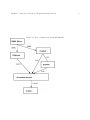
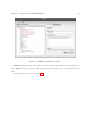
XMML Editor Agent design requires a tedious process of describing agent memory and behavior in
an XML format specific to FLAME (the so called XMML format) while controlling for consistency
of design in terms of parameters that affect the overall model. The XMML Editor provides a
graphical interface which allows the agent designer to focus in his/her job, in addition to providing
facilities for detecting errors in the design. It was named after the fact that it translates the design
into the XMML format which is usable in FLAME framework.
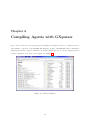
GXparser Once a model composed of several agent types is designed, it has to be compiled by the so
called XParser component of the FLAME. The GXparser provides a graphical tool to ease this
manual process and report possible compilation errors back to the designer.
PopGUI A population corresponding to the European Economy in EURACE simulations is composed
of multiple (thousands) copies of several types of agents in several geographical regions, whose
memory and relations with each other are characterized by statistical features derived from actual
data. The PopGUI component enables simulation designers to describe composition of populations
and statistical features of agents, and produce population instances that are used as initial states
1