1
Chapter 7. Population Design with PopGUI
7.4.1
19
Distinguishing simple and composite variables
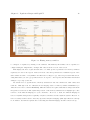
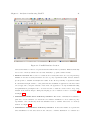
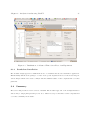
Next to each variable’s name in the memory variable editing screen, you will see a variable type. Following
are the varieties of these types:
• A few variables are special. Currently these are the ones named ‘id’ and ‘region id’. Users cannot
enter anything for these variables. The ‘id’ is a unique identifier of each agent in the population
(for referencing purposes) and it will be assigned sequentially during population instantiation. This
variable must exist for FLAME simulations to work. ‘region id’, when used, will contain an integer
which is the number of the region in which the agent is placed.
• Some variables are STATIC or CONSTANT. These appear in cases where their value is fixed in
the model or taken from a constant. The names of constants are defined in agent model, but their
values are entered in PopGUI using “Edit constants” toolbar button.
• Simple variables has a type which is one of ‘int’ or ‘double’.
• Composite variables are actually C structs. The names and structure of these come from agent
model which is used when creating a new population. When a variable is of a composite type, its
sub-fields can be expanded and will be entered in separate boxes.
• Finally, a variable can be an array of a simple of composite type. For such variables users will enter
a specification for the length of array in addition to the variable (which is used for each element of
the array). Special features are provided when one wishes to address all elements of an array, such
as when they will be selected from a set without replacement.
Most common use of STATIC or CONSTANT variables occur in array sizes, in cases when array
size is fixed in the model either hard coding or by tying to a constant.
7.4.2
Specification syntax for variables and basic random distributions
The entries for memory variables are arithmetic expression which produce a single numeric value (except
the special case of array initialization). Therefore the expressions entered into the boxes in this screen
can be as simple as a constant number, or a simple arithmetic expression: e.g. “2” or “2*2-(3.14/4)”.
Whenever necessary, PopGUI will convert integer values to real numbers, or vice verse.
In most cases the values will not be constants. Use of random or deterministic initializations are very
common. Following functions are provided for use in such cases in initforms:
rand(int,int) : a random integer from the inclusive range.
rand(real,real) : a random real number from the range.
choice([v1,v2,... )]: Pick a value from the list randomly.
normal(mu, sigma) : Normal distribution. mu is the mean, and sigma is the standard deviation.