1
Introducing the Riverbed Stingray Content Delivery Cloud
The Riverbed Stingray Content Delivery Cloud (CDC) is a fast and efficient application
delivery platform for end-users. However, unlike a CDN which leverages a global
network of servers to deliver content for all CDN customers, the Content Delivery Cloud
utilizes Joyent public or private infrastructure to provide the points of presence that offer
a private ‘CDN like’ experience for the delivery of a company’s content. Stingray enables
these services without the need for large initial capital investment or a complex
infrastructure.
Typical deployments will utilize Stingray Traffic Managers auto-scaling, content caching,
bandwidth management, performance monitoring and optimization features. Additional
functionality such as Stingray Application Firewall for deeper application level threat
identification and mitigation, and Stingray Aptimizer for user content optimization will
help enhance the performance and security of the application.
How a Stingray Content Delivery Cloud Works
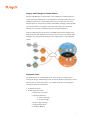
Extending a deployment by provisioning additional traffic managers closer to users
accelerates performance. Stingray Traffic Manager can be used to deliver your entire
application, including dynamic, static, and streaming content using a global network of
Stingray Traffic Managers.
Stingray proxies user
requests to the
application, connections
to the origin are
monitored and optimized
by Traffic Manager. With
Global Load balancing users
are routed to the location
In minutes extend Stingray functionality to existing
application deployments.
closest to them. If any
Provision edge sites when, where, and as needed for
monitor detects location is
user performance.
too busy or unavailable
Stingray will automatically send the request to the next best location. Requests are
examined by Traffic Manager to determine if the object is available in local Content
Cache and to deliver the response directly. If the resource is not available locally or is
dynamic, the edge Traffic Manager will request the data from the origin site and store
any objects for subsequent requests.
Increase the performance of more than just static content and provide users with a
consistent and reliable, yet personalized experience for their applications.
2