1
PQM-701 Operating manual
10.10 Event detection
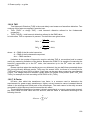
The PQM-701 analyzer gives a lot of event detection options in the tested mains system. An
event is the situation when the parameter value exceeds the user-defined threshold.
The fact of event occurrence is recorded on the memory card as an entry which includes:
• parameter type,
• channel in which the event occurred,
• times of event beginning and end,
• user-defined threshold value,
• parameter extreme value measure during the event,
• parameter average value measure during the event.
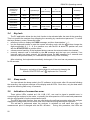
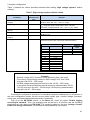
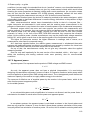
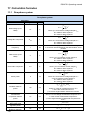
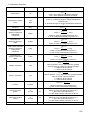
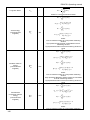
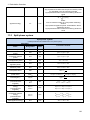
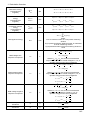
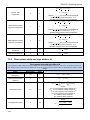
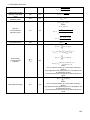
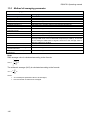
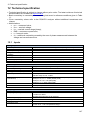
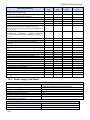
Depending on the parameter type, you can set one, two or three thresholds which will be
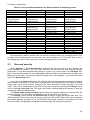
checked by the analyzer. The table below lists all parameters for which the events can be
detected, including specification of threshold types.
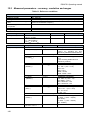
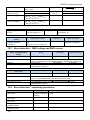
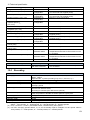
Table 10. Even threshold types for individual parameters
U
f
CF U
u2
Pst
Plt
I
CF I
i2
P
Q1, QB
S
D, SN
PF
cosϕ
tanϕ
EP+, EPEQ+, EQES
THDF U
Uh2..Uh50
THDF I
Ih2..Ih50
K
Parameter
RMS voltage
Frequency
Voltage crest factor
Voltage negative sequence unbalance
Short-term flicker Pst
Long-term flicker Plt
RMS current
Current crest factor
Current negative sequence unbalance
Active power
Reactive power
Apparent power
Distortion power
Power factor
Displacement power factor
tanϕ
Active energy (consumed and supplied)
Reactive energy (consumed and supplied)
Apparent energy
Voltage THDF
Voltage harmonic amplitudes
(order n = 2…50)
Current THDF
Current harmonic amplitudes
(order n = 2…50)
K-Factor
Interruption
Dip
Swell
•
•
•
Minimum
Maximum
•
•
•
•
•
•
•
•
•
•
•
•
•
•
•
•
•
•
•
•
•
•
•
•
•
•
•
•
•
•
•
•
Some parameters can take positive and negative values. Examples are active power, reactive
power and power factor. As the event detection threshold can only be positive, in order to ensure
correct detection for above-mentioned parameters, the analyzer compares with the threshold their
absolute values.
132