1
OPC90 Server User Manual V8.2.1
they are equal, the OPC90 with the most OPC connections is the master. If they are
equal, the OPC90 that started up first is the master. These factors are being
determined as part of startup and shared between the two OPC90s. This means some
of these factors change as part of startup and therefore the shadow roles may swap
back and forth between the two OPC90s a couple of times when starting up. This is
normal and expected, especially when using same address CIU setups. Quickly the
roles will lock in and stay that way until something changes with the communication
state between OPC90 and the CIUs.
The Device block has a tag that reports the current role. Although no adverse effects
will occur if editing is done on the shadow slave, it is best to do this on the OPC90
currently operating as the shadow master. The current shadow state can also be
determined from the Device block faceplate.
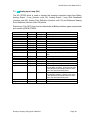
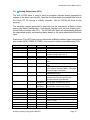
5.3.10.1
Redundant Same Address CIUs
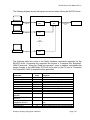
Configuration shadowing shares the communication state and address of CIUs
between the two OPC90 servers. This data is useful when using OPC90 AOL, DOL,
ODD, OMSDD, ORCM, ORMC, ORMSC and OSTN blocks. Nodes within the ABB
Bailey system that need to receive data from these blocks do not need to be
concerned with getting the block data from two different CIU addresses. The
redundant OPC90 servers can be setup with CIUs having the same address. Only one
CIU will be commanded online. The other will have the database downloaded to its
CIU and ready to be commanded online when communication with the other OPC90
server fails or the other OPC90 server communication with its CIU fails. For this type
of setup, it is important to configure the OPC90 Device block watchdog time to a nonzero value. Settings in the range of 2-4 are common. See the device block for more
information about the watchdog time.
Note that a network failure will cause the backup OPC90 server to command its CIU
online if configuration shadowing cannot communicate with the other OPC90 server.
By design, this will occur between one and two minutes after the network failure
occurs. If the other CIU is still online, the backup being commanded online will fault
with a code indicating a same address was detected. Therefore, don’t conclude that
CIU red light conditions are always the result of faulty hardware. Make sure network
interruptions are not occurring.
If configuration shadowing is turned off for systems setup with same address CIUs
while the standby OPC90 is communicating with the CIU, it will command its CIU
online resulting in the aforementioned CIU red light condition to occur. The only way to
avoid this from happening is to disconnect all OPC clients from OPC90 and command
it out of runtime mode of operation before turning off configuration shadowing. If the
red light condition does occur, after configuration shadowing is re-enabled, just
physically reset the red lit CIU to put it back into operation.
RoviSys Company Copyright © 1999-2015
Page | 29