1
Compaq Fortran
Parallel Processing Manual for
Tru64 UNIX Systems
January 2002
This manual provides information about the Compaq Fortran parallel
program development and run-time environment on Compaq Tru64 UNIX
systems.
Note: The NUMA parallel processing feature described in this manual is
available in the Compaq Fortran software but is not supported.
Revision/Update Information:
This is a new manual.
Software Version:
Compaq Fortran Version 5.5 or higher
for Tru64 UNIX Systems
Compaq Computer Corporation
Houston, Texas
First Printing, January 2002
© 2002 Compaq Information Technologies Group, L.P.
Compaq, the Compaq logo, AlphaServer, and Tru64 are trademarks of Compaq Information
Technologies Group, L.P. in the U.S. and/or other countries.
UNIX is a trademark of The Open Group in the U.S. and/or other countries.
All other product names mentioned herein may be trademarks of their respective companies.
Confidential computer software. Valid license from Compaq required for possession, use or
copying. Consistent with FAR 12.211 and 12.212, Commercial Computer Software, Computer
Software Documentation, and Technical Data for Commercial Items are licensed to the U.S.
Government under vendor’s standard commercial license.
Compaq shall not be liable for technical or editorial errors or omissions contained herein. The
information is provided ‘‘as is’’ without warranty of any kind and is subject to change without
notice. The warranties for Compaq products are set forth in the express limited warranty
statements accompanying such products. Nothing herein should be construed as constituting an
additional warranty.
This document is available on CD–ROM.
This document was prepared using DECdocument, Version 3.3-1n.
Contents
Preface . . . . . . . . . . . . . . . . . . . . . . . . . . . . . . . . . . . . . . . . . . . . . . . . . . . . .
xiii
1 Compaq Fortran Parallel Processing: An Introduction
1.1
1.2
1.3
1.4
1.4.1
1.5
1.5.1
1.5.2
1.5.3
1.6
1.6.1
Overview of Parallel Processing . . . . . . . . . . . . . . . . . . . . . . .
Applying Amdahl’s Law To Determine Whether To Convert a
Serial Program to a Parallel One . . . . . . . . . . . . . . . . . . . . . .
Example of Selecting Serial or Parallel Processing . . . . . . . .
Serial Example Program red_black_10 . . . . . . . . . . . . . . . . . .
Analysis of Serial Example Program red_black_10 . . . . .
Architectures That Can Implement Parallel Processing . . . . .
Symmetric Multiprocessor (SMP) Architecture . . . . . . . .
Non-Uniform Memory Access (NUMA) Architecture . . . .
Distributed Memory Architecture . . . . . . . . . . . . . . . . . .
OpenMP Directives on an SMP System: Parallel Program
red_black_20 . . . . . . . . . . . . . . . . . . . . . . . . . . . . . . . . . . . . .
Explanation of Parallel Program red_black_20 . . . . . . . .
...
.
.
.
.
.
.
.
.
.
.
.
.
.
.
.
.
1–1
.
.
.
.
.
.
.
.
1–2
1–4
1–8
1–12
1–14
1–15
1–16
1–18
...
...
1–19
1–24
2 Data Layout: An Introduction
2.1
2.2
2.2.1
2.2.2
Overview of Data Layout Principles . . . . . . . . . . . . . . . . .
User-Directed Data Migration . . . . . . . . . . . . . . . . . . . . .
MIGRATE_NEXT_TOUCH Directive . . . . . . . . . . . . .
MIGRATE_NEXT_TOUCH_NOPRESERVE Directive
.
.
.
.
.
.
.
.
.
.
.
.
.
.
.
.
.
.
.
.
.
.
.
.
2–1
2–3
2–4
2–5
..
..
3–1
3–5
..
..
3–7
3–12
3 NUMA Architecture: An Introduction
3.1
3.1.1
3.2
3.2.1
OpenMP and Page Migration Directives on a NUMA System:
Parallel Program red_black_30 . . . . . . . . . . . . . . . . . . . . . . . .
Explanation of Parallel Program red_black_30 . . . . . . . . .
OpenMP and Data Layout Directives on a NUMA System:
Parallel Program red_black_40 . . . . . . . . . . . . . . . . . . . . . . . .
Explanation of Parallel Program red_black_40 . . . . . . . . .
iii
3.3
3.4
3.4.1
3.4.2
3.5
Restrictions on OpenMP Features With the !DEC$ OMP NUMA
Directive . . . . . . . . . . . . . . . . . . . . . . . . . . . . . . . . . . . . . . . . . . .
Two Short but Complete Example Programs . . . . . . . . . . . . . . . .
Program TWELVE_BILLION_A . . . . . . . . . . . . . . . . . . . . . . .
Program TWELVE_BILLION_B . . . . . . . . . . . . . . . . . . . . . . .
Specifying Memories and Threads per Memory . . . . . . . . . . . . . .
3–13
3–15
3–15
3–16
3–16
4 High Performance Fortran (HPF) Software: An Introduction
4.1
4.1.1
4.2
4.3
4.3.1
4.3.2
HPF Directives on a Distributed Memory System: Parallel
Program red_black_50 . . . . . . . . . . . . . . . . . . . . . . . . . . . . .
Explanation of Parallel Program red_black_50 . . . . . . .
What is HPF? . . . . . . . . . . . . . . . . . . . . . . . . . . . . . . . . . . . .
Parallel Programming Models . . . . . . . . . . . . . . . . . . . . . . .
Data Parallel Programming . . . . . . . . . . . . . . . . . . . . . .
HPF and Data Parallelism . . . . . . . . . . . . . . . . . . . . . . .
.
.
.
.
.
.
.
.
.
.
.
.
.
.
.
.
.
.
.
.
.
.
.
.
4–1
4–5
4–7
4–8
4–8
4–10
.
.
.
.
.
.
.
.
.
.
.
.
.
.
.
.
.
.
.
.
.
.
.
.
.
.
.
.
.
.
.
.
.
.
.
.
.
.
.
.
.
.
.
.
.
.
.
.
.
.
.
.
.
.
.
.
.
.
.
.
.
.
.
.
.
.
.
.
.
.
.
.
.
.
.
.
.
.
.
.
.
.
.
.
.
.
.
.
.
.
.
.
5–1
5–2
5–2
5–3
5–3
5–4
5–5
5–5
5–6
5–6
5–7
5–8
5–9
5–11
5–12
5–12
5–13
5–13
5–14
5–14
5–20
5–23
5–24
5 HPF Essentials
5.1
5.1.1
5.1.1.1
5.1.1.2
5.2
5.3
5.4
5.4.1
5.4.2
5.4.2.1
5.4.2.2
5.4.3
5.4.4
5.4.5
5.4.6
5.4.7
5.4.8
5.5
5.5.1
5.5.2
5.5.3
5.5.4
5.5.5
iv
HPF Basics . . . . . . . . . . . . . . . . . . . . . . . . . . . . .
When to Use HPF . . . . . . . . . . . . . . . . . . . . .
Existing Code . . . . . . . . . . . . . . . . . . . . . .
New Code . . . . . . . . . . . . . . . . . . . . . . . . .
HPF Directives . . . . . . . . . . . . . . . . . . . . . . . . . . .
Minimum Requirements for Parallel Execution . .
Data Parallel Array Operations . . . . . . . . . . . . . .
Array Terminology . . . . . . . . . . . . . . . . . . . . .
Fortran 90 Array Assignment . . . . . . . . . . . .
Whole Array Assignment . . . . . . . . . . . . .
Array Subsections . . . . . . . . . . . . . . . . . .
FORALL . . . . . . . . . . . . . . . . . . . . . . . . . . . .
INDEPENDENT Directive . . . . . . . . . . . . . . .
Vector-Valued Subscripts . . . . . . . . . . . . . . . .
Entity-Oriented Declaration Syntax . . . . . . . .
SEQUENCE and NOSEQUENCE Directives .
Out of Range Subscripts . . . . . . . . . . . . . . . .
Data Mapping . . . . . . . . . . . . . . . . . . . . . . . . . . .
Data Mapping Basics . . . . . . . . . . . . . . . . . . .
Illustrated Summary of HPF Data Mapping .
ALIGN Directive . . . . . . . . . . . . . . . . . . . . . .
TEMPLATE Directive . . . . . . . . . . . . . . . . . .
PROCESSORS Directive . . . . . . . . . . . . . . . .
.
.
.
.
.
.
.
.
.
.
.
.
.
.
.
.
.
.
.
.
.
.
.
.
.
.
.
.
.
.
.
.
.
.
.
.
.
.
.
.
.
.
.
.
.
.
.
.
.
.
.
.
.
.
.
.
.
.
.
.
.
.
.
.
.
.
.
.
.
.
.
.
.
.
.
.
.
.
.
.
.
.
.
.
.
.
.
.
.
.
.
.
.
.
.
.
.
.
.
.
.
.
.
.
.
.
.
.
.
.
.
.
.
.
.
.
.
.
.
.
.
.
.
.
.
.
.
.
.
.
.
.
.
.
.
.
.
.
.
.
.
.
.
.
.
.
.
.
.
.
.
.
.
.
.
.
.
.
.
.
.
.
.
.
.
.
.
.
.
.
.
.
.
.
.
.
.
.
.
.
.
.
.
.
DISTRIBUTE Directive . . . . . . . . . . . . . . . . . . . . . . . . . . . . .
Explanation of the Distribution Figures . . . . . . . . . . . . . .
BLOCK Distribution . . . . . . . . . . . . . . . . . . . . . . . . . . . .
CYCLIC Distribution . . . . . . . . . . . . . . . . . . . . . . . . . . . .
BLOCK, BLOCK Distribution . . . . . . . . . . . . . . . . . . . . .
CYCLIC, CYCLIC Distribution . . . . . . . . . . . . . . . . . . . .
CYCLIC, BLOCK Distribution . . . . . . . . . . . . . . . . . . . . .
BLOCK, CYCLIC Distribution . . . . . . . . . . . . . . . . . . . . .
Asterisk Distributions . . . . . . . . . . . . . . . . . . . . . . . . . . .
Visual Technique for Computing Two-Dimensional
Distributions . . . . . . . . . . . . . . . . . . . . . . . . . . . . . . . . . .
5.5.6.10
Using DISTRIBUTE Without an Explicit Template . . . . .
5.5.6.11
Using DISTRIBUTE Without an Explicit PROCESSORS
Directive . . . . . . . . . . . . . . . . . . . . . . . . . . . . . . . . . . . . .
5.5.6.12
Deciding on a Distribution . . . . . . . . . . . . . . . . . . . . . . . .
5.5.7
SHADOW Directive for Nearest-Neighbor Algorithms . . . . . .
5.6
Subprograms in HPF . . . . . . . . . . . . . . . . . . . . . . . . . . . . . . . . . .
5.6.1
Assumed-Size Array Specifications . . . . . . . . . . . . . . . . . . . .
5.6.2
Explicit Interfaces . . . . . . . . . . . . . . . . . . . . . . . . . . . . . . . . .
5.6.3
Module Program Units . . . . . . . . . . . . . . . . . . . . . . . . . . . . . .
5.6.4
PURE Attribute . . . . . . . . . . . . . . . . . . . . . . . . . . . . . . . . . . .
5.6.5
Transcriptive Distributions and the INHERIT Directive . . . .
5.7
Intrinsic and Library Procedures . . . . . . . . . . . . . . . . . . . . . . . . .
5.7.1
Intrinsic Procedures . . . . . . . . . . . . . . . . . . . . . . . . . . . . . . . .
5.7.2
Library Procedures . . . . . . . . . . . . . . . . . . . . . . . . . . . . . . . . .
5.8
Extrinsic Procedures . . . . . . . . . . . . . . . . . . . . . . . . . . . . . . . . . .
5.8.1
Programming Models and How They Are Specified . . . . . . . .
5.8.2
Who Can Call Whom . . . . . . . . . . . . . . . . . . . . . . . . . . . . . . .
5.8.2.1
Calling Non-HPF Subprograms from
EXTRINSIC(HPF_LOCAL) Routines . . . . . . . . . . . . . . . .
5.8.3
Requirements on the Called EXTRINSIC Procedure . . . . . . .
5.8.4
Calling C Subprograms from HPF Programs . . . . . . . . . . . . .
5.5.6
5.5.6.1
5.5.6.2
5.5.6.3
5.5.6.4
5.5.6.5
5.5.6.6
5.5.6.7
5.5.6.8
5.5.6.9
5–25
5–26
5–28
5–29
5–31
5–34
5–37
5–39
5–42
5–51
5–53
5–53
5–54
5–55
5–56
5–56
5–56
5–57
5–58
5–60
5–62
5–63
5–63
5–64
5–64
5–67
5–68
5–69
5–69
6 Compiling and Running HPF Programs
Compiling HPF Programs . . . . . . . . . . . . . . . . . . . . . . . . . . . . .
Compile-Time Options for High Performance Fortran
Programs . . . . . . . . . . . . . . . . . . . . . . . . . . . . . . . . . . . . . . .
6.1.1.1
-hpf [nn] Option — Compile for Parallel Execution . . . .
6.1.1.2
-assume bigarrays Option — Assume Nearest-Neighbor
Arrays are Large . . . . . . . . . . . . . . . . . . . . . . . . . . . . . .
6.1.1.3
-assume nozsize Option — Omit Zero-Sized Array
Checking . . . . . . . . . . . . . . . . . . . . . . . . . . . . . . . . . . . .
6.1
6.1.1
.
6–1
.
.
6–2
6–2
.
6–3
.
6–3
v
-fast Option — Set Options to Improve Run-Time
Performance . . . . . . . . . . . . . . . . . . . . . . . . . . . . . . . . . . .
6.1.1.5
-nearest_neighbor [nn] and -nonearest_neighbor Options
— Nearest Neighbor Optimization . . . . . . . . . . . . . . . . . .
6.1.1.6
-nohpf_main Option — Compiling Parallel Objects to
Link with a Non-Parallel Main Program . . . . . . . . . . . . .
6.1.1.7
-show hpf—Show Parallelization Information . . . . . . . . .
6.1.2
Consistency of Number of Peers . . . . . . . . . . . . . . . . . . . . . . .
6.2
HPF Programs with MPI . . . . . . . . . . . . . . . . . . . . . . . . . . . . . . .
6.2.1
Overview of HPF and MPI . . . . . . . . . . . . . . . . . . . . . . . . . . .
6.2.2
Compiling HPF Programs for MPI . . . . . . . . . . . . . . . . . . . . .
6.2.3
Linking HPF Programs with MPI . . . . . . . . . . . . . . . . . . . . .
6.2.4
Running HPF Programs Linked with MPI . . . . . . . . . . . . . . .
6.2.5
Cleaning Up After Running HPF Programs Linked with
MPI . . . . . . . . . . . . . . . . . . . . . . . . . . . . . . . . . . . . . . . . . . . .
6.2.6
Changing HPF Programs for MPI . . . . . . . . . . . . . . . . . . . . .
6.1.1.4
6–4
6–4
6–5
6–5
6–6
6–7
6–7
6–7
6–8
6–9
6–10
6–10
7 Optimizing HPF Programs
7.1
7.2
7.3
7.4
7.5
7.6
7.7
7.8
7.9
7.10
7.11
7.11.1
7.11.2
7.11.3
7.11.4
7.11.5
7.11.6
7.12
7.13
7.14
7.15
vi
-fast Compile-Time Option . . . . . . . . . . . . . . . . . . . . . . . . . . . . . .
Converting Fortran 77 Programs to HPF . . . . . . . . . . . . . . . . . . .
Explicit Interfaces . . . . . . . . . . . . . . . . . . . . . . . . . . . . . . . . . . . .
Nonparallel Execution of Code and Data Mapping Removal . . . .
Compile Speed . . . . . . . . . . . . . . . . . . . . . . . . . . . . . . . . . . . . . . .
Nearest-Neighbor Optimization . . . . . . . . . . . . . . . . . . . . . . . . . .
Compiling for a Specific Number of Processors . . . . . . . . . . . . . .
Avoiding Unnecessary Communications Setup for Allocatable or
Pointer Arrays . . . . . . . . . . . . . . . . . . . . . . . . . . . . . . . . . . . . . . .
USE Statements HPF_LIBRARY and
HPF_LOCAL_LIBRARY . . . . . . . . . . . . . . . . . . . . . . . . . . . . . . . .
Forcing Synchronization . . . . . . . . . . . . . . . . . . . . . . . . . . . . . . .
Input/Output in HPF . . . . . . . . . . . . . . . . . . . . . . . . . . . . . . . . . .
General Guidelines for I/O . . . . . . . . . . . . . . . . . . . . . . . . . . .
Specifying a Particular Processor as Peer 0 . . . . . . . . . . . . . .
Printing Large Arrays . . . . . . . . . . . . . . . . . . . . . . . . . . . . . .
Reading and Writing to Variables Stored Only on Peer 0 . . . .
Use Array Assignment Syntax instead of Implied DO . . . . . .
IOSTAT and I/O with Error Exits–Localizing to Peer 0 . . . . .
Stack and Data Space Usage . . . . . . . . . . . . . . . . . . . . . . . . . . . .
-show hpf Option . . . . . . . . . . . . . . . . . . . . . . . . . . . . . . . . . . . . .
Timing . . . . . . . . . . . . . . . . . . . . . . . . . . . . . . . . . . . . . . . . . . . . .
Spelling of the HPF Directives . . . . . . . . . . . . . . . . . . . . . . . . . . .
7–2
7–2
7–4
7–5
7–5
7–5
7–6
7–6
7–10
7–10
7–10
7–11
7–12
7–12
7–12
7–14
7–14
7–15
7–15
7–16
7–17
A HPF Tutorials: Introduction
B HPF Tutorial: LU Decomposition
Using LU Decomposition to Solve a System of Simultaneous
Equations . . . . . . . . . . . . . . . . . . . . . . . . . . . . . . . . . . . . . . . . . . .
B.2
Coding the Algorithm . . . . . . . . . . . . . . . . . . . . . . . . . . . . . . . . . .
B.2.1
Fortran 77 Style Code . . . . . . . . . . . . . . . . . . . . . . . . . . . . . .
B.2.2
Parallelizing the DO Loops . . . . . . . . . . . . . . . . . . . . . . . . . .
B.2.3
Comparison of Array Syntax, FORALL, and INDEPENDENT
DO . . . . . . . . . . . . . . . . . . . . . . . . . . . . . . . . . . . . . . . . . . . . .
B.3
Directives Needed for Parallel Execution . . . . . . . . . . . . . . . . . . .
B.3.1
DISTRIBUTE Directive . . . . . . . . . . . . . . . . . . . . . . . . . . . . .
B.3.2
Deciding on a Distribution . . . . . . . . . . . . . . . . . . . . . . . . . . .
B.3.3
Distribution for LU Decomposition . . . . . . . . . . . . . . . . . . . .
B.3.3.1
Parallel Speed-Up . . . . . . . . . . . . . . . . . . . . . . . . . . . . . .
B.4
Packaging the Code . . . . . . . . . . . . . . . . . . . . . . . . . . . . . . . . . . .
B.1
B–1
B–2
B–3
B–3
B–5
B–8
B–9
B–14
B–15
B–17
B–18
C HPF Tutorial: Solving Nearest-Neighbor Problems
C.1
C.2
C.3
C.4
C.5
C.5.1
C.5.2
C.6
Two-Dimensional Heat Flow Problem . . . . . . . .
Jacobi’s Method . . . . . . . . . . . . . . . . . . . . . . . . .
Coding the Algorithm . . . . . . . . . . . . . . . . . . . . .
Illustration of the Results . . . . . . . . . . . . . . . . .
Distributing the Data for Parallel Performance .
Deciding on a Distribution . . . . . . . . . . . . . .
Optimization of Nearest-Neighbor Problems
Packaging the Code . . . . . . . . . . . . . . . . . . . . . .
.
.
.
.
.
.
.
.
.
.
.
.
.
.
.
.
.
.
.
.
.
.
.
.
.
.
.
.
.
.
.
.
.
.
.
.
.
.
.
.
.
.
.
.
.
.
.
.
.
.
.
.
.
.
.
.
.
.
.
.
.
.
.
.
.
.
.
.
.
.
.
.
.
.
.
.
.
.
.
.
.
.
.
.
.
.
.
.
.
.
.
.
.
.
.
.
.
.
.
.
.
.
.
.
C–1
C–2
C–3
C–5
C–6
C–6
C–7
C–8
.
.
.
.
.
.
.
.
.
.
.
.
.
.
.
.
.
.
.
.
.
.
.
.
.
.
.
.
.
.
.
.
.
.
.
.
.
.
.
.
.
.
.
.
.
.
.
.
.
.
.
.
.
.
.
.
.
.
.
.
.
.
.
.
.
.
.
.
.
.
.
.
.
.
.
.
.
.
.
.
.
.
.
.
.
.
.
.
.
.
.
.
.
.
.
.
.
.
.
.
.
.
.
.
D–1
D–2
D–2
D–3
D–4
D–5
D–6
D–7
D HPF Tutorial: Visualizing the Mandelbrot Set
D.1
D.1.1
D.1.2
D.2
D.2.1
D.2.2
D.2.3
D.2.4
What Is the Mandelbrot Set? . . . . . . . . . . .
How Is the Mandelbrot Set Visualized?
Electrostatic Potential of the Set . . . . .
Mandelbrot Example Program . . . . . . . . . .
Developing the Algorithm . . . . . . . . . .
Computing the Entire Grid . . . . . . . . .
Converting to HPF . . . . . . . . . . . . . . . .
PURE Attribute . . . . . . . . . . . . . . . . . .
.
.
.
.
.
.
.
.
.
.
.
.
.
.
.
.
.
.
.
.
.
.
.
.
.
.
.
.
.
.
.
.
vii
E HPF Tutorial: Simulating Network Striped Files
E.1
E.1.1
E.2
E.3
E.3.1
E.4
E.5
Why Simulate Network Striped Files? . . . . . . . . . . . . . .
Constructing a Module for Parallel Temporary Files
Subroutine parallel_open . . . . . . . . . . . . . . . . . . . . . . . .
Subroutine parallel_write . . . . . . . . . . . . . . . . . . . . . . .
Passing Data Through the Interface . . . . . . . . . . . .
Subroutines parallel_read, parallel_close, and
parallel_rewind . . . . . . . . . . . . . . . . . . . . . . . . . . . . . . .
Module parallel_temporary_files . . . . . . . . . . . . . . . . . .
.
.
.
.
.
.
.
.
.
.
.
.
.
.
.
.
.
.
.
.
.
.
.
.
.
.
.
.
.
.
.
.
.
.
.
E–1
E–2
E–3
E–4
E–4
.......
.......
E–5
E–5
Serial Program red_black_10.f90 . . . . . . . . . . . . . . . . . . . . . .
Parallel Program red_black_20.f90, Using OpenMP
Directives on an SMP System . . . . . . . . . . . . . . . . . . . . . . . .
Program red_black_30.f90 . . . . . . . . . . . . . . . . . . . . . . . . . . .
Parallel Program red_black_40.f90 . . . . . . . . . . . . . . . . . . . . .
Parallel Program red_black_50.f90 . . . . . . . . . . . . . . . . . . . . .
Code Fragment for Mapping Illustrations . . . . . . . . . . . . . . .
Avoiding Communication Set-up with Allocatable Arrays . . .
Iteration of the Function z 2 + c . . . . . . . . . . . . . . . . . . . . . . .
Using a DO Loop to Compute the Grid . . . . . . . . . . . . . . . . .
Using a FORALL Structure to Compute the Grid . . . . . . . . .
PURE Function escape_time . . . . . . . . . . . . . . . . . . . . . . . . .
Test Program for Parallel Temporary Files . . . . . . . . . . . . . .
1–8
1–20
3–2
3–8
4–2
5–15
7–8
D–4
D–5
D–6
D–7
E–6
Amdahl’s Law: Potential Speedup of Serial Programs
Metal Cube with Initial Temperatures . . . . . . . . . . . .
Upper Left Portion of Metal Cube . . . . . . . . . . . . . . .
A Typical SMP System . . . . . . . . . . . . . . . . . . . . . . . .
A Typical NUMA System . . . . . . . . . . . . . . . . . . . . . .
A Typical Distributed Memory System . . . . . . . . . . . .
BLOCK Distribution — Array View . . . . . . . . . . . . . .
BLOCK Distribution — Processor View . . . . . . . . . . .
1–3
1–5
1–6
1–15
1–17
1–19
5–28
5–29
Index
Examples
1–1
1–2
3–1
3–2
4–1
5–1
7–1
D–1
D–2
D–3
D–4
E–1
Figures
1–1
1–2
1–3
1–4
1–5
1–6
5–1
5–2
viii
.
.
.
.
.
.
.
.
.
.
.
.
.
.
.
.
.
.
.
.
.
.
.
.
.
.
.
.
.
.
.
.
.
.
.
.
.
.
.
.
.
.
.
.
.
.
.
.
5–3
5–4
5–5
5–6
5–7
5–8
5–9
5–10
5–11
5–12
5–13
5–14
5–15
5–16
5–17
5–18
5–19
5–20
5–21
B–1
B–2
B–3
B–4
B–5
B–6
C–1
C–2
CYCLIC Distribution — Array View . . . . . . . . . . . . . .
CYCLIC Distribution — Processor View . . . . . . . . . . .
BLOCK, BLOCK Distribution — Array View . . . . . . . .
BLOCK, BLOCK Distribution — Processor View . . . . .
CYCLIC, CYCLIC Distribution — Array View . . . . . . .
CYCLIC, CYCLIC Distribution — Processor View . . . .
CYCLIC, BLOCK Distribution — Array View . . . . . . .
CYCLIC, BLOCK Distribution — Processor View . . . .
BLOCK, CYCLIC Distribution — Array View . . . . . . .
BLOCK, CYCLIC Distribution — Processor View . . . .
BLOCK,* Distribution — Array View . . . . . . . . . . . . .
BLOCK, * Distribution — Processor View . . . . . . . . . .
CYCLIC, * Distribution — Array View . . . . . . . . . . . .
CYCLIC, * Distribution — Processor View . . . . . . . . . .
*, BLOCK Distribution — Array View . . . . . . . . . . . . .
*, BLOCK Distribution — Processor View . . . . . . . . . .
*, CYCLIC Distribution — Array View . . . . . . . . . . . .
*, CYCLIC Distribution — Processor View . . . . . . . . . .
Visual Technique for Computing Two-Dimensional
Distributions . . . . . . . . . . . . . . . . . . . . . . . . . . . . . . . .
Distributing an Array (*, BLOCK) . . . . . . . . . . . . . . . .
Distributing an Array (*, CYCLIC) . . . . . . . . . . . . . . .
Distributing an Array (BLOCK, CYCLIC) . . . . . . . . . .
Distributing an Array (BLOCK, BLOCK) . . . . . . . . . .
LU Decomposition with (*, BLOCK) Distribution . . . .
LU Decomposition with (*, CYCLIC) Distribution . . . .
Three-Dimensional Problem and Its Two-Dimensional
Model . . . . . . . . . . . . . . . . . . . . . . . . . . . . . . . . . . . . . .
Shadow Edges for Nearest-Neighbor Optimization . . .
.
.
.
.
.
.
.
.
.
.
.
.
.
.
.
.
.
.
.
.
.
.
.
.
.
.
.
.
.
.
.
.
.
.
.
.
.
.
.
.
.
.
.
.
.
.
.
.
.
.
.
.
.
.
.
.
.
.
.
.
.
.
.
.
.
.
.
.
.
.
.
.
.
.
.
.
.
.
.
.
.
.
.
.
.
.
.
.
.
.
5–30
5–31
5–32
5–33
5–34
5–35
5–38
5–39
5–40
5–41
5–44
5–45
5–46
5–47
5–48
5–49
5–50
5–51
.
.
.
.
.
.
.
.
.
.
.
.
.
.
.
.
.
.
.
.
.
.
.
.
.
.
.
.
.
.
.
.
.
.
.
5–52
B–10
B–11
B–12
B–13
B–16
B–17
.....
.....
C–2
C–8
Conventions Used in This Document . . . . . .
HPF Directives and HPF-Specific Attribute .
Summary of MPI Versions . . . . . . . . . . . . . .
Explanation of Example 7–1 . . . . . . . . . . . .
.
.
.
.
xviii
5–4
6–8
7–9
Tables
1
5–1
6–1
7–1
.
.
.
.
.
.
.
.
.
.
.
.
.
.
.
.
.
.
.
.
.
.
.
.
.
.
.
.
.
.
.
.
.
.
.
.
.
.
.
.
.
.
.
.
.
.
.
.
ix
Preface
This manual describes the Compaq Fortran parallel processing environment.
This environment comprises coding, compiling, linking, and executing Compaq
Fortran parallel programs using the Compaq Tru64™ UNIX operating system
on Alpha hardware.
This manual brings together explanations of Fortran parallel processing
that have appeared in other Compaq Fortran manuals. Chapter 5 contains
descriptions of HPF directives that first appeared in the Digital High
Performance Fortran 90 HPF and PSE Manual.
This manual also contains new material not previously published.
Intended Audience
This manual makes the following assumptions about you, the reader:
•
You already have a basic understanding of the Fortran 95/90 language.
Tutorial Fortran 95/90 language information is widely available in
commercially published books (see the Preface of the Compaq Fortran
Language Reference Manual).
•
You are familiar with the operating system shell commands used during
program development and a text editor, such as emacs or vi. Such
information is available in your operating system documentation set or
commercially published books.
•
You have access to the Compaq Fortran Language Reference Manual, which
describes the Compaq Fortran language.
•
You have access to the Compaq Fortran User Manual for Tru64 UNIX and
Linux Alpha Systems, which describes the Compaq Fortran programming
environment including the compiler options, performance guidelines,
run-time I/O, error handling support, and data types.
xiii
Structure of This Manual
This manual consists of the following chapters and appendixes:
xiv
•
Chapter 1, Compaq Fortran Parallel Processing: An Introduction,
introduces you to Compaq Fortran parallel processing.
•
Chapter 2, Data Layout: An Introduction, introduces directives that
distribute data — usually in large arrays — among the memories of
processors that share computations.
•
Chapter 3, NUMA Architecture: An Introduction, introduces Non Uniform
Memory Access (NUMA) architecture.
•
Chapter 4, High Performance Fortran (HPF) Software: An Introduction,
introduces High Performance Fortran (HPF) software.
•
Chapter 5, HPF Essentials, shows ways to distribute data among the
memories of processors that share computations.
•
Chapter 6, Compiling and Running HPF Programs, explains how to
compile and execute HPF programs.
•
Chapter 7, Optimizing HPF Programs, explains how to write HPF
programs that execute quickly.
•
Appendix A, HPF Tutorials: Introduction, introduces the four tutorials in
the appendixes.
•
Appendix B, HPF Tutorial: LU Decomposition, contains an HPF example
program from linear algebra.
•
Appendix C, HPF Tutorial: Solving Nearest-Neighbor Problems, contains
an HPF example program related to the transfer of heat in a rectangular
solid.
•
Appendix D, HPF Tutorial: Visualizing the Mandelbrot Set, contains an
HPF example program related to the Mandelbrot Set.
•
Appendix E, HPF Tutorial: Simulating Network Striped Files, contains an
HPF example program that illustrates input/output by simulating network
striped files.
Associated Documents
The following documents may also be useful to Compaq Fortran programmers:
•
Compaq Fortran User Manual for Tru64 UNIX and Linux Alpha Systems
Describes compiling, linking, running, and debugging Compaq Fortran
programs, performance guidelines, run-time I/O, error-handling support,
data types, numeric data conversion, calling other procedures and library
routines, and compatibility with Compaq Fortran 77 (formerly DEC
Fortran).
In particular, you should see the chapter on ‘‘Parallel Compiler Directives
and Their Programming Environment’’ and the appendix on ‘‘Parallel
Library Routines.’’
•
Compaq Fortran Language Reference Manual
Describes the Compaq Fortran 95/90 source language for reference
purposes, including the format and use of statements, intrinsic procedures,
and other language elements.
•
Compaq Fortran Installation Guide for Tru64 UNIX Systems
Explains how to install Compaq Fortran on the Compaq Tru64 UNIX
operating system, including prerequisites and requirements.
•
Compaq Fortran Release Notes
Provide more information on this version of Compaq Fortran, including
known problems and a summary of the Compaq Fortran run-time error
messages.
The Release Notes are located in:
/usr/lib/cmplrs/fort90/relnotes90
•
Compaq Fortran online reference pages
Describe the Compaq Fortran software components, including f95(1),
f90(1), f77(1), fpr(1), fsplit(1), intro(3f), numerous Fortran library
routines listed in intro(3f), and numerous parallel Fortran library routines
listed in intro(3hpf).
•
Compaq Tru64 UNIX operating system documentation
The operating system documentation set includes reference pages for
operating system components and a programmer’s subkit, in which certain
xv
documents describe the commands, tools, libraries, and other aspects of the
programming environment:
For programming information, see the Compaq Tru64 UNIX
Programmer’s Guide and the Compaq Tru64 UNIX Using Programming
Support Tools.
For performance information, see the Compaq Tru64 UNIX System
Tuning and Performance.
For an overview of Compaq Tru64 UNIX documentation, see the
Compaq Tru64 UNIX Reader’s Guide.
For more information, see the Compaq Tru64 UNIX Web site at:
http://www.tru64unix.compaq.com/
•
Other layered product documentation
If you are using a programming-related layered product package from
Compaq, consult the appropriate documentation for the layered product
package for use of that product.
•
High Performance Fortran (HPF)
See the High Performance Fortran Language Specification, available
without charge at the following locations:
The HPF Web site at:
http://dacnet.rice.edu/Depts/CRPC/HPFF/versions/index.cfm
Anonymous FTP at ftp.cs.rice.edu in /public/HPFF/draft
•
Third-party documentation
If you are unfamiliar with OpenMP software and will be using OpenMP
directives to control parallel execution of your program, Compaq
recommends this book: Parallel Programming in OpenMP (Rohit Chandra
et. al., Morgan Kaufmann, 2000) is a comprehensive introduction to the
compiler directives, run-time library routines, and environment variables
that comprise OpenMP software. Its International Standard Book Number
(ISBN) is 1-55860-671-8. More information about this book is on the Web
site for Morgan Kaufmann Publishers at http://www.mkp.com.
xvi
Compaq Fortran Web Page
The Compaq Fortran home page is at:
http://www.compaq.com/fortran
This Web site contains information about software patch kits, example
programs, and additional product information.
Communicating with Compaq
If you have a customer support contract and have comments or questions
about Compaq Fortran software, you can contact our Customer Support Center
(CSC), preferably using electronic means (such as DSNlink). Customers in the
United States can call the CSC at 1-800-354-9000.
You can also send comments, questions, and suggestions about the Compaq
Fortran product to the following e-mail address: [email protected]. Note
that this address is for informational inquiries only and is not a formal support
channel.
Conventions Used in This Document
This manual uses the conventions listed in Table 1. Also, example code — such
as program red_black_10.f90 in Section 1.4 — is usually in free source form
(where a statement does not have to begin in position 7 of a line).
xvii
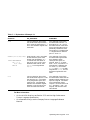
Table 1 Conventions Used in This Document
Convention
Meaning
%
This manual uses a percent sign ( % ) to represent the Tru64
UNIX system prompt. The actual user prompt varies with
the shell in use.
% pwd
/usr/usrc/jones
This manual displays system prompts and responses using
a monospaced font. Typed user input is displayed in a bold
monospaced font.
monospaced
This typeface indicates the name of a command, option,
pathname, file name, directory path, or partition. This
typeface is also used in examples of program code, interactive
examples, and other screen displays.
cat(1)
A shell command name followed by the number 1 in
parentheses refers to a command reference page. Similarly, a
routine name followed by the number 2 or 3 in parentheses
refers to a system call or library routine reference page. (The
number in parentheses indicates the section containing the
reference page.) To read online reference pages, use the man
(1) command. Your operating system documentation also
includes reference page descriptions.
newterm
Bold type indicates the introduction of a new term in text.
variable
Italic type indicates important information, a complete title
of a manual, or variable information, such as user-supplied
information in command or option syntax.
UPPERCASE
lowercase
The operating system shell differentiates between lowercase
and uppercase characters. Literal strings that appear in text,
examples, syntax descriptions, and function definitions must
be typed exactly as shown.
8 9
Large braces enclose lists from which you must choose one
item. For example:
(
[]
STATUS
DISPOSE
DISP
)
Square brackets enclose items that are optional. For example:
BLOCK DATA [nam]
(continued on next page)
xviii
Table 1 (Cont.) Conventions Used in This Document
Convention
...
Meaning
A horizontal ellipsis means that the item preceding the
ellipsis can be repeated. For example:
s[,s] . . .
.
.
.
A vertical ellipsis in a figure or example means that not all of
the statements are shown.
real
This term refers to all floating-point intrinsic data types as a
group.
complex
This term refers to all complex floating-point intrinsic data
types as a group.
logical
This term refers to all logical data types as a group.
integer
This term refers to all integer data types as a group.
Alpha
Alpha systems
The terms Alpha and Alpha systems refer to the Alpha architecture or systems equipped with this 64-bit architecture.
Compaq Tru64 UNIX
Compaq Tru64 UNIX
systems
The terms Compaq Tru64 UNIX and Compaq Tru64 UNIX
systems refer to the Compaq Tru64 UNIX (formerly DIGITAL
UNIX) operating system running on Alpha processor
hardware.
Fortran
This term refers to language information that is common to
ANSI FORTRAN 77, ANSI/ISO Fortran 95/90, and Compaq
Fortran.
Fortran 95/90
This term refers to language information that is common to
ANSI/ISO Fortran 95 and ANSI/ISO Fortran 90.
f90
This command invokes the Compaq Fortran compiler on
Tru64 UNIX Alpha systems.
Compaq Fortran 77
DEC Fortran
The term Compaq Fortran 77 (formerly DEC Fortran) refers
to language information that is common to the FORTRAN-77
standard and any Compaq Fortran extensions.
Compaq Fortran
The term Compaq Fortran (formerly DIGITAL Fortran 90)
refers to language information that is common to the Fortran
95/90 standards and any Compaq Fortran extensions.
xix
1
Compaq Fortran Parallel Processing: An
Introduction
This chapter describes:
•
Section 1.1, Overview of Parallel Processing
•
Section 1.2, Applying Amdahl’s Law To Determine Whether To Convert a
Serial Program to a Parallel One
•
Section 1.3, Example of Selecting Serial or Parallel Processing
•
Section 1.4, Serial Example Program red_black_10
•
Section 1.5, Architectures That Can Implement Parallel Processing
•
Section 1.6, OpenMP Directives on an SMP System: Parallel Program
red_black_20
1.1 Overview of Parallel Processing
The fundamental premise of parallel processing is that running a program
on multiple processors is faster than running the same program on a single
processor. The multiple processors share the work of executing the code.
For appropriate applications, parallel programs can execute dramatically faster
than ordinary serial programs. To achieve this desired speed-up, the program
must be decomposed so that different data and instructions are distributed
among the processors to achieve simultaneous execution.
A further advantage of parallel processing is that a system can be scaled or
built up gradually. If, over time, a parallel system becomes too small for the
tasks needed, additional processors can be added to meet the new requirements
with few or no changes to the source programs and the associated compiler
commands.
Compaq Fortran Parallel Processing: An Introduction 1–1
Ideally, the performance gain of parallel operations should be proportional to
the number of processors participating in the computation. In some special
cases, the gain is even greater, due to the fact that two processors have twice
as much cache memory as one processor. In most cases, however, the gain
is somewhat less, because parallel processing inevitably requires a certain
amount of communication between processors and synchronization overhead.
Minimizing communications costs and idle time among processors is the key to
achieving optimized parallel performance.
1.2 Applying Amdahl’s Law To Determine Whether To
Convert a Serial Program to a Parallel One
One way to determine whether or not a serial Fortran program should be
converted to a parallel one is to apply Amdahl’s Law. This principle, formalized
by computer scientist Gene Amdahl in the 1960s, says that the potential
speed-up of the serial program depends on two factors:
•
The fraction of execution time that can occur in parallel mode. This
number is always less than 1.0, since some execution time must occur in
serial mode. For example, a DO loop requires certain setup operations that
cannot be done in parallel mode. (The loop’s iterations often can be done in
parallel mode on more than one processor.)
•
The number of processors.
If the fraction of execution time that can occur in parallel mode is p and the
number of processors is N, then Amdahl’s Law becomes:
1
Speedup(N,p) = --------p/N + 1-p
For example, suppose that the number of processors is 8 and that 60% of
a serial program’s run-time execution can occur in parallel mode. Then the
potential speed-up of this programming environment is:
1
1
1
------------- = ----------- = ----- = 2.11
0.6/8 + 1-0.6
0.075 + 0.4
0.475
If p remains at 0.6 and N doubles to 16, then the potential speedup increases
to 2.29. In this case, suppose that a serial program requires 4 hours to execute.
The parallel version executes in about (1/2.29 * 4) hours = 1.75 hours.
1–2 Compaq Fortran Parallel Processing: An Introduction
Figure 1–1 shows Amdahl’s Law for various values of p (the fraction of a
program that executes in parallel mode) and N (the number of run-time
processors).
Figure 1–1 Amdahl’s Law: Potential Speedup of Serial Programs
10
9
N=16
8
Speedup
7
6
N=8
5
4
N=4
3
2
N=2
1
0
p= 0.0
0.1
0.2
0.3
0.4
0.5
0.6
0.7
0.8
0.9 0.95
Figure 1–1 shows that relatively little speedup occurs, regardless of the value
of N, until p is at least 0.8. Speedup occurs rapidly as p increases from
0.8. Although p never reaches 1.0, the theoretical values of Speedup(2,1),
Speedup(4,1), Speedup(8,1), and Speedup(16,1) are 2, 4, 8, and 16, respectively.
As a result of Amdahl’s Law, you might adopt a general guideline of not
attempting to convert a serial program to a parallel one unless p >= 0.8. Of
course, you might find it worthwhile to use a different value of p depending on
your circumstances. From Figure 1–1, a serial program that spends 70% of its
time executing a few DO loops could, after conversion, run three times faster
on a 16-processor system. If the number Speedup(16,0.7)=3.0 saves a large
amount of processing time, the conversion effort is probably worthwhile.
You might need to create an instrumented version of the serial program to find
the fraction of elapsed time that its DO loops consume.
Compaq Fortran Parallel Processing: An Introduction 1–3
1.3 Example of Selecting Serial or Parallel Processing
This example, a typical Fortran serial program, begins by considering a metal
cube that is 252 mm wide by 252 mm long by 252 mm high. We make a
model of the cube with a grid that divides the cube into 16,003,008 cubes that
are 1 mm on a side. The 378,008 cubes along the six sides have an initial
temperature of 20 degrees Celsius while the 15,625,000 interior cubes have an
initial temperature of 15 degrees Celsius.
Figure 1–2 shows a picture of the metal cube with these contained cubes and
temperatures.
1–4 Compaq Fortran Parallel Processing: An Introduction
Figure 1–2 Metal Cube with Initial Temperatures
S
S
S
252mm
S
S
S
I
S
I
I
S
I
I
S
S
I
I
I
I
I
I
I
S
S
I
I
S
S
S
I
I
S
S
S
S
S
1mm
1mm
1mm
Legend:
252mm
S - Edge cube with initial temperature of 20 degrees.
I - Interior cube with initial temperature of 15 degrees.
The interior cubes are arbitrarily colored like a checkerboard, alternating red
and black, with the upper left interior cube being red as shown in Figure 1–3.
Compaq Fortran Parallel Processing: An Introduction 1–5
Figure 1–3 Upper Left Portion of Metal Cube
R
S
S
1mm
S
S
B
R
S
B
R
B
S
R
B
R
S
1mm
1mm
Legend:
S - Side cube with initial temperature of 20 degrees.
R - Interior cube colored red, with initial temperature of 15 degrees.
B - Interior cube colored black, with initial temperature of 15 degrees.
Heat, constantly applied to the side cubes (labeled S in Figure 1–2 and
Figure 1–3), flows to the interior until all the cubes reach their final
temperature of 20 degrees.
One reasonable mathematical model of this thermodynamic physical situation
says that, after a small amount of time, the new temperature of an interior
cube is equal to the average of its upper, lower, north, south, west, and east
neighbors’ temperatures. This model states that a red cube’s new temperature
depends only on those of its black (or side) neighbors and a black cube’s new
temperature depends only on those of its red (or side) neighbors.
The corresponding Fortran expression of the mathematics of a single cube’s
new temperature is the following, where CUBE(L,M,N) is the temperature of
an interior element of the cube:
CUBE(L,M,N) = ( CUBE(L+1,M,N) + CUBE(L-1,M,N) + &
CUBE(L,M+1,N) + CUBE(L,M-1,N) + &
CUBE(L,M,N+1) + CUBE(L,M,N-1) ) * (1.0/6.0)
1–6 Compaq Fortran Parallel Processing: An Introduction
In order to find all the new temperatures of the interior cubes after a short
period of time, a Fortran program can make eight passes through array CUBE.
The following letters represent part of Figure 1–3 where S is a side cube, R is
a red cube, and B is a black cube.
S
S
S
.
.
.
S
R
B
.
.
.
S
B
R
.
.
.
. . . .
. . . .
. . . .
.
.
.
Each of the eight red or black cubes (in the upper left corner of the interior)
is the anchor of a set of 15625000/8 = 2250000 cubes. An anchor cube is the
first one whose new temperature is calculated by a pass through the array. If
CUBE is declared as a single precision floating-point array whose dimensions
are 252 by 252 by 252 via a statement including CUBE(0:251, 0:251, 0:251),
then:
•
CUBE(0,0,0) is the upper left cube of the top plane
•
CUBE(1,1,1) is the red anchor cube for the first pass through the array
•
CUBE(1,2,2) is the red anchor cube for the second pass through the array
•
CUBE(2,1,2) is the red anchor cube for the third pass through the array
•
CUBE(2,2,1) is the red anchor cube for the fourth pass through the array
•
CUBE(1,1,2) is the black anchor cube for the fifth pass through the array
•
CUBE(1,2,1) is the black anchor cube for the sixth pass through the array
•
CUBE(2,1,1) is the black anchor cube for the seventh pass through the
array
•
CUBE(2,2,2) is the black anchor cube for the eighth pass through the array
The DO loops that will find the new temperatures of the 1953125 cubes
anchored by CUBE(1,1,1) during the first pass through the array are (where
variable ONE_SIXTH equals 1.0/6.0):
DO K = 1, N, 2
DO J = 1, N, 2
DO I = 1, N, 2
CUBE(I,J,K) = ( CUBE(I-1,J,K) + CUBE(I+1,J,K) + &
CUBE(I,J-1,K) + CUBE(I,J+1,K) + &
CUBE(I,J,K-1) + CUBE(I,J,K+1) ) * ONE_SIXTH
END DO
END DO
END DO
Compaq Fortran Parallel Processing: An Introduction 1–7
After the first pass, CUBE(1,1,1) will have the value
(20.0 + 15.0 + 20.0 + 15.0 + 20.0 + 15.0) * 1.0/6.0 = 17.5.
The computations in this pair of DO loops can execute in parallel because there
are no data dependencies. Recall that a red cube’s new temperature depends
only on those of its neighboring black (or side) cubes and not on those of any
other red cubes.
The program has to decide when to stop by measuring the difference between
any two complete passes through array CUBE. The measurement is the sum of
the squares of the 16003008 differences. If this sum is less than 0.1, then the
program stops.
1.4 Serial Example Program red_black_10
Example 1–1 shows a listing of program red_black_10.f90. It contains
eight sets of DO statements that will execute in serial mode. As you read the
program, note that the current temperatures of the cube are in an array named
x (instead of CUBE) and that the corresponding previous temperatures are in
an array named x_old.
Example 1–1 Serial Program red_black_10.f90
program red_black_10
integer, parameter
integer, parameter
:: n=250
:: niters=1000
! 252 x 252 x 252 array
! display results every
!
1000 iterations
integer, parameter
:: maxiters=200000 ! maximum number
! of iterations
real, parameter
:: tol = 0.1
! tolerance
real, parameter
:: one_sixth = (1.0 / 6.0)
real, dimension(0:n+1,0:n+1,0:n+1) :: x
! current temperatures
real, dimension(0:n+1,0:n+1,0:n+1) :: x_old
! previous temperatures
integer
:: count
! of all iterations
real
:: start, elapsed, error
integer
:: i, j, k, iters
(continued on next page)
1–8 Compaq Fortran Parallel Processing: An Introduction
Example 1–1 (Cont.) Serial Program red_black_10.f90
! Initialize array x by setting the side elements to 20.0 and
! the n**3 interior elements to 15.0
do k=0, n+1
do j=0, n+1
do i=0, n+1
if (i.eq.0 .or. j.eq.0 .or. k.eq.0 .or. &
i.eq.n+1 .or. j.eq.n+1 .or. k.eq.n+1) then
x(i,j,k) = 20.0
else
x(i,j,k) = 15.0
endif
end do
end do
end do
print "(A)", ""
print "(A,i4,A,i4,A,i4,A)", "Starting ",n," x",n," x",n," red-black"
print "(A)", ""
x_old = x
count = 0
error = huge(error)
! Main loop:
start = SECNDS(0.0)
print "(A,2f9.5)", &
"Initial values of x(125,125,0) and x(125,125,125) are", &
x(125,125,0), x(125,125,125)
print "(A)", ""
do while (error > tol)
do iters = 1, niters
! Do red iterations starting at x(1,1,1)
do k = 1, n, 2
do j = 1, n, 2
do i = 1, n, 2
x(i,j,k) = (x(i-1,j,k) + x(i+1,j,k) + x(i,j-1,k) &
+ x(i,j+1,k) + x(i,j,k-1) + x(i,j,k+1)) * one_sixth
end do
end do
end do
(continued on next page)
Compaq Fortran Parallel Processing: An Introduction 1–9
Example 1–1 (Cont.) Serial Program red_black_10.f90
! Do red iterations starting at x(1,2,2)
do k = 2, n, 2
do j = 2, n, 2
do i = 1, n, 2
x(i,j,k) = (x(i-1,j,k) + x(i+1,j,k) + x(i,j-1,k) &
+ x(i,j+1,k) + x(i,j,k-1) + x(i,j,k+1)) * one_sixth
end do
end do
end do
! Do red iterations starting at x(2,1,2)
do k = 2, n, 2
do j = 1, n, 2
do i = 2, n, 2
x(i,j,k) = (x(i-1,j,k) + x(i+1,j,k) + x(i,j-1,k) &
+ x(i,j+1,k) + x(i,j,k-1) + x(i,j,k+1)) * one_sixth
end do
end do
end do
! Do red iterations starting at x(2,2,1)
do k = 1, n, 2
do j = 2, n, 2
do i = 2, n, 2
x(i,j,k) = (x(i-1,j,k) + x(i+1,j,k) + x(i,j-1,k) &
+ x(i,j+1,k) + x(i,j,k-1) + x(i,j,k+1)) * one_sixth
end do
end do
end do
! Do black iterations starting at x(1,1,2)
do k = 1, n, 2
do j = 1, n, 2
do i = 2, n, 2
x(i,j,k) = (x(i-1,j,k) + x(i+1,j,k) + x(i,j-1,k) &
+ x(i,j+1,k) + x(i,j,k-1) + x(i,j,k+1)) * one_sixth
end do
end do
end do
(continued on next page)
1–10 Compaq Fortran Parallel Processing: An Introduction
Example 1–1 (Cont.) Serial Program red_black_10.f90
! Do black iterations starting at x(1,2,1)
do k = 1, n, 2
do j = 2, n, 2
do i = 1, n, 2
x(i,j,k) = (x(i-1,j,k) + x(i+1,j,k) + x(i,j-1,k) &
+ x(i,j+1,k) + x(i,j,k-1) + x(i,j,k+1)) * one_sixth
end do
end do
end do
! Do black iterations starting at x(2,1,1)
do k = 1, n, 2
do j = 1, n, 2
do i = 2, n, 2
x(i,j,k) = (x(i-1,j,k) + x(i+1,j,k) + x(i,j-1,k) &
+ x(i,j+1,k) + x(i,j,k-1) + x(i,j,k+1)) * one_sixth
end do
end do
end do
! Do black iterations starting at x(2,2,2)
do k = 2, n, 2
do j = 2, n, 2
do i = 2, n, 2
x(i,j,k) = (x(i-1,j,k) + x(i+1,j,k) + x(i,j-1,k) &
+ x(i,j+1,k) + x(i,j,k-1) + x(i,j,k+1)) * one_sixth
end do
end do
end do
end do
count = count + niters
print "(A,2f9.5)", &
"Current values of x(125,125,0) and x(125,125,125) are", &
x(125,125,0), x(125,125,125)
if (count > maxiters) exit
error = sqrt(sum(abs(x-x_old)**2))
print "(A,i6,A,f15.7)", "Iterations completed: ", count, &
" Relative error: ", error
print "(A)", ""
x_old = x
end do
(continued on next page)
Compaq Fortran Parallel Processing: An Introduction 1–11
Example 1–1 (Cont.) Serial Program red_black_10.f90
elapsed = SECNDS(start)
print *, ’Number of iterations = ’, count
print *, ’Time elapsed = ’, elapsed
end
The compilation and execution commands for this program are:
% f90 -o red_black_10.exe red_black_10.f90
% red_black_10.exe > red_black_10.out
The output goes to file red_black_10.out for retrieval and display.
The contents of output file red_black_10.out follow:
Starting 250 x 250 x 250 red-black
Initial values of x(125,125,0) and x(125,125,125) are 20.00000 15.00000
Current values of x(125,125,0) and x(125,125,125) are 20.00000 15.00000
Iterations completed: 1000 Relative error:
1560.6927490
Current values of x(125,125,0) and x(125,125,125) are 20.00000 15.00000
Iterations completed: 2000 Relative error:
0.0000590
Number of iterations =
Time elapsed =
****.***
2000
1.4.1 Analysis of Serial Example Program red_black_10
At this point program red_black_10 gives accurate results. An initial review
of the output file from Example 1–1 indicates that most of the computation
time is spent inside the eight DO loops. If we can determine that ‘‘most of the
computation time’’ is equivalent to:
p >= 0.8
from Section 1.2, then converting red_black_10 from a serial program to a
parallel one should show significant speedup.
We will analyze program red_black_10 to see where it spends its processing
time. The following commands do this:
1. Compile and link to create executable and listing files:
% f90 -o red_black_10.exe -V red_black_10.f90
1–12 Compaq Fortran Parallel Processing: An Introduction
The -V option creates a listing file named red_black_10.l. Its contents
include the numbered lines in file red_black_10.f90. The most important
numbered lines, from the eight DO loops, are shown with comments:
52
53
x(i,j,k) = (x(i-1,j,k) + x(i+1,j,k) + x(i,j-1,k) &
+ x(i,j+1,k) + x(i,j,k-1) + x(i,j,k+1)) * one_sixth
62
63
x(i,j,k) = (x(i-1,j,k) + x(i+1,j,k) + x(i,j-1,k) &
+ x(i,j+1,k) + x(i,j,k-1) + x(i,j,k+1)) * one_sixth
72
73
x(i,j,k) = (x(i-1,j,k) + x(i+1,j,k) + x(i,j-1,k) &
+ x(i,j+1,k) + x(i,j,k-1) + x(i,j,k+1)) * one_sixth
82
83
x(i,j,k) = (x(i-1,j,k) + x(i+1,j,k) + x(i,j-1,k) &
+ x(i,j+1,k) + x(i,j,k-1) + x(i,j,k+1)) * one_sixth
92
93
x(i,j,k) = (x(i-1,j,k) + x(i+1,j,k) + x(i,j-1,k) &
+ x(i,j+1,k) + x(i,j,k-1) + x(i,j,k+1)) * one_sixth
102
103
x(i,j,k) = (x(i-1,j,k) + x(i+1,j,k) + x(i,j-1,k) &
+ x(i,j+1,k) + x(i,j,k-1) + x(i,j,k+1)) * one_sixth
112
113
x(i,j,k) = (x(i-1,j,k) + x(i+1,j,k) + x(i,j-1,k) &
+ x(i,j+1,k) + x(i,j,k-1) + x(i,j,k+1)) * one_sixth
122
123
x(i,j,k) = (x(i-1,j,k) + x(i+1,j,k) + x(i,j-1,k) &
+ x(i,j+1,k) + x(i,j,k-1) + x(i,j,k+1)) * one_sixth
2. Use the atom program to create a special version of the executable file:
% atom -tool pixie red_black_10.exe
This command creates an instrumented version of red_black_10.exe
in executable file red_black_10.exe.pixie. It also creates file
red_black_10.exe.Addrs with address information.
3. Run the program to obtain count information:
% red_black_10.exe.pixie
This command gives the same results as executing red_black_10.exe and
creates file red_black_10.exe.Counts with count information.
4. Use the prof program to identify lines in the source program that result in
large amounts of execution time.
% prof -pixie red_black_10.exe
This command runs the prof profiler program. It extracts and displays information from files red_black_10.exe.Addrs and red_black_10.exe.Counts.
The following command runs prof to place the extracted information into
file red_black_10.prof:
% prof -pixie red_black_10.exe > red_black_10.prof
Compaq Fortran Parallel Processing: An Introduction 1–13
An extract from ASCII file red_black_10.prof follows:
line bytes
53
63
73
83
93
103
113
123
52
62
72
82
92
102
112
122
636
624
624
624
624
624
624
624
372
372
372
372
372
372
372
372
cycles
36813256002
36813254000
36813254000
36813254000
36813254000
36813254000
36813254000
36813254000
21843750000
21843750000
21843750000
21843750000
21843750000
21843750000
21843750000
21843750000
% cum %
7.60
7.60
7.60
7.60
7.60
7.60
7.60
7.60
4.51
4.51
4.51
4.51
4.51
4.51
4.51
4.51
7.60
15.21
22.81
30.42
38.02
45.63
53.23
60.84
65.35
69.86
74.37
78.88
83.40
87.91
92.42
96.93
These 16 lines from file red_black_10.prof complete our analysis of program
red_black_10.f90. The sixteenth line shows that the eight array assignment
statements cumulatively account for more than 96% of the program’s execution
time. This is the same as saying, with reference to Section 1.2, that p >= 0.8.
So, if we can make these statements execute in parallel, the program should
execute significantly faster (given enough processors).
Note
Serial example program red_black_10.f90 serves solely as a
foundation for conversion to programs that execute in parallel mode.
It is possible to rewrite it for faster execution. One way would be to
combine some of the DO loops into a single loop.
You can access program red_black_10.f90 in the file
/usr/lib/cmplrs/fort90/examples/red_black_10.f90.
1.5 Architectures That Can Implement Parallel Processing
The following three hardware architectures can execute parallel Compaq
Fortran programs:
•
Symmetric multiprocessor, or SMP (see Section 1.5.1)
•
Non-uniform memory access, or NUMA (see Section 1.5.2)
1–14 Compaq Fortran Parallel Processing: An Introduction
•
Distributed memory (see Section 1.5.3)
1.5.1 Symmetric Multiprocessor (SMP) Architecture
Figure 1–4 shows a typical configuration of a symmetric multiprocessor system.
Processors P0 , P1 , P2 , and P3 all share the same memory in this system. The
figure illustrates an important principle of SMP systems: Each processor
has equal access to all memory locations (ignoring cache effects). For this
reason, another name for an SMP system is a Uniform Memory Access (UMA)
system.
Figure 1–4 A Typical SMP System
Symmetric Multiprocessor
P0
P1
P2
P3
Shared Memory
One common method of creating parallel Fortran programs for SMP systems is
inserting OpenMP directives. Section 1.6 introduces some of these directives
and shows one way of inserting them into serial program red_black_10.f90 in
Example 1–1. The resulting parallel program, red_black_20.f90, is compiled
and executed.
For an explanation of all OpenMP directives, see the Compaq Fortran User
Manual for Tru64 UNIX and Linux Alpha Systems.
Compaq Fortran Parallel Processing: An Introduction 1–15
1.5.2 Non-Uniform Memory Access (NUMA) Architecture
Note
The NUMA architecture is an unsupported feature of Compaq Fortran
Version 5.5.
AlphaServer™ GS80, GS160, and GS320 systems consist of one or more SMP
modules. An interconnection switch joins multiple SMP modules.
Any processor can access any memory location that is in its local memory or in
the memory of another SMP module. For large arrays, the amount of time for
a processor to access an array element depends on the element’s location:
•
If it is in the processor’s local memory, then access time is small.
•
If it is in another SMP’s local memory, then access time is much larger.
Because of the difference in access times, AlphaServer GS systems consisting
of multiple SMP modules are called Non-Uniform Memory Access (NUMA)
systems.
Figure 1–5 shows the configuration of an AlphaServer GS160 NUMA system.
In this figure:
•
Each of four SMP modules has four processors. (An AlphaServer GS80
system has two SMP modules while an AlphaServer GS320 system has
eight SMP modules.)
•
Each SMP module has one memory that the four processors share.
(While each SMP module always has one memory, the number of sharing
processors can be 1, 2, 3, or 4.)
•
Each processor can access any memory location within its own SMP module
and any memory location on another SMP module.
•
Accessing a local memory location is much faster than going through the
interconnection switch to access a remote memory location on another SMP
module.
1–16 Compaq Fortran Parallel Processing: An Introduction
Figure 1–5 A Typical NUMA System
SMPA
P0
P1
P2
SMPB
P3
P4
P5
MA
P6
P7
MB
Interconnection Switch
MC
P8
P9
P10
MD
P11
P12
SMPC
P13
P14
P15
SMPD
Legend:
SMP - Symmetric Multiprocessor
P - Processor
M - Memory of a Symmetric Multiprocessor
VM-0613A-AI
A common method of creating parallel Fortran programs for NUMA systems is
inserting OpenMP and data layout directives. In general, OpenMP directives
distribute computations across processors; data layout directives place data
in specified memories. The OMP NUMA directive, described in Section 3.3,
requests the compiler to map iterations of an OpenMP-controlled DO loop to
threads. These threads execute on processors local to the data being accessed.
The effect of data layout directives is to have the threads access nearby data
(on the same SMP) instead of remote data (on another SMP).
For More Information:
•
See Chapter 3, NUMA Architecture: An Introduction.
Compaq Fortran Parallel Processing: An Introduction 1–17
1.5.3 Distributed Memory Architecture
Distributed memory architecture is similar to NUMA architecture, because
both can link SMP systems together — even though many distributed memory
systems link together uniprocessors. The most significant difference is
that communication between systems is slower with distributed memory
architecture than with NUMA architecture. Also, the memory is not shared.
This means you have to place explicit calls to message passing routines in
your program or the compiler has to generate these calls. Distributed memory
architectures rely on explicit message passing since the hardware does not
support shared memory.
Figure 1–6 shows a typical configuration of a distributed memory system. In
this figure:
•
Each of the three workstations has one processor.
•
Each of the two SMP systems has three processors.
•
Each computer can access any memory location within itself and any
memory location on another computer. Accessing a distant memory
location requires passing a message.
•
Accessing a local memory location is much faster than going across the
network to access a distant memory location on another computer.
1–18 Compaq Fortran Parallel Processing: An Introduction
Figure 1–6 A Typical Distributed Memory System
Workstations
High-Speed
Network Switch
SMP
SMP
ML011823
The method described in this manual for creating parallel Fortran programs
for distributed systems is to insert High Performance Fortran (HPF) directives.
Chapter 4 introduces HPF directives including DISTRIBUTE. It shows one
way of inserting them into serial program red_black_10.f90 in Example 1–1.
The resulting parallel program, red_black_50.f90, is compiled and executed.
Chapter 5 contains a thorough explanation of all HPF directives.
1.6 OpenMP Directives on an SMP System: Parallel Program
red_black_20
Example 1–2 shows a program named red_black_20.f90 on an SMP system.
The program is a result of the conversion of serial program red_black_10.f90
in Example 1–1 to a parallel program using OpenMP directives.
Compaq Fortran Parallel Processing: An Introduction 1–19
Example 1–2 Parallel Program red_black_20.f90, Using OpenMP Directives
on an SMP System
program red_black_20
integer, parameter
integer, parameter
:: n=250
:: niters=1000
! 252 x 252 x 252 array
! display results every
!
1000 iterations
integer, parameter
:: maxiters=200000 ! maximum number
! of iterations
real, parameter
:: tol = 0.1
! tolerance
real, parameter
:: one_sixth = (1.0 / 6.0)
real, dimension(0:n+1,0:n+1,0:n+1) :: x
! current temperatures
real, dimension(0:n+1,0:n+1,0:n+1) :: x_old
! previous temperatures
integer
:: count
! of all iterations
real
:: start, elapsed, error
integer
:: i, j, k, iters
! Initialize array x by setting the side elements to 20.0 and
! the n**3 interior elements to 15.0
do k=0, n+1
do j=0, n+1
do i=0, n+1
if (i.eq.0 .or. j.eq.0 .or. k.eq.0 .or. &
i.eq.n+1 .or. j.eq.n+1 .or. k.eq.n+1) then
x(i,j,k) = 20.0
else
x(i,j,k) = 15.0
endif
end do
end do
end do
print "(A)", ""
print "(A,i4,A,i4,A,i4,A)", "Starting ",n," x",n," x",n," red-black"
print "(A)", ""
x_old = x
count = 0
error = huge(error)
! Main loop:
start = SECNDS(0.0)
print "(A,2f9.5)", &
"Initial values of x(125,125,0) and x(125,125,125) are", &
x(125,125,0), x(125,125,125)
print "(A)", ""
do while (error > tol)
do iters = 1, niters
! Beginning of a parallel region
!$omp parallel private(i,j,k)
(continued on next page)
1–20 Compaq Fortran Parallel Processing: An Introduction
Example 1–2 (Cont.) Parallel Program red_black_20.f90, Using OpenMP
Directives on an SMP System
! Do red iterations starting at x(1,1,1)
!$omp do schedule(static)
do k = 1, n, 2
do j = 1, n, 2
do i = 1, n, 2
x(i,j,k) = (x(i-1,j,k) + x(i+1,j,k) + x(i,j-1,k) &
+ x(i,j+1,k) + x(i,j,k-1) + x(i,j,k+1)) * one_sixth
end do
end do
end do
!$omp end do
! Do red iterations starting at x(1,2,2)
!$omp do schedule(static)
do k = 2, n, 2
do j = 2, n, 2
do i = 1, n, 2
x(i,j,k) = (x(i-1,j,k) + x(i+1,j,k) + x(i,j-1,k) &
+ x(i,j+1,k) + x(i,j,k-1) + x(i,j,k+1)) * one_sixth
end do
end do
end do
!$omp end do
! Do red iterations starting at x(2,1,2)
!$omp do schedule(static)
do k = 2, n, 2
do j = 1, n, 2
do i = 2, n, 2
x(i,j,k) = (x(i-1,j,k) + x(i+1,j,k) + x(i,j-1,k) &
+ x(i,j+1,k) + x(i,j,k-1) + x(i,j,k+1)) * one_sixth
end do
end do
end do
!$omp end do
(continued on next page)
Compaq Fortran Parallel Processing: An Introduction 1–21
Example 1–2 (Cont.) Parallel Program red_black_20.f90, Using OpenMP
Directives on an SMP System
! Do red iterations starting at x(2,2,1)
!$omp do schedule(static)
do k = 1, n, 2
do j = 2, n, 2
do i = 2, n, 2
x(i,j,k) = (x(i-1,j,k) + x(i+1,j,k) + x(i,j-1,k) &
+ x(i,j+1,k) + x(i,j,k-1) + x(i,j,k+1)) * one_sixth
end do
end do
end do
!$omp end do
! Do black iterations starting at x(1,1,2)
!$omp do schedule(static)
do k = 1, n, 2
do j = 1, n, 2
do i = 2, n, 2
x(i,j,k) = (x(i-1,j,k) + x(i+1,j,k) + x(i,j-1,k) &
+ x(i,j+1,k) + x(i,j,k-1) + x(i,j,k+1)) * one_sixth
end do
end do
end do
!$omp end do
! Do black iterations starting at x(1,2,1)
!$omp do schedule(static)
do k = 1, n, 2
do j = 2, n, 2
do i = 1, n, 2
x(i,j,k) = (x(i-1,j,k) + x(i+1,j,k) + x(i,j-1,k) &
+ x(i,j+1,k) + x(i,j,k-1) + x(i,j,k+1)) * one_sixth
end do
end do
end do
!$omp end do
(continued on next page)
1–22 Compaq Fortran Parallel Processing: An Introduction
Example 1–2 (Cont.) Parallel Program red_black_20.f90, Using OpenMP
Directives on an SMP System
! Do black iterations starting at x(2,1,1)
!$omp do schedule(static)
do k = 1, n, 2
do j = 1, n, 2
do i = 2, n, 2
x(i,j,k) = (x(i-1,j,k) + x(i+1,j,k) + x(i,j-1,k) &
+ x(i,j+1,k) + x(i,j,k-1) + x(i,j,k+1)) * one_sixth
end do
end do
end do
!$omp end do
! Do black iterations starting at x(2,2,2)
!$omp do schedule(static)
do k = 2, n, 2
do j = 2, n, 2
do i = 2, n, 2
x(i,j,k) = (x(i-1,j,k) + x(i+1,j,k) + x(i,j-1,k) &
+ x(i,j+1,k) + x(i,j,k-1) + x(i,j,k+1)) * one_sixth
end do
end do
end do
!$omp end do
! End of the parallel region
!$omp end parallel
end do
count = count + niters
print "(A,2f9.5)", &
"Current values of x(125,125,0) and x(125,125,125) are", &
x(125,125,0), x(125,125,125)
if (count > maxiters) exit
error = sqrt(sum(abs(x-x_old)**2))
print "(A,i6,A,f15.7)", "Iterations completed: ", count, &
" Relative error: ", error
print "(A)", ""
x_old = x
end do
elapsed = SECNDS(start)
print *, ’Number of iterations = ’, count
print *, ’Time elapsed = ’, elapsed
end
Compaq Fortran Parallel Processing: An Introduction 1–23
1.6.1 Explanation of Parallel Program red_black_20
Parallel program red_black_20.f90 differs from serial program red_black_10.f90
as follows:
•
Within the do iters = 1, niters loop, the following pair of OpenMP
directives is added. This pair defines a parallel region.
!$omp parallel private(i,j,k)
!$omp end parallel
These directives cause a team of threads to execute the code in that region.
They also give each thread a private copy of variables i and j and k. If no
other directives were present to divide the work of executing the code into
separate units and to assign each unit to a single thread, then all of the
code in the parallel region would be executed redundantly by each thread
in the team.
•
In the parallel region, each of the eight DO loops that begin with do k = is
surrounded by the following pair of OpenMP directives.
!$omp do schedule(static)
!$omp end do
These directives partition the set of iterations for the loop into subsets.
They also schedule each subset for execution by a single thread within the
team of threads that the parallel directive created. The schedule (static)
clause schedules the iterations of the DO loops in equal size chunks
depending on the number of threads.
For example, consider the four DO loops that begin with do j = 2, n, 2.
Suppose that n is 302 instead of 252; then each loop executes 151 times.
If the number of threads is set to 4 (see the setenv OMP_NUM_THREADS
command below), then the size of each chunk is an integer near
151/4 = 37.75. These numbers mean that the first thread could process
the 38 iterations for j = 2, 4, 6, ..., 76; the second thread could process the
38 iterations for j = 78, 80, 82, ..., 152; the third thread could process the
38 iterations for j = 154, 156, 158, ..., 228; and the fourth thread could
process the 37 iterations for j = 230, 232, 234, ..., 302. Static scheduling is
the default for DO loops identified by a !$OMP DO directive.
Typically, one thread on each processor executes selected iterations of a DO
loop.
The environment, compilation, and execution commands for this program
are shown below. The output goes to file red_black_20.out for retrieval and
display. Assume that the SMP system is the one in Figure 1–4:
1–24 Compaq Fortran Parallel Processing: An Introduction
% setenv OMP_NUM_THREADS 4
% f90 -o red_black_20.exe -omp red_black_20.f90
% red_black_20.exe > red_black_20.out
The first and last parts of output file red_black_20.out are identical to those
of file red_black_10.out described in Section 1.4.1 with one exception: the
value in the Time elapsed line will almost certainly be different.
The -omp option is required. Without it, the compiler treats OpenMP directives
in source file red_black_10.f90 as comments.
You can access program red_black_20.f90 in the file
/usr/lib/cmplrs/fort90/examples/red_black_20.f90.
Compaq Fortran Parallel Processing: An Introduction 1–25
2
Data Layout: An Introduction
This chapter describes:
•
Section 2.1, Overview of Data Layout Principles
•
Section 2.2, User-Directed Data Migration
2.1 Overview of Data Layout Principles
Even experienced OpenMP programmers may have little experience with
data layout principles. OpenMP directives, designed for SMP systems (see
Figure 1–4), focus on computations and threads, with the assumption that the
amount of time it takes a thread to access a memory location is constant. If
your programs execute on NUMA systems, you should read this chapter to
learn the basics of data placement so that your programs perform well. If your
programs execute only on SMP systems, then this chapter does not apply.
Experienced HPF programmers place their programs’ data onto processors so
that (given an equal distribution of work across the processors) each processor
requires about the same amount of time as any other processor. The use of
the DISTRIBUTE directive is very important for this placement. Chapter 5
provides a full explanation of DISTRIBUTE and related HPF directives.
For the best performance of programs with OpenMP directives on NUMA
systems, place data as close as possible to the threads that access it. In other
words, try to avoid a processor’s access of data across the interconnection
switch in Figure 1–5. The data accessed by each thread must be near the
processor on which the thread is executing. Usually the data is contained in
large arrays.
Correct data placement minimizes the amount of time required for a thread to
access a memory location.
Data Layout: An Introduction 2–1
For example, consider array A(200000,4000,1000) that will not fit completely
into any of the memories MA . . . MD of Figure 1–5. Suppose that a program
contains the following statement, executed by a particular thread:
TEMP = A(100000,1200,900)
Suppose also that this thread is executing on processor P14 . Consequently:
•
If array element A(100000,1200,900) is in local memory MD , then variable
TEMP receives its value quickly because time-consuming communication
across the interconnection switch does not occur.
•
If array element A(100000,1200,900) is not in local memory MD , then
variable TEMP receives its value slowly because time-consuming
communication across the interconnection switch (to another memory)
must occur.
Getting data close to the threads that access it (that is, getting threads and
related data into the same local memory) is basically a two-step process:
1. In your programs, give directives that optimally distribute the data
(usually in large arrays) over the memories of a NUMA system.
2. In your programs, give directives that assign threads to the processors
whose memories contain the distributed data.
The process occurs in two ways:
•
User-directed data migration
The thread/data connection occurs at run time. See Section 2.2, UserDirected Data Migration and example program red_black_30.f90 in
Section 3.1.
•
Manual data placement
The thread/data connection occurs mostly at compilation time. See example
program red_black_40.f90 in Section 3.2.
For both ways, directives in a source program establish the thread/data
connection. The user-directed migration directive is an executable one. The
manual placement directive is static with the actual data placement occurring
at run time.
2–2 Data Layout: An Introduction
2.2 User-Directed Data Migration
Many programs, such as red_black_10.f90 in Section 1.4, have a small
number of DO loops that account for a large percentage of execution time.
However, when the iterations of the DO loops execute at run time, there is
a problem. The threads corresponding to the iterations do not automatically
access array elements that are in the same local memory as the module on
which the thread is executing.
For example, consider the following program fragment:
REAL X(12000000000)
! Twelve billion elements
INTEGER*8 :: I
! Access all elements of array X
!$OMP PARALLEL PRIVATE(I)
!$OMP DO SCHEDULE(STATIC)
DO I = 1, 12000000000 ! Twelve billion iterations
X(I) = SQRT(FLOAT(I)) + SIN(FLOAT(I)) + ALOG(FLOAT(I))
END DO
!$OMP END DO
!$OMP END PARALLEL
If it executes on the NUMA system in Figure 1–5 with environment
variable OMP_NUM_THREADS set to 16, then each thread contains
12000000000/16 = 750000000 iterations. Suppose that the first thread
resides on processor P0 , the second thread resides on processor P1 , . . . , and
the sixteenth thread resides on processor P15 . Also suppose that the elements
of array X fit into memory MA . Then:
•
The first four threads, on processors P0 through P3 , contain instructions
that access data in memory MA . All data accesses are local — and fast
since the interconnection switch is not used.
•
The next 12 threads, on processors P4 through P15 , contain instructions
that access data in memory MA . All data accesses are remote — and less
fast since the interconnection switch is used.
We want to change the distribution of array X’s elements so that they reside in
all four memories instead of only in memory MA . Furthermore, each element
should reside in the same memory as the thread whose instructions access the
element.
The directives we can use for user-directed data migration are:
•
MIGRATE_NEXT_TOUCH (see Section 2.2.1)
•
MIGRATE_NEXT_TOUCH_NOPRESERVE (see Section 2.2.2)
Section 3.4 contains expansions of this program fragment into two complete
programs.
Data Layout: An Introduction 2–3
2.2.1 MIGRATE_NEXT_TOUCH Directive
The MIGRATE_NEXT_TOUCH directive provides a simple way to move
pages of data to the memories where threads are accessing those pages. This
movement ensures that a thread has a page that it is using in its local memory.
The MIGRATE_NEXT_TOUCH directive takes the following form:
!DEC$ MIGRATE_NEXT_TOUCH(var1, var2, ... , varn)
In the directive, var1 through varn are variables that are usually arrays
occupying many pages of memory. Each variable specifies a set of pages that
are to be migrated, that is, moved to a new location in physical memory. The
set includes every page that contains any byte of the storage for that variable.
Whenever program execution reaches a MIGRATE_NEXT_TOUCH directive at
run time, the set of pages for each variable is marked for migration. After a
page is marked, the next time a thread references that page, it causes a page
fault to occur. The operating system then migrates the page to the memory
which the referencing thread is executing on. Finally the operating system
unmarks the page, and execution continues with the page in its new location.
If the referencing thread already has the page in its local memory, then no
page migration occurs.
In the current example, we could insert the following MIGRATE_NEXT_TOUCH
directive just before the DO loop:
!DEC$ MIGRATE_NEXT_TOUCH(X)
In summary, the MIGRATE_NEXT_TOUCH directive causes the next thread
that uses a set of pages to pull those pages near itself. Later references by the
same thread will have fast local access to those pages.
Also, moving pages does require some time so it is important to use the
directive carefully. For example, placing the MIGRATE_NEXT_TOUCH
directive inside an innermost DO loop would likely have a negative effect on
performance. For another example, the absence of a sustained association
between threads and the data they reference may result in unacceptable
overhead as pages repeatedly migrate.
An alternative to repeated run-time movement of pages is manually placing
data onto memories by including data distribution directives in a source
program.
2–4 Data Layout: An Introduction
Note that each of the threads (given a STATIC schedule) will access data that
is almost entirely disjoint. That is, there is a sustained association between
threads and the data that they access. As a result of this association, the effect
of the MIGRATE_NEXT_TOUCH directive is (in this example) to get the pages
in the right place so that almost all accesses will be local ones.
2.2.2 MIGRATE_NEXT_TOUCH_NOPRESERVE Directive
The MIGRATE_NEXT_TOUCH_NOPRESERVE directive is similar to the
MIGRATE_NEXT_TOUCH directive. Three important differences exist:
•
Although it moves the location of pages, the
MIGRATE_NEXT_TOUCH_NOPRESERVE directive does not copy
the contents of the pages to the new location. For this reason the
MIGRATE_NEXT_TOUCH_NOPRESERVE directive is only suitable
for situations in which the contents of the specified variables are no longer
needed. That is, the contents of these variables will be overwritten before
they are read.
•
The MIGRATE_NEXT_TOUCH_NOPRESERVE directive affects only
those pages that are entirely contained within the storage for the specified
variables. For example, suppose that var1 occupies part of memory page
3001, all of memory pages 3002 through 3038, and part of memory page
3039. Then only pages 3002 through 3038 are moved.
•
The MIGRATE_NEXT_TOUCH_NOPRESERVE directive is useful
for distributing arrays that are about to be overwritten with new
values. Because it does not need to move the contents of pages, the
MIGRATE_NEXT_TOUCH_NOPRESERVE directive is typically more
efficient than the MIGRATE_NEXT_TOUCH directive.
In summary, the MIGRATE_NEXT_TOUCH_NOPRESERVE directive moves
the physical location of a set of pages to the memory where the next reference
occurs, without copying the pages’ contents.
The MIGRATE_NEXT_TOUCH_NOPRESERVE directive takes the following
form:
!DEC$ MIGRATE_NEXT_TOUCH_NOPRESERVE(var1, var2, ... , varn)
In the directive, var1 through varn are variables that are usually arrays
occupying many pages of memory.
Data Layout: An Introduction 2–5
3
NUMA Architecture: An Introduction
This chapter describes:
•
Section 3.1, OpenMP and Page Migration Directives on a NUMA System:
Parallel Program red_black_30
•
Section 3.2, OpenMP and Data Layout Directives on a NUMA System:
Parallel Program red_black_40
•
Section 3.3, Restrictions on OpenMP Features With the !DEC$ OMP
NUMA Directive
•
Section 3.4, Two Short but Complete Example Programs
•
Section 3.5, Specifying Memories and Threads per Memory
Note
The NUMA architecture is an unsupported feature of Compaq Fortran
5.5.
3.1 OpenMP and Page Migration Directives on a NUMA
System: Parallel Program red_black_30
Example 3–1 shows a program named red_black_30.f90 on a NUMA system.
The program is a result of the conversion of serial program red_black_10.f90
in Example 1–1 to a parallel program using OpenMP directives and data
migration directives.
NUMA Architecture: An Introduction 3–1
Example 3–1 Program red_black_30.f90
program red_black_30
integer, parameter
integer, parameter
:: n=250
:: niters=1000
! 252 x 252 x 252 array
! display results every
!
1000 iterations
integer, parameter
:: maxiters=200000 ! maximum number
! of iterations
real, parameter
:: tol = 0.1
! tolerance
real, parameter
:: one_sixth = (1.0 / 6.0)
real, dimension(0:n+1,0:n+1,0:n+1) :: x
! current temperatures
real, dimension(0:n+1,0:n+1,0:n+1) :: x_old
! previous temperatures
integer
:: count
! of all iterations
real
:: start, elapsed, error
integer
:: i, j, k, iters
! Initialize array x by setting the side elements to 20.0 and
! the n**3 interior elements to 15.0
do k=0, n+1
do j=0, n+1
do i=0, n+1
if (i.eq.0 .or. j.eq.0 .or. k.eq.0 .or. &
i.eq.n+1 .or. j.eq.n+1 .or. k.eq.n+1) then
x(i,j,k) = 20.0
else
x(i,j,k) = 15.0
endif
end do
end do
end do
print "(A)", ""
print "(A,i4,A,i4,A,i4,A)", "Starting ",n," x",n," x",n," red-black"
print "(A)", ""
x_old = x
count = 0
error = huge(error)
! Main loop:
start = SECNDS(0.0)
print "(A,2f9.5)", &
"Initial values of x(125,125,0) and x(125,125,125) are", &
x(125,125,0), x(125,125,125)
print "(A)", ""
(continued on next page)
3–2 NUMA Architecture: An Introduction
Example 3–1 (Cont.) Program red_black_30.f90
! Migrate pages of x near the next thread that touches them
!dec$ migrate_next_touch(x)
do while (error > tol)
do iters = 1, niters
! Beginning of a parallel region
!$omp parallel private(i,j,k)
! Do red iterations starting at x(1,1,1)
!$omp do schedule(static)
do k = 1, n, 2
do j = 1, n, 2
do i = 1, n, 2
x(i,j,k) = (x(i-1,j,k) + x(i+1,j,k) + x(i,j-1,k) &
+ x(i,j+1,k) + x(i,j,k-1) + x(i,j,k+1)) * one_sixth
end do
end do
end do
!$omp end do
! Do red iterations starting at x(1,2,2)
!$omp do schedule(static)
do k = 2, n, 2
do j = 2, n, 2
do i = 1, n, 2
x(i,j,k) = (x(i-1,j,k) + x(i+1,j,k) + x(i,j-1,k) &
+ x(i,j+1,k) + x(i,j,k-1) + x(i,j,k+1)) * one_sixth
end do
end do
end do
!$omp end do
! Do red iterations starting at x(2,1,2)
!$omp do schedule(static)
do k = 2, n, 2
do j = 1, n, 2
do i = 2, n, 2
x(i,j,k) = (x(i-1,j,k) + x(i+1,j,k) + x(i,j-1,k) &
+ x(i,j+1,k) + x(i,j,k-1) + x(i,j,k+1)) * one_sixth
end do
end do
end do
!$omp end do
(continued on next page)
NUMA Architecture: An Introduction 3–3
Example 3–1 (Cont.) Program red_black_30.f90
! Do red iterations starting at x(2,2,1)
!$omp do schedule(static)
do k = 1, n, 2
do j = 2, n, 2
do i = 2, n, 2
x(i,j,k) = (x(i-1,j,k) + x(i+1,j,k) + x(i,j-1,k) &
+ x(i,j+1,k) + x(i,j,k-1) + x(i,j,k+1)) * one_sixth
end do
end do
end do
!$omp end do
! Do black iterations starting at x(1,1,2)
!$omp do schedule(static)
do k = 1, n, 2
do j = 1, n, 2
do i = 2, n, 2
x(i,j,k) = (x(i-1,j,k) + x(i+1,j,k) + x(i,j-1,k) &
+ x(i,j+1,k) + x(i,j,k-1) + x(i,j,k+1)) * one_sixth
end do
end do
end do
!$omp end do
! Do black iterations starting at x(1,2,1)
!$omp do schedule(static)
do k = 1, n, 2
do j = 2, n, 2
do i = 1, n, 2
x(i,j,k) = (x(i-1,j,k) + x(i+1,j,k) + x(i,j-1,k) &
+ x(i,j+1,k) + x(i,j,k-1) + x(i,j,k+1)) * one_sixth
end do
end do
end do
!$omp end do
! Do black iterations starting at x(2,1,1)
!$omp do schedule(static)
do k = 1, n, 2
do j = 1, n, 2
do i = 2, n, 2
x(i,j,k) = (x(i-1,j,k) + x(i+1,j,k) + x(i,j-1,k) &
+ x(i,j+1,k) + x(i,j,k-1) + x(i,j,k+1)) * one_sixth
end do
end do
end do
!$omp end do
(continued on next page)
3–4 NUMA Architecture: An Introduction
Example 3–1 (Cont.) Program red_black_30.f90
! Do black iterations starting at x(2,2,2)
!$omp do schedule(static)
do k = 2, n, 2
do j = 2, n, 2
do i = 2, n, 2
x(i,j,k) = (x(i-1,j,k) + x(i+1,j,k) + x(i,j-1,k) &
+ x(i,j+1,k) + x(i,j,k-1) + x(i,j,k+1)) * one_sixth
end do
end do
end do
!$omp end do
! End of the parallel region
!$omp end parallel
end do
count = count + niters
print "(A,2f9.5)", &
"Current values of x(125,125,0) and x(125,125,125) are", &
x(125,125,0), x(125,125,125)
if (count > maxiters) exit
error = sqrt(sum(abs(x-x_old)**2))
print "(A,i6,A,f15.7)", "Iterations completed: ", count, &
" Relative error: ", error
print "(A)", ""
x_old = x
end do
elapsed = SECNDS(start)
print *, ’Number of iterations = ’, count
print *, ’Time elapsed = ’, elapsed
end
3.1.1 Explanation of Parallel Program red_black_30
Parallel program red_black_30.f90 differs from parallel program
red_black_20.f90 described in Example 1–2 in only one way. In the main
loop, before the statement:
do while (error > tol)
the following directive is added:
!dec$ migrate_next_touch(x)
NUMA Architecture: An Introduction 3–5
If this program executes on a NUMA system, then the MIGRATE_NEXT_TOUCH
directive is in effect for array X(0:251,0:251,0:251). At run time, pages of array
X are copied from their locations to a memory near the first thread that
accesses each page. This means that after the migration, the thread does not
access array elements on that page by going across the interconnection switch
in Figure 1–5. The interconnection switch is not used because of the movement
of the page to the memory of the thread making the accesses. Of course, no
page movement occurs if the page is already in the memory of the accessing
thread.
For a full explanation of the MIGRATE_NEXT_TOUCH directive, see
Section 2.2.1.
The output of this program goes to file red_black_30.out for retrieval and
display. Assume that the NUMA system is the one in Figure 1–5. The first
three setenv commands reflect this architecture since there are 16 threads
(one thread for each processor), four memories, and four threads for each
memory.
%
%
%
%
%
setenv OMP_NUM_THREADS 16
setenv NUMA_MEMORIES 4
setenv NUMA_TPM 4
f90 -o red_black_30.exe -omp -numa red_black_30.f90
red_black_30.exe > red_black_30.out
The first and last parts of output file red_black_30.out are identical to those
of file red_black_10.out described in Section 1.4.1 with one exception: The
value in the Time elapsed line will almost certainly be different.
The -omp and -numa command-line options are required. Without the -omp
option, the compiler treats OpenMP directives (such as !$omp end do) in source
file red_black_30.f90 as comments. Without the -numa option, the compiler
treats NUMA-related directives (such as !dec$ migrate_next_touch(x)) in source
file red_black_30.f90 as comments.
The -numa option enables the other NUMA options (whose names begin with
-numa_). You cannot specify the -hpf option along with the -numa option.
The numa_memories n option specifies how many RADs (which usually
correspond to physical memory units) the program uses at run time. On
NUMA machines such as the AlphaServer GS320 system, there are multiple
physical memory units within a single system.
If the f90 command does not contain the -numa_memories option, then the
value of the NUMA_MEMORIES environment variable is the number of RADs the
program uses at run time.
3–6 NUMA Architecture: An Introduction
If the -numa_memories option does not appear and the NUMA_MEMORIES
environment variable is not set, then the number is chosen at run time.
Including -numa_memories 0 is the same as not including -numa_memories.
If the f90 command does not contain the -numa_tpm option, then the value
of the NUMA_TPM environment variable is the number of threads per physical
memory unit that will execute NUMA parallel features of a program at run
time.
The letters tpm in the option -numa_tpm represent ‘‘threads per memory.’’ This
option specifies the number of threads per physical memory unit that will
execute NUMA parallel features of a program at run time. If this option does
not appear in the f90 command and the NUMA_TPM environment variable is
not set, then the number of threads per memory created for NUMA parallel
features is set at run time. This number will be the number of CPUs in the
executing system divided by the number of physical memory units in the
executing system.
Note
If you have a choice, use a compiler option instead of its corresponding
environment variable. An option gives more information to the
compiler and a faster-executing program often results.
You can access program red_black_30.f90 in the file
/usr/lib/cmplrs/fort90/examples/red_black_30.f90.
3.2 OpenMP and Data Layout Directives on a NUMA System:
Parallel Program red_black_40
Example 3–2 shows a program named red_black_40.f90 on a NUMA system.
The program is a result of the conversion of serial program red_black_10.f90
in Example 1–1 to a parallel program using OpenMP directives and data
layout directives.
NUMA Architecture: An Introduction 3–7
Example 3–2 Parallel Program red_black_40.f90
program red_black_40
integer, parameter
integer, parameter
:: n=250
:: niters=1000
! 252 x 252 x 252 array
! display results every
!
1000 iterations
integer, parameter
:: maxiters=200000 ! maximum number
! of iterations
real, parameter
:: tol = 0.1
! tolerance
real, parameter
:: one_sixth = (1.0 / 6.0)
real, dimension(0:n+1,0:n+1,0:n+1) :: x
! current temperatures
real, dimension(0:n+1,0:n+1,0:n+1) :: x_old
! previous temperatures
!dec$ distribute (*,*,block) :: x, x_old
integer
:: count
! of all iterations
real
:: start, elapsed, error
integer
:: i, j, k, iters
! Initialize array x by setting the side elements to 20.0 and
! the n**3 interior elements to 15.0
do k=0, n+1
do j=0, n+1
do i=0, n+1
if (i.eq.0 .or. j.eq.0 .or. k.eq.0 .or. &
i.eq.n+1 .or. j.eq.n+1 .or. k.eq.n+1) then
x(i,j,k) = 20.0
else
x(i,j,k) = 15.0
endif
end do
end do
end do
print "(A)", ""
print "(A,i4,A,i4,A,i4,A)", "Starting ",n," x",n," x",n," red-black"
print "(A)", ""
x_old = x
count = 0
error = huge(error)
! Main loop:
start = SECNDS(0.0)
print "(A,2f9.5)", &
"Initial values of x(125,125,0) and x(125,125,125) are", &
x(125,125,0), x(125,125,125)
print "(A)", ""
do while (error > tol)
do iters = 1, niters
(continued on next page)
3–8 NUMA Architecture: An Introduction
Example 3–2 (Cont.) Parallel Program red_black_40.f90
! Do red iterations starting at x(1,1,1)
!dec$ omp numa
!$omp parallel do private(i,j,k)
do k = 1, n, 2
do j = 1, n, 2
do i = 1, n, 2
x(i,j,k) = (x(i-1,j,k) + x(i+1,j,k) + x(i,j-1,k) &
+ x(i,j+1,k) + x(i,j,k-1) + x(i,j,k+1)) * one_sixth
end do
end do
end do
!$omp end parallel do
! Do red iterations starting at x(1,2,2)
!dec$ omp numa
!$omp parallel do private(i,j,k)
do k = 2, n, 2
do j = 2, n, 2
do i = 1, n, 2
x(i,j,k) = (x(i-1,j,k) + x(i+1,j,k) + x(i,j-1,k) &
+ x(i,j+1,k) + x(i,j,k-1) + x(i,j,k+1)) * one_sixth
end do
end do
end do
!$omp end parallel do
! Do red iterations starting at x(2,1,2)
!dec$ omp numa
!$omp parallel do private(i,j,k)
do k = 2, n, 2
do j = 1, n, 2
do i = 2, n, 2
x(i,j,k) = (x(i-1,j,k) + x(i+1,j,k) + x(i,j-1,k) &
+ x(i,j+1,k) + x(i,j,k-1) + x(i,j,k+1)) * one_sixth
end do
end do
end do
!$omp end parallel do
(continued on next page)
NUMA Architecture: An Introduction 3–9
Example 3–2 (Cont.) Parallel Program red_black_40.f90
! Do red iterations starting at x(2,2,1)
!dec$ omp numa
!$omp parallel do private(i,j,k)
do k = 1, n, 2
do j = 2, n, 2
do i = 2, n, 2
x(i,j,k) = (x(i-1,j,k) + x(i+1,j,k) + x(i,j-1,k) &
+ x(i,j+1,k) + x(i,j,k-1) + x(i,j,k+1)) * one_sixth
end do
end do
end do
!$omp end parallel do
! Do black iterations starting at x(1,1,2)
!dec$ omp numa
!$omp parallel do private(i,j,k)
do k = 1, n, 2
do j = 1, n, 2
do i = 2, n, 2
x(i,j,k) = (x(i-1,j,k) + x(i+1,j,k) + x(i,j-1,k) &
+ x(i,j+1,k) + x(i,j,k-1) + x(i,j,k+1)) * one_sixth
end do
end do
end do
!$omp end parallel do
! Do black iterations starting at x(1,2,1)
!dec$ omp numa
!$omp parallel do private(i,j,k)
do k = 1, n, 2
do j = 2, n, 2
do i = 1, n, 2
x(i,j,k) = (x(i-1,j,k) + x(i+1,j,k) + x(i,j-1,k) &
+ x(i,j+1,k) + x(i,j,k-1) + x(i,j,k+1)) * one_sixth
end do
end do
end do
!$omp end parallel do
(continued on next page)
3–10 NUMA Architecture: An Introduction
Example 3–2 (Cont.) Parallel Program red_black_40.f90
! Do black iterations starting at x(2,1,1)
!dec$ omp numa
!$omp parallel do private(i,j,k)
do k = 1, n, 2
do j = 1, n, 2
do i = 2, n, 2
x(i,j,k) = (x(i-1,j,k) + x(i+1,j,k) + x(i,j-1,k) &
+ x(i,j+1,k) + x(i,j,k-1) + x(i,j,k+1)) * one_sixth
end do
end do
end do
!$omp end parallel do
! Do black iterations starting at x(2,2,2)
!dec$ omp numa
!$omp parallel do private(i,j,k)
do k = 2, n, 2
do j = 2, n, 2
do i = 2, n, 2
x(i,j,k) = (x(i-1,j,k) + x(i+1,j,k) + x(i,j-1,k) &
+ x(i,j+1,k) + x(i,j,k-1) + x(i,j,k+1)) * one_sixth
end do
end do
end do
!$omp end parallel do
end do
count = count + niters
print "(A,2f9.5)", &
"Current values of x(125,125,0) and x(125,125,125) are", &
x(125,125,0), x(125,125,125)
if (count > maxiters) exit
error = sqrt(sum(abs(x-x_old)**2))
print "(A,i6,A,f15.7)", "Iterations completed: ", count, &
" Relative error: ", error
print "(A)", ""
x_old = x
end do
elapsed = SECNDS(start)
print *, ’Number of iterations = ’, count
print *, ’Time elapsed = ’, elapsed
end
NUMA Architecture: An Introduction 3–11
3.2.1 Explanation of Parallel Program red_black_40
Parallel program red_black_40.f90 differs from serial program red_black_10.f90
described in Example 1–1 as follows:
•
In the data declarations, after the statements that define equal size arrays
x and x_old, the following statement is added:
!dec$ distribute (*,*,block) :: x, x_old
This statement distributes the elements of the arrays across the memories.
The * keyword in the first dimension keeps the elements of a column in the
same memory. For example, the elements in the first column of array x are
x(0,1,1), x(1,1,1), x(2,1,1), . . . , x(251,1,1); they are together in a memory.
The * keyword in the second dimension keeps the elements of a row in
the same memory. Together these two * keywords keep each plane of the
arrays in the same memory. The block keyword in the third dimension
distributes the set of planes over different memories. Thus these keywords
combine to divide the arrays x and x_old into two dimensional planes. The
first plane goes to one memory, the second plane goes to the next memory,
the last plane goes to the last memory, and so forth.
How does the compiler know how many planes to divide the arrays x and
x_old onto? The answer is the number of memories in the NUMA system.
This example uses the -numa_memories n command-line option to specify
the number.
•
In the parallel region, each of the eight DO loops starting with do k =
begins with the following pair of directives:
!dec$ omp numa
!$omp parallel do private(i,j,k)
and ends with the following directive:
!$omp end parallel do
These directives tell the compiler to schedule the iterations of the following
do loop onto threads that are executing on the same modules (that is,
SMPs) as the data that the threads access. Each thread will have its own
copies of loop variables i and j and k.
The output of this program goes to file red_black_40.out for retrieval and
display. Assume that the NUMA system is the one in Figure 1–5.
% f90 -o red_black_40.exe \
-omp -numa -numa_memories 4 -numa_tpm 4 red_black_40.f90
% red_black_40.exe > red_black_40.out
3–12 NUMA Architecture: An Introduction
The first and last parts of output file red_black_40.out are identical to those
of file red_black_10.out at the end of Section 1.4, with one exception: The
value in the Time elapsed line will almost certainly be different.
The -omp option is required. Without it, the compiler treats OpenMP directives
in source file red_black_40.f90 as comments. Similarly, the -numa option
is required. Without it, the compiler treats the NUMA-related directives
!dec$ omp numa) in source file red_black_40.f90 as comments.
The -numa_tpm 4 option, where tpm represents ‘‘threads per memory,’’ reflects
the NUMA system in Figure 1–5. Each memory has four local processors and
you should assign one thread to each processor.
Note that a statement such as
% setenv OMP_NUM_THREADS 16
does not accompany the previous compilation and execution commands.
Section 3.3 explains that the OMP NUMA directive results in overriding the
value of environment variable OMP_NUM_THREADS.
You can access program red_black_40.f90 in the file
/usr/lib/cmplrs/fort90/examples/red_black_40.f90.
3.3 Restrictions on OpenMP Features With the !DEC$ OMP
NUMA Directive
The !DEC$ OMP NUMA directive has several effects on the way that programs
with OpenMP directives execute. In order that iterations are executed by a
thread on the memory containing the data being accessed, it is necessary to
bind each thread to a memory. It is also necessary to have at least one thread
bound to each of the memories that contain data to be accessed.
Because of these and other requirements that occur when the compiler
generates code for NUMA parallel loops, the !DEC$ OMP NUMA directive
modifies the behavior of some OpenMP directives. It also imposes some
restrictions on the features of OpenMP that may be used with it. These
modifications and restrictions are:
•
NUMA cannot be used with separate PARALLEL and DO directives.
You can use the !DEC$ OMP NUMA directive only with the combined
form of !$OMP PARALLEL DO directive. You cannot use it with separate
!$OMP PARALLEL and !$OMP DO directives.
NUMA Architecture: An Introduction 3–13
This restriction occurs because the !DEC$ OMP NUMA directive affects
both the set of threads that is created and the way iterations are scheduled.
When it generates code for the DO loop, the compiler needs to know how
the set of threads was bound to memories.
•
Number of threads used in NUMA PARALLEL DO constructs
The !DEC$ OMP NUMA directive overrides the standard OpenMP
mechanisms for specifying the number of threads that are used by
the !$OMP PARALLEL DO directive that follows. Because of this
override, an error occurs if you specify the NUM_THREADS clause on
a NUMA PARALLEL DO directive.
Instead of using the value specified in the most recent call to
omp_set_num_threads or the value specified in the OMP_NUM_THREADS
environment variable, the !DEC$ OMP NUMA directive uses a set of
threads that is determined by the layout of the data that is used in the
loop and the nest of NUMA PARALLEL DO constructs that are present.
In the simplest case — where the loop operates on an array that is
distributed in only one dimension and there are no nested NUMA
PARALLEL DO loops — the number of threads is set to the number of
NUMA memories times the number of threads per memory.
In more complex cases involving the distribution of more than one
dimension of an array and the use of nested NUMA PARALLEL DO
loops, the compiler chooses an appropriate subset of this full set of NUMA
threads to use at each level.
•
Mixing NUMA and non-NUMA parallel constructs
A NUMA PARALLEL DO construct may not be executed within the
dynamic extent of a non-NUMA parallel region. Similarly, within the
dynamic extent of a NUMA PARALLEL DO construct, non-NUMA parallel
regions may not be executed. The same program may execute both NUMA
and non-NUMA parallel constructs; however, one kind of parallel construct
must be completed before beginning the other kind.
•
Orphaning of NUMA PARALLEL DO constructs
When nested NUMA PARALLEL DO constructs are used, the compiler
needs to see all of the nested levels at one time in order to assign an
appropriate subset of the NUMA threads to each level. Consequently a
NUMA PARALLEL DO construct may not occur in a subprogram that is
called within any other NUMA PARALLEL DO construct. That is, when
NUMA PARALLEL DO constructs are nested, all levels of the nest must
occur lexically within the same subprogram.
3–14 NUMA Architecture: An Introduction
3.4 Two Short but Complete Example Programs
Many programs, such as red_black_10.f90 in Section 1.4, have a small
number of DO loops that account for a large percentage of execution time.
However, when the iterations of the DO loops execute at run time, there is
a problem. The threads corresponding to the iterations do not automatically
access array elements that are in the same local memory as the module on
which the thread is executing.
For example, consider the following program fragment:
REAL X(12000000000)
! Twelve billion elements
INTEGER*8 :: I
! Access all elements of array X
!$OMP PARALLEL PRIVATE(I)
!$OMP DO SCHEDULE(STATIC)
DO I = 1, 12000000000 ! Twelve billion iterations
X(I) = SQRT(FLOAT(I)) + SIN(FLOAT(I)) + ALOG(FLOAT(I))
END DO
!$OMP END DO
!$OMP END PARALLEL
Assume that its NUMA system is half of the one in Figure 1–5.
We expand the program fragment to a complete program, for execution on the
8-processor NUMA system, in two ways described below:
•
Section 3.4.1, Program TWELVE_BILLION_A
•
Section 3.4.2, Program TWELVE_BILLION_B
3.4.1 Program TWELVE_BILLION_A
Program TWELVE_BILLION_A (source file twelve_billion_a.f90) contains
OpenMP directives and a user-directed page migration directive:
PROGRAM TWELVE_BILLION_A ! Twelve billion elements
REAL X(12000000000)
INTEGER*8 :: I
! Access all elements of array X
!DEC$ MIGRATE_NEXT_TOUCH_NOPRESERVE(X)
!$OMP PARALLEL DO PRIVATE(I) SCHEDULE(STATIC)
DO I = 1, 12000000000
! Twelve billion iterations
X(I) = SQRT(FLOAT(I)) + SIN(FLOAT(I)) + ALOG(FLOAT(I))
END DO
!$OMP END PARALLEL DO
PRINT *, ’X(1) = ’, X(1)
END
This program uses the MIGRATE_NEXT_TOUCH_NOPRESERVE directive
because the contents of array X do not have to be preserved as its pages move
from one memory to another.
NUMA Architecture: An Introduction 3–15
The following commands compile and execute the program:
%
%
%
%
setenv NUMA_MEMORIES 2
setenv NUMA_TPM 4
f90 -o twelve_billion_a.exe -omp -numa twelve_billion_a.f90
twelve_billion_a.exe
3.4.2 Program TWELVE_BILLION_B
Program TWELVE_BILLION_B (source file twelve_billion_b.f90) contains
an OpenMP directive, a distribution directive, and a directive that assigns loop
iterations onto threads:
PROGRAM TWELVE_BILLION_B ! Twelve billion elements
REAL X(12000000000)
INTEGER*8 :: I
! Access all elements of array X
!DEC$ DISTRIBUTE BLOCK :: X
!DEC$ OMP NUMA
!$OMP PARALLEL DO PRIVATE(I)
DO I = 1, 12000000000
! Twelve billion iterations
X(I) = SQRT(FLOAT(I)) + SIN(FLOAT(I)) + ALOG(FLOAT(I))
END DO
!$OMP END PARALLEL DO
PRINT *, ’X(1) = ’, X(1)
END
This program uses the DISTRIBUTE directive to guide the compiler as it
places the contents of array X onto the memories.
When your program contains OpenMP directives and the DISTRIBUTE
directive, it should also contain the OMP NUMA directive.
The following commands compile and execute the program:
%
%
%
%
%
setenv OMP_NUM_THREADS 8
setenv NUMA_MEMORIES 2
setenv NUMA_TPM 4
f90 -o twelve_billion_b.exe -omp -numa twelve_billion_b.f90
twelve_billion_b.exe
3.5 Specifying Memories and Threads per Memory
You can specify the number of NUMA memories by the size of the array
specified in a !DEC$ MEMORIES directive or by using the -numa_memories
option with a non-zero value in the f90 command or by the value of the
NUMA_MEMORIES environment variable. Or, you can leave this number
completely unspecified; then at run time it will take on the default value
for the executing system. This value is the number of RADs (Resource Affinity
Domains) in the current partition of the Tru64 UNIX operating system.
Usually a RAD corresponds to one physical memory unit.
3–16 NUMA Architecture: An Introduction
An example of the first method is:
!DEC$ MEMORIES M(8)
!DEC$ DISTRIBUTE A(BLOCK) ONTO M
You can specify the number of threads per memory by using the -numa_tpm
option with a non-zero value in the f90 command or by the value of the
NUMA_TPM environment variable. Or, you can leave this number completely
unspecified; then at run time it will take on the default value for the executing
system. This value is the number of CPUs in the current partition of the
Tru64 UNIX operating system divided by (using integer division) the number
of RADs.
If the omp_set_num_threads routine is called, it affects any OpenMP directives
that are not modified by the !DEC$ OMP NUMA directive in the usual
way. However, this routine has no effect on the number of threads, used by
PARALLEL DO constructs, that the !DEC$ OMP NUMA directive modifies.
NUMA Architecture: An Introduction 3–17
4
High Performance Fortran (HPF) Software:
An Introduction
This chapter describes:
•
Section 4.1, HPF Directives on a Distributed Memory System: Parallel
Program red_black_50
•
Section 4.2, What is HPF?
•
Section 4.3, Parallel Programming Models
4.1 HPF Directives on a Distributed Memory System: Parallel
Program red_black_50
Example 4–1 shows a program named red_black_50.f90 on a distributed
memory system. The program is a result of the conversion of serial program
red_black_10.f90 in Example 1–1 to a parallel program using HPF directives.
When the Compaq Fortran compiler processes programs with HPF directives,
it generates code that uses Message Passing Interface (MPI) software from
an MPI library. It no longer generates code that uses the Parallel Software
Environment (PSE) library routines.
High Performance Fortran (HPF) Software: An Introduction 4–1
Example 4–1 Parallel Program red_black_50.f90
program red_black_50
integer, parameter
integer, parameter
:: n=250
:: niters=1000
! 252 x 252 x 252 array
! display results every
!
1000 iterations
integer, parameter
:: maxiters=200000 ! maximum number
! of iterations
real, parameter
:: tol = 0.1
! tolerance
real, parameter
:: one_sixth = (1.0 / 6.0)
real, dimension(0:n+1,0:n+1,0:n+1) :: x
! current temperatures
real, dimension(0:n+1,0:n+1,0:n+1) :: x_old
! previous temperatures
!hpf$ distribute (*,*,block) :: x, x_old
integer
:: count
! of all iterations
real
:: start, elapsed, error
integer
:: i, j, k, iters
! Initialize array x by setting the side elements to 20.0 and
! the n**3 interior elements to 15.0
do k=0, n+1
do j=0, n+1
do i=0, n+1
if (i.eq.0 .or. j.eq.0 .or. k.eq.0 .or. &
i.eq.n+1 .or. j.eq.n+1 .or. k.eq.n+1) then
x(i,j,k) = 20.0
else
x(i,j,k) = 15.0
endif
end do
end do
end do
print "(A)", ""
print "(A,i4,A,i4,A,i4,A)", "Starting ",n," x",n," x",n," red-black"
print "(A)", ""
x_old = x
count = 0
error = huge(error)
! Main loop:
start = SECNDS(0.0)
print "(A,2f9.5)", &
"Initial values of x(125,125,0) and x(125,125,125) are", &
x(125,125,0), x(125,125,125)
print "(A)", ""
do while (error > tol)
do iters = 1, niters
(continued on next page)
4–2 High Performance Fortran (HPF) Software: An Introduction
Example 4–1 (Cont.) Parallel Program red_black_50.f90
! Do red iterations starting at x(1,1,1)
!hpf$ independent, new(i,j,k)
do k = 1, n, 2
do j = 1, n, 2
do i = 1, n, 2
x(i,j,k) = (x(i-1,j,k) + x(i+1,j,k) + x(i,j-1,k) &
+ x(i,j+1,k) + x(i,j,k-1) + x(i,j,k+1)) * one_sixth
end do
end do
end do
! Do red iterations starting at x(1,2,2)
!hpf$ independent, new(i,j,k)
do k = 2, n, 2
do j = 2, n, 2
do i = 1, n, 2
x(i,j,k) = (x(i-1,j,k) + x(i+1,j,k) + x(i,j-1,k) &
+ x(i,j+1,k) + x(i,j,k-1) + x(i,j,k+1)) * one_sixth
end do
end do
end do
! Do red iterations starting at x(2,1,2)
!hpf$ independent, new(i,j,k)
do k = 2, n, 2
do j = 1, n, 2
do i = 2, n, 2
x(i,j,k) = (x(i-1,j,k) + x(i+1,j,k) + x(i,j-1,k) &
+ x(i,j+1,k) + x(i,j,k-1) + x(i,j,k+1)) * one_sixth
end do
end do
end do
! Do red iterations starting at x(2,2,1)
!hpf$ independent, new(i,j,k)
do k = 1, n, 2
do j = 2, n, 2
do i = 2, n, 2
x(i,j,k) = (x(i-1,j,k) + x(i+1,j,k) + x(i,j-1,k) &
+ x(i,j+1,k) + x(i,j,k-1) + x(i,j,k+1)) * one_sixth
end do
end do
end do
(continued on next page)
High Performance Fortran (HPF) Software: An Introduction 4–3
Example 4–1 (Cont.) Parallel Program red_black_50.f90
! Do black iterations starting at x(1,1,2)
!hpf$ independent, new(i,j,k)
do k = 1, n, 2
do j = 1, n, 2
do i = 2, n, 2
x(i,j,k) = (x(i-1,j,k) + x(i+1,j,k) + x(i,j-1,k) &
+ x(i,j+1,k) + x(i,j,k-1) + x(i,j,k+1)) * one_sixth
end do
end do
end do
! Do black iterations starting at x(1,2,1)
!hpf$ independent, new(i,j,k)
do k = 1, n, 2
do j = 2, n, 2
do i = 1, n, 2
x(i,j,k) = (x(i-1,j,k) + x(i+1,j,k) + x(i,j-1,k) &
+ x(i,j+1,k) + x(i,j,k-1) + x(i,j,k+1)) * one_sixth
end do
end do
end do
! Do black iterations starting at x(2,1,1)
!hpf$ independent, new(i,j,k)
do k = 1, n, 2
do j = 1, n, 2
do i = 2, n, 2
x(i,j,k) = (x(i-1,j,k) + x(i+1,j,k) + x(i,j-1,k) &
+ x(i,j+1,k) + x(i,j,k-1) + x(i,j,k+1)) * one_sixth
end do
end do
end do
! Do black iterations starting at x(2,2,2)
!hpf$ independent, new(i,j,k)
do k = 2, n, 2
do j = 2, n, 2
do i = 2, n, 2
x(i,j,k) = (x(i-1,j,k) + x(i+1,j,k) + x(i,j-1,k) &
+ x(i,j+1,k) + x(i,j,k-1) + x(i,j,k+1)) * one_sixth
end do
end do
end do
(continued on next page)
4–4 High Performance Fortran (HPF) Software: An Introduction
Example 4–1 (Cont.) Parallel Program red_black_50.f90
end do
count = count + niters
print "(A,2f9.5)", &
"Current values of x(125,125,0) and x(125,125,125) are", &
x(125,125,0), x(125,125,125)
if (count > maxiters) exit
error = sqrt(sum(abs(x-x_old)**2))
print "(A,i6,A,f15.7)", "Iterations completed: ", count, &
" Relative error: ", error
print "(A)", ""
x_old = x
end do
elapsed = SECNDS(start)
print *, ’Number of iterations = ’, count
print *, ’Time elapsed = ’, elapsed
end
4.1.1 Explanation of Parallel Program red_black_50
Parallel program red_black_50.f90 differs from serial program red_black_10.f90
described in Example 1–1 as follows:
•
In the data declarations, after the statements that define equal size arrays
x and x_old, the following statement is added:
!hpf$ distribute (*,*,block) :: x, x_old
This statement distributes the elements of the arrays across the memories.
The * keyword in the first dimension keeps the elements of a column in the
same memory. For example, the elements in the first column of array x are
x(0,1,1), x(1,1,1), x(2,1,1), . . . , x(251,1,1); they are together in a memory.
The * keyword in the second dimension keeps the elements of a row in
the same memory. Together these two * keywords keep each plane of the
arrays in the same memory. The block keyword in the third dimension
distributes the set of planes over different memories. Thus these keywords
combine to divide the arrays x and x_old into two dimensional planes.
The first plane goes to one memory, the second plane goes to the next
memory, . . . , and the last plane goes to the last memory.
How does the compiler know how many planes to divide the arrays x and
x_old onto? The answer is the number of memories in the NUMA system.
In Figure 1–6, the number is 5. The -distribute 5 option in the f90
command specifies the number.
High Performance Fortran (HPF) Software: An Introduction 4–5
•
Each of the eight loop nests is now preceded by the directive !hpf$
independent, new(i,j,k). This informs the compiler that the DO loop
that follows it can be executed in parallel. The compiler generates code
that has the x(i,j,k) = calculations occur in parallel mode over n systems,
where the value of n comes from the -distribute n option in the f90
command line.
Based on the distributed memory system in Figure 1–6, the compilation and
execution commands for this program are:
% limit stacksize unlimited
% limit datasize unlimited
% f90 -o red_black_50.exe \
-distribute 5 -hpf -hpf_target cmpi red_black_50.f90
% dmpirun -np 5 red_black_50.exe > red_black_50.out
The first two commands prevent stack size and data size errors. See
Section 7.12 for more information.
The compilation command reflects the following:
•
Run-time distributed memory machine with five systems (-distribute 5)
•
Presence of HPF directives in the source program (-hpf)
•
Version of MPI that comes with Compaq Fortran (-hpf_target cmpi)
The execution command reflects the following:
•
Presence of software from an MPI library in the executable file (dmpirun)
•
Run-time distributed memory machine with the number of processors equal
to five systems (-np 5)
The output goes to file red_black_50.out for retrieval and display.
The first and last parts of output file red_black_50.out are identical to those
of file red_black_10.out described in Section 1.4.1 with one exception: The
value in the Time elapsed line will almost certainly be different.
You can specify Compaq Fortran MPI with environment variable
DECF90_HPF_TARGET instead of with the -hpf_target cmpi option. In
this case, remove -hpf_target cmpi from the f90 command and precede the
command with the following statement:
% setenv DECF90_HPF_TARGET cmpi
Section 6.2 describes how to combine HPF programs with Compaq Fortran
MPI.
4–6 High Performance Fortran (HPF) Software: An Introduction
In general, the -distribute n option:
•
Requires the -hpf option
•
Appears in the listing file as -numnodes instead of as -distribute
•
Has the same effect as -hpf n, when it appears with the -hpf option
When the -distribute n option appears without n, the default value of n is 0,
which means that the number of separate systems is determined at run time.
In general, the -hpf option:
•
Cannot be used with the -omp option
•
Cannot be used with the -numa option
•
Has the same effect as -hpf n, when it appears with the -distribute n
option
In general, the -hpf_target option requires the -hpf option.
You can access program red_black_50.f90 in the file
/usr/lib/cmplrs/fort90/examples/red_black_50.f90.
4.2 What is HPF?
High Performance Fortran (HPF) is a set of extensions to the Fortran 90
standard that permits programmers to specify how data is to be distributed
across multiple processors. HPF’s constructs allow programmers to indicate
potential parallelism at a relatively high level without entering into the
low-level details of message-passing and synchronization. When an HPF
program is compiled, the compiler assumes responsibility for scheduling the
parallel operations on the physical machines, thus reducing the time and
effort required for parallel program development. For appropriate applications,
parallel programs can execute dramatically faster than ordinary Fortran
programs.
HPF is implemented as an integral component of the Compaq Fortran
compiler. HPF programs compiled with the Compaq Fortran compiler can
be executed serially on a single-processor Alpha system or in parallel on a
multiple-processor Alpha system running Compaq’s MPI software.
HPF gives programmers the ability to specify data distribution and data
parallel operations at a high level. The compiler takes care of the details of
the parallel execution. However, you must provide enough information to the
compiler to ensure that data is distributed among the participating processors
in the most efficient manner.
High Performance Fortran (HPF) Software: An Introduction 4–7
4.3 Parallel Programming Models
The design of parallel programs begins with the choice of a programming
model that governs the overall structure of the program. Several models of
parallelism can be used in parallel applications, for example:
•
Data parallelism
Operations are applied to many elements of an array (or other data
structure). An example of this would be adding the corresponding elements
of two arrays to produce a third array.
•
Task parallelism
Conceptually different operations are performed at the same time. An
example of this would be a series of filters used in image processing.
•
Master-slave parallelism
One process assigns subtasks to other processes. An example of this
would be a numerical integration program that decomposed the problem
domain in a master process, leaving the work of integrating the resulting
subdomains to a set of slave processes.
All of these types of parallelism, and others as well, are useful in certain
applications. It is difficult, however, to support all of these models in the
same language. HPF concentrates primarily on data parallel computations
which form a widely useful class. To provide some access to other models
of parallelism, an HPF program can contain what are known as extrinsic
procedures. The extrinsic procedures can be written for other programming
paradigms or even in another programming language, such as C or assembly
language. This language feature also allows for the use of existing libraries.
4.3.1 Data Parallel Programming
The data parallel programming model is based on the premise that many
large scale programs have a ‘‘natural’’ parallelism at a fine-grain level, such as
performing the same operation on all the elements of an array.
To perform such fine-grained parallel operations, data parallel programs rely
on three basic structural features:
•
Global data
All processors ‘‘see’’ the same set of variables when accessing data. Array
declarations declare the entire size of an array, not the portion on a single
processor as in many task parallel languages.
4–8 High Performance Fortran (HPF) Software: An Introduction
The data mapping component of HPF describes how an array can be
divided among processors according to regular patterns. Communication
between processors occurs when two data items are referenced together
but are not stored on the same processor. By carefully matching data
mapping to the requirements of the algorithms used in a given program,
you can minimize the communication that occurs when a program
executes. Minimizing communication should be a prime objective of HPF
programming because communication is very time-consuming compared to
other operations.
•
Single-threaded control structure
Data parallel operations are executed in order. When the program reaches
a data parallel construct, many operations can be executed at once.
Nevertheless, all processors are governed by the same single thread of
logical control. Although different processors may operate on separate
sections of data, processors do not fork into separate routines or processes.
•
Loosely synchronous parallel execution
Although all processors in data parallel programs execute the same
program, the processors are not necessarily processing the exact
same instruction at the same time. Instead, the processors operate
independently, except when synchronization events (such as message
communications) intervene. It is called ‘‘loosely synchronous’’ because these
occasional synchronization events typically cause the processors to stay in
the same general location in the program.
It is commonly believed that data parallel programs require barrier
synchronizations between loops or routines. However, barrier
synchronizations are costly in terms of performance and are not always
logically necessary. The primary reason a processor needs to pause is
data dependency, not routine boundaries. Frequently, a processor may
cross a routine boundary and continue computing for some time before
reaching a point where the result of another processor’s computation
is logically required. The executables produced by Compaq Fortran
frequently postpone synchronization events until they are required by
data dependency. This leads to a significant performance gain over
indiscriminate barrier synchronization.
High Performance Fortran (HPF) Software: An Introduction 4–9
4.3.2 HPF and Data Parallelism
HPF contains features for specifying data parallel operations and for mapping
data across processors.
The program must specify sections of code to be considered by the compiler
for parallelization by supplying supplemental high-level data partitioning
information.
When the program is compiled, the complex details of communications and
synchronization involved in coordinating the parallel operations are generated
by the compiler automatically, thus eliminating the need for manual insertion
of explicit message-passing calls.
An application can be developed and run on a single workstation, and run on a
distributed memory system of any size.
4–10 High Performance Fortran (HPF) Software: An Introduction
5
HPF Essentials
This chapter describes:
•
Section 5.1, HPF Basics
•
Section 5.2, HPF Directives
•
Section 5.3, Minimum Requirements for Parallel Execution
•
Section 5.4, Data Parallel Array Operations
•
Section 5.5, Data Mapping
•
Section 5.6, Subprograms in HPF
•
Section 5.7, Intrinsic and Library Procedures
•
Section 5.8, Extrinsic Procedures
For more information about the HPF language, see the High Performance
Fortran Language Specification at the locations described in Associated
Documents in the Preface.
For a more technical presentation of information specifically about efficient use
of Compaq Fortran’s implementation of HPF, see Chapter 7.
5.1 HPF Basics
HPF is a set of extensions to Fortran intended to facilitate writing parallel
Fortran programs. Appropriately written HPF programs that are run in
an HPF-capable environment, such as the distributed memory system in
Figure 1–6 with underlying Message Passing Interface (MPI) software, can
execute at a dramatically faster speed than Fortran programs run in a
single-processor environment. (Details of the HPF/MPI connection are in
Section 6.2.)
HPF Essentials 5–1
HPF is especially useful for programs that can be expressed as large scale
array operations. They form a major class of computationally intensive
programs. HPF programming involves inserting directives that advise the
compiler about potentially parallelizable array operations. Lower level details
of parallelization, such as message passing and synchronization, are automated
by the compiler and invisible to the programmer.
Array operations are usually expressed with data parallel statements such
as FORALL structures or Fortran 90 whole array or array subsection
assignments in order to be parallelized. In the current version of Compaq
Fortran, array operations expressed as DO loops can be parallelized by using
the INDEPENDENT directive. See Section 5.4.4. Also, array operations
expressed as DO loops in Fortran 77 code can usually be easily converted to
array assignment statements or to FORALL structures. See Section 7.2 for
more information.
Compaq Fortran parallelizes array operations when these array operations are
accompanied by HPF directives. The compiler uses the information given in
the directives to spread data storage and computation across a cluster or multiprocessor server. For a large class of computationally intensive problems, using
HPF achieves a dramatic increase in performance over serial (nonparallel)
execution.
5.1.1 When to Use HPF
For many programs, HPF can produce enormous performance gains, with
speed-up in near direct proportion to the number of processors. However, some
algorithms are not suitable for HPF implementation.
There is no formula or completely general rule for determining when HPF is
useful because the achievable degree of parallel speed-up is highly algorithmdependent. Nevertheless, the following considerations can serve as a rough
guide.
5.1.1.1 Existing Code
Existing codes are good candidates for conversion to HPF under the following
circumstances:
•
The computationally intensive kernel of the program must be expressible
as an operation (or operations) on a large array (or arrays).
•
The existing code should spend a long time performing the array
operations.
•
Codes already written in Fortran 90 syntax are easy to convert to HPF.
5–2 HPF Essentials
•
Existing HPF codes written for other vendors’ compilers or translators
may need minor modifications, such as adding interface blocks (see
Section 5.6.2).
•
Codes written to run well on vector machines generally perform well when
converted to HPF. In particular, this means codes with large DO loops that
have no inter-iteration dependencies.
•
Thread-based parallel programs, or programs that rely on a process
spawning other processes, are not suitable for coding in HPF. However,
this type of code can be incorporated into an HPF program through use of
EXTRINSIC subroutines.
5.1.1.2 New Code
For new code, HPF is generally useful in the following cases:
•
Problems utilizing iterative solution methods
•
Signal processing
•
Image processing
•
Modeling
•
Grid-based problems in general, especially translationally invariant grid
operations — solution methods where large parts of a grid are uniformly
operated on
•
In general, most problems expressible as operations on large arrays
5.2 HPF Directives
These are examples of HPF directives:
!HPF$ DISTRIBUTE A(BLOCK, BLOCK)
!HPF$ ALIGN B(I) WITH C(I)
!HPF$ PROCESSORS P(8)
HPF directives are preceded by the tag !HPF$ to identify them to the compiler.
Because this tag begins with an exclamation mark ( ! ), all HPF directives are
syntactically Fortran comments. Except for a syntax check at compile time,
HPF directives are ignored (treated like comments) in source code not explicitly
compiled for execution on a distributed memory system, and have no effect on
the meaning of the program.
HPF Essentials 5–3
When compiled with the -hpf switch (see Section 6.1.1.1, -hpf [~] Option —
Compile for Parallel Execution), the compiler uses the HPF directives to create
a parallelized version of the program. In a parallel environment, correctly used
HPF directives affect only the performance of a program, not its meaning or
results. Incorrect use of HPF directives can inadvertently change the meaning
of the code. The result can be generation of an illegal program by the compiler.
HPF directives must follow certain syntax rules in order to produce meaningful
results. For example, the !HPF$ tag must begin in column 1 in fixed source
form, but may be indented in free source form. A number of other syntax rules
apply.
For More Information:
•
On the syntax of HPF directives, see the Compaq Fortran Language
Reference Manual.
Table 5–1 lists the HPF directives and the sections in this chapter that explain
them.
Table 5–1 HPF Directives and HPF-Specific Attribute
HPF Directive
Where Documented
ALIGN
Section 5.5.3
DISTRIBUTE
Section 5.5.6
INDEPENDENT
Section 5.4.4
INHERIT
Section 5.6.5
PROCESSORS
Section 5.5.5
SHADOW
Section 5.5.7
TEMPLATE
Section 5.5.4
5.3 Minimum Requirements for Parallel Execution
In order to achieve performance gains from using HPF, programs must be
written so that they execute in parallel. In order to be compiled to execute in
parallel, certain minimum requirements must be met. Code that does not meet
these requirements is not parallelized and is compiled to run serially (with no
parallel speed-up).
•
Array operations are parallelized only on arrays that either:
Have been explicitly distributed using the DISTRIBUTE directive
5–4 HPF Essentials
Are ultimately aligned with an array or template that has been
explicitly distributed using the DISTRIBUTE directive.
•
Only data parallel array assignment statements are parallelized. The
phrase ‘‘data parallel array assignment statements’’ refers to:
Fortran 90 whole array or array subsection assignment statements
FORALL structures
DO loops with the INDEPENDENT attribute
Certain Compaq Fortran array intrinsic functions and library routines
Section C.5.1 emphasizes the importance of data distribution and explains how
to easily change a distribution. See also Section 5.5.
5.4 Data Parallel Array Operations
This section explains Fortran 90 array terminology, array assignment syntax,
and FORALL structures.
5.4.1 Array Terminology
An array consists of elements that extend in one or more dimensions to
represent columns, rows, planes, and so on. The number of dimensions in an
array is called the rank of the array. The number of elements in a dimension
is called the extent of the array in that dimension. The shape of an array is
its rank and its extent in each dimension. The size of an array is the product
of the extents.
REAL, DIMENSION(10, 5:24, -5:M) :: A
REAL, DIMENSION(0:9, 20, M+6) :: B
This example uses entity-oriented declaration syntax. The rank of A is 3, the
shape of A is (10, 20, (M+6)), the extent of A in the second dimension is 20, and
the size of A is 10 3 20 3 (M+6).
Arrays can be zero-sized if the extent of any dimension is zero (certain
restrictions apply to programs containing zero-sized arrays). The rank must be
fixed at the time the program is written, but the extents in any dimension and
the upper and lower bounds do not have to be fixed until the array comes into
existence. Two arrays are conformable if they have the same shape, that is,
the same rank and the same extents in corresponding dimensions; A and B are
conformable.
HPF Essentials 5–5
For More Information:
•
On entity-oriented declaration syntax, see Section 5.4.6.
•
On restrictions applying to programs containing zero-sized arrays, see
Section 7.1.
5.4.2 Fortran 90 Array Assignment
Fortran 90 array assignment statements allow operations on entire arrays
to be expressed more simply than was possible in Fortran 77. These array
assignment statements are parallelized by the Compaq Fortran compiler
for increased performance. A DO loop that is used to accomplish an array
assignment will be parallelized only if it is marked with the INDEPENDENT
directive.
For More Information:
•
On the INDEPENDENT directive, see Section 5.4.4.
5.4.2.1 Whole Array Assignment
In Fortran 90, the usual intrinsic operations for scalars (arithmetic,
comparison, and logical) can be applied to arrays, provided the arrays are
of the same shape. For example, if A, B, and C are two-dimensional arrays of
the same shape, the statement C = A + B assigns each element of C with a value
equal to the sum of the corresponding elements of A and B.
In more complex cases, this assignment syntax can have the effect of
drastically simplifying the code. For instance, consider the case of threedimensional arrays, such as the arrays dimensioned in the following
declaration:
REAL D(10, 5:24, -5:M), E(0:9, 20, M+6)
In Fortran 77 syntax, an assignment to every element of D requires triplynested loops, such as:
DO i = 1, 10
DO j = 5, 24
DO k= -5, M
D(i,j,k) = 2.5*D(i,j,k) + E(i-1,j-4,k+6) + 2.0
END DO
END DO
END DO
In Fortran 90, this code can be expressed in a single line:
D = 2.5*D + E + 2.0
5–6 HPF Essentials
If the f90 command includes the -hpf option, then routines coded in array
assignment syntax are parallelized by the Compaq Fortran compiler for
parallel execution. DO loops are parallelized only if they are marked with
the INDEPENDENT directive.
For More Information:
•
On the INDEPENDENT directive, see Section 5.4.4.
5.4.2.2 Array Subsections
You can reference parts of arrays (‘‘array subsections’’) using a notation
known as subscript triplet notation. In subscript triplet notation, up to three
parameters are specified for each dimension of the array. When a range of
values is intended, the syntax of a subscript triplet is:
[a]:[b][:c]
Where a is the lower bound, b is the upper bound, and c is the stride
(increment). The first colon is mandatory when a range of values is specified,
even if a, b and c are all omitted. Default values are used when any (or all) of
a, b, or c are omitted, as follows:
•
The default value for a is the declared lower bound for that dimension.
•
The default value for b is the declared upper bound for that dimension.
•
The default value for c is 1.
When a single value, rather than a range of values, is desired for a given
dimension, a single parameter is specified, with no colons.
For example, consider the following code fragment, composed of an array
declaration and an array subsection assignment:
REAL A(100, 100)
A(1,1:100:2) = 7
The assignment statement assigns a value of 7 to all the elements in the
subsection of the array represented by the expression A(1,1:100:2). For the
first dimension of the expression, the 1 is a single parameter, specifying a
constant value of 1 for the first dimension. For the second dimension, the
notation 1:100:2 is a subscript triplet in which 1 is the lower bound, 100 is the
upper bound, and 2 is the stride. Therefore, the array subsection assignment
in the code fragment assigns a value of 7 to the odd elements of the first row of
A.
HPF Essentials 5–7
In the same array A, the four elements A(1,1), A(100,1), A(1, 100), and
A(100, 100) reference the four corners of A. A(1:100:99, 1:100:99) is a 2 by
2 array section referencing all four corners. A(1, :) references the entire first
row of A, because the colon is a place holder referencing the entire declared
range of the second dimension. Similarly, A(100,:) references the entire last
row of A.
As seen in Section 5.4.2.1, many whole array assignments can be expressed
in a single line in Fortran 90. Similarly, many array subsection assignments
can also be done in a single line. For example, consider the array subsection
assignment expressed by this Fortran 77 DO loop:
DO x = k+1, n
A(x, k) = A(x, k) / A(k, k)
END DO
Using Fortran 90 array assignment syntax, this same assignment requires only
a single line:
A(k+1:n, k) = A(k+1:n, k) / A(k, k)
Fortran 90 array assignment syntax can also be used to assign a scalar to
every element of an array:
REAL A(16, 32), S
A = S/2
For More Information:
•
On array specifications (explicit shape, assumed shape, and so on), see
Section 5.6.1
•
On specifying a section or subset of an array, see the Compaq Fortran
Language Reference Manual on Array Elements and Sections and the
WHERE Statement.
5.4.3 FORALL
The FORALL statement is part of the ANSI Fortran 95 standard. FORALL is
a natural idiom for expressing parallelism, and is parallelized by the Compaq
Fortran compiler for parallel execution on a distributed memory system.
FORALL is a more generalized form of Fortran 90 array assignment syntax
that allows a wider variety of array assignments to be expressed. For example,
the diagonal of an array cannot be represented as a single array section. It
can, however, be expressed in a FORALL statement:
REAL, DIMENSION(n, n) :: A
FORALL (i=1:n) A(i, i) = 1
5–8 HPF Essentials
The FORALL/END FORALL structure can be used to include multiple
assignment statements:
FORALL (i=k+1:n, j=k+1:n)
A(i, j) = A(i, j) - A(i, k)*A(k, j)
B(i, j) = A(i, j) + 1
END FORALL
In a FORALL/END FORALL structure, each line is computed separately.
A FORALL/END FORALL structure produces exactly the same result as
a separate FORALL statement for each line. The previous FORALL/END
FORALL structure is equivalent to the following:
FORALL (i=k+1:n, j=k+1:n) A(i, j) = A(i, j) - A(i, k)*A(k, j)
FORALL (i=k+1:n, j=k+1:n) B(i, j) = A(i, j) + 1
Although FORALL structures serve the same purpose as some DO loops did
in Fortran 77, a FORALL structure is an assignment statement (not a loop),
and in many cases produces a different result from an analogous DO loop
because of its different semantics. For a comparison of DO loops and FORALL
structures, see Section B.2.3.
5.4.4 INDEPENDENT Directive
Some DO loops are eligible to be tagged with the INDEPENDENT directive,
which allows for parallel execution. This is useful for converting pre-existing
Fortran 77 code to HPF.
A loop is eligible be tagged INDEPENDENT if the iterations can be performed
in any order (forwards, backwards, or even random) and still produce the
‘‘same’’ result. More precisely: A loop may be tagged INDEPENDENT if no
array element (or other atomic data object) is assigned a value by one iteration
and read or written by any other iteration. (Note that the REDUCTION
and NEW keywords relax this definition somewhat. There are restrictions
involving I/O, pointer assignment/nullification, and ALLOCATE/DEALLOCATE
statements. For details, see the High Performance Fortran Language
Specification.)
For example:
!HPF$ INDEPENDENT
DO I=1, 100
A(I) = B(I)
END DO
Place the INDEPENDENT directive on the line immediately before the DO
loop you wish to mark.
HPF Essentials 5–9
When DO loops are nested, you must evaluate each nesting level separately
to determine whether it is eligible for the INDEPENDENT directive. For
example:
DO n = 100, 1, -1
INDEPENDENT, NEW(j)
DO i = k+1, n
!HPF$
INDEPENDENT
DO j = k+1, n
A(i, j) = A(i, j) - A(i, k)*A(k, j) + n
END DO
END DO
END DO
!HPF$
In this code fragment, each of the two inner DO loops can be marked
INDEPENDENT, because the iterations of these loops can be performed in
any random order without affecting the results. However, the outer loop
cannot be marked independent, because its iterations must be performed in
sequential order or the results will be altered.
The NEW(j) keyword tells the compiler that in each iteration, the inner DO
loop variable j is unrelated to the j from the previous iteration. Compaq’s
compiler currently requires the NEW keyword in order to parallelize nested
INDEPENDENT DO loops.
The three parallel structures (Fortran 90 array syntax, FORALL, and
INDEPENDENT DO loops) differ from each other in syntax and semantics.
Each has advantages and disadvantages. For a comparison among them, see
Section B.2.3.
A number of restrictions must be adhered to for INDEPENDENT DO loops to
be successfully parallelized.
Unlike FORALLs, INDEPENDENT DO loops can contain calls to procedures
that are not PURE. However, special ON HOME RESIDENT syntax must be
used for INDEPENDENT loops that contain procedure calls.
For More Information:
•
For a comparison between the three parallel structures (Fortran 90 array
syntax, FORALL, and INDEPENDENT DO loops), see Section B.2.3.
•
On restrictions that must be followed for INDEPENDENT DO loops to be
successfully parallelized, see the Release Notes.
•
On the special restrictions that apply to INDEPENDENT loops that contain
procedure calls, see the Release Notes.
5–10 HPF Essentials
5.4.5 Vector-Valued Subscripts
Vector-valued subscripts provide a more general way to select a subset of
array elements than subscript triplet notation. (Subscript triplet notation is
explained in Section 5.4.2.2.) A vector-valued subscript is a one-dimensional
array of type INTEGER (a vector) that is used as a subscript for one dimension
of another array. The elements of this index vector select the elements of the
indexed array to be in the subsection. For example, consider the following code
fragment:
INTEGER A(3)
INTEGER B(6, 4)
FORALL (i=1:3) A(i) = 2*i - 1
B(A, 3) = 12
In this code fragment, the FORALL statement assigns the values (/1, 3, 5/) to
the index vector A. The assignment statement uses these three values to decide
which elements of B to assign a value of 12. Using these values, it assigns a
value of 12 to B(1, 3), B(3, 3), and B(5, 3).
A vector-valued subscript with duplicate values must not occur on the left-hand
side of an assignment statement because this could lead to indeterminate
program results. For example, the following code fragment is illegal:
INTEGER A(4)
INTEGER B(0:5, 4)
FORALL (i=1:4) A(i) = (i-2)*(i-3)
FORALL (i=1:4) B(A(i), 4) = i
! Illegal assignment !
In this example, the first FORALL statement assigns to A the values
(/2, 0, 0, 2/). However, the values that are assigned in the second FORALL
statement are impossible to predict. The second FORALL statement assigns
two different values to B(2, 4), and two different values to B(0, 4). Unlike a DO
loop, which makes assignments in a predictable sequential order, a FORALL
construct is a parallel structure that can assign values to many array elements
simultaneously. It is impossible to predict which of the duplicate values
assigned to these elements will remain after the execution of the statement is
completed.
Because it is costly in terms of performance for the compiler to check for
duplicate elements in vector-valued subscripts, illegal code does not necessarily
generate an error message. It is up to the programmer to avoid this mistake.
The HPF library routine COPY_SCATTER permits duplicate values on the
left side of an assignment statement. COPY_SCATTER is subject to certain
restrictions and can produce indeterminate program results. See the online
man page for copy_scatter.
HPF Essentials 5–11
5.4.6 Entity-Oriented Declaration Syntax
In Fortran 90, arrays can be organized either by attribute, as in FORTRAN 77,
or by entity. The :: notation is used in the entity-oriented declaration form,
in which you can group the type, the attributes, and the optional initialization
value of an entity into a single statement. For example:
INTEGER, DIMENSION(4), PARAMETER :: PERMUTATION = (/1,3,2,4/)
5.4.7 SEQUENCE and NOSEQUENCE Directives
The SEQUENCE directive indicates that data objects in a procedure depend on
array element order or storage association. The SEQUENCE directive warns
the compiler not to map data across processors. You can use the SEQUENCE
directive with or without a list of arrays.
The form of the directive without a list of arrays is:
!HPF$ SEQUENCE
This form of the directive instructs the compiler to assume that all arrays in
this procedure depend on sequence association.
The form of the directive with a list of arrays is:
!HPF$ SEQUENCE X, Y, Z
This directive instructs the compiler that only X, Y, and Z rely on sequence
association.
On non-NUMA systems, arrays with the SEQUENCE attribute may not be
named in a DISTRIBUTE or ALIGN directive. Array operations involving
such unmapped arrays are performed serially, with no parallel speed-up. Also,
DISTRIBUTE or ALIGN directives may not appear in the same procedure as
a SEQUENCE directive. An error message is generated at compile time if an
array with the SEQUENCE attribute is improperly named in a DISTRIBUTE
or ALIGN directive.
In programs compiled with the -hpf option, element order and storage
association apply only when explicitly requested with the SEQUENCE
directive. When the -hpf option is not used, sequence association is always
assumed and supported.
The NOSEQUENCE directive asserts that named data objects, or all data
objects in a procedure, do not depend on array element order or storage
association. The form of this directive is:
!HPF$ NOSEQUENCE
5–12 HPF Essentials
The NOSEQUENCE directive is the default when the -hpf option is used. The
SEQUENCE directive is the default when the -hpf option is not used.
5.4.8 Out of Range Subscripts
In older versions of Fortran, some programmers developed the practice of using
out of range subscripts, as in the following (illegal) example:
REAL A(50, 50)
DO i = 1, 2500
A(i, 1) = 8
END DO
This code is illegal, although it can produce correct results in nonparallel
implementations of Fortran. Referencing an out of range subscript does not
necessarily generate an error message. However, in cases where the variable
referenced is distributed, use of such code causes an application to stall or
produce incorrect results when executed in parallel on a distributed memory
system.
The -check_bounds option may not be used together with the -hpf option.
To check an HPF program for out-of-range subscripts, use the -check_bounds
option in a serial compilation (that is, without using the -hpf option).
5.5 Data Mapping
Proper data mapping is critical for the performance of any HPF program. The
discussion of data mapping is divided as follows:
•
Section 5.5.1, Data Mapping Basics
•
Section 5.5.2, Illustrated Summary of HPF Data Mapping
•
Section 5.5.3, ALIGN Directive
•
Section 5.5.4, TEMPLATE Directive
•
Section 5.5.5, PROCESSORS Directive
•
Section 5.5.6, DISTRIBUTE Directive
Section 5.5.6 includes an extensive set of figures showing many of the major
distributions for one- and two-dimensional arrays.
For More Information:
•
See Section C.5.1, Deciding on a Distribution
•
See Section 5.3, Minimum Requirements for Parallel Execution
HPF Essentials 5–13
5.5.1 Data Mapping Basics
HPF is designed for data parallel programming, a programming model in
which the work of large-scale uniform array operations is divided up among
a number of processors in order to increase performance. In data parallel
programming, each array is split up into parts, and each part is stored on
a different processor. In most cases, it is most efficient for operations to be
performed by the processor storing the data in its local memory. If the arrays
are mapped onto the processors in such a way that each processor has most
of the information necessary to perform a given array operation on the part
of the array stored locally, each processor can work independently on its own
section of the array at the same time the other processors are working on
other sections of the array. In this manner, an array operation is completed
more quickly than the same operation performed by a single processor. In
the optimal case, the speed-up scales linearly; in an environment with
n processors, the operation is completed n times faster than with a single
processor.
5.5.2 Illustrated Summary of HPF Data Mapping
This section explains HPF’s basic concepts and models of data mapping. After
A brief code fragment illustrates a sample data mapping, followed by a series
of figures that represent this mapping schematically.
In HPF’s data mapping model, arrays are aligned into groups, which are
distributed onto an abstract processor arrangement. The underlying software
environment (in this case, MPI with the Tru64 UNIX operating system) maps
this processor arrangement onto the physical processors in the cluster.
HPF data mapping can be thought of as occurring in the following five stages:
1. Array and template declaration (standard Fortran declarations and
TEMPLATE directive)
2. Array alignment (ALIGN)
3. Declaration of abstract processor arrangement (PROCESSORS)
4. Distribution onto the abstract processor arrangement (DISTRIBUTE)
5. Mapping the abstract processor arrangement onto the physical processors
(compile-time and run-time command-line options)
Although the program must explicitly specify array declaration and distribution
(stages 1 and 4) in order to successfully map an array, it is not usually
necessary for the program to specify all five stages.
5–14 HPF Essentials
It is easiest to summarize these five stages pictorially. Each of the illustrations
on the following pages show one of the five stages. The illustrations of the first
four stages are based on the code fragment in Example 5–1.
Example 5–1 Code Fragment for Mapping Illustrations
!HPF$
!HPF$
!HPF$
!HPF$
!HPF$
REAL A(12, 12)
! Array
REAL B(16, 16)
! and template
TEMPLATE T(16,16) ! declarations
ALIGN B WITH T
! Array
ALIGN A(i, j) WITH T(i+2, j+2) ! alignment
PROCESSORS P(2, 2)
! Declaration of processor arrangement
DISTRIBUTE T(BLOCK, BLOCK) ONTO P
! Array distribution
The code fragment in Example 5–1 does not do anything; it represents only the
mapping of data in preparation for some other array operations not specified
here.
Assume that Example 5–1 is part of a larger program whose source code
is called foo.f90, and whose executable file is foo.out. The following two
command lines show user control over the fifth stage of HPF data mapping, at
compile time, and at run time:
% f90 -hpf 4 -o foo.out foo.f90
% foo.out -peers 4 -on Fred,Greg,Hilda,Ingrid
Stage 1: Array Declaration (Required) and Template Declaration
(Optional)
A
B
T
MLO-011940
REAL A(12, 12)
REAL B(16, 16)
!HPF$ TEMPLATE T(16, 16)
HPF Essentials 5–15
Array declaration, which is the same as in a nonparallel Fortran environment,
is mandatory. Template declaration is optional. Templates are used for data
alignment. (See Section 5.5.4.)
For More Information:
•
On array declarations, see the Compaq Fortran Language Reference
Manual.
•
On templates, see Section 5.5.4.
Stage 2: Array Alignment (optional)
B, T
A
MLO-011941
!HPF$ TEMPLATE T(16,16)
!HPF$ ALIGN B WITH T
!HPF$ ALIGN A(i, j) WITH T(i+2, j+2)
When two arrays will be interacting with one another, it is usually
advantageous to use the ALIGN directive. The ALIGN directive ensures that
corresponding elements of two arrays are always stored on the same processor.
Arrays are lined up together onto a template. A template describes an index
space with a specified shape, but with no content. A template can be thought
of as ‘‘an array of nothings’’. No storage is allocated for templates. In this
example, the two arrays A and B are aligned with the template T using the
ALIGN directive. B is aligned with the whole template T, whereas A is aligned
with only part of T.
In the ALIGN directives, arrays A and B are the alignees, and template T
is the align target. The subscripts i and j are dummy variables, which do
not represent any specific values. They refer to all the valid subscript values
for A. They are used to specify the correspondence between elements of A and
elements of T.
5–16 HPF Essentials
The explicit naming of templates is required only for certain specialized
alignments. In most cases, it is possible to use a template implicitly by aligning
the arrays with one another (see Section 5.5.6.10).
For More Information:
•
On the TEMPLATE directive, see Section 5.5.4.
•
On the ALIGN directive, see Section 5.5.3.
Stage 3: Declaration of Abstract Processor Arrangement (optional)
P[1,1]
P[1,2]
P[2,1]
P[2,2]
MLO-011942
!HPF$ PROCESSORS P(2, 2)
This stage of the data mapping process defines a conceptual arrangement of the
processors in preparation for a DISTRIBUTE directive (see Stage 4). Processor
arrangements are called ‘‘abstract’’ because at compile time the processors in
the arrangement are not yet identified with particular physical processors. If
the program does not contain a PROCESSORS directive, the compiler defines
an appropriate default processor arrangement.
When processor arrangements are explicitly declared, they must be defined
to conform with both the anticipated array distribution (stage 4), and the
anticipated size of the distributed memory system on which the program will
be run. In this example, a 2 by 2 arrangement is used, because it is two
dimensional (to support the two-dimensional BLOCK, BLOCK distribution
used in stage 4), and contains a total of four processors (to conform to the
distributed memory system that used in stage 5 at run time). It is also possible
to determine the size of the processor arrangement dynamically at run time
using the intrinsic function NUMBER_OF_PROCESSORS( ).
HPF Essentials 5–17
For More Information:
•
On the PROCESSORS directive, see Section 5.5.5
•
On using NUMBER_OF_PROCESSORS( ) to dimension a processor
arrangement at run time, see Section 5.5.5.
Stage 4: Distribution of the Arrays onto the Processor Arrangement
(required)
P[1,1]
P[1,2]
P[2,1]
P[2,2]
MLO-011943
DISTRIBUTE T(BLOCK, BLOCK) ONTO P
Distribution means dividing up the storage of the arrays among the processors.
This usually means that each processor has only a subsection of each array
in its own local memory. You must explicitly select a distribution in order to
achieve any parallel speed-up. Proper selection of a distribution is absolutely
critical for application performance.
There are a very large number of possible distributions, many of which are
explained in Section 5.5.6. This example uses (BLOCK, BLOCK) distribution,
one of a large number of possibilities.
In the case of the example distribution (BLOCK, BLOCK), it is useful
to visualize the arrays as superimposed over the processor arrangement.
However, other distributions require more complex visualizations. A number of
example illustrations can be found in Section 5.5.6.
Because arrays A and B have already been aligned with template T, the
distribution of both arrays is implied when T is distributed.
When templates are not explicitly named, array names can be used in place of
template names in DISTRIBUTE directives. See Section 5.5.6.10.
The ONTO clause may be used only when a processor arrangement has
been explicitly declared. When an ONTO clause is not specified, the array
is distributed onto a default processor arrangement. See Section 5.5.6.11.
5–18 HPF Essentials
For More Information:
•
On using array names in DISTRIBUTE directives instead of template
names, see Section 5.5.6.10.
•
On using (or omitting) the ONTO clause, see Section 5.5.6.11.
•
Illustration and explanation of a number of specific distributions can be
found in Section 5.5.6.
Stage 5: Mapping of the Processor Arrangement onto Physical
Processors
Kate
Dan
Mary
Bob
MLO-011944
This final stage of data distribution is handled transparently in a systemdependent way at run time. Environment variables or command-line options
can be used to include or exclude particular machines. These are described in
Chapter 6, Compiling and Running HPF Programs.
In this example, the program is run in an environment comprising
workstations named Kate, Mary, Dan, and Bob. If desired, you can specify
the hosts to be included in the execution, as in the example. It is usually
better to leave out this specification so that members can be selected based on
load-balancing considerations.
The -hpf n compile-time command line option controls the number of
processors that the program is designed to use:
% f90 -hpf 4 -o a.out a.f90
The number of processors [n] specified by the -hpf option must be equal to the
number of processors specified in the PROCESSORS directive.
HPF Essentials 5–19
The -peers command-line option can be used at run time to specify the number
of processors to be used, and the -on command-line option can be used to
specify particular hosts:
% a.out -peers 4 -on Kate,Mary,Dan,Bob
In this example, the number of peers is equal to the number of hosts specified
with -on. However, in some cases the number of hosts will be less than the
number of peers, such as when the -virtual option is used.
For More Information:
•
On compile-time and run-time command-line options, see Chapter 6.
5.5.3 ALIGN Directive
The ALIGN directive is used to specify that certain data objects are to be
mapped in the same way as certain other data objects. Corresponding elements
in aligned arrays are always mapped to the same processor; array operations
between aligned arrays are usually more efficient than array operations
between arrays that are not known to be aligned.
Compaq recommends that you do not attempt to align arrays by using
matching DISTRIBUTE directives. You must use the ALIGN directive to
guarantee that corresponding elements are mapped to the same processor in
every supported run-time environment.
The most common use of ALIGN is to specify that the corresponding elements
of two or more arrays be mapped identically, as in the following example:
!HPF$ ALIGN A WITH B
This example specifies that the two arrays A and B are always distributed in
the same way. More complex alignments can also be specified. For example:
!HPF$ ALIGN E(i) WITH F(2*i-1)
In this example, the elements of E correspond to the odd elements of F. In this
case, E can have a maximum of half as many elements as F.
As shown in the example given in Section 5.5.2, an array can be aligned with
the interior of a larger array or template:
REAL A(12, 12)
REAL B(16, 16)
!HPF$ TEMPLATE T(16,16)
!HPF$ ALIGN B WITH T
!HPF$ ALIGN A(i, j) WITH T(i+2, j+2)
5–20 HPF Essentials
In this example, the 16 2 16 array B is aligned with the template T of the
same size, and the 12 2 12 array A is aligned with the interior of T. Because A
and B are both aligned with the template T, A and B are said to be indirectly
aligned. Each interior element of B is always stored on the same processor as
the corresponding element of A:
B, T
A
MLO-011941
When an asterisk ( 3 ) is specified for a given dimension, it specifies that
alignment occurs between the non-asterisk dimensions of the alignee and the
align target. For example:
!HPF$ ALIGN P(i) WITH Q(*, i)
In this example, P is aligned with the second dimension (with every row) of
Q. Each element of P is available on the same processor as every element in
the corresponding column of Q. This means that any given element P(i) is
available on each processor that stores any element in the ith column of Q.
Depending on the mapping of Q, P may need to be partially or fully replicated
onto all processors in order to achieve this result.
When a whole array is aligned, the ALIGN directive can be written either with
an align subscript, like this:
!HPF$ ALIGN b(i) WITH c(i)
or without an align subscript, like this:
!HPF$ ALIGN b WITH c
These two forms have slightly different semantics. When an align subscript is
used, the align target is permitted to be larger than the alignee. Also, elements
whose subscripts are equal are aligned, regardless of what the lower bound of
each array happens to be.
HPF Essentials 5–21
When an align subscript is not used, the alignee and the align target must
be exactly the same size. Corresponding elements are aligned beginning with
the lower bound of each array, regardless of whether the subscripts of the
corresponding elements are equal.
Using (or not using) an align subscript can have an effect on performance
when the arrays are allocatable. For examples and detailed explanation, see
Section 7.8.
Other more complex alignments are possible.
For more information, see the High Performance Fortran Language
Specification.
Circular alignments are not permitted. For example, the following code is
illegal:
!HPF$ ALIGN A WITH B
!HPF$ ALIGN B WITH A ! Illegal circular alignment!
Each array can be the alignee (to the left of the WITH) only once. When
a given set of data objects are aligned with each other, the object array or
template) that is never an alignee (is never to the left of the WITH) is known
as the ultimate align target. Only the ultimate align target is permitted to
appear in a DISTRIBUTE directive. The other arrays that are aligned with
the ultimate align target are implicitly distributed together with the ultimate
align target.
The ALIGN directive causes data objects to be mapped across processors only
if the the ultimate align target appears in a DISTRIBUTE directive. For more
information, see Section 5.3.
Because the ALIGN directive implicitly determines the distribution of the
aligned arrays, it has a direct effect on how much or little communication
occurs among the processors. A poorly chosen alignment can cause severe
application performance degradation, whereas a well chosen alignment can
cause dramatic improvement in performance.
For More Information:
•
On the syntax of the ALIGN directive, see the Compaq Fortran Language
Reference Manual.
•
On the performance consequences of using (or not using) an align subscript,
see Section 7.8.
5–22 HPF Essentials
5.5.4 TEMPLATE Directive
A template is an empty array space (or an array of nothings). A template is
used as an align target (the object after WITH in an ALIGN directive), and
can be distributed with the DISTRIBUTE directive.
For most programs, declaration of an explicit template is not necessary. When
you do not explicitly declare a template, you can use an array name in place of
a template name in the ALIGN and DISTRIBUTE directives. For an example,
see Section 5.5.6.10.
Because they have no content, no storage space is allocated for templates.
Templates are declared in the specification part of a scoping unit with the
!HPF$ TEMPLATE directive.
Templates cannot be in COMMON. Two templates declared in different scoping
units are always distinct even if they are given the same name. Templates
cannot be passed through the subprogram argument interface. For an example
of passing an array that is aligned with a template to a subprogram, see
Section 5.6.5.
Some specialized alignments require the use of an explicit template. For
example, an explicit template is needed when a particular array needs to
be distributed over only some of the processors in the executing cluster
partition. This cannot be done by declaring a smaller processor arrangement,
because processor arrangements must always have exactly the same number
of processors as the executing cluster partition. However, an array can be
restricted to a subset of the partition with the following technique: A template
is distributed over a full-sized processor arrangement, after which an array can
be aligned with a slice of the template. For instance:
!HPF$
!HPF$
!HPF$
!HPF$
PROCESSORS P(4, 4)
TEMPLATE T(4, 4)
DISTRIBUTE(BLOCK, BLOCK) ONTO P :: T
ALIGN A(J) WITH T(J, 1)
This technique is used in an Input/Output (I/O) optimization explained in
Section 7.11.4.
Another instance where explicit declaration of a template is useful is a program
where smaller arrays are to be aligned with a larger index space but no single
array spans the entire index space. For example, if four n 2 n arrays are
aligned to the four corners of a TEMPLATE of size (n + 100) 2 (n + 100):
HPF Essentials 5–23
!HPF$ TEMPLATE, DISTRIBUTE(BLOCK, BLOCK) :: inclusive(n+100,n+100)
REAL, DIMENSION(n,n) ::NW, NE, SW, SE
!HPF$ ALIGN NW(i,j) WITH inclusive( i , j)
!HPF$ ALIGN NE(i,j) WITH inclusive( i , j+100 )
!HPF$ ALIGN SW(i,j) WITH inclusive( i+100, j )
!HPF$ ALIGN SE(i,j) WITH inclusive( i+100, j+100 )
In this example, the template inclusive allows the four smaller arrays to be
aligned together and distributed even though no single one of them spans the
entire index space.
•
For information on the syntax of the TEMPLATE directive, see the Compaq
Fortran Language Reference Manual.
5.5.5 PROCESSORS Directive
Rather than distributing arrays directly onto physical processors, HPF uses
abstract processor arrangements, which allow distributions to be expressed
without reference to any particular hardware configuration. This greatly
improves the portability of parallel programs.
The use of processor arrangements also permits a greater variety of data
mappings to be expressed. For instance, in a program written for 16
processors, processor arrangements can be declared not only of shape 4 2 4,
but also 2 2 8, 8 2 2, 1 2 16, or 16 2 1. Even though all of these shapes have
the same number of processors, each shape results in a different data mapping
because the distribution in any given dimension of an array is determined by
the extent of the processor arrangement in that dimension (see Section 5.5.6.4).
Here are examples of declarations of a one-, two-, and three-dimensional
processor arrangement:
!HPF$ PROCESSORS P(4)
!HPF$ PROCESSORS Q(4,6)
!HPF$ PROCESSORS R(4,3,3)
Only one PROCESSORS directive can appear in a program.
PROCESSORS, like TEMPLATE, is an optional directive. If an array is
distributed without an explicit processor arrangement (see Section 5.5.6.11),
the compiler creates a default processor arrangement.
The total number of processors in a processor arrangement (the product
of the values specified for each of its dimensions) must be equal to the
number of peers specified at compile time and run time. If a general
program that can run on any number of processors is desired, the processor
arrangement must be dimensioned dynamically using the intrinsic function
NUMBER_OF_PROCESSORS( ):
5–24 HPF Essentials
!HPF$ PROCESSORS P(NUMBER_OF_PROCESSORS())
In order to produce a general program that can run on any number of
processors, use the -hpf option at compile time without any numerical
argument.
Any number of peers is allowed, but performance is improved in some cases if
the number of processors is a power of two.
You can simulate a cluster larger than the number of available physical
processors (CPUs) with the -virtual run-time option. Although a processor
arrangement smaller than the number of peers in the executing partition is not
permitted, the storage of an array can be restricted to a subset of the partition
using the TEMPLATE directive.
Like array elements, processors in each dimension of an abstract processor
arrangement are by default indexed starting with 1. This is a different
numbering system from that used for physical processors in which physical
processors (referred to as peers) are numbered starting with 0.
For More Information:
•
On the syntax of the PROCESSORS directive, see the Compaq Fortran
Language Reference Manual.
•
On using compiler options, see Section 6.1.1.
•
On compiling a program to run on any number of processors, see
Section 6.1.1.1.
•
On whether the number of processors should be a power of two, see
Section 6.1.1.1.
•
On using the -virtual run-time option to simulate a cluster larger than
the number of available CPUs, see Section 6.1.1.1.
•
On restricting the storage of an array to a subset of the cluster partition,
see Section 5.5.4.
5.5.6 DISTRIBUTE Directive
The choice of an appropriate distribution for any given algorithm is critical
to application performance. A carefully chosen DISTRIBUTE directive can
improve the performance of HPF code by orders of magnitude over otherwise
identical code with a poorly chosen DISTRIBUTE directive.
All HPF data mappings are constructed from various combinations of two basic
types of parallel distribution: BLOCK and CYCLIC.
HPF Essentials 5–25
The DISTRIBUTE directive has two basic forms, shown in the following two
example lines:
!HPF$ DISTRIBUTE A(CYCLIC, BLOCK)
!HPF$ DISTRIBUTE A(CYCLIC, BLOCK) ONTO P
Use the ONTO clause when a template or array is distributed onto an explicitly
named processor arrangement. Use the DISTRIBUTE directive without an
ONTO clause when a processor arrangement is not explicitly named.
The template or array named in a DISTRIBUTE directive must be an ultimate
align target.
For More Information:
•
On ultimate align targets, see Section 5.5.3.
5.5.6.1 Explanation of the Distribution Figures
In the distribution figures on the following pages, each distribution is shown
in two views: array view and processor view. For each distribution, a
code fragment is given showing the declaration of an array A and an abstract
processor arrangement P, followed by the distribution of A onto P. The code
fragment, which describes both views, is printed under the array view.
In array view, the data mapping is shown with a series of boxes, each box
representing one array element. The large letter in each box represents the
name of the workstation which stores that array element in its memory.
The pattern formed by the large letters is the most important feature of the
array views. Although the arrays declared in the code fragments are artificially
small (by several orders of magnitude), they are large enough to show the
broad patterns that appear in more realistically sized arrays. For example,
in BLOCK, BLOCK distribution the array elements are always divided into
(roughly) square blocks (see Figure 5–5); in 3, BLOCK they are grouped in
broad vertical stripes (see Figure 5–17); in 3, CYCLIC they are grouped in
narrow vertical stripes (see Figure 5–19).
Note about Array Views
These figures are meant to illustrate data mapping only. No
information is given about the values of array elements.
5–26 HPF Essentials
The processor view is a different way of representing the same code fragment.
In processor view, the processors are positioned to show each processor’s place
in the abstract processor arrangement. The processors are lined up in a single
row when the processor arrangement is one dimensional, and in a rectangular
pattern when the processor arrangement is two dimensional.
Note about Processor Views
The physical processors are shown organized according to the abstract
processor arrangement as an aid to conceptualization only. No
information is given about the actual connectivity of the processors
or configuration of the network.
In processor view, each processor contains a list of the array elements stored
on that processor according to the given code fragment. Also included is
a schematic representation of the physical storage sequence of the array
elements. This information is useful when EXTRINSIC(HPF_LOCAL) routines
are used. The array elements are stored on the processor in the order listed.
Each black or white box represents the storage space for one array element.
Each black box represents one array element. Some processors have white
boxes, representing unused storage space. Unused storage space occurs
because all processors allocate the same amount of storage space for a given
array, even though the number of elements stored on each processor is not
necessarily equal.
Note
Physical storage sequence in HPF is processor-dependent. The
information about physical storage sequence given in the distribution
illustrations describes the current implementation of Compaq Fortran.
Programs that depend on this information may not be portable to other
HPF implementations.
Note about Rows and Columns
When referring to elements of a two-dimensional array or processor
arrangement, this manual refers to the first subscript as varying with
vertical movement through the array, and the second subscript as
varying with horizontal movement. In other words, the first axis is
vertical and the second axis is horizontal. This notation is patterned
after matrix notation in mathematics, where the elements in the first
row of a matrix M are referred to as M11 , M12 , M13 . . . , the second
HPF Essentials 5–27
row as M21 , M22 , M23 , and so on. This terminology is used for both
arrays and processor arrangements. Array element subscripts should
not be confused with Cartesian ordered pairs (x; y ), in which x varies
with horizontal movement, and y varies with vertical movement.
5.5.6.2 BLOCK Distribution
In BLOCK distribution of a one-dimensional array, the array elements are
distributed over each processor in large blocks. To the extent possible, each
processor is given an equal number of array elements. If the number of
elements is not evenly divisible by the number of processors, all processors
have an equal number of elements except for the last processor, which has
fewer elements than the others. (The one exception to this rule is the case
where the number of elements in the array is relatively small compared to
the number of processors in the distributed memory system. In that case, it
is possible that one or more processors have zero elements. Nevertheless, the
rule still holds for those processors with a non-zero number of elements.)
Figure 5–1 is the array view of an 11 element one-dimensional array A
distributed (BLOCK) onto four processors. The processor view is shown in
Figure 5–2. The first three processors (Kate, Mary, and Dan) each get 3
elements, and the last processor (Bob) receives 2.
Figure 5–1 BLOCK Distribution — Array View
(1)
(2)
K
[1]
(3)
K
[1]
Program Fragment:
Compile Time:
Run Time:
(4)
K
[1]
M
[2]
(5)
M
[2]
(6)
M
[2]
(7)
(8)
D
[3]
D
[3]
PROGRAM foo
REAL A(11)
!HPF$ PROCESSORS P(4)
!HPF$ DISTRIBUTE A(BLOCK) ONTO P
(9)
(10)
D
[3]
Key:
% f90 -wsf 4 foo.f90 -o foo.out
% foo.out -peers 4 -on Kate,Mary,Dan,Bob
(11)
B
[4]
B
[4]
1st Letter of Physical
Processor Name
Array
Element
Index
(1)
K
[1]
Abstract
Processor
Arrangement Index
MLO-011964
5–28 HPF Essentials
Figure 5–2 BLOCK Distribution — Processor View
Kate
P[1]
A(1:3)
Key:
Physical
Processor Name
Array Elements
Stored on the
Processor
Mary
A(4:6)
P[2]
Dan
A(7:9)
P[3]
P[4]
Bob
A(10:11)
Abstract Processor
Arrangement Index
Physical Memory Location:
elements stored contiguously
space unused
MLO-011954
The formulas that generate the information found in Figures 5–1 and 5–2 can
be found in the High Performance Fortran Language Specification.
See Section 5.5.6.1 for a detailed explanation of the format of the figures found
in this chapter.
5.5.6.3 CYCLIC Distribution
In cyclic distribution, the array elements are dealt out to the processors in
round-robin order, like playing cards dealt out to players around the table.
When elements are distributed over n processors, each processor, starting from
a different offset, contains every nth column. Figure 5–3 is the array view of
the same array and processor arrangement, distributed CYCLIC, instead of
BLOCK. The processor view is shown in Figure 5–4.
HPF Essentials 5–29
Figure 5–3 CYCLIC Distribution — Array View
(1)
K
[1]
(2)
(3)
M
[2]
Program Fragment:
Compile Time:
Run Time:
(4)
D
[3]
B
[4]
(5)
K
[1]
(6)
M
[2]
(7)
(8)
D
[3]
B
[4]
PROGRAM foo
REAL A(11)
!HPF$ PROCESSORS P(4)
!HPF$ DISTRIBUTE A(CYCLIC) ONTO P
(9)
(10)
K
[1]
Key:
% f90 -wsf 4 foo.f90 -o foo.out
% foo.out -peers 4 -on Kate,Mary,Dan,Bob
(11)
M
[2]
D
[3]
1st Letter of Physical
Processor Name
Array
Element
Index
(1)
K
[1]
Abstract
Processor
Arrangement Index
MLO-011956
5–30 HPF Essentials
Figure 5–4 CYCLIC Distribution — Processor View
Kate
P[1]
A(1)
A(5)
A(9)
Key:
Mary
A(2)
A(6)
A(10)
Physical
Processor Name
Array Elements
Stored on the
Processor
P[2]
Dan
A(3)
A(7)
A(11)
P[3]
Bob
P[4]
A(4)
A(8)
Abstract Processor
Arrangement Index
Physical Memory Location:
elements stored contiguously
space unused
MLO-011946
The formulas that generate the information found in Figures 5–3 and 5–4 can
be found in the High Performance Fortran Language Specification.
See Section 5.5.6.1 for a detailed explanation of the format of the figures found
in this chapter.
5.5.6.4 BLOCK, BLOCK Distribution
When multidimensional arrays are distributed, the pattern of distribution is
figured independently for each dimension based on the shape of the processor
array. For example, when both dimensions are distributed BLOCK, the array
is divided into large rectangles. BLOCK, BLOCK distribution is shown in
Figures 5–5 and 5–6.
HPF Essentials 5–31
Figure 5–5 BLOCK, BLOCK Distribution — Array View
(1,1)
(1,2)
K
K
[1,1]
(2,1)
K
[1,1]
K
(4,2)
(5,2)
M
[2,1]
(6,1)
(6,2)
K
(4,3)
(7,2)
M
[2,1]
(5,3)
(6,3)
(7,3)
Compile Time:
Run Time:
M
[2,1]
(6,4)
M
[2,1]
Program Fragment:
K
[1,1]
(5,4)
M
[2,1]
M
[2,1]
K
[1,1]
(4,4)
K
[1,1]
M
[2,1]
K
[1,1]
(3,4)
[1,1]
M
[2,1]
M
[2,1]
(7,1)
(3,3)
K
[1,1]
K
[1,1]
(2,4)
K
[1,1]
[1,1]
K
[1,1]
(5,1)
(2,3)
K
[1,1]
(4,1)
[1,1]
K
[1,1]
(3,2)
(1,4)
K
[1,1]
(2,2)
(3,1)
(1,3)
M
[2,1]
(7,4)
M
[2,1]
M
[2,1]
(1,5)
D
[1,2]
(2,5)
D
[1,2]
(3,5)
D
[1,2]
(4,5)
D
[1,2]
(5,5)
B
[2,2]
(6,5)
B
[2,2]
(7,5)
B
[2,2]
(1,6)
D
[1,2]
(2,6)
D
[1,2]
(3,6)
D
[1,2]
(4,6)
D
[1,2]
(5,6)
B
[2,2]
(6,6)
B
[2,2]
(7,6)
B
[2,2]
(1,7)
D
Key:
1st Letter of Physical
Processor Name
[1,2]
(2,7)
D
[1,2]
(3,7)
Array
Element
Index
(1,1)
K
[1,1]
Abstract
Processor
Arrangement Index
D
[1,2]
(4,7)
D
[1,2]
(5,7)
B
[2,2]
(6,7)
B
[2,2]
(7,7)
B
[2,2]
PROGRAM foo
REAL A(7,7)
!HPF$ PROCESSORS P(2,2)
!HPF$ DISTRIBUTE A(BLOCK,BLOCK) ONTO P
% f90 -wsf 4 foo.f90 -o foo.out
% foo.out -peers 4 -on Kate,Mary,Dan,Bob
MLO-011955
5–32 HPF Essentials
Figure 5–6 BLOCK, BLOCK Distribution — Processor View
Kate
P[1,1]
Dan
A(1:4,1)
A(1:4,5)
A(1:4,2)
A(1:4,6)
A(1:4,3)
A(1:4,7)
P[1,2]
P[2,1]
Bob
A(5:7,1)
A(5:7,5)
A(5:7,2)
A(5:7,6)
A(5:7,3)
A(5:7,7)
Physical
Processor Name
Abstract Processor
Arrangement Index
Physical Memory Location:
elements stored contiguously
space unused
Array Elements
Stored on the
Processor
A(1:4,4)
Mary
Key:
P[2,2]
A(5:7,4)
MLO-011945
Because each dimension is distributed independently, any single column (or
row) of Figure 5–5 considered in isolation resembles a one-dimensional array,
distributed (BLOCK).
You may wonder why any given column (or row) of a two-dimensional array
distributed (BLOCK, BLOCK) onto four processors (as in Figure 5–5) is divided
into only two blocks, whereas a one-dimensional array distributed BLOCK onto
the same number of processors is divided into four blocks (as in Figure 5–1).
The answer is that the number of blocks in any dimension is determined by
the extent of the processor arrangement in that dimension. In Figure 5–1,
the array is divided into four blocks because the processor arrangement has
an extent of four. However, in BLOCK, BLOCK distribution, the processor
arrangement is 2 by 2 (see Figure 5–6). Therefore, each column (or row) has
two blocks, because the processor arrangement has an extent of 2 in each
dimension.
HPF Essentials 5–33
5.5.6.5 CYCLIC, CYCLIC Distribution
CYCLIC, CYCLIC distribution produces a sort of checkerboard effect in which
no element is on the same processor as its immediate neighbors. See Figures
5–7 and 5–8.
Figure 5–7 CYCLIC, CYCLIC Distribution — Array View
(1,1)
(1,2)
K
D
[1,1]
(2,1)
M
[2,1]
K
(4,2)
(5,2)
(6,2)
M
[2,1]
(7,1)
K
(4,3)
(5,3)
(6,3)
B
(7,2)
K
(7,3)
[1,2]
Program Fragment:
Compile Time:
Run Time:
D
[1,2]
(6,4)
M
[2,1]
D
[1,1]
B
[2,2]
(5,4)
K
[1,1]
[2,2]
D
[1,2]
(4,4)
M
[2,1]
D
[1,2]
B
[2,2]
(3,4)
[1,1]
B
[2,2]
K
[1,1]
(6,1)
(3,3)
D
D
[1,2]
(2,4)
M
[2,1]
[1,2]
M
[2,1]
(5,1)
(2,3)
B
[1,1]
(4,1)
[1,1]
[2,2]
(3,2)
(1,4)
K
[1,2]
(2,2)
(3,1)
(1,3)
B
[2,2]
(7,4)
K
[1,1]
D
[1,2]
(1,5)
K
[1,1]
(2,5)
M
[2,1]
(3,5)
K
[1,1]
(4,5)
M
[2,1]
(5,5)
K
[1,1]
(6,5)
M
[2,1]
(7,5)
K
[1,1]
(1,6)
D
[1,2]
(2,6)
B
[2,2]
(3,6)
D
[1,2]
(4,6)
B
[2,2]
(5,6)
D
[1,2]
(6,6)
B
[2,2]
(7,6)
D
[1,2]
(1,7)
K
[1,1]
(2,7)
M
[2,1]
(3,7)
K
Key:
1st Letter of Physical
Processor Name
Array
Element
Index
(1,1)
K
[1,1]
Abstract
Processor
Arrangement Index
[1,1]
(4,7)
M
[2,1]
(5,7)
K
[1,1]
(6,7)
M
[2,1]
(7,7)
K
[1,1]
PROGRAM foo
REAL A(7,7)
!HPF$ PROCESSORS P(2,2)
!HPF$ DISTRIBUTE A(CYCLIC,CYCLIC) ONTO P
% f90 -wsf 4 foo.f90 -o foo.out
% foo.out -peers 4 -on Kate,Mary,Dan,Bob
MLO-011957
5–34 HPF Essentials
Figure 5–8 CYCLIC, CYCLIC Distribution — Processor View
Kate
P[1,1]
Dan
A(1:7:2,1)
A(1:7:2,2)
A(1:7:2,3)
A(1:7:2,4)
A(1:7:2,5)
A(1:7:2,6)
P[1,2]
Key:
Physical
Processor Name
Abstract Processor
Arrangement Index
Physical Memory Location:
elements stored contiguously
space unused
Array Elements
Stored on the
Processor
A(1:7:2,7)
Mary
P[2,1]
Bob
A(2:6:2,1)
A(2:6:2,2)
A(2:6:2,3)
A(2:6:2,4)
A(2:6:2,5)
A(2:6:2,6)
P[2,2]
A(2:6:2,7)
MLO-011947
HPF Essentials 5–35
Each dimension is distributed independently. This means that any single
column (or row) of Figure 5–7 considered in isolation resembles a onedimensional array with a CYCLIC distribution.
For an explanation of why each column (or row) alternates between two (rather
than four) processors, see Section 5.5.6.4.
The formulas that generate the information found in Figures 5–7 and 5–8 can
be found in the High Performance Fortran Language Specification.
A visually-oriented technique for reproducing the results of these formulas for
two-dimensional distributions can be found in Section 5.5.6.9.
See Section 5.5.6.1 for a detailed explanation of the format of the figures found
in this chapter.
5–36 HPF Essentials
5.5.6.6 CYCLIC, BLOCK Distribution
It is not necessary for multidimensional arrays to have the same distribution
in each dimension. In CYCLIC, BLOCK distribution, any row considered in
isolation is divided into blocks (as in BLOCK distribution), but elements in any
column alternate between processors (as in CYCLIC distribution).
This manual refers to the first dimension as vertical and the second dimension
as horizontal. (CYCLIC, BLOCK) distribution means that elements are
distributed cyclically along the vertical axis, and in blocks along the horizontal
axis.
CYCLIC, BLOCK distribution is shown in Figures 5–9 and 5–10.
HPF Essentials 5–37
Figure 5–9 CYCLIC, BLOCK Distribution — Array View
(1,1)
(1,2)
K
K
[1,1]
(2,1)
M
[2,1]
K
(4,2)
(5,2)
K
[1,1]
(6,1)
(6,2)
K
(4,3)
(7,2)
K
[1,1]
(5,3)
(6,3)
(7,3)
Compile Time:
Run Time:
K
[1,1]
(6,4)
M
[2,1]
Program Fragment:
M
[2,1]
(5,4)
K
[1,1]
K
[1,1]
K
[1,1]
(4,4)
M
[2,1]
M
[2,1]
M
[2,1]
(3,4)
[1,1]
K
[1,1]
M
[2,1]
(7,1)
(3,3)
M
[2,1]
K
[1,1]
(2,4)
M
[2,1]
[1,1]
M
[2,1]
(5,1)
(2,3)
K
[1,1]
(4,1)
[1,1]
M
[2,1]
(3,2)
(1,4)
K
[1,1]
(2,2)
(3,1)
(1,3)
M
[2,1]
(7,4)
K
[1,1]
K
[1,1]
(1,5)
D
[1,2]
(2,5)
B
[2,2]
(3,5)
D
[1,2]
(4,5)
B
[2,2]
(5,5)
D
[1,2]
(6,5)
B
[2,2]
(7,5)
D
[1,2]
(1,6)
D
[1,2]
(2,6)
B
[2,2]
(3,6)
D
[1,2]
(4,6)
B
[2,2]
(5,6)
D
[1,2]
(6,6)
B
[2,2]
(7,6)
D
[1,2]
(1,7)
D
[1,2]
(2,7)
B
[2,2]
(3,7)
D
Key:
1st Letter of Physical
Processor Name
Array
Element
Index
(1,1)
K
[1,1]
Abstract
Processor
Arrangement Index
[1,2]
(4,7)
B
[2,2]
(5,7)
D
[1,2]
(6,7)
B
[2,2]
(7,7)
D
[1,2]
PROGRAM foo
REAL A(7,7)
!HPF$ PROCESSORS P(2,2)
!HPF$ DISTRIBUTE A(CYCLIC,BLOCK) ONTO P
% f90 -wsf 4 foo.f90 -o foo.out
% foo.out -peers 4 -on Kate,Mary,Dan,Bob
MLO-011962
5–38 HPF Essentials
Figure 5–10 CYCLIC, BLOCK Distribution — Processor View
Kate
P[1,1]
Dan
A(1:7:2,1)
A(1:7:2,5)
A(1:7:2,2)
A(1:7:2,6)
A(1:7:2,3)
A(1:7:2,7)
P[1,2]
P[2,1]
Bob
A(2:6:2,1)
A(2:6:2,5)
A(2:6:2,2)
A(2:6:2,6)
A(2:6:2,3)
A(2:6:2,7)
Physical
Processor Name
Abstract Processor
Arrangement Index
Physical Memory Location:
elements stored contiguously
space unused
Array Elements
Stored on the
Processor
A(1:7:2,4)
Mary
Key:
P[2,2]
A(2:6:2,4)
MLO-011952
The formulas that generate the information found in Figures 5–9 and 5–10 can
be found in the High Performance Fortran Language Specification.
A visually-oriented technique for reproducing the results of these formulas for
two-dimensional distributions can be found in Section 5.5.6.9.
See Section 5.5.6.1 for a detailed explanation of the format of the figures found
in this chapter.
5.5.6.7 BLOCK, CYCLIC Distribution
BLOCK, CYCLIC distribution is analogous to CYCLIC, BLOCK, with the
opposite orientation. See Figures 5–11 and 5–12.
HPF Essentials 5–39
Figure 5–11 BLOCK, CYCLIC Distribution — Array View
(1,1)
(1,2)
K
D
[1,1]
(2,1)
K
[1,1]
K
(4,2)
(5,2)
M
[2,1]
(6,1)
(6,2)
K
(4,3)
(7,2)
M
[2,1]
(5,3)
(6,3)
(7,3)
Compile Time:
Run Time:
B
[2,2]
(6,4)
M
[2,1]
Program Fragment:
D
[1,2]
(5,4)
M
[2,1]
B
[2,2]
D
[1,2]
(4,4)
K
[1,1]
B
[2,2]
D
[1,2]
(3,4)
[1,1]
B
[2,2]
M
[2,1]
(7,1)
(3,3)
D
[1,2]
D
[1,2]
(2,4)
K
[1,1]
[1,2]
K
[1,1]
(5,1)
(2,3)
D
[1,1]
(4,1)
[1,1]
D
[1,2]
(3,2)
(1,4)
K
[1,2]
(2,2)
(3,1)
(1,3)
B
[2,2]
(7,4)
M
[2,1]
B
[2,2]
(1,5)
K
[1,1]
(2,5)
K
[1,1]
(3,5)
K
[1,1]
(4,5)
K
[1,1]
(5,5)
M
[2,1]
(6,5)
M
[2,1]
(7,5)
M
[2,1]
(1,6)
D
[1,2]
(2,6)
D
[1,2]
(3,6)
D
[1,2]
(4,6)
D
[1,2]
(5,6)
B
[2,2]
(6,6)
B
[2,2]
(7,6)
B
[2,2]
(1,7)
K
Key:
1st Letter of Physical
Processor Name
[1,1]
(2,7)
K
[1,1]
(3,7)
K
Array
Element
Index
(1,1)
K
[1,1]
Abstract
Processor
Arrangement Index
[1,1]
(4,7)
K
[1,1]
(5,7)
M
[2,1]
(6,7)
M
[2,1]
(7,7)
M
[2,1]
PROGRAM foo
REAL A(7,7)
!HPF$ PROCESSORS P(2,2)
!HPF$ DISTRIBUTE A(BLOCK,CYCLIC) ONTO P
% f90 -wsf 4 foo.f90 -o foo.out
% foo.out -peers 4 -on Kate,Mary,Dan,Bob
MLO-011963
5–40 HPF Essentials
Figure 5–12 BLOCK, CYCLIC Distribution — Processor View
Kate
P[1,1]
Dan
A(1:4,1)
A(1:4,2)
A(1:4,3)
A(1:4,4)
A(1:4,5)
A(1:4,6)
P[1,2]
P[2,1]
Bob
A(5:7,1)
A(5:7,2)
A(5:7,3)
A(5:7,4)
A(5:7,5)
A(5:7,6)
Physical
Processor Name
Abstract Processor
Arrangement Index
Physical Memory Location:
elements stored contiguously
space unused
Array Elements
Stored on the
Processor
A(1:4,7)
Mary
Key:
P[2,2]
A(5:7,7)
MLO-011953
The formulas that generate the information found in Figures 5–11 and 5–12
can be found in the High Performance Fortran Language Specification.
A visually-oriented technique for reproducing the results of these formulas for
two-dimensional distributions can be found in Section 5.5.6.9.
See Section 5.5.6.1 for a detailed explanation of the format of the figures found
in this chapter.
HPF Essentials 5–41
5.5.6.8 Asterisk Distributions
When an asterisk ( 3 ) occurs inside the parentheses of a DISTRIBUTE
directive, it refers to array elements not being distributed along one of the
axes. In other words, array elements along the axis marked with an asterisk in
the DISTRIBUTE directive are not divided up among different processors, but
assigned as a single block to one processor. This type of mapping is sometimes
called ‘‘on processor’’ distribution. It can also be referred to as ‘‘collapsed’’ or
‘‘serial’’ distribution.
For example, in (BLOCK, 3) distribution, the asterisk for the second dimension
means that each row is assigned as a single block to one processor. (In this
manual, the second dimension is referred to as horizontal. See the ‘‘Note about
Rows and Columns’’ in Section 5.5.6.1.)
Even though (BLOCK, 3) distribution is used for two-dimensional arrays, it is
considered a one-dimensional distribution, because only the first dimension is
distributed. It must therefore be distributed onto a one-dimensional processor
arrangement. The general rule for this is the following: The rank of the
processor arrangement must be equal to the number of non-asterisk dimensions
in the DISTRIBUTE directive.
5–42 HPF Essentials
Figures 5–13 and 5–14 depict (BLOCK, 3) distribution. Figures 5–15, 5–16,
5–17, 5–18, 5–19, and 5–20 show other combinations of CYCLIC and BLOCK
with 3.
The formulas that generate the information found in these figures can be found
in the High Performance Fortran Language Specification.
See Section 5.5.6.1 for a detailed explanation of the format of the figures found
in this chapter.
HPF Essentials 5–43
Figure 5–13 BLOCK,* Distribution — Array View
(1,1)
(1,2)
K
[1]
K
[1]
(2,1)
(2,2)
K
[1]
(3,2)
M
[2]
(4,1)
(2,3)
(4,2)
(5,1)
(5,2)
D
[3]
(6,1)
(3,3)
(4,3)
(6,2)
D
[3]
(5,3)
(7,2)
B
[4]
(6,3)
(7,3)
Program Fragment:
Compile Time:
Run Time:
D
[3]
(6,4)
D
[3]
B
[4]
M
[2]
(5,4)
D
[3]
D
[3]
M
[2]
(4,4)
M
[2]
D
[3]
K
[1]
(3,4)
M
[2]
M
[2]
K
[1]
(2,4)
K
[1]
M
[2]
M
[2]
(1,4)
K
[1]
K
[1]
(3,1)
(7,1)
(1,3)
D
[3]
(7,4)
B
[4]
B
[4]
(1,5)
K
[1]
(2,5)
K
[1]
(3,5)
M
[2]
(4,5)
M
[2]
(5,5)
D
[3]
(6,5)
D
[3]
(7,5)
B
[4]
(1,6)
K
[1]
(2,6)
K
[1]
(3,6)
M
[2]
(4,6)
M
[2]
(5,6)
D
[3]
(6,6)
D
[3]
(7,6)
B
[4]
(1,7)
K
[1]
(2,7)
K
[1]
(3,7)
M
[2]
Key:
1st Letter of Physical
Processor Name
Array
Element
Index
(1,1)
K
[1]
Abstract
Processor
Arrangement Index
(4,7)
M
[2]
(5,7)
D
[3]
(6,7)
D
[3]
(7,7)
B
[4]
PROGRAM foo
REAL A(7,7)
!HPF$ PROCESSORS P(4)
!HPF$ DISTRIBUTE A(BLOCK,*) ONTO P
% f90 -wsf 4 foo.f90 -o foo.out
% foo.out -peers 4 -on Kate,Mary,Dan,Bob
MLO-011960
5–44 HPF Essentials
Figure 5–14 BLOCK, * Distribution — Processor View
Kate
P[1]
A(1:2,1)
A(1:2,2)
A(1:2,3)
A(1:2,4)
A(1:2,5)
A(1:2,6)
A(1:2,7)
Key:
Physical
Processor Name
Array Elements
Stored on the
Processor
P[2]
Mary
A(3:4,1)
A(3:4,2)
A(3:4,3)
A(3:4,4)
A(3:4,5)
A(3:4,6)
A(3:4,7)
Dan
A(5:6,1)
A(5:6,2)
A(5:6,3)
A(5:6,4)
A(5:6,5)
A(5:6,6)
A(5:6,7)
P[3]
Bob
P[4]
A(7,1)
A(7,2)
A(7,3)
A(7,4)
A(7,5)
A(7,6)
A(7,7)
Abstract Processor
Arrangement Index
Physical Memory Location:
elements stored contiguously
space unused
MLO-011950
HPF Essentials 5–45
Figure 5–15 CYCLIC, * Distribution — Array View
(1,1)
(1,2)
K
[1]
(1,3)
K
[1]
(2,1)
(2,2)
M
[2]
(3,1)
D
[3]
(4,1)
K
[1]
(2,3)
M
[2]
(3,2)
(4,2)
(3,3)
(5,1)
(5,2)
K
[1]
(4,3)
(6,1)
(6,2)
M
[2]
(5,3)
(7,1)
(7,2)
D
[3]
(6,3)
(7,3)
Program Fragment:
Compile Time:
Run Time:
K
[1]
(6,4)
M
[2]
D
[3]
B
[4]
(5,4)
K
[1]
M
[2]
D
[3]
(4,4)
B
[4]
K
[1]
M
[2]
(3,4)
D
[3]
B
[4]
K
[1]
(2,4)
M
[2]
D
[3]
B
[4]
(1,4)
M
[2]
(7,4)
D
[3]
D
[3]
(1,5)
K
[1]
(2,5)
M
[2]
(3,5)
D
[3]
(4,5)
B
[4]
(5,5)
K
[1]
(6,5)
M
[2]
(7,5)
D
[3]
(1,6)
K
[1]
(2,6)
M
[2]
(3,6)
D
[3]
(4,6)
B
[4]
(5,6)
K
[1]
(6,6)
M
[2]
(7,6)
D
[3]
(1,7)
K
[1]
(2,7)
M
[2]
(3,7)
D
[3]
Key:
1st Letter of Physical
Processor Name
Array
Element
Index
(1,1)
K
[1]
Abstract
Processor
Arrangement Index
(4,7)
B
[4]
(5,7)
K
[1]
(6,7)
M
[2]
(7,7)
D
[3]
PROGRAM foo
REAL A(7,7)
!HPF$ PROCESSORS P(4)
!HPF$ DISTRIBUTE A(CYCLIC,*) ONTO P
% f90 -wsf 4 foo.f90 -o foo.out
% foo.out -peers 4 -on Kate,Mary,Dan,Bob
MLO-011958
5–46 HPF Essentials
Figure 5–16 CYCLIC, * Distribution — Processor View
Kate
P[1]
A(1:5:4,1)
A(1:5:4,2)
A(1:5:4,3)
A(1:5:4,4)
A(1:5:4,5)
A(1:5:4,6)
A(1:5:4,7)
Key:
Physical
Processor Name
Array Elements
Stored on the
Processor
P[2]
Mary
A(2:6:4,1)
A(2:6:4,2)
A(2:6:4,3)
A(2:6:4,4)
A(2:6:4,5)
A(2:6:4,6)
A(2:6:4,7)
Dan
A(3:7:4,1)
A(3:7:4,2)
A(3:7:4,3)
A(3:7:4,4)
A(3:7:4,5)
A(3:7:4,6)
A(3:7:4,7)
P[3]
Bob
P[4]
A(4,1)
A(4,2)
A(4,3)
A(4,4)
A(4,5)
A(4,6)
A(4,7)
Abstract Processor
Arrangement Index
Physical Memory Location:
elements stored contiguously
space unused
MLO-011948
HPF Essentials 5–47
Figure 5–17 *, BLOCK Distribution — Array View
(1,1)
(1,2)
K
[1]
(2,1)
K
[1]
(2,2)
K
[1]
(3,1)
(3,2)
(5,1)
(4,2)
(5,2)
(6,2)
K
[1]
(7,1)
(3,3)
(4,3)
(7,2)
K
[1]
(5,3)
(6,3)
(7,3)
Compile Time:
Run Time:
M
[2]
(6,4)
M
[2]
Program Fragment:
M
[2]
(5,4)
M
[2]
K
[1]
M
[2]
(4,4)
M
[2]
K
[1]
M
[2]
(3,4)
M
[2]
K
[1]
M
[2]
(2,4)
M
[2]
K
[1]
K
[1]
(6,1)
(2,3)
K
[1]
K
[1]
(1,4)
M
[2]
K
[1]
K
[1]
(4,1)
(1,3)
M
[2]
(7,4)
M
[2]
M
[2]
(1,5)
D
[3]
(2,5)
D
[3]
(3,5)
D
[3]
(4,5)
D
[3]
(5,5)
D
[3]
(6,5)
D
[3]
(7,5)
D
[3]
(1,6)
D
[3]
(2,6)
D
[3]
(3,6)
D
[3]
(4,6)
D
[3]
(5,6)
D
[3]
(6,6)
D
[3]
(7,6)
D
[3]
(1,7)
B
[4]
(2,7)
B
[4]
(3,7)
B
[4]
Key:
1st Letter of Physical
Processor Name
Array
Element
Index
(1,1)
K
[1]
Abstract
Processor
Arrangement Index
(4,7)
B
[4]
(5,7)
B
[4]
(6,7)
B
[4]
(7,7)
B
[4]
PROGRAM foo
REAL A(7,7)
!HPF$ PROCESSORS P(4)
!HPF$ DISTRIBUTE A(*,BLOCK) ONTO P
% f90 -wsf 4 foo.f90 -o foo.out
% foo.out -peers 4 -on Kate,Mary,Dan,Bob
MLO-011959
5–48 HPF Essentials
Figure 5–18 *, BLOCK Distribution — Processor View
Kate
P[1]
P[2]
Mary
Dan
A(1:7,1)
A(1:7,3)
A(1:7,5)
A(1:7,2)
A(1:7,4)
A(1:7,6)
Key:
Physical
Processor Name
Array Elements
Stored on the
Processor
P[3]
P[4]
Bob
A(1:7,7)
Abstract Processor
Arrangement Index
Physical Memory Location:
elements stored contiguously
space unused
MLO-011949
HPF Essentials 5–49
Figure 5–19 *, CYCLIC Distribution — Array View
(1,1)
(1,2)
K
[1]
(2,1)
M
[2]
(2,2)
K
[1]
(3,1)
(3,2)
(5,1)
(4,2)
(5,2)
(6,2)
K
[1]
(7,1)
(3,3)
(4,3)
(7,2)
K
[1]
(5,3)
(6,3)
(7,3)
Compile Time:
Run Time:
B
[4]
(6,4)
D
[3]
Program Fragment:
B
[4]
(5,4)
D
[3]
M
[2]
B
[4]
(4,4)
D
[3]
M
[2]
B
[4]
(3,4)
D
[3]
M
[2]
B
[4]
(2,4)
D
[3]
M
[2]
K
[1]
(6,1)
(2,3)
M
[2]
K
[1]
(1,4)
D
[3]
M
[2]
K
[1]
(4,1)
(1,3)
B
[4]
(7,4)
D
[3]
B
[4]
(1,5)
K
[1]
(2,5)
K
[1]
(3,5)
K
[1]
(4,5)
K
[1]
(5,5)
K
[1]
(6,5)
K
[1]
(7,5)
K
[1]
(1,6)
M
[2]
(2,6)
M
[2]
(3,6)
M
[2]
(4,6)
M
[2]
(5,6)
M
[2]
(6,6)
M
[2]
(7,6)
M
[2]
(1,7)
D
[3]
(2,7)
D
[3]
(3,7)
D
[3]
Key:
1st Letter of Physical
Processor Name
Array
Element
Index
(1,1)
K
[1]
Abstract
Processor
Arrangement Index
(4,7)
D
[3]
(5,7)
D
[3]
(6,7)
D
[3]
(7,7)
D
[3]
PROGRAM foo
REAL A(7,7)
!HPF$ PROCESSORS P(4)
!HPF$ DISTRIBUTE A(*,CYCLIC) ONTO P
% f90 -wsf 4 foo.f90 -o foo.out
% foo.out -peers 4 -on Kate,Mary,Dan,Bob
MLO-011961
5–50 HPF Essentials
Figure 5–20 *, CYCLIC Distribution — Processor View
Kate
P[1]
P[2]
Mary
Dan
A(1:7,1)
A(1:7,2)
A(1:7,3)
A(1:7,5)
A(1:7,6)
A(1:7,7)
Key:
Physical
Processor Name
Array Elements
Stored on the
Processor
P[3]
P[4]
Bob
A(1:7,4)
Abstract Processor
Arrangement Index
Physical Memory Location:
elements stored contiguously
space unused
MLO-011951
5.5.6.9 Visual Technique for Computing Two-Dimensional Distributions
Figure 5–21 presents a visually-oriented technique for constructing the array
view of two-dimensional distributions. In this technique, the elements in the
upper left-hand corner of the array are assigned in the same pattern as the
processor arrangement. Figure 5–21 shows how this pattern is expanded
and/or repeated to construct the appropriate array view.
This technique can be used for all two-dimensional distributions.
This technique cannot be used to figure distributions containing an asterisk
( 3 ), distributions of one-dimensional arrays, or distributions of arrays with
more than two dimensions.
This manual refers to the first axis as vertical for both arrays and processor
arrangements. See the ‘‘Note about Rows and Columns’’ in Section 5.5.6.1.
Precise formulas that are valid for all distributions can be found in the High
Performance Fortran Language Specification.
HPF Essentials 5–51
Figure 5–21 Visual Technique for Computing Two-Dimensional Distributions
Processor arrangement
Array
K D
K
D
M
B
M B
How is the first
dimension distributed?
BLOCK
CYCLIC
Expand vertically
Repeat vertically
K D
K D
K D
M B
K D
K D
K D
M B
M B
K D
M B
M B
M B
K D
How is the second
dimension distributed?
How is the second
dimension distributed?
BLOCK
CYCLIC
BLOCK
CYCLIC
Expand horizontally
(distribution is
BLOCK, BLOCK) :
Repeat horizontally
(distribution is
BLOCK, CYCLIC) :
Expand horizontally
(distribution is
CYCLIC, BLOCK) :
Repeat horizontally
(distribution is
CYCLIC, CYCLIC) :
K K K K D D D
K D K D K D K
K K K K D D D
K D K D K D K
K K K K D D D
M M M M B B B
K D K D K D K
M B M B M B M
K K K K D D D
K K K K D D D
K D K D K D K
K K K K D D D
M M M M B B B
K D K D K D K
M B M B M B M
M M M M B B B
K D K D K D K
M B M B M B M
K K K K D D D
K D K D K D K
M M M M B B B
M B M B M B M
M M M M B B B
M B M B M B M
M M M M B B B
M B M B M B M
K K K K D D D
K D K D K D K
MLO-011932
5–52 HPF Essentials
5.5.6.10 Using DISTRIBUTE Without an Explicit Template
When a template is not explicitly named in a TEMPLATE directive, the name
of an array takes the place of the name of the template in the DISTRIBUTE
directive. Any array can be distributed as long as it is never an alignee (to the
left of the keyword WITH) in an ALIGN directive. The following two versions
of the code fragment from Example 5–1 are equivalent when compiled for four
processors:
•
With an explicit TEMPLATE:
!HPF$
!HPF$
!HPF$
!HPF$
!HPF$
•
REAL A(12, 12)
REAL B(16, 16)
TEMPLATE T(16,16)
ALIGN B WITH T
ALIGN A(i, j) WITH T(i+2, j+2)
PROCESSORS P(2, 2)
DISTRIBUTE T(BLOCK, BLOCK) ONTO P
Without an explicit TEMPLATE:
REAL A(12,
REAL B(16,
!HPF$ ALIGN A(i,
!HPF$ PROCESSORS
!HPF$ DISTRIBUTE
12)
16)
j) WITH B(i+2, j+2)
P(2, 2)
B(BLOCK, BLOCK) ONTO P
5.5.6.11 Using DISTRIBUTE Without an Explicit PROCESSORS Directive
When the PROCESSORS directive is not used, the ONTO clause must
be omitted from the DISTRIBUTE directive. The code fragment from
Example 5–1 without a PROCESSORS directive looks like this:
REAL A(12, 12)
REAL B(16, 16)
!HPF$ ALIGN A WITH B(i+2, j+2)
!HPF$ DISTRIBUTE B(BLOCK, BLOCK)
When the DISTRIBUTE directive is used without an ONTO clause, the
compiler provides a default processor arrangement. The compiler attempts to
select an efficient shape for the default processor arrangement, but you should
not rely on the arrangement being any one particular shape. In the above code
fragment, for example, possible processor arrangements shapes are 4 2 1, 1 2
4, or 2 2 2. If you want one particular shape, use the PROCESSORS directive
and distribute the array with an ONTO clause.
HPF Essentials 5–53
5.5.6.12 Deciding on a Distribution
There is no completely general rule for determining which data mapping
is most efficient, because optimal data distribution is highly algorithmdependent. In most parallel programming environments, communication
between processors is more time-consuming than computation by a huge
margin. Therefore, the primary goal in choosing a data mapping is to minimize
communication between processors. A secondary goal is to balance the
computational load among the processors.
Array assignments in which the calculation of each array element requires
information only from its near neighbors generally run faster with a BLOCK
distribution, because this allows the processor calculating any given array
element to have all of the necessary data in its own memory in most cases.
The Compaq Fortran compiler includes an optimization which minimizes
communication even along the edges of blocks in nearest-neighbor calculations.
For an example of a nearest neighbor calculation, see Appendix C.
When the calculation requires information from distant elements in the array,
a CYCLIC distribution is frequently faster because it improves load-balancing,
dividing the work more evenly among processors. See Section B.3.3.
Some algorithms are column-oriented or row-oriented in the data they require
for each calculation. These algorithms frequently benefit from a distribution
with an asterisk ( 3 ) in one of the dimensions.
The distribution figures in this chapter can be used as a guide to the basic
distribution choices for two-dimensional arrays; more complex distributions
such as CYCLIC(n) (CYCLIC with an intr-expr) are also supported. See the
High Performance Fortran Language Specification for documentation of these
complex distributions.
It is worthwhile to make an initial guess at a distribution and then try a few
alternatives to see which performs best. One of the advantages of HPF is that
changing distributions is an easy change to the coding of the program.
For More Information:
•
On selecting a distribution, see Chapters B and C.
•
On the nearest neighbor optimization, see Sections C.5.2 and 6.1.1.5.
•
On the conditions that allow the compiler to recognize a statement as a
nearest-neighbor calculation, see Section 7.6.
5–54 HPF Essentials
5.5.7 SHADOW Directive for Nearest-Neighbor Algorithms
The Compaq Fortran compiler performs an optimization of nearest-neighbor
algorithms to reduce communications. Shadow edges are allocated to hold
copies of array elements that are near neighbors to each processor’s edge
elements.
The SHADOW directive can be used to manually set shadow-edge widths for
each array dimension. When you do not list an array in a SHADOW directive,
the compiler sizes the shadow edge automatically, based on your algorithm.
For example:
REAL A(1000, 1000, 1000)
!HPF$ DISTRIBUTE A(BLOCK, BLOCK, BLOCK)
!HPF$ SHADOW A(3,2,0)
In this example, shadow edges 3 array elements wide will be allocated for
the first dimension of array A. Shadow edges 2 array elements wide will be
allocated for the second dimension of A. No shadow storage will be allocated
for the third dimension, because a shadow-edge width of 0 is specified.
When an array is not listed in a SHADOW directive, the compiler
automatically sizes the shadow edge for all dimensions. You will usually
obtain the full performance benefit of the nearest neighbor optimization by
relying on the compiler’s automatic shadow-edge sizing.
The primary use of the SHADOW directive is preventing copy in/copy out
when arrays used in nearest-neighbor computations are passed through the
procedure interface. If you want to conserve memory by limiting the sizes of
shadow-edge widths, it is usually preferable to use the -nearest_neighbor
compile-time command-line option.
However, there are some situations where shadow-edge widths should be set
manually:
•
For any array involved in nearest-neighbor calculations in both a
subprogram (other than a contained subprogram) and its caller.
•
For any array involved in nearest-neighbor calculations that was declared
in the specification part of a module.
•
For any POINTER array involved in nearest-neighbor calculations.
In these cases, setting shadow-edge widths manually leads to more efficient
memory usage and prevents unnecessary local copying of data.
You can limit shadow-edge widths to a certain maximum value with the
-nearest_neighbor option.
HPF Essentials 5–55
The nearest neighbor optimization can be disabled with the -nonearest_neighbor
command-line option. This option has the same effect as setting all shadowedge widths to zero ( 0 ).
For More Information:
•
On the nearest neighbor optimization, see Sections C.5.2 and 6.1.1.5.
•
On the conditions that allow the compiler to recognize a statement as a
nearest-neighbor computation, see Section 7.6.
5.6 Subprograms in HPF
Parallel programming introduces a new complication for procedure calls:
the interface between the procedure and the calling program must take into
account not only the type, kind, rank, and size of the relevant objects, but also
their mapping across the processors in a cluster.
For More Information:
•
On features for handling subprograms in Compaq Fortran, see the Compaq
Fortran Language Reference Manual.
5.6.1 Assumed-Size Array Specifications
Compaq Fortran supports assumed-size array specifications. However,
arguments passed using assumed-size dummies are not handled in parallel,
and typically degrade performance.
An assumed-size array is a dummy array argument whose size is assumed
from its associated actual. Its rank and extents may differ from its actual.
Only its size is assumed, and only in the last dimension. Assumed-size
dummies are always mapped as serial replicated. Using assumed-size dummies
in HPF programs can cause major performance degradation.
For More Information:
•
On the definition and syntax of assumed-size array specifications, see the
Compaq Fortran Language Reference Manual.
5.6.2 Explicit Interfaces
In HPF, the mapping of a dummy argument in a called routine is usually
required to be visible to the calling routine in an explicit interface. An
explicit interface consists of one of the following:
1. USE association — the calling routine may contain a USE statement
referring to a module that contains the called routine, or contains an
explicit interface for the called routine.
5–56 HPF Essentials
2. Host association — the calling routine may call a routine contained in the
same scope.
3. Explicit interface block — the calling routine may contain an interface
block describing the called routine. The interface block must contain
dummy variable declarations and mapping directives that match the
routine it describes.
Enclosing subroutines with a MODULE/END MODULE statement is an easy
way to provide explicit interfaces for subroutines.
The High Performance Fortran Language Specification permits the explicit
interface to be omitted in some cases (roughly speaking, when the dummy
can get the contents of the actual without inter-processor communication).
However, Compaq strongly recommends using explicit interfaces whenever
a dummy is mapped. This is good programming practice and provides more
information to the compiler. The compiler often produces more efficient
executables when it is provided with more information.
For More Information:
•
On providing explicit interfaces for legacy code, see Section 5.6.3.
5.6.3 Module Program Units
Module program units replace the old BLOCK DATA and COMMON techniques
for passing data to subprograms.
Modules are useful for structuring a program into libraries of:
•
Commonly used procedures
•
Encapsulated derived data types and their defined operators and
assignment
•
Packages of related global data definitions
Modules can be a very easy way to provide explicit interfaces with very little
programming effort. The HPF language generally requires explicit interfaces
when dummy arguments are mapped.
Simply enclose your subroutines with MODULE and END MODULE
statements. Multiple subroutines can be enclosed in the same module. Then
add a USE statement to each calling scope. In this manner, by adding as few
as three lines of source code, explicit interfaces can be provided for an entire
program.
HPF Essentials 5–57
The following is an example of a module that contains a procedure that can be
called from a main program with a USE statement:
MODULE FUNCTION_TO_BE_INTEGRATED
CONTAINS
PURE REAL FUNCTION F(X)
REAL, INTENT(IN) :: X
F = 4 / (1.0 + X**2)
END FUNCTION F
! FUNCTION TO BE INTEGRATED
END MODULE FUNCTION_TO_BE_INTEGRATED
In this example, the function F(X) can be defined in the calling scope with a
USE statement:
USE FUNCTION_TO_BE_INTEGRATED
Within the scope where the USE statement appeared, the function F(X) has an
explicit interface.
For More Information:
•
On HPF language rules for when an explicit interface is needed, see
Section 5.6.2.
•
For another example of the use of modules, see Appendix E.
5.6.4 PURE Attribute
In HPF, a pure function or pure subroutine is one that produces no side
effects and makes no reference to mapped variables other than its actual
argument. This means that a pure function’s only effect on the state of a
program is to return a value, and a pure subroutine’s only effect on the state of
a program is to modify INTENT(OUT) and INTENT(INOUT) parameters.
User-defined functions may be called inside a FORALL structure only if they
are pure functions. Subroutines called by PURE functions must be pure.
Because a FORALL structure is an extended assignment statement (not a
loop), there is no way to directly express a subroutine call from within a
FORALL structure; however, a PURE function that is called within a FORALL
structure may itself call a pure subroutine.
Assigning the PURE attribute to a function allows that function to be called
inside a FORALL structure. Assigning the PURE attribute to a subroutine lets
that subroutine be called inside a PURE function.
The PURE attribute is required only for functions called within a FORALL
structure. Functions called in Fortran 90 array assignment statements or
INDEPENDENT DO loops do not need to be pure.
5–58 HPF Essentials
The PURE attribute was designed to avoid two separate problems that are
otherwise possible in FORALL structures:
•
Cases of program indeterminacy
•
Processor synchronization irregularities
Therefore, constraints on PURE functions and subroutines include restrictions
on both side effects and data mapping. The features necessary to permit a
function or subroutine to be assigned the PURE attribute in Compaq Fortran
include:
•
Not modifying the value of any global variable
•
Not referencing any impure function or subroutine
•
Not performing any Input/Output
•
Not assigning the SAVE attribute, even to a dummy variable
•
Not containing any ALIGN, DISTRIBUTE, or INHERIT directives
•
Not mentioning any variable name that appears in a DISTRIBUTE or
ALIGN directive anywhere in the program
•
Not mentioning any variable name having sequence, storage, pointer,
host, or use association with another variable name that appears in a
DISTRIBUTE or ALIGN directive anywhere in the program
•
All dummy arguments in a PURE function or subroutine (except procedure
arguments and arguments with the POINTER attribute) must have
INTENT(IN).
Some additional prohibitions apply to PURE functions that do not apply
to PURE subroutines. Most notably, a PURE subroutine can modify its
arguments, whereas a PURE function cannot do so. These additional
prohibitions are listed in the High Performance Fortran Language
Specification.
Because PURE functions and subroutines, like all Fortran functions and
subprograms, may be compiled separately, the compiler has no way of
evaluating the accuracy of a program’s assertion that a procedure is PURE.
The programmer must take responsibility for checking these conditions. Illegal
use of the PURE attribute is not detected by the compiler, and may result in
incorrect program results.
HPF Essentials 5–59
The following is an example use of the PURE attribute:
PURE FUNCTION DOUBLE(X)
REAL, INTENT(IN) :: X
DOUBLE = 2 * X
END FUNCTION DOUBLE
5.6.5 Transcriptive Distributions and the INHERIT Directive
Transcriptive mapping is used to handle the case when the mapping of
dummy arguments is not known at compile time. The compiler makes a
generalized version of the subprogram that can accept whatever mapping the
arguments have when passed in.
Transcriptive distribution is specified with an asterisk. For example:
!HPF$ DISTRIBUTE A *
This specifies that the dummy argument should be distributed in the same way
as the actual.
There is no transcriptive form of the ALIGN directive. Transcriptive alignment
is specified with the INHERIT directive. The INHERIT attribute specifies that
a dummy argument should be aligned and distributed in the same way as the
actual, if the actual has been named in an ALIGN directive.
Using transcriptive mappings forces the compiler to generate code that is
generalized for any possible alignment, which may be less efficient. The
best performance is obtained by explicitly specifying data mapping for the
subprogram.
The following example shows two ways of passing a mapped actual to a
subroutine, one with transcriptive mapping, and one with explicit mapping:
5–60 HPF Essentials
! With Transcriptive Mapping
|
! -------------------------|
PROGRAM foo
|
INTEGER T(100, 100)
|
INTEGER U(50, 50)
|
!HPF$ DISTRIBUTE T(BLOCK, BLOCK)
|
!HPF$ ALIGN U(I,J) WITH T(I+50,J+50)|
.
|
.
|
.
|
|
CALL bar(U)
|
.
|
.
|
.
|
|
CONTAINS
|
|
SUBROUTINE bar(R)
|
INTEGER R(:, :)
|
!HPF$ INHERIT R
|
.
|
.
|
.
|
.
|
.
|
|
END SUBROUTINE bar
|
END PROGRAM foo
|
! With Explicit Mapping
! --------------------------------PROGRAM foo
INTEGER T(100, 100)
INTEGER U(50, 50)
!HPF$ DISTRIBUTE T(BLOCK, BLOCK)
!HPF$ ALIGN U(I,J) WITH T(I+50,J+50)
.
.
.
CALL bar(T, U)
.
.
.
CONTAINS
SUBROUTINE bar(Q, R)
INTEGER Q(:, :)
INTEGER R(:, :)
!HPF$ DISTRIBUTE Q (BLOCK, BLOCK)
!HPF$ ALIGN R(I, J) WITH Q(I+50, J+50)
.
.
.
END SUBROUTINE bar
END PROGRAM foo
In the preceding example, the array U was aligned with another array T. When
INHERIT is used, there is no need to mention this alignment in the subroutine,
because the INHERIT directive makes sure that the mapping of the actual is
fully preserved, including alignment. When explicit distributions are given in
the subroutine, the align target (Q) must be passed to the subroutine and the
alignment must be specified in the subroutine.
If U were aligned with a template instead of an array, the template could not
be passed as an argument to the subroutine, because templates cannot be
passed through the interface (see Section 5.5.4). When explicit directives are
used, the template must be declared in the subroutine.
However, when the INHERIT directive is used, there is no need to declare the
template in the subroutine. See the following example:
HPF Essentials 5–61
! With Transcriptive Mapping
|
! -------------------------|
PROGRAM foo
|
!HPF$ TEMPLATE T(100, 100)
|
INTEGER U(50, 50)
|
!HPF$ DISTRIBUTE T(BLOCK, BLOCK)
|
!HPF$ ALIGN U(I,J) WITH T(I+50,J+50)|
.
|
.
|
.
|
|
CALL bar(U)
|
.
|
.
|
.
|
|
CONTAINS
|
|
SUBROUTINE bar(R)
|
INTEGER R(:, :)
|
!HPF$ INHERIT R
|
.
|
.
|
.
|
.
|
.
|
|
END SUBROUTINE bar
|
END PROGRAM foo
|
! With Explicit Mapping
! --------------------------------PROGRAM foo
!HPF$ TEMPLATE T(100, 100)
INTEGER U(50, 50)
!HPF$ DISTRIBUTE T(BLOCK, BLOCK)
!HPF$ ALIGN U(I,J) WITH T(I+50,J+50)
.
.
.
CALL bar(U)
.
.
.
CONTAINS
SUBROUTINE bar(R)
INTEGER R(:, :)
!HPF$ TEMPLATE Q(100, 100)
!HPF$ DISTRIBUTE Q (BLOCK, BLOCK)
!HPF$ ALIGN R(I, J) WITH Q(I+50, J+50)
.
.
.
END SUBROUTINE bar
END PROGRAM foo
Note that in the template declaration, it was necessary to use constant values
(100, 100) rather than assumed-shape syntax (:, :) because templates cannot be
passed through the interface.
Another possibility would be to align R directly with the template T from the
main program. Because bar is a contained procedure, T is available through
host association. T would also be available to a module procedure through
use association. However, this might be considered undesirable programming
practice.
5.7 Intrinsic and Library Procedures
Fortran 90 defines over 100 built-in or intrinsic procedures, some inherited
from Fortran 77, some new (see the Compaq Fortran Language Reference
Manual). In addition, HPF introduces new intrinsic procedures. HPF also
defines a library module HPF_LIBRARY that adds further to the power of the
language.
5–62 HPF Essentials
5.7.1 Intrinsic Procedures
HPF adds the following to the standard Fortran 90 intrinsic procedures:
•
System inquiry functions NUMBER_OF_PROCESSORS and PROCESSORS_SHAPE
•
The optional DIM argument to the Fortran 90 intrinsic functions MAXLOC
and MINLOC
•
A new elemental intrinsic function ILEN to compute the number of bits
needed to store an integer value
All intrinsic procedures are PURE, except for RAN and SECNDS.
The intrinsic procedures that reference the system clock require special
consideration in parallel HPF programs, because more than one system clock
might be referenced if multiple hosts are involved in the execution. Only
SECNDS synchronizes the processors to ensure consistency (at some cost in
performance). The other time intrinsics do not guarantee consistency of clocks
of different systems.
For More Information:
•
On HPF library procedures, see the appropriate man pages.
•
For a complete list of the intrinsic procedures provided with Compaq
Fortran, see the Compaq Fortran Language Reference Manual.
5.7.2 Library Procedures
Compaq Fortran anticipates many operations that are valuable for parallel
algorithm design. HPF adds a standard library of functions which includes:
•
Mapping inquiry subroutines to determine the actual data mapping of
arrays at run time
•
Bit manipulation functions LEADZ, POPCNT, and POPPAR
•
New array reduction functions IALL, IANY, IPARITY, and PARITY
•
Array combining scatter functions, one for each reduction function
•
Array prefix and suffix functions, one each for each reduction function
•
Two array sorting functions
For More Information:
•
For a complete list of the library procedures provided with Compaq
Fortran, see the Compaq Fortran Language Reference Manual.
HPF Essentials 5–63
5.8 Extrinsic Procedures
HPF provides a mechanism by which HPF programs may call procedures
written in other parallel programming styles or other programming languages.
Because such procedures are themselves outside HPF, they are called
extrinsic procedures.
In Compaq Fortran, there are three kinds of EXTRINSIC procedures:
•
EXTRINSIC(HPF) (data parallel)
•
EXTRINSIC(HPF_LOCAL) (explicit SPMD)
•
EXTRINSIC(HPF_SERIAL) (single processor)
In Compaq Fortran, the keywords EXTRINSIC(HPF), EXTRINSIC(HPF_
LOCAL), and EXTRINSIC(HPF_SERIAL) can be used as prefixes for modules,
block data program units, functions, and subroutines.
These three kinds of EXTRINSIC procedures are explained in Section 5.8.1.
5.8.1 Programming Models and How They Are Specified
The following list describes programming models:
•
Data Parallel Model [EXTRINSIC(HPF)]
This is a regular HPF procedure. It is the default programming model,
producing the same result as if the EXTRINSIC prefix is not used at all.
The language contains directives which you may use to tell the compiler
how data is distributed across processors. Parallelism is attained by
having processors operate simultaneously on different portions of this data.
However, from the program’s viewpoint, there is only a single thread of
control.
The source code does not ordinarily contain SEND or RECEIVE calls. If
they are present in the source, they refer to communication with some
exterior program (operating on another set of processors).
Procedures written in this fashion are referred to as global HPF (or
simply ‘‘HPF’’) procedures.
•
Explicit SPMD Model [EXTRINSIC(HPF_LOCAL)]
A program is written containing explicit SENDs and RECEIVEs and
references to GET_HPF_MYNODE (see the online reference page for
GET_HPF_MYNODE), and is loaded onto all processors and run in
parallel. Storage for all arrays and scalar variables in the program is
privatized; identical storage for each such data object exists on each
processor. In general, the storage for an array A on distinct processors
represents distinct slices through a global array with which you are really
5–64 HPF Essentials
concerned (only you are aware of these global arrays, however; they have
no representation in the source code).
This is a multithreaded programming model, where the same program
runs on each processor. Different processors execute different instructions,
because the program on each processor is parameterized by references to
the processor number, and because parallel data on different processors in
general has different values. Since the data on each processor consists of
different slices of global arrays, this programming model is referred to as
single-program, multiple-data or SPMD.
Each array element really has two kinds of addresses: a global address
and a two-part address which consists of a particular processor and a local
memory address in that processor. It is up to you to handle the translation
between these two forms of addressing. Similarly, it is up to you to insert
whatever SENDs and RECEIVEs are necessary. This involves figuring out
which array elements have to be sent or received and where they have to
go or come from. This requires you to explicitly translate between global
and local addressing.
Within the context of Compaq Fortran, the explicit SPMD model is
supported by EXTRINSIC(HPF_LOCAL) procedures. These are procedures
coded as shown previously, but they also have inquiry library routines
available to them. These enable you to retrieve information about global
arrays corresponding to dummy arrays in the procedure.
•
Single Processor Model [EXTRINSIC(HPF_SERIAL)]
This is the conventional Fortran programming model. A program is written
to execute on one processor which has a single linear memory. Sequence
and storage association holds in this model, because it implements
conventional Fortran 90.
In this implementation, a single processor procedure may execute on any
processor, with two exceptional cases:
If it is the main program (a Compaq Fortran program compiled without
the -hpf option), it always executes on processor 0.
It may additionally be declared to be EXTRINSIC(HPF_SERIAL). This
is an indication that it may be called from a global HPF procedure, and
that the compiler generates code in the global procedure to move all the
arguments to a single processor before the call and back afterwards.
HPF Essentials 5–65
The compiler can be invoked in several ways, corresponding to these different
programming models:
•
When invoked with the -hpf switch but without an EXTRINSIC
declaration, the compiler expects a global HPF source program and
generates the correct addressing and message-passing in the emitted object
code.
The compiler produces code containing explicit SENDs and RECEIVEs and
references to the processor number. In effect, the compiler accepts a global
HPF program and emits explicit SPMD object code.
This implements the data parallel programming model.
•
Without the -hpf switch and without an EXTRINSIC declaration, the
compiler generates addressing for a single linear memory. Such a
procedure can be used to implement the explicit SPMD programming
model by containing programmer-written message passing as needed. It
can also be used to implement the single processor model. There is no
way to discover by inspecting the source code of such a procedure which
programming model is intended. The programming model is determined by
how the procedure is invoked: on one processor or simultaneously on many.
•
If the procedure is declared as EXTRINSIC(HPF_LOCAL) (if this procedure
is called from a global HPF procedure, this declaration must also be visible
in an explicit interface in the calling procedure), the procedure becomes an
explicit SPMD procedure. The HPF_LOCAL declaration also has two other
effects:
If the calling procedure is global HPF, it is a signal to the compiler
when compiling the calling procedure to localize the passed parameters.
That is, only the part of each passed parameter which lives on a given
processor is passed as the actual parameter to the instance of the
HPF_LOCAL procedure which is called on that processor.
It makes available to the HPF_LOCAL procedure a library of inquiry
routines (the HPF Local Routine Library) which enable the local
procedure to extract information about the global HPF data object
corresponding to a given local dummy parameter. This information
can be used (explicitly, by the programmer) to set up interprocessor
communication as needed.
•
If the procedure is declared as EXTRINSIC(HPF_SERIAL) the
compiler processes it as any other single-processor Fortran 90
procedure. If the procedure is called from a global HPF procedure, the
EXTRINSIC(HPF_SERIAL) declaration must be visible to the calling
procedure in an explicit interface. The compiler generates code in the
5–66 HPF Essentials
calling procedure that (before the call) moves all arguments to the processor
on which the subprogram executes, and copies them back after the call if
necessary.
An EXTRINSIC(HPF_LOCAL) or an EXTRINSIC(HPF_SERIAL) declaration
in a procedure overrides the -hpf switch — as if that switch were not
invoked for the procedure. This makes it possible to have an HPF_LOCAL or
HPF_SERIAL subprogram in the same file as that procedure. The compiler is
invoked with the -hpf switch, but that switch has no effect on the compilation
of the HPF_LOCAL or HPF_SERIAL subprocedure.
5.8.2 Who Can Call Whom
A single processor procedure which is the main program always executes
on processor 0. Other than that, there is no restriction on where a single
processor procedure executes.
A single processor procedure can call a single processor procedure.
A global HPF procedure can call:
•
A global HPF procedure
•
An HPF_LOCAL procedure
•
An HPF_SERIAL procedure
An HPF_LOCAL procedure can call:
•
An explicit SPMD procedure, which might be another HPF_LOCAL
procedure
•
A single processor procedure, which runs on the processor from which it is
called (an example of this could be a scalar library procedure)
An explicit SPMD procedure that is not an HPF_LOCAL procedure (such as
subroutine bar in Section 5.8.2.1) can call:
•
Another explicit SPMD procedure (which cannot be an HPF_LOCAL
procedure)
•
A single processor procedure, which runs on the processor from which it is
called
This relaxes some of the restrictions in Annex A of the High Performance
Fortran Language Specification.
HPF Essentials 5–67
5.8.2.1 Calling Non-HPF Subprograms from EXTRINSIC(HPF_LOCAL) Routines
According to the High Performance Fortran Language Specification,
EXTRINSIC(HPF_LOCAL) routines are only allowed to call other
EXTRINSIC(HPF_LOCAL) routines, EXTRINSIC(F90_LOCAL) routines, or
other extrinsic routines that preserve EXTRINSIC(HPF) semantics.
Compaq Fortran does not currently support the optional extrinsic prefix
EXTRINSIC(F90_LOCAL). However, Compaq relaxes the restriction given
in the High Performance Fortran Language Specification and allows (non-HPF)
Fortran routines to be called from EXTRINSIC(HPF_LOCAL) routines. This is
done by calling the non-HPF subprogram without an EXTRINSIC prefix, as in
the following example:
! The main program is an EXTRINSIC(HPF) routine
PROGRAM MAIN
INTERFACE
EXTRINSIC(HPF_LOCAL) SUBROUTINE foo
END SUBROUTINE foo
END INTERFACE
CALL foo()
END
! foo is an EXTRINSIC(HPF_LOCAL) routine
EXTRINSIC(HPF_LOCAL) SUBROUTINE foo
INTERFACE
SUBROUTINE bar(B)
REAL B(100)
END SUBROUTINE bar
END INTERFACE
REAL A(100)
CALL bar(A)
PRINT *, A(1)
END SUBROUTINE foo
! bar is declared without an EXTRINSIC prefix and not compiled with -hpf
SUBROUTINE bar(B)
REAL B(100)
B = 1.0
END SUBROUTINE bar
The non-HPF routine bar is called from an EXTRINSIC(HPF_LOCAL) routine.
It is declared without using an EXTRINSIC prefix and is not compiled with
-hpf. This is the only method of calling existing routines with non-assumedshape arguments from EXTRINSIC(HPF_LOCAL) routines. This can be useful,
for example, if you wish to call an existing routine written in Fortran 77, or in
C.
5–68 HPF Essentials
5.8.3 Requirements on the Called EXTRINSIC Procedure
HPF requires a called EXTRINSIC(HPF_LOCAL) or EXTRINSIC(HPF_
SERIAL) procedure to satisfy the following behavioral requirements:
•
The overall implementation must behave as if all actions of the caller
preceding the subprogram invocation are completed before any action
of the subprogram is executed; and as if all actions of the subprogram
are completed before any action of the caller following the subprogram
invocation is executed.
•
IN/OUT intent restrictions declared in the interface for the extrinsic
subroutine must be obeyed.
•
Replicated variables, if updated, must be updated consistently. If a
variable accessible to a local subprogram has a replicated representation
and is updated by (one or more copies of) the local subroutine, all copies
of the replicated data must have identical values when the last processor
returns from the local procedure.
•
No HPF variable is modified unless it could be modified by an
EXTRINSIC(HPF) procedure with the same explicit interface.
•
When a subprogram returns and the caller resumes execution, all objects
accessible to the caller after the call are mapped exactly as they were
before the call. As with an ordinary HPF subprogram, actual arguments
may be copied or remapped in any way as long as the effect is undone on
return from the subprogram.
•
Exactly the same set of processors is visible to the HPF environment before
and after the subprogram call.
For More Information:
•
On the EXTRINSIC prefix, see the High Performance Fortran Language
Specification.
5.8.4 Calling C Subprograms from HPF Programs
To write EXTRINSIC routines in C (or other non-HPF languages), you must
make your subprogram conform to Fortran calling conventions. In particular,
the subprogram may have to access information passed through dope vectors.
For More Information:
•
On mixed-language programming in general, see the Compaq Fortran User
Manual for Tru64 UNIX and Linux Alpha Systems.
HPF Essentials 5–69
6
Compiling and Running HPF Programs
This chapter describes:
•
Section 6.1, Compiling HPF Programs
•
Section 6.2, HPF Programs with MPI
Note
You should use the -hpf option instead of its predecessor, the
-wsf option. Similarly, the -hpf_target option is preferred to the
-wsf_target option and the -nohpf_main option is preferred to the
-nowsf_main. Finally, you should use the environment variable
DECF90_HPF_TARGET instead of DECF90_WSF_TARGET. If you use
DECF90_WSF_TARGET, you get a warning message and the value of
DECF90_HPF_TARGET is used.
The compiler gives a warning message whenever it sees one of the
options -wsf, -wsf n, -wsf_target, or -nowsf_main. Your program will
continue to compile, however. The compiler also replaces wsf text with
hpf when it creates the listing file.
6.1 Compiling HPF Programs
The Compaq Fortran compiler can be used to produce either standard
applications that execute on a single processor (serial execution), or parallel
applications that execute on multiple processors. Parallel applications are
produced by using the Compaq Fortran compiler with the -hpf option.
Compiling and Running HPF Programs 6–1
Note
In order to achieve parallel execution, Fortran programs must be
written with HPF (High Performance Fortran) directives and without
reliance on sequence association. For information about HPF, see
Chapters 5 and 7. The HPF Tutorial is contained in Appendixes A, B,
C, D, and E.
6.1.1 Compile-Time Options for High Performance Fortran Programs
This section describes the Compaq Fortran command-line options that are
specifically relevant to parallel HPF programs.
6.1.1.1 -hpf [nn] Option — Compile for Parallel Execution
Specifying the -hpf option indicates that the program should be compiled to
execute in parallel on multiple processors.
HPF directives in programs affect program execution only if the -hpf option
is specified at compile time. If the -hpf option is omitted, HPF directives are
checked for syntax, but otherwise ignored.
Specifying -hpf with a number as an argument optimizes the executable
for that number of processors. For example, specifying -hpf 4 generates a
program for 4 processors. Specifying -hpf without an argument produces a
more general program that can run on any arbitrary number of processors.
Using a numerical argument results in superior application performance.
For best performance, do not specify an argument to -hpf that is greater
than the number of CPUs that will be available at run time. Relying on the
-virtual run-time option to simulate a cluster larger than the number of
available processors usually causes degradation of application performance.
Any number of processors is allowed. However, performance may be degraded
in some cases if the number of processors is not a power of two.
The -nearest_neighbor and -show hpf options can be used only when -hpf is
specified.
When parallel programs are compiled and linked as separate steps (see the
documentaton of the -c option in the Compaq Fortran User Manual for Tru64
UNIX and Linux Alpha Systems), the -hpf option must be used with the f90
command both at compile time and link time. If -hpf is used with a numerical
argument, the same argument must be used at compile time and link time.
6–2 Compiling and Running HPF Programs
For More Information:
•
•
On processor arrangements, see Section 5.5.5.
On compiling and linking as separate steps, see the documentaton of the
-c option in the Compaq Fortran User Manual for Tru64 UNIX and Linux
Alpha Systems.
6.1.1.2 -assume bigarrays Option — Assume Nearest-Neighbor Arrays are Large
Certain nearest-neighbor computations can be better optimized when the
compiler assumes that the number of elements in the relevant nearestneighbor arrays is big enough. An array is big enough if any two array
elements shadow-edge-width apart in any distributed dimension are in the
same processor or in adjacent processors. The -assume bigarrays option
permits the compiler to make this assumption. This assumption is true in the
typical case.
The -assume bigarrays option is automatically specified when -fast is
specified. When -assume bigarrays is wrongly specified, references to small
arrays in nearest-neighbor computations will fail with an error message.
For More Information:
•
On -fast, see Section 6.1.1.4.
6.1.1.3 -assume nozsize Option — Omit Zero-Sized Array Checking
An array (or array section) is zero-sized when the extent of any of its
dimensions takes the value zero or less than zero. When the -hpf option is
specified, the compiler is required to insert a series of checks to guard against
irregularities (such as division by zero) in the generated code that zero-sized
data objects can cause. Depending upon the particular application, these
checks can cause noticeable (or even major) degradation of performance.
The -assume nozsize option causes the compiler to omit these checks for zerosized arrays and array sections. This option is automatically selected when the
-fast option is selected.
The -assume nozsize option may not be used when a program references
any zero-sized arrays or array sections. An executable produced with the
-assume nozsize option may fail or produce incorrect results when it references
any zero-sized arrays or array sections.
You can insert a run-time check into your program to ensure that a given line
is not executed if an array or array section referenced there is zero-sized. This
will allow you to specify -assume nozsize even when there is a possibility of a
zero-sized array reference in that line.
Compiling and Running HPF Programs 6–3
For More Information:
•
On using run-time checks for zero-sized data objects, see Section 7.1.
6.1.1.4 -fast Option — Set Options to Improve Run-Time Performance
The -fast option activates options that improve run-time performance. A full
list of the options set by -fast can be found on the f90(1) reference page.
Among the options set by the -fast option are the -assume nozsize option and
the -assume bigarrays option. This means that the restrictions that apply to
these options also apply to the -fast option.
For More Information:
•
On the -assume nozsize option, see Section 6.1.1.3.
•
On the -assume bigarrays option, see Section 6.1.1.2.
6.1.1.5 -nearest_neighbor [nn] and -nonearest_neighbor Options — Nearest Neighbor
Optimization
The compiler’s nearest-neighbor optimization is enabled by default. The
-nearest_neighbor option is used to modify the limit on the extra storage
allocated for nearest neighbor optimization.
The -nonearest_neighbor option is used to disable nearest neighbor
optimization.
The compiler automatically determines the correct shadow-edge widths on
an array-by-array, dimension-by-dimension basis. You can also set shadowedge widths manually by using the SHADOW directive. You must use the
SHADOW directive to preserve the shadow edges when nearest-neighbor
arrays are passed as arguments.
The optional nn field specifies the maximum allowable shadow-edge width in
order to set a limit on how much extra storage the compiler may allocate for
nearest-neighbor arrays. The nearest-neighbor optimization is not performed
for array dimensions needing a shadow-edge width greater than nn.
When programs are compiled with the -hpf option, the default is
-nearest_neighbor 10.
The -nonearest_neighbor option disables the nearest-neighbor optimization.
It is equivalent to specifying -nearest_neighbor 0.
6–4 Compiling and Running HPF Programs
For More Information:
•
On using the SHADOW directive to specify shadow-edge width, see
Section 5.5.7.
•
On Compaq Fortran’s nearest neighbor optimization, see Section C.5.2.
•
On the conditions that allow the compiler to recognize a statement as a
nearest-neighbor computation, see Section 7.6.
6.1.1.6 -nohpf_main Option — Compiling Parallel Objects to Link with a Non-Parallel
Main Program
Use the -nohpf_main option to incorporate parallel routines into non-parallel
programs.
When you incorporate parallel routines into non-parallel programs, some
routines must be compiled with -nohpf_main, and some should be compiled
without -nohpf_main.
For More Information:
•
On mixed-language programming in general, see the Compaq Fortran User
Manual for Tru64 UNIX and Linux Alpha Systems.
6.1.1.7 -show hpf—Show Parallelization Information
The -show hpf option sends information related to parallelization to standard
error and to the listing (if one is generated with -V). These flags are valid only
if the -hpf flag is specified. You can use this information to help you tune your
program for better performance.
This option has several forms:
•
-show hpf_comm includes detailed information about statements which
cause interprocessor communication to be generated. This option typically
generates a very large number of messages.
•
-show hpf_indep includes information about the optimization of DO loops
marked with the INDEPENDENT directive. Every marked loop will be
acknowledged and an explanation given for any INDEPENDENT DO loop
that was not successfully parallelized.
•
-show hpf_nearest includes information about arrays and statements
involved in optimized nearest-neighbor computations. Messages are
generated only for statements that are optimized. This option allows
you to check whether statements that you intended to be nearest-neighbor
are successfully optimized by the compiler. It is also useful for finding out
shadow-edge widths that were automatically generated by the compiler.
Compiling and Running HPF Programs 6–5
•
-show hpf_punt gives information about distribution directives that were
ignored and statements that were not handled in parallel. For more
information on serialized routines, see Section 7.4.
•
-show hpf_temps gives information about temporaries that were created at
procedure interfaces.
•
-show hpf_all is the same as specifying all the other -show hpf_ options.
•
-show hpf generates a selected subset of those messages generated by the
other -show hpf_ options. It is designed to provide the most important
information while minimizing the number of messages. It provides the
output of -show hpf_indep, -show hpf_nearest, and -show hpf_punt, as
well as selected messages from -show hpf_comm.
It is usually best to try using -show hpf first. Use the others only when you
need a more detailed listing.
-show can take only one argument. However, the -show flags can be combined
by specifying -show multiple times. For example:
% f90 -hpf -show hpf_nearest -show hpf_comm -show hpf_punt foo.f90
For More Information:
•
On routines and statements that are not handled in parallel, see
Section 7.4.
•
For an example of the output from -show hpf, see Section 7.13.
6.1.2 Consistency of Number of Peers
When linking is done as a separate step from compiling, the Compaq Fortran
compiler requires all objects to be compiled with the same argument to the
-hpf option’s optional [nn] field. If objects were compiled for an inconsistent
number of processors, the following error message occurs:
Unresolved:
_hpf_compiled_for_nn_nodes_
If you do not know which object was compiled for the wrong number of
processors, the incorrectly compiled object can be identified using the UNIX nm
utility.
For More Information:
•
On doing compiling and linking as separate steps, see the -c option in the
Compaq Fortran User Manual for Tru64 UNIX and Linux Alpha Systems.
6–6 Compiling and Running HPF Programs
6.2 HPF Programs with MPI
HPF programs execute with the support of Message Passing Interface (MPI)
software.
The HPF/MPI connection enables development of programs that use both HPF
and MPI together in the same application. There are many tools available for
debugging, profiling, and visualizing the execution of MPI programs.
For More Information:
•
See the Web site for the Message Passing Interface Forum at:
http://www.mpi-forum.org/
6.2.1 Overview of HPF and MPI
The Compaq Fortran compiler generates code that uses MPI as its messagepassing library. The compiler provides a choice of three different variants of
MPI:
•
One for Compaq’s SC supercomputer systems
•
One that supports shared-memory and Memory Channel interconnects
•
Public domain MPI for other interconnects that include Ethernet and FDDI
To write HPF programs that also call or use MPI (such as distributed-memory
libraries that invoke MPI), you must use the MPI-based run-time library. The
compiler’s MPI run-time library uses its own private MPI ‘‘communicator,’’ and
thus will not interfere with other MPI code.
6.2.2 Compiling HPF Programs for MPI
You specify MPI support for HPF programs by including the option
-hpf_target with an MPI selection (argument target) in the command to
the Fortran 90/95 compiler. For example, to select Compaq MPI:
% f90 -hpf 2 -hpf_target cmpi -c lu.f90
To invoke both the compiler and linker:
% f90 -hpf 2 -hpf_target cmpi -o lu lu.f90
Table 6–1 shows the possible values of target.
Compiling and Running HPF Programs 6–7
Table 6–1 Summary of MPI Versions
target Explanation
smpi
SC (Quadrics) MPI
This MPI comes installed on SC-series systems. It works with the SC’s RMS
software that provides a set of commands for launching MPI jobs, scheduling
these jobs on SC clusters, and performing other miscellaneous tasks.
cmpi
Compaq MPI
This MPI is a version that is specifically tuned for Alpha systems. It is
distributed as a Compaq layered product. Compaq MPI supports only Memory
Channel clusters and shared-memory (SMP) machines.
gmpi
Generic MPI
This target is for use with MPICH V1.2.0 or other compatible libraries.
MPICH is a public domain implementation of the MPI specification that
is available for many platforms. You can obtain this implementation from
http://www-unix.mcs.anl.gov/mpi/mpich/. MPICH V1.2.0 supports
many interconnection networks including Ethernet, FDDI, and other
hardware.
Note: Using Compaq Fortran and HPF with this MPI is officially
unsupported.
If the command to the Fortran 90/95 compiler includes -hpf_target target,
then the command must also include -hpf.
Another way of specifying the version of MPI to the compiler, instead of using
the option -hpf_target, is to set the environment variable DECF90_HPF_TARGET
to a value in the first column of Table 6–1. For example, the command:
% f90 -hpf 2 -hpf_target cmpi -c lu.f90
is equivalent to the commands:
% setenv DECF90_HPF_TARGET cmpi
% f90 -hpf 2 -c lu.f90
If an f90 command contains -hpf_target with a value (such as cmpi) and
environment variable DECF90_HPF_TARGET is set to a different value, then the
value in the f90 command overrides the value of the environment variable.
6.2.3 Linking HPF Programs with MPI
You specify MPI support for HPF programs by including the option
-hpf_target with an MPI selection (argument target) in the link command.
For example:
% f90 -hpf 2 -hpf_target cmpi -o lu lu.o
The values of target come from Table 6–1.
6–8 Compiling and Running HPF Programs
If you specified generic MPI at compilation time, either by including
the -hpf_target gmpi option or by setting the environment variable
DECF90_HPF_TARGET to gmpi, you must specify a path to the desired generic
MPI library during linking. Do this in one of these ways:
•
Set the environment variable DECF90_GMPILIB to the path of the desired
generic MPI library to link with.
•
In the link command line, include -l (possibly along with -L) with the
path of the desired generic MPI library to link with. Or explicitly add the
library to the link command line.
An example of a link command for a generic MPI library is:
% f90 -hpf 2 -hpf_target gmpi -o lu lu.o /usr/users/me/libmpich.a
In addition, you must have the Developer’s Tool Kit software installed on your
system to link properly with the option -hpf_target gmpi.
Finally, programs linked with -hpf_target and an MPI target must be linked
with -call_shared (which is the default); the -non_shared option does not link
correctly.
6.2.4 Running HPF Programs Linked with MPI
You can use these commands to execute program files created with the various
-hpf_target options:
•
prun
The prun command executes program files created with the -hpf_target smpi
option. Include the -n n option in the command line, where n is the same
value of -hpf n in the compilation command line. Or, if no value was given
with the -hpf option, then set n to the desired number of peers. Also
include the name of the program file.
In the following example, the compilation command line included -hpf 4:
% prun -n 4 -N 4 heat8
•
dmpirun
The dmpirun command executes program files created with the
-hpf_target cmpi option. Include the -n n option in the command line,
where n is the same value of -hpf n in the compilation command line.
Or, if no value was given with the -hpf option, then set n to the desired
number of peers. Also include the name of the program file.
In the following example, the compilation command line included -hpf 4:
% dmpirun -n 4 heat8
Compiling and Running HPF Programs 6–9
The reference page dmpirun contains a full description of this command.
•
mpirun
The mpirun command executes program files created with the
-hpf_target gmpi option. Include the -np n option in the command
line, where n is the same value of -hpf n in the compilation command line.
Also include the name of the program file. The mpirun command varies
according to where you installed the generic MPI.
In the following example, the compilation command line included -hpf 4:
% /usr/users/me/mpirun -np 4 heat8
6.2.5 Cleaning Up After Running HPF Programs Linked with MPI
Execution of the dmpirun command (but not the prun and mpirun commands)
might leave temporary files behind. To delete them and to make sure that
memory is freed, use the mpiclean command:
% mpiclean
6.2.6 Changing HPF Programs for MPI
There is only one change you should make to Fortran source files before
compiling them for MPI. If a module contains an EXTRINSIC (HPF_LOCAL)
statement and it executes on a system different from peer 0, then its output
intended for stdout goes instead to /dev/null. Change such modules or your
execution commands to have the extrinsic subroutine do input/output only from
peer 0.
6–10 Compiling and Running HPF Programs
7
Optimizing HPF Programs
This chapter describes:
•
Section 7.1, -fast Compile-Time Option
•
Section 7.2, Converting Fortran 77 Programs to HPF
•
Section 7.3, Explicit Interfaces
•
Section 7.4, Nonparallel Execution of Code and Data Mapping Removal
•
Section 7.5, Compile Speed
•
Section 7.6, Nearest-Neighbor Optimization
•
Section 7.7, Compiling for a Specific Number of Processors
•
Section 7.8, Avoiding Unnecessary Communications Setup for Allocatable
or Pointer Arrays
•
Section 7.9, USE Statements HPF_LIBRARY and HPF_LOCAL_LIBRARY
•
Section 7.10, Forcing Synchronization
•
Section 7.11, Input/Output in HPF
•
Section 7.12, Stack and Data Space Usage
•
Section 7.13, -show hpf Option
•
Section 7.14, Timing
•
Section 7.15, Spelling of the HPF Directives
Optimizing HPF Programs 7–1
7.1 -fast Compile-Time Option
Unless there is a possibility that your program contains zero-sized arrays or
array sections, the -fast option (or the -assume nozsize option) should always
be specified at compile time. If neither of these options is selected, the compiler
is required to insert a series of checks to guard against irregularities (such as
division by zero) in the generated code that zero-sized data objects can cause.
Depending upon the particular application, these checks can cause noticeable
(or even major) degradation of performance.
The -fast or -assume nozsize compile-time options may not be used in a
program where lines containing any zero-sized arrays or array sections are
executed. If any line containing zero-sized arrays is executed in a program
compiled with either of these options, incorrect program results occur.
If it is suspected that an array or array section named on a certain program
line may be zero-sized, a run-time check can be performed that prevents
execution of that line whenever the array or array section is zero-sized. The
difference between the UBOUND and LBOUND of the array or array section
is less than or equal to zero if the array or array section is zero-sized. If the
executions of all occurrences of zero-sized arrays or array sections are avoided
using a run-time check such as this, the program may be compiled with the
-fast or -assume nozsize compiler options.
For More Information:
•
See Section 6.1.1.4, -fast Option — Set Options to Improve Run-Time
Performance
•
See Section 6.1.1.3, -assume nozsize Option — Omit Zero-Sized Array
Checking
7.2 Converting Fortran 77 Programs to HPF
Take the following steps to port applications from Fortran 77 to Compaq
Fortran with HPF for parallel execution:
1. Change compilers to Compaq Fortran.
a. Recompile the code as is using the Compaq Fortran compiler in
scalar mode (that is, without using the -hpf option). Compaq Fortran
supports a substantial number of, but not all possible, extensions to
Fortran 77. This identifies the worst nonstandard offenders, if any, so
you can remove them from the scalar code base.
b. Test and validate that the scalar code produces the correct answers.
7–2 Optimizing HPF Programs
c. Recompile using the -hpf option (but without changing the source
code), test, and validate for a distributed memory system (of any size).
You should expect no performance improvement; this simply validates
that there are no anomalies between scalar and parallel.
2. Find the ‘‘hot spots.’’
Identify the routines that use the most time. Do this by profiling the scalar
code compiled without -hpf. Section 1.4.1 contains an example of profiling
a serial program.
3. Fortran 90-ize the hot spots.
a. Convert global COMMON data used by these routines into MODULE
data. This should be straightforward if the data consists of ‘‘global
objects,’’ but hard if the data is ‘‘storage’’ that is heavily equivalenced.
This involves changes in non-hotspot routines that use the same
data. A first step is simply to place the COMMON statements into
MODULEs and replace INCLUDEs by USEs.
b. Eliminate the use of Fortran 77 sequence association, linear memory
assumptions, pointers that are addresses (such as Cray pointers), array
element order assumptions (column-wise storage), and so on.
c. Actual arguments that look like array elements and really are array
sections must be replaced by array sections. In order to accomplish
this, you must change calling sequences to pass array arguments by
assumed shape. This involves changes on the caller and callee sides.
The routines must have explicit interfaces, most easily provided by
putting the routines in a module.
d. Mark intensive computation, such as nested DO loops, with the
INDEPENDENT directive when possible. In some cases, you will need
to change DO loops to Fortran 90 array assignments or HPF FORALL
constructs in order to achieve parallelism.
e. Recompile, test, and validate that the scalar code produces the correct
answers.
f. Recompile using the -hpf and -show hpf options, test, and validate
for a distributed memory system (of any size including 1). You should
expect no performance improvement; this simply validates that there
are no anomalies between scalar and parallel.
4. Use data decomposition.
a. Analyze the usage of data in the hot spots for desired ALIGNment
locality and DISTRIBUTE across multiple processors. Annotate code
with HPF directives.
Optimizing HPF Programs 7–3
b. Recompile, test, and validate that the scalar code produces the correct
answers.
c. Recompile using the -hpf and -show hpf options, test, and validate for
a distributed memory system. Pay particular attention to messages
produced by -show hpf. Replace any serialized constructs identified by
the compiler with parallelizable constructs. Pay attention to motion
(that is, interprocessor communication) introduced by the compiler
(identified by -show hpf). Make sure it agrees with the motion you
expect from the HPF directives you thought you wrote.
d. If the performance did not improve as expected, analyze using the
profiler, modify the code, and return to step 4b.
5. The rest of the code:
Repeat steps 3 and 4 for more of the code. Ideally, the structure of the
whole program should be rethought with Fortran 90 modules in mind.
Use of Fortran 90 constructs allows for a significant improvement in the
readability and maintainability of the code.
7.3 Explicit Interfaces
In many cases, the High Performance Fortran Language Specification requires
an explicit interface when passing mapped objects through the procedure
interface. An explicit interface is one of the following:
•
An interface block
•
A module
•
A contained procedure
Explicit interfaces must specify any pointer, target, or allocatable attribute
as well as array distributions. It is illegal in Compaq Fortran to omit pointer
or target attributes in an interface block. Such an illegal program does not
necessarily generate an error message, but program results may be incorrect.
Compaq recommends the use of modules. The use of modules eliminates the
need for explicit interface blocks at each subroutine call, and produces code
that is easy to write and easy to maintain. Also, compilation time is generally
reduced for programs written with modules.
For More Information:
•
On explicit interfaces, see Section 5.6.2.
•
On modules as an easy way to provide explicit interfaces, see Section 5.6.3.
7–4 Optimizing HPF Programs
7.4 Nonparallel Execution of Code and Data Mapping
Removal
The use of certain constructs causes some portion (possibly all) of a program
not to execute in parallel. Nonparallel execution occurs in the following
situations:
•
All I/O operations are serialized through a single processor. See Section
7.11 and Section 7.11.1.
•
Date and time intrinsics are not handled in parallel. The reason for
single-processor execution of these routines is to ensure that a reliable
time-stamp is returned.
If one of these situations applies to an expression, the entire statement
containing the expression is executed in a nonparallel fashion. This can cause
performance degradation. Compaq recommends avoiding the use of constructs
or variables to which the above conditions apply in the computationally
intensive kernel of a routine or program.
7.5 Compile Speed
The compiler runs more quickly over files that are not too large. The use of
modules can aid in separate compilation and avoids the need to write interface
blocks.
7.6 Nearest-Neighbor Optimization
By default, the nearest-neighbor compiler optimization is always on. This
optimization recognizes constructs that perform regular, short-distance
communication of neighboring array elements, and generates more efficient
code. This kind of code occurs often when solving partial differential equations
using a number of common methods.
The compiler automatically detects nearest-neighbor computations, and
allocates shadow edges that are optimally sized for your algorithm. You can
also size the shadow edges manually using the SHADOW directive. This is
necessary to preserve the shadow edges when nearest-neighbor arrays are
passed as arguments.
If the additional storage required for this optimization cannot be tolerated,
you can adjust the maximum allowable shadow-edge width using the
-nearest_neighbor command-line option, or completely disable the nearestneighbor optimization using the nonearest_neighbor option.
There are a number of conditions that must be satisfied in order to take
advantage of the nearest-neighbor optimization. See the Release Notes.
Optimizing HPF Programs 7–5
The -show hpf option indicates which statements were recognized as nearestneighbor statements.
For More Information:
•
On the nearest neighbor optimization, see Sections C.5.2, 5.5.7, and 6.1.1.5.
•
On sizing the shadow edges manually using the SHADOW directive, see
Section 5.5.7.
•
On the -show hpf option, see Section 6.1.1.7.
7.7 Compiling for a Specific Number of Processors
Compile for a specific number of nodes (that is, specify a value to the -hpf
option) for production code, if possible. If you compile using -hpf but do
not specify a value, only one dimension of any array is distributed (unless a
PROCESSORS directive was used). If the performance of your code depends
on distributing more than one dimension, it executes more slowly if you do
not specify a value with the -hpf option. In addition, even code that only
distributes one dimension of an array may execute more slowly if no value
was specified with -hpf because addressing expressions may take longer to
evaluate.
7.8 Avoiding Unnecessary Communications Setup for
Allocatable or Pointer Arrays
One of the important optimizations in Compaq’s HPF compiler is that set-up
for data communications is eliminated when it can be proven at compile time
that communications will not be necessary. Eliminating communications set-up
can provide a significant performance improvement.
Although the removal of communications set-up is a Compaq-specific
optimization, the proofs that communications set-up is unnecessary are
general proofs based on the rules of the HPF language.
When allocatable (or pointer) arrays are used, the sizes and lower bounds of
each array dimension are not known at compile time. Nevertheless, it is often
possible to write ALIGN directives that give enough information to allow the
compiler to prove when communication is not necessary.
The key is to know whether to write an ALIGN directive with an align
subscript, like this:
!HPF$ ALIGN B(i) WITH C(i)
7–6 Optimizing HPF Programs
or without an align subscript, like this:
!HPF$ ALIGN B WITH C
These two forms have slightly different semantics. When an align subscript is
used:
•
The align target (C in our example) is permitted to be larger than the
alignee (B in our example).
•
Elements whose subscripts are equal are aligned, regardless of what the
lower bound of each array happens to be.
When an align subscript is not used:
•
The alignee (B) and the align target (C) must be exactly the same size.
•
Corresponding elements are aligned beginning with the lower bound of
each array, regardless of whether the subscripts of the corresponding
elements are equal.
The rule of thumb is: When allocatable or pointer arrays are used in a
FORALL assignment or INDEPENDENT DO loop, use an ALIGN directive
with an align subscript. When allocatable or pointer arrays are used in a
whole array assignment, use an ALIGN directive without an align subscript.
Example 7–1 illustrates this rule of thumb by comparing the two forms of the
ALIGN directive.
Optimizing HPF Programs 7–7
Example 7–1 Avoiding Communication Set-up with Allocatable Arrays
SUBROUTINE NO_SUBSCRIPT(n)
INTEGER i
REAL
:: A, B, C
ALLOCATABLE :: A, B, C
DIMENSION(:) :: A, B, C
!HPF$ DISTRIBUTE C(BLOCK)
!HPF$ ALIGN A WITH C
!HPF$ ALIGN B WITH C
! Local
A = B
! May require communication
FORALL (i=1:n) A(i) = B(i)
!HPF$ INDEPENDENT
DO i = 1, n
A(i) = B(i)
END DO
! Local
A = C
END SUBROUTINE NO_SUBSCRIPT
|
|
|
|
|
|
|
|
|
|
|
|
|
|
|
|
|
|
|
|
|
|
|
|
|
SUBROUTINE SUBSCRIPT(n)
INTEGER i
REAL
:: A, B, C
ALLOCATABLE :: A, B, C
DIMENSION(:) :: A, B, C
!HPF$ DISTRIBUTE C(BLOCK)
!HPF$ ALIGN A(i) WITH C(i)
!HPF$ ALIGN B(i) WITH C(i)
! May require communication
A = B
! Local
FORALL (i=1:n) A(i) = B(i)
!HPF$ INDEPENDENT
DO i = 1, n
A(i) = B(i)
END DO
! Local
A = C
END SUBROUTINE SUBSCRIPT
The statements commented as ‘‘Local’’ can be proven to require no
communication, and the compiler will eliminate communications set-up.
Communications set-up cannot be removed for the statements commented as
‘‘May require communication.’’ Of course, even when communications set-up is
performed, no superfluous data motion will occur if communication turns out
at run time to be unnecessary.
Table 7–1 explains why communication may be (or is not) needed for each
statement in Example 7–1.
7–8 Optimizing HPF Programs
Table 7–1 Explanation of Example 7–1
Statement:
A=B
Routine:
NO_SUBSCRIPT
Routine:
SUBSCRIPT
The ‘‘no subscript’’ form of the
ALIGN directive requires both A
and B to be the same size as C. A
and B are therefore aligned with
each other.
The ‘‘subscript’’ form of the
ALIGN directive allows C to
be larger than A or B. Since
the lower bounds of the three
arrays are unknown and can
potentially be different from
one another, it is possible that
A is aligned with a different
part of C than B is.
FORALL (i=1:n) A(i)=B(i) Even though A and B must both
!HPF$ INDEPENDENT
DO i = 1, n
A(i) = B(i)
END DO
A=C
be the same size, their lower
bounds may be different. If n
is smaller than the extent of
the arrays, and A and B have
different lower bounds, then
A(1:n) is not aligned with
B(1:n).
The ‘‘no subscript’’ form of the
ALIGN directive requires A to be
the same size as C. The wholearray assignment syntax also
requires this. Corresponding
elements are therefore aligned,
whether or not the two arrays
have the same lower bound.
The ‘‘subscript’’ form of the
ALIGN directive guarantees
that elements whose
subscripts are equal are
aligned. Even if C is larger
than A and B, and even if A is
aligned with a different part
of C than B is, the sections
A(1:n) and B(1:n) are both
aligned with C(1:n), and are
therefore aligned with each
other.
The ‘‘subscript’’ form of the
ALIGN directive states that all
elements whose subscripts are
equal are aligned. The wholearray assignment syntax
requires A to be the same size
as C. Therefore, A and C are
aligned, and have the same
lower bound.
For More Information:
•
On the ALIGN directive, see Section 5.5.3 and the High Performance
Fortran Language Specification.
•
On allocatable arrays, see the Compaq Fortran Language Reference
Manual.
Optimizing HPF Programs 7–9
7.9 USE Statements HPF_LIBRARY and
HPF_LOCAL_LIBRARY
The HPF language specification states that the HPF_LIBRARY and
HPF_LOCAL_LIBRARY routines are only available if USE HPF_LIBRARY
or USE HPF_LOCAL_LIBRARY statements are issued. The Compaq Fortran
compiler relaxes this restriction. The USE statements, if present, are accepted,
but are not required.
7.10 Forcing Synchronization
The following routines automatically force synchronization of the processors
when called from global HPF routines:
•
Intrinsic subroutines:
DATE_AND_TIME
SYSTEM_CLOCK
DATE
IDATE
TIME
•
Intrinsic functions:
SECNDS
These routines do not force synchronization when called from
EXTRINSIC(HPF_LOCAL) and EXTRINSIC(HPF_SERIAL) routines.
Synchronization of processors can have an effect on performance. Therefore, it
is preferable to avoid synchronization of the processors in the computationally
intensive kernel of a program.
7.11 Input/Output in HPF
In Compaq Fortran, all I/O operations are serialized through a single processor.
The cluster consists of members from which are chosen a set of peer processors
on which the parallel application executes. These are formally numbered
starting from 0 as Peer 0, Peer 1, and so on.
All I/O operations are serialized through Peer 0. This means that all data in
an output statement which is not available on Peer 0 is copied to a buffer on
Peer 0. Consider the following example:
INTEGER, DIMENSION(10000000) :: A
!HPF$ DISTRIBUTE A(BLOCK)
PRINT *, A
7–10 Optimizing HPF Programs
Since A is distributed BLOCK, not all of the values exist on Peer 0. Therefore
the entire array A is copied from the various peers into a rather large buffer on
Peer 0. The print operation is executed by Peer 0 only.
Input behaves in a similar manner: data being read is copied from the file
to a buffer on Peer 0 and distributed according to the data mapping of its
destination. This makes I/O slow.
7.11.1 General Guidelines for I/O
The following list contains some guidelines to minimize the performance
degradation caused by I/O. If your program reads or writes large volumes of
data, read this carefully. When choosing among these guidelines, remember
that generally speaking, computation is faster than communication, which is
faster than I/O.
The guidelines are:
•
Avoid I/O operations in the computationally intensive kernel of the
program. This is always wise even if only reading a single value.
•
Try to avoid having to dump data part way through the program to
temporary files. You can either use more memory or simulate parallel I/O.
To use more memory you can try either:
Attaching more memory to the processors you are using.
Distributing your data over more processors, decreasing the memory
requirement for each individual processor (carefully to avoid increasing
communications costs).
•
Make sure that Peer 0 has enough real memory to handle the I/O buffers
that are generated.
•
Do I/O to a disk attached to Peer 0. Use of a file server requires additional
communication while use of a disk on another peer not only requires
communication but the communication competes with other Farm jobs.
•
Consider reading/writing into variables that are stored only on Peer 0.
For More Information:
•
On simulating parallel I/O, see Section E.1
•
On reading and writing to variables stored only on peer 0, see Section 7.11.4.
Optimizing HPF Programs 7–11
7.11.2 Specifying a Particular Processor as Peer 0
To specify a particular processor as Peer 0, use the -on command-line switch
when executing the program. Ideally, you want Peer 0 to be a processor with a
lot of real memory and attached to the file system to which you are reading or
writing. For example, to make a processor named FRED Peer 0:
% a.out -peers 4 -on FRED,...
This specifies that the first processor (peer 0) should be FRED. The three
periods (...) specify that the other peers should automatically be selected,
based on load-balancing considerations. No spaces are allowed before the three
periods or in between them.
7.11.3 Printing Large Arrays
To avoid running out of memory and/or swamping the network, the best way to
print a huge array is to print it in sections. For example, the array A can be
printed in 1000 element sections. This causes the compiler to generate a buffer
on Peer 0 sufficient for only 1000 elements, instead of an array sufficient for
10000000 elements.
DO i=1,10000,1000
PRINT *, a(i:i+1000-1)
ENDDO
It is possible that there may not be enough stack space available for the
1000000 element buffer needed to print all of A at once. In this case, a
segmentation fault may occur, or the program may behave differently each
time it is executed, depending upon how much stack space is available on the
node that is peer 0 for that run. If segmentation faults occur at run time, try
increasing the stack space. (See Section 7.12.) However, a much more efficient
solution is to print the array in sections instead of all at once.
7.11.4 Reading and Writing to Variables Stored Only on Peer 0
Another way to speed up I/O is to read/write from data which is distributed in
such a way that it is stored on peer 0 only. Since I/O happens only on peer 0,
no buffers are needed.
The following code:
INTEGER jseq
REAL seq_array(n)
DO i = 1, n
READ(*) jseq
seq_array(i) = REAL(jseq) - 0.5
ENDDO
7–12 Optimizing HPF Programs
can be re-written as:
REAL seq_array(n)
REAL tmp(n)
!HPF$ TEMPLATE t(n)
!HPF$ DISTRIBUTE t(BLOCK)
!HPF$ ALIGN tmp WITH t(1)
DO i = 1, n
READ(*) tmp(i)
ENDDO
seq_array = REAL(tmp) - 0.5
The first program reads into jseq. Because the I/O only occurs on peer 0, the
value on peer 0 must subsequently be sent to all the other processors. In this
program the read happens repeatedly, because it is located in a loop. This
causes a dramatic reduction in performance.
In the second example a temporary array was created, tmp, that is distributed
in such a way that it is stored only on peer 0. There is no need to send the
values on peer 0 to all the other processors because tmp, which was read
into directly, resides only on peer 0. Later, outside the loop, a single array
assignment of the entire tmp array into seq_array is done.
The re-written code is faster, because I/O operations are done uninterrupted,
rather than being repeatedly interleaved with assignment statements. The
part of the speed-up also comes from the assignment statement, because the
broadcasting of values from peer 0 to seq_array is done all at once and more
easily optimized by the compiler.
The template t was required in order to arrange for tmp to reside only on peer
0. The TEMPLATE directive creates a template t, which is distributed BLOCK.
!HPF$ TEMPLATE t(n)
!HPF$ DISTRIBUTE t(BLOCK)
The entire array tmp is aligned with only the first element of t. Since t is
distributed BLOCK, this first element resides on peer 0. The effect is that all
of array tmp is serial on peer 0:
!HPF$ ALIGN tmp WITH t(1)
Optimizing HPF Programs 7–13
7.11.5 Use Array Assignment Syntax instead of Implied DO
If the relevant data isn’t available on peer 0, using Fortran 90 array syntax is
more efficient than using implied DO loops in the I/O statements.
For example, the READ statement in the following code fragment is inefficient
in HPF, generating a separate read and copy-in/copy-out onto peer 0 for each
array element:
INTEGER a(n), b(n)
!HPF$ DISTRIBUTE a(BLOCK), b(CYCLIC)
READ(UNIT=filein,fmt=*) (a(i), i=1,n), b(1), b(2), ... b(n)
The above code fragment would be optimized in a serial Fortran 90 program,
but generates a large number of small, inefficient I/O calls when compiled with
the -hpf option for parallel execution.
When you need efficient I/O in a parallel program, you will achieve better
results by explicitly copying to and from variables available only on peer 0
(effectively doing the copyin/copyout yourself - as described in Section 7.11.4).
An easier option is to convert the implied DO loop to Fortran 90 array syntax,
like this:
READ(UNIT=FILEIN,FMT=*) A(1:N), B(1:N)
In parallel HPF programs, Fortran 90 array syntax is generally better
optimized than implied DO loops.
7.11.6 IOSTAT and I/O with Error Exits–Localizing to Peer 0
The performance of I/O with error exits or IOSTAT (ERR, END, or IOSTAT)
can be improved by specifying that all the relevant variables are distributed so
that they are stored on Peer 0 only.
SUBROUTINE writeout(a, itotal, n, nrecs)
INTEGER a(n,5), itotal, istat
!HPF$ TEMPLATE t(1)
!HPF$ DISTRIBUTE t(BLOCK)
!HPF$ ALIGN WITH t(1) :: istat, itotal
!
!HPF$ TEMPLATE t2(n,5)
!HPF$ DISTRIBUTE t2(BLOCK, BLOCK)
!HPF$ ALIGN a WITH t2(1,1)
800
900
DO i=1,NRECS
WRITE(*,ERR=800,IOSTAT=istat) a(i,3), itotal
ENDDO
GOTO 900
PRINT *, ’Error in WRITE, IOSTAT=’, istat
END
7–14 Optimizing HPF Programs
Notice in this example that in addition to the variables being written, the
variable istat also needs to be local to peer 0.
For More Information:
•
On making variables local to Peer 0, see Section 7.11.4.
7.12 Stack and Data Space Usage
Exceeding the available stack or data space on a processor can cause the
program execution to fail. The failure takes the form of a segmentation
violation, which results in an error status of -117. This problem can often
be corrected by increasing the stack and data space sizes. Use the following
csh commands to increase the sizes of the stack and data space (other shells
require different commands):
% limit stacksize unlimited
% limit datasize unlimited
This increases the size available for the buffer to the maximum allowed by
the current kernel configuration. See your system administrator to raise these
limits further.
7.13 -show hpf Option
Take advantage of the information given by the -show hpf option. This option
prints information about interprocessor communication generated by the
compiler, statements that are recognized as nearest-neighbor, statements
that are not handled in parallel, and other information. This is useful in
determining what the compiler is doing with your program.
For example, consider this test program:
PROGRAM test
INTEGER a(100), b(100), c(100)
!HPF$ DISTRIBUTE (BLOCK) :: a,c
!HPF$ DISTRIBUTE b(CYCLIC)
c= a+b
END PROGRAM test
When this program is compiled with the -show hpf_comm option, the following
output is generated:
Optimizing HPF Programs 7–15
% f90 -hpf -show hpf_comm test.f90
f90:
f90:
f90:
f90:
f90:
f90:
f90:
Info:
Info: test.f90, line 5:
Info:
Communication needed because
Info:
the target is distributed differently than the source.
Info:
Target: @1(1:100)
Info:
Source: B
Info:
Temp @1(1:100) has distribution (block)
This tells you that since A and C are distributed BLOCK, the compiler
re-maps B to BLOCK in order to do the statement in parallel. The ‘‘at’’
sign ( @ ) indicates a compiler-generated temporary array. If you see more
communication generated than you expect, you need to check your program to
verify that the HPF directives you have issued are what you intended.
For More Information:
•
On the various forms of the -show hpf option, see Section 6.1.1.7.
7.14 Timing
Processors are never synchronized explicitly by the compiler, except when
certain intrinsics are invoked (see Section 7.10). However, this means that
if you issue calls to timing routines not included in the list of synchronized
intrinsics (see Section 7.10) you may not get the results you expect. Consider
the following (illegal) code:
REAL elapsed_time
CALL start_timer()
<statements being timed>
elapsed_time = stop_timer()
PRINT *, elapsed_time
In this code fragment, start_timer and stop_timer are fictitious names for
some user-written or operating-system-supplied routines other than the timing
intrinsics mentioned.
The variable elapsed_time is not explicitly distributed, so it is replicated on all
processors. Replication is the default distribution in parallel Compaq Fortran
programs. The stop_timer routine, which returns its result in elapsed_time,
is called on all processors. However, since elapsed_time is replicated, the
print statement prints the peer 0 value. Due to the unsynchronized nature
of the code, peer 0 may reach the stop_timer call either before or after
other processors have finished executing the code being timed, so the value
it prints does not reflect the true elapsed time. This program is not a legal
HPF program, because the stop_timer routine could return different values
7–16 Optimizing HPF Programs
on different processors; it is illegal to modify a replicated value differently on
different processors.
There are two problems here. First, the values stored in elapsed_time differ
on different processors. Second, Peer 0 may reach the timing at a different
time than the other processors.
To solve the first problem, make the timer routines EXTRINSIC(HPF_SERIAL)
routines; they only execute on peer 0. To solve the second problem, force a
synchronization before calling the timer routines. For example, this causes
the call to stop_timer to be delayed until all the processors finish executing
the code being timed. The HPF library routine HPF_SYNCH is used for this
purpose.
The following code fragment returns the desired results:
REAL elapsed_time
INTERFACE
EXTRINSIC(HPF_SERIAL) FUNCTION start_timer()
END FUNCTION
REAL EXTRINSIC(HPF_SERIAL) FUNCTION stop_timer()
END FUNCTION
END INTERFACE
CALL hpf_sync()
CALL start_timer()
<statements being timed>
CALL hpf_sync()
elapsed_time=stop_timer()
PRINT *, elapsed_time
Alternatively, you can use the SECNDS intrinsic, which is automatically
serialized.
7.15 Spelling of the HPF Directives
The identifying tag !HPF$ must be spelled correctly. Misspelling the tag is a
common programming mistake which is difficult to detect. For example, if you
leave the dollar sign ( $ ) off of the end of the tag, the entire line is treated as a
comment. For example:
!HPF DISTRIBUTE a(BLOCK)
This misspelled line is interpreted as a comment, because it begins with an
exclamation mark ( ! ). This does not always affect program results, but it can
cause performance degradation.
Optimizing HPF Programs 7–17
A
HPF Tutorials: Introduction
This appendix begins a set of tutorials about High Performance Fortran (HPF)
for Fortran programmers. No previous knowledge of HPF is assumed. The
tutorials contain general information about HPF, as well as some information
about special characteristics of Compaq’s implementation of HPF.
The tutorials are found in the following appendixes:
•
Appendix B, HPF Tutorial: LU Decomposition
Introduces the FORALL construct, the INDEPENDENT directive, and
HPF data distribution.
•
Appendix C, HPF Tutorial: Solving Nearest-Neighbor Problems
Discusses BLOCK distribution, and Compaq Fortran’s optimization of
nearest neighbor problems.
•
Appendix D, HPF Tutorial: Visualizing the Mandelbrot Set
Presents the use of the PURE attribute, the use of non-Fortran
subprograms within an HPF program, and the use of non-parallel HPF
subprograms.
•
Appendix E, HPF Tutorial: Simulating Network Striped Files
Presents techniques for parallel input/output, as well as local subroutines
(parameterized by processor), and passing distributed arrays through the
procedure interface.
HPF Tutorials: Introduction A–1
B
HPF Tutorial: LU Decomposition
This appendix describes the parallelization of an algorithm for the well-known
Gaussian elimination method of factoring a matrix. This matrix operation,
also known as LU decomposition, demonstrates both the ease of use and
the power of Compaq Fortran used with its High Performance Fortran (HPF)
extensions. This small but typical problem introduces basic HPF constructs,
including DISTRIBUTE, FORALL, and INDEPENDENT.
In LU decomposition, a square matrix is factored into two matrices L and
U, where L is lower triangular with ones on its diagonal, and U is upper
triangular.
B.1 Using LU Decomposition to Solve a System of
Simultaneous Equations
Factoring a matrix in this manner is useful for solving large systems of
n simultaneous equations in n unknowns. This section gives an abridged
explanation of the application of LU decomposition to solving equations.
Although HPF achieves performance gains only for large matrices, (for the
meaning of ‘‘large,’’ see Section 5.1.1), the following artificially small example
of a system of 3 equations in 3 variables can be used for the purpose of
illustration:
x1
+ 2x2 + 3x3 = 14
2x 1
0
x2
3x1 + 4x2
+
0
x3
= 3
x3
= 8
Systems of n equations in n unknowns can be represented in matrix notation
as a single equation. This equation consists of an n by n array A of coefficients,
an n-element vector x of variables, and an n-element vector b of constants. Our
example is expressed in this notation:
2
1
42
3
2
3
4
01
01
32
x1
2
3
1 5 4 x2 5 =
x3
4
14
3
3
5
8
HPF Tutorial: LU Decomposition B–1
1
A
=
x
b
Using a Gaussian elimination technique, A can be factored (decomposed) into
the following two matrices L and U:
2
L
=
1
0
3
0:4
42
05
1
2
3
0
and
U
=
1
40
0
1
2
3
3
05 05 5
0 08
After the matrix A of coefficients is factored into the lower and upper triangular
matrices L and U, values for the vector x of variables can be determined easily:
Since
A
1
x
=
b
and
A
=
L
1
U
, therefore
x
= (L
1 )01 1
U
b
or
x
=
U
01 1 L01 1 b
In effect, the application of U 01 and L01 is performed by the processes of
forward elimination (for L01 ) and back substitution (for U 01 ). Consequently,
the computation is easily done in two steps, by:
•
Calculating an intermediate vector equal to
elimination
•
Applying
x.
U
L
01 1 b using forward
01 to this vector by back substitution to yield the solution vector
Once A has been factored into L and U, this two-step procedure can be used
repeatedly to solve the system of equations for different values of b.
B.2 Coding the Algorithm
A standard algorithm for LU decomposition, described in Numerical Recipes,1
transforms a square matrix ‘‘in place,’’ storing the values for all the elements
of L and U in the same space in memory where the original square matrix was
stored. This can be done by overlapping the two arrays so that the mandatory
zeros on the opposite sides of both L and U, and the ones on the diagonal of L,
are not explicitly represented in memory. The algorithm transforms the array
A in the previous example into the following array:
2
1
42
3
1
2
05
0:4
3
3
05 5
08
William H. Press [et al.], Numerical Recipes in FORTRAN : The Art of Scientific
Computing. 2nd ed. Cambridge University Press, 1992.
B–2 HPF Tutorial: LU Decomposition
The lower triangle of this array contains all the significant elements of L, and
its upper triangle contains all the significant elements of U.
The algorithm for accomplishing this transformation is constructed of three
controlling structures:
•
A sequential DO loop moves down the diagonal from A(1; 1) to A(n 0 1; n 0 1)
in order. For each diagonal element A(k; k ), the following operations are
performed (on successively smaller portions of the matrix):
Column normalization — The elements in the column below the
diagonal element A(k; k ) are divided by the diagonal element.
Submatrix modification — A submatrix is defined containing all the
elements of A that are below and to the right of A(k; k ), not including
the column and row that contain A(k; k ). The value of each element
A(i; j ) in the submatrix is modified by subtracting A(i; k ) 3 A(k; j ).
For the sake of simplicity, the issue of pivoting is ignored here although the
algorithm can be unstable without it.
B.2.1 Fortran 77 Style Code
In Fortran 77 syntax, the algorithm (without pivoting), is coded as follows:
DO k = 1, n-1
DO x = k+1, n
! Column
A(x, k) = A(x, k) / A(k, k)
! Normalization
END DO
!
DO i = k+1, n
!
DO j = k+1, n
! Submatrix
A(i, j) = A(i, j) - A(i, k)*A(k, j) ! Modification
END DO
!
END DO
!
END DO
Like all Fortran 77 code, this code is compiled and executed correctly by
Compaq Fortran. However, the compiler does not recognize it as parallelizable,
and compiles it to run serially with no parallel speed-up.
B.2.2 Parallelizing the DO Loops
In order to achieve parallel speed-up, eligible DO loops should be changed to
one of these:
•
DO loops marked with the INDEPENDENT directive
•
Fortran 90 array assignment statements, or
•
their extended form, Fortran 95 FORALL structures.
HPF Tutorial: LU Decomposition B–3
Some caution is required, because these three parallel constructs are not the
same as a non-parallel DO loop. In many cases, simply re-writing a DO loop
into one of these three forms can result in different answers or even be illegal.
In other cases, the three forms are equivalent (for a comparison among the
three, see Section B.2.3).
In our example, the column normalization DO loop can be expressed any of
these three ways:
•
INDEPENDENT DO loop:
!HPF$ INDEPENDENT
DO x = k+1, n
A(x, k) = A(x, k) / A(k, k)
END DO
•
Fortran 90 array assignment statement:
A(k+1:n, k) = A(k+1:n, k) / A(k, k)
•
FORALL statement:
FORALL (i=k+1:n) A(i, k) = A(i, k) / A(k, k)
The submatrix modification DO loop is too complex to be expressed by a
single array assignment statement. However, it can be marked with the
INDEPENDENT directive or changed into a FORALL:
•
INDEPENDENT version:
!HPF$
!HPF$
INDEPENDENT, NEW(j)
DO i = k+1, n
INDEPENDENT
DO j = k+1, n
A(i, j) = A(i, j) - A(i, k)*A(k, j)
END DO
END DO
The NEW(j) keyword tells the compiler that in each iteration, the inner
DO loop variable j is unrelated to the j from the previous iteration. The
Compaq Fortran compiler currently requires the NEW keyword in order to
parallelize nested INDEPENDENT DO loops.
•
FORALL version:
FORALL (i=k+1:n, j=k+1:n)
A(i, j) = A(i, j) - A(i, k)*A(k, j)
END FORALL
B–4 HPF Tutorial: LU Decomposition
Putting column normalization and submatrix modification together, here are
two versions of the complete parallelized algorithm:
•
Fortran 90/95 syntax version:
DO k = 1, n-1
A(k+1:n, k) = A(k+1:n, k) / A(k, k) ! Column Normalization
FORALL (i=k+1:n, j=k+1:n)
! SubA(i, j) = A(i, j) - A(i, k)*A(k, j)
! matrix
END FORALL
! Modification
END DO
•
DO INDEPENDENT version:
DO k = 1, n-1
INDEPENDENT
DO x = k+1, n
! Column
A(x, k) = A(x, k) / A(k, k)
! Normalization
END DO
!
!HPF$ INDEPENDENT, NEW(j)
DO i = k+1, n
!
!HPF$
INDEPENDENT
!
DO j = k+1, n
! Submatrix
A(i, j) = A(i, j) - A(i, k)*A(k, j) ! Modification
END DO
!
END DO
!
END DO
!HPF$
For More Information:
•
On the INDEPENDENT directive, see Section 5.4.4.
•
On FORALL, see Section 5.4.3
•
On Fortran 90 array assignment syntax, see Section 5.4.2.
B.2.3 Comparison of Array Syntax, FORALL, and INDEPENDENT DO
Although Fortran 90/95 array syntax or FORALLs can serve the same purpose
as DO loops did in Fortran 77, FORALLs and array assignments are parallel
assignment statements, not loops, and in many cases produce a result different
from analogous DO loops.
It is crucial to understand the semantic difference between DO and parallel
assignment statements such as FORALL or Fortran 90 array assignment.
Statements inside DO loops are executed immediately with each iteration. If a
DO loop contains an assignment, an assignment will occur with each iteration.
In contrast, a FORALL specifies that the right-hand side of an assignment is
computed for every iteration before any stores are done.
HPF Tutorial: LU Decomposition B–5
For example, consider the following array C:
2 11
0
0
22
0
0
0
0
33
0
6
6
6
4
0
0
0
3
7
7
7
5
0
0
0
0
0
0
44
0
0
0
0
55
0
0
Applying the FORALL statement
FORALL (i = 2:5) C(i, i) = C(i-1, i-1)
to this array produces the following result:
2 11
0
0
11
0
0
0
0
22
0
6
6
6
4
0
0
0
0
33
0
0
0
0
3
7
7
7
5
0
0
0
44
However, the following apparently similar DO loop
DO i = 2, 5
C(i, i) = C(i-1, i-1)
END DO
produces a completely different result:
2 11
0
0
11
0
0
0
0
11
0
6
6
6
4
0
0
0
0
0
11
0
0
0
0
0
3
7
7
7
5
0
0
0
11
Because a DO loop assigns new values to array elements with each iteration
of the loop, you must take into account that later iterations of the loop are
operating on an array that has already been partially modified. In the above
example, by the time the DO loop is ready to assign a value to element C (3; 3),
element C (2; 2) has already been changed from its original value. In the
FORALL structure, on the other hand, no assignments are made until the
right side of the assignment statement has been computed for every case.
Some operations require the use of DO loops rather than FORALL structures.
For example, in the previous LU decomposition code, the outer DO loop
that moves down the diagonal is a sequential operation in which a FORALL
structure cannot be used. Later iterations of the loop rely upon the fact that
the array has already been partially modified.
B–6 HPF Tutorial: LU Decomposition
Some DO loops are eligible to be tagged with the INDEPENDENT directive,
which allows for parallel execution. Loosely speaking, a loop can be tagged
INDEPENDENT if the iterations can be performed in any order (forwards,
backwards, or even random) and still produce the same result. More
precisely: A loop can be tagged INDEPENDENT if no array element (or
other atomic data object) is assigned a value by one iteration and read or
written by any other iteration. (The REDUCTION and NEW keywords
relax this definition somewhat. There are restrictions involving I/O, pointer
assignment/nullification, and ALLOCATE/DEALLOCATE statements. For
details, see the High Performance Fortran Language Specification.)
Here is an example:
!HPF$ INDEPENDENT
DO I=1, 100
A(I) = B(I)
END DO
Each of the three parallel structures (Fortran 90 array syntax, FORALL, and
INDEPENDENT DO loops) has advantages and disadvantages:
•
Fortran 90 array syntax is concise and can be more readable than the
other forms for simple assignments. Also, unlike FORALL, function
calls contained within this syntax do not need to be PURE. However, the
complex subscript expressions needed in some cases can make this form
less readable than FORALL. Also, this syntax is limited to assignments,
and to cases that can be expressed as a whole array or an array section.
•
FORALL can express certain cases that cannot be expressed as an
array section (such as the diagonal of an array). Also, FORALL can
be used to express some assignments that would not be eligible for the
INDEPENDENT directive if expressed as DO loops. For example, consider
the following DO loop:
DO i=1, 100
A(i) = A(i+1) + A(i)
END DO
Expressed as a DO loop, this computation is not INDEPENDENT and
cannot be parallelized, because the result will vary if the iterations are not
performed in sequential order.
However, the same computation can be performed in parallel with this
FORALL assignment:
FORALL (i=1:100)
A(i) = A(i+1) + A(i)
END DO
HPF Tutorial: LU Decomposition B–7
FORALL guarantees that the computation will be done as if the right-hand
side were computed for all 100 iterations before any stores are done, which
in this particular case yields the same answers as if a DO loop were used.
The limitations of FORALL are that it can contain only assignment
statements and can contain function calls only if the function is PURE.
•
The main advantage to an INDEPENDENT DO loop is that it can contain
executable statements other than assignments. Also, function calls from
inside an INDEPENDENT DO are not required to be PURE. (There are a
number of restrictions on function calls inside INDEPENDENT DO loops.
See the Release Notes.)
The disadvantage of INDEPENDENT DO is that some cases (such as the
example in the previous bullet) can be expressed as a FORALL, but not
as an INDEPENDENT DO. Also, in some cases using FORALL results in
better optimization than INDEPENDENT DO.
For More Information:
•
On the INDEPENDENT directive, see Section 5.4.4.
•
On FORALL, see Section 5.4.3
•
On Fortran 90 array assignment syntax, see Section 5.4.2.
•
On PURE, see Section 5.6.4.
B.3 Directives Needed for Parallel Execution
In order to achieve parallel execution, data must be distributed by means of
the DISTRIBUTE directive. Programs without any DISTRIBUTE directives
are always compiled to run serially.
For parallel execution of array operations, each array must be split up in
memory, with each processor storing some portion of the array in its own local
memory. Splitting up the array into parts is known as distributing the data.
The DISTRIBUTE directive controls the distribution of arrays across each
processor’s local memory.
Because communication of data is very time consuming, a distribution of data
that minimizes communication between processors is absolutely critical for
application performance.
B–8 HPF Tutorial: LU Decomposition
B.3.1 DISTRIBUTE Directive
The DISTRIBUTE directive specifies a mapping pattern of data objects onto
processors. It is used with the two keywords BLOCK and CYCLIC, which
specify the distribution pattern.
Note
In Fortran expressions referring to elements of a two-dimensional
array, the first subscript varies with vertical movement through the
array, and the second subscript varies with horizontal movement. This
notation is patterned after matrix notation in mathematics, where the
elements in the first row of a matrix M are referred to as M11 , M12 ,
M13 . . . , the second row as M21 , M22 , M23 , and so on. The array can
be thought of as a grid with vertical and horizontal axes; the origin is
in the upper-left-hand corner; the first axis is vertical, and the second
axis is horizontal. Fortran array element subscripts should not be
confused with Cartesian ordered pairs (x; y ), in which x varies with
horizontal movement, and y varies with vertical movement.
The use of the DISTRIBUTE directive is best explained by examining
some example distributions. Consider the case of a 16 2 16 array A in an
environment with 4 processors. Here is one possible specification for A:
REAL A(16,16)
!HPF$ DISTRIBUTE A(*, BLOCK)
Figure B–1 shows this distribution.
HPF Tutorial: LU Decomposition B–9
Figure B–1 Distributing an Array (*, BLOCK)
0
1
2
3
MLO-011938
The asterisk ( 3 ) for the first dimension of A means that the array elements are
not distributed along the first (vertical) axis. In other words, the elements in
any given column are not divided up among different processors, but assigned
as a single block to one processor. This type of mapping is sometimes called
‘‘on processor’’ distribution. It can also be referred to as ‘‘collapsed’’ or ‘‘serial’’
distribution.
The BLOCK keyword for the second dimension means that for any given row,
the array elements are distributed over each processor in large blocks. The
blocks are of approximately equal size, with each processor assigned to only
one block. As a result, A is broken into four contiguous groups of columns, with
each group assigned to one processor.
Another possibility is (3, CYCLIC) distribution. As in (3, BLOCK), the elements
in any given column are assigned as a single block to one processor. However,
the elements in any given row are dealt out to the processors in round-robin
order, like playing cards dealt out to players around the table. When elements
are distributed over n processors, each processor, starting from a different
offset, contains every nth column. Figure B–2 shows the same array and
processor arrangement, distributed CYCLIC instead of BLOCK.
B–10 HPF Tutorial: LU Decomposition
Figure B–2 Distributing an Array (*, CYCLIC)
0 1 2 3 0 1 2 3 0 1 2 3 0 1 2 3
MLO-011937
The pattern of distribution is figured independently for each dimension:
the elements in any given column of the array are distributed according to
the keyword for the first dimension, and the elements in any given row are
distributed according to the keyword for the second dimension. For example,
in an array distributed (BLOCK, CYCLIC), the elements in any given column
are laid out in blocks, and the elements in any given row are laid out cyclically,
as in Figure B–3.
HPF Tutorial: LU Decomposition B–11
Figure B–3 Distributing an Array (BLOCK, CYCLIC)
Key:
=0
=2
=1
=3
MLO-011922
B–12 HPF Tutorial: LU Decomposition
Figure B–4 shows an example array distributed (BLOCK, BLOCK).
Figure B–4 Distributing an Array (BLOCK, BLOCK)
0
2
1
3
MLO-011939
BLOCK, BLOCK distribution divides the array into large rectangles. The
array elements in any given column or any given row are divided into two
large blocks. In the above example, processor 0 gets A(1:8, 1:8), processor 1
gets A(9:16, 1:8), processor 2 gets A(1:8, 9:16), and processor 3 gets A(9:16,
9:16).
Note
Physical processors (referred to as peers) are numbered starting
with 0: peer 0, peer 1, peer 2, and so on. This numbering system
is different from that used for abstract processor arrangements, for
which the numbering begins at 1 by default. See Section 5.5.5 for more
information.
HPF Tutorial: LU Decomposition B–13
For More Information:
•
On each dimension being distributed independently, see Section 5.5.6.4
•
On (BLOCK, CYCLIC) distribution, see Section 5.5.6.7.
•
On 1-based vs. 0-based numbering of processors, see Section 5.5.5,
PROCESSORS Directive.
•
For further illustration and explanation of distribution possibilities, see
Section 5.5.
B.3.2 Deciding on a Distribution
There is no simple rule for computing data distribution because optimal
distribution is highly algorithm-dependent. When the best-performing
distribution is not obvious, it is possible to find a suitable distribution
through trial and error, because the DISTRIBUTE directive affects only
the performance of a program (not the meaning or result). In many cases,
however, you can find an appropriate distribution simply by answering the
following questions:
•
Does the algorithm have a row-wise or column-wise orientation?
•
Does the calculation of an array element make use of distant elements in
the array, or does it need information primarily from its near neighbors in
the array?
If the algorithm is oriented toward a certain dimension, the DISTRIBUTE
directive can be used to map the data appropriately. For example, (3, BLOCK)
is vertically oriented, whereas (BLOCK, 3) is horizontally oriented (for detailed
distribution illustrations, see Section 5.5.6).
Nearest-neighbor calculations generally run faster with a BLOCK distribution,
because this lets the processor calculating any given array element have all
of the necessary data in its own memory in most cases. The Compaq Fortran
compiler includes an optimization which minimizes communication in nearestneighbor calculations even along the edges of blocks (see Section C.5.2). For
an example of a nearest neighbor calculation, see Appendix C, HPF Tutorial:
Solving Nearest-Neighbor Problems.
When the calculation of an array element requires information from distant
elements in the array, a CYCLIC distribution is frequently faster because
of load-balancing considerations. This turns out to be the case for LU
decomposition.
B–14 HPF Tutorial: LU Decomposition
B.3.3 Distribution for LU Decomposition
In the LU decomposition example, the submatrix modification uses information
from other columns and rows, so it has neither a row-wise nor columnwise orientation. The column normalization statement, however, has an
entirely column-wise orientation, needing information from a single column
of the matrix only. Therefore, a column-wise orientation is preferred, either
(3, BLOCK) or (3, CYCLIC).
Both of these structures make use of distant elements in the array, which
means that little advantage would be gained from a block distribution. On
the other hand, there is much to be gained from using a cyclic distribution in
the case of our algorithm. To see why this is the case, see Figure B–5, which
depicts the computation with (3, BLOCK) distribution. (The illustration shows
a 16 by 16 array worked on by four processors.)
HPF Tutorial: LU Decomposition B–15
Figure B–5 LU Decomposition with (*, BLOCK) Distribution
MLO-011936
Computation is done on progressively smaller submatrices in the lower
right-hand corner of the array. The first panel of the figure shows the first
iteration of the DO loop in which the entire array is worked on by all four
processors. The second panel shows the seventh iteration, by which time Peer
0 is completely idle because none of the elements of the submatrix are stored
in its memory. The third panel of the figure shows the eleventh iteration of
the DO loop, by which time both Peer 0 and Peer 1 are idle. The fourth panel
shows the fifteenth iteration, where only Peer 3 is working, with the other
three processors idle. For most of time spent in the DO loop, one or more
processors are left idle.
B–16 HPF Tutorial: LU Decomposition
In contrast, (3, CYCLIC) distribution has all four processors active until only
3 out of 16 columns remain to be completed (see Figure B–6). This load
balancing consideration makes (3, CYCLIC) distribution the better choice for
this algorithm.
Figure B–6 LU Decomposition with (*, CYCLIC) Distribution
MLO-011935
B.3.3.1 Parallel Speed-Up
If you are familiar with the low-level details of parallel programming, you
might wonder how any speed-up is achieved with the LU decomposition
algorithm, because the sub-matrix modification appears to require a separate
communication for each element in the submatrix. If the submatrix were
1000 by 1000, this would mean one million communications for each iteration
of the outer DO loop. This would clearly cost considerably more time than
HPF Tutorial: LU Decomposition B–17
any speed-up achieved through parallelization, because message startup time overwhelmingly overshadows the sending of the actual data for
small messages. However, the Compaq Fortran compiler minimizes this
communication cost through communications vectorization. Instead of
sending one separate message for each array element, messages with the same
destination are packaged in very large bundles or ‘‘vectors,’’ greatly reducing
message start-up overhead.
Even though LU decomposition is not a completely (or ‘‘embarrassingly’’)
parallel computation, parallel speed-up for this algorithm with the Compaq
Fortran compiler is excellent. With sufficiently large arrays, parallel speed-up
comes close to scaling linearly: with performance increasing in near direct
proportion to the number of processors used.
B.4 Packaging the Code
Source code of an executable program for the LU decomposition of a square
matrix can be found in the file /usr/examples/hpf/lu.f90. This source code
includes facilities for timing the LU decomposition kernel.
B–18 HPF Tutorial: LU Decomposition
C
HPF Tutorial: Solving Nearest-Neighbor
Problems
This appendix presents an example of a nearest-neighbor problem, an
important class of problems for which High Performance Fortran is useful.
As an example of such a problem, this appendix concerns the problem of heat
flow through a homogeneous two-dimensional object, when the edges are
held at a constant temperature. The code presented approximates the steady
state heat distribution after the heat flow has stabilized, given the initial
temperature distribution and the boundary conditions. An iterative approach
is used that gives estimates (increasingly accurate with each iteration) of the
final temperature of a sampling of points distributed evenly across the object.
C.1 Two-Dimensional Heat Flow Problem
This example uses a slab of some homogeneous material 10 cm by 10 cm
by 1 cm, completely insulated on the top and bottom surfaces, but with the
edges exposed. Initially, the slab is at one uniform temperature throughout:
10 degrees Celsius. Then heat sources are applied to the four uninsulated
edges that hold them at constant temperatures, specifically 100 degrees and 0
degrees on the two ends and 50 degrees on both of the two sides.
The goal of this appendix is to write a program that will answer this question:
What is the temperature distribution in the slab when it becomes stable?
This can be treated as a two-dimensional problem, as shown in Figure C–1.
HPF Tutorial: Solving Nearest-Neighbor Problems C–1
Figure C–1 Three-Dimensional Problem and Its Two-Dimensional Model
0
50
The three-dimensional
problem
50
10
100
Its two-dimensional
model
MLO-012987
C.2 Jacobi’s Method
Jacobi’s method, one of the oldest approaches to solving this problem, is a
finite-difference method that superimposes a grid over the problem space and
calculates temperature values at the grid points. The finer the grid, the more
accurate the approximation, and the larger the problem.
In the grid approximation that is a discrete version of the physical problem,
the heat flow into any given point at a given moment is the sum of the
four temperature differences between that point and each of the four points
surrounding it. Translating this into an iterative method, the correct solution
can be found if the temperature of a given grid point at a given iteration is
taken to be the average of the temperatures of the four surrounding grid points
at the previous iteration.
From the point of view of numerical analysis, Jacobi’s method is a poor
approach to this problem because its rate of convergence is quite slow
compared with other methods. It is useful for the purposes of this tutorial,
however, because the algorithm is simple, allowing us to focus attention upon
the general issue of coding nearest-neighbor algorithms in HPF, rather than
upon the particular details of a complex algorithm.
For the purpose of this example, think of each point on the grid as an element
in a two-dimensional array. The elements around the edge of the array (the
first and last row and column) remain fixed at the boundary conditions (the
temperatures of the exposed edges), and the interior (non-edge) elements of the
array are updated with each iteration.
C–2 HPF Tutorial: Solving Nearest-Neighbor Problems
If slabk (i; j ) represents the temperature of interior grid-point i, j at iteration
k, then slabk+1 (i; j ) (the temperature of grid-point i, j at iteration k + 1) is the
average of the temperatures of the four surrounding grid points at iteration
k. The average of the four surrounding points is obtained with the following
equation:
k+1 (i; j ) = (slabk (i; j
slab
0 1) +
k (i; j
slab
k
+ 1) + slab (i
01
; j)
k
+ slab (i + 1; j ))=4
C.3 Coding the Algorithm
In order to represent Jacobi’s method in Fortran 77 syntax (that is, with DO
loops), the program must explicitly define a temporary array to hold the results
of the intermediate computations of each iteration. (Note that algorithms
that modify the array ‘‘in place,’’ without the use of temporaries, actually
accelerate the convergence. We have chosen Jacobi’s method only because of
the simplicity of the algorithm.)
At the end of each iteration, this temporary array must be copied back onto
the main array, as in the following code (where n is the number of rows and
columns in the grid):
DO k = 1, number_of_iterations
DO i = 2, n-1
! Update non-edge
DO j = 2, n-1
! elements only
temp(i, j) = (slab(i, j-1)+slab(i-1, j)+slab(i+1, j)+slab(i, j+1))/4
END DO
END DO
DO i = 2, n-1
DO j = 2, n-1
slab(i, j) = temp(i, j)
END DO
END DO
END DO
The outer loop is not eligible for the INDEPENDENT directive, because the
same array elements that are assigned a value in one iteration are read and
written in other iterations.
However, all the inner loops are INDEPENDENT, because in each of the inner
loops, any array element that is assigned a value in one iteration is never read
or written in another iteration of that loop.
HPF Tutorial: Solving Nearest-Neighbor Problems C–3
DO k = 1, number_of_iterations
!HPF$ INDEPENDENT, NEW(j)
DO i = 2, n-1
! Update
!HPF$ INDEPENDENT
! non-edge
DO j = 2, n-1
! elements only
temp(i, j) = (slab(i, j-1)+slab(i-1, j)+slab(i+1, j)+slab(i, j+1))/4
END DO
END DO
!HPF$ INDEPENDENT, NEW(j)
DO i = 2, n-1
!HPF$ INDEPENDENT
DO j = 2, n-1
slab(i, j) = temp(i, j)
END DO
END DO
END DO
The NEW keyword asserts that each iteration of the marked loop should have
a private instance of the named variable. Therefore, a variable name that is
listed as NEW can be assigned and used in more than one iteration, because
the variable of that name for any given iteration is distinct and unrelated to
the variable of the same name in any other iteration.
The NEW keyword is generally required whenever any DO loop (whether
INDEPENDENT or not) is nested inside an INDEPENDENT loop. This is
because the DO statement in the inner loop is considered an assignment to
its DO variable. If the DO variable of the inner loop were not listed as NEW,
it would be assigned in more than one iteration of the outer loop. This would
disqualify the outer loop from being marked INDEPENDENT.
The algorithm can be expressed more concisely by using FORALL, instead of
DO loops:
DO k = 1, number_of_iterations
FORALL (i=2:n-1, j=2:n-1)
! Non-edge elements only
slab(i, j) = (slab(i, j-1)+slab(i-1, j)+slab(i+1, j)+slab(i, j+1))/4
END FORALL
END DO
There is no need to explicitly define a temporary array to hold intermediate
results, because a FORALL structure computes all values on the right side of
the assignment statement before making any changes to the left side.
For More Information:
•
On the nearest-neighbor optimization, see Section C.5.2.
•
For a full comparison between FORALL structures and DO loops, see
Section B.2.3.
C–4 HPF Tutorial: Solving Nearest-Neighbor Problems
C.4 Illustration of the Results
Although parallel execution generally produces performance gains only
for large arrays, this example uses a small grid size of 8 by 8 for ease of
illustration. (For the meaning of ‘‘large,’’ see Section 5.1.1.) Adding two extra
rows and columns to hold the boundary conditions, we need a 10 by 10 array.
Since the choice of initial values for the interior grid points has no effect on the
final steady-state values, they are all arbitrarily initialized at 10 degrees. The
edge elements are initialized at 0, 50, and 100 degrees, which are the boundary
conditions of the example. This yields the following initial array:
2 50
6 50
6 50
6
6 50
6
6 50
6
6 50
6
6 50
6
6 50
6
4 50
0
0
0
0
0
0
0
0
50
10
10
10
10
10
10
10
10
10
10
10
10
10
10
10
10
10
10
10
10
10
10
10
10
10
10
10
10
10
10
10
10
10
10
10
10
10
10
10
10
10
10
10
10
10
10
10
10
10
10
10
10
10
10
10
10
10
10
10
10
10
10
10
50
100
100
100
100
100
100
10
100
100
3
50 7
7
7
50 7
7
50 7
7
50 7
7
50 7
7
50 7
5
50
50 7
50
After one iteration, the following is produced:
2 50
6 50
6 50
6
6 50
6
6 50
6
6 50
6
6 50
6
6 50
6
4 50
50
0
0
0
0
0
0
0
0
17:5
17:5
7:5
7:5
7:5
7:5
7:5
7:5
20
10
10
10
10
10
10
20
20
10
10
10
10
10
10
20
20
10
10
10
10
10
10
20
20
10
10
10
10
10
10
20
20
10
10
10
10
10
10
20
20
10
10
10
10
10
10
20
42:5
32:5
32:5
32:5
32:5
32:5
32:5
100
100
100
100
100
100
100
42:5
100
50
3
50 7
7
7
50 7
7
50 7
7
50 7
7
50 7
7
50 7
5
50
50 7
50
After 203 iterations, the steady-state solution is achieved to two decimal
places. Notice that values reflected about the vertical axis of symmetry are the
HPF Tutorial: Solving Nearest-Neighbor Problems C–5
same and that values reflected about the horizontal axis of symmetry have the
property that they sum to 100.
2 50
6 50
6 50
6
6 50
6
6 50
6
6 50
6
6 50
6
6 50
6
4 50
50
0
0
0
0
0
0
0
0
26:37
17:83
14:48
13:28
13:28
14:48
17:83
26:37
37:66
30:45
26:82
25:34
25:34
26:82
30:45
37:66
43:81
43:81
39:49
37:02
35:94
35:94
37:02
39:49
48:10
46:68
45:83
45:44
45:44
45:83
46:68
48:10
51:90
53:32
54:17
54:56
54:56
54:17
53:32
51:90
56:19
60:51
62:98
64:06
64:06
62:98
60:51
56:19
62:34
69:55
73:18
74:66
74:66
73:18
69:55
62:34
73:63
82:17
85:52
86:72
86:72
85:52
82:17
73:63
100
100
100
100
100
100
100
100
50
3
50 7
7
7
50 7
7
50 7
7
50 7
7
50 7
7
50 7
5
50
50 7
50
C.5 Distributing the Data for Parallel Performance
In Compaq’s implementation of HPF, FORALL and Fortran 90 array
assignment statements by themselves are not enough to achieve parallel
execution. In order to achieve any improvement in performance through
parallel execution, these structures must operate on arrays that have been
distributed using the DISTRIBUTE directive. In general, parallel performance
cannot be achieved without explicit use of the DISTRIBUTE directive.
C.5.1 Deciding on a Distribution
Because communication of data is time-consuming, a distribution of data
that minimizes communication between processors is absolutely critical for
application performance.
In many calculations (such as the LU decomposition example considered
in Appendix B), cyclic distribution proves to be preferable because of loadbalancing considerations. However, in nearest-neighbor problems such as
the heat-flow example, it is advantageous to keep nearby elements on the
same processor as much as possible in order to minimize communication.
Distributing the array in large blocks allows all four nearest-neighbor elements
to be on the same processor in most instances. If this is done, only the
elements along the perimeter of the blocks require communication between
processors in order to obtain the values of neighboring elements.
Large blocks can be obtained with the keyword BLOCK. For two-dimensional
nearest-neighbor problems, the most important options are (BLOCK, BLOCK)
distribution and (3, BLOCK) distribution. In the current version of Compaq
Fortran, (3, BLOCK) distribution is highly optimized (see Section C.5.2), and
frequently produces superior results. Because distributions are so easy to
C–6 HPF Tutorial: Solving Nearest-Neighbor Problems
change in HPF, it can be worthwhile to time both options and choose whichever
performs better.
Figures showing (3, BLOCK) distribution and (BLOCK, BLOCK) distribution
can be found in Appendix B (Figures B–1 and B–4) and in Chapter 5 (Figures
5–5, 5–6, 5–17, and 5–18).
For a fuller discussion of basic distribution options, see Section B.3.
C.5.2 Optimization of Nearest-Neighbor Problems
The Compaq Fortran compiler performs an optimization of nearest neighbor
calculations to reduce communications. Each processor sends shadow edges
to each processor that needs this data during the execution of the computation.
For instance, if a 16 2 16 array A is allocated (BLOCK, BLOCK) on a machine
with 16 processors, the array can be thought of as divided into 16 blocks, as
follows:
MLO-011934
In addition to the area in each processor’s memory allocated to the storage of
that processor’s block of the array, extra space is allocated for a surrounding
shadow area which holds storage for those array elements in the neighboring
processors which are needed for the computations. Within any one program
unit, the compiler automatically determines the correct shadow-edge widths
on an array-by-array, dimension-by-dimension basis. The shadow area for
array A in the memory of one of the sixteen processors is shown shaded in
Figure C–2.
HPF Tutorial: Solving Nearest-Neighbor Problems C–7
Figure C–2 Shadow Edges for Nearest-Neighbor Optimization
MLO-011933
The -show hpf command-line option indicates which statements were detected
by the compiler as nearest-neighbor statements.
You can also use the SHADOW directive and the -nearest_neighbor
command-line option to do the following:
•
Manually set shadow-edge widths to preserve the shadow edges when
nearest-neighbor arrays are passed as arguments.
•
Change the maximum allowable shadow-edge width.
•
Disable the nearest-neighbor optimization.
For More Information:
•
On using -nearest_neighbor and the SHADOW directive to control the
nearest-neighbor optimization, see Sections 5.5.7 and 6.1.1.5.
•
On the conditions that allow the compiler to recognize a statement as a
nearest-neighbor computation, see Section 7.6.
•
On the -show hpf option, see Section 6.1.1.7.
C.6 Packaging the Code
Executable source code for the heat-flow problem presented in this appendix
can be found in the file /usr/examples/hpf/heat_example.f90.
C–8 HPF Tutorial: Solving Nearest-Neighbor Problems
D
HPF Tutorial: Visualizing the Mandelbrot
Set
This appendix describes the development of a program to visualize the
Mandelbrot set. It provides:
•
A brief, non-technical introduction to the mathematics of the Mandelbrot
set (see Section D.1).
•
Explanation of the Mandelbrot example program (see Section D.2), with
discussion of many of the Fortran 90 and HPF features used in the
program, including:
Fortran 90 syntactical features, such as entity-oriented declarations,
long symbol names, and the DO WHILE looping construct
The PURE attribute (Section D.2.4)
Source code of the program on which this appendix is based can be found in
the file /usr/examples/hpf/mandelbrot.f90.
D.1 What Is the Mandelbrot Set?
The Mandelbrot set is generated from the iteration of the function z 2 + c, where
c is a complex constant. At the first iteration, z is given a value of zero. For
each subsequent iteration, the result of the previous iteration is used for z.
Example D–1 shows the iteration of this function expressed in Fortran.
If a sufficient number of iterations are done, one of two possible results will be
seen for each value of c:
•
The value of the function increases rapidly with each iteration, tending to
infinity.
•
The value of the function stays within some finite range, and does not tend
to infinity.
The Mandelbrot set is defined as those values of c for which the value of the
function does not tend to infinity.
HPF Tutorial: Visualizing the Mandelbrot Set D–1
D.1.1 How Is the Mandelbrot Set Visualized?
The Mandelbrot set is customarily plotted on a grid representing the complex
plane. In practical terms, the way this is usually done is based on the way
Benoit Mandelbrot first visualized the set back in 1979: Each pixel of a
computer monitor represents a point on the grid. The pixel is colored in
(white, or some other color) if that point is proven to be outside of the set. The
pixels that remain black (not colored in) represent an approximation of the
Mandelbrot set.
You may notice that the definition of the Mandelbrot set is phrased in negative
terms: the set consists of points on the complex plane (that is, values of c)
which do not tend to infinity. For many points, the value of the function
will seem to vary within some range for a large number of iterations before
escalating suddenly and diverging to infinity.
If the function does not tend to infinity after a given number of iterations,
there is frequently no way to know whether it would diverge if additional
iterations were performed. No matter how many iterations are performed,
any visualization of the Mandelbrot set will inevitably include some points
that would have diverged if still more iterations were performed. Therefore,
all visualizations of the Mandelbrot set are approximations that overestimate
the size of the set. As the number of iterations is increased, the image of the
Mandelbrot set gradually shrinks toward a more accurate shape.
D.1.2 Electrostatic Potential of the Set
It turns out that testing whether a point is in the Mandelbrot set yields
important information even if that point is found to be outside of the set.
A great deal of information can be gained by studying the electrostatic
potential the set creates in the region outside of the set.
In concrete terms, imagine a metal pipe of very large diameter standing up
on end. Standing up in the middle of this pipe, imagine a very thin stick-like
object with the same length as the pipe, having the unusual property that its
cross-section is shaped like the Mandelbrot set. If the stick is given a potential
of zero, and the pipe is given a high potential, an electrical field will be created
in the region between the stick and the pipe.
When the diameter of the pipe is increased to infinity, then a plane cutting
horizontally through this system will represent the complex plane with the
Mandelbrot set at its center. The infinite region containing the electrical field
is the complement of the Mandelbrot set.
D–2 HPF Tutorial: Visualizing the Mandelbrot Set
Equipotential lines, which are lines connecting points of equal potential,
can be drawn in the Mandelbrot complement region of this horizontal plane.
These lines form a series of concentric rings, which are near-perfect circles at
great distances from the origin, and increasingly distorted and twisted closer to
the Mandelbrot set region. These equipotential lines, and the field lines that
cross them at right angles, give a large amount of information about the shape
and other characteristics of the Mandelbrot set.
A remarkable mathematical property of this system is that the potential of
any point in the Mandelbrot complement set is a simple function of its escape
time. Escape time is defined as the number of iterations needed for the value
of the Mandelbrot function to escape beyond a circle of some (arbitrary) large
radius centered at the origin. Since the entire Mandelbrot set lies inside the
circle of radius 2, any radius greater than or equal to 2 can be used. However,
the larger the radius, the more accurate the approximation of the Mandelbrot
complement set.
Put simply, the potential of a point in the Mandelbrot complement set is
measured by how quickly the value diverges toward infinity.
D.2 Mandelbrot Example Program
At this point, you might want to compile and run the Mandelbrot example
program provided with your software. Simple instructions can be found in the
file /usr/examples/hpf/README.mandelbrot.
When the example program first starts, a window is displayed showing the
Mandelbrot set in black, surrounded by the Mandelbrot complement set shown
in multiple colors representing various ranges of potential according to the
electrostatic model explained in Section D.1.2.
The window and image are sized so that the center of the window represents
the origin of the complex plane. The axes of the plane intersect the edges
of the window at a distance of 2 from the origin. The point representing
-2, the point in the Mandelbrot set most distant from the origin, is located
in the middle of the left side of the window. The size of the display area is
625 2 625. The mouse buttons are used to zoom in or zoom out, creating
a new image of different scale with each click, as explained in the file
/usr/examples/hpf/README.mandelbrot.
HPF Tutorial: Visualizing the Mandelbrot Set D–3
D.2.1 Developing the Algorithm
Example D–1 shows the iteration of the function that determines whether a
given complex number is in the Mandelbrot set.
Example D–1 Iteration of the Function z 2 + c
COMPLEX
INTEGER
INTEGER, PARAMETER
INTEGER, PARAMETER
LOGICAL
z=0
n = 0
DO WHILE (ABS(z) <
z = z**2 + c
n = n + 1
END DO
::
::
::
::
::
z, c
n, esc_time=0
n_max=1000
! Arbitrary maximum # of iterations
escape_radius=400 ! Arbitrary criterion for escape
in_the_mandel_set
escape_radius .AND. (n <= n_max) )
esc_time = n
IF (n <= n_max) THEN
in_the_mandel_set = .TRUE.
ELSE
in_the_mandel_set = .FALSE.
END IF
Some of the Fortran 90 features used in Example D–1 are:
•
The :: notation — Used in the entity-oriented declaration form in which
all attributes of an entity may be grouped in a single statement
•
Long symbol names using the underscore ( _ ) character
•
DO WHILE looping construct
Example D–1 tests whether any given value of c is in the Mandelbrot set. The
loop condition uses the ABS intrinsic function, because complex numbers can
only be compared by absolute value, which is defined as the distance from
the origin in the complex plane. If n_max iterations are performed without
the absolute value of z exceeding the escape radius, the given value of c is
presumed (although not proven) to be part of the Mandelbrot set. If the the
loop is exited before n_max iterations have been completed, the given value of c
has been proven to lie outside of the Mandelbrot set.
For points proven to be outside of the set, the value of n when the loop is exited
is the escape time. The escape time can be used to plot equipotential lines
and to color in regions of varying potential.
D–4 HPF Tutorial: Visualizing the Mandelbrot Set
Any value greater than or equal to 2 could have been chosen for the escape
radius, because the Mandelbrot set is entirely contained within a circle of
radius 2. However, a substantially larger value (400) was chosen because it
will cause the equipotential lines in the Mandelbrot complement set to be
considerably more accurate.
Even though it makes the complement set more accurate, using a larger
escape radius causes a very slight degradation in the accuracy of the shape
of the Mandelbrot set itself. However, the effect of this degradation is barely
noticable in visual terms, because values tend to escalate very rapidly once
their absolute value exceeds 2.
D.2.2 Computing the Entire Grid
The image of the Mandelbrot set is plotted on a grid, with each pixel of a
window of a computer monitor representing one point on the grid. The escape
time is calculated for each point proven to lie outside of the Mandelbrot set,
with all points having the same escape time assigned the same color in the
image. Points not proven to lie outside of the set are left black. Example D–1,
which calculates the escape time for a single point, can be expanded to generate
the entire grid simply by putting nested DO loops around the calculation. See
Example D–2.
Example D–2 Using a DO Loop to Compute the Grid
COMPLEX
:: z, c
INTEGER
:: n, esc_time=0, target(grid_height, grid_width)
INTEGER, PARAMETER :: n_max=1000
! Arbitrary maximum # of iterations
INTEGER, PARAMETER :: escape_radius=400 ! Arbitrary criterion for escape
INTEGER, PARAMETER :: grid_height=625, grid_width=625
DO x = 1, grid_width
DO y = 1, grid_height
c = CMPLX(x, y)
z=0
n = 0
DO WHILE (ABS(z) < escape_radius .AND. (n <= n_max) )
z = z**2 + c
n = n + 1
END DO
esc_time = n
target(x, y) = esc_time
END DO
END DO
As a simplification, Example D–2 assumes the origin of the complex plane is in
the lower left-hand corner of the image.
HPF Tutorial: Visualizing the Mandelbrot Set D–5
D.2.3 Converting to HPF
DO loops prescribe that calculations be done in a certain order. Therefore,
Example D–2 prescribes the order in which the grid points are calculated.
However, careful examination of Example D–2 reveals that the computation for
each grid point is completely independent and unrelated to the computation
for any other point on the grid. Thus, the order of the calculation has no
effect on the result of the program. The same result would be produced if
the grid points were calculated in the opposite order, or even in random
order. This means that this routine is an excellent candidate for parallelizing
with HPF. When the routine is converted to HPF, several grid points will be
calculated simultaneously, depending upon the number of processors available.
Generating Mandelbrot visualizations is a completely (or ‘‘embarrassingly’’)
parallel computation.
To allow parallel execution of this routine, the target array must be distributed
across processors using the DISTRIBUTE directive, and the two outer DO
loops must either be replaced with a FORALL structure or marked with the
INDEPENDENT directive.
Replacing DO loops with a FORALL structure presents a problem, however:
FORALL is not a loop, but an assignment statement. An assignment statement
cannot contain the assignments to multiple variables and flow control
constructs (such as DO WHILE) that occur in Example D–2. A FORALL
structure is limited to assigning values to elements of a single array.
The solution to this problem is to package the bulk of the calculation into
a user-defined function. Function calls inside assignment statements are
permitted, and in this way the entire routine can be parallelized. Example D–3
shows the FORALL structure containing a call to the user-defined function
escape_time, and Example D–4 shows the function, which contains the
calculation for a single grid point.
Example D–3 Using a FORALL Structure to Compute the Grid
INTEGER
:: target(grid_height, grid_width)
INTEGER, PARAMETER :: n_max=1000
! Arbitrary maximum # of iterations
INTEGER, PARAMETER :: grid_height=625, grid_width=625
FORALL(x=1:grid_width, y=1:grid_height)
target(x, y) = escape_time( CMPLX(x, y), n_max )
END FORALL
D–6 HPF Tutorial: Visualizing the Mandelbrot Set
Example D–4 PURE Function escape_time
PURE FUNCTION escape_time(c, n_max)
COMPLEX, INTENT(IN) :: c
INTEGER, INTENT(IN) :: nmax
INTEGER
:: n
COMPLEX
:: z
n = 0
z = c
DO WHILE (ABS(z) < 2.0 .AND. (n < n_max))
z = z * z + c
n = n + 1
END DO
IF (n >= n_max) THEN
escape_time = nmax
ELSE
escape_time = n
END IF
END FUNCTION escape_time
D.2.4 PURE Attribute
The escape_time function is given the PURE attribute. The PURE attribute
is an assertion that a function has no side effects and makes no reference to
mapped variables other than its actual argument. A PURE function’s only
effect on the state of the program is to return a value.
User-defined functions may be called inside a FORALL structure only if they
are PURE functions. The reason for this rule is that iterations of a FORALL
structure occur in an indeterminate order. Therefore, allowing functions that
have side effects (such as modifying the value of a global variable) to be called
from within a FORALL structure could lead to indeterminate program results.
For details about PURE and side effects, see Section 5.6.4, PURE Attribute
and the High Performance Fortran Language Specification.
HPF Tutorial: Visualizing the Mandelbrot Set D–7
E
HPF Tutorial: Simulating Network Striped
Files
This appendix explains how to optimize temporary input/output (I/O) through
the use of network striped file simulation. Network striped files are useful for
programs that use checkpointing or whenever temporary I/O needs to be done.
E.1 Why Simulate Network Striped Files?
In HPF, all I/O operations are serialized through a single processor. For
example, when output must be done, all of the data being written is copied
to a temporary buffer on Peer 0 and the print function is then performed by
Peer 0. This communication of data is necessary to produce meaningful output,
because only a fragment of a distributed data object is normally available on
any given processor. In order for distributed data to be output in a usable
form, the data must first be gathered onto a single processor.
However, checkpointing is a special case. In checkpointing, the state of a
program is preserved through I/O to allow restarting in case of software
or hardware failure. Although ordinary serialized I/O through Peer 0
accomplishes this goal, the performance cost of this approach is very great in
many cases. Because the only purpose of checkpointing is to preserve the state
of the program, the relevant data stored on each peer can be output directly
without regard to how it fits together with data stored on other peers.
This method of parallel output is known as simulating a network striped
file. As long as the relevant data stored on every peer is output, checkpointing
can be accomplished without first gathering the data onto one peer. This
technique eliminates the need for moving the data to Peer 0. Because all
movement of data between processors is eliminated, network striped file
simulation is a much more efficient checkpointing technique than ordinary
I/O.
For More Information:
•
On I/O in HPF, see Section 7.11.
HPF Tutorial: Simulating Network Striped Files E–1
E.1.1 Constructing a Module for Parallel Temporary Files
This appendix will show how to simulate network striped files using a module
containing EXTRINSIC routines that simulate Fortran I/O statements such
as READ and WRITE. EXTRINSIC routines allow code based upon non-HPF
computing models to be incorporated into an HPF program.
The data parallel model uses a single logical thread of control and views the
distributed processing environment as a single logical computer. This is the
HPF computing model.
Simulating a network striped file requires diverging from the HPF computing
model. A programming model that views the entire cluster as a single
computer would not allow us to specify that each node should write its
data to its own local device.
A more appropriate programming model for simulating a network striped file
is explicit single program/multiple data (SPMD) programming. Explicit SPMD
programming lacks the global addressing that is available in HPF. In explicit
SPMD programming, a separate copy of the same program — parameterized
by processor number — is executed by each processor. Unlike an HPF routine,
in which a distributed array is addressed as a single entity, distributed arrays
have no direct representation in explicit SPMD routines. Each processor
addresses its own slice of such an array as if it were a separate local array.
The global array that is the sum of the parts stored by each local processor
exists only in the mind of the programmer.
HPF lets you mix programming models on a procedure basis:
•
EXTRINSIC(HPF) procedures are those using the HPF data parallel model.
This is the default model.
•
EXTRINSIC(HPF_LOCAL) procedures are those using an explicit SPMD
model
Using EXTRINSIC(HPF_LOCAL), explicit SPMD code to simulate a network
striped file can be incorporated into an HPF program. In network striped file
simulation, a set of files (one file for each peer) is treated as a single logical
file.
The module should define subroutines to be parallel versions of OPEN, CLOSE,
READ, WRITE, and REWIND. The module uses two private variables defining
the range of logical unit numbers to be used for temporary files, in this case 90
to 99:
E–2 HPF Tutorial: Simulating Network Striped Files
EXTRINSIC(HPF_LOCAL) MODULE parallel_temporary_files
INTEGER, PRIVATE :: highest_unit_number = 90
INTEGER, PRIVATE :: maximum_unit_number = 99
CONTAINS
EXTRINSIC(HPF_LOCAL) SUBROUTINE parallel_open(unit_number, ok)
...
END SUBROUTINE parallel_open
...
END MODULE parallel_temporary_files
E.2 Subroutine parallel_open
The subroutine parallel_open assigns the next available logical unit number
in the range highest_unit_number to maximum_unit_number. A unique eightcharacter file name is generated by concatenating the letters ‘‘tmp’’ with the
logical unit number and the peer number. A new file with this name is opened
in the current directory and the logical unit number is returned as an OUT
parameter.
Assume the example is compiled for four peers. The first time parallel_open
is called, it opens four files, tmp90000, tmp90001, tmp90002, and tmp90003, one
on each peer. It returns the single scalar value 90 as the value of unit_number
and .true. as the value of ok.
EXTRINSIC(hpf_local) SUBROUTINE parallel_open(unit_number, ok)
INTEGER, INTENT(OUT) :: unit_number
LOGICAL, INTENT(OUT) :: ok
CHARACTER*8
:: file_name
IF (highest_unit_number <= maximum_unit_number) THEN
unit_number = highest_unit_number
highest_unit_number = highest_unit_number + 1
WRITE(unit=file_name, fmt=’(a3,i2.2,i3.3)’)
&
’tmp’, unit_number, my_processor()
ELSE ! Too many temporary files
ok = .false.
RETURN
END IF
OPEN(UNIT=unit_number, STATUS=’new’,
&
FORM=’unformatted’, FILE=file_name,
&
IOSTAT=jj,
ERR=100)
ok = .true.
RETURN
100 ok = .false.
END SUBROUTINE parallel_open
HPF Tutorial: Simulating Network Striped Files E–3
E.3 Subroutine parallel_write
When the subroutine parallel_write is called, it receives as parameters the
scalar logical unit number and the section of the array actual argument on a
particular peer. Each peer process only receives the part of the array actual
argument, if any, that is mapped to that peer. The following HPF_LOCAL
routine writes its part of the array actual argument to its local file.
EXTRINSIC(HPF_LOCAL) &
SUBROUTINE parallel_write(unit_number, A, ok)
INTEGER, INTENT(IN)
:: unit_number
INTEGER, DIMENSION(:), INTENT(IN)
:: A
!HPF$ DISTRIBUTE (BLOCK) :: A
LOGICAL, INTENT(OUT) :: ok
WRITE(unit_number, ERR=100, IOSTAT=jj) A
ok = .true.
RETURN
100 ok = .false.
END SUBROUTINE parallel_write
E.3.1 Passing Data Through the Interface
It is good programming practice always to provide an explicit interface to
subroutines and functions with mapped dummy arguments (such as A in
the previous example). In quite a large number of cases, the HPF language
requires an explicit interface for such routines.
An explicit interface consists of one of the following:
•
The calling routine may contain an interface block describing the called
routine. The interface block must contain dummy variable declarations
and mapping directives that are in the routine it describes.
•
The calling routine may contain a USE statement referring to a module
that contains an interface block for the called routine.
•
The calling routine may (using a CONTAINS statement) contain the called
routine in its entirety.
Even when an explicit interface is not required (roughly speaking, when
the dummy can get the contents of the actual without inter-processor
communication), Compaq recommends that you do so anyway. Explicit
interfaces cut down on programming errors, and give more information to
the compiler, providing more opportunities for the compiler to optimize your
program.
In the test program in Example E–1, program main contains a USE statement
referring to the parallel_temporary_files module, which contains the
interface block for parallel_write.
E–4 HPF Tutorial: Simulating Network Striped Files
For More Information:
•
On explicit interfaces, see Section 5.6.2.
•
For an easy way to provide explicit interfaces, see Section 5.6.3.
E.4 Subroutines parallel_read, parallel_close, and
parallel_rewind
These three subroutines follow the same structure as the subroutine
parallel_write and can be found in the file /usr/examples/hpf/io_example.f90.
E.5 Module parallel_temporary_files
The complete source code for the module parallel_temporary_files
(containing the subroutines parallel_open, parallel_write, parallel_read,
parallel_rewind, and parallel_close) can be found in the file
/usr/examples/hpf/io_example.f90.
The test program main, shown in Example E–1, can be found in
the same location. Example E–1 is a test program for the module
parallel_temporary_files. Notice that parallel_read is called only if
the return status in the variable ok is true.
HPF Tutorial: Simulating Network Striped Files E–5
Example E–1 Test Program for Parallel Temporary Files
PROGRAM main
USE parallel_temporary_files
INTEGER, PARAMETER
:: n=12
INTEGER
:: temp_unit
LOGICAL
:: ok
INTEGER, DIMENSION(n) :: DATA
!HPF$ DISTRIBUTE data(BLOCK)
INTEGER, DIMENSION(n) :: b
!HPF$ ALIGN b(:) WITH data(:)
FORALL (i=1:n) data(i) = i
DO i=1,2
b = 0
CALL parallel_open(temp_unit, ok)
PRINT *, "in main:", "open", temp_unit
CALL parallel_write(temp_unit, data, ok)
PRINT *, "in main:", "write", temp_unit, ok
CALL parallel_rewind(temp_unit, ok)
PRINT *, "in main:", "rewind", temp_unit, ok
IF (ok) CALL parallel_read(temp_unit, b)
CALL parallel_close(temp_unit)
IF(ANY(b /= (/ (i, i=1,n ) /))) THEN
PRINT *, ’Error’
ELSE
PRINT *, ’Ok!!!’
ENDIF
ENDDO
END PROGRAM main
E–6 HPF Tutorial: Simulating Network Striped Files
Index
A
Abstract processor arrangements
See Processor arrangements
ALIGN directive, 5–4, 5–12, 5–16, 5–18,
5–20 to 5–22
for allocatable or pointer arrays, 7–6 to
7–9
Align target
ultimate, 5–22, 5–26
Allocatable arrays
using ALIGN to optimize, 7–6 to 7–9
Array assignment
accomplished with a DO loop, 5–6, B–3
accomplished with FORALL, 5–8, B–3
accomplished with Fortran 90 syntax,
5–6, 5–8, B–3
advantages of Fortran 90 syntax, 7–14
Array combining scatter functions, 5–63
Array prefix functions, 5–63
Array reduction functions, 5–63
Arrays
allocatable
using ALIGN to optimize, 7–6 to 7–9
array templates, 5–4, 5–14, 5–15, 5–16,
5–18, 5–23 to 5–24
assignment, 5–6, 5–8, 7–14, B–3
assumed-size, 5–56
passing arguments, 5–56
pointer
using ALIGN to optimize, 7–6 to 7–9
printing, 7–12
subsections, 5–7
terminology, 5–5
Arrays (cont’d)
zero-sized, 6–3, 7–2
Array sorting functions, 5–63
Array suffix functions, 5–63
Assumed-size dummies
cannot be handled in parallel, 5–56
Attribute
PURE, 5–58
B
Barrier synchronization
usually not necessary, 4–9
Bit manipulation functions, 5–63
Block distribution, 5–28
Boundary value problems, C–1 to C–8
C
Checkpointing, E–1 to E–6
why do it in parallel, E–1
C-language routines
calling from an EXTRINSIC(HPF_
LOCAL) routine, 5–68
C-language subprograms in HPF, 5–68,
5–69
Combining scatter functions, 5–63
Command-line options
-assume nosize, 7–2
-fast, 7–2
-hpf, 5–3, 5–12, 5–13, 5–19, 5–25, 5–65,
7–6
Communications
need to minimize, B–8, C–6
vectorization, B–17
Index–1
Communications set-up
avoiding unnecessary, 7–6 to 7–9
Compile performance, 7–5
Computing model, E–2
Conformable arrays, 5–5
Constructs
FORALL, B–3
Cyclic distribution, 5–29
D
Data distribution
See
Directives
DISTRIBUTE directive
Distribution
Data layout introduction, 2–1
Data mapping, 5–13
BLOCK distribution, 5–28
CYCLIC distribution, 5–29
DISTRIBUTE directive, 5–18, 5–25 to
5–54
PROCESSORS directive, 5–17 to 5–18,
5–24 to 5–25
SHADOW directive, 5–55 to 5–56, 6–4,
7–5, C–8
TIMES (*) distribution, 5–42
transcriptive, 5–60 to 5–62
Data parallel array assignments, 5–5
Data parallel array operations, 5–5
Data parallelism
definition, 4–8 to 4–9
HPF, 4–10
Data parallel operations, 5–5
Data parallel programming model, 5–64
Data space usage, 7–15
Declarations
entity-oriented, 5–12
Directives
affect performance, not semantics, 5–3
ALIGN, 5–4, 5–12, 5–16, 5–18, 5–20 to
5–22
for allocatable or pointer arrays, 7–6
to 7–9
Index–2
Directives (cont’d)
DISTRIBUTE, 5–4, 5–18, 5–25 to 5–54,
B–8, B–9 to B–14, C–6 to C–7
for LU decomposition, B–15 to B–17
INDEPENDENT, 5–6, 5–9, B–3, C–3
definition, 5–9, B–7
NEW keyword, C–4
use NEW keyword when nested,
5–10
INHERIT, 5–60 to 5–62
NOSEQUENCE, 5–12
ON HOME, 5–10
PROCESSORS, 5–17 to 5–18, 5–24 to
5–25
SEQUENCE, 5–12
SHADOW directive for nearest neighbor,
5–55 to 5–56, 6–4, 7–5, C–8
syntax, 7–17
TEMPLATE, 5–4, 5–14, 5–15, 5–23 to
5–24
DISTRIBUTE directive, 5–18, 5–25 to 5–54,
B–9 to B–14
BLOCK distribution, 5–28
CYCLIC distribution, 5–29
for LU decomposition, B–15 to B–17
3 distribution, 5–42
required for parallel execution, 5–4, B–8,
C–6
3distribution, 5–42
Distribution, B–9 to B–14
3, BLOCK, B–9
BLOCK, BLOCK, B–13
BLOCK, CYCLIC, B–11 to B–13
3, CYCLIC, B–10 to B–11
default, 7–16
for LU decomposition, B–15 to B–17
DO INDEPENDENT loops
procedure calls in, 5–10
DO loops, B–5 to B–8
implied
Disadvantages compared to array
syntax, 7–14
INDEPENDENT directive needed to
parallelize, 5–5, 5–6, B–3
E
G
Embarrassingly parallel computation, B–18,
D–6
Entity-oriented declarations, 5–12, D–4
Example programs, xvii
LU decomposition, B–18
Mandelbrot set visualization, D–1
Explicit interfaces, 5–56, 7–4
easy way to provide, 5–57
Explicit-shape arguments
calling from an EXTRINSIC(HPF_
LOCAL) routine, 5–68
Extent
of arrays, 5–5
EXTRINSIC(HPF), 5–64
EXTRINSIC(HPF_LOCAL), 5–64
EXTRINSIC(HPF_LOCAL) routines
see alsoEXTRINSIC procedures
see alsoSequence association, incompatible
with distributed data
using sequence association in, 5–27
EXTRINSIC(HPF_SERIAL), 5–64
EXTRINSIC procedures, 5–64, E–2
Gaussian elimination, B–1 to B–18
Global data, 4–8
Grid-based algorithms, C–1 to C–8
F
f90 command
name on Tru64 UNIX systems, xix
FORALL construct, B–3
instead of DO loops, B–5 to B–8
FORALL statement, 5–8, C–4
Fortran 77 programs, 7–2
Fortran 90/95 array syntax
instead of DO loops, B–5 to B–8
Fortran 90 array assignment
See Array assignment
H
Heat flow problems
solving, C–1 to C–8
High Performance Fortran
ALIGN directive, 5–4, 5–12, 5–16, 5–18,
5–20 to 5–22
array assignment, 5–6, 5–8, 7–14, B–3
block distributions, 5–28
computing model, E–2
converting Fortran 77 programs, 7–2
cyclic distributions, 5–29
data distribution, 5–4, B–8, B–14, C–6 to
C–7
data mapping, 5–13
data parallel operations, 5–5
directives
affect performance, not semantics,
5–3
incorrect use, 5–3, 5–59
PURE
illegal use not checked, 5–59
directive syntax, 5–3
DISTRIBUTE directive, 5–18, 5–25 to
5–54, B–9 to B–14
DO loops, B–5 to B–8
entity-oriented declarations, 5–12
explicit interfaces, 5–56, 7–4
FORALL construct, B–3
FORALL statement, 5–8, B–5 to B–8,
C–4
INDEPENDENT directive, 5–6, 5–9, B–3,
C–3
definition, 5–9, B–7
NEW keyword, C–4
use NEW keyword when nested,
5–10
INHERIT directive, 5–60 to 5–62
Index–3
High Performance Fortran (cont’d)
input/output
optimizing, 7–10 to 7–15
intrinsics, 5–62
introduction to, 4–7 to 4–10, 5–1 to 5–2
library procedures, 5–62
3 distributions, 5–42
modules, 5–57
nonparallel execution, 7–5
NOSEQUENCE directive, 5–12
ON HOME directive, 5–10
other books about, xvi
passing array arguments, 5–56
performance, 7–1, B–17
performance requirements, 5–4, B–8
PROCESSORS directive, 5–17 to 5–18,
5–24 to 5–25
PURE attribute, 5–58
SEQUENCE directive, 5–12
specification, xvi
subprograms, 5–56
TEMPLATE directive, 5–4, 5–14, 5–15,
5–23 to 5–24
High Performance Fortran introduction, 4–1
-hpf command-line option, 5–3, 5–12, 5–13,
5–19, 5–25, 5–65, 7–6
HPF_LIBRARY routines, 7–10
HPF_LOCAL routines
see EXTRINSIC procedures
using sequence association in, 5–27
see also Sequence association,
incompatible with distributed
data
HPF_LOCAL_LIBRARY routines, 7–10
I
I/O
See Input/Output
IALL, 5–63
IANY, 5–63
Implied DO loops
Disadvantages compared to array syntax,
7–14
Index–4
Incorrect use of HPF directives, 5–3, 5–59
INDEPENDENT directive, 5–6, 5–9, B–3,
C–3
definition, 5–9, B–7
NEW keyword, C–4
use NEW keyword when nested, 5–10
INDEPENDENT DO loops
procedure calls in, 5–10
INHERIT directive, 5–60 to 5–62
Input/Output
Fortran 90 syntax can be better than
implied DO, 7–14
optimizing, 7–10 to 7–15
serialized, E–1
temporary, E–1 to E–6
Interface blocks, 5–56, 7–4, E–4
Interfaces, 7–4
Intrinsic procedures, 5–62
NUMBER_OF_PROCESSORS( ), 5–24
IPARITY, 5–63
Iterative algorithms, C–1 to C–8
J
Jacobi’s method, C–2 to C–8
L
LEADZ, 5–63
Library procedures, 5–62
Location in memory of distributed data,
5–12, 5–27
see also Sequence association,
incompatible with distributed data
Loosely synchronous execution, 4–9
LU decomposition, B–1 to B–18
algorithm, B–2 to B–5
coding in Fortran 90/95 syntax, B–3
parallelizing, B–3
data distribution, B–15 to B–17
example program source code, B–18
pivoting, B–3
M
man command, xviii
Mandelbrot set visualization
example program source code, D–1
Mapping
See Data mapping
Mapping inquiry subroutines, 5–63
Memory location
see also Sequence association,
incompatible with distributed data
of distributed data, 5–12, 5–27
Memory usage
limiting
nearest-neighbor optimization, 6–4 to
6–5, 7–5
Message Passing Interface (MPI) software,
6–7
MIGRATE_NEXT_TOUCH directive, 2–4,
3–6
MIGRATE_NEXT_TOUCH_NOPRESERVE
directive, 2–5
Mixed-language programming, 5–68, 5–69
Modules, 5–57
N
nearest-neighbor problems
optimization, C–7 to C–8
solving, C–1 to C–8
specifying shadow-edge width, C–7 to
C–8
Nearest neighbor problems
optimization, 5–55 to 5–56, 6–4 to 6–5,
7–5 to 7–6
specifying shadow-edge width, 5–55 to
5–56, 6–4 to 6–5, 7–5 to 7–6
Network striped files
simulating, E–1 to E–6
NEW keyword, C–4
use with nested INDEPENDENT loops,
5–10
Non-HPF subprograms, 5–68, 5–69
Nonparallel execution, 7–5
NOSEQUENCE directive, 5–12
-numa command-line option, 3–6
-numa_memories command-line option, 3–6
NUMA_MEMORIES environment variable,
3–6
-numa_tpm command-line option, 3–7
NUMA_TPM environment variable, 3–7
NUMBER_OF_PROCESSORS( ), 5–24
O
-omp command-line option, 3–6
-on, 5–20
ON HOME directive, 5–10
Online release notes
contents of, xv
displaying, xv
Out-of-Range subscripts, 5–13
P
Parallel execution
minimum requirements for, 5–4, B–8,
C–6
Parallelizing DO loops, 5–4, B–3
Parallel processing
embarrassingly, B–18, D–6
models, 4–8
Parallel processing models
data parallelism, 4–8 to 4–9
master-slave parallelism, 4–8
task parallelism, 4–8
PARITY, 5–63
Patch kits, xvii
Peer 0
specifying, 7–12
Performance, 7–1, B–17
compiling, 7–5
data space usage, 7–15
managing I/O, 7–11
minimum requirements for parallel
execution, 5–4, B–8, C–6
Index–5
Performance (cont’d)
nearest-neighbor problems, 6–4 to 6–5,
7–5 to 7–6, C–7 to C–8
shadow storage for, 5–55 to 5–56
stack usage, 7–15
Physical storage sequence
see also Sequence association,
incompatible with distributed data
of distributed arrays, 5–12, 5–27
Pointer arrays
using ALIGN to optimize, 7–6 to 7–9
POPCNT, 5–63
POPPAR, 5–63
Porting legacy code, 5–57
Prefix functions, 5–63
Procedure calls in INDEPENDENT DO
loops, 5–10
Procedures
EXTRINSIC, E–2
Processor arrangements, 5–17 to 5–18, 5–24
to 5–25
PROCESSORS directive, 5–17 to 5–18, 5–24
to 5–25
Processor synchronization, 7–16
Programming model
data parallel, 5–64
single processor, 5–65
SPMD, 5–64, E–2
PURE attribute, 5–58
illegal use not checked, 5–59
needed only for FORALL, 5–10, 5–58
R
RAN instrinsic procedure, 5–63
Rank
of arrays, 5–5
Reduction functions, 5–63
Release notes
contents of, xv
displaying, xv
RESIDENT keyword, 5–10
Index–6
S
Scatter functions, 5–63
SECNDS intrinsic procedure, 5–63
Sequence association
incompatible with distributed data, 5–12
in distributed arrays, 5–12, 5–27
SEQUENCE directive, 5–12
SHADOW directive for nearest-neighbor
problems, 5–55 to 5–56, 6–4, 7–5, C–8
Shadow edge
in nearest-neighbor problems, C–7 to C–8
Shape
of arrays, 5–5
-show hpf command-line option, 6–5, 7–15
Simultaneous equations
solving, B–1 to B–2
Single processor programming model, 5–65
Single-thread of control, 4–9
Size
of arrays, 5–5
Sorting functions, 5–63
Source code
LU decomposition, B–18
Mandelbrot set visualization, D–1
Speed up due to parallelization, B–17
SPMD programming model, 5–64, E–2
Stack usage, 7–15
Statements
FORALL, 5–8, B–5 to B–8, C–4
Storage
see also Sequence association,
incompatible with distributed data
of distributed arrays, 5–27
Striped files
network, E–1 to E–6
Subscripts
out of range, 5–13
vector-valued, 5–11
Suffix functions, 5–63
Synchronization, 7–10
usually not necessary, 4–9
T
Target
ultimate align, 5–22, 5–26
TEMPLATE directive, 5–4, 5–14, 5–15, 5–23
to 5–24
Templates, 5–4, 5–14, 5–15, 5–23 to 5–24
Timing, 7–16
Transcriptive data mapping, 5–60 to 5–62
U
Ultimate align target, 5–22, 5–26
USE statement, 5–56, 5–57, E–4
V
Vectorization
See Communications
Vector-valued subscripts, 5–11
-virtual, 5–20
W
Web page
for Compaq Fortran, xvii
X
X-windows interface, D–3
Z
Zero-sized arrays, 6–3, 7–2
Index–7