1
Broadband Cable Networks
User Manual
59300028
31.5.2006
AC69x0
Rev.007
15(38)
Receiver
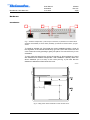
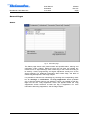
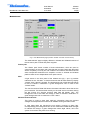
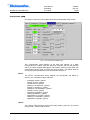
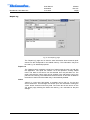
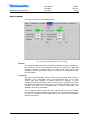
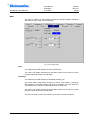
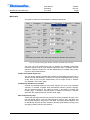
The “Frequency” data field shows the used receiver frequency.
The “Level” data field shows the measured signal level. A green background
indicates legal values and yellow values below the receiver’s dynamic range.
The “Scan start” and “Scan stop” fields determine the frequency band that the
unit scans through when searching for the HEC carrier. Scanning can be
disabled by setting the start and stop frequencies to the same value. The
scanning speed can be improved by limiting the scanning range. The default
and maximum range is 85…118 MHz. The scan will start from the last known
HMTS carrier frequency.
The “Scan step” field sets the frequency increments of the scanning process.
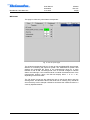
Transmitter
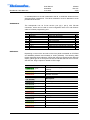
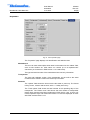
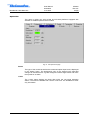
The “Frequency” data field shows the used transmitter frequency commanded
by the HMTS. The “Level” data field shows the transmitter signal level and can
be edited within the unit's output level range 80…95 dBμV.
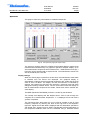
Addresses
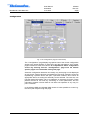
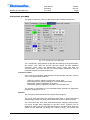
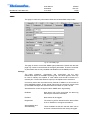
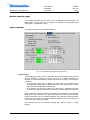
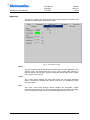
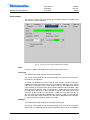
The “IP address” field is used to define the IP address of the unit. The address
has to be unique and match the HMTS’s IP settings to ensure proper operation
and IP level communication with the HMTS.
The “Addresses” group box shows also the unicast MAC address as well as the
configurable Multicast MAC address.
Timeouts
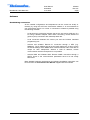
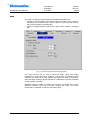
The “CHNLDESC” timeout defines how long to wait for the channel descriptor
datagram. This value should match with the channel descriptor transmit interval
on the HMTS so that the transponder timeout should be longer than the transmit
interval. Therefore the default value is set to 35 seconds, to match with the 30
second transmit interval defined as maximum by the HMS standards.
− CHNLDESC timeout is used to distinguish a valid HMS channel. After the
transponder has detected an RF carrier, it must wait for the CHNLDESC
datagram to get the transmitter (and receiver) frequency information. After
that it can begin the registration process. If a valid CHNLDESC is not
received during the timeout interval, the scanning advances.
When the transponder is in the registered state, the handling of the CHNLDESC
timeout is slightly different. In order to stay registered, the MAC layer must
receive regular CHNLDESC packets. As there is always the possibility that a
datagram is corrupted, the used timeout is set to twice as long as the set
timeout, to allow one lost CHNLDESC datagram. After that, the transponder
declares the forward channel lost and starts to scan for another channel.
The “Poll” timeout is used in the registered state If the transponder does not
receive any packets to its own MAC address during the MAC poll interval, it
restarts the registration process, provided that the forward channel is present
and a CHNLDESC is received.
Setting the “Poll” timeout to zero disables the timeout handling and enables
non-polling use of the communication channel. Thus the transponder stays
registered as long as the forward channel is sending CHNLDESCs or the
transponder is not reset or commanded to re-register by the HMTS.