1
International Journal of Emerging Technology and Advanced Engineering
Website: www.ijetae.com (ISSN 2250-2459, ISO 9001:2008 Certified Journal, Volume 4, Issue 3, March 2014)
iv.
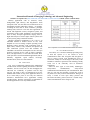
Calculation of baud rate and sample point
Baud rate: The baudrate of the bus can be calculated from:
Baudrate = fcrystal / (2*n*(BRP+1))
Where n is the number of time quanta for one bit and is
defined as:
n = SYNCHSEG+TSEG1+TSEG2
BRP is the value of the BaudRate Prescaler. Warning:
some CAN controllers (like Intel 526) has another way of
calculating the number of time quantas in a bit! Consult
your user’s manual.
Sample point
Quantabeforesample = TSEG1 + 1
Quanta after sample = TSEG2
Often the sample point is given in percent of the bit time.
This is:
(TSEG1+1)/ (TSEG1+1+TSEG2)
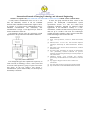
Fig. 4 CAN contain built in priority for messages to avoid conflicts.
E. Available Products
If standard frames are used exclusively in an application,
then both kinds of CAN controllers – those according to
version 2.0 B ("passive" or "active") as well as those
according to version 2.0 A (or even older versions) - can be
used. That means that for these CAN networks the full
range of available CAN controllers can be used. All future
CAN products will still perform standard frame
communication.
When extended frames are used in a CAN network, the
number of usable products is only an extract of the full
range of available CAN controllers. Because of the aim to
offer very cheap CAN controllers, it is likely that even
some future CAN controllers will be created which do not
support extended frame "actively". For most applications
the cheaper price will be more beneficial than the
additional feature of extended frame communication.
D. How CAN Communication Works
As stated earlier, CAN is a peer-to-peer network. This
means that there is no master that controls when individual
nodes have access to read and write data on the CAN bus.
When a CAN node is ready to transmit data, it checks to
see if the bus is busy and then simply writes a CAN frame
onto the network. The CAN frames that are transmitted do
not contain addresses of either the transmitting node or any
of the intended receiving node(s). Instead, an arbitration ID
that is unique throughout the network labels the frame. All
nodes on the CAN network receive the CAN frame, and,
depending on the arbitration ID of that transmitted frame,
each CAN node on the network decides whether to accept
the frame.
If multiple nodes try to transmit a message onto the
CAN bus at the same time, the node with the highest
priority (lowest arbitration ID) automatically gets bus
access. Lower-priority nodes must wait until the bus
becomes available before trying to transmit again. In this
way, you can implement CAN networks to ensure
deterministic communication among CAN nodes.
II. CAN APPLICATIONS
CAN was first created for automotive use, so its most
common application is in-vehicle electronic networking.
However, as other industries have realized the
dependability and advantages of CAN over the past 20
years, they have adopted the bus for a wide variety of
applications.
373