1
GUIDELINES FOR IN DATA CREATION
4.
Connectivity to other exchange via other signalling systems
For connectivity to other exchange in the network on other signalling like MOD-R2
a Trunk Group of that signalling needs to be created towards the required
destination. Trunk Group is created by following command as described. (It is
assumed that the hardware for the particular type of trunk is already equipped in
the switch)
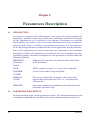
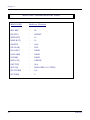
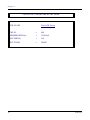
CRE-TGP (Create Trunk Group)
TGP-NUM
=
<Trunk Group number>
TGP-NAME
=
CAL-TAX ((Trunk group name)
TGP-STA
=
OG ( for outgoing trunk circuits)
IC ( for incoming trunk circuits )
LIN-SIG
=
DR2-CAS3( for digital trunks )
LOOP-DSCT ( for analog trunks)/E-M (4 wire)
REG-SIG
=
MOD-R2
[CGS-NUM]
=
None
[CGS-NAME]
=
None
[RNK-DGT]
=
<rank of digit>
TGP-TYPE
=
ORD (trunk group type = ordinary)
SIG-INF
=
None
[DGT-SZFD ]
=
<minimum digit seize forward >
AC-STA
=
2WP
[TEN]
=
< Terminal Equipment Numbers>
Rest of the parameters are given default values.
After creating trunk groups, routes are created by using the CRE-ROUT command
described in section 1.2.4.1.
5.
IN Service Data Creation
1.
As the first step, triggers have to be created for IN calls. IN triggers are
created by using the CRE-TGR-TYPE command. Create two triggers - one
for Detection Point (DP) Analyse-info and another for Coll-info.
2.
Now, modify the IN tone map by using the, MOD-INTONE-MAP command
in order to map the IN services related tones.
SSP ADMINISTRATION
107