1
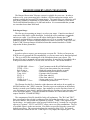
c. Kepler's Laws and the Orbit of Mercury:
d.
e.
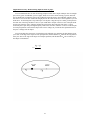
Demo of Kepler's first and second laws by
plotting the position of Mercury
p. 72
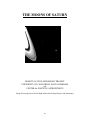
The Moons of Saturn: Demonstrating
Kepler's third law from period-distance data of
Saturn's moons
p. 80
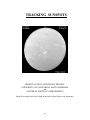
Tracking Sunspots: Calculating the rotation
rate of the Sun by observing the positions of
sunspots on 5 consecutive days
p. 86
2. Introductory Cosmology Labs
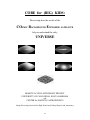
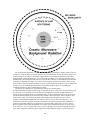
a. COBE for (Big) Kids: A simulation of the
data processing and analysis that went into data
gathering and interpretation for the Cosmic
Background Explorer Satellite
p. 94
b. Searching for Remote Dark Matter in the
Galactic Halo: In this series of exercises we
will attempt to find evidence for MACHOs in the
Large Magellanic Cloud by performing
photometry on a series of CCD images taken of a
region of the LMC by observers at the Mt.
Stromolo observatory Australia
p. 110
3. Astronomy Labs for General Physical and Earth Science
a. Measuring Angles in the Sky Using
Fingers of the Hand: An exercise to explain
b.
c.
how angular sizes are determined and why they
are used in astronomy.
p. 122
Tracking the Sun: A simple way to have
students watch how the position of the sun
changes over the course of a year.
p. 126
Investigating Impact Craters: A simplified
version of the Craters lab.
p. 129
C. Macintosh Ready Lab Activities
p. 134
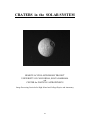
1. Craters in the Solar System: Comparing craters on
2.
3 moons of the solar system, and calculating the energy
released by an average impact.
p. 136
Tracking Sunspots: Calculating the rotation rate of
the Sun by observing the positions of sunspots on 5
consecutive days.
p. 148
IV. Appendices
A. Sample Research Project - Observations of Supernova 1993J
B. Technical Information
C. Published Articles on RAAP
3
p. 158
p. 164
p. 168