1
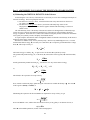
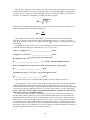
Rotation rates of the Sun and formation of sunspots...
The Sun behaves like a fluid. While planets are solid and rotate as rigid bodies, the Sun rotates faster at
its equator than at its poles. As a result, the north-south magnetic field lines get stretched out in an eastwest direction at lower latitudes, eventually pinching off and forming intense localized fields, aligned
roughly east-west.
Sunspots tend to form in pairs, one a north magnetic pole where the local field lines emerge from the
surface, and the other a south pole where the local field lines plunge back into the solar surface. Sunspots
are often accompanied by towering arcs of ionized gases which follow these local field lines.
New sunspots first appear at latitudes around 35° north and south of the equator. Occasionally sunspots
are observed at higher latitudes. One way that astronomers have deduced the variable rotation rate of the
Sun is by observing the motions of sunspots at different latitudes. (The other way is by observing the
DOPPLER SHIFT of spectral lines in the photosphere at various latitudes.)
Observing the Sun:
You cannot observe the Sun directly in visible light! (You knew that...) However you can observe
sunspots with a small telescope if you project the image of the Sun onto a screen. If there are any sunspots,
they will appear as dark, hairy spots on the solar disk. Other ways to observe the Sun are with special filters
or digital cameras that are sensitive at X-ray or other wavelengths.
About these images:
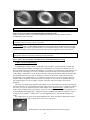
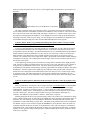
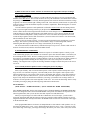
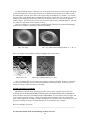
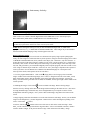
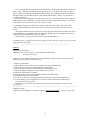
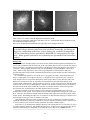
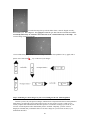
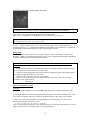
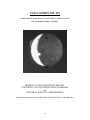
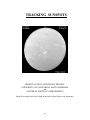
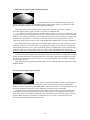
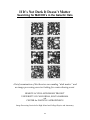
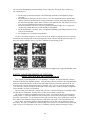
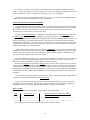
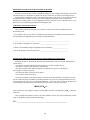
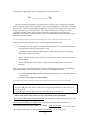
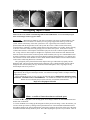
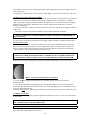
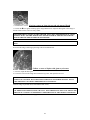
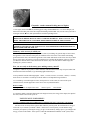
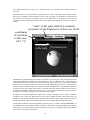
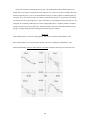
The images you will use in this activity were taken with an "H-α" (pronounced "H-alpha") filter. This is
a special, very narrow-band red filter, centered on the 6563-Ångstrom line emitted by excited neutral
hydrogen. Because the Sun is made up mostly of hydrogen, this 6563-Å line is one of the strongest
absorption lines in the solar spectrum. Most of the photons of that wavelength coming from the surface of
the Sun (the photosphere) are absorbed before they reach the solar "atmosphere" (the chromosphere). Only
6563-Å photons that originate in the chromosphere escape into space and are visible to us. So, when you
look at these images, you are mainly looking at features in the chromosphere, or lower part of the solar
atmosphere.
Because sunspots are about 2000 K cooler than the surrounding photosphere, in the chromosphere
directly above the sunspots, the ionized hydrogen actually cools down enough to capture a free electron and
become neutral hydrogen (1 proton, 1 electron). This neutral hydrogen is heated and excited, causing the
hydrogen to emit photons at its characteristic frequencies in the visible spectrum. The strongest emission is
the one at 6563 Ångstroms, corresponding to red light. (In fact, if you are lucky enough to observe a total
solar eclipse, you can see a faint red rim around the Sun at totality which is the red glow of the H-alpha
photons in the chromosphere!) These images were all taken with a digital camera and appear in "black &
white.” The parts that are dark in the picture are H-α absorbers, and the features that appear bright are H-α
emitters.
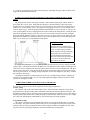
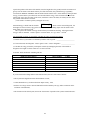
Locally intense magnetic fields in the photosphere often cause gases in the chromosphere to heat up and
glow brighter than their surroundings. Called plages ("beaches" in French), these irregular bright patches
of hot, disturbed gas usually precede the formation of sunspots and persist even after the sunspots have
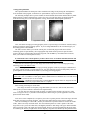
disappeared. You can see plages on some of the images; sunspots show through these plages as dark
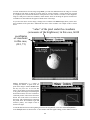
patches. To see them better, you can box off part of the solar image and enlarge it. You will also notice
irregular, snaky, dark lines on these images; these are filaments of gas that stick up above the Sun. When
these filaments approach the limb of the Sun as it rotates, they can be seen as bright curtains of gas that
protrude many hundreds to thousands of kilometers above the surface. They are strong H-alpha absorbers
and, hence, appear dark when seen through the 6563-Angstrom filter.
88