1
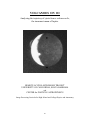
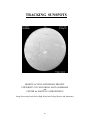
Tracking Sunspots
Jatila van der Veen, UCSB Physics Department and Adolfo Camarillo High School
Philip Lubin, UCSB Physics Department
THE FOLLOWING MAY BE REPRODUCED IN ANY FORM FOR USE IN A CLASSROOM,
BUT UNDER NO CIRCUMSTANCES MAY ANY PORTION BE REPRODUCED FOR
PUBLICATION WITHOUT THE WRITTEN CONSENT OF THE AUTHORS.
References:
THE NEW SOLAR SYSTEM, Beatty and Chaikin, ed., Sky Pub., 1991; ASTRONOMY:
FUNDAMENTALS AND FRONTIERS, Robert Jastrow, Wiley & Sons, 1977; EXPLORING THE
COSMOS, Berman and Evans, Little, Brown & Co., 1986.
*************************************************************************************
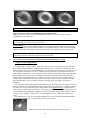
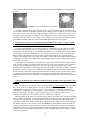
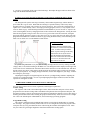
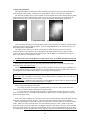
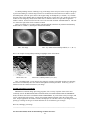
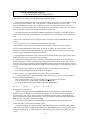
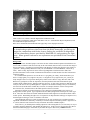
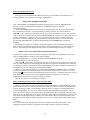
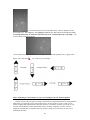
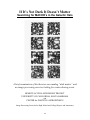
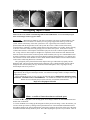
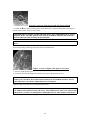
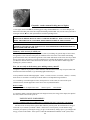
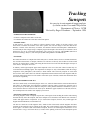
IN THIS ACTIVITY YOU WILL TRACK THE MOTIONS OF SUNSPOTS IN IMAGES OF THE SUN
TAKEN AT THE N.O.A.A. SOLAR OBSERVATORY AT BOULDER, COLORADO, AND
MEASURE THE ROTATION RATE OF THE SUN AT THE SOLAR EQUATOR.
*************************************************************************************
This activity makes use of the program IMAGINE-32 by ISIS of Santa Barbara for processing of digital
images.
*************************************************************************************
Background:
Recorded observations of sunspots date back 2000 years to ancient Chinese observers;
Indian astronomers also recorded observations of sunspots, and there are references to them by Greek
observers from around 400 BC. In western history, Galileo was among the first observers to look at the Sun
through a telescope in 1610 and observe "dark spots" on its face.
In ordinary visible light sunspots appear dark compared to the rest of the solar surface because they are
cooler than the surrounding regions - "only" about 4000 K, while the average temperature of the
photosphere (solar surface) is about 6000 K. The reason why sunspots are cooler than the rest of the Sun's
surface has to do with the complicated interaction between the solar magnetic field, the convecting ionized
gases that rise to the surface in the outer layers of the Sun, and the fact that the Sun does not rotate as a rigid
body...
Heat transport in the Sun...
The Sun is made mostly of ionized hydrogen. In the core, where the thermonuclear reactions that make
the Sun "shine" are taking place, the temperature is millions of degrees Kelvin. Heat is carried away from
the core to the outer layers by the slow process radiative transport. It takes photons hundreds of thousands
of years to travel from the interior of the Sun to the outer layers. Within the upper 100,000 km of the Sun,
however, heat is transported to the surface more rapidly by convection.
Magnetic fields in the Sun...
The strong magnetic fields of sunspots keep the hot, ionized gases from reaching the surface and
releasing their heat directly below the sunspots; this causes sunspots to be somewhat cooler than the rest of
the Sun's surface and appear dark in comparison. (If you could isolate sunspots, however, they would
appear far brighter than the full Moon, but somewhat red.)
The Sun as a whole has a weak magnetic field, similar to that of the Earth, with the magnetic field lines
emerging at the north pole and re-entering at the south. The overall intensity of the solar magnetic field is
about 1 Gauss - the same as that of the Earth. (1 Gauss = 10-4 Tesla = 10-4 Newton/Amp⋅meter.)
In sunspots, however, the local magnetic field can be several thousand times stronger.
We know this is so because of the splitting of the lines in the absorption spectra of
sunspots. This effect, called the Zeeman effect after the Dutch physicist who discovered it
in 1886, was first observed for sunspots by George Ellery Hale in 1908, at the Mount
Wilson Observatory.
87