1
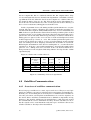
QUANTUM CRYPT
E NHANCEMENT OF AGT C OMMUNICATIONS
S ECURITY USING Q UANTUM
C RYPTOGRAPHY
Work Package I — page
5
Work Package II — page 71
Work Package III — page 103
ENST/EEC/QC.12.01.WP3.A
Michel R IGUIDEL
Ecole nationale supérieure des télécommunications
Network and Computer Science department
46 rue Barrault, 75013 Paris, France.
Phone:
Fax:
Email:
+33 (0) 1 45 81 78 70
+33 (0) 1 45 81 71 58
[email protected]
January 5, 2005
c
European Organisation for the Safety of Air Navigation (EUROCONTROL),
June 2004.
This document is published by EUROCONTROL in the interests of the exchange of
information. It may be copied in whole or in part, providing that this copyright notice
and disclaimer are included.
The information contained in this document may not be modified without prior written
permission from EUROCONTROL. EUROCONTROL makes no warranty, either implied or express, for the information contained in this document, neither does it assume
any legal liability or responsibility for the accuracy, completeness or usefulness of this
information.
2
Contents
I
ATN and QKD Technologies
5
WP1 Summary and Conclusions
7
1 AGT Security Overview
1.1 Why Security ? . . . . . . . . . . . . . .
1.2 AEEC Ad Hoc Meeting on DLK Security
1.3 ATN SARPs . . . . . . . . . . . . . . . .
1.4 APIM 02-002 . . . . . . . . . . . . . . .
1.5 ATN Security Overview . . . . . . . . .
1.6 Conclusions . . . . . . . . . . . . . . . .
.
.
.
.
.
.
.
.
.
.
.
.
.
.
.
.
.
.
.
.
.
.
.
.
.
.
.
.
.
.
.
.
.
.
.
.
.
.
.
.
.
.
.
.
.
.
.
.
.
.
.
.
.
.
.
.
.
.
.
.
.
.
.
.
.
.
.
.
.
.
.
.
.
.
.
.
.
.
.
.
.
.
.
.
.
.
.
.
.
.
.
.
.
.
.
.
.
.
.
.
.
.
.
.
.
.
.
.
.
.
.
.
.
.
.
.
.
.
.
.
.
.
.
.
.
.
.
.
.
.
.
.
.
.
.
.
.
.
.
.
.
.
.
.
11
11
12
12
14
14
15
2 Aeronautical Telecommunications Network
2.1 ATN Overview . . . . . . . . . . . . . . . .
2.2 CNS/ATM-1 Applications . . . . . . . . . .
2.3 ATN Security . . . . . . . . . . . . . . . . .
2.4 Key Management . . . . . . . . . . . . . . .
2.5 ATN and IPv6 . . . . . . . . . . . . . . . . .
2.6 Air Identification Tag . . . . . . . . . . . .
.
.
.
.
.
.
.
.
.
.
.
.
.
.
.
.
.
.
.
.
.
.
.
.
.
.
.
.
.
.
.
.
.
.
.
.
.
.
.
.
.
.
.
.
.
.
.
.
.
.
.
.
.
.
.
.
.
.
.
.
.
.
.
.
.
.
.
.
.
.
.
.
.
.
.
.
.
.
.
.
.
.
.
.
.
.
.
.
.
.
.
.
.
.
.
.
.
.
.
.
.
.
.
.
.
.
.
.
.
.
.
.
.
.
.
.
.
.
.
.
.
.
.
.
.
.
.
.
.
.
.
.
.
.
.
.
.
.
17
18
19
20
21
22
23
3 Quantum Key Distribution
3.1 Why is Quantum chosen for Cryptography? . . . . . . . .
3.1.1 Weakness of classical cryptography . . . . . . . . .
3.1.2 Appearance of Quantum Cryptography (QC) . . . .
3.2 Quantum Key Distribution - QKD . . . . . . . . . . . . .
3.2.1 Principles of QKD . . . . . . . . . . . . . . . . . . .
3.2.2 Some protocols for QC . . . . . . . . . . . . . . . .
3.3 Detailed BB84 protocol . . . . . . . . . . . . . . . . . . . .
3.3.1 Description of protocol . . . . . . . . . . . . . . . .
3.3.2 Security of BB84 . . . . . . . . . . . . . . . . . . .
3.3.3 Specification for a simple implementation of BB84
.
.
.
.
.
.
.
.
.
.
.
.
.
.
.
.
.
.
.
.
.
.
.
.
.
.
.
.
.
.
.
.
.
.
.
.
.
.
.
.
.
.
.
.
.
.
.
.
.
.
.
.
.
.
.
.
.
.
.
.
.
.
.
.
.
.
.
.
.
.
.
.
.
.
.
.
.
.
.
.
.
.
.
.
.
.
.
.
.
.
.
.
.
.
.
.
.
.
.
.
.
.
.
.
.
.
.
.
.
.
.
.
.
.
.
.
.
.
.
.
.
.
.
.
.
.
.
.
.
.
.
.
.
.
.
.
.
.
.
.
.
.
.
.
.
.
.
.
.
.
25
25
25
26
26
26
27
29
29
31
37
4 Free Space and Satellites
4.1 Free Space . . . . . . . . . . . . . . . . . . . .
4.1.1 State of the art . . . . . . . . . . . . .
4.1.2 The most recent success . . . . . . . .
4.2 Satellites Communication . . . . . . . . . . .
4.2.1 Overview of satellites communication
4.2.2 Satellites Free-space Communication .
.
.
.
.
.
.
.
.
.
.
.
.
.
.
.
.
.
.
.
.
.
.
.
.
.
.
.
.
.
.
.
.
.
.
.
.
.
.
.
.
.
.
.
.
.
.
.
.
.
.
.
.
.
.
.
.
.
.
.
.
.
.
.
.
.
.
.
.
.
.
.
.
.
.
.
.
.
.
.
.
.
.
.
.
.
.
.
.
.
.
45
45
46
47
50
50
54
.
.
.
.
.
.
.
.
.
.
.
.
.
.
.
.
.
.
.
.
.
.
.
.
.
.
.
.
.
.
.
.
.
.
.
.
.
.
.
.
.
.
.
.
.
.
.
.
5 Analysis and Scenarios
5.1 Introduction . . . . . . . . . . . . . . . . . . . . . . . . . . . . . . . . . . . . . . . . .
5.2 Key exchange scenario . . . . . . . . . . . . . . . . . . . . . . . . . . . . . . . . . . .
5.2.1 The ground station transmits a key to the satellite . . . . . . . . . . . . . . .
5.2.2 The satellite transmits a key to the ground station . . . . . . . . . . . . . . .
5.2.3 The ground station transmits a key to another ground station using the satellite as a mirrror . . . . . . . . . . . . . . . . . . . . . . . . . . . . . . . . . . .
5.3 Satellite network . . . . . . . . . . . . . . . . . . . . . . . . . . . . . . . . . . . . . .
5.3.1 Ground-Based Transmitter Terminal . . . . . . . . . . . . . . . . . . . . . . .
5.3.2 Space-Based Transmitter Terminal . . . . . . . . . . . . . . . . . . . . . . . .
II
ATN and QKD Scenarios
57
57
58
59
61
63
66
68
69
71
Summary and Conclusions
73
3
6 Introducing QC in ATN
6.1 ATN Communications secured with PKI .
6.2 Scenario of QKD in ATN . . . . . . . . . .
6.2.1 QCKI for A/G Applications . . . . .
6.2.2 QCKI for G/G Applications . . . . .
6.2.3 A proposal QKCI for ATN Network
.
.
.
.
.
.
.
.
.
.
.
.
.
.
.
.
.
.
.
.
.
.
.
.
.
.
.
.
.
.
.
.
.
.
.
.
.
.
.
.
.
.
.
.
.
.
.
.
.
.
.
.
.
.
.
.
.
.
.
.
.
.
.
.
.
.
.
.
.
.
.
.
.
.
.
.
.
.
.
.
.
.
.
.
.
.
.
.
.
.
.
.
.
.
.
.
.
.
.
.
.
.
.
.
.
.
.
.
.
.
.
.
.
.
.
.
.
.
.
.
7 QC Communication Protocols
7.1 Introduction to Communication Protocols
7.1.1 Classical Authentication . . . . . .
7.1.2 Quantum Authentication . . . . .
7.2 Quantum Authentication Protocol . . . .
7.3 Communication protocols . . . . . . . . .
.
.
.
.
.
.
.
.
.
.
.
.
.
.
.
.
.
.
.
.
.
.
.
.
.
.
.
.
.
.
.
.
.
.
.
.
.
.
.
.
.
.
.
.
.
.
.
.
.
.
.
.
.
.
.
.
.
.
.
.
.
.
.
.
.
.
.
.
.
.
.
.
.
.
.
.
.
.
.
.
.
.
.
.
.
.
.
.
.
.
.
.
.
.
.
.
.
.
.
.
.
.
.
.
.
.
.
.
.
.
.
.
.
.
.
93
. 93
. 95
. 97
. 98
. 100
III
Visual Demonstrators
103
Summary and Conclusions
8 AIT/QKD Animations in Flash
8.1 Installation . . . . . . . . . .
8.2 Opening index.html . . . .
8.3 Air Identification Tag - AIT .
8.4 Quantum Key Distribution .
8.5 Flight plan and ATN . . . . .
8.6 Authentication and Integrity
75
75
78
79
88
90
105
.
.
.
.
.
.
.
.
.
.
.
.
.
.
.
.
.
.
.
.
.
.
.
.
.
.
.
.
.
.
.
.
.
.
.
.
.
.
.
.
.
.
.
.
.
.
.
.
.
.
.
.
.
.
.
.
.
.
.
.
.
.
.
.
.
.
.
.
.
.
.
.
.
.
.
.
.
.
.
.
.
.
.
.
.
.
.
.
.
.
.
.
.
.
.
.
.
.
.
.
.
.
.
.
.
.
.
.
.
.
.
.
.
.
.
.
.
.
.
.
.
.
.
.
.
.
.
.
.
.
.
.
.
.
.
.
.
.
.
.
.
.
.
.
.
.
.
.
.
.
107
107
107
108
108
108
108
9 BB84 Demonstrator in Java
9.1 Program installation . . . . . . . . . . . .
9.1.1 For users on Unix, Linux or MacOS
9.1.2 For users on Windows . . . . . . .
9.2 How to run simulator . . . . . . . . . . .
9.2.1 For users on Unix, Linux or MacOS
9.2.2 For users on Windows . . . . . . .
9.2.3 The application is running . . . . .
.
.
.
.
.
.
.
.
.
.
.
.
.
.
.
.
.
.
.
.
.
.
.
.
.
.
.
.
.
.
.
.
.
.
.
.
.
.
.
.
.
.
.
.
.
.
.
.
.
.
.
.
.
.
.
.
.
.
.
.
.
.
.
.
.
.
.
.
.
.
.
.
.
.
.
.
.
.
.
.
.
.
.
.
.
.
.
.
.
.
.
.
.
.
.
.
.
.
.
.
.
.
.
.
.
.
.
.
.
.
.
.
.
.
.
.
.
.
.
.
.
.
.
.
.
.
.
.
.
.
.
.
.
.
.
.
.
.
.
.
.
.
.
.
.
.
.
.
.
.
.
.
.
.
.
.
.
.
.
.
.
.
.
.
.
.
.
.
113
113
113
114
114
114
114
114
.
.
.
.
.
.
.
.
.
.
.
.
.
.
.
.
.
.
.
.
.
.
.
.
.
.
.
.
.
.
.
.
.
.
.
.
Acronyms
121
Index
129
Bibliography
131
4
WP I
ATN and QKD Technologies
5
7
Summary and Conclusions
The security of aeronautical telecommunication has become a crucial matter.
Aeronautical telecommunication may be secured using classical cryptography.
Classical cryptography provides so-called cryptographic security. That means
that the security relies on the assumed difficulty of some mathematical problems.
On the other side, Quantum Cryptology (QC) provides unconditional security relying on the quantum physics law. Such a security is called informationtheoretic security because it is proved using the theory of information. In this
work, we study if Quantum Cryptology can be applied in the frame of the Aeronautical Telecommunication Network.
This part summarizes the partial conclusions of this first step study. These
conclusions are partially made explicit and explained in the following sections.
AGT & ATN
The section 1 on page 11 is an overview of AGT Security and the section 2 on
page 17 briefly describes the Aeronautical Telecommunications Network.
• All aeronautical communications are, or will be, handled by Aeronautical
Communications Network (ATN). The ATN is an Internet network and
may switch to IPv6 in the future.
• Security and confidentiality of communications are primary concerns.
This is true for the ATN and for all aeronautical communications in general.
• Security and confidentiality in the ATN will be handled using public key
cryptography. But public key cryptography is not proven to be unconditionally sure.
• Public key cryptography necessitates a Public Key Infrastructure (PKI).
PKI are heavy administrative tools. Any failure compromises the system. PKI is likely to be applied in a well-trusted operators area such as
European countries.
• Air Identification Tag (AIT) proposed by Eurocontrol (EEC) enforces security by allowing automatic digitalized identification without modifying
current communication installations.
• Any solution for improving security must be done inside the framework of
the ATN. It must consider costs and existing infrastructure into account.
Existing infrastructure must be re-used.
c Eurocontrol, June 2004.
8
Quantum Key Distribution (QKD)
The section 3 on page 25 describes the Quantum Cryptology principle as described in its initial design called BB84.
• Quantum Cryptography (QC) uses classical encryption algorithms such
as DES or AES.
• The main strength of QC is the Quantum Key Distribution (QKD) mechanism which allows to distribute the encryption keys.
• Confidentiality of QKD is ensured by the quantum physics laws, not by
the assumed, but unproved, intractability of some mathematical problems.
• Authentication in QC is realized using special algorithms protected
against key exhaustion by Denial of Service (Dos) attacks. However, a
shared authentication key is still necessary.
Free space and Satellites
It must be pointed out that the current state of the art of Free Space Quantum
Cryptology is extremely volatile because the technology and the theory are
evolving quickly. This is mainly due to the funded research projects in Europe
and USA.
QKD uses a quantum channel which may be an optic fiber or a free space
laser beam. The section 4 on page 45 studies the use of free space QC and
satellites for the distribution of encryption keys.
• Free space QC technology is rapidly evolving:
Year
1989
1996
1998
2000
2001
2002
2003
Distance
32cm
150m
1km
1.6km
1.9km
10km
23.4km
Condition
Laboratory
Day light
At night
Day light
At night
Day light
At night
Where
IBM T.J. Watson (USA)
Baltimore (USA)
Los Alamos (USA)
Baltimore (USA)
QinetiQ (UK)
Los Alamos (USA)
Germany
• 2km Ground/Ground QC is equivalent to 300km Ground/Space QC.
• Theoretical results with the 2003 technology allow a 1600km distance.
• Ground/Space QC requires high standards expensive opto-electronics and
pointing acquisition and tracking apparatus.
• Actual free space QC requires huge flexibility in the receiver due to active
polarization control and data analysis. Thus receiver is likely to stay on
Earth.
• Actual free space technology relies on photons beams which are sensible
to weather conditions. Further technologies may use different particles.
8
c Eurocontrol, June 2004.
9
Analysis and Scenarios
The section 5 on page 57 studies what can be done with free space and satellite
technology.
• There are three possibilities, each with its requirements and characteristics. As stressed earlier, the better is to keep the receiver on earth. The
three possibilities are:
– The ground station transmits a key to the satellite.
– The satellite transmits a key to the ground station.
– The ground station transmits a key to another ground station using
the satellite as a mirror.
• Average embedded payload is 5kg with a 10 to 30cm optics. On Earth, it
uses a 50 to 100cm optics.
• The size of the satellites network depends on the chosen payload and
varies from 7 to 43 satellites.
Partial Conclusions
• Any improvement in AGT security must be done inside the framework of
ATN and must not be too expensive. Improving key distribution inside
ATN may be considered as admissible.
• Coupling QC with AIT may also be considered as admissible. For instance, AIT may be coupled with QC Authentication algorithm to provide
a secure identification.
• Using PKI for key distribution is not proven to be secure. One may find
a way, or may already have found, a way to break it. If Quantum Computers are built, PKI is considered as broken since algorithms for these
computers allow to break it.
• Quantum Key Distribution is the only key distribution scheme which is
proven to be secure using the quantum physics laws. QKD authentication
is not subject to key exhaustion by Denial of Service attacks.
• Free Space Quantum Technology for Ground/Plane, Ground/Satellite and
Plane/Satellite key distribution is not ready. Theoretical results allow
such a technology which may be ready in 10 years according to current
progress records. Current technology allows admissible payload either in
aircraft or satellites.
• The most foreseeable plan would be to use satellites-based key distribution. The required number of satellites varies from 7 to 43 depending on
the evolution of technology. It is a costly solution which may be used only
if PKI is broken by Quantum Computers or mathematical progress.
c Eurocontrol, June 2004.
9
10
WP2 Future Works
• To provide a visual demonstrator of BB84 protocol.
• To develop several satellite-based scenarios with the following constraints
and questions:
– Is it possible to incrementally inject QC inside the ATN PKI ?
– Is it possible to use QC for specific links only such as VHF/AIT links ?
– Is there some environmental impact ?
– Is there some public health concern ?
• To provide visual demonstrators for the preceding scenarios.
10
c Eurocontrol, June 2004.
11
Section 1
AGT Security Overview
Informations from this section are mainly provided from [29]. It is a short
description of the state of the art in Air Ground Telecommunications AGT Security and a short description of the institutional concerns.
1.1 Why Security ?
AGT Data Link (DLK) provides numerical communications between ground
stations and aircraft. These communications are used for Graphical Position
Reports, Contact Reports, etc. One may classify different threats on Data Link
communications:
A1
A2
Monitoring. A third party may listen to the
Data Link communications and gain informations on the traffic.Current Data Link communications do not guarantee privacy.
A2
Spoofing. A third party may listen to the Data
Link communications and gain authentication
informations in order to impersonate one of the
parties.
A3
A1
A3
A1
A2
A3
Modifying. A third party may impersonate the
second party with respect to the first party
meanwhile he may also impersonate the first
party with respect to the second party (man-inthe-middle attack). Integrity of the data is not
preserved. Data may be corrupted.
Main sources:
[15] http://www.arinc.com/aeec/projects/users_forum/Miami_03/6-3_Ad Hoc Security Report - Exec Summary.pdf
[29] http://www.arinc.com/aeec/projects/users_forum/Miami_03/6-2_ATN Security - USAF.pdf
[44] http://www.arinc.com/aeec/projects/users_forum/Miami_03/6-6_APIM-ATN Security.pdf
[6] http://www.arinc.com/aeec/projects/users_forum/Miami_03/6-4_Key Management.pdf
c Eurocontrol, June 2004.
12
SECTION 1. AGT SECURITY OVERVIEW
It is very easy to monitor Aircraft Communications Addressing and Reporting System (ACARS) Data Link Messages. One needs:
• A personal computer.
• A sound card
• A Radio Frequency (RF) scanner.
• Few software available on the WEB.
1.2 AEEC Ad Hoc Meeting on DLK Security
The meeting was held in Columbia (Maryland,USA) from 7 to 9 may 2002 and
was hosted by Honeywell.
There were many presentations by the interested agencies which are looking at security concerns. All meeting attendees agreed that it is time to look at
standards of development for AGT security. They emphasized that opportunities exist for Data Link Service Provider (DSP).
ATN security remains the baseline. ACARS security must be compatible
with Aeronautical Telecommunications Network ATN (cf. section 2 on page 17),
security requirements. One must not build an ACARS only solution.
Analysis 1.2.1. This is a very important point: a security solution must be
compatible with the future ATN.
The main conclusions of the meeting were:
• Security of Data Link communications is a serious concern.
• There exists a problem with the open distribution of threat and vulnerability informations.
• A ACARS solution compatible with ATN security has to be found.
• Minimizing costs of a solution is a concern.
1.3 ATN SARPs
ATN Standards and Recommended Practices is documented by ICAO Document 9705 (third edition), Sub-Volume 8, October 2002. ATN SARPs is based
on the following elements:
• Eurocontrol has performed a risk analysis and has identified the following threats and vulnerability:
– Modification and replay of AGT.
– Denial of services by flooding routing databases.
• Airlines require confidentiality of operational data.
12
c Eurocontrol, June 2004.
1.3. ATN SARPS
13
ATN SARPs provides the following security services:
• Authentication and integrity of Air-Ground Telecommunications.
• Authentication and integrity of IRDP (Inter-Domain Routing Protocol )
communications.
• Supporting Public Key Infrastructure (PKI).
Note that the ATN Panel (ATNP) WG-B/Sub-Group 3 is enhancing the ATN
SARPs with confidentiality services.
The SARPs document is organized as follows:
• 8.1 - Introductory Materials.
– 8.1.1 - ATN Security Services.
∗ Support operational requirements of secure exchange.
∗ Support mobile and fixed network users.
– 8.1.2 - ATN Security Services Providers.
∗ Message assurance from originator.
∗ Authentication by receiving entity.
• 8.2 - General ATN Security Concept and Services.
• 8.3 - ATN Security Framework.
– Standards.
– Provision of Security Services.
– ATN Physical Security Framework.
• 8.4 - ATN Public Key Infrastructure (PKI)
– Certificate Policy.
– Certificate Format.
– Certificate Revocation List (CRL) Format.
– Certificate and CRL Validation process.
• 8.5 - ATN Cryptographic Infrastructure.
– Key Agreement.
– Digital Signature.
– Message Authentication.
• 8.6 - ATN System Security Object.
• 8.7 - ASN.1 Module for ATN Security.
[29] quotes the following sentences from the ICAO SARPs, section 8.1.2 notes:
Security services in general support but do not guarantee protection from security violations ... Cryptanalytic advances may affect the overall level of protection..
c Eurocontrol, June 2004.
13
14
SECTION 1. AGT SECURITY OVERVIEW
Analysis 1.3.1. The SARPs mentions that PKI-based security is not guaranteed and that it depends on advances in cryptanalysis. But it does not mention
the possible birth of Quantum Computers. That is exactly the problems that
Quantum Cryptography claims to solve.
For instance; SARPs mentions that Key Pairs (public and private keys)
must be changed every 28 days and that private keys must be protected. The
fact that private keys must be protected is an evidence:
• If the private key of a Certificate Authority (CA) is disclosed, then the
whole security system depending on the CA is broken.
• If the private key of an aircraft is disclosed, then anyone can impersonate
the aircraft communication system.
Analysis 1.3.2. One may worry about the 28 days key renewing delay. 28 days
may be sufficient to crack a public key.
1.4 APIM 02-002
The ARINC IA Project Initiation/Modification (APIM) 02-2002 named ATN Security results from the ICAO Air Navigation Bureau Request for Development
of Specifications for Key Management and Distribution needed to implement
the security provisions of ATN SARPs for avionics equipment.
One reason for the APIM is local implementation issues: everyone has to do
it the same way or it will not work.
1.5 ATN Security Overview
The ATN Panel (ATNP) has provided mechanisms which may be applied for:
• Authentication and Integrity of Air-Ground application communications
which use the ATN upper layers.
• Authentication and Integrity of Air-Ground IDRP, i.e. inter-domain routing protocol, communications.
• Authentication of Ground-Ground Applications communications,
Ground-Ground IRDP and Aeronautical Message Handling Services (AMHS).
The used technologies are rather classical:
• HMAC: Hybrid symmetric, Hashed Message Authentication Code.
• ECDSA: Elliptic Curve Digital Signature encryption Algorithm.
• GULS: ISO Generic Upper Layer Services.
14
c Eurocontrol, June 2004.
1.6. CONCLUSIONS
15
• CMA: Context Management Application to manage mutual authentication during initial contact.
The message costs are the following:
• CMA initial contact:
– Logon request: 400 bits.
– Logon response and certificate: 1500 bits.
• Subsequent secured message: 32 bits (Message Authentication Code).
Note that efforts have been made to minimize the costs. For instance, a X.509
certificate is about 20 KB.
The Certificate Delivery Services delivers certificates and Certificate revocation Lists (CRL) to ATN entities. X.500 directory is likely to help on the
ground.
• Ground scenarios:
– Applications and routers have directory access.
– CMA has directory access and provides certificates and CRL.
– Certificates are pre-stored at initial deployment.
• Air scenarios:
– Short-lived certificates sent to aircraft.
– CMA certificates pre-stored at initial deployment.
Analysis 1.5.1. An eavesdropper accessing the pre-stored certificates may endanger the security system.
1.6 Conclusions
Analysis 1.6.1. Any solution, any addition or improvement to the security must
be done in the frame of the ATN construction. It must be fully compatible with
ATN.
Analysis 1.6.2. ATN Security relies on very classical technologies which have
been mapped to the particular structure of ATN. Such technologies are not fullyproved to be sure.
c Eurocontrol, June 2004.
15
17
Section 2
Aeronautical
Telecommunications
Network
In 1983, the International Civil Aviation Organization (ICAO) created the Special Committee for Future Air Navigation Systems (FANS) for studying new
concepts and new technologies and making recommendations for the future of
air transportation.
FANS emphasized the need for interchange of digital data over several data
links. It recommended the Open Systems Interconnection architecture (OSI)
from the International Organization for Standardization (ISO).
FANS’s work ended in 1988 with the proposition of the Communication,
Navigation and Surveillance (CNS) concept to help the development and evolution of Air Traffic Management (ATM).
In 1989, the Air Navigation Commission (ANC) included the development of
ICAO material for the interoperability between all Air Traffic Services (ATS)
Data Link to the Secondary Surveillance Radar Improvements and Collision
Avoidance Systems Panel (SISCASP) which were already responsible of the
Surveillance and Traffic Alert/Collision Avoidance System (TCAS).
The SISCAS Panel proposed the concept of Aeronautical Telecommunications Network (ATN) which were first published as an ICAO manual in
1991 and then completed in 1993. The Standards and Recommended Practices (SARP) and Guidance Material (GM) were published in 1997. ATN was
described as an Internet network based on classical OSI protocols supporting
global communications and all ICAO Air-Ground Data Links.
Main sources:
[15] http://www.arinc.com/aeec/projects/users_forum/Miami_03/6-3_Ad Hoc Security Report - Exec Summary.pdf
[29] http://www.arinc.com/aeec/projects/users_forum/Miami_03/6-2_ATN Security - USAF.pdf
[6] http://www.arinc.com/aeec/projects/users_forum/Miami_03/6-4_Key Management.pdf
c Eurocontrol, June 2004.
18
SECTION 2. AERONAUTICAL TELECOMMUNICATIONS NETWORK
Other ICAO Panels were involved in the ATN:
• The Aeronautical Mobile Communication Panel (AMCP) which domains
of interest are Aeronautical Mobile Satellite Services (AMSS), High Frequency (HF) Data Link and Very High Frequency (VHF) Data Link
SARP.
• The Automatic Dependent Surveillance Panel (ADSP) which domains of
interest are the Ground/Ground and Air/Ground CNS/ATM operational
requirements.
• The Aeronautical Fixed Service and System Planning Panel (ASPP)
which domains of interest are the Ground/Ground communications, including Aeronautical Fixed Telecommunications Network (AFTN) and
Common ICAO Data Interchange Network (CIDION), and Aeronautical
Message Handling Systems (AMHS) SARP.
Since 1994, the ATN SARP’s is under the responsibility of the Aeronautical
Telecommunications Network Panel (ATNP). It is organized in five parts:
1. Introductory material.
2. Air/Ground applications: Automatic Dependent Surveillance (ADS), Controller Pilot Data Link Communications (CPDLC), Flight Information
Services (FIS) and Context Management (CM).
3. Ground/Ground applications: Inter-Centre Communications (ICC), Aeronautical Message Handling Service (AMHS).
4. Upper Layer Architecture (UAL).
5. Internet: Network and Transport Layers.
The three other ICAO Panels (AMCP, ADSP, ASPP) are also involved in the
development of ATN.
2.1 ATN Overview
The ATN is a data communication network.
• It provides a common communication service for all Air Traffic Services
Communication (ATSC) and Aeronautical Industry Service Communication (AINSC). Communications can be either Ground/Ground or AirGround;
• It integrates and uses existing communication networks and infrastructure if possible. Investments in existing leased networks, CIDIN and X25
networks must be preserved.
• It must meet security and safety requirements of ATSC and AINSC applications and accommodate the different levels of service required by each
ATSC and AINSC application.
18
c Eurocontrol, June 2004.
2.2. CNS/ATM-1 APPLICATIONS
19
• It must provide ATN users with a robust and reliable communication service. Its design ensures high availability because there is no single point
of failure and because it permits multiple alternative routes to the same
destination with dynamic switching between alternatives, for both fixed
and mobile communication.
• It must support mobile systems since an aircraft is basically mobile. It
must support a wide variety of mobile communication networks including
AMSS, VDL and Mode S. It must be possible for any system to communicate with an aircraft equipment all over the world.
The services provided by the ATN are implementing the OSI Transport Service referred as ISO 8072. In order to build ATN applications, ATN proposes
common functional components in an architecture known as the Upper Layer
Architecture (ULA) based on the layered OSI Reference Model. There exist
seven layers. Two types of entities are identified:
• End systems such as computers using the 7 layers.
• Intermediate systems such as routers using the 3 lower layers.
The seven OSI layers are listed below from the upper to the lower:
• The Application Layer. Semantics of end-to-end exchanged information.
• The Presentation Layer. Syntax of end-to-end exchanged information.
• The Session Layer. Format of end-to-end exchanged information.
• The Transport Layer. End-to-end flow control and information exchange.
• The Network Layer. Establish, maintain and terminate switched connections.
• The Data Link Layer. Synchronization and error control over the physical
link.
• The Physical Layer. Management of the physical link.
The three upper layers provide common functions that are used for the establishment and release of connection and for the encoding of information.
2.2 CNS/ATM-1 Applications
The Communications, Navigation and Surveillance / Air Traffic Management
Applications that has been specified for the first phase of ATN:
• Context Management (CM) provides a mean to find out communications
services within a given flight region, and for a ground system or controller
to direct an aircraft’s Context Management Application to contact a different flight region.
c Eurocontrol, June 2004.
19
20
SECTION 2. AERONAUTICAL TELECOMMUNICATIONS NETWORK
• Automatic Dependent Surveillance (ADS) is designed to give automatic
reports from an aircraft to a ground system. This information is provided
on demand and in an emergency. Aircraft position and trajectory and
meteorological data are typical uses of this service.
• Controller-Pilot Data Link Communications (CPDLC) provides a mean
for two-way message oriented communications including a set of
clearance/information/request messages corresponding to current voice
phraseology employed by ATC procedures.
• Flight Information Services (FIS) can support a variety of information
services, providing information about the ground to an aircraft. This can
include information about an airport, such as runways in use and weather
conditions.
• ATS Interfacility Data Communication (AIDC) provides a mean for the
exchange of ATC information between Air Traffic Services Units in support of ATC functions, including notifications of flights approaching a
Flight Information Region boundary, co-ordination of boundary crossing
conditions, and transfer of control.
• The Aeronautical Message Handling System (AHMS) provides a mean
for the exchange and distribution of message oriented traffic between Air
Traffic Services Units. It is an AFTN replacement that may be used additionally to provide new messaging services including Electronic Mail and
Electronic Data Interchange. It is based on ITU recommendation X.400 .
See http://www.helios-is.com/atn/atnover/S59577.htm for more details.
2.3 ATN Security
As a result of study done by Eurocontrol1 , it is suggested that the following are
threats against the ATN, including ATN management and application services,
which pose a significant threat to which the ATN is vulnerable, and hence
require specific counter-measures:
1. To Air Traffic Control Messages, both Air/Ground, and Ground/Ground,
there are threats resulting from:
• Modification
• Replay
• Masquerade
• Jamming
2. To X.400 Message Handling System (MHS), there are threats resulting
from:
• Modification
• Masquerade
1 Cf.
20
http://www.helios-is.com/atn/atnover/S59616.htm
c Eurocontrol, June 2004.
2.4. KEY MANAGEMENT
21
3. To OSI Systems Management:
• Modification
• Replay
• Masquerade
• Unauthorized modification of management information base
4. For all applications, vulnerabilities exist to Denial of Service attacks on
the ATN which impact Air Traffic Control Messages including:
• Jamming air-ground links
• Flooding the ATN with data packets
• Causing switches and data links to fail.
• Unauthorized modification of routing information.
These are to be addressed by network design and topology, and physical
access security, which should be considered by regional planning bodies, and
by appropriate mechanisms implemented by the ATN Internet.
As a result of this work, it is believed that application messages need to
be protected by digital signatures providing both authentication of the sender
and a high quality data integrity check. Furthermore, the source of routing
information needs also to be similarly authenticated.
We can summarize the Security Requirements for ATN:
• Authentication of Message Source
– protect against misreporting
– protect against masquerade of controllers
• Message Integrity Check
– protect against message substitution
– protect against message replay
• Authenticate source of routing information
– protect against false route
2.4 Key Management
[6] mentions: ICAO ATN Panel sent a letter inviting AEEC to develop specifications for Key Management in ATN. Reference: ICAO ATN SARPS 9705 Ed.
3. The elements of the ICAO request are:
• ATNP needs a suitable mechanism for secure installation and update of
the aircraft private keys in the context of data link information security.
• ATN security mechanisms require support of a Public Key Infrastructure (PKI).
c Eurocontrol, June 2004.
21
22
SECTION 2. AERONAUTICAL TELECOMMUNICATIONS NETWORK
• There is a need for secure installation and update of aircraft private keys
as well as public keys of other avionics.
Analysis 2.4.1. One of the main security problems of ATN is the delivery of
encryption keys, as in any secured system.
A PKI is a key management system composed of trusted entities named
Certificate Authority (CA). CA builds and delivers authentic digital public key
certificates, normalized as X.509 certificates, binding an identity with a public key. They must emit Certificates Revocation Lists (CRL) when certificates
are revoked. There is no standard concerning PKI and most of them are not
interoperable.
Analysis 2.4.2. PKI relies on public key.encryption which, in turn, relies on
some unproven intractable mathematical problems such as factoring large numbers. A few remarks:
• Such problems may be already solved by a mathematician whose rough
interest is not to publish its result but to sell it to NSA, Al Quaeda, etc.
• Such problems may be solved by heuristics, i.e. algorithms which may fail
in some cases and succeed in some other cases.
• Such problems are definitively solved by the future (30 years?) Quantum
Computers.
In [6], it is mentioned that there will be State Certificate Authority, that is
CA assigned by states (e.g. USA assigns FAA or Europe assigns Eurocontrol)
and that such CA’s must establish trust relationships. CA authorities issue
certificates to ATN entities. Then there exists Operating Agency Certificate
Authority (OACA), for instance airlines, which are subordinated to the CA and
issue certificates to aircraft within their domains.
When one wants to check a certificate, one does it with the public key of the
corresponding OACA. Then one can check OACA certificates with the public
key of its CA.
Analysis 2.4.3. Moreover, the secrecy and the validity of the certificates rely on
the security of the whole PKI infrastructure. If one CA or OACA private key is
stolen, the PKI system is broken.
2.5 ATN and IPv6
The ATN is an Internet network with fixed and mobile elements. Such a network is managed using protocols. Most of today’s Internet is managed using
IPv4, Internet Protocol Version 4. However, the Internet Engineering Task
Force (IETF) has designed Internet Protocol Version 6 (IPv6), the next generation Internet Protocol. IPv6 fixes a number of problems existing for IPv4 such
as the absence of Quality of Service (QoS), IPv4 only supports Best Effort, or
the shortage of available IP addresses.
For instance, IPv4 addresses are limited to 32 bits. It was sufficient 25 years
ago. However, addresses are allocated by classes and much of the "big" classes
22
c Eurocontrol, June 2004.
2.6. AIR IDENTIFICATION TAG
23
are allocated to US providers. IPv6 has a 128 bits address space allowing
3.4 × 1038 possible IP addresses. Every square centimeter on earth can be individually addressed using IPv6. Internet programs such as Network Address
Translator (NAT), allowing to hide a sub-network behind one IP address with
some drawbacks, are not needed any more.
IPv6 has built-in security services. The support of IPSec is mandatory. IPv6
has support services for mobility with neighboring discovery mechanisms. IPv6
also has support for Quality of Service (QoS). One element of these services is
the presence of packet flow identification which does not exist in IPv4. Most
of the operating systems, commercial and not commercial, now support IPv6
which can coexist with IPv4.
Some studies, for instance Eurocontrol iPAX, claim that ATN could use IPv6
because the expected number of aircraft using ATN in the next 25 years is over
100 000. Each aircraft is expected to have many equipments on board subject
to be linked to the ATN. With its indecent number of available address, each
equipment could have its own IP address. Moreover, IPv6 is claimed to be
scalable to very large networks and it has supports for security and QoS. IPv6 is
viewed as a possible enhancement of the ATN and an option for ACARS. IETF
is working on new mechanisms for mobility (NEMO). IPv6 would need mobility
mechanism that meets the ATH requirements, in particular concurrent use of
multiple data links.
When OSI has been chosen for the ATN, it was the only network protocol that could meet most of the ATN requirements. However, OSI has not
fulfilled the expectation that it would replace TCP/IP. IPv6 is still in its infancy. Since IPv6 and IPv4 can coexist, there may be a gradual shift from IPv4
to IPv6. Internet and telecommunications companies are interested and working to improve IP protocols and many investments are made into IPv6. Aeronautical companies could benefit of these investments.
2.6 Air Identification Tag
Air identification Tag (AIT) has been developed by the University of Graz (Austria) and Eurocontrol. It is described in Eurocontrol Experimental Center (EEC) Innovative Research activity report for year 2003.
Controller-pilot Very High Frequency (VHF) voice communications in Air
Traffic Control (ATC) relies on amplitude modulation by a carrier frequency.
Pilots have to identify themselves with their call-signs. Human imperfections
in speaking and hearing added to the poor quality of this communication channel may cause identification problems.
AIT aims at improving and facilitating identification. IT inserts automatically an unnoticeable small data-link channel in the communication. The inserted data can be a digital signature associated with the emitter and may be
used to achieve reinforcement of audible stimulus with a visual stimulus.
To embed the data into the pilot’s communication, AIT uses watermarking:
the signal is digitalized, then the digital watermark is added and the resulting signal is converted to an analogical signal again. One can obtain about
200 bits/sec of embedded communications without modifying current airplane
c Eurocontrol, June 2004.
23
24
SECTION 2. AERONAUTICAL TELECOMMUNICATIONS NETWORK
AC equipment. The use of the pilot’s Push-To-Talk (PTT) switch automatically
inserts a digital signature in the communication. If the other party does not
have the additional equipment, it will not interpret the watermark but the
communication will not be perturbed. If the other party has the decoder then
it interprets the signature and displays the aircraft identification.
AIT could be used to avoid oral misunderstanding of aircraft identification.
But it can also be used for security purposes because it proposes a digital identification of the aircraft. Communication hack becomes much more difficult.
Analysis 2.6.1. Aircraft digital signature for AIT could be distributed using
Quantum Key Distribution.
24
c Eurocontrol, June 2004.
25
Section 3
Quantum Key Distribution
3.1 Why is Quantum chosen for Cryptography?
Information exchange is always an essential need in the human life, particularly in the nowadays modern society. The amount of information exchanged is
increasing every minute, even second or smaller time unit. And it is unavoidable to take into account the importance of its secrecy. It concerns the confidentiality and integrity of data transferred. This was thought to be secured by
classical cryptography techniques, for instance: symmetric/asymmetric key or
both of them in today’s best systems. However, in the age of powerful computers
with developed technology of chip-processors at high speed (billion calculations
per seconds), classical cryptography gradually reveals its weakness.
3.1.1
Weakness of classical cryptography
As we have known, almost all current cryptosystems generate keys for cipher (or decipher) messages using:
• a random choice from a set of possible values as in DES and its variants.
• or one-way functions which are considered difficult to reverse, as in DiffieHellman and RSA [13]. Time needed for reversing such functions is exponential in the input size.
For the former, we can think that it is safe when the key is randomly generated
but it is not really possible to achieve random key generation, in principle, by
using present deterministic, finite state computers. However, the situation
is not better with one-way functions because, unfortunately, up to now nobody
builds any proof that one-way functions are believably mathematically difficult
to inverse. Moreover, Peter Shor discovered in 1994 that time to factor a large
integer or calculate the discrete logarithm is polynomial if applying quantum
computers. So the main cause which menaces today’s cryptosystem is the really
rapid development in quantum computer technology.
But no problem has no solution, duty is just to find out it. And a proposition
for current cryptography is Quantum Cryptography.
c Eurocontrol, June 2004.
26
SECTION 3. QUANTUM KEY DISTRIBUTION
3.1.2
Appearance of Quantum Cryptography (QC)
In 1970, QC was firstly proposed by Wiesner in his paper which had not been
published until 1983 (appeared in [SIGACT News 15 no.1]). And QC helped the
scientists to open the door for the application of quantum information theory,
which itself is founded on the fundamental axioms of quantum physics.
More detailed, QC provides a secure protocol to exchange cryptographic
keys. This protocol is called quantum key distribution or quantum exchange.
3.2 Quantum Key Distribution - QKD
3.2.1
Principles of QKD
The quantum key exchange is based on two physical theorems which help to
generate a secure key between Alice and Bob. They are the no-cloning theorem
and uncertainty principle [37].
• uncertainty principle : this is one of the fundamental principles in quantum mechanics which says that if the measurement used is incompatible
with the unknown state prepared, so it will interfere the original one of
the system.
• no-cloning theorem: based on the uncertainty principle, there is no way
to know a state for sure. And cloning an unknown state is impossible, we
cannot have a perfect copy of a random quantum state.
In comparison with traditional cryptography key distribution, QKD can
solve some shortcomings. Besides strong points, QKD also has some some weak
points mentioned below.
Advantages of QKD
As mentioned in the precedent part, QKD is based on quantum mechanics.
The main strong point of QKD is that it ensures the confidentiality of keys
guaranteed by the quantum physical laws. This is the major reason why QKD
is favored. QKD techniques can provide automatic distribution of keys that
offers a greatest security than classical ones. The Quantum properties used in
QKD are:
• Entanglement (quantum correlation). A quantum system may be correlated with one or more quantum systems. Each sub-system generates
randomly its states, and none of them has a fixed state.
• Causality and superposition. Causality is not an ingredient of nonrelativistic quantum mechanics. Nevertheless it is used for the aim of
combination with superposition used for secret key exchange.
26
c Eurocontrol, June 2004.
3.2. QUANTUM KEY DISTRIBUTION - QKD
27
Shortcomings of QKD
• Authentication. When exchanging the secret data, one must pay attention a lot to address the right destination. It is a pity that authentication
is not primitively included in QKD. This problem is being studied to improve QKD and has opened some approaches such as including the secret
key in the distant devices or hybrid QKD-public key schemes.
• Sufficiently rapid delivery of keys. A rapid speed is taken into account
when distributing keys. The reached order of today’s QKD is about 1000
bit/s throughput for keying material, but in fact often runs much more
times slowly [12].
• Robustness. It is really a weak point of QKD since it uses a single pointto-point connection. So, it can be easily weakened by an eavesdropper or
by a possible accident like fiber cutting. However, it is unprobable if using
multi-path for transmission of data.
• Distance and Location Dependence. We can clearly realize that QKD is
notably short of this attribute. Two entities of a QKD system must have
a dedicated connection and the distance between them is limited by the
material used for transmit photons.
• Resistance to traffic analysis. Someone may enjoy to carry out traffic
analysis on a key distribution, particularly on dedicated system which
promises interesting things behind. It probably causes some risks. To
ease the life, it should be preventing such analysis. Unfortunately, QKD
cannot do that thing but attracts a lot the curious eyes by its dedicated
setups.
3.2.2
Some protocols for QC
Up to now, there are several protocols being proposed since the birth of the first
one BB84. We will summarize some of them in this section.
• BB84 protocol
It is the first protocol for Quantum Cryptography, introduced by B ennet
and B rassard in 1984, thus it was named BB84. In 1994, this protocol was proved to be secure against eavesdropping by Dominic Mayers,
Eli Biham, Michael Ben-Or. BB84 is a non-deterministic protocol, which
means that it is useful for distribution of a random sequence only. We will
come back to this in detail in section 3.3 on page 29.
• Two-state protocol
In 1992, according to Bennett’s notice, four states are too much for QC,
only two non-orthogonal ones are sufficient. In truth, the security of QC
bases on the inability of an evildoer to distinguish surely and without perturbation the different states that Alice sends to Bob; hence two states
are enough (Bennett, 1992) if they are incompatible (i.e., not mutually
orthogonal). But in practice, this protocol is not really effective. Indeed,
c Eurocontrol, June 2004.
27
28
SECTION 3. QUANTUM KEY DISTRIBUTION
although two nonorthogonal states cannot be distinguished unambiguously without perturbation, one can unambiguously distinguish between
them at the cost of some losses (Ivanovic, 1987; Peres, 1988). This possibility has been demonstrated in practice (Huttner, Gautier, et al., 1996;
Clarke et al., 2000). [37]
• Three-state protocol
This protocol is to improve BB84. The BB84 protocol is symmetric in its
use of polarization. After the generation of the key, it is necessary to
exchange more other information for secrecy of the key. Is it possible not
only to distribute the key but also to provide additional information about
the integrity. Three-state protocol proposed to use three states, in place
of four in BB84, and three detectors, instead of two for BB84, to break the
symmetry of BB84. This reduces eavesdropping’s probability to get right
states, and also minimizes the amount of useful information received by
Alice. Moreover, we can also discover her presence on the line.
• Six-state protocol
While two states are enough and four states are standard, a six-state
protocol better respects the symmetry of the qubit1 state-space, see 3.2.2.
The six states constitute three bases, hence the probability that Alice and
Bob choose the same basis is only 1/3, but the symmetry of this protocol
greatly simplifies the security analysis and reduces optimal information
gain of the eavesdropper for a given error rate QBER2 . If the eavesdropper measures every photon, the QBER is 33%, compared to 25% in the
case of the BB84 protocol.
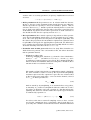
Figure 3.1: Three pairs of bases used in six-state protocol.
1 Qubit:
2 QBER:
28
quantum bit.
Quantum Bit Error Rate.
c Eurocontrol, June 2004.
3.3. DETAILED BB84 PROTOCOL
29
3.3 Detailed BB84 protocol
3.3.1
Description of protocol
BB84 is the most well-known quantum key distribution protocol using four
different states that make a pair of basis states.
In the description of the protocol, we use classical first name for the different elements of the protocol. The name Alice is used for the initiator of the
protocol. The name Bob is used for the responder. Typically, Alice is communicating with Bob while an eavesdropper (a spy) is trying to listen or perturb the
communication. This eavesdropper is usually named Eve.
Secrecy of this protocol was proved by different people such as Dominic
Mayers, Eli Biham, Michael Ben-Or and so on. BB84 is secure against evesdropping in the sense that Eve can’t gain any information about the transfer
between Alice and Bob unless she reveals her presence after data transmission.
We will come back to this item in the section 3.3.2 on page 31.
BB84 is a non-deterministic protocol. That means that it distributes random sequence of bits. BB84 cannot be used for the transmission of a determined message. Alice and Bob’s communication being successful merely bases
on the randomness at every stage of the protocol. Now, let’s go to see how BB84
works.
The BB84 quantum coding scheme was the first proposed quantum encoding of classical information in such a way that the receiver (legitimate or illegitimate) cannot recover with 100% reliability. It constitutes a base that most
others quantum protocols fund on.
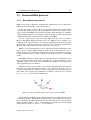
With this scheme, classical bits are encoded by quantum states. Each quantum state can represent both classical bit, 1 or 0, and inversely, each 0 or 1 correlates (corresponds) to a mixture of two equally likely non-orthogonal quantum states. One of many representations is in figure 3.2 where we represent
by |0i, |1i, |00 i, |10 i the four states illustrated.
Figure 3.2: Non-orthogonal four states used in protocol BB84.
Information transmitted in the quantum channel is usually under the form
of polarized photons. Encoding the classical bits is done using the direction of
the polarization. In BB84 coding scheme, the classical bit 0 is represented by a
photon polarized both 0◦ and 45◦ of horizontal axe, and the two corresponding
orthogonal directions, 90◦ and 135◦ , are used for bit 1.
c Eurocontrol, June 2004.
29
30
SECTION 3. QUANTUM KEY DISTRIBUTION
According to quantum mechanics, there is no way to differentiate surely
two non-orthogonal states. So a quantum measurement must be performed to
determine the received state and from that to get the classical output. And
this uncertainty principle provides cryptographic properties needed in quantum cryptography.
For BB84, there are two measurements used to distinguish the different
quantum states:
• ⊕, measurement allowing to identify clearly between two states |0i and
|1i. This measurement is also called measurement in the rectilinear basis.
• ⊗, measurement allowing to identify clearly between two states |00 i and
|10 i. This measurement is also called measurement in the diagonal basis.
In general, quantum key exchange using BB84 for secret key consists of six
following steps:
1. Quantum Transmission
This phase is the first step in a quantum key distribution. In this phase,
a random string of n classical bits will be created by Alice and sent to
Bob. Each bit of this string will be encoded by a non-deterministic basis.
A quantum encoded classical bit is called a qubit. At the other side of the
transmission, Bob receives the qubit and he picks up by chance a rectilinear (or diagonal) basis to measure it. When the transmission is over, Bob
will get a string of classical bits, called the raw key, different from Alice’s
one in many positions, about 50% even in the case of error-free quantum
communication or much more as apparatus error rate is included. The
next step of the protocol will help to replace the uncorrelated (uncorresponding) bits between Alice’s and Bob’s string which are possible errors
caused by either Eve or noisy quantum transmission.
2. Bases Announcement
As mentioned in the previous part, in this phase, all the positions where
the same bits are shared will be kept and the rest will be discarded.
Firstly, using classical channel, Bob sends all the bases he used to measure Alice’s qubit string to Alice. Alice then compares this sequence of
bases with hers and discloses every uncorrelated positions to Bob over
classical channel. After that, both Alice and Bob replace all the bits at
positions informed by Alice. And the distilled part of raw key, called plain
key, is totally the same between Alice and Bob regardless apparatus error
but still or even quite different from each other in fact.
3. Error Estimation
To reduce the difference between Alice’s and Bob’s plain key due to apparatus imperfection, it is necessary to correct errors. It is the phase in
which the plain key error is estimated. It will be performed as follows.
Alice will extract a small sequence of the plain key and send it to Bob.
Alice will inform Bob a subset of positions of size K and the bit values at
those positions in the raw key got in the last step. Both transmitter and
receiver have to compute the observed error-rate e and keep this transmission if error rate is less than a desired threshold. And finally, they
take away the K checked bits and observe the rest. In the case where the
estimated error rate is more than the threshold, the key will be aborted.
30
c Eurocontrol, June 2004.
3.3. DETAILED BB84 PROTOCOL
31
4. Reconciliation
After this phase, a reconciled key will be achieved after applying a reconciliation protocol to the plain key. Reconciliation is an interactive process
taking place over the public channel. The purpose of this phase is to correct the errors, equivalently to reduce the difference, between sender’s
and receiver’s plain keys. But it is important to take note that as few
bits as possible are sent over the public channel since Eve may exploit
this information. A protocol called Cascade is applied here. Cascade performs error-correction by sending very little information over the public
channel and was proposed by Gilles Brassard and Louis Salvail. Cascade
operates in a number of rounds. We will go in detail in the next part Implementation. The next phase is the confirmation of the equality of Alice
and Bob’s reconciled keys. And if Cascade ends successfully then the next
phase will confirm the result.
5. Confirmation
In order to make sure that no error will be found, Alice and Bob will exchange and compare the parity of random subsets of positions. In general,
if a z parity bits comparison is done and there is no differences, then the
current shared key is identical to the rate of 2−z . And if this phase is successful, we probably believe that the share key is now the same, maybe
with error but at an acceptable rate if z is large enough.
6. Privacy Amplification
Finally Alice and Bob may have an identical key, but what about Eve?
After all the previous phases, maybe she has gained some information,
so it does not secure the identical shared key. So what has to be done to
resolve this problem? And Privacy Amplification is exactly the answer.
The aim of this phase is to minimize as far as possible Eve’s information about the key and to generate a shorter but more confident key. At
that moment, Eve collects only a negligible amount of information about
this string and Alice and Bob can safely use it directly for unconditionally
secure encryption. For privacy amplification, a publicly known universal hash functions is always chosen, that will map n-bit strings to r-bit
strings. This choice can be determined over the public channel. And this
proposition was made by Charles Benett, Gilles Brassard, Claude Crepeau, and Ueli Maurer.
3.3.2
Security of BB84
As we know, normally, a protocol is said to be secure when it is proved to be secure against all attack strategies of eavesdropping. This is called unconditional
security, i.e. without assumptions. And up to now, this is still really difficult
duty even for an idealized system such as BB84 protocol with single-photon
source.
Proof of BB84’security
The security of BB84, however, has been theoretically proved by different scientists. In this section, some proofs will be given to readers but only as overview.
For more details, refer to listed documents.
c Eurocontrol, June 2004.
31
32
SECTION 3. QUANTUM KEY DISTRIBUTION
Mayers’ proof [16]
The first one should be mentioned here is the Dominic Mayers’proof in 1996,
more than a decade since the original proposal of BB84, which is general but
rather complex one. D. Mayers followed some other previous proofs by Eli Biham or collaborators and Michael Ben-Or. To prove the BB84’s security, positive operator valued measure (POVM) was applied. In his proof, he used basic
techniques, the proof of security of a practical quantum key distribution protocol against all attacks allowed by quantum mechanics.
Lo and Chau’s proof [34]
Quantum key distribution is widely thought to offer unconditional security in
communication between two users. Unfortunately, a widely accepted proof of
its security in the presence of source, device and channel noises has been missing. This long-standing problem is solved in this proof showing that, given
fault-tolerant quantum computers, quantum key distribution over an arbitrarily long distance of a realistic noisy channel can be made unconditionally secure. The proof is reduced from a noisy quantum scheme to a noiseless quantum scheme and then from a noiseless quantum scheme to a noiseless classical
scheme, which can then be tackled by classical probability theory.
Peter W.Shor and John Preskill’s one [41]
Shor and Preskill have brought us a simple proof of security of the BB84 protocol. They used Entanglement Distillation Protocols (EDP) to prove security
of BB84. Firstly, a key distribution protocol based on entanglement purification is constructed and can be proven secure using methods from Lo and
Chau’s proof of security for a similar protocol. And then the security of this
protocol is shown to imply the security of BB84. The EDP uses CalderbankShor-Steane (CSS) codes, and properties of these codes are used to remove the
use of quantum computation from the Lo and Chau protocol.
Daniel Gottesman and Hoi-Kwong Lo’s proof [14]
To prove the security of BB84, against the most general attack, like ShorPreskill, Gottesman and Lo use the entanglement purification except in two
ways. They prove clearly the advantage of classical post-processing with twoway classical communications over classical post-processing with only one-way
classical communication in QKD. This is done by the explicit construction of
a new protocol for (the error correction/detection and privacy amplification
of) BB84 that can tolerate a bit error rate of up to 18.9%, which is higher than
any BB84 scheme with only one-way classical communications can possibly
tolerate (normally 11%[23]). So their protocol leads to a higher key generation
rate and remains secure over longer distances than previous ones. And moreover, their investigation suggests that two-way entanglement purification is a
useful tool in the study of advantage distillation, error correction, and privacy
amplification protocols.
Despite all of above proofs, BB84 still remains unsecured due to lack of
authentication. Once Eve acts as inter-mediator which means that Eve acts
as Alice with Bob and inversely as Bob in communication with Alice and that
leads the loss of BB84’s security. It is the man-in-the-middle attack. A solution will be proposed in the sub-section 3.3.2 on page 37. Moreover, another
challenge for the assurance of security of BB84 is the source of photon. When
each pulse contains more than one photon, Eve can use indirect-copy to attack BB84. She could extract only one in the transmitted beam of photons.
Nevertheless, this issue has been being researched by physicists to create an
apparatus generating one photon each pulse.
32
c Eurocontrol, June 2004.
3.3. DETAILED BB84 PROTOCOL
33
Considerable parameters
In the implementation of BB84, many parameters have to be taken into account. In this part, some of the most major ones will be examined. And all
the information was referred and extracted from the article [10], the report
of the first implementation of BB84 and a software developed for driving the
quantum cryptography experiment [1].
These parameters will be divided by the concerning actors. Thus, they fall
into four portions: general quantum parameters, Alice’s ones, Bob’s ones and
Eve’s ones.
• Quantum’s parameters These ones are related to the quantum channel. In fact, a real quantum channel causes noises itself because of the
imperfection of channel’s material. So to have a successful simulation
of a quantum channel, the factor of quantum channel efficiency should be
added (called for short as Qef f ). And this one will be later on included into
the capacity of detecting photons at Eve’s and Bob’s detector. Besides, the
intensity of photons transmitted in quantum channel is considerable. Because in fact, it has not been possible yet to transmit a single photon each
time, so in the realized experiment, they had to replace single photon by
faint pulses which contain few photons. That is why the intensity of the
beam (λ) is included as a parameter of quantum channel.
• Alice’s parameters Almost considered factors will be found in Alice’s
configuration. The first one is mentioned here is the raw transmission
size (RawKeylen ), the length of Alice’s initial string of qubits to send.
After Base Announcement, the plain key (sized P lainKeylen ) is achieved.
A proportion of this key (EE sample ) will be randomly taken as a sample
for Error Estimation. And then error-rate (err rate ) will be estimated as
following:
EE sample
err rate =
P lainKey len
In the next phase, Reconciliation, Cascade, an interactive and paritybased error-correction scheme, are repeated several times. Before running this protocol, the initial block size (blk 0 ) for parity testing must be
chosen together with the number of rounds.
The initial block size blk 0 is chosen to be:
blk 0 =
1
errrate + 4 err1rate
The block size blki+1 is defined as blki+1 = 2*blki The last normal round
occurs when the block size exceeds 14 th of all bits. Two extra passes are
used with block size about n4 . Note that block size never exceed 41 th of all
bits.
In this phase named Error Correction in [10], there is another choice of
these parameters. As in that implementation, the block size is chosen
experimentally in turn to be 5, 7, 10, 14.
And the size for Confirmation sample is 15 as mentioned in [10]. Due to
the security analysis in [1], the value for the extra-shrinking parameter,
c Eurocontrol, June 2004.
33
34
SECTION 3. QUANTUM KEY DISTRIBUTION
another name as security parameter, in privacy amplification is selected
as below:
s = P Apara ∗ (P lainKeylen − EEsample )
• Bob’s parameters Bob’s parameters are in relation with his detector.
In fact, a detector, as the quantum channel itself, has its own efficiency
which represents its capacity to detect successfully a photon. This is
called for short as Def f . Another problem affecting Bob’s received bits
rate is dark count. When the detector takes a detection event (detector’s
click) without any photon, dark count is generated. So dark count rate is
also included in the detector capacity and cite as dcrate .
• Eve’s parameters Eve’s attack capacity is dependent on these parameters. For beam-splitting attack, there are two parameters to be configured. One is the proportion of total pulses to attempt to split (BS), and
the other is the proportion of beam (number of photons in a pulse) desired
to split (Mirror-Strength). In applying Intercept-Resend, the first factor
to be considered is proportion of beams to intercept (IR) and the second is
about the intensity of resent beam (Resendintensity ).
• Formulas used in this protocol(referred to [10]) These formulas are
divided into two portions. One concerns Eve’s info, the others about the
info in quantum channel.
– Estimation of Eve’s info
In Privacy Amplification, function h(x) from the class of hash functions 0, 1n → 0, 1n−l−s (of which n is P lainKeylen , l is EEsample , and s
is arbitrary security parameter ) is selected. It is estimated that Eve
knows at most l deterministic bits before this phase. And then, Eve’s
amount of info is recalculated as below:
m=
2−s
ln 2
(3.1)
The number of bits leaked to Eve is estimated by simply calculating
the sum of number of bits received by Eve by both beam-splitting
and intercept/resend. The equation 3.2 gives the rate of bits leaked
to Eve by intercept/resend with p - error rate in the channel, referred
as errrate in Alice’s parameters:
4
IRrate = √ p
2
(3.2)
And in attack by beam-splitting, it is assumed that every pulses,
at intensity of µ, will be beam-splitted with successful rate of 100%
for safety. So that Eve can learn a portion of µ bits through beamsplitting. The total rate of bits leaked to Eve by two types of attacks
is estimated by equation 3.3:
4
BSrate = µEvebitrate = ρ = µ + √ p
2
(3.3)
In order to take into account all sampling errors we have encountered in the estimations above, it should be added on the Eve’s expected key size a number of standard deviations. And this additional
34
c Eurocontrol, June 2004.
3.3. DETAILED BB84 PROTOCOL
35
part can be computed as in 3.4 where N is the length of confirmed
key.
q
√
N (µ(µ − 1) + (4 + 2 2)p)
(3.4)
Now we can get the estimated length of Eve’s key by simply multiplying the number of bits in the confirmed key by Eve’s bit rate with
additional part of standard deviation. And finally, Eve’s assumed
key size is the result of 3.5:
Evekeysize = N ρ + 5
q
√
N (µ(µ − 1) + (4 + 2 2)p)
(3.5)
– Quantum Channel Simulation
To successfully simulate the quantum key exchange, it is necessary
to pay an adequate attention to quantum channel.
The crucial aspect of a quantum channel is in which a photon is subject to Heisenberg’s Uncertainty Principle. As mentioned in 3.2.1 on
page 26, uncertainty principle simply states that it is incapable to
observe something without affecting it. And to simulate this, Quantum Channel object just does not allow Bob and Eve to access directly to buffer but rather make them use the methods which decide
if Eve’s and Bob’s measurements are correct or not, and update data
in buffer before returning a result.
Another aspect concerns the simulation of transmitted pulses of light
rather than single photons in the channel. In this simulation, this is
resolved by using Poisson distribution about intensity of photons µ
to decide whether at least one photon exists in that pulse or not. It
operates simply like this: after Alice sends a pulse to Bob in such a
way as to produce an average of µ photons, this pulse reaches to Eve’s
or Bob’s detector, quantum channel invokes the PhotonExist method
of Poisson class and the result returned is either true or false. And
below, one can find the formula 3.6 used to calculate the probability
of x occurrences in Poisson distribution about a mean of µ.
f (x) =
µx .e−µ
x!
(3.6)
The following equation 3.7 returns the probability of at least one
occurrence in the same distribution:
µ0 .e−µ
= 1 − e−µ
(3.7)
0!
This formula is used in the method P hotonExist being called each
time Eve or Bob detect a photon. In BeamSplitting, bigger portion
of a pulse will be splitted by Eve, with higher probability that Eve
detects a photon.
P (x ≥ 1) = 1 − p(0) = 1 −
Some types of Attacks of Eve against BB84
During the communication between Alice and Bob, Eve can be trying to listen both quantum and classical channel. She can, we assume, easily pick up
everything that travels over the insecure channel (classical one). And for the
quantum channel, Eve applies some following typical attack strategies to dig
as maximum information as possible.
c Eurocontrol, June 2004.
35
36
SECTION 3. QUANTUM KEY DISTRIBUTION
Intercept-Resend
Intercept-resend is the most used strategy which Eve applies to attack
BB84. This simple and even practical attack consists for Eve to measure each
qubit in one of the two bases, precisely as Bob does. Then she prepares a qubit
in a state corresponding to her measurement result. She sends this qubit to
Bob. Eve has a probability of 50% to correctly measure the qubit sent by Alice. In this case, she can resend successfully the original qubit to Bob without
Alice and Bob’s awareness. For the other 50%, Eve causes the uncorrelation
between Alice and Bob’s results. That will help Alice and Bob to discover Eve’s
presence. In brief, the intercept-resend brings to Eve 50% information while
it increases the error rate in Alice and Bob’s sifted key, up to about 25% even
after discarding bits measured in incompatible states. Eve normally does not
apply this attack to 100% communication, just only to a fraction, say 20%, then
the error rate will be only ≈ 5%, while Eve’s achieved info up to ≈ 10%.
Beam-splitting [4]
The second frequently used attack is beam-splitting. Eve takes advantage
of the imperfection of the system to extract the information. This is due to
pulses generating not only one photon but two or more than one. And thanks
to these photons in excess, Eve uses the form of half-silver mirror to split the
beam of photons. Then she keeps one or two photons to measure and lets the
others travel onto Bob. In this case, it is difficult to detect Eve’s presence.
Because splitting some photons from a beam of multi-photon will not affect the
polarization of this beam. Nevertheless, Alice and Bob can pre-compromise the
time delay of photon to discover Eve’s appearance.
Man-in-the-middle
An evident shortcoming of BB84 is lack of authentication. Additionally,
with high-level technology, Eve may think of an attack called man-in-themiddle or middleman attack, in which Eve becomes an fake. She will intercept
the secure channel (quantum one) and acts as Bob with Alice and inversely.
By doing so, she can achieve all exchanged information between Alice and Bob
without they can notice anything. Thus, in order to break down this kind of
attack, authentication is the most great concern for BB84 protocol.
Protections against attacks
We will give the most simple way to protect BB84 from the first two strategies
Intercept-Resend, Beam-splitting and for the third one Man-in-the-middle, a
new proposal for BB84’s authentication will be produced.
The initial idea proposed by Bennett and Brassard is that if any errors
were found in the raw quantum key, the key would be negotiated and also
could be left off. However, this work has led to the procedure called Privacy
Amplification that we consider as one of the main phases in BB84. In this
phase, it is assumed that Alice and Bob share a secret key of length k and a
set of these bits, sized s, were leaked to Eve (s < k). Alice and Bob estimate
what amount of the key Eve possessing from intercept/resend or beam-splitting
attack. Then they apply privacy amplification to make Eve’s data useless. This
phase is based on a hashing function in form: 0, 1k → 0, 1k−s−p , where p > 0
is some security parameter, to shorten the shared key in order to comb out
36
c Eurocontrol, June 2004.
3.3. DETAILED BB84 PROTOCOL
37
or minimize Eve’s information. Finally, Eve can know nothing or a negligible
amount of the final key between Alice and Bob.
Proposal for BB84’s authentication
The original BB84 paper [9] mentioned the authentication problem and introduced a solution to it, by Wegman and Carter, based on some classes of hash
functions. This solution requires a pre-shared secret small key, which is used
to choose a hash function from the class to produce an authentication hash
of the public correspondence between them. By the nature of universal hashing, without knowing the key, the probability to deceive the correspondence is
extremely low, even with unlimited computational power.
And now we will introduce here a new authentication scheme for QKD, proposed by Dang Minh Dung, which will be added into the next section 3.3.3. For
other aspects such as proof of security, you may refer to this article [36]. This
authentication is based on BB84 protocol. According the author, the scheme
could be applied to some other protocols equivalent to BB84: Bennett’s 2 states,
Bell’s inequality based protocol of Ekert and so on.
Authentication scheme for QKD.
1. Alice generates a random bit string and, for presenting each bit, uses a
quantum eigen state in a random basis ⊕, ⊗. Alice sends these quantum states to Bob.
2. Bob uses a random basis to measure each received quantum states.
3. Bob uses a bit string bb to present his bases: 0 for ⊕; 1 for ⊗, encrypts
this string with the prepositioned key kb , and sends it to Alice (bb ⊕kb )
using the classical channel.
4. Alice uses a bit string ba to present her bases, and sends her used bases
encrypted with the key ka to Bob, i.e.(ba ⊕ka ) on the classical channel.
5. Alice and Bob decrypt the bases used by each other and could then find
out (ba ⊕bb ). They discard the results at all positions i with ba [i] ⊕ bb [i]
= 1 and interpret the rest of results to two string xa and xb .
6. Alice and Bob can compare some distilled bits from xa and xb to detect
the presence of Eve or to validate the authentication.
3.3.3
Specification for a simple implementation of BB84
In this section, a detail specification will be introduced for a simulation of QKD
using BB84 protocol.
Objectives
This simulation is firstly aiming at illustrating the oldest and the most typical protocol in QKD. Secondly, it provides a rather entirely detailed specification to be easily implemented by anyone who is interested in QKD and has
intention to possess his own simulation of a quantum key distribution system.
Thirdly and also lastly, this implementation would experiment the proposed
c Eurocontrol, June 2004.
37
38
SECTION 3. QUANTUM KEY DISTRIBUTION
authentication scheme in 3.3.2 on the preceding page. The simulation will
simulate the key exchange process between two major actors Alice, Bob and
an unexpected one, the eavesdropper called Eve. The exchange is realized over
two channels: a quantum and a classical channel, which are considered as two
others actors of system.
System requirements
For the simplicity of experimentation, the simulation will run on only one
machine. The software is developed under Solaris version 8. The program will
be implemented in Java, a familiar programming language with great support
of graphical interfaces implementation. As Java is used, the software will be
executable on almost all systems and computers.
Functions descriptions
The primary target of the simulation, as mentioned above in part Objectives, is to illustrate the operation of quantum cryptography in reality. In addition, it will simulate the actions of Alice, Bob, Eve and the channel between
them.
Alice
Alice is the sender of the encrypted message. She must communicate with Bob
to produce a random key. This will be done by following sequentially all steps in
the part 3.3.1 on page 29. In other words, Alice will interact with Bob through
the quantum channel in order to exchange the key. She has to prepare this key
under the form of a string of random qubits. She must inform Bob about the
start and end of both the message and each pulse. She is also capable of listening the channel to know when Bob finishes his detection of a pulse. Once all of
the qubits have been sent and received, Alice will communicate to Bob in which
bases she used to measure pulses, error correction and privacy amplification.
Her communication with Bob is on both quantum and public channel. So she
will interact directly with the channel object simulating her transmission of
pulses in a random polarization. The final task of Alice is to display all the
results of her consecutive actions for the aim of the demonstration. And she
must also provide to the users an interface to modify parameters affecting the
protocol such as the number of photons in a pulse or the size desired for error
estimation, etc.
Bob
Bob is Alice’s partner in this protocol. He is the destination of her message.
Some of his functions are the same with hers like listening to channel, reading/writing the information in/to the channel. He also interacts with Eve to
make as real as possible a quantum key exchange. To reply to Alice’s pulse, he
must acknowledge the receipt. The phase Bases Announcement differentiates
his operation from hers. This is the broadcast of all randomly chosen bases
used by his photon-detector to measure Alice’s pulses. Another difference between Alice and Bob is the decision of polarization of photon. On Alice’side,
this is decided by her apparatus but on Bob’s side, it is done by him. But the
common point here is that both choices are random. Finally, Bob must output
his result in the same way as Alice’s except fewer parameters to configure such
as efficiency of his detector.
Eve
Eve stands in the middle of Alice and Bob. She acts both their roles at the same
time. Thus, she shares with them many common functions in order to exploit
38
c Eurocontrol, June 2004.
3.3. DETAILED BB84 PROTOCOL
39
BB84. Her major motivation is to collect as much as possible the information
about the shared key between Alice and Bob without being discovered. Her advantage is to be able to both receive and send pulses over the quantum channel
in use (intercept/resend strategy) and to realize beam-splitting attacks. But
this is limited by the configuration of channel. Lastly, her same responsibility
as Alice and Bob is to lay out her actions and results as well. She must also
allow users to change her configuration like percentage of intercepted message.
Channel
The objective of the simulation is to make the object Channel mostly like the
quantum channel in reality. It means that this one must have all the properties, here the law of physics mentioned in 3.2.1 on page 26, that a real one gets.
When the channel is active, it must carry the information of a pulse (number of photons in this pulse, polarization of photon in secret) from Alice/Eve
to Eve/Bob, and must produce the result to their detectors measurement. The
channel sometimes causes errors to the communication such as loss of pulses
on transmission. And like all three actors above, the channel shows out its
operations and accepts users’modification through the GUI.
Detailed Implementation
Now, we are going into the main part of this section. This is the implementation of a BB84 QKD protocol. The protocol is applied by three main characters:
Alice (sender), Bob (receiver) and Eve (eavesdropper). All their communications are carried out in two separate channels: quantum (obeying quantum
physics laws) and public one (using the normal laws of public communication).
In using Java to develop the program, three actors will be represented by three
separate threads and interact to each other by accessing into two channels implemented by two public objects. These two objects are created and observed by
the Main thread. So in total, there are four threads which run simultaneously
on a same computer, same Java virtual machine.
In this communication, Alice keeps the active role and Bob the passive one
except his choice of the measurements polarizations and their announcement
to Alice. For her part, Eve always tries her best to extract useful informations
about the key from Alice and Bob’s info exchange, by applying different attack
methods. And for simulation of synchronicity in three person’s communication,
all written data into channel will be hold in a buffer. The quantum buffer
can be accessed and written into by anyone. But for the public one, it is only
available for everyone to read from it. But only Alice and Bob can write into it,
not Eve. The moment one can access to channel for information will be decided
by two objects channel. If it is the unavailable moment, the actor will receive a
null value and will fall again into the wait state. In this simulation, the digit 1
will represent diagonal polarization and the digit 0 rectilinear one.
Outline class structure
As mentioned above, all transactions between three main actors: Alice, Bob
and Eve are processed on both channels, firstly on quantum one, then on public
one. So we will divide the following analysis of implementation into two major
parts (quantum channel and public one) and a supplement one (GUI).
Quantum channel
The quantum channel is simulated as an object in the main() thread. It
is intrinsically a controller of the string of pulses transmitted from Alice, via
c Eurocontrol, June 2004.
39
40
SECTION 3. QUANTUM KEY DISTRIBUTION
Eve, to Bob. Here these pulses are implemented as qubit objects. A qubit object
contains the value of correlated binary bit (0 or 1), its polarization valued 0 or
1 too, a tag field to check the interception of Eve and another for the number of
photons in that pulse.
This simulated quantum channel operates as a real one in physical aspect.
It provides different methods for Alice, Eve and Bob that they can interact
together. They can send or read information from the channel or launch an
attack upon it (for Eve). Below we have specific rules to follow:
• Alice. She can transmit as many qubits as she likes in her time slot
without worrying about Eve or Bob’s receipt yet.
• Eve. She cannot directly extract information from a photon, such as its
polarization. She may change the polarization of a photon due to her
wrong measurement. After Eve intercepts a pulse, the tag field will be
changed to permit Bob’s access to it.
• Bob. He cannot access directly to the photon to get the information of a
qubit, neither read the qubit before Eve before switch of tag field.
Below is the description of qubit object:
int
int
int
float
Qubit
value
polarization
tag
photons
Public channel
All phases of the qubit string treatment from which to distill the final key
take place on public channel. Each phase is negotiated between Alice and Bob
with transmitted necessary parameters. And these exchanges are repeated
and have the same structure of the name phase and its parameters. So all
these phases’ information are fixed in the following format:
NamePhase:parameters - the parameters separated by ’:’
Besides these above commands, there are two others commands New and
End used by Alice to signal Bob the start and the end of a session of QKD. The
simulation will be triggered by Alice’s New command sent through public channel accompanied with the length of qubit string to be sent. Then Alice begins
to send sequentially her message, one bit by one bit. This is done by using the
method Write() of quantum channel object in producing her intended polarization, the value of this qubit, number of photons in the pulse and the order
of the qubit. And this info will be written into Quantum buffer and signaled to
Eve by Quantum Channel.
Alice’s method Write() on the quantum channel
Write(
40
int Polarization,
int value,
float Intensity,
int BufferLocation)
c Eurocontrol, June 2004.
3.3. DETAILED BB84 PROTOCOL
41
Eve receives the signal, from Quantum Channel, of the bits written in
Quantum buffer and must at least acknowledge them before Bob is allowed to
view them. This is to resolve the problem of synchronism in reality. Once Alice
has transmitted all of the bits in her message, she waits for Bob’s response.
When receiving a qubit, Eve chooses which attacks to be taken to read its
info or let it proceed to Bob. She has different choices: beam-splitting, intercept/resend, both attacks or nothing. Eve can apply some attacks separately
on the same location in quantum channel buffer. If she attempts to split the
photon, she must specify both its position, and the capacity of her splitting
mirror. This strength of 0 means that Eve ignores this photon and pass it to
Bob while the value of 1 shows that Eve detects all the photon in the pulse and
consequently, this pulse is entirely changed. In the case of a success of Eve
beam-splitting, Eve knows the Alice’s polarization which is saved in the buffer.
Eve’s method BeamSplitting() on the quantum channel
BeamSplitting(float MirrorStrength, int BufferLocation)
She can also use intercept/resend attack independently. She can do this
with command IR in provide the position of pulse, the polarization to measure
photon and also value for resend strength. And the rest of the work is for the
quantum channel object. It is responsible for checking the polarization chosen
by Eve, to update the buffer location and to return result of the measure to
Eve.
Eve’s method IR() on the quantum channel:
IR(
int Polarization,
float ResendIntensity,
int BufferLocation)
Once Eve finishes her job, she must acknowledge the value and shift the
flag of Bob’s permission. This is accomplished by below method.
Eve’s method tag() on the quantum channel:
tag(int BufferLocation)
After shifted bit of Bob’s permission, he can read info of this photon with
the same method as Eve’s IR except without parameter ResendIntensity.
This method will return to Bob the value of this photon or an empty message.
Bob’s read() includes the effects of noise in channel, Bob’s detector efficiency
and dark counts as well. All these are only applied to Bob whose technology is
realistic while Eve is assumed to have a perfect technology to detect pulses.
When all bits received, Bob steps in phase Bases Announcement, sends ReceivingBase command to Alice with his sequence of pairs containing position of
qubit and its guessed polarization. Bob can send to Alice a message like this:
ChosenBases:pos1:polar1:pos2:polar2...
Then, the diagonal and rectilinear polarizations are represented by digits 1s
or 0s. When this message reaches Alice, she prepares a BaseConfirm message
to reply to Bob in the same form of his ChosenBases except her parameters
c Eurocontrol, June 2004.
41
42
SECTION 3. QUANTUM KEY DISTRIBUTION
being subset of his. Her pair contains positions where Bob measured correctly
and its original polarization.
BaseConfirm:posi:ori.polari:posj:polarj...
Eve may extract useful info for her from both above messages. And she
will insert a blank in her key string where she did not detect successfully or
guessed correctly a photon.
In case of applying the Authentication scheme, these two messages are encrypted with two reconciled key between Alice and Bob. These messages become incomprehensible for Eve. As an expected result, the exchanged information is confidential and safe from Eve. Hence, Eve acquires no useful information from the phase BaseAnnouncement with new Authentication scheme.
Error Correcting
Error Estimation: As mentioned in part 3.3.1 on page 29, this phase is to
improve the result of the next one, Reconciliation. Alice sends to Bob command
ErrorEstimation with the size K of subset extracted from plain key and a sequence of pairs (position, value). And Bob returns his bits received at those
positions with same command.
ErrorEstimation:K:pos1:value1:...:posk:valuek
ErrorEstimation:value1:...:valuek
Then both of them compute the observed error-rate by ircorrelatedbits
. They
K
reject quantum transmission in case of error-rate less than the initially set one,
otherwise K bits being removed from the plain key and step to the next.
Reconciliation: This phase is for error correction. Up to now, Alice and
Bob share a sequence of bits and Eve may know a part of it (without use of
authentication scheme). In this common string, there may be errors caused by
attacks of Eve, by noise of the quantum channel or dark counts, inefficiency
of Bob’s detector and etc... Reconciliation helps Bob and Alice to check and
correct these errors. Alice first calculates the size of block to be used, based on
the error-rate (like in 3.3.2). Then Alice divides her string into blocks of length
k. And she sends all positions in each block, one block at a time, to Bob with
command ErrorCheck.
ErrorCheck:pos1:...:posk
And it is Bob who calculates the parity of each block and replies to Alice
this parity with command ParityConfirm.
ParityConfirm:parityBlocki
Then Alice and Bob both delete the last bit of block to avoid info leakage to
Eve.
Alice compares her parity with the one sent from Bob. If they match then
this block is considered correct. Otherwise, Alice uses bisective searches to find
and remove errors. They repeat this work through all blocks sized k and also
with 2n k until block size over-passes 14 of plainkey’s length.
Confirmation: To eliminate maximum errors from shared key, Alice continues her work with subset of randomly picked positions rather than a continu-
42
c Eurocontrol, June 2004.
3.3. DETAILED BB84 PROTOCOL
43
ous block.
Privacy Amplification: Now, Alice and Bob may be sure that their shared
key has no errors or a negligible quantity but it is partially secured only. So
they have to carry out the Privacy Amplification. This phase is performed by a
simple round of random subset hashing. To this extent, Alice declares sets of
bits with PrivacyAmplification command. Then Alice and Bob both calculate
the parity bit of the random subset. But they do not reveal their result. And
this result makes out the final key !
Finally, Alice sends End command to Bob through public channel to inform
him about the termination of the QKD.
The GUI
For graphical part, the package Swing of javax will be exploited. Each object
in this simulation has its own graphical interface. These GUI are extended
from JFrame. For three actors, these interfaces are implemented in separate
frames within three corresponding classes: AliceInt.class, EveInt.class and
BobInt.class. Each interface contains a tab for setting, another for result or
both. In the tab for setting, text fields (correspond with their parameters) are
included to allow users to enter desired values to experiment. The one of Alice
has a little more difference in having additional button Start used to initiate
the protocol.
Two other ones are for quantum channel and public one. Both of these are
included in QuantumChannel class and PublicChannel class.
And below is the description of principal parameters to be configured, before
the start of simulation, in each interface of actors and also the two channels.
(further details, referred to 3.3.2)
• Alice’s setting
– Transmission Size is an integer larger than 0 and less than 1000000
(because the buffer location is limited by 1000000). This is the size
of qubit string transmitted on the quantum channel.
– Beam Intensity is a floating point number in the interval [0, 1]. This
number decides Eve or Bob’s successful rate when detecting a photon. And it is also the proportion of bits assumed to be successfully
detected by Eve in use of beam-splitting.
– Confirmation Sample Size is the number of bits chosen randomly in
phase Confirmation. It is an integer greater than 0.
– Security Factor is an integer, added to Eve’s assumed key size before
privacy amplification. It allows to increase the security of the system
by an additional factor.
• Eve’s setting
– Beam Split is a floating point number between 0 and 1. This is the
percentage which Eve takes for beam splitting.
– Mirror Strength is floating point number 0 to 1 inclusive. This is
used to decide how much of a pulse is used for beam-splitting.
– Intercept/Resend This is similar to Beam Split but used for Intercept.
c Eurocontrol, June 2004.
43
44
SECTION 3. QUANTUM KEY DISTRIBUTION
– Resend Strength After intercept a pulse from Alice, Eve does not
know the intensity. So she must create her own pulse with a new
intensity.
• Bob’s setting In Bob’s interface, there is only one result box which display
the key bits and its length through each phase.
• Quantum channel’s setting
– Mirror Efficiency its value is in the interval [0,1]. When Eve takes
action of splitting a pulse, it absorbs partially this photon. So lower
mirror efficiency means much more photons absorbed from the pulse.
– Channel Efficiency is to measure channel’s interference to the pulse
upon it. Higher this rate is, less interference on pulses.
– Detector Efficiency measures the capability of Bob’s detector. Its
value is in [0, 1].
– Dark Counts represents the sudden occurrence of a dark count at
Bob’s detector.
• Public channel’s setting This interface has only one tab: the result to
display the current transmission upon it and each passed phase’s result.
Relation of all objects implemented in this simulation is described in below
graph 3.3.3
Figure 3.3: Diagram of relation among principal objects in simulation of BB84
protocol
There are in total five principal classes: two channel objects and three
actors in this communication. All three actor objects have the same structure. They all implement the Runnable interface which allows to be launched
as three separate threads by Qcrypt class. Each of the actors has two other
classes: an Interface class and a Protocol class.
The Interface classes are described as in the part just above, The GUI.
And Protocol ones are instantiated by the major classes Alice class, Eve
class and Bob class when button start in Alice’s interface is clicked. They begin
by setting up all parameters with the values got from the Frame object and
activate their RunProtocol() method. This method helps actors to go through
all phases of BB84 protocol and displays the correlated result with each phase
to the correspondent interface.
44
c Eurocontrol, June 2004.
45
Section 4
Free Space and Satellites
The development of physical techniques plays an important role in the growth
of practical applications of Quantum Cryptography (QC). As you know, one QC
system contains at least one transmitter (photon source), one receiver (detector) and one quantum channel. Fiber-based links is one of two solutions for
quantum channel, the other is free-space links. Most of research so far use optical fibers to guide the photons from Alice to Bob. Although today’s fiber-based
QC systems are very advanced, such systems cannot work over the distance
of 150km [30] due to the combination of fiber losses and detector noise, moreover, fiber-based links may not always be available due to some other reasons.
Hence, there are more and more efforts in developing free-space links, where
the photons are sent between remote telescopes.
The very first demonstration of free-space QC system was a table-top experiment performed at the IBM Thomas J.Watson Research Center in 1989 over a
distance of 32cm [5]. With the progress of technology, the most recent result of
a such system has achieved a distance of 23.4km [31]. And the theoretical calculations allow us to hope a free-space communication up to 1600 km, suitable
for satellite-based key exchange. In this section, we will see the state of the
art of free-space QC systems, also, the overview of satellite communications
and networks for the estimation of possibility to apply QC in satellites for the
global key distribution, which is the ultimate goal of such systems.
4.1 Free Space
Free-space links have been studied and already successfully implemented for
several years for their application in quantum cryptography based on faint
classical laser pulses [7, 8, 20, 26, 31]. Free-space link is one of two solutions
for quantum channel. Transmission over free-space links has some advantages compared to the use of fiber-based links. First of all, the atmosphere has
a high transmission window at a wavelength of around 800 nm, where photons
can easily be detected using commercial, high-efficiency photon detector. Furthermore, the atmosphere is only weakly dispersive and essentially isotropic
at these wavelengths. It will thus not alter the polarization state of a photon.
However, there are some drawbacks concerning free-space links as well. In
c Eurocontrol, June 2004.
46
SECTION 4. FREE SPACE AND SATELLITES
contrast to the signal transmitted in a optical fiber (guiding medium) where the
energy is protected and remains localized in a small space, the energy transmitted via a free-space link spreads out, leading to higher and varying transmission losses. In addition, the background light such as ambient daylight or
even moonlight at night can couple into the receiver, leading to dark-count errors. Finally, it is clear that the performance of free-space QC systems depends
dramatically on atmospheric conditions.
4.1.1
State of the art
The idea of QC was first proposed in the 1970s by Stephen Wiesner and by
H.Bennett of IBM and G.Brassard of The University of Montréal. However,
this idea is so simple that any first-year student since the infancy of quantum
mechanics could actually have discovered it. Nevertheless, it is only now that
the QC theory is mature enough and information security important enough
that physicists are ready to consider quantum mechanics, not only as a strange
theory good for paradoxes, but also as a tool for new engineering.
The first protocol for QC was proposed in 1984 by H.Bennett and
G.Brassard, hence the name BB84. After this, the other more effective was
born such as two-state protocol, six-state protocol, Einstein-Podolsky-Rosen
protocol and so on. But most of QC experiments so far are limited on BB84
by its simplicity and the limitation of physical devices.
One of the most important of QC systems is the choice of photon sources and
photon counters. Optical quantum cryptography is based on the use of singlephoton Fock states. Unfortunately, these states are difficult to realize experimentally. Nowadays, practical implementations rely on faint laser pulses or
entangled photon pairs, in which both the photon and the photon-pair number
distribution obey Poisson statistics. For large losses in the quantum channel,
even small fractions of these multi-photons can have important consequences
on the security of the key, leading to interest in “photon guns”. As for the photon counter, in principle, this can be achieved using a variety of techniques,
for instance, photon-multipliers, avalanche photo-diodes, multi-channel plates,
and super-conducting Josephson junctions [19].
Today, the best choice of wavelength for free-space QC systems is of 800 nm
for which efficient avalanche photo-diodes (APD) counters are commercially
available. In addition, the receiver uses a combination of spectral filtering, spatial filtering and timing discrimination using coincidence window of typically
a few nanoseconds to decrease the dark-count errors. Free-space transmission
is restricted to line-of-sight links. Thus, the beam-pointing is still difficult for
moving targets.
Despite the progress of the QC theory, the free-space QC systems are not
popular. In the early 1990s, the first experiment performed by Bennett and
co-workers at the IBM laboratory over a distance of 30cm [5]. After this, there
are some others significant free-space experiments:
• 1996 J. Franson, Baltimore : 150 m, daylight
• 1998 R. Hughes, Los Alamos : ∼1 km, night [7]
• 2000 R. Hughes, Los Alamos : 1.6 km, daylight [8]
46
c Eurocontrol, June 2004.
4.1. FREE SPACE
47
• 2001 J. Rarity, QinetiQ : 1.9 km, night [20]
• 2002 R. Hughes, Los Alamos : over 10 km [26]
• 2003 P. Morris : 23.4 km, night [31]
The results achieved of P. Morris form a significant step towards a key exchange system. Such a system using slightly bigger telescopes, optimized filters and anti-reflection coasting, combined with sophisticated automatic pointing and tracking hardware, could be stable up to 34dB of loss - the limitation
of loss acceptable for QC system - and capable of maximum ranges exceeding
1600km. We could engineer the possibility of the exchanged keys with low
earth orbit satellites such as a secure ’relay’ station this has the potential for
secure key exchange between any two arbitrary locations on the globe.
For a better understanding, we will study the most recent success of freespace QC system of P. Morris.
4.1.2
The most recent success
From September 2001 to January 2002, P. Morris have tested a semi-portable
free-space QC system between two mountain tops, Karwendelspitze (2244m)
and Zugspitze (2960m), in Southern Germany, for the exchange of keys [31].
The distance between the two locations is 23.4km. The elevated beam path
dramatically reduced the air turbulence effects experienced in previous low
altitude tests, but also caused unprecedented requirements on stability against
temperature changes, reliability under extreme weather conditions and ease of
alignment.
The transmitter, named Alice, encodes a random binary number in weak
pulses of light using one linear polarization to encode ’1’s and orthogonally
polarized pulses to encode zeros. To prevent eavesdropping the number of photons per pulse is limited to much less than unity (the actual attenuation is
linked to the overall transmission and is usually chosen as 0.1 photons per
pulse). Furthermore, the encoding basis is randomly changed by introducing
a 45o polarization rotation on half the sent pulses. In the receiver, named
Bob, single photon counting detectors detect the pulses, converting the light
to macroscopic electronic pulses. The two polarizations are separated in a polarizing beam-splitter and a zero or one is recorded depending on the detected
polarization. A random switch selects whether to measure in a 0o or 45o polarization basis. Due to the initial attenuation and the attenuation along the
transmission line only very few of the sent pulses result in detected events
at the receiver. A record of when the pulses are detected is kept and at the
end of the transmission the receiver uses a classical channel (for instance the
telephone line) to tell the sender which pulses arrived and what basis they
were measured in. All lost pulses and all detected pulses measured in a different basis to the encoding basis are erased from the sender’s record. Thus
identical random keys are retained by sender and receiver. Any remaining differences (errors) signal the interception of an eavesdropper! If an eavesdropper
measures the polarization of one pulse, that pulse, being a single photon, is destroyed and does not reach Bob and thus is not incorporated in the key. The
eavesdropper could choose a basis, measure the pulses then re-inject copies.
However, this strategy has to fail because half the time the eavesdropper will
c Eurocontrol, June 2004.
47
48
SECTION 4. FREE SPACE AND SATELLITES
have chosen the wrong measurement basis and the re-injected pulses will induce an error rate of 25%. Of course a certain level of error could be caused
by imperfections in the equipment used, but in order to guarantee absolute security any error should be attributed to (partial) interception. Below a certain
threshold the error can be corrected and potential knowledge of the key by any
eavesdropper can be erased by privacy amplification protocols.
It is similar to all of QC systems, the QC system of P.Morris consists of 3
main components:
• transmitter
• detector
• quantum channel (free-space)
Figure 4.1: The Alice compact 20x50 cm breadboard transmitter
The transmitter (figure 4.1) is designed round a 80 mm diameter transmit
telescope. The digital I/O card delivers a random 2-bit signal at 10 MHz synchronized to the reference clock. This signal is used in the pulse driver for
randomly firing one of four 500 ps (picosecond) duration lasers (850 nm wavelength) in the miniature source module. This miniature source uses polarization approximating coded faint pulses in the place of single photons. The four
lasers are combined in a spatial filter using a conical mirror and relay lens.
Each laser is rotated to produce one of the four polarizations: 0o , 90o , 45o or
135o and illuminates a spatial filter consisting of two pinholes with a diameter
of 100 µm spaced at a distance of 9 mm.
Since the overlap of the emission modes of the four laser diodes with the
filter mode is rather poor, the initially very bright laser pulses are attenuated
to about the required "one photon per pulse" level. This system uses pulses
with 0.05-0.5 photons per pulse. The actual attenuation can be fine tuned by
manipulating the diode current and precisely calibrated by optionally shining
the light transmitting the spatial filter onto a single photon detector. The filter
erases all spatial information about which laser diode fired. Spectral information is also not attainable by an eavesdropper, as the spectra of the four laser
48
c Eurocontrol, June 2004.
4.1. FREE SPACE
49
diodes well overlap with a width of about 3 nm in pulsed mode. A bright continuous wave (CW) laser beam can be injected with an auxiliary mirror AM
for alignment purposes into the same spatial filter as the faint pulses, while a
calibration of the number of photons per bit can be made by inserting mirror
FM and measuring a reference photo-count.
The output of the spatial filter is then transformed to a collimated beam
with 2 mm full width at half maximum (FWHM) and further expanded in a
x20 telescope (L1 and L2) to produce a near diffraction-limited 40mm FWHM
beam. A precision translator with lens L1 allows the fine focus adjustment.
Mirrors AM, FM, M1 and M2 are gold coated for high reflectivity in the infrared. Together with the alignment laser and the single photon detector, the
whole system is mounted on a 25x50 cm breadboard, attached to a micro-radian
sensitive pointing stage on a sturdy tripod. The computer uses a pre-stored
random number to choose the polarization for the present set of experiments.
Alternatively, nearly real time generation was possible, where a sequence of
bits produced by a quantum random number generator running at 20 MHz
was produced in the second right before the transmission.
Figure 4.2: The receiver (Bob): Schmidt-Cassegrainian telescope and attached
miniature detector module
The receiver system (figure 4.2) consists of a 25 cm diameter commercial
telescope (Meade LX200) with computer controlled pointing capability realized
by using a flip mirror and a CCD camera to view the incoming light. Unfortunately, the resolution of the mechanics of this system was the limiting factor
for the alignment of the receiver, and was also difficult to handle at the harsh
outdoor conditions. A compact four-detector photon counting module 12 was
coupled to the back of the telescope after an RG780 long pass filter to block out
short wavelength background. The module consists of a non-polarizing beamsplitter (BS) passing two beams to polarizing beam-splitters (PBS) that are followed by four photon counting avalanche diodes. One polarizing beam-splitter
(in the D1/D3 arm) is preceded by a 45o polarization rotator (half wave plate).
Photons detected in this channel are thus measured in the 45o basis, while the
other polarizer allows measurement in the 0o -90o basis. Since the splitting of
incoming photons to the two analyzers by the beam-splitter is truly random,
no random number sequence nor any space consuming optics are required on
the receiver side, however. The module incorporated high voltage supplies and
discriminatory circuitry to produce standard NIM pulses at the output. The
c Eurocontrol, June 2004.
49
50
SECTION 4. FREE SPACE AND SATELLITES
detector outputs D3, D4 are combined with the D1, D2 outputs with a delay
of 5 ns and input into the two channel time digitization card (Guide Technology GT654) in the PC. Thus the four detectors outputs are combined into the
two channels with a delay of 5 ns. The delay is then used to discriminate between the two measurement bases. The overall optical detection efficiency of
the receiver is about 16%, timing jitter was smaller 1 ns.
Beside of quantum devices, the timing and the synchronization are very important. The two separate computers were linked via modems operating over
a standard mobile telephone link (9.6 Kbaud bit rate). Local oven-stabilized 10
MHz clocks were synchronized to better than l ns using a software phase locked
loop driven by the received photo-detections. The photo-detections thus can be
gated in two 1.4 ns wide time windows separated by 5 ns. Pulses outside these
timing gates are ignored. The error rate due to dark and background counts
is thus suppressed by a factor of ∼1/35. The random polarization pulses are
sent in 700 ms blocks preceded by a series of predetermined pseudo-random
data sets lasting 110 ms to uniquely determine the start time of each block.
Following the transmission of the block a settling time of ∼300 ms allows the
computers to check for a successful transmission. Gross block length is thus
just over 1.1 s. Sifting and error correction of the 700 ms data blocks were
then performed over the telephone link using software developed in the 1.9 km
experiment [20].
Figure 4.3 shows some results achieved :
Night
16/01/02
16/01/02
16/01/02
16/01/02
Number of
photons per
bit
(+/-10%)
0.37
0.27
0.18
0.096
unsifted
data
Background
Quantum
bit
Final
net
bits/s
4484
2505
2651
2627
bits/s
6268
5504
5578
4516
%
4.11 (1.96)
5.24 (3.08)
4.54 (2.94)
4.77(2.41)
bits/s
626
396
363
367
Figure 4.3: Summary of selected experiments
4.2 Satellites Communication
4.2.1
Overview of satellites communication
Not so long ago, satellites were exotic, top-secret devices. They were used primarily in a military capacity, for activities such as navigation and intelligence.
Now they are an essential part of our daily lives. Communication satellites allow radio, television, and telephone transmissions to be sent live anywhere in
the world. Before satellites, transmissions were difficult or impossible at long
distances. The signals, which travel in straight lines, could not bend around
the round Earth to reach a destination far away. Because satellites are in orbit, the signals can be sent instantaneously into space and then redirected to
another satellite or directly to their destination.
50
c Eurocontrol, June 2004.
4.2. SATELLITES COMMUNICATION
51
A communication satellite functions has an overhead wireless repeater station that provides a communication link between two geographically remote
sites. Due to its high altitude, satellite transmissions can cover a wide area
over the surface of the earth. Each satellite normally is equipped with various
"transponders" consisting of a transceiver and an antenna tuned to a certain
part of the allocated spectrum. The incoming signal is amplified and then rebroadcast on a different frequency. Most satellites simply broadcast whatever
they receive, and are often referred to as "bent pipes". These were traditionally
used to support applications such as TV broadcasts and voice telephony. In
recent times, the use of satellites in packet data transmission has been on the
rise. They are typically used in WAN networks where they provide backbone
links to geographically dispersed LAN’s and MAN’s [18].
Normally, satellite links can operate in different frequency bands and use
separate carrier frequencies for the up-link and down-link. The figure 4.4
shows the most common frequency bands. The use of C bands was most common in 1st generation Satellite systems. However this band is already crowded
as terrestrial microwave links also use these frequencies. The current trend is
towards the higher frequencies of Ku and Ka bands. Attenuation due to rain
is a major problem in both of these bands. Also due to the higher frequencies,
microwave equipment is still very expensive, especially in the Ka band.
BAND
C
UP-LINK (GHz)
4 (3.7-4.2)
DOWN-LINK(GHz)
6 (5.925-6.425)
Ku
11(11.7-12.2)
14 (14.0-14.5)
Ka
L/S
20 (17.7-21.7)
1.6(1.610-1.625)
30 (27.5-30.5)
2.4(2.483-2.500)
ISSUES
Interference with
ground links
Attenuation
due to rain
High Equipment cost
Interference with
ISM band
Figure 4.4: Frequency spectrum allocation for some common bands
The area of the earth’s surface covered by a satellite’s transmission beam
is referred to as the "footprint" of the satellite transponders. The up-link is a
highly directional, point to point link using a high gain dish antenna at the
ground station. The down-link can have a large footprint providing coverage
for a substantial area or a "spot- beam" can be used to focus high power on a
small region thus requiring cheaper and smaller ground stations. Moreover,
some satellites can dynamically redirect their beams and thus change their
coverage area.
Satellites can be positioned in orbits with different heights and shapes (circular or elliptical). Based on the orbital radius, all satellites fall into one of the
following three categories:
• Low-Earth Orbit (LEO)
• Medium Earth Orbit (MEO)
• Geostationary Orbit (GEO)
Some features of 3 satellite types are showed in the figure 4.5 on the following page.
c Eurocontrol, June 2004.
51
52
SECTION 4. FREE SPACE AND SATELLITES
Type
Height
Time in LOS
Merits
Demerits
LEO
100-300 miles
15 min
Lower launch costs,
very short round
delays, small path
loss
MEO
6000-12000 miles
2-4 hrs
Very short life
1-3 month,
encounters
radiation belts
Larger delays
Moderate launch
cost, small round-trip
delays
Greater path loss
GEO
22,282 miles
24 hrs
Covers 42.2% of
the earth’s surface,
constant view,
no problems
due to dropper
Very large round
trip delays
Expensive ES
due to weak signal
Figure 4.5: Salient features of different satellite constellations
Satellites are also classified in terms of their payload. Satellites that weigh
in the range of 800-1000 kg fall in the "Small" class, whereas the heavier
class is named as "Big" satellites. GEO satellites are typically "Big" satellites,
whereas LEO satellites can fall in either class [18].
Some protocols for the satellites communication:
• ALOHA : It is one of the basic protocol in the packet radio communications. The ALOHA system has a simple structure and easy control. However, it is difficult to receive a packet correctly if packet collision occurs.
• Frequency Division Multiple Access (FDMA): It is the oldest and still one
of the most common method for channel allocation. In this scheme the
available satellite channel bandwidth is broken into frequency bands for
different stations.
• Time Division Multiple Access (TDMA): In this method, channels are
time multiplexed in a sequential fashion. Each earth station gets to
transmit in several fixed time slot only.
• Code Division Multiple Access (CDMA): This scheme uses a hybrid of
time/frequency multiplexing and is a form of spread spectrum modulation. It is a relatively new scheme but is expected to be more common in
future satellites.
• Packet Reservation Multiple Access (PRMA): It is an improved form of
TDMA that combines TDMA with the techniques of Slotted-ALOHA.
Up to now, there are various uses of satellite communication 1 :
• Traditional Telecommunications
• Cellular
• Television Signals
• Marine Communications
1 http://www.cis.ohio-state.edu/~jain/cis788-97/satellite_nets/index.html
52
c Eurocontrol, June 2004.
4.2. SATELLITES COMMUNICATION
53
• Spacebourne Land Mobile
• Satellite Messaging for Commercial Jets
• Global Positioning Services
There are some modern satellite networks, for instance, IRRIDIUM, INMARSAT M, GLOBALSTAR, TELEDESIC, ODYSSEY, ICO, GPS. For a little
knowledge about satellite networks, we will see the GPS that is one of the most
known satellite networks.
The Global Positioning System (GPS) is a "constellation" of 24 well-spaced
satellites that orbit the Earth and make possible for people with ground receivers to pinpoint their geographic location. The location accuracy is anywhere from 100 to 10 meters for most equipment. Accuracy can be pinpointed
to within one meter with special military-approved equipment. GPS equipment is widely used in science and has now become sufficiently low-cost so that
almost anyone can own a GPS receiver.
Figure 4.6: Simplified Representation of Nominal GPS Constellation
The GPS is owned and operated by the U.S. Department of Defense but is
available for general use around the world. Briefly, here is how it works:
• 21 GPS satellites and three spare satellites are in orbit at 10,600
miles(20,200 km) in 6 orbital planes above the Earth. The satellites are
spaced so that from any point on Earth, four satellites will be above the
horizon (figure 4.6).
• Each satellite contains a computer, an atomic clock, and a radio. With
an understanding of its own orbit and the clock, it continually broadcasts
its changing position and time. (Once a day, each satellite checks its own
sense of time and position with a ground station and makes any minor
correction.)
• On the ground, any GPS receiver contains a computer that "triangulates"
its own position by getting bearings from three of the four satellites. The
c Eurocontrol, June 2004.
53
54
SECTION 4. FREE SPACE AND SATELLITES
result is provided in the form of a geographic position - longitude and
latitude - to, for most receivers, within 100 meters.
• If the receiver is also equipped with a display screen that shows a map,
the position can be shown on the map.
• If a fourth satellite can be received, the receiver/computer can figure out
the altitude as well as the geographic position.
• If you are moving, your receiver may also be able to calculate your speed
and direction of travel and give you estimated times of arrival to specified
destinations.
The GPS is being used in science to provide data that has never been available before in the quantity and degree of accuracy that the GPS makes possible.
Scientists are using the GPS to measure the movement of the arctic ice sheets,
the Earth’s tectonic plates, and volcanic activity.
4.2.2
Satellites Free-space Communication
At present, the only suitable systems for long-distance quantum communication are photonic. Other systems such as atoms or ions are studied thoroughly,
however their applicability for quantum communication schemes is presently
not feasible within the near future, using photons as the only choice for longdistance quantum communication. The use of satellites to distribute photons provides a unique solution for long-distance quantum communication networks. This overcomes the principle limitations of Earth-bound technology, i.e.
the narrow range of some 100 km provided by optical fiber and terrestrial freespace links. While this may not seem like much, free-space QC transmission
between two ground-based locations 2km apart is equivalent to from a groundbased location to an orbiting satellite at 300km altitude. Photon sources and
detectors presently implemented in such classical space laser communication
systems can, in general, not be directly employed in quantum communication
systems. However, the available experience may serve as a starting point for
the development of space qualified components needed for quantum space experiments.
For the satellite free-space QC transmission, the main difficulty would come
from beam pointing and wandering induced by turbulence because in space,
atmospheric interference problems go away. Then, minimizing the size and
weight of the equipment is vital as it is ever going to be installed on a satellite.
The major design parameters for the transmission subsystem are laser wavelength, modulation format and data rate, and reception technique. Of equal importance is the subsystem required for beam pointing, link acquisition, and automatic mutual terminal tracking Pointing Acquisition and Tracking QC Quantum (PAT). Because of the very narrow widths of the communication beams
involved, PAT asks for highly sophisticated concepts and for electro-mechanic
and electro-optic hardware meeting exceptional technological standards. Major parameters entering the link capacity are telescope size, optical transmit
power, link distance, and receiver sensitivity. Other aspects are mass, volume,
and power consumption of the terminal. Examples for existing space laser communication links include European Space Agency (ESA)’s inter-satellite link
Semiconductor Laser Inter-satellite Link Experiment (SILEX) and a satellite ground link, which was only recently realized between the GEO satellite
54
c Eurocontrol, June 2004.
4.2. SATELLITES COMMUNICATION
55
ARTEMIS end ESA’s optical ground station Optical Ground Station (OGS) at
Tenerife.
Although space-to-space links have the attractive advantage of not being influenced by Earth’s atmosphere, of the position correlation between satellites
in the network, see the figure 4.6 on page 53, it is too much difficult at present
due to the expected disproportionate technological and financial effort as compared to alternative schemes with at least one of the communication terminals
on ground. Most envisioned quantum experiments require higher flexibility at
the receiver due to active polarization control or data analysis, thus it is more
reasonable to place the transmitter module in satellite, while the receiver modules stay in easily accessible ground-based laboratories.
Because of their relative stationary, terminals placed on GEO satellites do
not require such a highly sophisticated PAT systems as those on a LEO satellite. They would also for long-duration experiments. But on the other hand,
the link attenuation and cost are significantly larger for GEO links compared
to LEO links. Therefore, when trading GEO-based against LEO-based systems, we would rather accept the more complex PAT system and the limited
connection time per orbit and suggest to use a LEO platform for the transmitter terminal for the first experiments.
In the next section, anyways, we will analyze in more details the possible
space scenarios, prerequisites and perspectives of satellite-aided QKD.
c Eurocontrol, June 2004.
55
57
Section 5
Analysis and Scenarios
5.1 Introduction
According to the analyses of preceding section, one can completely send a single photon in space. Today (June 2004), two groups have succeeded in exchanging keys over free-space ranges greater than 1 km and ongoing experiments
show that ranges of 10 and 23 km [?] [32] can easily be reached. In all experiments the first step are being taken to reduce the size, mass and power
consumption of the equipment primarily to allow portability in the short term
and fully automated remote operation in the long term. In the future, one will
be able to envisage modern equipment which will allow to exchange photons
over 1000 km [39]. One can thus imagine a scenario of distribution of key between the station on the ground and the plane. But how is it done? One can
easily know that there are many disadvantages if the station and the plane are
communicated directly [35]
• The distance of communication is limited. Therefore, it is necessary to
install ground stations of each thousand km to contact the planes. It is
not possible because the budget to maintain these stations is too high.
Especially, the installation of the ground stations is facing much natural
obstacles.
• High attenuation due to atmospheric effects is shown in figure 5.1 on the
next page. It is easy to see that the way passed by satellite, BP and AG, is
shorter than by the direct communication PG in the zone of atmospheric
effects. The light gray zone is full of noise). Thus, the direct communication causes several bad information by lost photons.
To solve these disadvantages, we suggest a scenario of communication using
satellite. With this model, there are following advantages [35]
• Easy to cover a space with a network of satellites. Thus one can well solve
the problem of distance.
• Ground station may easily be removable or re-installable in short time.
• Point-to-multipoint: a satellite can contact several of ground stations or
planes.
c Eurocontrol, June 2004.
58
SECTION 5. ANALYSIS AND SCENARIOS
Figure 5.1: Influence of atmosphere on the QKD.
With all these disadvantages and advantages, one can say that the model
of satellite communication is ideal. In the following parts, let us propose the
key exchange to satellite scenario and also a network of architecture using
satellites.
5.2 Key exchange scenario
With first stage, we consider the exchange of key between a ground station and
a low earth orbit satellite (800 km). According to [43], there are three options
to analyze
• The ground station transmits a key to the satellite
• The satellite transmits a key to the ground station
• The ground station transmits a key to another ground station using the
satellite as a mirror
For all the three models, it needs a classical channel which must be able
to exchange digital data at high bit rates to allow interactive alignment, time
synchronization, key sifting and error correction to be carried out in real time.
Ethernet bandwidths (10 MHz) are needed for real-time operation. Lower classical bandwidth would require some time after optical key exchange for the
protocol to be completed, thus limiting the number of key bits that could be exchanged on a typical pass. For the optical channel, we suggest telescopes like
the following:
• A big telescope on the ground station with a diameter up to 30-100 cm
which must be able to track the satellite
• A small telescope on the satellite (10 or 30 cm). With 10cm optics the target of 3 kg may be reached but 30 cm optics will be difficult to build below
5 kg. Thus it is necessary to consider the size of telescope to decrease the
cost.
58
c Eurocontrol, June 2004.
5.2. KEY EXCHANGE SCENARIO
5.2.1
59
The ground station transmits a key to the satellite
[43] A typical system is illustrated in figure 5.2.
Figure 5.2: (a) Satellite station receiver. This includes a lightweight receiver
module, a guidestar laser for ground tracking and a CDD camera to maintain closed loop pointing. An on-board lightweight processor handles the pointing and tracking, time synchronization and key management. (b) The ground
station incorporates the compact four-laser transmitter with a high power
’guidestar’ laser and pointing tracking CDD.
• Ground telescope, tracking, pointing and turbulence. Typically one would
use a ground laser expanded to a near-diffraction-limited 30 cm beam.
This would imply R (1 ) diffraction spread. To keep such a small spot
pointing at the satellite requires a high-speed active pointing scheme correcting for turbulence wander at the ground station. On the satellite the
pointing and tracking requirement would be less stringent (100 µR) but
both the ground station and the satellite would need to be fitted with
laser beacons (guidestars). A suitable point-ahead scheme will be needed
as the satellite velocity will take a considerable distance (tens of meters
or 20-50 µR) in the time it takes a beacon to reach the ground and a signal
to return. This also means that the guidestar beam will not pass through
the same column of atmosphere as the up-going signal beam. As most
turbulence occurs in the 1 km boundary layer where beam deviation will
be at most 50 mm (in a 30 cm wide beam) we expect this will not strongly
1 R:
pulse repetition rate of the system
c Eurocontrol, June 2004.
59
60
SECTION 5. ANALYSIS AND SCENARIOS
affect the closed loop pointing. The best space based optical communication experiments are just achieving 2 µR tracking without turbulence
and we suspect that from the ground one might achieve 3-5 µR tracking
accuracy. This will degrade our effective beam spread to around 6 µR.
• Satellite optics pointing stability. We require only that the ground station
remains within the field of view of the detectors. The angular field of view
θo at the output optic is given by
θo =
Dd
f
where Dd is the detector diameter (typically 500 µm) and f is the telef
telescope the field of
scope focal length. For a 10 cm (30 cm) optic 10
view is 0.5 mR (0.17 mR). Tracking accuracy at the satellite is thus not as
stringent (>100 µR). With such a wide field of view operation in daylight
conditions may be impossible due to excess background light. Reducing
the detector field of view and pointing to better than 100 µR may be preferred. When the field of view is less than 100 µR pointing ahead of the
image of the ground based guidestar becomes important.
• Satellite optics rotation stability. The effective orientation of the satellite
would be monitored by measuring guidestar polarization at the ground
station and correcting at the ground.
• Maximum distance. At 1000 km range loss T Lg (2 ) = 0.00036 (∼ 34dB)
for 10cm satellite optics and T Lg = 0.00032 (∼ 25dB) for 30 cm diameter
satellite optics, assuming atmospheric transmission T ∼ 0.65. Setting
the maximum loss tolerance at 35dB (for security and error correction
reason), the maximum range is just 1100 km with 10cm satellite optics
and >3000 km with 30 cm optics.
• Expected key rates. According to the formula
K=
RM T Lg η 3
( )[43]
2
If there are a laser repetition rate of R = 100MHz and M = 0.1 photon per
bit, we obtain K ∼ 4500bits/s at 1000 km and K ∼ 1000bits/s at 2000 km
for 30 cm satellite optics. As for 10 cm optics this becomes K ∼ 450bits/s
at 1000 km.
• Error rates and loss tolerance. Background light errors could be a problem when transmitting from populated areas. However, limiting ourselves to 35 dB maximum loss at maximum range implies a maximum
background B < 240 counts/s (4 ) which is easily achieved at night with
nanometer bandwidth filters.
In short, with this scenario, there are following significant technical figures:
• Diameter of ground optics: 30 cm
2T :
atmospheric transmission - Lg : geometric loss
expected key exchange rate - M : number of photons per pulse - η: detection system lumped
efficiency
4 B: background count rate per second
3 K:
60
c Eurocontrol, June 2004.
5.2. KEY EXCHANGE SCENARIO
61
• Technical numbers concerning the satellite
optics diameter
Ground tracking
and pointing
Satellite optics
pointing ability
weight of telescope
Satellite optics
yaw stability
Maximum range
Key rate (K)
The loss budget
(T Lg )
at 1000km
Error rates
5.2.2
10 cm
4µR
diffraction
100µR
Locked to ground
laser guidestar
3 kg
Corrected
from ground
1100 km
450 bits/s at 1000 km
30 cm
4µR
diffraction
100µR
Locked to ground
laser guidestar
5 kg
Corrected
from ground
> 3000 km
4500 bits/s at 1000 km
1000 bits/s at 2000 km
< 35 dB
< 35 dB
2 − 7%
2 − 7%
The satellite transmits a key to the ground station
The satellite optics (transmitter) is shown in figure 5.3 on the next page. The
four-laser source can be made extremely compact and lightweight. A beamsplitter picks off a view of the ground for a CCD camera so that closed loop
pointing control can be performed. The beam is then expanded to 10 cm to
send to the ground. The receiver is in the ground station with a fixed telescope
with up to a 100 cm diameter. It too has closed loop tracking but with lower
resolution than the transmitter.
• Ground telescope, tracking and pointing. To make it easy to track the
satellite a field of view > 100µR could be engineered. This would require an effective f/5 100 cm telescope with 0.5 mm detectors. Using high
numerical aperture relay lenses before the detectors we could reach an
effective f/2 telescope (250 µR field of view). In this form daylight background levels will be high and night operation will be preferred. With a
large field of view, point-ahead tracking corrections may not be necessary.
• Satellite optics pointing stability. With the laser on the satellite we will
have to point with an accuracy of 12 µR. This will require the use of an
upward pointing beacon laser co-aligned with the ground telescope. The
bandwidth of this system should not be high, involving probably drift
time-scales of the order of seconds. Thus we could use a slow tip-tilt mirror at an intermediate stage. Placing a tip-tilt mirror at a position where
beam diameter is ∼ 25mm, the ±0.5o stability of the satellite is magnified by a factor of 4. The tip-tilt system thus requires a full-scale tilt of
order 34 mR (±2o ) and the closed loop needs to operate with an accuracy
< 40µR.
• Satellite optics rotation stability. The effective orientation of the satellite
would be monitored by measuring polarization at the ground station and
c Eurocontrol, June 2004.
61
62
SECTION 5. ANALYSIS AND SCENARIOS
corrected at the ground.
• Satellite payload and power. With 10 cm optics the target of 3 kg may be
reached.
Figure 5.3: (a) Satellite based transmitter. This includes a lightweight laser
system using matched lasers and electronic switching between them to select
the four polarizations used in the BB84 protocol. Pointing and tracking are
controlled to the level by the satellite while a closed loop system incorporating
CCD tracking electronics and a tip-tilt mirror controls fine pointing to better
than 10µR. (b) Ground station with telescope and boresighted beacon laser.
The four-detector receiver design provides a wide field of view (100µR at the
telescope output).
• Maximum range. With 10 cm optics the diffraction spread of a 650 nm
beam is of order 12 µR and the ground footprint would be 12 m from
1000 km. This gives a loss in a 100cm diameter telescope at the ground
station of T Lg = 0.0046(∼ 23.5dB). With a 50cm diameter telescope
T Lg = 0.0012(∼ 29.3dB). With 35 dB maximum tolerable loss the maximum ranges are >4000 km for a 100cm telescope and >2000km for the
50cm telescope. At these higher ranges we have had to take into account
the extra loss from atmospheric transmission at low elevation angles in
the atmosphere.
• Expected key rate (at 1000 km range). The key rate will be limited by the
maximum repetition rate of the lasers and the loss. With R = 100M Hz
62
c Eurocontrol, June 2004.
5.2. KEY EXCHANGE SCENARIO
63
and T Lg = 0.0045 we expect a ground key rate at 0.1 photon per bit of
K ∼ 6600bits/s. For a smaller 50cm ground telescope K ∼ 1600bits/s
• Error rate. (At a night sky) the error rates due to background light will
be low. Again, using a maximum loss of 35 dB implies a maximum background B < 240 counts/s. With suitable filters this may allow operation at
night when the satellite is still in sunlight. However, daylight operation
is not possible due to the wide viewing angle (100 µR) proposed for ease
of tracking in the receiver. Better tracking might allow a smaller field of
view and thus limit daylight background.
Summary table performance of the system
• Satellite optics diameter: 10 cm, and weight of telescope: 3 kg.
• Two types of ground telescope
Ground telescope
Ground tracking
and pointing
Satellite optics
pointing ability
Satellite optics
yaw stability
Maximum range
Key rate (K)
at 1000km
The loss budget
(T Lg )
at 1000km
Error rates
5.2.3
50 cm
> 100µR
100 cm
> 100µR
12µR
Locked to ground
laser guidestar
Corrected
from ground
> 2000 km
1500 bits/s
12µR
Locked to ground
laser guidestar
Corrected
from ground
> 4000 km
6500 bits/s
< 35 dB
< 35 dB
2 − 7%
2 − 7%
The ground station transmits a key to another
ground station using the satellite as a mirrror
The system includes a pulsed laser system at ground level boresighted with the
tracking telescope that acts as a receiver. This laser sends a relatively broad
beam up to the satellite. On the satellite there is retro-reflector formed by a
simple telescope with a mirror set at its focal point. Before the mirror is a
polarization modulator which can encode the required four polarization states
onto the retro-reflected beam.
• Ground telescope, tracking and pointing. The system can use a relatively high divergence ground based laser beam (100 µR). This only requires that the ground telescope points with 100 µR accuracy at the satellite. The return beam will, however, deviate somewhat from true retroreflection essentially due to the Doppler effect occurring because of the
satellite velocity V ∼ 7km/s relative to the velocity of the earth’s surface.
The deviation angle is of order , corresponding to some 47µR of deviation
c Eurocontrol, June 2004.
63
64
SECTION 5. ANALYSIS AND SCENARIOS
(47 m at the earth’s surface for a satellite height of some 1000 km). At
first glance, this system is then unworkable as this is much larger than
the diffraction spreading (∼ 12µR) and we would require separate tracking for the laser and telescope separated by varying distances, dependent
on range. This can be solved by fitting a biprism element in the satellite
optics as shown in figure 5.4 on the facing page. The biprism angle is
chosen such that the passage through either side will divert the beam by
exactly half the Doppler angle. A light beam entering the retro-reflection
system will pass through the opposite side of the biprism on its return,
thus suffering a deviation equalling the Doppler angle ±θ. We will then
obtain two return beams, one exactly co-linear with the incoming beam
and the other deviated by +2θ. A more detailed analysis shows that,
with a typical satellite, this correction scheme will return the light to the
ground station within its diffraction spread for most elevations above 50o .
The biprism will effectively halve the returned light.
As the output from the retro-system is ∼ 0.1photons/bit this requires us to
have at least 10photons/pulse arriving in the 10cm aperture of the satellite
optics. The footprint of a 100µR beam at the satellite is of order 100m, implying 10−6 of the laser power will enter the satellite optics. For a system
operating at 100M Hz repetition this implies 1015 photons/s. This implies
a ground laser emitting around 3mW of power in 100 − 200photons/pulse
at 100M Hz. Power variation with range (and visibility) can be monitored
by the satellite based single-photon detector.
• Satellite optics pointing stability. In the retro-reflection system we require only that the ground station remains within the field of view of
the retro-reflector. This will usually be limited by the polarization switch
which will have a limited acceptance angle. Present low voltage (200V )
electro-optic switches have a 10mR field of view in a 1mm beam, translating to 100µR in an output beam of 10cm diameter. However, a larger area
liquid crystal device will offer a much wider field of view, up to 20mR at
the telescope entrance, which may only require pointing of the satellite
to an accuracy of a degree. Tracking the ground station is achieved by
locking the image of the ground station laser to the centre of a sensitive
CCD camera.
• Satellite optics rotation stability. The effective orientation of the biprism
would have to be maintained normal to the satellite motion. This requires
an accuracy of a few degrees. This effect could not be corrected from the
ground.
• Maximun range. The retro-reflected beam will be diffraction limited
when the mirror is at the exact optical focus. For 10cm optics this would
mean a diffraction spread of ∼ 12µR and a 12m spot on the ground.
An extra 50% loss is also inherent in the biprism system. This gives
a loss of 0.5T Lg = 0.0023(∼ 26.5dB) in a 100cm diameter telescope and
0.5T Lg = 0.0006(∼ 32dB) with a 50cm diameter telescope at the ground
station. With 35dB maximum loss, the maximum ranges are > 3000km
for a 100cm telescope and > 1800km for the 50cm telescope.
• Expected key rate (at 1000 km). The key rate will be limited by the maximum rate of modulation of the retro-reflecting polarization modulator.
64
c Eurocontrol, June 2004.
5.2. KEY EXCHANGE SCENARIO
65
Figure 5.4: (a) Satellite station using a polarization modulating retro-reflector.
Doppler shifts due to the relative motion between satellite and ground is compensated by a biprism design. The CCD is used to point the satellite at the
ground station with an accuracy set by the field of view of the retro-reflector
(> 100µR). A guidestar laser is used to lock the ground station pointing. (b)
Ground station for the retro-reflection system. A bright pulsed laser is roughly
collimated to point at the satellite. The guidestar/satellite image in the CCD
camera is used for closed loop tracking to within the field of view of the receiver
module (100 µR)
Using present technologies this is about R ∼ 10M Hz in a 10kg electrooptic system, R = 0.5M Hz in a 0.2kg liquid crystal modulator. From
the above 0.5T Lg = 0.0023 and K ∼ 330bits/s with R = 10M Hz and
K ∼ 16bits/s with R = 0.5M Hz. If a future lightweight modulator operating at 100M Hz is produced, bit rates of K = 3300bits/s can be expected.
• Error rate. using a maximum loss of 35 dB implies a maximum background B < 240 counts/s.
Summary table performance of the system ground station transmits a key
to another ground station using the satellite as a mirror
• Satellite optics diameter: 10 cm. Satellite payload:
– (a) Modulator < 5 kg, R = 0.5 MHz
– (b) Modulator 11 kg, R = 10 MHz
– (c) Future mod < 5 kg, R = 100 MHz
c Eurocontrol, June 2004.
65
66
SECTION 5. ANALYSIS AND SCENARIOS
• Two types of ground telescope
Ground telescope
Ground tracking
and pointing
Satellite optics
pointing ability
Satellite optics
yaw stability
Maximum range
Key rate (K)
at 1000km
50 cm
> 100µR
detector limited
100µR
Locked to ground
laser guidestar
Corrected
from ground
1800 km
(a) 16 bits/s
(b) 330 bits/s
(c) 3300 bits/s
100 cm
> 100µR
detector limited
100µR
Locked to ground
laser guidestar
Corrected
from ground
3300 km
(a) 16 bits/s
(b) 330 bits/s
(c) 3300 bits/s
< 35 dB
< 35 dB
2 − 7%
2 − 7%
The loss budget
(T Lg )
at 1000km
Error rates
In conclusion, with these three scenarios we can completely send a sequence of
single photons between the ground station and the satellite. Therefore, we can
imagine entirely a system for secure key exchange from the ground to satellite using quantum crytography. Moreover, nowadays, using position systems:
GPS of United States of America, Galelio of Europe in the future... we can
easily locate an object in space with errors of a few centimetres [2]. So it does
not need the guidestar laser for tracking and CCD camera to maintain closed
loop pointing. That’s why the weight of satellite is lighter. Thus the satellite
network project for secure key exchange in space is more feasible. Afterwards,
we will consider some suggested architectures to create a satellite network in
the following section.
5.3 Satellite network
According to three scenarios for secure key exchange in free-space, it is not
difficult to exchange the key between two points in free-space. The problem
suggested here is the cover of an enormous space (European space). Thus we
have need a satellite network to cover it, shown in figure 5.5 on the next page
and in figure 5.6 on the facing page. To install this network, there are several
questions to answer:
• It needs how much satellite to form this network?
• How the satellites and the station are communicated?
In this part, we propose some models to create a satellite network. There
are two choices [35]:
• Ground-Based transmitter terminal: key is transmitted from the ground
to the satellite
66
c Eurocontrol, June 2004.
5.3. SATELLITE NETWORK
67
Figure 5.5: Satellite network
• Space-Based transmitter terminal: key is transmitted from the nal optique satellite to the ground or to another satellite
Figure 5.6: Space covered by satellite network
Normally, with a satellite of the altitude (a = 800 km) and its maximum
range (d) one can calculate the surface covered on the ground with a diameter
(2r), shown in figure 5.7 on the next page [28]
r=
p
d2 − a2
(5.1)
Really, when one forms a satellite network to cover an enormous surface,
one cannot install the satellites with the distance 2r because there is a small
unknown area (space black), shown in figure (a) 5.8 on the following page.Each
satellite covers only one surface of a hexagon registers in the circle, shown in
figure (b) 5.8 on the next page.
c Eurocontrol, June 2004.
67
68
SECTION 5. ANALYSIS AND SCENARIOS
Figure 5.7: Space covered by a satellite
Figure 5.8: Distance between two satellites of network
Therefore, the distance between two satellites is l, shown in figure (c) 5.8
√
l=r 3
(5.2)
Theoretically, the radius of the Earth is of 6378km and the altitude of satellite is of 800 km. Therefore, the radius of satellite orbit is of 7178km and it
needs n satellites to cover a surface of width l km, shown in figure 5.9 on the
next page
n=
2π7178
45100
'
l
l
(5.3)
In two following parts, it is the same calculation for each scenario
5.3.1
Ground-Based Transmitter Terminal
Distribution key from ground station. There are remarks following [35]
• Advantages
– easily accessible source
• Disadvantages
– high attenuation due to atmospheric effects
– distance limited
68
c Eurocontrol, June 2004.
5.3. SATELLITE NETWORK
69
Figure 5.9: Satellites network
According to the part (5.2), there is some parameters technical, shown in
table 5.1
Table 5.1: Maximun range (d) of two types of satellite’s optics diametter
Optics diametter
Maximum range
10 cm
∼ 1000km
30 cm
∼ 3000km
Analysis 5.3.1. The photon is sent from the ground station to the 10 cm of
satellite’s optics diametter
Follows table 5.1 and equation 5.1 on page 67, the maximum distance d =
1000 km, the radius couvered r = 600 km. Thus, the distance between two
satellites l ' 1040 km ( equation 5.2 on the preceding page) and it needs ∼43
satellites (equation 5.3 on the facing page) to cover a surface of width 1040 km.
Analysis 5.3.2. The photon is sent from the ground station to the 30 cm of
satellite’s optics diametter
Follows table 5.1 and equation 5.1 on page 67, the maximum distance d =
3000 km, the radius couvered r = 2890 km. Therefore, the distance between
tow satellites l ' 5010 km (equation 5.2 on the preceding page) and it needs
∼9 satellites (equation 5.3 on the facing page) to cover a surface of width 5010
km.
5.3.2
Space-Based Transmitter Terminal
Distributing key from satellite. Because the optics of ground station is larger
than the optics of satellites, the distance is further and spaces covered by satellite is also broader. There are remarks following [35]
• Advantages
@
c Eurocontrol, June 2004.
69
70
SECTION 5. ANALYSIS AND SCENARIOS
– more flexible
– golbal distribution of key
– proof-of-concept (space qualification)
• Disadvantages
– More complicated
According to the preceding part, there is some parameters technical, shown
in table 5.2
Table 5.2: Maximun range (d) of two types of ground station’s optics diameter
Optics diameter
Maximum range
50 cm
∼ 2000km
100 cm
∼ 4000km
Analysis 5.3.3. The photon is sent from the satellite to the 50 cm of ground
station’s optics diametter
One has the maximum distance d = 2000 km (table 5.2) and the radius
couvered r = 1930 km (equation 5.2 on page 68). Thus, the distance between
tow satellites l ' 3174 km ( equation 5.2 on page 68) and it needs ∼14 satellites
(equation 5.3 on page 68) to cover a surface of width 3174 km.
Analysis 5.3.4. The photon is sent from the satellite to the 100 cm of ground
station’s optics diameter
Follows table 5.1 on the preceding page and equation 5.1 on page 67, the
maximum distance d = 4000 km, the radius covered r = 3920 km. Therefore,
the distance between tow satellites l ' 6790 km ( equation 5.2 on page 68) and
it needs ∼7 satellites (equation 5.3 on page 68) to cover a surface of width 6790
km.
In brief, the distance of optical channel is really limited. There is always a
big problem to send photons for a long distance free space. Thus, the scenario
of distribution key from the satellite to the ground station is the best choice
because it is easy to install a large telescope at the ground station with less
low budget.
70
c Eurocontrol, June 2004.
71
WP II
ATN and QKD Scenarios
c Eurocontrol, June 2004.
73
Summary and Conclusions
This part summarizes the conclusions of the second step of this study. These
conclusions are made explicit in the following sections.
Summary
• Chapter 6 on page 75, "ATN Communications secured with PKI", describes several scenarii for the integration of Quantum Key Distribution (QKD) in the Aeronautical Telecommunication Network (ATN):
– for Air/Ground (A/G) telecommunications;
– for Ground/Ground (G/G) telecommunications.
This chapter emphasizes on the requirement of incrementality of the proposed solutions and, of course, on the minimization of the costs.
• Chapter 7 on page 93, "QC Communication Protocols", describes methods
for resolving one of the main problems of telecommunications, that is the
authentication of the other party.
Partial Conclusions
• One must be aware that WP2 has been conducted with the assumption
that all QKD equipments were already available. Even if quantum technology is fastly evolving, the current available QKD equipments do not
allow all the scenarii to be implemented.
• If all the QKD equipments were available, then numerous scenarii are
available to secure the ATN. QKD optic fiber technology can be used to
secure G/G communications. Otherwise, QKD freespace technology may
be used for A/G communications. The most interesting way of truly securing the ATN would require a satellite network.
• If ATN has to be secured, and it will be secured, all communications endpoints have to receive encryption keys. Distributing a key to an aircraft
coming from outside Europe or from an untrustable country would require radio communications that could be eavesdropped. The same occurs
for aircraft standing on the tarmac at airports and which are not wired to
the terminal. In these case, Freespace QKD could provide a solution that
could not be eavesdropped.
c Eurocontrol, June 2004.
74
• We can consider a QKD system for ATN Network as the Quantum Confidentiality Key Infrastructure (QCKI) which provides confidential sharing
of encryption keys between two endpoints replacing PKI in a progressive
manner.
– For instance, a subnetwork such as an airport could be QCKIequipped meanwhile the other parts of the ATN may continue to use
classical PKI.
– For instance, airport control tower may be equipped to distribute
keys to all airplanes standing at the airport for signature of A/G communications or Air Identification Tag (AIT).
– For instance, QCKI could be used tu unconditionnaly secure links
between some ATN subnetworks and this may be incrementally applied to all links.
There are many ways to locally insert QCKI inside the ATN. The last, but
very expensive step, would be to use satellites.
• We mention several possibilities of key distribution:
– Single-photon source Ground-based QCKI, see page 82.
– Single-photon source Aircraft-based QCKI, see page 83.
– Single-photon source Satellite-based QCKI, see page 84.
– Entangled-photon source Ground-based QCKI, see page 85.
– Entangled-photon source Aircraft-based QCKI, see page 86.
– Entangled-photon source Satellite-based QCKI, see page 87.
• Environmental impact. We did not see any environmental impact since
the QKD quantum equipments do not produce anything.
• Health concerns. QKD technology uses lasers. However, it is faint pulse
lasers which are not supposed to hurt people.
WP3 Future Works
• To provide visual animations to illustrate one or two scenarii that we have
explored.
• To provide a animated implementation of BB84.
• To build a follow-up proposition to be submitted to the CARE manager.
Its main characteristics are:
– It must provide an effective realization within two years.
– We will have a Quantum Physics laboratory specialized in lasers as
a partner for the equipment items of the project.
– It must be a step towards the integration of QKD inside the ATN.
– It could be a way for the authentication of Air identification Tag (AIT)
which has been developed at Eurocontrol with the cooperation of the
Graz University of Technology in Austria.
c Eurocontrol, June 2004.
75
Section 6
Introducing QC in ATN
6.1 ATN Communications secured with PKI
The figure 6.1 summarizes communications between the Aeronautical Telecommunication Network (ATN) entities.
Figure 6.1: ATN communications network.
ATN Applications can be categorized into two main categories [27]:
• Air/Ground (A/G) Applications corresponding to Sub-Volume 2 of SARPs.
• Ground/Ground (G/G) Applications corresponding to Sub-Volume 3 of
SARPs.
c Eurocontrol, June 2004.
76
SECTION 6. INTRODUCING QC IN ATN
The Context Management Application (CMA) is one of the A/G Applications.
CMA provides the mechanism for an Airborne End System (AES) to log on
the ATN Network in order to communicate and use the A/G Applications and
Services required and supported by the AES.
In general, the ATN Security for G/G Application employs solutions similar
to those used to protect the “wired-world” Internet. As for A/G Applications, the
use of wireless data link in A/G Applications introduces a new set of threats on
the operational safety of an aircraft.
ICAO has determined that denial of service, masquerade, and modification
of information are the primary threats for A/G Applications. We can summarize
the Security Requirements for ATN, cf. section 2.3 on page 20:
• Authentication of Message Source.
• Message Integrity Check.
• Authentication of the source of routing informations.
Analysis 6.1.1. As such, the security requirements developed by ICAO only address data integrity and peer entity authentication. However, the basic ICAO
security framework can be used to protect user information. The ATN security architecture based on Public Key Infrastructure (PKI) is described in SubVolume 8 (Security Services) of SARPs.
In the secure ATN framework, when an AES wants to communicate with a
A/G Application at Ground Station (GS), for instance the CPDLC Application1 ,
normally, the AES and GS will cooperate to execute a basic scenario like the
following:
• Step 0: Initialization of ATN’s PKI services for ATN entities who want to
take part in secure communications such as Airborne End System (AES),
Context Management Application (CMA), CPDLC Application.
• Step 1: AES creates a CM Logon CPDLC Request and sends it to CMA.
• Step 2: CMA sends a CM Logon CPDLC Response back to AES.
• Step 3: AES and CPDLC Application compute a common secret Session
Key.
• Step 4: AES and CPDLC Application protect their exchanged messages
by using this secret Session Key
The table 6.2 on the facing page shows this scenario in more detail.
1 CPLDC:
76
Controller-Pilot Data Link Communications
c Eurocontrol, June 2004.
Step 1
CM Logon
Request
Airborne End System (AES)
- AES Identity
- AES Private Digital Signature
(DS) Key
- AES Private Key Agreement
(KA) Key
- creates CM CPDLC Logon Request
using AES ID, CPDLCA ID, time..
- signs on CM Logon Request using
AES DS Pri. Key
- sends CM Logon Request to CMA
Step 2
CM Logon
Response
Step 3
Create CPDLC
Session Key
Step 4
Exchange
protected
messages
- computes CMA Session Key using
CMA Pub. KA Key, AES Pri. KA Key..
- authenticates CM Logon Response
by CMA’s MAC
- computes CPDLC Session Key using
AES Pri. KA Key, CPDLC Pub. KA Key..
- protects exchanged messages using
CPDLC Session Key
Context Management Application (CMA)
- CMA Identity
CPDLC Application (CPDLCA)
- CPDLC Identity
- CMA Private KA Key
- CPDLC Private KA Key
- invokes PKI services for retrieve
AES certificates, CPDLCA certificates
- authenticates AES’s CM Logon Request
using AES’s DS
- generates the CMA Session key using
AES Pub. KA Key, CMA Pri. KA Key..
- generates CM Logon Response using
CMA’s Pub. KA Key, CPDLC’s Pub. KA Key,
CMA Session Key, CMA’s MAC
- sends CM Logon Response back to AES
6.1. ATN COMMUNICATIONS SECURED WITH PKI
c Eurocontrol, June 2004.
Step 0
Initialization of
- computes CPDLC Session Key
using AES Pub. KA Key,
CPDLC Pri. KA Key..
- protects exchanged messages using
CPDLC Session Key
Figure 6.2: Based-PKI secured A/G communications.
77
77
78
SECTION 6. INTRODUCING QC IN ATN
In the above scenario, AES holds two secret Session Keys: CMA Session Key
and CPDLC Session Key. The first one is used for the protected communication
with CM Application and the other is used for the protected communication
with a CPDLC Application.
In the current situation of ATN, this scenario above is executed by the
supporting of ATN’s PKI, which have to provide the following Cryptographic
Schemes:
• Encryption Scheme: Asymmetric or Symmetric Encryption.
• Digital Signature Scheme: Asymmetric Encryption and Hash Function.
• Key Agreement Scheme: Asymmetric Encryption.
• Message Authentication Code Scheme: Hash Function.
Analysis 6.1.2. The introduction of PKI in A/G exchanged messages will significantly increase the overhead on the band-limited communication channels,
for example, a classical X.509 certificate is about 20Kb2 . We must have some solutions, such as compression, in order to minimize the size of secured messages.
Analysis 6.1.3. Typically, the Certificates Revocation Lists (CRL) are very
large, therefore, CRLs should not be transmitted to the AES over band-limited
A/G links. In order to overcome this problem of CRLs, the Private Keys for AES
and GS Applications should be short-lived and the lifetime of these keys should
be for the duration of a flight. Hence, as the AES will normally be located within
physically secure boundaries controlled by ATN, one option can be to manually
upload the keys in the AES before flight.
6.2 Scenario of QKD in ATN
It is very important that any solution, any improvement of the security must
be done in the framework of the ATN construction. It must be fully compatible
with ATN and it must be incremental.
We can consider a QKD system for ATN Network as the Quantum Confidentiality Key Infrastructure (QCKI) which provides confidential sharing of
encryption keys between two endpoints.
As we have seen, the main drawbacks of QKD technology are constraints of
distance in the case of optic fiber (130km) or freespace (23km) and constraints
of sight-of-line communication in case of freespace QKD technology .
Therefore, if we want to construct an effective QCKI, we must consider two
important concepts: quantum relay and QKD data relay. We need to distinguish QKD data relay from quantum relay.
A quantum relay would redirect and/or manipulate qubit states without actually measuring (reading) them. By contrast, a QKD data relay system is a
network apparatus able to establish a secure communication using QKD technology with the previous element of the chain and another secure communication with the following element of the chain. It is a QKD data relay system
with the following characteristics:
2 Kb
78
: K bytes = 1024 bytes
c Eurocontrol, June 2004.
6.2. SCENARIO OF QKD IN ATN
79
• Relay k establishes an encrypted radio communication link with relay k-1
based on a shared QKD key.
• Relay k receives encrypted data from relay k-1.
• Data are decrypted and stored in the memory of relay k.
• Relay k establishes an encrypted radio communication link with relay
k+1 based on a shared QKD key.
• Data in memory are encoded and sent to relay k+1.
As we have already mentioned, the ATN Network have two main categories
of applications: Air/Ground (A/G) Applications and Ground/Ground (G/G) Applications. Now, we will suppose that all current necessary physical equipments of QKD technology are perfect. And let us see the scenarii for the integration of QCKI in each type of ATN applications.
6.2.1
QCKI for A/G Applications
As we know, one of main drawbacks of the ATN’s PKI is the band-limitation
of A/G links. In the case of AES located in European airports, we can use PKI
to distribute keys to AES on the ground before takeoff. But with PKI, it seems
to have no solution in the case of AES entering the European sky. QCKI may
be a better candidate for this case because his flexibility.
The Quantum Confidentiality Key Infrastructure (QCKI) is responsible
of providing confidential sharing of encryption keys between two endpoints.
In ATN A/G Applications, one endpoint is always an aircraft (AES) and the
other can be any Ground Station (GS) which is connected with the ATN Network.
Normally, the selected quantum channel must be a free-space quantum
channel because aircrafts can be in the sky. In the case of aircraft on the
ground, one can use fiber-based channels instead of free-space channels if the
aircraft is wired to the airport infrastructure. Otherwise, if the aircraft is on
the tarmac with no physical link to the airport infrastructure, freespace QKD
technology can be used.
With the support of QCKI, an aircraft will be able to easily establish a protected communication with A/G Applications supported by the ATN Network
as the following basic scenario, see figure 6.3 on the next page.
c Eurocontrol, June 2004.
79
QCKI
- distributes a
quantum secret
key for AES
and CMA
Step 1
CM Logon
Request
Airborne End System (AES)
- receives the Quantum CM Key
Session Key from QCKI
CPDLC Application (CPDLCA)
- encrypts CM Logon Request
using QCM Session Key
- sends to CMA
- checks CM Logon Request
using QCM Session Key
- encrypts CM Logon Response
using QCM Session Key
- sends to EAS
Step 2
CM Logon
Response
- distributes a
quantum secret
key for AES
and CPDLCA
- checks CM Logon Response
using QCM Session Key
- receives the QCPDLC
Session Key from QCKI
- receives the QCPDLC
Session Key from QCKI
- uses QCPDLC Session Key
in order to protect exchanged
messages
- uses QCPDLC Session Key
in order to protect exchanged
messages
Figure 6.3: Secured A/G communications using QCKI
SECTION 6. INTRODUCING QC IN ATN
c Eurocontrol, June 2004.
Step 3
Distribute
CPDLC
Session Key
Step 4
Exchange
protected
messages
CM Application (CMA)
- receives the Quantum CM
Session Key from QCKI
80
80
Step 0
Initialization
6.2. SCENARIO OF QKD IN ATN
81
QKD technology have specific characteristics. Hence, if we want to construct an effective QCKI, we must know scenarii in which the QCKI can cooperate with A/G Applications. According to the architecture of the QCKI, i.e
the ways of arrangement of the transmitter and the receiver, also the type
of photon sources, i.e single-photon source or entangled-photon source, we can
imagine the following possible scenarii of using the QCKI in the ATN Network:
• Single-photon source Ground-based QCKI, see page 82.
• Single-photon source Aircraft-based QCKI, see page 83.
• Single-photon source Satellite-based QCKI, see page 84.
• Entangled-photon source Ground-based QCKI, see page 85.
• Entangled-photon source Aircraft-based QCKI, see page 86.
• Entangled-photon source Satellite-based QCKI, see page 87.
c Eurocontrol, June 2004.
81
82
SECTION 6. INTRODUCING QC IN ATN
• Single-photon source Ground-based QCKI.
The single-photon transmitter is placed at the GS. A straight laser uplink using BB84 protocol to one receiver on the AES can be used to perform the negotiation of the sharing secret key, see figure 6.4.
Figure 6.4: Ground-based QCKI with single-photon source
We can also use a satellite which acts as a quantum relay space station,
see figure 6.5.
Figure 6.5: Ground-based QCKI with single-photon source
Moreover, it is also possible to use fiber-based technology if aircraft are
on the ground in European airports. In this case, the key is distributed
before the takeoff of the aircraft.
82
c Eurocontrol, June 2004.
6.2. SCENARIO OF QKD IN ATN
83
• Single-photon source Aircraft-based QCKI.
Each aircraft is equipped by a single-photon transmitter. A straight
down-link using BB84 protocol to a receiver on the GS can be used to
perform the negotiation of the sharing secret key, see figure 6.6.
Figure 6.6: Aircraft-based QCKI with single-photon source.
We can also use a satellite as quantum relay space station, see figure 6.7.
Figure 6.7: Aircraft-based QCKI with single-photon source.
Here too, it is possible to use fiber-based technology if aircraft are on the
ground in European airports to distribute keys before the takeoff of the
aircraft.
c Eurocontrol, June 2004.
83
84
SECTION 6. INTRODUCING QC IN ATN
• Single-photon source Satellite-based QCKI.
The single-photon transmitter is placed on the satellite. This case seems
more complex because it is impossible to directly negotiate a shared key
between AES and GS using QKD technology. It must do the following, see
figure 6.8.
Figure 6.8: Satellite-based QCKI with single-photon source.
The scenario is:
– A satellite distributes a quantum secret key K1 for GS. Using this
key K1 as the session key, this satellite and the ATN Network establish a secure radio communication link COM1.
– This satellite distributes an other quantum secret key K2 for AES.
Using the key K2 as the session key, this satellite and AES establish
a secure radio communication link COM2.
– The ATN Network and the AES negotiate a sharing secret session
key by using secure communication links COM1 and COM2.
As such, in fact, the single-photon source satellite-based QCKI can be
considered as a satellite-based QKD data relay system.
84
c Eurocontrol, June 2004.
6.2. SCENARIO OF QKD IN ATN
85
• Entangled-photon source Ground-based QCKI.
The transmitter of entangled photon pair is placed on GS. Here, one of
the photons of the entangled pair is detected right at GS and thus the
entangled photon source is used as a triggered source for single photons
toward the AES, see figure 6.9.
Figure 6.9: Ground-based QCKI with entangled-photon source.
The satellite which acts as a quantum relay station can take part in this
scenario, see figure 6.10.
Figure 6.10: Ground-based QCKI with entangled-photon source.
This solution is not very different from the Single-photon source Groundbased QCKI, page 82. Only the QKD technology is different.
c Eurocontrol, June 2004.
85
86
SECTION 6. INTRODUCING QC IN ATN
• Entangled-photon source Aircraft-based QCKI.
The transmitter of entangled photon is placed on aircrafts. Here, one of
the photons of the entangled pair is detected right at this aircraft and
thus the entangled photon source is used as a triggered source for single
photons toward GS, see figure 6.11.
Figure 6.11: Aircraft-based QCKI with entangled-photon source.
The satellite which acts as a relay station can take part in this scenario,
see figure 6.12.
Figure 6.12: Aircraft-based QCKI with entangled-photon source.
This solution is not very different from the Single-photon source Aircraftbased QCKI, page 83. Only the QKD technology is different.
86
c Eurocontrol, June 2004.
6.2. SCENARIO OF QKD IN ATN
87
• Entangled-photon source Satellite-based QCKI.
The transmitter of entangled photon pairs is placed on satellites. This
is the most interesting use of entangled-photon technology. In the most
simplest scenario, the sharing secret key between a AES and a GS can
be established by pointing each of the photons of an entangled pair either toward the AES and the GS, see figure 6.13, item (a). Another set
of satellite-based relays can be used to further distribute the entangled
photons to AES and GS, see figure 6.13, item (b), (c) and (d). In these
scenarii, AESs can be on the ground or in the sky.
Figure 6.13: Satellite-based QCKI with entangled-photon source.
c Eurocontrol, June 2004.
87
88
SECTION 6. INTRODUCING QC IN ATN
Analysis 6.2.1. In all the scenarii above, if we use QKD data relays instead of
quantum relays (which do not exist), the model of these scenarii does not seem to
require strong modifications. But there would be many changes in the technical
equipment and and in the protocols.
Analysis 6.2.2. With our current knowledge of the ATN network, we can recognize that the use of QKD technology do not imply any significant changes in
the framework of ATN A/G Applications. It is just the another way to securely
distribute encryption keys without the using of a (heavy) PKI system.
6.2.2
QCKI for G/G Applications
Here we describe a basic scenario for protected communications enhanced by
QKD technology between two ATN Sub-networks. The scenario can be described as follows:
• Step 1. QCKI distributes a Quantum Session Key for two gateways (endpoints) of two ATN Sub-networks.
• Step 2. These two ATN Sub-networks use this Quantum Session Key for
protecting messages traffic that will transit through the Internet within
IPSec tunnels.
Figure 6.14: Fiber-based QKD between two G/G Subnetworks.
In ATN G/G Applications, the QCKI will provide confidential sharing of encryption keys between two gateways of ATN Sub-networks on the GS. These gateways are in charge of establishing a secure communication using this quantum
secret key. As such, we will take advantages of QKD technology into G/G communications by employing solutions similar to those used to protect the “wiredworld” Internet, but in which the secret key distribution will be done using
QCKI instead of classical technologies such as trusted courier, Diffie-Hellman
key exchange, or every Public Key Cryptography algorithm.
There are two main approaches: Ground-based QCKI or Satellite-based
QCKI. An aircraft on the ground can also be considered as a gateway of one
ATN Sub-network, therefore, the scenarii of Satellite-based QCKI can be completely like those described in A/G Applications, see figure 6.8 on page 84 and
figure 6.13 on the preceding page.
88
c Eurocontrol, June 2004.
6.2. SCENARIO OF QKD IN ATN
89
As for a Ground-based QCKI, beside of the same scenarii described in A/G
Applications (review figures 6.4 and 6.5 on page 82 and figures 6.9 and 6.10
on page 85), we have one more choice because in this case, we can easily use
fiber-based channels instead of free-space channels.
A possible requirement of fiber-based QCKI scenarii is the re-use of existing
optic fiber infrastructures and classic-repeater stations with their characteristic distance. Figure 6.14 on the preceding page shows the simplest QCKI-based
secure communication between two ATN Sub-networks. In general, there are
2 distinct communications: one is a fiber-based QKD direct link with the BB84
protocol and the other is classical TCP/IP connection using the IPSec protocol which is one of the most current proven and trusted protocols for securing
communications. Based on this idea, the DARPA in USA is trying to build
a such quantum network, the BBN network. Basically, the BBN network is
a classical Virtual Private Network (VPN) in which the key distribution and
key renewing is done using QKD devices instead of classical technologies such
as Diffie-Hellman key exchange. The main benefit of an IPSec VPN is that
the corporation has complete control over the robust security policy such that
someone attaching to a LAN has all the privileges of a local LAN user and all
applications work transparently. Therefore, by using QKD technology for the
problem of key distribution and key renewing, the BBN network becomes a
totally secured network.
The simplest QKD-based secured communications as above are limited by
constraints of distance and sight-of-line communication in the case of FreeSpace QKD technology. In order to overcome these drawbacks, one may use
quantum relay or QKD data relay stations. There are some solutions [11, 17]
such as the using of ground-based QKD data relays, see figure 6.15, or spacebased QKD data relays, see figure 6.16 on the next page.
Figure 6.15: QKD relays between two G/G Subnetworks.
As useful as a QKD-relays link may be, it still suffers from another striking
drawback because an isolated point-to-point link is subject to simple denialof-service attacks such as active eavesdropping or cutting the QKD link. This
drawback can be mitigated by organizing a number of QKD links into QCKI.
The figure 6.17 on page 91 shows a QCKI in highly schematic form.
c Eurocontrol, June 2004.
89
90
SECTION 6. INTRODUCING QC IN ATN
Figure 6.16: Satellite-based QKD between two G/G Subnetworks.
6.2.3
A proposal QKCI for ATN Network
As we know, the use of satellites is the most significant, but also expensive
investment. Although costly to deploy and to maintain, it still seems a unique
solution for a stable long-distance QCKI. A satellite-based QCKI can overcome
the principle limitation of Earth-bound technology, i.e., the range of the order of
150km afforded by both optical fiber and by terrestrial free-space links because
of reduced influence of atmospheric turbulence. Therefore, the satellite-based
QCKI allows us thinking about the preferred configuration for global QCKI.
Currently, QKD equipments are not standardized. But if the quantum
equipments are perfect and standardized, the use of QKD technology will become easy. In fact, we can imagine a ATN’s QKCI as following, see figure ?? on
page ??:
• Each European airport must support a Quantum Access Point (QAP)
which is securely attached to the ATN Network and acts as the QKD
gateway in order to access into the ATN Network.
• There are no needs to have QKD fixed links between QAPs. Each QAP is
independent from each other but is strictly bounded with ATN Network.
• ATN’s QKCI is the integration of ground-based QKCI, aircraft-based
QCKI and satellite-based QCKI, i.e., QAPs can be placed on the ground,
on the satellite or event on the aircraft. The complexity of QAPs is variable, but must ensure the execution of QKD protocol with other quantum
equipments such as transmitter, receiver.
• It must use satellite-based QAPs or satellite-based quantum relay station
in order to obtain more flexibilities.
In fact, the QCKI is a network, which is named QBONE by us, in which
QAPs can be disconnected. The separate QAPs are essential factors of QCKI
and their complexity can be different. It means that one party can simply
use a transmitter as the one in the first implementation of QKD [5], see figure 6.18 on page 92. But the other party can have the support of a complex
90
c Eurocontrol, June 2004.
6.2. SCENARIO OF QKD IN ATN
91
Figure 6.17: QKD relays network and two G/G Subnetworks.
quantum satellite-based network. Therefore, we can incrementally build the
QCKI as follows:
• Firstly, we construct independently separate simple ground-based QAPs
at several airports. These QAPs can be used immediately to assure the
implementation of QKD technology at their airports.
• Then, we can construct fiber-based QKD fixed links which connect several
QAPs, which are gateways of the main ATN Sub-networks, for a frequent
usage.
• Finally, we can think about the satellites in QCKI in order to have the
global QCKI.
With the strategy of incremental construction, we can hope that QCKI will
take part soon in ATN Network.
c Eurocontrol, June 2004.
91
92
SECTION 6. INTRODUCING QC IN ATN
Figure 6.18: The QKCI of ATN Network
92
c Eurocontrol, June 2004.
93
Section 7
QC Communication
Protocols
7.1 Introduction to Communication Protocols
According to the preceding sections, we have scenarii for the distribution of
a quantum key between an aircraft and a ground station and between other
elements of the Aeronautical Telecommunication Network (ATN).
In this part, we develop a secure communication protocol between them.
A protocol is the description of all steps from the beginning of the procedure
to establish a secured and authenticated communication link between the two
parties.
First of all, we can imagine a general protocol which contains three following stages, shown in figure 7.1
Figure 7.1: Three stages of a general communication protocol.
c Eurocontrol, June 2004.
94
SECTION 7. QC COMMUNICATION PROTOCOLS
1. Secure key exchange using quantum cryptography. This question is already well described in the preceding sections, cf. section 3 on page 25 for
a deep description of the quantum key distribution process.
We choose to use protocol BB84 to exchange a secure key between the
aircraft and the ground station using, for instance, a satellite network.
We choose it because it is a simple, well-known et mathematically proved
procedure.
Moreover, we already suggested some physical architectures to distribute
the key inside or outside the airport. We also presented models for secure
exchange of the quantum key before or after of the aircraft take-off.
2. Authentication. Authentication is a procedure to verify that a received
message really comes from a certain entity and has not been altered. Authentication is not required in all situation. More precisely, we will see
that authentication may be done by position in the case of aircrafts instead of using an authentication procedure
3. Connection establishment. When one party has obtained the key and has
well checked (authenticated) its interlocutor, this party can establish a
secure connection for communication using common symmetric encryption mechanism. After a communication period T to be determined, the
party go back to the first stage to renew the quantum key.
In the next parts, we will present some authentication protocols. Today,
many Quantum Key Distribution (QKD) protocols have been proposed and
some have been verified with practical experiments. However, in practice,
all the presented QKD protocols are sometimes insecure against the man-inmiddle attack because they do not authenticate the parties.
The man-in-middle attack occurs when a legitimate endpoint of the
communication link, named Alice, communicates with the other legitimate endpoint of the communication link, named Bob. A third
party, named Eve, intercepts all qubits and regular messages sent
by Alice to Bob. Then Eve communicates with Bob, impersonating
Alice. When Bob answers, Eve intercepts all qubits and regular
messages sent by Bob to Alice. Then Eve communicates with Alice,
impersonating Bob.
Eve may retransmit the qubits or regular messages without
changes. In this case, she is a passive eavesdropper.
Or, she may alter the messages to provide false informations. In this
case, she is an active eavesdropper.
If Eve uses an active man-in-the-middle attack during a quantum key establishment session between Alice and Bob, then Eve obtains two keys KAE
and KEB . KAE represents the secret quantum key established between Alice
and Eve. KEB represents the secret quantum key established between Eve
and Bob. As a result Eve can easily decrypt the ciphered texts exchanged between Alice and Bob. If Alice sends a message to Bob, she encrypts the message using the key KAE . Eve intercepts the message, decodes it using KAE
and re-encrypts it using KEB . When Bob receives the message, he decodes it
using KEB . Eve’s interception is similar when Bob sends a message to Alice.
94
c Eurocontrol, June 2004.
7.1. INTRODUCTION TO COMMUNICATION PROTOCOLS
95
Thus, it is necessary to check the received messages to ensure that they
are not modified, checking integrity, and that they really come from the right
interlocutor, authentication.
The main point is authentication. If the quantum key exchange is supported
with authentication, then the exchanged key is only shared by Alice and Bob
and Eve cannot intercept messages.
We can classify authentication algorithms in two groups: classical authentication and quantum authentication. Quantum authentication is currently developed at Enst [40] meanwhile classical authentication technologies are well
described in the literature [3].
7.1.1
Classical Authentication
Classical cryptography describes several techniques to implement authentication, i.e. there are several means of realizing authentication [3].
• Authentication by symmetric-key techniques. Authentication based on
symmetric-key techniques requires the two participants to previously
share a key. For a closed system with a restricted number of users, each
pair of users may easily share a key. But in larger systems employing
symmetric-key techniques, identification protocols often involve the use
of a trusted on-line server with which each party shares a key. The on-line
server effectively acts like the hub of a spoked wheel providing a common
session key to two parties each time one party requests authentication
with another party.
But in the ATN1 , we can use quantum keys, distributed by the protocol
BB84, as symmetric authentication keys. Thus, we can solve the problem
of shared key using QKD. With this technique, we can apply the methods
described below.
– rA denotes a random number generated by the participant (party) A using appropriate techniques.
– EK denotes a symmetric encryption algorithm such as
AESa , with a key K shared by the two parties.
– A → B : M means that that the participant A sends the
message M to the participant B.
– A ← B : M means that that the participant B sends the
message M to the participant A.
– Optional message fields are denoted by an asterisk,
i.e. "∗", while a comma, i.e. "," within the scope of EK denotes concatenation of messages.
– For sake of concision, Alice may be called A and Bob may
be called B.
a Advanced
1 Aeronautical
Encryption Standard
Telecommunication Network
c Eurocontrol, June 2004.
95
96
SECTION 7. QC COMMUNICATION PROTOCOLS
1. Authentication based on symmetric-key encryption. In this case, the
two parties (the participants A and B) may carry out unilateral entity authentication in two passes using random numbers. This authentication algorithm is described as follows.
A←B
A→B
A←B
: rB
(7.1)
∗
: EK (rA , rB , B )
: EK (rA , rB )
(7.2)
(7.3)
where K is the shared key. Upon reception of message (7.2), B carries out checks as above and, in addition, recovers the decrypted rA
for inclusion in (7.3). Upon decrypting (7.3), A checks that both random numbers match those used earlier.
2. Authentication based on one-way function. One-way functions are
similar to hash functions. Providing arguments, they can fastly compute a result but they are not reversible: providing the result, it is
impossible to recover the argument. Cryptographic researchers have
defined indexed families of one-way function. Providing a key K, we
name hK the one-way function indexed by K.
This method is similar to above mechanism but symmetric encryption algorithm EK is replaced by a one-way or non-reversible function hK indexed by the previously shared key K:
A←B
A→B
A←B
: rB
(7.4)
: rA , hK (rA , rB , B)
: hK (rA , rB , A)
(7.5)
(7.6)
• Authentication by public-key techniques. Public-key techniques may be
used for authentication based identification.
Each participant has a public key known by every other participant and
even known by the eavesdropper. The public key allows to encrypt messages. But decryption is only possible with the private key which is only
known by the participant.
In public key technique, a participant demonstrates the knowledge of its
private key without disclosing it. Because the participant is the only one
knowing its private key, this is a sure identification. This can be done in
one of the two following ways.
1. Authentication based on public-key decryption.
– PA and PB denote the public key encryption algorithms of
participants A and B.
– h is a one-way hash function.
– rA and rB denote random numbers produced by A and B.
Consider the following protocol:
A→B
: h(rA ), PB (rA , A)
(7.7)
: h(rB ), PA (rA , rB )
(7.8)
A→B
: rB
(7.9)
A←B
A chooses a random rA , computes the witness xA = h(rA ) and the
challenge eA = PB (rA , A). A sends ( 7.7) to B. B decrypts eA to
96
c Eurocontrol, June 2004.
7.1. INTRODUCTION TO COMMUNICATION PROTOCOLS
97
0
0
recover rA
and A0 , computes x0A = h(rA
). B quits if x0A 6= xA , im0
plying rA 6= rA . Otherwise, B chooses a random rB , computes xB =
h(rB ) and eB = PA (rA , rB ). B sends ( 7.8 on the facing page) to A.
0
0
0
). B quits
A decrypts eB to recover rA
and rB
, computes x0B = h(rB
0
0
if xB 6= xB . Otherwise, if rA = rA , B is well authenticated, and A
0
sends rB = rB
to B. B succeeds with entity authentication of A upon
verifying the received rB .
2. Authentication based on digital signatures. This way is a strong authentication protocol specifying identification based on digital signatures and, respectively, time-stamps and random number challenge.
– rA and tA denote a random number and a times-tamp generated by A.
– SA denotes the signature mechanism of A.
– certA denotes the public-key certificate of A.
Here follows mutual authentication with random number:
A←B
A→B
A←B
: rB
: certA , rA , B, SA (rA , rB , B)
(7.10)
(7.11)
: certB , A, SB (rA , rB , A)
(7.12)
B verifies that the clear-text identifier is its own identifier. Then
using a valid signature public key for A, i.e. certA , it verifies that
A’s signature valid over the clear-text random number rA , the same
number rB as sent in ( 7.10), and this identifier. And ( 7.12) is processed analogously to ( 7.11).
Analysis 7.1.1. In these classical methods, there are two ways to verify identifiers of participants: authentication by symmetric-key techniques and authentication by asymmetric-key techniques (public-key techniques). With first method,
we can use quantum key as a shared key in symmetric encryption algorithm.
And in second, we can integrate PKI2 into QKD3 to solve problem of authentication.
7.1.2
Quantum Authentication
Quantum authentication is a process to verify identifiers of legitimate users in
key exchange using protocols similar to QKD protocol. This method uses as
well a secret key (authentication key) to authenticate but be safe against the
man-in-middle attack and the Denial of Service (DoS) attack.
The DoS (Denial of Service) attack is a type of attack on a network that is
designed to bring the network to its knees by flooding it with useless traffic. In
the case of authentication, a typical DoS attack consists for a false participant
to repeatedly trying to authenticate himself. At each try, the true participant
uses a new pre-positioned key. If it does not use a new key each time, the false
participant may gain a few information on the key at each try. If a new key is
used at each try, the set of pre-positioned key can be exhausted.
2 Public
Key Infrastructure
Key Distribution
3 Quantum
c Eurocontrol, June 2004.
97
98
SECTION 7. QC COMMUNICATION PROTOCOLS
The Quantum Authentication protocol, developed by our team at Enst, is
described in the following section. It is safe against man-in-the-middle attack
and against the Denial of Service (DoS) attack.
7.2 Quantum Authentication Protocol
In this party, we present a quantum authentication protocol [21, 40]. This authentication scheme is based on the same technique as the BB84 protocol. Here
we assume A and B are two participants who want to authenticate themselves.
Let m be a message and let k be a key. m and k are supposed to have
the same bit-length. The Vernam encryption of m using key k is written m ⊕ k. It is an XOR, or equivalently an addition modulo 2, of the
corresponding bits of m and k, i.e. if mi is the i-th bit of m, if ki is
the i-th bit of k, then the i-th bit of m ⊕ k is mi XOR bi .
Given the encrypted message m ⊕ k et the key k, the message can be
recovered by computing (m ⊕ k) ⊕ k.
Using the theory of Information of Shannon, it can be proved that Vernam cipher is uncontionnally secure provided that the keys are used
only once.
A and B use a shared authentication key as precedently described. Let us
name k this key of bit-length n.
• k ↑ and k ↓ respectively denote the string k = (k[1], ..., k[n]) and
its inverse (k[n], ..., k[1]).
• Let m a message of length p · n, m ⊕ k denotes the Vernam encryption of message m by a key obtained by concatenating p copies of
the key k.
The protocol executes the following steps. The terminology can be found in
section 3 on page 25 describing the BB84 protocol.
1. A generates a random bit string.
2. For presenting each bit, and uses a quantum eigen state in a random
basis chosen in {⊕, ⊗}.
3. A sends these quantum states to B.
4. B uses a random basis chosen in {⊕, ⊗} to measure each received quantum state.
5. The bases used by A for quantum encoding are collected into a bit
string ba : 0 for ⊕, 1 for ⊗.
6. A encrypts the string ba with the pre-positioning key k ↓ and sends the
string (bb ⊕ k ↓) to B using the classical public channel.
98
c Eurocontrol, June 2004.
7.2. QUANTUM AUTHENTICATION PROTOCOL
99
7. The bases used by B for quantum measurements are collected into a bit
string bb : 0 for ⊕, 1 for ⊗.
8. B encrypts the string bb with the pre-positioning key k ↑ and sends the
string (bb ⊕ k ↑) to A using the classical public channel.
9. A and B decrypt the bases received and could then find out ba ⊕ bb .
10. They discard the results at all positions i where ba [i] ⊕ bb [i] = 1, i.e. positions where ba [i] and bb [i] are different. They interpret the rest and get
the two strings xa for A and xb for B.
11. A and B can compare some distilled bits from xa and xb to detect the
presence of Eve, the eavesdropper impersonating the parties.
12. If Eve is not detected, then they validate the authentication.
Security Analysis
We only give informal deduction.
theory-based proof are currently built.
Full quantum-based et information
• Against passive attacks.
This scheme would more secure than BB84 where bb is transfered in
plain-text.
• Against active attacks.
– Against the man-in-middle attack.
For the case Eve impersonates B to communicate with A.
She would use a random key ke and sends (be ⊕ ke ) to A.
A considers (be ⊕ ke ) as sent by B. A calculates bb = be ⊕ ke ⊕ k ↑
and announces (ba ⊕ k ↓) to Eve. A would maintain the result at
positions i where ba [i] ⊕ bb [i] = 0.
Therefore, the positions i are not announced to Eve, and she cannot
calculate i from (ba ⊕ k ↓), ke and be . She would deduce xe from the
measurement result at some random position i0 .
Thus, xa and xe are of different lengths and independent. And if A
and Eve compare some distilled bits from xa and xe , there would be
an average error rate of 50% that would be detected.
– Against the DoS attack.
For the case Eve impersonates B to communicate with A.
As Eve does not know if the bit code for the i-th quantum state corresponding to ba [i] is maintained or not, she does not know either
which bits are in xa .
We could estimate that the uncertainty about measurement of new
key bit is bound by H(k ↓ ⊕k ↑) where H is the entropy function of
Shannon.
Thus, he could not use A’s announcement of some distilled bits
from xa to discover the corresponding bases used by A and he could
not gain information about the authentication key k ↓ or k ↑.
c Eurocontrol, June 2004.
99
100
SECTION 7. QC COMMUNICATION PROTOCOLS
7.3 Communication protocols
With the models of key exchange and authentication, we can set up a secure
connection. There are two communication protocols proposed corresponding
to quantum authentication protocol, or to the classical authentication protocols: authentication by symmetric-key protocol or authentication by public-key
techniques.
1. Communication protocol with quantum authentication.
This protocol is also applied to authentication by symmetric-key protocol.
In this model, we use a shared key previously exchanged in a first stage.
This key is a quantum key k of n random bits, in case of quantum authentication, or as a shared key in the case of symmetric authentication.
After checking the participants (authentication) in a second stage, we
pass to a third stage to establishing a secure connection with shared key
exchange in first stage as shown in figure 7.2 on the next page.
2. Communication protocol with authentication by public-key techniques.
In this method, we integrate asymmetric cryptography to this model.
In stage of authentication, we use a public and private key pair to authenticate. Because the two stages (1) and (2) are independent, we use a
certified message ciphered by two secret keys cert1 and cert2 : one is the
quantum key distributed in the first stage (1), the other is the private key
of second stage (2).
We cancel the operation to establish a connection and repeat to first stage
if cert1 6= cert2 . Otherwise, we set up a secure connection with quantum
key, as shown in figure 7.3 on the facing page.
In short, we can apply both protocols. The first protocol with the quantum
authentication, it is simpler, it is safe and it can prevent the man-in-middle
attack and DoS attack. The second is more complex but it is also protected
because two stages of key exchange and of authentication are independent.
100
c Eurocontrol, June 2004.
7.3. COMMUNICATION PROTOCOLS
101
Figure 7.2: Communication with symmetric or quantum authentication.
Figure 7.3: Communication protocol with asymmetric authentication.
c Eurocontrol, June 2004.
101
103
WP III
Visual Demonstrators
c Eurocontrol, June 2004.
105
Summary and Conclusions
This part summarizes the conclusions of the third step of this study. These
conclusions are made explicit in the following sections.
Summary
• Chapter 8 on page 107, "AIT/QKD Animations in Flash", is a description
of the five Flash animation explaining the coupling of AIT and QKD.
• Chapter 9 on page 113, "BB84 Demonstrator in Java", is the documentation for using the BB84 Java demonstrator which illustrates a session of
Quantum Key Distribution.
c Eurocontrol, June 2004.
107
Section 8
AIT/QKD Animations in
Flash
In this section, we present animations in Flash to visualize theorys in the preceding sections.
8.1 Installation
These demonstrations are written in Flash, therefore it is easy to intall.
First, unzip the file AITQKD_anims.zip. You normally get a directory
AITQKD_anims containing several files.
You can copy these files:
• ait.html, ait.swf, ait_qkd.html, ait_qkd.swf, atn.html,
atn.swf,
flightplan.html,
flightplan.swf,
index.html,
intro.html, menu.html, qkd.html, qkd.swf
in a same directory wherever you want.
These files may be be installed on a WEB server if you want to make the
demo publicly available.
8.2 Opening index.html
To see the demo, you must open the file index.html in a navigator that has
the Flash plugin installed.
Shown in figure 8.1 on page 109, you can see the principal interface. There
are 5 features which we will explain in the following parts.
c Eurocontrol, June 2004.
108
SECTION 8. AIT/QKD ANIMATIONS IN FLASH
8.3 Air Identification Tag - AIT
Click on 1. AIT.
This animation, show in figure 8.2 on the facing page, demonstrate the AIT,
show in section 2.6 on page 23 “Air Identification Tag”, and also the risks of
this communication, show in section 1.1 on page 11 “Why Security?”.
AIT aims at improving and facilitating identification. IT inserts automatically an unnoticeable small data-link channel in the communication. The inserted data can be a digital signature associated with the emitter and may be
used to achieve reinforcement of audible stimulus with a visual stimulus. But
this communication method is opposite the attacks: monitoring, spoofing, modifying. Therefore, one needs the ways coded with the quantum key, show in
following section.
8.4 Quantum Key Distribution
Click on 2. QKD.
To securely communicate, the plane and the control stations must have the
same key coding. For that, before taking off, the plane is distributed a key by
the tower control, show in figure 8.3 on page 110, show also in section 3.3 on
page 29 “Quantum Key Distribution” and in section 6.2 on page 78 “Scenario
of QKD in ATN”
8.5 Flight plan and ATN
Click on 3. Flight plan and then on 4. ATN.
After the distribution the key to the aircraft, this key is dispatched to all
station where the plane will pass, show in figure 8.4 on page 110. There are
two ways distributing the key between the stations: distribution by a satellite
network, show in section 5 on page 57, or direct distribution that depends the
distance between them. In this demonstration, we visualize a direct scenario,
show in figure 8.5 on page 111
8.6 Authentication and Integrity
Click on AIT + QKD.
On board, the plane can communicate with the stations on its plan with the
authentication by using the distributed key, show in figure 8.6 on page 111
108
c Eurocontrol, June 2004.
8.6. AUTHENTICATION AND INTEGRITY
109
Figure 8.1: Demonstration in Flash
Figure 8.2: Air Identification Tag
c Eurocontrol, June 2004.
109
110
SECTION 8. AIT/QKD ANIMATIONS IN FLASH
Figure 8.3: Quantum Key Distribution
Figure 8.4: Flight Plan
110
c Eurocontrol, June 2004.
8.6. AUTHENTICATION AND INTEGRITY
111
Figure 8.5: ATN: Key Dispatching
Figure 8.6: Authentication and Integrity
c Eurocontrol, June 2004.
111
113
Section 9
BB84 Demonstrator in Java
User Manual
Following chapter 3 on page 25, the QKD simulator is composed of six packages, including 23 source files, 6 executable jar files and a Makefile. This program is compatible with Unix, Linux, MacOS and Windows.
9.1 Program installation
Choose and follow the suitable guide with your operating system. Verify that
jdk1.4.0 or later or the equivalent jre is installed on yourmachine.
Unpack the file BB84_demo.zip to obtain the directory BB84_Protocol.
9.1.1
For users on Unix, Linux or MacOS
To unpack BB84_demo.zip, type on the command line:
unzip BB84_demo.zip
On MacOS systems, you can double-click on the file BB84_demo.zip.
After execution of this command, you have a directory named
BB84_Protocol. And there you can find sources, executalbe files, and the
simulation api specification.
Recompiling the files is not necessary, but if you want to recompile all the
programs, you need the jdk:
• To remove all already compiled classes, use command:
make clean
• To compile source files to obtain classes, run command:
make
c Eurocontrol, June 2004.
114
SECTION 9. BB84 DEMONSTRATOR IN JAVA
9.1.2
For users on Windows
Using a compression utility to unpack the file BB84_demo.zip, such as
WinZip, WinRar or Total commander...
If your Windows is well configured, it may be sufficient to double-click on
BB84_demo.zip.
Recompiling the files is not necessary but once obtaining directory
BB84_Protocol, you can do the same as users of MacOS, Linux or Unix to
recompile the program using command line.
In the case of being unfamiliar with command, you can use an editor supporting java language to recompile sources or run Makefile.
9.2 How to run simulator
To run the program, enter BB84_Protocol directory...
9.2.1
For users on Unix, Linux or MacOS
To launch the simulator, typing command on a command line: make run
or click directly on jar files alice.jar, bob.jar, eve.jar, qc.jar, pc.jar
in current directory in the file manager window
9.2.2
For users on Windows
You can do the same as users of MacOS, Linux or Unix to run the program on
command-line.
Or if you are familiar with Windows Explorer, launch the simulator by
click on five executable files in the current directory: alice.jar, bob.jar,
eve.jar, qc.jar, pc.jar
9.2.3
The application is running
.
Five windows will be displayed on your screen.
Once the simulator is launched, you will see five windows laid out on the
screen with the appropriate title: Alice, Bob, Eve, Quantum Channel and Public Channel.
And now you get a screen as below:
All the control buttons are on windows Alice and Bob. After the configuration of all parameters on window Alice, Eve and Quantum Channel, you can
start the transmission of photons on the quantum channel from Alice to Bob
114
c Eurocontrol, June 2004.
9.2. HOW TO RUN SIMULATOR
115
Figure 9.1: Alice’s setting window
by click on button Start on Alice window. This process is observed on Photon
Transmission tab.
After transmission finished, total number of photons detected by Bob will be
displayed on the Result tab of Quantum Channel. Besides, you can know the
number of errors made in this channel due to configured experimental error
rate on the Settings tab, and also the number dark counts detected.
Now pass to phase Base Confirm on press the button Base Confirm of the
same name on Bob window, and the result Raw Key is produced.
On the panel, you may see some green bits on both Alice and Bob panels at
these positions bases used are not correlated. And below are the bits in Raw
Key which Eve eavesdropped.
Now you realise sequentially phases Error Correction and Privacy Amplification by pressint the relative buttons in Alice window. Note the status
of each panel to choose the correspond button. Sometimes, in phase error correction, there may be not enough bits to check errors, so the protocol will be
restarted by clicking Start again on Alice panel.
When the text Finished is displayed on all status bars, it is the moment the
protocol is completed. The final key may be produced or not in the case there
had not been enough bits in phase of error correction.
c Eurocontrol, June 2004.
115
116
SECTION 9. BB84 DEMONSTRATOR IN JAVA
Figure 9.2: Process of photons transmission
Figure 9.3: Quantum Channel’s result window
116
c Eurocontrol, June 2004.
9.2. HOW TO RUN SIMULATOR
117
Figure 9.4: Alice’s Raw key
Figure 9.5: Bob’s Raw key
c Eurocontrol, June 2004.
117
118
SECTION 9. BB84 DEMONSTRATOR IN JAVA
Figure 9.6: Eve’s Raw key
Figure 9.7: Result of Error Correction
118
c Eurocontrol, June 2004.
9.2. HOW TO RUN SIMULATOR
119
Figure 9.8: Result of Privacy Amplification
c Eurocontrol, June 2004.
119
121
Acronyms
A/G
AAC
AAIM
ABAS
ACARS
ACAS
ACC
ACSE
ADLP
ADS
ADS-B
ADSP
AEEC
AES
AF
AFC
AFCAC
AFS
AFTN
AGT
AIDC
AINSC
AIP
AIR
AIS
AISC
AIT
ALLPIRG
AM
AMCP
AMHS
AMSS
ANC
ANP
ANS
AOC
AP
APANPIRG
APC
APIM
Air/Ground
Aeronautical Administrative Communications
Aircraft Autonomous Integrity Monitoring
Airborne Based Augmentation System
Aircraft Communications Addressing and Reporting System
Airborne Collision Avoidance System
Area Control Centre
Association Control Service Element
Aircraft Data Link Processor
Automatic Dependent Surveillance
Automatic Dependent Surveillance - Broadcast
Automatic Dependent Surveillance Panel
Airlines Electronic Engineering Committee
Airborne End System
Auto-Forward
Area Forecast Centre
African Civil Aviation Conference
Aeronautical Fixed Service
Aeronautical Fixed Telecommunications Network
Air-Ground Telecommunication
ATS Interfacility Data Communication
Aeronautical Industry Service Communication
Aeronautical Information Publication
Aeronautical Information Region
Aeronautical Information Service
Aeronautical Industry Service Communication
Air Identification Tag
All Planning and Implementation Regional Groups
Mobile DTE Sub-Address
Aeronautical Mobile Communication Panel
Aeronautical Message Handling System
Aeronautical Mobile Satellite Service
Air Navigation Commission
Air Navigation Plan
Air Navigation Services
Aeronautical Operational Control
Application Process
Asia Pacific Air Navigation Planning and
Implementation Regional Group
Aeronautical Passenger Communications
ARINC IA Project Initiation/Modification
c Eurocontrol, June 2004.
122
ACRONYMS
APP
ARINC
ARTAS
ASECNA
ASEs
ASM
ASN.1
ASPP
ATAG
ATC
ATCAA
ATFM
ATM
ATM
ATN
ATNP
ATNSI
ATS
ATSC
ATSU
AWOP
Africa-lndian Ocean Planning and Implementation
Regional Group
Approach
Aeronautical Radio Inc.
ATS Radar Tracker and Server
African States Association
Application Service Elements
Airspace Management
Abstract Syntax Notation No. 1
Aeronautical Fixed Service and System Planning Panel
Air Transport Action Group
Air Traffic Control
Air Traffic Control Assigned Airspace
Air Traffic Flow Management
Air Traffic Management
Asynchronous Transfer Mode
Aeronautical Telecommunication Network
ATN Panel
ATN Systems Inc.
Air Traffic Services
Air Traffic Services Communications
Air Traffic Service Unit
All Weather Operations Panel
BIS
BNS
Boundary Intermediate System
Basic Name Server
CA
CAA
CAERAF
CARD
CASITAF
CATC
CBA
CCITT
Certification Authority
Civil Aviation Authority
Common American European Reference ATN Facility
CNS/ATM Research and Development
CNS/ATM Systems Implementation Task Force
Civil Aviation Training Centre
Cost Benefit Analysis
Comité Consultatif International Télégraphique
et Téléphonique
Consistent Data Store
Cockpit Display of Traffic Information
Commission of the European Communities
Common ICAO Data Interchange Network
Connectionless Network Protocol
Connectionless Network Service
Connectionless Transport Protocol
Context Management
Context Management Application
Communications Management Unit
Communications, Navigation and Surveillance
CNS/Air Traffic Management
CNS/ATM Package 1
CNS Implementation
Carribbean and Central American States Association
Co-ordination Group
Connection Oriented Transport Protocol
Connection-Oriented Transport Service
APIRG
CDC
CDTI
CEC
CIDIN
CLNP
CLNS
CLTP
CM
CMA
CMU
CNS
CNS/ATM
CNS/ATM-1
CNSI
COCESNA
COG
COTP
COTS
122
c Eurocontrol, June 2004.
ACRONYMS
123
CPDLC
CRL
CSMA
CTS
CWP
Controller-Pilot Data Link Communications
Certificates Revocation List
Carrier Sense Multiple Access
Conformance Test Suite
Controller Working Position
D8PSK
DAC
DAS
DES
DOS
DLK
DME
DSP
DTE
Differentially encoded 8-Phase Shift Keying
Dual Attached Concentrator
Dual Attached Station
Data Encryption Standard
Denial Of Service
Data LinK
Distance Measuring Equipment
Data link Service Provider
Data Terminal Equipment
European Air Navigation Planning Group
European ATC Harmonisation and
Integration Programme
EATMS
European Air Traffic Management System
ECDSA
Elliptic Curve Digital Signature encryption Algorithm
ECAC
European Civil Aviation Conference
ECU
European Currency Unit
EDP
Entanglement Distillation Protocols
EGNOS
European Geostationary Navigation Overlay System
ELM
Extended Length Message
EOLIA
European preOperational dataLInk Applications
ERD
End Routing Domains
ES
End System
ESCAN
Electronically Scanned
EUR
Europe
EUROCONTROL European Organisation for the Safety
of the Air Navigation
EANPG
EATCHIP
FAA
FANS
FASID
FDDI
FDMA
FIC
FIFO
FIR
FIS
FL
FMS
FPL
FUA
Federal Aviation Administration
Future Air Navigation System
Facilities and Systems Implementation Document
Fibre Distributed Data Interface
Frequency Division Multiple Access
Flight Information Centre
First In First Out
Flight Information Region
Flight Information Services
Flight Level
Flight Management System
Filed Flight Plan
Flexible Use of Airspace
G/G
GA
GBAS
GDLP
GEO
GES
Ground/Ground
General Aviation
Ground Based Augmentation System
Ground Data Link Processor
GEOstationary orbit
Ground Earth Station
c Eurocontrol, June 2004.
123
124
ACRONYMS
GS
GULS
Ground Initiated Comm-B
Global’naya Navigatsionnaya Sputnikovaya Sistema
Guidance Material
Global Navigation Satellite System
Global Positioning System
Caribbean/South American Regional Planning and
Implementation Group
Ground Station
ISO Generic Upper Layer Services
HF
HMAC
HMI
HR
High Frequency (3-30 MHz)
Hybrid symmetric, Hashed Message Authentication Code
Human Machine Interface
Human Resources
IA
IATA
ICAO
ICC
ICC
IDRP
IEC
IEEE
IETF
IFALPA
IFATCA
IFR
II
ILS
IMC
IMG
INS
IOC
IP
IPC
IPR
IRDP
IRS
IS
ISDN
ISO
ITU
Interconnection Agreement
International Air Transport Association
International Civil Aviation Organisation
Inter-Centre Co-ordination
Inter-Centre Communications
Inter-Domain Routing Protocol
International Electrotechnical Committee
Institute of Electrical and Electronics Engineers
Internet Engineering Task Force
International Federation of Airline Pilots’ Associations
International Federation of Air Traffic Controllers
Associations
Instrument Flight Rules
Interrogator Identifier
Instrument Landing System
Instrument Meteorological Conditions
Implementation Management Group
Inertial Navigation System
Input/Output Calls
Internet Protocol
Inter Process Communication
Intellectual Property Rights
Inter-Domain Routing Protocol
Inertial Reference System
Intermediate System
Integrated Services Digital Network
International Standards Organisation
International Telecommunications Union
JAA
Joint Aviation Authorities
Kb
K bytes = 1024 bytes
LAAS
LAN
LAP
LAP-B
LE
LEOs
Local Area Augmentation System
Local Area Network
Link Access Protocol
Link Access Protocol Type B
Link Establishment
Low Earth Orbit Satellites
GICB
GLONASS
GM
GNSS
GPS
GREPECAS
124
c Eurocontrol, June 2004.
ACRONYMS
125
LLC
LREF
LTEP
Logical Link Control
Local Reference
Legal and Technical Experts Panel
MAC
MAP
MASPS
MEOs
MET
METAR
MHS
MIDANPIRG
MLS
MMR
MNPS
MSAS
MTSAT
MWO
Mode S SSR
Media Access Control
Meteo Aeronautical Charts
Minimum Aviation System Performance Standards
Medium Earth Orbit Satellites
Meteorological
Meteorological Aerodrome Report
Message Handling System
Middle East Air Navigation Planning And
Implementation Regional Group
Microwave Landing System
Multi-Mode Receiver
Minimum Navigation Performance Specification
Multi Purpose Satellite Based Augmentation System
Multi Purpose Transport Satellite
Meteorological Watch Offices
Mode S Secondary Surveillance Radar
NAMPG
NAS
NAT
NAT
NATIMG
NATSPG
NAV
NDB
NM
NOTAM
NPDU
NPM
NPV
NSAP
North American Planning Group
National Airspace System
North Atlantic
Network Adress Translator (Internet )
North Atlantic Implementation Management Group
North Atlantic Systems Planning Group
Navigation
Non Directional Beacon
Nautical Mile
Notice to Airmen
Network Protocol Data Unit
Node and Process Management
Net Present Value
Network Service Access Point
OACA
OCD
ODIAC
OF
OPMET
ORD
OSI
Operating Agency Certificate Authority
Operational Concept Document
Operational Development of Initial Air/Ground Data
Link Communications
Option Flag
Operational Meteorological Traffic
Operational Requirements Document
Open Systems Interconnection
PAC
PAT
PANS
PAR
PDC
PDU
PER
PETAL
PIRG
Pacific
Pointing Acquisition and Tracking
Procedures for Air Navigation Services
Precision Approach Radar
Private Data Channel
Protocol Data Unit
Packed Encoding Rules
Preliminary Eurocontrol Test of Air/ground data Link
Planning and Implementation Regional Group
c Eurocontrol, June 2004.
125
126
ACRONYMS
PIT
PKI
PSR
PETAL Integration Team
Public Key Infrastructure
Primary Surveillance Radar
QAP
QBER
QBONE
QC
QCKI
QKD
QoS
QUBIT
Quantum Access Point
Quantum Bit Error Bit
Quantum Bone
Quantum Cryptography
Quantum Confidentiality Key Infrastructure
Quantum Key Distribution
Quality of Service
QUantum BIT
RA
RAC
RAF
RAFC
RAIM
RCP
RD
RDT
RF
RFC
RFI
RGCSP
RMCDE
RNAV
RNC
RNP
RNPC
RRI
RSP
RTCA
RTSP
RVSM
Resolution Advisory
Rules of the Air and Air Traffic Services
Reference ATN Facility
Regional Area Forecast Centre
Receiver Autonomous Integrity Monitoring
Required Communications Performance
Routing Domain
Research, Development and Test
Radio Frequency
Request for Comments
Radio Frequency Interference
Review of the General Concept of Separation Panel
Radar Message Conversion and Distribution Equipment
Area Navigation
Required Navigation Capability
Required Navigation Performance
Required Navigation Performance Capability
Router Reference Implementation
Required System Performance
Radio Technical Commission for Aeronautics
Required Total System Performance
Reduced Vertical Separation Minima
SAC
SARPS
SARPs
SAS
SBAS
SCM
SICAS
SIGMET
SIGWX
SIR
SISCASP
SLM
SMGCS
SNDCF
SO
SPG
SSR
STDMA
Single Attached Concentrator
Standards and Recommended Practices
Standards and Recommended Practices
Single Attached Station
Space Based Augmentation System
System Control and Monitoring
SSR Improvements and Collision Avoidance Systems
Significant Meteorological Effects
Significant Weather
Serveur d’Informations Radar
Secondary Surveillance Radar Improvements and Collision Avoidance Systems
Standard Length Message
Surface Movement Guidance and Control System
Subnetwork Dependent Convergence Function
Specialist Objective
Spectrum Protection Group
Secondary Surveillance Radar
Self-Organising Time Division Multiple Access
126
c Eurocontrol, June 2004.
ACRONYMS
127
STP
SUA
SVC
Standardized Training Package
Special Use Airspace
Switched Virtual Circuit
TAF
TAR
TC
TC
TCAS
TCB
TCDC
TCM
TCP
TDMA
TDWR
TFM
TIS
TIS
TLS
TMA
TPDU
TRD
TS
TSDU
Terminal Area Forecast
Trials ATN Router
Temporary Channel (counter)
Transport Connection
Traffic Alert/Collision Avoidance System
Technical Co-operation Bureau
Technical Co-operation amongst Developing Countries
Time and Clock Management
Transmission Control Protocol
Time Division Multiple Access
Terminal Doppler Weather Radar
Traffic Flow Management
Terminal Information Services
Traffic Information Service
Target Level of Safety
Terminal Manoeuvring Area
Transport Protocol Data Unit
Transit Routing Domains
Transport Service
Transport Service Data Unit
UAL
UBSS
UDP
ULA
UNDP
USA
UTC
Upper Layer Architecture
Unix Basic System Software
User Datagram Protocol
Upper Layer Architecture
United Nations Development Programme
United States of America
Universal Co-ordinated Time
VDL
VFR
VHF
VMC
VOLMET
VOR
VSAT
VHF Digital Link
Visual Flight Rules
Very High Frequency (30 - 300 MHz)
Visual Meteorological Conditions
Meteorological Information for Aircraft in Flight
VHF Omni-directional Radio Range
Very Small Aperture Terminal
WAAS
WAFC
WAFS
WAN
WGS
Wide Area Augmentation System (US)
World Area Forecast Centre
World Area Forecast System
Wide Area Network
World Geodetic Standard
c Eurocontrol, June 2004.
127
129
Index
A
A/G, 75
ACARS, 12
ADS, 18
ADSP, 18
AES, 76
AFTN, 18
AGT Data Link, 11
AGT Security, 11
AGT Threats, 11
Air Identification Tag, 23
AIT, 23
Alice, 29
AMCP, 18
AMHS, 14, 18
AMSS, 18
ANC, 17
APD, 46
ARINC, 14
ASPP, 18
ATM, 17
ATN, 17, 75, 93
ATN Security, 14
ATN security services, 13
ATN threats, 12
ATN vulnerability, 12
ATNP, 18
authentication, 94
classical, 95
digital signature, 97
public-key, 96
symmetric-key, 95
B
Bob, 29
BS, 50
C
CA, 22
Cascade, 31
CDMA, 52
Certificate authority, 22
Certificates Revocation List, 22
CIDIN, 18
CM, 18
CMA, 76
CNS, 17
CPDLC, 18
CRL, 22, 78
CW, 49
D
Data Link, 11
Data Link monitoring, 12
Denial of Service, 97
DLK, 11
DLK monitoring, 12
DoS, 97
DSP, 12
E
ESA, 55
Eurocontrol, 12
Eve, 29
F
FANS, 17
FDMA, 52
FIS, 18
FWHM, 49
G
G/G, 75
GEO, 51
GM, 17
GPS, 53
GS, 76
H
hash function, 96
HF Data Link, 18
I
ICAO, 14, 17
ICC, 18
IETF, 22
Internet Protocol, 22
IPSec, 23
IPv4, 22
IPv6, 22
IRDP, 13, 14
ISO, 17
L
LEO, 51
M
MEO, 51
N
NAT, 23
O
OACA, 22
OGS, 55
one-way function, 96
OSI, 17
c Eurocontrol, June 2004.
130
INDEX
P
PAT, 55
PBS, 50
PKI, 13, 22, 76
PRMA, 52
protocol, 93
Public Key Infrastructure, 22
Q
QAP, 90
QBER, 28
QC, 45
QCKI, 78
QKD data relay, 78
QKD relay, 78
QKD: plain key, 30
QKD: raw key, 30
QoS, 23
qubit, 28, 30
R
Radio Frequency, 12
RF, 12
S
SARP, 17
security services, 13
SILEX, 55
SISCAS, 17
T
TDMA, 52
U
UAL, 18
V
Very High Frequency, 23
VHF, 23
VHF Data Link, 18
VPN, 89
130
c Eurocontrol, June 2004.
131
Bibliography
[1] "QuCrypt". Center for KvanteInformatik-University of Aarhus.
[2] "Le GPS au Service de la Sécurité Routière". 2004.
[3] Alfred J. Menezes, Paul C. van Oorschot, and Scott A. Vanstone. Identification and Entity Authentication, chapter 10, pages 385–420. CRC Press
edition, October 1996.
[4] Andrew G D Rowley. "The BB84 Protocol", June 2001.
[5] H. Bennett, F. Bessette, G. Brassard, L. Salvail, and J. Smolin. "Experiment Quantum Cryptography". In J. Cryptology, volume 5, pages 3–28,
May 1992.
[6] Bob Witulski. Key Management. In Presentation at DLK Users Forum,
Brussels (Belgium), june 2003.
[7] W. T. Buttler, R. J. Hughes, P. G. Kwiat, S. K. Lamoreaux, G. G.
Lutherand, G. L. Morgan, J. E. Nordholt, C. G. Peterson, and C. M. Simmons. "Practical Free-Space Quantum Key Distribution Over 1km". In
Phys. Rev. Lett., volume 81, pages 3283–3286, 1998.
[8] W. T. Buttler, R. J. Hughes, S. K. Lamoreaux, G. L. Morgan, J. E. Nordholt, and C. G. Peterson. "Daylight Quantum Key Distribution Over 1.6
km". In Phys. Rev. Lett., volume 84, pages 5652–5655, June 2000.
[9] Charles Bennett and Gilles Brassard. "Quantum Cryptography: Public
Key Distribution and Coin Tossing". In Proceedings of IEEE International
Conference on Computers, Systems and Signal Processing, pages 175–179,
Bangalore (India), December 1984.
[10] Charles H. Bennett, Francois Bessettee, Gilles Brassard, Louis Salvail,
and John Smolin. "Experimental Quantum Cryptography", September
1991.
[11] Chip Elliott. "Building The Quantum Networks". BBN Technolgies (USA),
June 2002.
[12] Chip Elliott, Dr. David Pearson, and Dr. Gregory Troxel. "Quantum Cryptography in Practice". May 2003.
[13] Christoph Guenther. "The Relevance of Quantum Cryptography in Modern Cryptographic Systems". December 2003.
[14] Daniel Gottesman and Hoi-Kwong Lo. "Proof of Security of Quantum Key
Distribution with Two-Way Classical Communications", September 2002.
c Eurocontrol, June 2004.
132
BIBLIOGRAPHY
[15] Data Link Ad Hoc Committee. "Ad Hoc Meeting on Security, Executive
Summary for AEEC General Session 2002 Membership". ESC/GAD, Titan
Corporation (Hanscom, MA, USA), may 2002.
[16] Dominic Mayers. "Unconditional Security in Quantum Cryptography".
48:351–406, July 2002.
[17] Dung Dang Minh and Michel Riguidel. "Usage of Secure Networks built
using Quantum Technology". 2004.
[18] B. R. Elbert. "The Satellite Communication Applications Handbook".
Artech House, Inc, MA, 2002.
[19] N. Gisin, G. Ribordy, W. Tittle, and H. Zbinden. "Quantum Cryptography".
In Reviews of Modern Physics, volume 74, pages 145–195, January 2002.
[20] P. M Gorman, P. R. Tapster, and J. G. Rarity. "Secure Free-Space Key
Exchange To 1.9 km And Beyond". In J. Mod. Opt. of Physics, volume 48,
pages 1887–1901, 2001.
[21] Guihua Zeng and Guangcan Guo. "Quantum Authentication Protocol".
January 2000.
[22] Hitoshi Inamori, Norbert Lütkenhaus, and Dominic Mayers. "Unconditional Security of Practical Quantum Key Distribution". July 2001.
[23] Hoi-Kwong Lo. "Communication Complexity and Security of Quantum
Key Distribution". April 2004.
[24] Horst Hering, Martin Hagmüller, and Gernot Kubin. "Safety and Security Increase for ATM through Unnoticeable Watermark Aircraft Identification Tag Transmitted with the VHF Voice Communication". In Proceedings of the 22nd Digital Avionics Systems Conference (DASC), Indianapolis (USA), october 2003.
[25] Horst Hering, Martin Hagmüller, and Gernot Kubin. "Watermark Technology for the VHF Voice Communication". In Vu Duong, editor, Eurocontrol Experimental Centre – 2003 Innovative Research Activity Report,
pages 93–103, Eurocontrol, Brétigny (France), may 2004.
[26] R. J. Hughes, J. E. Nordholt, D. Derkacs, and C. G. Peterson. "Practical
Free-Space Quantum Key Distribution Over 10 km In Daylight And At
Night". In New Journal of Physics, volume 4, pages 43.1–43.14, 2002.
[27] ICAO. "Manual of Technical Provisions for the Aeronautical Telecommunications Network (ATN) - Standard and Recommended Practices (SARPs)",
Mars 2001.
[28] Jaeook Lee and Sun Kang. "Satellite over Satellite (sos) Network: A Novel
Architecture for Satellite Network".
[29] Jim McMath. "Aeronautical Telecommunications Network (ATN): Security, Key Management and Distribution Security, Key Management and
Distribution". AEEC Data Link Users Forum (Miami, FL, USA) and
ESC/GAD, Titan Corporation (Hanscom, MA, USA), Public Release: 030052 edition, february 2003.
132
c Eurocontrol, June 2004.
[30] T. Kimura, Y. Nambu, T. Hatanaka, A. Tomita, H. Kosaka, and K. Nakamura. "Single-Photon Interference Over 150-km Transmission Using
Silica-Based Integrated-Optic Interferometers For Quantum Cryptography Criterion". In Submitted to Electronics Letters, 2004.
[31] C. Kurtsiefer, P. Zarda, M. Halder, P. Gorman, P. Tapster, J. Rarity, and
H. Weinfurter. "Long Distance Free-Space Quantum Cryptography". In
New Journal of Physics, volume 4, pages 43.1–43.14, 2002.
[32] C. Kurtsiefer, P. Zarda, M. Halder, P. Gorman, P. Tapster, J. Rarity, and
H. Weinfurter. "Long Distance Free-Space Quantum Cryptography", 2002.
[33] C. Kurtsiefer, P. Zarda, M. Halder, H. Weinfurter, P. Gorman, P. Tapster,
and J. Rarity. "A Step Towards Global Key Distribution". In Nature,
volume 419, page 450, 2002.
[34] Lo Hoi Kwong and Chau HF. "Unconditional Security of Quantum Key
Distribution over Abitrarily Long Distance". pages 2050–2056, 1999.
[35] Martin Pfennigbauer, Walter R Leeb, Markus Aspelmeyer, Thomas Jennewein, and Anton Zeilinger. "Free-Space Optical Quantum Key Distribution Using Intersatellite Link", november 2003.
[36] Minh-Dung Dang and Hong-Quang Nguyen.
Scheme for Quantum Key Distribution". 2005.
"A new Authentication
[37] Nicolas Gisin, Gregoire Ribordy, Wolfgang Tittel, and Hugo Zbinden.
Quantum Cryptography. 74, March 2002.
[38] Nikolaos K. Papanikolaou. "Formal Specification and Verification of Quantum Cryptographic Protocols". Technical report, 2003.
[39] Oliver Gradon. "Quantum Key Travels Record Distance". october 2002.
[40] Patrick Bellot, Minh Dung Dang, and Hong Quang Nguyen. "A New Authentication Scheme for Quantum Key Distribution". 2004.
[41] Peter W. Shor and John Preskill. "Simple Proof of Security of the BB84
Quantum Key Distribution Protocol". April 2004.
[42] A. Poppe, A. Ferrizzi, T. Lorünser, O. Maurhardt, R. Ursin, H. R. Böhm,
M. Peev, M. Suda, C. Kurtsiefer, H. Weinfurter, T. Jennewein, and A.
Zeilinger. "Practical Quantum Key Distribution with Polarization Entangled Photons". July 2004.
[43] J G Rarty, P R Tapster, P M Gorman, and P Knight. "Ground to Satellite Secure Key Exchange Using Quantum Cryptography". 4(82), october
2002.
[44] Roy Oishi. "ARINC IA Project Initiation/Modification (APIM)". february
2003.
[45] Roy Oishi. ARINC IA Project Initiation/Modification (APIM). february
2003.
[46] Tom McParland, BCI, and Egg Harbor Township. "Public Key Infrastructure for Air Traffic Management Systems". 2001.
133