1
assuming that they were the standard themselves … One of those
“standards” is the Original Equipment Manufacturer encoding, shortly
OEM. This was used under DOS and also in the early Windows
versions.
ANSI or OEM
Nowadays, the standard on modern systems is ANSI and has replaced
the old OEM (or DOS) texts almost completely.
Even though working with text-only files may become more the
exception than the rule in ATLAS.ti 5, the Encoding Type selector has
not been removed. Should you still need to access such “legacy”
documents, you can display them correctly in ATLAS.ti by setting the
OEM attribute accordingly. You may change these encoding for a
selected primary document using the
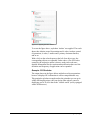
DOCUMENTS/MISCELLANEOUS/SET ENCODING menu.
The option of setting the encoding type individually for each PD
allows for primary documents with different encoding types to co-exist
in the same Hermeneutic Unit.
Correct Character Set?
While ANSI reduced the uncontrolled growth of character encodings
quite a bit, the limited character set could not be coped entirely. So
even within ANSI a number of variations was inevitable. So, in
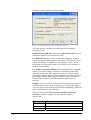
addition to selecting a font, you may need to select the correct script
in the font dialog. The script chosen within ATLAS.ti’s font
preferences should match the encoding used on the system where the
text was created (e.g., using the Cyrillic script for a text created on a
Cyrillic system).
Unicode!
Wouldn’t it be nice if there was only ONE encoding which would
cover all languages, including the East Asian languages with their
enormous amount of characters? To display a mixture of different
languages correctly within the same text, the same line?
Recently, a new emerging standard addresses this desire: Unicode.
The potential character set was significantly extended to cover all
characters of all languages, so that mixing languages in the same
document became feasible.
Now why is Unicode not used by all applications on all systems? The
problem is that the computer power needed to correctly handle
Unicode far exceeds the demands for simply OEM or ANSI
encodings. But it’s getting better.
A5 User's Guide to ATLAS.ti 5.0
Appendix • 399