1
Export & Import
This chapter describes procedures to export/import data and structures
between ATLAS.ti and other software. The export procedures
introduced in this chapter are not always clearly distinguishable from
the chapter “Generating Output” on page 310. While the output
options are generally display and print oriented, export of the HU or
parts thereof allows for analysis of data and structures created with
ATLAS.ti within other software packages.
SPSS Export
ATLAS.ti is intended primarily for supporting qualitative reasoning
processes. On the other hand, especially with large amounts of data, it
is sometimes useful to analyze the data in a quantitative manner using
statistical approaches. ATLAS.ti provides an export function to permit
further processing of the syntax file by SPSS®, the Statistical Package
for the Social Sciences.
Cases & Variables
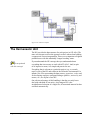
The case for cases.
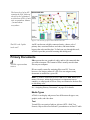
The basic components for statistics are cases and variables. The
SPSS export function in ATLAS.ti treats codes as variables and
data segments (quotations) as "cases."
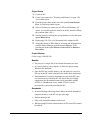
In contrast to the dichotomous treatment of codes within ATLAS.ti,
you can use codes as ordinal or otherwise scaled variables in SPSS
jobs by using a specific code-naming convention.
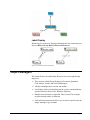
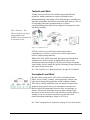
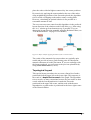
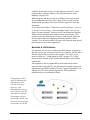
ATLAS.ti exports
quotations as cases.
You can use SPSS
features to use primary
documents as cases.
A5 User's Guide to ATLAS.ti 5.0
The notion of a "case" here is rather fine-grained and differs from
the common understanding of this term. Usually cases in
qualitative research refer to persons, interviews, or documents. We
chose to treat the smallest unit as a case for the output to SPSS, to
ensure that no data is lost during export. Broader information, e.g.,
which primary document a quotation belongs to, is coded into the
variable PD (primary document).
Export & Import • 299