1
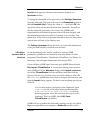
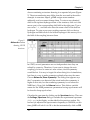
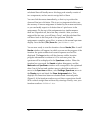
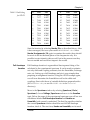
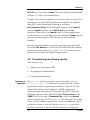
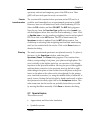
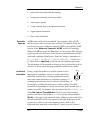
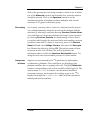
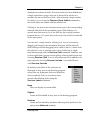
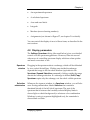
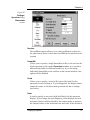
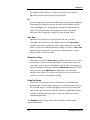
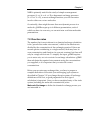
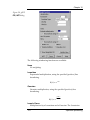
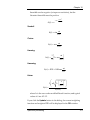
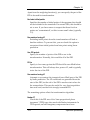
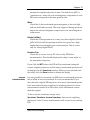
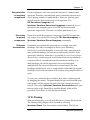
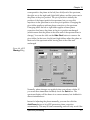
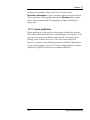
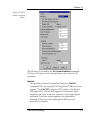
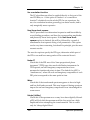
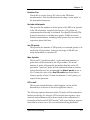
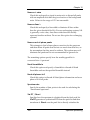
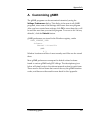
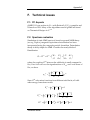
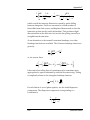
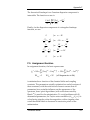
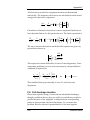
Appendix F All derivatives needed for assignment iteration are determined analytically. The frequency derivatives are calculated from the usual energy-level derivative expression: ∂ε m ∂ ∂H = mH m = m m ∂ pj ∂ pj ∂ pj Calculation of intensity derivatives is more complicated and has not been described before for this particular case. The basic expression is: ∂ I mn ∂ = mI− n ∂ pj ∂ pj 2 ∂m ∂n I− n + mI− = 2 m I − n ∂ pj ∂ pj The wave-function derivatives needed in this equation are given by perturbation theory as: ∂H l ∂ pj ∂m =∑ ∂ pj l≠m ε m − ε l This expression causes difficulties in cases of near-degeneracy. Since assignment problems occur in such cases anyway, the perturbation summand is replaced by: 2 ε m − εl ) ∂ H ( ε m − εl 2 − l 2 2 ε thresh ε thresh ∂ pj for ε m − ε l < ε thresh This modified term goes smoothly to zero if l and m become degenerate. F.6. Full-lineshape iteration Direct least-squares fitting of observed and calculated lineshapes, though possible in theory, does not yield very satisfactory results in practice because of the negligible overlap between corresponding peaks in observed and calculated lineshapes. To overcome this problem, Binsch13 devised a generalization of the least-squares 228 Technical issues