1
Supply Chain Model
Supply Chain Model
(model name: Supply.spm)
For an industrial enterprise, one of key business processes is the supply chain process. The primary
goals of supply chain management are to maintain high service levels while minimizing costs. The
key problem in supply chain management is how to balance inventory. Variability in demand and
process times, complexity of the supply chain objects, and system dynamics create uncertainty that
can only be modeled and analyzed with a tool like SIMPROCESS.
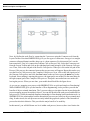
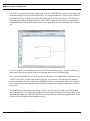
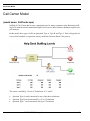
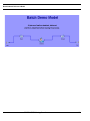
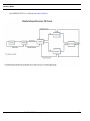
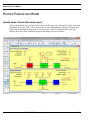
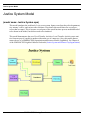
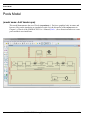
This demonstration model represents a typical supply chain for an industrial enterprise with 4 factories (Reno, Denver, Fargo, and Richmond), 3 suppliers (Phoenix, Omaha, and St Louis), and 4
customers, or distributors (San Francisco, Dallas, Detroit, and Boston), in the United States. This
high level model of the supply chain demonstrates how SIMPROCESS can help define the major
processes, resources, and entities involved in providing products to customers. The model also
demonstrates the power of the hierarchical simulation capability of SIMPROCESS. To view the
power of hierarchical modeling, drill down into the Reno factory (Factory 1).
Since travel time is important, the Connectors between factories, suppliers, and customers represent
the distance between each of the locations. Each Connector at the top level determines the appropriate travel time between locations by dividing the distance in miles by the average miles per hour.
The average miles per hour is a model parameter that can be changed before each run. Shipments
from factories to customers require a Factory Driver Resource. The Factory Driver can only drive
from 8am to 10pm. Shipments from suppliers to factories require 2 Supply Driver Resources. Thus,
travel is not interrupted for shipments traveling from a supplier to a factory.
Because Orders are transmitted electronically, Transfer Activities are used to send Orders from customers to factories. This reduces the number of Connectors required on the top level.
Below is a brief description of the model elements.
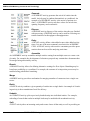
Customers
Customers demand products from the factories. The customer process defines the frequency and
quantity of demand from the factories.
Suppliers
Suppliers supply raw materials (supplies or components) to the factories. Each supplier produces
different types of raw materials and ships to each factory.
SIMPROCESS Getting Started
77