1
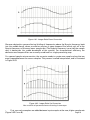
HINT: while the Steep Filter is designed for most SRC, your choice of a filter
curve for a given sample rate conversion operation should be based on careful
audition.
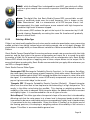
Note: The digital filter that Sonic Studio Process SRC uses exhibits a small
amount of amplitude ripple near the cutoff frequency (this is known as the
“Gibbs Phenomenon” and is a characteristic of all FIR low-pass filters). Left
uncompensated, this ripple could cause source material with high frequencies
recorded at high levels to become clipped.
For this reason, SRC reduces the gain at the input of the conversion by 0.1 dB
to avoid clipping. Repeatedly converting the same file therefore will gradually
reduce its overall level.
1.1.2.3
Selecting a Dither Type
Dither is an intentionally applied form of noise used to randomize quantization error, preventing
audible artifacts from being induced when calculating sample rate or bit depth changes. No
single dither is a magic bullet, so three different variations of dither are available in Sonic Studio
Process.
Sonic Studio Process Sample Rate Conversion performs sample rate conversion with ultra-high
precision, and the final step in the process of generating an output file is to round the output
to produce a 24-bit file. To preserve fine sonic details such as reverberation tails, Sonic Studio
Process SRC affords the option of applying one of three unique dithers to the output file. To
assure the highest sound quality, Sonic Studio recommends that you apply dither whenever you
use SRC or change bit depth.
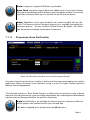
Sonic Studio Process Dither Types:
Rectangular PDF (Rectangular Probability Density Function): In this random, flat dither,
the noise signal has equal energy at each frequency (think white noise). Rectangular PDF
is the most audible type of dither. With rectangular dither the increase in noise varies with
the signal. It is recommended for use on LOUD overly compressed music such as rock or
pop as it give a certain ‘edge’ to the sound.
Triangular PDF (Triangular Probability Density Function) [Default]: Shaped triangular
dither cuts the noise level at low frequencies while boosting it a high frequencies. This
results in the dither noise being less audible. This shaping or weighting reduces the
audibility of the noise to a degree. With triangular dither, the added noise level is constant
and slightly higher. It is recommended for use on all types of music.
Noise Shaped: This dither type alters the spectral shape of the error that is introduced by
dithering such that the noise power is at a lower level in frequency bands at which noise
is perceived to be more undesirable and at a correspondingly higher level in bands where
it is perceived to be less undesirable. Since this dither is ‘packed’ at the higher end of
the hearing spectrum, this shaping or weighting reduces the audibility of the noise to a
degree. This dither is recommended for general use.
Page 10