1
ing of the substrate (see section IV-D). Thus, we do
not use plus or minus ATP as an indication of the
assay window.
D. Evaluating optimal enzymatic assay conditions
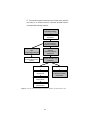
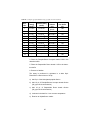
The following section presents the steps necessary to determine the optimal ATP, substrate, and enzyme concentrations in order to obtain an optimal signal window. The optimal signal window is defined here as the optimum S/B ratio
measured between the background signal (basal signal
obtained in the presence of staurosporine; see note below)
and the maximal enzymatic activity.
Note 3: The non-specific binding of some biotinylated
peptides will be strongly diminished by the
presence, in the detection reaction, of ATP and/
or some enzymes that are themselves phosphorylated for activation. In these cases, control incubations lacking either ATP or enzyme
as a reference for background could be misleading when evaluating assay window (S/B
values). For such “sticky” peptides, it is advisable to determine assay window using control
incubations containing all the reaction components (i.e., enzyme, substrate and ATP) in the
presence or absence of a generic protein
kinase inhibitor such as staurosporine.
Note 4: We do not recommend terminating the kinase
reaction using EDTA at this stage of assay development. Since EDTA interferes to some extent with the detection by the PhosphoSensor
Acceptor beads, it should be integrated later
during assay development (see section IV-E).
14