1
attitude (outside of jitter) during an IRAC integration for celestial fixed targets. For observations of solar system
targets, the telescope tracks the target throughout the course of an observation.
Observers use IRAC by creating an observation program containing one or more astronomical observation
requests (AORs) using the SPOT∗ software package provided by the SSC. Each AOR contains all the information
necessary to complete observations of one target or cluster. For IRAC, the observer chooses their desired
parameters (e.g. dither strategy, integration time) for the one available AOT, IRAC Mapping (the other two
instruments, IRS† and MIPS‡ each use several different AOTs).
The IRAC AOT provides a restricted yet flexible set of parameters for observers to use in tailoring a set
of observations appropriate for their scientific programs. Using a subset of all possible instrument parameters
permits a robust testing and calibration of the allowed modes and simplifies the designing of observations for
general observers. A less restrictive set of options would dramatically increase the amount of observatory time
spent on calibration, command uplink to the observatory, and resources needed for the development and testing
of the AOT. The AOT has been designed to facilitate the one pass proposal process used, reducing the amount
of support necessary for observers to plan useful observations. The AOT is designed to facilitate effective
observations while limiting the observer to choose less optimal strategies.
Approved programs are scheduled by the SSC. The AORs are converted to spacecraft readable instruction
sets and radiated to Spitzer for execution. Data from executed observations are radiated from Spitzer to the
ground, transferred from the Deep Space Network to the SSC. At the SSC, the raw data in units of DN are
processed through the IRAC pipelines resulting in a set of calibrated images (basic calibrated data or BCDs) in
units of surface brightness (MJy/sr), mosaic images of the entire AOR suitable for quick data inspection and
cursory analysis, and preliminary source lists§ .
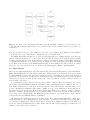
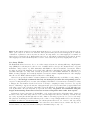
Section 2 describes the IRAC AOT in some detail. In Section 3, we present an overview of the data reduction
pipeline for IRAC data and a brief description of the final data products. The data artifacts remaining in the
processed data are discussed in Section 4. Section 5 describes upcoming and planned improvements to the AOT.
We summarize our discussion in Section 6.
2. DESCRIPTION OF THE IRAC ASTRONOMICAL OBSERVATION TEMPLATE
This section describes the available modes of operation for IRAC. In general, an observer selects the type of
target, array mode, fields of view, frametime, and mapping and dither parameters. A more complete description
of observing parameters can be found in the Spitzer Observer’s Manual (SOM) at the SSC website. Details of
how to use SPOT to plan observations can be found in the SPOT User Manual at the same website. Complete
example AORs for some typical observations (shallow map and deep image) are available in the SOM. A brief
discussion of the observer selectable parameters is given in 2.1-2.5.
In terms of spacecraft commanding, the observer input parameters are used to fill in a standard instruction
set for IRAC observations. Each IRAC AOR consists of an initial target acquisition slew followed by the start of
tracking for a moving target and some pointing control system (PCS) commanding to switch from the attitude
observer¶ based control of motions to gyro only controlled motions. At this point, the array mode and integration
time for the IRAC arrays are set and the first IRAC integration is taken. The remainder of the AOR consists of
telescope slews followed by IRAC integrations consistent with the selected target, dither pattern and mapping
parameters. Offset slews can be done in either a reference frame aligned with the IRAC arrays or relative to the
Equatorial coordinate frame. The spacecraft queries the gyros to determine when the slew is complete, then a
delay is inserted to allow the telescope to settle before taking data. The settle time for IRAC observations is
currently 5 seconds. On the completion of all data taking, the PCS system is set back to observer based control.
∗
Spitzer Planning Observations Tool software, available from http://ssc.spitzer.caltech.edu.
The Infrared Spectrograph
‡
The Multi-band Imaging Photometer for Spitzer
§
Source lists are to be distributed in future versions of the processing software.
¶
In this context, attitude observer refers to the filtered output of the gyroscopes and star tracker used to determine
the spacecraft attitude.
†