1
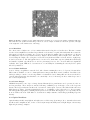
at the three sample times); the raw data are packed into a 256 × 256 array, while the BCDs are 32 × 32 × 64
data cubes. Subarray observations are useful for imaging small, bright objects and extend the dynamic range of
IRAC to 20, 17, 63, and 45 Jy at 3.6, 4.5, 5.8, and 8.0 µm, respectively. Subarray observations are also useful
for analyzing rapidly varying phenomena (such as pulsars) and have been used to measure the spacecraft jitter
(0.100 rms). At this time, it is not possible to take continuous time series for any subarray frame time due to the
construction of the AOT. Observations will have delays of 1.72, 1.7 and 1.5 seconds between repeated 0.02, 0.1
and 0.4s subarray frames.
For the 0.1 and 0.4s frametimes, data are collected in all four arrays at once. The data from the arrays not
currently imaging the source on the subarray may be useful in subtracting the background. The data taking
rate of the 0.02s frametime is too high to permit collecting data in more than the channel imaging the source.
Mapping mode is not available for subarray observations, as mapping with such a small field of view is very
inefficient. If necessary, small maps could be made using a cluster offset target and subarray mode.
Full array mode, which uses a clock speed of 5 Hz, is the standard mode of operation for IRAC. The standard
frametimes available are 2, 12, 30, 100 and 200 seconds. For the 8.0 µm channel, observations are background
limited in 50 seconds; therefore, the 100s and 200s frametimes consist of 2 and 4 repeats respectively of 50s
frames. The 8 µm repeats are taken in a different fashion from user specified repeats in that they are internal
repeats to the IRAC data taking command as opposed to repeat calls of that command. As all 8 µm 100s and
200s data are collected in this fashion, the repeats are well calibrated in contrast to user specified repeats. For
deep integrations, observers should carefully consider if 200s or 100s frames are more appropriate. While the
200s frames will reach the confusion limit faster, they are more affected by radhits than the 100s frames and the
total number of useful pixels may be significantly reduced. The trade between the utility of 200s frames and the
amount of time necessary to calibrate them will be explored in the coming year of observations.
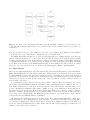
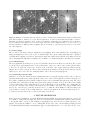
High dynamic range mode observations consist of sets of frametimes for each pointing. Each frametime set
consists of one long frametime observation which is preceded by a short and possibly an intermediate frametime.
HDR mode is designed for observations of regions containing both bright and faint sources where more dynamic
range is needed than is available using a single frame time. Examples of observations which benefit from using
HDR mode are studies of star formation in the Galactic plane and search for faint companions around moderately
bright stars. The long frametimes available in HDR mode are 12, 30, 100 and 200 seconds. The 12, 100 and
200 second HDR sets include an 0.6 second frame for the short frametime. The 0.6s frame has a maximum
unsaturated point source flux of 0.63, 0.65, 4.6 and 2.5 Jy for the 3.6, 4.5, 5.8 and 8.0 µm arrays. The 30s set
has a 1.2s short frame. The 100 and 200s HDR modes also include an intermediate frame time of 12s. HDR
mode observations are slightly longer than their full frame counterparts. The difference between the modes is
the time for the shorter frame integrations. As the shorter frames can transfer from IRAC to the C&DH while
the longer frames are being taken, HDR observations are 8%, 5%, 12% and 7% longer per pointing than their
full frame counterparts at 12, 30, 100 and 200s (assuming 1 frame set per pointing and 12s overhead for dither
and settle). The 200s HDR mode has not been used by observers and is likely to removed from service if not
requested in the first pool of general observer observations.
2.3. Fields of View
The four IRAC arrays image two separate fields of view on the sky at the same time. The observer has full
control over which fields of view image the target. For full array (including HDR mode) observations, the observer
can choose either or both of the 3.6/5.8 and 4.5/8.0 micron fields of view. For non-mapping observations and
mapping observations using celestial coordinates, if both fields are selected, then the target (or each separate
target in a cluster) is imaged for all dither positions in the 4.5/8.0 micron field of view and then is imaged for all
dithers in the 3.6/5.8 micron field of view. As the 3.6 micron field is most susceptable to long term latent images
(Sec. 4.2.4), that field of view is imaged on-target last so that the off-target data will be less contaminated.
Switching between fields of view costs one second per target; therefore, imaging of clusters instead of mapping
is slightly less efficient and is usually more cumbersome to plan.
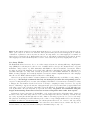
If mapping mode in array coordinates is used, then the field of view used is centered halfway between the
3.6/5.8 and 4.5/8.0 micron fields of view. Figure 3 displays the relationship of this field of view with respect to
the IRAC arrays. The mapping field of view was created to perform efficient mapping of large regions and is