1
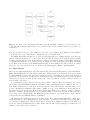
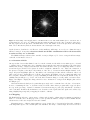
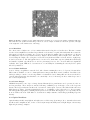
Figure 1. An outline of the commanding for the IRAC AOT. The initialization of IRAC for each observation is done
concurrently with the initial acquisition slew. A more detailed description of the command sequences is beyond the scope
of this paper.
For long observations, the gyro based attitude is reset to the observer attitude approximately every 30 minutes
to reduce the effect of gyro drift. Figure 1 displays the logic of the IRAC AOT.
The IRAC AOT makes extensive use of onboard blocks (subroutines) to optimize efficiency and reduce the
number of instructions that need to be uploaded to the spacecraft. In addition, most adjustable parameters such
as dither patterns and settle time in the AOT are contained in instrument parameter files (IPPs) which can
be easily modified without code modifications and the lengthy processes of integration and testing. The IPPs
are modified at the discretion of the IRAC Instrument Support Team (IST) at the SSC to reflect our current
knowledge of on-orbit operations. Section 5 discusses some planned improvements to the IRAC AOT.
2.1. Target Modes
There are two main available target types, fixed and moving. Observations with all three science instruments,
IRAC, IRS and MIPS, share a common target architecture. Moving targets are solar system objects and are input
by either NAIF ID or name. The appropriate ephemeris is used to determine the necessary track parameters
for any date of observation. For newly discovered solar system objects, an ephemeris can be generated if orbital
elements are provided to the SSC. For fixed targets, the observer specifies the celestial coordinates and proper
motion, if any, of the target.
For each main target type, there is an option to have a cluster of targets. Often, it is advantageous to use an
offset cluster rather than multiple AORs as each AOR is charged an initial slew tax of 3 minutes. For a set of
short AORs of targets close to each other, the slew tax may account for the majority of the time charged to an
observer. All subtargets within the cluster must be within one degree of the main target. For moving targets,
the cluster targets are specified by offsets in arcseconds in either Equatorial coordinates or array coordinates.
The array coordinate option is useful for observers that would like to create their own custom dither pattern or
need to map a non-rectangular shape. The Equatorial option is useful for observers who want to make offsets in
some preferred direction (Ecliptic latitude, for instance).
Alternatively, fixed cluster targets may be specified by absolute positions rather than relative offsets; up to
100 subtargets may be used. This target mode is most useful for observing selected fields in an open star cluster
(e.g. Pleiades) or similar target. Fixed position cluster observations are slightly less efficient as the AOT does
not use the offset blocks implemented for relative cluster and non-cluster targets. Mapping observations are not
available for any cluster target observation.