1
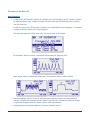
If your signal source has higher power than -25dBm, use an external attenuator to fit the amplitude in this range. Your RF source must deliver a signal somewhere in the range accepted by the calibration process of the specific model you use: o WSUB3G: 250 – 950 MHz o WSUB1G: 250 – 950 MHz o 433M: 425-445 MHz o 868M: 855-865 MHz o 915M: 905-925 MHz o 2.4G: Not currently supported for calibration In summary, this is what you need: o A reliable, accurate RF source o A SMA cable (optionally with an attenuator) o A Windows PC to run the calibration software (free download) See the instructions on the Windows PC Client for detailed description of the step by step process to calibrate the unit. Understanding DSP modes All Spectrum Analyzers, regardless price and capabilities, are based on a design where non-linearity of the RF components introduces unwanted signal spurs. A signal spur in the frequency domain is the equivalent to signal distortion in the time domain. There are many different sources of spurs and unwanted signals, but the most obvious and invasive are typically produced by the signal mixers. The Mixers are nonlinear components designed to offset a signal up or down so the next RF section of the Spectrum Analyzer can deal with very high or very low frequencies. As result of the signal mixing process, a number of sub products of the original signal are generated and, if not removed, can impact the analyzer display by showing signals that are not actually on the spectrum. A good example of that is the IMD, where two or more input signals may artificially produce a number of sub-product signals that are not really wanted. The standard approach to minimize unwanted subproduct signals is to design the frequency plan for the device in a way that Intermediate Frequency, Local Oscillator and RF input frequency are all limited by band pass and low pass filters so all the unwanted signals are sharply attenuated to a level they no longer impact the device. For a Spectrum Analyzer, that means very expensive filters and custom made IF Amplifiers, being that one of the reasons standard Spectrum Analyzers are one of very expensive instruments. With RF Explorer we wanted to keep price in a very affordable range, and thus took a different approach: All mixers used internally are quality double balanced mixers to reduce Image Frequency (typically 30dB or better) and side band spurs as much as possible. Use a complex DSP algorithm to mathematically exclude unwanted signals to a level comparable to very expensive physical filters. For all models, the standard Fast DSP used is based on an internal table mapping to resolve the RBW and frequency span required compensation. For the WSUB3G model, this is insufficient due to additional mixer that downconverts all signals from 500-2700MHz range and upconverts the 15500MHz range. The additional mixer level means there is additional potential for spurs that need a RF Explorer Cumulative Release Notes page 15