1
Phase Sensitive Faraday rotation
Aysha Aftab, Rabiya Salman and Sabieh Anwar
LUMS School of Science and Engineering
Tuesday, February, 09, 2010
Can light propagating through a medium be influenced by the application of an
external magnetic field? You have observed optical activity in chiral molecules in
your freshmen lab. The present experiment extends these concepts to magnetically
induced birefringence through the historically important Faraday Effect, which
reveals the rich interplay between optics and magnetism.
KEYWORDS
Polarization · Birefringence · Faraday rotation · Verdet constant · Phase-Sensitive
Detection · Jones Calculus · Laser · Helmholtz coil · Resonance in RLC series
circuit.
APPROXIMATE PERFORMANCE TIME 1 week.
PRE-REQUISITE EXPERIMENT: Basic measurements with the Lock-in
amplifier.
1
Objectives
In this experiment, we will,
1. shed some light on the underlying mechanism of magnetically induced birefringence,
2. demonstrate the advantages of phase sensitive detection (PSD),
3. understand the mathematical formalism for polarized light and its manipulation,
4. build or use sources of uniform magnetic fields and measure the field strengths
using a commercial magnetometer,
1
5. calculate numerical integrals,
6. build resonant RLC series circuit and understand the resonance phenomenon,
7. calculate the Verdet constant of terbium gallium garnet (TGG) and of a
diamagnetic liquid.
References
[1] Eugene Hetch and A. R. Ganesan, “Optics”, 4th edition, Pearson Education,
Inc, India, 2008, pp. 318-320.
[2] Daryl. W. Preston and Eric. R. Dietz, “The Art of Experimental Physics”,
John Wiley and Sons, 1999, pp. 355-362.
[3] Frank L. Pedrotti and Peter Bandettini, “Faraday rotation in the undergraduate advanced laboratory”, Am. J. Phys. 58, 542-544 (1990).
[4] Lock-in amplifier, user Manual, Stanford Research System, SR 510,
http://www.thinksrs.com.
[5] Aloke Jain, Jaynat Kumar, Fumin zhou and Lian Li “A simple experiment for
determining Verdet constants using alternating current magnetic fields” Am.
J. Phys. 67, 714-717 (1999).
[6] David Jiles, “Introduction to Magnetism and Magnetic Materials”, 2nd edition, CHAPMAN and HALL/CRC, 1998, pp 20-25.
[7] JAN SMIT, “Magnetic Properties of Materials”, Inter-University Electronic
Series, Vol 13, McGRAW-HILL, New York, p 197.
[8] Frank J. Loeffier, “A Faraday rotation experiment for the undergraduate
physics laboratory”, Am. J. Phys. 51, 661-663 (1983).
[9] K. Turvey, “Determination of Verdet constant from combined ac and dc measurents, ”Am. J. Phys. 64, 1561-1567 (1993).
[10] Eric W. Weisstein, “Jacobi-Anger Expansion” from MathWorld–A Wolfram
Web Resource. http://mathworld.wolfram.com/Jacobi-AngerExpansion.html.
2
Theoretical introduction
Q 1. What is polarization of light? Write down the equation for linear and
circular polarization. Also, show that linearly polarized light can be written as a
sum of left and right circular light [1]?
2
2.1
Magneto optical effect in transmission geometry
Michael Faraday observed the relationship between electromagnetism and light
in 1845. Faraday’s observation gave birth to the field of magneto optics: the
interaction of optical radiation with magnetic media or the interaction of light with
an optically inactive medium placed inside a magnetic field.
2.1.1
Birefringence
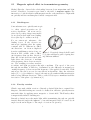
Some substances are optically anisotropic
i.e., their optical properties are direction dependent. An atom can be
viewed as a positive charge surrounded
by an electron shell with some binding
forces (the dipole oscillator model).
x
For an anisotropic substance, the
z
+
binding forces on the electron are
anisotropic implying that the spring
constant will be different in different directions: an electron displaced
from its equilibrium position along one
y
direction will oscillate with a differ- Figure 1: Negatively charged shell bound
ent frequency than another direction. to positive nucleus by pairs of spring havSince the electric field associated with ing different stiffness
light drives the electrons of medium
at its frequency, these electrons reradiate. The resulting secondary wavelets
recombine and light propagates through a medium. The speed of the wave
through the medium, is therefore, determined by the difference in natural resonating frequency of electrons and the frequency of the applied electric field. With
anisotropy, the whole process becomes direction-dependent. Since the refractive
index, (n = c/v) is a function of speed, the anisotropy results in different refractive
indices along different directions. This so-called birefringence manifests itself the
in rotation of the plane of polarization [1].
2.1.2
Faraday rotation
Chiral compounds exhibit rotation of linearly polarized light due to natural birefringence, but this birefringence can also be induced in otherwise optically inactive
materials either by applying stress, magnetic or electric field. The Faraday effect
is magnetically induced birefringence.
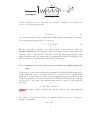
Linearly polarized monochromatic light while transmitting through an optically
inactive material, under the influence of an axial magnetic field, is rotated by an
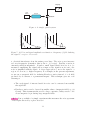
angle θ as shown in Figure 2. The angle of rotation θ is given by,
3
E
B
θ E
Direction of
propagation
d
Figure 2: Faraday rotation, The plane of polarization of light is rotated under the
action of an axial magnetic field.
θ = V Bd,
(1)
provided the magnetic field remains uniform throughout the length d of sample.
For non uniform magnetic field, θ is given by,
Z d
B(z)dz.
θ = V
(2)
0
The proportionality constant V is a characteristic of the material, called the
Verdet constant and is a function of the wavelength of light, temperature and
refractive index of the material. It is the rotation per unit path length per unit
applied magnetic field. In other words, it quantifies the induced birefringence. In
this experiment you will measure this induced birefringence.
2.1.3
Larmor precession of the electron cloud in an applied magnetic
field
We now try to posit some foundational arguments describing the underlying mechanism of Faraday rotation. Consider an electron, moving in a circle of radius r in a
plane whose normal makes an angle α with an applied magnetic field B. Since an
electron is negatively charged its angular momentum L and magnetic moment µe
are opposite to each other. The magnetic field exerts a torque τ on the magnetic
dipole µe ,
τ = µe × B = µe B sin α.
Q 2. Referring to Figure 3 what is the direction of the torque on the magnetic
dipole?
According to Newton’s second law, an angular impulse τ produces a change in
angular momentum,
τ dt = dL.
4
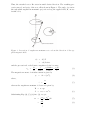
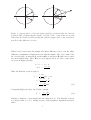
Thus, the attached vector L rotates in anticlockwise direction. The resulting precession traced out by tip of the vector L is shown in Figure 3. The angle of rotation
0
through which angular momentum’s projection along the applied field, L , moves
in time dt is,
L
plane of electron rotation
Figure 3: Precession of angular momentum vector about the direction of the applied magnetic field.
0
dφ = dL/L
= τ dt/L sin α
and the precessional or the Larmor angular velocity becomes,
dφ
τ
µe B sin α
µe B
=
=
=
.
dt
L sin α
L sin α
L
The magnetic moment of circular current is given by
ωL =
µe = iA = i(πr2 ),
(3)
(4)
where,
eω
,
2π
whereas the angular momentum of electron is given by,
i =
L = r×p
L = mvr = mr2 ω.
(5)
(6)
Substituting Eqs (4), (5), (6) into (3), we get,
eω πr2
)(
)B
2π mr2 ω
eB
=
,
2m
ωL = (
5
(7)
(8)
showing that the Larmor frequency ωL is independent of the orientation of the
current loop and the overall effect is the rotation of electronic structure about the
direction of applied magnetic field [3].
2.1.4
Semi-Classical description of induced birefringence
You must have realized from Q 1 that plane polarized light is a combination of left
and right circular (l and r) polarized light. Now, if light of vacuum frequency f is
traveling through a medium whose electrons are rotating at the Larmor frequency
then the l and r components will rotate the electron clouds with frequencies f + fL
and f − fL . Therefore in the dispersive medium, (refractive index is frequency
dependent,) the functional dependence of the respective refractive indices can be
written as,
nl = n(f − fl )
and
nr = n(f + fl ),
If plane polarized light traverses a distance d then the optical path lengths for l and
r light are nl d and nr d respectively, so the optical path difference is (nr − nl )d .
The difference of two refractive indices, the induced birefringence is,
nr − nl = n(f + fL ) − n(f − fL )
Using the Taylor Series,
nr − nl = (n(f ) +
= 2fL
dn
dn
fL ) − (n(f ) −
fL )
df
df
dn
.
df
(9)
(10)
From Equation 8,
fL =
ωL
eB
=
,
2π
4πm
Eq (10) becomes,
nr − nl = 2(
eB dn
)( ).
4πm df
Since, phase change of a wave is k (= 2π/λ) times the physical path traversed by
the wave, the phase change for the two components is,
nl d
)(2π)
λ
nr d
= (
)(2π).
λ
φl = (
(11)
φr
(12)
6
E
l
φl
E
l
E
E
θ
φ
Er r
E
r
(b)
(a)
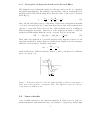
Figure 4: Superposition of left and right circularly polarized light into linearly
polarized light. (a) Entering the sample, both the l and r components are moving
with same speed and (b) while passing through the sample, these components have
travelled with different velocities.
When l and r waves enter the sample, the phase difference is zero, but the phase
difference accumulates as light passes through the sample. The vector sum of the
two electric fields on emerging from the sample is shown as E with a net rotation
θ from its initial value. Since, E is an equal superposition of l and r components,
we see from Figure (4) that,
φl − θ = φr + θ
φl − φr
⇒θ =
.
2
Thus, the Faraday rotation angle is,
1 2πd
(
)(nl − nr)
2 λ
πd eB dn
= (
)( )
λ 2πm df
e dn
( )Bd.
=
2mλ df
θ =
(13)
Comparing Eq(1) and (13), the Verdet constant,
V
=
e dn
( )
2mλ df
(14)
which is a function of wavelength and the dispersion [3]. The Faraday rotation
is a direct result of nl 6= nr arising because of the frequency dependent refractive
index.
7
2.1.5
Description of dispersion based on the Zeeman Effect
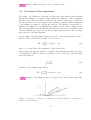
The physical reason behind the change in refractive index can also be explained
through Zeeman splitting. The splitting of spectral lines of the atom when placed in
magnetic field is called the Zeeman effect, after the name of discoverer P. Zeeman.
From Eq (3),
µe =
L eB
e
LωL
= ( )(
)=
L
B
B 2m
2m
(15)
Since, the left and right (l and r) components of light carry an angular momentum
of +~ and −~ respectively, the l component drives electron into left circular motion
and the r component drives electrons into right circularly motion, resulting in
different magnetic moments. Interaction of the magnetic moment µe with the
magnetic field B slightly shifts the energy of atomic level by an amount
∆E = −∆(µe B) = −(∆µe )B = −(
e
~)B.
m
(16)
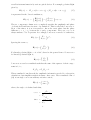
Thus, under the application of an axial magnetic field, dispersion curves for left
and right circularly polarized light are identical but displaced by the frequency
difference between the two Zeeman components,
∆ω =
∆E
−e
=
B
~
m
which results in two different refractive indices nr and nl and therefore a different
speed, at a given ω [2].
= eB
m
Figure 5: Refractive indices for left and right circularly polarized components of
plane wave in the presence of magnetic field. The dispersion curves for the two
components are shifted by ∆ω
2.2
Jones calculus
Jones calculus, invented by the American physicist R. Clark Jones, in 1941, is a
useful formalism to understand the state of polarization of perfectly polarized light
8
as well as its transformation by various optical devices. For example, polarized light
given by,
E(z, t) = îEox cos(kz − ωt + φx ) + ĵEoy cos(kz − ωt + φy )
is represented in the Jones formalism as,

µ
¶ µ
Ẽx (z, t)
Eox eiφx
Ẽ(z, t) =
=
ei(kz−ωt) .
Eoy eiφy
Ẽy (z, t)
(17)
(18)
The two component column vector completely specifies the amplitude and phase
of electric field and hence its state of polarization. This is called the Jones vector.
Most of the times, it is not necessary to know the exact phase but the phase
difference ε = φx − φx between the x and y components. Moreover, ei(kz−ωt) is
always understood to be present. Accordingly, Jones vector can also be written as,
µ

Eox
Ẽ(z, t) =
eiφx .
(19)
Eoy eiε
Ignoring the term eiφx
µ
Ẽ(z, t) =
Eox
Eoy eiε

.
(20)
For linearly polarized light ε = 0 or 180o , therefore the general form of Jones vector
for linearly polarized light is,
µ

Eox
Ẽ(z, t) =
.
(21)
Eoy
Jones vectors can be normalized such that the sum of the squares of their components is 1, i.e,
∗
∗
Eox Eox
+ Eoy Eoy
= 1.
This normalized form discards the amplitude information needed for absorption
calculations, but simplifies analysis in many other cases. The normalized form of
(21) at an angle α w.r.t an arbitrary reference axis is,
µ

cos α
Ẽ(z, t) =
,
sin α
where, the angle α is defined such that,
Eox
2
+ Eoy
cos α = p
2
Eox
= Eox
sin α = p
Eoy
2
+ Eoy
2
Eox
= Eoy .
9
Q 3. Write down the normalized Jones column vector for horizontally, vertically, left and right circularly polarized light?
Suppose that the Jones vector for polarized incident beam Ẽi is represented by
Ẽt after transmission through an optical element then, the optical element can be
represented as a 2 × 2 transformation matrix J, called the Jones matrix, given by
Ẽt = J Ẽi
(22)
where
µ
J =

j11 j12
.
j21 j22
Equation 22 can be written as,
¶µ 
µ ¶ µ
j11 j12
Ẽix
Ẽtx
=
.
j21 j22
Ẽty
Ẽiy
(23)
(24)
If the beam passes through a series of optical elements represented by the matrices
J1 , J2 , J3 , ..., Jn , then
Ẽt = Jn , ..., J3 , J2 , J1 Ẽi .
(25)
The matrices do not commute, so they must be applied in proper order.
Q 4. Show that the transformation matrix Jh for horizontal linear polarizer is
µ
Jh =

1 0
.
0 0
(26)
(HINT: Write expression (25) for maximum and zero transmittance, solve the
simultaneous equations to get the coefficients of transformation matrix.)
3
3.1
Experimental Technique
Why PSD in Faraday rotation?
You have already performed an introductory experiment of using the lock-in amplifier, so without discussing the details of the technique and the instrumentation
any further, we will only focus on why are we using phase sensitive detection (PSD)
in this experiment. Consider a simple optical system used to measure the transmission of light through a medium. Let us suppose a small response obscured by
overwhelming noise is to be measured. The output signal in this case will be,
Vo = Vsig + Vnoise .
(27)
The noise and signal amplitudes for such a system as a function of frequency
are shown in Figure (7) [4]. The large peaks at 50 Hz and its multiples are due
10
Display
Light
source
Sample
Detector
Noise and signal amplitude
Noise and signal amplitude
Figure 6: A simple optical system.
50
100
150
frequency (Hz)
50
100
150
frequency (Hz)
Figure 7: (a) Noise and signal amplitude as a function of frequency. (b) Modulating
the signal to a region of low noise.
to electrical interference from the mains power lines. The noise power increases
at lower frequencies (remember this is due to 1/f noise). Faraday rotation is
extremely small in magnitude. If such a small signal buried in noise is to be
measured, amplifying the signal will not improve the signal-to-noise ratio, the
noise is amplified with the signal. A clever approach is to move the signal to a
region of low noise, to higher frequency. For example, in the present experiment,
we use an ac magnetic field for inducing Faraday rotation instead of a dc field
produced by dc current or a permanent magnet. This technique gives two real
advantages.
• The weak signal of interest buried in noise can be extracted successfully
through PSD.
• Faraday rotation can be observed at smaller values of magnetic field (e.g., 80
G rms). This circumvents the need for large, expensive, bulky, water-cooled
electromagnets for producing large magnetic fields.
Q 5. Can you think of a simple experiment that measures the noise spectrum
of laser light detected by a photodetector?
11
Q 6.
3.2
What is Malus’s law? How does a polarizer work?
Overview of the experiment
The plane of polarization of linearly polarized monochromatic light traversing
through the sample S of length d placed under the influence of an ac magnetic
field is rotated. Since the field is oscillatory, the rotation angle is also oscillatory.
Another polarizer set at an arbitrary angle relative to input polarizer subsequent
to the sample is required to analyze the rotation. The analyzer converts the polarization modulation to an amplitude modulation by the way of Malus’s Law.
The emerging light beam carrying the information in the form of amplitude variations is incident upon a photodiode whose output appears in the form of current
proportional to the light intensity.
Let us suppose incident light polarized along the x-axis is propagating in the z
direction. The electric field in terms of Jones vector is,
µ 
1
Ẽo =
Ao exp i(kz − wt)
(28)
0
where Ao corresponds to the amplitude of the electric field.
After passing through the sample S of length d placed in magnetic field, the plane
of polarization of light is rotated by an angle θ, so the Jones vector after emerging
from the sample is,
µ
cos θ
sin θ

and the corresponding electric field is,

µ
cos θ
Ao exp i(kz − wt).
Ẽ =
sin θ
Q 7.
(29)
(30)
Suppose, the analyzer is set at an angle φ w.r.t the polarizer, show that
Figure 8: Rotation θ of plane of polarization of light, analyzer is oriented at φ
relative to the polarizer.
12
the transformation matrix is,
J (φ) =
µ

cos2 φ
cos φ sin φ
.
sin φ cos φ
sin2 φ
(31)
Q 8. Write the Jones vector for the combination of the polarizer, sample and
analyzer, placed in the same order.
You can conclude from Q 8 that electric field of the light beam after emerging from
the sample followed by the analyzer is,
µ

cos(φ − θ) cos φ
Ẽ =
Ao exp i(kz − wt).
(32)
cos(φ − θ) sin φ
The intensity of light measured by the photodetector is,
I = kA20 [cos2 (φ − θ)].
(33)
Q 9. Derive the expression (33). What are the dimensions of the constant k?
In the subsequent discussion, we will normalize k = 1. (HINT: Use the concept of
the Poynting vector.)
3.2.1
Optimization of the analyzer angle
According to Eq. 33, the rotation of the plane of polarization manifests as a change
in intensity at the photodiode. To get maximum change in intensity, the analyzer
angle needs to be optimized. Differentiating the intensity w.r.t φ, we get,
dI
= A20 2 cos(φ − θ) sin(φ − θ)
dφ
= A20 sin 2(φ − θ).
(34)
(35)
Differentiating again,
¡
¢
d2 I
2
=
2A
cos
2(φ
−
θ)
.
0
d2 φ
Maximum change in intensity is obtained by maximizing
(36)
dI
dφ
or by setting
d2 I
dφ2
= 0,
2A20 cos 2(φ − θ) = 0
since, A0 6= 0, we have,
cos 2(φ − θ) = 0
(φ − θ) = 45o .
Since, the Faraday rotation θ is much smaller than φ, maximum ∆I is obtained
when the analyzer is set at 45o relative to polarizer. The measured intensity is,
A20
[1 + cos2(φ − θ)]
2
A20
=
[1 + cos(2φ) cos(2θ) + sin(2φ) sin(2θ)]
2
(1 + sin(2φ) sin(2θ))
= A20
.
2
I =
13
For φ = 45o and sin(2θ) ∼
= (2θ),
A20
I ∼
(1 + 2θ).
=
2
(37)
The field is made oscillatory, with an oscillating frequency Ω,
B = B0 sin(Ωt),
and since the angle of rotation is directly dependent on the magnetic field,
θ = θ0 sin(Ωt),
therefore, Eq. (37) can be written as,
¡
¢
2
A
1
+
2θ
sin(Ωt)
0
0
I ∼
.
=
2
3.2.2
(38)
(39)
Converting light intensities into photocurrents
The photodiode converts the photon intensities into current, thus
i = idc + i0ac
A2
where idc = 20 and i0ac = θ0 A20 sin(Ωt). Modulated photocurrent due to Faraday
rotation iac is measured through lock-in amplifier which displays the rms values,
therefore the output of the lock-in amplifier is,
i0
θ0 A2
iac = √ac = √ 0 .
2
2
Taking the ratio of the modulated current (shown by the lock-in amplifier) to the
steady current, we obtain,
iac
θ0 A2 2
= √ 0 2
idc
2 A0
iac
⇒ θ0 = √
2 idc
(40)
(41)
and as far as the rms value of the Faraday rotation angle is concerned,
θ0
iac
θrms = θ = √ =
.
2 idc
2
(42)
The dc component is measured by an oscilloscope in the absence of magnetic field
while the ac component is measured by the lock in amplifier in the presence of the
magnetic field. For a uniform magnetic field Verdet constant is determined from
the experimental values of θ, B and d,
θ = V Bd,
14
(43)
Figure 9: Signal measured by photodiode is made up of two parts, average light
intensity, idc and modulated intensity at the frequency of ac magnetic field, i0ac .
The currents are proportional to the intensities.
whereas for non uniform magnetic field, θ, is given by,
Z d
θ = V
B(z)dz.
(44)
0
Q 10. What is the working principle of a photodetector? What does the photodetector measure? The electric field or the intensity?
Q 11. Can the photodiode measurement be affected by stray magnetic field?
(HINT: the Hall Effect)
3.2.3
Schematic of the experiment
Figure 10 shows the schematic diagram of the experimental setup for the observation of Faraday rotation.
The setup comprises these components:
(a) Light Source
(b) Mechanism for producing and measuring an oscillating magnetic field
(c) Detection devices
3.2.4
Light source
Light from a lamp can be used after collimating it by a lens and passing through a
color filter to make it monochromatic, however, since, LASER is a source of highly
directional and monochromatic light and is easily available, it is convenient to use
15
Table 1: List of Equipment used in the experiment.
Supplier
Component
laser 633 nm, 2 mW
Thorlabs (HRR-020)
Light source
laser 405 nm, 40 mW
B&W TEK (405-40E)
Linear Polarizer
extinction ratio=1000 : 1 Thorlabs (LPVIS050)
Signal generator, 10Vpp
GW-Instek (SFG-1013)
Magnetic field production Audio amplifier, 150 W
CERWIN VEGA
Power supply, 10 A, 12 V Panasonic electronics
Helmholtz coil, 120 G
Homemade
rms
Detection element
Photodiode
Newport (818-SL)
Stanford Research SysLock in amplifier
tem (SR-510)
Oscilloscope
GW-Instek
Gaussmeter with axial
LakeShore (410)
Measuring instruments
and transverse probes
Kyoritsu (KEW SNAP
Clamp meter
2017)
LCR meter
QuadTech, Inc.
Optical breadboard 90 ×
Thorlabs (PBI51506)
60 × 6 cm
Optical rail, 60 cm long
Thorlabs (RLA600/M)
Rail carrier 2.5 cm
Thorlabs (RC1)
SS Post, 5 cm long
Homemade
Post holder, 7.6 cm long Thorlabs (PH3/M)
Rotation mount, 2 deThorlabs (RSPO5/M)
gree resolution
Accessories
Laser post, 20 cm long
Thorlabs (P200/M)
V shaped laser housing
Thorlabs (C1502/M)
Glass cell, 6 cm long
Homemade
Crescent shaped cell
Homemade
holder
Teflon crystal holder
Homemade
Laser
safety
glasses
Thorlabs (LG4, LG10 )
OD=4, OD=7
M6 and M4 screws
Thorlabs
TGG crystal d=1 cm
Castech Inc.
16
Lens
Figure 10: Schematic of experimental setup for Faraday rotation.
it as the light source. HeNelaser of wavelength 633 nm or an electrically pumped
diode laser of wavelength 405 nm will be used in the experiment.
Q 12.
3.2.5
What is the basic principle of a laser? How does a HeNelaser work?
Mechanism for producing and detecting the magnetic field
In principle, both ac and dc magnetic field can be used in this experiment. Dc
sources include permanent magnets or solenoids having steady current in their
windings. Since, Faraday rotation is small in magnitude, of the order of microradians, so a large dc magnetic field, of several kilo gauss will be required to achieve
a sizeable rotation, which in turn requires large and bulky dc magnets or a large
dc power supply to produce required field [8]. However, using an ac magnetic field,
the rotation becomes oscillatory and can be tracked by PSD. For example, in this
experiment, you will be provided with a Helmholtz coil capable of generating a
field of approximately 120 G rms.
The Helmholtz coil
A pair of Helmholtz coils is used to produce a uniform magnetic field over a large
volume of space. It consists of two identical coils such that separation d of the
coils is equal to their common radius a.
Let us consider a single loop of conductor of radius a, carrying a current i. Using
the Biot-Savart rule, magnetic induction at the point P , at a distance r is,
µo
i dl × u,
(45)
dB =
4πr2
where, u is the unit vector connecting the conducting element with the point at
17
Figure 11: Magnetic field at point P due to single circular coil carrying a current
i.
which the field is to be determined, µo is permeability of free space = 4π × 10−7
Hm−1 . This geometry is shown in Figure 11. Substituting,
r =
a
sin α
(46)
into Eq (45), we get,
dB =
µo
(sin2 α)i dl × u.
2
4πa
(47)
The axial component of magnetic induction is
dBaxial = dB sin α.
Therefore,
dBaxial =
µo
(sin3 α)i dl × u
4πa2
Since, dl is perpendicular to u, and integrating round the coil
obtain the total axial field,
µo i
(sin3 α)2πa
4πa2
µo i 3
=
sin α
2a
µo i
a3
=
2a (a2 + z 2 )3/2
µo i
a2
=
.
2 (a2 + z 2 )3/2
(48)
R
dl = 2πa , we
Baxial =
(49)
For N number of turns, Eq. (49) becomes,
µo i
a2
2 (a2 + z 2 )3/2
µo N i
=
.
2a
Baxial = N
18
(50)
x
x
For the Helmholtz pair, if one coil is placed at z = 0 and the other at z = a, and if
current flows through both the coils in same direction (referred to as superposition
condition, Figure (12)), by symmetry the radial component of magnetic field along
the axis must be zero. Hence, the magnetic field on the common axis of the coils
becomes [6],
Figure 12: Pair of Helmholtz coil with separation equal to the common radius and
carrying the current in same direction.
µo N i
z 2 −3/2
(a − z)2 −3/2
B =
[(1 + 2 )
+ (1 +
)
].
2a
a
a2
(51)
Q 13. Show that at the point on the axis midway between the coils z = a/2,
the field is ,
4
µo N i
B = ( )3/2 (
).
5
a
(52)
Q 14. Using the binomial expansion (1 + z)n = 1 + nz + n(n−1)
+ . . ., show that
2!
Eq. (51) can also be written as,
B =
µo N i
(1 + c4 z 4 + c6 z 6 + ...),
2a
(53)
where, c4 = 15/8a4 and c6 = −105/48a6 .
Q 15. What do you conclude from equation (53) about the uniformity of the
magnetic field? How does the field in the middle of the coils compare with the
field in the center of a single circular loop of the same radius?
In our experiment, the Helmholtz coil is constructed from 18 gauge copper wire
(diameter 1.2 mm). Each multilayer coil consists of 18 turns in 18 layers, the coil’s
outer and inner diameters are 10.2 cm and 6.5 cm respectively. The length of each
coil is 2.7 cm and radius is 4.5 cm. Inductance of the coils, determined using the
LCR meter, is found to be 7 mH with a resistance of 1.5 Ω for each coil, so the
total inductance of the Helmholtz pair is 15 mH and the total resistance is 3 Ω .
The Helmholtz coil pair constitutes a series RLC circuit. At resonating frequency
19
Function generator
DC supply
Audio amplifier
Gaussmeter
Helmholtz coil
Figure 13: Instruments for creating and detecting the oscillating magnetic field.
ωr , the inductive reactance XL is equal to the capacitive reactance XL and total
impedance is purely resistive. The resonating frequency is,
r
ωr =
1
LC
or
fr =
1
p
.
2π (LC)
Q 16. Calculate the resonating frequency when a capacitor of 0.97 µF is connected in series with the coil? Why is the Helmholtz coil made resonating?
4
The Experiment
1. Assemble the setup according to Figure (10). Turn on the audio amplifier
and the function generator. Amplify an approximately 1 V, 70 Hz sinusoidal
signal through audio amplifier. Apply this amplified output to the Helmholtz
coil.
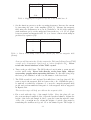
2. Increase the frequency of the ac signal applied to the coil. Tabulate the
frequency against current passing through the Helmholtz coil (Table 2) and
plot the frequency response. The current is measured with the help of a
clamp meter or an ammeter.
20
Frequency (Hz)
100
.
.
.
2500
Current (A rms)
Table 2: Mapping the frequency response of the Helmholtz coil.
3. Set the function generator at the resonating frequency. Increase the current
by increasing the gain of the amplifier (Table 3). Measure the magnetic
field using the Gaussmeter in ac mode (LakeShore, Model 410) equipped
with transverse probe at the midpoint between the two coil. Plot a graph
between current and magnetic field. Do you observe a linear relationship as
predicted by equation (52)?
Current (A rms)
1
.
.
.
1.6
Magnetic field (G rms)
Table 3: Linear relationship between the current (A) and the magnetic field
(Gauss).
Next you will determine the Verdet constant for Terbium Gallium Garnet(TGG)
crystal and a diamagnetic liquid such as carbon disulphide CS2 . Never
touch the lateral surfaces of the TGG crystal.
4. Turn on the provided laser. The HeNetakes about 30 mins to warm up and
reach a stable value. Never look directly at the laser light. Always
wear safety goggles when operating the laser. For the time being, keep
the laser power switched on but close the shutter of the laser head.
5. The TGG crystal is 1 cm long but CS2 is filled in a 6 cm long glass cell. We
cannot expect the magnetic field in between the coils of Helmholtz pair to
be uniform over this large a distance. So you need to map the magnetic field
profile and perform numerical integration of the magnetic field as suggested
in Equation 44.
The next few steps will help you calibrate the magnetic field.
6. Fix a scale with the edge of the sample holder. Place the glass cell over
the crescent shaped sample holder. Open the laserhead shutter. Adjust the
height of the laser and sample holder to pass the beam through the center
of the coils. you might need to adjust the heights of optical components by
translating the stainless steel posts. Close the shutter again. The height of
21
the sample holder will now be kept fixed. Mark the end points of the sample
on the scale.
7. Remove the sample. Fix the axial probe on another holder on either side
of the Helmholtz coil and turn on the Gauss meter. Select the 200 G range
and ac mode. Switch on the audio amplifier and tune the function generator
to the resonating frequency, 1.22 kHz. Current is now passing through the
Helmholtz coil. Select some value of current and measure the corresponding
magnetic field at the midpoint between the Helmholtz coils (A field of 90 G
rms is a reasonably good value). Move the probe away from the center of coils
on both sides. Check that magnetic field is not reaching the polarizers and
photodiode. If required, adjust the distances by moving the rail carriers along
the length of the optical rail. Map the magnetic field profile by moving the
probe along the length of the sample with a step size of 0.5 cm, for different
values of current (similar to the observation tabulated in (4)). Remove the
probe and turn off the magnetic field. Tabulate the variation in magnetic
field along the length of the sample as in Table 4.
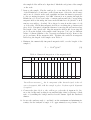
8. Estimate the numerically integrated magnetic field over the length of the
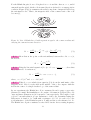
sample d,
Γ = Σk B k (z) ∆z k .
(54)
Table 4: Numerical integration of the magnetic field.
i (A rms)
z (cm)
.
.
.
.1
.2
.3
.4
.5
.6
.7 .8 .9
B(G rms)
1
1.1
1.2
1.3
1.4
.
.
.
Γ(G cm)
You will now measure idc , the dc component of the detected signal, in the absence of magnetic field, with the sample in place. Perform optical alignment
if required.
9. Connect the photodiode to the oscilloscope, select the dc input mode. Remove the background reading from ambient light either by placing a black
tube or by making the background level at the datum. Open the laserhead
shutter.
10. Rotate the analyzer angle φ and find out the maximum and minimum intensity. Set the analyzer at angle of 45o approximately w.r.t polarizer. Note
22
down the value of voltage at the oscilloscope and divide it by 1 MΩ, the
input impedance of oscilloscope, to get idc .
Next, you will determine iac , the (rms value of the) ac component of the
photocurrent (∝ intensity), using the lock-in amplifier.
11. Activate the magnetic field. Provide the reference signal from the oscillator
to the lock-in amplifier. Select the reference frequency mode, f Hz in the
reference channel of lock-in amplifier. Select the current input mode I, from
the input section. Make the offset equal to zero. Connect the photodiode
to the input BNC connector. Make sure that no error indication (unlock
or overload) occurs. Turn on the band pass and line frequency filter. The
effect of each key press on the lock-in amplifier is indicated by a nearby LED.
Select a suitable sensitivity (usually 200 nA) and time constant (3 ms) for
the pre filter. Check that no offset is introduced by the lock-in amplifier at
the selected sensitivity scale.
12. Adjust the phase located in reference section to make the output equal to
zero. Then introduce a phase shift of 90o , bringing the reference and input
signals in-phase.
13. Rotate the analyzer angle φ in steps of 10o and tabulate iac , for any fixed
value of the magnetic field. You will observe that the maximum rotation
occurs when analyzer is at an angle of approximately 45o relative to polarizer.
Q 17.
sent?
What does the reading on the lock-in amplifier physically repre-
14. Fix the analyzer at 45o relative to the polarizer. Increase the magnetic field,
from an initial value of 10 Gauss, in steps of 5 or 10 Gauss by increasing
the current. The transverse probe of Gaussmeter can be fixed to observe the
magnetic field in the center of Helmholtz coil.
15. Tabulate the values for iac for each value of current (and hence the corresponding magnetic field) passing through the coil.
Q 18.
sample?
Use the above results to calculate the Verdet constant of your
Q 19. Clearly quantify your uncertainties. What are the major sources
of error?
Q 20.
Can you measure idc with the help of the lock-in amplifier?
16. Remove the HeNelaser from setup, place AlGaN diode laser. Turn the diode
laser on, its warm up time is 15 minutes and its output is linearly polarized,
therefore, remove the polarizer A, use analyzer B only and repeat all the
steps.
23
4.1
4.1.1
Applications of Faraday rotation
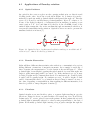
Optical isolators
An optical isolator acts as a photon valve, passing radiation in one direction and
blocking in the other. An isolator is shown in Figure 14. Polarizer A is used to
make the beam horizontally polarized which is then passed through a 45◦ Faraday
rotator C, followed by another linear polarizer(analyzer, B) at 45◦ relative to A.
If any of the light is reflected or backscattered from analyzer, it undergoes an
extra rotation of 45◦ by C and thus is blocked by A. In a LASER, if any of the
emitted light returns into the active medium through an unwanted reflection, it
can generate instabilities in the emission. Optical isolators are used to prevent the
unwanted reflection in lasers [7].
o
45
0
o
45
C
A
B
Figure 14: Optical isolator, backscattered radiation undergoes an additional 45◦
rotation by C , thus is blocked by polarizer A.
4.1.2
Domain Observation
Light will have different characteristics after reflection or transmission by regions
having different orientations of magnetic moments. Let a sample be made up of
three domains, the magnetization of each domain is shown in Figure 15. Plane
polarized light of wavelength λ, passing through domain A, is rotated through some
angle θ1 , while interacting with C, is rotated −θ1 . If the analyzer is at −θ1 , A may
be dark, C bright and D of intermediate shade. For analyzer at 90◦ , D will be dark,
A and C will be equally bright. For analyzer set at θ1 , A will be bright, C dark
and D of intermediate shade, i.e, polarization direction may be turned one way or
the other, depending on magnetization, thus resulting in different intensities, it is
therefore possible to image magnetic domains [7].
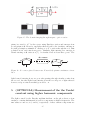
4.1.3
Circulator
Optical circulators are used in fiber optics, to separate light traveling in opposite
directions. Figure 16 shows one such circulator. It is made up of two Foster Seely
Prisms and a 45◦ rotator placed between the prisms. In these prisms the rejected
polarized light is internally reflected, so that it exits perpendicular to the axis of
prism. Horizontally polarized light entering along a passes straight through the
24
1
1
1
1
Figure 15: The domain imaging through magneto optic rotation.
prism, is rotated to 45◦ by the rotator using Faraday rotation and emerges from
second prism at b. However, any light reflected back to the circulator entering at
b with polarization azimuth 45◦ undergoes a 45◦ rotation through the rod, thus
polarized at 90◦ and exits from port c. Similarly, light entering at c emerges at
d and entering at d exits at a [7]. A circulator has at least three ports. The
45 o rotator
a
b
oc
90
d 135o
Figure 16: 45◦ rotator placed between two Foster-Seely prisms constitutes a circulator
light beam if entering from one port after passing through circulator exits from
the second. Another light beam entering from the second port or light reflected
from second port exits from third port and so on.
5
(OPTIONAL) Measurement of the the Verdet
constant using higher harmonic components
The light rotated by the Faraday medium incident on the photodetector from
analyzer, contains fundamental as well as components at higher frequencies. The
rms values u1 and u2 , at f and 2f , respectively of these current components are
25
measured, where f is the frequency of ac signal passing through Helmholtz coil.
The ratios u1 /Uo and u2 /Uo can also be used to determine the Verdet constant,
where, Uo is the steady output from the photodiode under zero magnetic field and
analyzer set for maximum transmittance [9]. The power transmitted through a
Faraday rotator is,
A2o
I =
[1 + cos 2(φ − θ)]
(55)
2
A2o
=
[1 + cos 2(φ − θo cos(Ωt))]
2
A2o
=
[1 + cos 2φ cos(2θo cos Ωt) + sin 2φ sin(2θo cos Ωt)].
2
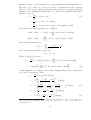
Using the Jacobi-Anger expansion, we obtain[10],
∞
X
cos(2θo cos Ωt) = Jo (2θo ) + 2
(−1)m J2m (2θo ) cos(2mΩt)
m=1
sin(2θo cos Ωt) = 2
∞
X
(−1)m J2m+1 (2θo ) cos((2m + 1)Ωt)
m=1
where the Bessel function is,
Jα (x) =
∞
X
q=0
(−1)q
x
( )2q+α
q!γ(q + α + 1) 2
and γ is the factorial function, given by,1
γ(n) = (n − 1)!
Therefore, Eq (56) becomes,
·
µ

∞
X
A2o
m
I =
1 + cos(2φ) Jo (2θo ) + 2
(−1) J2m (2θo ) cos(2mΩt)
2
m=1
µ X
¶¸
∞
m
+ sin(2φ) 2
(−1) J2m+1 (2θo ) cos(2m + 1)Ωt .
(56)
m=0
Let the amplitude of coefficient of the terms containing Ωt and 2Ωt be represented
by s1 and s2 respectively. Then,
A2o
s1 =
2(−1)0 J1 (2θo )| sin(2φ)|
2
·
¸2q+1
∞
X
2θo
(−1)q
2
= Ao
| sin(2φ)|
q!γ(q
+
1
+
1)
2
q=0
¸
·
0
−1 3 (−1)2 5
2 (−1)
= Ao
θo +
θ +
θ + ... | sin(2φ)|
(57)
0!γ(2)
1!γ(3) o 2!γ(4) o
·
¸
−1 3
1 5
2 1
= Ao
θo +
θ +
θ ... | sin(2φ)|
1!
1!2! o 2!3! o
·
¸
−1 2
1 4
2
= Ao θo 1 +
θ + θ ... | sin(2φ)|
(58)
2 o 12 o
1
Γ is the conventional symbol to generalize the factorial function. Since, we are using Γ for
numerically integrated magnetic field, therefore, we have used γ to denote the general form of
factorial function.
26
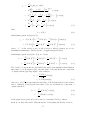
s2 =
=
=
=
=
A2o
2J2 (2θo )| cos(2φ)|
2
·
¸2q+2
∞
X
(−1)q
2θo
2
Ao
| cos(2φ)|
q!γ(q
+
2
+
1)
2
q=0
·
¸
1 2
−1 4 (−1)2 6
2
Ao
θ +
θ +
θ + ... | cos(2φ)|
γ(3) o γ(4) o 2!γ(5) o
¸
·
1 4
1 6
2 1 2
θ − θ +
θ ... | cos(2φ)|
Ao
2! o 3! o 2!4! o
·
¸
A2o 2
1 2
1 4
θ 1 − θo + θo ... | cos(2φ)|
2 o
3
24
(59)
Since,
θo = V Bo d
Substituting equation (60) in (58)
·
¸
−1
1
2
2
4
s1 = Ao V Bo d 1 +
(V Bo d) + (V Bo d) ... | sin(2φ)|
2
12
·
¸
−1
1
2
4
= Uo V Bo d 1 +
(V Bo d) + (V Bo d) ... | sin(2φ)|.
2
12
(60)
(61)
where, Uo is the steady power on photodetector when polarizers are set for
maximum transmittance (in the absence of applied magnetic field).
Substituting equation (60) into (59), we obtain,
·
¸
A2o
1
1
2
2
4
s2 =
(V Bo d) 1 − (V Bo d) + (V Bo d) + ... | cos(2φ)|
2
3
24
·
¸
1
1
Uo
2
2
4
(V Bo d) 1 − (V Bo d) + (V Bo d) + ... | cos(2φ)|.
=
2
3
24
(62)
The f and 2f components are determined through lock-in amplifier which displays
rms values, so from equation (61), the rms value of the first harmonic component
of output current (ignoring higher order terms) is,
Uo V B o d
√
| sin(2φ)|
2
= Uo V Bd| sin(2φ)|
u1 ≈
(63)
√
where B = Bo / 2, B represents the rms value of the field measured by the Gaussmeter. Similarly, from (62) the rms value of the second harmonic component of
output current is,
Uo
√ (V Bo d)2 | cos(2φ)|
2 2
Uo
= √ (V Bd)2 | cos(2φ)|.
2
u2 ≈
(64)
(65)
Both equations (63) and (65) can be used to determine Verdet constant.
In short, we have three three different means of measuring the Farday rotation,
27
Method 1. The gradient of the plot of u1 or iac against B for φ = 45o results in
the Verdet constant. This is, in fact, the method you have used in previous
section. Since, Uo = 2idc and u1 = iac , Equation (63) is actually Eq. (43) in
disguise.
Method 2. Determine the gradient of the least squares-fit line to a plot of u1 /B
against | sin 2φ| for fixed Uo . Equate the gradient to V BdUo and find the
Verdet constant [9].
Method 3. Determine the gradient
of a plot of u2 against B2 when φ = 90o .
√
equate this to to V 2 d2 Uo / 2 and find the Verdet constant.
Q 21.
Find the Verdet constant for TGG at 405 nm using methods 2 and 3.
28