1
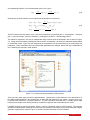
where k is the controller gain, e = r − y, emin = umin /k, and emax = umax /k. The interval (emin , emax ) is called
the proportional band because the behaviour of the controller is linear when the error is in this interval. The linear
behavior of the controller is simply
u = k(r − y) = ke
(3.2)
Proportional control has the drawback that the process variable often deviates from its reference value. This can be
avoided by making the control action proportional to the integral of the error
∫t
u(t) = ki
(3.3)
e(τ )dτ
0
This control form is called integral control and ki is the integral gain. It follows from 3.3 that if there is a steady state
where the control signal and the error are constant, i.e. u(t) = u0 and e(t) = e0 respectively then
u0 = ki e0 t
This equation is a contradiction unless e0 = 0 and we have thus proven that there is no steady state error if there is
a steady state. Notice that the argument also holds for any process and any controller that has integral action. The
catch is that there may not always be a steady state because the system may be oscillating. This property, which
we call the Magic of Integral Control, is one of the reasons why PID controllers are so common.
An additional refinement of the controller is to provide it with an ability for anticipation. Future errors can be predicted
by linear extrapolation. The predictor is
de(t)
e(t + Td ) ≈ e(t) + Td
,
dt
which predicts the error Td time units ahead.
Combining proportional, integral, and derivative control we obtain a controller that can be expressed mathematically
as follows
∫t
de(t)
u(t) = ke(t) + ki
e(τ )dτ + kd
(3.4)
dt
0
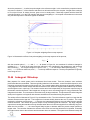
The control action is thus a sum of three terms referred to as proportional (P), integral (I) and derivative (D). As
illustrated in Figure 3.2, the proportional term is based on the present error, the integral term depends on past
errors, and the derivative term is a prediction of future errors. Advanced model-based controllers differ from the PID
controller by using a model of the process for prediction.
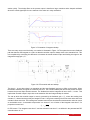
Figure 3.2: PID controller takes control action based on past, present and future control errors.
The controller Equation 3.4 can also be described by the transfer function
C(s) = ks +
ki
+ kd s
s
(3.5)
QNET User Manual
10