1
9
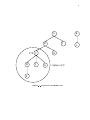
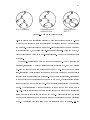
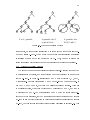
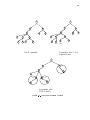
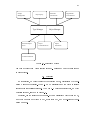
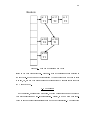
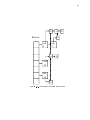
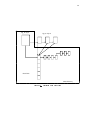
In the nested hierarchy of a TL-transaction, the node of a tree represents transactions, and an edge represents the nesting relationship between the related transactions. In the transaction tree shown in gure 2.1, the root is represented by the
TL-transaction A. The children of the subtransaction C are D, F, and G and parent
of C is B. The subordinates of C are D, E, F, and G and the superiors are B and
A. Also the descendant and ancestor sets of C additionally contain C itself. Finally
non-descendants of C are A, B, H, I and also K, and L of other nested transaction.
As indicated in gure 2.1, the sphere of C is the set of descendants of C, (which
includes C itself).
We can also think in terms of every transaction being embodied by a single process to facilitate comprehension. This type of nested transaction hierarchy may be
explained as a collection of nested spheres of controls, where the outer-most sphere is
formed by the TL-transaction which incorporates the interface to the outside world
(user and other transactions). The ACID properties dened for at transactions are
assumed to remain valid for TL-transactions. Subtransactions can terminate either
by committing or by aborting like a TL-transaction. Subtransactions appear atomic
to the surrounding transactions and may commit or abort independently. A subtransaction can abort without aecting the outcome of the surrounding transactions,
but the commit of the subtransaction is conditional subject to the commit of its superiors even if a subtransaction commits, aborting one of the superiors will undo its
eect. All updates of the subtransaction becomes permanent only when the enclosing TL-transaction commits. Furthermore, it would be unnecessarily restrictive to
require consistency to be preserved by a subtransaction, since there are times when
the parent transaction needs the results of several child transactions to perform some
consistency preserving actions. Thus as opposed to a TL-transaction, it would be



![Antares SB-GSM User`s Manual [FW5.30]](http://vs1.manualzilla.com/store/data/005924073_1-5fee82d33b9684441f88f249063588d6-150x150.png)
![Antares SB-GSM User`s Manual [FW5.21]](http://vs1.manualzilla.com/store/data/005969322_1-cafecc5f2ef16fdcdd0cbc825ff9e000-150x150.png)