1
19
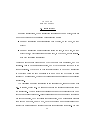
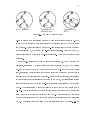
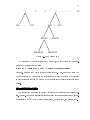
is due to the fact that two disjoint spheres are formed with C and D as root nodes
and both of which have retained a lock on the same object. The solution to this is,
in addition to storing more information, we need to store holdmodes at the nearest
common ancestors (again discussed in more detail in next section). Note that in case
of eXclusive locks, disjoint spheres don't form at all.
All of the above discussion points in the direction of keeping additional information to infer the nature of locks held without having requiring a search on the entire
tree. We propose to keep lockmodes and holdmodes at all the ancestors of a particular transaction. Thus we will need information at the nearest common ancestor
or at the root transaction. Hence, if the transaction wants a lock on an object, it
will rst check its own transaction tree (i.e. it's own modes, modes at parent node
and modes in its path to root transaction), and if need be check the root nodes of
all the transactions in the system (root transaction being common ancestor of all
the transactions in the tree will have all the lock and hold modes). Our approach
eliminates unnecessary check on the entire tree.
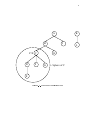
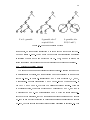
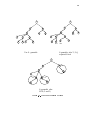
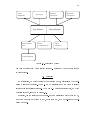
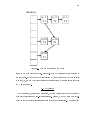
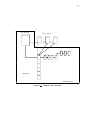
To further improve the eciency, we have introduced the concept of a virtual
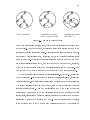
transaction. As shown in the gure 3.2, Z is the virtual transaction and it is the
immediate parent of all the top-level transactions in the system. If there is no entry
for an object in requesting transaction's tree, then instead of searching the roots of
all the transactions in the system, we have to search only the virtual transaction,
further limiting the search time. It also makes the concept of nested transactions
simpler in a way that now there is only one virtual TL transaction in the system !
3.2 Modeling the Design
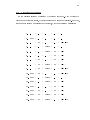
In this section we introduce the elds of holdmodes, which will be used to keep
the current status of the locks on objects used by active transactions in the system.