1
Chapter 1. Commissioning
compliance with this or any other standard does not necessarily guarantee sufficient rigidity. In any
event, it is the sole responsibility of the owner/user to assure that the floor and/or any other
supporting structure exceeds not only all applicable building codes, but also that the floor and/or
any other supporting structure for each washer-extractor or group of washer-extractors actually has
sufficient strength and rigidity, plus a reasonable factor of safety for both, to support the weight of
all the fully loaded machine(s) including the weight of the water and goods, and including the
published 360-degree rotating sinusoidal RMS forces that are transmitted by the machine(s).
Moreover, the floor, foundation, or other supporting structure must have sufficient rigidity (i.e., a
natural or resonant frequency many times greater than the machine speed with a reasonable factor
of safety); otherwise, the mentioned 360-degree rotating sinusoidal RMS forces can be multiplied
and magnified many times. It is especially important to consider all potential vibration problems
that might occur due to all possible combinations of forcing frequencies (rotating speeds) of the
machine(s) compared to the natural frequencies of the floor and/or any other supporting structure(s).
A qualified soil and/or structural engineer must be engaged for this purpose.
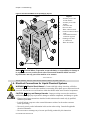
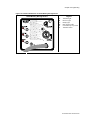
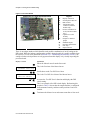
Figure 1: How Rotating Forces Act on the Foundation
Typical Rigid Machine
Legend
A.
B.
C.
Direction of force
Load
Rotation (Frequency = RPM / 60)
.
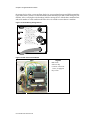
Figure 2: How Rotating Forces Act on the Foundation
Typical Rigid-mount Cabinet Machine
Legend
A.
B.
C.
Direction of force
Load
Rotation (Frequency = RPM / 60)
.
PELLERIN MILNOR CORPORATION