1
Asynchronous Transfer Mode (ATM) Module
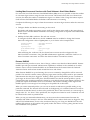
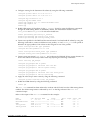
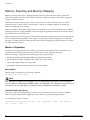
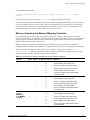
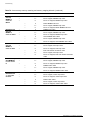
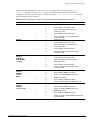
If you omit the no-congestion and congestion keywords, the command applies the mapping to the
tables for both states.
If you omit the egress and ingress keywords, the command applies the mapping to the egress
direction, and automatically configures a symmetrical mapping (with the input_codepoint and
output_codepoint values reversed) in the ingress direction.
By default, all the tables are initialized such that DSCPs are not altered by the mapping operations. For
example, an input DSCP value of n is always mapped to an output DSCP value of n.
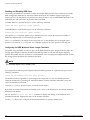
Resetting DiffServ Code Point Mapping Tables
To reset the DSCP mapping tables for a specified ATM port to their default values, use the following
command:
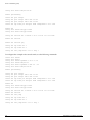
unconfig diffserv dscp-mapping ports <portlist>
Replacing DiffServ Code Points
To replace DiffServ code points, you must use the following command to enable DiffServ replacement:
enable diffserv replacement ports [<portlist> | all]
You then change the 802.1p priority to DiffServ code point mapping to any code point value using the
following command:
config diffserv replacement priority <vpri> code_point <code_point>
ports [<portlist> | all]
By doing so, the hardware queue used to transmit a packet determines the DiffServ value replaced in
the IP packet.
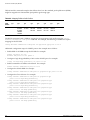
To verify the DiffServ configuration, use the command:
show ports <portlist> info detail
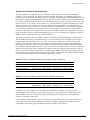
Enhanced RED Support
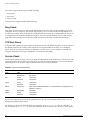
Random Early Detection (RED) is a congestion avoidance mechanism. The basic idea behind RED is that
most data transports detect packet loss and will, therefore, restrain transmission—if only
temporarily—when they detect dropped packets. Consequently, if the switch needs to signal another
device to slow transmission due to congestion, RED provides a way of intelligently dropping packets.
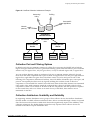
This section describes the changes and additions to ExtremeWare to support RED in conjunction with
ATM modules that have IP frames encapsulated in bridged or routed protocols. The Extreme
implementation of RED combines the functions of the RED algorithm with IP precedence to provide
support for preferential traffic handling for higher-priority packets. This implementation provides
weighted RED (WRED) functionality through two packet-drop probabilities (described below), so that a
device can selectively drop lower-priority traffic when an interface begins to show signs of congestion.
This capability is combined with DiffServ attributes to allow you to tailor performance characteristics
for different classes of service.
412
ExtremeWare 7.0.0 Software User Guide