1
About MPLS
routing database. In either case, an LSR only uses a label binding to switch traffic if the binding was
received from the current next hop for the associated FEC.
Both label advertisement modes can be concurrently deployed in the same network. However, for a
given adjacency, the two LSRs must agree on the discipline. Negotiation procedures specify that DU
mode be used when a conflict exists. Label request messages can still be used when MPLS is operating
in unsolicited mode.
The Extreme LDP implementation supports DU mode only. RSVP-TE, by definition, is DoD.
Label Retention Modes. MPLS provides two modes for label retention:
• Conservative
• Liberal
Using conservative label retention mode, an LSR retains only the label-to-FEC mappings that it
currently needs (mappings received from the current next hop for the FEC). Using liberal retention
mode, LSRs keep all the mappings that have been advertised to them. The trade-off is memory
resources saved by conservative mode versus the potential of quicker response to routing changes made
possible by liberal retention (for example, when the label binding for a new next hop is already resident
in memory).
The Extreme MPLS implementation supports liberal label retention, only.
LSP Control Modes. MPLS provides two LSP control modes:
• Independent
• Ordered
Using independent LSP control, each LSR makes independent decisions to bind labels to FECs. By
contrast, using ordered LSP control, the initial label for an LSP is always assigned by the egress LSR for
the associated FEC (either in response to a label request message or by virtue of sending an unsolicited
label mapping message).
More specifically, using ordered LSP control, an LSR only binds a label to a particular FEC if it is the
egress LSR for the FEC, or if it has already received a label binding for the FEC from its next hop for the
FEC. True to its name, the mode provides a more controlled environment that yields benefits such as
preventing loops and ensuring use of consistent FECs throughout the network.
The Extreme MPLS implementation supports ordered LSP control, only.
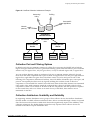
Label Switch Routers
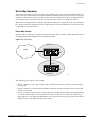
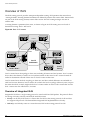
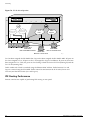
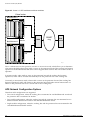
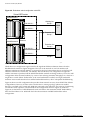
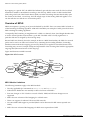
MPLS protocols are designed primarily for routed IP networks and are implemented by Label Switch
Routers (LSRs). The router where an LSP originates is called the ingress LSR, while the router where an
LSP terminates is called the egress LSR.
Ingress and egress LSRs are also referred to as Label Edge Routers (LERs). For any particular LSP, a router
is either an ingress LER, an intermediate LSR, or an egress LER. However, a router may function as an
LER for one LSP, while simultaneously function as an intermediate LSR for another LSP.
ExtremeWare 7.0.0 Software User Guide
521