1
Section 11. View
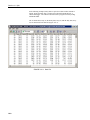
The View screen provides a way to look at the data LoggerNet collected from the
dataloggers. It will open data files (*.DAT, *.PRN, *.CSV), saved in a variety of formats
including files from array-based and table-based dataloggers. View can also open other
CSI file types (*.DLD, *.CSI, *.PTI, *.FSL, *.LOG, *.CR5, *.CR9).
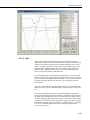
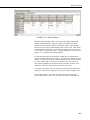
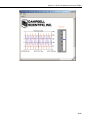
Data can be viewed numerically, and up to two fields can be plotted on a graph. Both
numeric data and graphs can be sent to a printer. Graphs can be saved to disk in BMP,
WMF, or EMF format.
11.1 Overview
The View button on the LoggerNet Toolbar brings up the file view program.
This program can be used to look at any data file collected by LoggerNet from
dataloggers and storage devices, regardless of the format (comma separated,
table oriented ASCII, binary, or printable).
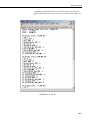
Once a file is opened, data can be printed, graphed, or displayed in comma
separated, tabular, or hexadecimal format. However, since View is primarily a
file viewing utility, a file cannot be edited or saved using this program.
11.2 Opening a File
View provides two ways to open a file. The one you use depends on the type of
file. Use File Open
to open a data file and File Open as Text
to open
other types of files.
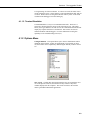
Files with a particular extension can be configured in Windows to be opened by
View automatically when double clicked in Windows Explorer. Refer to
Section 11.6.2 Assigning Data Files to View for more information.
11.2.1 Opening a Data File
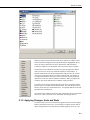
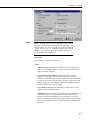
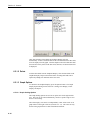
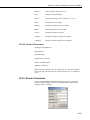
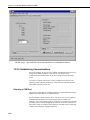
To open a data file, click the File Open
icon or select File | Open from the
menu. Any data file type stored by LoggerNet can be viewed: comma
separated, printable ASCII, binary, or Table Oriented ASCII (TOA). The
default file extension is DAT, but PRN and CSV files can also be opened in
this mode. (Opening files of types other than these may cause unexpected
results in View.)
NOTE
View will try to assign a time/date stamp automatically when
opening a data file. Therefore, it may take some time to
completely open a large file.
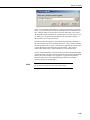
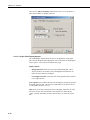
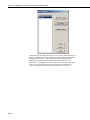
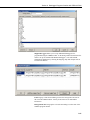
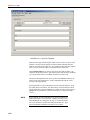
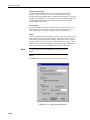
When an array-based data file is opened in this mode View will automatically
associate an FSL file with a matching name if one exists in the active directory
(see Final Storage Label below). If a matching FSL file does not exist, a box
will appear asking whether or not you want to select one. When an FSL file is
11-1