1
Section 13. Storage Module Software (SMS)
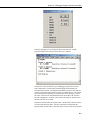
If the communication errors are reported as CE_RXOVER errors, reducing the
baud rate will help because it stops the buffer from filling up too quickly in
situations where SMS is not able to respond to the incoming data.
Via Datalogger/Target Address (SM192/716 and SM4M/SM16M Modules
Only)
When an SM192/716 or SM4M/SM16M Storage Module is connected with an
SC12 cable to a datalogger which supports direct communications (CR10(X),
CR500, CR510, or CR23X), you can establish communications using the “Via
Datalogger” mode as explained below.
Via Datalogger
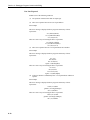
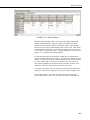
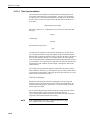
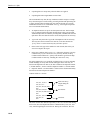
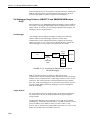
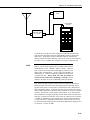
As an example, when an SM192/716 module is connected to a CR10(X),
CR23X, CR500 or CR510 datalogger with an SC12 cable, direct
communications can be established between the computer and the storage
module (see Figure 13.2-4). Note, however, that the CR10(X), CR500, and
CR510 dataloggers can only support a maximum baud rate of 9600.
PC
7026,
SC25PS
or
equivalent
cable
SC32A
SC12
Cable
CR10(X)
SM192
or
SM716
FIGURE 13.2-4. Connecting the SM192/716 to a PC and a
CR10(X) Datalogger
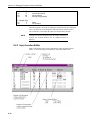
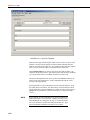
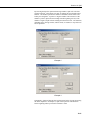
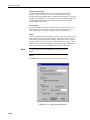
SMS can automatically detect if a datalogger that supports direct
communication is present and request that a connection be made to the Storage
Module. In these circumstances the Via Datalogger check box can be used for
connection. This sets the baud rate to 9600 and enables the Target Address
check box. If this Via Datalogger is not selected and you attempt to connect to
a storage module, SMS will detect the datalogger’s presence and adjust the
baud rate accordingly.
Target Address
The Target Address selector is disabled unless you check the Via Datalogger
box, because this is the only mode that simultaneously supports multiple
storage modules.
An appropriate datalogger can be connected to up to eight storage modules
simultaneously, each having a different address. The address selector is used to
specify the address of the module to which you wish to connect. Note,
however, that any module having a high address may answer to a call of a lower
address if no module of the lower address is present.
13-6