1
ZIGBIT™ AMP DEVELOPMENT KIT 2.0
USER’S GUIDE
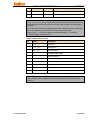
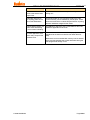
Parameter
Value
Buttons
2 programmable buttons
Size
60 x 76 x 39 mm
Operating Temperature Range
– 40°C to + 85°C. Minor degradation of clock stability
may occur beyond the –20°C to +70°C range.
2.2. MeshBean Amp Featured Components
2.2.1. ZigBit Amp Module
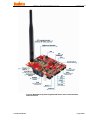
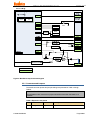
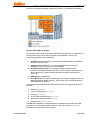
Each of MeshBean Amp boards includes the ZigBit Amp module installed. The ZigBit Amp
module is an ultra-compact, low-power, extended range, high sensitivity 2.4GHz
802.15.4/ZigBee OEM module from MeshNetics. ZigBit Amp module is based on Atmel’s
Z-Link 2.4GHz platform. It includes ATmega1281V Microcontroller and AT86RF230 RF
Transceiver.
ZDK Amp module features the U.FL antenna connector allowing for the use of external
RP-SMA antenna which can be attached through the bulkhead pigtail supplied within the
Development Kit.
Detailed specifications of the ZigBit Amp, including the module interfaces, voltage levels,
power consumption, are available in the datasheet [1].
2.2.2. Sensors
The board incorporates light sensor TSL2550T from TAOS and temperature sensor
LM73CIMK from National Semiconductors. Both sensors are connected in parallel to the
I2C bus. For more information on the sensors see their datasheets [13], [14] available from
the corresponding manufacturers’ websites.
NOTE:
In addition to the built-in, onboard sensors, external sensors selected by developer can be
used. An external sensor can be connected to the terminals of External interface cable
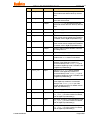
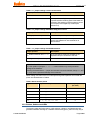
leading to the onboard Expansion slot. See the corresponding pinout in Table 2. As an
example, connection of an external sensor is illustrated in Application Note [8].
2.2.3. USB to UART Bridge
CP2102, the USB to UART Bridge controller from Silicon Labs [15], is installed on the
board. It provides seamless USB interface to any RS-232 legacy device. If the controller’s
driver has been installed on PC during the deployment of the whole Development Kit (see
Section 3.3) the onboard USB port is visible on the PC as generic COM port with a
particular number.
2.2.4. Silicon Serial for UID storage
UID (Unique Identifier) is HEX value, 8 bytes long. UID is used for setting unique MAC
address of the node.
UID is hardware defined value. It is programmed into a chip (Silicon Serial Number
DS2411R+ by Maxim/Dallas) at the factory.
UID is unique, and cannot be overwritten. In order to ensure the presence of UID on the
board it is required to execute Hardware Test application (see Section 3.7 for details).
© 2008 MeshNetics
Page 13/54