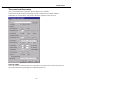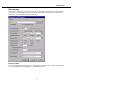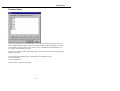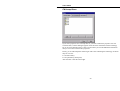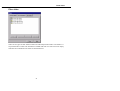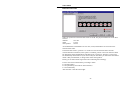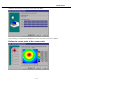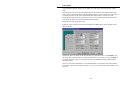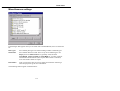
1
1420-922-05
August 2000
User manual
1420
Software version 2.00 release 9
Wallac Oy, P.O. Box 10, FIN-20101 Turku, Finland. Tel: 358-2-2678111. Fax: 358-2-2678357
Website: http://www.wallac.com
Contents
Contents
Introduction........................................................................................................................... 7
System overview ................................................................................................................. 9
Software installation ......................................................................................................... 10
Operation overview........................................................................................................... 11
Operating Wallac 1420....................................................................................................... 13
Starting up Wallac 1420.................................................................................................... 15
Instrument control ............................................................................................................. 16
Live display....................................................................................................................... 17
Temperature ...................................................................................................................... 19
Barcode options ................................................................................................................ 20
Plate orientation ................................................................................................................ 20
Starting operation with the Start button ............................................................................ 21
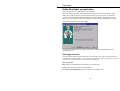
Starting operation with the Start Wizard........................................................................... 24
Starting operation and using a protocol number barcode.................................................. 26
Stacker operation .............................................................................................................. 27
Starting operation, no protocol number barcode........................................................... 27
Starting operation and using a protocol number barcode.............................................. 29
Ending operation............................................................................................................... 30
Stop button.................................................................................................................... 30
End button..................................................................................................................... 30
Button on Wallac 1420 ..................................................................................................... 31
Light on the button........................................................................................................ 31
Protocol editing ................................................................................................................... 33
Explorer ............................................................................................................................ 35
Explorer folders ............................................................................................................ 36
Explorer icons ............................................................................................................... 36
Protocol selection.......................................................................................................... 37
Protocol editor .................................................................................................................. 38
Samples............................................................................................................................. 39
ID ...................................................................................................................................... 41
Measurement..................................................................................................................... 42
Measurement mode ....................................................................................................... 42
Measurement operations ............................................................................................... 43
Down button.............................................................................................................. 43
Up button .................................................................................................................. 43
1
Contents
Delete button ............................................................................................................. 43
Dispense button ......................................................................................................... 43
Delay button .............................................................................................................. 44
Shake button.............................................................................................................. 44
Label button .............................................................................................................. 44
Kinetics button .......................................................................................................... 45
Scanning button......................................................................................................... 45
Injector position during measurement ....................................................................... 45
Plate................................................................................................................................... 46
Plate repeat parameters ................................................................................................. 46
Measurement height ...................................................................................................... 46
Plate type....................................................................................................................... 47
Temperature level checking .......................................................................................... 47
Outputs .............................................................................................................................. 48
Events................................................................................................................................ 50
Keywords ...................................................................................................................... 51
General .............................................................................................................................. 52
File menu........................................................................................................................... 53
Save............................................................................................................................... 53
Print............................................................................................................................... 53
Print preview ................................................................................................................. 53
Print setup ..................................................................................................................... 53
Start ............................................................................................................................... 53
Exit................................................................................................................................ 53
Tools menu........................................................................................................................ 53
Result viewing...................................................................................................................... 55
Latest results...................................................................................................................... 57
Results in the Explorer ...................................................................................................... 57
List ................................................................................................................................ 59
Plate map....................................................................................................................... 60
Protocol ......................................................................................................................... 61
Notes ............................................................................................................................. 62
Error .............................................................................................................................. 62
Print............................................................................................................................... 62
Export results ................................................................................................................ 62
Tools menu........................................................................................................................... 63
Tools menu........................................................................................................................ 65
User level .......................................................................................................................... 66
2
Contents
Labels................................................................................................................................ 67
Time-resolved fluorometry ........................................................................................... 69
Protocol name ........................................................................................................... 69
Flash Energy Area..................................................................................................... 70
Flash Energy Level ................................................................................................... 70
Excitation filter ......................................................................................................... 70
Light integration capacitor ........................................................................................ 70
Note........................................................................................................................... 71
Light Integration Reference Level ............................................................................ 71
Emission filters ......................................................................................................... 71
Emission aperture...................................................................................................... 71
Counting parameters ................................................................................................. 72
Factory-set values for the main counting window..................................................... 72
Flash absorbance....................................................................................................... 72
Beam size.................................................................................................................. 72
Second measurement parameters .............................................................................. 72
Fluorometry................................................................................................................... 73
Protocol name ........................................................................................................... 73
CW-Lamp energy...................................................................................................... 74
CW-Lamp Control Mode .......................................................................................... 74
CW-Lamp filters ....................................................................................................... 74
Excitation aperture (Wallac 1420-040/041 only)...................................................... 74
Emission filters ......................................................................................................... 74
Emission aperture...................................................................................................... 75
Counter position........................................................................................................ 75
Counting time............................................................................................................ 75
Second measurement parameters .............................................................................. 75
Photometry.................................................................................................................... 76
Protocol name ........................................................................................................... 76
CW-Lamp filters ....................................................................................................... 76
Excitation aperture (Wallac 1420-040/041 only)...................................................... 77
Reading time ............................................................................................................. 77
Second measurement................................................................................................. 77
Luminometry................................................................................................................. 78
Protocol name ........................................................................................................... 78
Emission filters ......................................................................................................... 78
Emission aperture...................................................................................................... 78
Counting time............................................................................................................ 79
3
Contents
Second Measurement ................................................................................................ 79
Fluorescence polarization (Wallac 1420-040/041 only) ............................................... 80
Protocol name............................................................................................................ 80
CW-Lamp energy ...................................................................................................... 81
CW-Lamp filter ......................................................................................................... 81
Polarizer aperture ...................................................................................................... 81
Emission filter ........................................................................................................... 81
Emission aperture...................................................................................................... 81
Counting time ............................................................................................................ 81
G factor ..................................................................................................................... 82
LANCE ......................................................................................................................... 83
Protocol name............................................................................................................ 83
Flash Energy Area ..................................................................................................... 84
Flash Energy Level.................................................................................................... 84
Excitation filter.......................................................................................................... 84
Light integration capacitors....................................................................................... 84
Note........................................................................................................................... 85
Light Integration Reference Level............................................................................. 85
Emission filter ........................................................................................................... 85
Emission aperture...................................................................................................... 85
Counting parameters.................................................................................................. 86
Factory-set values for the main counting window ..................................................... 86
Label.......................................................................................................................... 86
Delay 1 ...................................................................................................................... 86
Delay 2 ...................................................................................................................... 86
Window 1 .................................................................................................................. 86
Window 2 .................................................................................................................. 86
Cycle ......................................................................................................................... 86
Flash absorbance ....................................................................................................... 86
Beam size .................................................................................................................. 86
Second measurement parameters............................................................................... 87
LANCE Label Properties .......................................................................................... 87
Filters ................................................................................................................................ 88
Emission filters.............................................................................................................. 89
CW-Lamp filters ........................................................................................................... 90
Filter slides.................................................................................................................... 91
Emission filter slide................................................................................................... 92
Physically changing the emission filter slide............................................................. 93
4
Contents
CW-Lamp filter wheel .............................................................................................. 94
Physically changing the CW-Lamp filter wheel........................................................ 95
Changing the CW-Lamp ........................................................................................... 95
Changing filters in the software ................................................................................ 96
Filter properties......................................................................................................... 97
EuSm Dual label normalization ........................................................................................ 98
Plate type selection ....................................................................................................... 98
Preparing the plate ........................................................................................................ 99
Measurement status page ............................................................................................ 100
Measurement warning page ........................................................................................ 100
Normalization confirmation page................................................................................ 101
LANCE normalization .................................................................................................... 102
Using the LANCE normalization wizard .................................................................... 102
Protocol selection........................................................................................................ 103
Preparing the plate ...................................................................................................... 104
Measurement status page ............................................................................................ 105
Measurement warning page ........................................................................................ 106
Normalization confirmation page................................................................................ 107
Using LANCE normalization samples in the assay..................................................... 108
Plate dimension wizard ................................................................................................... 110
Plate selection ............................................................................................................. 111
Technology selection .................................................................................................. 111
Preparing the plate ...................................................................................................... 112
Define the centre point of the corner wells ................................................................. 113
Miscellaneous settings .................................................................................................... 115
Plate type .................................................................................................................... 117
Plate name............................................................................................................... 117
Number of well rows............................................................................................... 118
Number of well columns ......................................................................................... 118
Height of the plate................................................................................................... 118
Strip orientation ...................................................................................................... 118
Plate dimensions ..................................................................................................... 118
Tune ........................................................................................................................ 118
Well names ................................................................................................................. 118
Instrument properties .................................................................................................. 118
Options............................................................................................................................ 119
General........................................................................................................................ 119
Instrument hardware.................................................................................................... 121
5
Contents
Measurement technologies .......................................................................................... 122
Communication ........................................................................................................... 122
Exiting ................................................................................................................................ 123
File menu......................................................................................................................... 125
Troubleshooting ................................................................................................................ 127
Out of memory ................................................................................................................ 129
Display problems............................................................................................................. 130
Performance degradation................................................................................................. 130
Processing error............................................................................................................... 131
System requirements not met........................................................................................... 131
Appendices......................................................................................................................... 133
Appendix 1: Connecting MultiCalc to Wallac 1420 ....................................................... 135
Introduction................................................................................................................. 135
Wallac 1420 MultiCalc assay protocols ...................................................................... 135
Installation of Wallac 1420 output option in MultiCalc.............................................. 136
MultiCalc assay protocols ........................................................................................... 136
Usage of MultiCalc ..................................................................................................... 136
Appendix 2: Plate types for stackers ............................................................................... 137
Wallac ..................................................................................................................... 137
Nunc ........................................................................................................................ 137
Costar ...................................................................................................................... 137
Greiner .................................................................................................................... 137
Appendix 3: Dispenser operation .................................................................................... 139
Introduction................................................................................................................. 139
Emptying the waste vial .............................................................................................. 140
Preparing the tubing .................................................................................................... 142
Dispenser maintenance................................................................................................ 143
Measurement ............................................................................................................... 146
Maintenance ................................................................................................................ 147
Needle maintenance ................................................................................................ 147
Index................................................................................................................................... 149
Trademarks
DELFIA is a registered trademark and LANCE is a trademark of Wallac Oy
Windows and Excel are registered trademarks of Microsoft Corp. in the U.S. and other
countries.
6
Introduction
7
8
Introduction
System overview
Note: This manual describes all the features of VICTOR2. Some versions of the
instrument do not have one or more of these features. You can ignore the parts of this
manual not relevant to the version of VICTOR2 you have.
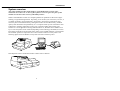
Wallac 1420 multilabel counter is a complete platform for quantitative detection of lightemitting, or light absorbing markers. Depending on the model of the instrument you have, it
is suitable for flash or glow luminometry, fluorometry, fluorescence polarization, highsensitivity time-resolved fluorometry, homogeneous time-resolved fluorometry (LANCE
option), flash absorbance and photometry. It is a compact bench top unit with features such
as dispensers, shaking, temperature control, top or bottom reading and scanning. The
software is a 32-bit application running under Windows 95, Windows 98 or Windows NT.
Up to 1536-well plates can be counted (depending on the technology and model) as well as
Petri dishes, slide filters and Terasaki plates. Plates can be loaded manually or with stackers
for automatic operation. Output can be to a file on the PC and/or to a laser printer. The
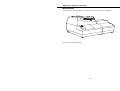
following figure shows the Wallac 1420 system with its PC and laser printer.
If the dispenser unit is connected to Wallac 1420 it looks as follows:
9
Introduction
Software installation
Note: the following instructions assume that the counter, PC and printer have been
connected up and switched on (see the installation instructions in the Instrument manual).
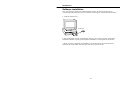
1. Load the software CD.
Load CD
2. The setup loader will start automatically and give you a choice of either selecting the
Installation Wizard to guide you through the installation or reading files from the CD.
3. When you have completed the installation you should remove the CD from the PC,
otherwise the setup loader will start again next time you boot the PC.
10
Introduction
Operation overview
Parameters must first be set using the protocol editor. This is activated by selecting a
protocol in the Explorer.
A sample plate can then be loaded and measured using the protocol set for it.
Other parameters affecting the whole system e.g. labels, filters etc. can be set in the Tools
menu.
11
Introduction
12
Operating Wallac 1420
13
14
Operating Wallac 1420
Starting up Wallac 1420
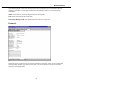
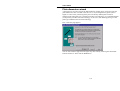
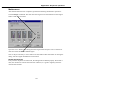
When you boot the system the following window appears:
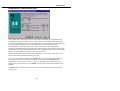
Wallac 1420 is operated by moving the mouse cursor to a point in this window (a menu title,
a button or an icon) and clicking the left mouse button. If you click an icon or a button, an
operation will be started. If you click a menu title, the menu will appear. You can then move
the cursor to the item you want in the menu and click the left mouse button again to activate
it.
15
Operating Wallac 1420
Instrument control
The main window has three tabs: Instrument Control, Live Display and Temperature. The
instrument control tab enables you to control the instrument by starting, stopping or ending
counting. It shows you the protocol being used to control the measurement and it also shows
status of the instrument.
If the system supports plate heating, the status bar will display the current temperature of the
plate and samples. When run with a system not supporting plate heating this will not be
displayed.
When the workstation is used without an instrument (i.e. running in demo mode), the status
bar includes the text “DEMO”. When Wallac 1420 workstation is connected to an
instrument (running in normal mode), the demo mode indicator is blank. You can switch
between normal and demo modes using the Options selection in the Tools menu.
16
Operating Wallac 1420
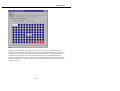
Live display
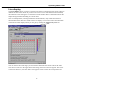
The Live display shows you the live results in the form of a plate map with colour coding to
indicate the size of the results. If you move the cursor on to a well that has been measured,
the numerical value will appear. At the bottom of the window there is information about the
sample being measured including its current value.
Note: in multiple label, scanning and kinetics measurements, only results from the first
measurement of the label are visible in the Live display. You can see results from all labels
in the Latest results display which you can get by clicking the Latest assay run icon.
You can choose the result range you want used to determine the colour code of the wells.
The closer a result is to the upper limit of the range, the more red it will appear. The closer
to the lower limit it is, the more blue it will appear. These colours will correspond to the
17
Operating Wallac 1420
values shown in the legend appearing beside the plate map. Choose the range that is
appropriate for the samples you are measuring so that you get the greatest variation in
sample colours.
You can choose whether you want the scale to be logarithmic (which means that the
difference between smaller values will be more visible whereas the difference between
higher values will be less visible), or a linear scale in which every part of the range is treated
equally.
18
Operating Wallac 1420
Temperature
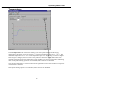
In the Temperature tab of the main window you select plate heating and the target
temperature. The latter can be set with 0.1 oC precision within the interval 15 – 45 oC. The
minimum temperature is 15 oC or room temperature plus 2 oC depending on which is higher.
If the target is changed, the new value is only effective when the Apply button has been
clicked. The figure shows the temperature rising rapidly to its new level and then stabilizing
there. If the plate heating option is not installed, these controls are disabled.
The current temperature is shown in the bottom right hand corner of the window irrespective
of which tab is selected.
If the plate heating option is not installed, these controls are disabled.
19
Operating Wallac 1420
Barcode options
An optional barcode reader can be included. This allows you to load barcode labelled plates,
which are identified by the barcode reader. Codabar, Code39, Interleaved 2 of 5, Code 128,
UPC and EAN barcodes can be read.
There are two sorts of identification that can be used:
This identification can be by plate number, in which case you must select the protocol as part
of the start up procedure.
Alternatively, the barcode can be the number of the protocol to be used for measuring that
plate. This system is especially useful for models using stackers. In this case the first plate to
be loaded from the stacker must have a barcode. Measurement can be started simply by
briefly pressing the button on the counter. See page 118 for more details on barcode usage.
Plate orientation
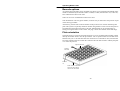
The figure shows a typical 96-well plate and how it is to be orientated when loading it either
directly into Wallac 1420 or into an input stacker. The A1 position must be in the left corner
furthest from you i.e. the side that enters the counter first. If a barcode is used, it should also
be on the side that enters the counter first. The barcode can then be used to identify the plate
or to select the protocol.
Optional barcode
Loading
direction
Position
A1
Plates used in a stacker
must have this ledge at
least on the short sides
20
Operating Wallac 1420
Starting operation with the Start button
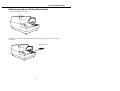
1. Open the loading position lid.
2. Load your first plate and close the lid. See the picture on page 20 for correct plate
orientation.
Load first plate
21
Operating Wallac 1420
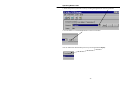
3. Select the protocol you want to use by scrolling through the list of active protocols.
4. Use the mouse to click the Start button on the user interface
You can follow the measurement process by selecting the Live display.
22
Operating Wallac 1420
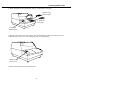
5. When the plate has been measured, remove it and load the next plate.
1. Remove the
measured plate
2. Load the
next plate
3. Press the
button briefly
6. Briefly press the button on the counter, this will be blinking if there are more plates to be
loaded for this assay. If it is not blinking then the assay has finished.
Blinking light
shows assay
Continue until all plates have been measured.
23
Operating Wallac 1420
Starting operation with the Start Wizard
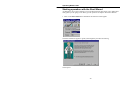
An alternative way to start counting is to use the Start Wizard. This allows you to define how
many plates you are going to use and to give the positions of samples. Proceed as follows:
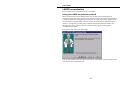
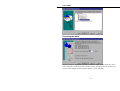
1. Click on the Start Wizard icon and follow the instructions that appear.
The Start Wizard will appear to guide you through the procedure for starting.
The steps are:
24
Operating Wallac 1420
Introduction to the wizard. (You can select the introduction not to appear next time if you
want).
Protocol selection - click the protocol you want to use for measurement.
Definition of the sample names and number of plates. See Samples tab on page 39 for a
description of the principles involved in sample definition.
Note: Errors in protocol selection or plate layout definition will lead to incorrect results.
Comments that you want added to the results - just type in what you want
Load the first plate - the protocol name and comments appear in order to confirm that it is
the one you want. Note: the A1 position must be in the left corner furthest from the user i.e.
the side that enters the counter first. If a barcode is used it should also be on the side that
enters the counter first.
Click Finish to start measurement. See the Live display during measurement.
When the plate has been measured, remove it, load the next plate and briefly press the button
on the counter.
25
Operating Wallac 1420
Starting operation and using a protocol number
barcode
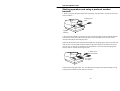
1. When you load a plate, the button will be blinking. See the picture on page 20 for correct
plate orientation.
Load the first
plate
Light is
blinking
2. Press the button briefly. Operation will start. The button light will be lit without blinking.
The barcode on the plate will be read and the protocol specified by the barcode will be
selected and used for measuring the plate.
When the measurement has finished and the light starts blinking again, remove the plate and
load the next one and briefly click the button. If the plate belongs to the same assay as the
previous one, no barcode is needed. If it is barcoded for a new assay then the appropriate
protocol will be used for measuring the plate.
1. Remove the
measured plate
2. Load the
next plate
Continue measuring plates this way. Note that the button light will remain blinking as long
as the protocol number barcode option is selected.
26
Operating Wallac 1420
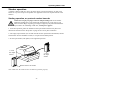
Stacker operation
A stacker is able to hold up to 20 (or 40 in the larger version) microplates. No lids, loose
frames or very loose strips are acceptable. See Appendix 2 for a list of plates that fit in the
stackers.
Starting operation, no protocol number barcode
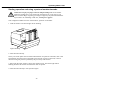
Caution Do not put your fingers into the sample loading area. In the stacker
model the loading area is uncovered when the stackers are not in place so you
must avoid the danger of getting your fingers trapped by the plate lift mechanism.
If you need to do something in that area, switch power off first.
1. In stacker operation, plates are loaded into the input stacker with the first plate to be
measured at the bottom. See the picture on page 20 for correct plate orientation.
2. The empty output stacker (the one with the tabs for the quick release mechanism) should
be fitted first into the multilabel counter; it occupies the left-hand position.
3. Fit the input stacker (with plates) in the right hand position.
1. Load
the output
stacker
2. Load
the input
stacker
Release tab for the stacker
Note: Make sure the stackers have clicked into position properly.
27
Operating Wallac 1420
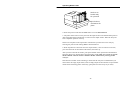
Stackers are
loaded ready
for operation
Quick release
mechanism for
plates
4. Select the protocol and click the Start button or use the Start Wizard.
5. The plates will be moved one by one from the input stacker to the measurement position.
After each plate has been measured, it is moved to the output stacker. When the assay has
been completed operation will stop.
If there are still plates in the input stacker it means that you must start a new assay by
selecting the protocol and clicking Start as described above.
6. When all plates have been moved to the output stacker, it can be removed. To do this,
press the release tab at the bottom of the stacker, then lift it up.
After you have removed the stacker, pull up the handles of the quick release mechanism to
allow the plates to be emptied easily from the stacker. Note: make sure you do not operate
this mechanism when the stacker is loaded in Wallac 1420 because you may jam the
conveyor.
If the button on Wallac 1420 is blinking, it means that the assay has not finished and you
must remove the empty input stacker, load an empty output stacker and then an input stacker
which has the remaining plates of the assay (plus plates for other assays if you want).
28
Operating Wallac 1420
Starting operation and using a protocol number barcode
Caution Do not put your fingers into the sample loading area. In the stacker
model the loading area is uncovered when the stackers are not in place so you
must avoid the danger of getting your fingers trapped by the plate lift mechanism.
If you need to do something in that area, switch power off first.
This configuration makes best use of the stackers; operation is automatic.
1. Load the stackers. The button light will be blinking.
Light is blinking
2. Click the button briefly.
One by one all the plates will be loaded and measured. If a plate has a barcode, then it will
be measured using the protocol specified by the barcode. If it has no barcode, it will be
measured using the protocol specified by the previously read barcode.
3. Only when the input stacker is empty will operation stop. The button light will be
blinking. Remove the stackers and load new ones if required.
4. Click the button briefly to start operation again.
29
Operating Wallac 1420
Ending operation
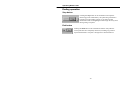
Stop button
Clicking the Stop button in the workstation interrupts the
measuring process immediately. The plate being measured is
brought out to the loading position. You cannot resume
measurement after clicking Stop but must begin the assay from
the beginning if required.
End button
Clicking the End button in the workstation ends the assay after the
current plate has been completely measured, including any possible
repeat measurements. The plate is brought out as described above.
30
Operating Wallac 1420
Button on Wallac 1420
This button has different functions depending on how long you press it for and what is
happening when you press it.
If a plate has been measured, you can remove it, load a new plate and briefly press this
button to continue the assay with the same protocol as the plate just measured. However, if
you press this button for more than 2 s, the current assay will be stopped and a new assay
will be started with the current protocol. This will not work if the protocol barcode option is
selected.
If a plate is being measured and you press this button, nothing happens.
If no assay is running and you press the button for more than 2 s, then a new assay will be
started with the current protocol. This will not work if the protocol barcode option is
selected.
Note: make sure in all cases that you have loaded the correct plate before pressing the button
because the plate in the loading position (or the empty plate holder) will be taken into the
counter.
Light on the button
The following table shows you what the light on the button will be like depending on what is
happening with Wallac 1420 and whether or not the protocol barcode option is used.
Condition
Not measuring, no assay
Not measuring, waiting next
plate
Measuring, loading or
unloading
Barcode none or plate
number
Off
Blinking
Barcode for protocol
number
Blinking
Blinking
On
On
31
Operating Wallac 1420
32
Protocol editing
33
34
Protocol editing
Explorer
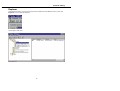
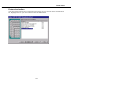
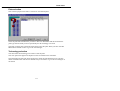
Through the Explorer you can access the Protocol Editor and the Result Viewer. Click the
Explorer icon to open the Explorer.
The Explorer will open.
35
Protocol editing
Explorer folders
In the Wallac folder there are, as a default, folders named according to the technologies
installed. In each of these folders there are protocols using the appropriate technology.
On the same level as the Wallac folder there are two other folders: Users and Projects.
To open a folder, click on it and then select Open from the File menu. Alternatively you can
open a folder by double-clicking the left mouse button when the cursor is on the folder icon.
You can also click once on the + mark next to the folder to see the protocols contained in it.
To close a folder, either double-click on it or click the - sign next to it.
If you are working on the Advanced or Service level, you can create, rename or delete
folders. A sub folder of Users or Projects can be renamed by selecting it and clicking the
right mouse button and selecting Rename.
Explorer icons
Factory pre-set protocols and groups have a lock symbol to show they cannot be changed.
User made protocols and groups do not include the lock because the user can change them.
See the examples below:
The icon for a factory pre-set folder
The icon for a factory pre-set protocol
The icon for a user-made folder
The icon for a user-made protocol
36
Protocol editing
Protocol selection
You can: Open, copy, paste, start or create a protocol, delete a user made protocol (plus
its associated results).
To open an existing protocol you can do one of the following:
a) Move the mouse cursor onto it and then click the left mouse button to select it, then click
the File menu and click Open.
b) Move the cursor on to it, click the right mouse button and select Open from the menu that
appears.
c) Double-click the mouse when the cursor is on the icon.
At the bottom of the window on the status line the protocol ID will appear (if defined,
otherwise it is not available, N/A) and also any notes that have been included in the protocol.
When you create a protocol you can save it e.g. as a user protocol in the Users folder, or you
can save it according to the technology. The choice is yours, but the default structure gives
you a starting point and helps you to find the pre-set protocols.
You can move a user made protocol to a different folder by selecting it, holding down the
mouse button, dragging it to the target folder and releasing the mouse button.
Note: The dual label protocol (only available if TR-FIA is installed) should not be copied
and edited e.g. to make a single label europium or samarium protocol. You should begin
with an existing single label protocol. For dual label operation, you must select the europium
label first and then the samarium label. After you have selected the second label, a third,
samarium in the europium window, will be created automatically. When running with these
three labels you must have a valid Eu/Sm normalization, see the Tools menu for how to
make such a normalization.
For information about results see the chapter on "Result viewing".
37
Protocol editing
Protocol editor
Note: changes to protocols should only be made by authorized persons.
The protocol editor window contains seven tabs:
Samples - shows a plate map to allow you to edit wells and plates
ID - you can identify the protocol
Measurement - you can select the labels used for measurement
Plate - you can select the plate type and other parameters
Outputs - you can define the output
Events - you can give a command to be followed after an assay has been run with this
protocol
General - information about the protocol
You can set parameters for up to 40 plates in one protocol.
Protocol entries are checked for validity by the software and invalid entries are informed
when you try to switch from one view to another.
When you have edited a protocol you can use the command line or the button bar to save or
print the protocol.
Note - if you want to change the plate type, do this before setting other plate parameters.
This is because when the plate type is changed all the previous plates will be deleted and one
plate of the selected type will appear.
38
Protocol editing
Samples
Selecting this tab causes a plate map to be displayed to allow you to edit samples. Buttons
allow you to select the first plate, previous plate, next plate or last plate.
You can also add a new plate, delete the currently selected plate or duplicate a plate. An
added plate has all the positions marked as Measured and will become the last plate in the
sequence. When you delete a plate it is the one currently visible that is deleted. A duplicated
plate is a copy of the current plate and will become the last plate in the sequence.
A map of all the wells appears. An empty well (i.e. one that will not be measured) will be
grey, a well with a sample (i.e. one that will be measured) will be coloured. If you move the
cursor onto a well the sample type will appear. If you click on the well a list of available well
types will appear.
39
Protocol editing
To change the markings for the individual wells in a plate you can select a group of wells by
using the mouse. To start the selection, click the left mouse button at the desired starting
position and then drag the mouse cursor to the desired ending position on the plate without
releasing the left mouse button.
Complete rows or columns can be selected by clicking on the character/number on the
plate frame corresponding to the row/column. More than one row/column can be selected by
clicking the mouse and dragging in the same way as when selecting free well areas.
The whole plate can be selected by clicking on the upper left corner of the plate frame.
To select a rectangular area of wells on the plate, hold down the Shift key while dragging
with the mouse.
The number of wells selected is shown in the plate indicator text after the plate order
number.
When you have selected the wells and released the left mouse button, a drop down menu of
sample types will appear. These will be the types defined in the Wallac 1420 Manager Tools
menu item Miscellaneous settings. By selecting one of these types you specify what the
type of the selected area is to be.
40
Protocol editing
ID
This tab allows you to select the protocol number and name. The number can be selected
from a drop down list of available numbers. The protocol name has to be typed in. In the
case of a factory pre-set protocol you cannot change the number.
Notes or additional comments can be connected with the protocol. These appear at the
bottom of the Explorer window.
41
Protocol editing
Measurement
The measurement tab specifies the measurement sequence to be used in the protocol.
Note: If the protocol being edited is pre-set, the measurement sequence cannot be changed.
Measurement mode
This field allows you to specify on what unit the complete measurement sequence should be
performed before moving on to the next similar unit. The possible unit is: a single well, a
strip or a plate.
Plate and strips modes are disabled when using a fast kinetic or scan measurement in the
operation sequence. Well mode will be disabled when using more than one label in the
operation sequence. However, copying and pasting of the same label is possible. Plate mode
42
Protocol editing
can be used for slow kinetics by making repeated counting of the plate with delays in
between.
Measurement operations
This field lists the operations that have been specified to be used in the assay. The operations
are listed in the order they will be performed.
If you select an item in the list and then click the right mouse button, a menu will appear to
allow you to Copy, Delete or see the Properties of the selected item. A row of buttons
beside the Operations list enables you to add items to the list. Click the button referring to
the operation you want. Set the parameters and click OK to add the item to the list.
Down button
This moves the selected operation in the operation list one step closer to the end. This button
is enabled when the operation currently selected in the measurement operations list is not the
last operation in the list.
Up button
This moves the selected operation in the operation list one step closer to the beginning. This
button is enabled when the operation currently selected in the measurement operations list is
not the first operation in the list.
Delete button
This deletes the operation selected in the operation list. This button is enabled when there is
an operation selected in the measurement operations list.
Dispense button
Clicking this causes a dialogue to appear that lets you specify the parameters for a dispense
operation. This button is enabled when the dimensions of the plate type used in the protocol
are 8x12 or less. You can select
the number of injectors to be used (from 1 to 4 depending on how many are
installed)
the volume to be dispensed (in microlitres). A slide bar helps you to select this
volume, 350 microlitres is the maximum
the speed from 1 to 5 (where 5 is the fastest and 4 the default)
the increment (using a slide bar with a range from plus 100 microlitres to minus
100 microlitres), this is the volume added to or subtracted from the previous
volume dispensed before the next dispensing
43
Protocol editing
the number of replicates (from 1 to 3)
the injection mode. You can either aspirate and then dispense the same amount
(aspVol=dispVol) or you can fill the whole syringe and then dispense several times
(aspVol=syringeVol). The former is more accurate but the latter is faster.
At the bottom of the dialogue is a check box “Perform on first plate repeat only”. If you only
want dispensing for the first of the plate repeats, check this box. If you want dispensing for
every repeat then leave it unchecked. Clicking the OK button inserts a dispense operation in
the measurement operations list.
Delay button
Clicking this causes a dialogue to appear that lets you specify the duration of the delay
between the completion of the preceding operation and the start of the one succeeding the
delay operation in the operation list. You use a slide bar to do this. Clicking the OK button
inserts the delay operation into the measurement operations list. A single delay can be from
0.1s to 3600 s.
At the bottom of the dialogue is a check box “Perform on first plate repeat only”. If you only
want delay for the first of the plate repeats, check this box. If you want delay for every repeat
then leave it unchecked.
Shake button
Clicking this causes a dialogue to appear that lets you specify the parameters for a shake
operation. You can specify the duration of the operation, the speed (slow, normal or fast),
the extent the shaker moves and the path that it follows - straight line, elliptical or figure of
eight (linear, orbital or double orbital respectively). Clicking the OK button inserts the shake
operation into the measurement operations list.
At the bottom of the dialogue is a check box “Perform on first plate repeat only”. If you only
want shaking for the first of the plate repeats, check this box. If you want shaking for every
repeat then leave it unchecked.
Label button
Opens the Label Selector to let you specify a label to be inserted in the measurement
operations list. There can be up to 10 labels in the list. Note: for LANCE measurements two
labels must be selected. If only one is selected then the measurement will be treated as
normal time-resolved fluorescence.
44
Protocol editing
When using well or strips mode, the label button will be disabled when there is already a
label in the measurement sequence. However, copying and pasting of the same label is
possible. For detailed information about labels see Labels on page 67.
Kinetics button
Clicking this causes a dialogue to appear that lets you specify the parameters for a kinetic
measurement. You can give the number of repeat measurements (up to 100) and the delay
between each measurement (0 to 600 s). You need to also select the label by clicking the
label button and then selecting from the label dialogue.
If the repeat is less than 26 and the delay between repeats is 0, results will come in one
group. The kinetics button is enabled only when using well mode and there are no other
labels in the measurement sequence. However, copying and pasting of the same kinetic label
is possible.
Scanning button
Clicking this causes a dialogue to appear that lets you specify the parameters for a scan
measurement. This means that several measurements are made for a single well and the
measurements are made from different points of the well. These points are in the form of an
array for which you can give the number of horizontal steps, the number of vertical steps and
the point displacement i.e. the distance between each point on the well where the
measurement is made. The total number of points can be a maximum of 100. The
distribution of points can be square or rounded.
You also need to select the label by clicking the Label button and then selecting from the
label dialogue.
The scanning button is enabled only when using well mode and there are no other labels in
the measurement sequence. However, copying and pasting of the same scanning label is
possible.
Injector position during measurement
At the bottom of the Measurement tab are two check boxes for controlling the injector head.
These will only be enabled if you have selected the “by wells “ mode You can select if you
want the measuring head to be kept above the well during measurement. This means that
measurement can be started immediately after injection without waiting for the injector head
to move aside.
If you check this box then a second check box is enabled where you can select if you want
injecting and measurement to happen simultaneously. This is for use in very fast kinetic
measurements.
45
Protocol editing
Plate
Plate repeat parameters
The number of times each plate is to be measured (1-99). If this is more than 1 then you must
give the time between the end of one measurement and the beginning of the next (0-3600
secs.). This allows you to do slow kinetic measurements.
Measurement height
Standard - This selection is only enabled when using a plate type that has its dimension data
stored in the instrument.
The default height set is about 8 mm above the bottom of the plate.
46
Protocol editing
User defined - If you do not want to use the standard measurement, you can give a new
value here. You must click the “user defined” button. The minimum value is 3.0 mm (8.0
mm if the dispenser is used) and the maximum 18.0 mm depending on the plate type and if
the dispenser is used or not. The height is measured from the bottom of the plate. This is
useful if you are measuring samples on filter paper and you need to optimise for the sample
being at the top or at the bottom of the wells.
Plate type
Select the one you want from the list of available plate types under the scroll bar. If the plate
size and/or format is different from the current one all the plates in the plate map will be
deleted and one plate of the selected type will appear. Make sure you select the plate type
before defining the plate map to avoid losing your settings.
Plate types are read from the Wallac 1420 database when the Protocol Editor is started so it
will not recognize plate types added while the Protocol Editor is open.
Note: the generic 8 x 12 plate selection does not check the height of the plate before a
measurement.
Note: If the type you selected has a different number of wells than the current one, all the
previous plates will be deleted and one plate of the selected type will appear.
Temperature level checking
This setting allows you to define what the target temperature should be when a plate is
measured. The plate heating controls are only enabled when used with a system that supports
the plate heating option.
Note: Setting this option will not activate the plate heating automatically, but it will cause a
warning to appear if the temperature differs significantly from what has been specified in the
protocol.
47
Protocol editing
Outputs
The Outputs tab in the Protocol editor allows you to select where results will be sent at the
end of a run. This can be to a printer and/or file. Click the check box of the output device(s)
you want.
If you have selected Printer output, you must select the format, either plate format (results
are in a table format with rows and columns in the order shown in the plate map) and/or list
format (results are in a single column starting with those from the first well). When this
option is not set, the “Include in output” checked list box is disabled. This list box defines
which parts of the assay run data should be included in the printed output: List, Plate,
Protocol description, Error description, Notes.
48
Protocol editing
If you have selected File output you must specify the file type from the drop down menu of
possible types. The types you can save files in are Excel 5 or later versions, Tab delimited
text or MultiCalc.
If the Include in output list box is checked, then it specifies which optional parts of the
assay run information should be included in the file saved when the measurement is
completed. These are the same as for printer output: List, Plate, Protocol description, Error
description, Notes.
You must also type in the file name. This can include keywords connected with the file as
described in Events. The button to the right of the filename box gives you a list of all valid
placeholder arguments to choose from. Other filenames possibly used in other protocols are
also available through this button.
Note: you will not be allowed to change to another tab if an invalid placeholder argument is
found. However, if a previous file with the same file name exists, it will be overwritten by
the new file without warning.
49
Protocol editing
Events
This tab allows you to give a command that will be executed when a protocol has been run.
The keyword should be in triangular brackets < > exactly as the examples given in the tab
show. These commands are then automatically replaced by the appropriate name or number
etc. after the assay run ends.
The first box specifies the executable to run, while the second box specifies the commandline arguments to use. The button to the right of the first box lets you browse to find the
executable file you want to use. The button to the right of the second box again lists all the
valid keyword arguments that you can choose from, see Keywords below.
For example, you can start an external spreadsheet running and have it execute the file
produced by the run. This file will be identified by e.g. protocol name or number. There are
also unique internal identifiers that the system gives for each protocol and assay run.
50
Protocol editing
Keywords
The following keywords can be used for file names in the protocol editor Outputs tab and in
Assay end system command in the Events tab:
<ProtocolName>, the name of the protocol. Specified in the ID tab in the protocol name edit
box.
<ProtocolNumber>, the protocol number for the protocol. Specified on the ID tab in the
protocol number box.
<ProtocolID>, a unique numeric identifier for the protocol.
<AssayID>, a unique numeric identifier for the assay run.
<RunID>, a numeric value identifying the specific run of a certain protocol.
<RunDate>, date when the assay was run in the format YYYYMMDD.
<Plate barcode>, the barcode of the first plate of the assay. If there is no barcode on a plate,
you should define an explicit file name for the plate.
<Output file name>, the name of the output file given in the Outputs tab.
In some cases the numeric value of the AssayID or the RunID may not be suitable for the
program handling the file. You can add a function “pad” to allow you to decrease or increase
the number. You can specify <AssayIDpadX> where X=1..7 or <RunIDpadX> where
X=1..4.
Examples
If <AssayID> = 1234 and you add pad 2 to get <AssayIDpad2> the result will be 34. This
would be useful with MultiCalc which could not accept an assay ID as large as 1234.
If <AssayID> = 234 and you add pad 4 to <AssayIDpad4> the result would be 0234. This
would be useful if you needed a four digits identifier.
The validity of possible keyword arguments is checked when you try to switch from this
view to another. If an invalid argument is found you are notified and the page switch is
cancelled.
51
Protocol editing
General
This tab gives you information about the protocol, when it was created, when it was edited
most recently, by whom it was created and edited and when an assay was last run with it.
The user names used come from the identifier given when Windows was booted. Pre-set
protocols are created in the factory.
52
Protocol editing
File menu
The protocol editor file menu contains the following items of which Save and Print have
corresponding buttons.
Save
When you select this item or click the button the current protocol information is saved.
Print
When you select this item or click the button a dialogue opens up for you to select the printer
type and other details of the printout.
Print preview
This item allows you to see what will be printed out. You can select whether you want a side
by side two page view or a single page view. You can also zoom in (magnify the page) to see
more details, alternatively you can zoom out (reduce the magnification) if the page is already
magnified. You can step to the next page or back to the previous one. When you have
finished viewing the pages that are going to be printed out you can click the Print button to
get the printout or Close to return to the protocol editor.
Print setup
You can define the printer type that will be selected. You can also set the paper size and
orientation.
Start
Starts measurement with the currently selected protocol.
Note: if the protocol has been changed you will be prompted to save the protocol before
measurement is started.
Exit
This closes the protocol editor. If the protocol has been changed it will prompt you to save it
first.
Tools menu
The Tools command line menu has one item Options. When you click this a dialogue with a
check box appears. If you do not check it, then, whenever you click the Start icon,
measurement of the selected protocol will begin directly. If you do check it, then, whenever
you click the Start icon, the Start Wizard will be used to start the measurement of the
selected protocol.
53
Protocol editing
54
Result viewing
55
56
Result viewing
Latest results
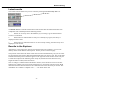
The results from the latest assay can be viewed by clicking the Latest assay run icon.
The Result Viewer is started and the latest results shown after the measurement has been
completed. This command performs following actions:
1.
If there are no assay runs in the database yet, a warning is given and the Result
Viewer is not invoked.
2.
If this button is clicked while an assay run is already in progress, that assay is
displayed in the Viewer.
3.
If this button is clicked and there is no current assay running, the latest assay run is
displayed on the Viewer.
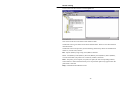
Results in the Explorer
Alternatively, once results have been received and stored in the computer, you can view
them by means of the Wallac 1420 Explorer. See the picture on the next page.
The protocol connected to the latest results will be selected automatically, but you can select
any protocol that was used to make the measurements that you want to view. The results files
associated with the protocol will then appear on the right side of the window. Each entry for
a results file comprises the following items Assay ID, the date and time when the assay
began and when it ended, Notes and Errors.
Note: to change a column width in the Results Viewer, move the mouse cursor to the line
between two columns. The cursor form will change to a vertical bar with two arrows. Hold
down the left mouse button and move the column division in the direction you choose. The
information in a column is complete if no “.....” are shown at the end.
57
Result viewing
Click on the result file and then click the Open icon.
Note: these results are in the form of raw numerical data
The Result Viewer gives details of the actual measurement. There are five tabs and these
described below.
The Result Viewer also provides you the following functions by means of command line
menus or, in most cases, buttons:
File - Export (Button), Page setup, Print (Button) and Exit.
View - List (Button), Plate (Button), Protocol (Button), Errors(Button), Notes (Button),
View all result data (only when List is selected), Toolbar, Status bar
Plate - first plate, previous plate, next plate, last plate (all with corresponding buttons).
These buttons or menu items that allow you to step between plates only appear when the
plate mode is selected.
Help - information about Result Viewer.
58
Result viewing
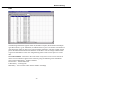
List
The following information appears: Plate ID, Number of repeats, Well number and Sample
type abbreviation (e.g. M= Measured). In addition there are pairs of columns. The number of
pairs depends on what you have set in protocol editing parameters. The first column of each
pair is the measurement time and the other the result value. You can change column widths
to get more information. In the case of high-density plates results can be split over several
tabs.
View all result data - This item in the View menu is only active if List view is selected. It
causes an extra column to appear in the result list giving the following extra information:
Time-resolved fluorometry –number of flashes
Fluorescence – measurement time
Luminometry – counting time
Photometry – A/D converter value and the number of readings
59
Result viewing
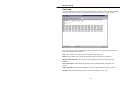
Plate map
This plate map shows you the results arranged from top to bottom in the order they appeared
in the list from left to right. See List format for the alternative way of viewing results.
The cells in the two first rows displayed include information about the currently displayed
plate. The information included is:
Plate: The number of the physical plate currently being displayed.
Repeat: The number of the repeat of the physical plate currently being displayed.
Measurement end time: Date and time when the measurement of the result plate was
finished.
Start temperature: Plate holder temperature when the measurement of the plate was
started.
End temperature: Plate holder temperature when the measurement of the plate ended.
Barcode: Barcode of the plate if used, if not used it displays the text ‘N/A’.
60
Result viewing
The cells displayed in the rows directly above each result plate gives information directly
relating to the label or result type displayed in the plate grid below it. The information
included is:
Name of the label or result type displayed in the result plate
Unit for the results from the result plate
Instrument Background value measured for the label or result type.
Protocol
Selecting Protocol causes a list of protocol parameters to appear. There is also a plate map
showing which sample types were on the plate. Any notes written in the protocol editor
Notes box will appear here.
61
Result viewing
Notes
This tab allows you to see any notes that are connected with the results being viewed.
Error
Error gives you information about the general error situation and specific information about
any errors that occurred for each measurement type.
Print
Clicking this icon leads to an extended print dialogue which in addition to the normal print
options gives you a choice of printing selected sheets or the entire workbook. The former
is the default. You can also click the Preview button to get a preview of the pages to be
printed.
In the case of high-density plates the results from the first columns (1 to 18 or 1 to 24)
appear on one page and the rest (19-36 or 25 to 48) appear on the next page. Only rows of
one plate will be printed on one page.
If you press OK in the print dialogue, the selected parts of the run information will be
printed on the printer that has been selected in the print dialogue.
Export results
If you select Export in Result Viewer it allows you to export the results of the active plate.
A window appears in which you can give the path, the file name (type it in) the file type,
(select it from the list), a Save button and a Cancel button.
The file types you can save files in are Excel 5.0 or later, Tab delimited text or MultiCalc .
To help you select where you want the file to be saved, you can browse to find the folder you
want. Buttons allow you to go up one level, create a new folder, and display the folder
information as a list just showing folder names or with additional details. The white area in
the centre of the window is where the folders appear when you start to browse to find the
path.
62
Tools menu
63
64
Tools menu
Tools menu
Note: These operations can affect the whole system and should only be undertaken by
someone qualified to do them.
There are up to twelve items in this menu (depending on the options installed):
Explorer- for protocol editing and result viewing, see pages 35 and 57.
Start Wizard - for starting when you first need to define plates and wells, see page 24.
Results of latest assay run - the result viewer is started and the latest results shown, see
page 57.
Labels – for defining labels used in measurements.
Filters – for defining filter types.
EuSm dual label normalization wizard, - (requires TR-FIA to be installed).
LANCE normalization wizard – (requires LANCE to be installed).
Plate dimension wizard – for fine-tuning the plate position when measuring high density
plates
Dispenser maintenance – described in Appendix 3.
Miscellaneous settings – including plate types and well names.
User level – selecting the features accessible to the user.
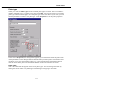
Options – includes demo mode selection, barcode and plate map features.
65
Tools menu
User level
User level in the Tools menu allows you to select the user level: Routine, Advanced or
Service.
If the User Level is selected to be Routine, this will automatically disable any system
operations. To enable these operations you must select the Advanced level. Service is only
for qualified service specialists. It gives access to e.g. Instrument Options.
66
Tools menu
Labels
In this window there are tabs corresponding to the measurement technologies (labels) in the
instrument. Each tab includes the names of the currently defined labels. Names of user
defined labels can be freely defined by the user but names of factory pre-set labels cannot be
changed. See the sections below for details.
There are four buttons at the bottom of the labels window:
Add - add a new item to the list. Give the name and edit the properties.
Copy - (select an item to activate this). Make a copy of an item. It will appear with a new
icon showing it is different from a default item, and the name will be preceded by the words
“Copy of”. You can give it a different name and edit other parameters by selecting
Properties.
Remove - (select a user created item to activate this). Remove the selected item from the list.
Preset items and labels used in protocols cannot be removed. This command requires
confirmation because you cannot undo Remove.
67
Tools menu
Properties - (select an item to activate this). View the properties of the selected item. If the
item is user defined then you can edit the properties, but if it is a factory pre-set, you cannot
edit them.
68
Tools menu
Time-resolved fluorometry
Note: to be enabled this requires the TR-FIA option to be installed.
In time-resolved fluorometry a flash lamp is used to illuminate the sample, different
lanthanides are used as labels. The picture shows the parameters that can be set.
Protocol name
This is the name by which the protocol is identified. A password can be associated with it to
prevent parameters being changed by an unauthorized person.
69
Tools menu
Flash Energy Area
There are two options for this parameter “Low” and “High”. The energy of the flash lamp
used is dependent on the discharge capacitor value. The “Low” Flash Energy Area selects a
basic capacitor of 10 nF. The “High” Flash Energy Area selects a second 10 nF capacitor in
the lamp’s discharge circuit thus doubling the energy. If you select "High" you will reduce
the counting time (number of flashes), but the counts will remain about the same.
Flash Energy Level
The Flash Energy Level sets the voltage of the discharge capacitor; the range is from 1 to
255 (corresponding to 500 to 800 volts). Note that although the lamp input energy depends
on the squared power of the discharge voltage, the output optical power is not linearly
dependent on the input energy. By changing this parameter you will fine-tune the Flash
Energy. If you increase the number, you will reduce counting time, but counts from your
sample will remain about the same.
CAUTION: If software version 2.0 release 8 or higher is installed on an instrument
having a serial number less than 4201396, then you should avoid the combination of
settings: Flash Energy Area = "High" and Flash Energy Level = high values (e.g.255)
along with 384-well or higher plates. The reason is that this "high power/continuous
usage" combination may damage the older type of flash lamp. The cooled flash excitation
system available for newer instruments is especially designed to cope with this.
Excitation filter
There are two non-changeable excitation filters in the flash excitation path. Both are colour
glass filters. The main filter is D 340, which has a maximum transmittance at 340 and halfbandwidth of about 35 nm. This filter is used for factory-set protocols. The second filter,
D320, has a maximum transmittance at 320 but its bandwidth is much broader; it includes
the same excitation band as D340 but its lower edge goes down to 280nm allowing
excitation of some special Tb-chelates.
Light integration capacitor
A reference circuit monitors the total excitation energy. When the selected total amount of
energy has been reached the flashes stop. The reference circuit makes use of three light
integration capacitors, numbered 1, 2 and 3, any one of which can be selected. The capacitor
selected determines the total excitation energy in the same proportions as the capacitor
numbers (within component tolerances). This means that selecting capacitor 2 instead of
capacitor 1, approximately doubles the excitation energy for one measurement, i.e. the
number of flashes for one measurement doubles, hence the time used for one measurement
doubles and the number of counts doubles. Selecting capacitor 3 instead of capacitor 1
70
Tools menu
triples the excitation energy, the measurement time and the number of counts. The number of
flashes can be seen from the result viewer by selecting View all result data.
Note
Each flash contributes to the total excitation energy. Flashes keep on occurring until the
required total excitation energy is achieved. However, because the energy comes in discrete
flashes the last flash will cause the total excitation energy to exceed the required amount by a
maximum of not more than the energy in one flash. This will not be significant if there are
many flashes but could be significant if there are only a few flashes. E.g. in standard
measurements the amount of flashes is about 1000, the variation in the total excitation
energy is thus 1/1000 or 0.1 %. If the amount of flashes is about 100, the variation in
excitation energies is 1/100 or 1 %.
Light Integration Reference Level
These values change the excitation energy approximately linearly. Changing this value from
50 to 100 has about the same effect as changing the capacitor from 1 to 2. The number of
flashes can be seen from the result viewer by selecting View all result data.
Emission filters
You can select the emission filter from the drop-down list of available filters. See the chapter
on Filters for more information about how to define filters.
Factory pre-set emission filter names begin with a letter indicating the technology for which
they are to be used: D is for time-resolved fluorometry. After the letter comes the
wavelength.
Emission aperture
In front of the photomultiplier tube there is a 4-position aperture slide, which has three
different apertures and a shutter position.
The normal aperture is circular with a diameter of about 4 mm and it is used for factory set
labels.
The damped aperture is also circular but only 1 mm in diameter. This allows you to shift the
dynamic range of the emission signal for a particular user selected label which may
otherwise exceed the linear range of the instrument. This damped aperture is used for the top
fluorometry factory set labels.
The band aperture is an approximately 1 mm x 3 mm rectangle and it reserved mainly for
future applications. Its size and alignment are about the same as the excitation area from the
flash lamp.
71
Tools menu
The shutter is used at all times when no measurement is occurring to prevent stray light
getting to the photomultiplier tube.
Counting parameters
These determine the time factors involved in the measurement process, all times are in
microseconds:
Counting delay - the time after the excitation pulse at which counting of the emission signal
begins
Counting window - the time period within which counting occurs
Counting cycle - the time between excitation pulses within a measurement.
The second or additional counting window is fully independent of the first one and it useful
when optimizing time-resolved parameters or for calculations of the decay time of the label.
Factory-set values for the main counting window
Label Delay Window Cycle
Eu
400
400
1000
Sm
50
100
1000
Tb
500
1400
2000
Dy
30
30
1000
Factory set values for the second counting window are always 0/0. The counts in this
window are displayed only if the values deviate from zero
Flash absorbance
If you want there to be an absorption measurement as well as the usual time-resolved
fluorescence emission measurement, select this parameter to be Yes. Both measurements
will then be made simultaneously.
Beam size
This parameter can be selected to be Normal or Narrow provided the Adjustable beam size
option has been installed. It enables measurements on plates with very small well sizes by
focusing the excitation light beam to a smaller size.
Second measurement parameters
In the case where you want to make measurements with two filters, you can use this
parameter to select the type of the second emission filter. The options are the same as for the
first measurement emission filter. Two measurements are made, first with the normal filter
and then with the second, which the system automatically moves into place.
72
Tools menu
Fluorometry
Fluorometry - light of a particular wavelength is selected with a filter from the spectrum of a
continuous wave lamp and used to excite the fluorochrome in the sample. The parameters
that can be set for fluorometry are the following:
Protocol name
This is the name by which the protocol is identified. A password can be associated with it to
prevent parameters being changed by an unauthorized person.
73
Tools menu
CW-Lamp energy
Using this parameter you are able to change the excitation energy supplied by the CWLamp.
CW-Lamp Control Mode
There are two ways of ensuring that the light incident on the plate from the CW-Lamp
remains constant – stabilized energy mode or constant voltage mode. In the stabilized energy
mode a photodiode close to the light path has part of the incident light directed onto it. This
sends feedback to the lamp controller which alters the lamp voltage to adjust the intensity of
the light produced so that it remains constant. In the constant voltage mode the lamp voltage
is not changed but the software corrects for changes in the lamp output. You can select the
control mode you want from the option buttons. The default mode is stabilized energy. The
use of the constant voltage mode allows the CW-Lamp lamp to be run continuously at
maximum power and it is faster than the stabilized energy mode. This enables optimum
performance in cases where the light intensity is critical, as in fluorescence polarization or
where speed is critical as in fast kinetics.
CW-Lamp filters
You can select the CW-lamp excitation filter from the drop-down list of available filters. See
the chapter on Filters for more information about how to define filters.
Factory pre-set CW-lamp filter names begin with a letter indicating the technology for which
they are to be used:
F is for fluorometry. After the letter comes the wavelength.
Excitation aperture (Wallac 1420-040/041/042/043 only)
There are three sizes of excitation aperture controlling the size of the incident light beam.
You can select with the option buttons Small, Normal or Large. Normal is the default.
Emission filters
You can select the emission filter from the drop-down list of available filters. See the chapter
on Filters for more information about how to define filters.
Factory preset emission filter names begin with a letter indicating the technology for which
they are to be used:
F is for fluorometry. After the letter comes the wavelength.
74
Tools menu
Emission aperture
In front of the photomultiplier tube there is a 4-position aperture slide, which has three
different apertures and a shutter position.
The normal aperture is circular with a diameter of about 4 mm and it is used for factory set
labels.
The damped aperture is also circular but only 1 mm in diameter. This allows you to shift the
dynamic range of the emission signal for a particular user selected label that may otherwise
exceed the linear range of the instrument. This damped aperture is used for the top
fluorometry factory set labels.
The band aperture is an approximately 1 mm x 3 mm rectangle and it reserved mainly for
future applications. Its size and alignment is about the same as the excitation area from the
flash lamp.
The shutter is used at all times when no measurement is occurring to prevent stray light
getting to the photomultiplier tube.
Counter position
The counter position can be selected to be Top or Bottom.
Counting time
This parameter determines how long the excitation continues.
Second measurement parameters
In the case where you want to make measurements with two filters and/or two different
energies, you can set these parameters in this field. Click the check box Second
measurement to activate them.
There are three of them: CW-Lamp energy , CW-Lamp Filter and Emission Filter. See the
corresponding sections for the first measurement for more details. When you select one of
more of these parameters two measurements are made, the first with the normal settings and
the second with these new settings. The change is automatic.
75
Tools menu
Photometry
A reference measurement is made before the plate is moved to the measurement position.
This enables the absorbance to be calculated.
The parameters that can be set for photometry are the following:
Protocol name
This is the name by which the protocol is identified. A password can be associated with it to
prevent parameters being changed by an unauthorized person.
CW-Lamp filters
You can select the CW-lamp filter from the drop-down list of available filters. See the
chapter on Filters for more information about how to define filters.
Factory pre-set CW-lamp filter names begin with a letter indicating the technology for which
they are to be used:
P is for photometry. After the letter comes the wavelength.
76
Tools menu
Excitation aperture (Wallac 1420-040/041 only)
There are three sizes of excitation aperture controlling the size of the incident light beam.
You can select with the option buttons Small, Normal or Large. Normal is the default.
Reading time
This parameter determines how long the sample is read to determine the absorbance.
Second measurement
In the case where you want to make measurements with two filters, you can click this check
box and then set the parameter CW-Lamp filter - It has the same options as the parameter
with the same name above. When you select this, two measurements are made, the first with
the normal settings and the second with this new setting. The change is automatic.
77
Tools menu
Luminometry
Luminescence in the sample is detected.
The parameters that can be set for luminometry are show in the picture and described below.
Protocol name
This is the name by which the protocol is identified. A password can be associated with it to
prevent parameters being changed by an unauthorized person.
Emission filters
You can select the emission filter from the drop-down list of available filters. See the chapter
on Filters for more information about how to define filters.
Factory preset emission filter names begin with a letter indicating the technology for which
they are to be used:
L is for luminescence. After the letter comes the wavelength.
Emission aperture
In front of the photomultiplier tube there is a 4-position aperture slide, which has three
different apertures and a shutter position.
78
Tools menu
The normal aperture is circular with a diameter of about 4 mm and it is used for factory set
labels.
The damped aperture is also circular but only 1 mm in diameter. This allows you to shift the
dynamic range of the emission signal for a particular user selected label which may
otherwise exceed the linear range of the instrument. This damped aperture is used for the top
fluorometry factory set labels.
The band aperture is an approximately 1 mm x 3 mm rectangle and it reserved mainly for
future applications. Its size and alignment is about the same as the excitation area from the
flash lamp.
The shutter is used at all times when no measurement is occurring to prevent stray light
getting to the photomultiplier tube.
Counting time
This parameter determines how long the luminescence is counted for.
Second Measurement
In the case where you want to make measurements with two filters, you can click the Second
measurement check box and then set this emission filter. It has the same options as the
normal emission filter. When you select this, two measurements are made, the first with the
normal settings and the second with this new setting. The change is automatic.
79
Tools menu
Fluorescence polarization (Wallac 1420-040/041/042/043 only)
Fluorescence polarization - light of a particular wavelength is selected with a filter from the
spectrum of a continuous wave lamp. This light is then polarized and used to excite the
fluorochrome in the sample. The emission light is then viewed through two polarizers, one
parallel to the incident polarization (S-plane) and one perpendicular to it (P-plane). These
are, each in turn, moved automatically into the emission light path. The ratio:
1000*(Parallel –G*Perpendicular) / (Parallel +G*Perpendicular)
is calculated to get the polarization in units of mP. G is a correction factor, see the end of
this section. The parameters that can be set for fluorescence polarization are the following:
Protocol name
This is the name by which the protocol is identified. A password can be associated with it to
prevent parameters being changed by an unauthorized person.
80
Tools menu
CW-Lamp energy
In fluorescence polarization constant voltage mode is used and the light source is driven with
high power. The software corrects for changes in energy of the CW-lamp to ensure that
results are calculated for a constant excitation energy. For fluorescence polarization you
should always use maximum power, 65535.
CW-Lamp filter
You can select the CW-lamp excitation filter from the drop-down list of available filters. See
the chapter on Filters for more information about how to define filters. Factory pre-set CWlamp filter names begin with a letter indicating the technology for which they are to be used:
F is for fluorometry. After the letter comes the wavelength.
Polarizer aperture
There are two sizes for the aperture of the S-plane polarizer in the excitation light path. You
can select by option buttons whether this is Small (for high-density plates) or Normal (96 or
384-well plates).
Emission filter
You can select the emission filter from the drop-down list of available filters. See the chapter
on Filters for more information about how to define filters. Factory preset emission filter
names begin with a letter indicating the technology for which they are to be used: F is for
fluorometry. After the letter comes the wavelength.
Emission aperture
In front of the photomultiplier tube there is a 4-position aperture slide, which has three
different apertures and a shutter position. The normal aperture, which is circular with a
diameter of about 4 mm, should be used for fluorescence polarization.
Counting time
This parameter determines how long the excitation continues. The following times are
recommended for 96 and 384-well plates:
Concentration (nM)
Measuring time (s)
2 or more
0.1
1
0.2
0.5
0.3
0.1
1.0
81
Tools menu
G factor
In fluorescence polarization assays a G-factor is used to correct for the bias in polarization
values caused by differences in instruments and assay conditions. To calculate the G-factor
prepare buffer and 1 nM fluorescein samples (replicates should be at least 24). The formula
used is:
L
)
CorrectedS
1000
G=
*
CorrectedP (1 + L )
1000
(1 −
where the corrected parallel and perpendicular S- and P-counts are background subtracted
fluorescence count rates obtained from a pure fluorophore solution e.g.:
CorrectedS = averageS(1nM)-averageS(buffer) and
CorrectedP = averageP(1nM)-averageP(buffer)
L is the literature polarization value for the fluorophore in mP. E.g. the value for 1 nM
fluorescein is 27 mP in aqueous buffer at room temperature. The G-factor is typically
between 0.8 and 1.2.
The G factor is used in the calculation of the corrected mP for samples as:
mP = 1000 ×
where
CorrectedS − G × CorrectedP
CorrectedS + G × CorrectedP
CorrectedS = S(sample)-S(buffer) and
CorrectedP = P(sample)-P(buffer)
82
Tools menu
LANCE
Note: this requires the LANCE option to be installed.
In LANCE homogenous time-resolved fluorescence a flash lamp is used to illuminate the
sample. In the most common form of LANCE this excites the donor molecule which, after a
delay, transfers the energy to the accepter molecule which then emits light. Two labels must
be defined, one for the donor and the other for the accepter. The picture shows the
parameters that can be set for a LANCE label.
Protocol name
This is the name by which the protocol is identified. A password can be associated with it to
prevent parameters being changed by an unauthorized person.
83
Tools menu
Flash Energy Area
There are two options for this parameter “Low” and “High”. The energy of the flash lamp
used is dependent on the discharge capacitor value. The “Low” Flash Energy Area selects a
basic capacitor of 10 nF. The “High” Flash Energy Area selects a second 10 nF capacitor in
the lamp’s discharge circuit thus doubling the energy. If you select "High" you will reduce
the counting time (number of flashes), but the counts will remain about the same.
Flash Energy Level
The Flash Energy Level sets the voltage of the discharge capacitor; the range is from 1 to
255 (corresponding to 500 to 800 volts). Note that although the lamp input energy depends
on the squared power of the discharge voltage, the output optical power is not linearly
dependent on the input energy. By changing this parameter you will fine-tune the Flash
Energy. If you increase the number, you will reduce counting time, but counts from your
sample will remain about the same.
CAUTION: If software version 2.0 release 8 or higher is installed on an instrument
having a serial number less than 4201396, then you should avoid the combination of
settings: Flash Energy Area = "High" and Flash Energy Level = high values (e.g.255)
along with 384-well or higher plates. The reason is that this "high power/continuous
usage" combination may damage the older type of flash lamp. The cooled flash excitation
system available for newer instruments is especially designed to cope with this.
Excitation filter
There are two non-changeable excitation filters in the flash excitation path. Both are colour
glass filters. The main filter is D 340, which has a maximum transmittance at 340 and halfbandwidth of about 35 nm. This filter is used for factory-set protocols. The second filter,
D320, has a maximum transmittance at 320 but its bandwidth is much broader; it includes
the same excitation band as D340 but its lower edge goes down to 280nm allowing
excitation of some special Tb-chelates.
Light integration capacitors
A reference circuit monitors the total excitation energy. When the selected total amount of
energy has been reached the flashes stop. The reference circuit makes use of three light
integration capacitors, numbered 1, 2 and 3, any one of which can be selected. The capacitor
selected determines the total excitation energy in the same proportions as the capacitor
numbers (within component tolerances). This means that selecting capacitor 2 instead of
capacitor 1, approximately doubles the excitation energy for one measurement, i.e. the
number of flashes for one measurement doubles, hence the time used for one measurement
doubles and the number of counts doubles. Selecting capacitor 3 instead of capacitor 1
84
Tools menu
triples the excitation energy, the measurement time and the number of counts. The number of
flashes can be seen from the result viewer by selecting View all result data.
Note
Each flash contributes to the total excitation energy. Flashes keep on occurring until the
required total excitation energy is achieved. However, because the energy comes in discrete
flashes the last flash will cause the total excitation energy to exceed the required amount by a
maximum of not more than the energy in one flash. This will not be significant if there are
many flashes but could be significant if there are only a few flashes. E.g. in standard
measurements the amount of flashes is about 1000, the variation in the total excitation
energy is thus 1/1000 or 0.1 %. If the amount of flashes is about 100, the variation in
excitation energies is 1/100 or 1 %.
Light Integration Reference Level
These values change the excitation energy approximately linearly. Changing this value from
50 to 100 has about the same effect as changing the capacitor from 1 to 2. The number of
flashes can be seen from the result viewer by selecting View all result data.
Emission filter
You can select the emission filter from the drop-down list of available filters. See the chapter
on Filters for more information about how to define filters.
Factory pre-set emission filter names begin with a letter indicating the technology for which
they are to be used: D is for time-resolved fluorometry. After the letter comes the
wavelength.
Emission aperture
In front of the photomultiplier tube there is a 4-position aperture slide, which has three
different apertures and a shutter position.
The normal aperture is circular with a diameter of about 4 mm and it is used for factory set
labels.
The damped aperture is also circular but only 1 mm in diameter. This allows you to shift the
dynamic range of the emission signal for a particular user selected label which may
otherwise exceed the linear range of the instrument. This damped aperture is used for the top
fluorometry factory set labels.
The band aperture is an approximately 1 mm x 3 mm rectangle and it reserved mainly for
future applications. Its size and alignment are about the same as the excitation area from the
flash lamp.
85
Tools menu
The shutter is used at all times when no measurement is occurring to prevent stray light
getting to the photomultiplier tube.
Counting parameters
These determine the time factors involved in the measurement process, all times are in
microseconds:
Counting delay - the time after the excitation pulse at which counting of the emission signal
begins
Counting window - the time period within which counting occurs
Counting cycle - the time between excitation pulses within a measurement.
The second or additional counting window is fully independent of the first one and it useful
when optimizing time-resolved parameters or for calculations of the decay time of the label.
Factory-set values for the main counting window
Label
Delay 1
Delay 2
Window 1
High count 615 50
0
100
High count 665 50
0
100
Long decay 615 50
0
100
Long decay 665 50
0
100
545
50
0
100
615
50
0
100
665
50
0
100
572
50
0
100
FQA 615
50
200
100
FQA 545
50
200
100
Window 2
0
0
0
0
0
0
0
0
100
100
Cycle
1000
1000
3000
3000
3000
1000
1000
3000
1000
1000
Flash absorbance
If you want there to be an absorption measurement as well as the usual time-resolved
fluorescence emission measurement, select this parameter to be Yes. Both measurements
will then be made simultaneously.
Beam size
This parameter can be selected to be Normal or Narrow provided the Adjustable beam size
option has been installed. It enables measurements on plates with very small well sizes by
focusing the excitation light beam to a smaller size.
86
Tools menu
Second measurement parameters
In the case where you want to make measurements with two filters, you can use this
parameter to select the type of the second emission filter. The options are the same as for the
first measurement emission filter. Two measurements are made, first with the normal filter
and then with the second, which the system automatically moves into place.
LANCE Label Properties
• LANCE 615: 100 flashes, window 50/100/1000, 615nm. This label is for fast decay Euchelates (for example Eu-W1024) in a TR-FRET assays.
•
• LANCE 665: 100 flashes, window 50/100/1000, 665nm. This label is for fast decay
Eu-chelates (for example Eu-W1024) in a TR-FRET assays.
•
• LANCE High Count 615: (same as LANCE 615 but 1000 flashes). Higher count rate.
•
• LANCE High Count 665: (same as LANCE 665 but 1000 flashes). Higher count rate.
•
• LANCE Long Decay 615: (same as LANCE 615 but 3000 cycle time). This label is
for long decay Eu-chelates (for example Eu-W8044) in a TR-FRET assays.
•
• LANCE Long Decay 665: (same as LANCE 665 but 3000 cycle time). This label is
for long decay Eu-chelates (for example Eu-W8044) in a TR-FRET assays.
•
• LANCE 545 (same as LANCE Long Decay 615 but 545nm emission).
•
• LANCE 572(same as LANCE Long Decay 665 but 572nm emission).
•
• LANCE FQA 615 (same as LANCE 615 but including 2nd window 200/100) This is a
label for Eu-TRF-Quenching assays.
•
• LANCE FQA 545 (same as LANCE 615 but with 545 emission filter and 2nd window
200/100) This is a label for Tb-TRF-Quenching assays.
87
Tools menu
Filters
In this window there are three tabs: "Emission Filters", "CW-Lamp Filters" (i.e. continuous
wave lamp excitation filters) and "Filter Slides" (including filter wheels). "Filter Slides"
allows you to specify the slides for emission and CW-lamp filters. The names of the filters or
slides in the currently selected tab are displayed. Names of user defined filters can be freely
defined by the user but names of factory preset filters cannot be changed.
There are four buttons at the bottom of the window:
Add - add a new item to the list available e.g. a new filter (not available for slides). Give the
name and edit the properties. It will appear with a new icon showing it is different from a
default item.
Copy - (select an item to activate this, not available for slides). Make a copy of an item. It
will appear with a new icon showing it is different from a default item, and the name will be
preceded by the words “Copy of”. You can give it a different name and edit other parameters
by selecting Properties.
Remove - (select a user created item to activate this; not available for slides). Remove the
selected item from the list. You cannot remove a pre-set item from the list nor can you
remove a filter that has been assigned a position in a slide. This command requires
confirmation because you cannot undo Remove.
Properties - (select an item to activate this). View the properties of the selected item. If the
item is user defined then you can edit the properties, but if it is a factory pre-set, you cannot
edit them.
88
Tools menu
Emission filters
If you select properties of an emission filter or you want to define the properties of a new
filter, a further dialogue appears where the name of the filter and the technology for its uses
can be defined. There is also a section where you can add additional information that you
can connect with the filter properties.
Factory pre-set emission filter names begin with a letter indicating the technology for which
they are to be used:
D is for time-resolved fluorometry (LANCE filters are marked as such).
F is for fluorometry.
L is for luminescence.
After the letter comes the wavelength.
.
89
Tools menu
CW-Lamp filters
If you select properties of a CW-lamp filter or you want to define the properties of a new
excitation filter, a further dialogue appears where the name of the filter and the technology
for its use can be defined. There is also a section where you can add additional information
that you can connect with the filter properties.
Factory pre-set CW-lamp filter names begin with a letter indicating the technology for which
they are to be use:
F is for fluorometry
P is for photometry (absorption)
After the letter comes the wavelength.
90
Tools menu
Filter slides
There are two types of slide: Emission filter and CW-lamp excitation filter. The former is a
strip and the latter a wheel. The instrument is loaded with slide A in each case but an empty
slide B is also available for user filters as described below.
91
Tools menu
Emission filter slide
There are 8 positions in emission filter slides A and B. The physical dimensions of the filter
slots are:
diameter
25.5 mm
depth
11 mm
clear aperture
22 mm.
All standard filters with diameter of 25.4 mm (1 inch) and thickness of 10 mm fit in the
emission filter slides.
In emission filter slide A, positions 1 to 4 and 8 are used for emission filters for timeresolved fluorescent chelates (if this option is included), position 5 and 6 for emission filters
for fluorometry labels umbelliferone and fluorescein, respectively. Position 7 is kept open
for luminometry measurement. If you want to add you own filters you must either use slide B
which is fully customizable, or change some of the existing filters.
Factory-pre-set filter names begin with a letter indicating the technology.
D is for Time resolved fluorometry, including LANCE
F is for fluorometry
P is for photometry (not used for emission filters)
L is for luminometry
After the letter comes the wavelength:
92
Tools menu
User-defined filters can be named freely but there is only space for five letters to be shown
in the figure of the filter position. The full name will be shown if you move the mouse cursor
onto the slot where the filter is.
Physically changing the emission filter slide
Click the Eject slide button on the Emission filter slide dialogue. A message will appear
telling you to unscrew and remove the plate on the side of the counter. When you have
removed the plate, click OK to cause the slide to be ejected. Pull the slide out carefully.
Avoid touching the filters with your fingers.
When you have got the slide out you can then change the filters or load filters into emission
filter slide B.
When the slide is ready, carefully return the slide to its position. Push it in as far as it will go.
Replace the filter slide cover and screw it in place, then click OK on the dialogue on the
screen. After this you can operate the instrument.
93
Tools menu
CW-Lamp filter wheel
Excitation filters fit into a wheel positioned in front of the CW lamp. There are eight
positions on this wheel and two are reserved by default for fluorometry and three for
photometry. The remaining positions can have filters added by the user.
Note: default filters can be removed and replaced by user filters.
There is also a second filter wheel (B) which has only four positions but these are for the
most common size of commercial filters i.e. “round one inch” and the wheel is supplied
empty with locking rings.
94
Tools menu
Physically changing the CW-Lamp filter wheel
If you want to change a filter in the CW-Lamp filter wheel or you want to install wheel B
then you must open the cover and lift out the filter wheel as shown in the picture. Either
change the filters you want or take a new filter wheel B. Replace the filter wheel and make
sure you close the cover before starting a measurement.
Changing the CW-Lamp
If the CW-Lamp needs replacing - lift the cover to get access to the lamp. Make sure the
lamp is switched off and give the lamp chance to cool before removing it and replacing it.
Follow the instructions on the inside of the cover, see the picture on the next page. You will
probably find it easier to use your left hand to remove the lamp from the clips holding it.
When you have replaced the lamp, close the cover and switch power on.
95
Tools menu
Changing filters in the software
Note: if you change a filter in the software you must also change it physically in the filter
slide or wheel.
When you select Properties, a picture of the selected slide appears with the filters that are
loaded in it marked in red or black as shown previously. Those that are in red are factory
pre-set. The excitation filter slide is in the form of a wheel and the emission filter slide is a
strip.
To move a filter from the list to a place on the slide, move the cursor to the filter name on
the list, drag it keeping the mouse button pressed down until it is over the empty slide
position that you want it to occupy, then release the mouse button. The name of the filter will
appear in black in the slide position.
To move a filter from one position to another, click on it and drag it to the empty place
you want it to occupy.
To remove a filter from the slide, click on it and drag it back to anywhere in the area of the
Available filters list, then release the mouse button.
96
Tools menu
Filter properties
The filters used in the instrument have the properties shown in the table below.
The following abbreviations are used:
CWL = Centre wavelength, BW = Bandwidth (Full Width Half Maximum), Tpk =
Maximum transmittance at the peak wavelength (%)
Filter type
Name
Centre
Wavelength
(CWL)
Bandwidth
(BW) (Full
Width Half
Maximum)
Maximum transmittance
at peak wavelength (Tpk)
(%)
Tr-fluorescence excitation
D340
340 nm,
ca 50 nm
ca 60%
Tr-fluorescence excitation
D320
320 nm,
ca 80 nm
ca 70%
Europium chelate emission
(LANCE option installed)
D615
615 nm,
ca 8.5 nm
ca 80%
Europium chelate emission
(LANCE option installed)
D665
665 nm
ca 7.5 nm
ca 80%
Samarium chelate emission
D642
642 nm,
ca 6.5 nm
ca 80%
Terbium chelate emission
D545
545 nm,
ca 7.5 nm
ca 70%
Dysprosium chelate emission
D572
572 nm,
ca 7.5 nm
ca 70%
Colorimetric label emission
P405
405 nm,
ca 10 nm
ca 45%
Colorimetric label emission
P450
450 nm,
ca 6 nm
ca 30%
Colorimetric label emission
P490
490 nm,
ca 6 nm
ca 30%
Fluorescein excitation
F485
485 nm
ca 15 nm
ca 60%
Fluorescein emission
F535
535 nm
ca 25 nm
ca 50%
Umbelliferone excitation
F355
355 nm
ca 40 nm
ca 35%
Umbelliferone emission
F460
460 nm
ca 25 nm
ca 50%
Note: the time-resolved filters are available only if this option is included with the
instrument.
97
Tools menu
EuSm Dual label normalization
Note: TR-FIA must be installed for this to be enabled.
Before dual label europium samarium time-resolved fluorescence measurements can be
made, the instrument must be normalized for the plate type(s) to be used. To begin this
procedure select EuSm Dual label normalization from the Wallac 1420 Manager Tools
menu. This will activate a wizard that will guide you through the normalization procedure.
First comes a welcome to the wizard page.
You can select that this does not appear in the future. After this the main steps in the
normalization are:
Plate type selection
You must select from the list the plate type you are going to use. This is necessary because
normalization is plate specific i.e. you must have the same size and type of plate as you plan
to use for the actual dual label measurement. The list shows:
Plate type name.
Date when the normalization for this plate type was last done.
Name of the user who ran the last normalization.
Correction and background values from the last normalization run.
98
Tools menu
Preparing the plate
The wizard explains what samples you should put in the plate and where you should put
them. Plates must have 3 or more strips, (maximum of 8), with 1 - 12 wells per strip. The
strips must be horizontal e.g. A1 to A12 etc.
99
Tools menu
Strip A should be full of blank samples, Strip B should be empty and Strip C should be full
of europium samples.
Measurement status page
This is shown during the actual normalization measurement and it gives you feedback about
the measurement. The measurement status pane shows the current status of the measurement.
The progress of the measurement is shown by the progress bar. The Next button becomes
available when the measurement has been completed. When the measurement is completed
click Next to move the wizard directly to the Normalization confirmation page, otherwise
the wizard moves to the Measurement warning page.
Measurement warning page
This is used to inform you that something out of the ordinary has happened during the
measurement of the normalization assay. This page gives you enough information to decide
whether the results can be accepted regardless of the problem that caused the warnings.
Clicking Next on this page advances the wizard to the normalization confirmation page.
Clicking Cancel closes the wizard and the normalization factors are not recorded in the
database.
100
Tools menu
Normalization confirmation page
This appears after normalization has been successfully completed. It shows the measured
normalization values and requires you to confirm that you accept these values before they
are stored in the database. The two values produced by the normalization are the background
and the europium contribution to the samarium window. During actual dual label
measurements the europium counts in the europium windows are first calculated by
subtracting the background from the measured counts. Knowing the europium counts and the
normalization ratio the actual samarium counts in the samarium window can be calculated by
subtracting the europium contribution to the measured counts.
Additional information about the reliability of the factors is also shown so that you can be
sure that the results of the measurement are correct.
Note: to avoid accidental clicking of the Finish button, it only becomes visible after five
seconds have elapsed since the page was opened. During the time the Finish button is
disabled the text of the button is ‘Wait t’, where t is the remaining waiting time and it is
updated every second. When you click Finish, the new values replace the old values in the
database.
The Back button is enabled only if the wizard moved to this page from the Measurement
warning page.
101
Tools menu
LANCE normalization
Note: LANCE must be installed for this to be enabled
Using the LANCE normalization wizard
Before LANCE time-resolved measurements can be made, the instrument must be
normalized for the protocol to be used. This procedure corrects for the following effects in
LANCE measurements: background from the plate, crosstalk of the donor signal into the
acceptor window, and quenching. The final result is normalized to the maximum donor
intensity. To begin this procedure select LANCE normalization from the Wallac 1420
Manager Tools menu. This will activate a wizard that will guide you through the
normalization procedure.
First comes a welcome to the wizard page.
You can select that this does not appear in the future. Click Next to proceed. After this the
main steps in the normalization are:
102
Tools menu
Protocol selection
You must select from the list of LANCE protocols the one you want to do the normalization
for. Highlight the one you want and then click the Next button.
103
Tools menu
Preparing the plate
The wizard explains what samples you should put in the plate and where you should put
them. The strip to be used must be horizontal e.g. A1 to A12 etc. The plate used is the one
defined in the protocol you previously selected.
Blanks should be in A1 and A2; these are used to correct for the plate background in the
acceptor window. These are made by dispensing buffer only.
Spectral crosstalk samples (i.e. donor only samples) in A3 and A4; these are used to
calculate the amount of the blank corrected donor signal in the acceptor window as a
proportion of the donor signal. Only donor and buffer should be dispensed to these wells.
High intensity samples in A5 and A6; these are to normalize the final result to the maximum
donor value. The ratio of the high intensity donor value to the sample donor value corrects
for possible quenching in the sample. These samples should include all the reagents to give
the maximum acceptor signal.
All other wells should be left empty. Then load the plate and click Next.
104
Tools menu
Measurement status page
This is shown during the actual normalization measurement and it gives you feedback about
the measurement. The measurement status pane shows the current status of the measurement.
The progress of the measurement is shown by the progress bar.
105
Tools menu
The Next button becomes available when the measurement has been completed. If the
measurement was completed without any warnings the window shows the text "Assay is
ready". Click Next to move to the Normalization confirmation page otherwise the wizard
moves to the Measurement warning page.
Measurement warning page
This is used to inform you that something out of the ordinary has happened during the
measurement of the normalization assay. This page gives you enough information to decide
whether the results can be accepted regardless of the problem that caused the warnings.
Clicking Next on this page advances the wizard to the normalization confirmation page.
Clicking Cancel closes the wizard and the normalization factors are not recorded in the
database.
106
Tools menu
Normalization confirmation page
This is the last page of the LANCE normalization wizard and appears after normalization
has been successfully completed. It shows you the measured normalization values and
requires you to confirm that you accept these values before they are stored in the database.
The values obtained are the blank measurement in the acceptor window, crosstalk, i.e. the
blank corrected contribution of the donor to the acceptor window signal as a proportion of
the donor signal, the maximum acceptor signal in the acceptor window and the maximum
donor signal in the donor window. These values are then used in a measuring sample to
obtain the actual acceptor value i.e. the blank and crosstalk corrected acceptor signal
normalized to the maximum donor signal (thus eliminating quenching effects). See the
Calculation methods in the instrument manual for more details.
Note: to avoid accidental clicking of the Finish button, it only becomes visible after five
seconds have elapsed since the page was opened. During the time the Finish button is
disabled the text of the button is ‘Wait t’, where t is the remaining waiting time and it is
updated every second. When you click Finish, the new values replace the old values in the
database.
107
Tools menu
Using LANCE normalization samples in the assay
Instead of running the LANCE normalization wizard and saving values that can be used for
any subsequent LANCE assay with that particular protocol, you can include LANCE
normalization samples on the plate as part of the assay samples and thus obtain corrected
values for that particular plate.
When you define the protocol make sure that both LANCE labels are defined in the
Measurement tab as shown below. If only one label is selected then the measurement will be
treated as normal time-resolved fluorometry.
When you set up the plate you can select the LANCE well types from the menu that appears
when you click the left mouse button. Use this feature to include at least one of each of the
three LANCE well types on the plate.
You can choose the number of replicates of each well type and you can choose where they
are located on the plate as the following example shows:
108
Tools menu
When you have defined the plate and saved it, you can run the assay in the normal way.
When the LANCE samples are detected on the plate, they will automatically be used to make
the necessary corrections for this particular LANCE measurement. They will overrule any
values that may have be stored in the instrument memory from a normalization with the
LANCE wizard. However, these "on the plate" normalization values will not be stored and
used for any other assays than the current one. Only values resulting from use of the LANCE
wizard are stored.
109
Tools menu
Plate dimension wizard
A description is given here of how the Plate dimension wizard can be used to fine-tune the
plate dimensions. This is needed in the case of user -defined high-density plates (384 or
higher) to ensure exact positioning of the plate. The factory default plates cannot be
changed. If the same plate type is used for more than one technology, it is recommended that
you repeat this procedure for each technology. In this case, when defining plates give each
plate type a different name for each technology.
First a welcome page appears:
You can select that this page does not appear any other time by removing the check mark
from the check box. Then click the Next button.
110
Tools menu
Plate selection
Note: This step requires that there is at least one user defined plate.
Select the plate whose dimensions you want to fine-tune. Remember that this should be the
plate type with the name you chose specifically for the technology to be used.
Note that you must click in the Plate name field to select the plate. When you have done this
Next will be enabled. Click it to go to the next dialogue.
Technology selection
You must select the technology to be used to count the plate.
Note: the options that appear will depend on what is installed in the instrument.
Open the folder and select the actual protocol for which the plate dimensions are to be finetuned. The Next button will then be enabled and you can click it to go to the next dialogue of
the wizard.
111
Tools menu
Preparing the plate
Prepare the plate by dispensing appropriately labelled sample to each of the four corner
wells of the plate. All the other wells should be empty. Specify the area of the well to be
scanned. The example shows the default value for a 1536-well plate.
112
Tools menu
When the plate has been prepared, load it and click Next.
After scanning is completed the Next button will be activated. Click it to continue.
Define the centre point of the corner wells
113
Tools menu
The window that appears allows you to define the centre point of each of the four corner
wells.
Each tab shows one of the four wells with a plot of the intensity of the light from the well.
This is colour coded with red showing the highest intensity. Position the mouse cursor where
you think the centre of the well is and click the left mouse button. A black cross will
appeared centred at the point of the cursor. If you are not satisfied with the position of the
cross move the mouse cursor and click the left button again.
Repeat this for each of the four wells.
When the centre of all four wells has been marked, the Next button will be enabled. Click
this to continue.
Numerical values are shown in the final window. If you approve these, click Finish to save
the values and end the wizard. If you feel the deviations are too large you can click Back to
reposition the well centres. You can alternatively click Cancel to end the wizard without
saving the values.
Note: for even better adjustment it is recommended that you repeat the scan with a smaller
area selected, see the lower figure on page 112, e.g. for a 1536-well plate this could be 1 mm
per well.
114
Tools menu
Miscellaneous settings
In the dialogue that appears when you click this item in the Tools menu, there are three tabs
for:
Plate types
the available plate types are listed including a number of default types.
Well names
the available names are listed. There are up to five default types: two
Empty and to be Measured that are generally valid, and three
LanceBlank, LanceCrosstalk and LanceHigh for "on plate" LANCE
normalization measurements (these require that LANCE is installed).
Note: well names cannot be copied.
Instruments
when you select this tab you can see names of instruments. Selecting a
name and properties gives more information.
The following buttons appear in Miscellaneous:
115
Tools menu
Add - add a new item to the list available e.g. a new plate type. Give the name and edit the
properties. It will appear with a new icon showing it is different from a default item.
Copy - (select an item to activate this). Make a copy of an item. It will appear with a new
icon showing it is different from a default item, and the name will be preceded by the words
“Copy of”. You can give it a different name and edit other parameters by selecting
Properties.
Remove - (select a user created item to activate this). Remove the selected item from the list.
You cannot remove a preset item from the list nor an item that is used in a protocol. This
command requires confirmation because you cannot undo Remove.
Properties - (select an item to activate this). View the properties of the selected item. If the
item is user defined then you can edit the properties, but if it is a factory pre-set, you cannot
edit them.
116
Tools menu
Plate type
When you click the Plate types tab the available plate types are listed. This list includes a
number of default types. To define a new plate click Add. You can also click on an existing
plate type and then click Copy to save the plate type with a new name. If you wish, you can
edit the parameters to make a new plate type. Click Properties to see the plate properties.
In the case of Properties, the dialogue that appears gives information about the plate. Each
of the parameters in this dialogue must be defined when you add a plate. The software does
not allow you to give unreasonable values e.g. a well separation that would mean that all
wells do not fit in the plate. The maximum number of rows and columns are shown.
Plate name
This is the name that will appear on the list of plate types. You can change this name by
editing the current name or by marking it and deleting it and typing a new name.
117
Tools menu
Number of well rows
This is the number of wells in a row. The product of this with the number of well columns
gives you the number of wells in the plate.
Number of well columns
This is the number of wells in a column. The product of this with the number of well rows
gives you the number of wells in the plate.
Height of the plate
This defines the height of the plate from its base to its top. The units are millimetres.
Strip orientation
You select whether the strips are aligned horizontally i.e. in rows so that the first strip enters
the instrument first, or vertically, i.e. in columns so that first well of each of the strips enters
the instrument first. The normal setting is Horizontal. The order of the measurement is
according to the strip definition.
Plate dimensions
The picture shows what dimensions are needed to define a plate. The units are millimetres
and you can specify the dimension to the nearest hundredth of a millimetre.
Note: the distances should be measured from the outermost part of the plate.
Tune
When you click the Tune button the Plate dimension wizard is started. See the description
starting on page 108 for how this works.
Well names
In the dialogue that appears, you can give a name for a well for identification purposes e.g.
standard, unknown etc. You can define a short form (single letter) for the name and select a
colour for it from a scroll bar of colours. The short form is checked to see that it is not used
for any other well name. The default names are “Empty” and “Measured”.
Instrument properties
In the Instrument tab of Miscellaneous settings, when you select properties of an
instrument, the nickname you selected appears and can be changed. Also the official name
and product number of the instrument as well as its serial number will be displayed. You
cannot change these.
118
Tools menu
Options
This can only be accessed if you have Advanced level selected. There can be four tabs but
only three show on Advanced level, the fourth requires Service level.
General
You can define the number of results to be held in the database for one protocol. When this
number is exceeded the oldest results for that protocol will be automatically deleted from the
database to make room for new ones. The maximum number of results is 100.
If you want the start to be always by means of the Start Wizard, check this box. This means
that when you click Start the Start Wizard will be activated. This is useful if e.g. you need to
define the number of plates before each measurement.
If you just want to run the software as a demo without having the counter connected, check
the “Run Workstation in demo mode” check box.
119
Tools menu
Note: if you change to Demo mode, your PC has to be rebooted before the change takes
effect. Make sure you have no other programs running when you make this selection because
they will be closed during the shutdown procedure.
If do not have the barcode reader option, then the line “Barcode reader switched off” will be
selected. If you have the reader and want to use the barcode as a plate number to be
connected with your results, select “Barcode is stored to results”. In both these cases you
must select the protocol manually, see Start or Start Wizard for more information.
If you have the reader and you select “Barcode is used as a protocol number” then the
barcode will determine the protocol used to measure the plate. If a plate does not have a
barcode then the protocol used to measure the previous plate will be used.
See the Plate orientation picture on page 20 for where to fix the barcode.
You can specify what happens when the end of the plate map definitions is reached for a
protocol. There are three possibilities:
“Assay ends after last plate in the plate map” - no more plates will be measured until a new
start instruction is given or a new barcode read. If there are more plates an error message
will appear.
“Additional plates possible (latest plate map is used)” - further plates will be measured using
the last defined plate map.
“Additional plates possible (all wells will be measured)” - further plates will be measured
with no plate map taken into consideration i.e. every well will be measured.
There is also a check box "Upon assay completion, a new assay measurement is
automatically started using the same protocol". This check box is only enabled if the
"Barcode stored to results" option has been selected.
If you are using stackers, then measurement of the next plate with the previously used
protocol will begin automatically. This feature is useful for automatically producing a
separate export file for each plate. Define your protocol to have only one plate and select
this feature. Each plate will be run as a separate assay producing its own export file. The
external software can then process these files as from the same assay because each will have
been produced by the same protocol.
If you are not using stackers, the instrument waits until the button on the instrument is
pressed and then begins measuring the current plate with the previously used protocol.
120
Tools menu
Instrument hardware
This tab can only be accessed if Advanced level has been selected in User Level. It shows
which options are installed. These include:
Stacker option
Barcode reader options
Temperature control
Adjustable beam size
Counting from below
High power flash driver
Dispenser and pumps
121
Tools menu
Measurement technologies
The final section of this tab tells what measurement technologies are installed and available:
Fluorometry
FP (Fluorescence polarization)
Luminometry
Photometry
TR-Fluorometry (dissociation enhanced time-resolved fluorometry)
LANCE (homogeneous time-resolved fluorometry)
Communication
This tab can only be accessed if Service level has been selected in User Level. The
Instrument communication interface card settings (Interrupt request and Input /Output port
base address) can be selected from the scroll bar options provided. You must reboot before
these new selections become effective.
122
Exiting
123
124
Exiting
File menu
The File menu in the main window contains one item, Exit. This allows you to exit from the
workstation software. You need to confirm the operation.
If you try to exit while an assay run is taking place, you will get an error message telling that
this is not possible.
125
Exiting
126
Troubleshooting
127
128
Troubleshooting
Out of memory
If free disk space for the database drops below a specified limit, a warning message appears
in the top right corner of the Manager window. A warning sound is also made once a minute.
These warnings are continued until enough free disk space is available again. An assay run
cannot be started from the user interface while the disk space is below the limit, however the
Start button on the instrument still starts the run.
Please try one or more of the following to correct the situation:
Check that Windows is set to handle your virtual memory settings. Do the following to check
this:
Open the Control Panel in Settings in Windows.
Double-click on the System icon.
Switch to the Performance tab.
Click the Virtual Memory button.
Check that the option “Let Windows manage my virtual memory settings (recommended)” is
set.
See Out of memory picture.
Other things to check:
Check that there is at least 20 MB available on your C: drive.
Try running with 256 colours.
See System Requirements.
This picture shows the windows you need to open to get to the Virtual memory dialogue.
129
Troubleshooting
Display problems
If you get display problems when running a DOS application in graphics mode while Wallac
1420 software is running, you might have a problem with your display driver. Please contact
your display driver manufacturer for an upgrade.
Performance degradation
If you find your Wallac 1420 software is not running as fast as it used to, please run the
Wallac 1420 Database Maintenance program. You should anyway do this on a regular
basis. This program will compact your database and will in some situations increase the
software performance drastically.
You can find this program by clicking the Wallac 1420 icon in your Windows 95 Start
menu. It is called Wallac 1420 Database maintenance.
130
Troubleshooting
Check that no other major resource-consuming programs are running while using the Wallac
1420 software.
Check that there is at least 20 MB available on your C: drive.
Defragment your hard disk. You can find this function in your Windows 95 Start menu
under Programs\Acessories\System tools\Disk Defragmenter.
Processing error
This dialogue will be displayed if the Instrument server goes to an error state or if the
Manager cannot communicate with the Instrument server.
Right after the header there is text telling to user that Instrument server has stopped
processing of the Workstation software because of an error. After that there is a description
about the error given by Instrument server or explanation that Manager cannot communicate
with the Instrument server if that is the case. When you click the OK button, the reboot
sequence is activated and the PC will be restarted.
System requirements not met
This dialogue will be displayed during Manager startup if “/NoSystemCheckAtStartup”
command line option was not used and the minimum system requirements for Manager were
not fulfilled.
The “Current System” panel is used to display information about the current system
parameters. The “System requirements” panel is used to display the minimum system
parameters for the Manager to start. The “Suggestions panel” will list the reasons why the
Manager cannot be started and a description about what must be done to fix the situation.
When the OK button is clicked, the dialogue together with the manager is closed.
The minimum system requirements are:
Pentium processor
16 MB or more memory
Screen size (800x600 or more)
256 or more screen colours
131
Troubleshooting
132
Appendices
133
134
Appendix 1: Connecting MultiCalc to Wallac 1420
Appendix 1: Connecting MultiCalc to Wallac 1420
Introduction
MultiCalc can read assay text files from Wallac 1420. Evaluation of assays can be fully
automated. Measured wells are read sequentially. Plate printout and re-order work only for
full plates.
MultiCalc version 2.6 or higher is required
Note: The Windows properties setting for MultiCalc should have:
Misc/Background/Always suspend = NOT CHECKED
Idle sensitivity = Low.
To see what the situation is, click the MultiCalc shortcut icon with the right mouse button
and select Properties from the menu. In the dialogue that appears, select the Misc tab and
then in the Background field make sure that Always suspend is not checked.
See also Installation in the Instrument Manual for how to install this option in MultiCalc.
Wallac 1420 MultiCalc assay protocols
Create or edit a protocol using the Explorer and Protocol Editor.
In the protocol editor dialogue select the ID tab. Select the protocol number to be the same
as the MultiCalc protocol ID number. Then, under the Outputs tab, include all items in
output and select the File type as ‘MultiCalc’. The File Name should be as follows:
c:\wiacalc\0com\1420_2\<ProtocolNumber>.<RunIDpad2>
Note:
Max 3 labels can be selected.
Plate repeat must be 1.
Kinetics or scanning measurements are not possible.
Plates having more than 144 wells are treated sequentially in MultiCalc
135
Appendix 1: Connecting MultiCalc to Wallac 1420
Installation of Wallac 1420 output option in MultiCalc
Copy the files 1420_2.C02 and 1420_2.h2 from the distribution CD-ROM and paste them
into c:\wiacalc\0com.
Set the properties for 1420_2 in MultiCalc to AOSPMTV, by selecting (on level-5) ETC;
SYSTEM; ETC; COMM.PROT; PROPERTY; select 1420_2; type the letters AOSPMTV
and press Enter.
Escape to the main menu and then restart MultiCalc.
Note:
Property A stands for Automatic evaluation, whenever an assay file is available.
Property O is for the connection type Offline.
MultiCalc assay protocols
All assays with Wallac 1420 have to be of the FLUORO type for all measurement
technologies used in Wallac 1420. The response from labels 1 and 2 will appear as
COUNTS and COUNTSB and from label 3 as COUNT.
Usage of MultiCalc
Leave MultiCalc in the counter mode; evaluation will occur automatically if property A has
been set as described above.
Evaluation can also be started manually by selecting COUNTER:1420_2: in MultiCalc and
pressing Enter.
Re-evaluation is also possible there after the Recover function has been used.
136
Appendix 2: Plate types for stackers
Appendix 2: Plate types for stackers
All stackers are tested with following plates (until further notice given).
Note: Lids or loose frames can not be used in the stacker
Wallac
1244-550
C554-160
C120-105
C122-105
1450-510
1450-410
1450-514/515
DELFIA microtitration strip plates
Rigid low fluorescence plate
Anti-mouse coated plates
Streptavidin coated plates
Rigid sample plate
Rigid sample plate
Isoplate
Nunc
475515
437591
45161
477178
242757-93
242757-
FluoroNunc Black strip plate
FluoroNunc White strip plate
FluoroNunc Clear non-strip
8 x 12 strip plate clear
384 well white
384 well clear
Costar
White, clear bottom
Black, clear bottom
Black
White
Greiner
655101
655074
655077
655180
Falcon
3915
Clear, non-strip
White, non-strip
Black, non-strip
Clear, sterile
Only without lids!
Clear non-strip
White non-strip
137
Appendix 2: Plate types for stackers
Labsystems
95029550
9502817
Combiplate, white
Cliniplate, black
Acceptable range of plate dimensions for plates in a 1420-216 Stacker:
Length:
Width:
Height:
Ledge height:
127.2 - 128.2 mm
84.5 - 86.0 mm
14.0 - 25.0 mm
1.5 - 6.5 mm
Note: the length and width include the size of the ledge.
138
Appendix 3: Dispenser operation
Appendix 3: Dispenser operation
Introduction
The optional dispenser allows you to make measurements that require e.g. the addition of
reagent to start the process, as in the case of flash luminescence, or start and stop an enzyme
reaction. It can also be used for dispensing Enhancement Solution for a DELFIA timeresolved fluorometry measurement. It can be used with any of the technologies supported by
Wallac 1420.
The dispenser can have up to four pumps fitted. This allows you to have separate pumps
dedicated for specific purposes. All the needles are directed to the same well allowing
dispensing of more than one reagent to the same well. The number of pumps fitted and the
total volume of each pump are set during installation. This information then appears when
dispenser maintenance is selected. The default setting for the dispensed volume can be
between 5 to 350 microlitres.
Note: dispensing to 384-well plates is possible if just one pump is installed.
The optional dispenser is a separate unit from Wallac 1420 itself making for convenient
maintenance and flexibility in syringe selection.
The information about installing the dispenser unit will be found in the Instrument manual as
part of the installation instructions.
The following instructions tell how to use the dispenser.
139
Appendix 3: Dispenser operation
Emptying the waste vial
Note: the waste vial must be empty when operation starts.
To check that the waste vial is empty and if not, to empty it, proceed as follows. Open the
top and front cover of the dispenser and then lift off the blue plate at the back of the
dispenser.
140
Appendix 3: Dispenser operation
Pull out the holder for the waste vial.
Empty out any liquid, following the disposal procedure recommended by the manufacturer
of the reagent you have been using.
Then replace the waste vial on its holder and slide it back into place. Replace the blue plate.
This is important because it prevents light leakage to Wallac 1420.
141
Appendix 3: Dispenser operation
Preparing the tubing
Put the tubing into a container of water.
142
Appendix 3: Dispenser operation
Dispenser maintenance
Clicking thDispenser maintenance icon or the item in the Tools menu invokes the Dispenser
Maintenance Setup page to perform common dispenser maintenance operations. This is
enabled only when working with a system that has the dispenser installed. The current state
of the instrument server is shown at the top of the page.
The setup page presents you with a graphical representation of the number of pumps (1 - 4)
available when performing an operation. You can select the pump(s) which are going to
perform the operation by checking boxes under the respective pump pictures. The operation
to be performed can be either Fill, Empty or Flush, and you can select which of these you
wish to perform. The operation is then performed on all the selected pumps.
Note: before performing this operations make sure the dispenser has been prepared, as
described earlier.
143
Appendix 3: Dispenser operation
Fill is used for filling the syringe and tubing before operation begins.
Empty is used after operation ends to empty the contents of the syringe and tubing back into
the bottle.
Flush is used for cleaning the syringe and tubing after it has been emptied.
Click Flush.
Take the tubing out from the container of water. Empty the tubing by clicking Fill.
144
Appendix 3: Dispenser operation
Put a reagent bottle into the holder. Fit the tubing into the grip.
Fit the end of the tubing into the reagent bottle. Click Fill to fill the tubing with reagent.
145
Appendix 3: Dispenser operation
Measurement
Close the covers of the dispenser. The system should now be ready for operation.
Proceed with the measurements.
146
Appendix 3: Dispenser operation
Maintenance
After measurement has been completed, perform the following maintenance operations:
Click the Empty command. This will cause the reagent to be sucked back into the reagent
bottle so that none is wasted.
Open the covers. Remove the tubing from the reagent bottle and put it into a container of
water and select the Flush command again.
Note: it may be necessary to use a solution of 70% ethanol rather than water for rinsing the
tubing. See the reagent manufacturer's instructions.
Needle maintenance
Every time the dispenser has been used, the tubing must be flushed properly. When this is
done, the needles are rinsed at the same time. However, it is good to regularly clean the
outside of the needles.
147
Appendix 3: Dispenser operation
Avoid touching the needles with your fingers. To clean the needles use e.g. a stick with a tip
of soft material dipped in ethanol, or use a spray bottle filled with ethanol. Be very gentle
when touching the needles so that they are not bent out of shape. Rinse with water.
The position of the needles is very critical for high quality performance. If a needle is bent,
call the service engineer to get the needle replaced. Do not try to re-adjust the damaged
needle because the quality of dispensing could be affected. Both the needle and the tubing
will be replaced as a set.
It is good to check the flow of liquid dispensed (during flushing). If the flow is not normal it
might indicate that the needle is partly blocked. If this has happened due to dried reagents,
use water and e.g. ethanol to dissolve the plug. If that does not help, the needle needs to be
changed; contact the service.
148
Index
149
150
Index
CW-Lamp filters, 74, 76, 81, 90
A
D
Active protocols, 22
Advanced level, 66, 119
Aperture slide, 71, 75, 78, 81, 85
Barcode, 20, 25, 26, 27, 29, 31, 51, 120
Barcode options, 20, 120
Barcode reader option, 20
Beam size (LANCE), 86
Beam size (Time-resolved fluorometry), 72
Button light, 31
Button on Wallac 1420, 31
Buttons (Measurement tab), 43
Buttons in the filters window, 88
Buttons in the Labels window, 67
Buttons in the Misc.settings window, 116
Define labels, 67
Delay button (Measurement tab), 44
Delete button (Measurement tab), 43
Demo, 16
Demo mode, 119
Dimensions of a plate, 118
Dispense button (Measurement tab), 43
Dispenser information, 139
Dispenser maintenance, 65, 143, 147
Needles, 147
Dispenser unit, 9
Display problems, 130
Down button (Measurement tab), 43
Dual label, 37
Dual label normalization, 98
Dual label normalization wizard, 98
C
E
Change the CW-Lamp, 95
Changing the CW-Lamp filter wheel, 95
Changing the emission filter slide, 93
Column width changing, 57
Columns of wells, 118
Communication Settings, 122
Constant voltage mode, 74
Control modes
Constant voltage mode, 74
For fast kinetics, 74
For fluorescence polarization, 74
Stabilized energy mode, 74
Counter position (Fluorometry), 75
Counting parameters (LANCE), 86
Counting parameters (TRF), 72
CW_Lamp control mode, 74
CW-Lamp changing, 95
CW-Lamp energy (F Polarization), 81
CW-Lamp energy (Fluorometry), 74
CW-Lamp filter wheel, 94
Eject slide button, 93
Emission aperture, 75, 81
Emission filter slide, 92
Emission filters, 71, 74, 76, 78, 81, 85, 89
Empty, 143
End button, 30
Error (Result Viewer), 62
Eu/Sm dual label selection, 37
EuSm Dual label normalization, 65, 98
EuSm Dual label normalization wizard, 98
Events (Protocol editor), 50
Events tab, 38, 50
Excitation aperture, 74, 77
Excitation filter (LANCE), 84
Excitation filter (TRF), 70
Exit, 125
Exit (Protocol editor), 53
Explorer, 35, 65
Explorer folders, 36
Explorer icons, 36
B
151
Index
Export file (per plate), 120
Export results (Result Viewer), 62
H
Heating, 47
Height, 46, 47
Height of the plate (Plate type), 118
How to change filter slide settings, 96
F
File export, 62
File menu, 125
File menu (Protocol editor), 53
File types for export, 62
Fill, 143, 144
Filter CW-Lamp, 74, 76, 81, 90
Filter emission, 71, 74, 76, 78, 81, 85, 89
Filter excitation (LANCE), 84
Filter excitation (TRF), 70
Filter properties, 97
Filter slide settings changing, 96
Filter slides, 91
Filter wheel (CW-Lamp) changing, 95
Filters, 65, 88
Filters window buttons, 88
Fine-tuning plate dimensions, 110
Flash absorbance (LANCE), 86
Flash absorbance (TRF), 72
Flash absorption measurement, 72, 86
Flash Energy Area (TRF), 70, 84
Flash Energy Level (Time-resolved
fluorometry), 70, 84
Fluorescence count time (F polarization), 81
Fluorescence counting time (Fluorometry), 75
Fluorescence polarization, 80
Fluorometry, 73
Fluorometry tab, 73
Flush, 143, 144, 147
Folders, 36
I
ID (Protocol editor), 41
ID tab, 38, 41
Injector position during measurement, 45
Input/Output, 122
Installation of software, 10
Installation of Wallac 1420 in MultiCalc, 136
Instrument Control, 16
Instrument name, 118
Instrument options, 66, 121
Instrument properties, 118
Interrupt request, 122
IRQ, 122
K
Keywords, 50, 51
Kinetics button (Measurement tab), 45
L
Label button (Measurement tab), 44
Labels, 65, 67
Labels (selecting), 42
Labels window buttons, 67
LANCE, 83
LANCE normalization, 102, 108
LANCE normalization wizard, 65
Latest assay run, 57, 65
Latest assay run icon, 17
Legend, 18
Level user, 66
Light integration capacitor (LANCE), 84
Light integration capacitor (TRF), 70
Light Integration Ref. Level (LANCE), 85
G
General (Protocol editor), 52
General options, 119
General tab, 38
G-factor, 82
152
Index
Notes (Result Viewer), 62
Number of well columns (Plate type), 118
Number of well rows (Plate type), 118
Light Integration Reference Level (TRF), 71
Light on the button, 31
Linear scale, 18
List (Result Viewer), 59
Live display, 17, 22
Live Display, 16
Logarithmic scale, 18
Luminescence counting time, 79
Luminometry, 78
O
Options, 65, 119
Options (Protocol Explorer/Tools), 53
Options installed, 121
Orientation of strips, 118
Out of memory, 129
Output, 9
Outputs (Protocol editor), 48
Outputs tab, 38, 48, 51
File output, 49
Printer output, 48
Overview, 9
M
Measurement, 42
Measurement (Protocol editor), 42
Measurement height (Plate parameters), 46
Measurement mode
Plate, 42
Single well, 42, 45
Strip, 42, 45
Measurement mode (Measurement tab), 42
Measurement operations list (Meas. tab), 43
Measurement status page (Eu/Sm norm.), 100
Meas. status page (LANCE norm.), 105
Measurement tab, 38, 42
Meas. warning page (Eu/Sm norm.), 100
Meas. warning page (LANCE norm.), 106
Memory out of, 129
Miscellaneous, 65
Miscellaneous settings, 115
Miscellaneous settings window buttons, 116
MultiCalc, 135, 136
MultiCalc assay protocols, 135, 136
P
Padding keywords, 51
Password, 69, 73, 76, 78, 80, 83
Perform on first plate repeat only, 44
Performance degradation, 130
Photometry, 76
Plate
Add, 39
Delete, 39
Duplicate, 39
Plate dimension wizard, 65
Plate dimensions (fine-tuning), 110
Plate dimensions (Plate type), 118
Plate format, 48
Plate heating, 16, 19
Plate heating (Plate parameters), 47
Plate height, 118
Plate map options, 120
Plate map results picture, 60
Plate name, 117
Plate name (Plate type), 117
Plate orientation picture, 138
Plate repeat parameters (Plate parameters), 46
Plate tab, 38, 46
N
Name of Instrument, 118
Name of plate, 117
Needle maintenance, 147
Nickname of instrument, 118
Normalization, 98, 102
Norm. confirmation page (Eu/Sm norm.), 101
Norm. confirmation page (LANCE), 107
Normalization wizard dual label, 98
153
Index
List, 59
Plate menu, 58
View menu, 58
Results viewing, 57
Routine level, 66
Rows of wells, 118
Plate type, 38, 47
Plate type (Miscellaneous settings), 117
Plate type selection (Eu/Sm norm.), 98
Plate types for stackers, 137
Polarizer aperture, 81
Preparing the plate (Eu/Sm norm.), 99
Preparing the plate (LANCE norm.), 104
Preview print, 53
Print (Protocol editor), 53
Print (Result Viewer), 62
Print preview (Protocol editor), 53
Print setup (Protocol editor), 53
Printer export, 62
Processing error, 131
Product number, 118
Protocol (Result Viewer), 61
Protocol editor, 38
Protocol ID, 37
Protocol name, 69, 73, 76, 78, 80, 83
Protocols
Number of (Max. 40), 38
Pumps, 139
S
Samples (protocol editor), 39
Samples tab, 38, 39
Save (Protocol editor), 53
Scanning button (Measurement tab), 45
Second Emission filter (Luminescence), 79
Second meas. parameters (Fluorometry), 75
Second meas. parameters (LANCE), 87
Second meas. parameters (TRF), 72
Select where output goes (Protocol editor), 48
Serial number, 118
Service level, 66, 119
Shake button (Measurement tab), 44
Shaker
Path, 44
Slide (emission filter) changing, 93
Slide aperture, 71, 75, 78, 81, 85
Slowdown in program, 130
Software installation, 10
Stabilized energy mode, 74
Stacker, 26, 27, 29, 138
Start (Protocol editor), 53
Start button, 21, 22, 28, 129
Start Wizard, 24, 28, 53, 65, 119, 120
Stop button, 30
Strip orientation, 118
System requirements not met, 131
R
Reading time (Photometry), 77
Reagent bottle, 145
Repeat for plate, 46
Result viewer
Error, 62
Export, 62
Notes, 62
Plate map, 60
Preview, 62
Print, 62
Protocol, 61
Result Viewer, 57, 58, 59, 62
Results export, 62
Results of latest assay run, 57
Results picture, 60
Results viewer
File menu, 58
T
Temperature, 9, 16, 19, 47, 60
Temperature tab, 19
Time-resolved fluorometry picture, 69
Tools menu, 65
In main window, 11
154
Index
Troubleshooting, 129, 130
Tubing, 142
Tune (Plate dimension), 118
W
Wallac 1420 MultiCalc assay protocols, 135
Warning, 131
Waste vial, 140
Well columns, 118
Well name (Miscellaneous settings), 118
Well names, 115
Well operations, 39
Well rows, 118
Wizard Dual label normalization, 98
U
Up button (Measurement tab), 43
Usage of MultiCalc, 136
User level, 65, 66
V
View results, 57, 58
Virtual memory dialogue, 129
155