1
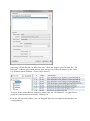
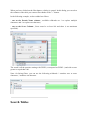
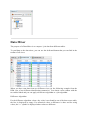
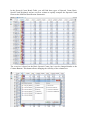
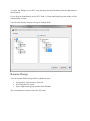
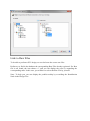
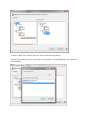
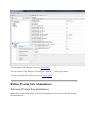
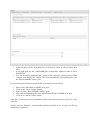
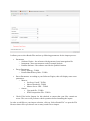
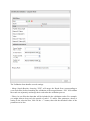
Post-processing of LC-MS quantitative results This procedure is used to compute ratios of peptide and protein abundances. Several filters can also be set to increase the quality of quantitative results. Here is the description of the parameters that could be modified by the user. Peptide filters Use only specific peptides: if checked, peptides shared between different protein sets will be discarded from the statistical analysis. Discard missed cleaved peptides: if checked, peptides containing missed cleavages will be discarded from the statistical analysis. It has to be noted that perfect tryptic peptides whose sequence is included in an observed missed cleaved peptide are also discarded if this option is enabled. Discard oxidized peptides: if checked, peptides containing the Oxidation(M) modification will be discarded from the statistical analysis. It has to be noted that non-modified peptides whose sequence is the same than an observed oxidized peptide are also discarded if this option is enabled. Peptide and protein common parameters Normalization: the normalization factors are computed as the median of the ratios distrubutions between each run and a run of reference. A similar procedure is used for the normalization of LC-MS features. Aggregation of peptides in proteins Peptide abundances can be summarized into protein abundances using several mathematical methods: sum: for each quantitative channel (raw file) the sum of observed peptides abundances is computed mean: for each quantitative channel (raw file) the mean of observed peptides abundances is computed mean of TOP3 peptides: same procedure but applied on the 3 most abundant peptides. Peptides are sorted by descending median abundances (computed accross all compared samples for peptide). Then the 3 first peptides are kept. median: for each quantitative channel, the median of observed peptides abundances is computed