1
2
❘
CHAPTER 1 BUSINESS REPORTING PARADIGMS
PROCESS AND OPERATIONAL SUPPORT
Day-to-day business processes require reporting solutions to keep business working. Nearly all businesses and organizations today rely on operational data stored in some kind of database. Although
there are some proprietary, special-purpose databases used to support certain types of business, more
than ninety percent of all data is stored in a relational database system on a standard product platform
such as Oracle, SQL Server, IBM DB2, or SyBase. These systems capture transactions as they occur,
and records are stored at the detailed transactional level to support real-time processes.
Consumer business has many common examples. A point-of-sale transaction is captured in a local
database at the store or POS terminal and may be replicated to a regional or central database. Of
course, the sales receipt is a report generated directly from this transactional data. Similarly, banking
transactions record every debit, credit, and adjustment made to an account. Transactional records may
be recorded every time you use your cellular phone, swipe your key card at work, go to the gym, send
a tweet, post a comment on Facebook, or visit a secure web site.
Report Types
Operational reports are some of the most commonplace in the business and consumer world but they
also exist in many specialized scenarios. In working with several different consulting clients to migrate
their reporting solutions to a new platform or toolset, we often ask them to identify the operational
reports from analytical and decision-support reports. Inevitably we identify a gray area of reports in
each category. These may be reports that aggregate and group details for analysis from operational
data stores or analytical reports that include some level of operational detail.
Putting the exceptions aside for the time being, let’s take a look at some of the more common and a few
of the less common types of operational reports.
Sales Orders, Invoices, Manifests, and Inventory Forms
The items in this category are usually not referred to — or even thought of — as reports. Specialized
software is typically used to input and process orders. These may be for general use in a retail or commercial wholesale operation or they may be for specialized applications, such as a medical laboratory
or an electronics assembly plant. Although the basic structure of an order or invoice may be similar,
the specific components may be adapted to meet specific business needs. An invoice usually contains
a header, specific sections for the seller and customer’s contact, and billing and shipping information,
followed by a tabular section of line items. Each item typically has a product code, description, price,
quantity, and other information that may be specific to the business process or industry, such as weight,
cost, discounts, freight, tax, or shipping cost.
These types of reports have a relatively simple design but are also usually integrated into a custom
application, rather than selected from a report menu on a central server. Some order forms may be
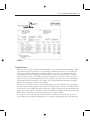
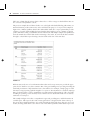
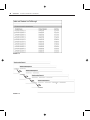
printed on stock forms and other companies may print the entire form on blank paper. Figure 1-1
shows a typical sales order report with a customer and shipping details header, repeating line items,
summary totals, and a footer area containing contact information.