1
Miscellaneous
information exchange file (*.pfx) which is typically encrypted and requires a password to be opened. This file will also contain the public key
certificate (or more than one if a certificate chain is involved) for authentication as well. Thus, a PFX file contains besides the private key
one or more public keys.
6.6.3 The Key Players of the DCI Mastering
Detailed in the following you can find the key pairs that are used during
a DCI Mastering.
AES Key
The AES key is a symmetric key used to en- and decrypt the content of
the DCP (track files). For each track file an individual AES key is generated. This key will be encrypted with the Encryption Key on CLIPSTER
(see below) and written to the KDM file.
The AES key is generated randomly and automatically by CLIPSTER.
Encryption Key
The Encryption Key is an asymmetric key pair (RSA) used to encrypt and
decrypt the AES key. Typically this key pair is generated by the manufacturer of the D-Cinema player and handed to the purchaser of the
player:
– The public key of the Encryption Key is used to encrypt the AES
key when it is written to the KDM. Usually it is embedded in a
certificate file.
– The private key of the Encryption Key is stored on the D-Cinema server/player at the recipient’s site. It is used to decrypt
the AES key provided via the KDM.
The private key is stored at the recipient’s site and will not be distributed. Thus it can be disregarded because it will not be available to you.
The public key should have been sent to you in a signed certificate to
enable you to create a DCP for this player. It has to be set on CLIPSTER.
Signing Key
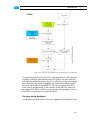
The Signing Key is an asymmetric key pair (RSA) used to sign and validate the files of a DCP (e.g. KDM or CPL). With it the creator of the
DCP digitally signs the extra files, while the recipient will be able to verify that the DCP was distributed by the creator/distributor and not altered in the meantime:
6-12