1
A758 Owner’s Guide
Chapter 7: Programming Guide
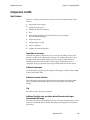
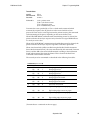
Real Time Commands
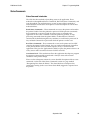
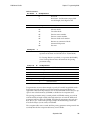
These commands provide an application interface to the printer even when the
printer is not handling other commands (RS-232C communication interface only):
♦
Real Time Status Transmission (GS Sequence and DLE Sequence)
♦
Real Time Request to Printer (GS Sequence and DLE Sequence)
♦
Real Time Printer Status Transmission
The Batch Mode Printer Status commands are placed in the printer’s data buffer
as they are received and handled by the firmware in the order in which they are
received. If the paper exhausts while printing data that was in the buffer ahead of
the status command, the printer goes busy at the RS-232C interface and suspends
processing the data in the buffer until paper is reloaded. This is true for all error
conditions: knife home error, slip paper jam, thermal printhead overheat, etc.
In addition, there is no way to restart the printer after a paper jam, or to cancel a
slip waiting condition when using the Wait for Slip command.
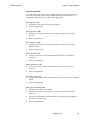
The Real Time commands are implemented in two ways to correct these
problems. Both implementations offer the same functionality; which one you
choose depends on the current usage of your application.
Preferred Implementation
For a new application the GS (1D) sequences are recommended to avoid possible
misinterpretation of a DLE (0x10) sequence as a Clear Printer (0x10 0, ASCII DLE
NUL) command.
An application using these GS (1D) sequences, does not need to distinguish for
the printer between the new real time commands and the Clear Printer
command. This implementation is ideal for an existing A756 application that
already uses the Clear Printer command or for a new application being
developed.
Alternate Implementation
The alternate implementation uses the DLE (0x10) sequences as implemented on
other printers. An application using these DLE (0x10) sequences and the original
A756 Clear Printer command (0x10) must distinguish for the printer between the
new real time commands and the Clear Printer command by adding a NUL
(0x00) to the Clear Printer command.
An application using these DLE (0x10) sequences must also send the second byte
of the sequence within 100 milliseconds of the first, to prevent the first byte being
mistaken for a Clear Printer command.
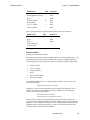
Rules for Using Real Time Commands
Three situations must be understood when using real time commands.
First, the printer executes the Real Time command upon receiving it and will
transmit status regardless of the condition of the DSR signal.
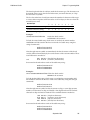
Second, the printer transmits status whenever it recognizes a Real Time Status
Transmission command sequence, even if that sequence happens to occur
naturally within the data of another command, such as graphics data.
September 1999
164