1
Chapter
Routing Traffic
6
This chapter describes SilkWorm switch routing features and procedures.
About Data Routing and Routing Policies
Data moves through a fabric from switch to switch and storage to server along one or more paths that
make up a route. Routing policies determine the correct path for each frame of data.
Caution
For most configurations, the default routing policy is optimal, and provides the best performance. You
should only change the policy if there is a performance issue that is of concern, or a particular fabric
configuration requires it.
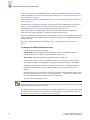
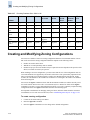
The following routing policies are available to tune routing performance:
•
Exchange-based routing
The choice of routing path is based on the SID, DID, and Fibre Channel originator exchange ID
(OXID), optimizing path utilization for the best performance. Thus, every exchange can take a
different path through the fabric
•
Device-based routing
The choice of routing path is based on the Fibre Channel addresses of the source device (SID) and
the destination device (DID), improving path utilization for better performance. Thus, the same
route is always used and the sequence of exchanges is guaranteed.
•
Port-based routing
The choice of routing path is based only on the incoming port and the destination domain. To
optimize port-based routing, the Dynamic Load Sharing feature (DLS) can be enabled to balance
the load across the available output ports within a domain.
Device-based and exchange-based routing require the use of DLS; when these policies are in effect, you
cannot disable the DLS feature.
Using port-based routing, you can assign a static route, in which the path chosen for traffic never
changes. In contrast, device-based and exchange-based routing policies always employ dynamic path
selection. Port-based routing is supported by all SilkWorm models (except SilkWorm 48000 using
configuration option 5).
Fabric OS Administrator’s Guide
Publication Number: 53-0000518-09
6-1




































![FICON_AdminGd_v700[1].](http://vs1.manualzilla.com/store/data/005962703_1-207ddf39f2a91b852624dcbb8fd7d57f-150x150.png)