1
microOLED GOLDELOX DISPLAY
4D SYSTEMS
µOLED-128-G2
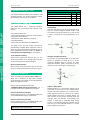
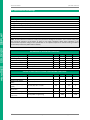
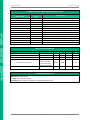
5. PmmC/Firmware Programming
6. Module Features
The GOLDELOX processor on the μOLED-128-G2
module can be re-programmed with the latest
PmmC configuration for updates and future
proofing. The chip-level configuration is available
as a PmmC (Personality-module-micro-Code) file
and the programming must be performed over the
serial interface. The chip-resident internal 4DGL
functions are part of the GOLDELOX PmmC
configuration file so please check regularly for the
latest updates and enhancements.
The μOLED-128-G2 module is designed to
accommodate most applications. Some of the
main features of the module are listed below.
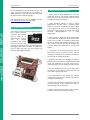
It is recommended that the μOLED-128-G2 display
module be socketed on the application board so
that it can be easily removed for PmmC
programming.
•
•
•
•
•
•
•
•
•
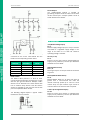
The PmmC file is programmed into the device with
the aid of Workshop 4, the 4D Systems IDE
software (See Section 10). To provide a link
between the PC and the ICSP interface, a specific
4D Programming Cable is required and is available
from 4D Systems.
Using a non-4D programming interface could
damage your display, and void your Warranty.
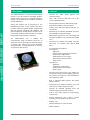
6.1. Display – 1.5” PMOLED
The μOLED-128-G2 is equipped with a full colour
PMOLED screen. Some of the features of the
screen are:
Screen Size: 1.5”diagonal
128 x 128 Resolution PMOLED Display
Screen Dimensions: 33.5 x 33.5mm.
Viewing Area: 27 x 27mm
65K true to life colours
Brightness: 100 cd/m2
Contrast Ratio: 5000:1
Viewing Angle: > 160 degrees
No Back lighting
Note: The Displays used are the highest rated
‘Grade A’ Displays, which allow for 0-4 defective
pixels. A defective pixel could be solid Black
(Dead), White, Red, Green or Blue.
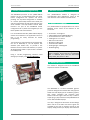
6.2. GOLDELOX Processor
The module is designed around the GOLDELOX
Graphics Processor from 4D-Labs.
The GOLDELOX is a custom embedded graphics
processor designed to interface with many popular
OLED and LCD display panels. Powerful graphics,
text, image, animation and countless more
features are built right inside the chip. It offers a
simple plug-n-play interface to many 8bit 80-Series
colour LCD and OLED displays.
The chip is designed to work with minimal design
effort and all of the data and control signals are
provided by the chip to interface directly to the
display. Simply choose your display and interface it
© 2012 4D SYSTEMS
Page 8 of 17
www.4dsystems.com.au